Elite golf performance is the product of harmonizing efficient movement mechanics, sharp perceptual choices, and mental toughness. Using Jordan spieth’s on-course behaviour and technical tendencies as an illustrative model, this article combines biomechanical evidence with cognitive-performance models to outline concrete steps for refining the full swing, dialing in putting consistency, and maximizing driving outcomes.The focus is on how stable motor patterns, streamlined decision processes, and pressure-resilient routines interact to produce dependable, high-level results.
The approach integrates kinematic inspection of full-swing and driving motions with motor-control principles that underpin repeatable putting tempo and stroke mechanics. Cognitive strategies-pre‑shot rituals, attention allocation, and risk-reward balancing-are woven into the discussion to clarify efficient in-round choices. Each section converts empirical and observational findings into coachable cues, progressive drills, and quantifiable benchmarks that players and coaches can apply.
by situating Spieth-inspired methods within modern sport‑science frameworks,the aim is to give coaches,analysts,and competent amateurs a practical,evidence-informed pathway to raise technical execution and on-course reliability across swing,putting,and driving disciplines.
Core Biomechanics of a spieth-Informed Swing: sequencing,kinetic‑chain efficiency,rhythm control and drill progressions
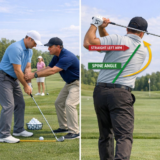
Generating both speed and accuracy starts with a reliable proximal‑to‑distal sequence: hips initiate,the torso follows,then shoulders and arms,finishing with the hands and club. Practically, aim to develop roughly a hip rotation in the mid‑30s to mid‑40s degrees and a shoulder turn approaching 80-100° on the backswing while preserving an optimal spine tilt (~12-18°) to keep the club on plane and to help reproduce loft and face alignment at contact. To ingrain the correct order of segment initiation, use drills that emphasize timing and segmental leadership; these scale from beginners to low‑handicappers and mirror the compact rotational economy often visible in Jordan spieth’s repertoire: execute 3-5 sets of each exercise for 30-60 seconds, and use video feedback where possible.
- lead‑Hip Pause Drill: make small half swings, hold a one‑second pause as the hips begin the transition, then complete the swing so you feel the torso and arms follow the hip lead (goal: establish hip‑first motion and reduce reverse pivot).
- step‑Through Weight‑Shift: from yoru normal stance, step the trail foot slightly forward at transition to promote a lateral‑to‑rotational weight transfer and a more efficient center‑of‑mass pathway (focus: smooth kinetic‑chain sequencing).
- Impact‑Contact Drill: strike soft targets or an impact bag with short,controlled swings to train low hands and forward shaft lean at impact (objective: ball‑first compression and consistent dynamic loft).
once the sequence is reliable,controlling tempo determines how that order produces repeatable ball flight. Many elite players use a backswing‑to‑downswing timing close to 3:1; practice this with a metronome (three counts back, one count down) to embed a steady rhythm. Start with comfortable‑paced full swings to lock the feel, then add speed variability to prepare for different course scenarios (e.g., punch shots or strong winds). Useful measurable checkpoints include keeping lateral head or upper‑body sway below approximately 2 inches during transition and preserving a consistent wrist hinge at the top (commonly near 90-110° between the lead forearm and shaft). To refine tempo and release, the following progressive drills are effective:
- Metronome 3:1 Drill: set tempo and perform 10 swings emphasizing a smooth top transition; if available, log clubhead speed and dispersion on a launch device to monitor tightening of your 10‑shot group.
- Toe‑Up/Toe‑down Wrist Drill: swing to the top showing the shaft parallel to the ground (toe‑up), then rotate to a toe‑down finish to cultivate a predictable wrist set and clean release; use short swings for novices and add tempo challenge for advanced players.
- Half‑Speed Impact Checks: take controlled half‑speed swings and stop at impact to verify shaft lean and face angle-an alignment rod is a simple feedback tool.
Address typical tempo faults by moderating grip pressure (aim for roughly 3-5/10) and ensuring the transition is a rotational acceleration rather than an early handcast or lateral drop.
Turning biomechanical gains into lower scores requires integrating short‑game practice, equipment setup, and course tactics. For wedges, build a reliable distance ladder using five swing lengths (about 10%, 30%, 50%, 70%, 100%) and chart the resulting yardages so club selection becomes deterministic. check loft gaps between irons (a good target is approximately 4°-6° separation) and match bounce to bunker technique; when practicing in sand remember the Rules of Golf (do not ground the club in a bunker during rehearsals under local rule constraints). Employ situational routines and drills such as:
- Clock‑Face Chip Drill: place balls at 3, 6, 9 and 12 o’clock around the hole to train trajectory, spin and landing zones from different lies.
- Firm‑Green/Wind Practice: use half to three‑quarter swings from a slightly back‑in ball position and reduced loft to keep trajectory low when run‑out scoring is beneficial on firm surfaces.
- mental Rehearsal with Setup Checks: pair a 20‑second visualization of the intended flight with a tight 3‑step setup check (alignment, ball position, posture) to replicate Spieth‑style composure under pressure.
When sequencing, rhythm and situational drills are linked to measurable goals (dispersion, yardage control, launch‑monitor outputs), players can construct a repeatable, Spieth‑inspired template that improves both scoring and course management.
From Repeatable Stroke to Putting Mastery: alignment, stroke path control, green reading and structured practice
Start putting with a setup that you can reproduce under pressure: position your eyes directly over or slightly inside the ball, set the ball just forward of center for most putters to encourage a natural upward impact, and keep a modest forward shaft lean (~5°-10°) so the face strikes squarely. For alignment checks,visually line up your lead shoulder,eyes and putter flange parallel to the target,and ensure toe/heel weight balance with a narrow,stable stance reminiscent of Jordan Spieth’s compact setup to promote repeatability. Common faults-too much shaft lean, variable ball position or excessive wrist action-are corrected with mirror or camera checks and a simple setup checklist:
- Grip pressure: light and even, approximately 3-4/10, to permit pendulum motion.
- Stance width: about shoulder width for stability, knees soft to allow shoulder‑driven rotation.
- Eye position: over or slightly inside the ball line to better sense lateral biases.
A stable setup carries over to the short stroke; posture and pre‑shot alignment habits developed in swing training help preserve touch and consistency on the greens.
Control the stroke arc and face rotation using mechanics matched to your putter. Blade users typically benefit from a modest curved arc producing slight face rotation through impact; mallet putters often suit a near‑straight stroke with minimal rotation. Use a two‑stage practice method: (1) a gate drill with two tees spaced fractionally wider than the putter head to enforce the intended path; (2) a metronome set around 60-72 bpm to normalize backswing/downswing timing and impact speed. Set measurable short‑term targets-aim to make 40-50% of putts from six feet over a three‑week block and cut directional misses by about 50% after correcting alignment errors. If contact shows toe‑ or heel‑bias, check lie and loft with a professional fitting; persistent miss patterns frequently enough indicate equipment mismatch. Emulating Spieth’s preference, keep face control central and minimize wrist flicking-let the shoulders govern stroke motion to maintain face squareness at impact.
Convert technical steadiness into better green reads and speed control with progressive,scenario‑based routines. Work on lag speed across varied green speeds and angles by performing a structured lag routine from 30-60 feet with the goal of leaving your ball inside 3 feet on ~60% of attempts under slope or simulated wind. Adjust initial pace for firmer surfaces by adding speed, and reduce stroke length ~10-15% for slow greens. Incorporate Spieth‑style pre‑putt elements-visualize the line, select a feeding point, and commit to a single speed decision-to prevent indecision. Use drills and on‑course checks such as:
- Gate and metronome drills for stroke path and tempo control;
- Clock drill around the hole (3‑ft increments) to build short‑range reliability;
- Lag‑and‑measure sessions from 30-60 ft to quantify three‑putt prevention;
- Time‑pressure alternate‑putt games on the course to simulate tournament stress.
Account for slope, grain, moisture and wind when reading-the fall line should be evaluated from multiple vantage points without altering the surface to gain advantage. Progressing from objective setup and stroke drills to representative on‑course practice enables golfers of all abilities to reduce putts,manage greens better and lower scores while aligning putter setup,short‑game technique and full‑swing strategy into a single practice plan.
Driving: turning ground force into distance and precision-launch management, ground‑force timing and targeted conditioning
Effective long‑game power comes from converting ground reaction forces (GRF) into clubhead speed through coordinated timing rather than brute upper‑body effort. Start with address fundamentals: a neutral spine tilt near 25-30°, knee flex of roughly 15-20°, and a slightly trail‑biased weight distribution at address (about 55-60% on the trail foot for most right‑handed driver setups). At the top,the hips should coil while the trail leg presses into the ground; on transition pressure transfers to the lead leg producing a rapid GRF spike at impact manifested as vertical extension and rotational acceleration. To practice the sequence and feel the force transfer, try these drills:
- Step‑and‑Drive Drill: take a normal setup, make a half backswing, step the lead foot forward on transition and drive through impact to rehearse lead‑leg loading and GRF transfer.
- Pressure‑Mat or Balance Pad Work: use a training surface to monitor center‑of‑pressure shifts; aim for a smooth transfer finishing around 60-70% weight on the lead foot at impact for many players.
- Hip‑Coil Wall Drill: place a board behind the trail hip during the turn to reduce lateral slide and encourage torque generation against the ground.
These exercises are accessible for novices (who should prioritize timing and balance) and measurable for advanced players using force plates or high‑speed capture to identify efficient GRF spikes without wasted lateral motion.
With sequencing consistent, deliberately tune launch conditions so force becomes usable trajectory. Useful reference targets include a driver launch angle near 10°-14°, a smash factor in the ballpark of 1.45-1.50 for efficient energy transfer, and spin rates tailored to needs (roughly 1,500-3,000 rpm depending on speed and rollout preference). For example, a player with ~100 mph clubhead speed often benefits from about a 12° launch and ~2,000 rpm spin to balance carry with rollout; players with 80-90 mph speed typically need slightly higher launch and increased spin to maximize carry. Prioritize equipment fitting (USGA‑conforming clubs) to adjust loft or shaft launch traits rather than compensating with suboptimal mechanics. In specific conditions, a firmer fairway or downwind hole calls for reduced spin via a shallower angle of attack and a forward ball position; into the wind or on soft greens raise launch and accept more spin. Lessons drawing on Jordan Spieth’s compact impact positions stress repeating a stable wrist set at the top and a forward shaft lean at contact to keep launch behaviors consistent. troubleshoot typical problems with these quick checks:
- Ball too far back → late contact and low launch; move the ball forward to generate higher launch and a positive angle of attack.
- Excessive lateral slide → thin or blocked strikes; preserve rotational center and let GRF drive extension.
- Too‑tight grip tension → strangled speed; ease grip to about 4-6/10 for better release and feel.
Strength and mobility work lock technical gains into lasting performance and support smart course play. A practical 3‑times‑per‑week routine over 6-12 weeks should emphasize rotational power, single‑leg stability and thoracic mobility: medicine‑ball rotational throws (3-4 sets of 6-10), single‑leg Romanian deadlifts (3×8 per side), band anti‑rotation presses (3×10), and thoracic rotations with a dowel (10-12 reps per side). Aim for measurable progress such as a 5-8 mph increase in clubhead speed or a 300-500 rpm reduction in excessive spin after consistent training and proper technique integration. Pre‑round warmups should mirror these movements at lower intensity-dynamic hip openers, ankle stiffness drills to improve push into the ground, and a short block of tempo swings at ~75% speed to rehearse timing. On the course, combine these physical improvements with concise mental routines inspired by Jordan Spieth: keep a short pre‑shot routine, visualize a target zone rather than a single line, and choose tee strategy based on risk versus reward (for example, reduce loft and tee it lower into favorable downwind holes to encourage run‑out, or choose a higher‑lofted club or 3‑wood on tight doglegs to prioritize accuracy). Use objective feedback (launch monitor numbers and course stats) to set short‑term goals-such as moving fairway‑hit percentage from ~55% to 65% within six weeks-and adapt training and equipment based on the data.
Mental and Emotional Tools for Competitive Consistency: rapid decision‑making, compact pre‑shot routines, visualization and focus recovery
Good in‑round decisions are rooted in how perception, attention and working memory operate under pressure. Before every shot run a fast three‑point scan: (1) evaluate the lie and stance,(2) register wind direction and strength,and (3) locate hazards and the pin location. For instance, on a narrow fairway with a 15 mph crosswind and water on the right, a prudent tactic is to target left‑center or lay up to a comfortable wedge distance instead of forcing driver-this aligns with modern course‑management practices that reduce penalty risk. Operationalize choices with a compact pre‑shot checklist of no more than five elements to limit cognitive load and banish indecision: club, target point, intended trajectory, swing length, and a commitment cue. Practical exercises include:
- Decision drills on the range: set three targets at different distances and force yourself to pick one in 8-12 seconds and then hit it.
- Wind simulation: use a fan or launch monitor feedback to refine club selection and observe carry and dispersion changes.
- “Conservative‑only” practice rounds: on specified holes commit to the safer option to train calibrated risk assessment.
these techniques mirror cognitive research on attentional limits and align with Spieth‑style coaching that stresses simplifying choices and fully committing to a single target so motor execution is freed from excessive cognitive interference.
A compact, repeatable pre‑shot sequence ties motor execution to visualization and stabilizes performance under stress.Divide your routine into three phases: setup basics (alignment, ball position, grip pressure), visualization and rehearsal (see the flight and landing), and commit & execute (trigger and swing). For mid‑irons, keep ball slightly forward of center, hands a small amount ahead (~1-2 cm) at address, and maintain moderate grip pressure (~4-5/10) to encourage clean release. Spieth often highlights a compact routine-short practice swings, a distinct landing target, and a single‑word commitment cue-that minimizes variability and preserves working‑memory capacity for execution. useful drills and checkpoints:
- Visualization drill: before practice swings,close your eyes for 3-5 seconds and picture the entire shot path; then open and address the ball.
- Alignment/impact feel drill: lay an alignment rod down the target line and a second rod just outside the ball to promote the correct path and face relationship.
- Putting routine: read the slope, pick a low‑point landing, visualize ball roll to the hole and take a single smooth stroke-aim to limit three‑putts to ≤1 per 18 holes.
For beginners,keep routines short and consistent; advanced players can layer in specific launch targets or metronome‑timed pre‑shot tempos (e.g., driver launch ~12-14°) to sharpen rhythm.
Maintaining competitive resilience requires attention maintenance and rapid recovery after errors. Breathing and focus cues help regulate arousal: a 4‑4 breathing pattern (inhale four,exhale four) before addressing the ball calms heart rate,while a concise reset phrase like “next shot” shifts attention forward after a miscue.Transfer practice into tournament readiness with pressure games-competitive range challenges,putting for small stakes,and rounds where club selection is limited-to habituate working under stress. Equipment checks also matter: confirm shaft flex and loft/gap consistency so your risk calculations remain valid (such as, verify your 8‑iron carry distance to avoid misjudged layups). Measurable practice goals and troubleshooting tools include:
- Performance objective: shrink strokes‑gained approach by about 0.5 within 8-12 weeks through disciplined wedge distance control (20-30 targeted wedge reps per session).
- Pressure drill: play nine holes where par = +1 and bogey = −1 to force risk‑management tracking.
- Common habit corrections: limit club options to two to avoid overchoice, enforce an 8-12 second minimum pre‑shot routine to prevent rushing, and use mirror/video feedback to correct setup inconsistency.
By systematically tying attention control, imagery and routines to technical work and equipment checks, players at any level can develop robust on‑course systems that reduce mistakes, improve scoring and sustain competitive calm-principles reflected in professional instruction models including those used by Jordan Spieth’s team.
Objective Feedback Systems for Consistency: video biomechanics, launch‑monitor metrics and data‑driven practice targets
High‑frame‑rate video analysis paired with biomechanical markers provides an objective map of a golfer’s motion that goes beyond subjective feel. Using synchronized face and down‑the‑line captures at 240+ fps, coaches can quantify the kinematic sequence (pelvis → torso → arms → club) and measure diagnostic angles such as shoulder turn (~80-100°), pelvic rotation (~40-60°), and spine tilt maintained within ±2° through impact. Frame‑by‑frame review reveals faults-casting, overly steep downswing, early extension-and prescribes corrective movement patterns (e.g., preserve wrist hinge to ~90° at the top or shallow the clubhead path through transition). To develop a shallow transition like that used by many elite iron players, practice a slow three‑quarter backswing pause at the top, then initiate the downswing with a slight (1-2°) lateral pelvic shift toward the target before the hands drop; compare frames until a repeatable pelvis‑to‑shoulder sequencing emerges.These video prescriptions deliver clear visual targets appropriate for novices (basic plane and spine preservation) and low‑handicappers (micro‑tuning X‑factor separation and wrist timing).
Launch monitors convert visual targets into numeric benchmarks that direct practice and in‑round choices. Track metrics such as clubhead speed, ball speed, smash factor, launch angle, spin rate, and angle of attack. typical reference windows include a driver launch of ~10-14°, spin roughly 1,800-3,000 rpm, and a positive attack angle around +1 to +3° for optimized carry. For long irons, a negative attack angle (≈ −2 to −6°) helps compression. Establish tiered clubhead speed goals (e.g., beginner: 70-85 mph, intermediate: 85-95 mph, low handicap: 95-110+ mph) and consistency thresholds such as ≤2% ball‑speed variance and a launch‑angle SD ≤1.5° across a 10‑shot set. pair video with launch‑monitor checkpoints and drills:
- Impact bag work to reduce dynamic loft and improve compression-target a visible forward shaft lean of ~5-8° at impact for short irons.
- Tee‑height driver drills to practice positive attack angles and record consistent values on the monitor.
- Slow‑motion downswing + 10‑shot block where each rep must fall inside the pre‑set launch and spin window before advancing.
These measurable exercises move practice from guesswork to repeatable progress while keeping instruction accessible.
Apply video and launch data to refine the short game and strategic decisions so technical gains show up on scorecards. First, use impact and launch numbers to set realistic carry and dispersion profiles for each club, then use those statistics to choose targets-if a 7‑iron consistently carries 160 yards with ±6 yards dispersion into wind, plan a safer landing zone with a two‑club margin for elevated or firm greens.On greens, quantify speed control (stimp‑equivalent pace and rollout characteristics) and adopt Spieth‑inspired lag benchmarks-strive to leave ~90% of lag putts inside a 3‑ft circle from 40 feet in practice. Short‑game drills that combine data and feel include:
- Clock‑face chipping with varied lofts while recording launch/spin to find ideal trajectories for different surfaces;
- Gate‑putting tied to launch‑monitor feedback to measure impact quality and roll consistency;
- Wedge distance ladder with 5‑yard increments and a ±3 yard target tolerance as an accuracy standard.
Counter common on‑course mistakes-overaggressive tee play, wind misreads, premature weight transfer-by setting pre‑round metrics (preferred miss direction, dispersion caps) and rehearsing pressure scenarios on the range. Blending video biomechanics, launch‑monitor data and data‑driven practice plans with tactical decision making helps golfers at every level convert technical gains into repeatable scoring patterns and smarter course management.
Personalizing Spieth‑Derived Mechanics: adapting technique to anatomy, movement limits and injury prevention
Adapting Spieth‑inspired mechanics starts with an objective appraisal of anatomical constraints and how they affect swing parameters. Measure functional range of motion (F‑ROM) for thoracic rotation, hip rotation and wrist extension; target values for a Spieth‑style coil are roughly a 90°±10° shoulder turn and a 45°±10° hip turn for an unrestricted athlete, yielding beneficial shoulder‑to‑hip separation for elastic energy storage. When F‑ROM is limited,modify the technique rather of forcing values: shorten the backswing,emphasize a braced lower body with controlled hand path,and preserve a safe spine angle (around 5°-7° forward tilt at impact) to protect the lumbar region. Practical checkpoints and drills for individualization include:
- Alignment rod verification: place a rod parallel to the target and another along the shaft in neutral setup to assure consistent lie and shoulder alignment.
- Chair/wall drill: restrict pelvic slide and train rotation dominance with 10 slow half‑swing reps focusing on hip turn.
- Half‑to‑full progression: start with chest‑high half swings for controlled 50-70 yard carries, then extend distance while keeping tempo constant to preserve Spieth’s fluid rhythm.
These adjustments keep the smooth‑swing emphasis-controlled tempo, rotational efficiency and repeatable impact-while respecting individual anatomy and lowering compensation patterns that can lead to injury.
Short‑game selection and equipment choices also influence performance and injury risk. Fit wedges and select shaft specs that match your mobility: for limited wrist dorsiflexion or reduced hip rotation consider slightly stronger lofts or increased bounce to encourage a more controlled, lower strike that protects the wrists on steep attack angles; more flexible players may exploit higher‑loft, lower‑bounce options for shots that require large loft changes.Teach a target forward shaft lean of ~5°-10° at impact for clean iron contact and predictable launches.On‑course drills that translate to scoring include:
- 3‑Club Wedge Ladder: using three wedges (e.g., 48°, 54°, 60°) hit 10 balls to a fixed landing zone-aim for 8/10 within 10 yards of the target.
- Gate Chipping: set two tees a clubhead apart and chip through to force compact contact and face control.
- Impact Bag/Plate Reps: short swings into an impact bag or onto a plate to practice forward shaft lean without premature hand release.
Pair technical work with injury‑prevention routines-thoracic mobilizations (2 sets × 10 each side), hip internal/external rotation holds (30 s per side), and core stability (plank variations 3 × 30-60 s)-to sustain training loads and reduce overuse injuries from repeated full swings and frequent short‑game motions.
Integrate individualized technique into practice and on‑course scenarios so mechanical gains become lower scores. Use simulation drills where the player must pick clubs and targets with constraints (firm fairways, crosswinds) and favor Spieth‑style strategy: on tight landing areas choose a controlled iron or 3‑wood off the tee instead of an aggressive driver, and preferentially leave approach shots below the hole to facilitate two‑putt opportunities. Set measurable objectives-e.g., reduce approach dispersion to within 15 yards for a fixed distance within six weeks or improve GIR by 10%-and track simple stats (fairways hit, GIR, up‑and‑down rate) to quantify progress.Supporting practices include:
- Tempo metronome drill: 3‑2 rhythm (three counts backswing, two counts downswing) in 5 sets of 10 shots to lock consistent pacing.
- Pressure putt set: finish a session by making five consecutive putts from 6-8 feet under simulated pressure.
- Situational yardage ladder: hit five shots to 100, 120 and 140 yards focusing on landing zones, wind correction and club choice and log miss patterns to guide adjustments.
When anatomical assessment, targeted adaptation, equipment tuning and scenario practice are combined with a disciplined pre‑shot routine and mental focus, golfers can translate Spieth‑derived methods into safer, more effective and score‑oriented performance across skill levels.
Periodized Practice for Peak Performance: deliberate allocation,recovery planning and competition simulation
Structure training around a macrocycle that prioritizes the elements most likely to lower scores: the short game,putting speed control and iron proximity. For a typical 12‑week pre‑event block,consider a periodized time split such as 50% short game & putting,30% iron & wedge accuracy,15% driving/tee strategy,5% specialty shots,modified by handicap (beginners allocate more time to fundamentals; low handicappers prioritize pressure simulation). Move from high‑volume technical sessions early in the block to lower‑volume, higher‑intensity work nearer competition: initial weeks may feature 4-6 sessions per week of 60-90 minutes focused on mechanics (e.g., balanced shoulder turn and a modest forward shaft lean at impact), while later weeks drop to 2-3 concise sessions with competitive drills. Useful practice examples:
- Short‑Game Ladder: 10 chips from 30 → 5 m aiming to narrow the error band to ±1 m-repeat 5 sets.
- Low‑point/Impact Drill: place a towel 10 cm behind the ball to ensure a descending iron strike-3×15 reps per club.
- Speed‑Control Putting: 10 putts each at 6, 12 and 18 feet focusing on first‑roll distance-three rounds.
These exercises generate objective metrics (proximity, putt percentage, fairway accuracy) that should be logged to monitor progression through the cycle.
Recovery and physical readiness are integral to deliberate practice. Balance intensive repetition with planned lighter days-include two lighter sessions per week emphasizing mobility and short‑game touch, and take a full rest day after 5-6 consecutive training days.Monitor recovery with sleep targets (~7-9 hours/night), optional heart‑rate variability tracking for load management, and a daily readiness check (energy level, soreness, ROM). Maintain a 20-30 minute pre‑practice routine of dynamic hip openers, thoracic drills and glute activation to protect the swing; seek to improve thoracic rotation gradually (targeting a modest increase relative to baseline rather than fixed degrees) to enhance coiling safely. Troubleshooting in recovery‑managed plans:
- For casting/early release: include 3 sets of 10 slow downswing drills emphasizing lag retention.
- For late‑session posture collapse: perform 2 sets of 8 mirror‑checked half swings with a short club to reinforce spine‑angle maintenance.
During the final 7-10 days before competition taper volume by 30-50% while maintaining intensity and precision to preserve sharpness.
Simulate tournament demands progressively: shorten warmups to realistic timeframes (e.g., 10-15 minutes putting, 8-12 long shots on the range, then 9 practice holes) to consolidate routine timing. Use on‑course scenarios to develop decision making: alternate‑tee competitions to enforce tee‑placement tactics, forced‑carry targets to train wind adjustments (change club by +/- one per ~10-15 kph wind difference), and bailout practice from common tournament lies (tight fairway margins, knee‑high rough). For putting, mark a 1‑ft circle and practice lagging to within 12 inches from 20-40 feet while reading first; finish sessions with a “pressure putt” challenge-make two consecutive 6‑footers to end the workout.Rehearse equipment and setup under stress-confirm loft/lie settings,choose predictable spin balls for wedges,and keep ball positions consistent (driver at inside left heel,6‑iron center,wedges slightly back). record practice scorecards under imposed rules and consult the Rules of Golf for official restrictions-this ensures that technical, mental and tactical improvements transfer directly into lower tournament scores.
Q&A
Note on search results
– The supplied web search results did not include material directly related to Jordan Spieth or this lesson framework; they referenced other forum topics.The Q&A that follows is thus derived from the article themes (biomechanics, cognitive methods, motor consistency, decision‑making and competitive resilience) and is written in a professional, applied‑science tone.
Q&A – Unlock Elite Performance: Jordan Spieth Golf Lesson to Master Swing, Putting & Driving
1. What is the central aim of the Spieth‑inspired lesson framework?
Answer: The lesson combines biomechanical and cognitive principles to reduce motor variability, speed decision making, and build pressure resilience across the full swing, putting and driving.It links kinematic sequencing and launch optimization with compact pre‑shot routines, attention strategies and arousal control to create more reliable performance.
2.Which biomechanical concepts are most meaningful for full‑swing consistency?
Answer: Emphasize preserved spine angle and posture, efficient proximal‑to‑distal kinematic sequencing (hips → torso → arms → club), beneficial pelvic‑thoracic separation (X‑factor), controlled weight transfer, a stable lead wrist through impact and consistent tempo/transition mechanics to reduce unnecessary degrees of freedom.
3. How does the program improve driving specifically?
Answer: driving is refined by harnessing ground reaction forces, enhancing hip rotational power, preserving efficient kinematic timing, and optimizing attack angle, loft and spin for the desired flight. Practically, this includes targeted power drills, speed‑structured sets and launch‑monitor feedback loops.
4. What putting mechanics encourage repeatability?
Answer: A reproducible setup, minimal wrist involvement (shoulder‑driven pendulum), consistent stroke arc and face control at impact, and a reliable tempo are core. Distance control through backswing/stroke‑length ratios and proprioceptive chaining drills is emphasized.
5. Which cognitive tactics enhance on‑course decisions?
answer: Compact pre‑shot routines that limit deliberation, chunked decision rules (distance/lie/wind/risk), implementation intentions (if‑then plans), and an external focus on outcomes help reduce overthinking while preserving adaptability.
6.How is competitive resilience developed in this model?
Answer: Through pressure simulations (time limits, stakes, crowd/noise), arousal control techniques (breathing, cue words, imagery), reflective practice to reframe errors, and representative practice that mirrors tournament contexts.
7. What practice structure does the lesson use to support learning and retention?
Answer: It recommends distributed, variable practice with a blocked‑to‑random progression, fading augmented feedback (bandwidth/summary), explicit micro‑goals, and mental rehearsal-approaches grounded in motor‑learning research.
8. Which measurement tools are recommended for objective feedback?
Answer: Use launch monitors (speed, launch, spin), high‑speed video, IMUs for segment motion, force plates or pressure mats for GRF/weight‑shift data, and putting‑specific sensors for path/face angle. Pair objective metrics with subjective readiness measures for a holistic view.
9. What exemplar drills are suggested for swing, putting and driving?
Answer:
– Swing: sequential hip‑lead drills against resistance (band or med‑ball) followed by slow full swings emphasizing lag.
– Putting: distance ladder with metronome tempo and intermittent visual restriction to train feel.
– Driving: progressive speed ladder-sets of 6-8 swings escalating intensity-using launch‑monitor feedback to stay inside optimal launch/spin ranges.
10. How should coaches adapt the plan by skill level?
Answer: Assess baseline biomechanics and cognition; novices emphasize basics (posture, tempo, simple decision rules), intermediates add variability and correction drills, advanced players focus on marginal gains (spin/launch tuning, high‑pressure simulations) and automated decision heuristics. Adjust load, complexity and feedback based on responses.
11. what performance improvements are realistic from this program?
Answer: Improvements depend on the starting point but commonly include lower swing variability (reduced SD in clubhead speed/attack), better putting percentages and fewer three‑putts, modest driving distance gains (2-8% depending on conditioning), and faster, more consistent decision making. Goals should be individualized and tracked.
12. How does the lesson balance biomechanical precision with cognitive demands in competition?
Answer: By overlearning technical patterns in representative contexts until they become proceduralized, freeing cognitive resources for tactical decisions. Pre‑shot anchors and routines limit intrusive thoughts so mechanics can execute automatically.
13. What are the model’s limitations and risks?
Answer: Limitations include individual anatomical differences, potential overdependence on technology without ecological transfer, and injury risk from inappropriate progression in power drills. coaches should progress loads sensibly and emphasize transfer to on‑course performance.
14. What empirical methods can evaluate the program’s effectiveness?
Answer: Use pre‑post designs with controls,objective performance metrics (launch monitor and scoring data),pressure‑testing for ecological validity,retention and transfer assessments,mixed methods including athlete feedback,and analyses that consider individual responder effects.
15. How would a player structure a 4‑week microcycle based on this lesson?
Answer: Week 1: baseline testing and fundamentals with short, deliberate sessions. Week 2: add variable practice and controlled distance‑control work. Week 3: increase contextual variability and pressure simulations plus power sets for driving. Week 4: taper volume, preserve intensity and simulate competition, then perform retention testing. Include scheduled rest and cross‑training.
16.What future research avenues are suggested?
Answer: Investigate individualized dose‑responses for speed/power training, neural bases of putter automatization, longitudinal adoption of cognitive strategies under pressure, and transfer of lab biomechanical changes to tournament scoring. RCTs comparing combined biomechanical‑cognitive programs to single‑domain training would be valuable.17. What practical steps should coaches take to implement these methods?
Answer: Start with objective baselining, prioritize safe movement fundamentals, design practice that gradually resembles competition, give feedback that fosters autonomy, integrate mental skills into sessions, and use data to set specific, measurable subgoals.
18.How should progress be communicated to maintain motivation?
Answer: Offer clear, process‑focused feedback (reduced variability, improved tempo), set attainable short‑term targets, celebrate incremental gains and conduct reflective reviews linking interventions to outcomes to foster a growth mindset.Concluding remark
This Spieth‑informed framework blends biomechanical refinement with cognitive simplification to present a coherent roadmap to elite performance in swing, putting and driving. The recommended interventions-repeatable motor patterns, purposeful variability in practice, streamlined decision rules and resilience training-work together to enhance reliability and adaptability on the course. For coaches and support teams the takeaway is to combine objective movement diagnostics with structured, context‑rich cognitive training so that technical changes transfer under pressure.
Future investigations should quantify the relative impact of individual components (such as, kinematic tweaks versus attentional strategies) and test longitudinal implementations.Deploying wearable sensors,standardized performance metrics and randomized comparative trials will strengthen the evidence base and refine application guidance.
By uniting principled biomechanical coaching with evidence‑based cognitive tools, players and teams can systematically reduce performance variability and improve decision efficiency-the hallmarks of elite golfers. Iterative measurement, targeted adjustment and on‑course validation remain essential to convert these methods into consistent competitive gains.

Master Your Game: jordan Spieth’s Proven Secrets for Swing, Putting & Driving Excellence
Why study Jordan Spieth?
Jordan Spieth’s game provides a model of elite-level consistency: repeatable swing mechanics, elite short-game touch, and a championship mental routine. Whether you’re aiming to lower your handicap or refine tournament readiness, the strategies below break down Spieth-inspired methods for swing, putting, and driving – with actionable drills, measurable metrics, and course-management principles you can use today.
Core principles Behind Spieth’s Success
- Repeatable routine: A pre-shot and practice routine that reduces variability under pressure.
- Tempo and rhythm: A consistent tempo that creates reliable contact and ball flight.
- Speed & feel for putting: prioritizing pace over exact line, especially from distance.
- Precision over pure power: Driving for position and angle into the green rather than maximum yards.
- Short-game excellence: Proximity-to-hole goals and creative shot-making around greens.
section 1 – Swing Excellence: Structure, Tempo & On-target Ball Striking
Key Swing Concepts
- Maintain a compact, athletic setup that promotes balance through the shot.
- Use a stable lower body and a connected upper body turn to create consistent clubface control.
- Prioritize a repeatable tempo – not maximum speed. Controlled tempo produces predictable launch and spin.
- Make the downswing about sequencing (hips initiate, torso and arms follow) to avoid casting or flipping at impact.
Practical Swing Drills (Week-by-week plan)
- Week 1 – Balance & Setup: Feet-together drill (50 reps with short iron) to engrain balance through impact.
- Week 2 – Tempo Meter: Metronome drill (2-beat backswing, 1-beat transition) – 60 swings per club to lock tempo.
- Week 3 – Sequencing: Step-through drill (start with half swing,step forward after impact) to feel hip lead.
- Week 4 – Impact Position: Impact bag or towel under the ball position to train a solid and slightly compressive impact.
Measurable Swing Metrics to track
- Clubhead speed (mph) – track changes weekly.
- Ball speed & smash factor – measure contact quality.
- Launch angle & spin rate – optimize for each club.
- Shot dispersion (yards left/right) – improving accuracy over time.
Section 2 – Putting Excellence: Pace,Read,and Routine
What Spieth-Style Putting Emphasizes
Spieth’s putting success has been driven by an obsessive focus on speed control,a consistent pre-putt routine,and practicing many repeatable distance-control drills. Rather than relying on gimmicks, he refines feel and visualization habits that work under pressure.
High-Value Putting Drills
- 3-Point distance Ladder: Place tees at 6, 12 and 18 feet; make 5 in a row from each distance. Works pace and touch.
- Clock Drill (short putt routine): 8 balls around the hole at 3 feet – make 6/8 to progress.Builds confidence with short putts.
- Gate Drill for face alignment: Use two tees just wider than the putter head to ensure a square path through impact.
- Visualization Routine: Before every putt, visualize low-roll path and landing point for pace – repeat the same 20-second routine each time.
Putting metrics
- Putts per round (or per GIR) – baseline and target reduction.
- Proximity to hole (3-10 ft, 10-20 ft, 20+ ft) – aim to reduce average proximity.
- Short putt conversion % (3-6 ft, 6-10 ft) – improve these to rapidly drop strokes.
Section 3 – driving Excellence: Accuracy, Launch & Course Management
Spieth’s Driving Ideology (practical takeaways)
- Drive for position and angle into the green – favor fairway/layup that leaves preferred approach shots.
- manage trajectory to fit holes: lower for wind, higher for carry over hazards.
- Keep the swing simple and repeatable – avoid over-swinging off the tee.
Driving Drills
- Fairway Target Practice: Pick two fairway targets at different yardages. Spend 40% of your range time hitting to those targets instead of max distance.
- Launch Window Drill: Use launch monitor data to find your optimal launch/spin for driver; practice hitting in that window repeatedly.
- Shaping Shots Drill: Alternate controlled draws and fades at 70% effort to improve shot-shaping control.
Driving Metrics to Prioritize
- Fairways hit % – increases scoring opportunities.
- average driving distance in relation to dispersion.
- Strokes Gained: Off-the-tee – improvements measured against baseline.
Integrated Practice Plan: Weekly Template (60-90 minutes)
Blend swing mechanics, putting, and driving into one cohesive session with clear goals and measurable outcomes.
- Warm-up (10 minutes): dynamic mobility, light wedges to prime tempo.
- Short-game (20 minutes): 30 pitch/chip shots with proximity targets; alternate low trajectory and flop shots.
- Putting (15-20 minutes): Clock drill + 3-point distance ladder (focus on pace).
- Range (20-30 minutes): target-based work – 30% driver (accuracy), 70% irons (approach targeting).
- Reflection (5 minutes): record key metrics and one betterment goal for next session.
benefits and Practical tips
- Less random practice, more deliberate practice: Every session should have a measurable outcome (e.g., 80% conversion, 15% dispersion reduction).
- Use data but don’t be data-obsessed: Launch monitors and strokes-gained metrics provide feedback; focus on 2-3 KPIs at a time.
- Keep a pre-shot ritual: A consistent routine reduces decision fatigue and improves performance under pressure.
- prioritize short-game time: Gains around the green translate to more immediate strokes saved than chasing extra driver distance.
Case Study: Tournament Preparation (spieth-style)
Emulate a professional warm-up before a round with this template that mirrors how elite players (including Spieth) prepare for competitive play:
- Early arrival: walk the first several holes to note wind and green speed.
- Range sequence: start half shots with wedges, progress through 7-iron to driver – focus on targets and tempo.
- Short-game rehearsal: 20-25 minutes of bunker, chip and pitch shots around similar green complexes you’ll face that day.
- Putting check: a swift 5-minute short putt routine followed by 5-10 minutes of distance control.
- Final 10 minutes: visualization of the first three tee shots and a calm breathing routine to regulate arousal.
First-Hand Experience: How to Implement These secrets
Start small and build consistency. Try a 6-week implementation plan:
- Weeks 1-2: Focus on tempo and routine. Use metronome and putting clock drill daily.
- Weeks 3-4: Add shot-shaping and launch-window driver work with a launch monitor session.
- Weeks 5-6: combine into tournament-like simulations; play 9 holes using your new pre-shot routine and track strokes saved.
Quick Reference Table: Spieth-Inspired Drills & Targets
| Area | Drill | Target |
|---|---|---|
| Swing | Metronome tempo drill | Consistent 3:1 rhythm |
| Putting | 3-point distance ladder | 5 made in a row per distance |
| Driving | Fairway target practice | 50%+ fairways to target |
| Short Game | Proximity challenge | Average < 10 ft from 50 yds |
SEO-Focused Keywords to Use as You Publish
When adding this article to your website, use these keywords naturally across headings, image alt text, and meta tags to improve search visibility:
- Jordan Spieth
- golf swing
- putting drills
- driving accuracy
- short game practice
- course management
- tempo and rhythm
- strokes gained
- distance control
Frequently Asked Questions (FAQs)
Q: How much time should I spend on putting vs. driving?
A: Aim to spend about 40-50% of practice on putting and short game combined, 30-40% on iron play and approach shots, and 10-20% on driver/long-game. Short-game returns the highest stroke-saving value.
Q: Do I need a launch monitor to follow these methods?
A: No, but a launch monitor accelerates progress for driving and ball-strike metrics. Many drills (tempo, putting ladder, proximity challenges) are highly effective without tech.
Q: Can amateurs replicate Spieth’s routine?
A: Yes – the core principles (routine, tempo, pace, practice volume) scale from beginner to elite. Focus on consistency and measurable small gains.
Actionable Next Steps
- Pick one swing drill and one putting drill to practice every session for 2 weeks.
- Track 3 KPIs: fairways hit %, putts per round, and proximity to hole from 50 yards.
- Simulate tournament pressure once per week: play 9 holes using your full pre-shot routine.
Use these Spieth-inspired principles – routine,tempo,measurable practice – to turn practice time into scoring improvement. Track results, adjust targets, and prioritize the short-game to shave strokes most efficiently.