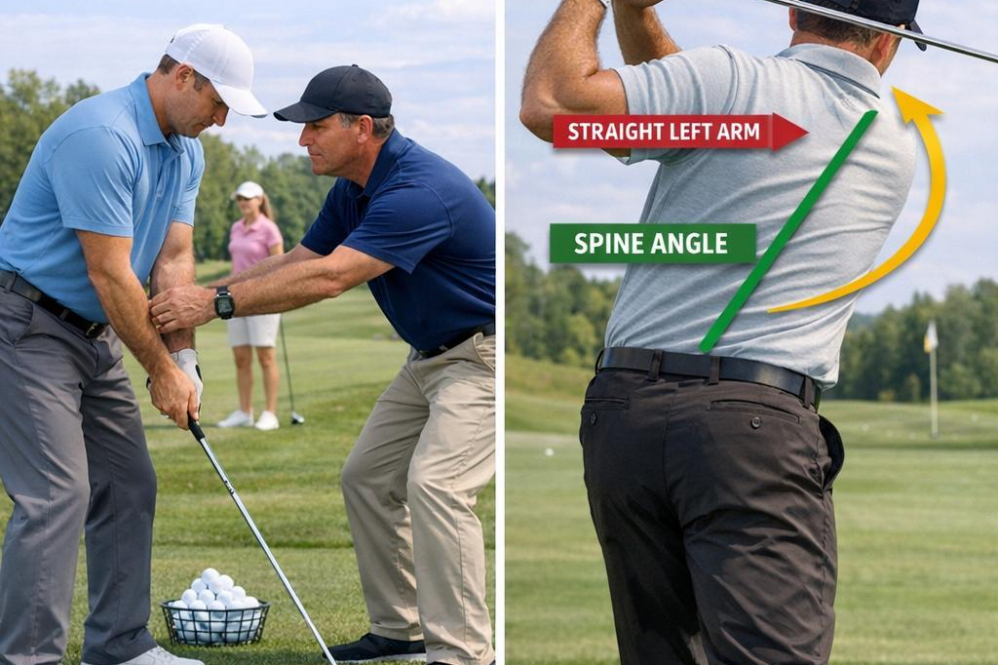
Mastering the Timeless Swing Techniques That Changed the Game
Achieving mastery in golf’s timeless swing techniques begins with a solid foundation in proper setup fundamentals. Start by positioning your feet shoulder-width apart, ensuring your weight is evenly distributed too promote balance and control. The ball’s placement in your stance should vary depending on the club: for irons, position it slightly forward of center, whereas for woods and drivers, place the ball just inside the lead heel. Pay attention to your spine angle-maintain a slight tilt away from the target, roughly 15 degrees, to encourage a smooth release through impact. During your takeaway, focus on keeping the clubhead low to the ground for the first few inches, initiating a one-piece pivot that enhances consistency. Drills such as the “pause at the top” help solidify a controlled transition,preventing rushed downswing sequences that commonly create slices or hooks.
the short game, particularly putting, demands precision and repeatable mechanics. A stable lower body paired with a pendulum stroke emphasizes accuracy and pace control. To refine your putting stroke, practice the 2-to-3-foot pendulum drill where you maintain a firm wrist position and hinge from the shoulders, reducing excess movement. Measuring green slopes using your feet and visual cues is critical for reading breaks and adjusting aim accordingly. Course strategy plays an essential role here-understanding when to leave yourself an uphill putt versus an aggressive attempt improves scoring probability. Incorporate drills that simulate pressure, such as the “around the world” drill, which builds confidence on various distances and slopes. For all skill levels, practicing lag putting with targets set between 20 and 40 feet fosters touch and distance control, minimizing three-putts.
Driving and long-iron play require integrating biomechanics with equipment considerations to maximize distance while maintaining accuracy. Begin by analyzing your swing plane: a slightly flattened plane optimizes power transfer with a driver, aiming for a dynamic loft between 10 and 12 degrees at impact to launch the ball efficiently. Use alignment sticks during practice to ensure a square clubface and proper hip rotation, avoiding common faults like early extension or casting. Implement a fitness-focused routine emphasizing core stability and flexibility, crucial for generating clubhead speed without sacrificing control.Strategically,understand course layout-favoring fairway positioning over raw distance helps lower scores by avoiding hazards and challenging lies. Track your driving accuracy and distance with measurable goals, such as hitting at least 70% fairways during practice rounds, to identify areas for advancement and tailor drills accordingly.
Discover the Secrets Behind Legendary Putting Styles to Lower Your Score
Mastering putting requires more than simply aligning the ball to the hole; it hinges on understanding the intricate subtleties of green reading and stroke mechanics. start by focusing on your setup fundamentals-maintain a shoulder-width stance to provide stable support and keep your eyes positioned directly over the ball,which aids in accurate line visualization. Incorporate the technique favored by legends like Ben Crenshaw, who emphasized a smooth, pendulum-like stroke with minimal wrist breakdown. To replicate this, practice making strokes within a 2:1 ratio of backswing to follow-through, ensuring consistent tempo and rhythm. Remember, the putter face should remain square to the target line at impact, so use drills involving alignment rods and mirrors to troubleshoot common faults such as early release or toe-hitting that often lead to missed putts.
Reading the green accurately is crucial and requires an awareness of slope, grain, and environmental variables such as wind and moisture. One effective approach is to use a two-step method: first, identify the overall slope angle by observing water flow off the green or using your feet to feel subtle inclines-putting within 3 degrees of slope demands precise compensation in line and speed. Then, consider grain direction, which can affect ball roll by up to 2-3 feet on putts longer than 15 feet. Advanced players often emulate Hall of Famer Jack Nicklaus’s practice of standing behind the ball to align the putt, then crouching down from multiple angles to confirm break and speed judgment. Enhance your green-reading skills by incorporating drills such as “clock face” putting-rolling putts from all directions around the hole to different targets-building touch and sensitivity to various slopes and speeds.
Integrating putting techniques into overall course strategy can considerably lower scores by reducing three-putts and enhancing confidence during crucial moments. For beginners, focus on targeting an effective distance control goal-try to consistently lag putts to within 3 feet of the hole on long attempts-to increase your make percentage dramatically. Lower handicap players should employ shot-shaping strategies, adapting stroke pressure and face angle to mitigate uneven surfaces or uphill/downhill lies. Additionally, customize your equipment by selecting putters with appropriate loft, typically between 3 to 4 degrees, and fitting grips that promote a secure, yet relaxed hold, improving touch and reducing tension. cultivate the mental discipline to maintain a pre-putt routine, controlling breathing and visualizing successful outcomes, a technique championed by putting greats like Arnold Palmer. Combined, these approaches build a reliable, repeatable putting stroke tailored to varied course conditions that can trim strokes off your round and elevate your game.
Unlock the Driving Legacy with Tips from Golf’s Greatest Players
to enhance your driving performance like golf’s greatest players, it’s essential to first understand the fundamentals of the golf swing and how to efficiently transfer power to the ball. Focus on achieving a consistent swing plane with a shoulder turn of approximately 90 degrees for men and 75 degrees for women during the backswing. This creates optimal coil and stores energy to be released through impact. Incorporating a stable base with feet shoulder-width apart and a slightly flexed knee setup helps maintain balance throughout the stroke. Practice drills such as the “slow-motion swing” allow you to feel the correct sequencing of body rotation, ensuring your hips lead the downswing followed by the arms and clubhead.Avoid common mistakes like “casting” the club early or excessive lateral sway, which dissipate power and reduce accuracy. By building this foundation, you not only maximize distance off the tee but also develop repeatable mechanics that improve your driving consistency on any course.
Short game mastery significantly influences scoring, and efficient putting techniques are paramount. Golf’s elite putters often emphasize maintaining a stable lower body while allowing the shoulders to guide the stroke in a pendulum motion. A proper setup includes eyes positioned directly over the ball and a slight forward tilt of the spine to promote a smooth, square strike. Practicing drills such as the “gate drill” with tees helps train the putter face to remain square through impact, minimizing sidespin and enhancing roll. Additionally, focus on distance control by hitting putts to targets of varying lengths, using a minimal but intentional tempo to avoid deceleration. Course management plays a role here as well; reading greens involves understanding slope, grain, and wind conditions-elements all historic players have meticulously studied to convert crucial scores. By honing these techniques and routines, golfers can lower three-putts and save valuable strokes in tournament conditions.
Applying strategic course management to your driving and overall game ties technique improvement to better scores. Great players adapt their shot selection and club choice based on hole layout, hazards, and prevailing weather. For example, on windy days, opting for a lower ball flight with controlled driver tee shots can reduce errant drives caused by gusts. Practice drills such as the “fairway finder” where you aim for specific landing zones instead of maximal distance encourage smarter play and reduce penalties. Understanding the rules around out-of-bounds and hazard relief also shore up confidence during difficult lies. Mental discipline is equally critical; approach every tee shot with a clear pre-shot routine that includes visualization and alignment checks. By integrating sound swing mechanics, precise putting, and bright course strategy, you create a extensive game plan poised to unlock your driving legacy and consistently improve your scoring across all conditions.