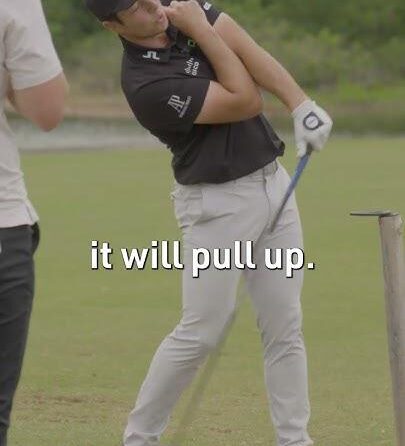
Golf performance emerges from the coordinated interaction of biomechanical efficiency, motor learning principles, and strategic decision-making.mastery of the swing, putting, and driving is not the product of isolated techniques but of integrated systems that translate physiological capability into repeatable on-course outcomes. This article synthesizes contemporary biomechanical insights, evidence-based practice protocols, and course-management frameworks to explicate how technical adjustments, deliberate practice, and tactical choices jointly shape scoring performance.Drawing on kinematic and kinetic analyses of the golf swing, contemporary motor-learning research on variability and contextual interference, and validated drill designs, the following sections present an applied taxonomy for skill refinement across ability levels. Emphasis is placed on identifying objective diagnostic markers (e.g., segmental sequencing, center-of-mass transfer, launch and spin parameters), prescribing drills that optimize transfer to competition (distributed vs. massed practice, variability of practice), and aligning driving and putting strategies with individual capability and course conditions. Practical metrics for assessment and progress measurement are provided to facilitate evidence-informed coaching and self-directed enhancement.
The material that follows is organized to guide practitioners and serious players through a progressive curriculum: assessment and corrective priorities, drill libraries mapped to specific deficiencies, and strategic templates for on-course application. By bridging theory and practice, this framework aims to accelerate reliable performance gains in swing mechanics, putting consistency, and driving potency.
Biomechanical Foundations of the Golf Swing: Kinetic Chain Optimization, Posture, and Sequencing for Consistent Ball Striking
Begin with the kinetic chain as a coordinated, proximal-to-distal sequence in which the lower body and pelvis initiate transfer of ground reaction forces, the thorax follows with rotation, and the arms and hands deliver the clubhead. To optimize that chain, establish a reproducible setup: spine tilt ~20° forward (measured from vertical), slight knee flex ~10-15°, and stance width roughly shoulder-width to 1.2× shoulder-width for full shots.from this base, train a controlled shoulder turn of ~80-90° (men) or ~60-80° (women) with hip rotation of ~30-45°, producing an X‑factor (shoulder-to-hip separation) of 20-45° that stores elastic energy without inducing sway. To build these positions and measurable feel, practice these drills:
- Medicine-ball rotational throws (3 sets of 8 per side) to train explosive pelvis-to-thorax sequencing;
- Step-through drill (short-back swing, step to lead foot at impact) to promote weight shift and correct timing;
- Mirror + alignment sticks to verify spine angle and shoulder turn consistency.
These setup checkpoints reduce compensations (casting, early extension) and create a repeatable platform for consistent ball striking across handicap levels.
Next, focus on sequencing through the downswing to produce predictable impact conditions: the desired order is hips rotate toward the target, followed by thorax rotation, upper arm acceleration, and finally hand/club release-this proximal-to-distal timing maximizes clubhead speed while preserving face control. Emphasize weight transfer metrics: 50/50 at address, ~60-65% on trail foot at top of backswing, and ~65-80% on lead foot by impact; monitor these with a pressure mat or simple balance-feel drills. Key impact targets are forward shaft lean of 2-4° on mid-irons, a descending strike with a crisp divot beginning just after the ball, and center-face contact.Correct typical faults with these drills and cues:
- Impact-bag drill to feel compressed impact and prevent casting;
- gate drill for squaring the clubface through impact (use two tees or alignment rods slightly wider than the clubhead);
- Low-point control drill (place a towel 6-8 inches past the ball and aim to compress the turf before the towel) to teach correct bottom-of-swing location.
Set measurable practice goals-such as achieving centered contact on >80% of a 20-ball iron sequence or consistent divot depth/location within a 6‑inch window-and use video or launch monitor data to track progress over 4-8 week cycles.
integrate short‑game mechanics, equipment considerations, and on‑course strategy so technical gains translate to lower scores. For chips and pitches, reduce wrist hinge and use body rotation to control trajectory and spin; aim for hands slightly ahead of the ball at impact with a compact follow-through for bump-and-run shots, and a fuller turn for soft pitches. In putting, maintain a stable pelvis and use a shoulder-driven pendulum with minimal wrist break; practice the ladder drill (set distances every 3-5 feet) to develop repeatable tempo and distance control. Equipment choices-correct loft/bounce in wedges, properly fitted shaft length and lie-affect low-point control and turf interaction, so have loft and lie checked annually under the Rules of Golf. On course, adjust technique to conditions: play a lower-ball‑flight shot (hands forward, less loft) into strong wind, and prefer spin-reducing bump shots on wet fairways. Use this practice routine for transfer to competition:
- 3 sessions/week: two technique sessions (30-40 minutes each) focused on drills above,one on-course simulation (9 holes) applying strategic shot selection;
- quantify improvement: track proximity to hole for chips (target: >60% inside 6 ft) and percentage of centered iron strikes per session;
- mental cueing: use one pre-shot routine element (breath + alignment check) to stabilize execution under pressure.
Together, these biomechanical foundations, measurable drills, and strategic adaptations create a coherent pathway from practice to scoring for beginners through low handicappers.

Clubface Control and Swing Plane Integrity: diagnostic Indicators and Corrective Drills for Improved Accuracy
Begin by diagnosing whether accuracy problems originate from the clubface or the swing plane: use the ball-flight laws as your primary diagnostic tool. Initial launch direction is resolute predominantly by the clubface angle at impact, while the subsequent curvature is produced by the relationship between face angle and swing path (face‑to‑path). A useful measurement goal is to keep face‑to‑path within ±2° (each degree of face‑to‑path typically moves the ball ~2.5 yards per 100 yards of carry), and to aim for a face angle at impact within ±1.5° of the intended target line for high accuracy. Observable indicators of plane integrity include consistent divot direction (for irons), a repeatable low‑point location, and the quality of contact (center strikes vs. toe or heel hits).conversely, telltale signs such as excessive curvature with a start line opposite the curve, steep downward strikes that thin or fat the ball, or a repeated heel/toe pattern point toward plane faults or setup issues (open/closed clubface at address, incorrect shaft incline of roughly 30°-40° for mid‑irons at address). Use simple feedback tools-impact tape,alignment rods,and video from down‑the‑line and face‑on angles-to quantify these diagnostics before implementing corrections.
Once you have diagnosed the issue, implement targeted corrective drills that address both clubface control and swing plane integrity in coordinated fashion.Begin with setup fundamentals: ensure neutral wrist hinge, square clubface to the spine angle, and a grip pressure around 3-4/10 of maximum to promote feel over tension. Then practice the following drills to produce measurable change:
- Gate drill (short game to full swing): place two tees or rods slightly wider than the clubhead and swing through to train a square face and proper path; start at 50% speed and progress to full speed,aiming for consistent center strikes.
- Impact bag / tee drill: hit into an impact bag or drive a tee into the ground to feel the correct release and face orientation; for irons aim for a slightly descending blow with a low‑point just in front of the ball.
- Plane‑rod drill: insert an alignment rod in the ground angled to approximate the desired plane (about 45° from the target line when viewed down‑the‑line for longer clubs) and swing along that line to ingrain shoulder turn on plane.
- One‑handed and half‑swing drills: perform slow, controlled swings with the lead hand only to refine face awareness and with the trail hand only to feel the path; use a mirror or slow‑motion video to verify face position at impact.
Progressively add objective feedback-use a launch monitor to track face‑to‑path, dynamic loft, attack angle, and spin rate-and set measurable practice goals (for example, reduce face‑to‑path variance by 50% over four weeks or consistently produce center contact on 8/10 strikes at 100% swing intensity).
translate these technical improvements into course strategy and shot‑shaping decisions. In play, use pre‑shot routines that include a swift face check (visualizing a square face at impact) and a simple swing thought tied to the diagnostic finding (e.g., “shallow and rotate” to counter an over‑the‑top move). Consider equipment and lie adjustments as part of the solution: small loft changes, proper lie angles, or slightly different shaft torque can reduce undesirable gear‑effect and help square the face through impact-consult a qualified clubfitter for changes. on windy days or narrow targets, plan for controlled trajectory and aim to leave misses in playability zones (for instance, accept a predictable 5-10 yard lateral miss to the safe side rather than aiming aggressively and increasing dispersion). Common faults and quick corrections include correcting an early release with the split‑hand drill to delay the release,fixing a steep over‑the‑top plane with the towel‑under‑arm drill to promote inside‑out motion,and narrowing stance or reducing swing length for golfers with limited mobility.As a final point, integrate mental routines-breathing, commitment to the target, and small objective checks from practice-to convert technical gains into lower scores across all skill levels.
Driving Power and Directional Control: integrating Ground Reaction Forces, Hip Drive, and Launch Angle Manipulation
Frist, establish a reproducible setup and kinetic sequence that converts lower‑body force into clubhead speed while maintaining directional control. Begin with a balanced address: 55-60% weight slightly favoring the trail foot for the driver and a spine tilt that supports a sweeping arc. During the takeaway and transition, direct force into the ground to create a ground reaction force (GRF) vector that is felt as a push through the ball of the trail foot, then a lateral-to-target drive from the lead leg. Emphasize a sequence where the hips begin rotation earlier than the shoulders (lead hip clearing while the trail hip braces) to transfer energy efficiently – a typical pelvic rotation of ~40°-60° from address to impact produces a repeatable stretch between pelvis and thorax for most players. To internalize this pattern, practice the following drills to feel GRF and hip sequencing:
- Step‑and‑drive drill: take a small step with the lead foot at the top of the backswing and drive the step into the ground to start the downswing; repeat 10-15 times focusing on a synchronized hip drive.
- Pressure‑pad or towel drill: place a towel under the trail foot and feel the towel compress at transition to sense load and release.
- Hip‑hinge pause drill: pause at the top with a firm trail‑leg brace then rotate hips forcefully while keeping the head still to develop sequencing.
These checkpoints reduce common faults such as early arm unhinging and excessive lateral sway, both of which dissipate force and increase dispersion.
Next, manipulate launch conditions deliberately to match course strategy and wind: adjust angle of attack, dynamic loft, and spin to optimize carry and rollout.For driver play, target an effective launch angle of ~10°-14° with a spin rate near 2000-3000 rpm depending on clubhead speed – for example, a player producing 95-105 mph clubhead speed typically finds optimal carry with a launch of 11°-13° and spin around 2200-2700 rpm. Use equipment and setup to control these variables: raise/lower tee height and move the ball forward/back within the stance to change angle of attack; use adjustable driver loft (+/- 1-2°) and select shaft flex that stabilizes dynamic loft at impact. Practical drills to refine launch include:
- Launch‑monitor sessions: record carry, spin, and launch while varying tee height and ball position in 0.5 inch increments to find the optimal configuration for your swing speed.
- Impact tape and face‑angle awareness: use impact stickers to verify where on the face you are striking and adjust setup to reduce face lofting at impact.
- Attack‑angle ladder drill: hit a series of balls with progressively higher tees to practice sweeping the driver (shallower, positive attack) versus slightly upward attacks when needed.
Address common mistakes such as flipping the wrists (creating excessive spin) or steep, downward attacks (reducing carry); correct these with small forward press at setup and maintaining spine tilt through impact.
integrate directional control and course management so power gains translate into lower scores. Directional consistency requires managing face‑to‑path relationship, strike location, and the launch/spin window suited to course conditions. For shot shaping, use hip slide vs. rotation adjustments: a slight lateral hip slide toward the target with delayed upper‑body rotation promotes an in‑to‑out path for a draw, while earlier rotation with less slide tends to produce a neutral or fade path; however, prioritize impact position (centered on the face) over forced shapes to avoid dispersion. Set measurable practice goals such as increasing smash factor by 0.05 within four weeks or reducing 95% carry dispersion to ±10 yards. Use these drills and checkpoints on the course:
- Gate drill for path control: set two tees slightly wider than the clubhead and swing through to encourage the desired path.
- Alignment‑stick funnels: create a visual channel on the range for start line and rollout to train target awareness.
- Wind and lie simulations: practice low, penetrating trajectories on windy days by reducing dynamic loft and focusing on compact release.
In addition, adopt a pre‑shot routine that incorporates target selection, wind assessment, and a committed visualization of the intended ball flight; mental commitment reduces mechanical tinkering and improves execution under pressure.By connecting tactile drills for GRF and hip drive with measured launch optimization and disciplined course strategy, players from beginners to low handicappers can improve both distance and directional control while lowering scores.
Putting Mechanics and Green reading Strategies: Stroke Consistency, Speed Control, and Prescriptive Short Game Drills
effective stroke mechanics begin with a reproducible setup and a pendulum-driven stroke that minimizes wrist action.Start with ball position slightly forward of center (≈1 inch) and a stance that promotes a stable base-knees flexed ~10-15°,weight distributed evenly or marginally toward the lead foot,and eyes positioned over or just inside the ball so a plumb line through the shaft falls near the ball. From this foundation, use the larger muscles of the torso and shoulders to create a smooth back-and-through motion; keep the hands and wrists passive to reduce flipping and deceleration.In practice, adopt a metronome or count rhythm to ingrain a consistent tempo (short putts frequently enough use a near 1:1 backswing-to-forward ratio; longer putts require proportionally longer follow-through). Equipment awareness also matters: confirm putter loft (typically 3-4°) and lie allow the face to deliver a square,centered strike. To operationalize these fundamentals, use the following setup checkpoints and drills:
- Setup checkpoints: plumb-line alignment of eyes/shaft, ball ~1″ forward, slight knee flex, relaxed grip pressure (~3-4/10).
- Gate drill: place two tees 6-8 inches apart to enforce a square face through impact and a centered hit.
- One-handed pendulum drill: practice left-hand (for right-handers) strokes to feel shoulder-driven motion and eliminate wrist breakdown.
These elements address common faults (overgrip, excessive wrist hinge, early acceleration) and create a repeatable stroke that transfers directly to on-course putting consistency.
Transitioning from stroke mechanics to green reading and speed control, a putt’s success is determined more by speed than by subtle line corrections. Read the green by identifying the fall line (the path water would take) and by checking grain, slope and wind; read from multiple angles-behind the ball, slightly left and right, and from the low side-to triangulate the true line. For speed, adopt a landing-spot approach: choose a spot on the green where the ball should first land or attain maximum roll, then calibrate stroke length to reach that spot reliably. Use measurable drills to develop this feel:
- Ladder drill: from 3, 6, 9, and 12 ft, aim to stop the ball within a 6-inch radius of the hole; record percentage success and progressively increase reps.
- 3-6-9 lag drill: make 10 putts from each distance, aiming to leave inside 3 ft; set a progressive goal such as 70-80% success from 20-30 ft within 6 weeks.
- Side-distance check: view putts from the side to better judge pace (a method endorsed by putting specialists and instructional resources).
When on the course, factor in conditions-firmer greens increase roll and downwind reduces necessary stroke length-so adjust the landing spot accordingly. Mentally, commit to a speed target before addressing the ball; visualizing the ball rolling over the chosen landing spot reduces indecision and improves execution under pressure.
integrate prescriptive short-game drills that connect putting and chipping strategies to lower scores. Choose club and trajectory based on green contours and pin location: for a firm surface with run, use a bump-and-run (7- to pitching-iron); for a contain-and-stop shot, use higher-lofted wedges with open face and controlled bounce; for tight pins over hazards, practice the flop with a lob wedge while respecting risk-reward. Prescriptive drills include:
- Circle drill: from varied lies at 10-30 yards, play 30 shots attempting to finish inside a 3-foot circle around the hole; track percentage inside to set performance goals (e.g., 75% within 8 weeks).
- 3-club distance control: select three clubs and hit to the same target to learn carry vs. roll relationships on the practice green.
- Short-game trajectory ladder: practice low (bump), medium, and high shots to the same landing zone to understand how loft and bounce affect rollout.
Correct common errors-such as deceleration (finish low), flipping at impact (keep hands passive), and poor club choice (match loft to desired roll)-by using video feedback and pre-shot routines that replicate on-course pressure. Moreover, incorporate course-management decisions modeled by elite players: when wind, slope, or hole position increases risk, favor conservative plays that leave makeable putts rather than heroic shots that increase bogey probability. By combining mechanical precision, deliberate speed practice, and scenario-based short-game drills, golfers of all levels can translate technique into measurable scoring improvement.
Progressive Practice Frameworks: Periodization, Feedback Modalities, and Drill Progressions to Accelerate Skill Acquisition
Begin training with a structured periodization model that moves from motor-pattern establishment to performance consolidation. start with a 4-6 week foundation phase emphasizing setup fundamentals: neutral spine angle (20°-30° tilt), 50/50 weight distribution at address, and ball position at the left heel for driver and between center and left ear for mid- and short-irons. During this phase, prescribe measurable targets such as 200 quality full-swing repetitions per week (quality defined as strikes within a 6-foot dispersion on a 20-yard target at 150 yards) and daily 20-30 minute short-game sessions (minimum 100 putts including 30 from 3-6 feet and 20 from 20-40 feet). Next, transition into a 6-8 week skill acquisition block that introduces variability (random practice) and technical cues: work toward an attack angle of +2° to +4° with the driver and -4° to -6° with mid-irons, and practice increasing dynamic loft control by adjusting shaft lean at impact by 2° increments. implement a 2-4 week consolidation and taper period before competition with reduced volume but increased intensity, maintaining tempo and sharpening decision-making under simulated on-course pressure. To support these phases, include equipment considerations-such as matching shaft flex to swing speed, testing loft and lie in the bag fitting, and using properly gripped clubs-to ensure practice transfers directly to performance.
Augment periodized practice with layered feedback modalities to accelerate skill acquisition: intrinsic (feel), extrinsic (coach cues), and augmented (technology). Begin by establishing baseline metrics using a launch monitor: ball speed, clubhead speed, carry distance, spin rate and dispersion patterns.For example, aim to improve ball speed by 1-3% per month for intermediate players by combining strength work and technical tweaks.Use video analysis (slow motion at 240 fps) to diagnose sequencing faults-pelvic initiation vs. early arm casting-and employ impact-specific drills such as the impact bag, face-tape, and alignment-rod gate work. Recommended feedback progression includes:
- Immediate extrinsic feedback (coach corrections) for gross errors;
- Delayed augmented feedback (video and launch data) for motor learning consolidation;
- Self-regulated summary feedback (player records successes/failures) to build internal error detection.
For diverse learners, pair visual learners with mirror and video drills, kinesthetic learners with impact-bag and towel-under-arm drills, and analytical learners with numeric KPIs. Common mistakes and corrections are integrated into feedback: if a player consistently shows a weak, open-face impact, use face-tape and a closed-stance alignment drill; if a player casts the arms, use a pump drill stopping at three-quarter backswing to retrain wrist hinge and sequencing.
structure drill progressions to prioritize transfer to the course and strategic decision-making. Progress from high-repetition technical drills to situational, pressure-based practice that mimics tournament play. Begin with controlled technical drills (e.g., 50 half-swings focusing on low-point control for irons, 60 wedge shots to specific yardages with calibrated swing lengths) then progress to scenario-based work: simulate a 150-yard approach into a two-tier green with 10 mph left-to-right wind, then practice shaping a 7-iron draw using a slightly closed clubface and an in-to-out swing path.Include measurable performance goals for scoring: increase Greens in Regulation by 10 percentage points within 12 weeks and improve scramble conversion to >50% by practicing recovery shots from 20-40 yards. Use these drills:
- Putting clock (make 8/10 from 3 feet, 6/10 from 6 feet under 60 seconds);
- Wedge-yardage ladder (20, 30, 40, 50, 60 yards – 5 balls each, max 1 miss per distance);
- Course-simulation nine-hole loop with forced layups and wind adjustments.
Moreover, integrate the mental game: rehearse a concise pre-shot routine, use visualization for trajectory and landing spot, and practice decision thresholds (e.g., choose aggressive line only when fairway width and wind allow a >60% success probability).By linking mechanical improvements to clear performance metrics and on-course tactics, golfers of all abilities-from beginners establishing consistent contact to low-handicappers refining shot-shaping and course management-will see measurable reductions in strokes and more reliable competition performance.
Strength, Mobility, and Injury Prevention for Golfers: Targeted Conditioning Protocols and Movement Screen Recommendations
Assessment should precede prescription: begin each training cycle with a targeted movement screen that identifies restrictions likely to degrade swing mechanics or increase injury risk. Recommended screens include a thoracic rotation test, single-leg balance (eyes open and closed), ankle dorsiflexion measurement, hip internal/external rotation, and a squat pattern (e.g., overhead squat or single-leg squat). Use quantitative thresholds to guide interventions-for example, aim for ≥45° thoracic rotation (each side), ≥20 seconds single-leg balance (eyes closed), and at least 35-40° ankle dorsiflexion measured in a weighted lunge position; values below these targets commonly correlate with early extension, over-rotation, and poor weight transfer. When deficits are identified, prescribe corrective mobility first (thoracic foam-roller rotations, banded posterior capsule stretches, ankle mobilizations) followed by strength-based stability work (glute medius single-leg RDLs, Pallof presses, bilateral and unilateral loaded hip hinges). For practical application on the range, integrate these exercises into a warm-up circuit: 2 rounds of 8-12 reps for strength drills and 30-60 seconds for mobility holds, performed 3×/week to produce measurable change within 6-8 weeks.
Next, translate improved movement capacity into reproducible swing mechanics and short-game control. With restored thoracic and hip rotation, players should seek a 90° shoulder turn (relative to the target) on the backswing and maintain a hip turn of approximately 30-45° to create desirable hip-shoulder separation (X-factor) that drives clubhead speed while protecting the lumbar spine. To connect strength to technique, use sport-specific drills such as medicine-ball rotational throws (3-5 kg, 6-10 reps per side) to train coordinated sequencing, and “slow-to-fast” impact drills where the player rehearses the bottom-of-swing position with a 55/45 forward pressure (lead/trail foot) before accelerating through the ball. For the short game, emphasize a compact, stable setup: lower-body bracing (slight knee flex 15-20°) and minimal wrist break for chips, and a pendulum stroke for putting with eyes roughly over the ball and a stroke arc less than 6-8 inches for 6-12 footers. Practice drills to reinforce these ideas include:
- Impact tape or face-marking to achieve centered strikes (goal: >80% center contact in a 50-shot set)
- Split-grip chipping to improve arm-body connection (3 sets × 10)
- Progressive-speed medicine ball throws to enhance sequencing (3 sets × 6-8)
Correct common mistakes such as casting (early wrist uncocking) by using half-swings with a towel under the lead armpit, and correct early extension by rehearsing a wall-posture drill (back toward a wall) for 20-30 swings per session.
incorporate injury-prevention principles into course strategy and long-term programming so technical gains transfer to scoring. Prioritize periodization: maintain two strength sessions per week (compound lifts and golf-specific cable rotations, 3-4 sets × 6-12 reps) and three mobility/stability sessions (10-20 minutes each) to preserve adaptations and reduce overuse; taper intensity before crucial rounds. Equipment considerations are integral-confirm proper shaft flex and lie angle during a club fitting,maintain consistent loft gaps of 4-6° between wedges,and choose bounce suited to typical turf conditions to reduce repetitive stress on the wrists and low back. On-course, use strategy to protect the body and the score: when wind or firm lies threaten recovery, opt for a lower-lofted club and a controlled punch shot rather than a full swing that increases torque through the spine. Additionally, embed mental and tempo work into practice (pre-shot breathing, a 2-second setup routine, visualization of intended trajectory) so that physical improvements are executed under pressure. With consistent monitoring via movement screens and clearly defined, measurable goals (e.g., restore thoracic rotation by 10° in 8 weeks, reduce missed-center strikes to <20% over 50 shots), golfers of all levels-from beginners improving posture to low handicappers refining speed and control-will see direct carryover to accuracy, shot shaping, and lower scores while minimizing injury risk.
Strategic Course Management and Shot selection: Risk Reward Assessment,Playing to Strengths,and Structured Pre Shot Routines
Effective on-course decision-making begins with a quantitative,player-specific assessment of risk and reward.Start by building a simple yardage book: record your average and 75th‑percentile carry distances for each club, typical dispersion (left/right and distance), and preferred miss pattern; these numbers become the foundation for rational choices rather than guesses. For example, if your 3‑wood carries 230-250 yards but your driver is erratic, a conservative play on a par‑5 where a carry over water is 240 yards may be to lay up to 100-120 yards for a wedge approach rather than attempt the carry and risk penalty relief under Rule 19 (unplayable) or a lost ball. Moreover, when evaluating risk versus reward, consider green size, run‑out, and putt complexity: on a small target with severe green side slopes, the expected value of a safe layup increases. to operationalize this assessment during a round, use this checklist:
- Confirm yardage and wind (carry vs. roll).
- Reference dispersion – know the direction and magnitude of your typical miss.
- Identify bailout targets and percentage chances of hitting the green from those positions.
These steps help golfers of all levels convert strategic thought into repeatable, lower‑variance play.
Once the strategic choice is made, execute the selected shot through repeatable mechanics and appropriate equipment choices. for intentional shot shape, focus on the relationship between clubface angle and swing path: a controlled draw is produced by a clubface closed relative to the path (face‑to‑path differential typically small, e.g., 1-5°) with an in‑to‑out path and slightly stronger grip; conversely, a fade uses a slightly open face to path with an out‑to‑in path. Setup fundamentals such as ball position (move ball forward in the stance ~one ball width from center for higher trajectory shots) and shaft lean at address (neutral to slight forward lean for crisp iron contact) directly alter launch angle and spin. Practical, measurable drills include:
- Gate drill with an alignment stick to train low‑to‑high impact and minimize “shank-like” misses.
- face‑awareness drill: hit 20 balls with a 7‑iron focusing only on face orientation at impact, recording how many land inside a 10‑yard circle (goal: 12-15/20 for consistency).
- Loft and trajectory control: practice hitting three trajectories (low/medium/high) with the same club by adjusting ball position and wrist set-track carry distances to within ±5 yards.
In addition, ensure clubs are appropriate: correct lofts, lie angles, and shaft flex can reduce compensations in the swing; consult a fitter if your shot shapes are caused by equipment rather than technique.
embed a structured pre‑shot routine and targeted short‑game practice to convert strategy and mechanics into scoring. A reliable routine of read, select, visualize, rehearse, and commit should last 5-12 seconds: read the green or lie, choose a precise target line, visualize the landing/roll, perform one or two swing rehearsals, set alignment, and execute with committed tempo. For short game scoring, separate bump‑and‑runs (use lower loft, narrow stance, minimal wrist) from high soft shots (open clubface, wider stance, accelerate through ball) and practice each to measurable standards-e.g., get 8 of 10 wedge shots to finish within 15 feet from 80-100 yards; scramble from around the green with a 60% success target for bogey‑avoidance. Also integrate situational drills that simulate course pressures and environmental factors: practice clubbing up an extra one or two clubs into a 15-25 mph headwind, and rehearse target selection in crosswinds by aiming an extra 10-20% of the carry distance toward the upwind side. address common mistakes-varying grip pressure, decelerating at impact, and overcomplicating the read-by using routine checkpoints for setup and a post‑shot reflection to track decisions.By combining quantified decision rules, deliberate mechanics, and a concise mental routine, golfers can systematically reduce strokes and improve scoring consistency across different course conditions and skill levels.
Q&A
Note on search results: The supplied web search results refer to an unrelated company named “Unlock” that offers home equity agreements. Those results are not relevant to the golf topic requested. Below is an academic-style, professional Q&A tailored to the article “Unlock Golf Mastery: Perfect Swing, Consistent Putting, Powerful Driving.”
Q1: What is the conceptual framework behind “Unlock Golf Mastery”?
A1: The framework integrates three pillars-biomechanical efficiency (optimizing the body-implement system for repeatable motion and power), perceptual-motor skill learning (deliberate, progressive practice with variability and feedback), and strategic course management (decision-making to minimize error and maximize scoring opportunities). each pillar is addressed with evidence-based principles,measurable metrics,and progressive drills.
Q2: Which biomechanical principles are most important for an effective full swing?
A2: Key principles include (1) proximal-to-distal sequencing (kinematic sequence) where the pelvis initiates rotation followed by torso,arms,and club to maximize clubhead speed; (2) efficient ground reaction force usage-transferring force through foot contact into rotation; (3) maintaining a stable posture and spinal angle to preserve a consistent swing plane; and (4) managing angular momentum and timing to achieve consistent impact geometry (clubhead path,face angle,and loft at impact).Q3: How should a golfer set up to promote a repeatable swing?
A3: Essential setup elements: neutral grip pressure (firm but not tight), balanced posture with slight knee flex and hinge at the hips, appropriate stance width relative to club (narrower for short irons, wider for driver), consistent ball position (more forward for longer clubs), and alignment oriented to the intended target with eyes over or slightly inside the ball-target line.These reduce variability and facilitate proper sequencing.
Q4: What common swing faults degrade consistency and how are thay corrected?
A4: Common faults and concise corrections:
– Slicing (open clubface/path out-to-in): strengthen release, shallow the downswing, close path via hip rotation.
– Hooking (closed face/path in-to-out): reduce excessive forearm supination, ensure clubface is square at impact.
– Fat shots (early weight shift/back swing bottoming): maintain spine angle, delay lateral weight transfer until downswing.
– Thin shots (steep attack): shallow the angle of attack, widen stance slightly, rehearse sweeping strikes with mid-irons.
Use video feedback,impact tape,and short targeted drills to isolate corrections.
Q5: What drills accelerate learning of proper sequencing and timing?
A5: Effective drills:
– Step drill: start with back foot forward or step in at transition to emphasize lower-body initiation.- Punch/hesitation drill: pause at transition to feel the sequence start with hips.
– Impact bag drill: promotes solid compressive impact and correct release path.
– Slow-motion to full-speed progression: encodes motor pattern and timing.
These drills progress from constrained, low-speed repetitions to full-speed with variability.Q6: How does one increase driving distance without sacrificing accuracy?
A6: Prioritize efficient power generation over brute force: optimize the kinematic sequence, increase clubhead speed through rotational mobility and strength in core/hips and improved ground force application, and optimize smash factor via center-face contact. Simultaneously manage dispersion by controlling face angle and swing path through setup, tempo, and release mechanics. use launch monitor feedback (ball speed,launch angle,spin rate,smash factor) to quantify trade-offs.
Q7: What are the key driver setup and equipment considerations?
A7: Driver setup: wider stance,ball positioned off the instep,slight tilt away from target to encourage upward attack,correct tee height (top of driver face just above crown center),and relaxed but secure grip. Equipment: select loft, shaft flex, and shaft profile that match swing speed and launch characteristics. Optimize for a launch angle and spin rate that maximize carry and controllable dispersion.
Q8: What are the essential putting mechanics for consistency?
A8: Core putting mechanics: stable, quiet lower body; pendulum-like shoulder-driven stroke; minimal wrist manipulation; consistent eye-over-ball alignment; neutral grip promoting face control; consistent stroke length-to-distance relationship for speed control. Consistency in setup and a repeatable pre-putt routine are critical.
Q9: How should golfers practice distance control on the putting green?
A9: Use progressive distance drills with immediate feedback:
– Ladder drill: putt to markers at 3-4 distances (3-6-9-12 ft) multiple times to calibrate stroke length.
– Gate and two-putt drills: emphasize speed over hole by limiting how far putts can finish beyond the hole.
– Random-distance practice: emulate on-course variability (randomized targets) to improve adaptability.
Feedback via make percentage and follow-through landing zones accelerates learning.
Q10: How does green reading integrate with stroke execution?
A10: Green reading (slope, grain, speed) informs the intended line and necessary speed. Effective integration means selecting a target line and speed that account for break and uphill/downhill effects, then executing a stroke calibrated to that plan. Visualizing the ball’s intended path and rehearsing the stroke with that finish in mind improves alignment of perception and motor output.
Q11: What practice structure best produces durable skill acquisition?
A11: Combine deliberate practice elements: focused goals, high repetitions with intent, immediate feedback (video, launch monitor, coach), and progressive challenge. Emphasize blocked practice for early technique acquisition and shift to random and variable practice to enhance transfer to competition.Periodize training into technical, power, and on-course strategy phases.
Q12: How should biomechanical testing and technology be used?
A12: Use video analysis for kinematic inspection, launch monitors for ball-flight metrics (ball speed, launch angle, spin, carry), and pressure mats or force plates for ground reaction force assessment. These tools quantify deficits and track progress. Technology must be used diagnostically-interpretation by a coach or biomechanist is necessary to translate numbers into corrective action.
Q13: What strength, mobility, and injury-prevention approaches support golf performance?
A13: A balanced program includes rotational power training (medicine ball throws), hip and thoracic mobility work (to maintain separation), core stability, and lower-body strength for force production and balance. Emphasize movement quality and progressive loading; prioritize tissue resilience (eccentric control, scapular stability) to reduce common overuse injuries in shoulders, low back, and hips.
Q14: How should course management be taught to reduce scores?
A14: Course management training focuses on risk-reward assessment, club selection aligned with typical dispersion, planning for target zones rather than flags, and playing to strengths (e.g., conservative off tees when accuracy is priority). Simulation of on-course scenarios during practice, along with post-round reflection and data logging, refines decision-making.
Q15: What mental skills contribute to on-course consistency?
A15: Key skills: a stable pre-shot routine, focus on process goals (ball-strike, tempo) over outcome goals, arousal regulation, and resilience after poor shots. Incorporate brief psychological skills training-visualization, cue words, breath control-to stabilize performance under pressure.
Q16: How can progress be measured quantitatively?
A16: Use objective KPIs: clubhead and ball speed, smash factor, spin rate, launch angle, dispersion (carry/total), greens-in-regulation, putts per GIR, strokes gained metrics if available, average proximity-to-hole. Track practice data (putt make percentages at fixed distances, strike quality with impact tape) and run periodic assessments (e.g., 9-hole performance tests).
Q17: What is a sample 6-8 week progressive practice plan?
A17: Example 8-week microcycle:
– Weeks 1-2: Technical foundation-setup, grip, posture, slow-motion sequencing; 3-4 sessions/week, 30-45 min dedicated to drills.
– Weeks 3-4: Power and timing-step drill, medicine ball rotational throws, launch monitor sessions to optimize launch/spin; integrate range sessions with target constraints.
- Weeks 5-6: On-course simulation-random practice, pressure drills (competitive games), and strategic decision training.
- Weeks 7-8: Peaking and transfer-reduce volume, increase intensity, focus on execution under simulated pressure and course play. Include regular putting and short game daily.
Q18: When should a golfer consult a professional coach or biomechanist?
A18: Consult when persistent performance plateaus occur, there are recurring technical flaws that self-correction does not fix, injury risk or pain is present, or when leveraging advanced technology (force plates, motion capture) for performance tuning. A professional provides objective assessment, individualized programming, and accountability.
Q19: What role does equipment fitting play in mastery?
A19: Proper fitting aligns loft, lie, shaft flex/weight, and grip size to the golfer’s swing characteristics, optimizing launch conditions and reducing compensations that produce inconsistency. Regular re-fitting as skills or physical attributes change is recommended.
Q20: How can a golfer ensure long-term improvement rather than short-term gains?
A20: Emphasize sustainable practice habits-structured periodization, balance between technique and play, ongoing feedback loops, and physical conditioning tailored to golfing demands. Prioritize building reliable motor patterns through progressive overload and variable practice that promotes adaptability across course conditions.
If you would like, I can:
– Convert this Q&A into a one-page executive summary for coaches.
– Produce a printable 8-week practice calendar with daily drills.
– Create a short video script for key drills mentioned above.
Outro for the article “Unlock Golf Mastery: Perfect Swing, Consistent Putting, Powerful Driving”
attaining golf mastery demands an integrated, evidence-based approach that synthesizes biomechanical analysis, task-specific motor learning, and strategic course management. Precision in swing mechanics, repeatability in putting routines, and optimized driving power each contribute distinct but interdependent components of performance; measurable metrics and level-specific drills enable targeted interventions and objective progress tracking. Practitioners and coaches should prioritize systematic assessment,incremental load and skill progression,and the incorporation of contextual practice that simulates on-course decision-making to translate technical gains into lower scores.
Future advancement rests on continued application of rigorous measurement, individualized protocols, and interdisciplinary collaboration between coaches, biomechanists, and sports scientists. By committing to data-informed training and reflective practice, players at all levels can progressively close the gap between potential and performance - ultimately unlocking greater consistency, confidence, and scoring ability on the course.
Separate outro for the company/product “Unlock” (home equity access)
In closing, Unlock’s home equity agreement model offers homeowners a novel financing alternative by providing a lump-sum payment in exchange for a proportion of future home-value appreciation, with no monthly payments and no interest charges.This structure-enabling lump sums of up to $500,000 per the provider’s materials-may suit homeowners seeking liquidity without increased monthly obligations, but it also entails relinquishing a share of future upside. Prospective participants should undertake careful, long-term financial modelling, compare alternative borrowing and liquidity options, and seek self-reliant legal and financial advice to evaluate trade-offs and align the product with their goals and risk tolerance. For authoritative details and application procedures, consult the provider’s official resources.