
The optimization of golf performance increasingly depends not onyl on technique but on the systematic alignment of player biomechanics with equipment characteristics. Decades of research in sports biomechanics and ball-flight physics demonstrate that club parameters (including mass distribution, loft, lie, shaft flex, and length) and putter attributes (head shape, moment of inertia, center of gravity, and face technology) interact with individual swing kinematics and stroke patterns to determine launch conditions, spin rates, and ultimately shot reproducibility. Given the heterogeneity of golfer anthropometry, swing tempo, and green-reading behavior, a prescriptive one-size-fits-all approach to equipment is insufficient; instead, evidence-based fitting that integrates quantitative metrics (ball speed, launch angle, spin, attack angle, and stroke path) with qualitative assessment yields the greatest potential for measurable performance gains.
This article synthesizes current biomechanical principles, club and putter design theory, and best-practice fitting protocols to provide practitioners and serious golfers with a structured decision framework for equipment selection. Emphasis is placed on translating laboratory metrics into on-course outcomes, delineating how changes in club specifications affect swing mechanics and shot dispersion, and offering practical guidelines for optimizing both full-swing and putting setups. By coupling objective performance data with individualized technical instruction, the following sections aim to enable targeted interventions that enhance accuracy, consistency, and scoring efficiency across a range of skill levels.
The Role of Club Fitting in Optimizing Swing Mechanics and Shot Consistency
Effective fitting begins with an objective assessment of how equipment interacts with an individual’s movement pattern and therefore how it shapes swing mechanics. Start with a baseline test on a launch monitor (track both clubhead speed and ball speed, and also attack angle, launch angle, and spin rate) and record dispersion patterns with a range of clubs. From there, address three primary fitting variables that directly alter mechanics and consistency: shaft length and flex, lie angle, and shaft torque/kick point. In practical terms, shaft length influences posture and swing arc-excessive length forces a flatter spine angle and early extension, while a short shaft can close the clubface and promote hooks-so fitters commonly move in 0.5″ increments until the player can maintain a repeatable spine tilt through impact. Likewise, match shaft flex to swing speed and transition: as a guideline, driver swing speeds <85 mph generally benefit from softer flexes to promote sufficient launch, whereas swings >105 mph often require X‑stiff to control spin and dispersion. set the lie angle so that the sole is balanced at address; small adjustments (measured in degrees) often correct consistent toe- or heel-biased misses and restore a square face at impact. For immediate submission, use these setup checkpoints:
- Check posture and ball position relative to club length: ball under left heel for driver, center for short irons;
- Verify neutral grip size (finger/hand contact, 1-2 knuckle visibility) to avoid compensatory release patterns;
- Record attack angle-positive for most drivers, negative for irons-and choose shaft parameters that support that attack profile.
These adjustments create a stable mechanical foundation so swing changes from instruction translate directly into tighter shot patterns on the course.
Once the long‑game profile is established, fitting becomes critical for shot‑to‑shot consistency, especially in the scoring zone. A thorough gapping session with range balls and a launch monitor will identify true carry distances and reveal unwanted overlaps or distance holes in the set. Aim for consistent carry gaps-typically about 10-15 yards between long and mid irons and 7-10 yards between scoring clubs-then refine lofts, bounce, and sole grinds so short game clubs perform predictably on the turf types you play most. For example,increase wedge bounce or select a wider grind for soft,plugged lies,and choose lower bounce with a narrower grind for tight fairways and firm conditions. Practical drills:
- Gap test: hit three swings per club with an identical target, record average carry, and adjust loft/club selection until gaps are even;
- Turf interaction drill: simulate heavy rough and tight fairway strikes to evaluate sole performance and adjust grind/bounce accordingly;
- Trajectory control drill: using three different loft settings (or club choices), learn to produce low, mid, and high trajectories for wind and pin‑location management.
these measures not only tighten scoring dispersion but also inform on‑course strategy-knowing exact carry and rollout for each club lets a player attack pins with confidence and avoid penalty areas under tournament rules or casual match play.
integrate fitting outcomes into a staged coaching plan so technical changes produce measurable performance gains. Start with short, focused practice blocks that isolate one variable (e.g., face control with a fitted shaft) and use progressive goals: after a fitting session, set a 30‑minute on‑range objective to reduce lateral dispersion by a target percentage or yardage band (as a notable example, tighten 150‑yard approach dispersion to within ±8 yards). For different ability levels, provide tailored progressions: beginners use simplified checkpoints (grip, stance, balanced finish) with forgiving shaft choices and larger clubhead stability; intermediate players add shot‑shaping and wind reads; low handicappers pursue fine‑tuning of spin, launch and sole selection to unlock scoring edges. Additional troubleshooting steps include:
- If the ball consistently fades or slices, check for an upright lie and excessive grip pressure; a flatter lie or slightly stiffer shaft may reduce face rotation.
- if shots are low with high spin, consider a stronger loft or lower‑spin shaft and practice lower hands at address to alter dynamic loft.
- In high wind, use lower lofted options or knock down trajectories learned in the trajectory drill to minimize carry variance.
Throughout this work, emphasize the mental aspect-confidence in equipment reduces indecision on club selection and improves course management. By aligning club specifications with individual biomechanics and strategic objectives, coaches can deliver instruction that yields repeatable technique improvements, measurable scoring benefits, and smarter decision‑making under real‑course conditions.
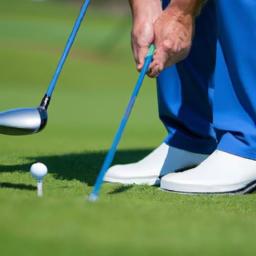
Shaft Selection Criteria Based on Biomechanics and Swing Dynamics
Proper shaft selection begins with an objective assessment of the golfer’s biomechanics and compliance with equipment rules.Measure physical attributes such as height, wrist‑to‑floor distance and natural posture to establish a baseline shaft length and lie angle: for example, a standard driver length is commonly between 43.5-45.5 inches for recreational players (note the USGA maximum club length of 48 inches). Next, quantify swing dynamics by measuring clubhead speed and tempo: as a rule of thumb, use driver swing speed bands of <70 mph (ladies/seniors), 70-85 mph (senior/slow regular), 85-95 mph (regular), 95-105 mph (stiff), and >105 mph (extra‑stiff/elite) to guide flex selection. In addition, consider shaft weight (graphite drivers typically 40-70 g; steel iron shafts typically 90-130 g), torque (expressed in degrees, where higher torque = more twisting under load), and kick point (low = higher launch, high = lower launch). Taken together, these measurable attributes create a profile that aligns a player’s physical capabilities and the USGA equipment framework with the mechanical behavior required for consistent contact and predictable ball flight.
Once the baseline is established, match shaft characteristics to the player’s swing dynamics and desired shot shapes. As shaft flex and bend profile control how energy is stored and released through transition and impact, they influence face rotation, launch angle and spin rate: a shaft that is to soft for a player’s speed frequently enough produces excessive dynamic loft, higher spin and a tendency to draw or hook; conversely, a shaft that is too stiff can produce low launch, low spin and a tendency to fade or slice. Use launch monitor data to refine choices-aim for a driver launch angle in the range of 10-14° and spin between 1800-3000 rpm for most amateurs (adjust lower for higher swing speeds). in practical course scenarios, select a higher kick point or stiffer flex when playing into a strong wind to keep trajectory down, and select a lower‑stiffness, higher‑kick shaft in soft course conditions to maximize carry. For fitting and on‑course validation, transition from static fitting to dynamic tests that include:
- Smash factor and ball speed consistency across six shots
- Carry and dispersion targets (e.g., carry variance <15 yards)
- Shot‑shape control tests (ability to produce +/- 10 yards lateral correction on command)
These checks ensure shaft selection supports both the intended biomechanics and real‑world strategy demands.
implement a structured practice and troubleshooting program that integrates shaft selection into swing advancement and course management. Begin with setup fundamentals-neutral grip pressure (approximately 4-6/10), correct ball position for each club and consistent spine tilt-and then train the interaction between the body and the selected shaft using targeted drills. Useful drills include:
- Impact‑bag drill to feel correct shaft loading and forward shaft lean at impact
- Tempo metronome drill (2:1 backswing:downswing rhythm) to standardize transition speed for consistent shaft bend
- Weighted‑swing trainer swings to develop proprioception of shaft load and release
For beginners, emphasize swing speed progress and consistency goals (e.g., increase driver clubhead speed by 5-10 mph over 12 weeks with progressive strength and tempo drills). For low handicappers, focus on refining launch and spin windows with small shaft‑weight or torque changes and on course management adjustments (selecting a stiffer shaft to hold a wind‑pressed line or a softer shaft to carry hazards). Common mistakes to correct include excessive grip tension (causes stiffer feel and loss of lag),incorrect ball position (alters effective loft and launch),and relying on feel alone without launch data; correct these with the drills above and with periodic re‑fitting using a launch monitor. In addition, incorporate mental rehearsal and situational practice (wind, tight lies, recovery shots) so that shaft choice translates into lower scores under tournament and daily play conditions.
Loft, Lie, and clubhead Design: Impacts on Trajectory and Control
Understanding how loft controls launch and spin is foundational to optimizing trajectory and scoring.begin with the basic relationships: greater loft produces higher launch and more backspin, while lower loft produces a flatter, penetrating flight; for example, modern drivers typically range from 8°-12° of loft, long irons ~18°-24°, mid‑irons ~28°-36°, and wedges ~44°-64°. To translate that into on‑course strategy, first learn to diagnose impact loft by ball flight and divot characteristics: a thinly struck shot often shows reduced effective loft (lower launch, lower spin), whereas a steep, descending wedge strike increases launch and spin.Instructionally, coaches should emphasize a reproducible impact posture that preserves the intended loft at the moment of contact: maintain a slightly forward shaft lean with irons for consistent compressive contact and a neutral shaft angle for higher‑launching, softer wedge shots. Practice routines to internalize this include:
- impact tape drill – use impact tape or a piece of tape on the face to verify centered strikes and note changes in launch/spin when you adjust shaft lean by 2-4°;
- Progressive loft ladder – hit the same yardage with varying clubs (e.g.,56°,54°,52°) to feel how small loft changes alter carry and spin;
- Launch monitor goals – set measurable targets (e.g.,increase peak launch by 2-3° or lower driver spin by 300-500 rpm) and track weekly progress.
These exercises are appropriate for beginners (feel‑based swings) and low handicappers (quantify changes with a launch monitor) and will refine both shotmaking and distance control across diverse course conditions such as firm fairways or wet greens.
Lie angle directly affects directional control and turf interaction, so precise fitting and setup habits improve accuracy immediately. When the lie is too upright, the toe digs in and shots start left (for a right‑hander); when too flat, the toe lifts and shots start right. In practice, clubfitters commonly adjust lie in 0.5-1.0° increments to match a player’s swing plane; players should therefore adopt a setup checklist to ensure the lie performs as intended:
- Setup checkpoints – align the clubface to the target, check ball position relative to left heel for longer clubs, and verify your shaft angle visually to match the intended swing plane;
- Turf interaction drill – place a thin card under the toe or heel of an iron; swing and observe whether the turf mark is centered, then correlate to ball flight (left or right starts).
For course strategy, adjust lie and stance slightly on uneven lies (e.g., ball below feet requires a more upright effective lie and more left‑to‑right curvature planning). Additionally, be mindful of the Rules of Golf: all clubs must conform to USGA/R&A equipment rules, and adjustable features should be set before the round or changed only as permitted by competition rules. Correcting common mistakes – such as misreading the lie because of rushed alignment - can reduce lateral dispersion and turn errant shots into manageable misses.
Clubhead design (CG position, face profile, and MOI) determines forgiveness, shot shape potential, and how a golfer should manage trajectory and control.As an example, a club with a rearward, low center of gravity (CG) promotes higher launch and greater spin, whereas a forward CG reduces spin and produces a more penetrating ball flight; similarly, high‑MOI heads resist twisting and reduce shot dispersion for players who need forgiveness. To apply these principles, follow a two‑step fitting and practice approach:
- Fitting protocol – on the range, compare two heads (one high‑MOI, one more compact) and note differences in dispersion, peak height, and spin; quantify changes with a launch monitor and select the head that aligns with your desired shot shape and course strategy;
- Shot‑shaping drills – to take advantage of head characteristics, practice closing/opening the face by 2-4° at setup or through impact for draws/fades, and use targeted routines (e.g., alignment sticks and feet‑together swings) to ingrain the required swing path adjustments).
integrate mental and situational decision‑making: choose lower‑lofted, lower‑spin options into windy, firm‑ground pins to reduce ballooning; opt for higher‑spin, softer‑landing wedge choices into small, protected greens. By systematically matching loft,lie,and clubhead attributes to both your swing and the course conditions - and by measuring progress with clear numerical targets and repeatable drills - golfers of all levels can achieve more consistent trajectory control and lower scores.
Putter Selection and Alignment Techniques for Improved Putting Accuracy
Effective putter selection begins with a methodical fit that links the club’s geometry to an individual’s stroke and the playing conditions they most frequently enough face. First,establish the stroke type: a face‑balanced head is best for players whose putter moves predominantly straight back,straight through,whereas a head with toe hang (visible when the shaft is rested on the ground) supports players who naturally produce an arced stroke.In terms of measurable specifications,most modern putters carry a loft of 2°-4° at rest (note that the USGA defines a putter as a club with a loft not exceeding 10°),shaft lengths commonly range from 32″-35″,and head mass typically sits between 330-360 grams to balance feel and tempo. During a fitting session, evaluate: face balance (hold the shaft horizontally to see how the head sits), grip diameter (match to stroke stability-thin for more wrist feel, midsize or larger to reduce wrist action), and head weight (heavier heads stabilize through the stroke on faster greens). validate choices on the range and on real greens by measuring the percentage of center‑face contact and initial ball launch characteristics; aim for ≥80% center strikes in short putting practice to confirm a good match between player and putter.
Once a putter is selected, the focus shifts to alignment and repeatable mechanics that produce consistent launch and roll. Establish a setup with the ball positioned slightly forward of center (approximately one golf ball diameter) to encourage a shallow, rolling launch, and adopt a posture with eyes over or slightly inside the ball line to improve sighting. At address ensure a slight shaft lean so the putter face presents a loft of about 2°-4° at impact; this helps the ball lift out of it’s initial skid phase and achieve true roll. To train these elements use targeted drills and checkpoints:
- Gate drill: place two tees just wider than the putter head to train square face contact.
- Clock drill: putt from 3,6,9 and 12 feet to build repeatable speed and line judgment (goal: make ≥70% of 6‑ft putts in a session).
- Impact feedback: use impact tape or foot spray to verify center‑face strikes and adjust setup until strikes cluster centrally.
Common errors include standing too upright, wich opens the face, and excessive wrist manipulation, which introduces face rotation; correct these by shortening the stroke and emphasizing shoulder rotation while keeping wrists quiet. progress measurements should be concrete: reduce left/right dispersion to 6 inches at 10 feet in practice, and track three‑putt frequency with a target reduction of 50% over four weeks through consistent routines.
integrate equipment choices and alignment techniques into course strategy and the mental game to convert practice into lower scores. Read greens not only for slope but also for grain and speed-measurements such as the Stimp rating will inform whether to favor a firmer, lower‑skidding launch (on very firm, fast greens) or a slightly higher launch for quicker hole‑approach on soft conditions. For strategic situations, use a heavier‑headed mallet with pronounced alignment lines on long, straight putts to aid focus and pace, and switch to a toe‑hung blade for delicate, arcing break reads inside 12 feet. Practice routines that mimic course scenarios are essential; such as, the lag ladder drill (place targets at 10, 20, and 30 feet and score by distance to the hole) builds distance control under pressure. Additionally, address the mental component by rehearsing a consistent pre‑putt routine, using visualization to set a target line and intended pace, and applying two options for risk management: play aggressively when the probability of a make exceeds the penalty of a miss, or opt for conservative speed control to avoid three‑putts. For different learning preferences, provide visual learners with alignment rods and mirrors, kinesthetic learners with one‑handed stroke drills to feel the path, and auditory learners with recorded feedback from impact devices; together these methods produce reliable, measurable improvements that translate directly into fewer strokes and smarter on‑course decisions.
Integrating Ball Selection and grip Characteristics with Equipment Setup
Begin by linking ball construction and compression to your grip characteristics and basic setup,because these factors interact to determine launch,spin,and feel. More specifically, choose a ball whose compression matches your clubhead speed: approximately 60-75 compression for slower swing speeds (<85 mph), 75-90 for mid speeds (85-100 mph), and 90+ compression for higher speeds (>100 mph). This selection affects launch angle and spin-urethane, multi‑layer balls typically produce higher wedge spin (8,000-12,000+ rpm) and softer feel, whereas ionomer or two‑piece balls reduce spin and scuttle through firm greens. Consequently, set up with a grip pressure of about 3-4/10 (light‑to‑moderate) to allow the hands to hinge and release without flipping; beginners can use slightly firmer pressure during learning drills to reduce manipulation, while low handicappers should practice maintaining the light pressure under fatigue. For setup checkpoints, ensure:
- Ball position: driver at inside left heel; long irons just forward of center; short irons slightly back of center to promote descending blow.
- Spine angle & shaft lean: slight forward shaft lean at address for irons (~2-4°) to increase compression and backspin; minimal forward lean for driver.
- Grip type alignment: interlock,overlap (Vardon),or ten‑finger should be chosen for comfort and consistent release-confirm the “V” formed by thumb/index points to your right shoulder (for RH).
These practical setup points create a consistent platform so that ball choice interacts predictably with launch conditions on the course.
Next, integrate grip characteristics with equipment specs to shape shots and control spin. Understand the technical concept of spin loft (dynamic loft minus angle of attack): increasing spin loft (by increasing dynamic loft or making attack angle more negative) increases backspin, useful for wedge shots into receptive greens; conversely, reducing spin loft reduces spin for punch shots or in windy conditions. To train this, use the following progressive drills and targets:
- Impact tape drill: use impact tape or foot spray to confirm a centered strike and measure consistency-goal: 85% of strikes within the clubface’s central 1.5 inches within four weeks.
- Attack‑angle ladder: place alignment rods to practice swings with target attack angles (e.g., irons −4° to −6°; driver +2° to +5°) while monitoring launch with a launch monitor; aim to reduce attack‑angle variance to ±1.5°.
- Face‑to‑path gate: small gate at impact to train square face; use for both draw and fade work to control curvature by altering face relative to path by 2-6°.
In addition, match shaft flex and clubhead loft to your grip and release style: players with strong releases and higher hand speeds may prefer stiffer shafts and neutral lie angles to prevent hooks, whereas smoother swingers frequently enough gain control and spin with slightly softer flex and +0.5° upright lie adjustments. Common mistakes include gripping too tight (causing tension and loss of clubhead speed) or too weak a grip (leading to an open face and slices); correct these by rehearsing relaxed pre‑shot routines and holding a pressure target (e.g., light squeeze at 3/10) during 20‑minute practice blocks.
translate equipment‑aware technique into course management and short‑game strategy under real conditions. When approaching firm and fast greens, opt for a lower‑spin, firmer ball and emphasize a slightly more forward ball position and a shallow attack angle-this combination reduces stoppage and promotes rollout to preferred pin locations. conversely,in soft or wet conditions,select a higher‑spin urethane ball and increase dynamic loft slightly through setup and a controlled hands‑back impact to maximize stopping power. Practice routines that simulate on‑course decisions include:
- Wind‑control session: hit the same shot with different balls and trajectory adjustments (tee height, ball position, dynamic loft) to learn carry and roll differences over 15-20 shots.
- Proximity challenge: from 60-100 yards, use three ball types and track proximity‑to‑hole; set a measurable goal such as 60% inside 15 feet within six weeks.
- Mental rehearsal drill: before each shot on course, run a 10‑second checklist (target, ball type, grip pressure, attack angle) to reduce indecision and improve consistency under pressure.
By systematically combining ball selection, grip characteristics, and equipment setup-while practicing measurable drills and adapting to weather and lie-players of all levels can lower dispersion, increase scoring opportunities, and make smarter tactical choices during a round.
Driver Optimization for Distance and launch Window Management
To optimize driver performance for maximum distance within an effective launch window,begin with an evidence-based setup and swing profile.Place the ball slightly forward of the lead heel so that the driver strikes the ball on an upward arc; for most golfers this produces an angle of attack (AoA) between +2° and +5°, which correlates with improved launch efficiency. Aim for a smash factor (ball speed divided by clubhead speed) target of 1.35-1.45 for beginners, 1.45-1.48 for intermediates, and > 1.48 for low-handicappers; measure this with a launch monitor and progress toward higher values by improving center-face contact and tempo. Additionally,calibrate your desired launch angle and spin rate: beginners should initially target a launch of 12°-16° with spin under 3,000 rpm,intermediates 10°-14° and 2,000-3,000 rpm,and better players 9°-13° with 1,500-2,500 rpm for optimal carry-roll balance. In practice, use a tee height that sets the equator of the ball level with the top of the driver face (approximately 1 in / 2.5 cm above the crown) to encourage an upward strike; this simple setup checkpoint reduces mishits and helps produce a consistent launch window.
Next, refine swing mechanics and equipment choices together, because technique and gear interact to determine launch and spin. From a mechanical standpoint, focus on a smooth transition, maintaining spine tilt through impact, and allowing the lead shoulder to clear so that the clubhead arrives with the correct loft and face orientation; common faults such as a steep downswing or ball position too far back increase spin and reduce distance.parallel to technique work,evaluate driver loft,shaft flex,and ball selection: adjustable drivers let you fine-tune effective loft by ±1-2°,which can change launch by ~1° per degree of loft and spin by several hundred rpm. when testing adjustments, follow a systematic protocol: record baseline metrics on a launch monitor, change one variable at a time (loft, shaft, ball), and note resulting changes in ball speed, launch angle, and spin rate. For practice, include the following drills to produce measurable improvements:
- Tee-and-towel AoA drill: Place a towel or headcover a few inches behind the ball and swing so the clubhead clears it on the follow-through to promote an upward strike and AoA +2° to +4°.
- Pause-at-top tempo drill: Pause briefly at the top of the backswing for one count to smooth transition and increase center-face contact, improving smash factor toward your target range.
- Step-through alignment drill: Take your normal setup, swing to impact, then step forward with the back foot to rehearse weight transfer and prevent early extension; aim for full shoulder rotation with the belt buckle pointing toward the target at impact.
- Launch-monitor protocol: Hit 10 balls with one setup, record averages for clubhead speed, ball speed, launch, and spin, then iterate with one equipment or setup change per session to create objective progress benchmarks.
translate technical gains into course strategy by managing your launch window relative to conditions and hole design. As an example, on firm, fast fairways or downhill tee shots, prioritize a slightly lower launch and reduced spin (~1,500-2,000 rpm) to maximize roll; conversely, into a headwind or on soft turf, increase launch and spin modestly to preserve carry. Additionally, adopt situational tee strategies: when accuracy is paramount, open the loft slightly and focus on face control to lower side spin and produce a predictable draw or fade; when distance is required, optimize to your measured peak carry (e.g.,the launch/ spin combination that produced your longest average carry on the monitor) and then plan for conservative dispersion to avoid hazards. mentally, use a concise pre-shot routine that includes a target-specific visualization of trajectory and landing area, and set measurable in-round goals (such as hitting at least 60% of fairways to create birdie opportunities). By integrating measurable practice drills, equipment tuning, and on-course decision-making, players of all levels can manage their launch window to consistently increase distance and lower scores while adhering to equipment conformity and rules considerations.
Protocols for Data Driven Equipment Evaluation and Ongoing Performance adjustment
Begin with a systematic baseline assessment using a launch monitor and standardized protocol to separate equipment variables from technique. Under controlled conditions (same golf ball,mat or turf lie,and a consistent swing-effort scale),record a minimum of 10 full-swing samples per club and compute mean and standard deviation for clubhead speed,ball speed,launch angle,backspin (rpm),smash factor,and carry distance. For example, aim for a driver launch angle in the range of 10-14° with spin between 1,800-3,000 rpm depending on clubhead speed (e.g.,a 100 mph clubhead speed typically pairs with ~11-13° launch and 2,000-2,500 rpm for optimal carry).Next, perform incremental equipment changes (one variable at a time): adjust loft by ±1°, alter shaft length by 0.25-0.5 in, or test different shaft flex/torque while logging results.verify on-course by comparing launch-monitor carry numbers to GPS/laser-measured carry over a defined target to confirm transferability. To support reliable testing,include these checkpoints and drills:
- Setup checkpoints: ball position relative to lead heel,spine angle,and grip pressure (target moderate,consistent tension).
- data drills: 10-ball consistency test, then 10-ball test after one equipment change.
- Troubleshooting: isolate whether dispersion is caused by face angle, path, or dynamic loft using face-impact tape and impact location data.
Building on baseline data,use measured metrics to inform targeted swing and short-game changes so equipment supports technique rather than compensates for it. Translate data into mechanical actions: if driver spin is excessive, consider reducing loft 1-2° or shifting the center of gravity rearward/forward depending on launch; if angle of attack (AoA) is too negative with the driver, train to produce a slightly positive AoA (+1° to +4°) using a tee-height and forward-ball-position drill. Conversely, for irons aim for a negative AoA of approximately -4° to -6° to ensure proper turf interaction and crisp compression. Wedge selection and gapping should be guided by launch-monitor carry gaps of ~4-10 yards between adjacent wedges; adjust bounce for course conditions (soft sand: 8-12° bounce, firm turf: 4-6°). Practice routines that convert data to feel include:
- Impact-target drill: use impact tape and short runs to reduce face-angle dispersion by 15-25%.
- AoA drill: small-step forward-weight shift on drivers to train positive AoA; place a headcover just outside the toe to encourage inside-out path if needed.
- Wedge gapping routine: hit 8-10 balls per wedge to establish consistent carry zones and proximity-to-hole averages.
Common mistakes (overcompensating with equipment, inconsistent grip pressure, or incorrect ball position) are corrected through incremental equipment changes combined with immediate, measurable drills so players of all levels can track progress (e.g., a beginner’s goal: reduce average dispersion by 10-20 yards in 8-10 practice sessions; a low handicapper’s goal: tighten 9-iron 1‑shot proximity to within 10-12 ft).
integrate data-driven equipment decisions into course strategy and long-term performance adjustment plans, linking measurable thresholds to on-course decisions. Establish go/no-go distances based on carry averages and standard deviation (as an example, if a forced carry hazard is 220 yards and your driver carry is 240 ±10 yd, the statistical margin suggests acceptance; if carry is 225 ±20 yd, adopt a conservative lay-up plan). Use weather and course-firmness adjustments-reduce carry expectations by 5-15% in headwinds or firm conditions-and plan club gapping accordingly.For ongoing monitoring, implement a review cadence: retest equipment and technique every 6-12 weeks or after ~100-200 swings, record club usage and strokes-gained components in a performance log, and employ situational practice such as simulated pressure rounds and wind-play sessions to translate metrics into decisions.Practical on-course drills and tasks include:
- Simulated hole play: use measured carry zones to execute 9-hole challenges with set scoring targets tied to proximity metrics.
- Decision-threshold drill: practice choosing a layup or aggressive line based on quantified risk (carry, dispersion, wind) rather than feel alone.
- Maintenance checklist: seasonal loft/lie checks, re-gapping wedges, and re-fitting shafts when swingspeed or launch characteristics change significantly.
By continuously aligning objective equipment data with measured swing parameters and course strategy,golfers can make repeatable,evidence-based adjustments that improve scoring and resilience across conditions.
Q&A
Note on search results
– The provided web search results pertain to a fintech company named “Unlock” and are not related to golf equipment or biomechanics. I will therefore proceed to produce a standalone, academically styled Q&A focused on the topic requested: “Unlock Golf Performance: Master Equipment Selection for swing & Putting.”
Q1: What is the central premise of equipment-driven performance gains in golf?
A1: Equipment influences performance by altering the mechanical interaction between the player and the ball (e.g., launch conditions, spin, contact quality) and by moderating the player’s ability to adopt efficient biomechanics (e.g., posture, balance, kinematic sequencing). Optimizing equipment is not a substitute for technique; rather, it reduces physical constraints and measurement error, enabling the golfer to consistently realize biomechanical potential.
Q2: How do club fitting and biomechanical assessment complement one another?
A2: Club fitting tailors hardware parameters (length, lie, loft, shaft profile, grip) to a golfer’s anthropometrics and swing characteristics. Biomechanical assessment (motion capture, force plates, video analysis) identifies movement patterns, restrictions, and sources of inconsistency. Combined,they create a feedback loop: biomechanical deficits inform hardware choices that facilitate more effective movement,and fitted equipment allows more valid assessment of technique changes.
Q3: What are the primary shaft variables and their biomechanical relevance?
A3: Primary shaft variables include flex (stiffness), torque (twist), kick point (bend point), weight, and length.Biomechanical relevance:
– Flex: Affects timing of energy transfer; too soft can create late release and inconsistent launch,too stiff can suppress release and reduce distance for slower swingers.- Torque: Alters clubface feel and tendency to open/close during swing; important for players with high forearm rotational speed.
– Kick point: Influences launch angle; higher kick points tend to lower launch and reduce spin.
– Weight/length: Affect tempo and moment of inertia; heavier/longer shafts can increase swing inertia and influence sequencing and fatigue.Q4: How should shaft flex be chosen relative to swing speed and tempo?
A4: General principles:
– Lower swing speeds and slower tempos typically benefit from more flexible shafts to maximize energy transfer and launch.
– Higher swing speeds and aggressive tempos usually require stiffer shafts to maintain face control and consistent launch conditions.
– Tempo matters: Two golfers with similar speed but different tempo may require different flex characteristics. Empirical fitting (launch monitor) is necessary to corroborate theory.
Q5: What driver loft and face-angle considerations optimize distance for different swing profiles?
A5: Considerations:
– Launch-angle and spin-rate targets vary by swing speed and angle of attack. Slower swingers generally need higher lofts to achieve optimal launch; faster swingers with positive angle of attack may need lower lofts to control spin.
- Face angle affects initial direction; an open face increases spin and tends to push shots, while a closed face reduces spin and tends to pull. Put simply, loft and face angle should be adjusted to produce a combination of launch angle and spin that maximizes carry and roll for a given golfer’s speed and attack angle.
Q6: How does putter selection interact with stroke biomechanics?
A6: Putter selection (length, head shape, lie, loft, face insert/roll characteristics, and weight distribution) should reflect the golfer’s stroke type and setup:
– Stroke arc: Strong arcing strokes tend to fit mallet or heel-toe-balanced blade designs that allow toe rotation; straight-back-straight-through strokes frequently enough suit face-balanced mallets.
– Eye position and posture influence shaft length and lie angle to promote consistent sighting and alignment.- Head weight and moment of inertia (MOI) influence feel and stability; higher MOI helps on off-center strikes but can reduce the ability to control short putts if mis-matched.
Q7: what metrics from launch monitors and putting analyzers are most informative for equipment selection?
A7: For full-swing fitting: ball speed, launch angle, spin rate, smash factor, carry distance, dispersion, and clubhead speed. for putting: face angle at impact, attack angle, launch direction, ball roll rate, loft at impact, and backspin/forward roll characteristics. These objective metrics should be combined with subjective feedback.
Q8: how should the fitting process be structured to yield reliable results?
A8: Structured fitting protocol:
1. Pre-assessment: Record anthropometrics, injury history, and performance goals.
2.Baseline biomechanical assessment: Video and motion or force analysis to identify kinematic constraints.
3. Incremental testing: Systematic trial of lofts, shaft profiles, lengths, and head types under standardized conditions.4.Objective measurement: Use launch monitors and putting analyzers to collect consistent data.
5. Statistical comparison: Compare means and variance (consistency) rather than single best shots.
6. Adaptation period: Allow practice time to assess on-course performance and comfort.
7. Re-evaluation: Reassess after a defined adaptation period to confirm long-term benefit.
Q9: What are common trade-offs when pursuing maximum driving distance?
A9: Trade-offs include:
- Lower spin may increase roll but can reduce control and loft sensitivity.
– higher loft/softer shafts may increase carry but reduce roll and increase susceptibility to wind.
– Longer or lighter clubs may increase potential speed but can reduce accuracy and increase dispersion.
A fitted compromise that maximizes average total distance while maintaining acceptable dispersion is typically superior to pursuing peak carry numbers.
Q10: How does lie angle affect shot direction and biomechanics?
A10: Lie angle determines the effective loft and ground interaction at impact. Too upright a lie causes shots to go left (for a right-handed golfer) and can induce compensatory biomechanics such as altered wrist set or shoulder tilt, increasing inconsistency and risk of injury. Too flat a lie causes opposite tendencies. lie should be set to match address posture and natural impact position.
Q11: What role does grip size and texture play in performance?
A11: Grip size affects wrist movement and release timing. Oversized grips can reduce wrist hinge and rotation, possibly stabilizing the putter stroke but diminishing clubhead acceleration on full shots. Undersized grips can lead to excessive hand action and face rotation.Texture and tackiness influence confidence and grip force; excessive grip pressure compromises fluid kinematics and accuracy.
Q12: Are there evidence-based recommendations relating equipment changes to injury risk?
A12: Equipment that forces a golfer into non-neutral joint positions or requires compensatory movement increases injury risk over time. Examples: shafts that are excessively heavy or long for a player’s strength can increase strain on the lower back and shoulders; grips or lie angles that force wrist deviation can predispose to tendinopathy. Fitting should therefore consider ergonomic and load management factors.
Q13: How should putter loft and groove characteristics be optimized for roll?
A13: Putter loft is typically low (2-4°) to promote a forward-roll without excessive skidding. excess loft can cause backspin/slide; too little can produce skid and poor uphill performance. Surface and face texture influence initial skid and time-to-roll; modern putter faces aim to promote early forward roll for consistent distance control. Optimal loft depends on attack angle and green speed.
Q14: How can a coach integrate equipment fitting into player development plans?
A14: integration steps:
– Use fitting to remove equipment as a confounding variable during technical instruction.
– Coordinate timing: fit after establishing a consistent technique baseline, or iteratively as technique changes.
– use objective metrics to track progress and validate whether technical changes are realized with the new equipment.
– Prioritize ergonomics and confidence-if a player dislikes the setup, motor learning and retention can be impaired.
Q15: What are practical fitting heuristics for common swing-speed bands?
A15: Example heuristics (to be validated by fitting):
- Swing speed < 85 mph: shaft flex regular to senior, lighter weight, higher loft driver (10.5°+).
- Swing speed 85-95 mph: shaft flex regular to stiff depending on tempo, mid-weight shafts, driver loft 9.5-10.5°.
- Swing speed 95-105 mph: shaft flex stiff, mid/heavier shafts, driver loft 8.5-10° depending on attack angle.
- Swing speed >105 mph: shaft flex extra-stiff or low-torque profiles, attention to spin control, driver loft often 8.5-9.5°.
Note: These heuristics are starting points; empirical testing with launch data is essential.
Q16: how important is repeatability (consistency) versus peak performance in equipment choice?
A16: Repeatability typically outweighs isolated peak performance because scoring and play depend on average outcomes and variability.Equipment that produces slightly lower peak metrics but significantly reduces dispersion and increases repeatability often yields better on-course results.
Q17: When should a golfer prioritize feel and confidence over objective fitting data?
A17: When objective differences are marginal and not statistically meaningful, subjective confidence and feel can determine performance through psychological and motor-control mechanisms. Preference that increases a player’s confidence and lowers shot anxiety can be prioritized provided it does not materially worsen measurable outcomes.
Q18: What technologies are recommended for high-quality fitting and biomechanical analysis?
A18: Recommended tools:
– Launch monitors with Doppler or photometric measurement (e.g., TrackMan, GCQuad) for full-swing metrics.
– High-speed cameras and 3D motion capture systems for kinematic analysis.
– Force plates to quantify ground reaction forces and weight shift.
– putting analyzers (e.g., SAM PuttLab, similar systems) for face angle, loft at impact, and roll characteristics.
– Wearable inertial sensors for on-course movement data.
Integration of multiple modalities yields the most robust recommendations.
Q19: How should equipment be reassessed over time?
A19: Reassessment intervals:
– Annually for most recreational golfers, or sooner after notable swing changes, injury, or equipment wear.- After a program of physical training that changes strength, flexibility, or swing speed.
– After a period of performance decline or persistent inconsistency that is not explained by technique alone.
Q20: What are the primary research gaps and future directions at the interface of equipment and biomechanics?
A20: Key gaps include:
– Longitudinal studies on how fitted equipment affects motor learning and long-term injury risk.
– Quantification of interaction effects between subtle shaft properties and neuromuscular timing across golfer populations.
– Improved on-course validation of indoor launch-monitor-based fittings.
– Development of individualized predictive models that integrate anthropometrics, biomechanics, and sensor data to prescribe equipment automatically.
Closing summary
– Effective equipment selection is multidisciplinary: it requires objective measurement,biomechanical understanding,and player-centered ergonomics. A systematic fitting protocol combined with biomechanical assessment and on-course validation yields the best prospects for unlocking swing efficiency, increasing driving distance, and improving putting accuracy.
Note: the provided web search results reference a financial services company named “Unlock” (home equity agreements) and are unrelated to the golf topic below. The following is the requested academic, professional outro for the golf article.
Conclusion
This review has shown that intentional equipment selection-grounded in biomechanical principles, objective measurement, and individualized fitting-is a critical determinant of repeatable swing mechanics and reliable putting performance. Rather than treating clubs and putters as interchangeable tools, practitioners should consider loft, lie, shaft properties, head mass and balance, grip size, and putter geometry in concert with a player’s kinematics, tempo, and stroke characteristics. Empirical evaluation using launch monitors, high-speed video, and stroke-analysis systems enables the identification of equipment-player interactions that either amplify or attenuate technical strengths and errors.
For coaches and players seeking measurable improvement, we recommend an iterative protocol: baseline assessment, targeted equipment alterations informed by biomechanical rationale, short-term validation through objective metrics, and medium-term monitoring during on-course play to evaluate transfer and robustness under competitive conditions. Integrating targeted drills and course-management strategies with equipment changes maximizes the probability that technical adaptations will translate into lower scores. Future research should continue to quantify the relative contributions of equipment versus technique across ability levels and to refine guidelines for evidence-based fitting.
in practice, committing to data-driven selection and periodic reassessment-supported by collaboration among player, coach, and fitter-provides the most reliable pathway to unlocking enduring gains in consistency and scoring.