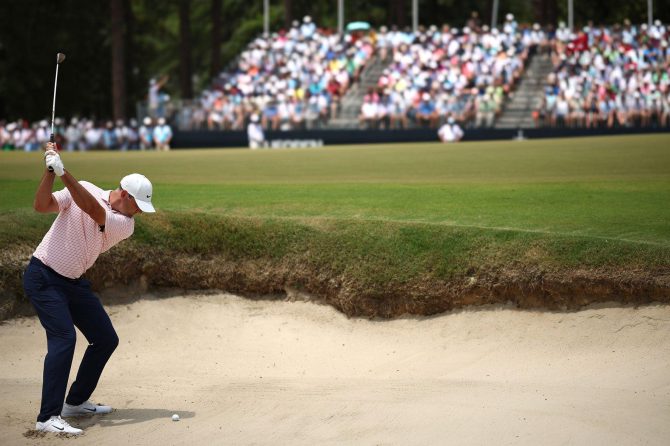
Colin Montgomerie’s playing career provides a compelling template for merging biomechanical insight with evidence‑based coaching to raise elite golf performance. This piece dissects the mechanical and perceptual-motor characteristics of his full swing, putting motion and driver technique, connecting kinematic sequencing, force generation and sensorimotor strategies to quantifiable outcomes such as clubhead speed, launch parameters, putting repeatability and shot dispersion. The focus is practical: convert scientific findings into coachable, on‑course interventions that improve reproducibility and decision making under real playing conditions.
the review is organised around three mutually reinforcing arenas. First, the full swing is examined through its timing and spatial coordination (pelvis-torso-shoulder sequencing, radius of rotation, swing plane and center‑of‑pressure shifts) and how those elements transfer energy to the clubhead. Second, the tee shot is treated as a power‑dominant task, integrating ground‑reaction forces, effective mass and launch‑monitor targets to gain distance while controlling dispersion. Third, putting is presented as a fine‑motor control challenge where stroke tempo, face orientation, pendular motion, postural steadiness and perceptual calibration (distance control and green reading) determine scoring outcomes. Throughout,movement variability,motor learning principles and individual constraints are used to reconcile technical ideals with each player’s anatomy and competitive goals.Method: this article synthesises evidence from motion capture and force‑platform investigations, launch‑monitor datasets and motor‑learning research to propose practical practice frameworks: objective measurement, focused drills, progressive overload, and context‑rich practice that simulates on‑course perceptual and strategic demands. The intent is a concise, applicable framework coaches and advanced players can use to refine Montgomerie‑style tendencies and generalise lessons for improving technique, consistency and course management in modern competitive golf.
kinematic principles in a Montgomerie‑Type Full Swing: Rotation, Sequencing and Lower‑Limb Drive
Treat the golf swing as an integrated, ground‑initiated kinematic chain where primary power originates from torso rotation and the lower limbs rather than being an afterthought. In the backswing,aim for a substantial shoulder turn-roughly 85-95°-paired with a hip rotation near 40-50°. That combination produces an X‑factor (shoulder‑to‑hip separation) in the order of ~20-30°, creating elastic loading for the downswing. At the top, bias weight toward the trail foot (~55-60%) while maintaining head stability and a consistent spine tilt (typically ~15-25° from vertical, depending on stature and posture). With irons, target a modest forward shaft lean at impact (5-10°) and a shallow descending angle of attack (~-2° to -4°) to compress the ball and produce repeatable spin characteristics.
Practice sequencing with simple, measurable drills and setup checks:
- Step drill: a small forward step on the transition encourages ground reaction usage and correct weight transfer.
- Pause‑at‑top drill: hold briefly at the top to feel the intended sequencing (hips initiate, then torso, then arms).
- Alignment‑stick check: run a stick parallel to the target to monitor shaft plane through impact.
- Setup checklist: ball position by club (centre for short irons, forward for long irons/woods), grip pressure ~4-5/10, balanced posture with ~10-15° knee flex.
These measurements give players-from novices learning fundamentals to low handicappers polishing consistency-a quantifiable baseline to evaluate sequencing and ball‑striking.
In a Montgomerie‑informed downswing, the lower body leads so that torso rotation becomes reactive and accelerative rather than brute force. Hips should initiate rotation toward the target while the lead leg braces to create a stable platform; pelvis angular velocity peaks before the shoulders, producing the distal “whip” of arms and club. Target an impact weight distribution of 60-70% on the lead foot with a slightly flexed lead knee (~10-15°) to avoid lateral slide and preserve a centered strike. Typical faults-early arm casting, lateral hip slide, or collapse of the trail leg-all dissipate stored rotational energy. Correctives include:
- Impact‑bag drill: to experience forward shaft lean and lead‑side pressure at impact.
- Wall‑hip rotation drill: stand close to a wall with the trail hip near it and rotate without contacting the wall to stop lateral slide.
- Medicine‑ball rotational throws: to safely train explosive hip‑to‑shoulder sequencing and measure improvements.
Also remember equipment interactions-shaft flex, club length and grip size effect timing and feel. Fitters and coaches should verify that equipment supports the intended hip lead and torso rotation without inducing compensations; and ensure any training implements comply with the Rules of Golf.
Apply these swing improvements to the short game and strategy to lower scores. Use the same hip‑first sensation for chips and pitches by shortening the arc, preserving wrist stability and keeping the downswing feel consistent to produce repeatable contact and spin. On course, embrace percentage golf: select targets that increase the likelihood of two‑putting or hitting the green in regulation rather than forcing low‑odds shots when wind, lie or hazards argue for restraint. Practical, measurable practice goals might include shrinking 150‑yard dispersion to within 10 yards over six weeks, or producing a repeatable shoulder turn within the 85-95° band on 80% of practice swings. Structure sessions like:
- Range routine: 20 minutes sequencing drills, 20 minutes target‑based iron work, 20 minutes short‑game (half‑swings and chips).
- On‑course routine: pre‑shot visualisation, yardage verification and a steady tempo cue (e.g., 3:1 backswing‑to‑downswing rhythm or metronome).
- Troubleshooting: if distance is lost, check hip drive and weight transfer; for excessive hooks or slices, reassess grip strength and shoulder‑turn symmetry.
Blending biomechanics, equipment awareness and situational strategy-delivered as clear drills, numeric targets and course scenarios-helps players convert technical practice into scoring enhancement while keeping the balance and rhythm central to Montgomerie’s approach.
Ground‑Reaction Forces and Kinetic Strategies for Reliable Montgomerie‑Style Driving
Driving power begins with how the feet interact with the turf; the ground is the reactive medium that produces the forces converted into clubhead speed. Start from a stable address: stance roughly shoulder‑width to 1.25× shoulder width, a spine tilt of 10-15° away from the target for the driver, and ball position a little forward (about one ball inside the left heel). At address aim for near‑50/50 balance but plan a lead‑side loading that by impact approaches roughly 70-90% of body weight on the lead foot. Montgomerie‑style driving values consistent contact and controllable ball flight over needless risk-use a slightly conservative face control and a intentional tempo (a working ratio like 3:1 backswing‑to‑downswing helps coordinate lower‑body drive with upper‑body rotation). Speedy setup checklist:
- Feet: shoulder width to a little wider; toes slightly flared to free the hips.
- Ball position: one ball forward of centre for tee shots.
- Spine angle: 10-15° tilt away from the target.
- Weight distribution: ~50/50 at address with intention to shift to ~70-90% lead side through impact.
These fundamentals create the vertical compression and lateral shear GRF profile that supports a stable, powerful strike while allowing controlled shot shaping required by course strategy.
With setup consistent, train the kinetic chain so ground reaction forces are exploited: initiate a controlled weight shift and hip rotation so hips lead the arms into the downswing, creating pelvis‑thorax separation (the X‑factor) that stores elastic energy. As a measurable training target, aim to increase your comfortable X‑factor by ~5-10° to add yardage while maintaining control-many skilled players operate in the 20-45° range depending on flexibility. Reinforcing drills:
- Step‑and‑drive drill: small lead‑foot step toward the target at transition to feel aggressive lead‑side loading; 10 reps per set, 3 sets.
- Medicine‑ball rotational throws: 3-5 kg, 8-12 reps each side-track distance or reps as a progress metric.
- Pressure‑feel drill: tuck a towel under the trail foot and practice feeling it lift at impact to confirm lateral force shift; 2× per session, 30 swings.
Common faults-early extension, reverse pivot, and an upper‑body‑first downswing-are corrected by returning to slower tempo swings and the drills above. equipment matters: match shaft flex to swing speed and set driver loft to achieve target launch (many amateurs use launch windows of 10-14° and spin ~2000-3000 rpm as starting points) so the kinetic profile you build translates reliably into ball flight.
Convert biomechanical gains to on‑course strategy via Montgomerie’s position‑first emphasis: select a flighted draw or controlled fade depending on hole geometry, wind and hazards rather than defaulting to maximum carry. Practical rules of thumb: on narrow fairways or strong downwind,choose a controlled 3‑wood or hybrid; on firm courses,lower trajectory by moving ball slightly back and reducing tee height to promote a penetrating flight. Build automatic decision habits through mental and practice routines:
- pre‑shot routine: visualise the target line, verify stance and ball position, rehearse a single practice swing focusing on hip lead.
- Practice schedule: three sessions per week with at least 30 minutes of GRF drills and one weekly on‑course session to practice tee‑shot choices in varying wind.
- Situational cues: into wind-play one more club; crosswind-aim upwind margin; downhill-be conservative on distance control.
Link measurable swing objectives and repeatable drills to conservative tee‑shot selection and course management so players of all levels can turn ground‑force and sequencing work into steadier driving and lower scores-the position‑based, enduring path advocated by Montgomerie.
Timing and Geometry: Club‑Path, Face‑Angle and Shot‑Shape Control
Shot shaping and accuracy depend on the temporal and geometric relationship between clubhead path and clubface orientation at impact. In biomechanical terms, clubhead path is the trajectory of the head through the impact zone relative to the target line; face angle relative to that path produces side spin and curvature. For repeatable ball flight, aim for face‑to‑path values within ±3°: a controlled draw typically pairs a path of ~+2° to +5° (in‑to‑out) with the face closed to the path by 1-3°, while a controlled fade uses a path of ~-1° to -3° with the face open to the path by 1-3°.
Standardise feel and measurement with these checkpoints:
- Alignment: feet, hips and shoulders slightly left of the target for a fade setup or a touch closed for a draw-Montgomerie often used alignment as a deliberate pre‑shot cue.
- Ball position: move forward for higher‑lofted shots, back for punch shots to alter dynamic loft and timing.
- Grip and wrist set: a neutral to slightly strong lead‑hand grip helps manage face rotation; repeatable grip pressure and a consistent top‑of‑swing wrist hinge support temporal sequencing.
These measurable targets form a stable foundation for developing shot‑shape control across clubs and conditions.
drills to train timing and spatial mechanics of the impact window should be progressive:
- Beginners: slow swings with alignment sticks to develop path awareness.
- Intermediates: add face‑awareness drills and visual gates.
- Advanced/Coaches: refine micro‑adjustments with launch‑monitor feedback.
A practical drill: the Gate‑and‑Face drill-place two tees 1-2 inches apart on the target line to create a narrow gate. Swing so the clubhead passes cleanly through the gate and finishes with the desired face‑to‑path offset, monitored on a launch monitor. Recommended practice structure:
- reps and feedback: 3 sets of 50 swings with progressive club selection, using video or launch‑monitor feedback to reduce face‑to‑path variance to ≤3°.
- Tempo work: use a metronome (60-72 bpm) to synchronise backswing and downswing; a stable tempo helps time lower‑body drive with face closure.
- Equipment check: confirm loft, lie and shaft flex with a certified fitter-small variances affect dispersion.
include impact‑bag sequences and slow‑motion mirror drills to correct early release, excessive forearm rotation or an overly steep exit-cues should emphasise lower‑body lead, consistent wrist set and controlled forearm rotation.
Translate these mechanics into course decisions by linking shot‑shape choices to hole design, wind and green contours. For instance, on a right‑to‑left dogleg into a headwind, opt for a controlled fade or a high‑lofted draw depending on pin location and hazards. Operationalise decisions with situational rules:
- Course management: choose the shape with the widest margin from hazards rather than pursuing maximal distance.
- Wind and slope: reduce extreme face‑to‑path values in strong wind by lowering ball flight (move ball back, reduce loft) and aim further from the pin to allow for roll.
- Fixes: hooks-check excessive in‑to‑out path or over‑closed face and employ slow‑tempo drills; slices-address an open face at impact and strengthen grip/release timing.
Set measurable on‑course goals (e.g., reduce dispersion by 15-25% in a month with targeted practice and tracking) and combine temporal sequencing, spatial path control, equipment tuning and strategy so technical gains convert into reliable shot‑shaping under pressure.
Developmental Protocols: Rotational Power, mobility and Stability for Montgomerie‑Type Players
Start with a structured screening of mobility and setup fundamentals that underpin rotational power: posture, spine tilt, shoulder tilt and weight distribution.Key checkpoints include a spine tilt of ~15-25° at address, shoulder‑turn targets of 80-90° for advanced players (and ~60-80° for intermediates), and pelvic rotation of ~40-50° relative to the target line.Begin sessions with 8-12 minutes of dynamic mobility (thoracic rotations, hip CARs and ankle dorsiflexion) to reproduce the controlled range Montgomerie emphasised-consistent range rather than forced extremes. Novices should prioritise consistent setup (neutral grip, slight knee flex, light forward shaft lean) and use mirror checks or slow video to confirm angles; better players can use radar or launch monitors to track shoulder‑to‑hip separation and aim for a stable peak value. Transition mobility into swing mechanics while maintaining the sequential kinetic order: ground reaction → pelvis rotation → torso rotation → arms and club to generate torque efficiently without losing balance.
Train rotational power and stability with exercise selection, tempo work and on‑range drills that emphasise sequencing and impact stability. Choose movements that develop the stretch‑shortening cycle in obliques, glutes and the posterior chain: rotational medicine‑ball throws (standing and quarter‑kneeling), single‑leg Romanian deadlifts for hip stability, and resisted band turns to ingrain hip‑first initiation. Practice drills:
- Step‑and‑rotate drill: step the lead foot toward the target during takeaway then rotate through impact to train weight shift and sequencing.
- Med‑ball scoop throw: simulate the downswing with a 4-6 lb medicine ball, emphasising hip‑driven acceleration.
- impact tape/toe‑up drill: 30 short irons focusing on shaft lean and ball‑first contact to stabilise low‑point control.
Set measurable objectives: increase shoulder‑to‑hip separation by 5-10° over 12 weeks, hold single‑leg balance on the trail leg for 30 seconds, or raise clubhead speed by 2-4 mph through improved sequencing. Common errors include early extension, upper‑body over‑rotation ahead of the hips, and collapsing the lead knee; address these with slow rehearsals, half‑swings that emphasise hip clearance, and video feedback to confirm improved kinematic order.
Integrate technical gains with on‑course strategy and short‑game practice so rotational improvements translate into lower scores under realistic conditions. Applications include using controlled rotational power for positional iron shots (e.g., 3/4 controlled turns for 150-170 yd approaches into firm greens), manipulating spin via shaft lean and rotational speed in wind, and choosing clubs that allow maintainance of the practiced sequence rather than forcing extra distance. Training balance:
- three weekly 30-40 minute rotational stability sessions (med‑ball, single‑leg drills, tempo work);
- two weekly range sessions with outcome‑focused sets (10 shots from 100-150 yd emphasising shoulder‑turn and impact targets);
- one simulated round focusing on shot selection and pre‑shot routine under pressure.
Layer in mental techniques-pre‑shot visualisation, tempo control and contingency planning for wind or tight lies-to preserve technical improvements in tournament‑like stress. Progressing from measured setup and mobility through power drills to situational practice lets golfers adopt the Montgomerie model’s goal: repeatable, efficient rotation that improves contact, short‑game accuracy and strategic scoring decisions.
Putting Mechanics,Green Reading and Routine Design Influenced by Montgomerie Patterns
Start with a reproducible setup and a shoulder‑driven pendulum that favour consistent face control and pace. Key setup items: a neutral eye position (over or slightly inside the ball line), spine tilt of ~10-15°, and ~5-10° of forward shaft lean to promote a forward‑leaning putter and solid contact. Use a relaxed reverse‑overlap or light finger grip with grip pressure around 2-4/10 to minimise wrist action and promote a pure shoulder stroke. Keep the head steady and the lower body quiet: toe‑hang putters usually pair with a slight arc, face‑balanced heads with a straighter path-match putter choice to your natural stroke. practice checkpoints:
- Gate drill: tees outside the putter head force a clean path and square face at impact.
- Mirror/video checks: confirm spine and eye position until setup is automatic.
- Metronome tempo: a 2:1 backswing‑to‑forward‑swing ratio is effective for distance control.
Beginners should prioritise setup and short putts (3-6 ft) until making 8/10 routinely; better players can refine arc versus straight mechanics and fine‑tune face rotation and loft at impact.
Convert mechanical consistency into reliable green reading and speed control by integrating visual inspection with feel‑based drills and a concise pre‑putt routine. Montgomerie‑style patterns stress identifying the high point and walking the fall line to pick a precise aim point-often an intermediate spot a few feet ahead of the ball-rather than fixating on the hole. Account for grain,firmness and wind: firm,fast greens reduce break and need smaller swing lengths; soft/wet surfaces increase break and require fuller accelerations. Drills and targets:
- Clock drill (distance control): from a central hole place balls at 3, 6, 9 and 12 feet and use one stroke length per distance until you can lag 80% inside a 3‑ft circle.
- Ladder drill (speed scaling): hit 10 putts increasing distance by 5 ft each time to develop proportional stroke length to distance.
- Two‑target drill (read and commit): mark an intermediate aim point and commit to the stroke-goal: halve three‑putts over eight weeks.
In match play or links conditions where grain and slope are exaggerated, walk the fall line and trust your pre‑shot routine to protect your read under pressure.
Build a compact routine that ties preparation, execution and strategy so technical improvements become scoring gains. A concise pre‑putt sequence: mark the ball when rules permit, align feet and shoulders to the chosen line, rehearse the stroke twice without the ball and commit-keep this under 8-12 seconds in competition. Equipment checks matter: confirm putter loft (~3-4°), lie and length fit your posture and select grip size and head balance (toe‑hang vs face‑balanced) to match stroke arc.Correct common errors:
- Flipping/wristing: shorten the grip, emphasise shoulder turn and practice with a metronome;
- Deceleration through impact: perform distance‑only drills where the goal is to roll past the hole to train follow‑through;
- Alignment variability: use an alignment aid or an intermediate target and video feedback until reproducible.
Add pressure simulations-timed putting games or small‑stake challenges-to develop Montgomerie‑style composure. Combining measurable mechanics, repeatable green‑reading and a compact routine helps golfers reduce strokes around the greens and turn practice into measurable scoring improvements.
Driving Optimization and Tactical course Management: Launch Parameters, Risk Assessment and Decision Rules
Optimising driver performance starts with consistent control of launch parameters-launch angle, spin rate, angle of attack and face‑to‑path relationships-anchored by reliable setup fundamentals. many players target a driver launch range of 10-14° with spin rates roughly 1,800-3,000 rpm, and an efficient smash factor around 1.45-1.50. To shape those outputs, attend to setup and swing: forward ball position (~1-2 ball widths inside the left heel for right‑handers), a subtle spine tilt away from the target to encourage a positive angle of attack (aim for +1° to +4° with the driver), and slightly forward weight bias at impact. Montgomerie placed consistent posture and tempo at the centre of his pre‑shot routine-shoulders level to the line and a restrained wrist set to forestall early release. Common faults-steep, downward strikes producing low launch/high spin, early extension that opens the face, or an overly strong grip producing hooks-are corrected with drills that encourage a shallower attack and later release.
Setup checkpoint reminders:
- Ball position: forward for driver, mid‑stance for long irons.
- Spine angle: slight tilt away from the target to encourage sweeping contact.
- Weight finish: around 55/45 forward at the finish to aid positive AoA.
With launch conditions consistent, combine risk assessment and tactical decision‑making using quantifiable data: know your average carry distance, dispersion (e.g.,left/right 90% confidence interval) and how course firmness influences roll (a firm fairway can add ~15-30 yd of roll on a long drive). Montgomerie‑style strategy leans toward percentage play-pick the club that gives the highest chance of a favourable next shot rather than maximum distance. Example: on a 420‑yd par‑4 with bunkers at 260-290 yd, a player with a 280 yd driver carry must weigh the risk of landing in bunkers versus hitting a 3‑wood to map a controlled approach of ~240 yd leaving ~180 yd to the green, which often improves scoring probability. Use shot‑shape as a tactical tool (fade to shorten carry and roll toward a narrow landing; draw to reduce wind effect and add roll on firm turf), prioritise bailout targets and rehearse commitment decisions in the pre‑shot routine.
Tactical checkpoints:
- Distance to hazards and safe landing zones (carry + expected roll).
- Wind direction and its estimated yardage effect (add/subtract ~10-20% in strong winds).
- Pin location and run‑out-play to the fat side when slope dictates.
Translate concepts into measurable improvement with structured practice that merges launch‑monitor feedback, targeted drills and on‑course simulations. Beginners should focus on consistent contact and straighter flight-set a practice goal such as 90% fairway hit rate in controlled blocks using slower swings and gate drills. Intermediate and low‑handicap players should use launch monitors to reduce spin by ~200-400 rpm via loft/shaft choices and hold launch within ±1.5° of desired values. Useful drills include:
- Sweep drill: place a headcover just behind the ball to train upward driver impact.
- Path/face control: alignment‑rod gate and half swings to feel a square face at impact.
- Tempo/metronome: 3:1 backswing‑to‑downswing rhythm to avoid quick transitions.
Also test driver loft (±1-2°) and shaft flex to match swing speed-higher loft for low‑launch or high‑spin players, stiffer shafts for higher speeds to tame dispersion. Add mental checks (pre‑shot checklist, visualisation and a one‑minute breathing reset) to reduce indecision under pressure. When launch metrics, disciplined practice and deliberate on‑course choices are linked, players at any level can lower scores through steadier driving and smarter course management.
Evidence‑Led Coaching Framework for Montgomerie‑style Instruction: Assessment, Feedback and Progression
Begin with an objective assessment aligned to evidence‑based coaching: combine technology‑derived metrics with on‑course performance data to create a reliable baseline. Use launch monitor outputs (clubhead speed,ball speed,smash factor,launch angle,spin rate and attack angle) to quantify ball‑flight mechanics-for many amateur athletes a target driver launch of 10-14° with an appropriate spin window (~1,500-3,000 rpm) and an attack angle near +1° to +3° is a reasonable starting point. Complement these data with performance metrics-GIR, up‑and‑down %, sand save %, proximity to hole from 100/150/200 yd and strokes‑gained components. Collect standardised test data such as 30‑ball iron blocks, 20 wedges to precise distances and a 9‑hole diagnostic where each target and outcome are recorded. Initial checklist:
- Setup metrics: ball position,spine angle,weight as percent on lead/trail foot,grip pressure (~4-6/10).
- Impact signs: ball flight, divot pattern and impact‑tape centring.
- Short‑game baseline: 10 wedges to 75 yd (measure dispersion), 10 bunker exits, 20 putts from 6-12 ft (make %).
These measures create an evidence base for targeted intervention consistent with montgomerie’s emphasis on setup precision, low‑point control and strategic selection.
Design feedback to move from high‑frequency augmented cues to faded intrinsic feedback as skill stabilises. Start in the practice bay with concurrent, objective feedback: launch‑monitor numbers and slow‑motion video (60-240 fps) for face angle, shaft plane and sequencing; use tactile and visual augmented cues (impact bags, alignment sticks, impact tape) for immediate error facts. progress to intermittent feedback in pressure simulations and on‑course play-provide summary metrics (average proximity, GIR) rather than constant correction to promote self‑monitoring. Effective modalities:
- Quantitative: structured launch‑monitor sessions with target ranges (±5° launch, ±10% spin), clubhead speed goals (+5% over 12 weeks), and grouped dispersion tracking.
- Qualitative/tactile: impact‑bag strikes, toe/heel gate drills, and “gate‑through‑the‑bulb” exercises to reinforce path.
- Mental/behavioural: scripted pre‑shot routines, breathing cadence and decision checklists for lay‑ups versus aggression.
A practical on‑course drill: play four short par‑4s using two pre‑defined strategies (aggressive corner vs conservative wide area), track scoring and strokes‑gained, then debrief with video and launch data from the range to tie mechanic changes to scoring. Progressively reduce external feedback-from near 100% in acquisition to ~20-30% during consolidation-to develop autonomy across learning styles and physical profiles.
Set staged progression gates-Acquisition,Consolidation and Transfer-with clear exit criteria. Example targets:
- Acquisition: consistent mechanical patterns-e.g., centre‑face impact on ≥80% of practice swings and repeatable iron low‑point one clubhead forward.
- Consolidation: performance under simulated pressure-e.g., make 8 of 12 critical 6-12 ft putts and achieve ±5 yd distance control on 75-100 yd wedges in ≥80% of attempts.
- Transfer: on‑course improvements-e.g.,GIR up by 8-15% or strokes‑gained: approach +≥0.2 per round and sustained reduction in three‑putts.
Troubleshooting and corrective drills:
- Early extension: wall‑bump or chair‑under‑butt drill to preserve spine angle.
- Overactive hands: half‑swing releases with a towel under the arms to promote body rotation and proper release timing.
- Short‑game set: clock drill for wedges, bunker contact bag drill and a 50‑ball putting block to reinforce alignment and stroke length consistency.
Factor in equipment and environmental considerations-ensure loft and shaft flex match swing speed, adjust grip size for control, practice in wind and wet conditions to simulate tournament realities-and emphasise that sound course management is as notable as technical skill. By linking objective metrics, layered feedback and explicit progression gates, coaches can apply Montgomerie’s strategic approach to deliver measurable, repeatable improvement across ability levels.
Q&A
Note on sources: the supplied web search snippets did not include Montgomerie‑specific research. The following Q&A combines publicly observable features of Colin Montgomerie’s game (steady ball‑striking, reliable iron play and strong competitive routine) with current biomechanical and motor‑learning concepts to provide a professional analysis of swing, putting, driving and course management.
Q1: What biomechanical traits of Montgomerie’s full swing support his consistency?
Answer: His swing is compact and repeatable, showing strong proximal‑to‑distal sequencing. Key features:
– Stable base and efficient use of ground reaction forces with minimal lateral sway and consistent trail‑to‑lead weight transfer.
– Moderate X‑factor (torso‑to‑pelvis separation) that stores elastic energy while limiting excessive spinal rotation that increases variability.
– Clear kinematic order-pelvis → thorax → upper arm → forearm → club-which encourages high clubhead speed with repeatability.- maintained lag and minimal early release to stabilise dynamic loft and maximise smash factor.
These characteristics align with biomechanical evidence linking constrained degrees of freedom and stable sequencing to consistent impact conditions.
Q2: Which objective measures should be tracked to evaluate a Montgomerie‑style swing?
answer: Use motion capture and launch‑monitor metrics:
– Clubhead speed, ball speed and smash factor.
– attack angle and dynamic loft at impact.
– Face‑to‑path and clubface angle at impact (primary drivers of lateral dispersion).
– Tempo measures and variability (backswing:downswing ratio and standard deviation).
– Kinematic sequencing timing (pelvis → thorax → arm → club) via inertial sensors or 3D capture.
Track these over practice cycles to quantify change and repeatability.
Q3: How should practice be organised to replicate Montgomerie’s repeatability?
Answer: Emphasise low‑variance, high‑volume practice with a mix of blocked and variable approaches:
– Blocked sessions for high repetition on specific shots.
– Interleaved practice to promote transfer to competition.
– Task constraints (target windows, clubhead speed goals, impact tape) to focus outcomes.
– Periodic objective reassessment (launch‑monitor checks) to validate feel‑based adjustments.
Q4: What biomechanical principles underlie Montgomerie’s putting and its reduced variability?
Answer: his putting relies on deliberate setup and tempo:
– Shoulder‑driven pendulum with limited wrist/hand motion reduces degrees of freedom at impact and lowers variability.
– Stable head and consistent eye position improve perceptual alignment.
– regular stroke tempo and minimal face rotation between backswing and impact limit directional and speed variance-consistent with research that stabilising distal joints improves repeatability.
Q5: What data are useful to assess putting performance?
Answer: Combine lab and course measures:
– Putter head path and face rotation tracking.
– Impact location on the face and ball speed off the putter (launch monitor).
- Putter head acceleration and backswing/downswing timing to compute tempo variability.
– Make percentage at standard distances (3, 6, 10, 20 ft) with SD across trials to identify whether misses stem from speed, alignment, face angle or impact location.
Q6: Which putting drills reliably translate to consistent outcomes?
Answer:
– Gate drill for alignment and path control.
– Metronome tempo drills to enforce consistent backswing:downswing ratios.
– Distance ladder (3, 6, 9, 12, 20 m) emphasising speed scale rather than aiming.
– Impact‑spot drill (stickers/tape) to train centre‑face contact.
Combine high trial counts with intermittent feedback to promote retention.
Q7: What is Montgomerie’s emphasis when approaching driving?
Answer: He historically prioritised accuracy and consistency over sheer distance. Biomechanical considerations:
– Slightly wider stance and fuller shoulder turn to build a safe moment arm for speed without instability.- Controlled GRF production from a stable base to manage launch and spin.- Positive attack angle with the driver to raise launch and limit spin for better carry.
– Prioritise face control at impact over maximal speed to reduce lateral dispersion.
Q8: Which launch‑monitor and physical targets support a Montgomerie‑style driving profile?
Answer: Targets vary by individual, but generally:
– Consistent clubhead speed with low variability.
– smash factor near optimal (~1.45-1.5).
– Slightly positive attack angle (0-+4° for many players).
– Moderated spin rates (e.g., 1,800-3,000 rpm depending on launch) to optimise carry.
– Face‑to‑path close to zero to control lateral dispersion.
Monitor standard deviations across sessions to confirm stability.Q9: What training methods develop the neuromuscular sequencing for elite swings?
Answer:
– Strength and power work with a rotational emphasis (med‑ball throws, cable rotations), plus hip mobility and deceleration training.
– Plyometrics and force‑plate guided drills to refine GRF application.
– Motor‑learning protocols that emphasise variable practice, differential learning and augmented feedback (video, launch monitor).- Tempo/rhythm training to stabilise sequence and timing.
Periodise skill and strength work to avoid interference and peak for competition.
Q10: How should biomechanics and evidence‑based coaching be combined to sustain performance under pressure?
Answer:
– Simulated pressure practice (outcome tasks,crowd noise) to reduce choking effects.
– Rehearsable pre‑shot routines to stabilise motor output.
– Biofeedback (HRV, breathing) to regulate arousal and support motor control.
– Define “acceptance bands” in objective metrics so small technique changes do not disrupt in‑play decisions.
Q11: How does montgomerie’s course management complement technical skill?
Answer:
– Select shots to minimise high‑variance outcomes-prefer favourable angles and fairways over marginal extra yardage.
– Aim approach shots to preferred wedge distances to leverage wedge/putting strengths.
– Be aggressive only where the statistics support it (short par‑5s, reachable holes with low penalty risk).
– save strokes through a strong short game and steady putting rather than forcing low‑probability plays-consistent with modern expected‑value decision models.Q12: Recommended assessment protocol for a player adopting Montgomerie‑style consistency?
Answer: A 2-3 session multi‑component battery:
– Full‑bag launch‑monitor session to capture speed, smash, launch, spin and dispersion.
– 3D kinematic swing assessment for sequencing and joint range.
– Putting tests: stroke metrics, make %s and speed control.
– Physical screen: mobility, rotational strength, lower‑body power, balance.
– Psychological checks: routine consistency, arousal control and decision‑making under stress.
Synthesize into individualised interventions with measurable targets and checkpoints.
Q13: Injury‑prevention priorities when training Montgomerie‑style mechanics?
Answer:
– Preserve thoracic rotation and hip mobility to limit lumbar compensation.- Progressive loading to strengthen rotator cuff, scapular stabilisers and core for deceleration control.
– Monitor load and recovery to reduce overuse injuries (low back, wrist, elbow).
– Refine technique to avoid excessive lateral forces or abrupt sequencing that increase joint torques.
Q14: How to monitor progress and when to change technique?
Answer:
– Implement cycles of measurement → intervention → reassessment using objective metrics (launch monitor, kinematics) and performance outcomes (scoring, strokes gained).
– Expect transient increases in variability during change; stabilise before more adjustments.
– Change technique only when data and performance indicate persistent maladaptation, pain, or lack of transfer to competition. Pre‑define decision rules (e.g., unacceptable rises in face‑to‑path variability or drop in putting %).
Q15: Where to find supporting evidence?
Answer: Consult peer‑reviewed biomechanics and motor‑learning literature on golf swing and putting, applied sport‑science texts, and field studies using launch monitors, force plates and motion capture. Practical materials include PGA/DP World Tour coaching resources and published performance analyses that link launch conditions, ball flight and scoring.
Concluding note: This Q&A blends biomechanical principles, motor‑learning theory and evidence‑based practice to produce a coaching framework inspired by Colin Montgomerie’s hallmarks-repeatability, strong iron play and pragmatic course management. For player‑specific programmes, combine these principles with individual assessment data (motion capture, launch‑monitor metrics and physical screening) and iterative, outcome‑focused practice to produce durable performance gains.
Conclusion
This article has integrated technical, biomechanical and applied coaching perspectives on Colin Montgomerie’s swing, putting and driving to build a coherent performance framework. Montgomerie’s repeatable ball‑striking and steady putting can be understood as the outcome of efficient kinematic sequencing, stable lower‑body support, managed pelvis‑thorax separation and disciplined routines that couple perception with motor output. Translating these characteristics into measurable practice requires attention to movement variability, externally focused motor‑learning strategies, quantified feedback and progressive overload to protect consistency under competitive stress.
For coaches and practitioners the practical takeaways are threefold: (1) assess and train the full kinematic chain-ground reaction force production, timing of hip‑shoulder rotation and clubhead delivery-rather than isolating distal elements; (2) consolidate putting through repeatable pre‑shot routines, tempo regulation and face‑control drills that sharpen perceptual calibration; and (3) optimise driving by aligning launch conditions (attack angle, spin, face orientation) with individual physiology and equipment. Interventions should be individualised, monitored with objective measures (video, launch monitors, force platforms) and integrated into course‑management strategies that balance risk and reward for a player’s technical profile.
Future research and applied work should continue to measure how targeted biomechanical interventions transfer to match play and long‑term retention. By combining Montgomerie’s observable habits with contemporary motor‑learning and biomechanics, coaches can create principled, evidence‑informed pathways to greater technical consistency and smarter, strategy‑driven performance on the course.

Unlock Pro Golf Skills: Colin Montgomerie’s secrets to Perfect Swing, Putting, and Driving
What made Colin Montgomerie a model for precise golf performance
Colin Montgomerie is known across professional golf for elite iron play, repeatable ball-striking, a disciplined practice ethic, and razor-sharp course management. For amateurs and aspiring competitors, studying the principles behind his game-consistency, tempo, and smart shot selection-delivers practical improvements in swing, putting, and driving.
The Montgomerie Swing Blueprint (Golf Swing Fundamentals)
Setup & alignment: build a reliable foundation
- Neutral grip: hands slightly rotated to keep the clubface square at impact.
- Balanced posture: hinge from the hips, slight knee flex, spine tilt to the right (for right-handers).
- Ball position: center for mid-irons, forward for long clubs; consistent setup supports repeatable contact.
- Alignment stick drill: place a stick along your target line to train feet, hips and shoulders parallel to the target.
Backswing,width,and shoulder turn
Montgomerie favored a compact,controlled backswing that preserved width and enabled consistent sequencing. Prioritize a full shoulder turn while keeping the left arm (for right-handers) connected but not rigid.
Downswing & impact: sequencing for solid ball striking
- Start with the lower body: a purposeful left-hip move into the target creates torque and allows the arms to follow.
- Rotate through impact rather than swing with the arms-this creates compression and better control of launch and spin.
- focus on low-point control: for irons, a slightly downward strike produces crisp contact and tighter dispersion.
Tempo & rhythm drills (improve consistency)
- metronome drill: use a 3:1 backswing-to-downswing rhythm-count “one-two-three” back, “one” down.
- Three-ball pump drill: take three practice swings with increasing speed; commit to the fourth shot-builds tempo and timing.
- Impact bag drill: light swings into a bag to feel the correct impact position and wrist angles.
Iron Play & Ball-Striking Secrets
Montgomerie’s reputation for iron play was built on consistency-precise distance control and predictable spin. Implement these evidence-based mechanics:
Key focus points
- Divot control: after impact, a crisp divot starting just after the ball indicates correct low-point control.
- Clubface awareness: practice half-shots with alignment aids to feel square face through impact.
- Distance wedges: map uphill/downhill yardage adjustments; be conservative on firm, fast greens.
Iron drills
- Shot-shaping ladder: hit 6 shots to the same target with different trajectories-work trajectory control by adjusting ball position and length of swing.
- Divot line drill: place a towel a few inches after the ball-strike the ball then the towel to reinforce proper low-point.
Driving: Power with accuracy (Driving Accuracy and Distance)
Driving like Montgomerie means balancing speed and control. Hit long, but hit it in play.
Principles for consistent driving
- Wider stance: support rotational power while maintaining balance.
- Tee height and ball position: tee high enough to sweep the ball, position forward in stance for a shallow attack.
- Sequencing over swing length: generate clubhead speed through sequencing (hips → torso → arms) rather than an over-extended backswing.
- Clubface control: align face deliberately; compensate for wind and slope with aim adjustments.
Driving drills
- Step-and-hit drill: swing to the top, then step toward target with the lead foot through impact to promote weight shift and rotation.
- Weighted club warm-up: small swings with a heavier club or trainer to build strength and feel for release.
- Target-based practice: aim for fairway targets instead of maximum yardage-train accuracy under pressure.
Putting: Speed Control, Stroke, and Green Reading
Putting separates good rounds from great ones. Montgomerie’s attention to speed, a confident pre-shot routine, and a repeatable stroke are instructive for all levels.
Setup & stroke
- Eyes over the ball: aim for a pendulum stroke using shoulder rotation rather than wrist flicks.
- Short backswing for short putts, longer for lag; keep head still and follow through to the same length as the backstroke.
- Pre-shot routine: pick a target line and visualize the ball rolling along it before executing.
Putting drills
- Gate drill: place two tees slightly wider than the putter head and stroke through to ensure a square face at impact.
- Ladder drill (speed control): putt from 3, 6, 9, 12 feet focusing on leaving the ball within a 3-foot radius.
- Clock drill: circle the hole at equal distances to build confidence from short range and read slight breaks.
Short Game & Wedge Play: Save strokes Around the Green
Short-game proficiency is a hallmark of lower scores. Montgomerie’s approach emphasizes versatility and touch.
Chipping fundamentals
- Use a slightly open stance and weight forward to promote a downward strike and run-up.
- Choose a club that produces the right roll-out-experiment with 7- or 8-iron chips for more roll.
Bunker play
- Open face, accelerate through the sand, land the shot before the pin and let the sand carry the ball out.
- Practice distance control by varying swing length and using different faces (open vs neutral).
Course Management & Mental Game (Montgomerie-style Strategy)
montgomerie won by thinking his way around the course. Use strategy to turn strength into lower scores:
- Play to strengths: favor holes that let you use your best club or shot shape.
- Risk-reward assessment: walk away from risky lines that offer minimal reward but high penalty.
- Pre-shot visualization: see the ball flight and landing area before every shot to reduce indecision.
- Ryder-Cup mentality: focus on every shot, control what you can, and maintain routine under pressure.
Practical 30/60/90 day Practice Plan (Practice Plan)
| Period | Focus | Weekly Time |
|---|---|---|
| 30 days | Fundamentals: setup, alignment, tempo drills | 4-6 hrs |
| 60 days | Iron play + short game: wedge distances, chipping ladder | 6-8 hrs |
| 90 days | Course management + pressure putting | 8-10 hrs |
Equipment & Fitting Notes
- Get properly fitted: shaft flex, lie angle, and loft adjustments turn consistency into performance gains.
- Putter fit: length and lie can drastically improve stroke plane and face control.
- Ball selection: choose a ball that matches your swing speed and spin needs-lower spin for the tee if you want more roll,softer cover for wedge spin.
Benefits & Practical Tips
By applying Montgomerie-inspired principles-repeatable setup, controlled tempo, and smart course strategy-you will lower your dispersion, improve scoring from 100 yards and in, and become a steadier competitor.
- Practice with purpose: every session should have measurable outcomes (target hitting, greens in regulation, up-and-down %).
- Track your stats: fairways hit, GIR, putts per round-use data to prioritize practice.
- Short sessions daily beat one long session weekly-maintain motor learning and tempo.
Case Study: Translating the Methods to Amateur golf
Player A (mid-handicap): focused 6 weeks on tempo and low-point control. Result: improved iron strike, increased GIR by 28%, and 3-4 stroke reduction.
Player B (high-handicap): prioritized short game ladder and gate putting for 8 weeks. Result: up-and-down conversion improved, average putts per round dropped from 33 to 29.
Quick Checklist: Daily Pre-Round Routine
- 10-minute putting warm-up (gate + ladder)
- 15 impact bag swings to groove impact position
- 15 range shots working on one specific swing objective (tempo or weight shift)
- walk the greens and pick target lines before the tee shot
Resources & Next Steps
- Work with a PGA coach to translate Montgomerie principles to your swing specifics.
- Use video feedback to check shoulder turn, hip rotation, and impact position.
- Practice deliberately-focus hours on the short game and pre-shot routine that produce the most scoring benefit.
Note about provided search results
The web search results supplied with this request returned entries about the given name “Colin” (name origin and meaning). Those sources (Nameberry, Namingquest, Wikipedia) discuss the name itself and are not specific to Colin Montgomerie, the professional golfer referenced in this article.