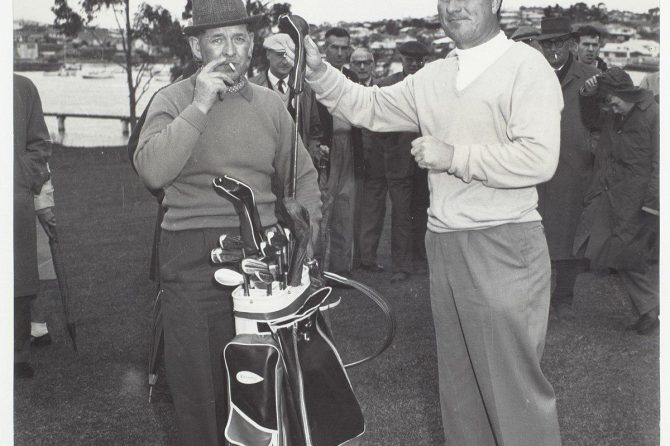
In the history of golf instruction, few figures have exerted as enduring an influence as Ben hogan. His precise mechanics, relentless practice ethic, adn systematic approach to the golf swing have been dissected for decades by players and teachers alike. While popular fascination often reduces Hogan’s “secret” to a single move or hidden tip, a closer examination reveals a cohesive set of principles that govern driving, iron play, and putting as interconnected dimensions of one unified motion.
This article undertakes a structured analysis of Hogan’s swing concepts with the aim of translating his legacy into actionable performance gains for the modern player. Drawing from his published work, historical film studies, and contemporary interpretations of his mechanics, we will examine how Hogan’s fundamentals can be applied to three critical areas of the game:
1. **Driving** - the generation and control of power off the tee through efficient body sequencing, plane control, and impact stability.
2. **Iron play** - the precise management of trajectory, distance, and spin via disciplined footwork, weight transfer, and clubface orientation.
3. **Putting** - the often-overlooked extension of Hogan’s emphasis on repeatable motion into the smallest, most delicate stroke under pressure.
By treating Hogan’s method not as a collection of isolated tips but as an integrated model of motion, the following sections will clarify how his key principles-grip, posture, plane, rotation, and impact dynamics-scale from the full driver swing to mid-irons, wedges, and ultimately the putting stroke. The objective is not to recreate Hogan’s swing in its exact aesthetic form, but to distill the underlying mechanics and decision-making processes that can definitely help contemporary golfers achieve greater consistency, accuracy, and scoring efficiency.
Through this lens, “unlocking” Hogan’s secrets becomes less about discovering a mystical move and more about rigorously applying a set of technically sound, biomechanically coherent fundamentals across every club in the bag.
Biomechanical Foundations of Hogan’s Swing for Driving Iron Play and Putting
At the core of Hogan’s motion is a highly organized use of ground reaction forces and segment sequencing that applies equally to driving, iron play, and putting. Biomechanically, Hogan’s address position created a repeatable baseline: a slight forward shaft lean of 5-10° with irons, knees flexed so that the kneecaps sit roughly over the balls of the feet, and a spine tilt of about 10-15° away from the target with the driver to encourage an upward strike when appropriate under the Rules of Golf. For irons, ball position progressively moves from just inside the trail heel with shorter irons toward the lead heel with long irons, while the handle remains centered over the sternum, promoting a descending strike and consistent turf interaction. To internalize this, use alignment sticks on the range and follow these checkpoints:
- Feet-hips-shoulders parallel to the target line, avoiding a closed stance that promotes a hook.
- Weight 55-60% on lead side at setup for irons; more centered for the driver to adjust angle of attack.
- Arms hanging naturally under the shoulders, with no muscular tension in the forearms, reducing manipulation of the clubface.
Beginners should focus on reproducing this setup every time, while low handicappers can fine-tune small variations (e.g., slightly narrower stance in wind to improve balance and control trajectory.)
Hogan’s full-swing biomechanics emphasize a stable lower body pivot combined with a powerful but controlled upper body rotation, creating a “connected” motion ideal for both driving and precise iron play. The backswing can be understood as the club, arms, and torso moving together until the lead arm is across the chest at roughly 90° to the spine angle, with minimal independent wrist roll; this maintains clubface stability and swing-plane integrity. as transition begins, Hogan’s hallmark was an early lead hip shift toward the target (about 2-3 cm before the upper body unwinds), which uses ground forces to start the downswing from the ground up, squaring the club without hand flipping. To train this kinetic chain, incorporate:
- Step-through drill: make half-speed swings with irons, stepping the lead foot toward the target as the downswing starts to feel the proper weight shift and sequence.
- Pump drill with 3/4 swings: Pause halfway down with the shaft parallel to the ground, check that the trail elbow is in front of the trail hip and the clubface is slightly toe-down, then swing through to a balanced finish.
- Trajectory control drill: With mid-irons, vary ball flight windows (low, mid, high) while maintaining the same tempo, reinforcing that changes in ball position and shaft lean, not a “hit,” produce different flights.
Common faults such as early extension, casting, or over-the-top motion can frequently enough be corrected by focusing on Hogan’s feeling of the hips leading, hands quiet. This not only tightens dispersion off the tee and with approach shots but also supports better course strategy: choosing conservative targets and trusting a repeatable, biomechanically sound swing rather than chasing extra distance.
in putting, Hogan’s principles translate into a compact, low-variability stroke built on minimal face rotation and a stable base. Biomechanically, this means setting the eyes either directly over the ball or slightly inside the target line (typically 0-2 cm inside), with the putter shaft nearly vertical and the grip running more through the lifeline of the lead hand to reduce wrist hinge. The stroke itself is a small-scale version of his full-swing philosophy: the big muscles of the shoulders and upper torso control motion, while the hands remain passive. To integrate this with real-course performance,use the following practice structure:
- Gate drill for start line: Place two tees just wider than the putter head,1-2 feet from the hole,and roll 20 putts so the ball passes cleanly between the tees. Track your percentage; aim for 80%+ made inside 6 feet.
- Distance-control ladder: On a flat section of the practice green, hit putts in 3-foot increments (15, 18, 21, 24 feet), focusing on identical tempo with slightly longer stroke lengths. Measure leave distance and aim for an average of under 18 inches past the hole.
- Pressure routine drill: Simulate on-course conditions (wind, uneven lies around the green, late-round nerves) by playing “up-and-down games” from varied lies, requiring one chip/pitch and one putt. Record your up-and-down percentage as a scoring benchmark.
By linking these biomechanical foundations with clear statistical goals and situational awareness-such as playing for below-the-hole leaves on fast, sloping greens-golfers at every level can apply Hogan-inspired mechanics to reduce three-putts, improve proximity with irons, and execute more confident driving lines that respect hazards and course architecture.

Kinematic Sequencing and Ground Reaction Forces in Hogan Inspired Driving mechanics
At the heart of Hogan-inspired driving is a highly efficient kinematic sequence-the ordered chain of motion from the ground, through the body, into the clubhead. In biomechanical terms, an effective sequence starts from the feet and legs, then progresses to the pelvis, torso, arms, and finally the club, with each segment accelerating and then decelerating to transfer energy to the next segment in line (ground → hips → ribcage → shoulders → hands → clubhead). Hogan’s emphasis on a stable posture, consistent spine angle, and precise grip allows this sequence to unfold without compensation. For most players, a functional driver setup places the ball just inside the lead heel, with approximately 55-60% of pressure on the trail foot at address and a slight spine tilt away from the target (around 5-10°) to promote an ascending strike within the Rules of Golf’s allowable driver specifications. Common sequencing errors-such as spinning the shoulders from the top or ”throwing” the hands early-disrupt this chain, causing slices, pulls, and major distance loss. To self-check, record your swing down-the-line: in an efficient sequence, the lower body initiates the downswing before the club completes the backswing, mirroring Hogan’s classic “lead with the hips” principle.
To convert that efficient sequence into real driving power, golfers must learn to apply and time ground reaction forces-the push and pressure you exert into the turf that the ground sends back through your body. Hogan’s famous “digging the feet into the ground” feel is an intuitive way of describing increased vertical and rotational forces under the feet.During the backswing, allow pressure to move into the inside of the trail foot (not the outside edge), maintaining roughly 70% trail-foot pressure at the top for the driver. Then, before the club reaches the top, initiate the downswing by shifting pressure into the lead foot, feeling a subtle “sit” into the lead side followed by a vertical push upward through impact.For most players, this means peak lead-foot pressure just before impact, around shaft parallel on the downswing. Practical practice checkpoints include:
- Feet-Together Drill: Hit soft drivers (50-60% effort) with your feet together to train balance and eliminate excessive lateral slide, focusing on turning around a stable spine.
- Step-Through Drill: Start with your feet together, swing to the top, then step into your lead foot as you swing down, training proper pressure shift and sequencing from the ground up.
- Impact Line Drill: Place an alignment stick just outside the lead foot; work on shifting pressure into the lead side without allowing the head or upper body to slide excessively past this line.
These drills help beginners feel basic pressure shifts while enabling low handicappers to refine the exact timing of their lower-body motion in relation to the club.
Translating these mechanics into lower scores requires integrating sequencing and ground forces with course strategy, equipment choices, and practice structure. From a strategic standpoint, Hogan advocated playing from positions that maximize control, not just raw distance. on tight par 4s into a crosswind, for instance, a controlled, three-quarter driver with reduced vertical force (less ”jump” off the ground) and a smoother kinematic sequence often finds more fairways than a full-effort swing. Players with moderate swing speed may benefit from a driver with slightly higher loft (10.5-12°) and a shaft flex that matches their tempo, allowing them to use efficient sequencing and ground reaction forces to launch the ball higher with less spin, rather than “muscling” the club. To build measurable improvement, structure practice sessions around clear targets:
- Mechanics Block: 15-20 balls focusing solely on sequence (slow-motion swings at 50-70% speed, holding balance for 3 seconds after impact).
- Power Block: 15-20 balls with ground-force drills (step-through or jump-feel swings),tracking carry distance and smash factor on a launch monitor when possible.
- Performance Block: Simulate holes from your home course (e.g., “This is the 10th tee into a left-to-right wind”), choosing lines, shot shapes, and effort levels that reflect Hogan’s disciplined, fairway-first mindset.
By combining sound kinematic sequencing, clever use of ground reaction forces, and situational decision-making, golfers at every level-from novices learning stable contact to single-digit handicappers chasing optimized launch-can drive the ball farther, straighter, and with a clearer mental picture of each shot’s purpose.
Iron Play Precision Applying Hogan’s Plane Concept to Modern Ball Striking
Hogan’s concept of the swing plane is especially powerful with irons, where consistent low point control and precise start lines determine scoring. At address, imagine a line running from the clubhead through your shoulders and extending upward-this is your primary swing plane. With mid-irons, most players benefit from a shaft angle of roughly 55-60° relative to the ground, creating a posture where your spine tilts forward from the hips about 30-40° while maintaining a neutral, athletic knee flex.To apply Hogan’s plane idea, ensure the clubhead travels back and through on or just inside this inclined plane, rather than outside and above it. Key setup checkpoints include:
- Grip: A neutral to slightly strong left-hand grip (logo on glove visible but not fully on top) stabilizes the clubface through impact.
- ball position: 1-2 ball-widths inside the left heel for long irons, centered to slightly forward of center for short irons, promoting a downward strike.
- Alignment: Feet, hips, and shoulders parallel to the target line, with the clubface aimed fractionally open or closed only when intentionally shaping shots.
Beginners should rehearse this in front of a mirror, tracing the backswing so that the clubhead stays between the lines of the feet and the shoulder plane, while low handicappers can refine by monitoring whether the shaft at left-arm parallel points roughly through the trail biceps-an indicator of plane discipline.
To translate hogan’s plane into modern ball striking, focus on how the wrists and body rotation work together to keep the club on plane and compress the ball. During the takeaway, keep the clubhead low for the first 20-30 cm, with the clubshaft staying close to its address plane and the clubface matching your spine angle (not rolling dramatically open).As the lead arm reaches parallel to the ground, the club should point roughly parallel to the target line; if it points excessively right (for a right-hander), you are likely under plane, and if left, over plane.On the downswing, feel the club shallow slightly-about 5-10° flatter than the backswing plane-while the lead hip clears and the hands move downward, not outward. To ingrain this, use targeted drills:
- Alignment stick gate: Place one stick on the ground along your target line and hold another across your chest. rehearse half-swings, matching the chest stick to the shaft angle at address at both hip-high positions.
- Impact line drill: Draw a chalk line or use spray paint on the turf. Hit 10-15 balls with a mid-iron, ensuring each divot starts just 1-3 cm in front of the line; this confirms proper low point and descending strike on plane.
- Tempo ladder: Hit sets of three balls at 50%,70%,and 90% speed,maintaining the same swing shape. Track carry distance dispersion; a standard deviation under 5-7 yards with a 7-iron indicates improving plane control and contact quality.
These drills scale well: higher handicappers focus on solid contact and forward divots, while advanced players refine curvature control and trajectory by adjusting face-to-path while keeping the club on Hogan’s efficient plane.
On the course, applying Hogan’s plane concept to iron play is primarily a course management and strategy tool, not just a mechanical one. For approach shots, select a club that allows a controlled, on-plane swing rather than a maximum-effort motion; for instance, taking a 7-iron instead of an 8-iron into the wind promotes a three-quarter, more repeatable swing on plane with a lower, more penetrating trajectory. Adjust setup slightly to conditions while protecting your plane: into a strong headwind, move the ball 2-3 cm back in the stance and feel a shorter finish to maintain forward shaft lean and reduce dynamic loft; from light rough, grip the club 0.5-1 cm shorter and steepen your intent just slightly so the club exits higher,minimizing grass interference while still tracking along your original plane. For practical decision making, use simple checkpoints:
- Target selection: Aim for the “fat side” of the green whenever a hazard guards one edge, and commit to a stock on-plane shot pattern (e.g., a 5-yard fade) rather than forcing a shape you have not practiced.
- Pre-shot routine: Rehearse a single on-plane rehearsal swing focusing on brushing the turf in the same spot each time; pair this with one clear swing cue, such as ”turn around the inclined plane” or “compress down the line.”
- Scoring goals: Track greens in regulation and proximity to the hole for each iron; aim for incremental benchmarks such as +1 additional GIR per nine holes or an average leave of under 9 meters with short irons.
By blending Hogan’s essential plane concept with modern awareness of lie,wind,and green complex design,golfers of every level can reduce penalty strokes,improve approach shot dispersion,and systematically lower scores through more predictable,precise iron play.
Putting Stroke Stability Translating Hogan’s Fundamentals to the Green
Ben Hogan’s full-swing fundamentals-particularly grip, posture, and quiet lower body-translate directly to a stable, repeatable putting stroke. Begin by adopting a neutral to slightly weak grip, with the putter running more through the lifelines of both hands, which promotes a unified “triangle” between the shoulders, arms, and hands. The clubface should be square to the target line at address, with the putter shaft leaning only 2-4 degrees toward the target to encourage a consistent strike slightly on the upswing.Set your eyes directly over or just inside the ball (approximately 1-2 cm inside the target line) and maintain Hogan’s emphasis on posture: a stable spine tilt from the hips, light knee flex, and balanced weight distribution (about 55% on the lead foot).To internalize these concepts, use simple checkpoints such as:
- Grip pressure: Maintain a “3 out of 10” pressure level to avoid tension that disrupts stroke tempo.
- Shoulder-driven motion: Feel the putter move with a rocking of the shoulders, not independent hand action.
- Still lower body: Imagine your belt buckle and knees are ”locked in,” mirroring Hogan’s stable base in the full swing.
once setup is organized, stability in the stroke itself comes from Hogan-like sequencing: the big muscles control the motion while the small muscles remain quiet.Focus on a compact arc, where the putter head travels slightly inside the target line on the backstroke and through-stroke, while the face stays almost square relative to that arc. Aim for a stroke length ratio of roughly 1:1 on flat putts, adjusting stroke length-not speed-for distance control. To develop this, employ targeted drills that reflect Hogan’s methodical practice habits:
- Gate drill: Place two tees slightly wider than your putter head, 2-3 cm in front of the ball.Stroke putts without touching the tees to train face control and path stability.
- Line and ladder drill: On a straight 10-foot putt,place tees every 2 feet. Work on landing the ball at each tee using the same tempo, changing only stroke length to ingrain predictable distance control.
- One-handed lead-arm drill: Hit 3-5 putts using only the lead hand to eliminate excessive wrist hinge and promote a Hogan-style, body-driven motion.
apply hogan’s strategic mindset-his focus on precision, discipline, and percentages-to putting on real greens. Before each stroke, read the putt from multiple angles, considering green grain, slope, moisture, and wind.Select a conservative target line that matches your natural start line; for example,on a right-to-left breaker,aim to “die” the ball into the upper half of the cup rather than forcing an aggressive line. Integrate these mental and strategic elements into your routine with a consistent pre-shot process:
- Visualize: See the entire path of the ball, including its apex break point and entry speed (preferably just past the front edge for most makeable putts).
- Commit: Once set, avoid re-aiming or changing stroke length mid-routine-Hogan valued unwavering commitment to each shot.
- Evaluate: After the putt, assess start line and speed, not just outcome, to create measurable improvement goals such as reducing three-putts per round or improving make percentage from inside 6 feet.
By combining Hogan’s technical precision with a structured practice plan and thoughtful course management, golfers from beginners to low handicappers can build a stable, repeatable putting stroke that directly lowers scores and enhances overall confidence on the greens.
evidence Based Practice Drills to Internalize Hogan’s Swing Principles
To internalize Hogan’s swing principles in a measurable, evidence-based way, begin with drills that target grip, plane, and lower-body sequencing. At the range, use an alignment stick on the ground parallel to your target line and a second stick angled to represent your swing plane (for a 7-iron, approximately 55-60° relative to the ground). Focus first on Hogan’s neutral-to-weak left-hand grip and the “V”s pointing between chin and right shoulder. Record 10 balls per set with a mid-iron, capturing ball flight data (start line, curvature, and carry distance) using a launch monitor or yardage markers. After each set, assess whether your start line is within 5 yards of the target and curvature is under 10 yards left or right. drills such as:
- Lead-Hand Only swings: Hit short half-shots (30-50 yards) with only the lead hand to engrain Hogan’s firm grip pressure (about “4 out of 10”) and flat left wrist at impact.
- Plane Gate Drill: Place two headcovers just outside the ball on the target line to create a narrow “gate.” Solid contact through the gate without striking a headcover is objective evidence that your club is approaching from Hogan’s preferred inside-to-square path.
- Pause-at-the-Top Rehearsals: Make rehearsals pausing for one second at the top to confirm that the lead arm is across the chest and the clubshaft is on or just below the angle of the trail shoulder, then swing through, gradually adding speed.
As skill improves, low handicappers can refine by checking attack angle (e.g., -3° to -5° with mid-irons) and face-to-path numbers on a launch monitor to ensure Hogan-like compression and predictable shot shaping.
Next, build Hogan’s signature lower-body driven downswing and precise short game technique using drills that produce consistent, repeatable contact under varying course conditions. On the practice tee, place an alignment stick just outside your lead hip and practice “bumping” the hip into the stick to start the downswing before the arms move, reinforcing Hogan’s lateral shift then rotational clearing. Evidence of progress is a forward divot starting 1-3 inches in front of the ball and a stable low point. For chipping and pitching, adopt Hogan’s narrow stance, weight favoring the lead foot (approximately 60-70% at address), and minimal wrist hinge. Use:
- Landing-Spot ladder Drill: Place four tees or towels at 1-yard intervals on the green and hit 10 chips to each target, recording how many finish within a 3-foot circle of the hole. This quantifies distance control and trajectory management.
- One-Club Versatility Practice: Using a single wedge (e.g., 54°), vary ball position from back to center to produce three stock trajectories, echoing Hogan’s preference for controlling trajectory with setup and release more than changing clubs. Track average up-and-down percentage from each lie type-fairway, light rough, and tight lies.
- Wet vs. Dry Lie Experiment: On a practice green, simulate damp versus dry lies and note how much more the ball checks or releases when you slightly increase shaft lean and reduce face rotation, using Hogan’s emphasis on clean, descending contact.
Beginners should prioritize clean contact and simple, repeatable motion; advanced players can layer in spin control by monitoring how often their wedge shots stop within one club-length of the pitch mark on receptive greens.
apply Hogan’s principles to course management and mental strategy with structured, on-course drills that generate performance data rather of relying on feel alone. Before each round, choose a conservative ”Hogan line” off the tee-aiming for the widest landing zone that still leaves a full shot into the green, even if it means hitting a 3-wood or long iron instead of driver. During nine holes,track fairways hit,approach proximity (inside 15,30,and 50 feet),and number of doubles or worse; the evidence that you are following a Hogan-like strategy is fewer penalty strokes and improved greens-in-regulation from smart targets. Use on-course drills such as:
- Three-Club Strategy Round: Play a nine-hole loop using only a long iron, mid-iron, and wedge.This constrains choices and forces precise ball-striking and trajectory control, echoing Hogan’s insistence on mastering fundamentals before relying on equipment.
- Wind and Lie Matrix: On a breezy day, deliberately select holes to play knockdown shots into the wind (hands ahead, abbreviated finish) and high shots downwind (ball slightly forward, full release). Keep a simple log of shot outcome versus wind direction and lie type to build a personal “Hogan playbook” for different conditions.
- Target-Priority Routine: For every approach, state out loud: primary target (safe zone on the green), secondary miss (acceptable bailout), and absolute no-go zone (short-sided or water).This mental discipline mirrors Hogan’s methodical mindset and can be measured by tracking how often you avoid short-siding yourself and how many bogeys or worse result from strategic errors instead of swing faults.
By collecting and reviewing this on-course data weekly-fairways hit, GIR, up-and-down rate, and scoring trends-you create a feedback loop that links Hogan’s mechanics and decision-making directly to lower scores, allowing golfers of all levels to progress from isolated practice range success to reliable, tournament-ready performance.
Performance Metrics and Video Analysis for Monitoring Hogan Style Technique Adaptation
To adapt a Hogan-style motion effectively,golfers should combine objective performance metrics with systematic video analysis,creating a feedback loop that mirrors Hogan’s own analytical discipline. Begin by establishing baseline data on fairways hit, greens in regulation (GIR), average dispersion left/right of target, and stroke gained values for tee shots and approach play. Pair these on-course metrics with key swing measurements derived from video: clubface alignment at address, spine tilt (typically 5-12° away from the target with longer clubs), lead wrist flexion at the top (a “flat” or slightly bowed lead wrist in Hogan’s model), and hip and shoulder rotation at impact (hips approximately 30-45° open, shoulders closer to square). Using down-the-line and face-on camera angles at roughly waist height, aligned parallel to the target line as recommended in modern swing analysis methodologies [1][4], allows you to check whether your setup, plane, and impact align with Hogan’s preferred positions. For beginners, the first measurable goal may simply be reducing wild directional misses by 20-30%; for low handicappers, a tighter target could be shrinking dispersion to within a 15-20 yard corridor off the tee while maintaining Hogan-like shaft lean and face control at impact.
Once these baselines are recorded, golfers should apply video and metrics to specific Hogan-inspired drills that target swing mechanics, short game precision, and course management. A structured practice session might include:
- Swing plane and downswing slot drill: Place an alignment stick just outside the ball and another along the toe line. On video, confirm that the clubhead travels slightly inside the toe-line stick in the downswing, emulating Hogan’s “from the inside” path, while maintaining a stable head position and consistent knee flex.
- Impact and compression drill: With a mid-iron,hit half and three-quarter shots focusing on hands 2-4 inches ahead of the ball at impact and divot starting just past the ball.Use launch monitor or impact tape to track attack angle (e.g., -3° to -5° with a 7-iron), spin rate, and start line. Hogan’s emphasis on a penetrating ball flight is reflected in slightly lower launch with higher spin and precise start direction.
- Short game distance control matrix: Create a wedge system with three swing lengths (hip-high, chest-high, and full) and three wedge lofts. Measure carry distances and dispersion, then confirm on video that lower body action remains subtle and rhythmic, consistent with Hogan’s controlled, “quiet hands” chipping and pitching philosophy.
By comparing measured results (carry distance windows of ±3 yards, up-and-down percentage inside 30 yards, lag putt proximity) against your video checkpoints, you can quickly identify common errors-such as early extension, overactive trail hand, or excessive lateral sway-and apply targeted corrections rather than guessing.
integrating these metrics and video insights into course strategy completes the Hogan-style adaptation, shifting focus from pure technique to scoring performance. Hogan was meticulous in choosing conservative targets that matched his shot pattern, and modern golfers can emulate this by tracking shot dispersion patterns, miss tendencies, and scoring averages by hole type. For instance, if performance data show that your Hogan-style fade with the driver consistently finishes 10-15 yards right of center with a standard deviation of 7 yards, you can plan tee shots by aiming at the “safe edge” of fairways, away from penalty areas, and validating your execution on video in post-round review. In windy or wet conditions, use on-course notes and follow-up video to verify that you are maintaining narrower stance width, slightly lower ball flight, and stable lower body, all consistent with Hogan’s preference for control over raw distance. To support different learning styles and physical abilities, combine
- visual cues (swing model overlays, before/after comparisons),
- quantitative goals (e.g., improve GIR from 6 to 9 per round over eight weeks), and
- mental checkpoints (a simple pre-shot routine focusing on grip pressure, alignment, and one Hogan-inspired swing thought).
This holistic process connects the technical, mental, and strategic elements of Hogan’s instruction, turning each practice session and round into a measurable chance to lower scores while preserving the classic fundamentals of his golf swing.
Course Management Strategies Leveraging Hogan’s Swing Model for Scoring Optimization
To apply Hogan’s swing model to course management, begin by building a repeatable stock shot that you trust under pressure, then plan every hole around that shot pattern rather than chasing perfect positions. Hogan’s emphasis on a neutral grip, stable lower body, and controlled clubface rotation naturally promotes a slight left-to-right ball flight for right-handed golfers (a soft fade), which is ideal for predictable dispersion. On the tee, choose targets that give your typical fade room to curve-e.g., aim the ball 5-10 yards left of the ideal fairway position if your average fade is 5 yards and your worst fade is 15 yards. In practice, use alignment sticks and a launch monitor (or range markers) to chart your carry distances, start lines, and curvature with each scoring club. Then,as Hogan advocated,”play within yourself”: on the course,select the club that covers the required carry with a 75-85% effort swing,rather than forcing maximum distance,to preserve balance,shaft lean,and consistent low-point control through impact.
From fairway to green, leverage Hogan’s preference for precision over power by treating each hole as a reverse-engineering problem: start at the green and work backward to the tee. Identify the safest quadrant of the green based on pin position, slope, and surrounding hazards, then select approach lines that favor your stock shot and avoid short-sided misses. For instance, with a right-side pin and a fade bias, aim for the center-left of the green and let the ball drift toward the flag; if the wind is off the right, widen your margin by another 5-7 yards left. During practice, simulate this decision-making with situational drills:
- Zone Target Drill: Pick three “safe” zones on the practice green and hit 10 balls into each using your 8-PW, tracking how many finish within a 20-foot circle.
- Wind Adjustment Drill: On breezy days, commit to one shot shape and adjust only your aim and club selection, noting that a one-club wind typically moves a mid-iron shot around 5-10 yards laterally.
- Lie Evaluation Checklist: Before each approach, assess lie firmness, grass length, and slope; if any factor is unfavorable, club up and swing smoother to preserve Hogan-like sequencing and impact stability.
These routines transform mechanics into scoring decisions, teaching you to use your swing’s tendencies as strategic assets, not flaws.
Around the greens,Hogan’s disciplined impact-hands ahead,quiet wrists,and a shallow,body-driven motion-supports a low-variance short game strategy that reduces big numbers.whenever rules and conditions allow, favor the lowest-risk shot type: putt when you can, chip when you should, and pitch only when you must. Set up with 60-70% weight on the lead side, ball slightly back for standard chips, and the handle leaning a few degrees toward the target to maintain a descending strike.On tight lies, choose a gap or pitching wedge and rehearse a “mini Hogan” motion-short backswing, pivot-driven through-swing, and minimal face rotation-aiming to carry the ball just onto the green and let it roll. Useful practice structures include:
- Up-and-Down Ladder: Drop balls at 5, 10, and 15 yards off the green; attempt 10 up-and-downs from each station, tracking percentage success with a target of 40-50% for mid-handicaps and 60%+ for low handicaps.
- One-Ball Course Game: During practice rounds, play a single ball and keep a “decision log” on each hole-club selection, intended shot shape, and margin for error-then compare scores from conservative Hogan-style strategies versus aggressive lines.
- Troubleshooting List: If you see fat chips, check weight distribution and ball position; if you blade shots, soften grip pressure and reduce wrist hinge; if you leave pitches short, lengthen the backswing but keep the same smooth tempo.
By linking these technical checkpoints with deliberate, context-rich decisions, you align Hogan’s swing fundamentals with modern course management, creating a robust framework for reliable scoring optimization across all skill levels.
Q&A
**Title: Unlock Hogan’s Swing Secrets: Master Driving, Iron Play & Putting – Q&A**
—
### 1. What is the central thesis of “Unlock Hogan’s Swing Secrets: Master Driving, Iron play & Putting”?
The article posits that Ben Hogan’s swing is not merely a stylistic model but a biomechanically efficient system that can be broken down into repeatable principles. By integrating Hogan’s foundational concepts-many of which are distilled in *Ben Hogan’s Five Lessons*-with modern understanding of kinetics and kinematics, golfers can systematically improve driving, iron play, and putting through:
– Optimized grip, posture, and alignment
– Efficient energy transfer from ground to clubhead
– Consistent clubface control and swing plane management
– Structured, goal-oriented practice routines
[3] underscores that Hogan’s “lessons” remain timeless because they codify these fundamentals in a way that is both conceptually coherent and practically applicable.
—
### 2. Why is Hogan’s swing considered a model of biomechanical efficiency?
Hogan’s motion is frequently described as an elegant embodiment of physics in motion. He treated the swing as a constrained system governed by leverage,torque,and angular momentum,rather than a collection of disconnected positions. According to a modern reading of *Ben Hogan’s Five Lessons* [2][3],several features contribute to this efficiency:
– **Stable base and ground reaction forces:**
Hogan’s setup emphasizes balanced,athletic posture,allowing the golfer to harness the ground effectively during the backswing and downswing.
– **Sequenced kinetic chain:**
Energy flows from the ground, through the legs and hips, into the torso, and finally to the arms and club. This “from the ground up” sequence minimizes the need for compensations.
– **Consistent swing plane and clubface orientation:**
Hogan’s plane discipline reduces dispersion by keeping the clubhead’s arc and face orientation highly predictable.
– **Economy of motion:**
Superfluous movements are minimized, which reduces timing dependencies and enhances repeatability under pressure.
This system-like view of the swing aligns with [2], which notes Hogan’s treatment of the swing as a physics “equation” in which each variable has an optimal value.
—
### 3. How does Hogan’s grip and setup influence ball-striking consistency?
hogan considered the grip and setup to be foundational, asserting that errors here cascade through the motion [3]. From an academic and biomechanical viewpoint:
– **Grip:**
– Hogan advocated a relatively neutral to slightly weak lead-hand grip, with the “V” between thumb and index finger pointing near the trail shoulder.
– The trail hand supports and complements the lead hand rather than overpowering it, promoting face stability.
– This configuration facilitates controlled clubface rotation,reducing hook bias and allowing more precise control of start lines and curvature.
– **Posture and alignment:**
– A slight knee flex, hip hinge (rather than excessive back rounding), and neutral spine create a stable, athletic base.- Feet, knees, hips, and shoulders are set in parallel (or slightly open for certain shots) to the target line, structuring the swing to travel on a predictable plane.
When these elements are implemented together, they reduce variability in club path and face angle at impact, thereby enhancing strike quality and directional control.
—
### 4.What are the key components of Hogan’s driving technique?
Hogan’s driver swing was renowned for its combination of accuracy and penetrating ball flight. The article highlights several central components:
1. **Controlled, full shoulder turn:**
Hogan utilized a substantial yet controlled turn, maintaining width in the backswing. This stores potential energy without compromising balance.
2. **Lower-body initiation in transition:**
Consistent with modern kinetic-chain models, Hogan’s downswing is initiated by a subtle lateral and rotational shift of the lower body. This allows the upper body and arms to ”follow,” preventing over-the-top movements.3. **Clubface control through impact:**
With his grip structure and rotational sequencing, Hogan maintained a stable, slightly delofted clubface at impact, reducing the tendency to flip the hands and creating a strong, low-spin trajectory.4. **Balanced finish:**
Hogan’s iconic finish position-weight fully on the lead side, torso rotated toward target-reflects a well-sequenced swing rather than a forced pose.
In effect,Hogan’s driver swing operationalizes the principles described in [2][3]: efficient power generation,stable face control,and repeatable mechanics.
—
### 5. How can Hogan’s principles be applied specifically to iron play?
Iron play places a premium on precision in contact location, attack angle, and face orientation. Hogan’s approach can be translated into three operational focuses:
1. **Ball-first contact and forward shaft lean:**
– Hogan’s setup with irons positioned slightly back (relative to driver) and weight marginally favoring the lead side encourages a downward strike.
– Forward shaft lean at impact increases compression and predictable spin rates, essential for distance control.
2. **Consistent low point control:**
– By stabilizing the lead side and allowing the body to rotate around a relatively fixed spine angle, Hogan minimized low-point variability.
– This promotes ”turf after ball” contact,which is a hallmark of elite iron play.
3. **Trajectory management via body rotation,not hand manipulation:**
– Hogan adjusted trajectories more with stance and ball position than with excessive hand action.- This method aligns with modern findings that emphasize body-driven face and path control for consistency.
These principles are consistent with the broader instructional themes in [3], emphasizing fundamentals as the pathway to reliable ball striking.
—
### 6. How does Hogan’s conceptualization of the swing plane affect both driving and irons?
Hogan famously placed the swing plane at the center of his motion. Understanding and approximating this plane yields:
– **Reduced curvature and dispersion:**
A more consistent plane leads to smaller variations in face-to-path relationship, and thus tighter shot patterns.- **Simplified compensations:**
When the club travels on a stable plane, fewer last-moment manipulations are required to square the clubface, which is especially critically important under competitive stress.
– **Transferability across clubs:**
While shaft length and lie angle change, Hogan’s underlying plane concept allows the golfer to maintain a similar “motion signature” with driver and irons, with only minor adjustments in posture and ball position.This is compatible with the “secret move” discussions often cited in modern Hogan analyses [4], although the article emphasizes plane discipline as a system rather than a single magic move.
—
### 7. What aspects of Hogan’s philosophy transfer to putting, given that the putting stroke is shorter and slower?
While putting is mechanically distinct from the full swing, Hogan’s broader principles extend conceptually to the green:
1. **Fundamental-oriented setup:**
– Parallel alignment of shoulders and forearms to the start line
– Eyes positioned either over or just inside the ball-target line
– Stable lower body, with motion localized to shoulders and arms
2.**Face control and path discipline:**
– A pendulum-like stroke, dominated by the shoulders, mirrors hogan’s full-swing emphasis on controlling face orientation through structural rather than manipulative means.
– Reduced wrist action minimizes variability in loft and face angle at impact.3. **Repetition through structured practice:**
– Hogan’s obsession with repetition in full-swing training can be analogously applied to putting drills focused on start-line control, distance calibration, and green-reading routines.
While Hogan is more commonly associated with ball striking than putting, the article interprets his overarching method-precision through fundamentals and repetition-as directly relevant.
—
### 8. How does Hogan’s system integrate with modern biomechanical and instructional research?
Modern texts and analyses, including reinterpretations of Hogan’s work [2][3] and other swing-theory literature [1], suggest that Hogan’s intuitions are broadly validated:
– **Ground forces:**
Pressure-plate and force-plate studies show elite players, like Hogan, use vertical and horizontal ground reaction forces to generate clubhead speed efficiently.
– **Segmental sequencing:**
High-speed motion-capture confirms that the lower body indeed leads the downswing, followed sequentially by the torso, arms, and club-a pattern Hogan modeled with remarkable clarity.
– **reduced variability via constraints:**
Hogan’s emphasis on precise grip, posture, and plane effectively creates constraints that limit harmful degrees of freedom, a concept consistent with contemporary motor-learning theories.
Thus, the article concludes that hogan’s ”classic” teachings align closely with modern empirical findings, making them not merely historical artifacts but pragmatic guidelines.
—
### 9. What specific practice drills does the article recommend to internalize Hogan’s driving and iron-play concepts?
While drill details can vary, the article outlines several structured exercises derived from Hogan’s principles and contemporary interpretations [3][4]:
1. **Grip and Setup Calibration Drill:**
– Practice taking the grip and address position repeatedly without hitting balls, using mirrors or video feedback to confirm hand placement, posture, and alignment.
– Objective: encode correct “pre-swing” variables to reduce in-swing compensations.
2. **Slow-Motion Plane Tracing:**
– Make slow swings,pausing at key checkpoints (hip-high,top of backswing,impact zone),verifying that the shaft traces a consistent plane.
– Objective: build kinesthetic awareness of correct shaft orientation.
3. **Low-Point Control Turf Drill (Irons):**
- Place a line on the ground (chalk or spray) and practice brushing the turf consistently in front of the line, without a ball.- Objective: stabilize low point and encourage forward shaft lean and ball-first contact.
4. **step-Through or Pump-Transition Drill (Driver and Irons):**
– Exaggerate lower-body initiation by slightly stepping into the lead side (or performing mini “pumps” in transition) to feel the hips leading the downswing.
– Objective: reinforce Hogan-like sequencing from the ground up.
—
### 10. What putting drills reflect Hogan’s emphasis on precision and structure?
Though not directly sourced from Hogan, the article proposes putting drills that interpret his overarching methodology:
1. **gate Drill (Start-line Control):**
– Place two tees slightly wider than the putter head, a few inches in front of the ball.- Stroke putts through the “gate” without contacting the tees, emphasizing a square face and consistent path.
2. **Ladder Drill (Distance Control):**
– Putt to targets at increasing distances (e.g., 3, 6, 9, 12 feet), aiming to stop the ball within a small tolerance window.
– Objective: adopt hogan-like precision in controlling an outcome variable (distance) via disciplined repetition.
3. **Routine Rehearsal:**
– Develop a fixed pre-putt routine focusing on alignment, read confirmation, and stroke rehearsal.
- objective: mimic Hogan’s structured pre-shot processes to reduce decision noise and enhance confidence.—
### 11. How should a golfer incorporate Hogan’s methods into a long-term improvement plan?
The article recommends a phased, evidence-based adoption strategy:
1. **Phase 1 – Fundamentals (4-6 weeks):**
- Prioritize grip,posture,and alignment work,heavily influenced by *Five Lessons* [3].
– Limit swing changes until these foundations are stable.
2. **Phase 2 – Plane and Sequencing (6-12 weeks):**
– Introduce plane-focused drills and sequencing work (hips-first transition, balanced finish).
– Emphasize quality over volume; use video for feedback.
3.**Phase 3 – Integration Across the Bag (ongoing):**
– Apply the same underlying motion principles to driver, irons, wedges, and putting.
– Maintain a small set of “maintenance drills” to preserve key Hogan characteristics.
4. **Measurement and Feedback:**
- Track metrics such as fairways hit, greens in regulation, proximity to hole, and putting statistics to verify that the Hogan-based approach yields measurable gains.
—
### 12. what makes Hogan’s swing secrets enduringly relevant?
The article concludes that Hogan’s enduring relevance stems from the convergence of four factors:
– **Biomechanical soundness:** His patterns align with present-day understanding of efficient human movement.
– **Systemic clarity:** He articulated the swing as an interlocking system, not a bag of isolated tips.
– **Transferability:** His principles apply across driving, iron play, and putting when interpreted correctly.- **Trainability:** They lend themselves to structured, repeatable drills that facilitate long-term skill acquisition.
Consequently, ”unlocking Hogan’s swing secrets” is less about imitating his exact aesthetics and more about adopting his underlying physics, fundamentals, and training discipline to build a more consistent, high-performing game.
the enduring fascination with Ben Hogan’s technique reflects not a single, elusive “secret,” but an integrated system of mechanics, practice structure, and competitive discipline. By examining his driving mechanics, iron play, and putting methodology through a biomechanical and evidentiary lens, we can distill principles that are both historically grounded and practically transferable to the modern golfer.
Applied systematically, Hogan-inspired concepts-such as efficient ground-force utilization in the long game, precise control of face-to-path relationships with the irons, and a repeatable, tempo-driven putting stroke-support measurable gains in consistency, dispersion control, and scoring. When these technical elements are paired with level-specific drills,objective performance metrics,and course-strategy frameworks,they form a coherent training model rather than a collection of isolated tips.
Ultimately, “unlocking Hogan’s swing secrets” is less about replicating a legendary motion and more about operationalizing its underlying laws: disciplined fundamentals, rigorous feedback loops, and a steadfast commitment to incremental refinement.Golfers and coaches who adopt this evidence-based, process-oriented approach are best positioned to translate Hogan’s legacy into tangible improvements in driving, iron play, and putting performance across competitive contexts.