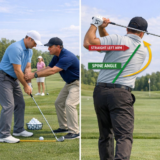
Peak golf performance emerges from the systematic alignment of athlete biomechanics, swing mechanics, and equipment characteristics. Advances in fitting technology and performance measurement-most notably launch monitors, high-speed motion capture, and force-plate analysis-now permit quantification of how club design, shaft properties, grip ergonomics, and ball construction interact with a player’s kinematic sequence to determine outcomes such as clubhead speed, ball speed, smash factor, launch angle, spin rate, carry distance, and lateral dispersion.When equipment is selected and tuned to complement individual movement patterns and strength profiles, biomechanical efficiency improves, variability in swing execution decreases, and driving distance and accuracy can be measurably enhanced.
This article synthesizes current empirical and applied literature on equipment optimization and translates biomechanical principles into practical fitting protocols. It examines how shaft flex, torque, and kick point influence energy transfer and timing; how grip size and texture affect wrist mechanics and grip pressure consistency; how clubhead mass distribution alters rotational inertia and launch conditions; and how ball compression and dimple design mediate spin-velocity relationships. Performance outcomes are framed in terms of objective metrics and variability reduction, with emphasis on evidence-based assessment methods and decision rules for coaches, fitters, and players seeking reproducible gains in swing consistency and driving performance.
Integrating Biomechanics and Equipment Selection to Optimize Swing Efficiency
Effective swing optimization begins with the application of biomechanics to a repeatable setup and kinematic sequence: maintain a neutral spine angle (typically 20°-30° forward tilt), approximately 15°-25° knee flex, and a weight distribution of 55/45 toward the lead foot at address for most full iron shots. These setup fundamentals create the necessary lower‑body fixation to produce an efficient ground‑reaction force and a reliable hip‑to‑shoulder kinematic sequence. for example, target a hip turn of 30°-45° and a shoulder turn of 80°-100° on a full backswing to store elastic energy in the torso while keeping the center of mass stable; beginners can start with smaller turns (hip 20°-30°, shoulder 60°-80°) to maintain control.To instill this pattern, use simple, measurable drills: mirror posture checks, the chair‑under‑armpit drill to preserve width, and the step‑down drill to feel ground force transmission. Setup checkpoints to use on the range include:
- Alignment stick parallel to target line to ensure square feet and shoulders;
- Visual spine angle check with a mirror or video to keep the 20°-30° tilt;
- Ball position markers (driver: inside front heel; mid‑iron: center of stance) to maintain consistent low point.
these checkpoints bridge basic biomechanics to on‑course reliability and are scalable for beginners through low handicappers.
Next, integrate equipment selection into the biomechanical model so the tools amplify, rather than hinder, an efficient swing. Match shaft flex to measured clubhead speed (measured with a radar): <85 mph = senior/ladies or a more flexible shaft; 85-95 mph = regular; 95-105 mph = stiff; >105 mph = extra stiff-this guideline improves timing and reduces late release or casting. Equally vital are loft and lie: use loft to control launch angle and spin (target launch of 12°-16° and spin ~4,000-6,000 rpm for long irons/utility clubs depending on conditions), and adjust lie so the sole aligns with the turf at impact to eliminate toe or heel shots. practical clubfitting drills include:
- Use a launch monitor to record launch angle, spin, and carry; set progressive goals (e.g.,reduce dispersion by 10% over 8 weeks).
- Perform a 30‑shot dispersion test with two shaft options to evaluate shot shape and distance variability.
When facing windy or wet conditions, select lower lofts and stronger ball flights to reduce spin and maintain control; conversely, in soft conditions prioritize higher loft/softer compression balls to increase stopping power. These equipment decisions should be retested as the golfer’s speed and biomechanics evolve.
translate the biomechanically efficient swing and fitted equipment into short‑game execution and strategic course management. Short game efficiency depends on consistent low‑point control and appropriate use of bounce versus leading edge: for sand shots use an open face and contact the sand 1″-2″ behind the ball; for tight lies use less bounce and a shallower attack angle (approx. 2°-4° descending). Practice routines with measurable targets include:
- 50‑ball chip cycle: 25 shots from 15-25 yards emphasizing landing spot consistency; record up‑and‑down percentage and aim to improve by 10 percentage points in 6 weeks;
- Impact bag or towel drill for irons to feel a forward shaft lean of 5°-10° at impact and to correct casting;
- Low‑trajectory wind shots: 20 reps with reduced wrist hinge and ball back in stance to master punch shots under adverse weather.
In play, connect these technical skills to strategy by choosing shots that match both your biomechanics and equipment (for example, favor a 3‑iron off a long par‑3 when your fitted utility produces lower spin and tighter dispersion). Additionally, cultivate a concise pre‑shot routine and visualization to align biomechanics with decision‑making under pressure. by combining measurable drills, proper club selection, and context‑sensitive strategy, golfers from beginners to low handicappers can systematically improve swing efficiency and lower scores.
Precision Club Fitting Protocols for Maximizing Launch Conditions and Shot Consistency
Begin with an evidence‑based measurement protocol that links equipment variables to desired launch conditions. First, record baseline metrics using a launch monitor: swing speed, ball speed, attack angle, dynamic loft, spin rate, and smash factor. Such as, a driver fitting should target a launch angle of approximately 10°-14° with a spin rate near 1,800-3,000 rpm for many players; low handicappers with higher swing speed may prefer the lower end of that range, while beginners frequently enough benefit from higher launch and spin for carry. Next, apply a stepwise adjustment sequence: (1) change loft in 1° increments (a practical rule of thumb: 1° loft ≈ 2-3 yards carry), (2) modify shaft flex/weight and kick point to control tempo and spin, and (3) refine head design (CG and MOI) to influence launch and forgiveness. For practical application on-course, simulate teeing conditions and wind: if facing a stiff headwind, increase launch slightly and lower spin; conversely in calm conditions a golfer may reduce loft to control roll. To operationalize this protocol, follow these setup checkpoints and drills:
- Setup checkpoints: ball position, neutral spine angle, balanced weight distribution (roughly 55/45 lead/trail for driver), and relaxed grip pressure.
- Measurement drills: three full-swing hits with each loft/shaft combination using the same ball type; average the best two for consistency.
- Verification drill: simulated on-course shot with target at intended carry distance to confirm roll-out and dispersion.
This structured approach ensures club choices produce reproducible launch conditions that dovetail with a golfer’s physical capabilities and course strategy.
Building on measured launch data, translate equipment settings into swing‑mechanic and short‑game refinements that improve shot consistency. Adjusting lie angle in iron fitting by ±1-2° can correct heel or toe bias and tighten dispersion; use impact tape or spray to confirm center‑face contact during a fitting session. In addition, refine dynamic loft control through setup and swing sequencing: teach players to maintain a stable spine angle and control wrist hinge so that dynamic loft at impact matches the fitted loft range (e.g., a 7‑iron dynamic loft near 26°-30° depending on shaft and player). For wedges, match bounce and grind to turf conditions-use higher bounce (10°+) for soft or deep turf and lower bounce (4°-6°) for firm, tight lies-and practice trajectory control drills that change attack angle by ±2° to alter spin and stopping power. common mistakes and corrections include:
- Too steep an attack angle (causes high spin, loss of distance) – correct with a forward shaft lean drill and posture stabilization to shallow the downswing.
- Improper lie angle (heel/toe misses) – adjust lie and re‑check ball contact with impact tape.
- Excessive dynamic loft (ball ballooning) – use lower lofted setup and constrain wrist flip in pitching drills.
Through targeted drills (tee‑height driver drills, impact bag work, and variable‑bounce wedge practice), golfers of all levels can implement fitting changes into their stroke and short game, thereby reducing strokes around the green and improving approach accuracy under a range of course conditions.
integrate fitting outcomes into a measurable practice and course management plan that directly targets scoring enhancement. Establish short‑term performance goals such as reducing long‑iron dispersion to within a 10‑yard radius, increasing driver carry consistency to within ±15 yards, or lowering wedge approach spin variance by 15-20%. For week‑by‑week progress, use a blended practice routine that addresses knowledge, feel, and feedback:
- Technical (visual/verbal): video swing analysis twice weekly to monitor posture and dynamic loft.
- Kinesthetic: 30 minutes of impact‑focused drills (impact bag, half‑swing tempo work) three times per week.
- Situational/course practice: simulated hole play and wind‑adjustment sessions once weekly, using the fitted yardage gaps to choose layups or go‑for‑green decisions.
Moreover, ensure equipment remains conforming to USGA/R&A rules (club and groove conformity) and re‑check loft/lie after seasonal temperature changes or shaft settling. couple technical work with a simple pre‑shot routine and mental checklist (target, wind, trajectory, and bailout) to convert improved launch conditions into lower scores; for example, when playing firm links-style fairways, favor a lower‑spin tee shot setting and choose a three‑yard wider aiming corridor to reduce risk. By linking precise club fitting, measurable practice progress, and clear course strategy, golfers from beginners to low handicappers can achieve consistent launches, tighter dispersion, and tangible reductions in score.
Shaft Flexibility, Torque, and Mass Selection Aligned with Swing Dynamics and Desired Ball Flight
Understanding how shaft characteristics interact with a player’s swing begins with matching flex, torque, and mass to measurable swing dynamics and the targeted ball flight. In practical terms, use clubhead speed as the primary baseline: players with a driver speed of <85 mph usually perform better with A/senior or R/regular flex, those between 85-100 mph with R, 100-110 mph with S/stiff, and >110 mph often require X/extra-stiff to prevent excessive shaft deflection at transition. Meanwhile, shaft torque (typically in the range of 2-6° for modern graphite shafts) affects the rotational twist under load: higher torque tends to increase feel and can slightly raise the propensity for shot curvature, whereas lower torque improves lateral control and stabilizes the spin axis for straighter long shots. Shaft mass (expressed in grams) influences launch and spin-lighter driver shafts (~45-60 g) can help slower swingers increase clubhead speed and launch, while heavier shafts (~60-80 g) help stronger, high-speed players control spin and trajectory, especially in windy conditions. Consequently, select equipment by combining these three parameters to align with a player’s tempo, release pattern, and desired launch/spin profile rather than relying on flex labels alone.
After establishing baseline choices,implement technique and course-application adjustments to realize the performance benefits of the chosen shaft. Such as, a golfer fitted into a lower-torque, heavier shaft who wants a penetrating ball flight for firm links-style fairways should combine that shaft with a slightly stronger shaft lean at address (3-6° forward), a ball position just inside the left heel for the driver, and a controlled grip pressure of 4-6/10 to preserve feel and timing. Conversely,a slower-swing beginner fitted with a lighter,higher-torque shaft should focus on promoting a smooth transition and a later release to take advantage of additional tip flex and higher launch. Use these practice drills to calibrate interaction between shaft and swing:
- Tempo Drill – swing with a metronome set to a 3:1 backswing-to-downswing ratio, then test shot dispersion with two diffrent shaft weights to observe change in control and launch.
- Impact-bag/Impact Tape Drill – evaluate forward shaft lean and face rotation at impact to see how torque influences face control under real-load impacts.
- Launch-Monitor On-Range Tests – record launch angle, spin, and shot dispersion for each shaft option across at least 20 swings to produce statistically meaningful differences.
These stepwise drills give both beginners and low handicappers quantifiable data (launch angle in degrees, spin in rpm, and carry dispersion) they can use to link shaft selection to on-course strategy and scoring goals.
adopt a structured fitting-and-practice routine and be mindful of common mistakes and rules considerations when changing shafts. Start with a full-club fitting that includes measuring ball speed, launch angle, peak height, and spin to set measurable goals (for example, reduce driver sidespin by 20-30% or increase carry by 10 yards). Be aware that cutting a shaft by 1 inch typically stiffens it by approximately one flex increment and can lower launch and spin; thus, always re-check launch monitor numbers after length changes. Troubleshooting checkpoints include:
- Grip and setup – ensure consistent grip pressure, neutral grip, and proper ball position before attributing dispersion to the shaft;
- Release timing – if shots balloon or hook, evaluate release point and consider a stiffer tip section or lower-torque option;
- environmental play – in strong wind, opt for slightly heavier, lower-torque shafts to keep trajectories down and spin stable.
Also remember equipment must conform to the Rules of Golf; any non-conforming aftermarket modifications can affect playability in competitions. By following a methodical fitting process, practicing with specific measurable drills, and integrating shaft choices into on-course decision-making, golfers of all levels can translate equipment optimization into lower scores and consistent shotmaking.
Grip Size, Texture, and Pressure Management to enhance Control and Reduce Injury Risk
Effective control begins with selecting the correct grip diameter and texture because these factors directly alter wrist mechanics, clubface control, and muscular loading. For most players, a change of one grip size step-approximately 1-2 mm in diameter-is sufficient to change how the hands interact with the shaft: a slightly larger grip reduces excessive wrist hinge and forearm torque (helpful for high-handicap players or those with a slicing tendency), whereas a thinner grip increases tactile feedback and face feel (often preferred by low handicappers seeking shot-shape precision). Texture choices matter in field conditions: corded grips give superior friction in wet or humid weather and when wearing gloves, while softer tacky grips improve feel in dry conditions. To evaluate fit on the range,perform a simple static check: take your normal address,make a short wrist-hinge half-swing and note whether you must grip tightly to control the clubface; if so,increase grip diameter by one step and reassess. In addition, ensure the hands sit on the handle so the base pads of the fingers-not the palms-carry the shaft; this setup promotes repeatable wrist set and helps comply with standard club handling under Rule 4 (equipment use) by maintaining a natural, legal grip without artificial aids.
Grip pressure is a dynamic variable that should be trained deliberately because it controls timing, release, and injury risk. Use a subjective 0-10 pressure scale as a practical metric: aim for ~3-4/10 at address (light, relaxed), transition through ~4-5/10 at acceleration/impact to maintain control of the clubhead, and then release to ~2-3/10 after impact to allow proper follow-through. Practice drills that translate this into feel include:
- The toothpaste drill: hold the club like you would a tube of toothpaste – firm enough to prevent squeezing the tube; make 10 half-swings focusing on the scale target.
- Impact-bag short swings: hit an impact bag with half-swings to feel the correct firm-but-not-tense impact pressure.
- Sensor feedback session: use a pressure-sensing grip or wearable (practice for 10-15 minutes) to quantify pressure peaks and adjust until the majority of swings fall within the target zones.
When practicing, set measurable goals: for example, over a two-week routine, record 50 swings each session and aim to have at least 80% inside the target pressure band; correlate those swings with improved dispersion (reduced lateral scatter) and more consistent spin rates on launch monitor readings. Common faults are gripping too tight (produces blocked shots, inhibited wrist hinge, loss of clubhead speed) and gripping too loose (allows excessive face rotation and hooks); correct these with the above drills and by consciously relaxing the forearms during the takeaway.
integrate grip size, texture, and pressure management into broader swing mechanics, short-game execution, and course strategy to lower scores and reduce injury risk.For short-game scenarios - such as bunker shots or chips from tight lies – consider choking down 1-2 inches to increase control, but maintain the same pressure proportions to preserve feel; when greens are fast, lighten grip pressure further to improve touch.From an injury-prevention standpoint, players with medial epicondylitis (golfer’s elbow) or wrist tendinopathy should favor slightly larger diameters and maintain relaxed pressure to reduce torque through the elbow; supplement technique work with a 10-minute dynamic warm-up and eccentric forearm strengthening 3 times per week. On the course, adapt grip texture and pressure to conditions (use corded grips and increase pressure modestly in wet/windy conditions to ensure control), and employ tactical decisions-such as selecting a lower-lofted club and a firmer grip for punch shots into a headwind-to manage trajectory without changing swing fundamentals. To consolidate learning, use the following weekly practice checklist:
- Short daily routine: 10 minutes grip-pressure drills + 20 minutes half-swing ball-strike practice.
- Range session: 100 swings with sensor or video review-note changes in face angle at impact and dispersion.
- On-course test: play three holes using onyl one change (e.g.,one-size-up grip) and track scoring impact and comfort.
Taken together, these progressive steps provide measurable improvement pathways for beginners through low handicappers while preserving mechanics, improving shot-shaping, and lowering the risk of overuse injury.
Ball Construction and Compression Optimization for Swing Speed, Spin Control, and distance
Ball design drives the interaction between clubhead and ball at impact, so begin by matching construction and compression to your physical characteristics and swing profile. For golfers with clubhead speeds below 85 mph, choose lower-compression, two-piece balls (compression ~60-75) to maximize initial velocity and carry; players between 85-100 mph will usually benefit from mid-compression, multilayer balls (~75-90) that balance distance with control; while stronger swingers above 100 mph can extract optimal launch and stability from firmer, higher-compression cores (> 90) and progressive multilayer constructions. In addition, cover materials and mantle layers affect spin: urethane covers increase greenside bite and controllable spin, whereas ionomer covers yield lower short-game spin but more roll. As an actionable first step, use a launch monitor to record baseline metrics – target measurements are driver launch angle 10-14° with spin 1,800-2,500 rpm for distance-oriented players, and iron launch/spin appropriate to your club (such as, a 7-iron carry spin of 5,000-8,000 rpm). practice drills to validate ball choice:
- Hit 10 full shots with each candidate ball on a launch monitor and compare carry,total distance,peak height,and side spin.
- Record dispersion and carry consistency (standard deviation goal ±3-5 yards for average players; ±2 yards for low handicappers).
- Perform 20 wedge shots from 50 yards to assess greenside spin and stopping power with each ball.
These measurements create an evidence-based selection aligned to swing speed, launch profile, and the desired balance between distance and spin control.
Next, refine swing mechanics to exploit the chosen ball’s characteristics: center-face contact, attack angle, and dynamic loft directly determine spin generation and energy transfer.Emphasize center-face contact through targeted impact drills – place impact tape on the clubface and aim for strikes within the central 30-40% of the face; a measurable goal is to have 80% of shots within this zone during a 30-shot test. Adjust attack angle depending on the club: for driver, work toward a slightly upward attack (+0-3°) to reduce spin; for long irons, a neutral to slightly downward attack (-1 to -4°) helps compress the ball and increase spin control. Understand and manage spin loft (the difference between dynamic loft and attack angle): to reduce unwanted long-iron spin, decrease spin loft by reducing dynamic loft at impact by 2-4° while maintaining body rotation and clubhead acceleration. use these practice checkpoints and drills:
- Impact-position drill: half-swings to a set finish to feel compression and maintain spine angle; use a launch monitor to confirm spin changes.
- Tee-height driver drill: vary tee height in 0.25-0.5 inch increments to find the tee that produces the lowest acceptable spin while maintaining carry.
- Wedge greenside control drill: 20 shots from 40-60 yards focusing on consistent ball-first contact and measuring spin rates to target repeatable stopping distances (goal: ±3 feet dispersion on a firm green).
correct common mistakes such as flipping at impact (causes increased spin and inconsistent distance) by practicing forward shaft lean on short irons and maintaining wrist angle through impact; for golfers with physical limitations, prioritize controlled tempo and center strikes over maximal swing length to preserve compression and predictable spin.
translate equipment and technique into on-course strategy to improve scoring: select balls and play patterns that suit conditions and your short-game priorities. Such as, in windy links-style conditions opt for a firmer, lower-spin ball to reduce ballooning and increase roll; conversely, on soft, receptive greens choose a softer, urethane-covered ball for bite and hold. Handicap-specific recommendations: beginners and mid-handicappers should favor durable two-piece, low-compression balls for forgiveness and distance, whereas low handicappers should use urethane multilayer balls to exploit spin for wedge control and shot-shaping. Remember the Rules of Golf when playing competitively: use only R&A/USGA-conforming balls and record the brand/model on the scorecard when required. Course-management drills and mental strategies include:
- Pre-shot routine to stabilize launch variables: visualize desired carry, select club based on recorded average carry minus 10-15% for safety, and commit to a swing tempo.
- Situational practice: simulate wind shots, tight lies, and uphill/downhill lies on the practice range and catalog carry/roll outcomes for your chosen ball.
- Troubleshooting checklist: if carry is unexpectedly low, confirm ball choice, check strike location, re-measure attack angle, and verify no equipment damage (scuffs or delamination can alter performance).
By integrating ball construction knowledge with measurable swing adjustments, targeted practice, and tactical course play, golfers of all levels can create reliable improvements in swing-speed efficiency, spin control, and overall distance management that translate directly to lower scores.
Objective Performance Metrics and Data Driven Assessment for Equipment Validation
Begin by establishing a rigorous, repeatable testing protocol using an accurate launch monitor (e.g., TrackMan, GCQuad, or equivalent) and strict shot controls.prior to hitting balls,calibrate the device and warm up for 10-15 minutes to stabilize clubhead speed and tempo; then collect a statistically meaningful sample (recommended 30 shots per club) to calculate mean,standard deviation,and outliers. Focus on the core objective metrics: clubhead speed, ball speed, smash factor, launch angle, spin rate (rpm), carry distance, total distance, vertical launch, descent angle, side spin, and lateral dispersion. In addition, verify equipment conformity with the Rules of Golf (USGA/R&A), checking that club length (≤48 inches), lofts, and groove configurations are legal before validation. For reproducibility, record environmental conditions (temperature, wind, humidity) and use consistent golf ball model and pressure; otherwise, control these variables during indoor testing. to help ensure data integrity,follow these setup checkpoints:
- device calibration: verify reference target and update firmware.
- Consistent ball/tee: same ball model and tee height for driver tests.
- Stance and alignment: mark foot position and ball position to remove setup variance.
- Shot labeling: record shot intent (draw, fade, straight) and shaft/loft configuration for each group.
These controls let you distinguish true equipment performance differences from normal swing variability and provide an evidence-based foundation for decision-making.
Next, translate equipment data into instructionally useful feedback for swing mechanics and short-game technique. Use launch monitor diagnostics to identify mechanical faults and prescribe corrective drills: such as, if iron shots show a high launch with low spin and shallow divots, this suggests an insufficiently descending attack angle; target a descending attack angle of ≈-2° to -4° for mid- and short-irons by moving the ball slightly back in your stance and increasing forward shaft lean at address. Conversely, driver optimization often requires a slight positive attack angle (typically +2° to +4° for players with higher swing speeds) to maximize carry while keeping spin in the optimal window (driver spin commonly between 1,800-3,000 rpm depending on speed). Prescribe drills with measurable goals and checkpoints:
- Impact-bag drill: improve compressive feel and smash factor; aim to raise smash factor by >0.02 in 4 weeks.
- Gate drill with alignment sticks: correct face-to-path errors; reduce side spin by >10% within two practice sessions.
- Divot pattern drill: mirror divot depth and length targets for consistent loft de-lofting-track divot start relative to ball (1-2 inches after impact for irons).
Include beginner adaptations (reduced swing length, tempo-focused reps) and advanced refinements (shaft kick-point and torque adjustments, lie-angle checks) so that players from novices to low handicappers can pursue quantifiable improvements tied directly to equipment behavior.
integrate on-course validation and course-management strategy so equipment decisions produce lower scores, not just better numbers. Use an A/B testing protocol over multiple rounds-alternate candidate clubs across equivalent holes and track key performance indicators: GIR (greens in regulation), proximity to hole, scrambling rate, and scoring on par-3/4/5 holes. Set concrete acceptance criteria for equipment change (for example,consistent increase in average carry by ≥5% or reduction in lateral dispersion by ≥5 yards,coupled with equal or improved GIR and scoring across at least three rounds). During on-course sessions, factor in situational variables such as wind, firm/soft turf, and sidehill lies; as an example, a hybrid that shows higher launch and softer landing on the range may out-perform a long iron in crosswinds when tested from native rough. Recommend situational practice drills:
- Wind simulation practice: practice fades and draws at predetermined face/path differentials to learn club/aim adjustments.
- Pressure simulation: 9-hole scoring goals with forced club choices to evaluate confidence and mental resilience.
- Shot-shaping ladder: alternate target windows at 10-yard intervals to quantify workable shot shapes and dispersion under varying conditions.
Moreover, incorporate the mental game by establishing a pre-shot routine and data-informed confidence thresholds (only switch equipment once performance gains are repeatable under pressure). By combining objective metrics, reproducible practice drills, and structured on-course validation, players and instructors can make evidence-based equipment choices that directly translate into better technique, smarter course management, and lower scores.
Practical Implementation and Progressive Tuning Strategies to Transfer equipment Gains to On Course Performance
Begin by converting equipment gains into measurable swing outcomes through a structured fitting-to-practice pipeline.First,establish baseline metrics on a launch monitor: clubhead speed (mph),ball speed (mph),smash factor,launch angle (°),spin rate (rpm), and dispersion (lateral yards). For drivers,aim for a smash factor ≥ 1.45 for efficient energy transfer and a target launch angle in the approximate range of 10°-14° (adjusted with spin between ~1,800-3,000 rpm to suit your head speed); for irons expect a negative attack angle around −4° to −6° in mid‑irons to produce clean divots. Then, translate fitting changes (shaft flex/kick point, loft, lie, head CG, grip size) into specific swing adjustments: for example, if the fitting shows a shaft that is too stiff and produces low launching, incrementally soften the flex or increase loft and practice raising the effective launch by moving the ball forward ½-1 inch while maintaining a neutral spine angle. Use a progressive testing routine-make five measured swings with each equipment change, log results, and only integrate changes that demonstrate consistent improvements in your target metrics (reduced dispersion, increased carry, improved launch/spin window).
Next, refine technique and short‑game integration to realize scoring gains from equipment improvements. Focus on contact mechanics and yardage control: maintain a consistent setup checklist (stance width, ball position, shaft lean) and establish exact measurable goals-such as 10‑yard gaps between clubs and the ability to land a wedge within a 10‑ft radius at 60 yards.Practice routines should be progressive and contextual:
- Range to course transfer drill: randomize club selection across 30 shots to simulate course variability and record carry distances to build reliable club gapping.
- Landing‑spot ladder: from 20, 40, 60, 80, 100 yards focus on a single landing area – use the clockface or gate drill to improve trajectory control and spin generation with specific loft/bounce choices.
- Partial‑swing calibration: practice ¾ and ½ wedge swings to preset carry distances (e.g., 40, 60, 80 yards) using a metronome tempo to create repeatable outcomes.
When working with wedges, evaluate bounce and grind in relation to turf interaction; if shots are digging on contact, adjust to a higher bounce or open the face and shallow the attack angle. For beginners, explain these concepts simply-“hands slightly ahead of the ball at impact (about 1-2 inches) produces clean compression”-while advanced players can refine variables like shaft lean and spin loft to find the optimal stopping power on greens.
apply technical and equipment improvements directly to course strategy to lower scores in real play. Use measured carry charts and conservative risk thresholds: such as,if the bunker guarding the green requires 150 yards carry into the wind,plan to hit a club that your practice log shows you carry at least 10 yards more than required to allow for variability. Integrate rules and situational play: remember the 14‑club limit when optimizing your set for course patterns (e.g., include an extra hybrid instead of a long iron if it consistently reduces misses), and use Rule‑guided relief strategies (visible obstructions or abnormal course conditions) rather than risky creative shots. Employ mental and routine-based strategies on the course-pre‑shot visualization, target‑focused alignment, and a two‑club safety check-to ensure technical gains translate to decision making. Troubleshooting common on‑course failures:
- If dispersion increases,reassess lie angle and shaft bend stiffening; a persistent toe or heel miss often indicates improper lie or grip size.
- If launch is too low,check tee height,ball position,and shaft flex-incremental adjustments produce measurable changes and should be revalidated on a launch monitor.
- If scoring from 100 yards suffers, verify wedge loft gaps, bounce selection, and practice landing‑spot routines under varying wind and turf conditions.
Set concrete performance goals for competition (e.g., increase fairways hit by 10 percentage points, reduce three‑putts by 30%, or lower average approach dispersion by 5-7 yards) and use periodic re‑testing to fine‑tune equipment and technique so improvements are durable under the variable realities of weather, course setup, and pressure.
Q&A
Note: the web search results you provided point to a financial product/company called “Unlock” (home equity release, HEA). Those results are unrelated to the golf-topic article you requested.Below are two separate Q&A sections: (A) an academic, professional Q&A for the article “Unlock Peak Performance: Master Golf Equipment for Better swing & Driving” (primary request); and (B) a brief Q&A summarizing the unrelated search results for the company Unlock (to avoid confusion).
A.Q&A – “Unlock Peak Performance: Master Golf Equipment for Better Swing & Driving”
Style: Academic. tone: Professional.
Q1. What is the conceptual link between equipment optimization and biomechanical efficiency in the golf swing?
A1. Equipment optimization influences the mechanical interface between the athlete and the club: club length, mass distribution, shaft bending behavior, grip ergonomics and ball properties alter inertial loads, timing requirements and sensory feedback. When equipment is matched to an individual’s anthropometry, neuromuscular coordination and swing kinematics, it reduces compensatory motion, lowers unnecessary joint moments, and thus improves biomechanical efficiency-manifested as greater effective energy transfer to the ball, reduced variability in swing patterns, and lower metabolic/neuromuscular cost for producing a given ball speed.
Q2. Which objective performance metrics should be used to evaluate the effectiveness of equipment changes?
A2. Key objective metrics include:
– Clubhead speed (mph or m/s)
– ball speed (mph or m/s)
– Smash factor (ball speed ÷ clubhead speed)
– Launch angle (degrees)
– Backspin and sidespin rates (rpm)
– Spin axis (degrees)
– Carry distance and total distance (yards/meters)
– Shot dispersion (1‑standard deviation lateral and distance)
– Impact location on face (X-Y coordinates)
– Temporal metrics: downswing duration, transition time
– Biomechanical measures: joint angles, angular velocities, ground reaction forces (when available)
These metrics allow quantification of energy transfer, trajectory optimization and consistency.
Q3. How does optimized club fitting improve swing consistency and driving distance?
A3. Optimized club fitting aligns club geometry and dynamic properties with the player’s kinematic profile. Examples:
– Appropriate shaft flex and weight match the player’s tempo and release pattern, producing an optimized launch and reduced face-angle variability at impact.
– Adjusted club length and lie angle improve address posture and swing plane, reducing compensatory torso or wrist movements.
– Head loft and center-of-gravity placement tune launch/spin to achieve higher carry and total distance for a given clubhead speed.
Empirical fittings typically produce measurable gains in smash factor, reduced dispersion and net increases in carry/total distance.
Q4. How should shaft characteristics be selected relative to a player’s swing?
A4. Select shafts based on these interrelated properties:
– Flex profile (stiffness): chosen according to peak shaft load and tempo. Slower tempos generally require more flexible profiles; faster tempos require stiffer profiles.- Weight: heavier shafts enhance feel and stability but may reduce maximal clubhead speed; light shafts may increase speed but can amplify timing errors.
– Bend/kick point: influences launch angle (higher kick point → lower launch; lower kick point → higher launch).
– Torque: affects feel and twist at impact; lower torque increases perceived stability.
Selection should be informed by launch-monitor data (desired launch/spin) and shaft dynamic testing (frequency/Hz and load-deflection curves), followed by on‑ball validation.
Q5. What are practical, measurable targets for key driver metrics at different player levels?
A5. Typical approximations (for drivers):
– Recreational beginners: clubhead speed <85 mph; target launch ~12-15°; spin 2500-3500 rpm; smash factor ~1.35-1.45.
- Intermediate: clubhead speed 85-95 mph; target launch ~11-14°; spin 2000-3000 rpm; smash factor ~1.45-1.48.
- Advanced/low handicap: clubhead speed >95 mph; target launch ~9-12°; spin 1500-2500 rpm; smash factor ≥1.48-1.50.
These are context-dependent; optimization targets should be individualized based on fitting data.
Q6. How does grip ergonomics affect kinematics and shot outcomes?
A6. grip size, shape and texture modify hand posture, wrist hinge, forearm rotation and grip pressure. Oversize grips can restrict wrist flexion/extension and reduce hand reversal, often reducing spin and promoting a more stable release. Undersize grips may allow excessive hand action and increased dispersion. Grip texture and tackiness influence muscular co-contraction and tension: overly tacky surfaces can lead to higher grip pressure, stiffening swing dynamics; properly sized and textured grips support consistent pressure and tactile feedback, improving face control and repeatability.
Q7. How do golf balls differ in ways that materially affect driving performance?
A7. Key ball properties:
– Compression/designed feel: lower compression may suit slower swing speeds to increase deformation and speed; higher compression often benefits faster speeds.- core design and mantle layers: dictate energy transfer and spin characteristics.
– Dimple pattern and surface roughness: influence aerodynamic stability, lift and drag; small changes in dimple geometry alter boundary-layer behavior and thus carry.
– Spin characteristics: driver shots are influenced primarily by low-spin vs higher-spin designs; lower spin frequently enough translates to more roll but can increase susceptibility to side spin.
Ball selection should be matched to the player’s launch/spin profile to optimize carry, roll and dispersion.
Q8. What measurement technologies are recommended for evidence-based fitting and why?
A8. Recommended tools:
– Doppler radar and camera-based launch monitors (e.g.,TrackMan,FlightScope,Foresight): provide accurate ball/clubflight metrics (speed,spin,launch).
– High-speed video (face impact and face contact position) for impact dynamics.- Shaft dynamic measurement rigs (frequency/hz and tip load) for objective shaft profiling.
– Pressure mats and force plates for ground reaction forces and weight-shift analysis.
– Optical/motion-capture systems (marker-based or markerless) for joint kinematics and timing.
These technologies provide complementary data: launch monitors quantify external outcomes; biomechanical systems elucidate internal movement patterns driving those outcomes.Q9. Describe a systematic fitting protocol integrating biomechanical assessment and launch-data validation.
A9. Protocol steps:
1. Pre-fit interview: goals, injury history, ball/club preferences.
2. Anthropometric/static measures: height, wrist-to-floor, hand size, grip fit.
3.Baseline dynamic assessment: warm-up shots recorded on launch monitor and biomechanical system.
4. Identify target launch/spin window for driver based on clubhead speed and desired trajectory.
5. Iterative trials: test distinct head/shaft/grip combinations; collect launch/impact and kinematic data.6.Analyze: look at clubhead speed, smash factor, launch/spin, impact location, face-angle dispersion and kinematics.
7. Narrow to 1-2 finalist specs and validate with on-course simulation or range testing.
8. Follow-up: short-term re-check after 1-4 weeks and long-term validation in play.
Quantify gains versus baseline (e.g., % change in carry, dispersion SD).
Q10. What are common trade-offs encountered in equipment optimization?
A10. Common trade-offs:
– Stability vs speed: heavier/stiffer shafts and heads increase stability but may reduce maximal clubhead speed.
– Launch vs spin: increasing launch may require more loft or lower-kick-point shafts but can raise spin, which may reduce roll.
– Forgiveness vs workability: larger, perimeter-weighted heads are more forgiving but can reduce shot-shaping capability preferred by advanced players.
– Comfort vs performance: grip or shaft choices that feel more pleasant may not produce best ball-speed outcomes; player preference must be balanced with objective metrics.
Q11.How do equipment changes influence injury risk or long-term biomechanics?
A11. Properly fitted equipment can reduce compensatory patterns and excessive joint torques,possibly lowering injury risk. Conversely, maladapted equipment (e.g., too long clubs, mismatched shaft flex) can increase lumbar shear, shoulder stress or elbow torque due to altered sequencing or forced compensations. Fitting should consider existing musculoskeletal limitations and incorporate conditioning/mobility interventions when needed.
Q12. What magnitude of improvement is realistic after a professional fitting and equipment optimization?
A12. Realistic outcomes vary with player level and baseline fit quality. Typical empirically observed improvements include:
– 2-10% increase in ball speed or carry distance for players with suboptimal baseline specs.
- reduction in lateral dispersion SD by 10-30% for those with better impact-location control.
– Improvements in smash factor (e.g., from 1.42 to 1.48) that translate into several extra yards.
Outcomes should be validated on-device and in play; results are heterogenous and depend on adherence and the player’s ability to adapt.
Q13. how should a player prioritize equipment changes versus swing technique changes?
A13. Priority should be individualized. If objective data show equipment-induced inconsistencies (e.g., extreme face-angle variance due to wrong lie/length/shaft), correct equipment first to avoid masking swing faults. If technique deficits (poor sequencing, inconsistent impact location) are primary drivers of poor metrics, technical coaching and neuromuscular training should lead. Optimal outcomes usually arise from concurrent, coordinated adjustments: equipment that supports improved biomechanics while technical coaching refines motor patterns.
Q14. Which experimental/biomechanical research methods could quantify equipment effects on swing mechanics?
A14. Methods include:
– Within-subject repeated-measures designs comparing equipment conditions while controlling for fatigue and warm-up.
– Use of motion-capture (3D kinematics), force plates, and instrumented clubs to measure joint kinetics and energy transfer.- Time-series analyses of club and body segment angular velocity profiles.
– Statistical analyses: mixed-effects models to account for intra-subject variability; equivalence tests to establish non-inferiority of new equipment.
Such methods allow causal inferences about equipment-driven biomechanical changes.Q15. What practical recommendations follow from current evidence for golfers seeking improved driving performance?
A15. Practical recommendations:
– Undergo a full dynamic fitting using a calibrated launch monitor and, when possible, biomechanical assessment.
– Prioritize optimizing driver loft/CG and shaft profile to target launch/spin windows fitted to clubhead speed.
– Choose grip size and texture to allow consistent grip pressure and comfortable wrist mechanics.- select ball model on the basis of measured launch/spin data rather than marketing claims.
– Integrate strength, mobility and tempo training to consolidate kinematic changes enabled by equipment.- Reassess periodically, as swing changes or physical conditioning may alter equipment needs.
B. Q&A – Search Results: “unlock” (home equity release/company) – brief clarifying summary
Q1. Do the search results relate to the golf article?
A1. no.The search results returned pages for a company called Unlock that offers home equity release agreements (HEA).These are financial products unrelated to golf equipment or swing performance.
Q2. What is the product described in the search results?
A2. The product is an HEA (home equity agreement) in which Unlock provides a lump-sum cash payment in exchange for a portion of the home’s future value. The pages indicate there are no monthly payments and no interest charges; eligibility and comparisons with reverse mortgages are discussed in their FAQ.
Q3. Were can I find more details about that company/product?
A3. The search results include URLs for Unlock’s application pages and FAQ (e.g., apply.unlock.com, unlock.com/faq). these are distinct from the golf-topic material.
If you wont, I can: (1) expand the Q&A above with references to specific studies and device validation literature; (2) create a shortened executive summary for coaches; or (3) produce an evidence‑based checklist for a fitting session you can hand to players. Which would you prefer?
optimizing swing and driving performance requires more than acquiring premium clubs; it demands a systematic, evidence-based approach to equipment selection, fitting, and iterative verification. When club specifications-shaft flex, loft, lie, head design, and grip-are aligned with an individual’s biomechanics and swing dynamics, measurable gains in clubhead speed, launch conditions, and shot dispersion typically follow. practitioners and players should thus prioritize objective assessment (e.g., launch-monitor metrics such as ball speed, launch angle, spin rate, smash factor, and lateral dispersion) alongside qualitative feedback to ensure changes translate into on-course improvements.
clinicians, coaches, and fitter-technicians are encouraged to integrate equipment decisions into broader training protocols: use biomechanical analysis to identify swing constraints, prescribe targeted drills to address those constraints, then select or modify equipment to complement the refined movement pattern. Adopt an iterative testing framework-hypothesis, intervention, measurement, and adjustment-to isolate the effect of equipment from technique and to quantify performance gains over time.continued collaboration between researchers and applied professionals will refine best practices for equipment optimization across skill levels. For the serious practitioner,the practical takeaway is clear: master equipment through data-driven fitting and ongoing evaluation,and you will unlock more consistent drives,improved launch conditions,and ultimately,higher scoring potential.