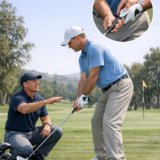
This article examines the biomechanical, tactical, and cognitive components that underpin precise golf chipping, with the objective of translating theoretical principles into actionable technique and practice strategies. Accurate short-game execution is a disproportionately crucial determinant of scoring performance; small improvements in club selection, setup, contact mechanics, and trajectory control yield measurable reductions in strokes. By synthesizing kinematic analysis, shot-selection theory, and motor-learning literature, the discussion provides a coherent framework for developing repeatable, reliable chipping skills across a range of course conditions.
Emphasis is placed on three interrelated domains: (1) equipment and shot planning – selecting loft and lie-appropriate clubs and aligning intended landing and roll patterns; (2) technique fundamentals – posture, ball position, weight distribution, swing arc, and strike mechanics that promote consistent contact and spin control; and (3) deliberate practice and feedback – structured drills, error quantification, and progress-tracking methods that scaffold skill acquisition. Insights drawn from contemporary educational platforms and mastery-learning approaches underscore the value of frequent, focused practice with immediate, objective feedback to accelerate learning and retention.
The subsequent sections explicate measurable performance targets, common technical errors and corrective progressions, and practice protocols adaptable to different player skill levels. Together,these elements form an evidence-informed pathway for golfers seeking to unlock precision around the green and convert short-game opportunities into lower scores.
Biomechanical Principles Underpinning Precision Chipping: Joint Sequencing Stability and Energy Transfer
Precision begins with a reproducible setup and coordinated joint sequencing from the ground up. Begin with a narrow stance (feet approximately shoulder-width × 0.6 or about 8-12 inches depending on height), a slight forward weight bias of 60-70% onto the lead foot, and hands ahead of the ball by 1-2 inches to promote a forward shaft lean at impact. Maintain a modest spine tilt of 10-15° toward the target and flex in the knees while keeping the upper torso quiet; this creates a stable axis for joint sequencing. From this base,the kinetic chain should progress in the following order: ground reaction through the ankles and knees → hip rotation and controlled pelvic tilt → torso rotation → shoulder/arm swing → small wrist hinge and controlled hand action. To maintain a constant swing radius and predictable low point, limit lateral hip slide to less than 1-2 inches during the stroke and keep the backswing compact (roughly 30-40% of a full swing). Common setup errors include too-neutral weight, excessive spine tilt, and ball positioned too far forward; correct these by checking front-foot pressure (use a scale/biofeedback), moving the ball slightly back for lower trajectories, and aligning the chest to the target line to reduce compensatory hand action.
Energy transfer for crisp contact is achieved by converting rotational momentum into a stable, accelerating arc through impact rather than by “scooping” with the hands. At impact the goal is a shallow descending blow with the club’s leading edge contacting the turf or ball first; thus maintain shaft lean of 10-20° and ensure the hands are ahead of the ball at contact. To develop this, practice drills that emphasize low-point control and ground-force initiation:
- Gate drill: place two tees a clubhead width apart and swing through without touching them to train a consistent arc.
- Towel-under-arms drill: holds the connection between torso and arms to reduce self-reliant hand flipping.
- Impact-bag/coin drill: strike a soft bag or coin to feel forward shaft lean and a descending blow; aim to compress the bag/coin in front of the ball position.
For measurable progress set targets such as: within 3-4 ft of a 20-yard target on 70% of repetitions after four weeks of focused practice (50-100 purposeful chips per session, three sessions per week). Track results with alignment sticks or a simple grid on the practice green to quantify dispersion and adjust swing length or club selection to tighten grouping. Correct the most frequent contact faults-thin shots (move ball slightly back and increase forward shaft lean), duffs (reduce hip slide and increase weight on lead foot), and heavy-handed acceleration (soften grip pressure and shorten backswing).
apply these biomechanical principles to tactical decision-making and equipment choice on the course. Choose the shot and club based on green firmness, slope, and wind: for firm, fast greens opt for a lower-lofted iron or bump-and-run (e.g., 7-8 iron) to use surface run; for soft or wet conditions select higher loft and more bounce (gap wedge to lob wedge) and increase landing-area spin by ensuring crisp contact. Note the Rules of golf when applicable: you may not ground the club in a bunker, so adopt a different setup and more aggressive swing-through when chipping from sand. Practice routines that simulate on-course variability-wind, uphill/downhill lies, and tight stances-are essential; examples include:
- 50-yard progression drill: 10 chips each from 5, 10, 15, 20, 25 yards focusing on landing-spot consistency.
- Pressure-putt finish: after every 10 chips, record a 6-8 ft lag putt to simulate scoring pressure.
- Alternate-club drill: hit the same landing spot using three different clubs to learn rollout relationships.
In addition to physical technique, cultivate a concise pre-shot routine and visualization practice-identify a precise landing spot and roll-out target-to reduce decision paralysis and improve shot execution under pressure. By integrating joint-sequence mastery, stable setup checks, and scenario-based practice, players from beginners to low-handicappers will convert more chips into pars and lower scores through predictable contact and controlled energy transfer.

Optimal Club Selection Strategy for Varied Lies and Green Conditions: Loft Bounce and Landing Zone Planning
Begin with a systematic assessment of the lie and the green to determine the optimal combination of loft, bounce, and landing zone. Read the surface for speed (stimpmeter equivalents: slow ≈ 7-8 ft, medium ≈ 9-10 ft, fast ≥ 11 ft) and identify slope, grain and wind direction; then match those conditions to club characteristics. In general, use lower-lofted clubs (pitching/gap wedge, ≈44°-52°) for “bump-and-run” shots where you wont more roll, and higher-lofted wedges (sand/lob, ≈54°-60°) when you require carry and spin. Consider bounce as a functional tool: wedges with low bounce (4°-8°) are preferable on tight, closely mown lies to avoid the club skipping or digging, whereas high bounce (10°-14°) helps in soft approaches and deep rough by preventing the leading edge from digging. plan a landing zone based on how much rollout you expect-on a medium-speed green pick a spot 6-12 ft from the hole for chip-runs and 3-6 ft for half-flop approaches-then select the club that produces the intended carry-to-roll ratio given the assessed surface conditions.
Next, apply precise setup and stroke mechanics drawn from Mastering the Fundamentals of Golf Chipping to execute the chosen club-path plan. Set up with a slightly open stance and 60/40 weight forward toward the target, place the ball back of center for running chips and more forward for higher carry, and create a modest shaft lean of 5°-10° at address so the leading edge contacts cleanly. Use a compact, pendulum-like stroke with predominant shoulder rotation and limited wrist hinge (approximately 10°-20° of hinge) to control trajectory and spin; accelerate through impact to avoid flipping. To manipulate bounce, open the face to increase effective bounce for soft lies or sand (this raises launch and reduces digging) and keep the face square or slightly closed for tight lies to lower the center of rotation. Practical drills to ingrain these mechanics include:
- Landing-spot ladder: place alignment aids at 3 ft increments from the hole and land 10 balls on the same mark to measure rollout consistency;
- Bounce-sensitivity test: hit a set of 5 shots from a firm lie with two wedges of differing bounce and note contact quality and distance variance;
- Tempo control drill: use a metronome to maintain a consistent backswing-to-through-swing ratio (2:1) on 20 chips to reduce flipping and improve contact.
Set measurable practice goals such as landing 8 of 10 chips within 3 ft of your chosen landing zone and reducing distance variance to ±2 yards for repeatable scoring performance.
integrate shot-shaping and course management to translate technique into lower scores under real-course conditions. Choose the conservative option when risks are high: if pin placement is tight on a fast, downhill green, play to a larger, flatter landing area and accept a two-putt rather than attempt a high-risk flop.For varied lies, match club selection to the lie rather than defaulting to a single wedge-use a low-bounce sand wedge or gap wedge from tight fairway lies, a mid-bounce sand wedge from deeper rough, and a high-bounce sand wedge or lob for soft, fluffy turf or bunker closeness. Troubleshooting common mistakes: if you are scooping the ball, check ball position and move it slightly back and increase forward shaft lean; if you are hitting fat chips, narrow your stance and ensure weight is more forward at setup. Incorporate mental routines-pick a micro-target on the green (blade of grass, leaf), commit to a single landing spot, and rehearse one controlled swing to build confidence. Additional accessible practice options include modified repetitions for physical limitations (shorter swings, reduced hinge) and visual/kinesthetic methods (video feedback or felt-contact drills) to accommodate different learning styles and ensure consistent improvement across skill levels.
Stance setup and Ball Positioning to Control Trajectory and Spin: Weight Distribution and Alignment guidelines
Begin with a reproducible setup that simplifies trajectory and spin control: adopt a narrow stance for short game (approximately 6-12 inches between feet) and a progressively wider stance as club length increases, up to shoulder width for mid- and long-irons. Place the ball relative to the club: for wedges and chipping keep it just back of center or slightly inside the trail heel to encourage a descending blow, for mid-irons position it at center, and for driver place the ball opposite the inside of the lead heel.At address use weight distribution of about 60-70% on the lead foot for chips and pitches, and roughly 50/50 at address for full irons with an intention to transfer to the lead foot by impact. Check spine angle and shaft lean: a slight forward tilt of the spine (approximately 3-5° toward the target) with the hands 1-2 inches ahead of the ball at setup creates the effective loft necessary for crisp compression and controllable spin. To make these points actionable, use the following swift checkpoints and drills:
- Setup checkpoint: place an alignment stick on the ground along the target line and another parallel to your feet to verify toe/heel alignment.
- Drill: practice 20 chips with a towel 2-3 inches behind the ball to enforce a forward-hand, ball-first contact pattern.
- Measurement drill: use a phone video at 60 fps to confirm hands ahead at impact and approximately 60-70% weight on lead foot for wedge shots.
Once the setup is consistent, refine impact dynamics-angle of attack (AOA), shaft lean, and clubface condition-to control trajectory and spin. For short-game shots aim for a slightly descending AOA (approximately -2° to -6°) so the leading edge enters the turf and compresses the ball; for full irons expect AOA in the range of -1° to -4°. Forward shaft lean at impact increases compression and,when contacted cleanly,can produce higher backspin on wedges-particularly critically important when holding greens or controlling rollout into a tight pin. Conversely, a steep, downward blow on wet or plugged lies will reduce friction and diminish spin, so adapt by opening the stance and clubface slightly to preserve loft and trajectory in those conditions. Integrate insights from mastering the Fundamentals of Golf Chipping: adopt a compact stroke with limited wrist hinge for pitches inside 30 yards and focus on a “hands-leading” impact for repeatable spin control. Practice routines to develop these skills include:
- Progressive distance drill: from 10, 20, 30 yards, perform 10 repetitions each maintaining hands ahead at contact and logging carry/roll distances.
- groove-clean contact drill: hit 30 wedge shots using a clean ball and dry turf; measure backspin qualitatively by observing stopping behavior on a firm green.
- AOA awareness drill: use impact tape or foot spray to monitor where the club strikes the turf and adjust setup if the leading edge is digging too deeply.
translate technique into course strategy by aligning setup choices with club selection, lie, and wind conditions; this is where setup and ball position become tactical tools for scoring. Such as, on an uphill lie move the ball slightly forward and reduce forward shaft lean to increase loft and stop the ball sooner, whereas on a firm, downwind green you may play the ball back and increase forward lean to produce a low-trajectory shot that runs to the hole. Equipment considerations also matter: higher-bounce wedges forgive steeper attacks while low-bounce wedges require cleaner contact and often a slightly more forward shaft lean; shaft length and grip pressure influence stance width and stability-use lighter grip pressure and a slightly narrower stance to improve feel on delicate chips. To improve measurably,set practice goals such as achieving 70% of chips within 10 feet from 30 yards after 100 repetitions and use the following troubleshooting checkpoints to correct common faults:
- Too much spin or thin strikes: reduce excessive wrist flip; focus on a controlled body rotation drill.
- Lack of spin or skulled shots: move ball slightly back, ensure hands are ahead at impact, and practice the towel-behind-ball drill.
- Alignment drift: use alignment sticks during warm-up and enact a consistent pre-shot routine to stabilize aim and mental focus.
stroke Mechanics and Tempo Optimization: Wrist Control Hinge Release and Consistent Low Point
Establishing a repeatable hinge begins with an unambiguous setup that predisposes the hands and wrists to work together through impact. Begin with a narrow stance, weight slightly forward: approximately 60-70% on the lead foot for chips and pitches; for full iron shots reduce forward bias to 55-45% to allow body rotation. Place the ball back of center for bump-and-run chips and progressively more forward for higher pitches; this aligns the low point and promotes ball-first contact. For hinge angles,use a graded approach: a full swing typically reaches near ~90° of wrist **** at the top,a pitch stroke around 40-60°,and a chip frequently enough only 10-30°; practicing these target hinge ranges trains the muscles to produce the intended trajectory and spin loft.Integrate the fundamental chipping principle of keeping the hands ahead of the ball at address and through impact (from Mastering the Fundamentals of Golf Chipping) to ensure compression and consistent low point. To operationalize setup and feel, use the following checkpoints and simple drills:
- Setup checkpoints: narrow stance, ball position according to desired trajectory, hands ~1-2 inches ahead of the ball, and weight forward.
- Drill – Static hinge feel: take your normal chip stance, hinge your wrists to the target hinge angle and hold for 3-5 seconds to ingrain the feeling.
- Drill – Towel under lead armpit: maintains connection and limits excess arm separation during hinge.
Control of the release and consistent low-point location are the mechanical fulcrum for improved scoring; the objective is a low point that arrives just after the ball (for irons) or directly under/behind the ball for controlled chips depending on the shot design. A measurable target for full and iron shots is a low point 1-2 inches forward of the ball,evidenced by a divot beginning at that location; for bump-and-run chips expect no divot and a forward shaft lean at impact. Common errors such as casting (early unhinging), flipping (excessive lead wrist flexion), or scooping (lifting through impact) all move the low point and rob spin and distance control. Correct these by maintaining the hinge longer into the downswing, feeling a firm lead wrist through impact, and initiating the release with body rotation and forearm supination rather than a wrist flick. use these targeted practice drills to fix release and low-point errors:
- Impact-bag drill: swing to a controlled impact position,focus on hands ahead and hinge maintained; hold the finish to confirm correct release sequence.
- Gate/tee drill: place two tees or alignment rods with a 1-1.5 inch gate in front of the ball to force a forward low point.
- Tempo metronome drill: practice at a consistent backswing-to-downswing rhythm (aim for a 2:1-3:1 time ratio depending on shot), using a metronome or vocal count to prevent casting and rushing the release.
Tempo optimization ties mechanical proficiency to reliable on-course execution and should be practiced as a measurable routine that transfers to pressure situations. Start with a baseline: record your dispersion and distance control on incremental chip/pitch distances and set a goal such as ±2 yards variance at three practice distances (10, 20, 30 yards). Then apply progressive challenges-vary the lie, slope, and green firmness-so you can adapt hinge and release for real-course scenarios (e.g., on firm greens reduce hinge and increase shaft lean for more roll; on soft or wet greens increase hinge and use more loft and spin). Equipment choices matter: higher-bounce wedges require a slightly steeper attack and can reduce digging on tight lies, whereas low-bounce lofts require cleaner contact and more precise low-point control. for troubleshooting and refinement, use the following quick-correct checklist during practice and on the course:
- If you fat the shot: check weight is too far back or hinge released early; move weight forward and feel the wrist angle maintained longer.
- If you thin the shot: you may be lifting-ensure the low point is ahead by adjusting ball position and increasing forward shaft lean.
- Under pressure: simplify tempo with a vocal count, take one practice swing to re-establish hinge feel, and visualize the landing spot and roll.
Advanced players can refine spin loft and face rotation by small changes in hinge magnitude and timing to flight the ball or produce more roll, while beginners should focus on the reliable checkpoints above. Schedule focused short-game practice sessions (3× per week, 20-30 minutes) that combine mechanical drills, tempo work, and on-course simulation to convert practice improvements into lower scores and better course management decisions.
Integrating Short Game Touch with Putting Control: Distance Judgment and Green Reading Techniques
begin by synthesizing the mechanical principles of chipping with the tempo and release required for reliable putting distance control.Set up with a narrow stance, ball positioned just back of center, and weight favoring the lead foot (≈60%) so the attack angle is slightly downward; this produces the crisp, turf-first contact advocated in Mastering the Fundamentals of Golf Chipping. For trajectory control choose the appropriate loft and bounce-use a 52°-56° wedge for bump-and-run and a 56°-60° wedge for higher trajectory shots-keeping the clubface square to the intended launch direction or opened by no more than 10-15° for flops.Mechanically, emphasize a short, pendulum-like arm and shoulder turn with minimal wrist hinge and a slightly forward shaft lean of about 3°-7° at impact; this produces a repeatable contact zone and predictable spin-to-roll transition. For practical application on the course, select a landing spot 1-2 club lengths short of the hole on firmer greens (to allow run) and the edge of the green or fringe on softer conditions (to allow bite), then execute with consistent stroke length and tempo.Practice drills:
- Landing-spot ladder – place coins or tees at 5, 10, 15 feet and hit 10 shots to each spot, tracking proximity to the coin to quantify feel.
- 1-2-3 distance control – chip to 1,then 2,then 3 club-length landing spots to internalize stroke-length/distance relationships.
- Bump-and-run progression – use a 52° wedge from 10-30 yards, changing ball position slightly forward to increase roll and measuring rollout to set targets.
These exercises give measurable feedback and build the tactile memory that links short-game touch to putt-length control.
Next, translate that touch into confident green reading and speed management by understanding how slope, stimulus (wind, grain), and green speed (Stimp) alter roll. First, walk around the hole to identify the fall line and look for visual cues such as collar contour, mower patterns, and surface sheen; according to sound green-reading practice, pick a target line and then select a spot on the turf where the ball must land or begin its roll. Keep in mind that most greens have an initial skid before true roll – typically 6-12 inches depending on pace – so factor that into both chip landing selection and putt pace. Use a consistent pre-shot routine: assess the putt’s length,note the slope percentage qualitatively (flat,gentle,pronounced),and decide whether to play to an inside aim point or to alter pace to let break do the work. Useful drills include:
- Stimp-simulation drill - practice identical 20- and 30‑foot putts on surfaces of different speeds and record lag-putt proximity to the hole to develop a tempo/distance chart.
- Fall-line walk – for each practice hole, walk the fall line from the lip of the hole out 10-15 feet to feel the slope underfoot and note how it matches visual read.
- Clock-putt drill – on a flat surface, make putts from 3, 6, 9, 12 o’clock at varying distances to tune directional control and start-line consistency.
These routines help golfers of all levels calibrate how a given stroke length and tempo translate into distance, and they provide objective benchmarks to track improvement.
integrate technical execution and green reading into course strategy so that shot selection consistently reduces scoring risk.When managing a short-game situation, favor the option that yields the simplest next shot: for example, on a firm green with a tight fringe play a low bump-and-run (using a 52°-54°) to leave a straight, drivable putt rather than attempting a high flop that increases speed and aiming error. Conversely, in soft, uphill or protected pin locations, choose a higher-lofted shot with slightly more clubhead speed to stop the ball quicker. Set measurable goals such as reducing three-putts by 50% in 8 weeks by practicing 30 purposeful lag putts twice weekly and 50 short chips per session with target proximity goals (e.g., inside 3 feet on 70% of chip attempts inside 30 yards). Common faults and corrections:
- Deceleration or “chopping” at impact – fix by practicing full acceleration through a short stroke and using a metronome tempo (backswing:follow-through = 1:3).
- Flipping wrists on chips – correct by establishing forward shaft lean at address and rehearsing half‑speed swings to feel the hands lead the clubhead.
- Poor club selection – create a personal chart indicating preferred club and expected rollout for common yardages under different Stimp conditions.
Lastly, incorporate mental rehearsal and a consistent pre-shot routine to commit to a chosen line and speed; confident commitment reduces indecision and connects technical repetition to on-course scoring improvement. By combining setup fundamentals, targeted drills, and strategic decision-making, players from beginner to low handicap can measurably improve distance judgment and green-reading performance.
Diagnostic drills and Measurement Protocols to quantify Improvement: Use of Video Analysis and Performance Metrics
Begin with a structured baseline assessment that combines high‑speed video and quantitative launch‑monitor data to create an objective starting point. Use two cameras - one down‑the‑line and one face‑on – set to a minimum of 120 frames per second (240 fps preferred for short‑game capture),positioned at shoulder height and perpendicular to the swing plane; include a calibration object of known length (for example a 1 m rod) in the frame so measurements in pixels can be converted to real distances.Record a minimum of 50 swings or chips per club to establish mean values and variability (standard deviation) for key checkpoints: clubhead speed,ball speed,smash factor,launch angle,spin rate (rpm),attack angle (degrees),shaft lean and hands position at impact (measurable as hands ahead ~1-2 inches for chips),and impact location on the face. For each recorded rep,annotate lie and surface (fairway,rough,fringe) and,for chipping work influenced by Mastering the Fundamentals of Golf Chipping,note the chosen landing spot and expected roll‑out based on the green’s Stimp; this permits direct comparison between intended outcome and measured result,enabling precise,repeatable diagnosis rather than subjective impressions.
Translate the diagnostic data into targeted,measurable drills and corrective protocols that address both mechanics and course application. Using video stills and on‑screen angle tools, isolate deficiencies (such as: clubface open at impact by 6°, excessive lateral head movement > 4 cm, or inconsistent landing spot variance > 1.5 m) and prescribe drills with explicit targets. Recommended practice items include:
- Landing‑Spot Ladder: set concentric 1 m rings around an intended landing spot and perform 30 chipping repetitions, aiming for ≥ 70% landings inside the inner two rings for intermediate players (beginners: ≥ 50%); adjust club selection until metric achieved.
- Three‑Camera Impact Audit: capture down‑the‑line, face‑on, and high‑overhead frames to track hip rotation (target 45-60° for a full swing, 10-20° for confident chips), shoulder turn, and shaft lean; use the impact bag or gate drill to correct face path and center strikes, aiming for ≥80% center contact for advanced players.
- Clock Drill for Chipping: place balls at 12 positions 1-5 m from the hole to practice trajectory and rollout; measure proximity to hole and record percentage of shots finishing within a 3‑ft radius (short‑game benchmark: low handicaps ≥ 60%, mid/high handicaps progressive targets).
Explain and correct common faults as part of each drill: if video shows late release and thin chips, cue earlier wrist hinge and practice short, compact strokes; if attack angle is too steep (excessive negative attack), widen stance slightly and lower hands at address to shallow the approach. Incorporate equipment considerations - test loft/bounce combinations (for example 52° vs 56° wedges) and adjust shaft length or lie angle if impact tape shows heel/toe bias – and retest using the same measurement protocol to quantify improvement.
integrate laboratory improvements into on‑course strategy with a progression protocol that ties physical metrics to scoring outcomes and mental routines. Translate practice metrics into situational goals such as raising up‑and‑down percentage by 10 percentage points in 8 weeks or reducing average proximity to hole on chips by 1.5 m; track these via weekly logs that combine launch‑monitor reports with on‑course statistics (strokes gained: around the green,putts per GIR,and scrambling percentage). When practicing under variable conditions, simulate wind, different Stimp speeds, and uphill/downhill lies, and record how launch angle and spin change so players can select the correct landing spot and club under pressure. For progression, require players to meet quantitative thresholds (e.g., reduce impact location standard deviation by 25% and maintain center‑strike rate above target) before increasing challenge complexity (longer carries, tighter landing windows, constrained time situations). Throughout, maintain a concise pre‑shot routine, use video feedback to reinforce positive movement patterns, and emphasize that measurable, incremental gains in kinematic checkpoints and short‑game proximity will directly reduce scores and improve course management decisions.
On Course Decision Making and Tactical Execution: Risk Management and Shot Selection for Scoring
Effective on-course decisions begin with a systematic pre-shot assessment that quantifies risk and narrows shot options. First, identify the preferred target zone by considering carry distance, run-out, pin location, hazards (penalty areas/OB), and green firmness; as a rule of thumb, if the carry to the front edge is within your maximum cozy full-swing distance minus 5-10 yards, you have the option to attack the green, otherwise consider a conservative layup. next, factor wind direction and speed (e.g., a 15-20 mph crosswind can move a mid-iron 10-20 yards) and account for elevation changes (every 10 feet of rise/drop changes carry by roughly 1 club). Apply the Rules of Golf where relevant: if a ball lies in a penalty area or out of bounds, remember your relief and one-stroke penalty options before choosing a high-risk recovery; similarly, when facing an unplayable lie, evaluate the three relief options relative to your scoring objective. convert this assessment into a probability-based strategy: prioritize targets that minimize the likelihood of a large number (e.g., 6+) and maximize your up-and-down percentage by aiming for miss zones that afford easy recovery (for most players, misses that leave <15 yards of approach or chip significantly increase scrambling chances).
Having chosen a tactical target, execute the shot with reproducible mechanics tailored to the task-particularly in the short game where Mastering the Fundamentals of Golf Chipping emphasizes landing-spot control and consistent contact. For approach shots and long chips, manage trajectory and spin through club selection and face control: select wedges with appropriate loft (PW ~45°, SW ~54°, LW ~58-60°) and consider effective loft changes created by opening the face (opening a lob wedge by 8-15° increases effective loft and bounce use). For chipping specifically, set up with a narrow stance, 60/40 weight forward, ball positioned slightly back of center, and hands 1-2 inches ahead of the ball to promote crisp contact and minimal wrist breakdown. To shape shots, use a controlled face-to-path relationship-small fades/draws frequently enough result from a face-to-path differential of approximately 2-6°-and alter swing arc and tempo rather than attempting large wrist manipulation. practice with targeted drills to ingrain these mechanics:
- Landing-spot ladder: place tees at 5-yard intervals to practice carry/run ratios
- 3-club chipping: alternate PW, 9-iron, and SW to feel trajectory and bounce
- Gate alignment drill: set two tees to ensure consistent face alignment at address
- Clockface chip drill: chip to a target from 12 positions around a circle to simulate green contours
These drills address common faults-deceleration, flipping, and fat/thin contact-by isolating setup and low-point control and are adjustable for beginners through low handicappers by varying distance and target complexity.
integrate mental routine, course conditions, and measurable practice objectives into your tactical framework to convert skills into lower scores. Establish a concise pre-shot routine (visualize the landing spot, select a margin of safety, commit to a shot shape) and maintain tempo benchmarks (e.g., a 3:1 backswing-to-downswing tempo for controlled short-game strokes). Set specific, trackable goals such as increasing up-and-down percentage by 10 percentage points in 8 weeks, reducing three-putts by 50% through improved lag-putt practice, or spending 70% of chipping practice on bump-and-run situations for beginners and 30% on high-loft shot control for advanced players.Adjust tactics for environmental factors-on soft greens, expect reduced run-out and choose more loft or a landing spot closer to the hole; on firm, fast greens prioritize lower trajectories and run.Troubleshooting pointers include: when you consistently thin chips, move the ball slightly back and increase forward shaft lean; when shots spin excessively, de-loft slightly and increase swing length for cleaner turf interaction. By linking objective practice metrics, equipment choices (loft/bounce and groove condition), and in-round decision rules, players of all levels can systematically manage risk and execute shot selection that improves scoring efficiency.
Q&A
Note on search results: The web search results provided with the prompt pertain to Microsoft Windows support and are not relevant to the subject of golf chipping.The Q&A below is therefore constructed from domain knowledge in golf coaching, biomechanics, and motor learning, and is presented in an academic and professional style as requested.
Q1: What are the core objectives of an effective golf chipping technique?
A1: The core objectives are consistent contact, accurate distance control, and appropriate trajectory/roll characteristics to position the ball advantageously on the green. These objectives require precise club selection, a reproducible setup and swing pattern, and the ability to read surface conditions to determine landing zone and expected rollout.
Q2: How should club selection be conceptualized for different chipping situations?
A2: Club selection should be viewed as a manipulation of loft and bounce to control launch angle and roll. Lower-lofted clubs (e.g., 7-9-iron, pitching wedge) produce lower launch and more rollout; higher-lofted wedges (gap, sand, lob) produce higher launch and less roll. Consider three factors: distance to the hole, green firmness/slope, and required trajectory (carry vs run).Select the club that creates the optimal balance between carry-to-roll ratio and margin for error given the lie and green conditions.
Q3: What is an optimal setup for repeatable chip shots?
A3: A repeatable setup typically involves a narrow stance, weight favoring the front foot (55-70%), ball positioned slightly back of center (depending on desired low trajectory), hands ahead of the clubhead at address, minimal knee flex and spine tilt toward the target. This configuration promotes first-contact with the ball prior to turf and encourages a descending blow with limited wrist break.
Q4: Describe the ideal swing mechanics for the majority of chip shots.
A4: The predominant model is a pendulum-like stroke driven from the shoulders with minimal wrist hinge. The swing should use a compact backswing proportional to the desired distance, a rhythmical tempo, and a controlled follow-through that mirrors the backswing. Key mechanical principles: maintain a steady lower body to stabilize contact point, preserve forward shaft lean at impact, and ensure the clubface remains relatively square through impact.
Q5: How does forward shaft lean at impact influence outcomes?
A5: Forward shaft lean de-lofts the club slightly, promotes a descending strike, and reduces spin variability. It helps compress the ball for more predictable launch and roll characteristics. Excessive forward lean, however, can produce thin shots if timing is off; insufficient forward lean can result in fat contact and excessive loft.
Q6: What are common chipping errors and their technical causes?
A6: Common errors include:
– Thin shots: often caused by too little forward weight, lifting the body, or excessive wrist lift.
– Fat shots: caused by weight back, early release, or scooping action.- Excessive spin/unpredictable bounce: caused by decelerated impact, open/closed face at impact, or heavy grooves/ball interaction on certain surfaces.
– Directional inconsistency: often due to misalignment, variable face angle at impact, or inconsistent setup.
Q7: How should golfers control distance across variable green conditions?
A7: Distance control is achieved by modulating backswing length and tempo, not by accelerating the hands. On firmer greens increase the run (use less loft, shorter backswing for more roll), on softer greens increase carry (more loft, fuller swing). Establish a landing zone and practice mapping backswing-to-distance relationships under different green speeds.
Q8: what drills are recommended for developing precision and repeatability?
A8: Effective drills include:
– Landing Spot Drill: place targets at multiple distances and practice landing on each with different clubs to map carry/roll.
– Coin/Tees Drill: place a coin or tee a few inches in front of the ball to encourage forward shaft lean and descending contact.
– Ladder Drill: set multiple targets increasing in 2-3 yard increments to refine proportional backswing control.
– Tempo Metronome Drill: use a metronome or count to stabilize backswing-to-follow-through rhythm.
– Impact bag or Foam Pad: train feel for solid, compressed contact without full swing dynamics.
Q9: How does biomechanics inform coaching cues for chipping?
A9: Biomechanics supports cues that simplify complex movements: promote shoulder-driven pendulum motion to reduce wrist variability, encourage slight pelvic stabilization to limit lateral sway, and adopt slight forward lean to ensure descending strike. These cues align with motor learning by reducing degrees of freedom and allowing repeatable motor patterns to develop.
Q10: What role does perceptual skill play in chipping, and how can it be trained?
A10: Perceptual skills-distance estimation, read of slope/green speed, and selection of landing zone-are critical. Train these via variable practice: simulate a wide range of lies and green conditions, practice estimating carry and rollout before execution, and employ immediate feedback (measured distances) to calibrate perception-action coupling.
Q11: How should practice be structured for transfer to on-course performance?
A11: use deliberate practice principles: short, focused sessions (20-40 minutes), high repetition with specific goals, consistent immediate feedback, and progressive challenge. Incorporate variability (different lies, slopes, club choices) and put subjective pressure by scoring drills to mimic competitive conditions. Allocate time to both technical work and scenario-based application.
Q12: What metrics or technologies can objectively assess chipping performance?
A12: Useful metrics include carry distance, total distance, launch angle, spin rate, and dispersion (lateral and longitudinal). Technologies like launch monitors, high-speed video, and pressure mats can quantify swing characteristics and impact conditions. Objective assessment should be combined with qualitative evaluation of ball behavior relative to the intended landing zone.
Q13: How should players adapt technique for different lies around the green (tight, rough, uphill, downhill)?
A13: Tight lies: use a firmer, less-lofted approach with minimal bounce; emphasize forward weight and crisp contact. Rough: use more loft and a steeper swing to escape grass, possibly with an open face to utilize bounce. Uphill lies: ball tends to stay higher-use slightly less club and ensure balance. Downhill lies: ball plays farther-use more club, ball back in stance, and constrain wrist hinge to avoid scooping.
Q14: What are evidence-based coaching progressions for beginners to advanced players?
A14: Progression:
– Beginner: establish setup fundamentals, simple pendulum stroke with 7-9 iron, focus on contact and repetitive drills.
- Intermediate: introduce wedges, work on distance mapping, landing-spot drills, and minor trajectory manipulation.
- Advanced: refine shot selection (spin/run ratios),practice variable lies,integrate biomechanics and launch-monitor feedback,and simulate course pressure.
Q15: How should a golfer evaluate and correct persistent faults?
A15: Systematically assess (1) setup alignment and weight distribution, (2) ball position and shaft lean, (3) swing path and wrist action, (4) impact tape or ball marks for contact pattern, and (5) video analysis for sequencing. Implement targeted drills addressing the weakest link and measure improvement through objective metrics or consistent on-course outcomes.
Q16: what mental strategies support precise chipping under pressure?
A16: Employ routines that include visualization of landing spot and rollout, a consistent pre-shot ritual to stabilize arousal, and attention control (external focus on the target rather than internal body mechanics). Use progressive exposure to pressure in practice (e.g.,scoring,time constraints) to build resilience.
Q17: How can coaches and players quantify progress over time?
A17: Use a combination of objective measures (average proximity to hole,percentage of chips within a 3-4 foot circle,dispersion statistics) and qualitative assessments (confidence,decision-making). Maintain a practice log for drills, conditions, and outcomes to analyze trends and inform modifications.Q18: Are there specific recommendations for integrating chipping practice into an overall practice plan?
A18: Allocate a consistent portion of each practice session to short-game work (at least 30-40% for many players). Balance technique-focused sessions with scenario-based practice. Periodize training intensity and focus nearer competitions to emphasize pressure simulation and maintenance rather than technical overhaul.
Q19: What limitations and areas for future research exist in the study of chipping?
A19: Limitations include heterogeneous research on chip biomechanics (varied club types, lies, and green conditions) and a relative scarcity of longitudinal studies on motor learning transfer for short-game skills. Future research could examine optimal variability levels in practice for retention, quantify the impact of different bounce geometries on various surfaces, and explore individualized coaching based on anthropometric and kinematic profiling.
Q20: what are concise, evidence-informed takeaways for a golfer seeking to “unlock precision” in chipping?
A20: Prioritize consistent setup with forward weight and shaft lean, use a shoulder-driven pendulum stroke with minimal wrist hinge, practice deliberate distance mapping across varying conditions, select clubs based on desired carry-to-roll ratios, and adopt structured, variable practice with objective feedback. Combine technical refinement with perceptual and psychological training to translate practice gains to on-course precision.If you would like, I can convert this Q&A into a printable FAQ, produce a practice-plan template tailored to a specific handicap, or provide annotated drill progressions with photos or video cues.
this examination of golf chipping fundamentals synthesizes biomechanical principles, perceptual judgment, and applied practice strategies to underscore that precision is neither accidental nor purely instinctive. Careful club selection, consistent setup and stroke mechanics, and deliberate practice with targeted feedback form the core components of a reproducible chipping proficiency. For practitioners, translating these elements into structured practice-employing varied lies, distance control drills, and objective feedback (video analysis, launch data, or target-based scoring)-will accelerate skill acquisition and resilience under pressure.
From a scholarly perspective, further empirical work could quantify the relative contributions of equipment variables, motor control adaptations, and decision-making heuristics to short-game performance, thereby informing evidence-based coaching curricula. Ultimately, improvements in chipping arise from an iterative fusion of theory and practice: applying rigorous principles on the range, measuring outcomes, and refining technique in response to data. By adopting this systematic approach, golfers and coaches can meaningfully unlock greater precision and consistency around the greens.