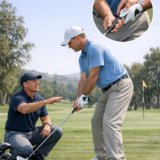
Bernhard Langer’s playing record-highlighted by major titles,prolonged top-level competitiveness,and widely circulated teaching content-serves as a practical blueprint for precision in both long-game mechanics and putting. His system blends tightly controlled movement patterns,intentional motor routines,and mental habits designed to reproduce the same action under competitive pressure. Studying Langer’s methods lets coaches and players connect elite outcomes to concrete, trainable processes: how a centered base and compact sequence create an efficient, durable swing; and how controlled path, measured tempo, and coordinated visual/tactile cues underpin his approaches to long and short putting. This article reframes Langer’s core principles through three complementary perspectives-biomechanical consistency (sequencing and positions that preserve repeatability and usable power), mental methodology (pre-shot rituals, focus control, and rules for managing distance), and purposeful practice designs that accelerate skill acquisition. By converting observations from his teaching and tournament play into progressive drills and objective benchmarks, the goal is to offer actionable methods that raise precision and dependability across all scoring shots.
Mechanical pillars in Langer’s swing: ordered sequencing, spine-axis stability, and efficient rotation
Reliable sequencing starts wiht a deliberately repeated kinetic chain: pelvis → torso → arms → club.Practically, that looks like initiating the downswing with a deliberate hip turn (roughly 40-50° in full-length swings for many players), followed by the shoulders closing the X‑factor gap-commonly a 20-40° separation between hips and shoulders at the top for most competent amateurs and professionals. To ingrain the order, build segmented progressions: first practice slow rotations of the led hip (right‑handers should feel the left hip clear), then layer in torso turn, add the arms, and finally allow the club to release.Set objective practice targets such as achieving peak pelvic angular velocity before torso peak and reducing timing variance between segments to approximately 0.05-0.10 seconds on frame‑by‑frame review; this sequencing improves transfer of energy and reduces compensation that leads to hooks or slices. Useful drills include:
- Hip‑first drill: short, controlled swings emphasizing initial hip rotation – 3 sets of 10 reps.
- Separation drill: hold at the top for two counts, then drive the hips while slowing the upper body – 4 sets of 8 reps.
- Impact tape/paper check: monitor strike location to confirm sequential energy delivery (clean, centered contact).
These exercises teach the movement order for beginners and refine millisecond timing for low‑handicap players seeking more consistent strikes.
Maintaining spine tilt throughout the motion is another hallmark of Langer’s reproducible contact and trajectory control. At setup, establish a stable spine angle of about 20-30° from vertical (sagittal plane), with weight slightly favoring the lead foot-around 55/45 for most iron shots-and preserve that axis through the backswing and impact to avoid early extension. Typical faults like lateral slide or standing up can be corrected with measurable checkpoints: use video or a mirror to ensure the head‑to‑pelvis relationship changes by no more than ±5° between address and impact, and perform the imaginary‑chair drill (sense sitting back toward an invisible chair and rotate the hips instead of rising) for 3-5 minutes during practice sessions. Equipment matters too-confirm shaft length and lie allow a natural posture; an overly upright shaft often forces loss of spine angle.Troubleshooting tips include:
- Shift the ball slightly back on tight lies to reduce excessive forward tilt at impact.
- Trim swing length when wind or fatigue encourages early extension (such as, use lower trajectories in strong wind).
- Use an impact bag to rehearse keeping spine tilt while compressing the ball.
Applied consistently, these adjustments improve approach accuracy and scoring by producing steadier launch conditions and spin across varied course surfaces.
Rotation efficiency links sequencing and posture into functional shot choices: rather than chasing maximal shoulder separation, prefer an economical X‑factor and a compact release that prioritizes precision-an approach Langer demonstrates with a shorter backswing and remarkable repeatability. Transition drills should stress tempo and control: use a metronome to practice a 3:1 backswing‑to‑downswing tempo and rehearse controlled half‑swings (about 75% length) to fine‑tune yardage gaps. On the course, adapt rotation to the shot-reduce shoulder turn and shift weight forward for punch shots into the wind, or preserve fuller rotation with a slightly shallower attack for soft‑landing approach shots. Performance targets include striking mid‑irons on the clubface center at least 80% of the time during 20‑ball practice blocks, and narrowing dispersion by 10-20 yards on mid‑iron distances after 6-8 weeks of rotation control work.Sample practice sequences and mental cues:
- Range sequence sets: 10 swings emphasizing hips‑first,10 focused on impact posture,10 on tempo control.
- Course simulation: play six holes using only a 7‑iron to practice trajectory and decision making.
- Pre‑shot cue: one deep breath,select a precise mid‑target,and picture the ball’s flight before committing.
When mechanical precision is paired with deliberate rehearsal and situational strategy, players typically convert technical gains into lower scores and steadier on‑course confidence.
Timing,rhythm and compact tempo: metronome and explosive sequencing drills
Langer’s teaching values a compact,repeatable swing governed by controlled tempo and consistent rhythm. Start with reliable setup cues: a shoulder‑width stance for full swings,a neutral spine with a subtle tilt toward the target,and ball positions that match club choice-center for wedges,1-2 ball widths forward for mid‑irons,and near the inside of the left heel for the driver. Hands at address should be slightly forward-about 0.5-1.0 inch ahead of the ball for irons-to encourage forward shaft lean and crisp contact. Develop a compact backswing with restrained wrist set and minimal arm extension so the kinematic chain can be reliably repeated under pressure. Many pros describe an efficient rhythm as a longer backswing followed by a quicker,decisive downswing (~3:1),which Langer reinforces through measured practice rather than exaggeration. Also emphasize a stable center of mass and lower‑body initiation so sequencing-not sheer clubhead speed-dictates timing.
Concrete drills help make compact tempo automatic. Use a metronome (many golfers find 60-72 BPM agreeable) and practice a 3‑beat backswing / 1‑beat downswing cadence with half and three‑quarter swings until it becomes second nature. Pair metronomic practice with ballistic sequencing work-light medicine‑ball rotational throws to feel hip‑to‑shoulder timing, and a towel‑snap exercise to sense clubhead release-keeping loads moderate to avoid over‑speeding. Include these routine checkpoints:
- Metronome half‑swing: 5 minutes at 60 BPM concentrating on 3:1 timing and solid contact.
- Impact bag: 20 slow reps to train forward shaft lean and compression.
- Medicine‑ball throws: 3 sets of 8 to reinforce sequencing without a club.
- Towel release: 3 sets of 10 to ingrain a smooth release and prevent casting.
Aim to shrink range dispersion by about 10-20% after four weeks of focused tempo training, and monitor carry distance and face angle at impact (for instance, target face deviation within ±3° across your best 10‑shot rolling average).
Translate tempo practice into course play and short‑game control via situational rehearsals and pressure drills that mimic tournament settings. Examples include shortening the takeaway in windy conditions to control spin and using the metronome before critical par‑saves to steady the nervous system.when protecting a lead or hitting into a tight pin,favor an iron you can swing at 85-90% with practiced cadence rather than a longer club swung too aggressively. watch for faults such as initiating the downswing with the hands (casting), early extension, or decelerating through impact; correct these by inserting a one‑beat pause at the top, starting the downswing with the lower body, and practising a “hold impact” drill with a 3-5 second static finish to reinforce release stability. blending Langer’s mental discipline with metronomic and ballistic drills builds a robust tempo that improves contact consistency, reduces dispersion, and supports smarter course management.
Hands, wrist angles and face control: repeatable setup and progressive loading
A consistent hand placement and wrist geometry are vital: for most players a neutral to slightly strong grip produces dependable face rotation-check that the two Vs formed by thumbs and forefingers point toward the right shoulder/ear (for right‑handers) at roughly 30° to the shaft.Keep grip pressure light-about 4-5 on a 1-10 scale-to preserve wrist hinge and feel; tension tends to close the face prematurely and dull tactile feedback. At address the lead wrist should be near neutral/flat (≈0° dorsiflexion), with the trail wrist relaxed. During the takeaway establish a controlled hinge so by roughly three‑quarters to the top the forearm‑to‑shaft angle sits in the 60-75° range-a compromise between too little and an amateur’s full 90° that many struggle to control. Adopt slight forward shaft lean for irons with hands about 1-1.5 inches ahead of the ball at impact to encourage ball‑first contact and consistent loft.
Progressive loading helps lock face control into the sequence: start near 50/50-55/45 (lead/trail) at address, load the trail foot to about 60-65% at the top to store energy, and initiate the transition with the lower body so that by impact weight is roughly 80-90% on the lead foot. This pattern supports a square face and a stable lead wrist. Manage face angle for different conditions-use slightly more forward shaft lean and a slightly stronger grip for low,penetrating shots into strong wind; relax the grip and allow more loft for soft,high approaches. Aim to square the face within ±3° at impact and find center contact at least 75% of the time in a 30‑ball practice block; an impact tape or launch monitor makes these benchmarks measurable.
Convert technique into reliable practice and course play with targeted drills and equipment checks appropriate for all skill levels:
- Impact‑bag drill – short swings into an impact bag to rehearse forward shaft lean and a flat lead wrist (hold impact 1-2 seconds).
- Gate drill – tee two markers slightly wider than the clubhead and swing through to ensure a square face at impact.
- Step‑through drill – slow backswing to the top, pause, then step through to feel proper weight transfer (top: 60-65% trail; impact: 80-90% lead).
- One‑hand chipping – lead‑hand only to reinforce a stable lead wrist and better short‑game face control.
Also confirm grip size and shaft torque suit the player-too large a grip restricts wrist action, while a very flexible shaft can increase unwanted face rotation. Clubs must remain R&A/USGA conforming if modified. Common errors-gripping too tightly, early wrist unhinge (casting), and excessive lateral sway-are corrected by easing grip pressure, rehearsing hinge positions in slow swings, and using alignment rods to lock spine angle. Embrace Langer’s preference for small, repeatable movements and objective feedback-set measurable targets such as reducing face‑angle misses below 10% per session and then make club selection and course decisions that capitalize on improved contact to lower scores.
Short game & putting: stable platform, shoulder‑driven pendulum, and pacing practice
Start with a consistent setup that forms a stable putting platform and minimizes variables before the stroke. Typically this is feet about shoulder‑width, the ball 1-2 inches forward of center for mid‑range putts, slight knee flex, and a spine tilt favoring the lead hip by roughly 5-7° so the putter sweeps through a consistent low point. Equipment matters: ensure putter loft (generally 3-4°) and lie match your posture so the shaft plane aligns comfortably with the forearms. Langer repeatedly prioritizes setup and a reliable pre‑putt routine-select a distant reference, align eyes over the line, and settle weight slightly toward the lead foot (about 55-60%) to improve face control and remove last‑second fiddling. Typical mistakes include overly tight grip (aim for a firm‑but‑relaxed 3-4 out of 10), excessive lower‑body movement, and inconsistent ball position; use these quick checks:
- Stance width: feet shoulder‑width with toes slightly flared to steady the calves.
- Weight bias: 55-60% on the lead foot for a forward low point.
- Arm connection: hands under shoulders with slight elbow flex-beginners can use a towel gate under the armpits to reduce autonomous arm action.
from setup, produce a pendulum stroke driven primarily by the shoulders with minimal wrist hinge-the classic Langer model for repeatability. Target torso rotation to create backswing and follow‑through while keeping wrist movement under 5°, which reduces face rotation and helps maintain the putter face within 1-2° of square at impact. For distance control, adopt a backswing‑to‑follow‑through length rule: short putts (<10 ft) near a 1:1 ratio, longer lag putts a 2:1 or slightly greater ratio so forward momentum carries the ball. Drills to reinforce the pendulum:
- Gate drill: two tees an inch wider than the putter head; stroke through without touching them to ingrain a square path.
- Metronome drill: set tempo at 60-70 BPM and match backswing and follow‑through to the beat for consistent timing.
- Arm‑lock or broom‑handle drill: temporarily limit wrist hinge and focus on a shoulder‑led stroke for players with wrist instability.
Add Langer‑style visual cues-pick a small spot on the blade to watch through impact and rehearse a three‑count routine to strengthen confidence and handle match‑play tension.
Turn mechanics into scoring by developing precise distance control through structured exercises and conservative course tactics. Set measurable targets such as making 40 putts from 6 feet within a week and halving three‑putts over an eight‑week block by mastering pacing. Use the ladder drill (putts from 3, 6, 9, 12 feet into a circle) and the landing‑zone drill for long putts-such as, on a medium‑speed green aim to land a 30‑footer so it finishes within 12-18 inches past the hole; reduce that to 8-12 inches on fast Bermuda surfaces. Practice in realistic conditions: on windy days rehearse three‑foot uphill and downhill returns; on firm greens practise lower‑lofted putts to avoid initial skid. Strategy ties to technique-on severe slopes,prioritize an inside‑10‑foot two‑putt zone rather than gambling on a low‑probability make. Address the mental side by setting process goals (pre‑shot routine, tempo) instead of outcome targets, and use metrics like strokes gained putting and one‑putt percentage to quantify progress across practice cycles for every skill level.
Mental models and competitive choices: visualization, pre‑shot sequencing, and pressure drills
Mental rehearsal works best when structured: purposeful visualization turns imagined outcomes into repeatable motor patterns. Before each shot follow a concise four‑step visualization: 1) scan and select a specific target feature (a seam on the flag, a patch of rough) for 3-5 seconds; 2) picture the full ball flight and a landing zone of roughly 10-20 yards depth for approach shots to account for roll and spin; 3) feel the tempo and swing length (rehearse shots at 60-75% speed during practice; move to full speed for on‑course execution); and 4) commit.Langer’s instruction consistently links a clear visual target with mechanical execution-see the shot shape first, then let the body reproduce it. Turn visualization into measurable improvement by running a short drill twice per practice session: choose five targets at varying distances, record intended landing depths and the result, and track lateral and distance deviation to set weekly accuracy goals (for example, aim to reduce lateral spread by 20% over six weeks).
Move imagery into action with a repeatable pre‑shot routine that stabilizes setup and swing. Adopt a compact 10-12 second sequence inspired by Langer: target pick → alignment check → one/two practice swings → address → final waggle and breath → commit. Use alignment tools and measurable checkpoints: keep shoulders and feet parallel to the target within 1-2°, position the ball one clubhead forward for mid‑irons and about one ball‑length inside the front heel for driver. Drill to habituate the routine:
- Mirror drill: run your routine while checking alignment in front of a mirror for 5 minutes daily.
- Tempo metronome: set a metronome at 60-72 BPM to fix takeaway and transition cadence.
- Two‑ball wedge drill: hit one ball to the target, then instantly play a controlled pitch to a nearby target to emphasize repeatability and feel.
Typical mistakes are speeding through the routine (solve by timing it with a stopwatch) and over‑tweaking alignment (solve by committing to the checked setup). These stabilized prep habits link directly to cleaner swings and sharper short‑game execution.
Make cognitive strategies robust under stress by using pressure simulations-start with small, controlled stressors (time limits, scoring penalties, modest wagers) and build toward full tournament simulations. Practical pressure tasks include:
- 20‑putt pressure drill: score points for 10 consecutive 6-8 foot makes; if two misses occur, restart under a 30‑second shot clock.
- Par‑save circuit: play nine practice holes on the short‑game area, scoring pars and bogeys and penalizing three‑putts to train routine under consequence.
- Wind and lie adaptation: practice 80-120 yard pitches into crosswinds and from tight/plugged lies to develop shot‑shaping and bounce selection (use a 54-58° wedge and choose appropriate bounce: 8-12° for soft sand, 4-8° for firmer lies).
Track improvements with concrete targets-cut three‑putts by 50% in eight weeks or raise up‑and‑down conversion by 10 percentage points-and combine those stats with cognitive checks (pre‑shot compliance, breathing rate). Reduce pressure‑induced faults (overgrip, tension) by rehearsing a shortened routine and using diaphragmatic breathing for 6-8 breaths between holes to anchor physiology; paired with Langer‑style technical discipline this builds performance durability in competitive play.
Evidence‑driven practice architecture: periodization, metrics and feedback for motor learning
Design a periodized practice plan that aligns short‑term motor goals with season‑long performance by organizing work into micro‑, meso‑, and macro‑cycles. Start with micro‑cycles concentrating on technical stabilization (2-4 focused sessions weekly), progress to 4-6 week mesocycles that emphasize variability and transfer, and peak with macro cycles for competition readiness and tapering. Use objective targets-such as clubhead speed, smash factor, mid‑iron carry dispersion ±10 yards, and improvements in GIR (such as, a realistic goal might be a few percentage points increase across a 12‑week block)-to measure progress. Operationalize periodization by moving from high‑repetition, low‑variability technical work (alignment/impact drills) to low‑repetition, high‑variability contextual sessions (wind and lie simulations).Tailor emphasis by level: beginners prioritize consistent contact and set‑up basics; intermediates focus on trajectory control and shot shaping; low handicappers refine repeatable impact and course‑management metrics like strokes gained in scoring zones. Transition between phases when objective criteria are met-as a notable example a 1-2% improvement in launch‑angle consistency across successive sessions-rather than purely by calendar time.
Cover swing mechanics, short game and setup with targeted, evidence‑based checkpoints that echo Langer’s focus on precision, tempo and routine. Begin each session with a setup checklist-neutral grip,spine tilt 10-15° toward the target,weight distribution 55/45 at address for irons,and appropriate ball position from inside left heel for driver to center for mid‑irons. Implement drills such as:
- Impact Tape Drill – 20 mid‑iron shots with impact tape; target at least 80% center strikes before advancing.
- Tempo Ladder – metronome work for a ~3:1 backswing‑to‑downswing ratio: sets of 10 at 60-80% intensity, then 6 at full pace.
- Short‑Game Flight Control - wedge‑to‑putt ladder: five balls each from 40,30,20,10 yards alternating full swing and bump‑and‑run to tune spin and landing angles.
When fixing errors: a slice frequently enough indicates an open face or overswing-use a gate drill to encourage an inside‑out path; thin contact calls for slightly lower hands at address and stronger emphasis on weight transfer through impact.Integrate equipment checks-lie angle, shaft flex and loft should suit the swing to reduce dispersion and hit intended launch conditions. Aim for measurable outcomes like cutting putts per GIR by 0.3 per round or increasing fairways hit by 5-7% over a mesocycle.
Embed feedback routines grounded in motor‑learning: combine immediate augmented feedback (video, launch monitor KP) with a faded schedule that promotes retention. Early in training provide frequent knowledge of performance (KP)-video on wrist hinge and shoulder turn, launch monitor readouts for launch and spin-then move to periodic knowledge of results (KR) summaries focusing on outcomes like dispersion and proximity to the hole. Use simple decision rules-for example, if lateral dispersion on a club exceeds 12 yards, insert a targeted correction block (15 minutes of path work with alignment sticks) and retest. Rehearse on‑course transfer with simulated situations-crosswind tee shots, tight fairway recoveries, 50-60 yard wedges from mixed lies-applying Langer’s conservative course‑management habit of playing to the safe side of the green and favoring a solid two‑putt over low‑probability heroics. Individualize instruction by offering multisensory feedback (visual, auditory, tactile) and choice progressions (slow‑motion for restricted mobility; resistance timing drills for power) so improvements become measurable and reliable across ability levels.
Tracking change and proving transfer: video benchmarks, kinematic checks and course validation
Start with a reproducible video protocol to quantify mechanics and monitor improvement. Use two cameras-down‑the‑line and face‑on-mounted at hip height on tripods and record at least 120 fps for impact analysis and 60 fps for full‑swing tempo work; higher frame rates help capture clubhead and shaft behavior at impact. Annotate key positions-address, top, transition, impact, follow‑through-and measure benchmarks such as shaft lean at impact (≈5-10° forward), clubface‑to‑path at impact (±2° target), and an approximate X‑factor (shoulder‑pelvis separation) in the 20-35° range for many skilled amateurs.Compare metrics week‑to‑week and set numeric goals (for example, reduce clubface‑to‑path variance by 1.5° in six weeks or increase clubhead speed by 3-5 mph) so cues become quantifiable. Use these corrective checkpoints:
- Gate/impact tape drill - a narrow target to discourage casting and encourage late release;
- Top‑of‑swing pause – a three‑second hold to train pelvis lead and transition sequencing;
- Down‑the‑line mirror – confirm hands ahead and desired shaft lean at impact.
Apply Langer’s preference for small technical edits practiced in high‑repetition, low‑fatigue sessions so kinematic changes become ingrained motor patterns rather than transient fixes.
Next, translate those kinematic gains into a more consistent short game by using video to check finer motor patterns and by setting loft, landing‑zone and spin targets for wedges, chips and putts. For wedge play, measure carry and total distance in controlled conditions and aim for consistent 5-10 yard gaps between clubs; on video confirm the low point of the swing occurs just ahead of the ball to ensure crisp contact. For chips and pitches inspect that the lead wrist stays stable through impact and that arc size matches the intended trajectory-about a 45° shoulder turn for 30-40 yard pitches and roughly 60° for full sand saves. In putting, use frame‑by‑frame review to ensure face rotation is minimal (±1-3°) and that stroke length adjusts to green speed (shorter strokes for Stimpmeter 8-9, longer for faster, firmer surfaces). Practice tools include:
- Landing‑spot ladder – cones at progressive distances to train wedge landing control;
- Minute drills – 60 seconds of intense short chips to build feel under fatigue;
- Putting arc alignment – string or alignment rod to rehearse face stability and minimize rotation.
Beginners should prioritize contact and feel; low‑handicappers should refine launch conditions, spin and landing zones. Use Langer’s visualization habit-pick a precise landing point before each short‑game shot and rehearse tempo mentally to bridge practice and performance.
Validate on‑course transfer with objective statistics and situational tests that mirror tournament stress and diverse conditions. Track metrics like fairways hit %, GIR %, up‑and‑down %, and putts per GIR, and where possible measure strokes gained components; set staged targets such as increasing GIR by 8-12% or reducing three‑putts to under 1.5 per round within eight weeks. When validating in wind or firm conditions, apply pragmatic Langer‑inspired strategies: play to conservative yardages aligned with your dispersion, use lower‑trajectory clubs to limit spin in wind, and select landing zones that maximize scramble odds rather of always attacking pins. On‑course validation exercises:
- Scorecard simulation – play a nine‑hole loop with preset goals (for example hit 6 of 9 fairways, convert 4 of 6 up‑and‑downs) to test transfer under pressure;
- Pressure‑putt series - five putts from mixed distances where misses trigger a repeat to simulate competition anxiety;
- Club‑choice audit – log every club used across three rounds to check loft/gap choices and adjust if yardage overlaps persist.
Include mental checkpoints-pre‑shot routine, breathing, and simple course‑management rules-so technical gains hold up under stress. Closing the loop from video‑based kinematic benchmarks to focused practice and rigorous on‑course validation helps golfers of all levels produce measurable, lasting improvements in technique and scoring.
Q&A
Q1: Who is Bernhard Langer and why study his methods for precision in swing and putting?
A1: Bernhard Langer is a German touring professional whose sustained success-on the European Tour, PGA Tour Champions and in senior international events-has made him a model for accuracy, course management and psychological resilience.His ability to remain competitive into later decades, with continued wins and strong performances on senior circuits, illustrates how disciplined technique, clever strategy and adaptive practice can offset age‑related physical decline and preserve high‑level outcomes (see instructional and tournament coverage for examples).
Q2: what are the basic pillars of Langer’s method?
A2: Langer’s system rests on three interconnected pillars: (1) mechanical precision-a compact, repeatable swing emphasizing face control and path; (2) mental discipline-structured pre‑shot routines, visualization and conservative course decisions to reduce errors; and (3) adaptive practice-targeted drills and objective adjustments that respond to physical changes and performance data. Together these govern both execution and tactical choices.
Q3: How does Langer treat setup and alignment for full shots and putting?
A3: For full swings he stresses a neutral, balanced setup with a consistent spine angle and clubface alignment to the target. For putting he prioritizes a square face, stable eye‑over‑ball relationships and a stroke plane that encourages a shoulder‑driven pendulum. In both cases short pre‑shot checks confirm alignment before execution.
Q4: which mechanical traits define Langer’s swing that players should emulate?
A4: Key traits include a compact takeaway to keep the club on plane, controlled wrist hinge to manage face angle, minimal lateral sway to protect impact geometry, and a timed transition that yields a stable release. Emphasizing hands‑ahead impact and a square face‑to‑path at contact produces predictable ball flight and distance control.
Q5: What putting fundamentals does Langer emphasize for distance and alignment?
A5: He stresses consistent setup and moderate grip pressure, a shoulder‑driven pendulum stroke with minimal wrist action, repeatable backstroke length as a proxy for distance, and disciplined green reading that integrates slope, speed and landing points. He also trains short putts under pressure to maintain confidence.
Q6: how are mental routines integrated into planning and pressure situations?
A6: Langer standardizes preparation with a disciplined pre‑shot routine that lowers cognitive load at the moment of execution. He uses visualization, measurable anchors like breath control, and an acceptance mindset to limit negative reactions to misses-turning uncertain situations into repeatable, calm processes.
Q7: What practice methods does Langer recommend for measurable improvement?
A7: He advocates deliberate, focused repetitions with prompt feedback (video or launch monitor), task‑specific isolation drills (face control, tempo), variable practice that simulates course conditions, and pressure‑replica sessions with consequences. He also recommends tracking objective metrics-dispersion,distance control,and putts-to guide practice priorities.
Q8: How should golfers adapt Langer’s approach with aging or distance loss?
A8: Adaptations include prioritizing accuracy over maximum distance (shot‑shaping and club selection), increasing investment in short game and putting where strokes are most recoverable, optimizing equipment (shorter shafts, different lofts) and incorporating mobility and functional rotational strength work. Langer’s own advice emphasizes technique and strategy to compensate for lost clubhead speed.Q9: Which concise, evidence‑based drills replicate Langer’s precision focus?
A9: Three practical drills:
– Impact‑position drill: half‑swings with a mid‑iron holding the forward‑leaning impact position for several seconds; evaluate divot patterns and ball flight.
– Putting gate drill: tees outside the putter head; a toe/heel strike displaces a tee-goal is smooth, centered starts.- Distance scaling on the green: choose five distances (3-15 m),make 10 putts from each,and log the make rate and average miss to refine stroke length.
Q10: How should a weekly practice plan balance swing,short game,putting and conditioning?
A10: A balanced week might allocate 30-40% to short game and putting,30-40% to full‑swing technical work,10-20% to on‑course strategy sessions,and 10-20% to physical conditioning focused on mobility,rotational strength and stability. Alternate high‑intensity technical blocks with consolidation sessions to manage fatigue and reinforce motor learning.
Q11: What role does equipment play in achieving Langer‑style precision?
A11: Properly matched clubs support intended launch and dispersion. older players or those with lower swing speed often benefit from higher lofts and lighter shafts to restore launch conditions. Putter head shape and length should suit the preferred stroke plane. Regular fitting is recommended.
Q12: How central is course management in Langer’s strategy?
A12: Course management is vital-Langer routinely chooses lower‑risk targets that maximize scoring probability, manages angles into greens and selects clubs that reduce variance. This conservative strategy limits aggregate risk and leverages short‑game consistency.
Q13: What objective metrics should players monitor to track progress toward Langer‑level precision?
A13: Track fairways hit, GIR, strokes gained (approach/putting), average proximity on approaches, putts per round and dispersion radius at set distances.Longitudinal tracking reveals strengths and where practice should focus.Q14: Where can readers find more instruction or demonstrations of Langer’s techniques?
A14: Look for instructional profiles, interviews and drills on specialist coaching sites and video platforms that host Langer’s tips; tournament analyses and coach commentary also provide context and practical examples.
Q15: What are common limits when trying to copy Langer’s methods and how can they be handled?
A15: Limits include individual biomechanical differences, limited access to coaching and measurement tools, and constrained practice time.Address these by seeking tailored coaching, using affordable feedback tools (smartphone video, basic launch aids), prioritizing high‑return areas (short game, mental routine), and committing to incremental, long‑term progress.
Bernhard Langer’s system-defined by precise sequencing, disciplined mental routines, and focused practice prescriptions-offers a concrete, evidence‑oriented model for producing repeatable excellence in both the full swing and the short game. This synthesis stresses measurable mechanics (balance, axis control, stroke geometry), deliberate mental processes (pre‑shot routine, tempo control, error management), and targeted drills that turn technical insight into on‑course performance. The emphasis on transferability-teaching technique with explicit on‑course request-makes the method practical for players and coaches.
For coaches and researchers the implications are clear: pair specific diagnostic metrics with progressive drill sets (alignment, stroke mechanics, footwork and tempo work) and consistently evaluate progress with objective feedback. Additional drill libraries and alignment exercises are available from contemporary teaching platforms and putting specialists; video analyses illustrating typical error patterns and remediation progressions are notably useful for accelerating learning.
adopting Langer’s integrated framework requires disciplined, iterative practice and individual adaptation.When biomechanical clarity, cognitive control and evidence‑based drills are aligned, golfers at every level can make meaningful gains in consistency and scoring. Ongoing, empirical evaluation of these practices across different player types will continue to refine best practices for unlocking precision in both swing and putting.

Precision Perfected: Elevate Your Swing and Putting with Bernhard Langer’s Proven Techniques
Why Bernhard Langer’s approach matters for precision golfers
Bernhard Langer is widely recognized for an extraordinary ability to produce consistent precision across decades on tour. His game emphasizes repeatable swing mechanics, a disciplined putting routine, and smart practice habits. For golfers seeking to improve shot-making, lowering scores, and building a reliable short game, Langer’s blend of biomechanics, tempo control, and cognitive routine offers a practical blueprint.
Core principles behind Langer’s precision
- Compact, repeatable mechanics: Langer’s swing prioritizes control over extreme length. A narrower arc and consistent wrist set reduce variability and improve ball-striking predictability.
- Tempo and rhythm: Steady tempo ties the body and club together. Smooth transitions and rhythm reduce timing errors that cause misses.
- Pre-shot routine & visualization: A short,consistent routine and strong visualization increase focus and reduce performance variability under pressure.
- Short game mastery: Langer’s precision is built around wedge control, clean contact, and putting fundamentals - not reliance on driver distance.
- Fitness & warm-up discipline: Staying physically prepared and using an effective warm-up improves consistency and combats distance loss over time.
biomechanics of Langer’s swing: Key takeaways
Use the following biomechanical cues to replicate a Langer-inspired, precision-focused swing without overcomplication.
1. Setup and alignment
- Neutral spine with a slight forward tilt from the hips – this creates a consistent swing plane.
- Hands slightly ahead of the ball at address for crisp contact and narrower dispersion.
- Feet and shoulders square to the target line; small alignment sticks in practice reinforce setup consistency.
2. Compact takeaway and controlled width
Limit excessive early wrist hinge. A compact takeaway keeps the club on plane and makes the transition more repeatable – especially important for mid- and short-irons.
3. Connected body rotation
Rotate the torso and trail hip while maintaining a stable lower-body base.This produces reliable sequencing: ground → legs → hips → torso → arms → club.
4. flat lead wrist at impact
Maintain a firm but relaxed lead wrist through impact. This reduces flipping and promotes consistent ball-first contact and solid spin control.
Putting fundamentals Langer emphasizes
Langer’s putting is a masterclass in process over outcome. Focus on these essentials:
- Routine: A consistent pre-putt routine – read, align, waggle, breathe – primes the nervous system and reduces decision noise.
- Distance control: Pace beats perfect line if either must be sacrificed. Langer’s drills emphasize feel and length control for one- and two-putt strategies.
- green reading and visualization: Predict ball behavior by visualizing the line and speed, not just relying on the initial read.
- Short putt focus: Never neglect 3-6 footers; Langer treats these as match-deciders and practices them with the same intensity as long putts.
evidence-based drills derived from Langer’s methods
Practice with purpose. Below are concise, high-impact drills that combine biomechanics with cognitive repetition.
Swing drills
- Alignment stick takeaway: Place an alignment stick along your target line and another just outside the club shaft in the takeaway path to force a compact, on-plane start.
- Half-swing tempo drill: take half swings at 50-70% speed, focusing on the same tempo for takeaway and downswing. Count “one-two” to synchronize the motion.
- Impact bag or towel drill: Lightly strike a towel or impact bag to feel a flat lead wrist at impact and forward shaft lean.
Putting drills
- Gate drill (short putts): Use tees to create a narrow gate slightly wider than your putter head; stroke only when the putter travels square through the gate.
- Distance ladder (lag putting): Place markers at 10,20,30,and 40 feet; try to get each lag within an agreed distance (e.g., within 3 feet), optimizing feel for pace.
- Routine reinforcement: Take 50 putts in a practice session with the exact same 4-step routine (read-align-waggle-stroke) to embed habit under fatigue.
Sample practice plan: Weekly block inspired by Langer
This focused schedule balances swing mechanics,short game,putting,and fitness to produce transfer to on-course performance.
| Day | Focus | Duration | Key Activities |
|---|---|---|---|
| Monday | Swing mechanics | 60 min | Half-swing tempo, impact bag, alignment-stick work |
| Tuesday | Putting | 45 min | Gate drill, distance ladder, 50 routine putts |
| Wednesday | Short game | 60 min | Wedge control, chipping to targets, bunker exit reps |
| Friday | On-course simulation | 90 min | 9-hole focus: approach-to-green and two-putt execution |
| Sunday | Fitness & recovery | 30-45 min | Dynamic warm-up, mobility, core stability (langer-style warm-up) |
Warm-up and fitness – combatting distance loss and preserving precision
As referenced in expert coverage of Langer’s routines, fitness and an efficient warm-up are essential components of sustained precision and distance preservation. Adopt these components:
- Dynamic movement prep: Hip swings, band rotations, and thoracic mobility drills to unlock the swing chain.
- Activation: Glute bridges, single-leg balance work, and short-burst footwork to stabilize the base.
- Consistent warm-up flow: Move from short game to irons to driver – start slow and increase to playing speed to build confidence before the first tee.
Mental frameworks and cognitive strategies
Langer’s mental game is systematic: he trusts process, manages expectations, and treats each shot as its own problem to solve. Adopt these habits:
- Process over outcome: Focus on a reproducible routine and task cues rather than hole score or the scoreboard.
- Pre-shot visualization: See the ball’s path, landing area, and expected roll – this primes motor execution.
- Short internal checklist: Use a 3-5 item checklist (alignment, target, tempo, finish) to simplify decision-making under pressure.
Benefits & practical tips for immediate improvement
- Greater consistency: A narrower swing and consistent routine reduce error variance and produce better scoring opportunities.
- Fewer three-putts: Dedicated pace work and focus on lag putting directly lower hole-out frequencies.
- Robust performance under pressure: Habitual routines and simulation practice improve shot execution in competitive situations.
- Longevity: A technique and fitness approach that emphasizes stability and efficiency helps protect the body and sustain performance over years.
Case study: Translating practice to on-course scoring
Imagine a mid-handicap player who adopted Langer-inspired changes for eight weeks:
- Week 1-2: Reinforced setup and compact takeaway, reduced early wrist hinge.
- Week 3-4: Daily 30-minute putting routine and 20 minutes of lag putting work.
- Week 5-6: On-course simulation focused on approach-to-green and two-putt strategies.
- Week 7-8: Added mobility and activation sessions to facilitate rotation and reduce swing compensation.
Result: The player reported tighter shot dispersion on approach shots, a 30% reduction in three-putts, and increased confidence inside 100 yards – illustrating how the combination of mechanics, putting practice, and fitness yields measurable improvements.
Common mistakes to avoid
- Over-rotation for power: Sacrificing connection and timing for extra length increases variability.
- Chasing outcomes: Practicing only to “make” putts rather than to train process and pace undermines consistency.
- Neglecting short putts: Skipping close-range practice erodes the scoring edge that precision players rely on.
How to measure progress: simple metrics to track
- Fairways and greens hit: Track dispersion on drives and greens-in-regulation for swing transfer.
- Three-putt frequency: A key putting metric - aim to reduce over time with focused routine work.
- Proximity to hole: Record average proximity for approach shots (e.g., 30-100 yards) to measure wedge control improvement.
- Tempo consistency: Use a metronome app to test whether your swing tempo remains within a target ratio under pressure.
Resources and next steps
to further explore Langer-inspired teaching, consult detailed instruction pieces and fitness programs from reputable golf instruction outlets. Combine on-range technical work with short-game and putting sessions, and keep a simple practice log to ensure your effort produces measurable gains.