Unlock Your Inner Golf Master by Understanding Swing Mechanics
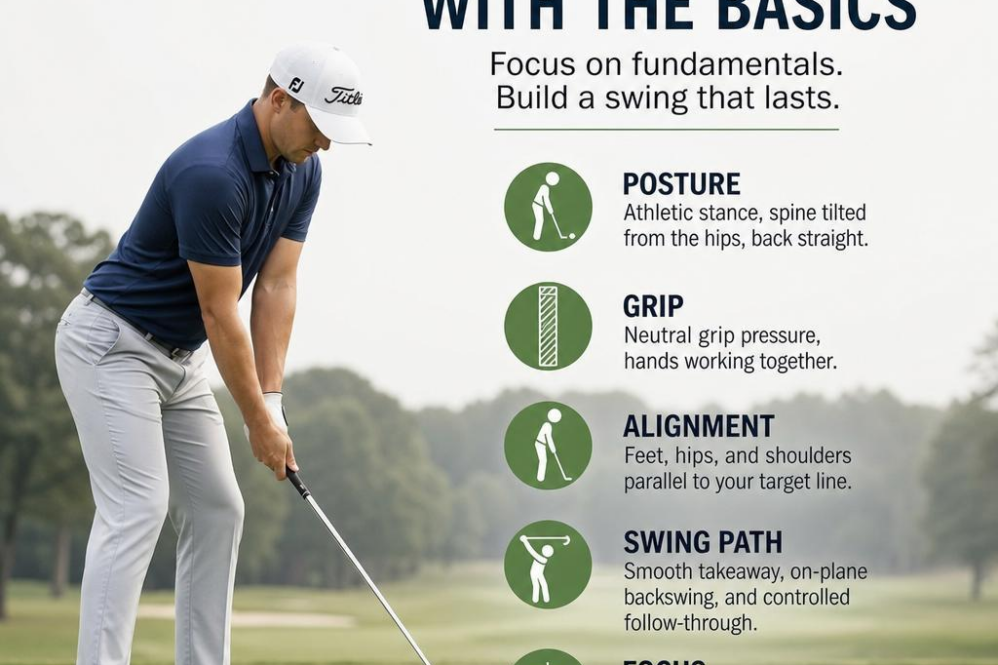
Understanding the biomechanics of the golf swing is paramount to unlocking greater consistency adn power. start by focusing on setup fundamentals, ensuring your feet are shoulder-width apart, with knees slightly flexed to maintain balance. Align your hips and shoulders parallel to the target line to promote a square clubface at impact. During the takeaway, emphasize a one-piece swing by maintaining a connected motion of your arms and torso, ideally rotating your shoulders approximately 90 degrees while your hips turn around 45 degrees. This creates a coiled position maximizing stored energy. A smooth transition into the downswing is critical – lead with your lower body, initiating hip rotation to drive the clubhead through impact, which improves both accuracy and distance. Monitor your swing plane carefully to avoid common faults like “casting” or an overly flat swing, often resulting in loss of power or directional inconsistency. Integrating video analysis or wearable sensors can provide measurable feedback, helping both beginners and low handicappers identify and correct flaws effectively.
Short game mastery and strategic course management complement swing mechanics for scoring improvement. Incorporate drills that enhance feel and touch, such as distance control putting exercises using graduated targets between 3 and 15 feet, promoting consistent speed judgment and stroke repeatability. For chipping and pitching, focus on maintaining a narrow stance and accelerated wrist hinge through impact to achieve cleaner contact and varied trajectory control. Understanding when to use bump-and-run versus lofted chips based on lie and green conditions is essential. Implement a course management approach by assessing hazards, wind direction, and pin placement, adjusting club selection accordingly to reduce risk. Practicing these elements under simulated pressure trains mental resilience and tactical thinking. Employ drills like trouble shots from rough or bunker lies to boost confidence, ultimately linking technical skills with thoughtful decision-making to lower scores across diverse playing conditions.
Elevate Your Putting Precision with Proven Practice Techniques
Mastering putting precision starts with a solid foundation in setup and stroke mechanics, crucial for consistent distance control and accurate line reading. Begin by ensuring your eyes are positioned directly over the ball,which creates a clear sightline to your target and minimizes alignment errors.Employ a grip that feels natural yet secure-many pros favor a reverse overlap or claw grip to promote a pendulum-like stroke, reducing wrist breakdown. Focus on a smooth, rhythmic backstroke that matches the length and intensity of your intended putt; the classic 3:1 ratio of backswing to follow-through length serves as an excellent baseline for controlled tempo. Incorporate targeted drills such as the “gate drill” using two tees to guide your putter’s path or the “ladder drill” for incremental pace control from 3 to 15 feet. Additionally, practice reading subtle green contours by assessing the slope both visually and tactually-feeling for grain direction or moisture level can dramatically affect ball roll and break. Integrating these mechanics with informed green reading sharpens your ability to sink more putts under pressure.
Beyond the technical stroke, elevating your putting demands strategic course management and mental resilience, especially in competitive scenarios. Adapt your aiming point based on wind conditions or grain influence, leaning on the principle that putts frequently enough break more than they appear-studying how tour professionals plot their lines can offer insightful models to emulate. Pre-putt routines, including visualization and controlled breathing, help align focus and calm nerves, fostering confidence in execution. For varying skill levels, employ diverse practice approaches: beginners might concentrate on distance drills to avoid three-putts, while low handicappers refine their lag putting by practicing from different green tiers under simulated pressure. Equipment factors also play a subtle role; choosing a putter with a face insert that suits your feel or adjusting lie angle for better turf interaction can enhance feedback and consistency. By combining diligent technical work with strategic awareness and mental poise, golfers unlock measurable improvements in stroke efficiency, leading to lower scores and a more satisfying short game.
Drive with Power and Control Using Biomechanical Insights
Achieving both power and control in your golf drive begins with a precise understanding of the biomechanics underlying the swing. Focus on maintaining a proper spine angle of approximately 15 degrees from the vertical during setup to maximize rotational torque. This tilt enables efficient hip rotation and weight transfer, which are crucial for generating clubhead speed without sacrificing accuracy.Integrate a progressive ground force drill by practicing driving push-offs from your trail foot to your lead foot, ensuring that your lower body initiates the downswing smoothly. Beginners should start by feeling a subtle weight shift, while advanced players can increase explosive force to optimize distance. Additionally, equipment considerations such as selecting a driver with the correct loft angle-typically between 9 to 12 degrees depending on swing speed-can complement your biomechanics for better launch conditions. Emphasize consistent impact position in the “sweet spot” of the clubface through targeted swing path exercises, like the gate drill, to avoid hooking or slicing the ball.
On the course, adapting your driving strategy to varying hole layouts and weather conditions is vital for lowering scores. For example, when faced with a narrow fairway or strong crosswind, prioritize control by narrowing your stance and focusing on a smooth, compact swing rather than maximum power. Practice drills that simulate these scenarios, such as hitting with a tee height lowered to encourage punch shots that keep the ball flight low and penetrating. Use course strategy insights from golf masters by studying hole angles and hazards to position your drive favorably for the next shot-often choosing a target landing zone rather than the absolute maximum distance.Maintaining a steady pre-shot routine and a confident mental approach can reduce tension and promote fluid motion, further enhancing both power and accuracy. Whether you’re a beginner developing foundational mechanics or a low handicapper refining advanced sequencing, these biomechanical insights offer a pathway to measurable driving improvement and more consistent scoring.
Integrate Course strategy for Consistent Scoring Success
Mastering course strategy requires more than just raw skill; it demands a thoughtful approach to shot selection and situational awareness that can consistently lower your scores. Begin by thoroughly analyzing hole layouts before your round, identifying critical scoring zones such as landing areas off the tee and preferred angles into the greens. Use yardage books or GPS devices to confidently assess distances, taking note of hazards, elevation changes, and pin placements that may affect shot trajectory and club choice. For example, a tee shot favoring the safer side of the fairway-rather than always targeting center-often yields better approach angles, reducing the risk of blocked or hooked shots. Incorporate a pre-shot routine that includes visualizing each hole from tee to green,allowing you to select the optimal shot shape and trajectory. This forward-thinking mindset mimics strategies used by top professionals navigating complex courses under tournament pressure.
To translate strategic planning into reliable on-course execution, focus on integrating varied shot-making skills into your practice routines. Work on shaping shots both ways-draw and fade-through drills like the gate drill for face alignment or rhythmic tempo exercises that promote consistent swing arcs. Combine this with practicing lay-up shots and controlled punch shots to effectively manage trouble spots like thick rough or narrow fairways. For novices, start with the basics of alignment and ball position to eliminate common misses such as slices or hooks, gradually introducing shot-shaping concepts as comfort grows. Advanced players should routinely simulate course scenarios during practice, emphasizing choices that minimize risks and optimize recovery options. Keep a notebook tracking decisions and outcomes to reinforce learning and adapt strategies based on conditions like wind or wet turf. By systematically linking precise shot execution with savvy course management, golfers can build confidence, reduce errors, and ultimately experience more consistent, lower scoring rounds.