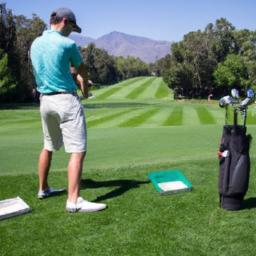
Golf coaches and sports clinicians are turning their attention to a swing component long dismissed as a cosmetic quirk: hip sway. New scrutiny shows that the lateral movement of the hips during the golf swing can alter weight transfer, disrupt rotational sequencing, and amplify stress on the lower back and hip complex – with direct consequences for distance, accuracy and injury risk.
Anatomical references describe the hip as a ball‑and‑socket synovial joint that links the pelvis to the femur and relies on a coordinated system of muscles and ligaments for both mobility and stability; that complex interplay means even small lateral shifts can cascade through the kinematic chain. As players chase clubhead speed and tighter shot patterns, experts say controlling unwanted hip sway is emerging as a key lever for consistency – not merely a stylistic preference. This report examines how hip mechanics influence performance and what coaches and medical professionals recommend to keep the swing both powerful and durable.
Hip sway under the microscope: how lateral movement drains power and precise drills to restore repeatability
Coaches increasingly identify lateral hip shift as a primary culprit behind inconsistent distance and direction; when the pelvis slides away from the target the body loses the rotational platform necessary for efficient energy transfer.Biomechanically, excess lateral displacement (aim to keep this under ~2 inches for most players) produces early extension, flattens the shoulder plane and reduces effective hip rotation (hips typically should rotate about 30°-45° while shoulders rotate ~80°-100° on a full swing). Consequently, ground reaction forces are misapplied and clubhead speed is bled off into lateral motion instead of axial rotation. In practical terms, this shows up as thin or fat strikes, pushes, pulls, and higher dispersion on tee shots – notably obvious on narrow fairways where precision matters more than raw power.
First, diagnose before you prescribe: use simple, repeatable checks to quantify the problem. Face‑on video at 60+ fps from a fixed tripod will reveal horizontal hip travel; place an alignment stick across the pelvis to visualize motion. At setup aim for 50/50 to 55/45 weight distribution (trail/lead) for most irons and slightly more trail weight for the driver, with a forward spine tilt of about 10°-15°. If the trail hip moves laterally toward the target before the club begins its downswing, that is a clear sway. Common setup faults include a too‑wide stance for short irons, a lack of knee flex, and an overreliance on lateral slide to generate speed. To correct these, check address positions and create a reproducible checkpoint: hands over the ball, pelvis level, and a slight hinge at the hips.
Next, implement focused drills that restore rotation, balance and repeatability.Practice these with slow, intentional swings and measurable targets - use video to confirm results. Effective, easy-to-repeat drills include:
- Alignment‑stick hip gate: place a stick behind your hips across the beltline; rotate while keeping the stick centered – goal: under 2 inches lateral movement.
- Towel under trailing armpit: hold a small towel and keep it in place through impact to promote rotation over slide – 3 sets of 10 swings.
- Wall/Chair stop drill: stand with trail hip 2-3 inches from a wall or chair and rotate back and through without hitting it; accelerates awareness of lateral limits.
- Step‑through/step drill: slow stepping motion that encourages weight shift and rotation, performed with 10 slow repetitions, then 10 at 50% speed, then 10 at full speed.
These drills are scalable: beginners start with exaggerated slow motions and fewer reps; advanced players add a launch monitor to track clubhead speed and dispersion and aim to reduce lateral hip travel while maintaining or increasing rotational speed.
For players working at a higher level, pair technical adjustments with equipment and stance refinements. A driver setup with a slightly wider stance (roughly 20% wider than shoulder width) and a tuned shaft flex can reduce unwanted lateral sway by increasing base stability; conversely, an overly long shaft or excessively narrow base magnifies slide. Use a launch monitor to track measurable outcomes – target a consistent impact location on the face and reduced left/right dispersion rather than raw speed alone. Additionally, advanced drills can include wearable sensors to record hip rotation degrees and lateral translation; aim for hip rotation near 30°-45° with lateral translation under 2 inches at the start of the downswing. In course conditions, such as hard fairways or strong crosswinds, prioritize rotation and controlled tempo over full body slide to keep the ball in play.
translate range changes to course management and the mental game. Adopt a pre‑shot checklist that reinforces the physical cue “rotate, don’t slide” and use on‑course scenarios to practice: from a narrow fairway take one club more and focus on rotation control; from thick rough use a slightly more open stance and a steeper angle of attack, still avoiding lateral hip drift. Troubleshooting common errors: if shots thin or fat, return to the towel or wall drill; if hooks appear after fixes, check that you haven’t over‑rotated the lead hip - maintain spine tilt within ±5° of your address angle. For measurable practice, set a 4‑week plan – three 20-30 minute sessions weekly with the listed drills, record a before/after video, and aim to reduce hip lateral travel by 50% while improving fairway/green‑in‑regulation figures. These combined technical, equipment and mental steps make hip control a repeatable, score‑saving part of your game.
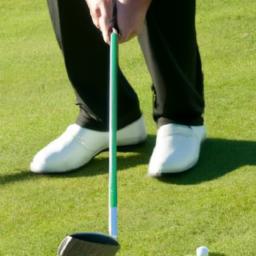
How subtle pelvis drift rewrites impact geometry and posture adjustments coaches use to rescue contact
coaches increasingly identify small lateral motions of the pelvis as a primary driver of inconsistent impact geometry and late-posture corrections that rescue contact mid-swing. Recent instruction trends emphasize that what looks like an innocuous pelvis drift – a lateral slide of the hips toward the target during transition – actually shifts the club’s low point,alters shaft lean and can produce both fat and thin strikes. In practice, even a lateral slide of 1-1.5 in (2-4 cm) at the hips is enough to move the low-point of the swing several inches, so instructors now check stance width, ball position and initial spine angle as first-line diagnostics. Consequently, the initial goal is measurable and simple: reduce lateral hip slide to under 1.5 in (≈3 cm) while allowing normal rotation,and confirm with video or an alignment stick during practice to establish a baseline for correction.
Technically, it is critical to distinguish sway (lateral slide) from true rotation: pros typically register around 40-50° of shoulder rotation and 30-45° of pelvic rotation on the backswing, while poorer contact often correlates with excessive lateral movement and reduced pelvic rotation. When the pelvis drifts, the trail hip moves off line and the low point shifts forward, producing late contact or toe-first impacts. To reverse this, coaches use measured drills and constraints that emphasize rotation over translation. Practice drills include:
- Alignment‑stick under the trail hip drill – place an alignment stick at address touching the trail hip; on the backswing the hip should rotate, not push the stick outward.
- impact‑bag reps – 50-100 short swings focusing on hands‑ahead shaft lean at impact,confirming center‑face contact.
- Step‑and‑rotate drill – without a ball, step into the stance and make half swings, feeling the pelvis rotate and stabilise rather than slide.
These drills are scalable – beginners start with mirror work and slow‑motion reps, while low handicappers add tempo and ball flight feedback.
When contact already breaks down mid-round, coaches deploy posture-reset cues that are quick and measurable: check that the spine angle set at address is preserved within ±5° through impact, re-establish a shoulder‑to‑hip separation (X‑factor) on the backswing and use a subtle forward weight transfer of 10-20% toward the lead leg at transition rather than a lateral push. Step-by-step on-course rescue: 1) shorten the backswing to 3/4 to limit excessive lateral momentum; 2) feel a controlled trail‑hip bump at transition (not a slide); 3) focus on a small amount of forward shaft lean at impact (3-8°) to compress the turf and produce proper divot after the ball. Common mistakes include early extension (hips moving toward the ball), reverse pivot and casting the hands – correction comes from immediate, repeatable sensations rather than abstract instructions.
Lower-body stability impacts not only full shots but also the short game and putting, so teaching spans club selection and course management. For chips and pitches, an overactive pelvis will either thicken or thin shots; therefore players should adjust ball position back by one club-length in tight lies and open the face slightly in wet turf to avoid bounce scraping.In putting, instructors stress near‑zero pelvis movement – aim for under 1 cm lateral shift - as vertical shaft path and face control are sensitive to lower‑body motion. Practice routines tailored by level:
- Beginners: 10 minutes of posture‑and‑pivot drills daily using a mirror and alignment sticks.
- Intermediate: 3× weekly 30‑minute sessions combining impact‑bag work and on‑turf half‑swing drills.
- Low handicappers: tempo work with a metronome, smash‑factor monitoring and 200‑rep maintenance cycles to keep pelvis drift minimal under pressure.
also, consider equipment: a shaft flex and clubhead with appropriate center‑of‑gravity reduce compensations; ensure lie angle is correct to help produce clean turf interaction.
measurable progress and the mental approach complete the loop between technique and scoring. Use objective feedback - high‑frame video, impact tape or launch monitor metrics (center‑face contact percentage, launch angle, spin) – to set targets such as 80% centered contact in a 30‑minute practice block or a 50% reduction in fat/thin shots over 30 days. Troubleshooting reminders include:
- If the low point moves forward: shorten the backswing and emphasize trail‑hip rotation.
- If you hit fat shots: increase forward shaft lean at impact and practice impact‑bag drills.
- If you thin shots: ensure weight transfer and maintain spine angle.
Moreover, on-course strategy should reflect these swing realities: play conservatively from wet fairways where turf interaction magnifies errors, and choose club and shot shape that reduce the need for last‑second posture fixes. Together, these steps - mechanical clarity, measurable drills and situational management – give golfers at every level a concrete pathway to rescue contact and lower scores while demonstrating why hip sway matters more than you think.
Why driving distance and accuracy fall when hips drift and resistance band progressions that rebuild sequencing
When the pelvis shifts laterally-commonly called hip sway-during the downswing, both distance and accuracy suffer because the intended kinetic chain and club path are disrupted. Research and on-course observation show that excessive lateral translation forces an early casting of the wrists, a flattened swing plane, and an out-to-in club path that promotes slices or weak, high fades. In practical terms, aim to limit lateral pelvic translation to about 2 inches (5 cm) or less and to achieve roughly 35-45° of hip rotation on the backswing for most players; these ranges preserve the desirable X-factor (shoulder-to-hip separation) needed for stored rotational energy.Transitioning from the backswing, the correct sequence is legs and hips rotate first, then torso, then arms and hands – when hips drift instead, that sequence collapses, reducing ground-force transfer, lowering peak clubhead speed, and widening dispersion at landing.
coaches and players can diagnose sway and its effects with simple, measurable checks and setup fundamentals. First, use a narrow camera angle or an alignment stick across the hips to watch lateral movement; if the stick travels more than 2 inches at impact, the pelvis is likely sliding. Second, assess weight distribution and setup: for driver work, address weight around 55% on the trail foot with a slightly wider-than-shoulder stance and a subtle spine tilt away from the target. Third, monitor the pressure under the trail heel through the downswing-excess loss of pressure indicates lateral slide. Troubleshooting checkpoints include:
- Maintain a firm but mobile lead leg brace through impact
- Keep the axis of rotation (spine angle) stable; avoid rising up
- Check ball position and shaft lean to ensure a consistent attack angle
These checks help players from beginner to low handicap stabilize the lower body and restore reliable contact and ball flight.
Rebuilding sequencing starts with progressive resistance-band work that trains rotation without lateral escape. Use the following progression, practiced 2-3 times per week, increasing band tension every 2 weeks and tracking enhancement by video and clubhead speed:
- isometric holds: Anchor a band at chest height, stand in athletic stance, resist rotation for 10-15 seconds, 3 reps each side – builds core stability.
- Split-stance band rotations: Step into a split stance (front foot forward), rotate hips against the band, 8-12 reps, 3 sets – enforces hip-first rotation and lead-leg bracing.
- Banded rotational swings: Mimic golf swing with band resistance focusing on maintaining axis, 6-8 slow reps then 8-10 tempo reps – transitions rotational strength into dynamic sequencing.
- Integrate club: Perform half-swings with a short shaft or weighted club emphasizing hip rotation first, then advance to full swings and monitor ball-strike.
The measurable goal: aim to see a reduction in lateral hip movement on video and a progressive increase in clubhead speed of 2-5 mph across 8-12 weeks for players who correctly follow the progression.
On the course, reconnecting sequencing to strategy changes scoring outcomes. For example, on a narrow tree-lined par 4, prioritize controlled hip rotation to hit a fairway saver rather than maximizing swing speed and risking sway; that trade-off conserves putts and lowers score. Conversely, on wide, drivable par 4s with tailwinds, controlled rotational power from the hips lets you add distance while keeping dispersion tight. Useful practice-to-course drills include:
- Two-tee drill: place tees 6 inches inside each foot; practice rotating hips keeping the inside-tee contact intact to remove lateral slide.
- Distance-control session: alternate three driver swings at 70%, 85%, and 100% focusing on identical sequencing – track dispersion and average carry.
- Wind-adaptation reps: simulate crosswind by aiming upwind and holding rotation timing to see how sequence affects curvature.
These drills connect mechanical improvements to measurable on-course results – fairways hit, approach-shot proximity, and ultimately scoring.
For advanced players and those with physical limits, refinements and equipment choices matter. Low-handicappers should refine hip rotation timing by adding weighted-med-ball rotational throws and using launch monitor feedback (ball speed, attack angle, spin) to quantify gains; aim for consistent attack angles and a tight dispersion window (for many competitors a 20-30 yard dispersion improvement is realistic). For players with mobility restrictions, adopt a narrower stance, reduce required pelvis rotation to match range of motion, and emphasize bracing the lead leg through impact. Equipment considerations include appropriate driver loft and shaft flex to complement improved sequencing – a fitter can confirm the best match. remember the Rules of Golf: do not anchor the club to the body during stroke practice or play. Implement a weekly plan with specific checkpoints (video cadence, band progression, launch monitor metrics) and a simple performance goal: reduce lateral hip travel by 50% on video and improve fairway-hit percentage by a fixed target within 8-12 weeks, then reassess technique and equipment for continued scoring gains.
What biomechanics and motion capture reveal about timing versus amplitude and the tempo training elite players rely on
Recent motion-capture research and on-course telemetry-from PGA TOUR broadcasts to biomechanics labs-consistently separates timing (the sequence and tempo of motion) from amplitude (how much the shoulders, hips, and wrists rotate or translate). Data indicate that elite players maintain a reproducible kinematic sequence: a clear lower-body initiation, followed by torso rotation, then arm release. in measurable terms, pros commonly show a shoulder-to-pelvis separation (X‑factor) in the range of approximately 40°-60° at the top, with pelvic rotation during the downswing typically ∼30°-45°. Conversely, excessive amplitude without correct sequencing tends to create timing breakdowns, increased dispersion, and mis-hits-so coaches prioritize consistent temporal patterns as much as range of motion.
That distinction explains why tempo training-often boiled down to a backswing : downswing ratio near 3:1-is central to elite planning. Motion capture shows elites reproduce that ratio under pressure, which preserves the kinematic sequence even when amplitude varies for different clubs. For example, when a driver requires more shoulder turn and a longer arc, the same 3:1 rhythm preserves release points and impact geometry, producing reliable launch and spin. Therefore, rather than chasing maximum rotation, golfers should target consistent time-based landmarks: address to top-of-backswing, transition, downswing initiation, and impact cadence, then adjust amplitude within that temporal framework.
Practically,players across skill levels can train timing-first while controlling amplitude and hip motion; below are coach-tested drills and setup checkpoints that translate lab findings to the practice tee and short game green. Begin with setup fundamentals-feet shoulder-width, weight 55/45 front-to-back at address, spine tilt matching target slope-and then use drills:
- Metronome swing (tempo drill): set at 60-72 BPM, take the backswing on 3 beats, transition on 4; aim for consistent impact on the next beat.
- Hip‑box drill (sway control): place two towels ~8-12 cm apart under lead hip to discourage excessive lateral slide while practicing lower‑body rotation.
- Pause-at-top drill (sequencing): make a short, full backswing, pause 1 second to feel pelvis lead the downswing, then accelerate through impact.
These drills emphasize why hip sway matters: controlled lateral translation (often less than 2-4 cm for skilled players) keeps the center of mass stable so the lower-body can initiate the proper rotational sequence.
Translating timing and amplitude work into short game and driving requires nuances: putting favors tiny amplitudes and near-pendulum timing, while driving requires larger rotational amplitude but preserved tempo and limited lateral sway. For putting, practice a metronome at slower BPM and focus on stroke length consistency rather than force, using gate drills and clock-face drills to measure launch accuracy. For driving,use alignment sticks and a flight‑monitor to set measurable objectives-targeting a repeatable attack angle (±2°) and launch window-and test adjustments to shaft flex or loft only after tempo becomes consistent. In windy or firm conditions, prioritize timing to control spin and trajectory: for example, shorten the arc (less amplitude) but keep the same rhythm to lower flight and reduce drift.
integrate these technical fixes into on-course strategy and measurable progress plans: set weekly targets (e.g., reduce lateral hip sway by 25% over 6 weeks, maintain a 3:1 tempo in 8/10 practice swings, or achieve a consistent shoulder turn of ~90° for men), track with video or smartphone motion apps, and scaffold practice from slow, conscious reps to pressure simulations. common mistakes include trying to increase clubhead speed by enlarging the arc without improving sequencing,or over-correcting hip sway by locking the hips-both produce poor impact geometry. Therefore,use progressive drills,adjust equipment only after consistent timing is evident,and apply course-management choices (fairway-first on narrow holes,low‑trajectory tee shots into the wind) that exploit improved timing and controlled amplitude for better scoring under tournament or leisure conditions.
Myths exposed: why eliminating all hip movement can backfire and simple range tests to identify harmful sway patterns
Recent instruction trends that urge golfers to eliminate all hip movement ignore a key biomechanical truth: effective ball striking requires rotation rather than rigid immobility. Researchers and coaches agree that the pelvis should rotate approximately 40-50° on the backswing for most players and return near-neutral at impact while allowing a controlled lateral weight shift. Eliminating hip motion frequently enough forces compensations - increased shoulder slide, early extension, or excessive hand release – that lead to inconsistent clubface control and scattered dispersion. In short, Why hip sway matters more than you think: a small, deliberate lateral move can be part of a dynamic rotation that stores energy and squares the clubface; zero lateral motion frequently enough sacrifices that stored energy and timing, producing weak or errant shots.
To identify harmful sway patterns quickly,use simple range tests you can perform on the practice tee or at home with video. first, the feet-together test: make half swings with feet together – if the body slides laterally more than 2-3 inches (5-8 cm) at impact, excessive sway is present. Second, the alignment-rod hip-check: place a rod across the beltline and record a few swings; look for lateral translation versus rotation of the rod. Third, the wall test: stand with your trail hip a hand’s breadth from a wall and make a slow backswing - if your hip hits the wall, you’re shifting laterally instead of rotating. Use these measured thresholds to categorize movement as acceptable rotation (2 in/5 cm lateral) or harmful sway (> 3 in/8 cm).
Once you’ve identified an unwanted pattern, apply progressive drills that preserve rotation while eliminating excessive translation. Start with these practice checkpoints and exercises to reprogram movement:
- Pelvic coil drill: place a club across your hips, make slow swings focusing on turning the belt buckle toward the target on the downswing while keeping the lead hip shallow.
- Step-and-set drill: take a narrow step with the lead foot on the takeaway,rotate on the backswing and step into impact to encourage rotation over slide.
- Resistance band rotation: anchored behind you to cue coiling without lateral loss; perform sets of 3×8 at 50-60% effort.
For measurable goals, aim to increase hip rotation toward 40-50° while limiting lateral translation to under 2 in (5 cm) on 3 of 4 swing recordings at practice speed before adding full power.
On-course application turns technique into strategy. When the fairway is narrow or wind conditions demand accuracy, prioritize a compact rotation with limited lateral move to keep dispersion tight; conversely, on wide-open holes where distance trade-offs are acceptable, a slightly larger lateral transfer can add power if controlled. In the short game, excessive sway ruins contact and spin control – use the same rotational cues for chips and pitches to maintain consistent strike and launch angle. equipment and setup also matter: longer shafts can magnify sway-induced misses,so ensure proper shaft length and lie angle and use shoes with appropriate traction to reduce unintended lateral slide on wet turf. Transition phrases to use on the course: ‘rotate, don’t slide’ for fairways and ‘quite hips’ for delicate short-game shots.
Troubleshooting and long-term improvement require combining mobility, strength, and coaching. Common mistakes include trying to force the hips to stay completely still, over-rotating the upper body, or relying on a dominant arm to make up for lost pelvic motion. correct these by:
- Assessing hip internal/external rotation mobility – aim for roughly 40-45° of available rotation each direction; limited range warrants targeted stretching.
- Adding core and glute strength work (e.g.,dead bugs,single-leg bridges) to stabilize the pelvis during rotation.
- Scheduling a lessons session if measured lateral translation exceeds 3 in (8 cm) despite drills, or if shots remain inconsistent under pressure.
pair technical work with simple mental cues – ‘lead with rotation’ or ’belt buckle to the target’ - and set measurable practice metrics (video checks, dispersion targets, and tempo counts). These steps deliver objective improvement in contact quality, scoring consistency, and course management for beginners through low handicappers alike.
practice plan to reduce detrimental sway and preserve rotation including half swings pause drills and wearable feedback
Coaches and players frequently identify excessive lateral hip movement as a primary source of inconsistency,so the first priority is a clear diagnostic routine that separates lateral slide from proper rotation. Start by setting up to a normal ball position with knees flexed and a balanced stance width that is roughly shoulder-width for irons and slightly wider for drivers. Use a mirror or video from down-the-line to check that at address your spine tilt is maintained at approximately 10-15° forward and your pelvis is neutral. Why hip sway matters more than you think: a large lateral translation of the hips will change low-point control,cause toe or heel strikes,and rob the clubhead of consistent loft and path. Therefore, preserve axial rotation (turn of the pelvis and thorax around the spine) while limiting lateral hip shift to roughly less than 7 cm (≈3 in) for most swings; beginners can use a slightly larger tolerance while building control.
After establishing the setup, practice half-swings with controlled pauses to re-train the sequencing that prevents sway. Begin with a half back-swing to waist height where the shoulders rotate about 45-60°; hold that position for a two-second count while feeling the weight pressure move slightly to the inside of the right foot (for right-handers) without the hips sliding laterally. Then make a controlled transition and rotate the hips deliberately through impact. For measurable targets, use these cues: maintain a 30-40% weight shift to the trail foot on the backswing, pause for 2 seconds, then allow a progressive weight transfer to 70% lead-side through impact.Repeat this sequence in stationed repetitions of 10-15 swings, increasing speed only after 80% of swings show minimal lateral translation on video.
Wearable feedback devices accelerate transfer from practice to the course by providing objective thresholds for translation,rotation,and pressure. Use an inertial measurement unit (IMU) or a pressure-mat system that records lateral center-of-pressure (COP) and axial rotation-set the device to alert when lateral translation exceeds your target (such as, >7 cm) or when shoulder/pelvic separation drops under 15° at transition. For players without gadgets,a simple sock or towel under the trail hip can give tactile feedback: if the towel slides off during the backswing,lateral slide is present. Transition phrases for practice with wearables: calibrate at slow speed, check real-time vibration or audio feedback during 20-shot blocks, then compare video of the best and worst swings to isolate mechanical faults.
Integrate these movement-pattern drills into short-game and on-course strategy to convert reduced sway into lower scores. For approach shots inside 100 yards, preserve rotation through a compact, rotational chip or pitch where the hips act as a stable turn platform-this reduces thin or fat shots and improves spin control on firm greens. In windy or firm conditions, favor a slightly more compact rotation and keep hands ahead of the ball at impact to lower trajectory; conversely, on soft turf allow a bit more forward weight transfer while still avoiding a lateral slide. Equipment considerations matter: ensure your shaft length and lie angle don’t force compensatory slide (a club with too upright lie can encourage a toe-first strike when the hips sway). Use the following course-management checklist when you suspect sway-related misses:
- Play conservatively: choose clubs that don’t demand an aggressive lateral weight shift.
- Target a lower trajectory: use forward shaft lean to control spin on firm pins.
- Short-game adjustments: practice rotational chips with a slightly narrower stance to minimize slide.
structure a measurable practice plan that progresses from gross motor control to competitive repetition with clear goals and troubleshooting steps. Week 1: daily 12-15 minute half-swing pause sessions with video and wearable alerts, target ≤7 cm lateral translation on 80% of swings. Week 2-3: integrate full swings at 60-80% effort and on-course simulated holes; record proximity-to-hole and strike quality as your primary metrics. Use these drills and checkpoints to troubleshoot common mistakes: if your pelvis opens prematurely, tighten the pause duration at the top and emphasize a feeling of “coil then turn”; if you over-rotate, reduce shoulder turn to 30-45° for tempo work. Mentally, adopt a process cue-such as “rotate, not slide”-and employ breathing to slow tempo under pressure. By combining measurable targets, wearables, and course-aware drills, golfers at every level can reduce detrimental sway, preserve rotation, and convert improved mechanics into lower scores.
Q&A
Headline: Why hip sway matters more than you think in the golf swing - Q&A
Lead: New attention is being paid to a small but pivotal motion in golf mechanics: hip sway. Below, a concise Q&A explains what hip sway is, why its “importance” - defined broadly as its significance or outcome – matters to players and coaches, and what to do about it.
Q: What exactly is hip sway?
A: Hip sway is the lateral (side-to-side) movement of the pelvis during the golf swing, especially during the backswing and transition to downswing.It differs from hip rotation, which is the turning of the pelvis around a vertical axis.
Q: Why does hip sway matter?
A: The importance of hip sway lies in its effect on club path, sequencing, balance and contact. Properly timed lateral movement helps create weight transfer and a stable axis for rotation; excessive or mistimed sway can open or close the clubface, change attack angle and reduce consistency and distance.
Q: How is “importance” being used here?
A: In this context, importance refers to significance or consequence – the measurable impact hip sway has on shot outcomes, not just a stylistic choice. (see definition of “importance” as significance in dictionaries.)
Q: How does too much sway hurt a golfer?
A: Excessive sway can cause early extension (standing up), reverse pivot, poor sequencing and inconsistent impact, leading to pushes, slices, thin or fat strikes and loss of power. It often forces compensations in the upper body and hands.
Q: Can too little sway be a problem?
A: Yes. A completely fixed pelvis can limit rotational speed and reduce the natural weight shift that helps generate power. The goal is controlled lateral movement, not rigid immobility.
Q: How do professionals manage hip sway vs amateurs?
A: Tour players typically use a small,controlled lateral shift followed by rotation – they time the motion precisely to maximize the kinematic sequence. Amateurs frequently enough either over-sway or lock up; coaching focuses on awareness and timing rather than eliminating movement entirely.
Q: How can a coach or player detect problematic sway?
A: Simple observation and video (rear and down-the-line) reveal belt-buckle or hip movement. Pressure-mat data or wearable sensors can quantify weight shift. Key cues: early loss of posture, lateral displacement of the head or belt buckle, and inconsistent strike pattern.Q: What drills help correct excessive sway?
A: – Step drill: small lateral step with the lead foot on the downswing to feel proper weight shift.- Chair or towel drill: place a chair or towel behind the trail hip to prevent an exaggerated backward slide.
– Alignment-stick cue: put a stick alongside the hips to monitor lateral movement.
– Slow-motion swing with pelvic focus: exaggerate and then reduce motion until timing feels correct.
Q: Are there fitness or mobility considerations?
A: Yes. Hip mobility and core control influence how a player sways. Restricted hip rotation can cause compensatory lateral motion, while weak glutes or poor balance can make sway excessive. Targeted mobility and stability work improves control.Q: Does hip sway affect injury risk?
A: Improper or excessive sway can increase shear forces on the lumbar spine and lead to lower-back discomfort over time. Controlled, well-sequenced movement reduces undue stress.
Q: how should amateurs prioritize this in practice?
A: Prioritize awareness first: record swings, get a coach’s eye, and practice small drills to find a balanced amount of lateral movement and rotation. Work on one change at a time and use impact feedback (ball flight,strike pattern) to judge progress.Q: Bottom line?
A: Hip sway is not a villain nor a magic fix – it’s an significant component of the golf swing with measurable consequences for consistency, power and injury risk. Understanding and controlling lateral pelvic motion,rather than eliminating it,is the practical path for most players.For more technical definition context on “importance,” see common dictionary entries that define it as significance or consequence.
As the evidence and expert observation in this piece make clear, hip sway is not mere stylistic flourishes – it is a biomechanical fulcrum of the modern golf swing.Anatomical references note that the hip, where the femur meets the three bones of the pelvis, is designed to allow a wide range of motion; that mobility and coordinated lateral movement can be as decisive to clubhead speed, balance and shot consistency as hand or wrist mechanics.
For players and coaches, the takeaway is practical: understanding and training the hips – not suppressing them – can unlock power and improve direction control. That does not mean extreme motion; it means controlled lateral transfer and rotation rooted in sound anatomy and movement patterns. as coaches refine swing prescriptions, and as players attend to adaptability and strength, the hip’s role deserves renewed emphasis.Looking ahead, continued collaboration between swing coaches, fitness professionals and medical sources will be key to translating anatomical insight into on-course gains. For golfers chasing incremental improvement, the hip may be the overlooked variable that finally moves the needle.