
Putting performance exerts a disproportionate influence on scoring outcomes in golf, yet remains characterized by high trial-to-trial variability and sensitivity to contextual factors such as green speed, slope, and competitive pressure. Advances in sensor technology, motion-capture systems, and computational analytics now permit precise quantification of the biomechanical and temporal components of the putting stroke, while contemporary statistical and machine-learning methods enable the extraction of predictive relationships from multivariate performance data. Integrating these tools with insights from motor-control and cognitive psychology offers a pathway to reduce inconsistency and to design training interventions that transfer reliably to competition.
The present work synthesizes biomechanical measurement techniques (kinematics, club-face dynamics, and postural control), statistical modeling approaches (mixed-effects models, Bayesian inference, and predictive machine learning), and cognitive strategies (attention, arousal regulation, and pre-shot routines) to formulate a multidisciplinary framework for optimizing putting. Emphasis is placed on quantifying sources of within-player and between-player variability,identifying stable performance invariants,and evaluating how practice regimens and situational manipulations affect skill retention and performance under pressure.Experimental designs and data-collection protocols are discussed with attention to ecological validity and replicability.
By combining detailed empirical measurement with rigorous analytical methods, this paper aims to (1) characterize the principal determinants of putting success, (2) develop models that predict outcome probabilities and identify high-leverage interventions, and (3) translate findings into evidence-based training and competition strategies. The resulting framework aspires to bridge basic motor-control theory and applied coaching practice, providing practitioners and researchers with actionable metrics and modeling tools to enhance putting consistency in realistic competitive contexts.
Kinematic Assessment of Putting Stroke to identify Sources of Variability and Targeted Corrective Drills
Kinematic analysis provides a quantitative framework to decompose the putting stroke into measurable components-linear and angular displacements, velocities, accelerations, and temporal sequencing. Using high-speed video,inertial measurement units (IMUs),or optical motion capture,researchers and coaches can transform raw movement into repeatable metrics that reveal subtle sources of inconsistency. Key kinematic variables commonly extracted include:
- Clubhead path (transverse displacement and curvature)
- Face angle at impact (degrees closed/open)
- Tempo and stroke duration (backswing-to-downswing ratio)
- wrist and forearm angular motion (radial/ulnar deviation, pronation/supination)
Quantifying these variables permits objective comparison across trials and players, enabling identification of within-player variability that correlates with missed putts.
Analysis of trial-to-trial dispersion isolates dominant error modes-e.g., lateral sway, inconsistent face rotation, or variable impact location. Statistical descriptors such as standard deviation of clubhead path, mean absolute face-angle deviation, and RMS (root mean square) of impact velocity are effective for diagnosing which kinematic features drive performance loss. A concise diagnostic table guides prioritization of interventions:
| Metric | Typical indicator | Primary Corrective Focus |
|---|---|---|
| Clubhead path SD | High (>10 mm) | Stroke plane stability |
| Face-angle variance | High (>2°) | Face control at impact |
| Tempo ratio | Variable (>20% trial-to-trial) | Rhythm consistency |
These simple thresholds are contextual and should be adjusted to player skill level and green distances used in testing.
Targeted corrective drills translate kinematic diagnostics into focused motor learning tasks. Effective interventions are short, specific, and instrumented when possible.Recommended drills include:
- Pendulum gate drill: An alignment gate constrains the putter path to reduce lateral deviation and rehearse a centered impact arc.
- Metronome tempo training: External pacing to stabilize stroke duration and reduce tempo variability.
- Face-awareness drill: Impact tape or slow-motion video feedback to reduce face-angle dispersion at impact.
- Stability platform drill: Reduced base-of-support (narrow stance or foam pad) to highlight and correct excessive lateral sway.
Each drill should be prescribed based on the primary kinematic deficit and progressed by removing constraints and adding performance pressure.
Integration into a practice regimen requires iterative measurement, targeted intervention, and retention testing. Implement a cyclic protocol: baseline kinematic assessment → single-focus drill block (5-15 minutes) → immediate reassessment → transfer to on-green tasks → retention test after 24-72 hours. Use quantitative targets (e.g., reduce face-angle SD by 30% or clubhead path SD to <6 mm) and provide augmented feedback early, then fade it to promote internalization. For applied settings, combine simple wearable sensors and brief video clips with brief written cues; this low-cost feedback loop yields measurable reductions in stroke variability and accelerates skill consolidation.
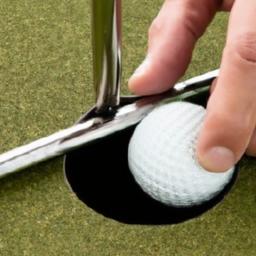
Force Plate and Pressure Distribution Analysis for Optimizing Stance Stability and Weight Transfer During the Putt
quantifying the interplay of load and motion – Force plate and pressure-mat data translate the physical principles of force (a vector quantity with magnitude and direction) into actionable measures for putting performance. Continuous center-of-pressure (CoP) trajectories and pressure-distribution heatmaps reveal how a golfer loads each foot, how the CoP shifts during the backswing and forward stroke, and whether lateral or anterior‑posterior excursions exceed stable thresholds. By treating ground reaction forces as time‑series vectors rather than isolated numbers, analysts can decompose the putting stroke into temporal phases (set, backswing, transition, impact) and identify where excessive force variability introduces lateral putter-face rotation or inconsistent ball launch speed.
Key metrics and diagnostic outputs – Standardized variables derived from force‑plate recordings provide objective targets for training and evaluation. Typical metrics include CoP path length, sway area, peak vertical force asymmetry, temporal onset of weight transfer, and root‑mean‑square (RMS) of lateral force. The table below shows concise example metrics and suggested benchmarking ranges for a stable, repeatable putt.
| Metric | Diagnostic value | Target |
|---|---|---|
| CoP path length (mm) | Amount of postural drift during stroke | < 40 mm |
| Peak lateral force asymmetry (%) | Imbalance between feet at impact | < 5% |
| Weight transfer onset (ms) | Timing from backswing peak to forward shift | Consistent within ±30 ms |
Translating analysis into practice – Force‑based diagnostics should inform targeted interventions that reduce stroke variability. Recommended drills (delivered with biofeedback when possible) include:
- single‑eye gaze putts with real‑time CoP display to minimize lateral sway;
- Weighted‑stance drill where incremental loads are applied to each foot until asymmetry metrics align with targets;
- Timed transfer repetitions using auditory cues to constrain the acceptable window of weight‑shift onset.
These exercises emphasize reproducible weight transfer patterns and reduced peak lateral forces, directly addressing the mechanical contributors to miss directionality and distance error.
Implementation considerations and limitations – While force plates and pressure mats provide high‑resolution data, their effective use requires integration with video kinematics and subjective coaching cues. Noise reduction,sampling frequency (≥100 Hz recommended),and sensor calibration are critical for valid comparisons across sessions. Practitioners should combine objective thresholds with individualized baselines: some elite putters maintain slightly larger CoP excursions without performance loss, so metrics must be interpreted in context. Ultimately, force‑based assessment offers a rigorous framework to optimize stance stability and weight transfer, but it is indeed most powerful when used as one component of a multimodal, coach‑led training program.
Surface Interaction and Green Reading Analytics to Improve Line Selection and Speed Control
Quantitative characterization of turf-putter interaction reframes putting from an art into a predictable biomechanical and tribological problem. High-resolution topographic mapping and penetrometer-based friction testing reveal how **grain orientation,mechanical stiffness,and surface undulation** modulate ball roll radius and break. When these parameters are expressed as continuous surfaces (height, slope, friction coefficient), they permit the derivation of local rolling vectors that predict deviation for a given entry speed. such an approach allows coaches and players to move beyond anecdotal cues and adopt evidence-based adjustments to address micro-variability across the green.
Translating sensor outputs into actionable green-reading data requires concise metrics and visualization. key analytic outputs include:
- Gradient vectors (direction and magnitude of slope at the putt line)
- Friction profiles (spanwise changes in ball deceleration)
- Line probability maps (heatmaps indicating likelihood of sinking from a set aim and speed)
Integrating these outputs into a single visual model-overlaid contour, vector and probability layers-supports rapid cognitive assimilation and improves consistency of aim and speed selection under pressure.
Practical translation into on-course decision rules is most effective when informed by empirically derived correction factors. The short table below summarizes concise compensations derived from surface analytics for common micro-conditions:
| Surface Condition | Typical Effect on Line | Recommended Adjustment |
|---|---|---|
| Down-grain | Faster, reduced break | Decrease entry speed 5-10% |
| Into-grain | Slower, increased break | Increase speed 5-12% |
| Up-slope start | Shorter travel, amplified curvature | Aim slightly higher; modest speed gain |
For applied practice, a structured protocol that alternates measurement-driven drills with blind tests accelerates learning and calibrates player intuition. Recommended components include: a sequence of recorded putts across variable micro-slopes, closed-loop feedback on entry speed and departure angle, and periodic blind attempts to evaluate transfer of analytic cues into perceptual judgment. Emphasizing repeatable, measurable outcomes builds confidence and reduces variability: **precision in sensing and consistency in execution** are the two pillars that analytics-based green reading brings to modern putting instruction.
Statistical Modeling of Consistency Using Variance Decomposition and Predictive Performance metrics for Practice Prioritization
Variance decomposition provides a principled framework for translating noisy putting outcomes into actionable targets. by partitioning total outcome variance into **between-player**, **between-session**, **within-session**, and **residual (shot-to-shot)** components using hierarchical (mixed‑effects) models or Bayesian multilevel approaches, researchers can quantify where inconsistency is concentrated. This decomposition parallels challenges in othre domains that require standardization and cross-context comparability (for example, documented differences between regional labeling systems that motivate harmonized metrics), underscoring the need to control measurement context when estimating true skill variance. Robust estimation of these components permits objective comparisons across players, equipment, and environmental contexts and reduces misleading practice choices driven by uncontrolled noise.
Operationalizing decomposition requires structured data and an explicit model pipeline. Typical inputs include repeated putt outcomes (make/miss and continuous deviation), synchronized biomechanical covariates (putter head path, face angle, stroke tempo), and contextual factors (green speed, slope, weather). Recommended analytical steps are:
- Fit multilevel models with random intercepts/slopes to capture player and session effects.
- Estimate ICCs to express the proportion of variance attributable to stable versus situational factors.
- Perform variance-attribution tests (likelihood-ratio or Bayesian posterior comparisons) to identify dominant sources of variability.
These outputs convert raw variability into ranked contributors that can be targeted by specific drills or equipment adjustments.
Predictive performance metrics bridge statistical inference and practice prioritization by quantifying how well models forecast future putting outcomes. Use a combination of calibration and discrimination measures: **RMSE** or mean absolute error for continuous miss-distance,**Brier score** and **log-loss** for probabilistic make/miss models,and **AUC** or **precision-recall** curves for classification tasks. The following compact table illustrates an example variance decomposition and the implied practice priority (sample, illustrative values):
| Component | Variance (%) | practice Priority |
|---|---|---|
| Stroke mechanics (tempo/path) | 42 | High |
| Setup and alignment | 28 | Moderate |
| between-session (consistency) | 18 | Moderate |
| Environmental/noise | 12 | Low |
Regularly tracking predictive metrics during validation folds or rolling windows ensures that prioritization reflects true generalizable gains rather than overfitting to training data.
Translating diagnostics into a practice plan emphasizes efficiency and measurement-driven allocation. Allocate practice time roughly proportional to a component’s share of variance, then iterate with short controlled experiments: implement a targeted drill, re-estimate variance components, and evaluate changes in RMSE/brier score. Key operational recommendations include:
- Adaptive allocation: shift time toward components showing the largest unexplained variance reductions per hour of practice.
- Cross‑validation monitoring: use out‑of‑sample predictive metrics to avoid chasing in‑session noise.
- Bayesian updating: incorporate prior estimates of variance components to stabilize decisions when data are sparse.
This closed‑loop, evidence‑based cycle converts statistical insight into measurable performance improvements under competitive conditions.
Integrating Cognitive Strategies and Pressure Simulation Protocols to Mitigate Choking and Enhance Decision Making
Contemporary models of performance emphasize the centrality of **cognitive processes**-attention, perception, memory and decision-making-in determining putting outcomes. Definitions from authoritative sources frame “cognitive” as the set of mental operations involved in knowing and perceiving (Dictionary.com; Verywell Mind), and this conceptualization supports an analytical approach: treating mis-executed putts not solely as motor errors but as failures of information processing under variable arousal. Integrating cognitive load theory with motor control principles clarifies why identical technical strokes can produce divergent outcomes when attentional resources are taxed by stress or situational complexity.
Designed pressure exposures should be systematic, progressive, and measurable to produce durable transfer to competition. Effective protocols embed stressors that selectively challenge specific cognitive functions while preserving technical fidelity. Examples include:
- Time pressure drills – shorten decision windows to train rapid perceptual judgment.
- Monetary or consequence-based practice – introduce stakes to elevate arousal toward competitive ranges.
- Dual-task simulations – impose a concurrent cognitive task (e.g.,backwards counting) to improve attentional resilience.
- Progressive exposure - escalate stress magnitude across sessions to induce adaptive coping rather than avoidance.
To mitigate choking and enhance on-course decisions, interventions target both pre-performance readiness and in-the-moment control. **Pre-shot routines**, mental imagery with motor-specific cues, and implementation intentions reduce decision latency and automate appropriate stroke parameters. During high-pressure repetitions, train the athlete to use brief external focus anchors (e.g., a specific spot on the lip) and single-point performance cues to conserve working memory capacity. Cognitive reframing and metacognitive strategies-monitoring thoughts without rumination-improve recovery from error and preserve downstream decision quality.
Below is a concise mapping of representative protocols to cognitive targets and expected outcomes, suitable for integration into a practice plan or coach-managed periodization block:
| Protocol | Cognitive Target | Expected outcome |
|---|---|---|
| Timed 3-foot series | Decision speed | Reduced latency |
| Peer-evaluated pressure | Arousal management | Stable stroke under stress |
| Dual-task putting | Attentional resilience | Improved focus retention |
Track outcomes with objective metrics-mean radial error, decision latency, and physiological markers (heart rate variability)-and pair quantitative feedback with athlete self-reports to calibrate cognitive load and stress dosage. Bold emphasis on measurement-driven progression ensures training adaptations translate into robust on-course decision making and fewer pressure-induced performance failures.
Designing Individualized Training Protocols Based on Biomechanical and Statistical Profiles with Progressive Load and Feedback Calibration
Profiling begins with a extensive assessment that fuses high-resolution biomechanical capture (putter path, face angle, wrist kinematics) with statistical summaries of performance (mean error, variability, and conditional probabilities of miss direction). From these data one can derive a concise, actionable map of a player’s motor phenotype: which mechanical degrees of freedom drive outcome variance, which phases of the stroke are most unstable, and which environmental contexts (distance, green speed, slope) expose latent weaknesses. Core assessment domains include:
- Mechanical: putter-face orientation, stroke arc radius, shoulder/forearm coupling
- Temporal: backswing/downswing ratio, impact dwell, cadence consistency
- Outcome: radial error distribution, left/right miss propensity, make-rate by zone
Progressive load is implemented as a principled staircase that manipulates task constraints to elicit controlled adaptation. Training phases progress from high information / low perturbation to low information / high perturbation, with calibrated increments in: distance, slope magnitude, green variability, cognitive load, and temporal pressure. Each increment is tied to objective advancement criteria (e.g., reduction in radial error CV by X% or attainment of a 3-session rolling mean make-rate).Example calibration parameters are summarized below for practitioner use:
| Metric | Target | Progressive Load Example |
|---|---|---|
| Putter Face Angle SD | ≤ 1.0° | 3 m ➜ 6 m drills; add visual occlusion |
| Stroke Length Variability | ≤ 5 mm | Weighted putter sessions; tempo constraint |
| Grip Pressure Consistency | 1.0-1.5 kg mean | Fatigue set: continuous reps under cognitive dual-task |
Feedback calibration is iterative and individualized: begin with frequent, rich extrinsic feedback (video replay, numeric error metrics) and progressively shift toward intrinsic and summary feedback to promote self-monitoring and retention.Statistical decision rules guide feedback reduction (e.g.,withhold trial-level outcome once mastery threshold reached for three consecutive blocks).Incorporate model-based adjustments (mixed-effects or Bayesian updating) to refine targets as new data accrue, and always translate quantitative thresholds into clear, behaviorally specific coach cues so that motor adaptations are interpretable and reproducible on the course.
Implementation of Wearable Sensors and Real Time Feedback Systems to Accelerate Motor Learning and Long Term Skill Retention
Recent advances in wearable technology-defined by miniaturized sensors and embedded processors that are deliberately unobtrusive-enable precise quantification of the biomechanics and pressure dynamics that underpin putting performance. By instrumenting the putter shaft,the glove,shoe insoles and the torso with inertial measurement units (IMUs),pressure sensors and gyroscopes,researchers and coaches can capture stroke kinematics,face angle trajectories,tempo stability and plantar pressure shifts at high sampling rates with low latency.Careful attention to sensor placement, synchronization and signal fidelity is essential: sub-10 ms latency and sampling ≥200 hz for kinematic channels are recommended to preserve the temporal structure of short-duration putting motions and to support actionable real-time feedback.
Real-time feedback systems must be designed in alignment with established motor learning principles to accelerate acquisition while preserving long-term retention.Immediate sensory augmentation can facilitate rapid error correction, but excessive concurrent feedback risks dependency and reduced retention. Implement evidence-based feedback strategies such as bandwidth feedback (feedback only when performance deviates outside an error band),faded feedback (progressively reducing feedback frequency),and alternating schedules that blend concurrent cues with summary feedback. Typical sensor and feedback modalities include:
- IMU-derived kinematics → vibrotactile or subtle haptic cue when face rotation exceeds a threshold
- Pressure mapping → auditory pulse for lateral weight transfer deviations
- Tempo/acceleration → visual metronome or LED pattern to reinforce consistent backswing/downswing timing
- EMG (select applications) → biofeedback for pre-shot muscle tension modulation
Robust onboard processing and adaptive algorithms are critical for converting raw sensor streams into meaningful, coachable metrics. Implementing lightweight machine‑learning classifiers permits detection of recurring error signatures and personalization of thresholds based on an individual baseline rather than population norms. The following table provides a concise, practical mapping between representative performance metrics, short-term targets for practice, and the preferred real-time cueing modality:
| Metric | Practice Target | real‑time Cue |
|---|---|---|
| Face Rotation (°) | < 2° at impact | Haptic pulse on >2° |
| Stroke Tempo (ratio) | 3:1 backswing:downswing | Auditory metronome |
| Weight Balance (%) | ±5% lateral bias | LED indicator for shift |
Effective field deployment requires integration of sensor feedback with coach-led instruction and periodized practice that emphasizes transfer and retention.Design sessions to alternate high-frequency feedback blocks (for rapid error reduction) with feedback-absent blocks that compel internal error-detection, and include variable-distance and contextual interference tasks to promote generalization to varied green conditions. Emphasize metrics that are ecologically valid and interpretable for the player-presenting compact, prioritized cues rather than exhaustive telemetry-and ensure devices remain comfortable and non-disruptive to the putting stroke. When combined-precise wearables, adaptive real-time feedback, principled practice schedules and coach oversight-this integrated approach expedites motor learning and fosters durable skill retention on the putting surface.
Q&A
Below is a concise, academically styled Q&A set tailored to an article on “Analytical Approaches to Golf Putting Enhancement.” Answers integrate biomechanical measurement, statistical modeling, and cognitive strategy considerations, and include methodological recommendations for researchers and practitioners. Where useful, parallels are drawn to standards and practices from analytical sciences to emphasize rigor, validation, and reproducibility [see e.g., 1-4].
1.What do we mean by an “analytical approach” to putting improvement?
An analytical approach applies systematic measurement, quantitative modeling, hypothesis testing, and controlled experimental manipulation to understand the determinants of putting performance and to evaluate interventions. It combines precise biomechanical and physiological measurement, rigorous statistical inference, and cognitively informed training design to reduce error and enhance consistency.
2. Why is an analytical approach preferable to purely experiential coaching?
Analytical approaches reveal latent causes of variability that may be invisible to observation alone (e.g., micro‑tempo fluctuations, face-angle bias). They provide objective benchmarks, estimate effect sizes and uncertainty, permit individualized prescriptions, and enable generalizable conclusions through reproducible methods and statistical validation.3. What biomechanical variables should be measured for putting?
Primary kinematic and kinetic variables include clubhead path, face angle at impact, putter loft, impact position on putter face, clubhead speed and acceleration, wrist and forearm kinematics, trunk/head motion, and center-of-pressure excursion (via pressure mats). Secondary variables: ball launch speed and spin, initial trajectory, and roll characteristics measured via high-speed capture or launch monitors.
4. Which measurement technologies are appropriate and how should they be validated?
Use high-speed video, motion capture, inertial measurement units (IMUs), instrumented putters, pressure/force plates, and launch-monitor or ball-tracking systems. Validation is essential: calibrate sensors against gold-standard systems, quantify accuracy and precision under test conditions, and report limits of detection and uncertainty. Just as analytical chemistry emphasizes model and instrument validation, sports measurements should document calibration and sensitivity [1,4].
5. What outcome metrics best capture putting performance?
Recommended metrics: holing probability (binary outcome), mean distance-to-hole at rest, mean signed error (directional bias), mean absolute error, standard deviation/dispersion measures, stochastic descriptors (e.g., coefficient of variation), and derived metrics like strokes-gained: putting. Use distributional summaries (percentiles, density estimates) and spatial dispersion (bivariate confidence ellipses).
6. How should experiments be designed to evaluate putting interventions?
Use repeated-measures designs with adequate trials per condition to characterize intra-subject variability. Where possible, randomize trial order and use cross-over or within-subject controls.Pre-register hypotheses,perform power analyses for expected effect sizes,control contextual variables (green speed,ball type,hole location,lighting),and collect sufficient baseline data to model individual baselines.
7. which statistical models are most appropriate?
Linear mixed-effects models are well-suited for hierarchical, repeated-measures data (trials nested in players). Logistic or probit generalized mixed models suit holing probability. Hierarchical Bayesian models are valuable for borrowing strength across players while estimating individual effects and uncertainty. Time-series or state-space models can represent learning curves and temporal autocorrelation. Always report effect sizes, confidence/credible intervals, and model diagnostics.
8. how can we separate within-player variability from between-player differences?
use mixed-effects modeling with random intercepts and slopes to partition variance components. Compute intraclass correlation coefficients (ICC) to quantify proportion of variance attributable to players vs trials. Estimate participant-specific variance parameters to guide individualized interventions.
9. How should practitioners handle noisy data and avoid overfitting?
Apply principled preprocessing: outlier inspection (with obvious rules),filtering appropriate to sensor frequency,and baseline correction. use cross-validation for predictive models, penalized regression (e.g., LASSO, ridge) to limit overfitting, and reserve separate test datasets for final evaluation. Report performance on held-out data.
10. What machine learning methods are useful,and what are their limits?
Supervised learning (random forests,gradient boosting,neural nets) can predict holing outcomes from multivariate features; unsupervised clustering can identify stroke phenotypes. However, ML methods risk overfitting, can be opaque, and require large datasets with representative conditions. Emphasize interpretability and validate models across contexts (practice vs competition).
11. How can cognitive factors be integrated analytically?
measure pre-shot routines, gaze behaviour (eye tracking/quiet-eye), heart rate variability, and subjective measures (confidence, perceived pressure). Model their associations with biomechanical variables and outcomes in multilevel frameworks, and test causal effects with randomized cognitive interventions (e.g., quiet-eye training, arousal regulation). Cognitive-motor interactions can be modeled as moderating effects in mixed models.
12. What motor-learning principles should guide practice prescriptions?
Use evidence-based training: distributed practice for retention, a mix of variable and task-relevant variability to encourage adaptability, reduced frequency of augmented feedback to promote intrinsic error detection, and randomization to improve transfer to competition. Tailor practice to each player based on measured deficits and learning rates.
13. How should interventions be evaluated under competitive pressure?
Introduce ecological validity by simulating pressure (audience, incentives, time constraints) and measuring performance and physiological stress indicators. Include competition-like variability in practice to test robustness.Evaluate transfer by comparing lab improvements with on-course or simulated-competition outcomes.14. how can coaches and researchers quantify and reduce directional bias (e.g., consistent miss-left)?
Estimate mean signed error and directional dispersion. Use diagnostic plots (rose plots, bivariate distribution) and regression of outcome on face-angle and path to identify mechanical contributors. Prescriptive interventions may target alignment, face-angle correction, or tempo adjustments; iterative measurement confirms efficacy.
15. What reporting standards improve reproducibility and comparability across studies?
Adopt transparent reporting: full sensor specifications and calibration procedures, trial counts and selection rules, environmental conditions (green speed, slope), pre-processing steps, model specifications and diagnostics, effect sizes with uncertainty, and data/code availability. Lessons from analytical sciences (e.g., emphasis on validation and author reporting guidelines) are applicable and recommended [2,3].
16. How should performance improvements be quantified clinically or practically?
Report both statistical importance and practical significance (e.g., change in holing probability, strokes-gained per round). Use minimal detectable change and confidence intervals to assess whether observed changes exceed measurement error. Present individualized outcomes and also group-level summaries.
17. What are common pitfalls and how can they be avoided?
Pitfalls: insufficient trial counts to estimate intra-subject variability,neglect of calibration and sensor error,confounding environmental changes,circular analysis (using the same data to select and test predictors),and overgeneralization from laboratory conditions. Avoid by rigorous experimental protocol, pre-registration, and conservative inference.
18. What emerging directions deserve attention?
Real-time adaptive feedback via wearables, integration of ball-green interaction modeling, individualized Bayesian updating of player models, augmented reality for perceptual training, and longitudinal studies of learning and retention under varying ecological constraints.19. How should practitioners translate analytical findings into coaching practice?
Use measurement to identify prioritized, high-impact deficits; design constrained, evidence-based interventions; monitor response with repeated measurements; iterate with principled adjustments; and focus on transfer to competitive play. Maintain clear communication of uncertainty and expected time course of change.
20. Where can researchers learn best practices for model validation and instrument reporting?
Principles from analytical sciences-such as explicit model validation, sensitivity analysis, instrument calibration, and comprehensive author guidelines-offer useful templates for sports-science reporting and should be consulted to raise methodological rigor [1-4].Selected illustrative references and parallels (for methodological guidance rather than sport-specific content):
– Example of model validation and analytical solution emphasis: Analytical Chemistry discussions on enzyme kinetics and back-of-the-envelope criteria for parameter consistency [1].
– Guidance on author reporting and submission standards: Analytical Chemistry author information and editorial practices illustrate transparent reporting and peer-review expectations that are transferrable to sports-analytics reporting [2,3].
– Example of sensor analytical performance assessment (relevant to validating wearable/sensor tools): studies assessing biosensor sensitivity and matrix effects provide a template for sensor validation in biomechanical measurement [4].
Concluding note
An analytical program for putting improvement rests on high-quality measurement, rigorous statistical modeling, principled motor-learning design, and careful validation in ecologically relevant conditions. Emphasizing transparency, uncertainty quantification, and iterative evaluation will maximize the likelihood that measured improvements transfer to competition.
In closing, this review has argued that the precision and reproducibility of putting performance can be substantially enhanced by systematically integrating biomechanical measurement, robust statistical modeling, and evidence-based cognitive strategies. When combined, high-fidelity kinematic and kinetic data, rigorous variance-partitioning and predictive models, and interventions targeting attentional control and pressure resilience permit the identification of individual-specific error sources and the design of targeted, data-driven training protocols. To translate these insights into competitive gains,future work must prioritize ecological validity through field-based validation,larger and more diverse cohorts,longitudinal designs,and transparent reporting of methods and uncertainty. equally notable are advances in real-time feedback technologies and interpretable machine-learning approaches that preserve clinical relevance for coaches and athletes. Limitations identified herein-sensor noise, lab-field transfer, and sample heterogeneity-should guide methodological refinements and the development of standardized measurement and reporting practices. By advancing a rigorous, interdisciplinary research agenda and fostering closer scientist-practitioner collaboration, the analytical framework outlined in this article offers a pathway toward more consistent, resilient, and ultimately higher-performing putting under competitive conditions.

Analytical Approaches to Golf Putting improvement
Why use an analytical approach for golf putting?
Golf putting is a precision skill where small changes in stroke mechanics, face angle, or speed control create big differences in make percentage. An analytical approach combines biomechanical measurement, putting analytics, statistical modeling, and mental strategies to reduce variability and build reliable, competitive putting under pressure.
Key putting metrics to track
Before designing drills or changing technique, capture baseline data. Track these metrics consistently:
- Make percentage by distance (e.g., 3-5 ft, 6-10 ft, 11-20 ft)
- Average distance to hole (ADH) on putts that miss
- Putts per round and Strokes Gained: Putting (if available)
- Face angle at impact and it’s standard deviation (°)
- Stroke path (in-to-out, straight, out-to-in) and variability
- Tempo ratio (backstroke duration : forward stroke duration)
- Impact location on the putter face
- Green-reading error (degrees of misread slope)
- Pressure performance (make% under simulated pressure)
Biomechanical measurement techniques
Accurate measurement is the foundation of analytics-driven improvement. Use a mix of the following:
Video and high-speed cameras
High-frame-rate video (240+ fps) lets you analyze face angle at impact, putter path, and head movement. Clip-by-clip analysis identifies tendencies such as shoulder sway or excessive wrist flex.
Inertial Measurement Units (IMUs) & wearable sensors
Lightweight IMUs on the putter shaft and wrists capture angular velocity, tempo, and consistency across practise sessions. These sensors make it easy to quantify stroke-to-stroke variability.
Force plates and pressure mats
Pressure distribution and center-of-pressure (COP) movement show how balance affects stroke consistency. Too much lateral sway or unstable weight shift often correlates with face-angle variance.
Launch monitors & ball-tracking
Modern launch monitors measure initial ball speed, launch direction, and roll characteristics. These are essential for tuning speed control and putting on different green speeds.
Statistical modeling and data analysis for putting
Collected data is valuable only when interpreted correctly. Use these modeling strategies to convert raw numbers into improvement plans.
Descriptive analytics
- Compute means, medians, and standard deviations for face angle, speed, and path.
- Plot make percentages by distance and visualize via histograms and boxplots.
Predictive modeling
Use regression models to find which variables most affect make percentage. Examples:
- Logistic regression predicting make/miss from face angle, speed error, and path.
- Mixed-effects models accounting for repeated measures (different greens, days).
Dimensionality reduction & clustering
Principal Component Analysis (PCA) can reduce correlated stroke variables to a few key components (e.g., face control vs tempo). Clustering can segment sessions into “stable” vs ”unstable” putting days to tailor training.
Control charts & process improvement
Apply statistical process control charts to monitor stability in metrics (e.g., SD of face angle). Use control limits to identify when performance drifts and when interventions are working.
Translating analytics into a practice plan
After diagnostics, create a targeted training plan:
- Baseline month: Collect 100+ putts across 3-4 distances using the tools above.
- Identify top two failure modes: e.g., poor speed control or face-angle variance.
- Design drills tied to metrics: choose drills that directly reduce the measured variability.
- Implement weekly measurement checkpoints: small data sets to confirm progress.
- Refine technique and retest: use models to validate improvement and adjust the plan.
Sample metric-driven drill mapping
- High face-angle SD → Gate drill with 2 tees to enforce square impact,record SD improvement.
- Speed error high on 10-20 ft → Ladder drill (10, 12, 14, 16 ft) to improve ADH and speed control.
- Tempo variability → Metronome drills to stabilize tempo ratio (typical target 2:1).
- Balance/COP drift → Putts with eyes closed or narrow-stance drills on pressure mat.
Putting drills and practical tips linked to analytics
Use drills that have measurable outcomes so analytics can track improvement.
Drills
- Clock Drill (short-range): Improves make% from 3-6 ft. Track makes out of 8 attempts and ADH for misses.
- Ladder Drill (speed control): Putts from 6-20 ft,focus on leaving putts in the “make zone.” Record ADH and ball speed.
- Gate Drill (face/impact): Two tees or blocks force a square path. Measure face-angle SD pre/post.
- Pressure Set: Reward/punish outcomes, or simulate tournament conditions (shot clock, crowd noise). record make% under pressure.
Practical setup tips
- Fit your putter: loft, lie, and length impact forgiveness and impact location.
- Audit alignment aids on the putter head and ensure they match your eye view.
- Practice on multiple green speeds to generalize speed control.
Mental training and pressure management
Consistent putting requires cognitive strategies to maintain decision-making and execution under stress. Analytics can identify performance drop-offs under pressure and guide mental training.
Pre-shot routine & visualization
Build a repeatable pre-shot routine and use visualization to lock in target speed and line. Track whether adherence to the routine correlates with improved make% in your data.
Simulated pressure
- Create stakes (bets, accountability) or time limits.
- Practice with crowd noise or teammates watching.
- Record whether pressure conditions increase face-angle or speed variability and apply targeted mental skills training (breathing, focus anchors).
Mindfulness & arousal control
Short breathing exercises and two-minute mindfulness sessions before a round lower physiological arousal and help maintain consistent tempo. Log subjective arousal and correlate with performance metrics.
Equipment and tech: what to invest in
Not every golfer needs pro-level labs. prioritize tools that give actionable data:
- High-speed smartphone with slow-motion for face/path analysis (affordable).
- IMUs or putter sensors for tempo and path metrics.
- Portable pressure mat for balance analysis if stability is an issue.
- Launch monitor access for speed tuning sessions (clubhouse or range bookings).
| Tool | Primary use | Best for |
|---|---|---|
| High-speed video | Face angle, path | All golfers |
| IMUs / sensors | Tempo, variability | Consistency training |
| pressure mat | Balance, COP | Stability issues |
| Launch monitor | Ball speed, initial direction | Speed control |
Case study: data-driven improvement (exmaple)
Golfer A averaged 32 putts per round with the following baseline: 55% make from 3-6 ft, 20% from 6-10 ft, face-angle SD = 1.8°. Analysis revealed excessive face-angle variability and inconsistent tempo. Intervention:
- Gate drill daily to address face-angle variability.
- Metronome tempo work (2:1 ratio) 3x per week.
- Weekly measurement of ADH and face-angle SD.
After 6 weeks: 28 putts per round, make% increased to 68% (3-6 ft) and 30% (6-10 ft). Face-angle SD reduced to 0.9°. data showed tempo consistency correlated strongly (r ≈ 0.6) with improvement in make percentage.
How to evaluate progress – actionable checkpoints
Use these checkpoints to evaluate whether your plan is working:
- Weekly: 50 putt sample from 3-15 ft, measure make% and ADH.
- Bi-weekly: sensor/IMU session to check tempo and face-angle SD.
- Monthly: round-level analysis (putts per round, make% by band).
- Quarterly: re-run predictive model to confirm that targeted variables remain the main drivers of misses.
Benefits and practical tips
Benefits of using analytics for putting
- Objective identification of failure modes (not guesswork).
- Faster progress through targeted drills.
- Reduced variability leads to more confidence under pressure.
- Ability to quantify improvement and sustain changes.
Practical tips
- Keep data collection simple at first: focus on 3-5 metrics you can reliably measure.
- Make measurable goals (reduce face-angle SD by 0.5°; lower ADH from 6 ft to within 0.5 ft).
- Use short, frequent practice (10-20 minutes daily) rather than long infrequent sessions.
- balance technique changes with feel – small, reversible changes are easier to adapt to.
First-hand experience: a practice session template
Here’s a reproducible 30-minute session that combines analytics and practice:
- Warm-up (5 min): 10 short makes (3-4 ft) with a focus on routine.
- Gate & alignment (7 min): 20 putts through a gate; record face-angle SD with sensor/video.
- Speed ladder (10 min): 5 putts each at 8, 12, 16, and 20 ft. Record ADH and ball speed if available.
- Pressure set (8 min): 10 putts from 6-10 ft with small stakes; track make% under pressure.
Immediately log results in a simple spreadsheet or putting app. Compare with previous sessions to find trends.
Final actionable checklist
- Collect baseline: 100 putts across distances.
- Identify top 1-2 failure modes from data.
- Pick drills that map directly to those metrics.
- Measure weekly and adapt the plan.
- Simulate pressure and train the mind as well as the stroke.