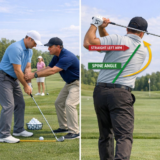
The biomechanics underlying the golf swing involve a complex interaction of kinematic and kinetic factors that govern the movement sequences essential for a powerful and accurate strike. At the heart of this process lies the grip, the primary interface between the golfer and the club. Mastering grip technique ensures the clubface is optimally positioned at impact, directly affecting energy transfer efficiency. A neutral grip is widely advocated as it promotes a natural swing trajectory and minimizes the likelihood of errant shots.
Equally vital is posture, which plays a significant role in maintaining balance and stability throughout the swing. A golfer’s stance should feature a slight forward tilt, knees gently bent, and feet spaced shoulder-width apart to create a solid base. This setup encourages effective hip rotation and shoulder turn, both critical for generating clubhead velocity. Key factors such as spinal alignment and weight distribution are instrumental in preserving a consistent swing plane, enabling a smooth flow from backswing to follow-through.
Dynamic movement during the swing can be examined through biomechanical frameworks emphasizing force production and momentum transfer. The concept of the kinetic chain-the sequential activation of body segments-allows golfers to harness their physical power efficiently. This sequence can be summarized as follows:
| Stage | Muscle Groups | Key Function |
|---|---|---|
| Setup | Core, Legs | Stability and Balance |
| Backswing | Shoulders, Core | Storage of Potential Energy |
| Downswing | Legs, Core, Arms | Force Generation and Impact |
Shifting weight from the rear foot to the lead foot engages core muscles, enhancing stability and maximizing power output. The table below summarizes the primary biomechanical components integral to the golf swing:
| Component | Description |
|---|---|
| Grip | Regulates clubface control and alignment at impact. |
| Posture | Ensures body alignment conducive to balance and swing mechanics. |
| Kinetic Chain | Sequential body segment activation to generate and transfer force. |