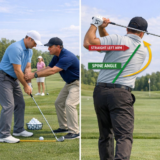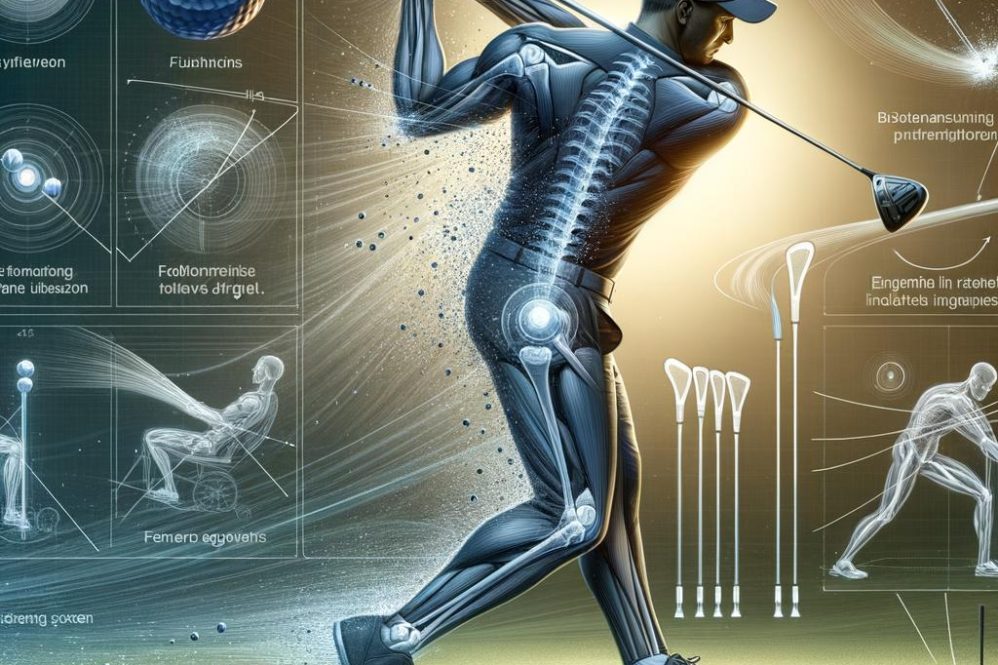
Biomechanics-the application of mechanical laws to living organisms-provides a quantitative lens for interpreting how human movement creates athletic outcomes and modifies performance. Historically central to the scientific study of skilled motor behavior, biomechanical approaches move coaching beyond subjective cues to measurable descriptions of forces, torques, segmental velocities, and postural constraints that together shape clubhead trajectory, impact conditions, and the stability of the body after contact.Treating the follow-through as a functional phase of the stroke rather of merely a cosmetic finish enables an evidence-based evaluation of how late-swing mechanics affect accuracy, shot control, and injury exposure.
This review organizes follow-through mechanics around three intertwined biomechanical themes: timed segmental sequencing, economical energy transmission, and whole-body postural control.Kinematic sequencing-typically a proximal‑to‑distal timing pattern-determines how momentum from the legs and trunk is relayed through the shoulder‑arm‑wrist chain to the clubhead, influencing speed and face orientation at impact.Efficient energy transfer requires coordinated rotations,appropriate application of ground reaction forces,and management of angular momentum so deceleration unfolds in a controlled,predictable manner. Postural dynamics cover balance, centre‑of‑mass paths, and upper‑body control during and after impact; these variables shape dispersion and dictate cumulative loading that can predispose athletes to overuse injury.
We synthesize contemporary biomechanical concepts and common measurement tools-kinematic and kinetic analyses, force platforms, and electromyography-focused on the follow‑through. After defining core mechanical constructs, we summarize empirical findings on sequencing and energy transfer, explore postural constraints and frequent faults seen in players of varied levels, and finish with coaching- and clinician-friendly recommendations rooted in biomechanics. We also identify gaps were future studies can sharpen technique optimization and individualize interventions.
Kinematic Sequencing in the Golf Follow through: Theoretical Framework and Targeted Training Protocols
Efficient follow‑through mechanics are underpinned by a constrained temporal pattern in which segmental angular velocities peak in a cascading proximal‑to‑distal order. Empirical descriptions portray this as overlapping maxima-pelvis, thorax, upper arm, forearm, and club-so that angular momentum and stored elastic energy flow from larger segments to smaller ones. When timing is preserved, internal energy loss is minimized and redundant degrees of freedom at impact are reduced, supporting repeatable launch parameters and tighter dispersion.
Typical timing markers include a pelvis rotation onset shortly after transition, ensuing thoracic acceleration and shoulder drive, and a later wrist release that aligns with maximal clubhead speed. these events can be tracked with simple kinematic markers (such as, pelvis rotational velocity peak, thorax velocity peak, and wrist release) and used for biofeedback. Metrics such as time‑to‑peak and inter‑segment phase lag provide objective indices of sequencing quality and can direct interventions when patterns like premature arm dominance or delayed hip rotation limit power transfer.
From a mechanical viewpoint, sound sequencing enhances power delivery while maintaining positional control through the follow‑through. Correct timing reduces transverse shear and excessive lateral bending, lessening compensatory muscle activity that impairs precision. Coordinated ground reaction force profiles and center‑of‑mass control during the finish help dissipate leftover angular momentum, sustain balance, and preserve a consistent club path after impact.
Training should target three complementary areas: rotational mobility for each segment, strength and rate‑of‑force development to support proximal drive, and neuromotor drills to refine inter‑segment timing. Practical progressions include medicine‑ball rotational throws to reinforce torque transfer, resisted cable chops that emphasize initiating motion from the hips/trunk, and tempo swings with brief pauses at transition to re‑pattern timing. Motor‑learning strategies-external focus instructions, moving from blocked to random practice, and using augmented feedback (video or IMU timing readouts)-speed acquisition of the desired cascade.
Assessment and programming benefit from objective, staged progression. Track peak angular velocities, inter‑segment time‑to‑peak (pelvis→thorax→wrist), clubhead speed, and variability in launch azimuth. Begin with low‑load, isolated patterning before advancing to high‑speed, sport‑specific tasks. Regular reassessment using motion capture or inertial sensors helps ensure sequencing gains transfer to on‑course control.
- Drill: medicine‑ball rotational throw – builds coordinated proximal drive.
- Drill: Split‑stance cable chop – reinforces trunk‑to‑shoulder timing.
- Drill: Tempo swings with a pause at transition – reshapes inter‑segment phase lags.
| exercise | Primary target | Progression |
|---|---|---|
| med‑ball rotational throw | Proximal torque sequencing | Increase speed → add rotational step |
| Split‑stance cable chop | Trunk‑to‑shoulder timing | Higher load → unstable base |
| Tempo swings w/ pause | Transition control | Shorten pause → restore tempo |
Efficient Energy Transfer from Pelvis to Clubhead: Biomechanical Mechanisms and Practical Coaching Cues
Most of the usable power in the swing originates with the pelvis acting as the primary torque source. Rapid pelvic rotation about the vertical axis, assisted by ground reaction forces from the lower limbs, creates a transient separation between pelvis and thorax (often conceptualized as the “X‑factor”). That separation stores elastic energy across the torso and shoulder tissues, which is then released progressively through the shoulder, forearm, and finally the club to maximize clubhead velocity while preserving the desired impact vector. Timely pelvic deceleration and strict proximal‑to‑distal sequencing are therefore essential to avoid premature release or lateral leakage of energy.
At the tissue level, coordinated muscle activation and stretch‑shortening cycles in hip rotators, lumbar stabilizers, and core muscles underpin the transfer mechanism. As the pelvis accelerates, eccentric loading of obliques and latissimus dorsi produces elastic recoil that contributes to thorax and arm acceleration. Vertical and horizontal components of ground reaction forces supply the impulse for pelvic angular momentum; inadequate force application or instability in the frontal plane undermines efficiency and forces compensations distally. Preserving a continuous kinematic chain-stiff enough to transmit torque but compliant enough to allow energy flow-is crucial for reliable performance.
Coaching language that reflects mechanical intent can speed learning and reduce losses. Useful, evidence‑aligned cues include:
- “Start with the left hip” – bias initiation toward the pelvis to protect proximal drive.
- “Feel the torso wait” – perceive a brief torso lag to load elastic tissues.
- “Push through the ground” – emphasize a controlled weight shift to create a stable base for pelvic torque.
- “let the arms trail” – discourage early arm dominance that bleeds stored rotational energy.
These concise cues prioritize sequencing and stability while remaining practical for repetition during practice.
| Drill | Purpose | Key Focus |
|---|---|---|
| Med‑ball rotational throw | Develop pelvis→torso transfer | Fast pelvic rotation, relaxed shoulders |
| Step‑through impact drill | Sync weight shift and hip drive | Lead‑leg stability, timing |
| Club‑across‑chest rotation | Isolate pelvic initiation | Controlled coil, maintain spine tilt |
Progressions should flow from unloaded, high‑speed power expression to sport‑specific integration with the club so that mechanical intent is preserved while task complexity increases.
Objective feedback and phased progression are essential for lasting change. Employ high‑speed video to quantify pelvic angular velocity and pelvis‑thorax separation, use wearables to monitor sequencing, and track KPIs such as impact‑location consistency and clubhead speed variability. advance load and complexity only when compensatory patterns (e.g., lateral sway, early arm lift) are resolved, and add mobility and anti‑rotation strength work to protect the lumbar spine. Combining biomechanical insight with targeted cues and measurable progressions improves energy transfer efficiency and the reproducibility of precision.
Optimal Trunk Rotation and Upper Body Mechanics: Injury Safe Strategies and Progressive Mobility Exercises
Effective follow‑through requires a coordinated transverse‑plane interaction where the thorax rotates relative to the pelvis to shed angular momentum while protecting the shoulder complex. Research suggests that a controlled separation angle between pelvis and thorax-rather than maximal rotation alone-produces the most favorable trade‑off between energy storage and tissue tolerance.Thoracic mobility and pelvic control together define the safe and functional range of rotation and the timing of peak angular velocity in the late downswing and finish.
Reducing injury risk calls for neuromuscular adaptations that manage deceleration and segmental coupling. Key protective strategies include improving eccentric control of the obliques and latissimus dorsi, maintaining scapular stability through the rotator cuff and lower trapezius, and avoiding excessive lumbar lateral flexion or shear. Practical cues for athletes are: lead with the chest into the finish, preserve a neutral lumbar curve, and allow the shoulders to rotate around a stable thorax-these habits lower peak spinal shear and abrupt shoulder loading.
Progressive mobility and stability work should move from isolated joint control to dynamic patterns that mimic swing demands. A sample micro‑progression:
- Segmental thoracic rotations – slow,assisted movements in quadruped or seated positions to restore rotary range.
- Banded half‑knee chops / Pallof press – introduce resistance and teach trunk stiffness during rotational challenges.
- Loaded windmills and medicine‑ball throws – build power and controlled deceleration at higher velocities.
Each stage emphasizes movement quality and pain‑free execution before increasing speed or load.
Program parameters should be individualized and evidence‑based. For mobility drills, aim for 2-4 sets of 8-12 controlled reps and progress from 2-3×/week toward daily maintenance as symmetry improves.Strength and eccentric control work can start at light to moderate effort (perceived 40-60%) and progress to heavier or plyometric tasks once technique benchmarks-symmetrical rotation, pain‑free ROM, and timely pelvis‑thorax sequencing-are met. The table below maps exercises to clinical goals.
| Exercise | Primary goal | Progression |
|---|---|---|
| Quadruped thoracic rotations | Segmental mobility | Add thoracic extension on roller |
| Pallof press (anti‑rotation) | Core stiffness / force transfer | progress to single‑leg stance |
| medicine‑ball rotational throws | Power and deceleration | Increase ball weight & velocity |
Ongoing monitoring should prioritize symmetry, pain responses, and objective swing kinematics over arbitrary ROM numbers. Regress when red flags appear-reproduced radicular symptoms, increased lumbar translation, or persistent scapular dysfunction.In such cases, reduce rotation amplitude, revisit foundational mobility, and involve a sport‑medicine professional if tissue pathology is suspected before resuming high‑velocity follow‑through practice.
Lower Limb stability and Weight Shift Dynamics: Ground Reaction Forces, Footwork Patterns, and Strengthening Recommendations
Lower‑limb stability is the foundation for transferring momentum from the ground up through the pelvis and into the upper body during the finish.Ground reaction forces (GRFs) form the mechanical bridge between the external support surface and internal torque production; their vertical and horizontal components must be managed to generate power and enable controlled deceleration. Effective stability reduces unwanted center‑of‑mass excursions and optimizes the center‑of‑pressure path beneath the foot, helping preserve consistent clubface orientation and a reliable follow‑through.
The timing of weight transfer is as vital as its magnitude: a well‑timed shift from trail to lead limb organizes braking and propulsion impulses predictably. Efficient footwork commonly shows rapid trail‑foot unloading, progressively increasing lead‑ankle dorsiflexion, and gradual medial weight bias on the front foot. Key patterns to cultivate:
- Trail unloading: swift reduction in vertical GRF to free pelvic rotation.
- Lead acceptance: controlled increase in GRF on the lead leg to absorb and redirect energy.
- Toe engagement: forefoot loading for final rotational control and deceleration.
These motifs help achieve both accuracy and controlled finishing mechanics.
From a coaching outlook, peak GRF timing relative to club passage through the impact plane is an informative metric: earlier peak vertical GRF on the lead limb often reflects more complete weight transfer, but it requires adequate eccentric capacity in the trail limb to avoid premature collapse.Thus, programs should train trail‑side eccentric braking and lead‑side concentric acceptance. Cue athletes to actively “accept” the lead leg rather than passively collapsing,maintaining an optimal relationship between COM and support base during the finish.
Strength and motor‑control work should emphasize unilateral load tolerance, hip abductors and external rotators, ankle stiffness regulation, and reactive capacity. Effective modalities include single‑leg squats, eccentric step‑downs, resisted lateral shuffles, and plyometric single‑leg hops with controlled landings.A brief exercise reference is below for practical implementation:
| Exercise | Primary Target | Recommended Dosage |
|---|---|---|
| Single‑leg squat | Quadriceps, glute medius | 3×6-8 per side |
| eccentric step‑down | Controlled knee/hip eccentric control | 3×8-10 per side |
| Single‑leg hop‑to‑stability | reactive ankle/hip stability | 4×5 reps |
| Resisted lateral band walk | Hip abductors | 3×15 steps |
Transfer to on‑course skill work using progressive overload and specificity: start on stable ground, introduce perturbations or unstable surfaces, then incorporate swing‑like loads (for example, med‑ball throws with a weight shift). Use objective feedback (force‑plate COP traces or accelerometry from wearables) when available to confirm GRF timing and COP progression. Prioritize recovery and movement variability to avoid rigid motor patterns; the aim is an adaptable lower‑limb base that supports precise shots and a reproducible follow‑through.
Wrist and Hand Positioning in the follow through: Torque management, Release Timing, and precision Drills
How the wrists and hands behave through the final stages of the swing materially affects clubface orientation and shot scatter. Functionally, the wrists act as distal torque modulators that refine how proximal rotational energy becomes clubhead motion. A preferred finish typically shows a gradually extending lead wrist with controlled trailing‑wrist supination, allowing the club to decelerate while retaining face alignment. Maintaining modest dorsal tension in the lead wrist and avoiding abrupt flexion at impact reduces sudden torque spikes that destabilize the head and increase lateral dispersion.
Release timing follows the kinematic cascade: pelvis → thorax → lead arm → hands → club. When the proximal‑to‑distal pattern is preserved, energy transfer is efficient and wrist torques are moderated. An early,forceful release places excessive demands on the wrist and forearm,producing sidespin and loss of accuracy; a delayed,segment‑by‑segment release tends to improve precision but depends on preserved upstream rotational velocity.The goal is a smooth decay of clubhead speed with the hands trailing the torso rather than driving the motion.
Teaching drills should combine neuromuscular control with sensory feedback. Proven, practical exercises include:
- Towel‑under‑arms – encourages coordinated torso‑arm motion and limits autonomous wrist casting.
- Impact‑position holds – brief pauses at impact to train wrist angles and tactile awareness of face orientation.
- Slow‑motion release reps – reinforce supination and extension timing in low‑load conditions.
- Weighted‑club tempo sets – progressive overload to increase tolerance to rotational torque while preserving precision.
- Putting‑style feeds – transfer refined fine motor control from short strokes to the full‑swing finish for shot shaping.
Load management is crucial to safeguard joint health while refining technique. The wrist tolerates multiplanar loads-flexion/extension, radial/ulnar deviation, and rotation-and excessive eccentric deceleration stresses predispose athletes to overuse complaints. Structured warm‑ups, gradual ramping of practice intensity, and attention to scapulothoracic stability reduce distal compensations. When correction is required, prioritize exercises that balance wrist extensor and flexor activation, add proprioceptive tasks, and scale drills from low to high velocity.
| Drill | Primary Focus | Progression |
|---|---|---|
| Towel‑under‑arms | Proximal‑to‑distal sequencing | Add speed → add resistance |
| Impact holds | wrist angle awareness | Short → full swings |
| Weighted tempo sets | Torque tolerance | Light → moderate weight |
Postural Control and Balance During Deceleration: Neuromuscular Strategies and rehabilitation Considerations
The deceleration phase after ball contact places acute demands on the postural control system: rapid shedding of rotational and translational momentum requires precise management of the center of mass relative to the base of support so excessive postural sway is minimized while shot mechanics remain intact. Controlled slowing occurs through coordinated redistribution of GRFs via timed eccentric actions of lower‑limb and trunk muscles together with stabilization of the pelvis and thorax to govern angular momentum.Observable markers during deceleration include shifts in foot pressure, lateral weight transfer, and transient spikes in mediolateral sway-parameters that can be quantified to track neuromuscular control.
Safe and efficient deceleration relies on both feedforward and feedback processes. Anticipatory postural adjustments (APAs) prime hip extensors,quadriceps,and core stabilizers before the braking event,while fast reflexive responses correct unexpected disturbances.The motor pattern emphasizes proximal deceleration (hip and trunk) with distal joints (knee, ankle) fine‑tuning balance. Rehabilitation should therefore restore timing and sequencing as much as absolute strength-relinking prime movers and stabilizers reduces compensatory strategies that elevate injury risk.
Re‑training dynamic balance should layer multisensory challenges and task specificity.Evidence from balance literature supports graded exposure to perturbations of varying magnitude and direction to enhance sensorimotor integration.Recommended components include:
- perturbation training (platform or manual) to improve reactive balance;
- Eccentric strengthening for hip extensors and trunk rotators to raise energy absorption capacity;
- Proprioceptive and vestibular drills to lessen dependence on vision and lower sway under load;
- Task‑specific transfer such as full‑swing deceleration drills to preserve motor program fidelity.
These methods foster robust neuromuscular adaptations that carry over to course performance.
Assessment and progression should be pragmatic and measurable. Simple field tests-single‑leg balance time, COP excursion, timed step‑down-offer baseline data; instrumented measures (force plates, IMUs) provide detailed kinematic and kinetic profiles. The table below summarizes priority rehabilitation targets and focuses:
| Muscle/System | Deceleration Role | Rehab Focus |
|---|---|---|
| Gluteus maximus & medius | Primary hip decelerators; frontal‑plane control | Eccentric strength; lateral stability drills |
| Core rotators | Manage transverse‑plane momentum | rotational eccentrics; anti‑rotation holds |
| Quadriceps & hamstrings | Knee control; absorb sagittal impact | Slow eccentric loading; neuromuscular timing |
| Ankle stabilizers | Fine‑tune balance; modulate COP | Proprioceptive balance tasks; perturbations |
Return‑to‑play should integrate objective balance metrics, task tolerance, and athlete confidence. Progression criteria include restored APAs without harmful co‑contraction, mediolateral sway within normative bounds for the athlete’s level, and repeatable deceleration during full‑speed swings without pain or compensatory kinematics. Instruction on movement economy-encouraging distributed, coordinated dissipation of energy rather than stiffening-completes the rehab plan and helps athletes regain both control and precision through the follow‑through.
Temporal Coordination Between deceleration and Visual Tracking: Measurement Techniques and Performance Enhancing Interventions
How quickly the club decelerates and how the gaze reorients to follow ball flight form a key sensorimotor coupling that affects dispersion and consistency. Modern approaches combine kinematic capture with eye‑tracking to quantify the interval between peak deceleration and stable fixation on flight. Even small misalignments between mechanical braking and visual sampling can reduce the time available for perceptual updates and increase outcome variability. Think of temporal coupling as a short sensorimotor window when mechanical energy dissipation and sensory acquisition overlap to support error correction and planning for the next stroke.
Assessing this coupling requires synchronized multimodal recordings and event‑based analysis. Typical methods include:
- High‑speed motion capture (marker or markerless) to extract events such as impact, peak angular velocity, and peak deceleration;
- Mobile eye tracking to capture gaze anchoring, saccade timing, and fixation duration relative to mechanical events;
- Surface EMG and imus to mark muscle activation timing and segment deceleration;
- Force platforms to measure ground reaction timing that constrains whole‑body braking.
| Modality | key metric | Typical sampling rate |
|---|---|---|
| Motion capture | Time‑to‑peak deceleration | 200-1000 Hz |
| Eye tracker | Latency to fixation / Quiet‑eye duration | 60-500 Hz |
| EMG | Muscle onset/offset relative to impact | 1000 Hz |
Interventions that align perception and braking show promise. Examples include quiet‑eye training to lengthen pre‑ and post‑impact fixation windows, eccentric‑focused deceleration strength programs to improve controlled energy absorption, and temporal cueing (auditory or haptic) to scaffold timing during skill acquisition. Practical drills might combine unexpected perturbations (changes in club length or stance) with constrained visual tasks to force reorganization of gaze‑to‑braking timing. Progress these protocols from high‑feedback laboratory settings to realistic on‑course contexts to assess transfer.
Neuromuscularly, an optimized follow‑through coordinates eccentric activation of lead‑shoulder, upper thorax, and hip rotators timed to the late acceleration phase, enabling rapid yet controlled slowing while the visual system captures early ball trajectory. Training that emphasizes anticipatory feedforward timing alongside variable feedback practice strengthens the temporal coupling. For applied work, prioritize synchronized data capture, clear event definitions (impact, peak deceleration, fixation onset), and outcome metrics that combine millisecond precision with functional measures such as shot dispersion.
Integrating Biomechanical Assessment into Coaching Practice: Monitoring metrics,Video Analysis Protocols,and Individualized Training Plans
Good coaching translates biomechanical measurements into actionable guidance. Core metrics should represent both timing and force: segmental sequencing (pelvis → thorax → arms → club),peak clubhead speed,ground reaction forces (vertical and transverse),and joint moments at the lead hip and lumbar spine. Complementary indicators-range‑of‑motion asymmetries, pelvis‑thorax separation angles, and time‑to‑peak angular velocities-reveal inefficiencies or compensations. Systematic logging of these variables produces a reliable baseline to detect meaningful deviations.
Video analysis must be standardized for valid comparisons and to integrate with kinetic data. Recommended elements include synchronized multi‑camera captures (sagittal and frontal), high‑speed acquisition (ideally ≥240 fps for wrist and clubhead kinematics where possible), fixed camera distances and calibration markers, and practice conditions that mirror on‑course tasks. For markerless systems, record software versions and confidence metrics; for marker‑based setups, note marker sets and filtering routines. Such documentation preserves data quality and supports coach‑lead interpretation.
Interpreting biomechanical outputs means mapping measures to performance and injury risk using both intra‑athlete trends and normative values from published movement science. A concise coach‑facing crosswalk might include:
| metric | Target | Coach Action |
|---|---|---|
| Pelvis‑Thorax Separation | 30°-50° at max rotation | Tempo drills, anti‑rotation training |
| Peak Clubhead Speed | Player‑specific max + 3-5% incremental goals | Power development, sequencing work |
| Lead hip Abduction Torque | Within normative band for age/level | Strength & motor‑control program |
Use time‑series visualizations and effect sizes to distinguish meaningful change from measurement noise.
Individualized plans should combine biomechanical findings with the golfer’s physical profile and objectives, emphasizing interventions that restore kinetic linkage while limiting injurious loads. Typical components: mobility routines for thoracic and hip rotation, strength and power work to improve hip and core force transfer, and motor‑control drills that reinforce correct sequencing under variable constraints.Set measurable progression criteria (as a notable example, increased pelvis‑thorax separation under load or faster time‑to‑peak angular velocity) and validate gains with transfer tests-on‑course dispersion and ball‑flight metrics.
Monitoring and injury prevention are cyclical: baseline assessment → intervention → re‑assessment → refinement. Set a monitoring cadence aligned with the training phase (e.g., weekly during intensive technical blocks, monthly during maintenance) and establish trigger thresholds for clinical review (for example, sustained lumbar extension moment increases >15% or GRF impulse asymmetry >10%). Integrate biomechanical flags into daily practice cues and return‑to‑swing criteria so performance improvements aren’t bought at the price of unsafe joint loading. Meticulous documentation of protocols, software versions, and individualized thresholds supports reproducibility and long‑term athlete health.
Q&A
1. What is biomechanics and why is it relevant to studying the golf follow-through?
Answer: Biomechanics applies mechanical principles to living systems to quantify movement, forces, and structure.In golf, analyzing the follow‑through biomechanically reveals how body segments, joint torques, ground reaction forces, and timing interact to generate and dissipate the kinetic energy produced in the downswing and at impact. This understanding clarifies why outcomes vary, guides technical and conditioning interventions to lower injury risk, and supplies measurable targets for improving performance.
2. What are the primary biomechanical objectives of an effective follow-through?
Answer: A well‑executed follow‑through should (a) reflect efficient proximal‑to‑distal sequencing that produced optimal clubhead speed at impact,(b) enable controlled dissipation of residual kinetic energy to preserve accuracy and face control,(c) maintain postural stability and predictable center‑of‑mass paths,and (d) limit injurious peak loads on the lumbar spine,shoulder,and elbow through appropriate deceleration strategies.
3. What is kinematic sequencing and how does it apply to the follow-through?
Answer: Kinematic sequencing is the timed activation and peak angular velocities of successive body segments (proximal‑to‑distal) that maximize distal speed. In golf the common order is pelvis → thorax → upper arm/forearm → wrist → clubhead.The follow‑through reveals whether peak velocities were achieved around impact and whether energy transfer was efficient rather than produced late or dissipated prematurely.
4. How does the body transfer and dissipate energy from the swing into the follow-through?
Answer: Energy created by GRFs and segmental rotation transfers through a kinetic chain to the clubhead at impact. After contact, residual angular and linear momentum must be safely slowed. Dissipation occurs through eccentric muscle actions (notably in trunk and lead leg), coordinated joint rotations, and reorientation of GRFs. Efficient transfer combines high impact clubhead speed with smooth deceleration; inefficiency shows abrupt muscular braking,balance loss,or late accelerations.
5.What role do the lower limbs and ground reaction forces play during follow-through?
Answer: Lower limbs generate and regulate GRFs that produce axial rotation and create a stable platform for energy transfer. During the follow‑through the lead leg typically accepts and eccentrically controls vertical and horizontal GRFs, stabilizing the pelvis and trunk as rotational speeds fall. Correct weight transfer and lead‑leg stability are essential for balance, consistent swing plane maintenance, and reduced torsional stress on the lumbar spine.
6.What postural dynamics are critical during and after impact?
Answer: Important postural variables include preserving a functional spine angle and trunk torque resistance, controlling head motion for reliable visual and vestibular reference, maintaining appropriate shoulder orientation to manage the clubface, and holding a reproducible center‑of‑mass trajectory. Early spine extension or abrupt cranial motion can change impact geometry and raise injury risk.
7. Which common follow-through faults have clear biomechanical causes?
Answer:
– Early extension (hips straightening toward the ball): frequently enough from limited hip mobility or weak eccentric control in glutes/hamstrings, causing loss of spine angle and altered impact plane.
– Early release (hands dominating): may reflect poor proximal sequencing or compensatory upper‑limb action that reduces control.
– Reverse pivot or weight‑transfer errors: typically due to mistimed GRF application or insufficient lead‑leg stabilization.
– Over‑rotated/collapsed trunk at finish: suggests inadequate eccentric control of obliques and paraspinals,increasing lumbar shear.
8. How does the follow-through affect shot precision and control?
Answer: The follow‑through is largely a downstream expression of pre‑impact mechanics; consistent, biomechanically balanced finishes typically indicate consistent impact conditions (path and face angle). poor deceleration or uncontrolled post‑impact motion can correspond with fluctuating face orientation and path, increasing lateral dispersion. Thus the finish serves as a useful observable proxy for kinetic‑chain quality.
9. What methods are used to measure and analyze follow-through biomechanics?
Answer: Tools commonly used include 3‑D motion capture (optical marker systems), inertial measurement units (wearables), force platforms for GRFs, surface electromyography for muscle timing, and high‑speed video for qualitative and quantitative kinematics. Combining kinetic and kinematic data enables analysis of sequencing, joint moments, and energy flow across the swing.
10. What injury risks are associated with faulty follow-through mechanics, and how can they be mitigated?
answer: Faulty finishes can raise injury risk to the lumbar spine (excess torsion or shear), shoulders (high deceleration loads), elbows (valgus/varus stress from poor timing), and knees (instability during weight shift). Mitigation includes targeted strength and conditioning (eccentric trunk and hip control), mobility work (hips, thoracic spine), technical coaching to restore sequencing and weight transfer, and monitoring training load to prevent overuse.
11. What coaching cues and training drills are consistent with biomechanical principles for improving follow-through?
Answer:
– Dowel or alignment rod: maintain spine angle and correct finish posture.
– Medicine‑ball rotational throws: cultivate proximal‑to‑distal sequencing and hip‑to‑shoulder transfer.
– Impact bag or shorter‑club swings: practice release timing without compensatory arm actions.- Step‑through drill: train weight shift and lead‑leg eccentric acceptance.- Slow → full‑speed progressions with motion feedback: reinforce timing and avoid late accelerations.
12. How do individual differences influence follow-through recommendations?
Answer: Anthropometry, joint ROM, injury history, strength, and learning preferences create variability in optimal technique. Biomechanical assessment should be individualized-interventions must match each golfer’s mobility,strength,and sequencing profile rather than enforcing a universal cosmetic finish.
13. What are promising directions for future research on golf follow-through biomechanics?
Answer: Key future avenues include longitudinal work linking specific follow‑through mechanics to long‑term performance and injury incidence, combining wearable sensor data with machine learning to generate personalized coaching plans, and refined models that include shaft dynamics and ball‑club interaction. Randomized intervention trials testing whether targeted strength or mobility programs alter sequencing and lower injury rates will also help translate lab findings to real‑world outcomes.
References and further reading:
– Overviews of biomechanics and foundational concepts: accessible reviews and encyclopedic entries (see referenced literature).
– Applied golf literature: instrumented studies using motion capture, force plates, and EMG that quantify sequencing and loading in swing mechanics.
The Conclusion
Understanding the follow‑through through a biomechanical framework clarifies how timed segmental sequencing, efficient energy transfer, and stable postural dynamics together shape shot precision and control. Viewing the finish as the terminal expression of a kinetic chain highlights that distal clubhead behavior is inseparable from proximal timing and force transmission; focusing on one element in isolation risks degraded performance or greater tissue loads. This integrated view aligns with core biomechanical principles and supports cross‑disciplinary approaches from kinesiology, motor control, and sports science.
For practitioners and researchers, two practical takeaways are clear. First, coaching should favor sequence and timing drills that preserve momentum continuity and promote balanced deceleration instead of relying only on isolated power cues. Second, assessment and training are strengthened by objective measurement-motion capture, inertial sensors, and force plates can quantify sequencing, joint loading, and COM trajectories and guide tailored programs. Future work should examine inter‑individual variability (morphology, skill, injury history) and weigh performance gains against tissue‑load management. Longitudinal and intervention studies that link laboratory biomechanics with on‑course metrics will be especially valuable for converting theory into durable improvements. By embedding follow‑through mechanics within a broader biomechanical strategy, coaches, clinicians, and players can better harmonize technique, conditioning, and health goals to produce consistent, controllable, and efficient golf performance.

Mastering the Follow-Through: Biomechanics for More Powerful, Accurate shots
The quality of your golf follow-through is one of the most reliable indicators of a repeatable, powerful swing. The follow-through is not an afterthought – it’s the natural product of an efficient kinetic chain, correct sequencing, and purposeful balance. This article breaks down the key biomechanical principles behind an effective golf swing follow-through and gives practical drills, coaching cues, and player-specific tips to boost shot accuracy, distance, and consistency.
Why the Follow-Through Matters for Shot Accuracy and Power
A technically sound follow-through reflects what happened at impact. Because the body continues moving after ball contact, the finish position reveals: sequencing (ground up to hands), clubface control, wrist release, weight transfer, and balance. A controlled follow-through improves:
- Shot accuracy – consistent clubface alignment and path at impact reduce dispersion.
- Distance and clubhead speed – efficient energy transfer through the kinetic chain maximizes clubhead velocity.
- Consistency – correct tempo and rhythm help reproduce desired shot shapes.
- Injury prevention – smoother deceleration and balanced finish lower stress on joints.
Core Biomechanical Principles of an Effective Follow-Through
1. Ground Reaction Forces and Weight Transfer
Power starts at the feet. The sequence should be: push into the back foot during the backswing, then drive off the ground into the led foot during the downswing. Ground reaction forces create torque and linear force that travel up the body. A balanced finish (weight predominantly on the lead foot) indicates successful transfer of force into the ball.
2. Kinetic Chain and Sequencing
an efficient kinetic chain moves energy from hips to torso to arms to club. Proper sequencing – hips starting the downswing, torso following, then arms and hands – allows the club to accelerate through impact and into a controlled release. The follow-through should feel like the final expression of that sequence.
3. Rotation vs.Lateral Movement
Rotation of the pelvis and thorax produces clubhead speed, but excessive lateral sway or early sliding of the hips disrupts sequencing. Aim for rotating around a stable center while allowing controlled lateral weight shift toward the lead foot.
4.Deceleration and club Release
Contrary to stopping the club, the right follow-through requires a smooth deceleration pattern. The wrists should release naturally; forcing an early release or flipping leads to inconsistent impact. A balanced finish with the club high and body facing the target indicates proper deceleration.
5. Balance, Posture and Alignment at Finish
Finishing posture – upright torso, head behind or slightly forward of the ball line, lead foot stable – shows control. Loss of balance or a collapsed posture after impact signals breakdown earlier in the swing that affects shot quality.
Common Follow-Through Faults and Biomechanical Fixes
| Fault | Biomechanical Root | Quick Fix |
|---|---|---|
| Early release / flipping | Too much hand dominance; poor sequencing | Drill: wrist hinge reversal / impact bag hits |
| Falling back / loss of balance | Insufficient weight transfer to lead foot | Drill: step-through and finish-hold reps |
| over-rotation or sliding hips | Excessive lateral movement, weak core control | Drill: slow-motion rotation focusing on axis |
| Open clubface at finish | Late closing of hands; path-to-face mismatch | Drill: half-swings emphasizing impact alignment |
Drills to Build a Repeatable, Powerful Follow-Through
1.Finish-Hold Drill
Execute full swings but hold your finishing position for 3-5 seconds after impact. Focus on balanced weight on the lead foot, chest facing target, and the club high. This reinforces a stable finish and kinesthetic feedback.
2. Towel Under Arm Drill
Place a small towel under your lead armpit and make slow swings keeping the towel in place. This encourages connected rotation and prevents early arm separation or flipping.
3. Step-Through Drill
After impact, step the back foot forward so your feet finish heel-to-toe (or lift the back foot). this encourages weight transfer and shows whether you’re fully clearing the hips in rotation.
4. Impact Bag / Pillow Drill
Hit an impact bag or firm pillow to feel forward shaft lean and correct release. The follow-through will naturally reflect improved impact mechanics when you strike the bag correctly.
5. Medicine Ball Rotational Throws
From golf stance, perform controlled rotational throws to a partner or wall. This builds explosive rotation from the hips and trains the core to feel the correct force sequence that shows up in the follow-through.
6. slow-Motion Video & Mirror Work
Record your swing from down-the-line and face-on. Slow-motion playback highlights sequencing breakdowns and finishing posture problems. use a mirror to practice balanced finishes and maintain posture through impact.
Programming Progressions: From Single-Plane to Full Swing
Progress drills from slow and controlled to full-speed to ensure motor learning and safety:
- Static holds and mirror checks (posture and finish)
- Half-swings with finish-holds (50-70% speed)
- Impact bag or teeed ball work focusing on release
- full swings with targeted feedback (video/coaching)
- On-course request – practice selected shots with the new finish
Metrics and How to Track Progress
Use simple, measurable feedback to evaluate follow-through improvements:
- Ball dispersion (grouping) – tighter groups indicate better repeatability.
- Clubhead speed & ball speed – devices (launch monitors) show energy transfer.
- Smash factor – ball speed / clubhead speed ratio indicates efficiency.
- Video comparisons – look for increased rotation, higher finish, and balanced posture.
Player-Specific Advice: Beginners, Coaches, and Advanced Players
Beginners – Build Fundamentals First
- Focus: balance, posture, and simple sequencing (hips then torso then arms).
- Drills: finish-hold, towel under armpit, slow-motion half-swings.
- Coaching cue: “Finish tall and balanced” – simple and actionable.
Coaches – Diagnose with Objective Cues
- Look for: where the sequence breaks (hip slide, early arm release, head movement).
- Tools: high-speed video, launch monitor, pressure mats to observe weight transfer.
- Intervention: isolate the issue with a directed drill (e.g., impact bag for flipping, medicine ball throws for rotation).
Advanced Players – Fine-Tune for Performance
- Focus on subtle timing, optimal shaft lean at impact, and minimizing unwanted lateral movement.
- Use data: smash factor, attack angle, and face-to-path to tune follow-through-driven tweaks.
- Drills: one-arm swings for feel, weighted clubs for tempo work, and constrained practice targeting a controlled finish.
Practical Tips and Coaching Cues for Immediate Improvement
- Use the cue “hips lead, hands follow” to reinforce sequencing.
- Practice finishing every swing intentionally – don’t rush to a stop after impact.
- Maintain spine angle through impact; your head should not yank toward the ball.
- Keep the lead leg braced and slightly flexed at the finish for balance and power transfer.
- Stay centered: minimize excessive lateral sway by rotating around your spine axis.
- Tempo counts: a smooth 3:1 backswing-to-downswing rhythm often yields better timing than an abrupt, fast transition.
Quick Checklist: The Follow-Through You Wont
- Lead hip rotated toward the target, chest facing forward.
- Majority of weight on the lead foot with the back toe up.
- Club finishing high with a relaxed wrist release.
- Balanced posture – able to hold the finish without falling over.
- Face alignment consistent with intended shot shape.
Sample Weekly Practice Plan (4 Sessions)
| Session | Focus | Key Drill |
|---|---|---|
| 1 | Balance & posture | Finish-hold + mirror work (30 mins) |
| 2 | sequencing | Towel under arm + slow motion video (30 mins) |
| 3 | Impact & release | Impact bag + half swings (30 mins) |
| 4 | Speed & on-course | Full swings + course simulation (45 mins) |
case Study – Turning a Slice into a Controlled Fade
A mid-handicap player with an exaggerated slice often had an open clubface and weak release, which was visible in a low, flat finish. Intervention focused on sequencing (hips to shoulders), improving lead-side weight transfer, and reinforcing impact position with an impact bag. Within three weeks of targeted drills and mirror feedback,the player’s finish was higher,more rotated,and balanced – dispersion reduced and distance increased as the slice turned into a controllable,repeatable fade.
Want This Article Tailored to a Specific Audience?
If you’d like a version targeted to beginners, coaches, or advanced players, or prefer a short, punchy headline for social sharing, tell me which audience and I’ll adapt the language, drills, and emphasis to fit that group.
SEO & Keyword Summary (for Editors)
Primary keywords included naturally throughout: golf follow-through, golf swing follow-through, biomechanics, swing mechanics, follow-through drills, golf coaching, shot accuracy, clubhead speed, weight transfer, kinetic chain.