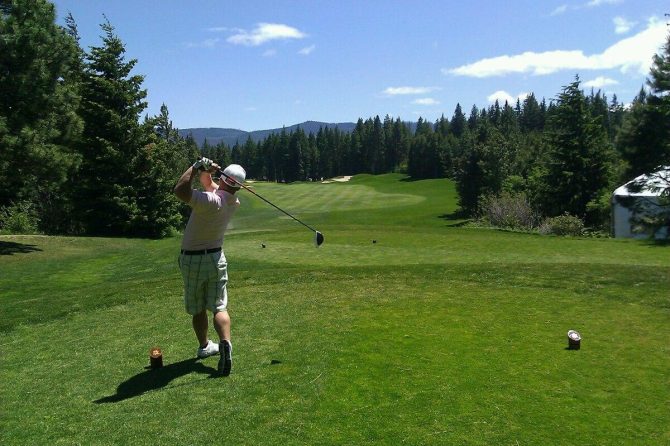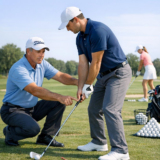
The follow-through phase of the golf swing represents a critical, yet often underexamined, component of driving task success: it is the behavioral expression of the neuromuscular and mechanical processes that culminate in ball contact and immediate post-impact stabilization. from a biomechanical viewpoint, follow-through integrates the kinematic sequencing and intersegmental coordination initiated earlier in the swing with dynamic balance demands, energy dissipation strategies, and task-specific motor control adjustments. Biomechanics, broadly defined as the application of mechanical principles to living systems, provides the theoretical and methodological foundation for analyzing these phenomena (see [1,2,3]). Motor control theory complements this perspective by explicating how the central nervous system organizes movement, adapts timing and amplitude, and utilizes sensory feedback to achieve consistent performance under variable conditions.
Empirical and theoretical work in human movement science identifies several constructs that are notably germane to the study of golf follow-through. Kinematic sequencing describes the temporal ordering of segmental rotations and linear motions that permit efficient energy transfer from the ground, through the pelvis and torso, and into the upper extremity and clubhead. Dynamic balance and postural control are necessary to absorb residual forces after impact and to preserve alignment for subsequent strokes.Sensorimotor integration, including proprioceptive and vestibular feedback, supports on-line corrections to trajectory and force output, while motor learning processes determine how these adjustments become automatized across practice and competitive contexts. Together, these constructs situate follow-through not merely as an aesthetic outcome but as a functional indicator of the quality of the entire swing motor program.
Despite its importance, the follow-through has received comparatively less focused examination than ball-strike mechanics or pre-impact kinematics, leaving open questions regarding optimal sequencing patterns for different shot types, the trade-offs between energy transfer and injury risk, and the ways in which expertise modulates follow-through structure.Leveraging quantitative biomechanical tools (motion capture,force platforms,inertial measurement units) alongside motor control paradigms (variability analyses,perturbation protocols,learning designs) can clarify the causal relations between neuromuscular control and mechanical output during follow-through,and identify measurable markers linked to precision and control.
This article synthesizes current biomechanical and motor control knowledge relevant to the golf follow-through, outlines methodological approaches for rigorous analysis, and highlights practical and theoretical implications for coaching, injury prevention, and performance enhancement. By framing follow-through as both an endpoint of mechanical energy transfer and an active phase of motor regulation, the review aims to bridge disciplinary perspectives and to guide future empirical work that can inform evidence-based practice in golf training and rehabilitation.
Kinematic Sequencing and Temporal Coordination in the Golf Follow Through
Efficient follow-through mechanics arise from a finely tuned cascade of segmental motions that convert proximal momentum into distal clubhead speed. This cascade is characterized by a consistent pattern of relative timing across segments-pelvis rotation precedes thorax rotation, which precedes upper-arm and forearm motion, culminating in club release. Such **proximal-to-distal sequencing** maximizes intersegmental power transfer and reduces stress on individual joints by distributing mechanical work across the kinetic chain.
At the neuromuscular level, the pattern depends on anticipatory activation and timed deactivation of agonist-antagonist muscle groups. Preprogrammed burst timings in core and shoulder stabilizers establish a stable base, while phasic activations in the rotator cuff, elbow extensors, and wrist flexors modulate the late acceleration and deceleration phases. The result is a coordinated balance between **feedforward control** (setting up global timing) and **feedback corrections** (fine-tuning trajectory after ball contact).
Temporal precision is critical: small shifts in relative timing (tens of milliseconds) can markedly change launch direction, spin, and dispersion. High-level performers typically show reduced within-subject variability in segmental peak velocities and consistent intersegmental delays. Instrumented analyses often report the sequence in terms of time-of-peak-angular-velocity relative to ball impact,with reproducible latencies that define an athlete’s temporal signature and predict shot consistency.
From a practical perspective, interventions for improving follow-through timing emphasize both motor learning and constraint manipulation. Common focus areas include:
- Stability drills to fix pelvic timing and reduce early lateral shift;
- Sequencing drills that exaggerate pelvis-thorax dissociation;
- Tempo training to standardize intersegmental delays; and
- Biofeedback to reinforce specific time-to-peak targets.
These strategies target both the mechanical chain and the underlying neural control schemes to produce durable timing improvements.
| Segment | Typical Time-to-Peak (ms,≈) | Functional Role |
|---|---|---|
| Pelvis | -40 to -10 | Initiates torque generation |
| Thorax | -20 to +10 | Transfers rotational energy |
| Upper arm / Forearm | 0 to +30 | Coordinates release mechanics |
| Clubhead | +10 to +50 | Final velocity peak and deceleration |
This concise timing template guides measurement and coaching: capturing relative peaks and thier variability provides objective markers for evaluating interventions and for tailoring motor-control strategies specific to individual athletes.
Proximal to Distal Energy Transfer Mechanisms and Optimization Strategies
Contemporary models conceptualize the golf swing as a coordinated proximal‑to‑distal cascade in which energy and angular momentum are generated by segments nearest the trunk and transmitted outward to the clubhead. In anatomical terms, proximal refers to structures closer to the body’s central axis (pelvis, trunk, shoulder girdle), while distal denotes segments farther from that axis (forearm, wrist, club).Efficient transfer relies on precisely timed intersegmental torques and momental coupling so that power peaks progress sequentially from hip rotation through thoracic rotation to elbow extension and wrist release.
Mechanistically,the cascade is driven by three interacting systems: (1) the lower‑body force generator that uses ground reaction forces and hip internal/external rotation to create initial angular momentum; (2) the trunk/torso segment that stores and redirects this momentum via stretch‑shortening dynamics and controlled axial rotation; and (3) the upper limb and club complex that converts transmitted rotational power into clubhead speed through distal amplification. Critical to this process are controlled intersegmental stiffness, minimal energy leaks at joints, and optimized timing of peak power production so that segmental peaks occur in a proximal→distal sequence without temporal overlap that would produce destructive interference.
Practical optimization strategies emphasize neuromuscular timing, mechanical conditioning, and technique adaptations. Recommended focal points include:
- Core and hip strength to maximize proximal torque generation and resist unwanted trunk flexion.
- Segmental dissociation drills (pelvis vs. thorax) to refine hip‑shoulder separation timing and increase stored elastic energy.
- Reactive lower‑limb training to improve ground force application and coordination of push‑off with hip rotation.
- Wrist and forearm conditioning to control release timing and reduce power loss through premature uncocking.
- Augmented feedback (video, force plates, wearable inertial sensors) to accelerate motor learning of temporal sequencing.
Empirical monitoring of proximal‑to‑distal transfer can be summarized in a concise performance matrix that guides training priorities. The table below synthesizes segmental roles, typical timing windows (relative to ball impact), and simple training targets that illustrate how modest changes in timing or power magnitude can reallocate energy more effectively down the chain.
| Segment | Primary Role | Timing Target |
|---|---|---|
| Hips | Initiate rotational torque | 100-80 ms pre‑impact |
| Thorax | Transfer and amplify elastic energy | 80-40 ms pre‑impact |
| Forearm/Wrist | Distal amplification and release | 40-0 ms pre‑impact |
From a motor control perspective, consistent proximal→distal sequencing is best achieved by progressive overload of timing tasks, explicit chunking of movement components, and use of differential learning to prevent rigid patterns that break under pressure. objective measures-EMG onset latencies, segmental angular velocity peaks, and ground reaction force timing-should be integrated into periodized interventions. Ultimately, maximizing precision and control requires coupling biomechanical optimization with task‑specific motor learning so that the kinetic chain functions as an integrated, adaptable system rather than a set of independent efforts.
Joint Kinematics and Musculotendinous Contributions to Shot Precision
Sequential joint rotations create the kinematic foundation for precise ball delivery: proximal segments accelerate frist and transfer momentum distally in a temporally coordinated chain. High-level swings exhibit a clear proximal-to-distal timing pattern-pelvic rotation leads thoracic rotation, which in turn leads humeral and forearm angular acceleration-resulting in a short, high-magnitude peak angular velocity at the wrist at impact. Variability in the onset or magnitude of any segmental rotation increases dispersion in clubface orientation at release; therefore, **temporal fidelity of intersegmental phase relationships** is a primary determinant of shot precision.
Musculotendinous units function both as torque generators and as elastic transducers that modulate energy flow through the kinetic chain. Rapid pre-stretch of the shoulder and wrist extensors promptly prior to acceleration invokes the stretch-shortening cycle, augmenting concentric force via stored elastic energy and reflexive augmentation. Conversely,controlled eccentric activity in rotator-cuff and scapular stabilizers during deceleration constrains unwanted rotation and preserves clubface alignment. The interplay between active contractile force and tendon stiffness is thus central to balancing **power production and fine control**.
Practical markers for assessing and training the neuromechanical contributors to accuracy include:
- Timing of peak angular velocities: latency between pelvis and thorax, thorax and humerus.
- Intersegmental phase lag: consistency across repeated swings.
- Joint-specific range of motion: within-subject symmetry and repeatability.
- Muscle pre-activation and co-contraction levels: measured by EMG during late backswing and early downswing.
- Rate of force development (RFD): particularly at the hips and shoulders for rapid acceleration.
| joint | Primary musculotendinous contributors | Functional contribution to precision |
|---|---|---|
| Pelvis | Gluteals,hip rotators | Initiates rotation; controls proximal timing |
| Thorax | Obliques,erector spinae | transfers torque; regulates intersegmental lag |
| Shoulder | Rotator cuff,deltoid | Refines clubface orientation; absorbs eccentric loads |
| Elbow & Wrist | Brachioradialis,wrist flexors/extensors | Fine-tunes release velocity and face angle |
From a motor-control perspective,athletes who couple selective co-contraction with precise sensory feedback achieve superior shot-to-shot consistency. Controlled deceleration strategies-emphasizing eccentric control of the shoulder and forearm-minimize late-phase variability in clubface angle and reduce injury risk. Training should therefore integrate plyometric elements to enhance tendon elastic return, neuromuscular timing drills to tighten phase relationships, and proprioceptive tasks that improve dynamic joint stability; collectively these interventions optimize the musculotendinous interplay underlying repeatable, accurate shots.
Motor Control Principles Underlying Adaptive Timing and error Correction
Adaptive timing in the golf follow-through emerges from the coordinated interplay between predictive and reactive control. Skilled performers exploit internal forward models to anticipate the dynamic consequences of segmental rotations and club-ball interaction, using an efference copy of the motor command to generate rapid sensory predictions. These predictions allow the motor system to schedule interjoint torques and muscle activations so that energy transfer between the torso, arms, and club occurs within narrow temporal windows, minimizing disruptive sensory delays and maximizing shot consistency.
Error signals are computed as mismatches between predicted and actual sensory outcomes and are used continuously to calibrate future commands. The cerebellum and associated sensorimotor networks weight multimodal feedback-proprioceptive, vestibular, and visual-according to their reliability and latency, implementing Kalman‑like filtering at the behavioral level. When prediction errors exceed threshold, corrective responses shift from subtle impedance modulation to larger corrective torques that adjust swing endpoint kinematics without destabilizing the ongoing intersegmental coordination.
Temporal sequencing is realized through hierarchical institution of motor synergies and phase relationships across segments. Low‑level spinal and brainstem circuits enforce local muscle synergies while cortical circuits adjust timing at the level of whole‑body coordination. Core adaptive timing strategies include:
- Feedforward prediction: preprogrammed timing of peak torques based on learned dynamics;
- Feedback correction: rapid, gain‑scaled responses to unexpected perturbations;
- Impedance modulation: stiffness adjustments to manage endpoint variability;
- Phase locking: preserving relative timing across segments to maintain energy flow.
| Process | Typical timescale | Primary neural locus |
|---|---|---|
| Predictive sequencing | 50-200 ms | Cerebellum, premotor cortex |
| Rapid corrective feedback | 30-120 ms | Sensorimotor cortex, brainstem |
| Impedance tuning | 100-300 ms | Basal ganglia, spinal circuits |
Translating these principles into training emphasizes structured variability and targeted feedback to shape internal models and error‑sensitive gains. Coaches should prioritize drills that preserve intersegmental timing while exposing players to controlled perturbations, and integrate augmented feedback schedules that gradually reduce external cues to encourage internal prediction.Practical interventions include:
- Variable practice with altered club mass or surface friction;
- Perturbation drills (e.g., light transient loads) to elicit adaptive corrections;
- Reduced augmented feedback to foster reliance on internal models and retention.
Dynamic Postural Stability, Center of Mass Trajectory, and Balance Training
Maintaining effective dynamic stability through the follow-through is essential for minimizing dispersion and optimizing repeatability. Stability is not a static property but a continuous process of sensorimotor regulation that resists perturbations induced by high-angular momentum and ground reaction forces. Empirical evidence supports that coordinated eccentric control of hip and trunk musculature during deceleration reduces unwanted rotational overshoot and preserves the intended clubface orientation at ball release. In practice, emphasis should be placed on the timed interplay between force absorption and postural realignment rather than maximal stiffness.
The trajectory of the body’s center of mass (COM) during and after impact provides a compact descriptor of balance strategy and energy transfer quality. A smoothly translated and slightly anteriorly displaced COM through the impact zone correlates with cleaner strike patterns and decreased lateral dispersion; conversely, excessive lateral COM excursions tend to co-occur with club path inconsistencies. Kinematic sequencing that respects proximal-to-distal timing minimizes COM perturbations and facilitates efficient dissipation of residual angular momentum into the ground via controlled lower-limb loading.
Applied training should combine neuromuscular re-education with sport-specific perturbations to improve corrective responses and anticipatory postural adjustments. Recommended modalities include targeted unilateral strength work,reactive surface training,and integrated swing drills that preserve technical constraints under instability. Practical examples include:
- Single-leg hold with micro-rotations – reinforces hip abductors and rotary stability;
- BOSU swing progressions – introduces graded destabilization during follow-through;
- Resisted deceleration steps – trains eccentric control of lower limb musculature;
- Reactive ball-catch with perturbation – enhances anticipatory postural adjustments.
These interventions should be dosed to prioritize motor control quality over volume.
Objective monitoring enhances training fidelity and individualization. Commonly used tools include force plates, inertial measurement units (IMUs), and optical motion capture; each provides complementary metrics for COM displacement, mediolateral sway, and time-to-stabilization. The table below summarizes practical metrics and provisional target ranges to guide practice sessions and short-cycle assessment.
| Metric | Practical Target | Rationale |
|---|---|---|
| Peak mediolateral COM excursion | < 6 cm | Limits lateral shot dispersion |
| Time-to-stabilization | < 1.0 s | Indicates rapid recovery post-impact |
| Vertical COM drop (impact window) | 2-4 cm | Reflects controlled weight shift |
Program design must respect specificity, progressive overload, and transfer to the full swing. Early phases should prioritize low-velocity motor control and proprioceptive acuity; intermediate phases introduce perturbations and load variability; late phases reinstate full-speed swing integration with minimal technical compromise. Practitioners should also emphasize retention strategies-distributed practice, variable contexts, and periodic re-assessment of COM metrics-to ensure that enhanced stability translates to on-course precision and control. Key coaching cues should be concise, externally focused, and coupled to measurable stability objectives.
Sensory Feedback Integration and Cognitive Strategies for Consistent Control
Effective motor control of the follow-through depends on the dynamic integration of multisensory information to continually refine the motor plan. Visual information establishes the primary spatial goal and trajectory, while proprioceptive inputs (muscle spindle and joint receptors) provide rapid limb-state estimates critical for timing the deceleration phase. The vestibular system contributes head-trunk orientation and balance maintenance,and cutaneous and pressure feedback from the hands and feet inform contact forces and weight transfer. Together these channels permit online error detection within tens to hundreds of milliseconds and support corrective adjustments that preserve shot precision.
Cognitive strategies modulate how sensory signals are weighted and used.An external attentional focus (e.g., target line) tends to promote automaticity and superior retention compared with an internal focus on joint movements. Strategy components that enhance consistency include:
- Pre-shot routines that stabilize arousal and sensory expectations
- Chunking of movement segments to simplify control of the kinetic chain
- Mental imagery to prime desired sensory outcomes and temporal structure
These cognitive tactics bias processing toward predictive (feedforward) control while preserving the capacity for rapid feedback corrections during the follow-through.
Sensorimotor contributions can be summarized to guide training and assessment.
| Modality | Primary function | Training cue |
|---|---|---|
| Vision | Trajectory planning & target alignment | Fixate landing area |
| Proprioception | Timing of deceleration & limb state | Slow-motion reps |
| vestibular | Balance & head-trunk coupling | Single-leg balance work |
Neuromuscular coordination reflects an interaction between predictive commands and rapid sensory-driven adjustments. Well-practiced follow-throughs show reduced reliance on conscious correction and increased use of stereotyped muscle synergies that distribute energy efficiently from proximal segments to the club.Training that systematically manipulates sensory availability-such as practicing with altered visual input or constrained tactile feedback-accelerates the recalibration of internal models and improves robustness across contexts. Importantly, variability in practice (task and sensory) promotes generalizable control policies that maintain consistency under real-world perturbations.
For practical implementation, combine sensor-informed drills and cognitive scaffolding into a progressive plan. Recommended emphases include:
- Objective metrics: clubface angle, tempo ratio, post-impact center-of-pressure
- Augmented feedback: intermittent video or haptic cues to shape error sensitivity
- Routine consolidation: fixed preparatory sequence to stabilize sensory expectations
Monitoring these measures while alternating blocked and variable practice phases fosters durable integration of sensory feedback and cognitive strategies, yielding more consistent follow-through control under competitive conditions.
Assessment Methods and Performance Metrics for Follow through Analysis
Contemporary evaluation of the follow-through integrates multi-modal instrumentation to quantify the kinematic, kinetic and neuromuscular components that underpin efficient energy transfer. Typical laboratory systems include optical motion-capture (≥200 Hz), inertial measurement units (IMUs) for on-course portability, force platforms for ground reaction analysis, surface electromyography (EMG) for muscle activation patterns, and high-speed video for contextual validation. Synchronization across devices and attention to sampling frequency and latency are essential to preserve temporal relationships between club, body segments and ground forces.
Measured variables are chosen to reflect sequencing, timing and stability. Commonly reported metrics include:
- Peak trunk angular velocity: timing relative to impact indicates proximal-to-distal sequencing quality.
- Clubhead tangential speed and path: measures of energy transfer and directional control.
- Ground reaction force impulse: quantifies contribution of the lower limbs to rotational torque.
- Intersegmental timing indices: relative onset and peak times for pelvis, thorax and club.
Neuromuscular assessment emphasizes temporal coordination and activation amplitude. Surface EMG analysis should report onset latency, time-to-peak, integrated EMG (iEMG) across phases, and co-contraction indices for agonist-antagonist pairs. Signal processing standards-bandpass filtering, full-wave rectification and normalization to maximal voluntary contractions or dynamic task peaks-must be documented to ensure interpretability and between-subject comparability.
Outcome and variability metrics translate biomechanical signals into performance-relevant indices and decision thresholds. Recommended summary measures include coefficient of variation for critical timing events, sequencing ratio scores (e.g., pelvis-to-thorax peak time), and shot-dispersion statistics when ball data are available. The table below provides a concise mapping of representative metrics to typical interpretive use.
| Metric | Primary Use | Interpretive Note |
|---|---|---|
| Pelvis→Thorax ΔT | Sequencing quality | Shorter ΔT often = better proximal-to-distal transfer |
| Clubhead Peak Speed | Power output | Used with dispersion to assess repeatability |
| GRF Impulse (Lead Leg) | Lower-limb contribution | Higher impulse supports pelvis rotation |
For applied testing and reporting, implement standardized protocols: consistent warm-up, defined address setup, and a minimum trial set (e.g., 10-20 swings) to estimate within-subject reliability.Report intraclass correlation coefficients (ICC) and minimal detectable change (MDC) for primary metrics. Visual summaries (phase plots, timing histograms) and a concise set of clinician-facing flags-timing asymmetry, excessive variability, and delayed muscle onset-support targeted intervention and longitudinal tracking.
Evidence Based Training Interventions and Individualized Coaching Recommendations
Accomplished interventions begin with a structured diagnostic pathway that integrates biomechanical analysis, physical performance testing, and motor control assessment. A standardized battery-comprising thoracic rotation and hip internal/external rotation range, single-leg balance, anti-rotation trunk strength, and kinematic sequencing from clubhead/segmental velocity profiles-permits objective identification of rate-limiting factors. practitioners should prioritize reliability and validity in each assessment tool and document baseline metrics to inform target-setting, periodization, and measurable return-to-swing criteria.
Interventions should layer physiological and motor learning strategies within a periodized framework that emphasizes progressive overload, specificity, and movement variance. Core components include rotational power development, eccentric control of deceleration, intermuscular coordination drills, and neuromuscular timing exercises. Example modalities include:
- Medicine ball rotational throws (power and sequencing)
- Slow eccentric deceleration drills (control of follow-through)
- Variable practice swing tasks (transfer and adaptability)
- Plyometric step rotations (rate of force development)
Individualization is achieved by mapping athlete profiles to priority interventions. The following compact decision matrix aids clinician choice by aligning common player archetypes with recommended emphases and short progressions:
| Player Profile | Primary Focus | Early Progression |
|---|---|---|
| Young power-seeker | Explosive rotational power | Med-ball throws → band resisted swings |
| mid-age technician | Sequencing & mobility | thoracic mobility → tempo drills |
| Post-injury returnee | Eccentric control & graded loading | Isometrics → slow eccentrics → reactive control |
Coaching strategies should translate biomechanical objectives into actionable cues and feedback schedules that respect motor learning principles. use predominantly external focus cues for performance transfer, intermittent augmented feedback to avoid dependency, and deliberate variability to enhance robustness of the follow-through. Integrate technology (IMUs, radar, force plates, high-speed video) not as a crutch but to quantify sequencing (pelvis → thorax → arm → club) and to set evidence-based progression thresholds for load, velocity, and symmetry.
Monitoring and adaptation are essential: establish objective progression criteria (e.g., 10-15% increase in segmental peak angular velocity without loss of control, pain-free deceleration under graded loads) and schedule reassessments every 4-8 weeks aligned with mesocycles. Injury-risk mitigation requires attention to asymmetries, eccentric capacity, and fatigue management; adjust volume and intensity based on both performance markers and subjective recovery metrics. Ultimately, the evidence supports a cyclic interplay of assessment, targeted intervention, and iterative coaching-each individualized to the athlete’s biomechanics, training age, and competitive demands.
Q&A
Below is an academic-style question-and-answer (Q&A) set suitable for an article on “Biomechanics and Motor Control of Golf Follow-Through.” Each Q is followed by a concise, evidence-informed A written in a professional tone. Selected sources from general biomechanics literature are listed at the end for further reading.
Q1: What is meant by “follow-through” in the context of the golf swing,and why is it crucial?
A1: The follow-through refers to the movement of the golfer and the club after ball impact through to the completion of the swing. It is indeed not merely a cosmetic finish but reflects the quality of kinematic sequencing, energy transfer, and motor control enacted during the downswing and impact phases. A controlled follow-through supports shot precision, consistent clubface orientation at impact, effective deceleration of the club, and dynamic balance, and it also provides diagnostic information for coaches and biomechanists about technical flaws and injury risk.
Q2: Which biomechanical principles most directly govern an effective follow-through?
A2: Key principles include proximal-to-distal sequencing (timed activation and rotation from pelvis → trunk → upper limb → club), conservation and efficient transfer of angular momentum, controlled energy dissipation (eccentric muscle actions during deceleration), maintaining center-of-mass (COM) control and base-of-support relationships for dynamic balance, and optimal joint kinematics (hip and trunk rotation, shoulder and wrist alignment). These collectively determine clubhead trajectory, face orientation, and postural stability through the finish.
Q3: How does kinematic sequencing during the swing affect follow-through outcomes?
A3: Proper sequencing-often described as a proximal-to-distal activation pattern-generates a wave of angular velocity that culminates in high clubhead speed at impact and a predictable deceleration profile afterward. If sequencing is mistimed (e.g.,early arm casting or late hip rotation),energy transfer becomes less efficient,leading to altered clubhead speed,inconsistent impact conditions,compensatory motions during follow-through,and increased mechanical load on specific joints.
Q4: What motor control processes underlie coordination of the follow-through?
A4: The follow-through is governed by a combination of feedforward motor planning (anticipatory setting of joint torques and segmental timing based on internal models) and feedback-based corrections (vision, proprioception, vestibular input) that adjust posture and limb motion in real time. Skilled golfers develop refined internal models that predict the dynamics of the swing and permit robust follow-throughs under varying task constraints and perturbations.
Q5: Which measurement modalities are used to study follow-through biomechanics and motor control?
A5: Common methods include three-dimensional motion capture for kinematic analysis, force plates for ground reaction forces and center-of-pressure tracking, electromyography (EMG) for muscle activation patterns, instrumented clubs or launch monitors for clubhead kinematics and ball outcomes, and high-speed videography for qualitative assessment. Combinations of these modalities facilitate inverse dynamics and energy flow analyses.
Q6: How does follow-through relate to shot precision and control?
A6: Follow-through quality is correlated with the consistency of kinematic patterns through impact. A balanced, repeatable finish often indicates stable clubface control and consistent impact parameters (speed, angle of attack, swing plane), which in turn improve dispersion and accuracy. Conversely, abrupt or compensatory follow-through motions typically signal variability introduced before impact, reducing precision.
Q7: What role does dynamic balance play in follow-through effectiveness?
A7: Dynamic balance-the capacity to maintain or regain postural stability while the body is in motion-enables golfers to sustain desired swing mechanics through impact and into the finish. Effective weight transfer,appropriate foot-ground force patterns,and timely redistribution of COM reduce compensatory motions and allow more reliable kinematic sequencing,thereby supporting control and repeatability.
Q8: What are common biomechanical faults in the follow-through and their likely mechanical consequences?
A8: Typical faults include early extension (hip-thrusting), excessive lateral sway, collapse of the trailing leg, premature deceleration of the arms, and over-rotation of the spine. Mechanically, these faults can degrade energy transfer, alter clubface orientation at impact, increase joint loading (notably lumbar spine, wrist, elbow), and contribute to increased shot dispersion or injury risk.
Q9: How does follow-through training differ between novices and skilled golfers?
A9: Novices frequently enough rely heavily on feedback-driven corrections, show higher between-swing variability, and exhibit less efficient sequencing; training focuses on simplifying task constraints, building stable motor patterns, and reinforcing proximal-to-distal timing. Skilled golfers have more robust internal models and exploit subtle sensory cues; training emphasizes refined adjustments, variability management, and context-specific adaptability (e.g., different lies, wind).Progression should consider motor learning principles: blocked → variable practice, attentional focus instructions, and feedback scheduling that fosters retention and transfer.
Q10: which drills or interventions specifically target follow-through biomechanics and motor control?
A10: Effective drills include: (1) sequencing drills that isolate pelvis-to-trunk rotation (e.g., slow-motion swings with segmental focus), (2) deceleration drills that emphasize controlled release and muscle braking (e.g., exaggerated finish holds), (3) balance and proprioception exercises (single-leg stability, perturbation tasks), (4) tempo and rhythm training with metronomes, and (5) constraint-led practice (manipulating club length, stance width, or target constraints) to shape desirable movement patterns. biofeedback (video,force-plate,EMG) can expedite skill acquisition when used judiciously.
Q11: What are the injury implications associated with poor follow-through mechanics?
A11: Inadequate follow-through mechanics can result in abnormal loading patterns: increased shear and compressive forces in the lumbar spine (early extension), elevated valgus/varus stresses at the elbow, and repetitive overload at the wrist and shoulder. Chronic improper deceleration strategies (insufficient eccentric control) may predispose golfers to tendinopathies and lower back pain. Addressing technique and conditioning (core, hip mobility, eccentric strength) mitigates these risks.
Q12: How can coaches and clinicians objectively monitor follow-through improvements?
A12: Objective monitoring can involve pre- and post-intervention assessments using 3D kinematic metrics (pelvis and trunk rotation angles/timing), clubhead speed and face-angle variability (launch monitor data), ground reaction force patterns (force plate-derived COM and pressure maps), and EMG markers of agonist/antagonist timing. Standardized drills and reliable outcome metrics enable assessment of retention and transfer to on-course performance.
Q13: What are the primary research gaps and future directions in follow-through biomechanics and motor control?
A13: Key gaps include: (1) causal linkage between specific follow-through kinematics and on-course shot dispersion across playing levels, (2) neurophysiological characterization of internal model formation for high-speed, ballistic golf actions, (3) longitudinal studies on how practice structure shapes robust follow-through adaptations, and (4) individualized models that integrate anatomy, neuromuscular capacity, and preferred movement solutions.Future work should emphasize ecological validity (on-course measurement), multimodal data fusion, and personalized intervention frameworks.Q14: How do general biomechanics principles from broader sports science inform golf follow-through research?
A14: Foundational biomechanics concepts-mechanical principles applied to living systems-provide the theoretical scaffolding for understanding force production, segmental interaction, and energy transfer in golf.The translational approaches used in sports biomechanics (movement analysis, modeling, injury-risk profiling) are directly applicable to golf, enabling evidence-based coaching and rehabilitation strategies that optimize performance while minimizing injury.
Selected further reading
– General overview of biomechanics in sports and its applications to athlete technique and injury prevention (Mass General Brigham).
– Ancient and theoretical foundations of biomechanics as a discipline (open-access review).
– Introductory resources on biomechanics and human movement (Wikipedia; Verywell Fit).
If you would like,I can: (a) expand any Q into a longer review with figures and example metrics; (b) produce coach-oriented cues and a 4-week follow-through training plan; or (c) draft an experimental protocol to measure follow-through kinematics and motor-control variables. Which would be most useful?
To Wrap It Up
the follow-through of the golf swing represents the terminal expression of a coordinated, multi-segmental motor task in which kinematic sequencing, efficient intersegmental energy transfer, and dynamic postural control converge to determine shot precision and consistency. Biomechanical analysis clarifies how proximal-to-distal activation patterns,segmental angular velocities,and ground-reaction forces interact with sensorimotor processes-anticipatory postural adjustments,timing of muscle activation,and feedback-driven corrections-to stabilize ball-club interactions and distribute loads safely through the musculoskeletal system. Recognizing the follow-through as both an outcome and a regulator of the preceding downswing emphasizes its diagnostic value: deviations in follow-through often reveal upstream faults in timing, alignment, or force application.
From an applied perspective, integrating biomechanical measurement with motor-learning principles supports more effective, individualized coaching. Objective metrics (e.g., pelvis-to-shoulder sequencing, wrist-cocking/wrist-release timing, center-of-pressure excursions) can guide targeted interventions that balance constraints-led variability with the need for reproducible kinematics.Training programs that combine staged perceptual-motor challenges, augmented feedback, and progressive strength-power conditioning are likely to yield durable improvements in both performance and injury resilience.
Future research should continue to bridge laboratory-based motion analysis with ecologically valid, on-course assessment-leveraging wearable sensors, machine learning, and longitudinal designs to quantify how practice structure, fatigue, and equipment interact with neuromechanical control of the follow-through. Greater emphasis on inter-individual differences, age- and pathology-related adaptations, and dose-response relationships for specific training modalities will refine recommendations for clinicians and coaches.
Ultimately, a principled understanding of the biomechanics and motor control of the golf follow-through enhances not only the precision and control of individual shots but also the long-term development and musculoskeletal health of the player. Continued interdisciplinary collaboration among biomechanists, motor-control scientists, strength and conditioning specialists, and golf coaches will be essential to translate experimental insights into practical, evidence-based improvements in performance.