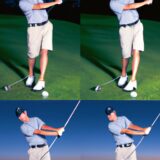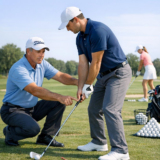
The biomechanical analysis of the golf swing follow-through offers critical insights into how coordinated neuromuscular actions and mechanical interactions shape shot control, consistency, and injury risk. Drawing on principles from biomechanics-the discipline that applies mechanics to understand living movement (see foundational perspectives from major biomechanics programs)-this study frames the follow-through not as a passive aftermath of ball impact but as an active, regulated phase that reflects and influences the kinematic sequencing, kinetic transfers, and muscular strategies employed throughout the swing.Key elements addressed include temporal joint sequencing from lower limbs through the torso to the upper extremity, patterns of momentum transfer and angular impulse across body segments, and mechanisms of controlled deceleration that dissipate residual energy while preserving clubface orientation. Quantitative assessment of these elements via kinematic (segmental angles and angular velocities), kinetic (ground reaction forces and joint moments), and neuromuscular (electromyographic) measures enables objective linkage between specific follow-through characteristics and outcome variables such as shot dispersion, consistency under varying conditions, and markers of overuse or acute injury risk.
This article synthesizes current biomechanical theory and empirical findings to characterize the functional role of the follow-through in motor control and performance, outlines methodological approaches for measurement and analysis, and discusses practical implications for coaching interventions, equipment selection, and injury-prevention strategies. By situating follow-through control within an integrated mechanical and physiological framework, the analysis aims to inform evidence-based practices that enhance accuracy and reliability while mitigating biomechanical stressors inherent to repetitive golf performance.
principles of Kinetic Chain Sequencing for Follow-Through Control
Kinetic sequencing in the golf swing is a coordinated spatiotemporal pattern that transfers mechanical energy from the ground through the body to the clubhead. In biomechanical terms, this process depends on intersegmental torque generation, interjoint coordination, and appropriate timing of segmental peak velocities.The term itself aligns with the general definition of kinetic as “pertaining to motion,” which underscores that control of the follow-through is not an isolated endpoint but the emergent product of prior motion dynamics. Quantifying sequencing requires kinematic markers (e.g.,angular velocity peaks) and kinetic measures (e.g., ground reaction force impulses) to relate motion timing to shot outcome.
Effective energy transfer follows a systematic proximal-to-distal cascade: the lower limbs and pelvis initiate,the trunk amplifies angular momentum,the arms refine direction and speed,and the wrists/clubhead finalize release. Key determinants of reliable follow-through control include:
- Pelvic initiation – timed weight shift and hip rotation to create an efficient base.
- trunk sequencing - controlled torso rotation that modulates intersegmental torque.
- Arm-shoulder linkage – maintenance of lag and smooth decoupling to manage club-face orientation.
- Wrist release – precise timing of unloading that sets ball speed and spin while avoiding early deceleration.
Neuromuscular control is central to achieving repeatable follow-through mechanics. Motor programs must coordinate feedforward activation to generate the cascade and feedback-driven adjustments to correct errors mid-swing. The following compact table summarizes representative segment roles and approximate timing windows used in motion analysis (values are illustrative relative to impact = 0 ms):
| Segment | Primary action | Timing (relative to impact) |
|---|---|---|
| Hips | Peak rotation velocity | -120 to -60 ms |
| Thorax | Torque transfer | -80 to -20 ms |
| Lead Arm | Direction & lag maintenance | -40 to +20 ms |
| wrists/Club | Release & deceleration control | -10 to +80 ms |
Translating sequencing principles into training emphasizes error-tolerant, specificity-driven practice aimed at stabilizing timing relationships rather then forcing rigid positions. Practical prescriptions include constraint-led drills that alter base of support or ball location to encourage adaptive sequencing, tempo drills to regulate intersegmental timing, and progressive overload of rotational power with concurrent accuracy tasks. Recommended practice elements: variable practice, augmented feedback (e.g., high-speed video or wearable sensors), and task-specific strength conditioning that prioritizes rotational power and deceleration capacity to maintain controlled, repeatable follow-throughs.
Optimizing Joint Coordination and Timing across Hips, Shoulders, and Wrists
Effective follow-through control depends on a reproducible proximal-to-distal kinematic cascade in which the pelvis initiates angular acceleration, the thorax modulates and redirects that energy, and the wrists fine-tune clubhead trajectory. Biomechanically, this requires precise coordination of intersegmental **relative phase**, minimization of undesirable degrees of freedom at key instants (especially at impact), and timely muscle activation patterns that preserve momentum while allowing subtle corrections.Variability analysis shows that skilled performers compress variability into distal segments (wrists/club) while maintaining stable proximal timing, thereby increasing shot consistency without sacrificing adaptability.
Temporal coordination can be operationalized as discrete timing windows for each joint cluster; training shoudl target these windows rather than isolated strength gains. Typical sequencing priorities include:
- Pelvic rotation onset: early downswing (trigger for energy transfer)
- Thoracic deceleration/redirection: mid-downswing (modulates club path)
- Wrist release/un-cocking: late downswing to impact (fine control of face orientation)
Focusing on these intervals emphasizes neuromuscular timing and intermuscular co-contraction patterns that stabilize joints without impeding the necessary elastic recoil of connective tissue.
Below is a compact reference of typical joint behavior across swing phases useful for coaching cues and biofeedback calibration. Table styling follows common WordPress block conventions for easy integration into coaching posts and dashboards.
| Phase | Pelvis | Thorax | Wrists |
|---|---|---|---|
| Downswing (init.) | Rapid internal rotation onset | Delayed rotation begins | maintained hinge |
| Pre-impact | Peak angular velocity | Transmits rotational velocity | Progressive release |
| Early follow-through | Deceleration via ground force | Controlled dissipation | Complete extension/decoupling |
Practical interventions to improve timing and coordination should emphasize neuromuscular control, not merely maximal strength. Suggested strategies include tempo-manipulation drills, augmented feedback (inertial sensors or coach-delivered auditory cues), and variability-based practice to enhance robust control under different constraints. Remember that to optimize in the biomechanical sense is to make the timing and coordination as effective and repeatable as possible; therefore pair motor learning principles with specific joint-targeted exercises (rotational mobility for the pelvis, controlled eccentric control for the thorax, and rapid but controlled wrist release drills) to translate improved sequencing into on-course control.
Momentum Transfer Management from Impact to Finish for Accuracy and Consistency
Effective energy routing after ball impact depends on temporally coordinated joint sequencing and controlled dissipation of kinetic energy. the proximal-to-distal cascade-starting from the hips, through torso rotation, then shoulder and forearm, and finally the wrist and clubhead-ensures that linear and angular momentum are transferred to the ball rather than dissipated in undesired segments. Ground reaction forces (GRF) provide the initial impulse that the lower body converts into rotational momentum; failure to manage the subsequent distal release results in excessive variability in clubface orientation at the finish. Quantifying segmental angular velocities and intersegmental timing is thus essential for diagnosing misrouted momentum pathways that compromise accuracy.
Practically, precision is improved when golfers adopt cues and constraints that emphasize both transfer and attenuation of momentum. Key actionable elements include:
- Timed lower-body lead: ensure hip clearance precedes shoulder rotation by 30-50 ms to maximize orderly energy flow.
- Controlled wrist release: allow peak wrist angular velocity immediately prior to impact, followed by active deceleration to stabilize face angle.
- Balanced follow-through: use a progressive reduction in torso rotation speed to avoid late-stage lateral forces that open or close the face.
Objective measurement supports consistent management of post-impact dynamics. The table below summarizes concise targets that can be monitored with wearable inertial sensors or high-speed video, aiding both performance tuning and injury risk mitigation.
| phase | Target | Typical metric |
|---|---|---|
| Impact ±20 ms | Stable clubface within ±2° | Clubface variance (°) |
| Immediate finish | Progressive angular deceleration | Torso ω reduction (rad/s²) |
| Full follow-through | Centered COM over support foot | Medio-lateral COM shift (cm) |
Training interventions should therefore couple technical drills with sensory feedback that enforces orderly transfer and measured deceleration. Examples include slow-motion impact sequencing, resisted rotation drills that emphasize hip-to-shoulder timing, and immediate post-impact stability holds to train eccentric control of the forearm and wrist. From an injury-prevention standpoint,promoting graded eccentric loading of distal segments and avoiding abrupt termination of rotational momentum reduces shear stresses on the lumbar spine and wrist. In sum, precise management of energy transfer from contact through the finish is a primary determinant of repeatable accuracy and long-term musculoskeletal health.
Controlled Deceleration Strategies to Minimize Injury and Improve Shot Stability
The follow-through phase functions as the primary window for dissipating residual club and segmental momentum while preserving shot stability. Biomechanically, effective braking relies on timed eccentric actions in the distal musculature (forearm extensors/pronators) followed by coordinated deceleration through proximal segments (elbow, shoulder, trunk, hips). This sequential absorption reduces impulsive loads at any single joint and facilitates controlled redistribution of kinetic energy into the golfer’s center of mass. Emphasis on **eccentric control**, **smooth segmental sequencing**, and a maintained post-impact line are central to minimizing perturbations that degrade accuracy.
Practical strategies emphasize neuromuscular timing and motor control drills that teach the body to dissipate clubhead energy progressively rather than abruptly. Key technical elements include a softening of the grip after impact, active eccentric engagement of the lead forearm to manage wrist release, and deceleration through the torso via controlled hip braking. Useful training modalities include:
- Slow-motion reps to ingrain proximal-to-distal braking order.
- Impact fade/hold drills to practice maintaining balance while dissipating energy.
- Eccentric-resisted swings (band-assisted) to increase braking capacity of the forearm and core.
These interventions support repeatable follow-through mechanics that stabilize launch conditions and reduce shot variability.
Reducing injury risk is an outcome of attenuating peak joint loads and limiting high-rate torque impulses. Controlled deceleration decreases lumbar shear peaks and shoulder impingement risk by avoiding abrupt, excessive rotational deceleration at the spine and scapulothoracic complex. The following table summarizes common risk loci and targeted deceleration strategies using concise, coach-applicable recommendations.
| Risk Area | Deceleration Strategy |
|---|---|
| Low back (lumbar) | Core bracing + hip-dominant finish |
| Lead shoulder | Eccentric rotator cuff strengthening |
| lead wrist/forearm | Forearm eccentric drills, grip modulation |
Long-term training should integrate tempo control, eccentric strength programming, and proprioceptive feedback to consolidate safer, more stable finishes. Lastly, for clarity in coaching documentation, note that the correct orthography is **”controlled”** (double L + ed), reflecting standard English usage and reinforcing precise communication in training programs.
Role of Trunk rotation and Pelvic Stabilization in Maintaining Swing Plane
Effective control of the downswing and follow-through depends on precise kinematic sequencing between the torso and pelvis. Controlled angular displacement of the thorax relative to the pelvis-commonly described as the trunk-to-pelvis separation or “X-factor”-facilitates energy storage and directional stability. When the torso rotates too early or the pelvis collapses into excessive internal rotation, the aerodynamic and mechanical relationship of the club to the intended path is disrupted, producing deviations from the intended plane. Empirical analyses indicate that maintaining a graded increase in trunk rotational velocity, timed to peak slightly after pelvic rotation, supports a stable club path through impact and into the finish.
Pelvic stabilization provides the foundational support that allows the trunk to rotate on a controlled axis. A stable lumbopelvic complex permits transfer of ground reaction forces into rotational momentum while minimizing unwanted lateral tilt and excessive vertical displacement. Neuromuscular engagement of the deep core (transversus abdominis, multifidus), hip stabilizers (gluteus medius/minimus), and external rotators creates a stiff-but-compliant platform that resists pathological shear and preserves the desired transverse plane orientation. In biomechanical terms, pelvic bracing reduces degrees of freedom that otherwise lead to off-plane excursions and inconsistent impact geometry.
Coordination of these segments is trainable and should be targeted through motor control interventions that emphasize timing,amplitude,and proprioceptive feedback. Key training elements include:
- Temporal sequencing drills that exaggerate lower-limb initiation followed by delayed torso rotation;
- Isometric pelvic holds performed while executing slow, full-range trunk rotations to enhance lumbopelvic stiffness;
- Reactive perturbation exercises to improve reflexive stabilization during dynamic swings;
- Video/motion-capture feedback to quantify rotational onset and peak velocities for corrective cueing.
These approaches hone the neuromuscular patterns necessary for repeatable alignment with the desired swing geometry.
| Parameter | Target | Primary Musculature |
|---|---|---|
| Pelvic stability | Minimize lateral tilt ± maintain transverse axis | Glute medius, core stabilizers |
| Trunk rotation timing | Peak rotation slightly after pelvis | Obliques, erector spinae |
| Swing-plane maintenance | Consistent inclination and path through impact | Integrated kinetic chain |
quantitative assessment (e.g., inertial sensors, 3D kinematics) can guide progressive overload and ensure that rotational magnitudes and stabilization strategies translate into measurable improvements in shot precision and repeatability.
Neuromuscular Training Protocols and Targeted Drills to Reinforce Follow-Through Mechanics
The training architecture prioritizes **task-specific motor learning**, progressive neuromuscular loading, and retention through variability. Protocols should be built around three principles: (1) reproducing the kinematic sequence of pelvis → thorax → arms → club during acceleration and deceleration phases,(2) incremental challenge to sensorimotor integration (balance,vestibular input,proprioception),and (3) scheduled measurement of movement consistency. Emphasize short,high‑quality repetitions with clear performance targets (e.g., clubface orientation within set degrees at impact and follow‑through posture held for 1-2 seconds) rather than high volume practice that accrues fatigue and degrades coordination.
targeted drills isolate and reinforce the neuromuscular components that underpin a controlled finish. Recommended drills include:
- Segmental Sequencing Drill: slow‑motion swings with pauses at key checkpoints (mid‑down, impact, release) to reinforce intersegment timing and feedforward control.
- Reactive Band Deceleration: resisted swings with a band anchored anterior to the golfer to teach eccentric control of forearms and shoulders through follow‑through.
- Medicine‑Ball Rotation Throws: low‑velocity rotational throws emphasizing trunk dissipation of energy and coordinated shoulder deceleration.
- Single‑Leg Finish Holds: balance challenge that increases proprioceptive demand and refines lower‑limb contribution to post‑impact stabilization.
Each drill includes objective cues (e.g., “rotate hips to 45° before shoulder turnover”) and progressive constraints (tempo, resistance, sensory occlusion).
Objective feedback and monitoring accelerate adaptation by making neuromuscular changes visible. Employ a multimodal assessment battery combining kinematic sensors, surface EMG when available, inertial measurement units (IMUs), and high‑speed video for timing analysis. the simple metric set below facilitates regular tracking and clinical escalation if atypical neuromuscular patterns appear.
| metric | Tool | Target |
|---|---|---|
| Intersegment timing (pelvis→thorax) | IMU / video | Consistent latency ±10ms |
| Eccentric forearm activation | sEMG | Repeatable activation pattern across 8/10 trials |
| Post‑impact stability | Balance mat / single‑leg hold | >1.5 s stable finish |
Program design adopts a phased progression: (A) acquisition (low load, high sensory feedback, 2-3 sessions/week), (B) consolidation (increased speed and resistance, integration with on‑range shots, 3-4 sessions/week), and (C) transfer (on‑course variability, simulated pressure). Prescribe sets and reps that prioritize neuromuscular quality (e.g., 3-5 sets of 6-8 controlled reps per drill) with scheduled retention checks at 2 and 6 weeks. For athletes with known neuromuscular conditions or atypical transmission findings, coordinate with medical specialists and adjust intensity; objective diagnostics (motor‑point mapping, EMG) may be required to individualize progression while safeguarding neuromuscular integrity.
Assessment framework and practical Recommendations for Individualized Follow-Through Optimization
The assessment framework adopts a multi-tiered, ecological approach that links outcome variability to segmental mechanics and neuromuscular control. At the outcome level, quantify shot dispersion, clubface angle consistency and carry-distance variability using launch monitor data. At the kinematic level, evaluate proximal-to-distal sequencing (pelvis → thorax → arms → club), intersegmental timing, and peak angular velocities via high-speed video or inertial measurement units (IMUs). At the kinetic and neuromuscular level, use force-plate or plantar pressure metrics to characterize lateral center-of-pressure transfer and ground reaction force vectors, and surface electromyography (EMG) to index agonist-antagonist timing around impact and deceleration phases. Emphasize repeatability metrics (standard deviation of impact face angle; within-session coefficient of variation) as primary comparators for interventions.
A standardized testing protocol improves diagnostic specificity: record a warm-up sequence, then capture repeated swings at submaximal (control-focused), contest-intensity, and tempo-modified conditions. For each condition capture: (1) three-dimensional pelvis and thorax angular velocity profiles, (2) time-to-peak angular velocity for each segment to determine sequencing separations, and (3) ground reaction force onset and peak timing relative to lead-foot strike. Use qualitative markers-such as a clear proximal-to-distal velocity cascade and active deceleration of the club by forearm musculature-to identify desirable patterns. When lab instrumentation is unavailable, slow-motion video (≥240 fps) combined with pressure-sensing insoles and a simple manual dynamometer for rotation strength provide practical surrogates.
Interventions should be individualized by primary limiting factor and progress along motor-learning principles. Typical, evidence-informed options include:
- Mobility-focused work (hip internal rotation and thoracic rotation mobilizations) for players constrained in pelvis-thorax separation.
- Stability and timing drills (step-and-swing, split-stance tempo work) to restore controlled weight transfer and proximal-to-distal timing.
- Force-development and deceleration training (med-ball rotational throws; impact-bag deceleration) to optimize force transfer and controlled clubface arrest.
- Neuromuscular cue and feedback (metronome tempo,visual kinematic feedback,augmented feedback sessions) to reduce undesirable variability and foster reproducible motor patterns.
Prescribe load, complexity and feedback density according to the athlete’s current variability: higher variability calls for reduced complexity, more prescriptive feedback and slower tempo; lower variability allows for contextualized, variable-practice stimuli.
Monitor progress with objective re-testing every 4-8 weeks and use predefined decision rules to advance or modify the program (improved repeatability,reduced impact face dispersion,restored proximal-to-distal sequencing).Use short tables in the athlete record to align profile to prioritized interventions, for example:
| profile | Primary Limitation | Recommended Focus |
|---|---|---|
| Restricted hip/torso rotation | Limited separation | Mobility + staged swing drills |
| Poor sequencing | Simultaneous segment peaks | Timing drills + video feedback |
| Overactive upper body | Premature deceleration | Deceleration training + strength balance |
Establish specific, measurable targets for each cycle (e.g., decreased standard deviation of impact angle; improved ordering of peak angular velocity events) and prioritize retention through progressively challenging, context-rich practice that mirrors on-course demands.
Q&A
Q: What is meant by “biomechanics of the golf swing follow-through” and why is it crucial for control?
A: Biomechanics applies mechanical principles to biological systems to explain movement (see general definition in Britannica [1]). In the context of golf, the biomechanics of the follow-through refers to the kinematic (motion) and kinetic (force and torque) events that occur after ball impact-how joints continue to sequence, how momentum is transferred away from the clubhead, and how muscles eccentrically decelerate body segments. Follow-through mechanics influence clubface orientation at and immediately after impact, energy dissipation, shot dispersion, repeatability of the swing, and distribution of loads across tissues. Proper follow-through control therefore contributes directly to shot accuracy, consistency, and injury prevention.
Q: What are the principal biomechanical objectives of an effective follow-through?
A: The follow-through has three primary biomechanical objectives:
– Safe and efficient dissipation of the kinetic energy generated during the downswing (controlled deceleration).
– Maintenance of appropriate clubface and club-path relationships through and past impact to stabilize ball flight and reduce dispersion.
– Completion of a proximal-to-distal joint sequencing pattern that preserves movement timing and repeatability for consistency while minimizing excessive joint stress.
Q: What is the typical joint sequencing (proximal-to-distal) through impact and into the follow-through?
A: The conventional sequence begins with proximal segments (hips/pelvis) rotating toward the target, followed by trunk (thorax), shoulders, upper arm, forearm, and finally the wrists and club. After impact, this sequence continues as distal segments decelerate under eccentric control: wrists and forearms slow first, then the shoulders and trunk; hips may continue to rotate. Maintaining this sequencing through the follow-through preserves timing and momentum transfer and reduces abrupt, injurious force spikes.
Q: How does momentum transfer during follow-through influence shot control?
A: Momentum generated during the downswing must be redirected and dissipated after impact. A smooth transfer-where the body rotates and repositions so that the club’s energy is not abruptly resisted-helps keep the clubface stable through impact. If deceleration is poorly timed (e.g., freezing the hands or blocking hip rotation), the club path and face angle can change at or after impact, increasing shot dispersion. Thus,controlled continuation of rotational momentum into a balanced finish is associated with greater shot consistency.
Q: What muscular actions are responsible for controlled deceleration in the follow-through?
A: controlled deceleration is primarily achieved by eccentric contractions of:
– Forearm and wrist extensors/flexors (controlling wrist release and clubhead deceleration).
– Rotator cuff muscles and posterior shoulder musculature (decelerating humeral internal rotation and protecting the glenohumeral joint).
– Core musculature and paraspinals (eccentrically controlling trunk rotation and extension).- Hip and gluteal muscles (controlling pelvic rotation and stabilizing lower back).
These coordinated eccentric actions dissipate energy gradually and protect passive structures (ligaments, labrum, discs).
Q: Which joints and tissues are most at risk if follow-through control is poor?
A: Commonly affected areas include:
– Lumbar spine (excessive shear and compressive loads from abrupt hip/trunk stopping).
– Glenohumeral joint and rotator cuff (overload during deceleration).
– Medial epicondyle of the elbow (“golfer’s elbow”) from repetitive eccentric loading of forearm flexors.
– Wrist and hand (overuse or acute overload during impact with sudden deceleration).Poor follow-through timing or abrupt “blocking” movements increase risk to these tissues.
Q: How does follow-through relate to clubface control and ball flight?
A: Clubface orientation at impact is the main determinant of initial ball direction; though,clubface and path are influenced by pre-impact wrist release and any post-impact forces that alter face angle close to impact. A smooth follow-through preserves the pre-impact dynamics (path, face angle, speed), whereas an abrupt or distorted follow-through can indicate or cause inconsistencies just before or at impact, increasing shot dispersion and variability in spin characteristics.
Q: What objective measures are used in research and coaching to assess follow-through mechanics?
A: Common measurement tools include:
– 3D motion capture (joint angles, angular velocities, sequencing).- High-speed video (temporal resolution of impact and early follow-through).
– Force plates (ground reaction forces and timing of weight transfer).
– Electromyography (EMG) for muscle activation and eccentric control patterns.
– Inertial measurement units (IMUs) for on-course or practice monitoring.
These allow quantification of sequencing, deceleration rates, joint loading, and symmetry.
Q: What training interventions improve follow-through control and reduce injury risk?
A: Effective interventions combine technical, neuromuscular, and conditioning elements:
– Technique drills: slow-motion swings emphasizing smooth acceleration and balanced finish; “hold the finish” drills; targeted path and face control drills.
– Eccentric strength training: rotator cuff eccentrics,wrist flexor/extensor eccentrics,Nordic-style trunk eccentrics.
– Core and hip stability: anti-rotation and rotational strength exercises, single-leg balance tasks.
– Plyometric/ballistics with controlled deceleration: medicine ball rotational throws with soft catch or eccentric landing.
– Mobility/versatility work: thoracic rotation and hip mobility to allow safe rotation and reduce compensatory lumbar motion.
Progression, individualization, and load management are critical.
Q: what coaching cues aid a golfer in achieving a controlled follow-through?
A: Useful, evidence-aligned cues include:
– “Rotate through the ball and finish facing the target” (promotes continued hip and trunk rotation).
– “Soft hands through the hit” (reduces abrupt wrist blocking).
– “Let the club swing you” or “feel the release, not the stop” (encourages momentum transfer).
– “Finish balanced” (targets stability and load distribution).
Cues should be individualized for the player’s physiology and swing model.
Q: How do individual differences (flexibility, strength, swing style) affect ideal follow-through mechanics?
A: individual anatomy, flexibility, strength, and preferred swing plane require tailored follow-through patterns. For example:
– Limited thoracic rotation may force compensatory lumbar rotation-raising injury risk if not addressed.
– stronger eccentrics and better hip mobility allow continued, full rotation and softer deceleration.
– Different swing philosophies (one-plane vs two-plane) alter the kinematic path but still rely on the same principles of momentum transfer and controlled deceleration.
Coaching must adapt technical solutions and conditioning programs to individual capacity.
Q: Are there trade-offs between maximal clubhead speed and follow-through control?
A: Yes. Maximizing clubhead speed increases kinetic energy and thus the demand for controlled deceleration. Without commensurate eccentric strength and technique, higher speeds can produce greater variability and higher injury risk. Effective training focuses on increasing speed while concurrently enhancing deceleration capability (neuromuscular control and tissue resilience).
Q: What are reliable assessment markers for a “good” follow-through in applied settings?
A: Practical markers include:
- Smooth continuation of pelvic and thoracic rotation post-impact.
– No abrupt cessation of wrist/hand motion immediately after impact.
– Balanced finish: stable posture, weight predominantly on lead foot.
– Consistent clubface alignment relative to target at impact (measured via launch monitor).
– Absence of acute pain or compensatory motion during or after swings.
These are observable in field settings and can be validated with measurement tools.
Q: How does fatigue influence follow-through control and injury risk?
A: Fatigue degrades neuromuscular control and eccentric strength, often leading to altered sequencing, earlier or excessive recruitment of passive structures, and compensatory movements. Accumulated fatigue (session or season) increases variability in follow-through mechanics and raises injury likelihood, highlighting the importance of conditioning, recovery, and monitoring of training loads.
Q: What gaps exist in current research on follow-through biomechanics?
A: Noted research gaps include:
– Longitudinal studies linking specific follow-through metrics to injury incidence.
– Dose-response relationships for eccentric training interventions specific to golfers.
– Ecologically valid on-course measurements capturing fatigue and real-shot variability.
– Individualized normative data across demographics (age, sex, handicap level) to guide personalized coaching.
Addressing these gaps would improve evidence-based recommendations.
Q: Practical summary: what should a golfer or coach prioritize to optimize follow-through for control?
A: Priorities:
– Maintain proximal-to-distal sequencing through impact into the follow-through.- Train eccentric strength in forearm, shoulder, and core musculature.
- Emphasize drills that promote smooth momentum transfer and a balanced finish.- Improve hip and thoracic mobility to allow safe, full rotation.
– Monitor fatigue and progress conditioning and technique gradually.
Applying these principles enhances shot consistency and lowers injury risk.References and further reading:
– Britannica: “Biomechanics” for foundational concepts of applying mechanics to biological movement [1].
– Practical and applied literature on sports biomechanics, motion analysis, and strength & conditioning for golf (see reviews in biomechanics and sports performance journals for advanced detail).
If you would like, I can:
– Convert this Q&A into a printable FAQ for a coaching handout.
– Produce drill progressions and an 8-week conditioning plan targeting follow-through deceleration.
– Generate visual timelines of typical joint sequencing with suggested metrics to measure.
understanding the follow-through as an integral component of the golf swing reframes it from an aesthetic finish to a biomechanically meaningful phase that consolidates kinematic sequencing, momentum transfer, and neuromuscular regulation. The coordinated timing of segmental rotations, appropriate distribution of ground reaction forces, and controlled deceleration of the club are all determinative of ball-flight consistency and shot repeatability. Framing these observations within the broader discipline of biomechanics-as the application of mechanical principles to living systems (see MIT Department of Biological Engineering and The biomechanist)-clarifies how mechanical analysis can translate into measurable performance gains and injury-mitigation strategies [1,2].
For practitioners and researchers, the practical implications are twofold. First, coaching that emphasizes reproducible sequencing and force-control during the follow-through can enhance precision without sacrificing power. Second, objective assessment using motion capture, force plates, and wearable sensors allows individualized diagnosis of breakdowns in timing or force transfer, thereby enabling targeted neuromuscular training.These approaches are consistent with contemporary perspectives on human movement assessment and intervention in biomechanics and kinesiology [3,4].
Methodologically, future investigations should prioritize ecologically valid testing, longitudinal intervention studies, and multimodal measurement to link kinematic markers of follow-through with ball-flight outcomes and injury incidence. Integration of computational modeling with empirical data will further delineate causal pathways between segmental control and shot variability, informing both evidence-based coaching and athlete-specific rehabilitation protocols.
In closing,the follow-through is more than a stylistic endpoint-it is a biomechanical determinant of control that bridges motor planning,force transmission,and adaptive neuromuscular strategies. Continued collaboration between biomechanists, coaches, and technologists will be essential to transform theoretical insights into practical training paradigms that improve performance while preserving athlete health.

Biomechanics of Golf Swing Follow-Through for Control
Why the follow-through matters for shot precision and repeatability
The follow-through is not a cosmetic finish – it is the biomechanical signature of how well you sequenced force, managed energy transfer, and controlled the clubface through impact. A controlled follow-through reflects correct kinematic sequencing (proximal-to-distal activation from hips to hands), efficient force transfer through the kinetic chain, and coordinated neuromuscular timing that together drive shot precision and repeatability.
Key biomechanical determinants of an effective follow-through
Kinematic sequencing (proximal-to-distal principle)
Efficient golf swing mechanics use proximal (core/hips) segments to initiate rotation and distal (arms/hands/club) segments to finalize velocity. This proximal-to-distal sequence creates a whip-like transfer of energy that maximizes clubhead speed while preserving control.Disruptions to sequencing (e.g., early arm cast, lateral sway) commonly reduce repeatability and distort the follow-through.
Force transfer and energy flow
Force transfer moves from the ground (via ground reaction forces) through the legs, hips, torso, and into the arms and club. A controlled follow-through indicates that energy was appropriately channeled and dissipated rather then lost prematurely. Ground interaction,hip rotation,and shoulder turn all determine how much force reaches the clubhead at impact and how smoothly the body decelerates afterward.
Neuromuscular control and timing
Neuromuscular control – the nervous system’s ability to activate and sequence muscle groups with precise timing – determines consistency. Good timing produces the desired clubface orientation at impact and a balanced extension and deceleration in the follow-through. Training neuromuscular timing improves shot precision and repeatability under pressure.
Balance, center of mass (CoM) transfer, and posture
A stable foundation allows rotational forces to be expressed efficiently. Proper weight shift (back foot to front foot in the downswing), controlled lateral movement, and a stable spine angle are all biomechanical prerequisites for a balanced, controlled follow-through. Excessive sway, reverse pivot, or early extension can produce an off-plane follow-through and poor shot dispersion.
Joint ranges, extension, and deceleration
The follow-through requires adequate ranges of motion in the hips, thoracic spine, shoulders, and wrists. Controlled extension through the arms and a proper deceleration pattern (eccentric muscle control especially in the lead arm and posterior shoulder) prevent abrupt interruptions in the kinetic chain that would show up as a compromised finish and inconsistent ball flight.
How to assess follow-through biomechanics
- Video analysis: High-speed and front/side cameras reveal sequencing and finish positions.
- Pressure mats and force plates: Measure ground reaction forces and weight shift timing.
- Wearable sensors / launch monitors: Provide clubhead speed, face angle, and rotation metrics through impact and follow-through.
- Motion capture (biomechanics labs): For advanced players,3D motion capture quantifies joint angles and angular velocities to refine kinematic sequencing (see biomechanics literature such as Stanford Biomechanics and other references).
Common follow-through faults and corrective drills
Use the table below to quickly identify common faults, probable biomechanical causes, and short corrective drills to restore a controlled follow-through.
| Fault | Likely cause | Rapid corrective drill |
|---|---|---|
| Early release / casting | Poor sequencing; weak lead-arm control | Towel under lead armpit swing – keep towel in place through impact |
| lack of rotation / blocked follow-through | Insufficient hip turn or early hand-dominant swing | Step-through drill – finish with hips fully rotated |
| Over-rotation / loss of balance | too aggressive lateral shift; tempo issues | Slow tempo swings to a held balanced finish (count 1-2-3) |
| Open or closed clubface at finish | Inconsistent wrist release or grip pressure | Impact-line drill (pause at impact) to feel square face |
Practical drills to improve follow-through control and repeatability
Here are simple,high-value drills you can add to any practice session.Each drill targets specific biomechanical elements:
1.Towel-under-arm drill (connection & sequencing)
- Place a towel under your lead arm and make slow swings keeping the towel pinned to your side. This enforces connected rotation and discourages early arm separation.
2.Pause-at-impact drill (timing & clubface control)
- Slow the swing and pause mentally at impact for one second to reinforce correct face alignment and the feel of proper release before completing a balanced follow-through.
3. Step-through finish (weight transfer & balance)
- After impact, step your back foot forward into the target to emphasize complete weight transfer and a stable, fully-rotated finish. This reduces lateral sway and promotes a controlled extension.
4. Resistance-band rotational drills (core sequencing)
- Attach a band behind you and simulate the downswing and follow-through motion focusing on initiating rotation with the hips and core rather than the arms.
5. Slow-motion reps with mirror or video (motor learning)
- Practice 10-20 slow reps while watching for correct posture, hip rotation, and hand path. Slow practice builds neuromuscular patterns that translate to full-speed swings.
Training progression: integrating biomechanics into practice
Design practice sessions to move from control to speed – this progression builds a repeatable motor pattern:
- Mobility & activation (5-10 minutes): thoracic rotations, hip mobility, and glute activation.
- Slow technical swings (10-15 minutes): focus on sequencing and connection using the towel and pause drills.
- Medium-speed on-target swings (15-20 minutes): apply correct mechanics with full rhythm; use alignment sticks and targets.
- Full-speed swings (10-15 minutes): convert the trained pattern into power while maintaining the same finish positions and balance.
- On-course simulation (variable): practice under pressure like different lies,wind,and course targets to reinforce neuromuscular control.
Case study: improving repeatability through hip-driven sequencing (example)
A mid-handicap player struggled with inconsistent draw/fade patterns and lacked a stable follow-through. After three weeks of focused training emphasizing hip lead (step-through drill, band rotations, and slow reps), the player:
- Reduced lateral sway by 60% (measured with video analysis)
- Improved strike consistency leading to tighter dispersion (range sessions)
- Reported a more repeatable, balanced finish and greater confidence on approach shots
this demonstrates how correcting the proximal-to-distal sequencing and improving neuromuscular timing translates into on-course control and precision.
On-course cues and simple reminders for follow-through control
- “Rotate, don’t slide” – prioritize hip rotation over lateral sway.
- “Hold the finish” - a balanced finish lasting 2-3 seconds often means a well-sequenced impact.
- “Smooth tempo” – consistent rhythm supports reliable neuromuscular timing.
- “Feel the extension” – a long, controlled extension through the target minimizes abrupt deceleration.
How biomechanics research supports better coaching
Applied biomechanics (the scientific study of movement) provides objective principles and measurement tools that inform coaching cues and training prescriptions.Studies and resources from biomechanics research centers (for example, university biomechanics groups and general biomechanics references) emphasize force-flow, joint coordination, and neuromuscular timing as critical to skilled movement – principles directly applicable to improving golf swing follow-through and control.
Resources and further reading
- Stanford Biomechanics - overview of biomechanics research and applications.
- Biomechanics – Wikipedia - fundamental concepts in movement science.
- Launch monitor and video analysis tools – for objective metrics on impact and follow-through.
Practical summary: quick checklist to test your follow-through
- Balanced finish held for 2-3 seconds
- Full hip and chest rotation toward target
- Lead arm extended with controlled wrist release
- Clubface aligned with target line at finish
- Minimal lateral sway; proper weight transfer to front foot
Improving the biomechanics of your golf swing follow-through combines purposeful practice, targeted drills, and objective feedback. Focus on sequencing, force transfer, and neuromuscular timing to create a repeatable follow-through that produces more precise, consistent shots.