
precision in golf hinges not only on the moment of ball contact but also on the coordinated mechanical events that follow it. The follow-through phase of the golf swing, often regarded as a residual aesthetic motion, is in fact a critical component that reflects and influences the kinematic and kinetic processes which determine clubface orientation, ball trajectory, and shot dispersion. By examining the follow-through through a biomechanical lens, we can move beyond technique myths too identify the mechanical determinants-segmental sequencing, angular momentum transfer, ground reaction forces, and neuromuscular control-that underpin consistent, accurate performance.
Biomechanics, broadly defined as the application of mechanical principles to living organisms, provides the theoretical and methodological framework for this enquiry (e.g., musculoskeletal kinetics, motion analysis, and muscle activation studies). Contemporary investigations employ three-dimensional motion capture, force platform analysis, and electromyography to quantify how distal outcomes (clubhead path, face angle) emerge from proximal actions (trunk rotation, hip-shoulder dissociation, lower‑limb stabilization). Understanding these interrelationships during the follow-through-when residual torques,deceleration patterns,and weight transfer are manifested-yields insight into both error propagation and corrective strategies.
This article synthesizes current biomechanical knowledge pertinent to the golf swing follow-through and articulates practical implications for improving precision. We first delineate the mechanical variables that most strongly correlate with accuracy, then review empirical approaches and key findings from motion and force analyses, and finally translate these findings into evidence‑based coaching and training recommendations. By situating the follow-through as an integral, measurable phase of the swing rather than a mere epilogue, we aim to provide a rigorous foundation for interventions designed to enhance shot-to-shot consistency and on‑course performance.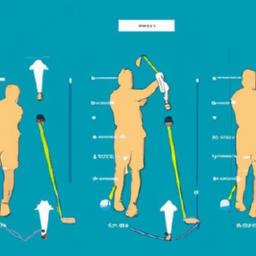
Kinematic Chain in the Follow-Through: Role of Pelvis,Trunk,and Upper Limb Sequencing
The generation of rotational momentum in the follow-through begins with the pelvis acting as the primary proximal driver. Ground-reaction forces are converted into pelvic rotation, which, when timed correctly, creates a torque cascade through the lumbopelvic complex. This initial segmental impulse is characterized by a rapid increase in pelvic angular velocity immediately after ball impact, providing a stable platform for the trunk to accelerate. In biomechanical terms, the pelvis functions as the “first spring” in a proximal‑to‑distal kinetic chain, and variability here disproportionately degrades downstream clubhead kinematics and shot dispersion.
Following pelvic rotation, the thorax and ribcage rotate and translate, producing trunk‑to‑pelvis separation that maximizes elastic energy storage in the obliques and paraspinals. The trunk’s peak angular velocity typically follows the pelvic peak by a measurable lag (milliseconds), permitting a coordinated transfer of angular momentum. Preserving an optimal trunk‑pelvis dissociation angle enhances clubface control by aligning torso rotation with shoulder plane kinematics; conversely, premature trunk closure or over‑rotation compresses the release window and increases lateral dispersion.
Upper limb sequencing completes the cascade: the shoulders,upper arm,forearm,and wrist articulate in a controlled proximal‑to‑distal pattern that culminates in the release of the clubhead. Distal segments intentionally lag to allow momentum accumulation and then rapidly accelerate to amplify clubhead speed-this intersegmental timing is critical for both precision and power. The kinetic chain thus depends on finely tuned segmental delays; too little lag reduces speed,while excessive delay or asynchronous coupling increases torsional loads on the elbow and shoulder.
Controlled deceleration in the follow‑through is an active, eccentric process that protects tissues and refines shot consistency. Key musculature performs braking actions to absorb residual energy and stabilize joints post‑impact. Vital contributors include:
- Gluteus maximus and hamstrings – eccentric control of pelvic rotation
- External obliques and multifidus – deceleration of trunk rotation and spinal stabilization
- Rotator cuff and scapular stabilizers – attenuate shoulder translation and control humeral head position
- Forearm flexors/extensors – modulate wrist release and club deceleration
Eccentric capacity and neuromuscular timing in these muscle groups reduce peak joint moments and are thus protective against overuse injuries in repeated swings.
Translating kinematic principles into measurable coaching metrics clarifies technique refinement and injury prevention strategies. The table below summarizes typical sequencing roles and temporal relationships used in performance assessment, and can guide targeted interventions such as pelvic‑lead drills, medicine‑ball rotational throws, and eccentric shoulder strengthening protocols to optimize follow‑through mechanics.
| Segment | Primary Role | Relative Timing |
|---|---|---|
| Pelvis | Initiate rotation / transfer ground force | Early (peak 1) |
| Trunk | amplify torque / store elastic energy | Mid (peak 2) |
| Upper limb | Finalize release / club acceleration | Late (peak 3) |
Quantifying pelvic rotation degrees, trunk‑shoulder separation angle, and peak segmental angular velocities provides objective targets for precision‑oriented training and reduces maladaptive compensations that lead to inconsistent ball flight or injury.
Muscle Activation Patterns During Follow-Through and Their Influence on Clubhead Stability
Electromyographic analyses of the follow-through reveal a characteristic proximal-to-distal cascade that persists beyond ball impact: sustained activation of the trunk rotators and extensors is followed by peak activity in shoulder girdle stabilizers and a controlled burst in the forearm and wrist musculature. These temporal relationships-onset latencies, peak timing and duration-correlate strongly with measurable clubhead kinematics; earlier or prolonged trunk deceleration shifts load patterns distally and can reduce unwanted clubhead yaw. Quantitatively, stable clubhead trajectories are associated with consistent timing (±15-25 ms) between trunk and upper-limb peak activations across repeated swings.
Specific muscle groups play discrete roles in maintaining clubhead stability. The obliques and multifidus provide rotational deceleration and axis control, the serratus anterior and lower trapezius stabilize the scapula for a repeatable shoulder path, and the rotator cuff complex modulates humeral head position during rapid arm extension.Distally, co-contraction of wrist extensors and flexors (including the ECU and FCR) and controlled activity of the pronator teres/supinator govern clubface orientation through impact and early follow-through. Importantly, eccentric activation of posterior chain muscles (gluteus maximus, hamstrings) during deceleration contributes to whole-body stability that underpins distal accuracy.
Temporal precision and balanced co-contraction are central to minimizing perturbation of the clubhead. The following compact table summarizes representative activation targets derived from biomechanical norms and their putative effects on clubhead stability:
| muscle Group | Activation Pattern | Effect on Clubhead |
|---|---|---|
| Trunk rotators | Early peak,sustained decay | Axis stability,reduced yaw |
| Scapular stabilizers | Pre-impact co-activation | Consistent shoulder path |
| Forearm/wrist | Short,controlled burst + co-contraction | Face control,damping |
Translating activation profiles into training practice requires targeted neuromuscular programming. Recommended emphases include:
- Tempo-controlled swings to train timing between trunk and arm peaks;
- Eccentric strengthening (slow deceleration squats, Romanian deadlifts) to improve posterior chain braking;
- reactive forearm drills (resisted pronation/supination, controlled impact simulators) to enhance co-contraction and damping;
- Scapular endurance work (serratus and lower trap sets) to sustain pre-impact stabilisation.
These modalities collectively refine the coordination required for a repeatable, stable clubhead path.
For practitioners and researchers, assessment should pair surface EMG with high-speed kinematics to validate training transfer: examine onset latencies, co-contraction indices and post-impact damping within subject-specific baselines. Emphasize progressive overload of eccentric capacity and specificity of timing rather than raw strength alone. When integrated systematically, these neuromuscular adaptations produce measurable reductions in clubhead angular variability and improvements in shot dispersion-objective markers of enhanced precision. consistency of activation patterns, not maximal activation, is the primary predictor of repeatable accuracy.
Trunk Rotation Control and Its Effect on Shot Directional Consistency
Precise modulation of the trunk’s rotational arc during the follow-through is a primary determinant of lateral shot dispersion. when rotation is controlled rather than abrupt or prematurely arrested, the kinematic chain transmits a consistent clubhead path and reduces unintended face rotation at impact. Empirical evidence from motion-capture studies indicates that small variations in peak trunk angular velocity and deceleration timing correlate strongly with left/right miss bias, making trunk behavior a reliable predictor of directional consistency. Controlled rotation stabilizes the distal segments, thereby constraining variables that normally introduce shot dispersion.
Quantitative targets for trunk mechanics can be distilled into a few actionable metrics that coaches and players can monitor. The following table summarizes representative ranges and their expected effect on shot direction when managed within routine practice.
| Metric | Typical Target | Directional Effect |
|---|---|---|
| Peak trunk angular velocity | ~700-900 °/s (driver) | Consistent club path; reduced dispersion |
| Rotation completion (% of follow-through) | >85% through swing arc | Minimizes early deceleration errors |
| Trunk tilt stability | ±5° from baseline | Preserves launch direction |
Neuromuscular control of rotation requires precise eccentric and concentric coordination across core and hip musculature. training emphasis should be on timing and graded force production rather than maximal torque alone. Recommended emphases include:
- Rotational decelerators: obliques and multifidus for controlled slowdown of the torso
- Hip stabilizers: glute medius/minimus for pelvic alignment
- Anti-extension core: transverse abdominis to maintain spinal posture
Collectively these muscle groups reduce variability in axis orientation during the critical milliseconds surrounding impact.
from a motor-learning and coaching perspective, simple technical cues and progressive drills yield measurable improvements in directional repeatability. Practical interventions include:
- “Finish tall, rotate through” - cue to avoid early chest stoppage that alters face angle
- Split-stance rotational drills – isolate trunk timing while limiting lower-body contribution
- Guided deceleration reps – use resistance bands to develop controlled slowdown of rotation
These drills emphasize reproducible sequencing and reduce compensatory movements that cause side-to-side error.
Objective monitoring accelerates transfer of trunk-control gains into on-course accuracy.Use high-speed video or inertial sensors to track:
- Rotation timing index (peak trunk velocity relative to impact)
- Rotation completion percentage (proportion of rotational arc executed post-impact)
- Axis deviation (lateral tilt at impact)
Set progressive thresholds and provide immediate feedback during practice blocks. When these KPIs are maintained within target bands, statistical reductions in lateral dispersion and improved grouping consistency are typically observed, confirming the central role of refined trunk rotation in directional control.
Arm extension and Release Mechanics for optimizing Launch Angle and Spin Rate
Precise coordination of arm extension and the release sequence is a primary determinant of the clubhead’s effective loft and the initial spin applied to the ball. When the lead arm attains a controlled, full extension through impact, the moment arm increases and clubhead velocity is augmented without necessarily increasing swing plane variability. Conversely,premature collapse of the lead arm or excessive radial deviation during release tends to reduce effective loft and increase unwanted sidespin. The interplay between linear extension and rotational release therefore governs both the vertical launch vector and the rotational acceleration that dictates spin rate, with downstream effects on dispersion and carry distance.
From a kinematic perspective, optimal outcomes result from a proximal-to-distal sequencing where trunk rotation and shoulder internal rotation precede elbow extension and forearm pronation. Key measurable markers include:
- Temporal sequencing – peak trunk angular velocity occurring just prior to peak arm linear velocity;
- Extension amplitude – lead elbow approaching full extension at or slightly after impact;
- Release timing - progressive wrist unhinging coupled with controlled pronation rather than abrupt, late snapping.
These markers reduce energy loss through uncoupled segments and promote a stable launch angle with predictable spin characteristics.
| Extension Pattern | Typical Launch Angle | Typical Spin Tendency |
|---|---|---|
| Under‑extension | Low | Higher backspin, variable sidespin |
| Optimized extension | Mid‑optimal | controlled, desired spin |
| Over‑extension/early release | High | Lower backspin, increased ballooning risk |
Neuromuscular contributors to a desirable release profile include coordinated activation of prime movers and stabilizers: the triceps for elbow extension, pectoralis major and latissimus dorsi for adductive drive, and the forearm pronators plus wrist flexors/extensors for graded release.Eccentric control of wrist flexors after impact attenuates excessive backspin, while rotator cuff integrity maintains shoulder centering to prevent lateral clubface deviation. Conditioning programs that emphasize multi‑joint explosive strength, eccentric deceleration, and proprioceptive control will support repeatable release mechanics.
Practical, evidence‑based interventions to refine release mechanics include drill‑based repetition and objective feedback. Recommended drills and monitoring approaches:
- One‑arm extension drill – reinforces end‑range stability of the lead arm and clean release;
- Towel under the lead arm – promotes connection with the torso and discourages early collapse;
- Resisted pronation sets – band or cable work to improve pronator force control;
- Launch monitor feedback – iteratively adjust extension/release to target launch angle and spin metrics (carry, spin rate, smash factor).
Applied systematically, these methods produce measurable shifts in launch conditions and reduce shot dispersion while preserving distance potential.
Wrist Pronation Timing and Grip Dynamics to Minimize Face Angle Variability
The distal control of the clubface is heavily mediated by the complex anatomy of the wrist and distal forearm; the carpal complex (eight carpal bones forming the carpus) acts as a kinematic interface between proximal rotation and the clubhead. Precise modulation of wrist pronation immediately prior to and through impact provides a final corrective rotation that can reduce face-angle dispersion arising from upstream sequencing errors. Kinematic analyses indicate that even small temporal shifts in pronation timing (on the order of milliseconds) translate to measurable deviations in launch direction, making distal timing a high-sensitivity control variable for accuracy.
Grip dynamics interact with pronation timing to determine how effectively that distal correction is transmitted to the clubhead. Variations in radial/ulnar pressure distribution, static grip force, and relative hand orientation (strong, neutral, weak) alter the mechanical coupling between forearm rotation and clubface rotation. practically relevant control points include:
- Grip pressure symmetry: balanced pressure between trail and lead hands preserves intimate contact for pronation transfer.
- lead-hand index alignment: promotes consistent shaft axis and reduces unwanted face roll during pronation.
- Pressure modulation timing: lightening the trailing-hand grip at transition enables smoother pronation onset near impact.
| Pronation timing | Recommended grip adjustment | expected face-angle variability |
|---|---|---|
| Early (≥10 ms before impact) | Increase lead-hand stability; slightly firmer overall grip | Tendency toward closed face; moderate variability |
| Synchronous (±10 ms of impact) | Balanced pressure; micro-adjustment with trailing hand | Minimal variability; optimal repeatability |
| Late (≥10 ms after impact) | Softer trailing-hand hold; allow natural release | Tendency toward open face; increased variability |
Training interventions should emphasize sensor-guided feedback and progressive motor learning. Recommended protocols include high-speed video analysis of pronation onset,grip-pressure insoles or handle sensors to quantify hand loading,and constrained drills that isolate pronation timing (e.g., impact-focused half-swings with auditory cueing).Use of slow-motion repetition followed by randomized tempo practice fosters transfer; biofeedback that quantifies face-angle deviation per trial accelerates error correction.
Implementation at the practice range should prioritize measurable objectives: reduce standard deviation of face angle at impact, maintain grip-pressure asymmetry within predefined thresholds, and achieve pronation onset within the target temporal window. Together, these approaches produce a robust distal control strategy-the empirical corollary being that synchronous pronation combined with balanced grip dynamics yields the greatest reduction in face-angle variability and the highest shot-to-shot precision.
Ground reaction forces and Lower-Limb Contribution to Post-Impact Balance and Accuracy
During the follow-through the interaction between the foot and the ground is not incidental; the **ground reaction force (GRF)** vector and its point of application under the foot dictate how momentum is dissipated and redirected after ball impact.Vertical GRF supports deceleration of the body‑segment chain and stabilizes the torso, while horizontal (anteroposterior and mediolateral) components modulate rotational momentum and lateral balance. Precise control of the GRF magnitude and direction-especially the timing of peak vertical force relative to impact-reduces unwanted pelvis translation and minimizes clubface rotation that would otherwise increase shot dispersion.
Lower‑limb joints act as an integrated kinetic link to shape the GRF profile. The ankle provides the initial compliance and rapid adjustments in the center of pressure; the knee contributes eccentric braking in the lead leg and energy absorption in the shaft of the kinematic chain; the hip generates the principal rotary impulse that must be matched by contralateral GRF to maintain alignment.Effective post‑impact balance requires coordinated eccentric control (to decelerate) followed by controlled concentric activity (to re‑stabilize), producing a smooth transfer of loads from the forefoot to heel and from lateral to medial plantar regions as the swing concludes.
| Metric | Indicative Range | Functional Relevance |
|---|---|---|
| Peak vertical GRF | ~1.0-1.6 BW | Load absorption; stability at impact |
| Time to peak (post‑impact) | 80-200 ms | Timing of deceleration vs. rotation |
| CoP medial shift | 10-40 mm | Controls pelvis rotation and face rotation |
| Lead hip extension torque | Normalized: 0.8-1.5 Nm/kg | Drives trunk rotation and follow‑through momentum |
Consistency in these biomechanical markers correlates strongly with accuracy. Variability in CoP trajectory, asymmetric GRF magnitudes between limbs, or premature unloading of the lead foot are predictive of increased dispersion and elevated injury risk in the lumbar and knee joints. Key markers that coaches and clinicians should monitor include:
- CoP progression pattern – smooth medial-to-lateral shift versus abrupt jumps
- lead-limb eccentric capacity – controlled knee flexion and ankle dorsiflexion after impact
- GRF symmetry – relative peak forces between trail and lead limbs
- Temporal sequencing – latency between peak GRF and maximal hip rotation
Interventions to optimize post‑impact balance and shot precision combine measurement with targeted training. Use force‑plate feedback to quantify GRF vectors and CoP paths, then implement progressive drills that reinforce desired load patterns:
- Single‑leg force‑plate holds with rotational perturbations to train CoP control
- Eccentric lead‑leg loading (slow step‑downs, controlled decelerations) to enhance braking capacity
- Reactive plyometrics to improve rapid force modulation and timing
- Tempo and finish drills that emphasize sustained contact and gradual weight transfer through the follow‑through
Training Interventions and Drills to Enhance Follow-Through Biomechanics for Precision
Targeted interventions should prioritize the coordinated sequencing of the kinetic chain to translate training adaptations into on-course precision. Emphasis is placed on three primary mechanical objectives: controlled trunk rotation that limits late rotation variance, complete and balanced arm extension that preserves clubface stability through impact, and consistent wrist pronation that refines dynamic loft and spin. Interventions that isolate these components while preserving integrated movement patterns yield the best transfer becuase they respect the sport-specific coupling of segments observed in biomechanical analyses.
Effective drills combine perturbation, constraint, and augmentation to accelerate motor learning. Recommended practice elements include:
- Slow-motion segmented follow-through – perform swings at 50% speed pausing at progressive follow-through checkpoints to reinforce segmental timing;
- Medicine-ball rotational throws – bilateral and single-leg variations to enhance power transfer through the hips and trunk;
- Impact-bag and target-rod repetitions – to train compressive sensation at impact and guide arm extension paths;
- Resistance-band pronation sequences – light bands for high-repetition wrist and forearm control exercises;
- Video-feedback microcycles - immediate visual feedback focused on follow-through alignment and clubface orientation.
these drills should be delivered within structured, short-duration blocks to optimize retention and reduce interference.
Strength and mobility programming must support the kinematic demands of the deceleration phase of the swing. Prescribe multi-planar exercises such as rotational deadlifts, pallof presses, and eccentric-focused forearm curls to improve force attenuation and pronation control. Typical loading guidelines: 2-3 sets of 6-10 reps for strength work, and 2-3 sets of 12-20 reps or timed holds for endurance and motor control drills. Integrate dynamic hip and thoracic mobility sessions (3×/week) to preserve the range necessary for continual trunk rotation without compensatory upper-limb drift.
| Drill | Primary Target | Suggested Frequency |
|---|---|---|
| Pause-and-hold checkpoints | Segment timing | 3×/week, 8-12 reps |
| Med-ball rotational throws | Trunk power transfer | 2×/week, 3-5 sets |
| Band pronation drills | Wrist/forearm control | 3×/week, 2-3 sets of 15-20 |
Implementation should follow a progressive, measurable framework: baseline assessment (video kinematics and launch monitor metrics), targeted intervention (4-8 week microcycle), and re-assessment. Use objective outcome measures-clubhead path variance,impact loft,and shot dispersion radius-to quantify enhancement; aim for incremental changes such as a 10-15% reduction in dispersion over an 8-week period. Prioritize load management and coach-supervised progression to minimize overuse risk, and incorporate transfer tests (on-course or simulated pressure shots) to validate that biomechanical gains produce precision under representative conditions.
Measurement Protocols and Wearable Technologies for Assessing Follow-Through Performance
Measurement in the context of follow-through analysis must be treated as a formal process of assigning quantitative values to kinematic and kinetic properties. Guided by the basic definitions of measurement and scales, practitioners should specify whether variables are treated as nominal, ordinal, interval or ratio to ensure appropriate statistical handling and interpretation. Precise units (e.g., degrees, m·s⁻¹, N·m) and calibration procedures are essential; without them, repeatability and comparability across sessions or devices are compromised. Adopting a metrological mindset reduces ambiguity and elevates follow-through assessment from descriptive observation to reproducible science.
Wearable systems provide the primary bridge between laboratory-grade motion capture and field-realistic assessment. Recommended sensor modalities include:
- Inertial Measurement Units (IMUs) – accelerometer + gyroscope for segment orientation and angular velocity;
- Surface EMG – temporal activation of forearm and trunk musculature;
- Pressure insoles – weight transfer and ground reaction timing;
- Wrist-mounted gyro sensors – fine-grained pronation/supination dynamics.
Selecting devices with open data access, consistent sampling rates, and documented validation studies improves translational value for coaches and researchers.
Standardized collection protocols enhance reliability. Key procedural elements include consistent sensor placement landmarks, pre-session sensor drift checks and calibration motions, minimum trial numbers with randomized club selection, and controlled environmental conditions (e.g.,no-wind indoor range). Synchronization across devices (hardware or timestamp alignment) and harmonized sampling frequencies minimize temporal misalignment. Documented protocols should be stored alongside data to allow autonomous replication and longitudinal tracking.
Processed outputs should be explicit and accompanied by signal-processing metadata (filter cutoffs, algorithms for segmentation). core outcome metrics for follow-through evaluation typically include trunk rotation range and peak angular velocity, arm extension angle at impact and at 0.2-0.5 s into follow-through, peak wrist pronation velocity, and residual clubhead speed. Representative metrics table:
| Metric | Primary Sensor | Unit |
|---|---|---|
| peak trunk angular velocity | IMU (thorax) | deg·s⁻¹ |
| Arm extension at 0.3 s | IMU (upper arm) | deg |
| Wrist pronation velocity | Wrist gyro | deg·s⁻¹ |
Always report processing pipelines to support inter-study comparison.
For practitioners integrating these methods into coaching, emphasize actionable thresholds and feedback loops rather than raw numbers alone. Real-time auditory or haptic cues tied to specific metrics (e.g., insufficient trunk rotation velocity) allow targeted motor learning. Ensure ethical data governance: informed consent, secure storage, and clear retention policies. validate field-derived wearable measurements against laboratory standards periodically; this calibration maintains the scientific integrity that underpins evidence-based improvements in follow-through precision.
Q&A
Note: the provided web search results were unrelated to the topic and therefore not used. Below is an academically styled Q&A intended to accompany an article titled ”biomechanics of Golf Swing Follow-Through for Precision.”
Q1: What is meant by the term “follow-through” in the context of golf swing biomechanics?
A1: The follow-through denotes the kinematic and kinetic events that occur immediately after ball impact and continue until the swing concludes in a stable finish position.Biomechanically it encompasses continued rotation of the pelvis and thorax, extension and deceleration of the upper extremity, redistribution of ground reaction forces, and controlled dissipation of the kinetic energy generated prior to and at impact.
Q2: Why is the follow-through important for precision?
A2: The follow-through is the terminal expression of the kinetic chain and reflects the quality of energy transfer, timing, and deceleration strategies. A controlled, well-sequenced follow-through correlates with consistent clubface orientation at impact and minimizes late-path perturbations that would otherwise alter launch conditions (direction, spin) and increase shot dispersion.
Q3: What are the principal biomechanical objectives of an optimal follow-through?
A3: (1) Preserve the intended clubhead trajectory and clubface orientation through impact; (2) safely dissipate angular and linear momentum to protect musculoskeletal tissues; (3) maintain balance and alignment to support repeatable mechanics; (4) provide sensory feedback for motor learning and shot shaping.Q4: Describe the typical joint sequencing observed in an efficient follow-through.
A4: The follow-through continues proximal-to-distal coordination initiated before impact: continued hip rotation (lead hip into extension), thoracic rotation, scapular protraction, elbow extension and controlled forearm pronation/supination depending on shot shape, and wrist release. Deceleration of distal segments (hands, club) is typically accomplished through eccentric action of proximal musculature (rotator cuff, scapular stabilizers, obliques).
Q5: How does momentum transfer during the follow-through relate to precision?
A5: Momentum transfer must be smooth and primarily directed along the intended swing plane. Efficient transfer minimizes abrupt changes in clubhead velocity vector after impact,reducing induced side forces and torques on the clubface.Controlled momentum flow also reduces compensatory movements that would modify impact geometry in subsequent swings.
Q6: What role do ground reaction forces (GRFs) play during the follow-through?
A6: GRFs continue to change after impact as weight shifts toward the lead foot and as the body completes rotation. Effective use of grfs facilitates braking of the lower body, provides a stable base for eccentric deceleration of the trunk and upper limbs, and contributes to balance-factors that underpin reproducible swing mechanics and precision.
Q7: Which muscles are primarily responsible for decelerating the club after impact?
A7: Eccentric actions of the trunk rotators (external obliques, multifidus), scapular stabilizers (serratus anterior, trapezius), rotator cuff (infraspinatus, teres minor, subscapularis), biceps and forearm musculature contribute to controlled deceleration.The lower-limb and hip musculature (gluteals, hamstrings, quadriceps) stabilize the base and assist in dissipating whole-body momentum.
Q8: How does improper deceleration increase injury risk?
A8: Inadequate eccentric control leads to elevated peak loads and rapid loading rates concentrated at vulnerable joints (lumbar spine shear/compression, glenohumeral joint, elbow).Repeated exposure to high eccentric loads without appropriate conditioning increases risk for low-back pain, rotator cuff tendinopathy, and elbow overuse injuries.
Q9: How is follow-through variability related to motor control and precision?
A9: some controlled variability is normal and may indicate adaptive motor strategies, but excessive or inconsistent follow-through kinematics frequently enough reflect inconsistent pre-impact sequencing or timing, leading to greater shot dispersion. Motor learning literature suggests that stable coordination patterns around impact yield improved precision, while variability in distal segment deceleration can be tolerated if proximal sequencing is consistent.
Q10: what objective measurements can quantify follow-through performance relevant to precision?
A10: Key metrics include timing of peak angular velocities (pelvis, thorax, shoulder, wrist), angular deceleration rates, peak and time-to-peak GRFs, clubhead path and face angle changes immediately after impact, trunk and head displacement, and inter-trial variability (standard deviation) of these measures. High-speed motion capture, inertial measurement units (imus), force plates, and ball-launch monitors provide these data.
Q11: What assessment protocol is recommended to analyze follow-through biomechanics?
A11: A combined approach: 3D motion capture or IMU arrays to obtain segment kinematics; synchronized force plate data to capture GRFs and weight transfer; surface electromyography (EMG) to identify muscle activation and eccentric loading patterns; and ball-flight/clubhead data (launch monitor) to link biomechanical measures to precision outcomes. Trials should include representative club selections and shot intents.Q12: Which technical cues and drills can enhance follow-through quality for improved precision?
A12: Effective drills include slow-motion full swings emphasizing continuous rotation through impact; finish-hold drills to ingrain stable end positions; impact-bag or rollover drills to feel proper release while maintaining chest rotation; step-through drills to promote weight transfer and pelvic rotation; and resistance-band eccentric deceleration exercises to train rotator cuff and scapular stabilizers. Cueing should focus on “rotate through the shot,” ”finish tall,” and “soft hands through impact” to balance power and control.
Q13: What conditioning and versatility strategies support an optimal follow-through?
A13: Strengthen eccentric capacity of trunk rotators, rotator cuff, scapular stabilizers, and lower-limb extensors. Train hip mobility (internal and external rotation), thoracic rotation, and ankle dorsiflexion for effective weight transfer and rotation. Incorporate plyometric and reactive control drills to improve rate of force growth and neuromuscular timing. Progressive overload and periodization reduce injury risk.
Q14: How should coaches integrate biomechanical feedback into practice for skill acquisition?
A14: Use immediate, objective feedback (video playback, launch monitor data) to correlate kinematic patterns with ball outcome. Focused,blocked practice on specific follow-through elements can precede variable practice that simulates on-course variability. Employ errorless learning for novices and constraint-led approaches for advanced players to promote adaptable, precise follow-through mechanics.
Q15: Are there trade-offs between power and precision in the follow-through, and how can they be managed?
A15: Yes; maximizing clubhead speed increases demands on deceleration and timing precision. Managing the trade-off requires training to increase strength and eccentric capacity, refining proximal-to-distal sequencing to optimize energy transfer, and emphasizing controlled release to maintain clubface stability. Periodized training and technique refinement allow simultaneous improvements in power and precision.
Q16: What future research directions are most valuable for understanding follow-through biomechanics and precision?
A16: Longitudinal studies linking biomechanical follow-through metrics to on-course scoring outcomes; intervention trials testing specific eccentric conditioning and motor-learning protocols; high-fidelity simulations of variable environmental conditions; and integration of wearable sensors for in situ monitoring of follow-through consistency and fatigue effects.
Q17: What are practical monitoring indicators coaches should track to detect decline in follow-through quality?
A17: Increased variability in finish position, earlier or truncated trunk rotation, greater post-impact clubhead deviations, rising asymmetric GRF patterns, reduced eccentric EMG amplitude in decelerators, and deteriorating ball dispersion statistics. Sudden changes may indicate fatigue, acute injury, or technical drift.
Q18: Summary take-home messages for practitioners?
A18: 1) The follow-through is a critical component of the kinetic chain that influences precision by reflecting and completing energy transfer; 2) controlled eccentric deceleration, proximal-to-distal sequencing continuity, and stable weight transfer are essential for repeatability; 3) objective assessment and targeted conditioning reduce injury risk and improve accuracy; 4) coaching should integrate biomechanical feedback, appropriate drills, and progressive strength and mobility training.
If you would like, I can convert these Q&A items into a printable FAQ, provide example assessment templates (metrics and thresholds), or generate drill protocols tailored to specific player levels (novice, intermediate, elite).
Closing Remarks
Note: the supplied web search results did not return materials relevant to the biomechanics of the golf swing follow-through. The following outro is therefore composed on the basis of the article topic and standard biomechanical principles.
Conclusion
This review has underscored the follow-through as an integral phase of the golf swing, rather than a mere aesthetic finish. Precision in ball flight and repeatability of performance emerge from a coordinated proximal‑to‑distal joint sequencing that efficiently transfers momentum through the lower limbs,pelvis,trunk,and upper extremity,and from an ability to decelerate the distal segments in a controlled,eccentric manner. Kinematic timing, intersegmental energy flow, and neuromuscular control together determine how effectively kinetic energy produced in the ground and core is translated into clubhead motion while minimizing unwanted variability at impact.For practitioners, the biomechanical evidence supports coaching priorities that emphasize timing and sequence over isolated strength or range-of-motion metrics. Drills and training protocols that reinforce correct lower‑body initiation, trunk rotation continuity, and graduated wrist/forearm release-paired with targeted eccentric conditioning to manage deceleration-are likely to enhance shot consistency and accuracy. Objective monitoring (high‑speed video, motion analysis, and wearable inertial sensors) can help diagnose deviations in sequencing and quantify progress.
From an injury‑prevention standpoint, controlled follow-through mechanics reduce peak joint loads transmitted to the lumbar spine, shoulder, and elbow. Thus, integrating load management, mobility and stability training, and progressive neuromuscular conditioning into practice regimens is essential to preserve athlete longevity while optimizing performance.Future research should pursue longitudinal and intervention studies that link specific modifications in follow-through mechanics to measurable improvements in precision and durability. Advances in wearable sensing and machine‑learning analysis offer promising avenues to individualize technique prescriptions and to translate lab‑based insights into on‑course feedback that respects intersubject variability in anatomy and skill level.
In sum, mastery of the follow-through-through informed sequencing, efficient momentum transfer, and controlled deceleration-constitutes a critical determinant of precision in the golf swing. Integrating biomechanical principles into coaching, training, and research will both elevate performance and mitigate injury risk.

Biomechanics of Golf Swing Follow-Through for Precision
Why the Follow-Through Matters for Accuracy and Distance
The follow-through is more than a cosmetic finish to your golf swing – it is the physical record of how well you sequenced forces, stabilized your posture, and released the clubface through impact. Biomechanically,an effective follow-through correlates with optimal clubhead speed,consistent launch angle,and improved shot-to-shot accuracy. When trunk rotation, arm extension, wrist pronation, and lower-body sequencing are coordinated, the ball’s trajectory becomes more predictable and repeatable.
Key Biomechanical Components of an Effective Follow-through
1. Trunk Rotation and Spine angulation
- Efficient trunk rotation (thorax on pelvis) maintains club path and face control. A smooth rotational finish reduces lateral forces that cause slices and hooks.
- Maintain a stable spine angle from address to impact; excessive early extension (raising the upper body) can alter launch conditions and reduce accuracy.
- Proper sequencing: pelvis leads, trunk follows – creating a prograde energy transfer that continues into the follow-through.
2. Arm Extension and Radius Control
- Full, controlled arm extension through impact increases the effective radius, boosting clubhead speed and smoothing face alignment.
- Too early collapse of the lead elbow or too-tight trailing arm reduces power and tends to open/close the face unpredictably.
3. Wrist Pronation and Release Timing
- Wrist pronation (natural rotation of the forearms and wrists) during and immediately after impact helps square the clubface and control spin axis.
- Overactive hands or late excessive flipping creates inconsistent loft and spin, harming accuracy and distance control.
4.Lower-Body Transfer and Balance
- Efficient weight transfer (rear to lead side) powers rotation and stabilizes the follow-through. good balance at the finish indicates efficient energy transfer.
- Proper ground reaction forces (pushing with the ground through the feet) support a strong, balanced finish position.
5. Kinematic Sequence and Muscle Coordination
Top-level biomechanical studies show that the ideal kinematic sequence begins with the hips, then torso, then arms, and finally the club. A clean follow-through reflects correct timing: hips rotate open, trunk unwinds, arms extend, wrists release. Deviations in this sequence reduce rpm control, launch angle consistency, and shot dispersion.
Kinematic sequence: What to Look For (and Measure)
When analyzing the follow-through, coaches and players commonly track:
- Hip rotation angle and speed
- Trunk rotation relative to pelvis (X-factor dynamics)
- Lead elbow extension and shoulder tilt
- Wrist pronation/supination timeline
- Clubhead speed and smash factor at impact
Common follow-Through Faults and Biomechanical Fixes
Fault: Early Extension (standing up)
Effect: Decreases loft control, increases spin variance.
fixes:
- Drills: Place a headcover a few inches behind your hips at address and practice swings maintaining bend to avoid touching it.
- Strength/ Mobility: Hip hinge drills and thoracic mobility exercises to preserve posture through impact.
Fault: Overactive Hands / Flipping
Effect: Inconsistent launch and reduced distance.
Fixes:
- Drills: Half-swing release drills focusing on forearm rotation timing; impact bag work to feel correct wrist pronation.
- Technique: Focus on body-led rotation; keep the arms connected to trunk rotation.
Fault: Early Loss of Extension (short arms at finish)
Effect: Lower clubhead speed and compressed ball flight.
Fixes:
- Practice maintaining radius through impact – feel the arms extend as the hips continue rotating.
- Use alignment sticks to visualize the swing arc and maintain extension.
Practical Drills and Training Exercises
Below are high-value drills that emphasize the biomechanical elements of an effective follow-through.
| Drill | Purpose | How to Do It |
|---|---|---|
| Step-Through Drill | Promotes weight transfer & balance | Finish in a high, balanced pose while stepping the trail foot forward after impact. |
| Impact Bag | Feel correct wrist/forearm release | Strike the bag with controlled hands to experience a proper pronation & extension. |
| Gate Drill | Improve club path & face control | Set two tees as a gate; swing through without hitting them to encourage correct path and finish. |
Mobility & Strength Exercises
- Russian twists and Pallof presses for core control and anti-rotation strength.
- Hip-flexor stretches, pigeon pose, and thoracic rotations to increase rotational range of motion.
- Single-leg balance and loaded carries to improve stability during the follow-through.
Measuring Performance: Metrics That matter
Use launch monitors, wearable sensors, or smartphone video to track improvements tied to follow-through mechanics:
| Metric | Why It Matters | Target / Note |
|---|---|---|
| Clubhead Speed | Higher speed → more distance | Increase gradually while keeping accuracy |
| Smash Factor | Ball speed ÷ clubhead speed; efficiency | Strive for consistent values by improving impact mechanics |
| Face Angle at Impact | Primary determinant of direction | Face square to slightly closed for draws, consistent for accuracy |
Case Study: Translating Biomechanics to Lower Scores
A regional coach worked with a 14-handicap player who had poor follow-through balance and frequent slices. After 8 weeks of targeted work – emphasizing pelvic lead, trunk rotation drills, and an impact-bag routine to train wrist pronation – the player saw:
- A 6 mph increase in clubhead speed
- More consistent face angles at impact (measured via launch monitor)
- Average dispersion reduced by 12 yards across 7-irons and 5-irons
The player’s finish position was a reliable indicator: the better the balance and follow-through, the tighter the shot groupings and lower the score variance.
Programming Practice Sessions for Follow-Through Enhancement
Structure a weekly routine that balances technique, strength, and measurement:
- 2 short sessions focused on drills (Impact Bag, Gate Drill, Step-Through) – 15-20 minutes each.
- 1 session with launch monitor to measure clubhead speed, face angle, and ball flight – 30-60 minutes.
- 2 mobility/strength sessions (20-30 minutes) emphasizing core anti-rotation, hip mobility, and single-leg stability.
Coaching Cues and Small Changes That Yield Big gains
- “Lead with the hips” – feel the pelvis rotate before the arms follow.
- “extend through impact” – visualize creating a long arc with the arms as the body finishes.
- “Rotate and hold” – rotate fully to the finish and hold for one second to reinforce balance and sequencing.
- “Feel the pronation” – practice slow-motion swings focusing on forearm rotation through the hitting area.
Putting It Together: A Fast Practice Plan
- Warm up with dynamic mobility (5-7 minutes).
- Technique drills: 3 sets of 8 reps each (Gate Drill, Step-Through, Impact Bag).
- Full swing with focus on finish: 20 balls, alternating clubs, aiming for quality over power.
- Measure with a launch monitor or video and note three things to change next session.
Final Practical Tips for On-Course Precision
- Use pre-shot routines to stabilize tempo – consistent tempo supports consistent follow-through.
- When under pressure, shorten the swing minimally but preserve sequence (hips -> trunk -> arms -> club).
- Record periodic video to compare finish positions; a repeatable finish equals repeatable ball flight.
- Combine technical work with physical conditioning – improved mobility and strength make biomechanically ideal finishes sustainable.
By focusing on trunk rotation, arm extension, wrist pronation, and coordinated sequencing, golfers can make measurable gains in clubhead speed, launch consistency, and accuracy. The follow-through is the visible evidence of a well-executed swing – train it deliberately, measure it objectively, and let the ball flight tell you the rest.