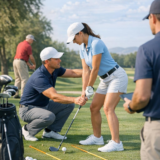
the follow-through phase of the golf swing represents more than an aesthetic finish; it encapsulates the terminal expression of coordinated neuromuscular actions, force transmission, and angular momentum that together determine ball trajectory, dispersion and repeatability. Situated at the confluence of kinematics and kinetics, the follow-through conveys the residual patterns of energy transfer initiated earlier in the swing and thereby provides a measurable window into swing quality-revealing inefficiencies in sequencing, balance deficits, and timing errors that compromise accuracy and precision.Drawing on principles from biomechanics-the quantitative study of how forces interact with biological structures-this article examines the mechanical determinants of an effective follow-through,including joint sequencing,center-of-mass management,axial rotation,and ground reaction force utilization. By integrating evidence from motion-capture kinematic analyses, kinetic assessments (force plates), and neuromuscular recordings (EMG), the analysis links specific mechanical features of the follow-through to objective outcomes in ball control and shot consistency.
The ensuing discussion aims to (1) characterize the typical biomechanical signatures of proficient follow-throughs, (2) identify common deviations that degrade performance or increase injury risk, and (3) translate these findings into practical assessment and coaching strategies for players and practitioners seeking to enhance accuracy and precision through deliberate control of the follow-through phase.
Kinetic Chain Coordination and Sequencing for an Efficient follow Through with Practical Implementation
Kinetic chain coordination is best understood as the ordered transmission of mechanical energy through connected body segments, a concept rooted in kinetics-the study of motion and the forces that cause it. Efficient follow-through arises when proximal segments (hips and trunk) generate and transfer angular momentum to distal segments (arms, club), minimizing dissipation at intersegmental joints.Any interruption in this chain-whether due to early deceleration, poor pelvic timing, or inadequate trunk dissipation-reduces clubhead velocity and increases variability in launch conditions. Quantitatively, optimal coordination maximizes impulse directed along the intended swing plane while controlling transverse and vertical force components that influence spin and lateral dispersion.
Sequencing is governed by a proximal-to-distal cascade in which the pelvis initiates rotation, the thorax follows with a controlled lag, the lead arm extends, and the forearm/wrist complex completes the release and pronation near impact. Key biomechanical markers include **pelvic angular velocity peak preceding thoracic peak by ~20-40 ms**, maintained extension through the lead arm to preserve lever length, and timed wrist pronation to refine face orientation at release. Temporal consistency across repetitions is as vital as peak magnitudes; small shifts in peak timing (<30 ms) can produce measurable deviations in launch angle and lateral dispersion, underscoring the need for precise neuromuscular control of intersegmental sequencing.
Practical implementation focuses on motor-pattern refinement, targeted strength and mobility interventions, and measurable drill progressions. Recommended practice elements include:
- Segmental tempo drills: use a metronome to enforce consistent proximal initiation and a deliberate thorax-to-arm transition.
- Lead-leg brace drill: perform half-swings emphasizing a stable pelvic platform to promote efficient energy transfer to the trunk and upper limb.
- Delayed release rehearsal: exaggerate wrist hinge through the downswing and intentionally time pronation to the late downswing to train distal timing.
- Video-feedback loops: record at 240 fps to quantify peak rotation sequence and compare against a target temporal profile.
Each drill is best executed within a progressive framework: establish correct kinematics at reduced speed, then increase velocity while preserving sequencing fidelity.
| Segment | key cue | Relative timing |
|---|---|---|
| Pelvis | Initiate rotation | Peak first |
| Trunk | Controlled unwinding | 20-40 ms after pelvis |
| Lead arm | Maintain extension | Late downswing |
| Wrist/Forearm | timed pronation/release | Near impact |
To operationalize this template, employ objective measures (high-speed video, inertial sensors, or launch monitors) to quantify temporal offsets and repeatability. Training should combine neuromuscular drills that constrain tempo with strength and mobility programs that address segmental deficits (hip internal rotation, thoracic mobility, forearm pronator strength). By systematically aligning kinetic sequencing with targeted interventions, practitioners can reduce shot dispersion and optimize launch characteristics in a reproducible, evidence-based manner.
Ground Reaction Forces and Lower Limb Mechanics as Determinants of Accuracy and Stability
Ground reaction forces (GRFs) constitute the primary external input that the lower limbs transmit into the kinetic chain during the follow-through. Spatial orientation of the GRF vector and the temporal profile of its vertical and tangential components determine how effectively angular momentum is redirected from the pelvis and trunk into club deceleration and final clubface orientation.Precise timing of the peak posterior-to-anterior shear and the reduction of medial-lateral shear are associated with reduced rotational disturbances of the pelvis during late follow-through,thereby minimizing unwanted clubface rotation at impact.
Lower-limb joint mechanics-particularly coordinated action at the hip,knee and ankle-mediate GRF submission and center-of-pressure (CoP) progression beneath the stance foot. Controlled knee flexion-extension during early follow-through modulates vertical GRF impulse, while ankle stiffness and subtalar control regulate the CoP path that supports trunk rotation. Stance width and lead-leg bracing create a mechanical base that balances the need for rotational mobility with postural stability; narrower stances favor rotational velocity but require greater neuromuscular control to prevent medio-lateral instability.
Quantitative relationships between GRF metrics and shot outcomes highlight practical determinants of accuracy. for exmaple, a smoother GRF rise with preserved shear-to-vertical ratio correlates with consistent launch direction, whereas abrupt GRF transients increase lateral dispersion. the table below summarizes concise GRF and lower-limb indicators and their performance implications.
| Metric | Typical Target | performance Implication |
|---|---|---|
| Vertical GRF impulse | Moderate, smooth rise | Stable launch angle; reduced bounce in rotation |
| Anterior shear peak timing | occurs just after impact | Promotes energy transfer and face control |
| CoP progression | Posterior→anterior with limited ML drift | Maintains pelvis alignment; less lateral dispersion |
| Lead-ankle stiffness | Moderate (controlled plantar/dorsiflexion) | Absorbs impact; stabilizes trunk rotation |
- Coaching cues: “Push through the ground, let the hips follow” - emphasizes sustained posterior-to-anterior GRF without abrupt unloading.
- technical drill: Single-leg stance swings to train CoP control and ankle stiffness under rotational load.
- Strength & conditioning: Eccentric knee control and hip-extensor power work to smooth GRF impulse and preserve sequencing.
- Objective monitoring: Use force-plate or in-shoe pressure mapping to track CoP path and GRF timing; target consistency across repetitions rather than maximal peak values.
Pelvic Rotation, Thoracic counterrotation, and Spinal Alignment for Consistent Finish Positions
Effective energy transfer through the swing depends critically on coordinated motion between the pelvis and the thorax. The pelvis must execute a controlled rotation that initiates the kinetic chain while the pelvic floor and surrounding musculature provide a stable base; these deep muscles act as a dynamic support system for the lumbar spine and viscera, enabling efficient transmission of angular momentum without compensatory loss in accuracy. Maintaining a balanced pelvic rotation reduces excessive lateral tilt and preserves the intended swing plane, which directly influences clubface orientation at impact and the reproducibility of the finish position.
Counterrotation of the thoracic spine is the complementary element that allows the upper torso to decelerate and redirect rotational energy during the follow-through.Adequate thoracic mobility, aligned with neutral lumbar curvature, permits the shoulders to rotate across a stable pelvis while minimizing shear stresses on intervertebral segments. When spinal alignment is preserved-characterized by maintained sagittal neutral and controlled transverse rotation-the golfer is able to sustain clubhead speed into an anatomically consistent finish, thereby improving shot dispersion and reducing the likelihood of compensatory timing errors.
Practical training emphases focus on integrated motor patterns and proprioceptive awareness. Recommended cues and micro-drills include:
- Pelvic clock drill: deliberate anterior-posterior and axial pelvic rotations to locate a neutral, repeatable top-of-swing orientation.
- Thoracic-open exercise: half‑knee rotations with a club across the shoulders to increase thoracic ROM without lumbar substitution.
- Core-pelvic coordination: low‑load breathing and pelvic floor engagement patterns to stabilize the base during high‑velocity rotation.
A concise matrix translates these biomechanical variables into coaching cues and expected outcomes:
| Variable | Coaching Cue | Expected Benefit |
|---|---|---|
| Pelvic rotation | “Lead with the hips, keep level height” | Consistent swing plane, improved face control |
| Thoracic counterrotation | “Rotate shoulders across the chest” | Controlled club deceleration, tighter dispersion |
| Spinal alignment | “Maintain neutral spine, avoid collapse” | Injury risk reduction, repeatable finish |
Clubhead Path, Release Mechanics, and impact to Follow Through Trajectory Control with Prescriptive Drills
Precise control of the clubhead trajectory originates from the coordinated sequencing of body segments and the resultant clubface orientation at impact. Kinematic analysis shows that an inside-out path combined with a square-to-closed face at impact produces a stable, penetrating ball flight, whereas deviations in path or face angle introduce side spin and vertical launch variability. Emphasis should be placed on the timing of pelvic rotation relative to shoulder rotation: an earlier pelvic rotation tends to promote an inside path and reduce lateral dispersion. In biomechanical terms, maximizing repeatability requires consistent angular velocity gradients between hips, torso, and lead arm during downswing.
Release mechanics determine how stored rotational energy converts into clubhead velocity and face alignment. Effective release involves a sequenced uncocking of the wrists,timed distal-to-proximal transfer of momentum,and minimal late manipulation of the hands through impact. The following prescriptive drills reinforce correct motor patterns and sensory cues for consistent release:
- Lead-Foot Pivot drill – restrict trailing foot to encourage earlier hip clearance and an inside path.
- Toe-Tap Tempo Drill – use rhythmic toe taps in the transition to synchronize lower-body initiation with arm drop.
- Impact Bag Pause – momentarily stop at impact against a bag to train neutral face orientation and dampen extraneous wrist roll.
Impact-to-follow-through trajectory control is a direct consequence of the vector sum of clubhead velocity and face angle at contact; small angular errors amplify at ball release. Quantitative coaching cues-such as targeting a specific distal wrist angle or a measurable hip-shoulder separation at transition-reduce subjective variance. Coaches may use low-cost sensors or video-based frame analysis to monitor: (1) swing plane tilt at impact, (2) clubhead path relative to target line, and (3) face angle within ±3° of square. Repeated practice with immediate feedback consolidates the neuromuscular patterns required for an economy of motion through follow-through.
Empirical comparison of short prescriptive drills can guide training periodization; a compact reference table is useful for session planning.
| Drill | Primary objective | Key Cue |
|---|---|---|
| Lead-Foot Pivot | Promote inside path | “Clear hips first” |
| Toe-Tap Tempo | Synchronize sequencing | “Tap-turn-release” |
| Impact Bag Pause | Stabilize face at contact | “Hold impact” |
Temporal Rhythm, muscle Activation Patterns, and Neuromuscular Training Strategies to Enhance Precision
Consistent micro-timing across the swing is a principal determinant of shot precision: small deviations in the temporal coordination of segments amplify at the clubhead and manifest as directional and distance error. Empirical and theoretical biomechanics converge on the need for a stable tempo and repeatable phase durations (backswing → downswing → impact → follow-through). high intra-player temporal variability correlates with degraded accuracy; accordingly, training that reduces trial-to-trial timing variance-while preserving the athlete’s preferred tempo-yields measurable improvements in consistency. Temporal fidelity is therefore not merely aesthetic but a mechanistic requirement for predictable clubhead kinematics and repeatable launch conditions.
At the level of muscle activation, precision depends on predictable proximal-to-distal sequencing and appropriately scaled agonist-antagonist coactivation. Rapid energy transfer through the kinetic chain relies on well-timed concentric activation in hips and trunk followed by distal acceleration of the forearm and club, augmented by pre-activation and stretch-shortening dynamics in key muscle groups. Conversely,excessive baseline stiffness or abnormal reflex modulation-features commonly described in neuromuscular literature-can impair the timing and amplitude of phasic contractions,increase co-contraction,and reduce functional range of motion,all of which compromise the fine temporal adjustments required at impact.Effective technique therefore balances dynamic mobility with selective stability achieved through controlled muscle activation patterns.
Interventions to optimize timing and neuromuscular patterns should be systematic and evidence-informed. Core elements include:
- Tempo and rhythm drills (metronome-guided swings, variable tempo progressions) to stabilize phase ratios;
- Reactive coordination training (medicine-ball throws, partner perturbations) to enhance feedforward timing and intersegmental sequencing;
- Proprioceptive and balance work (single-leg stand with perturbation, unstable-surface drills) to reduce unwanted sway and improve sensory-motor integration;
- Biofeedback and EMG-guided drills to explicitly shape onset latency and relative activation magnitudes in target muscles;
- Progressive strength and power conditioning emphasizing eccentric control for deceleration during follow-through.
Program design should prioritize specificity (task-relevant velocities and postures), controlled overload, and objective monitoring of timing metrics.
Quantifying temporal windows and primary activators provides a concise prescription framework for clinicians and coaches. The table below summarizes representative activation epochs and dominant muscle groups for the downswing-impact-follow-through continuum; these values are illustrative guides for training targets and monitoring (timing in ms relative to impact event = 0).
| phase | Typical Window (ms) | Primary muscles/Actions |
|---|---|---|
| Late downswing | -150 to -20 | Gluteus maximus, external obliques (hip/trunk torque) |
| Pre-impact | -20 to 0 | Forearm extensors/pronators (wrist stabilization) |
| Immediate follow-through | 0 to +200 | Eccentric forearm/wrist control, trunk deceleration |
Routine assessment of these windows using motion-capture or wearable inertial/EMG systems allows targeted intervention when timing deviations predict loss of precision.
Identification of Common Biomechanical Faults in the Follow Through and Targeted Corrective Exercises
Deficits in the follow-through commonly manifest as predictable biomechanical faults that degrade accuracy and repeatability. Primary patterns observed include **early wrist release** (loss of lag), **trunk deceleration** with residual rotation deficiency, excessive lateral sway, and incomplete arm extension leading to reduced clubface control. Secondary contributors are poor scapulothoracic rhythm and insufficient lower-limb drive, which together create compensatory forearm pronation or supination at impact. These faults are best conceptualized as kinetic chain disruptions rather than isolated joint problems; their identification requires synchronized kinematic and kinetic observation rather than single-joint inspection.
Corrective interventions should be specific, progressive, and evidence-based, addressing mobility, neuromuscular control, and force-transfer efficiency. Recommended corrective exercises include:
- Thoracic rotation drills with a resistance band to restore transverse-plane amplitude and timing.
- Single-leg Romanian deadlifts to enhance posterior chain continuity and stabilize the pelvis during follow-through.
- Scapular retraction holds (prone Y/T/W progressions) to improve shoulder-blade positioning and reduce compensatory arm motions.
- Eccentric wrist-control routines (slow negatives with a light club) to retrain deceleration and prevent early release.
Clinical coaching cues combined with targeted progressions bridge diagnosis to durable motor learning. Use compact cues such as **”rotate through the target”** (emphasizing continued trunk turn), **”finish tall”** (promoting extension rather than collapse), and **”slow the hands”** (encouraging distal control). Progressions should follow a motor-control hierarchy: isolated mobility → resisted/loaded patterning → integrated swing-speed transfer → on-course contextualization. The table below summarizes fault-drill pairings for speedy clinical reference.
| Observed Fault | Targeted Drill |
|---|---|
| Early wrist release | Paused impact swings with impact bag |
| insufficient trunk rotation | Band-resisted thoracic rotations |
| Lateral sway | Single-leg balance swings |
| Scapular instability | Prone Y/T holds |
Objective monitoring is essential to validate interventions: high-speed video (frontal and down-the-line),inertial measurement units (IMUs) for segment timing,and simple force-platform or pressure-mat assessments for weight-shift fidelity. Track metrics such as **rotation velocity**, **arm-trunk separation angle**, and **lead-leg force at impact** to quantify change. Regular reassessment using these measures, combined with progressions from low to high contextual demand, ensures that corrective exercises translate into durable improvements in shot accuracy and consistency.
Integrating Biomechanical Principles into Practice Protocols and Objective Performance Monitoring
Translating biomechanical models into actionable practice requires distilling complex kinematic and kinetic data into discrete, teachable targets. Coaches should prioritize a small number of high-impact variables (such as, pelvis rotation angle, wrist-**** retention, and center-of-mass transfer) and convert them into quantifiable drill goals. Embedding these targets into practice protocols allows repeatable measurement of progress and reduces cognitive load for the learner; the aim is to convert abstract biomechanical constructs into observable movement cues and measurable outcomes.
Effective practice design applies principles of motor learning and progressive overload to the follow-through phase. Recommended session components include a mixture of deliberate repetition, variability to promote adaptability, and constraint-led tasks that bias desired mechanics.
- Warm-up: mobility and dynamic activation specific to thoracic and pelvic rotation
- Technique blocks: short, focused sets emphasizing one biomechanical target
- Transfer sequence: simulated on-course routines under variable conditions
These elements support retention and transfer by cycling focused technical practice with representative variability.
Objective monitoring must be multi-modal to capture the multi-planar nature of the follow-through. Integration of launch monitors, IMUs, and high-speed video produces complementary datasets: launch monitors quantify ball/club outcomes, IMUs provide segmental angular velocity and timing, and video enables qualitative pattern recognition.
| Metric | Sensor | practical Benchmark |
|---|---|---|
| Pelvis rotation velocity | IMU | >300°/s (timing-dependent) |
| Clubhead speed at impact | Launch monitor | Player-specific baseline ±5% |
| Weight transfer symmetry | Force plate / pressure mat | Peak rear-to-front shift within 0.4s |
regularly scheduled objective testing (baseline, mid-cycle, post-cycle) enables exhibition of both acute adaptations and long-term retention.
Data should drive coaching decisions through closed-loop feedback: establish a small set of key performance indicators (KPIs), set acceptance thresholds, and apply targeted interventions when metrics deviate. Suggested KPIs include timing of peak pelvis rotation relative to impact, variance in clubface angle across repetitions, and inter-trial variability of center-of-mass trajectory.
- Use immediate augmented feedback (video/IMU cues) during acquisition phases
- Reduce feedback frequency during consolidation to encourage internalization
- Schedule periodic retention tests under competitive or fatigued conditions
such disciplined integration of biomechanics, practice design, and objective monitoring yields measurable, reproducible improvements in the follow-through and overall swing efficacy.
Q&A
Q: What is meant by the “follow‑through” in the golf swing, and why is it of interest from a biomechanical perspective?
A: The follow‑through is the phase of the golf swing that begins immediately after ball impact and continues untill the body and club reach a mechanically stable finish. Biomechanically, it is both an outcome and a regulator of the kinematic and kinetic events that precede impact. As the follow‑through reflects how forces where generated, transferred, and dissipated through the kinetic chain, its characteristics (timing, posture, club and body trajectories) provide insight into swing sequencing, energy transfer efficiency, and mechanisms that influence ball direction, spin, and consistency.
Q: How does a properly executed follow‑through enhance accuracy and precision?
A: A well‑executed follow‑through indicates correct proximal‑to‑distal sequencing, appropriate application of ground reaction forces, and controlled release of the clubhead.These elements together stabilize the clubface orientation and path at impact, reduce unwanted lateral clubhead movements, and minimize variability in launch direction and spin. In short, consistent follow‑through is correlated with repeatable impact conditions, which underlie shot accuracy (systematic control of direction) and precision (shot‑to‑shot consistency).
Q: What are the primary biomechanical principles that govern an effective follow‑through?
A:
– Kinetic chain and proximal‑to‑distal sequencing: sequential activation of hips → torso → shoulders → arms → hands/clubs maximizes clubhead speed while stabilizing face orientation at impact.
– Ground reaction forces (GRFs): the ability to generate, redirect, and time vertical and horizontal GRFs affects rotational torque and linear impulse.
- Angular momentum and torque: generation and transfer of rotational momentum through torso and shoulders create clubhead velocity; appropriate application of torque (moments) and their deceleration after impact is required to control release.
– Impulse‑momentum: the impulse applied during the downswing and at impact determines ball velocity and spin; follow‑through mechanics reflect how that impulse was produced and dissipated.
– Balance and center of mass (CoM) control: maintaining a controlled CoM trajectory through impact promotes consistent strike location on the clubface.
– Stretch‑shortening cycle and elastic recoil: pre‑stretch of trunk and shoulder musculature enhances power and smooth follow‑through when timed correctly.
Q: What is the role of proximal‑to‑distal sequencing in the follow‑through?
A: Proximal‑to‑distal sequencing produces an efficient transfer of angular velocity and kinetic energy from the larger, proximal segments (pelvis, trunk) to the distal segments (arms, club). Proper sequencing results in peak rotational velocities occurring earlier in the proximal segments and later in distal segments, so that maximal clubhead speed and stable face orientation coincide at impact. the follow‑through should show continued deceleration of distal segments while proximal segments complete rotation, confirming correct energy transfer and reducing compensatory movements that degrade accuracy.
Q: How do ground reaction forces (GRFs) and weight transfer influence the follow‑through?
A: GRFs provide the external forces necessary to create reaction torques and linear impulses. Effective weight transfer from trail to lead leg during the downswing generates horizontal impulse that contributes to rotation and linear acceleration of the CoM. The follow‑through should reflect controlled absorption and redistribution of these forces-overly abrupt or insufficient weight transfer frequently enough leads to early extension, loss of rotational control, and variable clubface orientation at impact, all of which impair accuracy.
Q: Which joint actions and muscle groups are most critical during the follow‑through?
A: Critical joint actions include continued hip rotation and stabilization, trunk rotation and controlled deceleration (especially in the obliques and erector spinae), shoulder elevation and controlled external rotation, elbow extension/flexion timing, and wrist pronation/supination through release. Key muscles include gluteus maximus and medius (hip torque and stability),external and internal obliques and multifidus (trunk rotation and control),rotator cuff and scapular stabilizers (shoulder control),and forearm/wrist flexors‑extensors (clubface control).Eccentric control in these muscles during the follow‑through is important to dissipate energy safely and maintain face control.
Q: How does the follow‑through relate to clubface orientation and path at impact?
A: Although the follow‑through occurs after impact, its pattern is constrained by the kinematics and kinetics that determine face angle and path at the instant of ball contact. A consistent, biomechanically sound follow‑through implies consistent timing of release, wrist mechanics, and arm‑shaft relationships, which in turn indicate repeatable face orientation and swing path. Deviations in follow‑through (e.g., over‑rotated wrists, abrupt deceleration) often signal earlier inconsistencies that altered face angle or path.
Q: What common technical faults of the follow‑through degrade accuracy, and what are their biomechanical causes?
A:
– Early extension (hip thrust toward the ball): reduces pelvis rotation, forces compensatory shoulder/arm movements, and alters impact face orientation. Often caused by poor hip mobility or weak glutes.
– Overactive upper body (arm‑dominant swing): insufficient proximal drive and excessive distal acceleration lead to an inconsistent release and variable face control.
– Decelerated or truncated follow‑through: indicates late or abrupt braking forces, loss of energy transfer, and unpredictability in clubhead direction at impact.
– Swaying (lateral motion rather than rotation): inefficient GRF usage and loss of stable base, leading to inconsistent strike and direction.
Q: What measurable biomechanical variables should coaches and researchers monitor to assess follow‑through quality?
A: Key measurable variables include:
– Segmental angular velocities and timing (pelvis, trunk, shoulders, wrists)
– clubhead speed and clubface angle at impact
– Swing path (clubhead trajectory relative to target line)
– Ground reaction forces and weight shift timing
– Center of mass trajectory and postural stability measures
– Joint moments (hip, trunk, shoulder) and muscle activation timing (EMG)
These metrics can be captured with motion capture systems, inertial measurement units (IMUs), force plates, high‑speed video, and EMG.
Q: What drills and training interventions can improve follow‑through mechanics and thereby accuracy?
A: Practical drills and interventions (with biomechanical rationale):
– Proximal‑to‑distal sequencing drill: slow motion half‑swings focusing on initiating rotation from hips, emphasizing timing before arm acceleration.
– Step‑through drill: lead foot steps toward target after impact to encourage weight transfer and full rotation.
– Impact bag or towel drill: promotes correct release and controlled deceleration through tactile feedback.
– Medicine ball rotational throws: strengthen force production through hips and trunk, enhancing energy transfer.
– Eccentric‑focused rotator cuff and trunk exercises: improve deceleration control during follow‑through.
– Balance and single‑leg stability work: improve CoM control and GRF application.
Coaching should progressively integrate these with full swings and objective feedback (video or launch monitor) to ensure transfer.
Q: How should conditioning programs be designed to support follow‑through biomechanics?
A: Conditioning should target mobility, strength, power, and neuromuscular control relevant to rotational sports tasks:
– Mobility: thoracic rotation, hip internal/external rotation, ankle dorsiflexion to permit efficient rotation and weight transfer.
– Strength: unilateral hip extensors, gluteal complex, core rotators and stabilizers, scapular stabilizers.
– Power: explosive trunk rotation (medicine ball work) and hip‑drive drills to enhance rate of force development.- Eccentric control and deceleration: hamstrings, rotator cuff, and trunk eccentric conditioning to safely absorb forces during follow‑through.
Periodize training to emphasize motor control and technique integration before heavy power loading.
Q: What injury risks are associated with poor follow‑through mechanics, and how can thay be mitigated?
A: Poor follow‑through mechanics can increase cumulative loading and peak stresses on the lumbar spine, lead elbow, wrists, and shoulders. Mechanisms include excessive shear forces from poor hip rotation, abrupt deceleration causing eccentric overload, and repetitive compensatory motions. Mitigation strategies: correct technical faults to redistribute loads,enhance mobility to reduce compensatory patterns,strengthen stabilizers (core,rotator cuff,posterior chain),employ graded progression in practice volume,and use monitoring (pain,workload tracking) to limit overuse.
Q: How can coaches and researchers objectively evaluate improvements in follow‑through and its effect on accuracy?
A: Use a mixed objective-subjective approach:
– objective: measure clubface angle at impact, clubhead speed, shot dispersion (grouping), swing path, segmental timing (motion capture or IMUs), and GRFs. Pre‑post intervention comparisons and within‑subject variability analyses quantify improvements in accuracy and precision.
- Subjective: expert video assessment and validated scales for technique quality.
Statistical analysis should assess both mean improvements and reductions in variability (precision), as repeatability is central to accuracy in golf.
Q: What are current gaps and future directions in biomechanical research on the golf follow‑through?
A: Gaps include limited longitudinal intervention studies linking specific follow‑through corrections to long‑term performance gains, sparse data on individual variability and personalized intervention efficacy, and incomplete understanding of neuromuscular coordination strategies across different player populations (age, gender, handicap). Future research should integrate wearable sensor longitudinal monitoring, probabilistic modeling of variability and error propagation, and randomized controlled trials of targeted training interventions with performance and injury outcomes.
Q: What are practical coaching cues that reflect biomechanical principles and aid reproducible follow‑throughs?
A: Effective cues grounded in biomechanics include:
– “Rotate from the hips, then let the arms follow” (proximal‑to‑distal sequencing)
– “Finish with your chest and belt buckle toward the target” (complete rotation and weight transfer)
– “Hold your finish for balance” (postural stability indicates controlled deceleration)
– “smooth acceleration into impact, maintain tempo” (consistent impulse timing)
Combine cues with objective feedback (video, launch monitor) to reduce ambiguity and reinforce motor learning.
Q: Summary: what are the key takeaways about mastering the follow‑through to enhance accuracy and precision?
A: The follow‑through is a biomechanical signature of effective energy transfer, timing, and force management in the golf swing.Mastery requires coordinated proximal‑to‑distal sequencing, appropriate GRF utilization and weight transfer, controlled eccentric deceleration, and neuromuscular conditioning that supports these actions.Objective measurement and targeted training-technical drills, mobility and strength interventions, and progressive practice-can reduce variability and improve both accuracy and precision while mitigating injury risk.
Suggested further reading (foundational): textbooks and reviews on human movement biomechanics and sports performance, and applied coaching literature on rotational athletes and golf biomechanics. For foundational definitions of biomechanics consult general sources such as Britannica or specialized biomechanics education sites.
the follow‑through is not merely the aesthetic coda to the swing but a biomechanically essential phase that consolidates the kinematic sequence, force application, and motor control processes that determine shot accuracy and precision. An evidence‑based understanding of segmental sequencing, angular momentum transfer, joint loading, and neuromuscular timing-core topics within the discipline of biomechanics (see, e.g., contemporary treatments of human movement and biomechanics)-clarifies why a controlled, balanced, and functionally timed follow‑through produces repeatable ball flight and reduces maladaptive compensations.For practitioners and coaches, these insights translate into actionable priorities: prioritize drills that reinforce proximal‑to‑distal energy transfer, monitor post‑impact balance and trunk rotation, and individualize corrective strategies based on a player’s anthropometrics and movement patterns. The integration of objective measurement tools (motion capture, force plates, electromyography) with qualitative coaching cues can accelerate motor learning and help reconcile technical adjustments with the athlete’s physiological constraints.
For researchers, continued multidisciplinary inquiry is warranted. Longitudinal studies that couple biomechanical metrics with performance outcomes, investigations into how fatigue and injury history alter follow‑through mechanics, and the development of accessible diagnostic technologies will advance both theory and practice. Collaboration across kinesiology, sports engineering, and coaching science will be particularly valuable in translating laboratory findings into on‑course improvements.
Ultimately, mastering the follow‑through through a biomechanical lens enhances not onyl accuracy and precision but also durability and consistency in performance. By grounding instruction and investigation in rigorous biomechanical principles, golfers and coaches can make targeted, lasting improvements that align technique with the underlying mechanics of human movement.

Biomechanics of Mastering the golf Swing Follow-Through
Why the Follow-Through matters for Clubhead Speed and Shot Accuracy
The follow-through is more than a cosmetic finish – it is indeed the kinematic outcome of everything that happened from setup to impact. A technically sound follow-through reflects correct sequencing, efficient energy transfer, and controlled release. When trunk rotation, arm extension, and wrist pronation are optimized in the follow-through, golfers generally see better clubhead speed, improved launch angle, tighter dispersion, and more consistent distance control.
Key Biomechanical Components of an Effective Follow-Through
Break the follow-through into accessible segments. Each body part contributes to the final club path and face orientation at impact and beyond.
1. Kinematic Sequence (Proximal-to-Distal Energy Transfer)
- occurs when the pelvis initiates rotation, followed by the torso, then upper arm, forearm, and finally the club.
- A smooth proximal-to-distal sequence maximizes clubhead speed with minimal energy loss.
- Disruptions (e.g., early arm casting) reduce speed and increase dispersion.
2. Trunk Rotation & Spine Angle
- Efficient trunk rotation accelerates the club through impact and directs the follow-through path.
- Maintain an athletic spine angle through impact and into follow-through – this helps keep the club on plane and preserves launch conditions.
3. Pelvic Rotation & Weight Transfer
- Hips lead the downswing and continue rotating into follow-through; effective weight transfer from trail to lead foot stabilizes the finish.
- Ground reaction forces (GRF) generated through the lead leg are a primary source of power transfer.
4. Arm Extension and Release
- Full arm extension through impact and into the follow-through indicates a complete release and helps maximize clubhead speed.
- Controlled extension keeps the clubface square and minimizes sidespin.
5. wrist Pronation & Supination
- Wrist action at and after impact controls face rotation. Smooth pronation of the lead forearm into the follow-through helps stabilize the face and reduce slices or hooks caused by late manipulations.
6. Club Path, Face Angle, and Plane
- The follow-through mirrors the club path through impact. A consistent finish is a good indicator of a repeatable path and face relationship at impact.
How the Follow-Through Influences Ball Flight
- Clubhead speed: Effective sequencing and full extension produce higher clubhead speed at impact and register as higher ball speed on launch monitors.
- Launch angle: A stable spine angle and appropriate shaft lean at impact are reflected in the follow-through; a steep or flattened follow-through can point to inconsistent launch.
- spin rate & side spin: Wrist and forearm pronation during release determine spin axis; uncontrolled wrist action often creates unwanted side spin.
- shot dispersion: Balance in the follow-through reduces rotation errors and improves directional control.
Common Follow-Through Faults – Biomechanical Causes and Fixes
- Early release / casting: Caused by insufficient lag or early wrist uncocking. Fix: drills that preserve lag (towel under arm, half-swings focusing on late release).
- Over-rotated upper body (loss of balance): Often from excessive lateral sway or poor foot contact. Fix: balance drills and strengthened lead leg/hip control.
- Open face at follow-through / slice: Linked to insufficient pronation or out-to-in path.Fix: forearm pronation drills, path correction, and hip-driven sequencing.
- Limited follow-through (short finish): Indicates mobility or rotational power limits. Fix: trunk mobility work and dynamic rotational drills.
Performance cue: Aim to finish with your chest facing the target and your hands high near shoulder height for a driver,and slightly lower for irons – this gives a fast visual check that sequencing and rotation carried through impact.
Practical Drills to Optimize the Follow-Through
| Drill | Main Focus | How to Do It |
|---|---|---|
| Towel Under Armpit | Maintain connection, avoid casting | Clamp a towel under trail armpit and make half-to-full swings keeping towel in place. |
| Step-Through Drill | weight transfer and balance | Start with trail foot back; step with lead foot through the finish on impact, focusing on lead-side balance. |
| Slow-Motion Swing | kinematic sequencing | Perform 10 slow reps focusing on pelvis → torso → arms sequencing to the full follow-through. |
| Pronation Drill with Short Iron | Lead forearm pronation | Hit half shots trying to feel the lead wrist rotate through impact into the follow-through. |
Mobility, Strength & Conditioning for a Reliable follow-Through
To support the biomechanical demands of an optimized follow-through, incorporate targeted mobility and strength work.
Mobility Targets
- Thoracic rotation: seated windmills, thoracic foam roll stretches.
- Lead hip internal rotation and trailing hip external rotation.
- Shoulder ROM: controlled banded rotations and circumduction.
Strength & Power Targets
- Rotational core: medicine ball throws,Russian twists,chops and lifts.
- Lower body: single-leg squats, Romanian deadlifts for ground force production and stability.
- Explosive work: kettlebell swings and lateral bounds to build dynamic hip power and speed through impact.
Technology & Measurement: Track What Matters
Use objective data to diagnose follow-through issues and measure progress.
- Launch monitors (TrackMan, GCQuad): measure clubhead speed, ball speed, launch angle, spin rate, and carry distance.
- 3D motion capture & high-speed video: quantify kinematic sequence, trunk rotation degrees, and wrist angles.
- Force plates & pressure mats: track ground reaction forces and weight transfer timing.
- Wearables: IMUs and smart grips provide live feedback on wrist pronation and rotation tempo.
Checklist: Follow-Through KPIs to Track
| KPI | What to Measure | Target / Cue |
|---|---|---|
| Clubhead Speed | MPH at impact | Increase progressively with strength & sequencing |
| Trunk Rotation | Degrees of rotation thru impact | Stable spine; chest facing target in finish |
| Lead Leg GRF | Force peak timing | Peak force near impact then sustained into follow-through |
| Wrist Pronation | Forearm rotation measurement | Smooth pronation through impact to neutral in finish |
Case Study: Amateur to Lower Handicap – Follow-Through Cleanup
Player A (mid-handicap amateur) struggled with inconsistent distance and a persistent slice. A short biomechanical assessment revealed:
- Early arm casting and weak pelvis rotation.
- Insufficient lead leg engagement through impact.
- Limited thoracic rotation.
Intervention (8-week program):
- Technique: towel-under-armpit and slow-motion sequencing drills (3x/week).
- Mobility: thoracic rotations and hip mobility (daily 10 minutes).
- Strength: single-leg strength and medicine-ball rotational throws (2x/week).
- Technology: weekly video checks and launch monitor sessions.
Outcome: After 8 weeks, Player A had a more complete follow-through with visible chest rotation and higher lead-leg force at impact. Launch monitor data showed increased clubhead speed by ~4-6% and reduced side spin, translating to tighter dispersion and more consistent carry.
Practical Tips & a 4-Week Practice Plan
Keep practice focused and measurable. Here’s a simple, repeatable plan to improve the follow-through.
Daily Micro-Session (10-15 minutes)
- 5 minutes mobility (thoracic and hip rotations).
- 5-10 slow-motion swing reps focusing on sequencing and finishing with chest to the target.
On-Range Session (2x/week)
- Warm-up: 5-7 slow swings with focus drill (towel/step-through).
- Targeted practice: 30 shots with mid-iron focusing on extension and pronation cues.
- Data check: 10 launch monitor shots to track clubhead speed & side spin.
Strength Session (2x/week)
- Rotational medicine ball throws: 3 sets of 8 each side.
- Single-leg squats or lunges: 3 sets of 8-12 each side.
- Core anti-rotation holds/planks: 3 × 30-45 sec.
First-Hand Coaching Notes: What I Watch For
- Does the player’s chest finish facing the target? if not, the rotation probably stopped early.
- Are the hands high and extended? short or tucked finishes frequently enough mean early release or lack of power transfer.
- Is the lead knee stable? A collapsing lead knee lets the torso decelerate prematurely.
- Does the clubhead wrap around the body naturally? Forced manipulation of the hands signals compensations earlier in the swing.
SEO & Content Tips for Coaches Publishing This Topic
- use primary keywords naturally: “golf swing follow-through”, “follow through position”, “golf follow-through drills”, “clubhead speed”, and “launch angle”.
- Include structured data: schema for articles and how-to snippets for drills.
- Add short video clips of drills and slow-motion captures – video increases dwell time and SEO value.
- Offer downloadable checklists or printable drill cards – great for backlinks and user engagement.
Mastering the biomechanics of the follow-through is a high ROI investment for golfers. by focusing on sequencing, trunk rotation, arm extension, wrist pronation, and targeted strength & mobility, you’ll see more consistent clubhead speed, improved launch conditions, and better shot accuracy. Use objective tools to measure progress and keep practice structured – the follow-through will then become your best indicator of a repeatable, powerful swing.