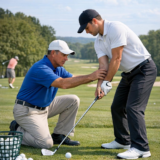
The biomechanics of human movement-defined as the submission of mechanical principles to biological systems-provides a rigorous framework for analyzing the golf swing and its constituent phases (Biomechanist.net; Britannica).Within sports science, biomechanical analysis has demonstrable value for optimizing technique, enhancing performance, and reducing injury risk through precise assessment of forces, joint kinematics, and muscle action (Mass General Brigham).applying these tools to the follow-through phase reveals its functional importance beyond aesthetic completion: it reflects the efficacy of energy transfer, the integrity of joint sequencing, and the success of controlled deceleration strategies that together determine shot accuracy and player safety.
A biomechanical perspective on the follow-through emphasizes proximal-to-distal sequencing,conservation and dissipation of angular and linear momentum,and eccentric control of key musculotendinous units. Critical variables include pelvis-thorax separation and timing,shoulder and elbow rotations,wrist release,ground-reaction forces,and the timing of eccentric muscle activity that decelerates the club and upper extremity. Quantitative methods such as three-dimensional motion capture, force-plate analysis, electromyography, and musculoskeletal modeling permit detailed characterization of these phenomena and thier contribution to consistency, club-head path, and joint loading patterns.
This article examines joint sequencing, momentum transfer, and controlled deceleration during the golf swing follow-through, integrating empirical findings and biomechanical principles to identify determinants of accuracy and consistency while highlighting mechanisms of injury risk.By synthesizing current evidence and translating biomechanical insights into practical implications for coaching and conditioning, the analysis aims to inform targeted interventions that promote efficient performance and long-term musculoskeletal health (Mass General Brigham; PMC).
Kinematic Sequencing and Proximal to Distal Momentum Transfer in the Golf Swing Follow Through: Biomechanical Foundations and Practical Training Guidelines
The follow-through phase represents the terminal expression of a properly timed kinematic sequence in wich energy and momentum move from large, proximal segments to smaller, distal segments. Biomechanically, an efficient sequence is characterized by sequential peaks of angular velocity beginning with the pelvis, followed by the thorax, then the upper arm and forearm, and finally the hands and clubhead. This proximal-to-distal progression maximizes clubhead speed while minimizing intersegmental counter-torques; conversely, disruptions to the sequence (early hand release, late pelvis rotation) create compensatory motions that degrade accuracy and increase joint loads. Temporal separation of segment peaks-not simultaneous maximal effort-is the fundamental determinant of effective momentum transfer.
Mechanistically, momentum transfer during the follow-through relies on coordinated intersegmental torques, passive elastic recoil of stretched musculotendinous units, and appropriate use of ground reaction forces. Eccentric braking of proximal musculature immediatly after peak rotation allows stored elastic energy to be transferred distally as concentric action; this stretch-shortening behavior is especially vital across the trunk and shoulder girdle. Controlled deceleration of distal segments (forearm and hands) through eccentric loading is critical for energy dissipation and for protecting the elbow and wrist from excessive impulse during mis-hits. The following simplified table summarizes typical peak-order relationships and their primary mechanical roles.
| Segment | Peak Angular Velocity (Order) | Primary Mechanical Role |
|---|---|---|
| Pelvis | 1 (proximal) | Initiate rotational momentum, ground-force transfer |
| Thorax | 2 | Amplify rotation, transmit torque to upper limb |
| Upper arm / Forearm | 3 | Refine clubface orientation, increase distal velocity |
| hands / Clubhead | 4 (distal) | Final velocity generation, accuracy control |
Practical training should emphasize reproducible sequencing and safe deceleration through targeted drills and progressive loading. Key training principles include:
- Segmental timing drills (e.g., step drills, pause-at-top, and split-stance rotations) to exaggerate and ingrain the proximal-to-distal order;
- Explosive-to-eccentric training (medicine-ball throws followed by eccentric trunk control exercises) to develop elastic recoil and deceleration capacity;
- Mobility-strength balance with thoracic rotation mobility and hip power development to permit clean torque transmission;
- Technical cueing that favors sequencing (e.g., ”lead with the hips” and “let the arms release”) rather than pure force production.
Progressions should prioritize motor control at submaximal speed before integrating maximal-effort swings.
Assessment and monitoring should use objective metrics and simple clinical cues to guide training load and technique correction. Useful measures include timing of segmental peak velocities via high-speed video or inertial sensors, ground reaction force symmetry, and subjective measures of arm deceleration comfort. Common failure patterns-premature arm acceleration,hip-bump without rotation,and inadequate trunk dissipation-are amendable through targeted corrective drills and graded strength work.Emphasizing reproducible kinematic sequencing and controlled distal deceleration produces measurable gains in accuracy and consistency while reducing cumulative joint loading and injury risk.
Joint Specific Contributions During the Follow through with Emphasis on Hip, Trunk and Shoulder Coordination and Corrective exercise Strategies
The proximal drive of the lower body establishes the kinetic chain that dominates the follow-through. During impact and early follow-through the **lead (left) hip extends and adducts**,acting as a primary transmitter of angular momentum into the trunk,while the trail (right) hip undergoes controlled internal rotation and eccentric braking to regulate pelvic rotation. Efficient energy transfer requires coordinated timing: pelvic rotation should lead thoracic rotation by approximately 20-40 ms in skilled performers to minimize energy leaks.Poor hip sequencing-limited lead hip extension or excessive lateral shift-commonly manifests as early trunk deceleration, reduced clubhead speed, and compensatory upper-body motion that increases injury risk.
The trunk functions both as a force amplifier and as a stabilizer during the follow-through. Rapid axial rotation decelerates via eccentric work of the contralateral obliques and erector spinae, while the deeper stabilizers (e.g., **transverse abdominis**) maintain intersegmental stiffness. Key trunk contributions include:
- Sequential rotation-timed thoracic rotation following pelvic drive to preserve angular momentum transfer.
- Eccentric control-gradual deceleration of rotation to protect lumbar structures and avoid overloading facets.
- force coupling-integration of contralateral oblique activity with ipsilateral hip extension for efficient plane continuity.
Shoulder and scapulothoracic mechanics finalize club orientation and provide the braking necessary to dissipate residual energy safely. The lead shoulder typically continues across the chest into flexion and horizontal adduction, while the trail shoulder externally rotates and elevates; coordinated scapular upward rotation and posterior tilt preserve glenohumeral congruence. Eccentric loading of the **rotator cuff** and scapular stabilizers is critical to decelerate the arm without impingement. Corrective strategies hear prioritize restoring scapular rhythm and rotator cuff endurance through targeted exercises such as resisted scapular retraction, eccentric external rotation, and low-load closed-chain pressing drills.
A prescriptive approach to corrective exercise emphasizes joint-specific interventions embedded in integrated movement progressions. Start with mobility and control at the hips (thoracic rotation drills, lead hip extension lunges), progress to trunk dissociation and eccentric core capacity (loaded rotational negatives, Pallof eccentric holds), then address scapulothoracic resilience and shoulder deceleration. The table below summarizes concise corrective selections and practical dosing for follow-through optimization.
| Exercise | Primary Target | Dosage |
|---|---|---|
| Lead‑hip hinge with band | Hip extension control | 3×8-12 |
| Seated thoracic rotations | Trunk dissociation | 3×10 each side |
| Eccentric external‑rotation | Rotator cuff decelerators | 3×6 slow |
Ground Reaction Forces and Lower Limb Mechanics in the Follow Through: monitoring Weight Shift,Stability and Recommendations for Force Application Drills
The role of the ground as the initial reaction force source is central to efficient momentum transfer through the kinetic chain during the follow‑through. Ground reaction forces (GRFs) exhibit both vertical and horizontal vectors that are timed to absorb residual club energy while redirecting body momentum safely forward. Precise sequencing of peak GRF – typically a rapid lateral transfer onto the lead foot immediately after impact followed by a controlled posterior decay – correlates with improved shot dispersion and reduced compensatory upper‑body torque. Quantifying these vectors through force‑plate or in‑shoe pressure mapping elucidates how lower‑limb force production and dissipation contribute to clubhead deceleration and subsequent torso kinematics.
Lower‑limb mechanics during the post‑impact phase are characterized by coordinated hip extension/rotation, knee extension with controlled eccentric loading, and ankle plantarflexion into a stable base. The lead limb functions as a dynamic brake: eccentric quadriceps and gluteal activity modulate knee flexion and pelvic rotation, while the trail limb often performs a stabilizing role during weight transfer. Deviations in joint sequencing - for example, premature hip deceleration or inadequate ankle stiffness – increase transverse plane stress at the lumbar spine and shoulder complex and elevate injury risk. Objective capture of joint angles, angular velocities, and muscle activation timing provides diagnostic insight into dysfunctional patterns.
Monitoring strategies should prioritize simple, repeatable metrics that map to performance and injury risk. Key variables include peak GRF magnitude and timing relative to impact,percentage body weight borne by the lead limb at three time points (impact,100 ms post‑impact,and peak follow‑through),and center‑of‑pressure (CoP) progression across the plantar surface.Clinicians and coaches can implement field‑friendly assessments to approximate these metrics:
- Portable force/pressure insoles: estimate weight shift and CoP path in on‑course conditions.
- Timed balance tests: single‑leg static/dynamic hold post‑swing to gauge eccentric control.
- Video analysis with frame timing: identify relative timing of hip/knee extension to impact.
- Simple load‑cell scales: bilateral weight readings before, during, and after swing to monitor distribution.
For applied intervention, progressive drills should emphasize controlled force application and deceleration rather than maximal, uncontrolled pushes off the ground. Recommended exercises include step‑and‑hold swings to train gradual GRF ramp‑up, resisted rotational medicine‑ball throws with emphasis on a stable lead leg, and eccentric single‑leg squats to enhance quadriceps braking capacity. Integrate tempo modulation (slow → medium → game‑speed) and objective targets (e.g., achieve ≥60% body weight on lead limb at 100 ms post‑impact while maintaining CoP medial shift of ≤2-3 cm).The following table summarizes a concise drill‑to‑metric mapping for field implementation.
| Drill | Primary Metric | Coaching Cue |
|---|---|---|
| Step‑and‑hold swing | Lead %BW at 100 ms | “Step, plant, stabilize” |
| Med ball rotational throw | Peak rotational power; CoP stability | “Drive through the lead foot” |
| Eccentric single‑leg squat | Time to failure; controlled descent | “Slow down, hold 2 s” |
Controlled Deceleration and Eccentric Muscle Demands in the Follow through: Injury Prevention Principles and Conditioning Protocols
Controlled deceleration in the follow-through is the active, neuromuscular process by which rotational and translational momentum are attenuated through sequential joint braking rather than abrupt stoppage. Lexical definitions characterize “controlled” as being kept in check or restrained; in biomechanical terms this requires precisely timed eccentric contractions distributed across the shoulder complex, thorax, and lower limb to convert kinetic energy into safely managed muscular work and connective tissue strain. Effective deceleration maintains the kinematic sequence that generated ball speed, permitting accurate directionality while minimizing impulsive loads that predispose to microtrauma. Quantitatively,magnitude and duration of eccentric work correlate with both immediate ball-flight control and long-term tissue adaptation.
Eccentric demands are highest in structures that oppose continued rotation and translate angular momentum into dissipative muscle work.Primary contributors include the rotator cuff and periscapular musculature (eccentric external rotation and scapular stabilization), the oblique and paraspinal trunk muscles (eccentric control of transverse plane rotation), and the hip extensors/abductors and hamstrings in the stance and trail limbs (eccentric control of pelvic deceleration and lower‑limb collapse). Tendon loading patterns are nonuniform: rapid deceleration produces high peak tensile loads over short durations, whereas slower, sustained braking distributes load but increases total eccentric work. Both patterns require distinct conditioning emphases to reduce overload risk.
Injury prevention principles emphasize graduated exposure to eccentric load, restoration of intersegmental timing, and integration of reactive control strategies. Core tenets include: progressive eccentric overload (systematic increase in eccentric intensity and volume),movement-specific tempo training (practicing deceleration at varied speeds),and neuromuscular specificity (drills that reproduce swing sequencing).Conditioning protocols should pair tissue‑targeted eccentric exercises with dynamic stabilization, proprioceptive challenges, and mobility maintenance to preserve force-dissipation pathways without compromising rotational power.
- Eccentric rotator cuff: slow external-rotation eccentrics with elastic bands (3-5 sec lowering).
- Trunk deceleration: rotational medicine-ball tosses with controlled catch and decelerative hold.
- Hip & hamstring control: single-leg RDLs and Nordic-style eccentrics to build lengthening capacity.
- Reactive transfer drills: step-and-rotate progressions to enforce timing under variable load.
| Exercise | Primary Target | Prescription |
|---|---|---|
| Eccentric ER with band | Infraspinatus/Teres minor | 3×8-12, 4-5s tempo |
| Med-ball decel throws | obliques/Trunk stabilizers | 3×6-10, controlled catch |
| Single-leg RDL | Glute/ham eccentric control | 3×6-10 per side, 2-3s descent |
| Nordic hamstring | Hamstrings (eccentric) | 2-3×4-6, progressive assistance |
Monitor response with perceived exertion and movement quality metrics; integrate these protocols progressively within the weekly program to optimize deceleration capacity while safeguarding tissue resilience.
Temporal Constraints and Timing Variability of the Follow Through: Measurement Methods, Consistency Thresholds and Feedback Based Practice Interventions
Contemporary assessment of the temporal architecture of the swing follow-through relies on multimodal instrumentation to capture both gross kinematics and neuromuscular timing. Commonly employed systems include high-speed optical motion capture (200-1000 Hz) for segmental angular velocities and intersegmental sequencing, inertial measurement units (IMUs) for field-friendly angular impulse and phase timing, force plates and pressure insoles for ground reaction timing and center-of-pressure excursions, and surface EMG to time onset and cessation of deceleration-related muscle activity. Supplemental methods, such as radar/ball-tracking for impact-to-ball exit intervals and synchronized video-frame analysis for coarse temporal markers, enable cross-validation of timing estimates and permit latency-corrected alignment between mechanical events and muscular activation patterns.
Quantifying temporal variability requires selection of robust summary statistics and operational consistency thresholds.Typical metrics include meen event latency (ms), inter-event intervals (e.g., impact-to-peak-trunk-rotation), within-subject standard deviation, and coefficient of variation (CV = SD / mean). As a pragmatic guideline derived from comparative studies across skill levels, elite performers often exhibit CVs in the range of 3-7% for critical timing intervals, while recreational players commonly show CVs >10-15%. The following simple reference table provides illustrative benchmarks for three representative timing variables (values are indicative and should be calibrated to local populations):
| Timing Variable | Elite CV (approx.) | Novice CV (approx.) |
|---|---|---|
| Impact → Peak Hip Rotation (ms) | 4-6% | 12-18% |
| impact → Trunk Deceleration Onset | 3-5% | 10-16% |
| Downswing Duration | 5-7% | 11-20% |
Reducing detrimental timing variability and improving controlled deceleration is most effective when measurement informs targeted, feedback-based practice. Empirically supported interventions include:
- Augmented auditory cues (metronome or phase-specific tones) to entrain phase durations;
- Real-time visual feedback of key timing metrics (e.g., impact-to-deceleration interval) displayed as simple gauges;
- Haptic/vibrotactile cues to signal premature or delayed deceleration onsets;
- Task and variability-focused practice (blocked to establish baseline timing, then variable to promote robust timing solutions).
Best-practice implementation favors faded-feedback schedules (high frequency during acquisition, progressively reduced to promote intrinsic error detection), threshold-based alerts (trigger feedback only when CV or latency deviates beyond preset limits), and integration of constraint-led tasks that couple temporal targets with outcome goals. Emphasize progressive overload of temporal precision: establish individual baseline timing, define clinically/practically relevant consistency thresholds (e.g., reduce CV by 20% toward elite benchmarks), and iterate using objective measurement to confirm transfer and injury-risk reduction.
Clubhead Path, Release Mechanics and the Impact of the Follow Through on Accuracy: Technical Adjustments and Targeted drills
Precise modulation of the clubhead trajectory through the follow-through phase provides a retrospective indicator of the pre-impact motion and a prospective influence on ball flight. Deviations from the desired plane-commonly expressed as an in-to-out or out-to-in path-directly alter face-to-path relationships and thus lateral dispersion and spin axis. Kinematic chaining between the pelvis, thorax and upper limb determines weather the clubhead decelerates in front of the body or continues on a rounded arc; the former tends to produce concentrated impact points and predictable spin, whereas the latter increases variability. Objective assessment with high-speed video or a launch monitor is therefore essential to quantify path tendencies and to isolate follow-through signatures that predict misses.
Release mechanics are a temporally sensitive set of actions involving forearm pronation/supination, wrist uncocking, and coordinated elbow extension. The timing of the release relative to peak torso rotational velocity governs effective loft and dynamic loft at impact. Late or abrupt release elevates spin and reduces launch consistency,while an excessively early release (casting) diminishes clubhead speed and introduces directional error. From a biomechanical perspective, optimizing release requires aligning segmental angular velocities so that distal segments (forearm, hand) are accelerated by proximal segments (upper arm, trunk) in a proximal-to-distal sequence, thereby maximizing kinetic transfer and minimizing compensatory wrist action that degrades accuracy.
Technical adjustments should emphasize reproducible kinematic patterns and sensory cues that the golfer can internalize. Targeted interventions include:
- Alignment rod path drill – set a rod parallel to the intended path to encourage a square-to-inside-to-square release;
- Towel-under-arm drill - promotes connectedness between the torso and lead arm, reducing premature separation;
- Slow-motion lag drill – exaggerates proximal-to-distal sequencing to re‑train release timing;
- One-handed follow-through - isolates wrist and forearm mechanics to refine pronation and reduce flicking.
Each drill targets a specific kinematic deficit and should be integrated into practice with focused feedback (video,coach observation or sensor data) to ensure transfer to full‑speed swings.
To structure practice and monitor progress, use concise metrics and short-progress tables that relate drill selection to measurable outcomes. The table below provides a practical matrix for short practice blocks and primary objectives, suitable for inclusion in a periodized practice plan. Emphasize small, repeatable sets with objective feedback: record club path deviation (degrees), face-to-path differential (degrees) and dispersion (m) before and after intervention to evaluate efficacy.Progressive overload in motor learning terms implies increasing contextual variability (different clubs, lies and targets) only after the desired release and path patterns are reproducible under controlled conditions.
| Drill | Primary Focus | Suggested Sets × Reps |
|---|---|---|
| Alignment rod | Path consistency | 3×10 |
| Towel under arm | Connection/torso-arm sync | 4×8 |
| One-handed follow-through | Release control | 3×6 each side |
Integrating Mobility, Strength and Motor Learning to Develop Durable Follow Through Patterns: Periodization and Assessment Recommendations
Integrating mobility, strength, and motor learning requires explicit mapping of physical capacities to the kinematic demands of the follow-through. Emphasize restoring and preserving **thoracic rotation**, **lead-hip internal rotation**, and **scapulothoracic upward rotation** so the proximal segments can decelerate distal mass without compensatory load at the lumbar spine or shoulder. Strength training should prioritize eccentric control of the rotator cuff and posterior chain concentric‑to‑eccentric transitions, matching the time scale and velocity of late‑phase swing mechanics. Conditioning targets should therefore be specified in terms of angular velocity tolerance,joint‑specific torque capacity,and time‑to‑peak force to ensure mechanical compatibility with on‑course speeds.
A periodized framework organizes these targets across macro‑, meso‑, and microcycles so adaptations are usable under fatigue and variability. the preparatory mesocycle builds mobility and general strength with controlled velocity,the specific mesocycle emphasizes power,deceleration eccentricity,and intersegmental coordination,and the peaking/competition mesocycle prioritizes movement consistency,reactive stability,and maintenance loads. Include scheduled technical work that transitions from blocked to variable practice and taper eccentric loading before peak performance to preserve force capacity while reducing soreness.
| Phase | primary Focus | Typical Duration |
|---|---|---|
| preparatory | Mobility, general strength | 4-8 weeks |
| Specific | Power, eccentric decel, coordination | 6-10 weeks |
| Competitive | Maintenance, speed, retention | Ongoing |
Assessment must be both laboratory and field‑based, and should track capacity, skill, and durability. Recommended measures include **passive and active thoracic rotation (deg)**, **lead hip IR/ER ROM (deg)**, single‑leg stance time with eyes closed (s), isometric mid‑thigh pull peak force (N), and a sport‑specific deceleration task capturing peak eccentric torque of shoulder external rotators (Nm). Regularly scheduled reassessments (every 4-8 weeks in preparatory/specific phases; 2-4 weeks during competition) allow progressive overload calibration and identification of transfer deficits between gym and range.
- Movement diagnostics: 3D or high‑speed video to quantify proximal‑to‑distal sequencing and timing offsets.
- Physical tests: ROM, strength, and eccentric control tests matched to follow‑through demands.
- Motor learning metrics: variability tolerance, retention trials, and dual‑task performance to evaluate automaticity.
To cultivate durable follow‑through patterns, integrate motor learning strategies that promote adaptability and resilience. Use a constraint‑led approach and structured variability to drive problem solving under task constraints, progress feedback from high‑frequency to faded schedules to encourage internal error detection, and incorporate perturbation and fatigue tasks to train robustness of deceleration.Preventive loading emphasizes eccentric training for posterior shoulder and hip extensors,thoracic mobility maintenance,and scapular stabilization drills; these reduce injury risk while supporting consistent kinematic sequencing across repeated swings and competitive stressors.
Q&A
1) Q: What is the biomechanical definition of the golf swing follow-through and why is it important?
A: The follow-through is the phase of the swing immediately after ball contact during which the golfer dissipates residual energy, completes joint rotations, and stabilizes posture. Biomechanically, it represents the terminal portion of a coordinated kinetic chain in which angular and linear momentum generated from the ground up are managed to ensure desired ball flight while minimizing injurious load. Its importance lies in (a) reflecting the quality of preceding sequencing and clubface control, (b) serving as the controlled deceleration phase that protects tissues from excessive eccentric loading, and (c) providing real‑time feedback on swing consistency and accuracy (see general biomechanics principles, e.g., MIT department of Biological Engineering; Verywell Fit; Stanford).
2) Q: Which joints and segments are most active during the follow-through, and what is the typical sequencing?
A: The principal segments are the lower extremities (pelvis/hips), trunk (lumbar and thoracic spine), shoulders/scapulae, elbows, wrists, and finally the club. Typical distal-to-proximal sequencing is reversed from the downswing: at impact the hips lead the rotation, followed by thorax and shoulders; after impact, continued pelvic rotation decelerates, thoracic rotation completes, lead arm extends and then flexes eccentrically, and trailing elbow and wrist release and decelerate. Effective follow-through shows smooth energy dissipation from larger proximal segments to smaller distal segments, consistent with kinetic‑chain principles described in applied biomechanics literature.
3) Q: How does momentum transfer through the kinetic chain affect accuracy and consistency?
A: Momentum transfer is the process by which ground‑reaction forces and proximal segment rotations produce angular velocity at the clubhead. Accurate and repeatable transfer requires: coordinated timing (sequencing) so that peak angular velocities occur in the intended order; minimal extraneous movement that perturbs clubface orientation; and appropriate stiffness/damping properties of joints to avoid oscillation. If sequencing or timing is disrupted, the clubface orientation at and after impact varies, degrading accuracy and consistency. Studies in sports biomechanics emphasize that optimizing intersegmental timing and force production improves performance while reducing compensatory variability (see applied biomechanics resources).
4) Q: What are the primary risks of inadequate controlled deceleration in the follow-through?
A: Inadequate deceleration can produce excessive eccentric loading and shear forces at the lumbar spine,lead shoulder (rotator cuff and labrum),wrists,and elbows (medial/lateral epicondyles). Repeated exposure to high eccentric loads-especially when accompanied by poor trunk stabilization or abrupt stops-can lead to overuse injuries such as lumbar facet irritation, rotator cuff tendinopathy, and wrist extensor/flexor tendinopathies. Controlled deceleration mediated by coordinated eccentric muscle actions mitigates peak tissue stress.
5) Q: What muscular actions are responsible for controlled deceleration?
A: Controlled deceleration primarily relies on eccentric actions of trunk rotators and stabilizers (obliques, multifidus, erector spinae), eccentric braking by the lead arm musculature (biceps, brachialis, wrist extensors/flexors), and eccentric/eccentric-isometric control from the rear-side musculature that resists excessive rotation. Hip and knee extensors absorb part of the ground‑reaction energy. Co-contraction of stabilizers around the shoulder girdle and lumbar spine helps distribute forces safely.
6) Q: Which biomechanical measurements best quantify a healthy follow-through?
A: Useful metrics include:
– Temporal sequencing: relative timing of peak angular velocity for pelvis, thorax, and club (motion capture).
– Angular velocities and ranges of motion of pelvis and thorax.
– Clubface orientation at impact and immediately post‑impact (high‑speed video).
– Ground-reaction force patterns and center-of-pressure progression (force plates).
– Eccentric braking moments at shoulder and elbow (inverse dynamics).
Monitoring these metrics allows assessment of energy transfer efficiency, deceleration quality, and injury risk.7) Q: How can clinicians and coaches assess follow-through deficiencies in the field?
A: Practical tools:
– High‑speed video from face‑on and down‑the‑line views to judge sequencing, swing plane, and clubface behavior.
– Simple pressure mat or mobile force sensors to observe weight transfer and timing.
– Functional movement tests for trunk rotation, hip mobility, and shoulder stability.- Hands-on palpation and resisted tests to evaluate eccentric strength of rotators and elbow/wrist stabilizers.
Combine observational analysis with targeted physical screens to identify mechanical and physical constraints.
8) Q: What are common technical faults in the follow-through and their biomechanical causes?
A: Examples:
– Early deceleration/”casting” (loss of wrist lag): often due to insufficient lower‑body drive or inadequate thoracic rotation, leading to premature release and reduced clubhead speed.
– Over-rotation or collapse of the lead side: may reflect poor trunk stability or weak hip abductors,increasing lumbar shear.
– Abrupt stopping of rotation (short follow-through): indicates lack of eccentric control, increasing stress on shoulder and lumbar spine.
– Open/closed clubface post‑impact variability: often caused by inconsistent wrist/forearm sequencing or compensatory shoulder movements.
9) Q: Which drills and training interventions improve follow-through mechanics and safety?
A: Evidence‑based interventions:
– Sequencing drills: step‑through swing or ”toe‑tap” drills that promote pelvic lead and correct torso rotation timing.
– Deceleration drills: controlled half‑swings focusing on slow, balanced finish; resisted eccentric band drills for the posterior shoulder and trunk.
– Ground‑force drills: medicine ball throws and rotational landmine presses to enhance proximal power transfer.
– Mobility/stability: thoracic rotation mobility, hip internal/external rotation work, and rotator cuff eccentric strengthening.
– load management and progressive overload to condition tissues to eccentric demands.
10) Q: How should strength and conditioning be periodized to support follow-through mastery?
A: Periodize across phases:
– Off‑season: emphasize strength (hip, trunk, shoulder) and eccentric capacity development, mobility work, and technique re‑training.
– Pre‑season: shift toward power and movement specificity (fast rotational medicine‑ball throws, plyometrics), integrate swing drills with monitoring.
– In‑season: maintain strength and power with low‑volume, high‑quality sessions; prioritize recovery and technique consistency.
Regularly re-assess functional deficits and adjust load to minimize overuse risk.
11) Q: What role do mobility and anatomical constraints play in follow-through mechanics?
A: Adequate hip internal rotation, thoracic extension/rotation, and shoulder scapular mobility are prerequisites for efficient follow-through. restrictions force compensatory motion elsewhere (e.g., increased lumbar rotation or scapular dyskinesis), which alters sequencing and raises injury risk.Screening and targeted mobility interventions are therefore essential components of biomechanically informed coaching.
12) Q: How can technology (motion capture, force plates) be integrated into applied coaching of follow-through?
A: Combine quantitative assessments (3D motion capture for angular timing/velocities; force plates for GRF timing and magnitude) with qualitative video observation. Use objective thresholds (e.g., pelvis-to-thorax separation timing, peak rotation velocities) to diagnose sequencing faults and evaluate progress. When full lab access is not available, simplified metrics from high‑speed video and wearable inertial sensors provide clinically useful proxies.
13) Q: What are practical takeaways for reducing injury risk while optimizing accuracy and consistency?
A: Key points:
– Prioritize proximal-to-distal sequencing and allow the hips to lead rotation.
– Train eccentric strength and neuromuscular control for controlled deceleration.
– Address mobility deficits to avoid compensatory patterns.
– Use progressive, sport‑specific loading and monitor volume to limit overuse.
– Employ objective assessments where possible to guide individual interventions.
14) Q: Where can readers find additional authoritative resources on applied sports biomechanics?
A: Foundational and applied references include university biomechanics programs and clinical summaries (e.g., MIT Department of Biological Engineering, Stanford Biomechanics, and applied sports biomechanics resources such as those produced by major medical centers). For general introductions to biomechanics and movement analysis, consult educational summaries from reputable sources (e.g., Verywell Fit, Mass General Brigham) and peer‑reviewed sports science journals for specific empirical studies.
If you woudl like, I can: (a) produce a printable Q&A handout formatted for coaches and clinicians, (b) design a short on‑course assessment protocol, or (c) summarize key drills with progressions tailored to different ability levels. Which would you prefer?
In sum, a biomechanically informed understanding of the golf swing follow-through underscores that optimal performance emerges from the coordinated sequencing of joints, efficient transfer of angular and linear momentum, and intentional, graded deceleration. These elements operate synergistically to stabilize clubface orientation at impact, conserve kinetic chain energy throughout ball contact, and dissipate residual forces in ways that minimize undue load on vulnerable structures. When executed with temporal precision and intersegmental coherence, the follow-through is not merely a cosmetic extension of the swing but an integral phase that reflects and reinforces upstream mechanics.For practitioners-coaches,clinicians,and athletes-the practical implications are twofold. First, assessment and instruction should prioritize observable markers of sequencing and momentum flow (pelvic-shoulder separation timing, proximal-to-distal rotation, controlled elbow and wrist extension) rather than isolated position cues. second, progressive training that integrates strength, neuromuscular control, and movement-specific drills can promote the deceleration capacity required to protect tissues without compromising accuracy. Objective measurement tools (e.g.,3D motion capture,wearable inertial sensors,force platforms) can enhance diagnosis and individualize interventions,but should be interpreted within the context of athlete-specific goals and constraints.
looking forward, continued interdisciplinary research is warranted to delineate the optimal ranges of sequencing variability for different skill levels and body morphologies, to quantify the trade-offs between power and joint loading across follow-through strategies, and to translate laboratory findings into field-applicable training protocols. By coupling rigorous biomechanical analysis with pragmatic coaching methodologies, the field can advance toward evidence-based practices that elevate performance while reducing injury risk.