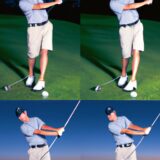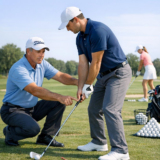
Contemporary performance coaching in golf increasingly demands that practice interventions be grounded in empirical research rather than tradition or anecdote.This article synthesizes biomechanical, motor-learning, and cognitive studies to present drills whose design and expected outcomes are supported by measurable evidence. Emphasis is placed on direct observation and quantitative measurement-empirical evidence-so that instructors and athletes can evaluate efficacy through objective metrics rather than relying solely on subjective impressions.
Recognizing that evidence supports inference rather than providing absolute proof, the following discussion treats research findings as a basis for probabilistic decision-making: interventions are recommended when convergent empirical results indicate likely benefit for specific technical deficits or skill components. Where the literature is equivocal or sparse, recommended practices are framed as hypotheses for structured evaluation in applied settings, with suggested measurement protocols for assessing retention and transfer.
The drills are organized around common performance goals-precision, ball-striking consistency, tempo control, and decision-making under pressure-and mapped to the underlying mechanisms identified in the literature (e.g., kinematic sequencing, variability of practice, augmented feedback schedules). For each drill, the rationale, specific execution parameters, measurable outcome variables, and progressions are provided to enable reproducible implementation and systematic monitoring of advancement.
By integrating current biomechanical insight with motor-learning principles and pragmatic measurement strategies, this work aims to bridge the gap between research and coaching practice. The goal is to equip practitioners with interventions that are both theoretically justified and practically verifiable, fostering more efficient, individualized, and evidence-aligned skill development.
Theoretical Foundations: Integrating Biomechanics and Motor Learning Principles for Golf Skill Acquisition
Contemporary instruction synthesizes quantitative biomechanical descriptors (kinematics, kinetics, segmental sequencing) with principled frameworks from motor learning (schema theory, ecological dynamics, and reinforcement schedules) to create drills that are both mechanically sound and neurologically robust. By operationalizing movement objectives-such as energy transfer efficiency and clubface orientation at impact-coaching interventions can specify measurable targets while preserving the athlete’s adaptive capacity. This dual emphasis reduces the risk of mechanically isolated correction that fails to generalize under competitive constraints.
Core explanatory mechanisms guide drill selection and progression.Key concepts include:
- Segmental sequencing: linking proximal-to-distal timing adjustments with augmented feedback to expedite retention.
- Perception-action coupling: designing tasks that embed decision-making to maintain ecological validity.
- Practice variability: manipulating contextual and parameter variability to promote robust motor schemas.
These mechanisms align to produce drills that target both the physical production of a repeatable swing pattern and the cognitive processes that support adaptive shot selection.
| Biomechanical Focus | Motor-Learning Strategy | Representative Drill |
|---|---|---|
| sequencing (hips → torso → arms) | Blocked → random progression | Slow motion reps → variable-speed swings |
| Impact orientation | Augmented feedback (KR/KP) | Impact tape + delayed summary feedback |
| Shot variability | Contextual interference | Multi-target range series |
Translational considerations emphasize that practice must preserve the affordances of on-course performance: wind, stance variability, and psychological load. Implementing drills at representative venues-ranging from structured practice ranges to more variable environments like municipal or club courses (for example, Airport Golf Club or Cheyenne Country Club)-enhances transfer by coupling motor solutions to realistic sensory information. progress metrics should combine inertial/kinematic measures with retention and transfer tests to adjudicate whether changes reflect transient adjustments or durable skill acquisition, thereby closing the loop between theory and applied coaching.
Assessing Technical Deficits: Objective Movement Diagnostics and Measurement Protocols for Individualized Drill Selection
Objective diagnostic systems should form the foundation for targeted technical remediation. integrating kinematic (segmental rotations, clubhead trajectory), kinetic (ground reaction forces, weight transfer), and neuromuscular (EMG onset, co-contraction) measures provides a multi-dimensional profile of an individual’s swing. Recommended instrumentation includes **3D motion capture or calibrated IMUs**,**force plates or pressure mats**,**launch monitors**,and **surface EMG** when available.Data should be processed to yield repeatable metrics such as peak clubhead speed, pelvic-shoulder separation, lateral center-of-pressure shift, and timing offsets between pelvis and thorax rotation.
To ensure measurement validity and reliability, adopt standardized protocols: consistent warm-up, static calibration, a fixed ball/tee setup, and a minimum of 10 recorded swings per condition with both typical and constrained task variations. Compute within-subject variability (coefficient of variation) and test-retest intraclass correlation coefficients to determine stability. Below is a concise reference table for common metrics and illustrative reliability targets used to guide clinical judgment:
| Metric | Typical Unit | Illustrative Reliability Target |
|---|---|---|
| Peak clubhead speed | m·s⁻¹ | ICC > 0.85 |
| pelvic rotation ROM | degrees | CV < 10% |
| Weight shift magnitude | % body weight | ICC > 0.80 |
Interpretation should map quantified deficits to mechanistic causes and then to prioritized drills. For example, **reduced pelvic rotation** with preserved thoracic motion suggests inadequate hip mobility or sequencing errors; prescribe progressive rotational mobility and separation drills with emphasis on pelvis lead.If diagnostics indicate **early extension** (anterior pelvic tilt and vertical COM rise), prioritize posture stabilization and eccentric hip control drills. Use an evidence-informed mapping such as:
- Low separation angle: lead pelvis-first rotary sequencing drills + resisted rotation.
- Asymmetrical weight transfer: stepping or pressure-shift drills with biofeedback.
- Timing inconsistency: metronome-paced acceleration drills and chunked swing segmentation.
Translate diagnostics into an individualized progression plan that prescribes dosage (sets × reps), frequency (practice sessions/week), and feedback modality (video, pressure-plate live feedback, auditory timing cues). Begin with high-frequency, low-complexity motor patterns, progress to variable practice that increases contextual interference, and schedule objective retention and transfer tests at 1- and 4-week intervals. Auxiliary web searches returned lexical resources (e.g., iciba entries) which were consulted to standardize terminology across the measurement protocol and reporting templates. Prioritize measurement-driven decision rules so drill selection remains responsive to longitudinal changes rather than subjective impressions alone.
Drill Design Principles: structuring Variable and Repetitive Practice to Optimize Motor Patterning and Transfer
Contemporary motor-learning theory supports a purposeful interplay between repetition and variability to cultivate both stable motor patterning and flexible adaptability. schema theory and dynamical systems perspectives converge on the idea that **repetitive practice** stabilizes core kinematic-temporal relationships, while **variable practice** broadens the learner’s action repertoire to facilitate transfer across contexts.Effective drill design therefore targets invariant features of the golf swing (e.g., tempo, spine angle) through repeated, purposeful exposures, while systematically introducing task and environmental variability to prevent overfitting of a single movement solution.
Session architecture should be intentional and phased: initial acquisition frequently enough benefits from concentrated, blocked repetitions to establish the movement scaffold; subsequent phases should progressively incorporate interleaving and randomization to strengthen adaptability. Consider embedding the following components within each practice block:
- Stabilization set: 8-12 constrained repetitions focusing on one invariant (e.g., wrist hinge).
- Variability set: 12-20 reps with altered ball lie, stance width, or target distance.
- Contextual set: 10-15 mixed-goal trials to induce contextual interference and decision-making.
- Reflection and measurement: brief video or quantitative feedback after each block.
feedback schedule and dose modulation are central to optimizing learning curves.Empirical evidence favors **faded feedback** (high-frequency feedback early, reduced over time) and emphasizing outcome-based knowlege of results (KR) augmented intermittently with knowledge of performance (KP) for technique correction. The following fast reference provides pragmatic dosing for mixed drill programs:
| Practice Type | Primary Aim | Typical Dose |
|---|---|---|
| Blocked Reps | Motor stabilization | 8-12 reps × 3 sets |
| Variable Conditions | Generalization & transfer | 12-20 reps × 2-4 sets |
| Contextual Interference | Decision-making & retention | 10-15 mixed trials |
Maximizing transfer requires representative task design and progressive constraint manipulation so perceptual cues and action possibilities mirror on-course demands. Prioritize drills that couple perception and action (e.g., variable target selection under time pressure) and evaluate retention with delayed-transfer tests rather than immediate performance alone. For long-term development, embed measurable criteria (accuracy thresholds, dispersion metrics, tempo consistency) and adapt drill complexity according to performance stability, ensuring progression from repetition-driven consolidation to variability-driven transfer.
Biomechanically Informed Short Game Drills: Evidence Based Strategies to Improve Stroke consistency and Control
Underlying mechanics inform short‑game interventions: controlled center‑of‑mass (COM) displacement, constrained wrist motion, and a proximal‑to‑distal energy transfer produce repeatable contact and launch conditions. kinematic variability studies indicate that reducing degrees of freedom around the wrists and maintaining a stable torso‑spine axis decreases stroke endpoint variability, whereas coached full‑body sequencing improves distance control for pitch shots. Emphasize ground reaction force symmetry and minimal lateral COM travel to manage loft and spin without increasing stroke noise; these objectives align with motor‑control evidence favoring constrained, task‑specific coordination patterns for accuracy under pressure.
Practical drills translate biomechanical targets into actionable tasks.Use an external focus and simple constraints to shape technique rather than prescribing joint angles.Examples include:
- Gate‑Path Gate – place two tees to form a narrow throat through which the clubhead must pass to train consistent face‑path alignment and minimize excessive arc width.
- Choke‑Down Pendulum Chip - grip lower on the shaft and practice a low‑wrist pendulum stroke to reduce wrist flexion/extension variability and stabilize loft at impact.
- Tempo metronome Pitch – synchronize backswing and downswing timing to a metronome ratio (e.g., 2:1) to control energy transfer and improve distance dispersion.
- Stability Step Bunker – adopt a one‑step compact stance and practice repetitive splash motions to reinforce COM control and consistent sand engagement.
To guide session design, employ faded augmented feedback and progressive constraint manipulation. The table below summarizes drill intent, primary biomechanical cue, and a concise metric to monitor; use it to set objective targets and retention checks.
| Drill | Primary Cue | Monitor |
|---|---|---|
| Gate‑Path Gate | Clubhead through throat | Path deviation (cm) |
| Choke‑Down Pendulum | Minimal wrist motion | Launch angle SD |
| Tempo Metronome | 2:1 timing | Distance dispersion |
Evidence supports brief, high‑quality blocks (e.g., 10-20 trials) with intermittent summary feedback rather than continuous correction, preserving the learner’s ability to self‑organize effective coordination.
Progression should emphasize retention and transfer: after acquisition, test performance following a 24-48‑hour delay and in a simulated course context to assess robustness. Quantify improvement with simple outcome metrics (median proximity, interquartile dispersion) and biomechanical checks (coaching video or inertial sensor summaries). Scale difficulty by altering target size, lie complexity, or imposed timing constraints. For consolidation, integrate variable practice schedules and allocate sessions with distributed practice (short blocks across days) to maximize long‑term retention and on‑course transfer; prioritize quality over high volume to reduce maladaptive variability and encourage stable motor programs.
Driving and Full Swing interventions: Kinematic Targets, Progressive Load Paths, and Prescriptive Drill Progressions
kinematic priorities for the driver and full swing emphasize coordinated multi‑segment rotation, efficient energy transfer through the lower body, and maintenance of a repeatable swing arc. Key biomechanical targets include: **pelvic rotation amplitude and timing**, **torso‑pelvis separation (X‑factor) at transition**, **vertical and lateral center‑of‑mass (COM) displacement consistent with force production**, and **clubhead radius and plane stability through impact**. Addressing these variables reduces deleterious compensations (e.g., early extension, lateral slide, or early release) and provides concrete, measurable goals for intervention rather than vague stylistic cues.
Interventions should follow a progressive load‑path model that moves from low to high mechanical demand while preserving correct sequencing. A practical progression is:
- Static positional training (athlete holds key addresses/finish positions to internalize joint angles),
- Unloaded dynamic patterns (air swings, band‑assisted rotations to reinforce timing without impact),
- Loaded tempo work (weighted clubs or medicine‑ball throws at submaximal intensity), and
- Full‑speed impact range (full swings with performance measurement and variability).
each stage intentionally increases ground reaction demands and rotational velocity while maintaining the kinematic template; progression criteria should be criterion‑based (e.g., stable pelvis timing across three consecutive reps) rather than time‑based.
Prescriptive drill progressions map specific faults to targeted exercises and learning rules. For restoring separation and power: **medicine‑ball rotational throws → step‑through throws → controlled weighted swings → full‑effort drives**. To improve vertical force and avoid early extension: **impact‑bag compressions → foot‑pressure board drills → tempo‑controlled full swings**. To refine sequencing and clubhead path: **alignment‑rod connection drill (rod under arms) → toe‑up/toe‑down clubface drills → slow→fast transition swings with external cues (“send the clubhead”)**. Motor learning principles should guide practice structure: begin with blocked repetitions for technical acquisition, progress through serial practice, and finalize with randomized, externally cued practice to enhance transfer and retention; provide reduced, faded feedback (bandwidth or summary KR) so players construct robust internal models.
Assessment and progression metrics determine when to increase mechanical load or variability. Use simple objective checks (video frame‑by‑frame for transition timing, launch monitor for clubhead speed and dispersion, or pressure‑mat snapshots for weight transfer) and require stable performance thresholds (e.g., ≤10% variance in peak pelvis rotation, consistent COM shift pattern across five trials) before advancing. The table below offers a concise prescription matrix for common targets and drills, suitable for embedding in a coaching plan.
| Kinematic target | Prescriptive Drill (Progression) |
|---|---|
| Increase X‑factor & separation | Med‑ball rotational throws → Step‑through throws → Weighted slow→fast swings |
| Improve pelvic timing | Foot‑pressure board → Alignment‑rod under armpits → Impact‑bag compressions |
| Stabilize clubhead arc | Toe‑up/toe‑down drill → Long‑radius half swings → Full swing with external cueing |
Cognitive and Attentional Manipulations: Applying External Focus, Implicit Learning, and Decision Training to Enhance Retention
Contemporary motor-learning research indicates that manipulating attentional focus and the mode of instruction can substantially influence both acquisition and long-term retention of golf skills. Adopting an external focus of attention (directing the performer toward the effect of the movement in the surroundings rather than bodily mechanics) consistently produces more robust retention and transfer than internal, body-focused cues. Complementarily,methods that encourage implicit learning-such as analogies or errorless learning-reduce reliance on verbalizable rules and protect performance under pressure. When these approaches are combined with structured decision training that simulates on-course perceptual demands, learners develop not only movement proficiency but also adaptive shot selection and situational anticipation.
Design principles for practice should prioritize ecological validity, cognitive load management, and progressive complexity. Key guidelines include:
- Prioritize outcome cues: use targets, trajectories, or ball flight as primary instructions rather than joint angles or muscle activation.
- Favor implicit strategies: employ analogies, constrained variability, or dual-task conditions to discourage explicit rule formation.
- Integrate decision elements: embed realistic choices, time constraints, and variable contexts to train perceptual-cognitive coupling.
Example drills that embody these principles might include a target-weighted putting ladder (external focus), an analogy-driven driver routine (implicit cueing), and a short-game scramble where players choose clubs under time pressure (decision training).
| Manipulation | Primary Aim | Example Drill |
|---|---|---|
| External Focus | Increase automaticity,accuracy | Landing-zone target drill (focus on where ball should land) |
| Implicit Learning | Reduce declarative dependence | Analogy-driven swing routine (e.g.,”sweep the floor”) |
| Decision Training | Enhance situational judgment & adaptability | Timed course-simulation with variable lies |
Evaluation and periodization should explicitly measure retention and transfer,not just immediate performance gains. Implement delayed retention tests (e.g., 24-72 hours and 1-4 weeks post-practice) and transfer tasks that alter context or introduce competitive pressure. Use a progression that moves from high guidance to autonomy: begin with constrained, low-variability practice to establish consistency, then increase variability and decision complexity to promote adaptability. Recommended scheduling follows evidence-based spacing and interleaving: distributed sessions with mixed practice blocks yield superior retention compared with massed, repetitive drilling. Quantify outcomes via accuracy, decision latency, and variability metrics to track both motor and cognitive learning trajectories.
monitoring Progress and Scaling Difficulty: Quantitative Metrics, Feedback Schedules, and Periodization for Long Term Skill Development
quantitative metrics should form the backbone of any objective monitoring system: proximity-to-hole (mean and variance), dispersion patterns (shot-to-shot standard deviation), tempo indexes (backswing-to-downswing ratio), and biomechanical proxies (average clubhead speed, attack angle variance) provide complementary perspectives on technique and outcome. Routine collection of these data echoes standard monitoring practice used in program evaluation, where regular, comparable indicators are required to track progress toward stated objectives. By operationalizing each metric with clear units and sampling rules (e.g., 20 shots per session, recorded across three surface conditions), coaches can separate signal from noise and compute reliable trends rather than reacting to single-session volatility.
Feedback timing and frequency must be aligned with the learner’s stage and the targeted metric. Early acquisition benefits from more frequent, augmented feedback to accelerate error recognition, while intermediate and advanced stages profit from faded and summary feedback to foster self-regulation. Implement a feedback schedule that transitions from high-frequency, prescriptive cues to lower-frequency, outcome-focused summaries as variability decreases and consistency improves. Below are practical templates to apply in-session:
- Acquisition (novice): immediate KP (key performance) feedback after every 3-5 shots; tactile/verbal cues on mechanics.
- Consolidation (intermediate): summary feedback every 10-15 shots; include outcome distributions and one corrective focus.
- Maintenance (advanced): delayed, summary-only feedback at block end; introduce variability and pressure elements.
Apply periodization to scale difficulty and sustain long-term development by structuring microcycles (weekly skill blocks), mesocycles (4-8 week focused objectives), and macrocycles (seasonal peaks). Progression principles should mirror progressive overload: increase task difficulty through environmental variability, reduced feedback, or higher task complexity, and include planned deload weeks to consolidate gains. The table below offers a concise mapping of cycle length to a primary coaching objective and a simple progression rule that can be monitored quantitatively.
| Cycle | Primary Objective | Progression Rule (metric trigger) |
|---|---|---|
| Microcycle (1 wk) | Technique repetition | SD reduction ≥ 10% |
| Mesocycle (4-6 wk) | Consistency under variability | Median proximity ≤ target +10% |
| Macrocycle (3-6 mo) | Performance peak & transfer | Stable effect size vs baseline |
Decision rules convert monitoring into coaching action: predefine thresholds for progression, regression, or intervention (e.g., advance drill difficulty when proximity mean improves by X and variance falls below Y for three consecutive blocks).Integrate periodic review cadences-weekly micro-reviews, monthly M&E-style summaries, and quarterly strategic evaluations-to ensure alignment with long-term goals. document all changes (load, feedback, task constraints) so that causal inference about what works is absolutely possible; this mirrors the monitoring-and-evaluation principle that routine, well-structured data enable adaptive management and measurable impact.
Q&A
Below is an academic, professionally toned question-and-answer (Q&A) section suitable for an article titled “Evidence-Based Golf Drills for Skill Development.” The Q&A synthesizes principles from biomechanics and cognitive science, prescribes practice protocols, and clarifies terms related to ”evidence” as used in scientific reporting.
Q1. What does “evidence-based” mean in the context of golf drills?
Answer: “Evidence-based” denotes that the design and prescription of drills are grounded in empirical research and systematic observation (empirical evidence) rather than solely on tradition, anecdote, or intuition. Empirical evidence refers to data gathered through direct measurement,observation,or controlled experimentation; it complements rational or theoretical reasoning and helps validate that a drill produces measurable improvements in motor performance,retention,or on-course outcomes.
Q2. Why combine biomechanics and cognitive science when designing golf drills?
Answer: Biomechanics identifies the movement patterns, forces, and segmental coordination that produce efficient, repeatable swings and desirable ball-flight outcomes. Cognitive science (motor control, motor learning, attention, decision-making) prescribes how practice structure, feedback, attentional focus, and variability affect skill acquisition, retention, and transfer. Combining the two ensures drills both shape the physical movement pattern and optimize the learning process so that changes persist and transfer to on-course performance.
Q3.What core motor-learning principles should guide golf practice?
Answer:
– Deliberate practice: focused,goal-directed repetitions with immediate,relevant feedback.- specificity of practice: train under conditions similar to competition (task, environment, attentional demands).
– Variable and randomized practice: introduces contextual interference that enhances retention and transfer, even if it slows early acquisition.
– Distributed practice: shorter, spaced sessions produce better long-term learning than massed practice.
– Reduced/faded feedback: decreasing feedback frequency (e.g., summary or bandwidth feedback) improves retention.- External attentional focus: directing attention to the effect of movement (e.g., clubhead or target) typically enhances performance and learning more than internal focus on body mechanics.
Q4. Which biomechanical targets should evidence-based drills emphasize?
answer:
– Sequencing and timing of pelvis-thorax-arm rotation (proximal-to-distal sequencing).
– Center-of-pressure and weight-shift patterns (prepared lateral shift and controlled transfer through impact).
– clubface control and low-point consistency (consistent loft/lie interaction).
– Preservation of wrist lag and appropriate radius of rotation.
Targeting these elements using measurable outcomes (clubhead speed, swing tempo, low-point location, dispersion) provides objective markers of improvement.
Q5. Give examples of specific evidence-based drills and their intended mechanisms.
Answer:
– Metronome tempo drill: swing to a set cadence to stabilize tempo and timing (improves rhythm and repeatable sequencing).
– half-swing impact drill with alignment rod: place an alignment rod or impact bag to promote correct low-point and compressive strike (improves ball-first, divot-after contact).
- Lead-arm-only or single-arm rotation drill: isolates proximal rotation and timing, reinforcing trunk-initiated sequencing.
– Weight-transfer step-through drill: exaggerated step-forward through impact to practice lateral transfer and balance.- Random-distance target drill: hit to a sequence of randomized yardages to promote variable practice and distance control.
– Quiet-eye training: practice prolonged final fixation on target to improve decision processes and under-pressure performance (cognitive component).
– Dual-task pressure drills: add a concurrent cognitive task or simulated pressure (e.g., scoring consequences) to train attentional control and transfer to competition.
Q6.How should feedback be structured during drill practice?
Answer:
Answer:
- Use immediate, specific feedback early to guide error correction (combination of knowledge of results and knowledge of performance).
– Transition to summary or reduced-frequency feedback to foster autonomous error detection and retention.
– Implement bandwidth feedback (only give corrective feedback when errors exceed a defined threshold) to prevent dependence.
– Use objective metrics when possible (video, launch monitor, dispersion statistics) to augment subjective coaching cues.
Q7. What practice dosage and schedule does the evidence support?
Answer:
– Prefer distributed practice (multiple short sessions) across days to massed long sessions, especially for complex motor skills.
– For skill acquisition: 15-40 minutes of focused, deliberate practice per session, 3-6 sessions per week, with 50-200 purposeful repetitions spread across sessions depending on drill complexity.- Emphasize progressive overload: increase difficulty, variability, or pressure gradually.
– Conduct retention tests at 24-72 hours and delayed retention at 1-4 weeks to assess true learning and transfer.
Q8. how should one measure improvement and transfer to the course?
Answer:
– Use tiered measures: (1) biomechanical/kinematic metrics (clubhead speed, sequencing), (2) performance metrics on the range (dispersion, distance control, launch conditions), and (3) on-course metrics (strokes gained, proximity to hole, scoring under pressure).
– Include retention and transfer tests rather than relying only on immediate acquisition performance.
– Employ objective instruments (launch monitors, GPS, video analysis) where feasible to quantify change.Q9. How do randomized and blocked practice schedules differ in outcomes?
Answer:
Answer:
– Blocked practice (repeating the same task) often yields fast initial improvements but poorer retention and transfer.
– randomized/variable practice creates contextual interference that typically slows immediate gains but enhances long-term retention and adaptability-especially crucial for on-course variability.
Q10. What role does attentional focus play during drills?
Answer:
– Evidence supports an external focus (e.g., “push the clubhead toward the target”) over an internal focus (e.g., “rotate your hips”) for superior motor performance and learning in many tasks, including golf.
– However, early-stage learners or rehabilitation contexts may require temporary internal cues to establish basic coordination before shifting to external focus.
Q11.How should pressure be integrated into practice?
Answer:
– Simulate competitive pressure progressively (stakes, time constraints, audience, performance records).
– Use pressure training sparingly and strategically-too much too early can degrade learning.
– Pair pressure simulations with pre-shot routines and attentional control drills to practice coping mechanisms.
Q12. What common mistakes do coaches make when applying “evidence-based” drills?
Answer:
– Overemphasis on immediate acquisition rather than retention/transfer testing.
– Providing excessive, continuous feedback that fosters dependency.
– Neglecting ecological validity: drills that do not approximate on-course constraints may not transfer.
– misinterpreting single studies or anecdotes as conclusive evidence without evaluating design quality and replication.
Q13. How should practitioners interpret and report “evidence” in articles or coaching materials?
Answer:
– Distinguish types of evidence: empirical (observational/experimental), theoretical, and anecdotal.
– Use precise phrasing: “as evidenced by” is the correct construction when citing data-supported outcomes; avoid “as evident by,” which is nonstandard usage.
– Be cautious using ”evidence” as a verb; prefer phrasing such as “the study showed” or “the data indicate,” since “evidence” is primarily a noun in modern usage.
– Avoid awkward negation like “There is not evidence”; prefer “There is no evidence” or “There is insufficient evidence,” depending on the point.
Q14. What limitations should readers be aware of in the current literature?
Answer:
- Heterogeneity in participant skill levels, drill definitions, and outcome measures complicates synthesis.
– Many studies are short-term, lab-based, or have small samples; ecological validity and long-term transfer need further high-quality randomized controlled trials.
– Publication bias and variable methodological rigor can inflate perceived effects; critical appraisal of study design and replication is essential.
Q15. How can a coach or player implement an evidence-based drill program pragmatically?
Answer:
– Start with assessment: identify primary performance deficits with objective measures.
– Select 2-3 target drills that address those deficits and align with motor-learning principles (variable practice, distributed sessions, reduced feedback).
– Define measurable goals (e.g., reduce dispersion by X meters, improve low-point consistency) and a timeline (4-8 weeks).
– Record baseline, interim, and retention data; adjust drills and feedback schedules based on measured progress.
– Emphasize transfer: finish practice sessions with on-course or simulated on-course tasks under varied conditions.Concise summary
– Evidence-based golf drills synthesize biomechanical targets and motor-learning prescriptions. Use variable, distributed, deliberate practice; fade feedback; emphasize external focus; and measure retention and on-course transfer. When reporting evidence, rely on empirical data, use precise language (see Q13), and critically evaluate study quality and ecological validity.
Selected notes on terminology (from usage research)
– Empirical evidence = direct observation/measurement (distinct from anecdotal or purely theoretical evidence).- Preferred phrasing: “as evidenced by” rather than “as evident by.”
– Prefer “the data indicate” or “the study showed” instead of using “evidence” as a verb.
– Use “There is no evidence” or “There is insufficient evidence” rather than “There is not evidence.”
If you would like, I can:
– Convert this Q&A into a printable FAQ for coaches and players.
– Produce a 6-8 week sample drill program with session-by-session prescriptions and measurable targets.
– Provide annotated references to foundational studies in biomechanics and motor learning relevant to each drill.
In sum, this review synthesizes biomechanical and cognitive evidence to identify golf drills that target specific technical deficits, reinforce efficient motor patterns, and promote durable skill acquisition through structured, deliberate practice. The drills presented are framed within contemporary motor-learning principles-including variable and contextual practice, attentional focus manipulation, error augmentation, and progressive overload-to maximize transfer from training to performance. Where possible, objective measures and simple diagnostic tests are recommended to guide drill selection and individualize progression.
For practitioners, coaches, and advanced learners, the practical implications are threefold: (1) adopt an assessment-driven approach to match drills to the athlete’s primary constraints (technical, physical, or cognitive); (2) prioritize practice designs that balance repetition with variability and escalating task complexity; and (3) integrate quantitative feedback (video, launch monitors, outcome metrics) alongside qualitative coaching to facilitate motor recalibration. Emphasis should be placed on monitoring retention and transfer rather than short-term error reduction alone.
Limitations of the current evidence base are acknowledged: many interventions derive from related motor-control literature and small-sample studies rather than large-scale randomized trials in golf specifically. Future research should aim to evaluate drill efficacy across diverse populations, quantify long-term retention and on-course transfer, and refine dose-response relationships for different skill levels. Meanwhile, iterative, evidence-informed practice-paired with careful evaluation-offers the moast pragmatic path for technical improvement.
Ultimately, evidence-based drills are not a panacea but a structured means to translate biomechanical and cognitive insights into repeatable, measurable practice. By coupling principled drill selection with individualized assessment and systematic progression,coaches and players can enhance technical consistency and foster resilient performance under competitive conditions.