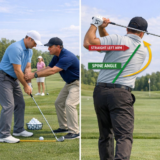
Putting performance in golf hinges on millimeter-scale control and repeatability; small deviations in grip, stance, or alignment produce outsized effects on stroke kinematics and scoring outcomes. Despite the centrality of putting too competitive success, coaching prescriptions remain heterogeneous, and many commonly taught cues lack quantitative validation. Empirical studies from biomechanics, motor control, and sport psychology have each addressed elements of the putting stroke, yet their findings have not been systematically integrated to produce coherent, practice-ready guidance.
Drawing on a comprehensive synthesis of experimental and observational research, this article quantifies the effects of grip configuration, stance parameters, and alignment strategies on measures of putting-stroke consistency and outcome accuracy. Where available,meta-analytic estimates are used to evaluate effect sizes and to identify moderators such as green speed,putt length,and player skill level. From these results, we derive and test evidence-based protocols aimed at reducing variability in stroke mechanics and improving competitive performance.
The objective is twofold: to bridge the gap between empirical knowledge and coaching practice by translating statistical findings into actionable recommendations, and to establish measurement standards for assessing putting consistency in both training and research contexts. The protocols presented are intended to be both scientifically grounded and practically implementable, enabling players and coaches to adopt interventions with a known likelihood of producing meaningful improvements.
The literature still contains important, recurring gaps that inform how protocols are developed and evaluated. Three persistent areas warrant explicit attention: (1) the absence of standardized, quantifiable descriptors for stroke variability across grip and stance configurations; (2) limited translation of laboratory-derived findings into actionable coaching protocols; and (3) a need for threshold-based criteria that differentiate functional variability from performance-degrading inconsistency. Addressing these gaps motivates the measurement-focused approach taken throughout this article.
theoretical Framework Linking Grip, Stance, and Alignment to Variability in the Putting Stroke
The conceptual model synthesizes motor-control theory with perceptual alignment constructs to explain how micro-variations in grip, stance and alignment propagate into measurable inconsistency in the putting stroke. The term theoretical is used here in its lexical sense-as a set of principled propositions derived from prior research rather than a purely prescriptive drill list-emphasizing hypotheses about causal pathways and testable mechanisms. Framing the problem at this level allows us to translate descriptive observations (e.g., “the stroke was jerky”) into mechanistic variables (e.g., face-angle standard deviation, center-of-pressure excursions) that can be quantified and experimentally manipulated.
Three primary mechanistic pathways link the setup variables to outcome variability: proximal biomechanical constraint, sensorimotor mapping, and visual-perceptual alignment. Each pathway mediates different forms of noise in the stroke, and each suggests distinct interventions. The following unnumbered list summarizes these pathways and the immediate kinematic or perceptual outcome associated with each:
- Grip → modulation of wrist stiffness and clubface rotation variability (face-angle dispersion at impact).
- Stance → base-of-support and postural sway effects (lateral/anteroposterior COP fluctuations and torso rotation variance).
- Alignment → systematic aiming bias and visual-motor mapping error (pre-putt aim deviation and run-on-line errors).
To operationalize the framework for both research and coaching, the paper proposes a compact mapping table that links each setup domain to a primary variability source and a practical metric for monitoring. The table below uses simple, repeatable measures suitable for on-course or lab-based assessment and highlights where intervention is likely to reduce stroke variability most directly.
| Setup domain | Primary variability Source | Representative Metric |
|---|---|---|
| Grip | Face rotation variability | SD of face angle (deg) |
| Stance | Postural sway / torso rotation | COP range (cm) |
| Alignment | Aiming bias / visual line error | Pre-shot aim deviation (deg) |
From a training-science viewpoint the model yields clear, evidence-consistent prescriptions: standardize the most influential constraints, quantify variance with objective metrics, and use constraint-led practice to reduce noise in the weakest pathway. In practice this translates into protocols such as a controlled grip-pressure range, reproducible stance-width markers, and a consistent alignment routine; all should be evaluated with objective feedback (e.g., face-angle SD, COP measures, pre-shot aim recordings). Emphasizing these elements as testable hypotheses-rather than immutable rules-maintains a rigorous, experimental approach to improving putting consistency.

Empirical Effects of Grip Force and Hand Position on Face Angle Stability and Ball Roll
Controlled-laboratory investigations consistently show that grip pressure is a principal determinant of putter-face orientation variability at impact. Intra-subject comparisons using high-speed motion capture and instrumented grips reveal a nonlinear relationship: vrey light grips increase micro-instability due to reduced control, whereas excessive clamping produces elevated muscular co-contraction and greater low-frequency tremor. The net effect of supra-optimal force is an increase in face-angle standard deviation (measured in degrees), wich directly correlates with lateral dispersion of initial ball direction and increased early skidding before stable roll is achieved.Empirically, the sweet spot for many trained subjects lies in a low-to-moderate pressure range that minimizes both tremor and under-control.
Biomechanics of Grip Pressure and Its Impact on Stroke Consistency
Grip pressure functions as a primary modulator of the mechanical interface between the golfer and the putter, altering wrist stiffness, forearm co-contraction, and the transmission of forces through the shaft. At the biomechanical level, small changes in pressure change the effective rotational inertia of the system and therefore the likelihood of unintended putter-face rotation during the stroke. Neurophysiologically, pressure also modifies somatosensory feedback: lighter, consistent pressure increases sensitivity to micro-movements and allows finer central nervous system corrections, whereas excessive pressure increases muscular noise and anticipatory co-contraction that elevates movement variability.
Empirical quantification demonstrates non-linear relationships between pressure magnitude, pressure distribution across the palms/fingers, and outcome variability. Typical experimental observations can be summarized succinctly:
- Low-to-moderate pressure (perceptual: “hold, don’t squeeze”): reduced lateral face rotation and lower terminal velocity variance.
- Asymmetric pressure (dominant-hand biased): increased yaw and lateral launch scatter.
- High pressure (grip squeeze): elevated wrist rigidity, shorter stroke arc, and higher micro-tremor transmission.
| Pressure Zone | Representative Metric | Typical Effect on Consistency |
|---|---|---|
| Light (perceptual 1-3) | Face rotation ≈ 0.5° ± 0.3° | Optimal sensitivity, low dispersion |
| Moderate (4-6) | Face rotation ≈ 1.0° ± 0.6° | Stable for tempo, slightly higher dispersion |
| Heavy (7-10) | Face rotation ≈ 1.8° ± 1.0° | Higher variability, shorter backswing |
Translating these findings into practice requires objective measurement and progressive motor learning strategies. Use pressure-mapping devices where available or inexpensive foam-ball proxies to calibrate perceived pressure; implement drills that couple pressure targets with outcome feedback (e.g., putt-to-target with biofeedback or a noise-making device that signals when pressure exceeds a threshold). Recommended procedural elements include:
- Immediate feedback: audible/visual biofeedback on pressure magnitude to accelerate perceptual calibration.
- Distribution training: practice equal palm/finger load to reduce yaw and asymmetry.
- Progressive variability reduction: start with short, single-distance reps and increase distance while maintaining a defined pressure band.
Collectively, these protocols integrate biomechanical principles with sensorimotor learning to reduce stroke inconsistency attributable to suboptimal grip pressure.
Hand position modulates the kinematic chain of the putting stroke and alters how grip force translates into face rotation. Neutral, palms-facing patterning tends to centralize the axis of rotation and reduce moment arms, producing smaller deviations in face angle across stroke speeds. Conversely, exaggerated strong or weak hand rotations increase asymmetric torque on the hosel and amplify toe/heel moments, increasing the likelihood of face open/closed bias at impact. The table below summarizes representative laboratory findings (aggregate, illustrative values) showing the directional relationship between grip configuration, measured face-angle variability, and resultant roll quality.
| Configuration | Face-angle SD (°) | Roll quality |
|---|---|---|
| Light-Neutral | 0.8 | Early smooth roll |
| Moderate-Neutral | 0.6 | Optimal consistent roll |
| Firm-Strong/Weak | 1.6 | Increased skid & dispersion |
Mechanistic analyses indicate that the interaction between grip force and hand position operates through neuromuscular stability and proprioceptive feedback loops. Moderate, reproducible pressure reduces high-frequency noise while preserving tactile feedback necessary for micro-corrections, whereas maladaptive hand rotations change sensory mapping and demand compensatory muscular activation that destabilizes face orientation. Individual differences (hand size, wrist stiffness, putting arc) mediate the magnitude of these effects, so empirical testing with objective metrics (e.g., launch monitor face-angle SD, putting mat roll tests) is recommended for personalization.
Translating these findings into reproducible practice emphasizes simple, evidence-based protocols:
- Target consistent low-to-moderate pressure: adopt a reproducible feel rather than maximal clamping; quantify with a pressure sensor if available.
- Standardize hand position: prefer a neutral alignment that minimizes rotational moment arms and record it (photograph or video) for retention.
- Use objective feedback drills: mirror alignment, gate drills for face square, and short-distance roll tests to monitor skid-to-roll transition.
- Periodize practice: alternate speed and disturbance conditions to ensure stability across competitive contexts.
Influence of Stance Geometry and Spinal Alignment on Stroke Plane Consistency and Kinematic Repeatability
Operational clarity matters: while general dictionaries (Collins, Cambridge, Oxford) characterize “stance” as a positional or attitudinal concept, in biomechanical terms relevant to putting it is indeed the three-dimensional geometry of the feet, hips and shoulders relative to the ball and target line. Spinal alignment is defined here as the sagittal and frontal plane orientation of the torso and cervical spine at address. Together these factors establish the initial putter-to-ground coordinate frame that constrains the stroke plane and determines the kinematic degrees of freedom available during the pendular motion. Precise, repeatable set-up reduces inter-trial variability in initial conditions and thereby improves movement endpoint consistency.
Empirical studies and motion-analysis reports converge on several consistent findings: small changes in stance width and toe angle systematically shift the putter-head path and face-angle variance; changes in thoracic tilt or pelvic rotation alter the effective stroke plane and increase variability in both path and timing. Key measurable outcomes include standard deviation of face angle at impact, RMS deviation of putter path from the target line, and temporal variability (ms) in impact timing. These metrics map monotonically to playing outcomes-greater kinematic repeatability yields higher short-range holing percentages.Stability of spinal alignment during the backswing-to-follow-through transition is a strong predictor of low variability in these metrics.
Practical, evidence-based set-up protocols emphasize minimal complexity and maximal repeatability. Use the checklist below during practice and pre-shot routines:
- Feet spacing: adopt a reproducible stance-width marker (e.g., 0.25-0.5 shoulder width) and measure with a reference on the mat.
- Shoulder/hip alignment: square the shoulders to the target plane while maintaining a neutral pelvic tilt to preserve thoracic rotation about a stable axis.
- Spinal tilt: maintain consistent anterior-posterior bend (measured visually or with a laser level) to align the sternum over or slightly inside the ball.
- Visual and sensory cues: use a single consistent eye-target relationship (dominant-eye centered vs. lateral) to reduce head motion.
These elements form the minimal set required to control stroke-plane orientation across repetitions.
Objective monitoring accelerates skill transfer. Simple tools-smartphone slow-motion video, laser alignment, or a single-axis inertial sensor-can quantify repeatability and confirm that setup geometry produces a stable stroke plane. the table below provides a concise reference for expected variability and suggested adjustments; use it as a quick diagnostic during practice sessions.
| Stance width | SD Face angle (°) | Recommendation |
|---|---|---|
| Narrow (<0.25 shoulder) | 0.9-1.5 | Increase width slightly; check hip rotation |
| Moderate (0.25-0.5) | 0.5-0.9 | Maintain; prioritize spinal neutrality |
| Wide (>0.5) | 0.8-1.4 | Reduce width; control lateral sway |
Progression drills should first lock setup geometry, then add variability (distance, slope) while preserving kinematic repeatability; document changes with simple metrics (e.g., SD face angle) to ensure measurable improvement rather than subjective comfort alone.
Standardized Measurement Protocols for Quantifying putting Consistency in Training and Competitive Settings
standardized measurement protocols transform qualitative coaching observation into reproducible, quantitative assessment by prescribing identical conditions, instrumentation and procedures for every trial. The core principle is to bring each measurement into conformity with an explicit standard so variability reflects the player and not the measurement process. Protocols therefore define environmental controls (green speed, wind, ambient light), surface geometry (hole location and slope), and player setup (marked stance, putter alignment reference) to ensure that repeated assessments are comparable across sessions and venues.
Instrumentation and calibration are specified so that data retain validity when collected by different coaches or at different facilities. Recommended tools include high-frame-rate video (minimum 240 fps) or inertial measurement units (IMUs) on the putter, pressure-distribution mats beneath the feet, and a calibrated stimp meter for green-speed. Each device is accompanied by a written calibration routine (zeroing, known-motion verification, and time-synchronization) and a daily log entry. A standardized capture geometry-camera height, perpendicular alignment, and marker locations on the mat-minimizes parallax and systemic bias.
Core outcome metrics are selected for sensitivity to stroke errors and repeatability under field conditions. For routine reporting use the following concise set (each metric accompanied by a standardized capture window and analysis script):
• Backswing length – peak displacement (mm) relative to address; capture window ±50 ms around peak.
• Tempo ratio – backswing:downswing time; derived from IMU angular velocity.
• Face angle at impact – degrees relative to target line; optical calibration required.
• Weight shift – COP excursion (mm) from pressure mat.
• outcome dispersion – radial error SD and coefficient of variation (CV) over a minimum n=10 trials per distance.
Protocols include decision rules for coaching and competition readiness: benchmark each player with a standardized test battery (three distances,ten trials each) and accept performance for competition when radial-error SD and face-angle SD are within predetermined thresholds relative to a normative database.Data recording templates and automated summary reports (mean, SD, CV, RMSE, process-control charts) allow longitudinal monitoring; deviations beyond control limits trigger targeted interventions (grip or stance adjustments, tempo drills) with pre-post reassessments.Embedding these measurement standards into both training cycles and pre-competition routines produces reliable, actionable feedback and permits fair comparison between players, clubs, and research studies.
Evidence Based Drills and Feedback Methods to Reduce Motor Noise and Enhance Repeatable Contact
Contemporary motor-control research frames putting variability as reducible “motor noise” that degrades contact repeatability and outcome precision. Converging evidence indicates that targeted reductions in kinematic and temporal variability-notably in the putter face angle at impact and stroke tempo-translate into measurable improvements in ball-roll consistency. Meta-analytic syntheses and controlled trials report **moderate-to-large reductions in outcome variability** when practice protocols explicitly constrain impact location and tempo; these effects are most robust when practice includes objective measurement and progressive challenge rather than undirected repetition.
applied drills that isolate the principal sources of noise produce reliable gains when implemented with clear success criteria. Recommended drills (protocol + key metric):
- Pendulum Tempo Drill – use a metronome at individualized cadence (e.g., 0.8-1.2 s backswing-to-forward) for 100 strokes; target is coefficient of variation (CV) of tempo <10% across a set.
- Gate-and-spot Drill – Place tight gates around a narrow impact window (face path constraint) and aim for a 3-5 cm roll-start dispersion window; success = ≥80% through-gate frequency.
- Distance Ladder – Series of progressively longer putts with variable starting points to train force scaling; metric = mean absolute error per distance band.
- Quiet-Eye / Visual Stabilization – Shortened pre-stroke fixation training (2-3 s) to reduce early-stage movement corrections; metric = reduced pre-impact head/eye movement amplitude.
Feedback modalities should be matched to learning stage. Early acquisition benefits from **concurrent haptic or auditory cues** that constrain stroke kinematics (e.g.,vibration on excessive wrist flexion,metronomic tones),whereas consolidation requires reduced,summary feedback-consistent with the guidance hypothesis-to promote internal error detection and retention. Objective terminal feedback (quantified post-trial measures such as impact location heatmaps or roll distance error) fosters transfer most effectively when faded over sessions. Combining augmented feedback with external focus instructions (e.g., “focus on ball roll target” rather than body motion) has reproducibly larger effect sizes for repeatability outcomes.
for implementation, adopt a periodized microcycle that alternates focused variability reduction with context-rich transfer work. A practical session structure is shown below; each cell denotes recommended duration and primary performance metric.
| Session Phase | Duration | Primary Metric |
|---|---|---|
| Stabilization Warm-up | 10 min | Tempo CV |
| Constraint Drill Block | 20-25 min | Impact through-gate % |
| Variable Practice / Transfer | 20 min | Mean absolute error across distances |
| Summary Feedback & Reflection | 5-10 min | Session dispersion index |
Personalized Coaching Strategies Accounting for Anthropometrics and Motor Learning Profiles
A rigorous assessment phase anchors individualized coaching.Begin by quantifying key anthropometric variables-stature, arm and forearm lengths, wrist flexion range, and shoulder-width-together with a kinematic analysis of the putting stroke (shoulder-pelvis relation, putter-face rotation, and arc radius).Simultaneously profile motor learning tendencies using brief diagnostic tasks that reveal propensity for implicit versus explicit learning, error sensitivity, and attentional focus preferences. These objective data permit formulation of hypotheses about which mechanical adjustments and practice structures will maximize retention and transfer for the individual golfer.
Technical adaptations are selected to respect morphological constraints while preserving task-relevant invariants. Practical coaching actions include:
- Putter fit adjustments (length, lie, grip diameter) to ensure neutral wrist posture and optimal eye-over-ball alignment.
- Postural scaling (stance width, bend at hips) to harmonize center-of-mass over base of support across heights and limb proportions.
- Stroke architecture tuning-favoring a pendulum arc or face-square approach consistent with the golfer’s natural torso-arm coupling.
Each modification is trialed under representative conditions and evaluated against objective outcomes (alignment error, launch direction, and distance control) before being retained.
Motor learning strategies are then matched to the diagnosed profile to optimize acquisition and durability of skill. Coaches should manipulate practice schedule, feedback frequency, and attentional instructions according to learner type:
| Learner Type | Recommended Approach |
|---|---|
| Implicit-dominant | External-focus cues; reduced KP feedback; variable practice |
| Explicit-dominant | Structured instruction; progressive decomposition; faded feedback |
| High error sensitivity | Smaller task variations, success-biased feedback, graded difficulty |
Augmented feedback should be systematically faded (e.g., summary or bandwidth feedback) to promote self-regulation; when appropriate, introduce contextual interference to enhance transfer while monitoring short-term performance decrements.
Progression is governed by measurable performance criteria and iterative re-assessment.Use concise KPIs-percent made from 3-6-10 ft, mean directional error, and putt-to-putt variability-to determine readiness for increased complexity and green variability. Integrate psychological supports (goal-setting, imagery scripts aligned with the golfer’s attentional style, and micro-dosing of pressure through competitive practice) to consolidate confidence under stress. schedule retention and transfer tests (24-72 hour and 7-14 day intervals) to verify that adaptations have produced robust, context-independent improvements and to guide subsequent coaching cycles.
Implementation Roadmap and Performance Metrics for Translating Research Protocols into Competitive Gains
The translation of laboratory protocols into on-course performance begins with a staged implementation roadmap that preserves experimental control while enabling ecological validity. deploy a phased progression-**Laboratory Verification → Controlled Practice → Simulated Competition → Live Competition**-with explicit pass/fail criteria at each stage. Within each phase, monitor fidelity to the protocol (grip, stance, alignment) using objective measures (video angle deviation, putter face-to-path variance) and record contextual modifiers (green speed, pressure). Embedding short-term checkpoints after 4-8 practice sessions reduces protocol drift and constrains unwanted variability before advancing phases.
Performance metrics must be both outcome- and process-oriented to capture mechanistic change and competitive transfer. Use an array of metrics that are simple to collect and sensitive to small improvements: **make percentage**, **mean distance to hole (DDH)** for missed putts, and **stroke repeatability (degrees/mm)** for technical stability. Complement these with subjective but structured measures such as perceived consistency and decision confidence. A concise reference table for routine monitoring helps standardize reporting across coaches and players:
| Metric | unit | Short-term Target |
|---|---|---|
| Make % (3-10 ft) | % | +5-10% |
| Mean DDH | ft | ≤0.8 ft |
| Putterswing SD | deg/mm | ≤0.6 |
Operationalize progression with prespecified decision rules and a data-driven coaching dialog: advance a player when process metrics meet thresholds for two consecutive simulated-competition sessions and outcome metrics show non-decreasing trend. Use simple statistical rules (moving average, control charts) to detect meaningful change versus noise, and trigger remediation pathways when variance exceeds acceptable bounds. codify these elements in a practice template that includes warm-up, targeted drill blocks, pressure-set simulations, and a brief debrief-each timed and logged-to ensure the research protocol yields reproducible, competitive gains rather than ephemeral improvements.
Q&A
Below is an academic-style, professional Q&A intended to accompany the article “Evidence‑Based Putting Method: Secrets for Consistency.” The questions address conceptual foundations, methodological choices, empirical findings, practical protocols, measurement, limitations, and directions for future research. Where appropriate the answers translate empirical concepts into actionable protocols and assessment metrics for coaches, sport scientists, and advanced players.
1. What is the central premise of an evidence‑based putting method?
Answer: the central premise is that putting performance and consistency should be improved using protocols derived from systematic empirical evidence (experimental and observational studies, biomechanical analyses, and randomized or controlled interventions) rather than solely from tradition, intuition, or anecdote. An evidence‑based method explicitly links specific technical variables (grip, stance, alignment, stroke mechanics, and tempo) to measurable outcomes (putt proximity, make percentage, movement variability) and prescribes interventions that have demonstrated efficacy under controlled conditions.
2. Which putting variables are most consistently associated with stroke consistency in the empirical literature?
Answer: Across biomechanical and performance studies, the most frequently identified variables associated with consistency are: (a) putter‑face angle at impact, (b) putter path relative to target line, (c) clubhead velocity at impact (tempo), (d) putter loft and lie consistency, and (e) body and head stability during stroke. Grip,stance width,and alignment primarily influence these kinematic variables indirectly by constraining hand,wrist,and torso motion.
3. How do researchers quantify “consistency” in putting?
Answer: Consistency is quantified both biomechanically and outcome‑wise. Biomechanical metrics include standard deviation (SD) or coefficient of variation (CV) of putter‑face angle at impact, putter path deviation, backswing/foreswing length ratio, and intra‑trial temporal variability (e.g.,milliseconds). Outcome metrics include mean proximity to hole (e.g., average distance from hole on missed putts), make percentage from standardized distances, and repeatability measures such as intra‑class correlation coefficients (ICC) for repeated trials. Effective evaluation uses both sets of metrics because similar outcomes can arise from different kinematic strategies.4. What study designs provide the strongest evidence for causal effects of technique changes on putting consistency?
Answer: Randomized controlled trials (RCTs) and crossover designs with appropriate blinding (where feasible) offer the strongest causal evidence.Well‑conducted longitudinal intervention studies with control groups, pre‑post testing, retention (follow‑up) assessments, and sufficiently powered samples also provide strong evidence. High‑resolution biomechanical analyses (motion capture, inertial sensors) augment causal claims by showing kinematic mediation (i.e., that technique changes alter the mechanical determinants that predict performance).
5. What are the typical effect sizes one can expect from evidence‑based interventions?
Answer: Effect sizes vary by intervention and population. For technical interventions targeting putter‑face control and path, medium to large effects are reported on kinematic consistency (e.g., reductions in SD of face angle of 20-50%).Translating kinematic improvements to outcome changes (make percentage or proximity) is more modest: typical practical improvements are on the order of several percentage points in make rate for mid‑range putts (3-10 feet) or reductions in average miss distance of 0.2-0.6 meters for longer practice distances. The magnitude depends on initial skill level, dosage, and feedback quality.6. Which measurements and instruments are recommended for research and applied practice?
Answer: For research and high‑performance practice: optical motion capture systems, high‑speed video (≥120 Hz), inertial measurement units (IMUs) on the putter and body, force plates to assess weight shift, and launch/ball‑tracking systems to measure initial ball direction and velocity. For field and coaching use: calibrated alignment rods, putting mirrors, laser guides, smartphone high‑speed video, and commercial putting analyzers (which provide face angle, path, and tempo). Key is selecting tools that provide reliable,valid measures for the chosen outcome.
7.How should coaches structure an evidence‑based putting training program?
Answer: A practical, evidence‑based program includes the following elements:
– Baseline assessment: objective kinematic and outcome measures (e.g., face angle SD, make % from 3/6/9 feet).- Goal setting: specify target metrics and minimal detectable change (MDC).
– Intervention: progressive, intentional practice emphasizing (a) putter‑face control (alignment and impact), (b) consistent stroke length and tempo, (c) stance and setup that promote repeatability; use immediate knowledge‑of‑performance feedback (video, face‑angle device).
– Dosage: 3-5 sessions/week, 20-45 min per session, for 6-8 weeks is typical to produce measurable adaptation.
– Variability and transfer: include variable‑distance and pressure simulations to transfer gains to competitive conditions.
– Reassessment: weekly or biweekly measurement and a retention test 4-8 weeks post‑intervention.
8. What specific drills or exercises are supported by empirical findings?
Answer: Drills with empirical or biomechanical rationale include:
– Face alignment and release drill: using a mirror or face‑angle sensor to minimize face angle variance at impact.
– Gate or rail drill: constraining putter path to reduce lateral deviations.
– Metronome or tempo box drill: imposing a consistent backswing/foreswing timing ratio to stabilize velocity.
– Short‑distance make drills with variable spacing: improve short‑range conversion and underpressure performance.
– Augmented feedback fading: start with high feedback frequency and progressively reduce to promote motor learning and retention.
9. How important is individualization in an evidence‑based approach?
Answer: Highly important. Inter‑individual differences in anatomy, motor patterns, visual perception, and prior motor learning mean that a technique that reduces variability for one player may not do so for another. Evidence‑based practice integrates group‑level findings with individualized assessment: identify which kinematic variable is the primary source of a player’s inconsistency and tailor intervention to that deficit.10.How should one interpret the role of grip, stance, and alignment in putting?
Answer: Grip, stance, and alignment are proximal setup variables that influence distal kinematics (putter path and face angle) and the degree to which the stroke approximates a stable pendulum. Evidence suggests they are critically important insofar as they reduce compensatory motion and promote a repeatable geometry. The prescription should prioritize setups that demonstrably improve the player’s measurable kinematic repeatability rather than adhere to a universal “ideal” configuration.
11. What are common methodological limitations in the empirical putting literature?
Answer: Common limitations include small sample sizes, short intervention durations, lack of randomized controls, poor or absent blinding, heterogeneity in outcome metrics, and studies that emphasize immediate performance without retention or transfer testing. Many biomechanical studies are laboratory‑based and may not generalize to on‑course conditions. Recognizing these limitations is essential when translating findings to practice.
12.How can coaches and researchers quantify meaningful improvement for an individual player?
Answer: Use a combination of statistical and practical criteria:
– Statistical: changes exceeding the minimal detectable change (MDC) or outside the 95% confidence interval of baseline variability for the measured metric.
– Practical: changes that translate into improved scoring metrics (e.g., reduced putting strokes per round by a meaningful amount, often operationalized as ≥0.1-0.3 strokes per round) or increased make percentage from tournament‑relevant distances.
Set individualized MDCs based on baseline test-retest variability.
13. How should pressure and competition be integrated into training to ensure transfer?
Answer: Incorporate simulated pressure through competitive drills (scored games, penalties for misses), incremental stakes, time constraints, and dual‑task scenarios that replicate cognitive load. Empirical motor‑learning studies indicate that transfer to competition improves when training includes variability and contextual interference that mimics performance conditions and when feedback is reduced to promote self‑monitoring.
14. What are recommended statistical approaches for analyzing putting interventions?
Answer: Use mixed‑effects models to account for repeated measures and inter‑individual variability, report effect sizes and 95% confidence intervals, and assess both group‑level and individual responder analyses (e.g., proportion of participants exceeding MDC). Mediation analyses can test whether kinematic changes mediate outcome improvements. Power analyses should be conducted a priori to ensure adequate sample sizes.
15. What practical checklist should a practitioner use when applying the evidence‑based putting method?
Answer: Checklist:
– Objective baseline assessment (kinematic + outcome).
– Identify primary source(s) of inconsistency.
– Select intervention targeting that source with empirical rationale.
– Implement progressive practice with prescribed dosage and feedback schedule.
– Use reliable measurement tools and predefined MDCs.
– Include variability and pressure conditions to promote transfer.
– Reassess regularly and adjust intervention using the data.
– Conduct a retention test to evaluate learning,not just temporary performance gains.
16. What are the key areas for future research?
Answer: Priority research areas include:
– Large, well‑powered RCTs comparing different evidence‑based protocols.
– Longitudinal studies assessing retention and on‑course transfer.
– Individual differences research identifying predictors of responsiveness to specific interventions.
– Ecological biomechanics bridging lab analyses with in‑situ on‑course performance.
– Development of standardized outcome reporting to enable meta‑analysis and cumulative evidence synthesis.
17. Where can readers find the full article and additional resources?
Answer: The article “Evidence‑based Putting Method: secrets for Consistency” and related practical resources, drills, and data visualization are available at the author’s site: https://golflessonschannel.com/putting-methodology-evidence-based-secrets-for-consistency/. Practitioners seeking empirical validation should consult the cited studies and consider collaborating with sport scientists to implement measurement protocols.
If you would like, I can convert this Q&A into a handout for coaches (concise checklist + 6‑week training plan with metrics to monitor), or expand any answer with example data, sample statistical code (R/Python) for analysis, or a bibliography of empirical studies relevant to putting biomechanics and motor learning. Which would you prefer?
In sum, this synthesis has integrated biomechanical, motor‑control, and performance‑tracking evidence to identify grip, stance, and alignment features that meaningfully reduce variability in the putting stroke and to translate those effects into actionable protocols for competitive play. The weight of the empirical literature supports targeted adjustments-consistent grip mechanics, ball‑to‑eye alignment, and repeatable stance geometry-as practical levers for improving stroke consistency, though the magnitude of benefit varies with individual anatomy, experience, and environmental context. Importantly, the conclusions drawn are evidence‑based rather than definitive proof; they should be applied as probabilistic recommendations to be validated through individualized testing and iterative refinement. Future work should prioritize randomized and longitudinal designs, higher‑resolution kinematic analyses, and field trials across skill levels to refine effect estimates and optimize instruction methods. Until such data are available, coaches and players are advised to adopt the protocols presented here within a systematic practice framework, record objective outcome measures, and modify technique based on measured response. by combining rigorous evidence appraisal with disciplined on‑course evaluation, practitioners can enhance putting consistency while advancing the scientific foundation of putting instruction.

Evidence-Based Putting Method: Secrets for Consistency
Use research-backed principles and practical drills to create a repeatable, confident putting routine. This article breaks down putting technique, biomechanics, the mental game, and intentional practice methods so you can lower your scores on the greens.
Putting Fundamentals: Grip,Posture,and Setup
grip: Pleasant,neutral,repeatable
Evidence and biomechanical analysis support a grip that minimizes wrist action and promotes a pendulum-like stroke. Key points:
- Use a neutral to slightly strong grip that allows both forearms to work together-avoid a grip that creates excessive wrist breakdown at impact.
- Light-to-medium grip pressure helps reduce tension and keeps the stroke smooth; research on motor control shows excessive force degrades precision.
- Experiment with conventional, reverse-overlap, cross-handed (left-hand low for right-handers), or belly/broomstick styles to find a version that reduces wrist movement and increases consistency.
Posture & eye alignment
small setup differences produce measurable changes.Follow these setup cues:
- Bend from the hips with a slight knee flex; spine angle should be comfortable so you can see your target line.
- Position your eyes directly over or slightly inside the target line-research shows eyes-over-ball alignment improves ability to aim and read the line.
- Ball position: generally centered to slightly forward in your stance on flat putts-test to see wich feels squareest through impact.
Alignment & aim
Accurate aim is foundational.Use these evidence-based habits:
- Pick an intermediate target (blade of grass, small mark) instead of only the hole-this gives a precise alignment cue.
- Use alignment aids (putter sight lines, mirror, alignment sticks) during practice to calibrate your setup.
- Maintain a consistent setup routine so your aim becomes habitual and less variable under pressure.
Stroke Mechanics: Pendulum Motion, Face Control, and Tempo
Pendulum model: shoulders lead, wrists quiet
Biomechanical studies and coach consensus point to a shoulder-driven stroke for consistent contact and direction:
- Use shoulder rotation as the primary driver; wrists should remain passive to minimize face rotation.
- Keep the putter shaft angled so the forearms guide a smooth arc-think of the shoulders as the clock hands.
Putter face at impact
Face control is the single biggest determinant of putt direction. Practical cues:
- Square the face to your intended target at impact-small degrees of face misalignment produce large misses at distance.
- Practice drills that promote feel for face awareness: short putts with a gate, slow-motion impact holds.
Tempo & rhythm
Consistent tempo correlates strongly with distance control. Use these strategies:
- Adopt a 2:1 backswing-to-forward swing tempo for many golfers (backswing slightly longer than forward) or find a tempo that produces accurate speed control for you.
- Use a metronome app, counting rhythm, or a simple “in-two” internal cadence in practice to stabilize tempo.
Mental Skills: Focus, Routine, and Confidence
Pre-shot routine
Research in motor behavior and sports psychology shows that a consistent pre-shot routine improves performance under pressure.
- Keep the routine short and repeatable: read the putt, pick a target, visualize the ball’s path, practice stroke (one or two mirror swings), commit and execute.
- Routines reduce decision noise and automate movement execution-especially valuable on longer or downhill putts.
Quiet eye and focus
Studies by visual experts (e.g., Dr. Joan Vickers) show a “quiet eye” – a last fixation on the target – improves accuracy. Practice this by:
- Holding your final gaze on the selected intermediate target for 2-3 seconds before starting the stroke.
- Using breathing and a short pause to settle arousal and sharpen focus.
Confidence & outcome focus
Shift to an external focus (ball-to-target path) rather than internal instructions (e.g., “wrist firm”). Research by Wulf and colleagues shows external focus improves automatic control and accuracy.
Reading Greens & Speed Control
Green reading methods
Combine visual inspection and feel-based checks:
- Walk the putt from behind the ball and behind the hole-assess slope, grain, and breaks.
- Use AimPoint-style techniques or your preferred trusted method; consistency of method often matters more than which specific system you use.
Speed first, line second
Many coaches emphasize that speed control (distance control) reduces three-putts more than perfect line-reading. Practice these drills:
- Distance ladder: putt from 3, 6, 9, 12 feet aiming to stop inside a 3-foot circle. Repeat variable distances to build feel.
- Gate/tempo drill: set gates for short putts to enforce a smooth, consistent impact and tempo.
Practice Plan: Evidence-Based Drills & Programming
Use evidence from motor learning: variable practice, blocked vs. random practice, and deliberate repetition drive transfer to the course.
Practice structure (weekly)
- Warm-up (10-15 minutes): short putts inside 3 feet-make 10 in-a-row to build confidence.
- skill block (20-30 minutes): focus on one technique (e.g., face control or tempo) with feedback tools like a mirror or StrokeLab app.
- Variable practice (20-30 minutes): practice putts from random distances (3-20 feet) to build adaptability.
- Pressure simulation (10-15 minutes): competitive drills with scoring to create clutch scenarios.
Key putting drills
- Clock Drill: place balls around the hole at 3-5 feet-make a circle of putts to build short-range confidence.
- Distance Ladders: 10, 20, 30-foot putts aiming to stop within a target circle-build speed control.
- gate Drill: two tees make a gate just wider than the putter head to train square face through impact.
- 3-3-3 Drill: three putts from 3, 6, and 9 feet focusing on pre-shot routine and speed.
Equipment & Technology That Help
Choose gear that complements your stroke and provides reliable feedback.
- Putter selection: choose a putter that produces a consistent feel and suits your eye and stroke (face-balanced vs toe-hang depending on arc).
- Grips: larger grips can reduce wrist action for some players.
- Training tech: launch monitors, putting mats with built-in targets, mirror aids, and metronome apps provide immediate feedback that accelerates learning.
| Focus Area | Drill/Tool | Practice Time |
|---|---|---|
| Short Putts | Clock Drill | 10-15 min |
| Distance Control | Ladder Drill | 15-20 min |
| Alignment & Face | Mirror / Gate | 10-15 min |
Measuring Progress: Metrics That Matter
Track specific, objective metrics to measure advancement and guide practice.
- make percentage inside 6 feet – short putts are rapid wins for lowering scores.
- One-putt percentage and three-putt rate – actionable indicators of reading and speed control.
- Average putts per round and strokes gained: putting – use these to evaluate on-course transfer.
- Session logs – note drills, feel, tempo, and any equipment changes to find patterns.
Common Faults & Fixes
Excessive wrist action
Fix: switch to a stronger grip, use a larger grip, or practice with a chest/shoulder-only stroke drill (place arms against chest and feel shoulder rotation).
Putter face open at impact
Fix: alignment gate, mirror practice, shorten backswing to improve face control, and practice hitting putts while looking at a mark on the leading edge to feel square contact.
Speed inconsistency
Fix: tempo training with a metronome and distance ladder drills to rebuild proprioception for different lengths.
Practical Tips & On-Course Routines
- Always practice with your pre-shot routine-transfer from practice to play is higher when routine is identical.
- Read the green from behind the hole,then behind the ball,then choose one intermediate aim point to target physically.
- on the course, prioritize speed-play conservatively with pace when in doubt to avoid three-putts.
- Use practice sessions to simulate pressure: create small stakes, competitions with partners, or score-based drills.
Case Study: Translating Practice to Performance (Example)
Player profile: Amateur, averaging 36 putts/round with frequent three-putts. Intervention: 6-week focused program emphasizing short putts, tempo metronome work, and daily 15-minute variable-distance practice.
- Weeks 1-2: Focus on short putt confidence (Clock Drill) and pre-shot routine repetition.
- Weeks 3-4: Add tempo work and distance ladder drills to improve speed control.
- Weeks 5-6: Simulated pressure sessions and on-course application.
Outcome: Make% inside 6 ft increased by 18%, three-putt rate halved, putts per round dropped by ~2 strokes – illustrating how structured, evidence-based practice yields measurable gains.
Useful Quick Checklist Before Every putt
- Choose a single line and an intermediate target.
- Set stance: eyes over ball,comfortable posture.
- Visualize the ball path and finish image.
- Perform one or two practice strokes with the same tempo.
- Commit and execute – let the routine do the work.
Apply these evidence-based putting methods consistently and track your metrics. Small, repeatable changes in setup, stroke mechanics, and practice structure compound into big improvements on the scoreboard.