
Putting performance exerts a disproportionate influence on scoring outcomes in golf, with a majority of strokes at most levels decided inside 30 feet.Despite its apparent simplicity, the putting task is a complex sensorimotor behavior that integrates fine biomechanical control of the putter, perceptual judgments of distance and line, and stable psychological processes under competitive pressure. Variability in stroke mechanics and cognitive state contributes substantially to differences in short-game success between amateur and elite players, underscoring the need for interventions grounded in empirical evidence rather than anecdote.
Biomechanical investigations using kinematic assessments have identified specific determinants of putting accuracy and precision-most notably putter face angle at impact, putter path, vertical position at impact, and backswing characteristics. Systematic reviews and meta-analyses indicate that quantifying these variables can both differentiate skill levels and guide targeted technical adjustments, yielding measurable improvements in accuracy and repeatability. Concurrently, applied coaching literature emphasizes temporal consistency (a stable tempo across putt lengths) and controlled setup variables-grip pressure, stance width, and alignment-as foundations for a reproducible stroke.
Complementing biomechanical approaches, cognitive and perceptual strategies play a critical role in converting technical competency into performance on the course. Research-informed coaching and elite-practitioner guidance converge on the utility of visualization, pre-shot routines that channel attention and reduce variability, and confidence-building practices.Practical methods that translate these principles into training include high-frequency short-putt drills to consolidate feel and mechanics, single-look practice swings to calibrate distance perception, and tempo-focused repetition to stabilize timing-techniques advocated both by elite instructors and performance coaches.
This article synthesizes current empirical findings and applied best practices to present a coherent framework for improving putting. it integrates kinematic evidence,motor-control principles,cognitive strategies,and drill progressions to offer practitioners and players actionable,evidence-based recommendations for assessment,intervention,and practice design aimed at enhancing consistency and stroke efficacy.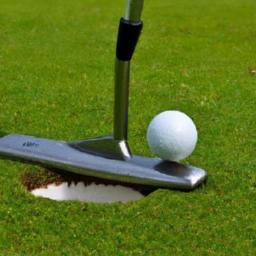
Optimizing Grip Mechanics to Stabilize the Putter Face and Promote consistent Roll
Aiming to reduce angular variability of the putter face at impact requires deliberate modification of grip mechanics that control torque without constraining the natural pendular motion of the stroke. Empirical observation and coaching literature converge on two interacting principles: minimize differential force between hands to prevent face rotation, and maintain a grip pressure that permits the putter head to “release” through the ball. Practically, this means adopting hand positions that place the line of force close to the shaft axis and favoring finger‑based contact over dominant palm squeezing. Such geometry reduces moments about the hosel and promotes a square face at ball contact, which is strongly associated with true initial ball direction and improved roll quality.
Technical implementation focuses on a small set of reproducible features that can be trained and measured in practice. Key elements to emphasize are listed below:
- Grip pressure: light-to-moderate, frequently enough benchmarked near 2-4/10 on subjective scales to allow head flow.
- Hand symmetry: balanced force between lead and trail hands to minimize twisting torque.
- thumb alignment: thumbs oriented to promote a stable shaft line and consistent face orientation.
- Finger contact: primarily finger and pad support rather than grip dominated by palms.
These components collectively reduce low-frequency variability in face angle and support a consistent roll axis.
Training strategies that transfer to performance emphasize constrained variability and perceptual focus. Drill prescriptions include short‑range repeated stroking with video feedback, single‑hand pendulum repetitions to isolate the role of each arm in face control, and putts with progressive reduction in grip pressure to find the minimal stable force. From a cognitive standpoint, instructing golfers to direct attention toward an external outcome (e.g., the target line or a visual spot on the back of the ball) rather than internal biomechanical adjustments helps preserve automated motor patterns and reduces shot‑to‑shot inconsistency in face alignment.
Below is a compact reference table for on‑range self‑assessment and coaching cues. Use simple metrics (subjective pressure scale,video review of face angle) to track change over sessions; objective instrumentation (impact tape,launch monitors) can validate perceptual reports. Regular measurement and incremental adjustment are necessary to stabilize the putter face and translate cleaner contact into a more consistent roll.
| Metric | Target/Drill |
|---|---|
| Grip pressure | 2-4 / 10; stroking with pressure reduction |
| Face stability | Minimal rotation in video; use impact tape |
| wrist motion | Pendulum-like; limited active wrist flip |
establishing a Repeatable Stance and Posture for Precise Alignment and Balance
Consistency in the physical setup is a primary determinant of accurate aim and stable roll. Empirical studies and motion-capture analyses indicate that variability in foot placement, spine angle, or eye position produces systematic alignment and stroke-path errors that degrade putting performance. By treating the preparatory stance as a controlled motor program rather than an ad hoc posture, golfers can reduce sensorimotor noise and increase the probability that the putter face returns square to target at impact. Small, repeatable adjustments-recorded and refined through objective feedback-are more effective than frequent large changes.
Adopt a short, prescriptive checklist to encode a repeatable routine. Use simple, proprioceptive anchors that are easy to reproduce under pressure.The following perceptual cues are recommended for integration into pre-putt rituals:
- Foot placement: heels ~shoulder-width, toes angled slightly outward
- Knee flex: slight, consistent bend to promote dynamic balance
- Spine tilt: forward lean from the hips that positions eyes over or slightly inside the ball line
- Weight distribution: target a reproducible center-of-mass split
Quantify balance targets to guide practice and minimize ambiguity. While individual anthropometrics will vary, practitioners benefit from numerical ranges that can be validated with simple tools (scale, smartphone video). The table below offers concise, evidence-informed ranges to test and refine in practice.
| Metric | Practical Target | Rationale |
|---|---|---|
| Stance width | Shoulder-width ± 2 in | Balance vs. stability trade-off |
| Knee flex | 10°-15° | Maintains athletic base |
| Weight split | 50/50 to 55/45 (lead/trail) | Promotes pendulum stroke |
| Eye position | 0-1 in inside ball line | Improves alignment perception |
Validate repeatability through objective drills and feedback loops. Incorporate short video checks, alignment-stick verification and a mirror or reflective surface to confirm posture. Practice drills that emphasize setup consistency-such as reset-and-putt (establish stance,step back,reestablish,execute) and the two-ball drill-accelerate motor learning by reinforcing the same setup sequence. Schedule frequent,brief repetitions with focused feedback (e.g., 5-10 minutes of targeted stance work before putting practice) rather than long, unfocused sessions to optimize retention and transfer to on-course performance.
Refining Stroke Path and Tempo Through Biomechanical Assessment and Targeted drills
Objective biomechanical assessment provides the foundation for corrective intervention by quantifying stroke plane consistency, joint kinematics, and putter-face orientation at impact. High-speed video, inertial measurement units (IMUs), and pressure-mat analysis generate repeatable metrics-such as backswing/forward swing angular displacement, shoulder-to-wrist coupling, and center-of-pressure excursion-that identify systematic deviations from an ideal pendular model.Translating these measurements into actionable variables enables practitioners to target the primary mechanical contributors to lateral dispersion and missed reads rather than relying on subjective feel alone. Quantifiable baselines and repeat measurements are essential for distinguishing transient variability from true biomechanical patterns.
Tempo control is best addressed as a kinematic and temporal coupling problem: the ratio of backswing duration to forward swing duration, overall stroke period, and the variability of these values under pressure are predictive of distance control and putt-to-putt repeatability. Empirical work supports training that stabilizes the inter-segmental timing relationships (e.g., shoulder rotation leading small wrist adjustments) and reduces intra-subject coefficient of variation for stroke time. Practical interventions include externally paced training (metronome or auditory cues) and constraint-led approaches that restrict non-essential degrees of freedom to allow the neuromuscular system to converge on a stable temporal solution. Emphasizing consistency of timing rather than apparent speed alone yields better distance control across varied green conditions.
Targeted drills should be selected to address the specific mechanical or temporal deficits revealed by assessment and sequenced from isolated motor control to contextualized execution.Examples of high-utility exercises include the gate-path drill for face alignment, the pendulum-roll drill for minimizing wrist deviation, and the distance-ladder drill for tempo-dependent pace calibration. Incorporate the following progression within training sessions to ensure transfer:
- Isolated precision: low-speed repetitions with feedback (video/IMU).
- Tempo integration: metronome-paced sets and variable-rhythm transitions.
- Environmental contextualization: graded difficulty on varied green speeds and slopes.
This structured progression preserves the motor learning principle of specificity while allowing measurable improvement in both path fidelity and temporal stability.
Below is a concise summary linking typical corrective targets to measurable outcomes and recommended practice dosage, framed for easy incorporation into periodized practice plans.
| Drill | Primary Metric | Recommended Sets/Reps |
|---|---|---|
| Gate-path | Face-angle deviation (deg) | 3×10 with video feedback |
| pendulum-roll | Wrist flexion variability (%) | 4×8 at metronome |
| Distance ladder | Stroke-time CV (%) | 5 distances × 5 reps |
The iterative nature of these interventions mirrors the broader concept of refinement-an evidence-based sequence of measurement, targeted modification, and reassessment (cf.the lexical notion of ”refining” as a process of progressive improvement). By combining objective biomechanical diagnostics with disciplined, drill-based remediation and tempo stabilization, practitioners can produce durable reductions in error variance and more reliable putting performance under competitive conditions.
Calibrating Distance Control with Tempo Training and Quantified Feedback Methods
Effective distance regulation on the green requires isolating temporal consistency from stroke magnitude and then synchronizing both with outcome-based metrics. Contemporary research supports viewing putting as a controlled timing task: maintaining a stable tempo (measurable as a backswing-to-forward-swing time ratio and total stroke duration) reduces variability in ball speed, while deliberate modulation of stroke length controls mean distance. Framing practice goals in terms of reproducible kinematic and ball-speed targets converts subjective feel into repeatable performance criteria and permits statistical tracking of improvement (e.g., reductions in mean absolute error and within-session standard deviation).
Practical tempo development should emphasize constrained, repeatable cues and progressively increased contextual demand. Methods with strong empirical support include auditory pacing, segmented stroke rehearsal, and rhythm-preserving perturbation drills; recommended drills are:
- Metronome pacing (set to achieve a consistent backswing:forward ratio, commonly near 2:1)
- Half-speed acceleration strokes focusing on smooth energy transfer to the ball
- Distance ladder (incremental putts at 5-20 ft with identical tempo)
Objective instrumentation closes the loop between action and outcome. Affordable smartphone apps,inertial measurement units (imus),and launch-monitor-derived ball-speed measurements provide immediate quantitative feedback; higher-tier systems add putter-path and face-angle data. The table below summarizes representative metrics to record during a tempo-focused session and suggested target zones to guide calibration.
| metric | Typical Target / Range | Purpose |
|---|---|---|
| Tempo ratio (BS:FS) | ~2.0 (±0.2) | Temporal consistency |
| Putterhead speed at impact | 2.0-4.0 m/s (context-dependent) | Ball-speed control |
| Mean absolute distance error | < 0.5 ft (short putts), < 1.5 ft (longer) | Outcome validation |
Integrating tempo work with quantified feedback benefits from an experimental practice design: isolate the variable,test with pre/post blocks,and implement progressive variability to promote transfer. Record session-level statistics (mean error, variance) and use short retention probes after 24-72 hours to assess consolidation. Recommended implementation steps are:
- Baseline assessment with objective metrics
- Focused tempo block using metronome + immediate ball-speed feedback
- transfer set where tempo is maintained under varied distances/reading demands
Enhancing Visual Perception and Green Reading to Improve Aim and Break Prediction
Optimal putting requires refined visual-perceptual skills that reliably map surface cues to motor adjustments. Contemporary definitions of the verb used to describe this improvement - enhance - characterize it as an intentional increase or improvement in quality (see Merriam‑webster; Cambridge), which frames our objective: to systematically improve the golfer’s capacity to detect subtle slope, grain, and speed cues. Empirical work from perceptual learning and sports vision indicates that increments in visual acuity, contrast sensitivity, and the ability to integrate local curvature over the green significantly reduce aiming variability and improve break prediction accuracy.
Applied interventions translate perceptual theory into practice through targeted drills and cue manipulations. Evidence-based drills include:
- Gaze fixation drills – train stable foveal attention on a precise aim point to reduce microsaccadic drift.
- Contrast augmentation – use high‑contrast alignment marks on ball and putter to clarify the target line during early learning phases.
- Micro‑slope scanning – practice short, repeated scans across a green section to build a mental topography of local breaks.
- Temporal coupling - combine visual read with rhythm drills to synchronize perception and stroke execution.
These procedures prioritize perceptual discrimination and repeated mapping of visual input to putt force and face angle, thereby reducing systematic and random aiming errors.
Attentional strategies and cognitive framing further consolidate visual gains. Training that emphasizes attentional control (e.g., single‑target focus, pre‑shot imagery) enhances reliable details extraction and reduces susceptibility to distracting stimuli. The following table summarizes short, measurable outcomes associated with specific visual cues and training emphases:
| visual Cue | Primary Training Focus | Measured Outcome |
|---|---|---|
| Edge contrast | Contrast drills | improved alignment repeatability |
| Micro‑slope gradients | Slope scanning | Higher break prediction accuracy |
| Green grain | Directional observation | Better speed modulation |
To operationalize these enhancements, adopt a measurement-driven progression and deliberate practice regimen. Track simple metrics such as alignment error (degrees), predicted versus actual break (cm deviation), and percentage of putts within a target zone. Suggested implementation steps:
- Baseline assessment - quantify current alignment and break‑prediction errors.
- Focused blocks - 10-15 minute perceptual sessions emphasizing one visual skill at a time.
- Variable practice – interleave different green speeds and slopes to promote transfer.
- Periodic re‑assessment – every 2-4 weeks to confirm improvement and recalibrate drills.
This structured approach, grounded in the literature on perceptual learning and attentional control, yields measurable reductions in stroke variability and improved scoring outcomes when consistently applied.
Developing a Structured Preputt Routine and Cognitive Strategies to Reduce Variability
A reproducible preputt sequence functions as an intervention to reduce intra-player variability by constraining both perceptual and motor degrees of freedom.Empirical and practitioner literature indicates that consistent external behaviors (e.g., setup, alignment, practice strokes) coupled with internal cognitive anchors produce a more stable motor program under varying task demands. Coaches such as those featured in contemporary putting literature emphasize that a structured routine narrows attentional scope and converts a complex decision into a single, disciplined action, thereby lowering the probability of executional noise and three-putts.
Core components of the sequence should be short, observable, and reliably replicable. Recommended elements include:
- Visual read: identify line and speed cues from a standardized vantage point;
- Target selection: pick a microscopic aim point on the green (a spot on the grass) rather than a vague hole center;
- Kinesthetic rehearsal: two to three practice strokes to calibrate tempo and feel;
- Setup and alignment: adopt identical posture and putter placement on every attempt;
- Commitment cue: a verbal or physical trigger that signals initiation (e.g., ”now”).
These discrete steps reduce between-stroke variability by transforming complex perceptual information into a fixed motor chain.
Cognitive strategies complement the behavioral sequence by stabilizing decision-making under pressure. Narrowing attention to task-relevant cues, employing imagery focused on intended roll rather than mechanics, and using outcome-based goals (e.g., “start the ball on this line”) have been shown to foster automaticity. Practicing with induced pressure-setting small performance targets or simulated stakes-improves transfer of the routine to competitive settings by habituating the cognitive response to stress. Coaches and sports psychologists recommend rehearsing both the physical routine and a concise mental script to minimize choking and rumination.
Below is a compact mapping of routine elements to their primary cognitive targets, formatted for quick reference in coaching or practice plans.
| Routine element | Primary cognitive target |
|---|---|
| Visual read | Perceptual simplification |
| Practice strokes | Tempo calibration |
| Setup consistency | Motor program stability |
| Commitment cue | Decision finalization |
Integrating Technology and Data analysis for Objective Assessment and Progressive Training
Objective measurement transforms putting from an art of subjective feeling into a reproducible science. contemporary tools-high-speed camera systems, inertial measurement units (IMUs) embedded in putters, pressure-mapping mats, and simulation/VR platforms-provide high-resolution temporal and spatial data on each stroke. When these data streams are systematically captured, practitioners can move beyond anecdote and quantify intra-player variability, shot-to-shot noise, and responses to changing green conditions. Such empirical grounding enables the construction of individualized baselines and the detection of small, performance‑critical deviations that are invisible to the naked eye.
- Stroke path – tracked by IMUs or optical cameras to detect arc versus straight tendencies;
- Face angle at impact – measured to ±0.1° with high-speed systems and crucial for readjustment of alignment strategies;
- Ball launch speed and roll quality – obtained from launch monitors or radar systems to assess distance control;
- Pressure distribution and tempo – registered by pressure mats and wearable sensors to expose tension and rhythm changes under pressure.
A compact, standardized summary table accelerates coach-athlete decision-making by converting raw telemetry into actionable targets. The example below illustrates a minimal set of metrics used in progressive training programs, with simple target ranges derived from evidence-based norms and coaching best practice.
| Metric | Measurement tool | Typical Target |
|---|---|---|
| Face Angle at Impact | High-speed camera / IMU | ±0.5° of intended line |
| Ball Speed consistency | Launch monitor | CV < 3% |
| Tempo (Back/Through) | IMU / Video | 1:1.5-1:2 (back:through) |
Integration of these technologies into a progressive training cycle demands a rigorous feedback architecture. Coaches should implement iterative assessment checkpoints: baseline quantification, targeted interventions (technical drills informed by data), short-term retest to confirm adaptation, and long-term monitoring for transfer to on-course performance. Best practice includes combining objective metrics with controlled simulation scenarios-such as variable slopes and wind simulations-so athletes can internalize motor patterns under diverse constraints. From a methodological viewpoint, applying simple statistical trend analyses and visualization (moving averages, variability envelopes) or more advanced machine‑learning models can reveal latent patterns and inform prioritization of training stimuli.
- Standardize measurement conditions to minimize confounds (same putter,ball,surface,and camera placement);
- Triangulate data sources (e.g., IMU + pressure mat + launch monitor) to increase inferential confidence;
- Define objective progression criteria (reduced variability, improved target-hit probability) before escalating task difficulty;
- Document and review sessions with the athlete using synchronized video + metric overlays to foster reflective learning.
Q&A
Q1: What is the scope and purpose of the article ”Evidence‑Based Strategies for Golf Putting Improvement”?
A1: The article synthesizes empirical findings from biomechanics, motor control, visual perception, and applied coaching to identify strategies that reliably improve putting performance. It integrates laboratory and field evidence to generate practical recommendations for grip, stance, alignment, stroke mechanics, visual focus, practice methods, and cognitive routines aimed at increasing consistency and distance control.
Q2: What motor control principles underlie effective putting, according to empirical studies?
A2: Motor control research indicates that skilled putters scale their stroke kinematics (stroke length, velocity) and muscle activation patterns to match required putt distances while preserving temporal and spatial consistency. Skilled performers tend to adopt stable movement patterns and use proportional scaling rather than large changes in technique for different lengths of putts. Variability that does occur is often structured and task‑relevant rather than random, supporting consistent outcome production [1].
Q3: How does fatigue affect putting performance?
A3: Experimental work shows that physical and mental fatigue can degrade putting consistency by increasing kinematic variability and reducing the precision of distance scaling. fatigue effects may manifest as altered coordination, poorer tempo control, and diminished ability to finely regulate swing velocity, all of which reduce accuracy and distance control [1]. Training programs should therefore include practice under realistic fatigue levels and strategies for fatigue management during play.
Q4: What does the evidence say about visual focus strategies when putting?
A4: Studies comparing focus strategies (for example, near‑target fixation versus far‑target or ball focus) indicate that where golfers direct their visual attention during the stroke influences information pickup for break and alignment and can affect stroke execution. Some work in the golf science literature has experimentally compared near‑target and far‑target strategies on breaking putts; the pattern of results suggests that visual targeting should be matched to task demands (e.g., emphasize the immediate target/line for tight alignment tasks vs. broader pick‑up for speed judgments) [3]. Optimal gaze behavior interacts with individual skill and putt characteristics.
Q5: Which biomechanical factors (grip, stance, alignment) have empirical support for improving consistency?
A5: The evidence supports adopting biomechanical configurations that promote repeatable stroke geometry and minimal unwanted wrist motion.Specifically:
- Grip and setup that promote a pendulum‑like stroke with reduced wrist deviation facilitate reproducibility.
– A stable stance and firm balance support consistent weight transfer and tempo.
– Precise alignment (aim and putter face) is critical; small alignment errors substantially affect outcome.
While many coaching cues exist for grip and stance, the key empirical principle is that the chosen configuration should minimize intra‑trial variability and be comfortable enough to be reliably reproduced under pressure.
Q6: are there specific practice drills supported by evidence to improve alignment and face control?
A6: Applied resources and coaching literature propose drills that constrain the putter path and face angle to build repeatability. One commonly used drill is the ”gate drill,” which places small obstacles (e.g., tees) to form a narrow corridor through which the putter must pass; this drill is designed to train consistent face alignment and path through the ball [2]. While randomized controlled trials of individual drills are limited, such constraint‑based drills align with motor learning principles by providing immediate kinematic feedback and encouraging error reduction.
Q7: How should distance control (speed) be trained according to the literature?
A7: Motor control studies indicate that distance control relies on precise scaling of stroke amplitude and velocity. Effective training approaches include:
– Repetitive ladder or zone drills that require putts to different target distances with objective measurement of terminal roll distance.
– Blocked practice for developing a consistent feel at a given distance, combined with variable practice to promote adaptability across distances.
– Augmented feedback (e.g., immediate distance error or video feedback) to accelerate learning.
Empirical evidence emphasizes objective measurement and progression of difficulty to refine stroke scaling [1].
Q8: What cognitive strategies are evidence‑based for improving putting under pressure?
A8: sport psychology research (and applied golf studies) supports consistent pre‑shot routines, attentional control focused on an external outcome (e.g.,target/line),and self‑talk that promotes confidence and cue consistency.A stable routine reduces decision variability and helps automate execution. While the provided search results emphasize motor control and visual focus, the broader evidence base indicates that routines and attentional strategies reduce performance decrements under stress.
Q9: What practice design principles (e.g., repetition, variability) are recommended?
A9: Evidence from motor learning suggests a mixed approach:
– Use distributed practice (shorter sessions over time) rather than excessively long single sessions to avoid fatigue‑induced decrements.- combine blocked practice when learning a new feel or distance with variable practice to promote transfer and adaptive scaling.
– Provide augmented feedback early in learning, then reduce its frequency to encourage internal error detection.
These principles are consistent with observed scaling strategies in skilled putters and the need to train under representative conditions [1].Q10: How should a coach or player objectively monitor putting improvement?
A10: Use measurable outcome metrics: make percentage from defined distances, mean distance‑from‑hole on missed putts, variability of terminal roll, and stroke kinematics when available (video or motion capture). Track changes across training phases and under different conditions (fatigue, simulated pressure). Objective metrics allow targeted intervention and assessment of transfer to on‑course performance.
Q11: Are there individual differences that affect which strategies work best?
A11: Yes. Skill level, preferred technique, perceptual tendencies (e.g., natural gaze behaviors), and psychological profile influence which interventions are most effective. Empirical studies show that elite golfers often use different scaling and perceptual strategies than novices; therefore, interventions should be individualized and iteratively tested.Q12: What are the main limitations in the current evidence base and directions for future research?
A12: Limitations include:
– A relative scarcity of randomized controlled trials evaluating specific drills and coaching cues.- heterogeneity in methods across studies (different outcome measures, skill levels, and contexts).
– Limited ecological validity for some laboratory studies; more on‑course or pressure‑manipulated research is needed.
Future research should prioritize longitudinal interventions that compare practice structures, attentional strategies, and fatigue management in ecologically valid settings.
Q13: Practical summary: What evidence‑based actions should practitioners apply instantly?
A13: Practical, evidence‑based actions:
– Standardize a reproducible setup and pre‑shot routine to reduce variability.
– Train distance control with structured ladder/zone drills and objective feedback.
– Use alignment and gate drills to reinforce consistent face path and aim [2].
– Incorporate practice under realistic fatigue and pressure to improve robustness [1].
– Experiment with gaze strategies appropriate to the putt (near vs. far focus) and individualize based on results [3].
– Monitor objective metrics and adapt training progressively.
References and recommended reading:
– Motor control strategies and the effects of fatigue on golf putting. (PMC). https://pmc.ncbi.nlm.nih.gov/articles/PMC3888943/ [1]
- Titleist coaching resource - gate drill for putting alignment. https://www.titleist.com/teamtitleist/team-titleist/f/golf-tips/71365/putting [2]
– Articles on visual focus strategies in putting – international Journal of Golf Science. https://www.golfsciencejournal.org/articles?tag=putting [3]
Note: This Q&A synthesizes the cited empirical work with broadly accepted motor‑learning and applied coaching principles. Where direct experimental evidence is limited,recommendations are framed conservatively and emphasize individualization and objective monitoring.
the empirical literature reviewed herein converges on a set of practical, evidence-based strategies for improving putting performance: adopt a grip and stance that promote repeatable face alignment, use visual and proprioceptive checks to ensure consistent setup, prioritize a pendulum-like stroke with minimal wrist action to stabilize putter-face kinematics, and incorporate cognitive routines (pre-shot focus, attentional control, and appropriate confidence calibration) to reduce variability under pressure. These recommendations are most effective when individualized to account for anthropometry, motor preferences, and task constraints; coaches and practitioners should thus treat the principles as constraints-guided prescriptions rather than prescriptive templates.
Applying these strategies in practice requires structured, feedback-rich training.Measured drills that isolate alignment,tempo,and contact quality-augmented by video analysis,objective distance-control feedback,and pressure-simulation exercises-can accelerate skill transfer. Simultaneously occurring, the evidence base is not without limitations: study methods and sample characteristics vary, long-term retention and on-course transfer remain incompletely characterized, and psychosocial moderators (e.g.,anxiety,motivation) warrant further investigation. Future research should prioritize randomized controlled interventions, larger and more diverse samples, and ecologically valid outcome measures to refine and extend current recommendations.
Ultimately, integrating biomechanical, perceptual, and cognitive evidence provides a coherent framework for enhancing putting consistency and outcomes.By combining principled practice design with individualized adjustment, players and coaches can translate these findings into measurable improvement on the green while contributing to an evolving, empirically grounded approach to putting instruction.

Evidence-Based Strategies for Golf Putting Improvement
Why use evidence-based putting techniques?
Improving your golf putting is one of the fastest ways to lower scores. Evidence-based putting blends biomechanics, motor-learning science, and real-world trial results to create repeatable, high-percentage performance on the greens.Rather than chasing gimmicks,this approach focuses on what research and successful coaches consistently recommend: consistent setup,reliable stroke mechanics,speed control,and a resilient mental routine.
key putting keywords to focus on
For search visibility and to keep your practice focused, emphasize these core golf putting keywords while reading or training: putting, golf putting, putting tips, stroke mechanics, grip, alignment, stance, green reading, speed control, putting routine, tempo, and pressure putting.
Grip and setup: small changes that yield big gains
The grip and setup are foundational for a repeatable putting stroke.A neutral, pressure-controlled grip and a balanced setup reduce unwanted wrist action and allow a pendulum-like stroke. Key,evidence-based points:
- Grip pressure: Use light-to-moderate pressure. High grip tension creates wrist movement and speeds variability.
- Hand position: Whether you use conventional, cross-handed, or claw, keep wrists quiet and the stroke mostly driven by the shoulders.
- Posture & eye line: Position your eyes over or slightly inside the ball line.Research and coach guidance show consistent eye-line alignment helps read breaks and control start line.
- Feet & ball position: Adopt a stable stance with the ball slightly forward of center for most putts; this promotes a slight upward-to-level stroke that improves roll.
Practical setup checklist
- Feet shoulder-width or slightly narrower for short putts.
- Knees slightly flexed, weight leaning toward the lead foot (about 55%).
- Eyes roughly over the ball; chin up enough to see the target line.
- Light grip pressure-imagine holding a small bird without crushing it.
Alignment and aim: read the green, then confirm target
Consistent alignment is crucial. Start by visually reading the putt from multiple angles-behind the ball and from the side-then pick a target and commit. Golf.com emphasizes judging distance from the side to better appreciate putt length, which improves both aim and speed perception.
- Pick a single focal target (blade of grass, leaf, seam) 1-3 feet in front of the ball to start the ball on your intended line.
- Use intermediate aims for longer putts (spot the low point of the green or a visible mark along the line).
Stroke mechanics and tempo: the science of a repeatable stroke
The most repeatable putting strokes are shoulder-driven, with minimal wrist action and a consistent tempo. Motor-learning research supports simple rhythms and external focus to create automaticity under pressure.
- Pendulum motion: Use shoulders as the primary movers; hands follow passively.
- Keep the face square: Practice returning the face to square at impact. Start with short putts and gradually increase distance.
- Tempo counts: Many coaches recommend a 1:2 tempo (backstroke : forward stroke) or a simple count (1-2) to synchronize motion and speed.
Evidence in practice
Studies and experienced coaches show that solid contact improves speed control and that a consistent tempo reduces variability. Practical resources suggest practicing a rhythm or counting internally to maintain consistent tempo during on-course putts.
Speed control & green reading: the two pillars of more made putts
Start-line accuracy matters, but speed control is the biggest predictor of holing percentage. Hitting putts at the correct pace reduces the amount of break and increases make likelihood.
- Two-tiered read: First estimate slope and line, then decide pace.If uncertain, favor speed that leaves short comebacks rather than long lags.
- Practice with targets: Use gates, distance markers, or cups to train consistent speed from multiple distances.
- Feel vs. read: Train both – do distance-only drills (eyes closed or with no aim) to develop feel while dedicating other sessions to reading complex breaks.
Routine, focus, and confidence: the mental game
A consistent pre-putt routine reduces anxiety and improves performance under pressure. Routine combines green read,practice stroke(s),target selection,and a focus cue (e.g., “smooth” or “commit”).
- Keep routines short and repeatable on every putt.
- Focus on the process (line and speed) rather than the result.
- Use self-talk and visualization: picture the ball starting on line and rolling to the cup.
Research-backed mental tips
- Under pressure, external focus (focus on the target) outperforms internal focus (focus on body motion).
- Pre-shot routines that include a set number of practice strokes help stabilize arousal and attention.
- Confidence builds through successful, deliberate practice-track small wins in training to gain on-course confidence.
Practice drills and training plan
Structured practice beats aimless reps. Below are efficient, evidence-based drills and a simple 4-week training plan to build technique, speed control, and confidence.
| Drill | Purpose | How to do it |
|---|---|---|
| Gate Drill | Face control & path | Place two tees just wider than putter head, stroke through without hitting tees. |
| Clock Drill | short-range accuracy | Place balls at 3, 6, 9, 12 o’clock around hole at 3-6 ft; make consecutive putts. |
| Distance Ladder | Speed control | Roll putts to targets at 3, 6, 9, 12 feet; score if within 3 feet of cup. |
| Eyes-closed Drill | Feel & tempo | From 6-15 ft, make practice strokes and putt with eyes closed to build feel. |
4-week putting training plan (3 sessions/week)
| Week | Focus | Session Structure |
|---|---|---|
| Week 1 | Setup, grip, short putts | 15m: gate + clock drill; 10m: 3-foot makes; 5m: routine practice |
| Week 2 | Tempo & face control | 15m: clock + eyes-closed; 15m: gate + 10 reps from 6-12ft |
| Week 3 | Speed control | 20m: distance ladder; 10m: long lagging to a target; 10m: pressure makes |
| Week 4 | Integration & pressure | 20m: mixed drills; 15m: simulated on-course pressure (betting, counting) |
Measuring progress: metrics that matter
Track practice and rounds with simple metrics:
- Make percentage inside 6 feet (short putts).
- Average number of putts per round or per GIR (greens in regulation).
- Distance control accuracy - percentage of putts that finish within 3 feet of cup from 10-30 feet.
- Routine consistency – were you able to follow your same pre-putt routine on each putt?
Case study: speed control & solid contact
Practical analyses and coach-led studies indicate that more solid contact tends to improve speed consistency because fewer mis-hits exaggerate deviations in roll. One analysis of putting performance found that players who consistently struck putts in the center of the face had better distance control and higher make percentages on medium-to-long putts. Combine this with deliberate tempo training and distance ladders to accelerate improvement.
On-course application: drill transfer to real play
The real test is transferring practice to the course. Use a simplified pre-putt routine,commit to your line and pace,and manage risk. When faced with long downhill or fast greens, prioritize pace over aggressive breaking lines – a putt that leaves a short comeback is easier to hole than one that leaves a long uphill lag.
Course-day checklist
- do 3-5 short putts to warm up and confirm tempo.
- Read the green from multiple angles, then set your line.
- Take one confident practice stroke and execute-avoid overthinking mechanics on the final stroke.
- Keep post-putt process consistent irrespective of result; learn and move on.
Putting technology & feedback (when to use it)
Technology like stroke analyzers, launch monitors, and putting mats can accelerate learning when combined with purposeful practice. Use them for:
- Objective feedback on face angle and path.
- Tracking speed and roll characteristics across sessions.
- Measuring progress against baseline metrics.
But remember: tech should augment deliberate practice, not replace the fundamentals of routine, tempo, and green reading.
Common putting problems and fast fixes
- Topping or thin contact: Check ball position (may be too far back) and ensure a level or slightly upward strike.
- Pushes or pulls: Gate drill for face-path control and confirm feet/shoulder alignment.
- Inconsistent speed: Do distance ladder rehearsals and focus on tempo counts.
- Putting nerves: Shorten your routine, breathe, and use an external focus cue on your target.
First-hand experience tips from coaches and players
Coaches frequently enough report that the quickest improvement comes from cleaning up three things: grip pressure, a consistent routine, and spending dedicated time on speed control. Players who add small, focused sessions (15-30 minutes) three times a week typically see measurable improvement in 4-6 weeks.
Additional reading and resources
For more putting tips and drills, check reputable sources and coaching sites. Articles on green reading,tempo practice,and routine drills (for example,the putting guides that outline judging distance from the side and rhythm-based practice) all support the techniques summarized here.
Quick takeaway (for practice today)
- Warm up with 5-10 short putts to confirm tempo.
- Do a 10-minute distance ladder focusing on leaving putts within 3 feet.
- Finish with a 5-minute pressure drill (consecutive makes at 3-6 feet).
- Record one metric after each session (short putt make percentage or distance control accuracy).