
Golf, frequently enough framed as a leisurely pastime and elite pastime in popular creativity, constitutes a rich subject for historical inquiry as it intersects technological change, institutional regulation, landscape design, and social practice. This article, “Golf history: Evolution of Rules, Courses, and Society,” traces the sport’s change from its documented antecedents in late medieval Scotland through processes of codification, professionalization, and global diffusion. By situating rule-making, course design, and sociocultural dynamics as interdependent threads, the study foregrounds how technical innovations and institutional decisions have both reflected and reshaped broader social hierarchies, leisure patterns, and land-use practices.
The analysis proceeds from three interlocking vantage points. First, it reconstructs the normative history of the game-how playing conventions were standardized, contested, and institutionalized by clubs, associations, and governing bodies. Attention to rule codification reveals how formal regulations mediated fairness, equipment progress, and competition, and how these norms adapted in response to commercial pressures and international expansion. Second, the article examines the material and aesthetic evolution of the golf course, tracing innovations in hole design, turf management, and landscape engineering from linkslands to parkland and resort courses. Course design emerges not merely as technical practice but as a cultural language that encoded ideas about risk, skill, and taste. Third, the study investigates the social dimensions of golf: class and gendered access, colonial and transnational diffusion, and the sport’s role in identity formation, sponsorship, and media representation.Methodologically, the article synthesizes archival records, contemporaneous rulebooks, course plans, and secondary scholarship to map continuities and ruptures across centuries. The concluding sections reflect on contemporary debates-sustainability, inclusivity, and commercialization-and suggest avenues for future research that integrate environmental history and the sociology of sport.In doing so, the article aims to demonstrate that the history of golf offers a concentrated lens for understanding wider processes of modernization, cultural exchange, and the contested meanings of leisure.
Early Scottish Origins and Material Culture of Golf: Evidence, Practices, and Implications
Documentary evidence situates the sport in mid-15th-century Scotland through parish rolls, municipal accounts, and royal edicts that sought to regulate recreational activity and military preparedness. These records-ofen terse references to “golf” and similar pastimes-anchor the chronology and show that the game had already achieved sufficient social visibility to provoke official comment. In historiographical practice the adjective early is applied to this formative phase to denote the initial centuries in wich rules, spaces, and objects began to coalesce into recognizable practices.
Surviving artefacts illuminate the material vocabulary of play. Examples preserved in Scottish and British collections include hand-forged iron-headed clubs, wooden drivers with laminated faces, and remnants of stitched-leather balls filled with feathers. The transition from the featherie (hand-stitched leather) to the gutta-percha ball in the nineteenth century is particularly instructive: it marks a technological inflection that changed distance,shot-making,and eventually course architecture. Museums and private collections thus provide tangible nodes of continuity between past and modern technique.
The game’s spatial practices are visible in the coastal links landscapes of eastern Scotland-sandy soils, dune contours, and wind-exposed turf that restricted intensive cultivation and favored itinerant play. Contemporary descriptions and landscape archaeology indicate a repertoire of pragmatic practices that shaped early play, including
- use of natural features (ridges, tussocks) as hazards and aiming points;
- flexible hole locations and temporary goals (pebbles, staves, “stanes”);
Material culture also refracts social relations: clubs, ball forms, and access to coastal links reveal patterns of social stratification and civic identity. ownership of bespoke clubs or participation in organized matches often signaled elite affiliation, while communal greens and low-entry costs fostered broader popular engagement. Regulatory responses-ranging from local byelaws to royal prohibitions-document tensions between recreational liberty and municipal or martial priorities, with implications for understanding leisure, labor, and governance in pre-industrial Scotland.
For historians the combined weight of documentary, artefactual, and landscape evidence invites interdisciplinary methods-textual analysis, materials science, and geoarchaeology-to reconstruct how objects, rules, and terrains co-evolved. The table below summarizes representative evidence and its analytical value.
| Evidence type | Representative item | Analytical value |
|---|---|---|
| Documentary | royal edicts (c.1450s) | Chronology; state interest |
| Artefactual | Featherie ball | Technology; performance limits |
| landscape | Links topography | Spatial practices; ecological constraints |

Institutionalization and Codification of the Rules: From Local Clubs to International Governing Bodies
Local customs and match-play conventions dominated golf through the 18th and much of the 19th century; clubs recorded bespoke stipulations for tees, hazards, and scoring that reflected landscape and social practice rather than a worldwide code. The persistence of divergent local rules produced ambiguity in inter-club contests and inhibited fair competition beyond regional boundaries. Scholars of the game’s early regulation identify this fragmentation as the principal impetus for written codes: once clubs began to stage formal competitions, the need for consistent adjudication and shared expectations became practically unavoidable.
The earliest extant codification-drawn up in 1744 by the gentlemen who played on Leith Links-set a precedent for club-authored regulations and established a template for penalties, ball play, and match procedures.Within a century institutional centers such as the Royal and Ancient club at St Andrews (founded 1754) emerged as influential interpreters of custom, compiling and publishing rule collections that other clubs frequently enough adopted. these club-originated texts functioned not merely as procedural manuals but as instruments of cultural authority: they translated local practice into normative prescriptions and thereby began the longue durée process of centralizing governance.
National associations consolidated that trend.The founding of the United states Golf Association in 1894 and later formalized relations between the British and American authorities signalled a shift from parochial rule-books to cooperative governance. Mid-20th century efforts-marked by collaborative rule publications-gave way to systematic harmonization, and the joint revisions culminating in recent landmark updates (notably the extensive 2019 Rules of Golf) exemplify how institutional cooperation has translated centuries of custom into a modern, globally applicable code. This evolution allowed tournaments, handicapping, and equipment regulation to operate on a shared legalistic framework.
The institutionalization of golf encompassed more than the written rules themselves; it required administrative mechanisms and technical standards. Key elements standardized by governing bodies include:
- Handicapping systems to equitize competition across levels;
- Equipment specifications defining clubs, balls, and performance limits;
- Tournament regulations prescribing formats, eligibility, and tie-breaking;
- Official interpretations and decision processes to resolve novel situations;
- Education and referee training to ensure consistent rule application.
Representative milestones in governance
| Year | Event | Meaning |
|---|---|---|
| 1744 | Leith rules published | First formal written code |
| 1754 | St Andrews club established | Emergence of institutional authority |
| 1894 | USGA founded | National governance in the United States |
| 1952 | Cooperative rule efforts | Mid-century harmonization |
| 2019 | Major Rules revision | Modernization and simplification |
Technical Evolution of the Rules and Competitive Consequences: critical analysis and recommendations for Reform
Over the last two centuries the formalization of play has shifted from ad hoc local customs to an interconnected regulatory architecture administered by national and international bodies. This metamorphosis rests on two technical pillars: **measurement standardization** (ball, club, and course metrics) and **procedural codification** (clear definitions of relief, penalty, and play order). As with governmental technical evaluations and engineering reports, which foreground quantitative assessment and traceable documentation, the game’s rulebook has progressively encoded objective criteria to reduce ambiguity and arbitrariness in adjudication.
The technical trajectory of the rules has produced measurable competitive consequences. Innovations in club and ball technology,coupled with precise yardage recording and aeration practices,have altered scoring distributions and player selection pressures: longer hitters now routinely access shorter scoring zones,while strategic shotmakers are displaced on certain venues. These shifts have amplified variance in tournament outcomes, changed the relative value of different skill sets, and introduced potential distortions in handicap systems and qualification pathways.
Critical analysis exposes three structural weaknesses that merit attention: **complexity creep**,which burdens players and officials with layered exceptions; **enforcement variability**,where discretionary local rulings undermine comparability across events; and **data paucity**,limiting evidence-based policy. Remedies should therefore prioritize clarity,consistency,and quantitative monitoring. Concrete measures include an explicit penalty matrix, standardized measurement protocols for equipment and course conditions, and a central repository for rulings and empirical performance data to support retrospective evaluation.
Recommended reforms (prioritized, pragmatic):
- Standardized Measurement Protocols – mandate unified testing procedures for clubs, balls, and course length to reduce equipment-driven variability.
- Tiered Equipment Regulations – differentiate limits for professional,amateur,and junior play to balance innovation with fairness.
- penalty Matrix – adopt a concise, graded set of sanctions to replace ad hoc penalties and speed adjudication.
- Data Transparency – require tournaments to publish anonymized shot and course-condition data for independent analysis.
- Regulatory Review Cycle – institute a scheduled,evidence-based review (e.g., biennial) to adjust rules responsively.
Implementation can be staged and evaluated using simple metrics.The table below suggests short-term indicators and anticipated competitive effects for each action, enabling governance bodies to monitor impact and iterate policies in alignment with the principles of fairness and playability.
| Action | Short-term Metric | Expected Competitive Effect |
|---|---|---|
| measurement Protocols | % of equipment certified | Reduced equipment variance |
| Penalty Matrix | Average adjudication time | Faster, fairer enforcement |
| Data Transparency | Datasets published per season | Evidence-based rule changes |
Evolution of Course Design from Linksland to Strategic Architectures: Design Principles and Comparative Case Studies
The trajectory from coastal linkslands to deliberately contrived strategic architectures marks one of golf’s most significant morphological shifts. Early courses emerged from natural dunes and windswept grasses where routing followed contours and risk-reward options were defined by the landscape rather than by human imposition. Over the nineteenth and twentieth centuries, advances in earth-moving, irrigation, and agronomy enabled architects to transform topography, introducing designed angles of play, engineered hazards, and manufactured green complexes. This transition reframed course design as an intentional language of strategic choices rather than the passive reading of a preexisting terrain.
Modern design synthesis privileges a set of recurrent principles that mediate playability, spectacle, and stewardship. Foremost among these are **risk-reward calibration**, **visual deception**, **strategic variety**, and **ecological integration**. Each principle operates at multiple scales-hole, routing, and routing-to-routing sequence-and requires reconciling competing objectives: challenge versus accessibility, immediacy of strategic decision versus long-term maintenance costs, and aesthetic coherence versus biodiversity goals. The designer’s craft is therefore as much analytical as it is artistic.
Implementation of these principles is evident across typologies and can be summarized through practical design tactics that recur in contemporary practice:
- Risk-reward calibration: multiple teeing areas and variable fairway widths to allow shot-choice differentiation.
- Visual deception: false fronts and contoured surrounds that manipulate perceived lines and carry distances.
- Strategic variety: alternation of long/short par sequences and asymmetrical bunker placement to compel different shot repertoires.
- Ecological integration: use of native roughs, wetland buffers, and impervious-surface minimization to reduce inputs and protect habitat.
These tactics illustrate how strategic architecture borrows the observational purity of linksland while amplifying deliberate decision nodes for the player.
| Characteristic | Linksland (Historic) | Strategic Architecture (Modern) |
|---|---|---|
| Topographic Source | Natural dunes and wind-sculpted contours | Engineered mounding and manufactured undulations |
| Hazard Expression | Minimal, organic-bunkers/rough where nature dictated | Purposeful placement to force choices and punish miss-lines |
| Play Variability | Variable by weather and lie | Variable by tee placement and strategic pin positions |
| Maintenance Beliefs | Low-input, seasonally responsive | targeted inputs with sustainability-driven management |
Comparative case analyses reveal that the most prosperous contemporary projects do not simply emulate linksland aesthetic; they synthesize historical precedent with strategic clarity and environmental obligation. For example, routing that preserves wind-exposed corridors recalls links provenance while introducing bunkering patterns and green contours that enlarge the tactical palette. This hybrid approach achieves three outcomes: enhanced shot selection diversity, prolonged engagement across skill levels, and reduced ecological footprint when native systems are prioritized. For architects and stewardship teams, the ongoing task is to institutionalize iterative evaluation-post-construction play analysis, agronomic monitoring, and community feedback-to refine the balance between challenge, beauty, and sustainability.
Environmental Sustainability and Operational Best Practices for Modern Golf Courses
Contemporary course stewardship requires a deliberate fusion of landscape architecture, ecology, and operational science to reconcile playability with long‑term environmental performance. Designers and superintendents now prioritize measurable outcomes-reduced potable water use, minimized agrochemical inputs, and demonstrable habitat value-over purely aesthetic criteria. Embedding sustainability into governance structures (maintenance manuals, procurement policies, and capital planning) ensures that ecological objectives are not ephemeral but become part of routine decision‑making.
Effective water management is foundational to environmental and fiscal resilience.Courses that adopt precision irrigation, soil moisture sensing, and turf zoning can reduce consumption dramatically while preserving playing surfaces where it matters most. Use of reclaimed or harvested stormwater, matched plant selection (drought‑tolerant fairway grasses, native roughs), and groundwater monitoring constitute a portfolio approach that balances golfer expectations with regional hydrological realities.
Reducing chemical dependency through **Integrated Pest Management (IPM)** and species selection lowers ecological risk and operational cost. IPM emphasizes monitoring, action thresholds, and a hierarchy of responses-cultural and mechanical controls first, biological agents next, and targeted, minimal chemical treatments only when necessary. Documentation,staff training,and adaptive schedules enable continual refinement,converting reactive pesticide application into a data‑driven,prevention‑focused program.
Maximizing biodiversity and ecosystem services transforms golf landscapes into multifunctional green infrastructure. Strategic placement of native buffers, pollinator corridors, and wetland restorations improves water quality, increases on‑site wildlife value, and can create distinct aesthetic and strategic playing features. When biodiversity objectives are tied to measurable indicators (native cover percent, pollinator visitation rates, or macroinvertebrate indices), courses can demonstrate verifiable ecological gains to regulators, members, and the surrounding community.
Operational best practices integrate energy efficiency, waste diversion, and community engagement into everyday management. examples include electrification of maintenance fleets, LED lighting for facilities, composting of clippings, and procurement policies favoring low‑impact products. Performance dashboards that track water intensity, chemical metrics, energy use, and habitat area allow boards and managers to benchmark progress and set science‑based targets-shifting the conversation from anecdote to accountable stewardship.
- Water stewardship: sensor‑driven irrigation,rainwater harvesting
- IPM measures: scouting,biological controls,targeted spot treatments
- Habitat strategies: native roughs,buffer wetlands,pollinator plantings
- Operational efficiencies: electric mowers,LED facilities,clippings composting
| Metric | Typical Target | Rationale |
|---|---|---|
| Potable Water Use | 30-60% reduction | Conserves regional supplies |
| Chemical Inputs | ≤40% baseline | lower environmental exposure |
| Native Habitat | 15-30% course area | Enhances biodiversity & services |
Socio Cultural Transformations,Access,and Diversity in Golf: Strategies to enhance Inclusion and Participation
The contemporary study of golf’s social evolution foregrounds how long-standing hierarchies-particularly those based on class,gender,race,and geography-have shaped patterns of participation and institutional power. Historical exclusionary practices created durable legacies: restricted club memberships, limited public-course provision, and cultural norms that framed golf as an elite pastime. Addressing these legacies requires both corrective policy and sustained cultural work: **reinterpreting traditions**, reallocating resources to under-served communities, and reframing the sport’s identity in public discourse.
Effective interventions combine structural change with grassroots engagement. Key strategies include:
- Affordable access: subsidized green fees, municipal course investment, and equipment libraries to lower financial barriers.
- Youth and school programs: curricular links, scholarships, and transport solutions that introduce golf early and equitably.
- Inclusive design: flexible teeing systems, adaptive equipment, and accessible clubhouse facilities to accommodate diverse bodies and abilities.
- Representation and leadership: deliberate recruitment, mentorship, and leadership pathways for women, racial minorities, and LGBTQ+ individuals.
- Culture and media: diversified storytelling, community tournaments, and visibility for choice golfing traditions.
To operationalize these strategies, stakeholders need simple, comparable metrics. The table below illustrates a concise monitoring framework that clubs, municipalities, and national federations can adopt to track progress.
| Strategy | Primary Target | Indicative Metric |
|---|---|---|
| Affordable access programs | Low-income residents | % subsidized rounds/year |
| Youth engagement | School-age children | Participants per 1,000 children |
| Leadership diversity | Club governance | % under-represented directors |
Institutional reform must accompany programmatic measures. **Policy levers** include conditional public funding (linked to demonstrated inclusion),transparent membership practices,and anti-discrimination enforcement. Course architects and managers should apply inclusive design principles-such as multi-tee systems and barrier-free facilities-while land-use policies can prioritize multi-modal green spaces that invite diverse users. Crucially, reforms work best when co-designed with affected communities rather than imposed top-down.
cultural transformation is iterative and measurable: it requires ongoing evaluation, adaptive learning, and strategic storytelling to shift perceptions about who golf is for. Longitudinal research, community feedback loops, and media partnerships help surface unintended consequences and reinforce gains. By combining **evidence-based policy**, inclusive design, and participatory governance, the sport can move toward a more equitable and lasting future-one where increased participation reflects real social integration rather than token representation.
Commercialization, Media, and Professionalization: Impacts on Tradition and governance with Policy Recommendations
The late twentieth and early twenty-first centuries witnessed a profound shift as golf was subsumed into global commercial and media circuits. Television rights, corporate sponsorship, and digital broadcasting transformed event economics, creating concentrated revenue streams that prioritized marquee tournaments and superstar marketability. This market orientation altered scheduling, course presentation, and spectator expectations: tournaments are now designed as broadcast products as much as athletic contests. Such commodification has accelerated the globalization of golf, enabling new markets and talent pipelines while simultaneously reconfiguring the relationship between local clubs and international governing institutions.
These commercial imperatives have had tangible effects on tradition and cultural practice. The historical ethos of amateurism, local stewardship of courses, and idiosyncratic links between club identity and landscape have been partially displaced by uniformity driven by television and sponsor demands. Course designs are frequently modified to favor televised drama, practice facilities are reconfigured to serve corporate hospitality, and membership models have adapted to capture visitor revenue. The cumulative result is both greater visibility and growing tension between preservation of heritage and the incentives of commercialization.
Professionalization of players and competitions has intensified technical and institutional complexity. Athletes now engage in year-round training regimens, sports science, and data analytics; governing bodies must reconcile technological progress in equipment with the need for uniform rules. The professional circuit’s growth has produced more elegant governance structures-multi-tier tour organizations, commercial rights holders, and international federations-each with overlapping jurisdictions. While this complexity has raised competitive standards and global reach, it has also elaborate rule-making and enforcement, creating vulnerabilities to inconsistent application and stakeholder capture.
Policy Recommendations (summarized):
- Enhance governance transparency – mandate public reporting of financial flows between tours, clubs, and governing bodies to reduce conflicts of interest.
- Preserve equitable access – establish mechanisms for revenue sharing that support grassroots programs, municipal courses, and junior development.
- Safeguard cultural heritage – adopt conservation standards that protect historically significant course features from broadcast-driven redesigns.
- Embed environmental and social metrics – require sustainability certification and community impact assessments for major events and course developments.
- Balance media rights with sport integrity – negotiate broadcast agreements that protect competitive fairness, amateur competition schedules, and regulatory independence.
Operationalizing these recommendations requires concrete instruments and measurable targets. A concise schema is presented below to guide implementation and monitoring using industry‑aligned indicators.
| Recommendation | Rationale | Metric |
|---|---|---|
| Transparent finance reporting | Reduce conflicts of interest | Annual audited disclosures |
| Revenue-sharing fund | Support grassroots and access | % of tour revenue to local programs |
| Heritage protection code | Conserve course identity | Number of certified protected courses |
| Sustainability certification | Minimize environmental harm | Events certified by recognized standard |
Integrating Heritage Conservation, rule Innovation, and Community Engagement: Directions for Future Research and Practice
Conserving golf’s material and intangible heritage requires a calibrated approach that recognizes courses as living landscapes.Scholarship should foreground the architectural lineage of design features-bunkers, green complexes, routing patterns-while also documenting ritualized behaviors, oral traditions, and club cultures that confer meaning. Conservation frameworks must therefore integrate landscape archaeology, cultural heritage management, and environmental science to protect both fabric and function without ossifying playability or excluding future adaptations.
Innovation in the rules and governance of golf should be pursued as a deliberate, evidence-based process that respects precedent yet accommodates evolving social and environmental priorities. Comparative analyses of historical rule changes-using archival records from governing bodies and tournament data-can illuminate the conditions under which amendments enhanced fairness, safety, or sustainability. Future trials of rule variations should be designed as controlled, publishable experiments with transparent criteria for success and mechanisms for stakeholder feedback.
Meaningful community engagement is central to reconciling conservation aims with the needs of diverse user groups. Ethnographic methods and participatory workshops can surface local values and latent conflicts, enabling co-produced management plans that balance elite traditions with broader access. Partnerships between clubs, municipalities, conservation NGOs, and historically underrepresented groups will be essential to democratize stewardship and to generate volunteer networks for ongoing maintenance and interpretation.
Research agendas must be interdisciplinary and methodologically pluralistic: combine GIS-based landscape change detection, archival research, oral-history collections, and ecological assessments to produce holistic narratives of place. Longitudinal datasets-on turf biodiversity, water use, play patterns, and membership demographics-should be standardized to permit comparative studies across regions and time. Crucially, researchers should develop reproducible indicators for cultural significance, adaptive capacity, and social equity to inform both policy and practice.
To translate inquiry into actionable practice, stakeholders should pursue a coordinated set of interventions and evaluation metrics:
- Establish Heritage Performance Indicators – measurable targets for architectural integrity and community benefit;
- Implement Pilot Rule Experiments – time-bound trials with published outcomes;
- create Participatory Governance Bodies – inclusive committees for site-specific decision-making;
- Standardize Monitoring Protocols – shared templates for ecological and social data collection.
These steps should be coupled with iterative review cycles that prioritize transparency, peer-reviewed reporting, and scalable models for other contexts.
Q&A
Note on sources: the supplied web search results did not return material directly relevant to the historical themes requested (they concern contemporary equipment forums). The Q&A below is therefore produced as a concise, academically oriented synthesis of widely accepted scholarship and primary institutional history (for example, early rules codification in Scotland, the roles of the R&A and USGA, the Open Championship, and the 19th-20th century diffusion of the game). If you would like, I can add citations to specific primary sources and secondary works.
Q1: What are the earliest origins of golf as an organized game?
A1: Golf derives from medieval European stick-and-ball contests, but it attained distinctive identity in late medieval and early modern Scotland. References to “gowf” appear in Scottish parliamentary records and literature in the 15th and 16th centuries. By the 17th-18th centuries, coastal “links” landforms and communities around towns such as St Andrews and Leith had developed local customs and informal rules, which later became the basis for formal codification.
Q2: When and how were the first formal rules of golf created?
A2: The first known formal rules were written in the 18th century by organized clubs. Notably, a set of rules was adopted by a society of golfers in the mid-1700s to regulate competitions. Over the 19th century, club-written rules proliferated; national governing bodies-most prominently the Royal and Ancient Golf Club (St Andrews) and the United States Golf Association-emerged to consolidate and standardize the rules for broader competition.
Q3: How did national and international governance shape the rules of golf?
A3: Governance evolved through the institutionalization of clubs and national associations that translated local custom into written law.The R&A and the USGA became leading authorities for the rules of golf, producing editions and revisions to address technological, tactical, and ethical developments in play. Joint stewardship and periodic collaborative revisions (including comprehensive modern rewrites) have sought to balance tradition, fairness, and contemporary practice.
Q4: In what ways have equipment innovations prompted rule changes?
A4: Technological change has repeatedly forced rules bodies to respond. Transformations in ball construction (from featheries to gutta-percha and later rubber-core balls), shaft materials, clubhead design, and measuring technology altered the distances and shot shapes players could achieve. Rules committees have regulated aspects such as allowable club characteristics, groove design, and certain putting techniques (e.g.,the ban on anchoring the club),to preserve the balance between skill and equipment advantage.
Q5: how did golf course architecture develop from early links to the modern variety of course types?
A5: Early courses made use of natural coastal links terrain with minimal alteration. The 19th and early 20th centuries saw the rise of purpose-built parkland,heathland,and inland courses as designers began to shape landform,bunkering,and greens more deliberately. Architects such as Old Tom Morris,Alister MacKenzie,Harry Colt,Donald Ross,and later figures like Pete Dye emphasized strategic routing,placement of hazards,and variety of shot-making. advances in earthmoving, irrigation, and turf science enabled construction in diverse climates, producing the range of course typologies seen today.
Q6: What are the principal design philosophies that have influenced course architecture?
A6: Key philosophies include naturalism (working with existing landform), strategic design (presenting risk-reward choices), penal design (punishing errant shots), and aesthetic considerations (sightlines, framing). Over time architects have negotiated these approaches with practicalities such as maintenance,playability for diverse skill levels,and spectator movement for professional events.
Q7: How did industrialization and transportation affect the spread of golf?
A7: Railways and improved roads in the 19th century made seaside and suburban resorts accessible to middle-class leisure-seekers, accelerating the sport’s diffusion beyond elite urban centers. industrial wealth financed clubs and course construction; professionalization of instruction and clubmaking also grew with larger urban populations and disposable income.
Q8: In what ways has golf been socially stratified, and how has that changed?
A8: Golf historically functioned as a marker of class, with many private clubs enforcing membership criteria tied to social standing, occupation, gender, and race.Over the 20th and 21st centuries, social pressure, legislation, and changing cultural norms have eroded some exclusive practices. Public courses, municipal programs, women’s and minority outreach, and youth development initiatives have increased access, though issues of equity and representation persist.
Q9: What role have gender and women’s organizations played in golf’s institutional history?
A9: Women organized their own clubs and competitions from the late 19th century onward, creating parallel institutions and championships. Over time, some women’s organizations merged with or were integrated into broader governing bodies. Professional women’s tours and organizations (e.g., national-level professional associations) have been central to raising the visibility of women’s competitive golf and challenging gendered norms in the sport.
Q10: How did golf globalize beyond Britain and the United states?
A10: Golf spread through imperial, commercial, and cultural networks-british expatriates, colonial administrators, and military personnel founded clubs in Asia, Africa, and the Caribbean. In the 20th and 21st centuries, tourism, investment, and local elite interest further promoted adoption. in recent decades, professional tours, media, and targeted development have driven rapid growth in regions such as East Asia and the Middle East.
Q11: How has professional golf changed the sport’s social and economic profile?
A11: The emergence and expansion of professional competitions, prize money, sponsorship, and broadcast media transformed golf into a major commercial sport. This professionalization altered player career paths (from club professionals to traveling tour professionals),increased public visibility of elite play,and reshaped course design and event infrastructure to accommodate spectators and television.
Q12: What is the history and purpose of the handicap system?
A12: Handicap systems were developed to enable equitable competition among players of differing abilities by providing stroke allowances. Local and national handicapping practices evolved during the late 19th and 20th centuries and have been progressively standardized. Most recently, international efforts have produced unified systems to ensure consistent calculation and portability of handicaps across jurisdictions.
Q13: How have environmental and land-use concerns influenced modern golf?
A13: Growing awareness of water scarcity,habitat conservation,and chemical use compelled the industry toward sustainable practices: drought-tolerant grasses,precision irrigation,integrated pest management,and restoration of native landscapes. Course siting and certification programs now emphasize biodiversity, responsible resource use, and community engagement.
Q14: What are the contemporary controversies or tensions in golf’s evolution?
A14: Current tensions include balancing technological innovation with competitive integrity; reconciling traditions of exclusivity with inclusion and diversity goals; managing environmental impacts while meeting play and spectator demands; and adapting to changing leisure preferences and urban land pressures.
Q15: How have major rule revisions in recent years reflected broader priorities?
A15: Recent rule overhauls have focused on simplification, pace of play, and fairness, reflecting priorities to make the game more accessible and understandable. Changes addressing casual water, ball placement relief, and certain putting practices demonstrate an intent to modernize without abandoning core principles of etiquette and skill.
Q16: what trajectories are likely to shape the future of golf?
A16: Expect continued attention to inclusion and access, environmental sustainability, and adaptable course design (shorter, urban, or multi-use facilities). Technological tools-data analytics, launch monitors, agritech-and novel commercial formats (shorter-course leagues, entertainment-driven venues) will coexist with efforts to preserve the strategic and cultural dimensions that shape golf’s identity.
Q17: What primary institutional sources and archival collections are most useful for studying golf history?
A17: Institutional records and museums maintained by bodies such as national golf unions and associations, club archives (especially older clubs in Britain and Scotland), the R&A Museum collections, national sports archives, and historic tournament records provide primary materials. Scholarly journals and regional histories complement these sources.
If you would like, I can (a) convert this Q&A into a formatted FAQ for publication, (b) provide annotated bibliographic references to primary and secondary sources, or (c) tailor the Q&A to a particular audience (students, museum visitors, club members). Which would you prefer?
To Wrap It Up
In tracing golf’s trajectory from its fifteenth‑century Scottish origins to its present‑day global presence, this study has highlighted how the codification of rules, the evolution of course architecture, and broader social transformations have been mutually constitutive. Rulemaking has both constrained and enabled competitive play, shaping the sport’s equitable aspirations while responding to technological and tactical innovation. Parallel shifts in course design-from linksland minimalism to engineered landscapes-reflect changing aesthetic values, economic imperatives, and environmental challenges. Simultaneously, changing social contexts-urbanization, leisure culture, commercialization, and efforts toward greater inclusion-have reframed who plays, how the game is governed, and what meanings are ascribed to tradition.
These historical dynamics carry practical and scholarly implications.For policymakers and governing bodies, understanding the precedents and trade‑offs embedded in rule changes can inform responsive yet principled regulation in the face of equipment innovation and sustainability pressures. For designers and environmental stewards, historical outlook underscores the need to reconcile heritage with ecological responsibility. For scholars, the sport offers a productive site for interdisciplinary inquiry-linking cultural history, economics, environmental studies, and the sociology of sport-to interrogate how practices of play both reproduce and transform social orders.
Ultimately, golf’s past is neither static relic nor inevitable script but a resource for navigating future choices. A historically informed approach can help maintain the sport’s core values-fairness, skill, and continuity-while enabling adaptive responses to technological, social, and ecological imperatives. Continued research that foregrounds plural perspectives and critical engagement will be essential to stewarding golf’s traditions in a changing world.
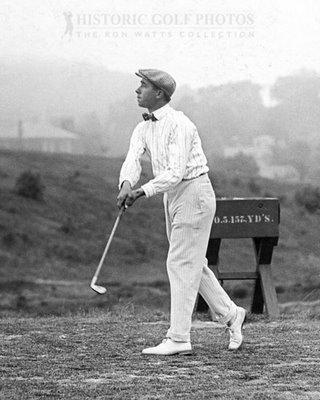
Golf History: Evolution of Rules, courses, and Society
The origins of golf and the birth of rules
golf history traces back to medieval Europe, with early stick-and-ball games played on coastal sand dunes in Scotland and the Low Countries. The modern game we certainly know today took shape in Scotland during the 15th-18th centuries, where “links” land – undulating, sandy coastline – provided a natural stage for competition.
Key early milestones in rules and governance
- 1500s-1600s: informal play, local customs govern play – no uniform rules.
- 1744: The Honourable Company of Edinburgh Golfers produced the first printed rules (13 rules) for the St Andrews-era game, a crucial moment in the evolution of golf rules.
- 1860: The first Open Championship (the Open) was held; fosters standardization and competition.
- 1897 & 1898: The Royal and Ancient Golf Club of St Andrews (R&A) and the United States Golf association (USGA) emerge as leading authorities; later they collaborate on a unified rules framework.
How the rules evolved: from local customs to global standards
The evolution of golf rules reflects the shift from informal play to an organized international sport. Over time, rules have adapted to new technologies, changing attitudes toward fairness, and broader participation.
Major themes in rules evolution
- Standardization: Early regional rules consolidated into global rules managed by the R&A and the USGA. today they publish the Rules of Golf together.
- Technology response: Changes addressing equipment (club design, ball composition) and measurement (distance, launch monitors).
- Player equity: Development of handicap systems to allow golfers of different abilities to compete fairly.
- Etiquette & pace of play: Rules and recommended practices to preserve course condition, safety, and pace.
Notable rule changes that shaped play
- Ball and club restrictions (to manage distance and fairness).
- Relaxation of strict penalties for unintentional movement of a ball on the green.
- Modernization of equipment rules to address new materials and manufacturing.
- Changes to match/competition rules to speed play and simplify scoring.
Evolution of golf courses and architecture
Golf course design evolved in parallel with rules and equipment. The original links-style courses took advantage of natural terrain, while later architecture introduced manufactured hazards, shaped greens, tees, and strategic bunkering.
Major eras of golf course design
| Era | Design focus | Representative feature |
|---|---|---|
| Links (pre-1800s) | Natural terrain, wind play | Undulating fairways |
| Golden Age (early 1900s) | Strategic bunkering, classic greens | Complex green shapes |
| Modern (post-1960s) | Length, earth-moving, gated communities | Long par-4s & water hazards |
Design principles that endure
- Strategy over punishment: Good architecture provides options – risk/reward lines – rather than purely penal design.
- Integration with landscape: Classic courses like St Andrews and Muirfield demonstrate harmony between course and site.
- Green complexes: Bunkering, tiering, and run-off areas shape putting strategy and scoring variance.
- Routing: The sequence of holes influences pace, variety, and psychological flow.
Technology and course construction
Advances in irrigation, turf science, and earth-moving transformed what architects can build. Courses moved inland, and designers could sculpt dramatic features that were previously impossible. This also introduced environmental challenges and debates about sustainability.
Golf society: inclusion, culture, and economics
Golf’s cultural role shifted dramatically over centuries – from a local pastime to an international sport with social and economic influence.the game’s relationship with society is central to its history.
Social evolution highlights
- Class and exclusivity: Historically associated with elite social circles; many clubs had restrictive membership policies.
- Women in golf: Women organized early competitions and founded separate associations; the Ladies’ Golf Union (LGU) in the UK was influential in promoting women’s competitive golf.
- Racial integration: Barriers in many clubs persisted through the 20th century; civil rights movements and policy changes encouraged more inclusive membership.
- Growth of public golf: Municipal and public courses democratized access to golf,growing participation across socioeconomic groups.
Professionalization and the rise of tours
Professional golf evolved from club professionals and exhibitions into robust national and international tours. The PGA Tour, European Tour, LPGA, and other circuits transformed golf into a high-profile spectator sport, with broadcast deals, sponsorships, and important prize funds.
Equipment evolution and its impact on play
Changes in clubs and balls have had large effects on how courses are played and designed. From hickory shafts to modern graphite, and from featheries to multi-layer urethane balls, equipment technology continually reshapes strategy and rules.
Key equipment milestones
- Hickory shafts (pre-20th century) – required different swing mechanics and equipment care.
- Steel shafts (1920s-30s) – increased durability and consistency.
- Metal woods (1970s onward) – increased forgiveness and distance.
- Multi-layer balls and modern aerodynamics – substantially increased distance and changed shot selection.
How equipment changes affected courses and rules
Greater distance led to course-lengthening or rethinking strategic design. In some cases, governing bodies introduced equipment rules and testing to preserve the historic balance between course architecture and scoring – an ongoing tension in modern golf.
Handicap systems and inclusive competition
Handicapping transformed the social and competitive fabric of golf by allowing players of different abilities to compete equitably. The World Handicap System (WHS), introduced in 2020, unified earlier systems and modernized how handicap indexes are calculated and used globally.
Benefits of handicap systems
- Encourages broader participation and amiable competition.
- standardizes scoring across regions and course difficulties.
- supports club competitions and social play for amateurs.
Environmental and sustainability dimensions
As golf courses expanded worldwide, environmental stewardship became central to modern course management. Enduring practices now influence design, maintenance, and community relations.
Practical sustainability measures
- Using native grasses and low-water turf varieties to reduce irrigation demand.
- Integrated pest management to minimize chemical use.
- Habitat restoration around course edges to support biodiversity.
- Water recycling systems and smart irrigation to conserve resources.
Case studies: how iconic courses shaped the game
Studying historic venues reveals how course architecture and rules interplay with culture.
St Andrews (Old Course)
- Role: Birthplace of modern golf and early rule codification.
- Design lessons: Natural routing, shared fairways, and strategic bunkering.
Augusta National
- Role: A defining example of aesthetic-driven design and strategic greens complexes.
- Design lessons: Meticulous conditioning, pin-position strategy, and the rise of tournament-driven course standards.
Modern resort courses
- Role: Showcases of earth-moving capabilities and amenities-driven design for tourism.
- Design lessons: emphasis on variety, replayability, and integrating hospitality with golf experience.
Practical tips for modern players and clubs
Understanding history improves how players approach the game and how clubs operate today.
- Study vintage course strategy: Learn to play low-compression shots and creative ball placement as older courses reward imagination.
- Embrace local rules: Many clubs have adapted temporary local rules for pace of play and environmental protection – know them before you play.
- support sustainable initiatives: Choose clubs and events that prioritize water conservation and biodiversity.
- use the World Handicap System: Ensure your handicap index is current to enjoy fair competition.
Golf communities and online discussion
Online forums and communities have become central to modern golf culture, where players share course reviews, equipment advice, and historical research. Communities like GolfWRX (forum threads on equipment and course rankings) demonstrate how fan-driven discussion shapes perceptions about course quality, ball performance, and rule interpretation.
How modern discourse influences golf
- Rapid spread of equipment innovation and setup tips.
- Greater openness on course projects and renovation debates.
- Amplified calls for inclusion, access, and environmental obligation.
Timeline: Snapshot of major events
| Year | event | Impact |
|---|---|---|
| 1744 | First printed rules (Edinburgh) | Start of standardization |
| 1860 | First Open Championship | Competitive framework |
| 1894 | USGA formed | governance in the U.S. |
| 1920s | Steel shafts arrive | Major equipment shift |
| 2020 | World Handicap System launched | Global handicap unification |
Further reading and resources
For readers interested in deepening their knowledge, explore:
- R&A and USGA publications on the Rules of Golf and equipment standards.
- Books on golf history and architecture (classic Golden Age architects and modern designers).
- Online communities (e.g., GolfWRX forums) for equipment reviews and contemporary debates.
SEO keywords used naturally in this article
golf history, evolution of golf, golf rules, golf courses, golf society, golf architecture, links golf, R&A, USGA, handicap system, golf etiquette, golf equipment, course design, St Andrews, Old Course, professional golf, golf sustainability.