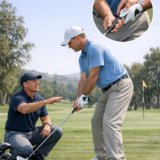
A rising number of instructors are encouraging golfers to replace unfocused range time with a deliberate practice framework built to improve ball striking. By organizing sessions around a logical sequence-address setup, alignment, swing sequencing and impact awareness-and then locking those adjustments in with targeted drills and verifiable reps, coaches report players turn aimless hitting into consistent, repeatable contact. This approach treats “improve” as moving a skill toward greater reliability and usefulness, and it shortens the path from practice to better scores. Below is a step‑by‑step blueprint instructors use to generate observable, trackable gains in ball striking.
Whole‑Body Mechanics That Produce Reliable Ball Striking
Onlookers at practice facilities note the most consistent players approach the swing as a coordinated, full‑body action rather than a string of isolated fixes. Coaches place first priority on posture and balance at address: a stable spine tilt, balanced weight distribution and a neutral, tension‑free grip set the stage for repeatable impact. Instructors using video and shot data stress that tiny setup errors magnify by the time the club meets the ball, converting small misses into costly strokes.
Technicians break the swing down into clear, checkable points.Significant checkpoints include:
- Eyes/head: still and tracking the intended line
- Shoulders: consistently rotating on a repeatable plane
- hips: rotating to led the downswing rather than lateral sliding
- Hands/arms: connected through the swing with a controlled release
- Feet: coordinated pressure transfer and a stable base through follow‑through
Practice converts these checkpoints into short,deliberate repetitions.The drills below are commonly used to isolate each region and reinforce correct patterns:
| Drill | Objective | suggested Duration |
|---|---|---|
| Alignment stick setup | establish posture and aim | 5-10 minutes |
| Impact bag work | Feel compression and center‑face hits | 3-5 minutes |
| Hip lead rotation drill | Train sequencing, not sway | 4-6 minutes |
Conversations around equipment-from product launch threads to boutique fitting services-repeatedly reveal one steady truth: new clubs won’t compensate for a broken motion. Analysts caution against letting technology obscure the fundamentals; community chatter frequently enough overemphasizes gadgets while underplaying basic mechanics. Smart coaches reccommend compact, structured sessions that favor contact quality before investing time or money chasing gear fixes.
Practical experience shows improved retention when players use a whole‑body checklist-think of the routine as an orchestra score: every instrument (head, shoulders, hips, hands, feet) must play the part. when each element is audited and practiced deliberately, golfers create the dependable result everyone seeks: consistent ball striking.
Why Intentional Warm‑Ups Yield Cleaner Contact
Top coaches increasingly treat pre‑round preparations as precision protocols rather than casual warm‑ups. The logic is straightforward: a warm‑up that mirrors the demands of the swing reduces variability at impact. Deliberate preparation-actions taken with clear intent-serves as the foundation for a warm‑up that leads to cleaner, more predictable ball striking.
Teams and instructors break warm‑ups into short, measurable segments that prime impact mechanics. Typical components emphasize:
- Mobility & posture: dynamic drills to warm the core, hips and shoulders
- Tempo & sequencing: half‑swings and rhythm exercises to lock in timing
- Impact‑oriented reps: short irons and punch shots to encourage compression
- Immediate feedback: quick checks with video, impact spray or simple launch monitor readouts
| Drill | Time | Main Benefit |
|---|---|---|
| Dynamic mobility drills | 3-4 min | Joint readiness and movement range |
| Tempo swings | 5-7 min | Consistent timing |
| Short‑iron impact reps | 8-10 min | Improved strike quality |
Coaches report that players who adopt this structured warm‑up see near‑immediate benefits: fewer fat and thin shots, tighter shot groups and more consistent spin readings. The mechanism is practical-purposeful repetition narrows the gap between intent and execution, making variability a controllable part of practice rather than an unwanted surprise on the course.
Getting started is simple and scalable: use a timed checklist, emphasize short, high‑quality reps, and record a couple of metrics each session. When warm‑ups are deliberate-measured, consistent and specific-the payoff is more than loosened muscles: it’s measurable enhancement in ball‑to‑club contact that shows up in scoring and shot‑tracking data.
A Practice Structure That Builds Good Reps, Not Bad Habits
Coaches and club analysts are reshaping practice so repetition reinforces correct movement, not the opposite. Language matters when assigning drills and goals-clear terminology helps players and coaches align expectations and outcomes.
The architecture rests on four practical pillars:
- Short, specific sets – keep each block focused on a single movement or outcome;
- Fast feedback – use video, coach cues or simple alignment aids to confirm execution;
- Constraint‑based tasks – create boundaries that force the desired motion rather than endless verbal corrections;
- Progressive challenge – introduce variability only after a stable pattern has been established.
Together, these elements prevent high‑volume practice from becoming high‑volume error.
Coaches prefer micro‑goals to vague instructions. Instead of “work on swing,” a player might be given a 10‑shot target such as “compact takeaway to X mark; eyes down at impact” with immediate feedback after each cluster. This method draws on motor‑learning principles-variability,intermittent reinforcement and deliberate practice-to stop players from cementing mistakes.
| Drill | Reps | Primary Focus |
|---|---|---|
| Alignment & setup checks | 3 × 10 | Aim and posture |
| Tempo ladder | 5 × 6 | Rhythm control |
| Target variability | 4 × 8 | Adaptive control |
implementation is pragmatic: audit one weekly session, add a short checklist and one objective feedback tool, then iterate. Coaches urge players to log outcomes and adjust drills in small steps-a methodical, evidence‑based approach that favors measurable change over guesswork. Small, deliberate tweaks keep good intentions from hardening into poor habits.
Club Selection and Shot‑Shaping Drills That Produce Instant Feedback
More instructors now pair intentional club rotation with shot‑shaping exercises to create immediate, actionable feedback. When golfers move through a planned sequence-from short irons to longer clubs-tendencies become obvious faster, and corrections tend to stick better than during unfocused range sessions.
begin with short clubs and progress to long clubs; this reveals swing tendencies under controlled conditions and ties technique adjustments to measurable outcomes such as carry distance, lateral dispersion and turf interaction.
Try these compact,decision‑forcing drills to get quick feedback:
- target ring drill: set concentric markers around a 50‑yard landing to instantly read miss direction.
- Shape corridor: create a narrow path with alignment sticks to train intentional fade or draw shapes.
- Gate impact drill: small gates at the ball show face‑path alignment at contact.
- Trajectory ladder: hit a series of heights with the same club to practice launch and speed control.
- Two‑club challenge: alternate between two clubs to sharpen feel and refine distance gaps.
| Club | Drill | Immediate Feedback |
|---|---|---|
| Sand wedge | Target ring | Landing and rollout |
| Gap/wedge | Gate impact | Face alignment at contact |
| 8‑iron | Trajectory ladder | Launch consistency |
| 5‑iron | Shape corridor | Bias toward fade or draw |
| Driver | Two‑club challenge | Dispersion and clubhead speed |
To convert feedback into progress, keep practice blocks short and documented: record a few reps on video, note miss patterns, and pick one correction goal for the next block. When you combine regimented club rotation with targeted shaping tasks, raw data becomes repeatable improvement in ball striking within a handful of sessions.
Use Metrics and Video So Adjustments Become Objective
Quantitative data is supplementing feel on ranges everywhere: swing sensation still matters, but real change is easier to confirm with evidence. Contemporary practice routines often include a post‑block review-numbers from a launch monitor paired with slow‑motion video-so players and coaches can distinguish fleeting sensations from consistent mechanics. This evidence‑first approach shortens diagnostic time and accelerates measurable improvement in ball striking.
Track a small set of high‑value metrics each session to build an objective baseline and set clear targets. A typical reference set coaches use includes:
| Metric | session Target |
|---|---|
| Ball speed | Stable within ±2 mph |
| Smash factor | Typical iron range 1.45-1.50 |
| launch angle | Driver/iron profile dependent |
| Shot dispersion | Group under ~10 yards when practicing precision |
Video explains why numbers move. Capture at least two angles: face‑on to judge weight transfer and a low‑to‑high view to study club path and face angle. Modern smartphones can record slow‑motion at useful frame rates (120-240 fps) and make comparison simple when you keep camera height and placement consistent. Use visual cues-alignment rods, impact spray or a bright marker on the jersey-to turn footage into clear evidence.
Close the loop by comparing metrics and recorded timestamps after each 20-30 shot block. Pick a single weekly priority-such as, if smash factor drops while strikes move low, devote drills to ball position and center contact-and document the intervention in a short practice log. Re‑test at the end of the week and either progress the drill or reset the baseline based on measurable change.
Programs that share their results show quicker, longer‑lasting gains when practice follows this model. Keep reporting simple: a page with weekly averages, two annotated video stills and a concise action plan. That mix-numbers, images and a single corrective focus-makes coaching decisions less subjective and practice more efficient. Coaches and players in recent training reviews agree: objective monitoring reduces guesswork and speeds up improvement in ball striking.
Plan Sessions that Mix Technical Work, Game‑Like Simulation and Recovery
Across performance centers, coaches are recommending a three‑part session to sharpen ball striking: a focused technical block, a simulation phase that mirrors course pressures, and a recovery segment. Training logs indicate sessions are more productive when players move from isolated mechanics into contextual play within the same visit-this sequencing improves transfer and reduces regression.
Technical segments should be brief,measurable and feedback‑driven. Short, intentful drills performed with clear targets beat long, unfocused buckets of balls:
- Drill examples: impact‑bag pulses, half‑swing tempo reps, alignment‑rod path checks
- Tools: launch monitor snapshots, high‑speed video, mirror work
- Goal: two to three measurable outcomes per drill (face angle, low point, tempo)
Those benchmarks make every pass through the mechanics phase produce usable data.
Simulation should follow technical refinement. Coaches report the best carryover occurs when corrected mechanics are instantly tested in situation‑based reps-forced fades/draws,shots from awkward stances,or timed pressure drills. This phase stresses decision‑making and outcome management over perfect form, building adaptability that holds up in competition.
Recovery is intentional, not optional. Short mobility circuits, focused soft‑tissue release and a 10-15 minute cool‑down mitigate neuromuscular fatigue and preserve movement quality across sessions.Track simple recovery metrics-session RPE, swing feel and sleep quality-to manage load.Methods such as guided breathing or light contrast therapy after intense simulation can definitely help consolidate motor learning and reduce injury risk, according to strength and conditioning best practice.
| Segment | Duration | primary Focus |
|---|---|---|
| Warm‑up | 10 min | Mobility and short wedges |
| Technical | 25-30 min | Targeted drills with feedback |
| Simulation | 25-30 min | Course scenarios and pressure reps |
| Recovery | 10-15 min | Cool‑down and mobility |
Coaches who advocate this template commonly recommend a weekly balance of roughly 40% technical,40% simulation and 20% recovery to maximize ball‑striking improvement while managing load.
Q&A
Q: why bother structuring practice if my only goal is to hit the ball better?
A: A structured session converts random swings into targeted training. Rather than mindless reps, you define clear objectives, control practice variables (club, target, stance) and measure results-making it far more likely changes transfer to the course.Q: How do you define “ball striking” here?
A: Ball striking refers to consistent, repeatable contact between the clubface and ball that creates predictable launch, spin and direction-basically center‑face impact combined with appropriate clubhead path and attack angle.
Q: What’s the single most critically important change to make in my practice routine?
A: Shift from quantity to quality. Swap long blocks of unfocused swings for shorter, goal‑driven sessions that include a warm‑up, focused skill work, variability to mimic play and objective feedback.
Q: Can you outline a 60‑minute practice plan?
A: Yes. 10-15 minutes warm‑up (mobility, short swings), 25-30 minutes focused block practice (3-5 targets or distances, 10-15 purposeful reps per block with immediate feedback), 10-15 minutes simulation/random practice (mixed clubs, course‑like scenarios), and 5 minutes review (notes, video stills, metrics).
Q: Why alternate between blocked and random practice?
A: Blocked practice builds short‑term accuracy and ingrains mechanics; random practice improves decision‑making and transfer to on‑course variability. Use block work for learning, randomization for applying skills under realistic conditions.Q: What feedback should I use?
A: Prioritize objective cues-ball flight, dispersion, contact marks and, if available, launch monitor numbers. Pair those with subjective indicators like sound and feel. Limit excessive mid‑set coaching so you can discover solutions through practice.
Q: Are simple drills available that fit this structured approach?
A: Absolutely. Examples:
– Gate drill to correct low‑to‑high strikes: place tees to enforce a square face at impact.
– Impact spray or tape to check center contact.
– Flight ladder: select three distances, hit 8-12 shots in blocks, then randomize to simulate play.
Q: How manny reps are effective per swing type?
A: Aim for purposeful sets of 8-15 quality reps during blocked work. Stop a set when intent drops or fatigue sets in. In random practice prioritize outcome quality over a fixed rep count.
Q: How should I warm up before a practice or round?
A: Begin with 5 minutes of dynamic mobility and core activation, then progress swings from wedges to half, three‑quarter and full swings. Finish with a few targeted shots to dial in tempo and feel.
Q: How do I measure progress over weeks, not just one session?
A: Track repeatable metrics: dispersion at a fixed distance, percentage of center hits (impact spray), average ball/club speed, or scores on a course‑specific shot list. Review weekly and adjust focus accordingly.
Q: What mistakes undermine structured practice?
A: Common pitfalls: no clear objective, endless full swings without purpose, chasing a single mechanical fix without testing it, neglecting variability for course play, and skipping warm‑up or recovery.
Q: How should beginners and advanced players differ in structure?
A: Beginners should concentrate on fundamentals-grip, stance, contact-and short‑range repetition with simple goals. Advanced players should focus more on simulation, shot shaping and marginal gains like tempo and dispersion control.
Q: Do I need a coach or tech to use this approach?
A: No, but they accelerate results. A coach speeds diagnosis and keeps practice efficient; technology (launch monitors, slow‑motion video) gives objective feedback. Low‑cost tools-impact spray, alignment aids and a practice journal-work well too.
Q: What’s a realistic timeline for seeing improvement?
A: With consistent, structured practice many players notice better contact and dispersion in a few weeks and more reliable change in 8-12 weeks. Actual progress depends on practice quality and frequency.Q: Final takeaway for golfers who want better ball striking today?
A: stop hitting aimlessly. Replace it with short, purposeful sessions: warm up, practice targeted skills in blocks, mix in random simulation, use objective feedback and record progress. Small, structured steps compound into more consistent ball striking.
Structured practice separates aimless range time from measurable improvement. By organizing sessions around explicit goals-focused warm‑ups, impact drills and objective feedback-golfers can turn repetitions into dependable ball striking rather of just more swings.Coaches report tangible benefits: improved contact, steadier ball flight, tighter dispersion and ultimately lower scores. Schedule deliberate practice blocks, vary drills to reflect on‑course conditions and track results so adjustments are driven by data rather than guesswork.
for players ready to move from intent to results,adopting a structured practice plan is the practical first step. Read the full drill set and weekly program at the link below for a step‑by‑step path to refining your ball striking.
https://golflesschannel.com/perfect-here-is-a-title-for-the-articlelanny-wadkins-elevating-golf-mastery-through-strategic-swing-refinement/
– Staff, Golf Lessons Channel

Transform Your Ball Striking: A Step‑by‑Step Practice Plan That Works
Pick the tone - headline options
Not sure which headline suits your audience? Use one of these attention-grabbing titles for the article or page:
- Transform Your Ball Striking: A Step‑by‑Step Practice Plan That Works
- Hit It Pure: A Structured Practice Routine to Fix Your Ball Striking Fast
- Master Ball Striking: The Practice Blueprint Pros Use
- Lock Down Crisp Contact - Structure Your Practice for Better Ball Strikes
- Train Smarter, Hit Better: How to structure Practice for Consistent Contact
- From Thin to Pure: The Practice Structure That Improves Ball Striking
- Unlock consistent Contact with this Simple Practice Framework
- Sharpen Your strike: Focused Drills and Feedback for Better Ball Contact
- The 4‑step Practice Plan to Dramatically Improve Your ball Striking
- Nail Your Contact: A Proven Practice Structure for Better Ball Strikes
Why structured practice improves ball striking
Random hitting at the range feels productive but rarely transfers to consistent contact on the course.Ball striking improves fastest when practice follows a structure grounded in motor learning: deliberate reps, progressive drills, tempo control and immediate feedback. A well-designed golf practice session trains the nervous system,not just the muscles - so you embed reliable swing patterns that produce center-face contact,consistent launch,and predictable turf interaction.
The 4-step practice framework pros use
Use this simple, repeatable framework to design every practice session. It targets the four elements proven to accelerate better ball striking:
- Setup & Alignment – get the basics repeatable.
- Targeted Drills – isolate specific contact faults.
- Tempo & Focused Reps – groove consistent rhythm and impact.
- Feedback & Tracking – measure contact, iterate quickly.
Step 1 – Setup & alignment (5-10 minutes)
- Check ball position relative to stance (center for short irons, slightly forward for mid/long irons and driver).
- Confirm grip pressure, spine tilt, and weight distribution-small fixes produce large changes in contact.
- Use alignment sticks or clubs on the ground to confirm feet-target-line and ball-target-line.
Why this matters: poor setup consistently produces toe or heel strikes, thin shots or fat divots. Fix setup first to make drills effective.
Step 2 – Targeted drills (20-30 minutes)
Choose 2-3 drills that correspond to your biggest contact faults. Practice them in short blocks (8-12 reps) and then test transfer to full swings.
- Impact Bag Drill – develops a solid impact sensation and forward shaft lean for crisp iron contact.
- Gate Drill (tee or alignment sticks) – promotes center-face contact and consistent swing path.
- Divot Line Drill – place a towel or marker 1-2″ behind the ball to encourage down-and-thru strikes (reduces thin shots).
- One-Handed Swings – right- or left-onyl swings improve feel and connection through impact.
| drill | Purpose | Reps / Tempo |
|---|---|---|
| Impact Bag | Solid impact/shaft lean | 8-10 slow reps |
| Gate Drill | Center-face contact | 10 reps per side |
| Divot Line | Downward strike | 12 measured swings |
| Half-Swing Tempo | rhythm & timing | 20 reps with metronome |
Step 3 – Tempo and focused reps (15-20 minutes)
Tempo and rhythm directly affect where on the clubface you strike the ball. use a metronome app or count “1-2” to establish a repeatable backswing-to-through-swing rhythm.
- Start with half swings at a steady tempo – 3 sets of 20 to ingrain the feel.
- Progress to 3/4 swings, then full swings – maintain the same count and tempo.
- Use “focus reps”: pick a specific target (center of face, shallow divot) and take only 6-8 true, attentive strokes. Quality > quantity.
Step 4 – Feedback & tracking (10-15 minutes)
feedback closes the loop. Without it, you’ll repeat the same mistakes. Track a few key metrics each session and adjust drills accordingly.
- Visual: divot pattern, ball flight, contact marks on the face (smudges or strike marks).
- Video: slow-motion impact from down-the-line and face-on angles to check low point and release.
- Launch monitor data (if available): clubhead speed, smash factor, carry distance, spin, and impact location.
- Journal: record what drill you did, the rep counts, the metric changes, and one actionable tweak for next time.
Sample 60-minute practice session (range to course transfer)
apply the 4-step framework with a focused timeline. This template is for an iron/short-game ball striking session.
- 0-10 min - Setup & alignment (check fundamentals,light warm-up swings)
- 10-35 min – Targeted drills (choose 2 drills,rotate every 10-12 reps)
- 35-50 min – Tempo & focused reps (metronome half -> full,6-8 focus reps per club)
- 50-60 min – Feedback & track (video,face checks,quick launch monitor reads)
Metrics that matter for better contact
Track these KPIs to measure progress in ball striking:
- Impact location (center of face vs heel/toe)
- Divot position and depth (consistent low point)
- Smash factor - efficiency of energy transfer (important for irons/drivers)
- Launch angle & spin – predictability improves scoring
- Shot dispersion - tighter groupings mean repeatable contact
Tempo drills to lock rhythm
Tempo is often overlooked,yet it’s one of the fastest levers for better contact. Try these:
- Metronome 3:1 drill – set a metronome, three ticks backswing, one tick downswing; feel the timing at impact.
- Counted swings – “one” on the takeaway, “two” at the top, “three” through impact; consistent cadence beats power-only practice.
- Slow-motion impact reps - practice impact positions at lower speed to train the nervous system to find the correct sequence.
Practical tips for range-to-course transfer
- Simulate course conditions: pick targets, vary lies, use different clubs in the same session.
- Warm up like you would on the course – start with wedges and move to longer clubs to keep muscle patterns consistent.
- Limit mindless ball hitting: make every shot have an objective (target, trajectory, feel).
- Short practice sessions 3-4x/week beat one long session – frequency improves retention of contact patterns.
Case study: 6-week structured practice progression
Player: weekend golfer, struggled with thin irons and inconsistent center-face strikes.
- Week 1: setup corrections, gate drill, impact bag. Immediate reduction in thin shots.
- Week 2-3: tempo work daily (10 minutes),applied divot-line drill – divot consistency improved.
- Week 4: introduced launch monitor checks – smash factor rose by 0.08 on average.
- Week 5-6: moved to on-course simulation sessions – ball striking stabilized and scoring improved by 3-4 strokes on average.
Key takeaways: short targeted sessions,consistent feedback,and tempo practice produced measurable gains in contact and scoring.
Common ball striking faults and quick fixes
- Thin shots – often caused by early extension or rising through impact. Fix: divot-line drill and shorter backswing with forward shaft lean at impact.
- Fat shots - low-point behind the ball. Fix: weight-shift drills and hit down on the ball; place a towel behind the ball during practice to avoid hitting it.
- Toe or heel strikes - Poor alignment or sway. Fix: gate drill and balance focus (single-leg weighted warm-ups).
- Inconsistent distance – Varying contact point. Fix: center-face focus reps and smash factor tracking with launch monitor.
Tools and tech that accelerate learning
- Smartphone slow-motion video (240-960 fps) - instant visual feedback on impact and low point.
- Launch monitors (TrackMan, GCQuad, SkyTrak) – objective data on impact location, smash factor and launch.
- Impact tape or spray – immediate confirmation of strike location on the face.
- Metronome apps – consistent tempo for swing rhythm.
- Practice journals or apps – record sessions, drill results and next-step actions.
Final practical checklist for every practice session
- Set a single objective for the session (e.g., center-face contact with 7-iron).
- Warm up setup checks and alignment first.
- Spend most time on 2 targeted drills with short focused rep blocks.
- Use tempo work to stabilize rhythm before full-speed swings.
- Capture feedback (video or impact marks) and log one measurable change.
Ready to start?
Pick a title above that matches your voice, plug the 4-step framework into your next range visit, and track one metric each week. Structured practice turns random repetition into reliable center-face contact and consistent ball striking – and that’s where lower scores follow.