

Background and rationale: The performance of a golf driver emerges from a complex, dynamic interaction between the player’s swing mechanics, the clubhead’s mass and geometry, and the mechanical properties of the shaft. Among shaft variables, flex – broadly encompassing stiffness, flex profile, and dynamic bending behaviour – exerts a pronounced influence on key outcome metrics such as ball speed, launch angle, spin rate, and shot-to-shot consistency. Given the marginal gains that separate competitive outcomes, understanding how shaft flex modulates energy transfer, clubhead kinematics at impact, and the temporal phasing of release is essential for evidence-based club fitting and performance optimization.
Mechanisms and variables of interest: Shaft flex affects the effective loft and face orientation at impact through temporal bending and rebound (commonly described as “kick”), alters the timing of maximum clubhead speed, and influences dispersion by changing the interaction between the shaft’s vibrational response and the golfer’s release pattern. Relevant shaft properties include static stiffness (butt and tip), flex profile, torque, and natural frequency; relevant performance metrics include ball speed, launch angle, spin rate, carry and total distance, and lateral/longitudinal variability as measured by modern launch monitors. Player characteristics (swing speed, tempo, release point) mediate these effects and may produce divergent optimal flex choices across golfers.
Purpose and scope: this article systematically examines the influence of shaft flex on driver performance metrics by synthesizing biomechanical theory, empirical findings, and practical fitting considerations. The goal is to delineate the causal pathways through which shaft flex alters ball-flight outcomes, quantify the magnitude of these effects across representative player archetypes, and provide actionable guidance for optimizing shaft selection to improve distance, accuracy, and consistency.
The Relationship Between Shaft Flex and Ball Speed: biomechanical Mechanisms and Empirical Evidence
In mechanical terms,the shaft functions as an elastic intermediary between the golfer’s kinematic chain and the clubhead,storing and releasing energy during the downswing. When loaded and unloaded optimally, this elastic behavior can augment the velocity delivered to the clubhead at impact; conversely, mistimed deflection can act as a sink for kinetic energy. Empirical metrics such as **ball speed** and **smash factor** therefore reflect not only raw clubhead speed but the temporal coordination of shaft bending and unbending relative to the moment of impact. High-speed video and sensor-based analyses show that the phase relationship between peak shaft deflection and impact governs how efficiently stored elastic energy contributes to translational clubhead acceleration rather than dissipating as vibration or rotational motion.
How much the shaft’s flex influences ball speed depends on several interacting biomechanical variables. These mediators determine whether a given stiffness amplifies or retards energy transfer in an individual golfer’s swing:
- swing tempo and transition: faster transitions favor stiffer profiles to avoid excessive lagging; slower tempos may benefit from more flexible shafts.
- Release timing: early versus late release changes when unbending contributes to net head speed at impact.
- Attack angle and impact location: dynamic loft and off-center hits modify effective launch conditions and the shaft’s role in energy transfer.
- Shaft frequency and kick point: these properties alter bending curvature and where along the shaft peak deflection occurs.
Controlled fitting studies and launch-monitor datasets demonstrate consistent but modest average effects: correct shaft matching can yield measurable increases in ball speed, while misfitting commonly reduces efficiency and consistency. Typical observed magnitudes in applied settings are on the order of tenths to a few miles per hour of ball speed difference between optimally matched and mismatched shafts for a given player, with greater effects for golfers near the inflection points of swing speed (e.g., 85-95 mph) where small timing shifts produce larger outcomes. A simplified summary table of representative outcomes is shown below.
| Player Profile | Recommended Flex | Typical Ball Speed Delta |
|---|---|---|
| Slow tempo, 75-85 mph | Regular / soft | +0.5-1.0 mph |
| Medium tempo, 85-95 mph | Stiff / Mid-kick | +1.0-2.0 mph |
| Fast tempo, >95 mph | X-stiff / Low-kick | +0.5-1.5 mph |
Biomechanically, these empirical patterns arise because an optimal flex yields synchronous peak unbending that contributes to forward linear acceleration of the clubhead rather than producing excessive rotation or delayed rebound. In practice, the most reliable pathway to improving ball speed is a test-driven fitting that measures **ball speed**, **clubhead speed**, and **smash factor** across candidate shafts while controlling for impact location and swing intent. Such measurement-based selection reduces the risk of phase mismatch and maximizes the probability that shaft bending dynamics will act as an amplifier, not a dissipater, of the golfer’s kinetic output.

Effects of Shaft flex on launch Angle and Spin Rate: Implications for Carry Distance and Trajectory Optimization
Variations in shaft bending stiffness directly alter the clubhead’s orientation at impact through changes in **dynamic loft** and the timing of shaft deflection. More flexible shafts tend to store and release energy later in the downswing, increasing the effective loft presented to the ball and thereby raising initial launch angle. Conversely, stiffer shafts typically reduce effective loft by resisting forward bend, producing a lower launch with a flatter attack profile. These mechanisms are interactional: the same nominal flex can produce different launch outcomes depending on swing tempo, release point, and shaft bending profile.
Spin rate is likewise sensitive to flex as spin correlates strongly with effective loft and face-angle dynamics at impact. Increased dynamic loft from a softer shaft usually elevates backspin, whereas a stiffer shaft can produce lower spin if it reduces loft and stabilizes face rotation. Practical consequences include:
- Higher spin - can increase carry but may cost roll and height (risk of ballooning).
- Lower spin – tends to favor roll and penetration but can shorten carry if launch is too low.
- Variable dispersion – mismatched flex increases shot-to-shot variability in both launch and spin.
Optimizing carry distance requires balancing launch angle and spin into a trajectory that maximizes total distance for a given swing speed. As a simple guide, lower swing speeds often gain distance from a slightly more flexible shaft that raises launch without producing excessive spin; higher swing speeds frequently benefit from stiffer shafts that curb spin and create a more penetrating flight. The table below summarizes typical tendencies observed during fitting sessions and can be used as a heuristic starting point for trajectory optimization.
| Player Swing Speed | Recommended Flex | Typical Launch | Typical Spin |
|---|---|---|---|
| Slow (<85 mph) | Softer (A/L) | Higher | Moderate-High |
| Moderate (85-100 mph) | Regular-Stiff | Mid | Optimal-Moderate |
| Fast (>100 mph) | Stiff-X | Lower | Low |
For practical fitting: prioritize objective data from a **launch monitor** and combine it with qualitative observations of tempo and feel. Test multiple flexes while tracking launch angle,spin rate,and carry; iterate until the combination of launch and spin produces the intended trajectory and repeatability. Key fitting checkpoints include:
- Consistent contact (repeatable strike location)
- Launch and spin within target bands for the player’s profile
- Dispersion control under varied swing conditions
Shaft Flex Impact on Consistency and Dispersion: Variability, Forgiveness, and Shot Repeatability
Variations in shaft stiffness systematically alter the temporal relationship between the golfer’s kinematic sequence and clubhead orientation at impact, producing measurable differences in lateral dispersion and repeatability. A more flexible shaft tends to store and release energy later in the downswing, increasing sensitivity to small timing errors and thereby elevating shot-to-shot variability for players with faster tempos. Conversely, a stiffer shaft reduces deflection and can shorten the effective window for optimal impact conditions, frequently enough tightening dispersion for mechanically consistent swingers but penalizing those with inconsistent release points. These mechanical interactions manifest as changes in both mean dispersion and the standard deviation of lateral and distance outcomes.
forgiveness is not solely a function of clubhead geometry; shaft properties substantially modulate how off-center impacts translate into directional and distance error. Shaft flex influences launch-angle variability, face-angle stability at impact, and the magnitude of gear-effect spin for toe- or heel-strikes. In practical terms, the following considerations are critical when evaluating forgiveness and shot repeatability:
- Player tempo compatibility: Matching flex to swing tempo reduces timing-induced dispersion.
- Deflection consistency: Lower variability in shaft bending under repeat swings improves repeatability.
- Spin and gear-effect control: Appropriate flex can mitigate exaggerated sidespin from off-center hits.
| Flex | Lat. Dispersion SD (yd) | Carry SD (yd) | Repeatability Index* |
|---|---|---|---|
| Soft | 12 | 10 | 0.65 |
| Regular | 9 | 7 | 0.80 |
| Stiff | 6 | 5 | 0.90 |
| *Repeatability Index: normalized metric (0-1) where higher values indicate greater shot-to-shot consistency. | |||
Empirical fitting and on-course validation should prioritize consistency metrics over single-shot peak values. A recommended protocol includes controlled launch-monitor sessions that record at least 30 swings per shaft option, assessment of standard deviations for carry and lateral dispersion, and subjective evaluation of feel under varying swing tempos. For most players seeking reduced dispersion, the objective goal is to minimize the standard deviation of carry and lateral miss while maintaining acceptable launch and spin characteristics. Ultimately, the optimal flex is the one that produces the lowest variability for the player’s natural tempo and swing pattern, not necessarily the one that maximizes on-average ball speed.
Matching Shaft Flex to Swing Characteristics: Guidelines Based on Swing Speed,Tempo,and Release Point
Swing speed provides the principal anchor for shaft-flex selection because it most directly governs the amount of dynamic deflection a shaft will experience during the downswing. As a rule of thumb, players with lower clubhead speeds require shafts with greater overall flex to create sufficient effective loft and maintain ball speed, while higher-speed players generally need stiffer shafts to control launch and spin. Consider the following generalized mapping (values are indicative and should be validated in-fitting):
- Below ~80 mph: softer flex (e.g., A / Senior) to maximize launch and ball speed.
- ~80-95 mph: Regular flex balances launch and dispersion for most mid-handicappers.
- ~95-110 mph: Stiff flex stabilizes the face at impact and reduces spin for better roll.
- Above ~110 mph: Extra-stiff or specialized tip-stiff profiles are often required to prevent excessive low-launch, high-spin outcomes.
tempo and transition modulate how a given swing speed interacts with shaft bend characteristics. A smooth, rhythmic tempo allows a slightly softer shaft without sacrificing control as timing is consistent and release is typically later; conversely, an aggressive, rapid transition can overload a soft shaft, producing hooks and inconsistent face angle at impact. Practical fitting should thus consider tempo alongside speed. The short table below summarizes common combinations and recommended flex directions:
| Measured Swing Speed | Typical Tempo | Suggested Flex/Tip Characteristic |
|---|---|---|
| 85 mph | smooth | Regular / mid-tip-soft |
| 100 mph | Quick | Stiff / tip-stiff |
| 110+ mph | varied | X‑Stiff; consider stronger butt or stiffer tip |
Release point and forearm rotation shape the effective dynamic profile of a shaft during the final milliseconds before impact. Players with a late release typically benefit from a slightly softer tip to maximize dynamic loft and launch without adding excessive backspin; players with an early or strong release frequently enough require a stiffer tip section (or a stiffer overall flex) to avoid over-rotation of the clubhead and resulting closed-face impacts. Key practical implications include:
- Late release: tip‑softer shafts can help preserve launch and reduce the need to add loft mechanically.
- Early release: tip‑stiff shafts reduce excessive toe-down rotation and minimize hooks and low-launch impacts.
- Neutral release: match overall flex primarily to speed and tempo, then fine-tune tip/butt stiffness.
Fitting protocol and trade-offs: adopt an iterative, metrics‑driven procedure-record clubhead speed, launch angle, peak spin, ball speed, and left/right dispersion for each candidate shaft rather than relying solely on subjective feel. Begin with the flex indicated by speed/tempo, then test one flex step stiffer and one step softer while noting changes in ball speed, launch, and grouping. Expect trade-offs: a softer shaft can increase launch and feel but may sacrifice directional control at higher speeds,while a stiffer shaft can tighten dispersion but reduce peak ball speed if it underloads the shaft. Note: the provided web search results also returned unrelated items (the film “Shaft” and a dictionary entry for “shaft”); those references refer to distinct cultural and lexical topics and are not relevant to the technical fitting considerations summarized here.
The Role of Shaft Torque and Kick Point in Modulating Feel and Shot Shape
Torque quantifies the shaft’s resistance to twisting (commonly expressed in degrees) and has a direct mechanical relationship with perceived feel and face rotation at impact. Higher torque values permit greater shaft twist under load, often translating to a sensation of increased softness or “give” through the hitting window; lower torque values create a firmer, more stable feel.From a performance standpoint, torque moderates how much the clubface can rotate between the downswing transition and ball contact, thereby influencing initial face angle and early ball flight tendencies. In rigorous fitting environments, torque is therefore treated as a control parameter that interacts with swing tempo, release timing, and grip/hand action.
The kick point (bend point) denotes the axial region where the shaft exhibits maximum deflection and is commonly categorized as low, mid, or high. A low kick point biases the shaft to tip flex, typically raising launch angle and, in many cases, increasing spin; a high kick point produces a lower launch and can reduce spin generation. Subjective feel correlates with these mechanical behaviors: shafts with low kick points often feel “whippier” in the tip region, while high kick point shafts present a “stiffer” sensation through transition and impact.Because kick point primarily alters launch and spin characteristics rather than gross temporal properties of the swing, its selection is best informed by launch-monitor data in conjunction with the player’s desired trajectory profile.
When considered together, torque and kick point create a two‑dimensional influence space that modulates both feel and shot shape. Torque affects the rotational stability of the clubface and thus can amplify or suppress a player’s innate face control tendencies: higher torque may allow more face rotation (potentially exaggerating draws or fades driven by the player’s release), whereas lower torque resists rotational deflection and tends to straighten dispersions for players with aggressive releases. Kick point complements this by shifting launch and spin, which in turn affects aerodynamic curvature-higher launch/spin combinations can accentuate lateral curvature caused by side spin, while lower launch/spin reduces it. Optimal matching therefore requires evaluating how face rotation (torque response) and launch/spin (kick point response) interact for a specific player.
Practical fitting protocols emphasize objective measurement and iterative validation: record swing speed, attack angle, face angle at impact, and resultant ball flight, then adjust torque and kick point to move toward the target dispersion and trajectory. **Key experimental controls** include consistent shaft length, grip size, and head model to isolate shaft effects. In applied practice, consider the following concise guidelines and verify with a launch monitor and on-course trials.
- Low torque + high kick point: for high-speed,late-releasing players seeking stability and lower,penetrating trajectories.
- High torque + low kick point: for slower-tempo players who benefit from a softer feel and higher launch for carry distance.
- Mid torque + mid kick point: a neutral baseline for balanced control and trajectory for misc. swing profiles.
| Profile | Typical Torque | Typical Kick Point | Expected Outcome |
|---|---|---|---|
| Aggressive swinger | Low (2-3°) | High | Reduced face twist, lower launch |
| Smooth tempo | Mid (3-4°) | Mid | Balanced feel and trajectory |
| Slow speed / high spin | High (4-6°) | Low | Softer feel, higher launch |
Testing Protocols and Data Driven Fitting Methodologies for Selecting Optimal Shaft Flex
Experimental control is the foundation of reliable shaft-flex evaluation: sessions must be conducted in a calibrated indoor facility or on a wind‑calm driving range using a high-fidelity launch monitor (e.g., TrackMan or FlightScope) and a single ball model. For each tested shaft flex the protocol prescribes a warm‑up period (≥15 swings), followed by a blocked set of impacts (minimum 20 recorded, with the first 5 discarded as run‑in). To reduce confounding variables, maintain constant head mass, loft, and grip; document environmental conditions and equipment serial numbers. Note that the supplied web search results included healthcare and laboratory pages (mercyone) unrelated to golf; therefore,those sources were not incorporated into the domain‑specific testing recommendations below.
data capture should focus on repeatable,mechanistic metrics and their derived consistency indices. Capture raw measurements at each impact for:
- Ball speed
- Smash factor
- Launch angle
- Spin rate
- Clubhead speed and path
- Impact location (face)
Post‑processing must include outlier rejection (e.g., ±2.5σ), computation of within‑shaft coefficient of variation (CV), and pairwise comparisons between flexes using effect sizes alongside p‑values to evaluate practical importance in distance and dispersion.
Fitting is an optimization problem that maps swing characteristics to shaft mechanical properties.Use both domain heuristics and model‑based fitting: quantify swing tempo (backswing:downswing ratio),measured shaft bend profile (frequency in cycles/min or Hz),and tip‑section stiffness; then predict driver outcomes with multivariate regression or a lightweight machine learning model (e.g., regularized linear regression). The table below summarizes a compact decision heuristic commonly used in data‑driven fits:
| Measured Tempo | typical Flex Recommendation | Fitting Rationale |
|---|---|---|
| Slow (≥1.6) | L or A | Higher bend yields improved launch & timing |
| Moderate (1.2-1.6) | R | Balanced energy transfer and control |
| Fast (≤1.2) | S or X | Stiffer tip stabilizes face at impact |
Use this table as a starting prior; refine with the player’s own outcome data rather than relying on tempo alone.
Adopt an iterative validation workflow to ensure transfer from monitor to course: conduct an A/B on‑course trial, compare carry and dispersion distributions, and require a minimum sample per condition (n ≥ 30 full swings) before declaring one flex superior. Emphasize repeatability: if the preferred flex fails to show consistent enhancement in both mean distance (>1-2 yd) and reduced CV of dispersion, re‑test with altered butt/tip treatments or a nearby flex. Final selection should weight three objectives in descending order: (1) consistent strike location and dispersion, (2) optimal launch‑spin combination for maximum carry, and (3) subjective feel-each validated with quantitative evidence and logged in the fitting report for future longitudinal analysis.
Practical Recommendations for Players and Fitters: Trade Offs, Common Errors, and Adjustment Strategies
Evaluate trade-offs quantitatively: When selecting shaft stiffness, prioritize measurable outcomes-clubhead speed, ball speed, launch angle, spin rate, and shot dispersion-over subjective feel alone. stiffer shafts often reduce dynamic loft and side spin for high swing speeds, producing lower launch and tighter dispersion, whereas more flexible shafts can increase effective dynamic loft and backspin leading to higher apex and increased carry for moderate swing speeds. Fitters should document baseline metrics and then change only one variable at a time (shaft flex or torque) so trade-offs are attributable; record at least 20 impacts per configuration to capture variability and enable statistical comparison.
common fitting errors to avoid:
- relying exclusively on perceived “feel” without corroborating launch monitor data - this biases flex selection toward short-term comfort rather than performance.
- Confounding shaft flex with length and head loft changes – altering multiple parameters at once obscures causal effects.
- Ignoring tempo and transition characteristics – two players with identical clubhead speed can require different flex because of tempo-driven loading patterns.
- Overfitting to a single indoor monitor session – wind, turf interaction, and fatigue alter effective performance outdoors.
Adjustment strategies for players and fitters: Use a tiered approach: (a) categorize the player by peak and average driver speed and tempo; (b) test 2-3 flexes bracketing the theoretical target; (c) evaluate both ball-flight metrics and dispersion. For on-course validation, incorporate a 10-shot protocol across varying lies and wind conditions. When fine-tuning, small increments in stiffness or ¼” of length can correct launch/spin imbalances more predictably than swapping to an entirely different shaft model. Consider torque and kick point adjustments as secondary levers: lower torque can reduce shot dispersion for aggressive release patterns, while a lower kick point can modestly raise launch for slower swingers.
Practical reference table and workflow checklist:
| Driver Speed (mph) | Typical Flex | Primary Expectation |
|---|---|---|
| <80 | L/Soft A | Higher launch, more spin, prioritize energy transfer |
| 80-95 | A/M | Balanced launch/spin, moderate dispersion control |
| 95-110 | S/Stiff | Lower launch, reduced spin, tighter grouping |
| >110 | X/Extra Stiff | Minimal deformation, maximal control at top speeds |
- Workflow checklist: baseline data → 2-3 flex tests → 20+ impacts each → on-course verification → incremental refinements.
- Document: swing tempo, shaft model, length, loft, launch monitor outputs, and environmental conditions for repeatable outcomes.
Note on search results provided: The supplied search results reference the film franchise “Shaft” (entertainment media) and are not related to golf shaft analysis; thay do not inform the technical recommendations above. If additional bibliographic sources or empirical datasets are required for citation, request specific peer-reviewed studies or manufacturer technical sheets and they will be integrated into the fitting protocol.
Q&A
Note: the web search results supplied with the prompt did not include material specific to golf-shaft flex (they returned general dictionary entries and an unrelated film). The Q&A below is therefore based on established practice and empirical principles in golf club fitting and biomechanics rather than those particular search hits.Q1: What is shaft flex and how is it categorized?
A1: Shaft flex refers to the bending characteristics of a golf shaft under load during the swing.It is indeed commonly described by categorical labels (e.g., L/Lite, A/senior, R/Regular, S/Stiff, X/Extra‑Stiff) or by manufacturer‑specific stiffness indices and bend profiles. Categories represent broad ranges of dynamic stiffness and are an initial fitting heuristic; actual bending behavior depends on the shaft’s material, taper/butt profile, wall thickness and manufacturing tolerances.
Q2: by what biomechanical mechanism does shaft flex influence driver performance?
A2: Shaft flex affects the temporal dynamics of the club‑head through the swing and at impact. A shaft that bends and then unbends (the “kick” or release) alters the club‑face orientation, effective loft (dynamic loft), and face angle at impact, and can change the timing of maximum club‑head velocity. These changes influence ball speed, launch angle, spin rate and lateral launch conditions, which together determine carry, total distance and shot dispersion.
Q3: How does shaft flex typically affect ball speed?
A3: The effect of flex on ball speed is indirect.For a given player, an appropriately matched flex helps optimize energy transfer and sequencing, which tends to maximize club‑head speed at impact and smash factor (ball speed/club speed). If the shaft is too soft for a player with high swing speed or aggressive release, it can delay release and reduce effective face velocity at impact. Conversely, if the shaft is too stiff for a slower swinger, it can suppress natural release timing and reduce feel and speed.The largest ball‑speed improvements from changing flex come from correcting a gross mismatch rather than fine tuning.
Q4: How does flex influence launch angle and spin rate?
A4: Softer flexes tend to yield higher dynamic loft and frequently enough higher launch angles and spin rates as the shaft unloads later (producing more effective loft at impact). Stiffer shafts typically produce lower launch and lower spin as the shaft bends less and the face might potentially be delivered with less effective loft. Though, torque, kick point (bend profile), player release, loft setting of the head and impact location also interact, so flex is one of several contributors to launch/spin outcomes.
Q5: What is the effect of shaft flex on shot consistency and dispersion?
A5: Mismatched flex increases variability in face angle and dynamic loft at impact, leading to wider shot dispersion (greater left/right and distance scatter).A correctly matched shaft enhances repeatability of impact conditions-reducing shot‑to‑shot variability-because it better suits the player’s tempo and release,producing more consistent timing of shaft deflection and recovery.
Q6: How should a player’s swing speed and tempo inform flex selection?
A6: Swing speed is a primary starting point: higher swing speeds generally require stiffer shafts; lower speeds generally require softer shafts. Typical empirical guidelines (manufacturer‑dependent and approximate) are: Ladies/Lite for driver head speeds substantially below ~75-80 mph; Regular for roughly 80-95 mph; Stiff for roughly 95-105 mph; Extra‑Stiff above ~105 mph. Tempo/transition matters: players with smooth,late releases may prefer softer profiles than those with aggressive,quick releases even at similar speeds. These are approximations-individual fitting is necessary.
Q7: What objective metrics should be used during shaft‑flex testing?
A7: Use a launch monitor to record: club‑head speed, ball speed, smash factor (ball/club speed), launch angle, spin rate, carry distance, total distance, side‑spin/lateral launch angle and dispersion (grouping). Look for the shaft that yields the highest smash factor, an optimal launch‑spin window for the player’s speed (maximizing carry and total), and the tightest dispersion. Consistency of results across multiple swings is as important as peak numbers.
Q8: What is the recommended protocol for on‑course or fitting‑bay testing?
A8: 1) Measure natural driver club‑head speed and capture a set of baseline swings. 2) Test shafts in a controlled sequence (changing only one primary variable-flex-at a time).3) For each shaft, collect a minimum of ~6-12 good swings to assess averages and variability. 4) Compare key metrics (smash factor, launch, spin, dispersion). 5) Consider how results interact with head loft/adjustments and shaft weight. 6) Select the shaft that balances distance and dispersion for the player’s objectives and feel preferences.
Q9: How do other shaft properties (weight, torque, kick point, bend profile) interact with flex?
A9: Flex describes stiffness magnitude but not the full bending behavior.Kick point (or bend profile) affects where along the shaft maximum bend occurs and thus influences launch: a high kick point tends to produce lower launch, a low kick point higher launch. shaft weight can change swing tempo and inertial feel-lighter shafts can slightly increase club‑head speed but may increase dispersion for some players. Torque (twisting stiffness) influences feel and how much the face may close/open during release, which affects side spin and shot shape. Therefore,full fitting must consider flex in combination with these properties.
Q10: Can adjustable driver settings compensate for an incorrect shaft flex?
A10: Adjustable loft, face angle and weighting offer partial compensation for launch and face‑angle effects, but they do not change the shaft’s dynamic bending behavior, timing of release, or torque characteristics. Adjustment can mitigate some launch/spin outcomes, but it cannot fully correct a shaft that is poorly matched to a player’s swing dynamics. Proper shaft selection remains crucial.
Q11: Do environmental factors or shaft aging affect flex?
A11: Temperature can slightly alter composite stiffness (cold tends to increase shaft stiffness),which may be perceptible in extreme conditions. Long‑term fatigue or damage (e.g., repeated high‑load impacts, mishits, or microfractures) can change a shaft’s properties, but modern shafts are durable; notable changes are uncommon without damage. regular inspection and re‑testing after notable impacts or after several seasons is prudent for high‑frequency players.
Q12: What trade‑offs should players consider when choosing flex?
A12: Softer shafts: tend to increase launch and spin and may improve distance for slower swingers but can increase dispersion and reduce ball speed for faster swingers. Stiffer shafts: generally lower spin and launch-beneficial for higher‑speed players seeking control and lower spin-but can feel harsh or suppress speed for slower swingers. The optimal choice balances distance, launch/spin optimization and shot‑to‑shot consistency given the player’s swing characteristics and goals.
Q13: Are there quantitative targets for “optimal” launch and spin related to shaft selection?
A13: Optimal launch and spin are player‑dependent and correlated with club‑head speed. As a general principle, the chosen shaft should enable a combination of launch angle and spin that maximizes carry and total distance for the measured club‑head speed while minimizing deleterious side spin.Rather of fixed global numbers, fitters use the launch‑spin window that maximizes distance given the player’s speed and angle of attack. The shaft that produces the best combination of smash factor, appropriate launch, acceptable spin and repeatability is preferred.
Q14: What are practical next steps for a player who wants to optimize shaft flex?
A14: 1) Book a session with a qualified club‑fitter who uses a launch monitor. 2) Provide details on typical distances, miss patterns and swing speed. 3) Test several shaft flexes and profiles using the fitting protocol above. 4) Prioritize shafts that improve both distance (smash factor and carry) and dispersion consistency. 5) Re‑test if you change swing mechanics,driver head model,or if equipment/conditions change significantly.
Q15: What gaps remain in the literature and practice?
A15: While empirical fitting practices are mature,there is possibility for more controlled experimental and biomechanical studies quantifying the interaction among flex,bend profile,torque and individual neuromuscular timing (tempo/transition and release dynamics). Standardized reporting across manufacturers would also aid comparison. Longitudinal studies of how shaft choice influences injury risk, long‑term performance and adaptation to swing changes are limited.
Concluding note: Shaft flex is a key but not solitary determinant of driver performance. Effective optimization requires objective measurement (launch monitor data), attention to player‑specific swing dynamics and consideration of the full set of shaft attributes (flex magnitude, bend profile, torque, weight) in combination with the chosen driver head and its settings.
the evidence reviewed indicates that shaft flex is a substantive determinant of driver performance metrics. Variations in flex alter the timing and magnitude of shaft bending and rebound during the swing, which in turn influence ball speed, launch angle, spin characteristics and shot-to-shot consistency. These effects are not uniform: they interact with players’ swing tempo, clubhead speed, attack angle and release characteristics, so a shaft that optimizes one metric for a given player may degrade another. Consequently,shaft flex should be understood as one element within an integrated system comprising shaft bend profile,torque,kick point,clubhead design and individual biomechanics.
From a practical and applied perspective,the findings underscore the importance of individualized club fitting. Objective launch-monitor data collected across flex options-supplemented by qualitative assessment of feel and control-provides the most reliable basis for selection. Fitters and players should prioritize combinations that maximize energy transfer (ball speed) while producing an optimal launch/spin window for carry and dispersion, rather than assuming a single flex category is universally “best.” Additionally, fitting should account for environmental and course-context variables (e.g., wind, firmness) that affect the optimal launch/flight configuration.
although current studies clarify important trends, limitations persist: heterogeneity in shaft construction, small and variable sample sizes, and differing experimental protocols constrain generalizability. Future research would benefit from larger, longitudinal datasets, controlled investigations of flex in combination with other shaft properties (e.g., taper, torque), and biomechanically informed models that predict individualized performance outcomes. Until such evidence is more extensive, practitioners should combine empirical fitting procedures with player-specific objectives to translate shaft selection into measurable on-course gains.
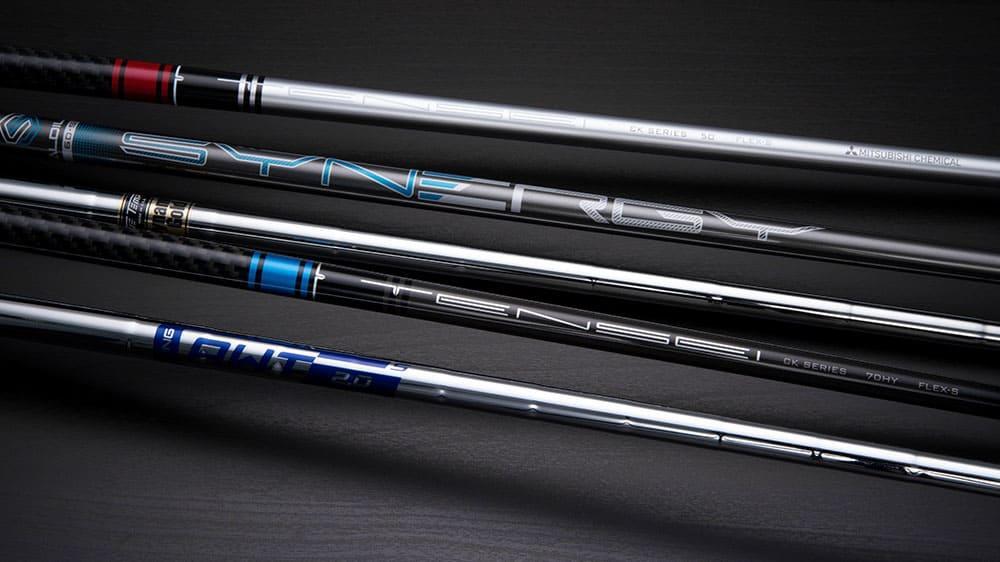
Influence of Shaft Flex on Driver Performance Metrics
Understanding shaft flex is one of the most impactful-but often overlooked-ways to improve your golf driver performance. Shaft flex (also called shaft stiffness) directly influences ball speed,launch angle,spin rate,dispersion,and most importantly,consistency. This guide breaks down the science and practical fitting steps so you can match the right shaft flex to your swing and extract more distance and accuracy from your driver.
What Is Shaft Flex and Why It Matters
Shaft flex describes how much the golf shaft bends during the swing. Manufacturers label flexes with terms like Ladies (L), Senior (A), Regular (R), Stiff (S), Extra-stiff (X), and sometimes numerical or proprietary codes.The way the shaft loads and unloads affects the clubheadS orientation at impact and the effective launch conditions of the ball.
Key terms to know
- Swing speed: How fast your clubhead is moving just before impact. Faster swing speeds typically require stiffer shafts to prevent over-bending.
- kick point (bend point): The area of the shaft that bends most. Low kick points tend to increase launch angle; high kick points lower launch.
- Torque: How much the shaft resists twisting. Higher torque feels softer but can increase side spin on off-center hits.
- Frequency/Hz: A measured way fitters quantify flex objectively (stiffer shafts have higher Hz values).
How Shaft Flex Affects Driver Performance Metrics
1. Ball Speed
Ball speed is primarily driven by clubhead speed and the efficiency of energy transfer (smash factor). Shaft flex affects clubhead orientation and timing; an incorrect flex can reduce smash factor and lower ball speed even if your swing speed stays the same. Generally:
- Too soft a flex for your swing speed can cause the clubhead to lag and then snap forward late, perhaps increasing dynamic loft and reducing effective smash on center strikes.
- Too stiff a shaft can reduce the whip effect and lower net clubhead speed at impact for players who generate slower transitional loading.
2. Launch Angle
Shaft flex interacts with kick point and your release timing to change launch angle.Softer flexes and lower kick points usually promote a higher launch; stiffer shafts and higher kick points promote a lower launch. The correct flex will help you reach an optimal launch window based on your spin and speed.
3. Spin rate
Spin rate is affected indirectly by shaft flex because flex changes the dynamic loft and face angle at impact. Excessive shaft flex for your swing can raise dynamic loft and increase backspin; too stiff can reduce loft and potentially lower spin-sometimes beneficial for high-speed players looking to reduce ballooning drives.
4. Consistency and Dispersion
Consistency-the ability to repeat the same launch conditions-frequently enough improves with a properly matched shaft flex. A mis-matched shaft increases shot-to-shot variance in direction and distance: the softer the shaft relative to your swing, the more likely face angle and toe/heel contact will vary.
Shaft Flex Recommendations by Swing Speed (Fast Reference)
| swing Speed (mph) | Typical Flex | Expected Launch behaviour |
|---|---|---|
| Under 80 | L / A / R (Senior/Regular) | Higher launch,more spin-softer flex helps energy transfer |
| 80-95 | R (Regular) | Balanced launch & spin for most amateurs |
| 95-105 | S (Stiff) | Lower spin,more controlled launch for faster swings |
| Over 105 | X (Extra-Stiff) | Lower launch & spin,maximizes distance for high-speed players |
Note: These are general guidelines. Individual launch conditions, tempo, transition, and release timing can shift the correct flex for you-so fitting is recommended.
How to Test Shaft Flex: DIY and Professional Methods
On-Range DIY Tests
- Use a launch monitor if available: measure ball speed, launch angle, spin rate, smash factor, and dispersion for different flexes.Focus on maximizing smash factor and lowering dispersion.
- Tempo check: Players with smooth, slow transitions usually benefit from softer flexes; aggressive, fast transitions frequently enough need stiffer shafts.
- Feel test: Try the same head weight in various flexes. If the head feels like it’s whipping too late, try a stiffer shaft. If it feels dead and you can’t square consistently, try a softer flex.
Professional Fitting Process (Recommended)
- Measure swing speed and ball flight on a launch monitor.
- Test 3-5 shaft flexes with the same head and loft to isolate shaft influence.
- Assess ball speed, launch angle, spin, dispersion, and feel.
- Consider torque and kick point after flex: a similar flex with different torque or kick point can yield noticeable changes.
- Finalize with a fitting for shaft length and grip size to lock in consistency.
Common Myths About Shaft Flex
Myth: “Softer shafts add speed for everyone”
Reality: Softer shafts can help slower swingers generate more whip, but they can actually reduce effective clubhead speed and consistency for faster swingers.
Myth: “Stiffer always reduces spin”
Reality: Stiff shafts tend to lower dynamic loft for many players, reducing spin, but if a stiff shaft causes you to flip or cast at impact, spin can increase.
Myth: “Shaft flex is all about swing speed”
Reality: Swing speed matters, but tempo, transition, release timing, and shaft kick point/torque are equally critically important when selecting a shaft.
Real-World Case Studies & Examples
Case Study A – Mid-Handicap Amateur (95 mph swing)
Initial condition: Average smash factor 1.42,launch 12°,spin 2800 rpm,fair dispersion but left misses on windy days.
Change: Moved from a regular-flex, low-kick shaft to a stiff-flex, mid-kick shaft.
Result: smash factor increased to 1.47, launch dropped to 10.5°, spin decreased to 2400 rpm, carry increased by ~8-12 yards and side dispersion narrowed.
Case Study B – Fast-Swinging Player (110+ mph)
Initial condition: Using a stiff shaft with high torque and feeling too much face rotation on off-center hits, resulting in left/right misses.
Change: switched to an extra-stiff shaft with lower torque and slightly higher kick point.
Result: Face stability improved, spin reduced slightly, and dispersion tightened-distance increased due to more consistent center hits.
Practical Tips to Optimize Driver Performance with Shaft Flex
- Always test multiple shafts with the same head and loft to isolate the shaft’s effect.
- Use a launch monitor – data (ball speed, launch angle, spin, smash factor) beats guesswork.
- Pay attention to feel and consistency over a range of swings-not just your best single swing.
- Consider shaft length and grip size after confirming flex-length changes swing speed and timing, which can shift shaft behavior.
- Don’t ignore torque and kick point – two shafts with the same flex can perform very differently.
How Shaft Weight interacts with Flex
Shaft weight and flex go hand in hand. A lighter shaft with a given flex will feel whippier and may produce higher swing speed; a heavier shaft of the same flex can feel more stable and improve tempo for some players. Typical weights:
- Light (45-55g): helps slower swingers increase speed, but may reduce stability for aggressive players.
- Mid (55-65g): balanced option for many amateurs.
- Heavy (65-90g): favored by players with aggressive tempos who prefer stability and control.
First-Hand Fitter Perspective: What I Look For
When fitting a driver, I prioritize these data points in this order:
- Smash factor (ball speed / clubhead speed) – indicates energy transfer efficiency
- Launch angle and spin – to identify the optimal trajectory window
- Dispersion and carry consistency – how repeatable the shots are
- player feel and confidence – as comfort with the shaft drives better swings
Based on these, I adjust flex, torque, kick point, and weight.Small changes in shaft properties can move you into a much better performance band without changing your swing mechanics.
Quick Checklist Before You Buy a Driver Shaft
- Have your swing speed measured on a launch monitor.
- Test several flexes with the same head in real conditions.
- Compare smash factor and dispersion across flexes.
- Confirm shaft length and grip size for comfort and control.
- Consider weather and course conditions-higher launch/spin can be less ideal in windy climates.
Short FAQ
Q: Can changing shaft flex add real distance?
A: Yes. The right shaft flex can increase smash factor and optimize launch/spin for your swing, frequently enough adding 5-20 yards of effective carry depending on the player.
Q: Is shaft flex the same across brands?
A: No. Flex labels are not standardized across manufacturers. One brand’s “Stiff” might measure differently in frequency than another’s. That’s why on-range testing and Hz measurement are valuable.
Q: How often should I re-check my shaft fit?
A: Reassess if your swing speed changes meaningfully (e.g., after fitness changes, injury recovery, or swing overhaul). Most players benefit from a fitting every 2-3 years or when upgrading heads.
Related Keywords to Track While Optimizing Your Driver
shaft flex, golf shaft flex, driver shaft, driver fitting, launch conditions, smash factor, ball speed, spin rate, swing speed, driver shaft stiffness, best shaft for driver, shaft torque, kick point
Final Practical takeaway
matching shaft flex to your swing isn’t guesswork-use data. Focus on maximizing smash factor and tightening dispersion while landing in an optimal launch/spin window.If possible, book a professional driver fitting or test multiple shafts on a launch monitor to isolate the flex that unlocks both distance and consistency.


