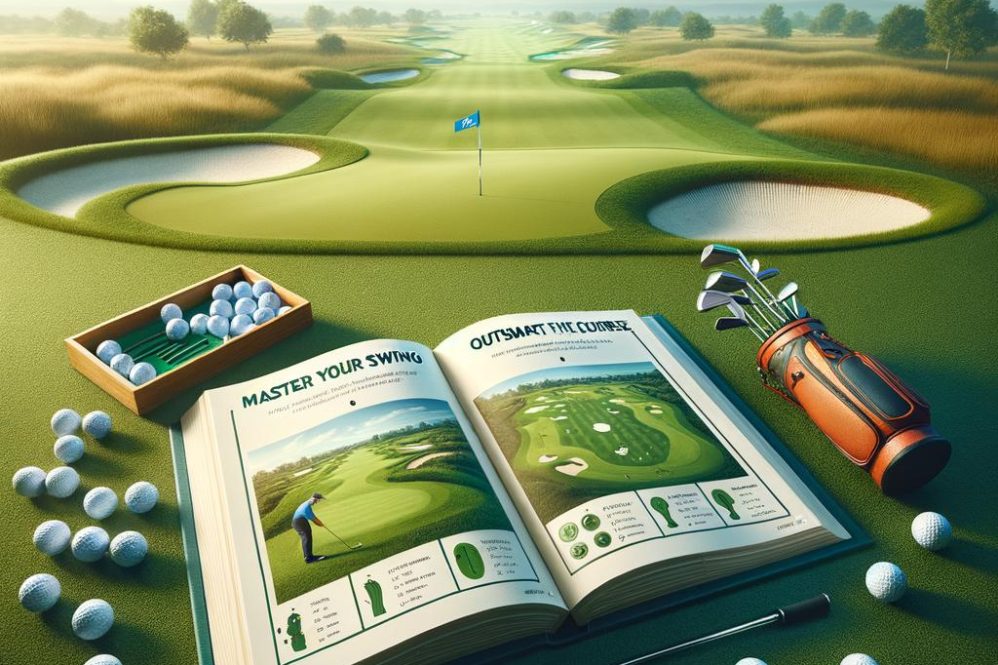
This analysis reinterprets Lanny Wadkins’ combined pedagogy for improving golf performance, balancing detailed swing instruction with tactical on-course thinking. Grounded in Wadkins’ background as a coach adn former tour player, the piece frames his guidance inside a movement-science perspective-covering grip, setup, sequencing and timing-and reviews the practise progressions and drills he prescribes to build consistency, efficiency and controlled power.In parallel, the discussion examines his recommendations for course management-club choice, target prioritization and in-play judgments-to show how technical reliability and strategic planning jointly determine scoring potential.
The article blends descriptive coaching narratives with applied training protocols, linking observable movement characteristics to measurable performance goals and proposing stepwise practice plans. Its purpose is to convert Wadkins’ practitioner-level advice into an actionable, evidence-minded blueprint that players and coaches can use to cut swing variability and make better, risk-adjusted decisions on the course. By synthesizing mechanics and strategy, the piece offers a unified model of instruction that prioritizes both biomechanical fundamentals and situational judgment, with practical takeaways for sustained advancement across ability levels.

Grip Fundamentals and Pressure Management
How the hands meet the club sets the stage for consistent ballstriking. Key elements include thumb placement, the pad-to-finger relationship and the two converging “V” shapes formed by the thumbs and forefingers. Encourage a finger-centric led-hand connection to allow freer forearm rotation, while the trail hand should provide slightly firmer palm-pad contact to steady the club through impact. For most right-handed players a neutral-to-moderately-strong rotation-were the V’s aim toward the right shoulder/ear region-strikes a useful compromise between face control and release ability.
Think of grip pressure as a dynamic variable rather than a single setting. On a subjective 1-10 scale (1 = minimal, 10 = maximal squeeze), most practical systems recommend pressures that maintain control but avoid muscular locking. Typical guidance to support reproducibility is:
- Lead hand: ~4-5 at address, easing to 3-4 at the top, then firming to ~4-6 through impact.
- Trail hand: ~4-6 at address and the top, increasing to 5-7 through impact for stability.
- combined feel: Aim for roughly 4-6 at address, graduating to a slightly firmer grip in the hitting zone to resist unwanted twist.
These ranges favor repeatable wrist action and release without generating counterproductive tension.
Targeted sensory drills speed up the body’s calibration and reduce dependence on purely verbal instruction. Effective exercises include the two‑ball squeeze (use soft foam balls to feel finger engagement), a towel‑under‑armpit set-up to preserve connection and prevent the arms from separating, and short impact‑snap reps to practise increased firmness through contact. Track ball flight while you practice: too light a grip commonly produces weak fades or slices; too tight frequently enough shows up as pulls and inconsistent carry distances.
From a mechanics standpoint,moderate,appropriately timed grip pressure improves energy transfer by enabling a full wrist hinge and a timely uncocking of the wrists,while still creating a stable face at launch. The compact reference below outlines a practical pressure distribution by phase and intended effect:
| Phase | Suggested combined Pressure | Primary objective |
|---|---|---|
| Address | 4-6 | Neutral control and relaxed setup |
| Top of backswing | 3-5 | Permit hinge, avoid stiffness |
| Impact | 5-7 | Stability for effective power transfer |
Moderate pressure balances mobility and stability to support both accuracy and distance.
Many recurring errors stem from mismanaged grip tension rather than wholly incorrect positions: an overly tight hold shortens the swing arc and kills lag, while an overly loose grip surrenders face control. Keep short cues handy-such as “soft enough to cradle”, “see the knuckles” (check lead-hand orientation) and “engage through impact”-and layer them into structured reps. Measured, repetitive practice with these cues produces a dependable grip that underlies consistent mechanics and smarter course play.
Setup Essentials: Footing, Posture and Visual Alignment
A secure base is the foundation of consistent contact. Stance width should match the club and the intended shot (narrower for scoring clubs, wider for the driver) and weight should rest on the balls of the feet with a subtle bias toward the lead side at address. This athletic posture enables free torso rotation while preserving connection to the ground. In Wadkins’ framework the setup functions as a reproducible template-when the base is correct, subsequent motion is naturally constrained and more reliable.
Posture is a three-part construct: a neutral spine angle, slight knee flex and a hip hinge that keeps the shoulder-to-hip relationship steady. Preserve the lumbar curve and avoid collapsing through the chest; this supports an on‑plane takeaway and consistent low-point control. Useful drills include:
- Mirror or camera checkpoints to verify shoulder and hip tilt;
- An alignment-rod under-armpits exercise to keep the chest-arm connection through the takeaway;
- Wall hip-hinge practice to teach forward bend without rounding the upper back.
Precise aiming and body alignment convert a sound posture into reproducible direction. Square feet, hips and shoulders to the intended line and pick an intermediate visual target a few feet ahead of the ball to lock a dependable sightline.Monitor common faults-open or closed feet, inconsistent ball position, and weight too far forward or back-as each shifts the low point and degrades contact quality. Wadkins recommends rehearsing alignment as a compact part of the pre-shot routine so it holds up under stress.
Apply this swift checklist during practice:
| Element | Target |
|---|---|
| Stance Width | Shoulder-width for irons; wider stance for driver |
| ball Position | Forward for long clubs; central for short irons |
| Spine & Weight | Neutral spine; weight on balls of feet |
Progress setups into transferable practice: begin with half-swings to feel low-point control, advance to full swings aimed at a single target, then move to on-course repetitions from different lies. Emphasize consistency and a steady tempo over trying to hit the ball harder; a reliable address routine and measured tempo tend to reduce dispersion and improve scoring. Record outcomes, measure dispersion and iterate-disciplined setup work converts technical gains into lower scores.
Timing and Rhythm: Drills to Coordinate Sequence and Path
Synchronizing body sequence with club movement depends on a dependable internal tempo: pelvic rotation should lead the turn of the thorax, which then allows the arms and club to release. Research and elite coaching agree that a stable tempo reduces variability in face angle at impact and limits swing-path errors. Prioritizing steady rhythm over raw speed produces repeatable results and steadier ball flight, especially under pressure.
Use drills that isolate timing relationships to engrain the correct neural patterns. Try these to refine sequencing and club path:
- Metronome practice – swing to a steady audible beat (such as, 60 BPM) to normalize the backswing-to-downswing relationship;
- Pause-and-go – hold a half-second pause at the top to feel the transition before starting the downswing;
- Pump repetitions – two small pumps toward the top (without striking) followed by a full swing to ingrain transition timing;
- Step-in timing drill – step the lead foot into the stance as the club reaches the top to encourage ground-force sequencing and a square face at release.
| Drill | primary Focus | Recommended Reps |
|---|---|---|
| Metronome | Temporal consistency | 3 sets × 10 |
| Pause-and-Go | Transition timing | 4 sets × 8 |
| Pump | Sequencing feel | 3 sets × 6 |
Assessments should be repeatable and objective: capture slow‑motion video from down‑the‑line and face‑on angles, chart ball-flight dispersion and note perceived effort on a simple scale. Useful benchmarks include a consistent backswing-to-downswing timing ratio (many effective players approximate ~3:1) and minimal lateral head movement. Apply progressive overload by increasing clubhead speed or adding variability while keeping your temporal cues intact so tempo holds up under pressure.
To bring tempo onto the course, cement a single, reproducible timing cue in your pre-shot routine-breath count, short internal cadence or a metronome tick-and use it across clubs. When a shot calls for a different trajectory, intentionally alter the cadence (slower for control; slightly quicker for wind or added distance) while preserving the essential kinematic order so accuracy is retained even as magnitude changes.
Sequencing and Power: Technical Steps to Increase Efficiency
Optimal sequencing follows a proximal‑to‑distal activation: hips start, torso follows, upper arms accelerate and the hands/club finish the motion. This orderly cascade maximizes angular-velocity transfer and reduces energy losses that happen when segments move simultaneously or out of phase.Good sequencing preserves the stretch‑shortening interaction that returns elastic energy into clubhead speed.
Generating power depends on intentional force submission into the ground and well-timed muscular contractions.Focus on controlled weight transfer and explosive hip drive to create a stable platform for trunk acceleration; better ground reaction force and torque production follow. The mechanical aim is to increase eccentric load of the torso and arms early in the downswing, then convert that into a rapid concentric release, exploiting the stretch‑shortening cycle to add speed.
Practical adjustments that enhance the chain prioritize timing, connection and range control. Try these interventions to ingrain efficient sequencing:
- Pelvic restraint drill – limit early upper-body rotation so the hips lead the downswing;
- Delayed wrist release – practise maintaining wrist hinge until the torso accelerates;
- Medicine‑ball rotational throws – develop coordinated trunk-to-arm power transfer;
- Impact-bag or compact swing drills – train a short, accelerating strike and correct forward shaft lean.
The timing model below gives a practical reference for relative peak velocities during the downswing, useful for diagnostics when reviewing slow-motion footage or basic sensor data.
| segment | Typical peak velocity (% of downswing) | Primary cue |
|---|---|---|
| Pelvis | ~30% | Initiate with lower body, drive into ground |
| Thorax | ~55% | Unwind while maintaining lag |
| Arms | ~75% | Accelerate through the impact plane |
| Hands / Club | ~95% | Release to maximize speed |
To embed these refinements into play, adopt a progressive routine: record baseline swing measures, allocate short focused drill blocks, then reassess with video or timing checks. Prioritize tempo control and reproducible positions rather than chasing raw force-this lowers injury risk and preserves accuracy. over several weeks, gradually raise load or speed while keeping the proximal‑to‑distal pattern intact; the outcome is dependable power rather than one-off “fireworks” reliant on perfect timing.
Short-Game Execution: Chipping and Pitching Principles
Short-game mastery combines precise biomechanics with deliberate intent.Use a compact, repeatable setup-narrow stance, moderate knee flex, a slightly forward shaft lean and an open face when required-to ensure a descending strike and predictable turf interaction. Keeping the center of mass slightly forward at impact reduces variation in launch angle and spin, improving proximity to the hole.
Differentiate chips from pitches by energy management and arc: chipping favors a lower, bump‑and‑run or low‑spin trajectory with limited wrist action and body rotation; pitching requires a larger arc, more wrist hinge and a clearer weight shift to generate carry. Core mechanical factors-attack angle, wrist‑cup timing and effective loft at impact-govern landing and roll. At higher levels, synchronizing clubhead speed and face orientation produces a repeatable landing zone and roll profile.
Targeted, measurable drills sharpen short-game control.Effective options include:
- gate drill: two tees to constrain club path and promote a square-to-open approach;
- Towel‑under‑arm: encourage unit turn and limit excessive hand action;
- Landing‑spot practice: pick a landing point and hit 20 strokes, recording proximity to quantify variance;
- Progressive‑length pitching: repeat consistent-tempo swings at 10, 30 and 50 yards to master speed control.
These routines focus on repeatability and make it easy to measure changes across lies and clubs.
| Shot type | Typical Distance | Primary Objective |
|---|---|---|
| Bump-and-Run | 10-30 yds | Maximize rollout with low trajectory |
| Standard Chip | 15-40 yds | Controlled carry with moderate roll |
| Three‑Quarter Pitch | 30-60 yds | Precise landing zone and minimal roll |
On the course, combine sound mechanics with tactical landing-zone thinking: select a landing point that accounts for slope and wind, and pick the club and trajectory that reduce downside given the lie. Use a concise pre-shot visual routine-carry, landing and roll-and record simple metrics such as proximity to the landing spot and up‑and‑down percentage during practice rounds. Over time these data-driven choices replace guesswork with statistically informed short‑game decisions.
Course management: Club Choice, Yardage Control and Risk Calculus
Smart club selection starts with a clear appraisal of distance, lie, wind and green firmness combined with honest knowledge of your dispersion. Choose clubs that sit comfortably inside your statistical zones rather than the longest possible option; this reduces variance and improves scoring outcomes. weigh objective factors and your own confidence with each club to develop a simple, repeatable decision rule for tee shots and approaches.
Distance control links swing mechanics to scoring. Build a calibrated yardage profile for each club that incorporates carry, rollout and typical shot shape. reinforce consistent tempo and feel with short-range repetitions and validate at longer ranges. Track these core elements:
- Tempo consistency – keep the same rhythm under varying conditions;
- Gap control – ensure appropriate yardage steps through the bag;
- Environmental adjustments – wind, elevation and firmness;
- Contingency options – pick safe targets that limit downside.
Evaluate risk in probabilistic terms rather than intuition alone. Estimate expected value by combining the probability of successful execution with the likely stroke outcome, then compare that to the safer option. Include personal miss patterns (left/right, long/short) in the calculation to prioritize choices with the highest net expectancy. Often the correct aggressive play is the one where marginal expected value favors a lower‑variance route to par or birdie.
Decision matrix for typical scenarios:
| Situation | recommended Club | Margin (yards) |
|---|---|---|
| Short approach to firm green | Club with ~10-15 yd less carry | 10-15 |
| Downwind par 5 | Fairway wood for controlled advance | 15-25 |
| Narrow fairway between hazards | Long iron or hybrid | 5-10 |
Integrate strategic practice so management choices become second nature under pressure. Methods include target-restricted practice (limit club options per hole), pressure-range sessions (simulate scoring situations) and decision rehearsal (pre-shot planning and verbalization). Align mechanical repetitions with strategic intent-this linkage between swing dependability and tactical choice reduces scoring variance and enhances long-term results.
Targeting and Tactical Choices in Competition
Good target selection blends data with situational judgment: wind direction, lie quality, green contours and pin position should all inform a primary target plus a conservative alternate. Quantify the stroke-value difference between options before the shot so ambiguity is reduced and choices reflect your documented dispersion pattern-aim where your miss fits the error ellipse rather than the hole’s ideal line. Precise assessment, not perfect execution, is central to repeatable decisions under stress.
In tournament play the decision process must be concise and hierarchical to reduce emotional overload. Use a short checklist that weighs:
- Score situation (how aggressive you must be),
- Environmental forces (wind,slope),
- Lie and stance viability,
- Recovery margin (bailout areas and escape routes).
This prioritization saves cognitive bandwidth for execution and offers a fast arbiter when two choices seem equally plausible.
Convert assessment into an actionable risk‑reward grid for quick communication with a caddie or coach. The simplified categories below help players decide rapidly:
| Shot Option | expected Risk | Expected reward |
|---|---|---|
| Aggressive pin‑seeking | High – hazards or severe misses | Birdie upside |
| Center‑of‑green | moderate – play to margin | Safe par, chance at birdie |
| Conservative layup | Low – high recovery odds | Avoid big numbers |
Execution requires pre-shot commitment and a streamlined routine that turns choice into movement. After selecting a target, use a brief visualization (trajectory, landing area and bounce), rehearse the tempo once, and commit-do not re-open decision-making. Anchoring the choice with a breathing cue or short physical trigger reduces twitch adjustments and supports the motor program associated with the selected option. In competition emphasize single‑decision execution.
Build tactical thinking through realistic practice.Add pressure drills that tighten target size and enforce consequences (scorekeeping, small penalties) and keep a post-round decision log to examine patterns and outcomes. Useful formats include:
- Progressive target reduction: make targets smaller at match‑play distances,
- Score-aware play: be conservative when leading and more aggressive when behind,
- Timed decisions: limit pre-shot deliberation to simulate tournament pace.
These habits convert theoretical strategy into instinctive responses that hold up in tense situations.
Practice Structure and Performance Metrics for Ongoing Progress
Meaningful practice requires session design with clear aims and a commitment to measurable improvement. Emphasize deliberate practice-each session should target a single technical or tactical objective (swing mechanics, pre-shot routine, short game, course play). Organize training into a macrocycle (seasonal goals), mesocycles (6-8 week skill blocks) and microcycles (weekly plans) to balance skill growth, recovery and on-course transfer.
Select a compact set of objective metrics that reflect both technical economy and on-course impact. Too much data blunts decision-making; focus on a few primary indicators and a couple of secondary measures. The example monitoring framework below converts technical numbers into realistic 12‑week targets:
| Metric | Baseline | 12‑Week target |
|---|---|---|
| Driver clubhead speed | ~102 mph | ~107 mph |
| Carry dispersion (degrees) | ±4.5° | ±3.0° |
| Strokes Gained: Approach | -0.4 | +0.2 |
Measurement relies on consistent instrumentation and protocols. Use launch monitors, high‑speed video and calibrated targets where possible; if biomechanics sensors are available, they add useful joint and force data. Prioritize reliability by standardizing ball model, tee height and warm‑up routine so that trend comparisons reflect meaningful change rather than noise.
Turn data into practice prescriptions: combine blocked and random practice, constraint‑led tasks and tempo control exercises targeted at the identified deficits. A representative weekly plan might include:
- Two technical sessions with video feedback (60-90 minutes each),
- One on‑course simulation focusing on decision‑making,
- One speed/strength maintenance session,
- daily short‑game micro‑sessions (15-20 minutes).
Anchoring drills to metric thresholds helps transfer improvements from the range to the course.
For long-term gains, institute cyclical evaluation and hypothesis testing: baseline and post‑block assessments, trend analysis of metrics and coach‑player debriefs. Define minimally critically important differences for each metric and set rules for modifying training (e.g., keep, adjust or regress) based on those thresholds.This evidence-based feedback loop-combining numbers with coaching judgment-encourages durable adaptation and continual refinement of mechanics and strategy.
Q&A
Note: the supplied web search results did not return material related to Lanny Wadkins or the referenced lesson. The Q&A that follows is reconstructed from the themes and content described in the lesson summary (“Lanny Wadkins Golf lesson: Refining Swing Mechanics and Course Strategy”) and is presented in a concise, professional tone.1) What are the principal instructional goals in Lanny Wadkins’ lesson on swing mechanics and course strategy?
Answer: The teaching focuses on (a) creating a compact, repeatable swing via attention to grip, stance, posture and tempo; (b) increasing dependable power through improved kinematic sequencing; and (c) sharpening course decision-making-club selection, target choice and risk assessment-so technical improvements consistently lower scores.
2) How does Wadkins view the grip’s role in the swing?
answer: He regards the grip as the critical interface that controls face angle and wrist behavior.A generally neutral grip is preferred for most players to encourage a square face at impact, with individual adjustments for hand size and release tendencies. The grip must control the club yet remain supple enough for natural wrist hinge and forearm rotation.3) What stance and posture elements does he prioritize?
Answer: Key components are balanced weight distribution (slightly toward the inside of the feet), athletic knee flex, a mild hip hinge producing forward spine tilt and a shoulder-width base appropriate to the club. Maintaining address posture through the swing preserves plane and impact geometry.
4) How does Wadkins treat tempo and what drills does he recommend?
answer: He emphasizes a smooth, repeatable tempo over maximal swing speed. The aim is a stable timing relationship between backswing and downswing. Practical drills include metronome practice (e.g., 60 BPM), half-speed swings to engrain timing and pause-at-top drills to prevent casting.
5) What are the essentials of efficient kinematic sequencing?
Answer: Sequencing should be proximal-to-distal: hips initiate the downswing, followed by the torso and then the arms and hands. Holding lag and avoiding early release or extension is essential to convert stored rotational energy into clubhead speed.
6) Which common faults does he address and which drills correct them?
Answer: Frequent problems include early release/casting,overactive hands,loss of posture/early extension,and inconsistent face control. Correctives: towel‑under‑arm for connection,impact-bag or slow‑motion impact drills for release and shaft lean,step‑in drills to encourage lower-body initiation and alignment-stick work to reinforce plane.
7) How should players scale instruction by ability?
Answer: Beginners should lock in posture, a neutral grip and simple tempo routines. Intermediates should focus on sequencing and targeted drills for persistent faults. Advanced players refine timing and face control while integrating power without diluting repeatability.Diagnostic feedback should increase with level.
8) How does Wadkins connect technical work to measurable outcomes?
Answer: He advises tracking dispersion, proximity to the hole, fairways hit, GIR and strokes‑gained where possible. Use video and launch‑monitor metrics (clubhead speed, attack angle, face‑to‑path) to quantify technical change.9) What framework does he offer for course management?
Answer: His approach includes pre‑round course reconnaissance, percentage‑based decision making, conservative routing when risk‑reward is poor and dynamic adjustments for wind, lie and pin location. Constantly ask: “What is the high‑percentage play here?”
10) How should players decide club and target selection on course?
Answer: Base selection on carry requirement, rollout, wind and personal dispersion. Favor larger landing areas and the open side of greens; avoid tiny targets unless the expected reward justifies the risk.Use pre‑shot visualization to align intention with execution.
11) What decision rules apply to risky situations?
Answer: Apply expected‑value reasoning: weigh downside penalties against upside.Choose conservative lines when a miss carries severe cost; increase tolerance for risk only when circumstances or match situations demand. Predefine go/no‑go criteria to prevent emotion‑driven calls.
12) What drills integrate technique into play?
Answer: Examples: pressure‑simulated practice with scoring stakes, target‑restricted range work replicating narrow on‑course targets, rehearsed pre‑shot routines and situational practice from uneven lies and rough. These bridge mechanics and in‑play demands.
13) How should practice time balance mechanics and strategy?
Answer: A weekly mix: two technical sessions concentrating on swing elements, one short‑game/putting session, one on‑course strategy session and one range session applying changes under constraints. keep practice purposeful with periodic assessments.14) How do coaches assess whether to keep a technical change?
answer: use objective metrics (dispersion, launch data, proximity, GIR, strokes‑gained) and subjective consistency under pressure. Trial changes for a defined period (4-6 weeks) with structured practice; retain adjustments that yield measurable, reproducible benefits.
15) What caveats accompany Wadkins’ prescriptions?
Answer: Individual anatomy, fitness and learning style require adaptation; not every cue or drill suits every body. Avoid over‑coaching and prefer incremental, testable adjustments over wholesale swing rebuilds.
16) Can you provide a compact 4‑week practice plan based on his approach?
Answer: Weekly template:
– Two technical range sessions (40-50 min): warm‑up, focused drill, 60-80 deliberate reps with video or coach feedback.
– One short‑game/putting session (45 min): 60% chipping/pitching, 40% putting with pressure tasks.
– One on‑course strategic session (9 or 18 holes): rehearse pre‑shot routine and percentage play.
– One recovery/physical session (mobility and rotational strength,30 min).
Assess one quantitative measure (e.g., proximity to hole) and one qualitative marker (pre‑shot routine consistency) each week and adapt accordingly.
17) What signs show swing and strategy are lowering scores?
Answer: Tighter shot dispersion, better proximity on approaches, improved GIR and appropriate fairway percentages, higher short‑game conversion rates and positive trends in strokes‑gained metrics. Fewer penalties and steadier decision‑making are equally important indicators.
If preferred,this Q&A can be reformatted into a printable FAQ for coaches and players,converted into a step‑by‑step video drill script,or condensed into a weekly diagnostic checklist to track progress.
Closing Remarks
summary
Recasting Lanny Wadkins’ instructional emphases highlights a central principle: technical competence and tactical intelligence work together to improve scoring.His focus on fundamental elements-grip, stance, tempo and reproducible motor patterns-creates the biomechanical scaffold for dependable shotmaking. Paired with a disciplined approach to club selection, target management and risk assessment, these mechanical foundations enable players to translate practice gains into better scores across varying conditions.
For coaches and players the practical implications are clear.Instruction should favour drills that cultivate efficient, repeatable motions while embedding decision‑making tasks that mimic on‑course pressures. Objective feedback (video and shot tracking) and periodized practice plans alternating technique work and strategic simulation speed transfer from range to play.Simple, consistent pre‑shot routines anchored in the principles above reduce variability in competition. continued development rests on systematic measurement-dispersion, distance control and scoring averages-to identify which changes truly deliver performance gains for the individual.
Future exploration might investigate how these instructional components interact with differences in athleticism, learning preference and risk tolerance. Framing swing mechanics as the enabling system and course strategy as the applied art, Wadkins’ approach provides a coherent path to steady improvement. When applied with disciplined practice, objective evaluation and realistic on‑course rehearsal, the principles outlined here can materially enhance both technical execution and decision quality.
Lanny Wadkins’ Playbook: Master Your Swing and Outsmart the Course
Swing Fundamentals: Grip, Stance, and posture
To build a reliable golf swing you must nail the fundamentals. Lanny Wadkins’ approach focuses on simplicity,repeatability,and efficient mechanics so you can produce consistent ball-striking under pressure.
Grip
- Neutral, compact grip-avoid an overly strong or weak grip that forces compensations.
- Hands work together as a unit; think of the grip as the bridge between body rotation and clubface control.
- Check at address that the V’s formed by thumb/forefinger point toward your trail shoulder.
Stance & Posture
- Shoulder-width stance for mid-irons; slightly narrower for wedges, wider for driver.
- Knees soft, spine tilted slightly from the hips-maintain athletic balance.
- Ball position changes with club: forward for driver, centered for mid-irons, back for wedges.
Tempo & Rhythm
Tempo is a central theme in Wadkins’ coaching. A smooth transition from backswing to downswing reduces tension and improves timing.
- Count your backswing and downswing (e.g., “1-2”) to build consistent rhythm.
- Prioritize the transition: small, controlled move at the top instead of an abrupt snap.
Key Swing Positions: What to Feel
Target these mechanical checkpoints when practicing swing mechanics.
- Halfway back: Club shaft parallel to the ground, wrists starting to hinge.
- Top of backswing: Coil through the torso, trail elbow tucked, wrist hinge maintained.
- Impact: Hands slightly ahead of the ball, solid compression, balanced finish.
Practical Drills to Build a Repeatable Swing
Drills reinforce the feel and pattern.Rotate these into your practise sessions.
Drill: Slow-Motion Tempo
- Make slow swings (50% speed) focusing on a fluid transition. use a metronome app if it helps.
- Once tempo feels right, gradually increase speed while keeping the same rhythm.
Drill: Impact Bag / Towel Drill
- Place a towel behind the ball or use an impact bag to practice forward shaft lean at impact.
- Helps develop compression and proper low-hand position through the ball.
Drill: Alignment Stick Gate
- Use two alignment sticks to create a “gate” just outside the target line to train the club path and face orientation.
- Works great for improving connection and preventing over-the-top swings.
Short Game & Putting: Score Better Around the Green
Wadkins stresses that the fastest way to lower scores is sharpening the short game: chipping, pitching, bunker play, and putting.
Chipping Fundamentals
- Use narrow stance, weight favoring the lead foot, and a putting-type stroke for close chips.
- Pick landing spots and play the roll; minimize wrist action for predictable contact.
Pitching & Sand Play
- Accelerate through the shot-maintain body rotation to open the face and use bounce effectively.
- For bunker shots,aim to enter the sand 1-2 inches behind the ball; splash through.
Putting
- Develop one consistent stroke for speed control; work on 3-6 footers and lag putting separately.
- Practice green reading with different routines-learn to identify both slope and grain.
Course Strategy: Club Selection, Targeting & Decision-Making
Course management is where a good player becomes great. Lanny Wadkins’ playbook blends conservative shot selection with aggressive scoring opportunities.
Club Selection Tips
- Play to your strengths: choose clubs that produce a reliable shape and carry into the landing zone.
- Account for wind, elevation, and firmness-club selection should reflect conditions, not just distance charts.
Target Selection & Risk-Reward
- Pick bailout areas and align to the largest part of the green, not always the flag.
- Use a risk-reward matrix: if the upside of a shot is small but the downside is big, choose the conservative option.
Decision-Making checklist (On the Tee / Approach)
- What is my pleasant target and shape?
- What are the penalties for missing left, right, short, or long?
- How does wind or lie change the expected outcome?
- Is a short-game recovery feasible if I miss?
Pre-Shot Routine & Mental Game
Consistency on the course starts with a reliable pre-shot routine and emotional control.
Pre-Shot Routine Components
- Visualize the shot shape and landing area.
- Take practice swings focusing on feel and tempo.
- Commit to the shot-once committed, execute without second-guessing.
mental Strategies
- Play one shot at a time; focus on process rather than score.
- Use breathing techniques to calm nerves before key shots.
- Accept mistakes quickly and move on-wadkins emphasizes recovery over dwelling on errors.
Fitness & Mobility: Move Better, Swing Better
Physical planning reduces injury risk and improves consistency. A few targeted mobility moves go far:
- Thoracic rotation exercises to improve turn.
- Hip mobility drills to allow weight transfer and power.
- Core stability training to maintain posture through the swing.
Sample week: Practice Plan (WordPress Table)
| Day | Focus | Session |
|---|---|---|
| Monday | Full swing mechanics | 45 min slow-tempo drills + 30 min ball work |
| Wednesday | Short game & putting | 30 min chipping/pitching + 30 min putting drills |
| Friday | Course simulation | Play 9 holes focusing on strategy & club selection |
| Weekend | Recovery & fitness | Mobility + light core work |
Adjust volume based on fatigue and goals. Quality beats quantity-short, focused reps build better habits.
Common Swing Faults & Simple Fixes
- slice: Check grip and clubface angle; work on inside-out path with gate drill.
- Hook: Reduce excessive hand action; flatten the swing plane and control release.
- Fat shots: Move ball slightly back in stance and ensure forward shaft lean at impact.
Case Study: Turning a 95 into an 85-A Practical Example
Here’s a practical, realistic example of how applying Wadkins-style strategy and mechanics can lower scores.
- initial problems: Inconsistent driver, weak approach play, average short game.
- Intervention: Two weeks focusing on tempo drills (15-20 mins per session), alignment practice, and a dedicated short game block.
- On-course strategy change: Conservative tee targets on two par 4s,aggressive on reachable par 5s when the lie was ideal.
- Result: More fairways and greens in regulation, fewer 3-putts, and improved scramble rate-eight strokes saved over two rounds.
Benefits & Practical Tips
- Lower scores through combined mechanical improvement and smarter course management.
- Faster progress by focusing on tempo and repeatable positions rather than chasing swing fixes.
- Track stats: fairways hit, GIR, putts per round, and up-and-down percentage to measure improvement.
Rapid checklist Before Every Round
- Confirm yardage for key clubs given wind and elevation.
- Decide on one or two go-to targets and bailout areas.
- Warm-up sequence: 10-15 minutes of mobility, 20 balls for half swings, 10 for full swings, finish with short game and putting.
SEO & Content Notes (for Web Publishing)
- Primary keywords used naturally: Lanny Wadkins, golf swing, swing mechanics, golf course management, club selection, golf drills, short game, putting.
- Include internal links to related content such as drills, short game tips, and course strategy pages to improve on-site SEO.
- Use optimized image alt text (e.g., “Lanny Wadkins golf swing drill”) and schema for articles to boost search visibility.
Want this adapted into a printable practice plan or a WordPress-ready post with featured image recommendations? I can generate a tailored version with tags, categories, and alt-text for images.