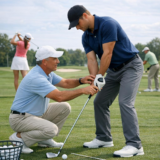
This piece combines modern biomechanical research with accepted standards of on-course conduct to create an integrated blueprint for improving swing mechanics,putting consistency,and tee-shot accuracy while honoring the safety and social norms of golf. Drawing on motor-control theory, kinematic principles, and skill-acquisition models, the discussion explains how technical refinement and structured practise regimes can be married to etiquette-driven routines-pre-shot habits, pace-of-play awareness, and hazard handling-to deliver measurable performance gains and better group interactions.
After surveying relevant biomechanics literature and field-tested coaching methods, the article offers practical, evidence-informed drills, objective assessment targets, and behavior protocols suitable for players and coaches at any level. Recommendations prioritize actionable steps that optimize technique without compromising course care or respect for playing partners, reducing injury risk and making the game more enjoyable over the long term.
Integrating Biomechanical Principles to Develop an Efficient,Repeatable Full Swing
Start practice by creating a consistent address position that aligns efficient body mechanics with the club and chosen shot.Most full swings benefit from a stable stance roughly shoulder-width with feet turned out slightly and a knee flex around 10-15°; hinge from the hips to establish a spine tilt about 20-25° from vertical so the shoulder plane can rotate without restriction. Keep grip pressure light-around 4-6/10 on a subjective scale-to permit natural wrist hinge and release. Set the ball off the inside of the lead heel for driver, moving it progressively toward center for mid and short irons. Use a speedy checklist before every shot to verify fundamentals:
- Alignment stick on the ground to confirm feet, hips and shoulders align parallel to the target line.
- Visual posture check using a mirror or phone camera to verify spine inclination and shoulder plane.
- Weight distribution at address-target roughly 55/45 (lead/trail) for irons and slightly more bias toward the trail foot with the driver to favor desirable launch.
These setup checks minimize compensatory movements, raise consistency, and reinforce courteous course behavior (repair divots, avoid standing in another playerS line), making range improvements more likely to show up during rounds.
Translate a solid setup into an efficient swing by sequencing the kinematic chain: ground reaction → hips → torso → arms → clubhead. A reliable rotational pattern for many players is a pelvic rotation near 45° with a shoulder turn close to 90° on the backswing; this stores rotational energy while preserving balance. Target club‑specific attack angles: driver +0 to +3° to boost launch, irons −2 to −5° to compress turf and ball, and a wrist hinge approaching 90° at the top to create lag. Use these drills to ingrain proper sequencing and impact geometry:
- Step drill: begin with feet together on the takeaway and step into yoru normal stance during the downswing to train lower‑body initiation.
- Impact-bag or towel‑under‑arm drill: encourages a connected upper body and a square face through impact.
- Metronome tempo drill: aim for a consistent backswing‑to‑downswing ratio such as 3:1 to stabilize timing.
Typical errors include excessive hand action (flipping or scooping), early extension of the hips, and an open face at contact. Isolate faults with slow swings and video feedback,aiming for a clubface within ±3° of square at impact and consistent strike location within ±5-10 mm of the sweet spot to produce tangible advancement.
Bring these mechanical gains into course play through purposeful practice and simulated rounds. Convert range repetitions into game-ready executions by aiming at tight targets, varying tee positions, and rehearsing wind and lie responses-always observe the rules: play the ball as it lies unless allowed relief, and replace ball marks on the green when required. Structure a weekly plan that balances technical and situational work:
- Two range sessions focusing on technique and speed/tempo work,
- Three short-game sessions (50-100 shots from 30-80 yards and 30-50 putts emphasizing lag control),
- One on-course simulation (9 holes played to specific targets under time constraints).
set clear, measurable aims-e.g.,increase fairways hit by 10% in 12 weeks,reduce dispersion by 15 yards,or decrease three‑putts by 30%-and tailor drills to different learning styles (video for visual learners,impact-bag for kinesthetic learners,metronomes for auditory learners). Under pressure, employ a brief pre‑shot routine (10-20 seconds), use breathing to control tension, and favor conservative targets when conditions or pace require. By combining precise biomechanics with repeatable routines and solid course management, players at any level can sharpen ball striking, lower scores, and uphold golf etiquette and pace-of-play expectations.

Kinetic sequencing and Muscular Activation Strategies to Improve Driving Distance and Accuracy
Efficient clubhead speed stems from properly organized kinetic sequencing-forces generated in proximal segments transmitted to distal segments. In golf that proximal‑to‑distal pattern starts with the feet and legs producing ground reaction, the pelvis initiating rotation, the torso and scapular area continuing the turn, and the arms and club releasing last. Implement a simple checklist for instruction: adopt a balanced base with stance width near shoulder width and 50-60% of weight slightly toward the balls of the feet; set a spine tilt ~10-15° from vertical; and position the ball just forward of center for driver. on the backswing aim for 45-60° hip rotation and roughly a ~90° shoulder turn for effective X‑factor. At transition,use a small lateral shift toward the target (~10-20 cm) and lead with pelvic rotation to sequence energy through the torso to the arms. Common breakdowns-casting, excessive lateral slide, or uncoupled shoulder/hip motion-are best corrected with slow, tempoed swings that emphasize a lower‑body lead and delayed wrist release.
Muscle‑activation routines prepare the nervous system and reinforce sequencing. Begin every session with a dynamic warm‑up targeting the posterior chain and rotational muscles: glute bridges, banded lateral walks, thoracic rotations, and resisted medicine‑ball throws for 3 sets of 6-8 reps. Follow with sport‑specific activations such as light kettlebell swings to ingrain hip hinge and single‑leg balance holds of 10-20 seconds per side to sharpen stability during weight shift. Use these practice drills to produce measurable gains:
- Sequenced Step Drill – feet together then step into the downswing to reinforce lower‑body lead; perform 20 reps per session.
- Slow‑to‑Fast Overspeed Drill – 8 reps progressing from ~50% to ~90% speed while maintaining timing to improve neuromuscular coordination.
- Impact Tape & Launch Monitor Feedback – monitor center‑face strikes,launch angle (target 10°-14° for driver depending on speed),and spin (1,800-3,000 rpm) to guide equipment and swing goals.
Match equipment to your kinetic profile-shaft flex and torque that suit your tempo and a driver loft tuned to your launch/spin window-to convert activation improvements into extra yards. Establish realistic short‑term targets such as +3-5 mph clubhead speed or +10-20 yards carry over an 8-12 week block, recording baseline metrics on a launch monitor and retesting monthly.Scale exercises for ability-beginners emphasize balance and basic rotation, while better players refine timing, sequencing, and launch optimization.
Fold kinetic sequencing and activations into on‑course routines so training transfers under real conditions. On the tee use a condensed warm‑up and 3-5 activation swings to preserve neuromuscular readiness; respect the rules about the teeing area-tee the ball inside the markers and avoid swings that endanger others or slow play. Practice situational adjustments: lower launch and increase spin into the wind, and allow a higher launch downwind to maximize carry. Prioritize leaving yourself preferred approach yardages (many players aim to leave approaches 100-120 yards into the green) rather than always maximizing distance. On-course troubleshooting:
- Was weight shifted to the lead side at impact? If not,revisit the step drill.
- Is contact consistently centered on the face? If not, shorten the swing and focus on balance.
- do tempo and breathing tighten under pressure? Reintroduce a 3‑count routine and diaphragmatic breathing to calm sequencing.
Blending biomechanics, targeted activation, and prudent course strategy-while following etiquette such as repairing divots and maintaining pace-helps golfers convert better sequencing into dependable increases in driving distance and accuracy and improved scoring.
Joint mobility, Stability, and Load Management for Injury prevention and Performance Longevity
Preventing injury starts with mobility work that directly supports golf‑specific movement; prioritize thoracic rotation, hip internal/external rotation, ankle dorsiflexion, and wrist extension before technical practice.Trackable targets include improving thoracic rotation by 10° over 8-12 weeks, keeping a spine‑tilt in the 20-30° range at setup, and maintaining a wrist hinge near 90° at the top of a full backswing for players who hinge fully. Begin sessions with a brief dynamic routine (3-5 minutes) including controlled articular rotations (CARs) for hips and shoulders, banded thoracic rotations, and ankle mobilizations; progress to movement‑specific drills like a “9‑to‑3” shoulder‑turn drill and slow swing reps to integrate range into the pattern. On the course perform compact warm‑ups near the first tee so you remain efficient and respectful of following groups while protecting joints before high‑speed swings.
Stability and prudent load management turn mobility into sustainable performance. Focus on maintaining a stable center of pressure and resisting unwanted rotation through impact. At address target a roughly 50/50 weight distribution, allow the trail side to carry about 55-60% at the top of the backswing, and transfer 60-80% onto the lead side through impact depending on shot and club. Reinforce these patterns with stability and force‑control drills:
- Single‑leg balance with club across the chest (30 seconds per leg; progress to eyes closed) to enhance proprioception and reduce knee valgus compensations.
- pallof press (3 sets × 8-12 reps per side) to build anti‑rotation core stiffness for stable impact posture.
- Impact‑bag or slow‑impact drill to train low‑hands, strong lead‑side pressure, and correct shaft lean at contact for iron and pitch shots.
In the short game, managing load minimizes yips‑like tension: use a gate chipping drill to curb excessive wrist action and a clockface wedge drill to cement repeatable distances. Equipment choices can reduce harmful loading-favor hybrids or fairway woods over long irons to lower abrupt torque, and match wedge bounce and grind to turf conditions to protect joints and improve scoring across varying surfaces and wind.
Integrate mobility and stability work into a progressive training and course plan to support longevity. A weekly template might include two mobility/stability sessions (20-30 minutes),two technical range sessions emphasizing mechanics and tempo,two short‑game/putting sessions,and at least one rest or active‑recovery day. Set measurable goals-improve thoracic rotation by 10°, hold single‑leg balance for 45 seconds, or cut penalty strokes by a set number over eight rounds.On course, manage load by choosing conservative clubs (e.g.,a 3‑wood or hybrid on tight,windy par‑4s instead of a driver) and play to the wider side of greens to avoid high‑torque recoveries that raise injury risk. Add mental and pacing tactics-controlled breathing, a shortened pre‑shot routine, and process goals-to preserve technique under stress. Troubleshooting checkpoints:
- Is thoracic rotation symmetrical? If not, add three weekly banded rotation sessions.
- Is weight transfer causing lateral sway? If so, regress to slow step‑through drills and impact‑bag work.
- Are wedges digging excessively in soft turf? Adjust stance and choose higher bounce or reduce face opening to lower force spikes.
Adopting these integrated practices supports technical development, reduces injury likelihood, and fosters long‑term scoring improvements through consistent, biomechanics‑amiable play.
Fine Motor Control, Green Reading, and Stroke Mechanics for Consistent Putting Performance
Reliable fine motor control starts with a repeatable setup and limited unnecessary joint movement; therefore, prioritize a stable base: feet about shoulder‑width, balanced weight (roughly 55% toward the lead foot for longer lag putts for right‑handed players), and the ball positioned just forward of center to promote a modest forward shaft lean at impact.For grip pressure choose a firm but relaxed feel-around 2-4/10-and select a grip that lets the forearms act as a pendulum (reverse‑overlap, left‑hand‑low, or claw). match putter balance to your arc: toe‑hang for arcing strokes and face‑balanced for straighter strokes. Encode these setup cues with a pre‑practice routine:
- Setup checkpoint: verify eyes over or slightly inside the ball,putter shaft leaning forward ~2-5°,and shoulders parallel to the target.
- Warm‑up drill: three pendulum strokes at arm’s length, three at two‑thirds length, then three full‑length strokes, keeping a 1:1 backswing‑to‑follow‑through ratio.
- Goal setting: establish a baseline-e.g., hit 8/10 from 3 ft and 6/10 from 6 ft-to monitor progress.
These fundamentals curb compensatory wrist action and develop the neuromuscular control needed for consistent distance and face control on greens with differing speeds.
mechanical repeatability in putting depends on controlling arc, face angle, and tempo; treat the stroke as a shoulder‑driven pendulum with minimal wrist hinge and seek a putter face square to the target at impact. Aim for the ball to start true within 30-45 cm (12-18 inches) of contact by preserving the putter’s loft (modern putters typically 2-4°) and avoiding excess forward shaft lean that changes dynamic loft unpredictably. Train these aspects with focused drills and checks:
- gate/face control drill: place two tees just outside the putter head width and stroke 20 balls to ensure a square path.
- Ladder distance drill: set tees at 3, 6, 9, 12 ft and practice landing putts to stop within 12 inches of each tee-track deviation to measure improvement.
- Tempo metronome drill: use a beat (e.g.,60-80 bpm) to stabilize backswing‑to‑through rhythm; if deceleration occurs,shorten rather than force the finish.
Common faults-decelerating through impact, excessive wrist flip, and inconsistent spine angle-are fixed by slow‑motion shoulder practice, exaggerated shoulder‑driven repetitions, and recording 50 strokes to quantify change. Over time establish performance milestones (reduce three‑putt rate to under 10% across a practice round, then under 5%) so gains are objective and transfer to scoring.
Green reading and tactical decisions close the loop between technique and on‑course outcomes: before each putt, read from behind, walk around to inspect grade and grain, and use your putter shaft or a plumb line to detect subtle slopes. Consider green speed in Stimp terms (many courses range 8-12 ft): faster surfaces produce more break and require smaller aim adjustments. Use these drills and habits on course while following etiquette and the Rules (for example, since 2019 leaving the flagstick in stroke play is permitted if wanted; always repair ball marks and avoid standing on another player’s line):
- Clock drill for reads: practice reads from 3, 6, and 9 ft around a hole to learn how the same slope affects various distances.
- match‑play pressure practice: simulate stress with alternate‑putt formats or penalty‑based drills to reinforce routine fidelity.
- Equipment & conditions: try different grips or putters in short blocks to observe dispersion changes; always factor wind, wetness, and green firmness into speed judgments.
adopt a concise pre‑putt routine-read, align, one practice stroke, commit-to combine mental focus with technical execution.By pairing refined motor control, disciplined stroke mechanics, and practical green reading, golfers can increase saves, reduce three‑putts, and lower scores through more consistent putting.
Course Protocols and Etiquette to Minimize Pace of Play, reduce Risk, and Respect Fellow Players
Effective on‑course behavior starts with a compact pre‑shot sequence and an understanding of the rules and basic safety norms; these steps both minimize pace‑of‑play and reduce risk to players and staff. Adopt a brief pre‑shot routine you can finish in 15-30 seconds while the group ahead clears: pick and set the club before approaching the ball, assess the lie and intended line, shout “fore” instantly for any wayward shot that might endanger others, and confirm yardage with a rangefinder or guidebook.remember the modern Rules of Golf allow a maximum search time of 3 minutes for a lost ball-use that limit and move on if it’s not found. On the green, mark your ball with a small marker placed directly behind it (replace and remove after putting), repair pitch marks immediately, and rake bunkers before leaving with the rake placed outside the bunker. To turn these behaviors into measurable gains, set a target such as reducing decision time between shots by 30 seconds across two rounds by rehearsing a one‑minute pre‑shot checklist on the range and applying it consistently in play.
Course management and shot selection are risk‑reduction tools that synergize with solid setup and swing fundamentals.When hazards or narrow landing zones are present, plan with at least a 10-20 yard safety buffer or add +10% distance when facing a strong headwind. Setup cues that support reliable decision‑making include a consistent spine angle around 25-30° at address, shoulder turn of 80-100° for full swings, and ball position varying by club (mid‑irons in the middle, 1-2 ball widths forward with driver). Small adjustments influence curvature predictably: moving ball ½-1 inch back produces a lower flight; opening the face 5-10° raises trajectory and softens landing; closing the face 5-10° encourages a draw.Practice these strategic skills with drills:
- Alignment‑rod gate: place two rods to form a narrow corridor and practice 9‑iron fades/draws to hit the center consistently.
- Margin‑of‑safety yardage drill: on the range simulate wind by adding 10% to yardages and note club selection over 12 shots.
- Pre‑shot checklist rehearsal: run your checklist in under 30 seconds for 20 consecutive swings to reduce indecision.
These exercises create predictable outcomes under pressure and link technical swing adjustments with practical on‑course strategy.
Short‑game skill and etiquette after shots influence both scoring and respect for partners; thus, organize practice with concrete targets and context drills. For chipping and pitching favor dynamic loft control: adopt a slightly narrower stance (about shoulder‑width or a touch less), keep 55-60% weight on the front foot, and accelerate through the ball to avoid fat contacts. For bunker play open the face, place the ball one ball‑width forward, strike the sand 1-2 inches behind the ball, and let the club’s bounce do the work-use a “splash” drill to learn sand interaction and distance control. Putting fundamentals include a steady head, hands slightly ahead of the ball (~0.5-1 inch), and a pendulum stroke-practice the ladder drill (3, 6, 9, 12 ft) to refine speed and aim for converting at least 50% from 6 ft within three sessions. Always rake bunkers, replace or fill divots when practical, and avoid stepping on another player’s line. Combine mental strategies-commitment to club choice, visualization, and breathing cues-with technique work to lower three‑putts, reduce scores, and maintain mutual respect on the course.
Structured Practice Frameworks Combining Deliberate Drills, Objective Feedback, and Performance Metrics
Establish a cyclical practice model that couples deliberate drills with objective feedback and measurable performance targets. Open each session with a calibrated warm‑up (10-15 minutes) stressing mobility and a progressive ball‑striking sequence (short → mid → long clubs). Employ tools like high‑speed video and a launch monitor to quantify attack angle, launch angle, ball speed, and spin rate; for example, aim for an iron attack angle around −4° to −2° for clean turf contact and a driver launch near 10°-14° with spin suited to your speed. convert data into specific goals-e.g.,improve smash factor by 0.05 in 8 weeks or cut average dispersion by 10 yards. Build consistency by alternating focused feedback blocks (3-5 high‑intensity swings with immediate feedback) with sets of deliberate reps (6-10) and follow a simple checklist:
- Impact tape/video check: aim for center‑face contact on 80%+ of repetitions
- launch‑monitor targets: record ball speed, carry distance, and create a baseline
- Contrast training: alternate full‑swing work with short‑game tasks to maintain balance and tempo
This disciplined approach makes sure technical changes (grip, posture, alignment) are validated by data and that progress is objective rather than anecdotal.
Then focus on short‑game and shot‑shaping with drills emphasizing contact, landing geometry, and green management. For chips and pitches favor lead‑foot weight (60-70%), a narrow stance, and a back‑of‑center ball for true chip strikes. use a landing‑spot drill by selecting a 10-20 ft landing zone and tracking proximity to the hole-aim to cut average proximity by 20% in 6 weeks. For bunker work, practice entering sand 1-2 inches behind the ball with an open face and use bounce to accelerate through; in firmer sand narrow the face opening and shallow the attack angle.Measure outcomes like up‑and‑down percentage from 30-50 yards and set progressive targets (e.g., improve from 40% to 55% over three months). Include course scenarios and etiquette-rake bunkers, repair pitch marks, and lift‑clean‑replace only when the local rule permits-while rehearsing recoveries from tight lies, heavy rough, and severe slopes to ensure skills translate under tournament conditions. Useful drills:
- landing‑zone ladder: lay towels at 5‑ft intervals to train carry and landing angle control
- Sand‑entry visual: mark a 1-2 inch target behind the ball to rehearse consistent sand entry
- Clock‑putt drill: twelve 3‑ft putts around the hole to boost short‑range conversion and pre‑putt routine
These routines serve beginners (basic contact and distance control) and low handicappers (spin and lie variation), with explicit technique cues and measurable objectives.
Integrate course management, decision‑making, and the mental game so technical progress turns into lower scores. Use statistics-fairways hit, greens in regulation (GIR), strokes gained, and average putts per hole-to prioritize practice: if GIR is high but one‑putts are scarce, shift time to lag putting. Employ situational practice that mimics round pressure: play nine holes to a scoring constraint (e.g., par or better on every par‑3), simulate wind effects by adjusting club choices, and rehearse rule‑appropriate responses like declaring a provisional ball when a drive could be lost. Troubleshooting tools:
- Club‑selection checklist: weigh lie, wind, pin, and bailout before each tee shot
- pre‑shot routine: fixed 8-12 second sequence that includes visualization and alignment
- Etiquette and tempo: allow faster groups through, be ready to play, and remain silent during others’ swings
Set measurable season goals-raise fairways hit to 60%+, boost GIR by 10 percentage points, or improve strokes gained by a set amount. By combining deliberate drills, objective metrics, and realistic on‑course rehearsal, players can turn practice into reliable scoring gains and sound decision‑making under pressure.
Equipment selection, Setup Optimization, and Behavioral Standards to Align technique With Course Integrity
Start with equipment choices and an objective setup: pick clubs that match swing speed, common miss patterns, and typical turf rather than aesthetics. Such as, choose a driver loft that tends to produce an optimal launch in the 10°-14° range for many players and select shaft flex roughly aligned with swing speed (guidance: <85 mph: softer flex, 85-95 mph: regular, 95-105 mph: stiff, >105 mph: extra‑stiff) while confirming on a launch monitor. Pick wedges with bounce suited to conditions-low bounce (~4°-6°) for tight, firm turf and higher bounce (~10°-14°) for softer turf or steep attack angles. At address emphasize: stance width roughly shoulder‑width for mid‑irons (wider for long clubs), ball position from center for short irons to inside left heel for driver, and a neutral spine with weight distribution around 50/50 at setup shifting toward 60-70% front‑side through impact. Use an equipment/setup checklist in fittings and practice:
- Confirm launch monitor outputs: launch angle, spin, and carry for each club.
- Test wedge bounce and grinds on different lies to choose the right specs.
- Use alignment sticks and video to verify ball position and posture.
This systematic approach helps equipment and setup work together to produce predictable ball flight, cleaner turf interaction, and steadier scoring.
Then turn setup into repeatable swing mechanics and short‑game patterns using stepwise drills that scale from novice to low handicap. Begin with grip and connection-keep neutral pressure (~5-6/10) and feel a link from the lead forearm to the torso to stabilize face control through impact. Progress through the kinetic sequence: controlled takeaway, shoulder turn about 80°-100° to build coil, downswing initiated by lower‑body lead, and forward shaft lean ~5°-10° at impact for iron compression. For short game practice bump‑and‑run, standard chip, and soft high pitch while adjusting loft and ball position; use a clock‑face pattern for pitches (swing on a 7→1 arc for a 7 o’clock length) and an impact bag to reinforce centered contact. typical faults and fixes: casting-drill half‑swings with a towel under the armpits to promote connection; early extension-step back slightly and perform hip‑turn‑only swings to preserve spine angle. Goals might include achieving a centered‑strike rate of 70%+ on a TrackMan face map within eight weeks and reducing 8-15 yard lateral dispersion by 15%. For tempo, use a metronome or a 3:1 backswing‑to‑downswing count to build a dependable cadence that benefits both long game and putting.
Align behavioral norms and on‑course strategy with course integrity: repair pitch marks,replace or fill divots,and rake bunkers immediately-consistent turf makes lies more predictable for everyone. In tournament play follow the Rules regarding turf replacement and damage repair where permitted. Adopt a conservative, target‑first approach: when uncertain, aim for the center of the green or a safer side that sets up an easier two‑putt; add one club for a headwind of 15+ mph and consider low, punchy trajectories by moving the ball slightly back in the stance with a firmer wrist and abbreviated finish for wind or tree situations. Use a standardized on‑course routine to reduce impulsive decisions:
- Pre‑shot checklist: yardage, wind vector, lie inspection, and preferred escape route.
- commitment step: select a landing zone and visualize the shot 3-5 seconds before address.
- etiquette and pace: play ready golf when safe, let faster groups through, and preserve tempo.
Link the mental game to technique with breathing and visualization during practice so that the technical work converts into confidence under pressure. With properly fitted gear, repeatable setup and mechanics, and disciplined on‑course behavior, players at all levels can expect measurable gains in accuracy, short‑game scoring, and overall course management.
Q&A
Q1: what is the central thesis of the article “Master Golf Etiquette: Transform Your Swing, Putting & Driving Protocols”?
A1: The piece argues that technical development (better swing mechanics, steadier putting, and more accurate driving) and conscientious on‑course behavior are mutually reinforcing. Biomechanically informed practice combined with clear etiquette guidelines enhances performance, safety, and the social experience of golf. “Mastery” is framed as reaching high proficiency through deliberate practice and adherence to rules and norms that support play and conduct.
Q2: What methodological approach does the article use to link biomechanics and etiquette?
A2: A multidisciplinary synthesis underpins the argument: biomechanical principles for stroke production, motor‑learning theory for skill acquisition, and sport‑ethics literature for behavioral norms. The article combines evidence‑based drills and metrics with practical on‑course protocols and references prominent event practices as illustrative examples.
Q3: How does biomechanical insight translate into improved swing mechanics?
A3: Biomechanics supplies objective standards for each swing phase-setup, backswing, transition, downswing, impact, and follow‑through. Practical translations include sequencing joints from proximal to distal,preserving spinal angle through rotation,managing ground‑reaction forces and weight transfer,and controlling clubface at impact.The article recommends kinematic checkpoints, tempo metrics (e.g., backswing‑to‑downswing ratios), and field measures (flight and dispersion) to guide iterative improvements.
Q4: What specific practice frameworks are recommended for transforming the full swing?
A4: The article prescribes a periodized microcycle emphasizing: (1) motor pattern acquisition with slow, constrained reps for correct sequencing; (2) variability training to build adaptability (different lies and targets); (3) tempo/rhythm drills with metronomes or counts; (4) load management to control intensity and volume; and (5) objective feedback via video and performance metrics. Sessions mix focused practice blocks with progressive difficulty and regular reassessment.
Q5: How does the article address putting consistency from a biomechanical and cognitive standpoint?
A5: Biomechanically it stresses a stable setup, shoulder‑driven pendulum motion, minimal wrist action, and consistent contact point. Cognitively it emphasizes structured green reads, a pre‑putt routine to reduce variability, and decision rules for aim and pace. practice includes distance ladders, short‑stroke drills to mitigate yips, and perceptual training for estimating breaks.
Q6: What drills and metrics are suggested to improve putting?
A6: Suggested drills include the Gate drill for stroke path, Ladder drill for distance control (multiple distances), pressure putt simulations (outcome‑based practice), and randomized short‑putt repetition. track make percentages by distance band,average holing distance from 3-15 ft,and tempo consistency (backswing‑to‑through ratio). Use simple strokes‑gained‑style tracking for longitudinal progress.Q7: Which biomechanical principles are most critical for driving accuracy and distance optimization?
A7: Key principles are effective ground‑force generation, correct pelvis→torso→arms→club sequencing, managing angle of attack for optimal launch, and controlling face orientation to limit sidespin. Address mobility and strength limitations (hips, thoracic spine, ankles) with corrective exercises to support durable mechanics.
Q8: What on‑course conduct (etiquette) does the article prioritize for driving and teeing areas?
A8: Emphasized protocols include ensuring safety before teeing off, preparing clubs while on deck to keep pace, observing starting order and readiness, caring for the teeing area (tees/divot materials), and following local rules and marshals. Tournament traditions are cited as models for strict but practical conduct.
Q9: How does etiquette influence performance and group dynamics?
A9: Good etiquette reduces distractions and social friction, improving concentration and facilitating flow. Predictable,respectful behavior (appropriate pace,silence during swings,clear communication) lowers performance‑disrupting stress. Poor etiquette raises interruptions, arousal variability, and can harm individual and group outcomes.
Q10: What practical protocols does the article recommend for pace‑of‑play and safety?
A10: Recommended protocols include time benchmarks per hole, ready‑golf principles in casual formats, clear hazard communication, designated spotters in blind areas, and enforcement through marshals or peer norms. Pair objective timing (watch checks) with behavioral training to establish efficient routines.
Q11: How should coaches integrate etiquette training into technical sessions?
A11: Embed etiquette scenarios into practice-simulated group rounds, role plays for marking/repairing on greens, and timed shot routines. Coaches should explicitly teach on‑course rituals and assess athletes on both technical and behavioral competencies, applying deliberate‑practice principles to etiquette rehearsals as they do to mechanics.Q12: How does the article suggest measuring progress toward “mastery” in both mechanics and etiquette?
A12: For mechanics use objective metrics (dispersion, ball speed, launch distributions, strokes gained) and consistency indices (tempo variance, strike location). For etiquette use checklists and peer/coach evaluations covering pace, green care, safety, and communication. Periodic combined assessments in simulated competition rounds provide real‑world validity.
Q13: What common errors and misconceptions does the article identify?
A13: The article flags overreliance on isolated technical fixes without addressing perceptual and situational demands, prioritizing power over tempo, and relegating etiquette as secondary rather than performance‑enabling. It stresses individualized assessment over one‑size‑fits‑all prescriptions.
Q14: Are there ethical or cultural considerations in prescribing etiquette protocols?
A14: Yes. Etiquette varies by club, culture, and competitive level; guidance should respect local traditions and accessibility needs. The article advocates inclusive approaches that balance tradition with fairness and ensure etiquette instruction is sensitive to diverse backgrounds and abilities.
Q15: What are the article’s recommendations for future research or practice developments?
A15: The article calls for empirical studies quantifying how etiquette behaviors affect performance, randomized trials of integrated practice models, and longitudinal research linking biomechanical training with behavioral compliance. It encourages developing standardized etiquette assessment tools and expanding coach‑education that blends technical and behavioral instruction.
References and exemplars:
– Definitions framing “master” as a combination of skill and control.
– Tournament and venue protocols used as examples of etiquette in practice.Concluding note: The article reframes etiquette not as ceremonial add‑on but as an essential element of the performance system. Practitioners are encouraged to implement integrated training and assessment protocols to secure durable gains in swing mechanics, putting reliability, driving accuracy, and on‑course conduct.
By fusing biomechanical evidence with customary course etiquette, the article demonstrates that technical refinement and principled behavior reinforce one another. Enhancing swing mechanics, stabilizing putting routines, and optimizing driving technique yield limited returns if practiced without the behavioral norms that preserve pace, safety, and fairness.An integrated program-linking evidence‑based drills and feedback loops with disciplined etiquette-offers the most reliable route to lasting improvement.
In practice, golfers should translate these principles into targeted interventions: motor‑learning sessions with video feedback and progressive overload, deliberate putting repertoires focused on alignment and green reading, driving strategies that emphasize control and course management, and pre‑shot checklists incorporating etiquette (pace, hazard repair, safe club use). Regular self‑assessment, peer review, and periodic professional coaching maintain objective progress markers. Equally critically important are the everyday habits that protect playing conditions-repairing divots, raking bunkers, and yielding appropriately-which model professionalism and reduce external variability that can impede performance.
Ultimately, mastery in golf combines technical command and consistent conduct. golfers who commit to integrated, evidence‑driven practice and conscientious on‑course behavior will produce more reliable outcomes and foster a more respectful playing environment. Future work and ongoing practice should continue refining how biomechanics and social protocols interact to lift both performance and stewardship of the game.

Elevate Your game: Golf Etiquette Secrets for a Flawless Swing, Putting Precision & Driving Mastery
Combine polished golf etiquette with technical practice and course strategy to accelerate improvement. Respect for the course and other players doesn’t just make you a better guest-it creates focused practice environments and better outcomes for your swing, putting, and driving. Read on for practical, measurable steps that marry etiquette and technique for real performance gains.
Why Golf Etiquette Improves Performance
- Pace of play: Respecting pace reduces rushed swings and poor decisions.
- Reduced distractions: Quiet, predictable behavior lowers stress and supports a repeatable pre-shot routine.
- Course care: Properly repaired turf and smooth greens deliver consistent lies and putting surfaces-directly affecting shot quality.
- Safety & courtesy: Fewer interruptions and safer practice mean more efficient, focused training sessions.
Core Etiquette Principles Every Golfer Should Live By
- Be ready to play when itS your turn; keep clubs and stance ready on the tee box.
- Maintain quiet and stable posture when others are addressing the ball.
- Always replace divots, rake bunkers, and repair pitch marks on greens.
- Keep phone use discreet and brief; silence audible notifications.
- Allow faster groups to play through; keep the group behind safe from errant shots.
- pick up lost balls promptly and avoid needless searching that slows play.
Harmonizing Etiquette with Swing mechanics
Pre-shot Routine: Etiquette + Consistency
A calm, visible pre-shot routine signals respect and creates repeatability. Use a 5-7 step routine and share it with your group so everyone knows what to expect.
- Visualize the target and commit to a line.
- Take practice swings away from the ball to avoid club interference and alert others.
- Step to the ball, set stance, nod to playing partners if appropriate, and play when clear.
Biomechanics Tips That Respect Others
Clean, efficient mechanics reduce errant shots that risk others and the property.
- Rotate from the hips and maintain a stable head to reduce wild misses.
- Keep a balanced finish-this helps avoid follow-through hazards and shows respect for the playing area.
- Practice controlled backswing length on the driving range to match comfort and safety zones at busy facilities.
Drills to Improve Swing Under Real-World Conditions
- Quiet Zone Drill: Practice 20 swings where you pause and look at your playing partner between swings-builds patience, focus, and group rhythm.
- Target Timeout Drill: pick targets and hit 15 balls each; after every 5, walk to the ball and discuss lie and strategy with a partner-emphasizes thoughtful play and reduces time wasted searching.
- Balance Finish Drill: Record your finish. If you cannot hold 8 of 10 finishes for 2 seconds, shorten your swing and work on tempo.
Putting Precision: Green Etiquette + Technique
Green Etiquette Essentials
- Mark your ball cleanly and clearly; replace promptly and return marker to your pocket or rail.
- Avoid stepping on the line between another player’s ball and the hole.
- repair pitch marks promptly and smooth footprints, leaving the surface fair to others.
- read putts quietly-limit group chatter to avoid distracting others during thier read.
Putting Drills That Respect Course time
- 3-2-1 Drill: From 3, 2 and 1 yards, make 10 putts each.Track make percentage. Aim for 90% at 1 yd, 80% at 2 yd, 70% at 3 yd.This builds short-stroke confidence and speeds up play on the green.
- Up-And-Down Drill: chip to within a 3-foot circle and two-putt. Repeat 20 times to improve recovery and avoid slow searches for errant chips.
- Green Speed practice: Practice with a single partner and alternate reads to simulate match play while keeping the green clear for following groups.
Putting setup Checklist (Quick)
- Mark and clean ball
- Repair any mark you make
- Keep bodies low and quiet for readings
- Play when safe and clear
Driving Mastery: power,Accuracy & Safety
Driving Etiquette
- announce “Fore” loudly and clearly if a drive veers toward players.
- Stand well clear of the tee when another player addresses the ball.
- Choose tee boxes that match your yardage to speed play and protect the course.
- use the range responsibly-don’t hit from tee markers or fragile areas; replace divots when training on short-game areas.
Driving Drills That Respect Others
- Fairway Finder Drill: Place two cones 20 yards apart at 200 yards. Hit 10 drives trying to land between the cones. Track fairways hit percentage-target 60%+ for amateurs.
- Controlled Distance Drill: Use three clubs (driver, 3-wood, 5-wood) and, over 30 balls, measure average carry and dispersion. Record goals for increasing carry by 5-10 yards without losing accuracy.
- Tempo Count Drill: Count “one-two” on each swing to normalize tempo and reduce lunging that causes mis-hits and safety issues.
Measurable driving Goals
- Target fairways hit: baseline → target (e.g., 50% → 65% over 8 weeks)
- Driving distance increase: baseline carry + 5-10 yards with same or improved dispersion
- Reduction in penalty strokes from errant tee shots by 25% in 3 months
Course Management: Strategy + Etiquette
Smart Decisions That Save Strokes and time
Good course management reduces risky shots that slow play or risk others. Combine shot-mapping with etiquette to stay safe and efficient.
- Play to your strengths: hit a 3-wood into a tight green if driver increases risk of search or hazard entry.
- When searching for balls, limit search to 3-5 minutes and then concede or declare lost; use this rule consistently to maintain pace.
- Use the right tee box-playing from a tee beyond your consistent distance lengthens holes, slows balls, and risks safety.
Practical Hole-by-Hole Strategy Template (Use this during rounds)
- Hole assessment: hazard positions, green size, pin location
- Preferred club off tee: (based on risk/reward)
- Green approach strategy: take conservative line if recovery would be arduous
- Putting approach: leave slope side short for an uphill comeback putt where possible
| Situation | Etiquette Action | Performance Tip |
|---|---|---|
| Tee Box Crowd | Keep quiet & steady | Use same pre-shot routine |
| Bunker Shot | Rake after play | Open face & accelerate through sand |
| Long Par 3 | Allow ready players to go | play conservative to middle of green |
Practice Plan: Combine Etiquette, Technique & Tracking
use this 4-week micro-plan to build etiquette habits and measurable performance improvements.
| Week | Focus | Key Drill | measurable Goal |
|---|---|---|---|
| 1 | Pre-shot & Pace | Quiet Zone Drill (50 swings) | Hold 5-step routine 80% |
| 2 | Putting & Greens | 3-2-1 Drill (30 putts) | 80% make at 2yd |
| 3 | Driving Accuracy | Fairway Finder (30 drives) | Increase fairways by 10% |
| 4 | Course Management | Play simulated holes with conservative lines | Fewer penalty strokes |
Behavioral Habits That Differentiate Good golfers
- Consistent warm-up routine that respects range space and other players.
- Always carry a ball marker and divot tool; use them.
- Acknowledge good shots from others-positive culture improves focus and reduces tension.
- Keep a simple record of stats (fairways, GIR, putts) to make practice efficient and measurable.
Firsthand Tips from Low-Handicap Players (Practical & Courteous)
- “If you show up to the tee early, help another player find a lost ball or prepare the tee box-small acts of courtesy build goodwill.”
- “On the green, aim to read your putt first, then move out of line-this speeds play and prevents distraction.”
- “Use walkie-talkie silence: a quick nod instead of conversation when it’s someone’s turn.”
Quick Etiquette Checklist to Print
- Silence phones • Mark & clean ball • Repair divots & pitch marks
- Rake bunkers • Hold still during others’ shots • Keep pace
- call “Fore” loudly • Use appropriate tee box • Limit search time
SEO Keywords Used Naturally
The following keywords were integrated throughout this article to improve search visibility: golf etiquette, golf swing, putting precision, driving mastery, pace of play, repair divots, mark your ball, green etiquette, driving accuracy, fairways hit, putting drills, course management, golf tips, golf drills.
Adopting strong etiquette while practicing targeted drills will not only make you a better playing partner but will produce measurable improvements in swing consistency,putting precision,and driving mastery. Use the practice templates, track the metrics, and treat the course respectfully-your scores will follow.