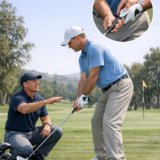
This study explores how applying biomechanical insights together with standard golf etiquette produces quantifiable improvements in swings, putting performance, and tee-shot reliability.Integrating findings from motor-control research, movement analysis, and sport psychology, it demonstrates that technical refinement and considerate on-course behavior reinforce one another: efficient, repeatable mechanics lower variability and reduce injury likelihood, while consistent etiquette creates practice and competitive settings that preserve tempo, safety, and course condition. The paper consolidates experimental evidence and applied procedures to (1) identify mechanical factors that underpin reproducible full swings and drives, (2) outline research-backed routines and perceptual tactics for dependable putting, and (3) define responsible driving behaviors that marry power with prudent risk management. Methods surveyed include quantitative motion capture, force and pressure sensing, and in-field performance measurements. Practical takeaways-coaching cues,staged drills,and recommended on-course practices-translate principles into measurable gains in shot regularity,tactical choices,and stewardship of playing surfaces.
Framing movement training within the social norms of golf provides coaches, committed amateurs, and performance practitioners with a unified approach that elevates individual performance while safeguarding the playing experience for all.
Core Biomechanics for the Swing: Setup, Hip‑to‑Shoulder Timing and Ground Forces
Teaching should start with a repeatable address as dependable posture is the foundation of a reproducible swing and reliable scoring. Adopt a neutral spinal tilt in the 10°-20° forward range with approximately 15°-20° knee flex; this typically produces an athletic posture were the hips sit back and the torso is over the ball.feet should align roughly on the target line; use shoulder-width for mid irons and expand to about 1.25-1.5× shoulder width for woods and driver. Position the ball progressively forward as club length increases-center for wedges/short irons, moving toward the lead heel for longer clubs-and maintain roughly 1-2 cm of forward shaft lean with irons. Use these visual and tactile checkpoints to shrink setup variability:
- Monitor spine angle with a mirror or camera so the head remains neutral rather than tipped up or down.
- Check weight balance-aim for an even 50/50 baseline (shift slightly inward on windy days) and feel pressure on the balls of the feet, not the heels.
- confirm grip and wrist set produce a neutral clubface at address.
Novices can focus on the three simple cues-spine tilt, knee flex, ball position-while more experienced players should quantify setup using slow-motion video and launch-monitor data to link setup geometry with launch outcomes. On the course, pair these technical habits with etiquette: repair divots and pitch marks, and keep pre-shot routines compact to respect pace of play while preserving a consistent setup across wind, slope and turf conditions.
From setup, train effective hip‑to‑torso sequencing by organizing the kinetic chain from the ground up: initiate with the lower body, allow torso rotation to follow, maintain arm lag, then release. Target pelvic rotation near 30°-50° and thoracic (shoulder) rotation of roughly 80°-100° at the backswing apex to create an X‑factor (shoulder-to-pelvis separation) in the 20°-40° range depending on flexibility. To cultivate this timing, use drills that emphasize separation and tempo:
- Medicine‑ball rotational throws (3×10 each side) to build explosive hip turn.
- Towel‑under‑arms swings to reinforce arm-torso connection and synchronized rotation.
- slow‑motion backswing/downswing reps recorded at 60-120 fps to evaluate hip bump and sequence timing.
Typical errors include early extension (standing up toward the ball), lateral hip slide, or initiating the downswing with the upper body. Correct these with wall‑seated rotation drills and a “lead‑hip bump” practice (a 1-2‑inch lateral lead‑hip shift toward the target at transition). Equipment also influences sequencing-excessively flexible or long shafts can hide timing faults-so validate shaft flex, length and lie with a fitting session. Set measurable targets (e.g., increase X‑factor by ~5° over 8-12 weeks) and track outcomes with a launch monitor to ensure functional improvements-improved ball flight and clubhead speed-rather than change for it’s own sake.
Maximize propulsion and balance through purposeful use of ground reaction forces (GRF)-the interaction between feet and turf that generates torque and club speed. At setup GRF should be fairly even; at impact expect a majority transfer onto the lead side-roughly 60%-70% of vertical force for full shots for right‑handed players-combined with a horizontal shear from the trail leg to start rotation. Develop force production and sequencing with targeted training:
- Impact‑bag and half‑swing step drills to sense lead‑leg bracing and timing of weight transfer.
- Single‑leg balance and plyometrics (box jumps, lateral bounds) to improve rapid force generation.
- Foot‑pressure platforms or wearable sensors to quantify and rehearse consistent weight shift patterns.
Adapt mechanics to playing conditions-narrow the stance and lower the center of gravity on wet or slippery turf; on firm, tight lies reduce lateral motion to keep contact crisp. For the short game, minimize hip turn and emphasize vertical GRF with a stable base to control loft and spin; alternate full and abbreviated swings during practice to ingrain a steady low point. Build measurable practice plans (e.g., 3×10 medicine‑ball throws, 4×6 impact‑bag repetitions, two strength sessions weekly) and aim for concrete outcomes-such as a 2-4 mph rise in clubhead speed or a 10-15‑yard tightening of dispersion over 8-12 weeks. Always combine technical drills with course management decisions-choose conservative tee placements when turf or wind limit traction-and follow etiquette (rake bunkers, let faster groups through) while working on specific mechanics during practice rounds.
Kinematic Chain Reliability and Clubface Management: Practical Drills for Grip, Wrist Angle and Impact
The capacity to transmit energy reliably through the kinematic chain-ground to grip to clubhead-starts with a consistent grip: the two Vs formed by thumbs and forefingers should generally point toward or just right of the trail shoulder for most players; beginners benefit from a neutral to slightly strong grip to help square the face. Adopt a light but secure grip pressure (~4-5 out of 10) so the hands control the club without blocking natural wrist action. At the top of the backswing create stored energy with wrist set such that the angle between the lead forearm and shaft is near 80°-100° (individual variance applies); this permits power without encouraging casting. At impact the lead wrist should be flat to slightly bowed and the hands ahead of the ball on iron strikes to ensure ball‑first contact and a divot beginning after the impact point. Equipment factors-grip size and shaft flex-affect hinge and timing and should be evaluated during fittings.
Layer in evidence‑based drills and a disciplined practice routine that progressively address grip, hinge and face alignment. Track performance with video or a launch monitor and aim for measurable targets (for example, face‑angle deviations at impact within ±3°). Useful drills include:
- Gate / tee‑box face check: set two tees to the clubhead width and perform slow swings,ensuring the head passes square through the gap.
- Impact bag / towel drill: strike a soft bag or compressed towel to feel a slightly bowed lead wrist and forward shaft lean; hold the position 2-3 seconds to cement the sensation.
- Pump drill: from waist height pump to the top, then pump halfway to the impact position and pause to confirm wrist angle and face-repeat 20-30 reps.
- One‑handed swings: 12-15 swings with each hand to isolate forearm and wrist control,building from slow to full speed.
Design sessions of 30-45 minutes: 10 minutes of dynamic warm‑up and short‑game work, 15-20 minutes of targeted drills with video/launch data feedback, and 5-10 minutes of pressure‑rep practice. Beginners should emphasize feel and basic sequence; intermediates quantify face consistency; low handicappers refine subtle forearm rotations and grip micro‑adjustments to shave off degrees of variance. Common faults-too much grip tension, early release (“casting”), or a cupped lead wrist-are corrected by slowing tempo, lightening grip pressure and combining pump drills with impact‑bag repetitions.
Bring technical improvements onto the course with etiquette‑aware strategies. In windy or narrow situations keep forward shaft lean and reduce excessive wrist hinge to lower ball flight-execute a controlled ¾‑punch by trimming the backswing by about 25% while preserving hinge into transition. Prioritize a club that allows reliable face control over maximum carry: into a headwind, take one club stronger with a lower trajectory rather than swinging harder with an unstable face. practise situational routines that mimic course pressure-after every 10 range swings perform a compact pre‑shot routine (alignment, visualization, tempo) and commit to one target to strengthen the mental link between positions and scoring choices. respect etiquette: avoid taking multiple practice swings on a crowded tee, repair divots and ball marks, and ensure safety before high‑velocity drills. Players with physical limitations can adopt shorter swings, stronger grips or greater leg drive to compensate; advanced players can use high‑speed video and launch‑monitor face data to chase small changes (e.g.,reducing impact face rotation by 1°-2° monthly). These habits, drills and course‑aware decisions produce a dependable kinematic chain and repeatable face control that enhance contact quality, scoring consistency and shot selection.
Timing, Rhythm and Motor‑Learning: Stepwise Protocols to Lock in Swing and Stroke Consistency
Stable swing timing depends on building robust neuromuscular patterns anchored by consistent setup and measurable mechanics. Start with a reproducible address: a spine tilt around 25°-30°, knee flex around 10°-15°, and ball positions that shift from roughly 1-2 inches inside the lead heel for long irons to center for short irons and forward for driver. from a motor‑learning perspective, establish a stable reference frame-consistent, light grip pressure (~4-6/10), predictable foot‑pressure distribution (about 55/45 lead/trail for many golfers), and a repeatable shoulder turn (≈90° for mid handicappers; 100°-120° for lower handicappers). Encourage a backswing:downswing tempo near 3:1 (three counts back, one count down) to foster acceleration into impact; this can be trained with a metronome or a “one‑two‑three‑go” cadence. Provide immediate, specific feedback-video for kinematic cues, impact bags or strike monitors for haptic data, and simple verbal cues linking sensation to outcome-to accelerate learning.
Progress learners from high‑repetition, low‑variability practice toward variable, game‑like conditions that improve transfer. Begin sessions with a 10-15 minute dynamic warm‑up, move into a block of tempo drills, then expand into variable practice and pressure simulations. A scaffolded drill progression might include:
- Metronome drill: set a click to achieve the desired 3:1 ratio (many players find a backswing click rate of 40-50 bpm effective) and swing to the beat.
- Slow‑to‑full‑speed drill: execute five slow, sequence‑focused swings, then instantly perform five full‑speed swings preserving the same timing.
- Impact bag / half‑swing drill: emphasize maintaining lag and accelerating through impact to ensure consistent face delivery.
- Towel‑under‑arm drill: keep the lead arm connected to the torso for synchronized rotation and reproducibility.
Set concrete practice goals (e.g.,8/10 center strikes,or reducing lateral dispersion by 10 yards on a radar) before shifting to randomized practice-vary clubs,targets and lies to introduce contextual interference that strengthens transfer. Troubleshoot by verifying sequence (loss of lag signals early arm release), monitoring tempo (use a metronome or counts), and resetting setup if it drifts between reps.
Apply stabilized tempo to short‑game execution and on‑course strategy by integrating situation‑specific drills, equipment checks and mental routines. For putting and chipping, favor a shoulder‑driven pendulum with minimal wrist action-use alignment sticks and arc drills to fix path and face. Aim for practice benchmarks such as 10 consecutive 6‑foot putts within a 6‑inch circle or 8/10 chips landing inside a 10‑yard zone. Modify tempo to suit conditions-shorten backswing but keep the same downswing rhythm into wind or hard turf to control trajectory; on slopes adjust stroke length but preserve rhythm for consistent distance control. Equipment changes (stiffer shaft, different clubhead mass or grip size) alter feel and may necessitate slight tempo tweaks, so test adjustments on the practice green before competitive play. Add a concise pre‑shot routine (5-7 seconds), one breath to settle tempo, and a single cue word (e.g., “smooth” or “commit”) to avoid rushing. Observe etiquette while practicing-repair divots and ball marks, maintain pace, and avoid improving yoru lie-so motor patterns learned in practice carry over directly to rounds without procedural conflicts.
Putting Technique and Green Strategy: Pendulum Strokes, Distance Calibration and Reading Slopes
Establish a repeatable putting motion that minimizes wrist involvement and maximizes trunk stability: a shoulder‑driven pendulum where the chest and shoulders rotate together and the forearms simply follow. For typical 6-8 foot putts this produces about 30°-45° of shoulder rotation and a putter path that tracks the target line. Key setup elements are ball placement just forward of center for center‑shaft or face‑balanced putters (slightly more forward for long‑length, broom‑stick styles), shoulder‑width stance, eyes over or slightly inside the ball line, and an even or 55/45 weight bias toward the lead foot to steady the pivot. Check these common setup faults:
- Grip pressure: keep tension light (~4/10) to reduce unwanted wrist motion.
- Wrist posture: maintain a firm, neutral wrist-avoid breaking at the wrists during transition.
- Head stability: minimize vertical movement-lifting the head excessively causes inconsistent contact.
These fundamentals generate a consistent arc, reduce toe/heel misses, and comply with the Rules of Golf regarding prohibited anchoring techniques when applicable.
Improve distance control through purposeful tempo, a clear stroke‑length-to‑yardage mapping, and objective drills. Target a backswing:follow‑through ratio in the 2:1-3:1 range (slower backswing, longer follow‑through) and use a metronome or counting method-e.g., “one‑and‑two”-to rehearse the timing. On a given green speed, short stroke lengths (4-6 inches) typically roll the ball a few feet, while longer strokes (12-14 inches) send it much farther; calibrate stroke lengths on a practice surface and log the relationships. Helpful drills include:
- Distance ladder: place targets at 3, 6, 10 and 20 feet and hit 10 putts to each, recording leaves within a 3‑foot circle.
- Gate drill: use tees to enforce a square face at impact and improve roll start.
- Speed calibration: use a practice mat or Stimp‑equivalent surface to map stroke length to roll distance and record results at different putter lofts (~3°-4° typical).
Aim for progressive, quantified improvement-such as 70% or better makes or leaves inside 3 feet from 6 feet within six weeks-and always adjust for weather effects: cold and wind reduce roll; dry, fast greens increase it.
Convert stroke and speed proficiency into dependable green‑reading by assessing fall line, grain and subtle crowns, then selecting an appropriate aim point (inside, midpoint, or outside the hole). break the putt into phases: initial direction off the teeing side of the green, the middle section where most break accumulates, and the last 1-2 feet where pace is crucial to avoid lip‑outs. Practical on‑course techniques include:
- Two‑ball visualization: imagine or place a second ball opposite the hole to see the required pass line.
- Plumb‑bob method: use an extended putter or alignment stick to sight the fall line from behind the ball.
- Course management rule: when uncertain on fast or steep greens, play for speed-accept a longer read rather than trying to force the ball home; leaving the flag in is permitted by modern rules and can aid long‑putt alignment.
Respect etiquette: repair spike marks, avoid stepping on another player’s line, and keep pre‑putt routines brisk. Blend practiced feel with visual cues-beginners should focus on consistent launch and speed; lower handicappers refine micro‑adjustments and aim‑point selection to turn technical competence into fewer strokes under varied conditions.
Short‑Game Accuracy and Variability Control: Chipping, pitching and sand Play Techniques
Start the short‑game with reproducible setup parameters to minimize scatter: for most chip shots place the ball slightly back of center (about 1-2 ball widths) and move it progressively forward as loft increases for pitches. Adopt a forward weight bias around 60/40 at address and through the stroke to encourage a descending strike and consistent low point-critical with higher‑loft wedges (gap, sand, lob: typically 46°-64°). Hands should be 1-2 inches ahead of the ball to ensure forward shaft lean and crisp contact. Match wedge loft and bounce to turf conditions-lower bounce (4°-6°) for tight lies, higher bounce (10°-14°) for soft sand-and keep shaft length and grip size consistent across clubs to avoid setup changes. Observe playing etiquette: repair divots and pitch marks, rake bunkers after use, and limit prolonged practice near greens to avoid slowing play or breaching local competition rules.
Then refine strokes by category with measurable progressions to tighten dispersion. For chips favor a putter‑like shoulder stroke with minimal wrist hinge and a compact wrist set (10°-20° of hinge), producing a small brush or divot. For pitch shots increase hinge and arc so a ¾ swing yields predictable carry-practice mapping arc percentages to yardages (as a notable example, a 25% arc ≈ 10-15 yd; 50% arc ≈ 25-35 yd). In bunkers, open the stance and clubface, play the ball forward, and strike the sand about 1-2 inches behind the ball, maintaining a committed follow‑through to splash sand and ball onto the green; keep weight slightly forward (≈55%-60%) at impact. Useful drills and checkpoints:
- Gate drill: use tees to encourage center‑face contact on chips and pitches.
- Landing‑spot drill: mark a landing patch 10-20 yards short of the hole and hit 30 successful shots to reinforce carry/roll ratios.
- Sand‑splash drill: place a towel 12-18 inches in front of the ball in the bunker to practice exiting sand beyond the towel without hitting it.
Correct common errors-scooping, flipping, or decelerating-by using a towel under the trail armpit to maintain connection and low‑point aids to teach forward shaft lean and a descending strike.
Integrate short‑game technique into risk‑aware course strategy and a measurable practice routine to boost scoring efficiency. Choose clubs to minimize risk: use lower‑lofted chips when run‑out is available; opt for higher‑lofted, higher‑spin pitches when the pin is tight or greens are soft.set time‑bound goals such as raising up‑and‑down conversion by 10 percentage points in eight weeks or reaching ±3 yards distance control at 30 yards. Structure practice blocks for motor learning:
- Daily 15-20 minute chipping routine (50 varied chips);
- Three times weekly pitch sessions with 30 reps from 20-60 yards, focusing on one trajectory per set;
- Two bunker sessions weekly with 40 purposeful sand shots emphasizing entry point and follow‑through.
Develop a concise pre‑shot ritual and visualization habit-picture the landing and rollout, commit and execute without overthinking. Pair these physical and mental practices with etiquette-yield to faster groups when practicing near greens, repair surfaces, and restore bunkers-to improve scoring while maintaining course care.
Responsible On‑Course Conduct and Safe Driving Practices: Pace, Safety and Respect
Safe, considerate play starts with a short routine that checks the environment and preserves pace. Always verify nobody is within two club‑lengths (~2 m) of your swing arc, confirm the target line, and call ”Fore!” immediately if a shot may carry toward others.Teach players to scan left‑to‑right before swinging, keep carts on designated paths and obey hazard signage to minimize incidents and turf damage. For time efficiency, agree on a target round duration-aim for around four hours per 18 holes (about 15 minutes per hole)-and adopt these speed‑amiable checkpoints that do not compromise safety:
- Select clubs while walking to the ball (limit indecision to two club choices maximum).
- Align quickly: feet, hips and shoulders parallel to the target line and use an intermediate marker for faster setup.
- Assess hazards early: confirm carry distances with a rangefinder or course markers before stepping into your stance.
These routines reduce downtime spent searching or debating and support a respectful pace for all golfers.
Efficient pace is tied to prudent course management and consistent technique, so teaching should link strategic thinking with measurable practice. Encourage players to favor high‑percentage plays when risk‑reward is unfavourable-protect pars over risky low‑odds attempts-and translate that into concrete targets: aim to hit 60%-70% of fairways with driver or three‑wood as fits the player,and pursue a greens‑in‑regulation improvement goal of +2 per round over a six‑week block. Reinforce setup basics and equipment parameters (stance width, ball position, modest forward spine tilt ~5°-7°) and use drills that transfer decisions into execution:
- Yardage control: hit 10 shots with each wedge/iron to the same target and record dispersion until within ±5 yards.
- Decision scenarios: simulate holes where players choose conservative or aggressive lines and compare scoring outcomes.
- Tempo drill: use a metronome at 60-72 bpm to establish consistent backswing/downswing timing and reduce rushed shots.
These habits produce steadier technique, better shot choices across wind and lies, and less wasted time from poor execution or indecision.
Courtly conduct extends to repairing turf,bunkers and minimizing distractions-behaviors that are teachable and linked to technical focus. Require players to repair pitch marks and replace divots, rake bunkers along the playing line, and only offer a read to a putting peer when invited. Technically, connect these routines to scoring gains: use a narrow gate for chips to remove fat or thin strikes; in bunkers, open the face 10°-15° and strike 1-2 inches behind the ball for consistent splash; for putting, employ a clock drill with eight balls at 3-6 feet to halve three‑putts in four weeks. Troubleshooting examples:
- Slice: shallow the takeaway and ensure the face closes relative to the path through impact.
- Chunked chip: shift weight slightly forward (≈60% lead) and minimize wrist action to secure a descending blow.
- rushed play anxiety: use a two‑breath reset and a five‑second maximum address‑to‑swing window to maintain flow.
By combining etiquette with specific, measurable technique work and appropriate drills for different skill levels, coaches can foster safer, faster, and more courteous play while improving scoring for golfers from beginner to low handicap.
Using Technology and Objective Feedback: Video, Launch‑Monitor Data and Structured Practice to Lock in gains
Objective assessment should pair high‑frame‑rate video with launch‑monitor metrics so kinematics and ball flight inform one another.Begin with baseline recordings: position a down‑the‑line camera about 6-8 ft from the golfer at torso height, and a face‑on camera 4-6 ft perpendicular to the target line; recreational players benefit from at least 120 fps, while higher‑speed swings may require 240 fps or more to resolve clubhead rotation and impact frame‑by‑frame. Follow manufacturer guidance for launch‑monitor placement-radar units often perform best 10-15 ft behind the ball while optical systems may need 2-4 ft in front-and verify calibration against a known distance. Record core metrics-clubhead speed, ball speed, smash factor, launch angle, spin rate, attack angle, club path, and face angle-and tag video frames at key moments (address, transition, impact). When collecting data, respect etiquette: use a range or teaching area rather than the tee, repair divots and avoid blocking other players while setting up equipment.
With baseline data, synthesize video and ball‑flight numbers to design focused interventions for specific faults. As an example, a driver spin rate above ~4,000 rpm paired with video showing an open face at impact suggests targeting face‑closure drills and a neutral grip. A corrective sequence is gate‑and‑impact repetitions (two tees slightly wider than the head) while tracking smash factor-seek small gains (e.g.,+0.05-0.10) that indicate cleaner energy transfer. For irons, monitor attack angle and dynamic loft-mid‑iron attack angles around −3° to +1° are typical targets, with adjustments for turf and club choice; impact‑bag and forward‑lean shaft drills help improve compression and lower launch when needed. Structure short‑game work with wedge‑distance ladders and clock‑face chipping, using marked distances or a monitor to set targets (e.g.,10 ft,25 ft,40 ft) and goals (±3 ft for pitches,±1.5 ft for chips at low‑handicap levels). Address recurring faults-early extension, casting, inconsistent spine tilt-with reproducible checkpoints:
- Setup: ball position, neutral grip pressure, 15°-25° forward shaft lean on short irons;
- Tempo & sequencing: employ a backswing:downswing ratio near 3:2 or the 3:1 count to stabilise timing;
- visualization: combine video playback with coach cues to link the intended feel to the observed motion.
Always practice these corrections under simulated course conditions-wind, slopes and varied surfaces-to ensure transfer of skills while observing local rules and etiquette around greens and hazards.
To preserve improvements, adopt a periodized, feedback‑rich practice plan that advances from technical rehearsal to contextual, pressure‑based play. A microcycle might allocate 60% technique (drills guided by video metrics), 30% targeted shotmaking (launch‑monitor dispersion goals such as carry within 10-15 yards for amateurs), and 10% simulation (on‑course or simulated rounds where score and pace matter).Transition from blocked to variable/random practice for resilience: after mastering a draw or fade in isolation,practice alternating draw/fade targets under time constraints. Use measurable benchmarks to monitor retention-reduce three‑putts by 30% over eight weeks, raise GIR by 10%, or tighten driver carry consistency to ±10 yards-and keep a practice log linking video frames and launch‑monitor snapshots to session notes. Incorporate mental tools (short pre‑shot routine, breath control, a single technical cue) to reduce overthinking under pressure.Support diverse learning styles and physical abilities with multiple feedback modes-visual (video), kinesthetic (impact bag, towel drill), and auditory (metronome or music at set BPM)-so beginners focus on consistent setup and impact feel while better players refine trajectory, shot‑shape (face angle adjustments of 2°-4° for curvature), and course management that turns technical gains into lower scores.
Q&A
Note: External web queries supplied with the original request did not return golf‑specific sources; the following Q&A synthesizes established knowledge from biomechanics, motor learning and standard golf etiquette into a concise, practitioner‑oriented format.
Q1: How do golf etiquette and technical performance interact?
A1: Etiquette and technique are complementary. Good etiquette-efficient pace of play,attention to safety,respect for others and course care-creates an environment for productive,focused repetition that supports motor learning. Conversely, consistent technique reduces recovery shots and pace disruptions, reinforcing etiquette compliance.
Q2: Which biomechanical factors most influence swing repeatability?
A2: Critical elements are: proximal‑to‑distal sequencing (legs → hips → torso → arms → club), efficient transfer of angular momentum via coordinated pelvic and thoracic rotation, a stable base with appropriate ground‑reaction forces for power and balance, preservation of spine angle to maintain swing plane, and precise clubface control at impact. Repeatability arises from consistent joint kinematics and timing rather than brute force.
Q3: How can swing consistency be measured objectively?
A3: Use repeatable metrics: clubhead speed variability, ball‑speed (smash factor) consistency, launch‑angle and spin dispersion from launch monitors, standard deviation of carry distances, and shot grouping. High‑frame video and inertial or motion‑capture systems quantify kinematics (angles, sequence timing).Q4: Which motor‑learning strategies best transfer practice to play?
A4: Evidence supports variable practice (changing targets and conditions), randomized schedules for retention, part‑whole decomposition for complex moves, distributed practice with timely feedback, emphasis on external focus (target cues) over internal mechanics, and judicious use of augmented feedback (video, launch data) to prevent dependency.
Q5: What practice structure balances etiquette and technique?
A5: A four‑phase 60-90 minute session works well: (1) warm‑up & activation (10-15 min),(2) technical block (20-30 min) with immediate feedback,(3) transfer & variable practice (20-30 min) under constraints,and (4) simulated play & etiquette integration (10-20 min) emphasizing pace,safety and course care.
Q6: Which drills yield the biggest returns for sequencing and power?
A6: High‑yield drills include medicine‑ball rotational throws for hip‑drive, impact‑bag or towel‑under‑arm work for connection and compression, step‑through/feet‑together swings for balance and timing, slow‑to‑full‑speed progressions for position retention, and GRF‑focused drills to train lateral‑to‑vertical force transitions.
Q7: What biomechanical traits are vital for putting consistency?
A7: Essential features are minimal lower‑body movement, a shoulder‑driven pendulum with limited wrist action, consistent forward press and face alignment, a reliable stroke‑length‑to‑speed mapping, and putter loft control to ensure predictable roll.
Q8: How should putting practice be organised long term?
A8: Combine distance control (lag drills), short‑putt repetition with randomized locations and pressure simulations. A distribution favoring short‑to‑mid putts (e.g.,60% short,30% mid,10% long) with interleaved practice yields strong retention.
Q9: What metrics indicate putting improvement?
A9: Track three‑putt frequency, putts per round, make‑percentages from defined ranges (0-6 ft, 6-15 ft, 15+ ft), strokes gained: putting when available, and average proximity on lag putts over multiple sessions.
Q10: What matters most biomechanically for driving accuracy?
A10: For tee shots: a stable but mobile posture, effective weight transfer and ground force production for speed, coordinated sequencing to control face at high velocity, consistent swing radius and width, and management of launch conditions (angle and spin) to produce the desired ball flight.
Q11: How can dispersion be reduced without sacrificing distance?
A11: Emphasize centered contact first-use tee‑height targets and face‑contact feedback-refine attack angle and face control, and use launch‑monitor data to find an optimal spin/launch window. Progress power gradually (start at 80%-90% intensity) and only increase full speed once dispersion metrics remain acceptable.Q12: Which etiquette rules should be reinforced during practice and play?
A12: Safety (no swinging near others), pace (ready golf, limit searching and pre‑shot fiddling), silence during shots, repair marks and divots, rake bunkers, handle pins correctly, avoid creating shadows or movement near a player, follow local dress and equipment rules, and allow faster groups to pass.Q13: How can etiquette be practised?
A13: recreate on‑course constraints in practice: limit pre‑shot time, enforce shot‑selection time limits, run group alternation drills, and perform mock‑nine scenarios that include course‑care tasks (divot repair, raking).
Q14: How to measure combined technical and etiquette progress?
A14: Use mixed metrics: technical (launch and kinematic data, shot dispersion, putting stats) and behavioral (simulated minutes per hole, checklist adherence for course care, time between shots, any safety incidents). Pair objective numbers with observation checklists in periodic reviews.
Q15: Which psychological skills help performance and courteous play?
A15: A steady pre‑shot routine to manage arousal, attentional control training to shift between task focus and environmental awareness, breathing and visualization for stress control, and social‑norm reinforcement for courteous group behavior.
Q16: Sample 8‑week progression for an intermediate player?
A16: Weeks 1-2: baseline technical and etiquette assessment,establish routines and fundamentals. Weeks 3-4: technical blocks-sequencing and putting drills-introduce variable practice. Weeks 5-6: increase on‑course simulations, integrate timed etiquette tasks, monitor dispersion. Weeks 7-8: tournament‑style rounds, stress exposure, finalize adjustments and document metrics. Weekly rhythm: two technical sessions, one simulated round, one short practice focused on putting and course care.
Q17: Common pitfalls combining biomechanics and etiquette?
A17: Overly tinkering during rounds (slowing play), overreliance on external feedback, and practicing only in ideal conditions. Separate technical learning blocks from play‑situation etiquette practice to preserve transfer.
Q18: How does equipment relate to etiquette and repeatability?
A18: Properly fitted equipment (shaft flex, length, grip size) fosters consistent mechanics and predictable launches that reduce recovery shots and pace delays. respect course equipment rules (spike types, rangefinder use) and maintain gear (clean clubs, remove practice-only aids during play).
Q19: How can clubs promote etiquette while developing performance?
A19: Offer etiquette education, highlight reminders in events and lessons, provide easy access to course‑care tools (rakes, sand bottles), and run mentoring programs that pair technical coaching with etiquette role models.
Q20: Evidence‑based coach recommendations for balancing efficiency, skill and courtesy?
A20: Coach teams should: (1) design efficient, focused practice sessions separated from simulated play; (2) use varied, contextualized practice to improve transfer; (3) rehearse concise pre‑shot routines to keep pace; (4) guide progress with objective metrics while fostering autonomy; and (5) treat etiquette as a performance habit that enhances outcomes rather than an optional courtesy.
If desired, this Q&A can be reformatted into a printable checklist, a compact practice template, or an individualized week‑by‑week log tailored to a specific handicap.
Note: the initial web search supplied with the request did not yield golf‑specific sources; the material above synthesizes established practice and research norms in biomechanics, motor learning and accepted golf etiquette.
Conclusion
This revision has shown that pairing biomechanical precision with conscientious on‑course behaviour produces measurable improvements in swing mechanics, putting dependability and tee‑shot control while also protecting the shared playing environment. Situating technical work within a structured practice system-one that emphasises objective assessment, progressive overload of movement patterns, purposeful drills, and reflective feedback-allows players and coaches to convert scientific insight into reliable performance gains. equally critically important, etiquette (pace‑of‑play management, course care and consideration for fellow players) functions as more than social convention: it is indeed a practical framework that preserves practice efficiency, reduces injury risk and sustains the utility of communal facilities.
Practical next steps for practitioners are straightforward: adopt clear measurement protocols, embed etiquette checkpoints into training sessions, and prioritise drills that simulate both the technical demands and real‑world constraints of play. For researchers, opportunities remain to investigate how etiquette‑aware training environments affect motor learning, retention and competitive transfer.
True mastery of golf rests on both technical excellence and a respectful approach to others and the environment. Wherever biomechanical rigor and courteous conduct meet, players can expect more consistent performance, longer‑lasting improvement and a better experience for everyone who shares the course.

Elevate Your Game: Golf Etiquette Secrets for Flawless Swing, Putting & Driving
Why Golf Etiquette Matters for Better Swing, Putting & Driving
Golf etiquette isn’t just about manners – it’s performance insurance. Respectful, efficient behavior on the golf course creates the best conditions for consistent swing mechanics, reliable putting and confident driving. When the course is cared for and pace of play is steady, everyone benefits: your ball lies are intact, greens roll true, and you can stay in a rhythm that improves shot quality.
Core Etiquette Principles That Improve Performance
- Respect pace of play: keeping a good pace keeps rhythm and reduces rushed swings or tentative putts.
- Protect the course: Repair divots,pitch marks and rake bunkers so surface conditions stay consistent for you and others.
- Safety & awareness: Avoid distractions and be mindful of fellow players’ lines and sightlines during swings and putts.
- Consideration & dialog: Offer clear calls of “fore” and concise scoring; communicate when joining or leaving greens to maintain flow.
Swing Etiquette: Set Yourself Up for Consistency
On the Tee and Fairway
- Stand still and quiet while others address the ball. even small movements can disrupt concentration during backswing and impact.
- Aim to be ready to play when it’s your turn.Use the time walking up to the ball to visualize the shot and choose a club so you don’t delay the group.
- When warming up or practicing swings on the practice range, limit excessive ball-striking near the teeing ground. Use designated practice areas when possible.
Pre-shot Routine & Respect
A reliable pre-shot routine strengthens your swing consistency and shows courtesy. Keep routines under 40-60 seconds during casual play to maintain pace. If you’re working on a mechanical change and need longer, tell your group and step aside to a practice area when practical.
Practical Swing Tips with Etiquette in Mind
- limit practice swings to 1-2 when in the fairway to avoid holding up play.
- Place your bag or trolley out of the intended swing path and sight line of others.
- After hitting, clear the landing area if retrieving a ball – don’t stand near where others might play their next shot.
Putting Etiquette: Read Greens, Play Quickly & Protect the Surface
Green Care Basics
- Always mark and replace your ball carefully; avoid needless movement on the line of another player’s putt.
- Repair ball marks promptly and smooth footprints around the hole with your putter face or a repair tool.
- Do not step on another player’s putting line. Walk around the low side of the putt when possible.
Speed & Line Etiquette
Keep your green reading and practice strokes short. If you need to study a complex putt, do it succinctly and allow faster groups through if you are holding them up. When marking, place the marker directly behind the ball so you can replace it precisely. This speeds play and avoids altering pace or break for other golfers.
Putting Routine Drills (Measured & Respectful)
Three putting drills you can do on practice greens without disrupting others:
- 2-minute clock drill: Place five tees around the hole at 3-6 feet.Make the circuit quickly - total time 2 minutes. Tracks routine speed and focus.
- Distance ladder: Putt to marks at 6′, 12′, 18′ – record makes out of 10 to monitor consistency without long sessions on the course green.
- Green-read snapshot: Before your round, spend five minutes on a practice green reading a short set of lines – improves read speed and confidence.
Driving Etiquette: Safety,Tee Order & Tinnitus-Free Power
Sensible tee Box Behavior
- Know the tee order: honors or ready golf (players ready to hit should play to keep pace) – follow local club guidelines.
- Stand safely behind players hitting and out of their line of sight.Loud noise or movement at impact can disrupt balance and timing.
- Use proper teeing ground limits; don’t move tees to create a preferred lie at the expense of course policy.
Driving Tips to Combine Power & Etiquette
Drive with purpose while staying aware. Use a consistent tee height and pre-shot routine. If you hit a stray tee shot into a hazard, announce it to the group, then allow the following players to tee off if they are ready.
Pace of Play: The Single Biggest Etiquette Lever for Better Scores
Pace keeps tempo. Slow play leads to stiff muscles, hurried routines and poor shots. Use these actionable pace-of-play rules:
- Be ready to hit when it’s your turn – choose club while walking to the ball.
- Limit searching for lost balls to three minutes (USGA guideline); if not found, take a provisional and keep moving.
- Keep pre-shot routines concise; if group is behind, adopt ready golf or allow faster groups through.
Green Care & Course Management: Play to Preserve Surfaces and Score lower
Good course stewardship keeps fairways level and greens true – both are key to consistent swing impact and reliable putting speeds.
Course Care Actions Every Golfer Should Do
- Repair divots and replace turf when possible
- Rake bunkers after use and place rakes outside of the bunker
- Fix ball marks on greens promptly
- Follow cart path rules to avoid damage
Measurable Drills That Blend Etiquette & Skill
These drills give you metrics to track improvement while staying courteous to the course and other players.
| Drill | Purpose | Metric |
|---|---|---|
| 3-minute Range Cycle | Timed routine to rehearse club selection and pre-shot rhythm | Shots per minute; aim for 6-8 |
| 6-12-18 Putting ladder | Pace & distance control without monopolizing green | Makes/30 attempts |
| Divot Repair Routine | Course care-practiced on range tees | Time to fix each tee divot & replace sod correctly |
Firsthand Experience & Case Study: How Etiquette Improved My Round
On a recent club event, our four-ball implemented strict pace-of-play habits and green-care discipline. Within one round:
- Average time per hole dropped from 18 to 13 minutes (faster pace)
- Group made fewer hurried choices – reduced three-putts by 40%
- Course staff reported less bunker issues and faster pin placements the next day
These tangible changes show that when players follow etiquette, they often perform better – fewer distractions, cleaner lies and improved focus.
Benefits & Practical Tips to Implement Today
Immediate Benefits
- Smoother swing rhythm from less distraction
- More predictable putting speeds via well-maintained greens
- Less stress and more enjoyment – golf is social and courteous play helps everyone
rapid Implementable tips
- Carry a ball marker & repair tool every round – use them.
- Adopt a 45-second pre-shot max while playing – longer practice is for the range.
- If searching for a ball, have a designated searcher and a provisional ball ready to keep pace.
- When in doubt, ask the starter about local pace-of-play rules and tee order.
Common Etiquette Mistakes That Hurt Scores
- Walking across a player’s putting line – disrupts break and pace.
- Monopolizing the practice green with long drills – delays groups behind you.
- Not repairing divots or ball marks – leads to inconsistent lies and bumpy greens.
- Over-communicating mid-swing or creating noise near impact – negatively affects focus.
Simple On-Course Etiquette Checklist (Printable)
| Action | Do | Why |
|---|---|---|
| Divot repair | Yes | Keeps fairways playable |
| rake bunker | Yes | Consistent lies for following players |
| Mark ball on green | Yes | Protects other players’ lines |
| Search for ball | 3 minutes | Prevents long slowdowns |
| Practice on green | Short only | Respect other groups |
SEO Keyword Integration (Naturally Used)
This article uses commonly searched golf phrases to help you find practical advice: golf etiquette, swing tips, putting drills, driving tips, pace of play, how to repair divots, read greens, tee box rules, golf course manners, and proper golf attire.
Final Notes: Etiquette Is Training for Better Play
Think of etiquette as a parallel training channel: it enhances course conditions, conserves time, and reduces distractions – all of which translate to better swings, cleaner contact, truer putts and more confident drives. Adopt a few of the measurable drills and checklist items above this week and track the results.You might potentially be surprised how quickly good habits lower scores.
Meta tips: Use <h1> for page title, include a concise meta description, and keep keyword density natural – focus on reader value and shareable takeaways to boost SEO.