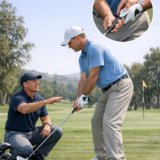
This article outlines a structured, research-informed pathway for producing dependable swing mechanics, accurate tee shots, and repeatable putting across skill levels.Combining modern biomechanical insights with motor-learning principles, the approach marries objective kinematic and kinetic benchmarks with practical course-management and staged practice plans. The focus is on isolating the movement features that remain stable across repetitions, converting those invariants into scalable drills and feedback routines, and ensuring technical changes support tactical choices under diverse playing conditions. By integrating empirical evidence with field-tested coaching methods, the guide gives players and coaches a clear progression-from baseline assessment and targeted intervention to long-term consolidation-that enhances performance while lowering injury risk. The sections that follow present diagnostic thresholds for common swing faults, progressive, evidence-backed drills for improving driving accuracy, and quantified strategies for consistent putting, finishing with templates for individualized training plans and ongoing performance tracking.
Core Principles for Repeatable setup, Swing Mechanics, and Stroke Reliability
A consistent address and setup are the cornerstones of repeatable ball striking. Start from an athletic, balanced posture: for full-driver swings adopt a slight spine tilt away from the target (roughly 5-7°) while using a more neutral trunk for iron shots; maintain knee flex and square shoulders relative to the line of play. Make ball position predictable-place the driver just inside the front heel,position mid‑irons near the center of stance,and move short irons slightly back of center-to stabilize the low point. Keep grip pressure light-to-moderate (approximately 4-5/10) so wrists can hinge without encouraging early release.
teach controlled rotation with specific ranges: experienced players benefit from about 80-100° of shoulder rotation and roughly 45° of hip turn, while recreational players may work within 60-80° shoulder rotation. Weight distribution should flow from an initial near‑even balance to about 60% on the trail side at the top of the backswing and then shift to approximately 60% forward at impact. To make these principles tangible, use clear checkpoints and practice tasks that validate a consistent address and kinematic order:
- Setup checkpoints: feet approximately shoulder-width (narrower for wedges), clubface square to the intended line, hands slightly ahead of the ball for irons, and a neutral wrist angle.
- Chest‑to‑arm connection drill (towel under armpit): keeps the arms tied to torso motion and reduces disconnection during the swing.
- Alignment-rod verification: one rod along the target line, another parallel to the toe line to confirm feet, hips, and shoulder alignment.
From an impact and kinematics viewpoint, prioritize control of clubface orientation, swing path, and delivered loft.Target an impact shape where mid-irons display about 1-2 inches of forward shaft lean (with slightly more for long irons and wedges) to ensure compression and predictable launch. Preserve wrist hinge through the transition to keep lag, and set measurable objectives-such as shrinking impact face-angle variation to ±3°-using launch-monitor metrics or high-frame-rate video analysis. Address common faults with focused exercises: use an impact bag to develop compressive contact and correct shaft lean; a gate or alignment drill to teach desired path (in-to-out for a draw, out-to-in for a controlled fade); and a tempo drill (such as a 3:1 rhythm: three counts back, one through) to stabilize sequencing. On course, encourage players to scale swing length and shoulder turn (e.g., 60-70% shoulder turn for a punch shot beneath tree limbs) while preserving the same impact geometry so distance control and trajectory shaping remain consistent in constrained conditions.
- Impact consistency practice: impact-bag work, progressive half-swing to full-swing sequences, and 120+ fps video checks to confirm shaft lean and face alignment.
- Practice targets: aim to strike 50 quality shots with impact face deviation ≤3° or reduce overall dispersion by 25% in four weeks.
Short-game efficiency and intelligent course planning translate technical control into lower scores. For chipping and pitching, prioritize managing loft and using bounce wisely: select a lower‑lofted club with more bounce for tight lies and open the face on fluffier turf with a higher‑loft wedge, maintaining a compact tempo and a slight forward press to regulate spin. Putting depends on a repeatable stroke path, a square face at impact, and reliable speed control; set measurable goals such as making about 70% of putts from 3-6 feet and cutting three‑putts to below 10% of holes played. Combine rules knowledge and strategy into practice: under Rule 16.1 a player may take free relief from abnormal course conditions by dropping within one club‑length at the nearest point of relief; for an unplayable lie (Rule 19) different relief options exist (stroke‑and‑distance, two club‑lengths no nearer the hole, or back‑on‑line with a one‑stroke penalty). Use these scenarios to rehearse decision making-for instance, on a sodden day prioritize carry over rollout, and against penalty areas practice the back‑on‑line drop option to validate club selection and trajectory. Effective short‑game practice sequences include:
- Clock chipping drill: balls placed at 3, 6, 9 and 12 o’clock around the hole to practice different landing spots and spin control.
- Pitch distance ladder: targets at 10, 20, 30, 40 yards; hit five shots to each and score by proximity.
- Putting speed work: short circle putts (3 ft) for confidence and longer lag putts (30-40 ft) to reduce three‑putts.
adapt instruction to individual physical capacities-provide compact, reduced‑rotation alternatives for players with mobility limits while prescribing enhanced rotational and stability work for stronger athletes-and always blend technical repetition with scenario‑based practice (windy approaches, narrow fairways, firm greens) so improvements transfer to lower scores and better on‑course decisions.

Biomechanical Screening and Dynamic Analysis to Identify and Fix swing Errors
Start with a structured screening that documents the static and active ranges needed for the swing.Frist, check basic setup metrics: stance width roughly equal to shoulder width (about 25-30% of player height), weight balanced near 50/50 to 60/40 (lead/trail) at address, spine tilt in the order of 15-25° from vertical, and knee flex around 15-25°. Capture photos or phone video perpendicular to the target line for baseline records. Then run simple active tests to quantify mobility and symmetry: thoracic rotation (advanced players often approach 80-100°), hip internal/external rotation (~35-45° range), and ankle dorsiflexion to confirm stable weight transfer. Use these results to build individualized baselines and apply corrective checks and drills when deficits appear:
- Wall turn assessment: reveals early lateral sway and restricted hip rotation.
- Takeaway rod or mallet check: confirms the first 30-50% of the backswing follows an appropriate shaft and hand path.
- Single‑leg balance hold (20-30 s): detects side‑to‑side asymmetry that may compromise downswing stability.
These objective screens enable measurable goals (for example, boosting thoracic rotation from 55° to 75° in eight weeks) and guide whether to prioritize mobility and strength work before layering technical swing changes.
Move from static screens to dynamic kinematic analysis that isolates the sequence and impact variables driving ball flight. Film swings face‑on and down‑the‑line and estimate X‑factor (shoulder‑to‑hip separation), targeting a controlled 20-40° separation for experienced players with beginners progressively approaching that range. Evaluate the proximal‑to‑distal sequence (pelvis → torso → arms → club) and look for consistent timing that yields a square face at impact; if the chain breaks down, check for casting, lateral sliding, or inadequate hip clearance. Where possible, quantify impact parameters: suitable attack angles with a driver are often +1° to +4° for higher launch and lower spin, while mid‑iron attack angles are typically −3° to −7° to promote compression. To remediate common faults use these progressions:
- Step‑through or split‑step drill: encourages correct weight shift and sequencing.
- Impact‑bag/contact target: reinforces hands‑ahead impact and forward shaft lean for iron compression.
- Medicine‑ball rotational throws (3×10 reps): develop explosive torso‑to‑arm transfer and measure rotation symmetry.
Bridge range practice to course play by deliberately rehearsing shot shapes in contextual situations-such as,if a fairway bunker blocks the right side,practice a controlled draw by closing the face slightly and promoting a mild in‑to‑out path-and account for how wind and lie affect attack angle and club choice.
Fold short‑game biomechanics and management strategy into scoring enhancement.Set repeatable benchmarks for putting and around‑the‑green play: aim to cut three‑putts below 10% and raise up‑and‑down rates to 50-60% for intermediate players by tightening setup and tempo metrics. Structure a 30‑minute practice block with 50 short putts inside 6 ft (gate drill), 30 lag putts using a distance ladder (track deviations within ±3 ft for long attempts), and 30 chips aimed to land inside a 5‑ft target. Match wedge loft and bounce to turf firmness (higher bounce for softer turf or bunker sand) and adopt a narrower stance and more loft for tight lies to preserve clubface loft through impact. Typical errors and quick fixes include:
- Too much hand action on chips – correct with shoulder‑driven strokes and a fixed‑wrist hold drill.
- Putting yips or tension – use a pre‑shot breathing routine and a one‑to‑two cadence to stabilize tempo.
- Poor club choice into greens – favor conservative club selection (take an extra club into wind or firm turf) and employ provisionals when OB or loss is likely to save time and strokes.
When biomechanical assessment, focused drills, equipment choices, and course‑aware decisions are combined with measurable practice goals and periodic retesting, players can convert technical gains into consistent scoring improvements across weather and course conditions.
Practical Drills and Routines for a Dependable Putting stroke and Accurate Green Reading
establish a repeatable putting foundation: place the ball slightly forward of center for mid‑range putts, adopt a narrow stance with weight balanced or slightly favoring the lead foot, and position your eyes over or just inside the line to encourage neutral shoulder tilt. Putter specifications matter-choose head loft around 2-4° and a toe‑hang or face‑balance that matches your natural arc (blade/ toe‑hang for arcing strokes, face‑balanced mallets for straight pendulum strokes). Square the putter face, align shoulders and forearms, and use a shoulder‑pivoted motion as a primary source of stroke movement. Key impact targets are a stable lower body, a consistent path or arc suited to your putter, and a tempo often approximated by a 3:1 backswing‑to‑forward stroke timing to control distance. Correct common faults-excessive wrist motion, heel‑toe rotation at contact, and decelerating through the ball-by simplifying to a shoulder‑led pendulum and validating face alignment with an alignment rod.
Progress from stable setup to dependable putting with evidence‑backed drills and clear measurement goals. Begin with high‑confidence short reps: the 3‑6‑9 clock drill (12 attempts from 3, 6 and 9 feet; target ~70% at 3 ft and ~50% at 6 ft) builds holing instincts and pressure control. Use the gate and path drill (two tees or rods just wider than the putter head) to train a square face through impact, then the ladder distance drill (targets every 5 ft from 5 to 30 ft, 10 putts per distance, log deviations). Leverage a metronome app for tempo and a mirror to check head and shoulder stillness. A recommended session: 10-15 minute short‑putt warm‑up, 20-30 minutes distance ladder work, and 10 minutes of pressure holing. Troubleshoot by adjusting backswing length to prevent deceleration, repeating toe‑gate reps to stop an open face, and checking grip tension. To quantify progress, track putts per round and three‑putt frequency and aim to reduce three‑putts by at least one per round through improved pace and launch consistency.
Reading greens is an observational and strategic skill that enhances a reliable stroke.Practice identifying the fall line, grain direction (use mowing patterns and the grass sheen), and slope; remember that green speed (Stimp readings-commonly ranging in recreational contexts from about 8-13) materially influences pace and break, so adapt aim and stroke length accordingly. Use paired reading exercises-one player reads, the other compares-to develop shared cues and decision making under pressure. On course, follow Rules‑compliant procedures: mark and lift balls correctly before cleaning or replacing, repair ball marks, and use repaired surfaces as part of your read. In windy or damp conditions shorten strokes for short putts and compensate more for downhill breaks on long putts.Include mental prep-visualization, a fixed two‑count tempo, and committed alignment-and tailor practice to learning styles: visual learners should film reads and strokes, kinesthetic learners concentrate on weighted‑putter feel drills, and analytical players log session metrics to guide incremental adjustments toward lower scores.
Optimizing Driving with Launch‑Data, Setup Tweaks, and Tactical Choices
Begin by quantifying the launch variables that drive tee‑shot effectiveness: ball speed, launch angle, spin rate (rpm), attack angle, smash factor, and resulting carry/total distance. Use a launch monitor and collect a representative sample (such as,20 consistent swings) and analyze median values rather than single outliers. Typical performance bands vary by level: beginners often focus first on consistent center‑face contact with a smash factor near 1.35-1.42,intermediates target ~1.45-1.48, and advanced players strive for ~1.48-1.51. Efficient driver setups often yield launch angles in the 10-14° window with spin between roughly 1,800-3,000 rpm depending on individual swing speed-higher swing speeds usually benefit from lower spin. Translating these numbers into course advantage is straightforward: as an example, increasing carry by 10-15 yards while maintaining dispersion typically raises the chance of hitting a preferred landing area; conversely, excessive spin can produce ballooning and minimal rollout in wind.
After establishing baselines, make measured setup and swing adjustments to shift launch and spin predictably. To increase launch and reduce spin, move the ball slightly forward (about 1-2 ball diameters inside the front heel for right‑handers), raise tee height modestly (roughly 1.5-2.5 inches of ball protruding above the crown), and encourage a positive attack angle (+1° to +4°) by sustaining weight forward through impact for an upward strike. To lower trajectory and increase control, place the ball a touch back, lower the tee and shallow the attack to neutral or slightly negative. Useful checks and drills include:
- Impact tape/foil work: confirm center‑face strikes and monitor left/right bias.
- Spine‑angle rod drill: a rod parallel to the shaft encourages maintained shoulder tilt through impact and supports desired attack angle.
- Tee‑height progression: hit sets at low/medium/high tee heights (10 shots each) and correlate launch and spin readings to find optimal setup.
- Video tempo analysis: record at 60+ fps to check weight shift and shaft lean; aim for repeatable, balanced finishes.
Correct typical problems: excessive spin may stem from an open clubface at impact, late release, weak heel strikes, or a steep downswing; wide dispersion usually indicates a need to control face angle and neutralize path before increasing speed.Set short‑term numeric goals (for example, cut average spin by ~300 rpm in six weeks or improve median smash factor by 0.03) and structure practice into focused 20-30 minute blocks that alternate data‑driven range work with on‑course simulation.
Integrate launch‑optimized driving into course tactics so technical gains lower scores.Convert data into decisions: when wind reduces carry, favor a lower‑spin profile or a 3‑wood to stay in play; if you routinely carry hazards by ~20 yards, shape tee aims to leave preferred approach angles and minimize recovery risks. Under the Rules of Golf, remember the teeing area requirements and relief protocols-declaration of an unplayable ball is not permitted in penalty areas, so avoid those positions where possible and practice penalty area relief options. Bridge the gap between range and course with:
- Wind simulation sessions: practice low‑ and high‑trajectory shots into steady breezes to identify the most reliable launch‑spin combination.
- Targeted fairway routines: place landing targets at preferred carry/roll distances and play nine holes using a single tee height to instill on‑course habits.
- Pressure practice: scoring incentives (e.g., two‑putt par following a tee shot landing inside the target) to build robust pre‑shot routines under stress.
By translating objective launch data into precise technical changes and then into strategic course application, players at every level can measurably improve driving distance, accuracy, and scoring outcomes.
Tiered Training Programs with Clear Metrics and Advancement Benchmarks
Begin with a standardized assessment that converts subjective feel into measurable baselines so progress is trackable. For beginners record swing speed, 7‑iron and driver carry distances, lateral dispersion at a standard target (yards left/right at 150 yd), putts per round, and scrambling percentage from around the green. for intermediate and advanced players add GIR (greens‑in‑regulation %), proximity to hole from 100 yd (feet), and lag‑putt success inside 20 ft. Also capture setup metrics: stance width ≈1.5× shoulder width, ball position (irons center to one ball left of center; driver 2-3 balls forward), spine tilt 5-10° away for driver, and hands ahead of the ball 1-2 in.at address for irons. Progression rules should be explicit-such as, promote a beginner to intermediate when swing speed and carry increase 10-15% and GIR exceeds ~40%; consider an intermediate ready for low‑handicap work when GIR surpasses ~60% and scrambling exceeds 50%.
Operationalize change with targeted drills:
- Impact‑tape drill: aim for center‑face strikes and measure dispersion in yards.
- Tempo metronome drill: 60-70 bpm to normalize backswing:downswing ratios (approx.3:1).
- hands‑ahead training: place a tee 1-2 inches behind the ball to ingrain forward shaft lean at impact.
For the short game, adopt a staged curriculum that ties technique to course situations and Rules awareness. Choose wedge bounce and loft based on conditions-higher bounce (10-14°) for softer sand or turf and an open‑face setup (8-12°) for higher, splashier bunker shots; for bump‑and‑run use a 7‑ or 8‑iron with minimal loft change. Set measurable outcomes: a structured six‑week routine should boost up‑and‑down rates by about 10 percentage points and improve chip proximity to 3-6 ft within 30 yd. For bunkers rehearse an open face with weight 60/40 forward and an entry point 1-2 in. behind the ball; target consistent green exits with about 80% of shots reaching the green from near‑green bunkers. Apply rules knowledge practically: identify the nearest point of complete relief for embedded balls and drop within one club‑length, honor the three‑minute search rule for lost balls, and apply stroke‑and‑distance when appropriate.Useful drills include:
- Clock chip drill: balls at 3, 6, 9, 12 o’clock and chip to within ~6 ft.
- Three‑distance bunker drill: practice consistent entry 1-2 in. behind the ball at 10, 20, 30 yd scenarios.
- Lag putting drill: aim into two‑foot circles from 30-60 ft to cut three‑putt frequency.
Combine shot shaping,course strategy,and equipment tuning into a logical progression plan. Teach path/face relationships for shape: a controlled draw typically requires a slight in‑to‑out path (~3-5°) with a relatively closed face; a controlled fade uses a mild out‑to‑in path (~3-5°) with a more open face. Match shaft flex to tempo (slower tempos often benefit from softer flex) and check lie angle so toe/heel contact aligns with groove strikes-changes around ±1° can correct persistent directional misses. Provide club selection charts for wind and slopes, aiming strategies for firm greens (play short to allow run‑up), and a conservative bailout zone on risk‑reward holes. Set progression milestones (e.g.,reduce average score by 2 strokes in 12 weeks by raising GIR 8-10% or trimming putts per hole by 0.1) and validate gains with tracking apps or stat cards.For common corrections and varied learning styles, offer checks like:
- Early release correction: towel between arms to preserve connection.
- Overactive lower body: half‑swings with toe‑line stability to restore weight transfer.
- Green‑reading habit: walk the putt from behind, then stand over and align to the intended low point.
These steps blend technical sharpening with situational play so golfers from novice to low handicap can follow measurable pathways to better scoring in real‑world conditions.
Turning Practice into Lower Scores: Course Strategy, Rules, and Decision Flow
To ensure range gains convert into consistent course performance, standardize setup and equipment so practice translates directly to play. Lock in a reproducible pre‑shot routine and ball position progression (driver off the inside of the front heel, mid‑irons centered, short irons slightly back of center), weight distribution (roughly 55/45 forward bias for driver at address, 50/50 for irons), and iron shaft lean at impact (around 5-8° forward). Use measurable drills in practice: hit 10‑shot sets to specific carry distances (100, 150, 200 yards), record averages with a launch monitor or GPS, and aim to tighten spreads to within ±5 yards per club. Reinforce session checkpoints each time you practice:
- Grip pressure: 4-6/10 to retain feel;
- Shoulder turn: near 80-100° on full swings to load energy;
- Clubface awareness: ensure face is square at address for neutral shots.
Rehearse the routine under simulated pressure (countdowns, one‑shot scoring) so motor patterns persist when stressed.
Then layer tactical decision making and rules‑aware strategy to reduce strokes in real play. Construct a compact pre‑shot decision tree: assess lie, wind, slope, and hazards; pick a target zone with a bail‑out option when downside outweighs reward. Apply numeric heuristics-add about one club (or roughly 15% carry) for a 10-15 mph headwind; adjust yardage by ~10-15% per 100 ft of downhill elevation change. Be fluent with relief choices-take free relief for abnormal course conditions, and select the unplayable‑ball option (stroke‑and‑distance, two club‑lengths no nearer the hole, or back‑on‑line with one penalty stroke) that best protects scoring potential.Use this logic in scenarios: on a long par‑5 with a guarded green, lay up to your preferred wedge distance unless your second shot leaves you inside ~50 yards on a level lie in favorable wind, in wich case taking on the green might be justified.
Emphasize short‑game and putting routines that convert practice confidence into fewer strokes. Structure drills and goals:
- Putting distance ladder: 3, 6, 9, 12 paces-make ~80% of lag attempts within a 6‑ft radius at each step;
- Chipping clock drill: from 4, 8, 12, 16 ft using varied clubs to learn trajectory and roll-aim to raise up‑and‑down conversion (beginners 40-50%, intermediates 55-65%, low handicaps 65%+);
- Bunker splash practice: enter sand 1-2 inches behind the ball, accelerate through to a landing target to learn consistent explosion contact.
Address typical mistakes proactively: correct goose‑necked chipping by shifting front foot weight to ~60-70%, prevent casting on approaches by retaining hinge into impact, and stop putting deceleration with short‑stroke tempo work. Build a concise pre‑shot checklist-select club,visualize trajectory and landing,commit-and make on‑course choices match practiced decisions. By linking defined practice goals, equipment and setup consistency, rules‑aware strategy, and repeatable mental routines, golfers at any level can reliably translate practice improvements into lower scores.
Performance Monitoring, Feedback Loops, and Injury‑Aware Progression
Start with objective baseline measurement: employ a launch monitor, high‑speed camera, or wearable inertial sensors to log clubhead speed, ball speed, smash factor, attack angle and dispersion. For context, a well‑struck driver on many competitive circuits frequently enough yields a smash factor near 1.45-1.50 and attack angles between about −1° and +3°, while irons typically need a negative attack angle (−4° to −8°) to compress the ball. Set SMART short‑ and medium‑term targets-reduce 7‑iron lateral dispersion to ±15 yards in eight weeks, or raise driver clubhead speed 2-4 mph over 12 weeks via sequencing and strength work. Implement simple session logs and repeatable test protocols:
- Baseline session: 30 driver swings and 30 seven‑iron swings-record means and standard deviations.
- Tempo test: 20 swings to a metronome at 60-70 BPM for timing consistency.
- Short‑game baseline: 10 chips from 20 yards and 10 putts from 10, 20 and 40 feet to log proximity to the hole.
These data frame technical changes and help communicate progress with coaches, physios, and clubfitters.
Use feedback to refine movement while protecting athlete health: maintain setup fundamentals (neutral spine ~20-30° from vertical at address for most players, weight distribution ~55/45 front/back for full shots, consistent ball positions), and layer sequencing and durability drills:
- Towel connection drill: promotes torso‑arm linkage and reduces excessive arm motion.
- Step drill: feet together then step into the finish-encourages hip rotation and ground force transfer.
- Tempo ladder: vary backswing length while keeping downswing timing consistent with a metronome to improve repeatability.
Concurrently implement injury‑prevention programming: thoracic and hip mobility work three times weekly, rotator cuff and scapular activation 2-3×/week, and posterior chain strength sessions (deadlift or hip‑hinge variants) twice weekly. To avoid overuse follow progressive loading rules-limit weekly range ball volume increases to ~10% and keep full‑speed technical swings to about 50-100 high‑quality repetitions per intense session to favor neural adaptation over volume. Use numbers to diagnose faults-for example, a steadily more negative attack angle with the driver often indicates early lateral slide; correct with step drills and drills that discourage upper‑body casting.
Translate monitored gains into smarter on‑course choices using stat tracking and situational feedback. Regularly log fairways hit, GIR, scrambling %, and putts per hole; set targets like improving GIR by 10% or reducing putts per hole to ≤1.7. Use rangefinders and GPS to validate carry distances and adjust for wind-if a measured 150‑yard 7‑iron carries 150 in calm air, plan ~+10 yards with a tailwind and ~−10 yards into a comparable headwind.Incorporate on‑course drills:
- Preferred‑miss practice: play three par‑3s aiming deliberately to the safer side to learn controlled misses.
- Putting pace ladder: 6‑4‑2 pace reps from 30, 20 and 10 feet to improve speed control and cut three‑putts.
- Recovery simulation: 10 bunker exits and 10 tight‑lie chips to strengthen scrambling under pressure.
Also build mental checkpoints-consistent pre‑shot routine, criteria for attacking pins, and a conservative bail‑out plan when conditions increase risk. by pairing quantitative monitoring with targeted drills, strategic decision rules, and recovery protocols, golfers can convert technical gains to lower scores while reducing injury risk.
Q&A
Note on source material
- The web search results supplied with your request did not include golf‑specific sources; the Q&A that follows synthesizes evidence‑based practice, biomechanical principles, performance measurement norms, and Rules‑of‑Golf considerations (R&A/USGA), rather than relying on the provided search hits.Q&A: Practical Guidance for Consistent Swing,Putting and Driving Performance
1) What underpins an evidence‑based program to improve swing,putting,and driving consistency?
Answer: A robust program combines (a) biomechanical fundamentals (kinematic sequencing and force transfer),(b) motor‑learning constructs (managing variability,tempo control,effective practice structure),(c) objective instrumentation (launch monitors,high‑speed video,force plates,wearables),and (d) rule‑compliant practice and competition routines. Interventions should be hypothesis‑driven, measured against chosen performance metrics, and iteratively adjusted through deliberate practice and feedback loops.2) Which biomechanical ideas are central to an effective full swing?
answer: Key concepts include:
– Proximal‑to‑distal kinematic sequencing (pelvis → torso → arms → club) to maximize clubhead speed efficiently.
– Use of ground reaction forces and proper weight transfer to generate impulse.
– Control of clubface orientation via forearm and wrist mechanics to limit rotational variance at impact.
– Stable tempo and timing to reproduce impact conditions reliably.
3) What objective variables should coaches track for swing and driving?
Answer: Track clubhead speed, ball speed and smash factor, launch angle and spin rate, carry and total distance, lateral dispersion, face‑to‑path at impact, and consistency measures (standard deviation, coefficient of variation) for these metrics.
4) What are reasonable driving targets?
Answer: Targets depend on physical capacity and level. Beginners prioritize consistent center‑face contact and a smash factor ~1.35-1.42; intermediates aim for ~1.45-1.48; advanced players target ~1.48-1.51. Driver launch and spin should be individualized-many players find efficient combinations within launch ~10-14° and spin ~1,800-3,000 rpm,adjusted for swing speed and environmental conditions.
5) What kinematic‑sequence cues should coaches look for?
Answer: Observable cues include pelvic rotation initiating the downswing, torso following with a slight lag, arms and hands releasing after trunk acceleration, and minimal lateral sway of the lower body through impact. Frame‑by‑frame video review can quantify timing relationships.6) How should putting be framed biomechanically and behaviorally?
Answer: Putting control centers on face angle at impact, path, delivered loft/shaft lean, and stroke length (which primarily sets speed).Behaviorally, putting is a closed skill that benefits from stable movement patterns and pre‑shot routines. Biomechanically, limit putter‑head rotational variance and stabilize the shoulders while using a repeatable shoulder pivot or a constrained wrist movement depending on the player’s preferred method.
7) What putting metrics are useful?
Answer: Useful metrics include launch direction and initial roll deviation, launch speed and distance control at set lengths, face angle at impact, loft/attack angle, and consistency (standard deviation) of launch speed and direction. track stroke length and tempo ratios for additional insight.
8) Which drills best transfer to on‑course putting?
Answer: effective drills include speed‑control ladders (markers at 3,6,9,12 ft),gate drills for face control,and randomized practice that varies distance and line for transfer. Use blocked practice during acquisition and randomized practice for retention and transfer.
9) How do the Rules of Golf interact with practice and competition?
Answer: Ensure equipment compliance, follow correct ball‑marking and lifting procedures, and understand relief protocols (embedded ball, ground under repair, immovable obstructions, penalty areas).Coaches should train players in routine rules procedures so compliance is automatic during play.
10) How to periodize practice for consistency across swing, putting and driving?
Answer: Use a periodization model:
– Foundation (4-8 weeks): technical block work, mobility and strength, baseline measurement.
– Integration (4-12 weeks): situational practice and increasing variability.
– Competition planning (2-6 weeks): pressure simulation and load tapering.
– Maintenance: ongoing monitoring with short corrective blocks.
Progression decisions should be metric‑based (e.g., reduced launch variability, improved GIR + putts per round).
11) How to use measurement and tech responsibly?
Answer: Calibrate devices, focus on a few primary metrics aligned to goals, combine quantitative data with coach observation and athlete feedback, and avoid overreliance on any single device or number.12) Common faults and evidence‑based fixes?
Answer:
– Early extension: hip‑hinge drills, wall push‑backs, tempo moderation.
– Casting: lag drills (pump drills), impact‑bag to feel late release.
– Overactive hands in putting: gate drills, shoulder‑led pendulum strokes, single‑arm constraints.
Verify corrections by observing objective improvements in impact conditions and reduced variability.
13) How to evaluate whether changes work?
Answer: Perform pre/post testing with consistent protocols (same ball, same warm‑up), adequate sample sizes (20-30 shots for driving), and practical thresholds (percent reductions in standard deviation, meaningful yardage increases, or scoring improvements). Monitor both mechanical and on‑course metrics.
14) How significant is course strategy versus technical gains?
Answer: While technique and fit matter, improved course management frequently enough produces quicker scoring gains. Align tee aims to dispersion, play to preferred approach distances, and leverage green‑reading and pace control to convert opportunities.
15) Ethical and procedural responsibilities for coaches?
Answer: Ensure compliance with competition rules and anti‑doping where relevant, follow equipment conformity, teach rules procedures to players, and maintain professional standards for data privacy, informed consent, and athlete welfare.
16) Immediate practical checklist
Answer:
– Baseline test: record clubhead and ball speed, launch, spin, dispersion; record putting launch speed and direction consistency.
– Identify 2-3 highest‑impact deficits (e.g., excessive driver spin, inconsistent putt launch direction).
– Select one technical drill, one behavioral routine, and one measurement change as interventions.
– Reassess after 2-6 weeks and iterate based on objective and on‑course transfer.
Closing note
This Q&A synthesizes applied biomechanics, measurement practice, and Rules-of‑Golf considerations to guide measurable, rule‑compliant improvement. For exact rulings consult the current R&A/USGA documentation; for individualized biomechanical profiling pair these protocols with a qualified coach or sport scientist using validated measurement tools.
Conclusion
This review presents a structured, rules‑aware framework for improving consistency across swing, putting, and driving by blending biomechanical analysis, empirically supported training progressions, and quantifiable performance benchmarks. When principles are translated into level‑specific drills and objective targets, practitioners gain a repeatable pathway to reduce variability, speed skill acquisition, and convert practice gains to on‑course outcomes.
For coaches, scientists, and committed players the proposal is clear: adopt systematic, data‑driven interventions; measure change with repeatable tests; and integrate course strategy to ensure carryover under competitive conditions. Future research should examine longitudinal outcomes of these protocols, dose‑response relationships for drill prescriptions, and the neurocognitive processes that underpin retention and clutch performance. with iterative assessment and evidence‑driven refinement, practitioners can sustainably enhance swing mechanics, putting reliability, and driving consistency to produce measurable scoring improvements.

Elevate Your Golf Game: Proven Rules for Powerful Swings, Precision Putting & Accurate Drives
Apply biomechanics, targeted golf drills, and smart course management to improve swing power, putting accuracy, and driving consistency. Below you’ll find clearly measurable steps, practice progressions, and simple metrics to track enhancement for golfers of all levels.
Fundamentals: Posture, Grip & Alignment for Consistent Golf Technique
Every repeatable golf swing and reliable putting stroke starts with reliable setup fundamentals. Focus on these key elements before any drill:
- Grip: Neutral-to-slight-strong for the driver; midpoint for irons. Ensure pressure is light enough to allow wrist hinge but secure enough to control the clubface.
- Posture: Athletic spine tilt, soft knees, hinge at hips. Maintain a balanced athletic stance – not too upright, not collapsed.
- Alignment: Feet, hips, and shoulders parallel to the target line. use alignment rods during warm-up to ingrain aim.
- Ball position: Forward in stance for the driver, centered for mid-irons, back for wedges.
Powerful Swing: Biomechanics & Drills to Produce Distance
Biomechanical principles that create power
- Sequencing: Lower-body coil → core rotation → arm release. Efficient energy transfer maximizes clubhead speed.
- Width & Shoulder Turn: A full shoulder turn increases radius; maintain extension for consistent contact.
- Compression (Impact): Forward shaft lean for irons, proper launch for driver to optimize carry.
- Lag & Release: Preserve wrist lag on the downswing to maximize clubhead acceleration through impact.
Power-building drills (measurable)
- Towel-under-arms drill: Keeps connection between torso and arms for synchronized rotation. Measure improvement by tracking ball speed or carry distance on a launch monitor weekly.
- Step-through or step-away drill: Promotes weight shift and hip rotation. Track consistency by measuring dispersion (left/right) over 10 swings.
- Impact bag or half-shaft swings: Train compressive impact and forward shaft lean for better ball speed and lower spin.
- Overspeed training (use caution): Short swings with lighter clubs to train faster nervous system response; validate with swing speed radar.
Key metrics to track power
- Clubhead speed (mph) – increases should correlate with ball speed.
- Ball speed (mph) and smash factor – aim for stable or improved smash factor as speed rises.
- Carry distance (yards) - measure average over 10 good swings.
- Shot dispersion (yards left/right) – ensure gains in power don’t sacrifice accuracy.
Precision Putting: Accuracy, Green Reading & Distance Control
Putting fundamentals that matter
- Eye position: Eyes ideally over or slightly inside the ball line; this helps read break and set the putting arc.
- Stroke path: Choose arc or straight-back-straight-through and practice it consistently.
- Tempo: One of the most critically important putting metrics – smooth, repeatable tempo beats raw force.
- Setup and face control: Square face at impact is crucial – use short gates to train face control.
High-impact putting drills
- Gate drill: Place tees just wider than the putter head to encourage a square face through impact.
- Clock drill (distance control): Putt from 3,6,9,and 12 feet around the hole – track percentage made and three-putts prevented.
- Two-ball alignment drill: Line up two balls on the same line; helps with aim and roll direction.
- Tempo metronome drill: Use a metronome app set to a pleasant rhythm and match backswing-forward swing cadence.
Putting metrics to monitor
- Putts per round and putts per GIR (greens in regulation).
- One-putt percentage from inside 10 feet.
- Average distance of first putt from various ranges (e.g.,10-20 ft).
- Strokes gained: Putting (if you have shotlink or a stats app).
Accurate Drives: Consistent Tee Shots & Smart Driving strategy
Driver setup and swing keys
- Wider stance: For stability and a strong base to coil against.
- Ball forward & tee height: About half the driver’s head above the ball to promote upward attack.
- Hit up on the ball: Positive attack angle increases launch and reduces spin.
- Controlled extension: Long arms through impact, a shallow angle of attack, and a balanced finish.
Driving drills to increase accuracy
- Fairway hit target practice: Aim at a narrow target (20-30 yards wide) and track fairways hit percentage over a practice hour.
- Pause-at-top drill: Creates smoother transition and reduces over-swinging and casting.
- Alignment-rod window: Use rods to ensure the clubhead path stays inside-to-square through impact.
- Simulation pressure drills: Play a virtual risk-reward tee shot: commit to fairway or aggressive line and track outcomes after 10 attempts to inform real-course decisions.
Driver fitting basics
Matching loft, shaft flex, and clubhead to your swing often yields immediate improvements in carry, spin, and dispersion. Key fitting metrics: launch angle, spin rate, ball speed, and smash factor.
Practical tip: If your driver launch is low and spin high, increase loft or find a shaft promoting higher launch. Test changes with a launch monitor over 30 swings for reliable averages.
Course Management & Strategy for Lower Scores
Smart decision-making often separates mid-handicap players from low-handicappers.Use your strengths to avoid unnecessary risk:
- Play to your comfortable yardages – know your 7-iron, 5-iron, hybrid and driver carry and comfortable miss patterns.
- Use conservative lines on trouble holes: aim for the largest landing area,not the pin when hazards are penal.
- Factor in wind, slope, and green firmness – adjust club selection and target lines accordingly.
- Short game-first mentality inside 100 yards: aggressive when you have a wedge advantage, conservative if you can’t rely on green-feel that day.
Measurable Practice Plan (Weekly)
Sample weekly routine (6 practice hours / week):
- 2 x 60 min – Driving + long irons (15-20 balls each), accuracy target practice, 10 swings on launch monitor for metrics.
- 2 x 45 min – short game: 80% chipping/pitching work, 20% bunker practice; measure up-and-down % from 30-50 yards.
- 2 x 60 min - Putting: 30 min distance control (clock drill), 30 min pressure gates and 3-putt avoidance.
- One on-course session (90 minutes) practicing course management decisions rather than just hitting.
Rapid Reference: Drills & Key Metrics
| drill | Target | How to Measure |
|---|---|---|
| Towel-under-arms | Connected rotation | Ball speed / dispersion over 10 swings |
| gate drill (putting) | Square face contact | % of strokes through gate without hitting tees |
| clock drill | Distance control | Make % from rings at 3/6/9 ft |
| Fairway target practice | Driving accuracy | Fairways hit % over 30 swings |
Tracking Progress: Simple Stats That Change Your Practice
Track these weekly and monthly to make practice decisions data-driven:
- Fairways hit %
- Greens in regulation (GIR) %
- Putts per round & 1-putt percentage
- Average carry distances and dispersion for driver and 7-iron
- Strokes gained (if available) by category: putting, approach, off-the-tee
Case Study Snapshot: From Inconsistent Distance to Reliable Greens
A 14-handicap golfer integrated the towel-under-arms drill, driver tee-height adjustment, and the clock putting drill for six weeks. Results:
- Clubhead speed +3 mph,ball speed +4 mph (measured on launch monitor)
- Fairways hit up from 48% to 62%
- Putts per round down from 33 to 29; one-putt percentage up 12%
- Scoring dropped 3-4 strokes consistently after eight weeks.
Small, measurable changes with consistent drills and focused course management produced meaningful score reduction.
Practical Tips & Final Actionable Steps
- Warm up with mobility and 10-15 short swings before hitting full shots to protect your body and improve feel.
- Use a launch monitor or even a radar/trackman session quarterly to validate progress and guide equipment changes.
- Keep a practice log: drills, metrics, and feelings – this helps you spot patterns and prioritize practice time.
- Prioritize quality over quantity – focused 30-60 minute sessions with clear measurable goals beat unfocused hours on the range.
want a simple 30-day challenge?
- Week 1: Fundamentals focus – setup,alignment,grip (10-15 min per session).
- Week 2: Short game & putting – gate drill + clock drill, 3 times per week.
- Week 3: Power & driving - towel drill, fairway target practice, monitor carry and dispersion.
- Week 4: Integration – play 2 nine-hole rounds focusing on course management and applying practiced mechanics.
Use the metrics shared above after each week to compare and adjust. Small measurable improvements compound into lower scores and a more enjoyable round.