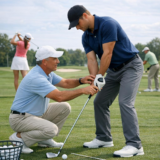
Jack Nicklaus remains one of the defining figures in modern golf: his tournament record (18 major championships), technical steadiness, and strategic mastery continue to serve as a benchmark for players and teachers aiming to elevate performance. This piece - Master Jack Nicklaus Swing,putting & Driving: Advanced Lesson – treats Nicklaus’s method not as a rigid prescription to be imitated exactly,but as a well-documented exemplar whose mechanical and motor-control elements can be isolated,measured,and adapted within contemporary,evidence-led coaching systems. Framing Nicklaus’s approach inside a biomechanical and evidence-based coaching context enables the translation of elite-level technique into repeatable drills,objective performance metrics,and structured practice progressions.
The article pursues three primary objectives. First, to break the Nicklaus model of swing, putting, and driving into measurable kinematic, kinetic, and perceptual elements (such as, joint orientations, sequence timing, ground-reaction profiles, clubhead trajectories, and putting-stroke tempo). Second, to distill peer-reviewed biomechanical research and applied coaching practice into practical, evidence-informed drills and stepwise progressions for intermediate-to-advanced golfers. Third, to specify quantitative benchmarks and test protocols (launch-monitor outputs, stroke-dynamics variables, variability statistics, and outcome-focused performance targets) that allow coaches and players to track training effects over time.
To meet these aims the article fuses motion-capture and sensor-derived interpretation wiht hands-on drill prescriptions that emphasize transfer and motor-learning principles (error amplification, practice variability, and attentional focus). It finishes by offering standardized assessment batteries and pragmatic coaching recommendations so practitioners and researchers alike can quantify the performance improvements attributable to Nicklaus-derived interventions.The product is a rigorous, practice-ready roadmap for refining swing, putting, and driving while adhering to contemporary sport-science standards.
Biomechanical Foundations of Jack Nicklaus Swing: Kinematic Sequencing, Pelvic Rotation, and Torque Generation
Creating a dependable, high-power swing starts with a precise setup and a clear appreciation of the kinetic chain that begins underfoot. Begin with a stable address: stance approximately shoulder-width (±10%), knee flex ~15-25°, and a spine tilt ~10-15° away from the target to permit unobstructed rotation. At setup,aim for a roughly 50/50 to 55/45 weight split (lead/trail) to enable a controlled lateral transfer on the downswing. from this base the concept of body separation – the so-called X‑factor (the angular offset between pelvic and thoracic rotation) – is the principal reservoir of elastic energy. Practically, target an X‑factor of about 20-45°, adjusting by skill level and club: novices at the lower end, advanced players toward the upper range. Setup cues for practice include:
- Neutral grip with relaxed forearms to allow natural wrist hinge.
- Shaft aligned with your spine angle at address to improve consistency of low-point contact.
- A modest forward press (slight hand/bias) to encourage earlier weight transfer with longer clubs.
These fundamentals reflect the classic structural efficiency associated with Nicklaus: robust torque generation married to controllable delivery under stress.
Pelvic rotation is the principal mechanism that turns ground forces into clubhead velocity, and it should start at transition without collapsing or over-rotating.Mechanically, initiate the downswing with a controlled lateral shift ~1-3 cm toward the target instantly followed by rotation; this sequencing creates the torso-pelvis separation. Produce torque by letting the trail hip clear while the lead hip momentarily resists,storing elastic recoil in the oblique musculature. To cultivate that sensation, try these exercises:
- Rotational medicine‑ball throws (3-6 kg) to develop coordinated hip‑to‑torso recoil and timing.
- Hip‑bump drill: on a half-swing feel a small lateral bump to the target, then rotate the hips – 8-12 reps.
- Belt‑line alignment stick: rest a stick along the belt to monitor early slide versus rotation.
Prioritize fluidity: excessive lateral slide or premature hip clearance reduces X‑factor and destabilizes contact quality, while over-rotation without correct sequencing undermines control.
proper kinematic sequencing – the cascading activation of feet, hips, torso, arms, wrists, and clubhead – is critical for extracting speed while preserving accuracy. The ideal order runs from the ground upward: legs → hips → torso → lead arm → hands/wrists → clubhead. Peak hip angular velocity should occur slightly before shoulder peak, creating a solid base for the arms to deliver the club with preserved lag. Use these drills on the range to feel and ingrain the sequence:
- Step drill: start the backswing from a narrow stance and step through on the downswing to promote lower-body initiation.
- Pause-at-top drill: hold 1-2 seconds at the top, then initiate the downswing with a decisive hip turn to feel correct ordering.
- Impact-bag or towel impact drill: strike a soft bag or compressed towel to learn release timing and low-point management.
Typical swing faults include casting (early release), upper‑body dominance, and collapse of the lead side through impact; correct these by purposefully initiating with a controlled hip turn and maintaining a shallow attack into the ball.
Applying these mechanics to the short game and to on-course choices means dialing back rotational intensity and tuning equipment where necesary. For example, pitch and bunker shots generally favor a smaller X‑factor and earlier use of loft – open the face, widen the stance, and limit shoulder turn to control distance and spin.By contrast, full swings require finer sequencing and may improve with a slightly softer shaft or shorter length if timing is inconsistent; remember that longer shafts increase the lever arm and exaggerate timing errors. Always play the ball as it lies and adjust torque when turf conditions change: soft turf calls for a steeper attack angle, firm turf requires a shallower contact to create rollout. In windy conditions reduce X‑factor and shallow the attack to keep the ball flight lower; when chipping across firm fairways emphasize body rotation and reduce wrist action to produce a predictable low-run delivery.
Produce measurable progress through structured practice and pre-shot routines that mirror Nicklaus’s focus on preparation and strategy. Short-term targets might include: add 5-10° to shoulder turn over six weeks, increase smash factor by 0.05, or shrink 7‑iron dispersion to under 10 yards on the range. A weekly template could look like:
- 2 technical sessions (30-45 minutes) focused on pelvic sequencing and lag retention drills.
- 2 short‑game sessions (≈45 minutes) emphasizing trajectory variability and bunker exits.
- 1 situational on‑course session (9 holes) practicing shot selection and adaptation to changing conditions.
Address common limitations with targeted solutions: if hip mobility is restricted, favor increased wrist hinge and core stability work rather than forcing excessive rotation; if casting is persistent, practice the towel drill to rehearse delayed release.Combine mechanical training, equipment tuning, and purposeful on‑course rehearsal (visualization, consistent pre‑shot routine, breathing control) so players at all levels can objectively improve consistency, distance management, and scoring.
Backswing → Impact Transition: Clubface Management, Shaft‑Plane Consistency, and Acceleration Profiles
Successful transition from the top of the backswing into the downswing is a product of timed sequencing rather than a single muscular action. Start with a repeatable setup that supports that order: grip pressure around 4-6/10 (secure enough to control the face but light enough to sense release), a square clubface at address, and a shoulder turn that places the shaft on a reliable plane relative to your spine. Initiation should come from the lower body – a subtle lateral shift onto the lead foot followed by hip rotation - not from an early arm pull. Practically,feel the trail foot load at the top and then move pressure to the lead heel while keeping a slightly firm lead wrist; this keeps wrist set and reduces premature face rotation. As Jack Nicklaus advised, let the body lead the club – that sequence stabilizes the shaft plane and gives you a predictable impact window, especially useful on tight tees and guarded greens.
Controlling the face through transition demands attention to grip configuration, forearm rotation, and the timing of wrist uncocking. Set measurable targets: face deviations ≤±3° for mid-handicappers and ≤±1-2° for lower handicappers at impact – metrics you can confirm with a launch monitor or impact tape.Start from a neutral-to-slightly-strong grip for improved face control, keep elbows compact to limit excessive forearm action, and present a flat or mildly bowed lead wrist at address. Useful practice drills include:
- Impact-bag strikes: short accelerating hits into a bag to feel square, solid contact and a firm lead wrist.
- Alignment-stick gate drill: two sticks set just outside the clubhead path to enforce a coordinated path and face.
- Mirror/video feedback: check that forearm rotation on the downswing is progressive rather than abrupt and that the face stays near‑square to the target line.
These exercises give immediate tactile and visual feedback and translate directly into on-course shot-making – as a notable example, punching under wind or opening the face for a high soft flop around hazards.
Keeping the shaft on a consistent plane from backswing to impact reduces compensatory moves that produce hooks, slices, and erratic distances. In simple terms the shaft should follow a plane that aligns with your shoulder turn and spine angle; too upright or too flat at the top forces face and path compensations through transition. Typical errors include an over‑the‑top (outside‑in) move or an overly flat takeaway. Correct with these checks and drills:
- Takeaway checkpoint: at one arm’s length the butt of the shaft should point at the ball‑target line (±10°).
- Pumping drill: pause twice on the way down at waist height to feel the proper shallowing.
- Shaft‑parallel follow-through drill: practice half‑swings where the shaft becomes roughly parallel to the ground on the finish to ingrain rotation and plane consistency.
Equipment also matters: correctly matched shaft flex, club length, and lie angle help the toe track neutrally through impact; an inappropriate shaft stiffness or incorrect lie will amplify plane faults and make dependable contact more difficult.
Acceleration through transition should be a progressive ramp – a smooth increase in clubhead speed peaking at or shortly after impact – not a sudden snap that sacrifices control. Aim for a gradual acceleration profile: little speed change from the top to mid‑down, then a steady rise into impact. Avoid casting, which shortens the lever, lowers impact speed, and opens the face. Drills that train a desirable acceleration curve include:
- Towel‑under‑arm drill: keeps the arms connected to the torso and promotes body-driven acceleration.
- Pause‑and‑go (half‑to‑full swings): pause briefly at the top, then accelerate progressively while monitoring ball speed on a launch monitor.
- Two‑ball rhythm drill: alternate a short, controlled swing with a full swing to internalize tempo and acceleration timing.
As Nicklaus often noted, a controlled release and consistent acceleration generate both distance and direction; in strong wind or wet conditions moderate the release and increase forward shaft lean at impact to reduce trajectory and keep the ball below the wind.
Move technical progress into course play by blending mechanical practice with situational strategy and mental routines. Set concrete practice targets – for example, reduce face-angle scatter to ±3° within six weeks and maintain shaft‑plane variance under 8° on slow‑motion video – and simulate course constraints like wind, tight lies, and variable turf. Use a pre‑shot routine (breathe, visualize the target line, commit to lower‑body initiation) and choose shots by risk-reward: if a fairway bunker blocks the ideal line, prioritize drills that produce a reliable draw or fade you can execute under pressure. Keep a weekly balance of technical work (30-40%), short game (30%), and simulated rounds (30%), and include recovery and mobility sessions for players with physical limitations. Integrate Nicklaus‑inspired sequencing into on‑course choices and golfers from beginners to low‑handicappers will typically see reduced score variance and better hazard management.
Weight Transfer, Ground Reaction Forces, and Balance strategies for Repeatable Ball Striking
A consistent base starts at setup: feet roughly shoulder-width, slight knee bend (~10-15°), and a gentle spine tilt ~5-7° away from the target to encourage a shallow attack. Ball position varies by club – center for mid‑irons, slightly forward for long irons and fairway woods, and just inside the lead heel for the driver – aligning center of pressure with the club’s low point.Nicklaus emphasized a stable, athletic posture with a quiet head while letting the lower body drive; begin with a near 50/50 weight distribution and feel pressure on the balls of the feet. Before every shot run through these pre‑shot checks:
- Confirm alignment – feet, knees, hips, and shoulders parallel to the target line.
- Verify ball position relative to club and stance width.
- Ensure ~50/50 balance and centered feel before the takeaway.
These basics reduce late-swing compensations and produce consistent ground‑reaction inputs during the backswing and downswing.
From takeaway to the top, deliberately load the trail side to accumulate elastic energy: aim for about 60/40 trail-to-lead weight at the top of a full turn, with shoulder rotation near 90° for skilled players (less for beginners lacking mobility). This should be a rotational coil rather than lateral sway - lateral movement shifts the center of pressure and undermines effective GRF use. Drills to build a controlled coil include:
- Step‑back takeaway: make a small lateral step with the trail foot on the backswing to reinforce rotation instead of slide.
- Wall drill: stand with the trail hip a few inches from a wall and rotate away without touching it to prevent sway.
- pause‑at‑top: pause for 1 second at the top to assess balance and weight distribution before starting the downswing.
These exercises improve awareness of trail-side loading and help the body use the ground to generate torque rather than lose energy to side‑to‑side motion.
Beginning the downswing with the right pattern channels stored energy into a repeatable impact: initiate with a modest, controlled lateral shift toward the target combined with hip rotation – not an arm-driven pull. At impact the aim is roughly 70/30 lead-to-trail weight with center‑of‑pressure forward under the lead foot; hips should be about 45° open to the target for a full driver turn, slightly less for irons depending on intended shot shape. Nicklaus taught that impact is driven by the lower body – feel the left side stabilize and rotate while the arms deliver the clubhead. Use these drills to ingrain the pattern:
- Bump‑and‑rotate drill: a small lateral bump of the lead hip at the downswing start, then rotate through to impact.
- Impact bag/towel drill: strike a bag or hold a towel under the lead armpit to sense compression and connection through impact.
- Tempo metronome: try a 3:1 backswing-to-downswing rhythm (e.g., 3 beats up, 1 beat down) to sync weight shift with GRF peaks.
These practices reproduce the timing and force transfer essential for crisp turf interaction and predictable spin and trajectory.
Finishing in balance is both a training check and a course-management indicator: hold the finish on the lead leg for 2-3 seconds to confirm full weight transfer and rotation. Common faults are early extension (standing up toward the ball) and reverse pivot (shifting weight back to the trail side at impact); either will disrupt GRF application and create thin or fat strikes. Correct by maintaining a modest forward spine angle through impact and pressing the big toe/inner edge of the lead foot into the ground after contact to stabilize the finish. Adjust these mechanics for course situations: on downhill lies or into a headwind shorten backswing length and keep steadier forward pressure to control spin and lower trajectory; uphill or with tailwind you can allow a longer follow‑through and higher launch. Equipment choices also matter – properly fitted shaft flex and lie angle help keep the face square at contact and maintain intended weight‑transfer mechanics.
Embed these cues into structured practice and on‑course planning. A sample weekly session might include three 15‑minute blocks devoted to setup checks, weight‑transfer drills, and on‑course simulation using your standard pre‑shot routine. Track progress with metrics such as achieving 10/12 clean strikes on a drill before progressing, or trimming tee‑shot miss dispersion by 15 yards via improved weight transfer. Address different learning preferences: visual (video at 60 fps), kinesthetic (impact bag and pressure‑mat feedback), and verbal (compact cues like “coil‑bump‑rotate”). Pair this with Nicklaus‑style course strategy – play to the safe side that matches your weight‑transfer pattern – and mental routines to regulate arousal (deep breaths, visualizing the landing). combining measurable drills, equipment checks, and realistic on‑course conditions enables golfers from novice to advanced to convert improved GRF and balance into reliable ball striking and lower scores.
Wrist, Forearm and Grip Mechanics: Reducing excess Manipulation and Maximizing Energy Transfer
Start with a repeatable grip and forearm alignment because the hands are the only direct connection to the club. Adopt a grip where the back of the lead hand is slightly rotated toward the target (a neutral‑to‑slightly‑strong left‑hand grip for right‑handers), with the V between thumb and forefinger pointing between chin and right shoulder.Use grip pressure ~4-6/10 – firm enough to control the head but light enough to allow forearm rotation – and ensure the trail hand nests so both V’s align. equipment choices influence outcomes: select a grip thickness that lets your fingers wrap comfortably (too large weakens release; too small promotes flipping), and fit shaft flex to your tempo so the hands don’t overcompensate for speed. As Nicklaus emphasized, a consistent slightly‑strong lead hand yields a more stable lead wrist at impact and makes shot execution more reliable under stress.
Through the swing, prioritize coordinated wrist hinge and forearm rotation to preserve lag and maximize energy transfer. During the takeaway create a smooth wrist set so at the top the angle between the lead forearm and shaft is near 90° – a useful reference – but for lower ball flight you can reduce hinge toward 60°.In transition feel the lead forearm sustain the shaft angle provided that possible – that retained angle is mechanical lag storing energy. At impact aim for a slightly bowed (flat) lead wrist and a shaft‑lean ~10-15° (mid‑irons) so the clubhead compresses the ball rather than the hands flipping it. Early release or casting (premature trail-arm extension and lead‑wrist cupping) leaks stored energy, raises spin/side spin, and produces weak strikes – correct by rehearsing a lower‑body led sequence: hips, torso, then delayed forearm rotation rather than active hand manipulation.
Turn these mechanics into consistent skill with targeted drills and measurable practice formats. Examples with concrete reps and checks include:
- Impact‑bag drill: 3×10 short strikes focusing on a flat lead wrist and shaft‑lean ~10-15°; review video every 10 reps.
- Towel‑to‑armpit drill: 3×15 half‑swings with a folded towel under the lead armpit to preserve torso‑arm connection and reduce self-reliant hand action.
- One‑handed left swings: 2×12 left‑hand‑only 7‑iron swings to feel release via forearm pronation; emphasize feel over distance.
- Gate‑release drill: set two tees ~1 inch apart for the clubhead to clear through impact – 3×10 reps to encourage a square‑to‑slightly‑closed face without flipping.
For frequency aim for focused short sessions: 15-25 minutes, 3-4 times weekly on these drills, plus one weekly on‑course simulation (18-36 shots) to assess transfer to scoring situations.
Apply these mechanics in real course contexts with Nicklaus‑style decision logic: reduce wrist manipulation when precision matters - as an example when hitting a long iron into a narrow green or facing a stiff headwind, shorten wrist hinge and prioritize torso driven acceleration so the ball penetrates and tracks on line. In the short game adopt low‑trajectory options such as a bump‑and‑run by minimizing wrist action and keeping the lead wrist firm through contact to produce compressed, low‑running shots that check less on wet greens. When shaping shots around hazards rely on rotation and alignment rather than hand manipulation so the face returns square from a consistent arc; Nicklaus advocated aiming for the largest portion of the green and leaving manageable up‑and‑downs instead of risky long attempts. Adjust for wind and turf: in heavy wind reduce wrist hinge to lower launch and spin; on firm lies allow slightly more shaft lean to produce solid divots and spin control.
Measure progress and correct faults with objective feedback. Use a launch monitor or simple on‑course checks: target a consistent shaft‑lean 10-15° at impact, a lead‑wrist within ±5° of flat, and for irons a divot starting about 0.25-0.5 in past the ball. Track dispersion and flight variability; set staged goals such as reduce 7‑iron lateral dispersion by 20% within six weeks. Troubleshooting: persistent slices often come from an open face and overactive trail wrist – use closed‑face gate drills and mid‑line release practice. Thin shots commonly indicate a cupped lead wrist - retrain with impact‑bag and one‑handed lead‑arm swings to re‑establish a flat wrist. Pair technical work with mental rehearsal: create a compact pre‑shot routine and visualize the desired launch and landing area (a hallmark of Nicklaus) and rehearse under simulated pressure (counted‑rep challenges, scored practice) to ensure improvements carry into lower rounds and smarter course management.
Driving Power & Launch optimization: Clubhead Speed, Launch Angle, Spin Rate, and Fitting Considerations
Maximizing distance requires understanding how clubhead speed, launch angle, and spin rate interact to produce carry and roll. Use the following swing‑speed bands as practical references: beginners ~80-95 mph, intermediates ~95-105 mph, and advanced/low‑handicap ~105-120+ mph with the driver; target a smash factor ~1.45-1.50 as evidence of centered strikes. Modern tour data (PGA Tour averages near ~113-116 mph clubhead speed in 2024-25) illustrate how speed levels influence optimal launch windows. Nicklaus emphasized that reliable tempo and balance produce steadier speed than attempting to “muscle” the ball – prioritize a reproducible setup combining a full shoulder turn with a stable lower half. Fast setup checks for driver:
- Ball position: just inside the left heel for the driver; move slightly forward for longer shafts.
- Tee height: set so roughly 50-66% of the ball sits above the crown to encourage upward attack.
- Weight at address: ~60% on the trail leg with a slight forward spine tilt to enable a positive attack angle.
- Neutral grip and square face: verify with a practice address and a short strike.
Build speed without sacrificing control by progressing from sequencing into impact mechanics: load the lower half, shift weight through contact, and convert retained wrist hinge into a whip‑like release. Aim for a positive attack angle of +2° to +4° for effective driver launch; manny recreational players attack too steeply and lose distance. drills to develop rotational power and sequencing include:
- Rotational medicine‑ball throws: 3 sets of 8 – emphasize hip speed over arm speed.
- Step‑and‑drive drill: a short step toward the target at transition to train weight shift – use video to confirm hip clearance.
- Overspeed training: supervised cycles alternating lighter and slightly heavier drivers over 6-8 weeks to safely raise peak clubhead speed by ~5-8 mph.
- Impact bag or roll‑out drill: strike a soft target to feel forward shaft lean and center‑face contact; aim for center‑face marks.
After generating speed, tune launch angle and spin rate to turn that speed into usable distance and acceptable dispersion. Use a launch monitor to establish baselines and aim roughly for launch ~10-14° and spin ~1,800-2,600 rpm for full driver swings (tour players often sit at the lower end). If launch is low with excessive spin, raise loft or work on an upward attack; if launch is high with low speed, reduce loft or improve compression to control spin.Practical fitting steps:
- Test three loft settings (stock, +1°, −1°) and record carry, total distance, and dispersion.
- Try different ball models – low‑spin urethane balls can lower driver spin but may change side‑spin tendencies.
- Confirm center‑face impacts – off‑center strikes increase spin and reduce smash factor.
Equipment fitting is the final link between technique and on‑course results. Ensure gear complies with USGA/R&A rules and is matched to validated swing data: head size (commonly up to 460cc), loft, shaft flex and bend profile, torque, and length. Work with a certified fitter to align shaft stiffness and kick point with your loading pattern; a mismatched shaft can dampen speed or increase dispersion. Nicklaus favored equipment that enhances shotmaking and repeatability over pure maximum distance – prioritize trajectory control for the courses you play. Typical fitting checkpoints include:
- compare ball speed and launch across at least three shaft options to confirm optimal flex and kick point.
- Match head loft and ball choice to a targeted carry rather than theoretical max distance.
- Record smash‑factor gains (goal: ~+0.02-0.05 after combined fitting and technical work).
Integrate these technical and equipment gains into course strategy and mental preparation so they produce lower scores under pressure. Move from range to course with target‑oriented practice: simulate tight fairways, wind‑affected holes, and preferred miss zones.For instance, on a dogleg with a narrow landing area plan a controlled swing that yields predictable launch and spin rather than maximum carry – Nicklaus often favored playing to reliable landing zones and shaping shots when beneficial. Practice routines should thus include pressure drills and measurable targets:
- On‑course simulation: play three rounds focusing on controlled swing speeds to achieve pre‑set carry distances; log success rates.
- targeted range work: 30‑minute sessions combining a 10‑ball accuracy challenge (hit a 20‑yd wide target 7/10) and a 20‑ball speed set to maintain smash factor.
- Mental rehearsal: one visualization of trajectory and landing, followed by a controlled three‑count tempo in the pre‑shot routine.
By aligning concrete swing‑speed objectives, launch/spin targets, custom fitting, and on‑course decision making, players at any level can convert raw power into lower scores while preserving shot‑shaping versatility and repeatability.
Putting Stroke Mechanics & Posture: Pendulum Motion,Loft Control,and Consistent Contact
The foundation of reliable putting is a repeatable setup: adopt an athletic posture - feet shoulder‑width,small knee bend,and weight on the balls of the feet so you can rock slightly with the stroke. Position your eyes over or just inside the ball (many players find a vertical line from the eyes to the ball), and let the arms hang from relaxed shoulders to create the mechanical basis for a shoulder‑driven stroke. Shaft position usually shows a minor forward lean (~10-15°) so the hands are slightly ahead of the ball at address and through impact. Nicklaus stressed that a relaxed, stable setup reduces tension and improves pace control; maintain a brief pre‑shot routine (visualize the line, tap the preferred start point) to lock in posture under pressure.
Once setup is consistent, develop a true shoulder‑led pendulum with minimal wrist involvement. Rotate around the spine so the shoulders and torso drive both backswing and follow‑through; keep wrists quiet to preserve a square face at impact. Drill progressions that accelerate learning include a towel or headcover under the arms to maintain connection between arms and torso and a metronome at 60-72 bpm to stabilize timing (initially try a 2:1 backswing:forward ratio). For feedback, record short clips face‑on and down‑the‑line to check shoulder rotation, arc, and face position through impact.
Managing loft at contact is essential for prompt, true roll. Putters typically carry ~3-4° of static loft; excessive dynamic loft at impact yields backspin and skidding, while too little loft causes bouncing and inconsistent launch. Work toward a slightly de‑lofted impact with hands marginally ahead of the ball so the putter compresses the ball onto the surface and produces early forward roll. Use impact tape or foot‑spray to find the sweet spot consistently and practice an indoor drill aiming for the ball to start rolling cleanly within 1-2 feet of the face on a flat surface. Advanced players can adjust putter loft and lie with a technician – small changes (±1°) can significantly affect roll and alignment.
Consistency of contact and face control determines whether you make routine six‑footers or face nervy lags. Choose whether your stroke is a slight arc or a straight‑back, straight‑through (SBST) motion and select a putter with appropriate toe‑hang and weighting. troubleshooting common problems:
- Wrist collapse – reinforce the shoulder‑driven pendulum and use the towel‑under‑arms drill;
- Face alignment errors – use a chalk line or alignment stick and gate drills to bias square contact;
- Inconsistent contact – use impact tape and shorten stroke length until you consistently strike the sweet spot.
Remember the Rules of Golf: anchoring the shaft to the body is prohibited, so rely on posture and technique for stability rather than anchoring. In course situations such as uphill/downhill putts, wind, or heavy grain prioritize pace – Nicklaus taught that pace wins more matches than a perfect line – so commit to the required speed and trust your stroke.
Convert mechanics into scoring gains with structured practice progressions and quantifiable targets. Begin with the clock drill - 12 consecutive 3-4 footers from surrounding positions – then move to a ladder drill for distance calibration at 10-20-30 feet, aiming to leave each putt inside a 3‑foot circle. For lag putting practice from 40-70 feet and track the proportion of putts finishing inside a 6‑foot circle: aim for incremental goals such as 70% inside 6 feet within four weeks. Support diverse learning styles: visual (lines, targets), kinesthetic (metronome, towel drills), and analytic (video and launch‑monitor data). Integrate putting strategy into course management by seeking approaches that leave you on your optimal putting side, emphasizing two‑putt percentages, and using a calm pre‑shot routine to limit three‑putts. With consistent setup, a shoulder pendulum, controlled loft at contact, and disciplined practice, players from weekenders to low handicappers can make putting a reliable scoring advantage.
Green Reading, Speed Control, and Mental routines for high‑percentage Putting
Reading slope, grain, and Stimp speed is essential to consistent putting.Start by estimating green speed (Stimp) and then walk the putt to identify the fall line - the direction water would run off the surface. Translate observation into execution by visualizing the ball’s breaking path and selecting a point on the hole’s lip the ball must cross – that becomes your alignment aim. In practice use a small mirror and a ball‑line to rehearse visual alignment and confirm eye position; many players find their eyes just inside or over the ball produces the most accurate read. Note environmental cues: grain frequently enough grows toward the setting sun on many turf types, and afternoon heat can introduce lateral deviation on longer putts, so adjust reads for time of day and moisture.
Speed control blends mechanics with perception; the most repeatable putts arise from consistent tempo and forward acceleration through contact. Mechanically, aim for a backswing:forward swing tempo near 3:1 (or a 2:1 ratio for many short‑putt specialists) and a shoulder‑driven pendulum with minimal wrist hinge to secure face squareness and early roll.For short putts (<6 ft) use a compact stroke with a firm finish; for medium and long putts calibrate stroke length so that proportional increases in backswing match distance demand (e.g., a 50% increase in backswing approximates a 50% distance increase). For feel drills place a towel or tee ~2-3 feet past the hole and practice leaving the ball consistently at that downstream mark; this measurable target builds confidence in pace and reduces three‑putts.
Good setup and equipment alignment reduce variability and let green‑reading choices translate into reliable strokes. Check these elements:
- Ball position: generally just forward of center for a slight forward‑lean impact on mid‑length putts;
- Eye position: over or slightly inside the ball for accurate sighting of break;
- Shoulders square: stable lower body and relaxed stance;
- Grip pressure: light and secure (~2-4/10);
- Putter loft/lie: most putters 3-4° loft – validate toe‑heel lie to avoid twisting on impact.
Recommended drills for improvement:
- Clock drill: six balls at 3-4 feet around the cup to hone short‑range accuracy;
- Ladder drill: progressive distances to tune backswing length to distance;
- Gate drill: two tees slightly wider than the putter head to enforce a straight back‑and‑through path.
Mental routines convert preparation into decisive execution. Adopt a compact pre‑putt routine: a single read, one practice stroke, and a breath to steady the nervous system. Following Nicklaus’s guidance, trust your first read - make one firm judgment on line and speed, commit, and let the stroke act. Use visualization: see the ball start on your intended line and roll to the hole; employ a simple trigger (e.g.,an inward breath or a rhythm count) to initiate the stroke. Respect the Rules of Golf - mark and replace your ball correctly and do not improve your line when marking. For players dealing with tension or the yips, use graded exposure (start short, gradually increase distance) and a physical anchor such as a solid lower‑body set.
Integrate green‑reading and pace control into course strategy to lower scores: on long breaking putts weigh risk vs reward and consider conceding extreme aggression to preserve a two‑putt average under pressure. Set measurable goals like cutting three‑putts by 30% in eight weeks through ladder and pace work (15 minutes, three times weekly). Troubleshoot common misses by checking:
- If putts miss low on the lip – check face alignment and ensure acceleration through impact;
- If you leave putts short – shorten the backswing and accelerate more through the ball to increase forward roll;
- If you miss both sides - verify setup alignment and eye position using a mirror or alignment stick.
By combining precise setup, repeatable mechanics, targeted drills, and disciplined mental habits – reflecting Nicklaus’s focus on commitment and pace – players can convert reads into made putts and meaningfully lower scores.
Integrated Training Protocols & Quantitative Metrics: Drill Prescriptions, Motion‑Capture Benchmarks, and Periodization
An integrated training model blends biomechanics, deliberate practice, and tactical play so that technical gains convert into fewer strokes. From a biomechanical standpoint use motion capture and high‑speed video to quantify the kinematic sequence: target ~90° shoulder turn and ~40-50° pelvic rotation in the backswing for full shots, producing an X‑factor in the 30-50° range for many experienced players (beginners should progress toward those targets). Motion‑capture benchmarks should capture temporal ordering (pelvis initiating the downswing), peak pelvic and thoracic angular velocities, and wrist‑release timing – recorded at high frame rates (240-500 fps) for precise frame‑by‑frame analysis. Move from measurement to instruction by establishing baseline metrics (clubhead speed, peak pelvis velocity, impact face angle) and set measurable goals – for instance, increase clubhead speed 5-10% over 8-12 weeks while holding face-angle within ±2° of the target.Combine objective data with coach observations and course strategy to create a single, evidence‑based training prescription tailored to on‑course play.
Translate metrics into movement with drills addressing specific kinematic faults using progressive steps so players at all levels can practice efficiently. Start from setup essentials:
- Grip: neutral to slightly strong for controlled shaping;
- Posture: ~20-25° forward tilt at the hips with 5-10° knee flex;
- ball position: e.g.,one ball left of center for a 7‑iron,forward for longer clubs;
- Shaft lean: 5-10° forward for irons,neutral for fairway woods.
then apply targeted work:
- Alignment‑rod plane drills to groove a consistent swing plane (two rods to set spine angle and target plane);
- Impact‑bag drills to train forward shaft lean and compression – hold impact 1-2 seconds to feel the low point;
- Towel‑under‑armpits to promote connection and unified rotation;
- Slow‑motion ¾ swings recorded at ~240 fps to compare with motion‑capture benchmarks.
Progression guidelines: beginners use low‑speed repetitions (30-60% intensity) to focus on setup and feel; intermediates add tempo control (practice cues like a 3:1 backswing‑to‑downswing ratio); low handicappers refine peak velocities and impact timing with high‑speed analysis and targeted resistance/power work.
Integrate short‑game and green practice with full‑swing work so scoring situations are rehearsed under varied conditions. Embrace Nicklaus’s percentage play: practice to landing zones, rehearse recoveries from common miss areas, and use short‑game drills such as:
- Landing‑spot ladder: towels at 10‑yard increments from 10-40 yards and record hit rates (goal: ≥70% on target within 6 weeks);
- Bunker gate‑and‑bounce drill to train exit speed and face control;
- Putting circle (3, 6, 10 ft) to cut three‑putts – practice 50 putts per session with a ≥70% concentric make‑rate target.
In putting coaching emphasize stroke length and tempo over wrist activity; Nicklaus favored a deliberate backswing and trusting pace. Teach green reading: read slope low‑to‑high, note grain and wind, and select aim points that account for expected roll.Link drills to rules and etiquette – practice pace of play and correct relief only in practice rounds, not competition.
Periodize training to turn drills into lasting improvements by manipulating intensity, volume, and specificity across micro‑ and meso‑cycles. A three‑phase model works well: a technique phase (4-6 weeks) prioritizing motor learning and moderate intensity; a consolidation phase (3-4 weeks) increasing situational and pressure practice; and a peak/maintenance phase (1-2 weeks) before competition emphasizing speed and accuracy with reduced volume.Weekly examples:
- 2-3 technical sessions (30-45 minutes) focused on measurable kinematic targets;
- 2 situational sessions (45-60 minutes) emphasizing short game and pressured putting;
- 1 simulated round or on‑course test to validate club choice, wind handling, and green reads.
Include objective evaluations at each mesocycle’s end: measure dispersion (5‑shot group size at a fixed target), clubhead speed, impact conditions (face angle, loft at impact), and on‑course metrics (GIR, scrambling %, putts per GIR). for older golfers or those returning from injury reduce volume by 20-40% and prioritize mobility and load management; for players targeting speed gains introduce supervised strength and power work with close technical oversight to preserve shot shape.
Convert lab gains into fewer strokes by rehearsing tactical decision making with realistic course scenarios and Nicklaus’s playbook: when faced with a tight fairway and firm greens favor a controlled fade or a half‑swing to center the green rather of chasing pins. Use this on‑course checklist to integrate technique with tactics:
- Wind & lie assessment: check wind at green level and estimate carry impact (add/subtract 5-10 yards per club for moderate wind);
- Target selection: aim for the widest or safe side of the green when pins are tucked;
- Pre‑shot routine: an 8-12 second routine with one visualized line and a tempo anchor (e.g., a 3:1 backswing‑to‑downswing tempo).
For mental readiness adopt Nicklaus’s focus cues: commit to a yardage and club, rehearse the intended trajectory once, and trust the practiced motion. Set measurable on‑course goals – reduce three‑putts by 50% in eight weeks, improve scrambling to 60%+, or lower average score by 2-4 strokes - and underpin them with the periodized drills and motion‑capture benchmarks outlined above.Systematically combining metrics, targeted practice, and strategic decision making enables golfers at all levels to convert training into tangible scoring gains.
Q&A
Note on sources: the supplied web search results did not include material specific to Jack nicklaus. The Q&A below is therefore an academic synthesis combining broadly accepted biomechanical principles, evidence‑informed coaching practices, and performance metrics typical in elite golf instruction, organized under the title “Master Jack Nicklaus Swing, Putting & Driving: Advanced Lesson.” The answers rely on general sport‑science and coaching literature rather than the provided search results.
Q1. What biomechanical traits define an elite full swing as represented by the Nicklaus model?
A1. An elite full swing features coordinated multi‑segment rotation (pelvis → thorax → shoulders → arms), a substantial X‑factor at the top, correctly sequenced peak angular velocities (hips → torso → arms → club), managed ground‑reaction forces shifting from trail to lead during the downswing, and reproducible impact geometry (face square, appropriate attack angle). Lower‑body stability, effective stretch‑shortening of trunk musculature, and minimal compensatory lateral head or upper‑arm sway are also characteristic.
Q2. How should X‑factor and timing be trained to balance power and control?
A2. Progressively develop X‑factor via thoracic mobility drills (to protect the lumbar spine), neuromuscular exercises emphasizing controlled separation (e.g., band‑resisted torso rotations), and tempo training (metronome or 2:1 backswing:downswing cadence). Monitor sequencing with video or inertial sensors and aim for a clear proximal‑to‑distal propagation of peak velocities.
Q3. Which quantitative metrics should be prioritized for swing evaluation?
A3. Core metrics include clubhead speed, ball speed, smash factor, launch angle, spin rate, carry and total distance, lateral dispersion, vertical attack angle, face‑to‑path at impact, and kinematic sequencing variables (peak angular velocities and time‑to‑peak). Use representative averages (mean of best 3 of 10) and report standard deviations to quantify repeatability.
Q4.Which drills most effectively develop the kinematic sequence and power transfer?
A4. Evidence‑based drills: rotational medicine‑ball throws for proximal‑distal sequencing, impact‑bag strikes for forward lean and compression feel, step‑and‑drive drills to sync weight shift and GRF timing, and slow‑to‑fast tempo progressions paired with biofeedback (video, force plates, IMUs). Track progress via clubhead speed, pelvis/torso timing, and GRF timing.
Q5. How does driving differ biomechanically from iron play and what adaptations are required?
A5. Driving prioritizes maximal clubhead speed and optimized low spin/high launch windows. Adaptations include a wider stance, fuller shoulder turn while preserving posture, a more sweeping upward attack, and greater reliance on lower‑body GRF for torque. Equipment (longer shaft, lower loft) changes launch windows, so technique must be tuned to deliver high smash factor and suitable spin/launch tradeoffs.
Q6. What are reasonable driver launch‑and‑spin targets for advanced players?
A6. Approximate reference windows (individuals vary): clubhead speed ~100-125+ mph,smash factor ~1.45-1.50, launch angle ~9°-14°, spin rate ~1,800-3,000 rpm. Use launch monitor data to find an individual’s optimal combination for maximize carry and acceptable dispersion.
Q7. How should putting be biomechanically analyzed at an advanced level?
A7. Analyze stroke geometry (face rotation and path), impact conditions (launch direction, launch angle, initial speed), and post‑impact roll (skid vs forward roll). Track shoulder rotation amplitude/timing,wrist motion (minimize independent wrist flick),lateral head/CoM movement (<2-3 cm ideal),and tempo (frequently enough 2:1 backswing:downswing). High consistency of face angle at impact and little face rotation during contact are critical.
Q8. Which drills and measurement methods improve putting consistency?
A8. Drills: gate drills for face/path control, clock drill for short‑range repeatability, forward‑press and impact‑feel drills to reduce skidding, and distance ladder drills for pace. Measure make% at standardized distances (3/6/12/20 ft), proximity on lag putts, putts per round, and stroke metrics via high‑frame video or instrumented putters. Record green speed (Stimpmeter) and adapt.Q9. How is putting tempo quantified and optimized?
A9. Tempo is often described by the backswing:downswing time ratio; many elite putters use ~2:1. Absolute durations vary. Optimize with a metronome or audio cues and correlate tempo with outcomes (lag proximity, short‑putt make%). The goal is a stable tempo producing consistent acceleration through impact.
Q10. What role does equipment fit play across swing, driving, and putting?
A10. Fit matters: shaft length, flex, loft, lie, grip size, and putter geometry all influence impact geometry and kinematics. For driving match shaft and head to swing speed and desired launch/spin window. Putter fitting (length, lie, loft, balance) significantly affects stroke mechanics and face alignment. validate fit with launch‑monitor and face‑angle data.
Q11. How can a coach quantify and reduce shot dispersion?
A11. quantify dispersion with circular error probable (CEP) or radius‑based measures: compute mean impact point and standard deviations laterally and vertically, and report containment radii (50%/95%). Reduce dispersion by isolating error sources (face‑to‑path vs attack‑angle variability) and prescribing targeted drills (gate drills for face control, tempo and balance drills for attack‑angle consistency), plus simulation practice under fatigue to improve robustness.
Q12. Which strength and mobility priorities best support swing and driving improvements?
A12.Emphasize thoracic rotation mobility, hip internal/external rotation and extensor strength, rotational power (obliques, transverse abdominals, glute med/max), lower‑limb force production (squat/hip‑hinge patterns) for GRF generation, and posterior‑chain strength for force transmission. Use progressive overload with ballistic rotational movements and eccentric work to build resilience while monitoring ROM and technique to avoid lumbar overload.
Q13. How should practice be structured to maximize transfer to the course?
A13. Use mixed practice: blocked practice for initial motor acquisition,then randomized and variable practice to enhance transfer.integrate deliberate practice with immediate feedback (video, launch monitor) and contextual on‑course simulations. Distribute practice with rest for consolidation and track objective metrics to guide progression.
Q14.What objective protocols track progress over time?
A14.Baseline tests every 4-8 weeks: swing/drive (mean of best 3 of 10 for clubhead speed, ball speed, smash factor, launch, spin, carry, dispersion), irons (carry consistency tests), putting (make% at 3/6/12/20 ft, proximity on lag putts), and physical tests (rotational ROM, single‑leg balance, medicine‑ball throw). Log mean, best, SD and use percent change or effect sizes to assess meaningful improvement.Q15. How can players emulate Nicklaus‑style traits while minimizing injury risk?
A15. Emulate efficient rotation, balance, and impact clarity while prioritizing progressive loading and mobility work to achieve X‑factor safely. Incorporate recovery (sleep, nutrition, soft tissue), monitor load (session RPE, swing counts), and adapt technique to individual anatomy - avoid forcing extreme rotation beyond available ROM.
Q16. What role do visualization and cognitive strategies play?
A16. Cognitive skills (pre‑shot routine, visualization, attentional focus) are central.Use outcome‑focused imagery and concise pre‑shot sequences to reduce cognitive load and preserve automaticity. Arousal control (breathing, cue words) supports consistent mechanics and better decisions under pressure.Q17. Can you provide sample drills with objective feedback cues?
A17. Examples:
- Smash‑factor drill: 20 driver swings on a launch monitor aiming to approach 1.45-1.50 through centered contact; measure mean smash factor and face‑impact heat map.
- Kinematic sequence drill: medicine‑ball throws with an IMU to record peak angular velocity sequencing and compare against baseline.
- Putting gate + monitor: 10 putts from 6 ft with a gate recording face angle at impact and proximity; aim to reduce face‑angle SD by 30% over six weeks.
Q18. How should coaches progress from technical drills to on‑course integration?
A18.Progression: isolated technical work → hybrid practice (partial to full swings with targets) → pressure simulations (scoring games, constrained zones) → on‑course scenarios (specific lies, wind).At each stage retain metric measurement and advance only when stability thresholds are met (e.g., low variability in clubhead speed and face angle, consistent proximity metrics).
Q19. What is an 8‑week microcycle to improve driving distance and accuracy?
A19. Example plan (2-3 technical sessions/week + 2 strength sessions/week):
Weeks 1-2: baseline testing, mobility, medicine‑ball power; technical: impact bag, tempo, alignment; strength: posterior chain, single‑leg.
Weeks 3-4: power focus (ballistic throws, step‑and‑drive), driving with launch‑monitor emphasis on smash factor; strength: power lifts, Olympic variations.
Weeks 5-6: increased variability and on‑course dispersion work, fatigue tests; strength: maintain power, add conditioning.
Weeks 7-8: peaking - reduce volume, maintain intensity, competition simulations, reassess. Adjust based on measured progress.
Q20. How should results and coaching recommendations be reported to elite players or scientists?
A20. Provide quantitative reporting: baseline and post‑intervention values with central tendency and variability (mean ± SD), effect sizes and confidence intervals where possible. Include launch‑monitor traces, kinematic timelines (angular velocities), and GRF curves. Offer prioritized recommendations (short‑term cues, mid‑term training, long‑term periodization) and state limitations (individual variability, equipment interactions).
Closing note: This Q&A synthesizes biomechanical,motor‑learning,and coaching principles appropriate for an advanced lesson framed around nicklaus‑style technique (efficient rotation,strategic play,precise impact). For implementation integrate individualized assessment (movement screening, launch‑monitor testing, medical clearance) and iterate with objective data collection. If desired, this material can be converted into printable lesson plans, drill video references, or measurement templates for baseline testing.
The Way Forward
Conclusion
This synthesis reframes Jack Nicklaus’s playing model into an integrated, measurable framework combining biomechanical efficiency, task‑specific motor patterns, and evidence‑based practice strategies for swing, putting, and driving. By deconstructing movement elements (kinematic sequencing, clubface control, center‑of‑pressure dynamics), isolating putting mechanics (stroke geometry, tempo regularity, speed control), and specifying driving objectives (optimal launch windows, attack‑angle consistency, dispersion minimization), the analysis converts a historic exemplar into trainable components.
practically the advanced lesson centers on three converging priorities: (1) building reproducible motor patterns through constrained, progressive practice; (2) using objective feedback and quantitative metrics (clubhead/ball speed, launch, spin, smash factor, tempo ratios, proximity statistics) to guide adjustment; and (3) embedding technique work in pressure‑simulated, course‑like scenarios for transfer.Recommended protocols pair short focused drill blocks with regular objective assessment and iterative refinement - an approach intended to accelerate motor learning while safeguarding on‑course adaptability.
Limitations must be acknowledged: individual anatomy,equipment interactions,and psychological factors shape how any golfer can apply Nicklaus‑derived principles.Future investigations should pursue longitudinal intervention studies, leverage wearables and motion capture for finer kinematic insight, and evaluate how individualized tuning (optimal launch windows, putter loft) affects outcomes across skill strata.
In sum, the Nicklaus paradigm – blending solid biomechanics, deliberate practice, and strategic intelligence – offers a resilient template for serious players and coaches.When translated into measurable goals and disciplined practice routines, these principles provide a practical path to greater consistency, distance management, and improved scoring. Ongoing empirical refinement and individualized application will maximize the framework’s potential to elevate competitive performance.

Unlock the Secrets of Jack Nicklaus: Biomechanics, Drills & Data-Driven Mastery for Swing, Putting & Driving
Why study Jack Nicklaus? Biomechanics meets timeless golf fundamentals
Jack Nicklaus – the “Golden Bear” – built a championship career on repeatable mechanics, intelligent course management, and mental toughness. Translating Nicklaus-inspired principles into modern biomechanics and data-driven training gives golfers a path to more consistent swing mechanics, improved driving distance & accuracy, and reliable putting performance.
Core biomechanical principles behind a Nicklaus-style swing
- Power from the big muscles: A powerful pivot and hip rotation sequence generates torque and clubhead speed while protecting the arms and wrists.
- Wide, stable arc: A controlled wide swing arc stores energy and promotes consistent clubhead path and impact geometry.
- Sequencing & kinematic chain: Proper sequencing - lower body initiates, torso follows, then arms and club - optimizes energy transfer.
- Balanced posture & center-of-mass transfer: Controlled weight shift onto the lead side through impact stabilizes strike and promotes better ball flight.
- Tempo and rhythm: Smooth, repeatable tempo (frequently enough described as a 3:1 backswing:downswing ratio) reduces timing errors and improves contact.
Key swing mechanics to practice (Nicklaus-inspired)
Address & setup
- Neutral spine angle with slight knee flex and athletic posture.
- Grip pressure: firm but relaxed; avoid squeezing the club.
- Ball position: slightly forward for drivers, centered for mid-irons, back for short irons as needed.
Takeaway & backswing
- Start the club with a one-piece takeaway using the shoulder turn rather than hands only.
- Keep the club on or just inside the intended swing plane – Nicklaus favored an efficient, on-plane path.
- Establish a full shoulder turn while maintaining a stable lower body contact point.
Transition & downswing
- Lead with the hips to start the downswing; the hands and club should follow the rotating core.
- Control lag – maintain wrist set slightly into the downswing to maximize energy release through impact.
- Focus on compressing the ball with forward weight transfer onto the lead foot at impact.
Finish
- Complete the rotation with chest over target and balanced finish.A held finish indicates good balance and sequencing.
- Use the finish pose as a checkpoint: if you can’t hold it for one or two seconds, look for earlier faults (tempo, balance).
Data-driven metrics every golfer should track
Modern practice without metrics is guesswork. Use launch monitors, video analysis, and simple tools to track:
- Clubhead speed – correlates to distance potential.
- Ball speed & smash factor – how efficiently you transfer energy.
- Launch angle & spin rate – optimize for carry and roll.
- Attack angle & dynamic loft – affects trajectory and spin.
- Shot dispersion (left/right,distance variance) – the best indicator of repeatability.
- Putting metrics: face angle at impact, stroke path, pace (length of stroke/tempo), and percentage made from set distances.
High-impact drills inspired by Jack Nicklaus
Below are drills focused on swing mechanics, driving, and putting. Use them alone or in a structured practice plan.
1. Pivot & balance drill (swing stability)
- Take your normal address with a mid-iron.
- place an alignment stick across your hips. make slow half-swings focusing on rotating the hips under the stick without sliding laterally.
- Repeat 30 swings focusing on feel – this builds the hip-driven sequence Nicklaus used.
2. Step-down drill (weight shift and sequence)
- Start with feet together, take a half swing to the top.
- On the start of the downswing,step your lead foot slightly forward and rotate into the shot,focusing on shifting weight to the front side before releasing the club.
- Performs sets of 10 for tempo and sequencing.
3. Impact bag drill (compress and release)
Hit an impact bag or a towel held against a pole to feel a centered, compressed impact.hold position briefly after each hit to learn the pressure distribution through the lead leg.
4. Gate drill for putting (face control)
- Place two tees slightly wider than your putter head, 6-8 feet from a hole or target line.
- Practice stroking the ball through the gate without hitting the tees to ensure a square face at impact and consistent path.
5. Distance ladder for putting (pace control)
Set targets at 4, 8, 12, and 20 feet. Roll 10 putts to each distance and record make percentage and average speed into the hole. track improvement week-to-week.
6. Drive accuracy alignment stick drill
- Place an alignment stick on the ground pointing at target and another sticking out of the ground 2-3 feet behind the ball to guide your takeaway path.
- Hit controlled drives focusing on a square clubface through impact and an inside-to-square-to-inside path.
Sample weekly practice plan (Nicklaus-inspired, data-driven)
| Day | Focus | Session |
|---|---|---|
| Mon | Short game & putting | 60 min putting drills + 30 min chipping |
| Wed | Swing mechanics | 45 min video + 45 min impact bag & pivot drills |
| Fri | Driving & launch monitor | 60-90 min measuring clubhead speed, launch, dispersion |
| Sat | On-course practice | Play 9-18 holes focusing on course management |
How to use data to guide practice (a simple workflow)
- Baseline: Record a session on a launch monitor and video. Track key metrics (clubhead speed, ball speed, launch angle, dispersion).
- identify the limiting factor: If dispersion is wide, prioritize swing path/face alignment drills. If ball speed is low but contact is centered,work on sequencing and power drills.
- Drill with intent: Choose 2-3 drills that target the limiting factor and practice with specific measurable goals (e.g., reduce left-right dispersion by 30%).
- Re-test weekly: Record the same metrics to confirm improvement or adjust drills.
Putting: mechanics, drills, and metrics to replicate Nicklaus’ clutch short game
Nicklaus was known for his competitive putting and clutch short game. Translate that by focusing on face control, pace, and routine.
Putting mechanics checklist
- Square face at impact and consistent path.
- Stable lower body; shoulders control the stroke (pendulum feel).
- Consistent pre-putt routine to reduce nervous tension on the green.
putting drills
- Gate drill (face control) – see above.
- Clock drill – 8 balls around a hole at 3-4 feet; make as many as possible to build confidence under pressure.
- Pace drill – hit three putts from 20 feet aiming to stop within 18 inches of the hole; track proximity and adjust stroke length.
Driving: balance distance with accuracy
Nicklaus combined length with strategic placement. Modern drivers and data allow you to do both.
Driver practice priorities
- Optimize launch angle and spin for your swing speed – to much spin kills roll, too little reduces carry.
- Work on face control to minimize dispersion – many amateur misses are face-angle related.
- Practice controlled, repeatable swings rather than “max power” swings; repeatability beats occasional long bombs.
Course management & Nicklaus-style strategy
- Play percentages: know distances for 80% of your shots and target safe landing areas rather than extreme risk.
- Pin placement decisions: use your wedge yardages and approach shot reliability to determine whether to aim for the flag or the center of the green.
- Short game-first thinking: Nicklaus often leveraged a strong short game to save pars; practice scrambling and lag putting to avoid big numbers.
Benefits & practical tips for steady progress
- Use measurable goals: track one primary metric per week (e.g., reduce putting three-putt rate by 25%, increase average carry by 10 yards).
- Prioritize quality over quantity: 30 focused minutes of high-intent practice beats 2 hours of aimless hitting.
- Video and coach feedback: combine slow-motion video with a coach when possible to accelerate motor learning.
- Recovery & fitness: simple mobility and hip rotation drills will protect your body and maintain the pivot-driven mechanics nicklaus exemplified.
Case study: turning metrics into lower scores (example)
A 14-handicap amateur tracked thes baseline metrics on a launch monitor:
- Driver avg ball speed: 120 mph (clubhead speed ~95 mph)
- Average dispersion: 25 yards left/right
- Putting 3-putt rate: 18%
Intervention: 6 weeks of focused practice – pivot & step-down drills (2x/week),gate & clock putting drills (3x/week),and weekly launch monitor checks. Results:
- Clubhead speed +3 mph,ball speed +5 mph (smash factor improved).
- Dispersion reduced to 12 yards with improved face control.
- 3-putt rate dropped to 6% thanks to pace work.
- Score improvement: saved 3-5 shots per round on average.
Firsthand practice tips – how to structure a 30-minute practice block
- Warm-up (5 min): dynamic mobility, light swings with an iron.
- main focus (15 min): pick 1 swing mechanic + 1 drill (e.g., pivot drill + impact bag).
- Data check (5 min): video or launch monitor sample 5-10 shots.
- Short-game wrap (5 min): 10 quality chips or 10 putts using a chosen drill.
SEO-rich keywords used in this article
Jack nicklaus, golf swing, biomechanics, golf drills, putting, driving, swing mechanics, launch monitor, clubhead speed, ball speed, smash factor, golf analytics, golf practice plan, golf training, short game, course management.
Use these Jack Nicklaus-inspired biomechanical principles, targeted drills, and a data-centric training plan to build repeatable swing mechanics, better driving performance, and clutch putting. Practice with purpose – measure, drill, and adjust – and you’ll see steady, data-backed improvement.