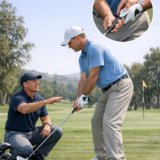
This article synthesizes biomechanical principles, motor-learning research, and applied coaching methods to present a concise, evidence-based framework for beginners seeking reliable swing mechanics, effective putting, and controlled driving. Emphasizing reproducible movement patterns and measurable outcomes, the text translates theory into practical drills, assessment protocols, and progression criteria so learners can track enhancement objectively rather than relying on subjective impressions. The central aim is to foster repeatable technique, efficient energy transfer, and strategic on-course decision making that together reduce score variability.
Content is organized to support systematic growth: an initial diagnostic stage identifies key kinematic and kinetic deficits; targeted, level-specific drills remediate those deficits using principles of deliberate practice, variability of practice, and augmented feedback; and performance metrics-such as clubhead speed, smash factor, launch angle and dispersion for drives, impact face alignment and swing path for iron play, and stroke length, tempo and lag distance for putting-provide clear benchmarks for progression. the final sections integrate technique with course strategy and pre-shot routines to ensure technical gains transfer to lower scores under realistic conditions.
Fundamental Biomechanics of the Golf Swing: Posture, Alignment, and Kinematic Sequence with Practice Protocols
Begin with a reproducible setup that unifies posture, alignment and equipment so the swing can be biomechanically efficient. At address adopt neutral spine tilt of approximately 20-30° from vertical with knee flex ~15-20° and a shoulder plane that is tilted slightly left (for right-handed players) so the lead shoulder is lower than the trail shoulder; this promotes a shallow angle of attack and consistent strike. Place the ball relative to stance by club type: driver: just inside the left heel, mid/long irons: forward of center, short irons/wedges: center to back of center-these positions control launch angle and spin. Equipment choices matter: use a shaft length, flex and loft that place the hands and lead wrist in a neutral position at address (avoid excessive forward or cupped wrists). For beginners, emphasize small, repeatable checkpoints rather than fixation on mechanics: feet shoulder-width for mid-irons, a slightly wider stance for driving, and 50/50 weight distribution at setup to allow an athletic coil. Remember the Rules of Golf when practicing on-course: tee the ball within the teeing area and play it as it lies off the tee, but you may take practice swings that do not improve your lie.
Progress the setup into a coordinated kinematic sequence that transfers energy from ground to clubhead: pelvis → torso → arms → club. In practice, aim for hip rotation ~45° and shoulder turn ~90° on a full swing while maintaining the spine angle; the hips should begin the downswing to create a separation (X-factor) that produces speed without casting. To develop this sequence, use targeted drills and measurable protocols:
- Step-and-swing drill: step toward the target during transition to feel proper weight shift to ~60% front foot at impact.
- Towel-under-arm drill: keep a towel under both armpits for 10-20 swings to promote connection and reduce independent arm action that causes casting.
- Pause-at-top video check: record at 240 fps and measure shoulder turn and wrist set; goal is consistent top-of-swing position within ±10°.
- Impact bag or slow-motion impact drill: train a forward shaft lean and square clubface at impact; target forward shaft lean of 5-10° with hands ahead of the ball for irons.
Use objective metrics where possible-launch monitor readings such as smash factor (>1.45 for driver is a good target for many skilled players), spin rates, and dispersion (target under 20 yards for approach clubs) provide measurable improvement. Correct common faults explicitly: if early extension occurs, strengthen posterior chain with hip-hinge drills and practice maintaining the spine angle against a wall; if casting occurs, use the towel drill and short swing repetitions to feel delayed release.
translate biomechanical proficiency into short game success and course strategy by integrating distance control, shot selection, and mental routines. For putting and chipping maintain stable lower body and minimal spine tilt change; employ the gate drill for putting to ensure a square face through impact and use the clock-face distance control drill for lob and pitch shots to calibrate loft and bounce in different turf conditions. When facing on-course variables-wind, wet fairways, or tight tree lines-adjust setup and the kinematic emphasis: in strong headwinds reduce shoulder turn and play a lower-lofted club with less spin; in soft conditions allow a slightly steeper descent angle to hold greens. Practice sessions should be purposeful and time-boxed:
- Warm-up (10-15 minutes): mobility, short swings, and progressive full swings.
- Technical block (20-30 minutes): focused drills from the list above with measurable targets (e.g., 80% of shots within 15 yards of dispersion target).
- Situational play (15-25 minutes): simulated holes where you must choose conservative vs. aggressive strategies under time or score constraints.
Additionally, address the mental game by rehearsing a concise pre-shot routine and performance cues (for example “coil, clear, release”) to automate the kinematic sequence under pressure. These combined technical, tactical, and psychological protocols create repeatable mechanics that lower scores and increase consistency for beginners through low handicappers.
Swing Plane and Clubface Control: evidence Based drills to Improve Path and Impact
Begin with a biomechanical framing of the swing: the clubshaft should travel on a plane that is a function of your address shaft angle and shoulder tilt, and the clubface orientation at impact determines initial direction more than path alone. Therefore, establish consistent setup fundamentals-stance width roughly shoulder-width for mid-irons, ball position one ball forward of center for a 7‑iron and progressively more forward for long clubs, and a spine tilt that produces a shoulder plane approximately parallel to the intended shaft plane. From a technical perspective, target an attack angle of +1° to +4° with the driver (to optimize launch and reduce spin) and a slightly downward attack for irons, typically -2° to -6° depending on club length and loft. concurrently monitor face‑to‑path on a launch monitor; for neutral,high‑percentage shots aim for face‑to‑path within ±1-2°. Inaccessible metrics can be approximated visually: an “over‑the‑top” swing usually produces an out‑to‑in path and an open face at impact, while early release / flipping causes a closed face or heel strike-both reduce control and increase dispersion. Consequently, the teaching emphasis should be on aligning shaft plane, maintaining lag, and returning a square face to the ball at impact rather than on isolated aesthetic positions.
Progress from fundamentals into targeted, evidence‑based drills that train both plane and face control; structure practice with measurable sets and feedback. Use the following practice drills with explicit targets and repetitions to build motor learning:
- Gate drill (short irons): place two tees just wider than the clubhead outside impact zone and make 3 sets of 10 swings, aiming for clean center‑face contact-goal: consistent center strikes and elimination of toe/heel misses.
- Plane rod / alignment board: set an alignment rod on the target line angled to the address shaft plane and make slow half‑swings to the rod to groove an on‑plane takeaway-goal: observe a repeatable wrist hinge at ~90° at the top on 8/10 swings.
- Impact bag & towel under armpits: 20 light impacts on the bag focusing on a square face and forward shaft lean; then 10 swings with a towel under both armpits to eliminate excessive wrist casting-goal: reduce early release and produce compressed turf on iron shots.
- Video + launch monitor routine: record 10 swings from down‑the‑line and face‑on, then compare face‑to‑path and attack angle on a launch monitor; set a progressive goal to bring face‑to‑path variability within ±2° over 4 weeks.
For beginners, simplify drills (use slow motion and fewer reps); for advanced players, add weighted clubs, tempo training with a metronome (3:1 backswing:downswing), or overspeed work to preserve plane under increased clubhead speed.
translate technical gains into course strategy and troubleshooting to improve scoring. First, integrate club selection and wind management-if the wind is into you, prioritize a more neutral or closed face with lower loft (or a longer club with controlled attack angle) to keep spin down; if playing into hazards, intentionally play a fade or draw by setting up slightly open/closed to the target and rehearsing the specific face‑to‑path combo on the range. Second, use a short checklist before each shot:
- Setup checkpoints: feet, ball position, spine tilt, shoulder alignment;
- Troubleshooting cues: if you slice, feel an inside takeaway and delayed wrist release; if you pull hook, check for early rolling of the forearms and over‑rotated shoulders;
- Course‑management rule: when risk is high, favor misses that leave a short recovery (e.g.,miss right of a left‑side water hazard).
Mentally, maintain a consistent pre‑shot routine and commit to a single visualized target line; this reduces late‑tempo changes that disturb face orientation. Set measurable improvement milestones-such as decreasing lateral dispersion by targeting a reduction in face‑to‑path variability to ±2° and tightening grouping to within 10 yards for mid‑irons within 8 weeks-and adapt drills for physical limitations (one‑arm or seated drills for restricted players). Through this integrated approach-setup, measured practice, on‑course strategy, and mental rehearsal-golfers of all levels can convert better swing plane and clubface control into lower scores and more consistent shotmaking.
Developing Reliable Ball Striking: Weight Transfer, Tempo, and Measurable Progress Metrics
Begin with the fundamentals of stance and weight distribution: at address adopt a balanced posture with approximately 50/50 weight distribution and a shoulder tilt that matches the intended shot; this establishes a stable base for consistent contact. Then rehearse a controlled shift so that at the top of the backswing roughly 60% of weight rests on the trail leg, and by impact weight has moved to 70-80% on the lead leg-these values yield proper compression and a descending blow with irons. To make this tangible,use simple setup checkpoints and low-technology drills:
- Step-and-swing drill: take a small step with the lead foot on the transition to encourage weight shift; repeat for 10 reps to ingrain timing.
- Impact bag or towel under lead buttock: practice hitting into the bag/towel to feel forward weight at impact and a shallow hands-ahead shaft lean.
- Alignment-rod posture check: place a rod down your spine to ensure hip hinge and avoid early extension.
These checkpoints are accessible for beginners, while advanced players can quantify progress with impact tape, pressure mats, or a force-plate session to measure weight transfer percentages and strike location on the face.
Tempo functions as the rhythmical glue that ties weight transfer to repeatable contact; therefore, establish a consistent backswing-to-downswing ratio near 3:1 (for example, a 0.9-1.2 second backswing with a 0.3-0.4 second downswing for full swings). Use a metronome set to 60-72 BPM for tempo training-this helps players internalize a smooth transition without rushing the downswing.Address common faults and corrective progressions: casting (early release) is corrected with the short-arm punch drill and impact bag work, whereas early extension is addressed by hip-hinge holds and step-back reps to rebuild the gate between pelvis rotation and weight shift. For measurable targets, track these metrics over time:
- Clubhead speed: aim for incremental increases of 1-2 mph per month with strength and technique work.
- Strike consistency: reduce off-center hits to a 3-5 cm radius on impact tape for irons within 6-8 weeks.
- Shot dispersion: target a reduction in 25-50% of lateral dispersion on 7-iron shots through tempo and transfer drills.
Transition from slow, metronome-guided swings to on-course tempo simulations, practicing constrained swings (half, three-quarter, full) so tempo becomes adaptable to different shot distances and wind conditions.
integrate technique into course strategy and practice planning: design focused sessions of 30-45 minutes, three times per week, each with a warm-up, a primary drill block (e.g., weight-transfer emphasis), and a pressure simulation (target-based scoring over 9 balls). Adapt drills for physical limitations-seated or limited-rotation players can emphasize forward shaft lean and short-arm control to produce consistent strikes-while stronger athletes may add resisted swings or medicine-ball rotational throws to enhance power without compromising tempo.Consider equipment variables during fitting: shaft flex, lie angle, and clubhead mass affect timing and must match your transfer pattern; remember the rules of Golf limit rounds to 14 clubs, so select a set that complements your preferred shot shapes and yardages. Monitor progress with objective measures such as strokes-gained practice,fairways hit percentage,average proximity to hole,and launch monitor outputs (ball speed,launch angle,spin rate),and convert those numbers into actionable goals-e.g., improve strokes gained: approach by 0.2 over 12 weeks or decrease average approach dispersion by 10 yards. In pressure situations, pair technical cues with mental routines: use a pre-shot breathing cycle and a visualized swing tempo to preserve weight transfer mechanics under stress, ensuring that improved ball striking translates directly to lower scores and smarter course management.
Precision Putting Mechanics: green Reading, Stroke Geometry, and Distance Control Exercises
Develop an accurate read by integrating slope, grain, and green speed into a single, repeatable process. Start by establishing the likely fall line visually from multiple vantage points: directly behind the ball, alongside the putt at knee height, and from the low side of the line; this triangulation reduces bias and improves consistency. Use the plumb‑bob technique (aligning the putter shaft vertically to estimate the fall line) and confirm by watching how other balls or pitch marks have run to assess grain direction-grain can add or subtract significant break, especially on bermudagrass and ryegrass. Because green speed (Stimp) alters break magnitude, calibrate reads on practice greens at known stimp values: such as, on a Stimp 10-11 green a slight 1% slope can change a 10‑foot putt by perceptible inches; therefore, adjust aim proportionally and expect greater curvature on faster surfaces. apply the rules of Golf responsibly: repairing pitch marks and removing loose impediments is permitted, but avoid testing the surface in ways that unduly delay play or seek an unfair advantage; instead rely on observation and pre‑shot routine to commit to a line.
Refine stroke geometry with a focus on face control, path, and dynamic loft to produce predictable roll. Set up with a stable lower body, eyes slightly left of the ball for right‑handed players (or right for left‑handed), and the ball positioned center to slightly forward of center depending on putter loft. Maintain a pendulum action from the shoulders with minimal wrist hinge so that face angle at impact is the primary determinant of direction; strive for face alignment within ±1-2° at impact. The putter’s static loft (typically 3-4°) and the dynamic loft at impact govern skid and roll‑out-more loft increases initial skid on firm greens, while too little loft can result in bouncing on softer surfaces. Use targeted drills to ingrain the geometry and tempo:
- Mirror alignment drill to ensure eyes, shoulders, and putter face are square;
- Gate drill (two tees) to stabilize the path and reduce inside‑out or outside‑in arcs;
- Tempo metronome drill (e.g., 60 bpm cadence) to synchronize backswing and follow‑through.
These exercises benefit beginners by teaching repeatable setup checkpoints and help low handicappers refine micro‑adjustments in face control and arc.
Develop distance control through structured, measurable practice and course‑management strategies that reduce three‑putts and create scoring opportunities.establish progressive drills such as the ladder drill (putts from 3, 6, 9, 12 feet aiming to leave the ball within a 3‑foot circle), and the long‑lag drill (from 20-40 feet, goal: inside 3 feet at least 80% of attempts), with sessions focused on single variable changes-stroke length, backswing percentage, or rhythm-so progress is quantifiable.On course, adopt a conservative read for second‑shots into fast or crowned greens: target a specific side of the hole to give yourself an uphill or straight return putt rather than chasing a risky direct line. Account for environmental factors-wind can strip speed from a putt on exposed greens, and uphill/downhill changes alter required pace by roughly 10-20% for every significant grade change-so adjust stroke length and follow‑through accordingly. address common faults and mental procedures: correct gripping too tightly by maintaining a 2-3/10 tension and use a consistent pre‑putt routine under 10 seconds to commit to the line; these habits reduce indecision and translate technical improvements into lower scores across all skill levels.
Driving for Distance and Accuracy: Launch Conditions, Clubhead Speed Training, and Injury prevention
First, establish consistent launch conditions through a reproducible setup and equipment fit that match your swing. Begin with ball position placed just inside the front heel for a right-handed driver (mirror for left-handed), and a tee height that sets the ball approximately ½ ball above the crown (roughly 1.5-2.0 in) so the strike is on the upper face to maximize launch.Adjust driver loft according to measured swing speed and desired launch: as a guideline, players with clubhead speed >105 mph often benefit from 8°-10° loft, mid-speed players (90-105 mph) from 10°-12°, and slower-speed players from 12°-14°, but confirm with a launch monitor. Aim for an optimal launch angle of ~10°-15° with a driver and a spin rate near 2000-3000 rpm (higher for slower swing speeds); use a neutral-to-slightly-positive attack angle (+1° to +4°) to increase launch and reduce spin. To check setup and impact variables,use these simple checkpoints and drills:
- Setup checkpoints: square face with target line,shoulders parallel to target,weight slightly favoring lead side (~55%),ball forward in stance.
- Alignment drill: two alignment sticks-one for feet/shoulders,one pointing at target to train face and body alignment.
- impact awareness: tee drill-lower tee gradually to learn center-to-upper-face contact and verify consistent launch angle on a launch monitor.
These fundamentals reduce dispersion and create the launch window needed for both long drives and manageable approaches into greens, improving scoring opportunities when combined with accurate club selection under the Rules of Golf (use conforming equipment as defined by the USGA/R&A).
Next, develop clubhead speed through evidence-based biomechanical training and targeted practice routines that respect sequencing and tempo. Efficient speed gains come from improving the kinematic sequence-initiate with the pelvis (hips), then rotate the torso, then accelerate the arms and club-rather than trying to “swing harder” with the hands. For measurable progression set short-term goals such as +3-5 mph clubhead speed in 8-12 weeks using a combination of the following drills and exercises:
- Step-through drill (slow backswing to full explosive downswing) to train weight transfer and hip lead.
- Medicine-ball rotational throws (3 sets of 8-10) to develop explosive torso rotation and transfer power to the upper body.
- Overspeed training with lighter clubs and controlled progression-limit to 1-2 sessions per week and always follow with full-rest days to avoid overload.
- Weighted club swings or resistance band accelerations performed with professional oversight; emphasize mechanics over raw force to preserve sequencing.
- Tempo metronome drill (approximate backswing:downswing ratio of 3:1) to maintain repeatable timing and avoid casting or early release.
Use a launch monitor to track clubhead speed, ball speed, smash factor, launch angle, and spin rate so practice remains objective; target a smash factor near 1.45-1.50 for efficient energy transfer. Correct common faults such as casting (early wrist release) by drilling with a towel or training aid under the lead armpit to retain lag and improve impact conditions.
prioritize injury prevention and integrate driving strategy into overall course management to convert distance gains into lower scores. Begin every practice or round with a 10-15 minute dynamic warm-up emphasizing thoracic mobility, hip hinges, glute activation, and light cardio; include band rotations, lunges with rotation, and shoulder band work. To reduce overuse injuries,limit high-intensity speed sessions to 2 per week,program progressive loading (increase intensity no more than 10% per week),and maintain restorative practices (foam rolling,targeted mobility). On the course, translate increased distance into strategic advantage by assessing lie, wind, and hole position-when facing narrow fairways or firm conditions, favor accuracy and selective driver use (e.g.,3-wood or long iron) to avoid penal rough or hazards; conversely,on soft courses or downwind holes,use your driver to shorten approach shots. Common real-course corrections include:
- If misses are predominantly to the right, check face angle at setup and ensure weight shift through impact; practice half-swings focusing on square face contact.
- In firm/tight fairways, reduce loft or tee lower to keep ball flight penetrating and prevent ballooning in wind.
- For beginners, emphasize conservative tee strategy-aim for the fat part of the fairway and prioritize two good scoring clubs into the green.
Mentally, adopt a pre-shot routine that includes a clear intended landing area, a committed swing thought (e.g., “smooth acceleration”), and a breathing pattern to control arousal; this links technical improvements to consistent on-course performance and measurable score reduction over time.
Integrating the short Game: Chipping, Pitching, and Recovery Shot techniques to lower Scores
Begin by establishing consistent setup fundamentals that separate effective chipping from pitching: weight forward (60-70% on lead foot), ball position slightly back of center for chips and at center-to-front for pitches, and a
- Setup checkpoints: narrow stance, hands slightly ahead, clubshaft leaning toward target, eyes just inside ball line.
- Contact focus: aim to hit the ground 1-2″ after a chip and slightly before the ball for pitches to create a crisp divot.
Transition from technique to practice by implementing a measurable drill: place a towel 12-18″ past a 20‑yard target and perform 30 chips/pitches, aiming to land the ball on the target and the divot just past it; track percentage within a 5‑foot circle and progress to an 80% target within four weeks. This establishes repeatable mechanics for up-and-down situations near the green.
Club selection and bounce management are critical when shaping short game shots and executing recovery plays. Use a lower‑lofted iron (e.g., 7-9 iron) or chipper for tight, firmer lies to keep the ball low and rolling; select higher lofts (PW, 52°, 56°, 60°) with appropriate bounce for soft turf and sand. For example, a 56° wedge with 10°+ bounce is preferable in soft sand to skim rather than dig, whereas a 46-50° wedge with low bounce works best on tight lies. When recovering from deep rough or an uneven stance,adopt a wider stance,open the clubface slightly,accelerate through impact,and allow the loft to lift the ball-this reduces the chance of catching the ball fat or thin. Practice drills to internalize these variations include:
- Landing‑zone ladder: place targets at 5, 10, 15, and 20 yards and hit 10 balls to each, adjusting club selection and swing length.
- Bounce awareness drill: hit 10 shots from a tight mat and 10 from soft sand with two different wedges to feel how bounce changes interaction.
- Recovery simulation: play 9 holes remotely: intentionally leave three approach shots short in various lies and practice the appropriate recovery option (play as lies, take relief) to learn rules and feel.
Additionally, be aware of the Rules of Golf when choosing recovery strategy: if the ball lies in a penalty area or an unplayable position, consider stroke‑and‑distance or the available relief options with a one‑stroke penalty to optimize score rather than forcing a low‑percentage shot.
integrate technical proficiency into course management and a consistent practice schedule to lower scores.Before each shot, use a two‑part pre‑shot routine-visualize the landing spot and commit to a specific swing length-followed by a physical rehearsal swing. For measurable improvement, set a practice goal such as converting 70% of up‑and‑down opportunities from inside 30 yards within six weeks and structure weekly sessions around a 70/30 split of on‑course simulation and targeted range drills. Tactical considerations include playing the percentage shot when 6-8 feet from the hole (chip to a specific slope reading rather than aiming directly at the hole), choosing conservative lines into greens with long rough or false fronts, and factoring wind and firmness into landing‑zone selection. Troubleshooting common mental and physical errors can be organized as follows:
- If you rush: lengthen the pre‑shot routine and practice metronome tempo drills.
- If you fat or thin shots: check ball position and forward shaft lean, then perform the towel‑divot drill to correct low point.
- If you are indecisive on club choice: rehearse decision‑making in practice rounds and default to the conservative option that minimizes three‑putt risk.
By combining mechanical precision, club and bounce awareness, targeted drills, and disciplined course strategy, golfers from beginners to low handicappers can reduce short‑game mistakes, increase up‑and‑down rates, and meaningfully lower scores.
Practice Design and Performance Assessment: Level Appropriate Drills, Quantitative Metrics, and Course Application
effective practice begins with a diagnostic baseline and level-appropriate objectives: perform a 30-shot assessment on range and short game to record fairways hit %, greens in regulation (GIR), proximity to hole (feet) and putts per round. From this baseline, set progressive, measurable goals (such as, improve GIR by 10 percentage points or reduce average proximity from 18 ft to 10 ft within 8 weeks). In designing drills, integrate equipment and setup fundamentals-check grip size and shaft flex for consistent release, verify loft and lie settings with a certified club fitter, and control grip pressure to 4-6/10 (firm but relaxed) to promote feel. Common setup mistakes include closed alignment, excessive forward shaft lean at address for short irons, and a tucked chin that restricts rotation; correct these by using alignment sticks and video feedback to ensure the spine angle and shoulder plane are neutral. For technical refinement, target specific numeric benchmarks such as attack angle +2° to +5° for driver tee shots and -2° to -6° for mid-irons, and practice with a launch monitor to track clubhead speed, launch angle, and spin rate so progress is objectively measurable.
Building on the fundamentals, short-game and putting practice should emphasize reproducible contact, pace control, and green-reading mechanics that translate directly to scoring. Begin close to the hole with the clock drill (12 balls at 3-6 ft) to build 90-95% holing consistency for beginners and progress to the ladder drill for distance control: place targets at 3 ft, 8 ft, 15 ft, and 25 ft and record make/leave distances until you reach repeatable outcomes (e.g., average leave 6 ft from a 25-ft putt). Use these unnumbered drills to structure practice sessions and troubleshoot common errors:
- Setup checkpoints: eyes over ball, shoulders parallel to target line, putter shaft lean 0-2° forward at address for better roll.
- Drills: gate drill for square-face contact, three-club drill for wedge distance control, bunker splash drill to maintain consistent entry point and use bounce effectively (wedge bounce 8-12° recommended in soft sand).
- Progression: hit 30 quality wedge shots from 40-80 yards with a target proximity goal (e.g., 70% within 15 yards then tighten to 70% within 10 yards).
Additionally, incorporate green speed awareness-measure the practice green with a stimpmeter when possible or estimate by observing ball roll on flat putts; adapt pace drills to typical course speeds (many municipal greens run 8-11 ft on the stimpmeter).
transfer practice gains to course performance through deliberate on-course simulation, strategic decision-making, and mental routines that mirror competitive conditions. Begin each hole with a rapid pre-shot plan: assess lie, wind, and hazards; select a target and preferred bailout; and commit to a shot-shape (fade/draw) based on risk-reward analysis. Remember the Rules framework when choosing recovery: if the ball lies in a penalty area, apply the options under Rule 17, and if the ball is unplayable, apply relief choices under Rule 19-these decisions affect strategy and scoring. Use quantifiable course-management metrics-strokes gained approach, scramble % around the green, and penalty strokes per round-to evaluate decisions after play, and structure 4-6 week cycles where one week emphasizes aggressive shot-shaping (practice controlled fades/draws with target dispersion ±10 yards) and the next prioritizes conservative play (maximizing GIR and minimizing penalties). integrate a simple mental routine: deep-breath inhale-exhale, visualization of the intended flight and landing, and a firm commitment to the chosen club; this reduces pre-shot indecision and improves execution under pressure, thereby converting practice improvements into lower scores across skill levels.
Q&A
Note on search results: the supplied web search results do not relate to golf instruction. The following Q&A is produced independently to meet the requested academic, professional style.
Q1: What are the foundational principles a beginner should understand before attempting to perfect swing, putting, and driving?
A1: foundational principles include posture (neutral spine), balance (centered weight distribution), grip consistency, alignment (feet, hips, shoulders parallel to target line), tempo (repeatable rhythm), and the goal of kinematic sequencing-proximal-to-distal energy transfer (pelvis → torso → arms → club). Understanding these principles frames technique, practice structure, and measurable improvement.Q2: How does biomechanical analysis inform improvements in the full swing?
A2: Biomechanical analysis quantifies joint angles, rotational velocities, and sequencing. It identifies inefficiencies (e.g., early arm lift, lack of pelvic rotation) and prescribes targeted interventions to improve clubhead speed, accuracy, and injury prevention. Evidence-based protocols use motion capture, video analysis, and force-plate data to produce drills that restore correct segmental timing and minimize compensatory movements.
Q3: What is the optimal grip for beginners, and how does grip influence swing outcomes?
A3: The optimal grip is one that allows control without tension: a neutral to slightly strong grip where the V formed by thumb and forefinger of each hand points between the right shoulder and chin (for a right-handed player).Grip affects clubface control at impact; excessive tension or extreme grip orientation predisposes to slices, hooks, or inconsistent face angles.
Q4: what constitutes a repeatable address and setup for consistent ball-striking?
A4: A repeatable setup includes: feet shoulder-width (varies by shot), slight knee flex, athletic weight over midfoot, spine tilt from hips maintaining neutral posture, relaxed arms hanging from shoulders, and consistent ball position relative to stance. Consistency in setup reduces variability at impact and improves repeatability.
Q5: Which swing sequence should beginners aim to achieve?
A5: Beginners should aim for a proximal-to-distal sequence: initiate backswing with lower-body rotation and weight shift, create width and coil through torso rotation, and during transition drive the hips toward the target to initiate downswing, allowing the torso and arms to follow and the club to release through impact. This sequencing promotes efficient energy transfer and consistent contact.
Q6: What measurable metrics should be tracked for swing improvement?
A6: Key metrics: clubhead speed (mph or kph), ball speed, smash factor (ball speed/clubhead speed), launch angle (degrees), spin rate (rpm), horizontal dispersion (yards/meters), and impact location on the clubface (face center or miss). Tracking these over time quantifies technical improvements and practice efficacy.
Q7: What drills are evidence-based for improving swing sequencing and tempo?
A7: Effective drills:
– Pause-at-top drill: pause 1-2 seconds at the top to improve transition sequencing.
– Step drill: step forward into downswing to promote weight shift and hip initiation.
– Slow-to-fast ladder: perform swings at progressively increasing speeds to ingrain tempo.
Measure progress via dispersion and ball speed metrics.Q8: How should a beginner approach putting fundamentals?
A8: Putting fundamentals: eye line over or slightly inside the ball-to-hole line, minimal wrist action, pendulum-like shoulder stroke, consistent setup (same stance and ball position), and a pre-putt routine for focus. Stroke length and acceleration control distance; face angle at impact controls direction.
Q9: What are proven drills for distance control and stroke repeatability on the green?
A9: Drills:
– Gate drill for face alignment: set two tees slightly wider than the putter head and stroke through.
– Ladder/clock drill for distance control: place targets at incremental distances and aim for consistent one-putt rates.
– Two-putt challenge: practice holing long putts within an expected three-putt zone to reduce three-putt frequency.
Measure by percentage of putts holed within prescribed distance or strokes gained: putting.
Q10: How should beginners learn to read greens and regulate speed?
A10: Teach slope recognition (high-to-low, grain), use visualization to imagine the ball arc, and practice sampling speed with short lag putts to feel how far the ball rolls past the hole on misses. Encourage an aggressive, but controlled, lag-putt strategy: aim to leave missed putts within a makeable radius (e.g., 1-2 feet) rather than leaving long comebacks.
Q11: What are the mechanical and tactical considerations specific to driving off the tee?
A11: Mechanical: wider stance, ball positioned forward, full shoulder turn with maintained spine angle, and an emphasis on upward angle of attack for higher launch and lower spin (for most players).Tactical: prioritize fairway-staying probability over maximal distance when course design or hazards penalize misses. Club selection should reflect risk-reward and personal dispersion patterns.
Q12: What measurable driver parameters should players monitor?
A12: Monitor clubhead speed, ball speed, smash factor, launch angle, spin rate, and side spin/lean indicating shot curvature. Optimal ranges vary by athlete, but the goal is a high ball speed, appropriate launch (to maximize carry with controlled spin), and narrow lateral dispersion.
Q13: What drills improve driver consistency and reduce common faults (slice/hook)?
A13: Drills:
– Tee-height and up-the-line swing: ensures upward attack and centered impact.
– Impact tape/face-marker feedback: immediate confirmation of center strikes.
– Alignment-stick path drill: align stick outside-to-in or inside-to-out depending on correction needed to train correct club path.
Combine with video feedback and launch monitor data to validate improvements.
Q14: How should practice be structured across skill levels (beginner → intermediate → advanced)?
A14: Progressive structure:
– Beginner: 60% fundamentals (grip, posture, alignment), 30% short game (putting/chipping), 10% long game. Emphasize motor learning with slow,deliberate repetition and immediate feedback.
– Intermediate: 40% technical refinement/short game, 40% situational practice (course-like scenarios), 20% physical conditioning and shot-shaping.
– Advanced: 30% technical tuning, 50% course strategy/simulation, 20% physical and mental performance, with data-guided adjustments.
Use measurable benchmarks for progression (e.g.,fairways hit %,greens in regulation,putts per round,clubhead speed targets).
Q15: How can course-strategy integration improve scoring for beginners?
A15: Course strategy aligns shot selection with individual strengths and dispersion patterns. Key principles: play to pleasant distances, avoid high-risk hazards, choose clubs that leave preferred approach distances, and adopt conservative aggressive play-take calculated risks when potential reward outweighs likely penalty. Teaching decision-making reduces penalty strokes even without raw distance improvements.
Q16: What role does fitness and mobility play in optimizing swing, putting, and driving?
A16: Physical attributes-core stability, hip and thoracic mobility, ankle/hip strength, and shoulder mobility-directly influence rotation, balance, and the ability to generate and transfer power safely. A targeted conditioning program reduces injury risk and supports repeatable mechanics, especially for driving where rotational power and hip sequencing are critical.
Q17: How should progress be assessed objectively over time?
A17: Use a combination of quantitative (launch monitor data, shot dispersion, strokes gained/SG metrics, putts per round) and qualitative (video analysis of kinematic sequence, pain/fatigue reports) measures. Establish baseline metrics, set specific goals (e.g., +2 mph clubhead speed, reduce putts per round by 1), and reassess at regular intervals (4-8 weeks).
Q18: What common technical faults should coaches prioritize for correction in beginners?
A18: Priorities: excessive tension/grip pressure,loss of posture/spine angle,poor weight transfer (linear rather of rotational),early extension,inconsistent ball position,and poor alignment. Address faults with simple, repeatable drills and objective feedback to prevent compensatory patterns.
Q19: Are there evidence-based practice routines that maximize learning efficiency?
A19: Yes-distributed practice (shorter, frequent sessions) and contextual interference (varying tasks/targets) enhance retention and transfer to on-course performance. Incorporate deliberate practice principles: focused repetition, immediate feedback (video, launch monitor), goal setting, and variability in practice to simulate actual play.
Q20: What immediate recommendations should a beginner implement this week to see measurable improvement?
A20: Practical 7-day plan:
– Day 1-2: fundamentals and setup drills (15-20 min), short game (30 min).
– Day 3: Putting distance-control ladder (30 min) + 30 minutes of tempo swings with 7-iron.
– Day 4: Rest/fitness session focused on mobility and core.
– Day 5: Driving session with alignment/power drills and launch monitor checks (if available).
– Day 6: On-course 9-hole play with strategic focus (club selection, conservative targets).
– Day 7: review metrics (dispersion, putts per hole), video assessment, set 2-week goals.
Track clubhead speed, dispersion, and putts per round as primary benchmarks.
Closing note: For best results, combine biomechanical feedback (video or sensor-based), evidence-based practice design, level-appropriate drills, and course strategy coaching. Regular objective measurement and incremental goals will produce sustainable improvement in swing, putting, and driving.
Note: the supplied web search results did not contain golf-related sources; the following outro is composed from the article context.
mastering the fundamentals of swing mechanics, putting technique, and driving strategy is best achieved through a structured, evidence‑based approach that links objective measurement to level‑appropriate practice. Beginners should prioritize reproducible setup and tempo, a repeatable putting routine, and efficient sequencing for driving power, while using quantifiable metrics and targeted drills to monitor progress. Regular biomechanical assessment, coach‑mediated feedback, and integration of course‑strategy situations will accelerate transfer from practice to play and produce more consistent scoring outcomes. Adopting these principles within a deliberate, progressive training plan enables sustained skill development and measurable improvement on the course.