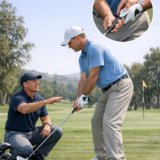
Master swing,putting,and driving through a structured,evidence-informed system that combines biomechanical insight,measurable performance indicators,and smart on-course decision-making. This piece distills contemporary research and applied coaching methods into advanced lessons focused on the kinematic and kinetic drivers of the full swing,the sensorimotor control of putting,and the trade-offs between power and precision in the drive. By linking technique to quantifiable outcomes, the framework emphasizes repeatability, objective feedback, and progressive overload scaled to the player’s capacity.
Using biomechanical simulations, motion‑capture studies, and validated training protocols, we provide level-appropriate drills, assessment criteria, and intervention sequences aimed at improving consistency and lowering scores across diverse course conditions.We also explain how technical adjustments interact with club choice, course strategy, and situational judgment so practice improvements reliably convert into better scoring. Designed for coaches, advanced amateurs, and applied researchers, the guide offers a practical, research-backed roadmap for elevating swing, putting, and driving performance.
biomechanical Foundations of an efficient Golf Swing: Kinetic chain Optimization and Injury Prevention
Power and control start with a well‑timed kinetic chain that transmits force from the ground to the clubhead: feet → legs → pelvis → thorax → arms → hands → club. Train to produce a consistent sequence in which the lower body initiates rotation and the torso and arms follow; this proximal‑to‑distal sequence maximizes energy transfer and helps limit excessive lumbar loading. Practically, many full swings benefit from a shoulder rotation near 90° paired with a hip rotation of roughly 40-50°, yielding an X‑factor (shoulder minus hip) commonly between 20-40°. Greater separation can boost ball speed but raises injury risk when mobility or motor control are lacking.To develop separation and timing, incorporate drills that emphasize pelvic initiation and thoracic dissociation:
- step drill: take a small step with the lead foot during the backswing, then plant on the downswing to encourage hip-led initiation.
- Pelvic clock: rotate the pelvis in small clockwise and counterclockwise motions to feel the hips lead the sequence.
- Rotational medicine‑ball throws: 3 sets of 6-8 throws to train explosive proximal‑to‑distal action.
These practices help players from novices to low-handicappers build a dependable movement pattern while reducing compensations that frequently enough cause pain.
Address and setup establish the geometric baseline for a stable, repeatable swing. Maintain an athletic posture with a spine angle of about 20-30° forward tilt, roughly 10-15° of knee flex, and stance width approximately shoulder width for irons and around 1.25-1.5× shoulder width for the driver to permit rotation. Ball position should match the club: driver: 1.5-2 ball widths inside the lead heel; irons: central to slightly forward; wedges: slightly back of center. Select shaft flex and length appropriate for your swing speed and release pattern to avoid late release or casting. use a short pre-shot checklist to reduce variability:
- Alignment sticks: confirm feet, hips, and shoulders are parallel to the intended line.
- Grip pressure: aim for roughly 4-6/10 to permit natural forearm release.
- Ball position and posture: verify ball placement relative to stance and preserve spine angle through the motion.
Consistent setup habits feed a coordinated kinetic chain that promotes dependable contact and predictable shot shapes.
Timing, swing plane, and tempo govern how much accuracy and distance you achieve. A common target is a backswing-to-downswing tempo near a 3:1 ratio (three-count backswing, one-count downswing) for many players, with weight shifting from approximately 50/50 at address to 60/40 at the top and 70-80% on the lead foot at impact to encourage compression. Frequent faults-early extension (vertical hip rise), casting (premature wrist release), and reverse pivot-raise lumbar stress and compromise ball-first contact. Corrective drills include:
- Impact-bag drill: trains a forward shaft lean and discourages scooping at impact.
- Pause‑at‑top drill: a 1-2 second hold to re‑establish sequencing before initiating the downswing.
- Alignment‑stick plane drill: reinforces an on‑plane takeaway and consistent arc.
Create measurable practice targets-for instance, narrow dispersion by 10-20 yards, raise average clubhead speed by 3-5% over 8-12 weeks, or locate impact on the face within a 1-2 cm window-using launch monitor feedback when available.
The short game and intelligent course tactics turn biomechanical improvements into lower scores. For chip and pitch shots adopt a slightly forward setup with 60-70% of weight on the lead foot, hands ahead of the ball, and limited wrist hinge for bump‑and‑run shots; for higher-trajectory lob shots use greater wrist hinge and an open face while letting the club’s bounce work in bunkers to prevent digging. Match technical choices to context: aim for the widest part of the green into a stiff wind, lay up short of hazards to protect pars, and use alignment to play the slope for safer two‑putt strategies. Useful practice drills include:
- Landing‑zone drill: designate a landing circle (3-5 yards) and practise landing shots inside it from various distances.
- Bunker rhythm drill: aim to enter the sand 1-2 inches behind the ball to utilize bounce.
- Putting distance ladder: three balls to 5, 10, and 15 feet to improve speed control.
Always follow the Rules of Golf in play: play the ball as it lies and avoid grounding the club where prohibited (e.g., in bunkers or certain penalty areas), as those regulations effect pre‑shot decisions and routines.
Injury prevention and physical preparation are integral to long‑term performance.Address mobility limitations (thoracic rotation around 45-60°, hip internal/external rotation about 20-40°) and strength imbalances through a structured plan: dynamic warm‑ups (leg swings, torso rotations, band pull‑aparts), mobility drills (thoracic foam‑roll extensions, hip controlled articular rotations), and targeted strength work (glute bridges 3×12, single‑leg romanian deadlifts 3×8 per side, Pallof presses 3×10 to increase anti‑rotation capacity). Include sport‑specific conditioning such as medicine‑ball rotational throws (3×6-8) and resisted band chops to develop explosive rotation while protecting the lower back. Monitor symptoms-if rotational pain or nerve symptoms arise, reduce load, consult a medical professional, and prioritize rehab. For weekly planning, aim for 3-5 focused sessions per week, with at least two movement-quality sessions (30-45 minutes) and one session devoted to on‑course scenarios and short‑game simulations. Combining precise movement, purposeful practice, and sensible conditioning helps golfers at every level perform better while lowering injury risk and turning technical gains into fewer strokes.
Quantitative assessment of Swing Consistency: Launch Monitor Metrics, Motion Capture Variables, and Target Thresholds
Implementing a quantitative approach starts with consistent measurement conditions and a clear set of variables: clubhead speed, ball speed, launch angle, spin rate, smash factor, attack angle, club path, face‑to‑path, and kinematic sequencing timings. Following basic quantitative principles-standardized protocols, adequate sample size, and repeatability-collect an initial baseline of at least 30 swings per club in comparable conditions (identical tee height, indoor bay or calm outdoor window, same ball model). Calibrate launch monitors and motion‑capture systems beforehand and log ambient factors (temperature, altitude, wind) since they influence ball flight. For tracking change, compute mean, standard deviation, and the coefficient of variation (CV); a declining CV reflects improved consistency and should be prioritized alongside distance and dispersion measures.
Launch monitor metrics can be mapped to on‑course targets when interpreted by skill level. Practical driver benchmarks include: clubhead speed – approximate ranges for many players (beginners ~80-95 mph, intermediates ~95-105 mph, low‑handicappers ~105-120+ mph); launch angle – typically 10-14°; spin rate – roughly 1800-3000 rpm depending on speed and technique; and smash factor – aim for about 1.35-1.50. To influence a specific metric, use focused drills and feedback: improve smash factor with impact‑bag work to feel compression; alter attack angle by changing tee height and weight‑transfer timing; and lower spin through reduced loft or more forward shaft lean at impact. Organize practice with targeted drills and checkpoints:
- Impact‑bag drill: short swings to develop a stable forward shaft lean and compress the bag-goal: smash factor consistent within ±0.02 of baseline.
- Tee‑height ladder: experiment with tee heights to identify the launch that maximizes carry for your speed.
- Step‑through drill: trains a positive attack angle via forward weight transfer-do sets of 10 with video review.
- Metronome tempo sets: reinforce a 3:1 backswing:downswing tempo and target clubhead speed SD around ±2 mph.
Motion capture uncovers the kinematic sources behind launch outcomes and should be reviewed alongside ball‑flight data. Track key rotations and timing: pelvic rotation (targets frequently enough ~45-60°), shoulder turn (~80-120° depending on mobility), X‑factor (~20-40°), wrist hinge/lag at the top, and peak segmental velocities order (hips → torso → arms → club). Use isolation drills-medicine‑ball rotational throws for separation, hanging towel to retain lag, and slow 3/4 swings for timing. Address errors with specific fixes: early hip clearing (use half‑swings emphasizing shoulder coil),reverse pivot (weight‑shift drills),and casting (impact bag and towel‑under‑arm to maintain connection). Set objective progression criteria-for example,reduce face‑to‑path variability to ±2° and pelvis rotation SD to ±5° before advancing.
To turn lab gains into lower scores, establish thresholds aligned to course strategy and use repeatability statistics as decision criteria. In tight or firm conditions target stricter launch windows: carry distance deviation ±10 yards, lateral dispersion within ±6 yards, and face‑to‑path within ±2-3°. In windy or soft conditions prioritize reduced spin and slightly higher launch-adjust spin targets downward and raise launch by 1-2° as needed. Alternate technical, data‑driven blocks (20-30 swings focused on one metric) with scenario practice (9‑hole challenges requiring adherence to measured dispersion and distance goals). Sample scenario drills include:
- Wind management drill: hit 10 shots into a sidewind, tweak ball position and club choice to keep the landing zone within a 15‑yard window.
- Pressure funnel: play 9 holes where any tee shot outside a pre‑defined funnel (based on measured dispersion) incurs a practice penalty; log compliance rate.
- Mixed‑club blocks: 5‑shot sequences per club aimed at maintaining launch and spin thresholds rather than raw distance.
equipment, setup routines, short‑game links, and mental approaches must align with quantitative goals for lasting scoring improvement. If launch/spin values consistently miss targets-e.g., excessive spin at moderate to high speeds-consult a club fitter about shaft stiffness or loft. Before any measured session, confirm neutral grip, correct ball position for the selected club, and a stable spine angle.Quantify short‑game work too: measure putter launch, roll characteristics, and backswing length to produce repeatable distance control (for example, 6-10 ft lag putts with SD of distance near ±0.5 ft). cater to different learners with video feedback, kinesthetic drills, and numeric charts; scale drills by reducing swing speed or limiting range of motion. Emphasize incremental, measurable objectives and a feedback loop where data guides technique adjustments that are then validated by additional measurement and on‑course outcomes-this disciplined cycle produces genuine, sustainable scoring gains.
Advanced Putting Mechanics and Read Processing: Stroke path, Loft Management, and Progressive Drills
Build a repeatable address that stabilizes loft, face alignment, and stroke plane: start with a square putter face, eyes positioned over or slightly inside the ball, and a stance shoulder‑width or a touch narrower to permit free shoulder motion. Place the ball center to 1 inch forward of center depending on whether you favor a straight‑back‑straight‑through path (center) or a slight arc (a bit forward).Set a small shaft lean at address to manage dynamic loft-many modern flat‑soled putters have a static loft of 3°-4°, and you should aim for dynamic loft at impact of roughly 2°-5° to encourage early roll.Pre‑putt checkpoints: shaft lean, eye line to target, balanced toe/heel pressure, and consistent, light grip pressure that avoids wrist manipulation.
Target stroke path and face rotation with concrete tolerances: distance and line derive from the combined effects of path and face rotation.For near‑straight strokes,aim for a path close to zero and minimal face rotation; for arcing strokes accept a small inside‑to‑square‑to‑inside path of 0°-3° with face rotation controlled to about 2°-4° on longer putts and under 3° on short ones. Use a tempo rule near 3:1 backswing to follow‑through (scaled to distance) and maintain even acceleration into impact rather than decelerating or “flipping.” Note that anchoring is prohibited under the Rules of Golf-so concentrate on a shoulder‑driven,free‑arm motion and minimize wrist hinge for players with limited mobility.
Control loft and contact to turn initial skid into true roll quickly: a well‑executed putt typically shifts from initial skid to roll inside the first 12-24 inches on standard greens-this requires centered contact and controlled loft.Low‑face contact or excessive loft prolongs skid and hampers distance control; conversely, too little loft can cause bouncing on soft surfaces. Diagnose contact with impact tape or a slim felt strip and practice straight putts to confirm center‑face strikes; maintain a slight forward press at address to encourage leading‑edge contact. Adjust for green speed (Stimp): on slow greens (Stimp <9) lengthen the backswing and add acceleration; on fast greens (Stimp >10-11) shorten the arc and smooth the stroke to keep the ball on line.
Progressive drills develop technique and decision making; move from feel to pressure tasks. suggested progression:
- Beginner – Gate & Line: set two tees slightly wider than the putterhead and make 50 putts from 3-6 feet, keeping the head through the gate and converting 80% of attempts.
- Intermediate – Ladder distance control: from 6, 12, 18, and 24 feet hit five putts to each target and log leaves; aim to leave ≥70% within 3 feet from 12-24 ft.
- Advanced – Arc & face‑rotation feedback: use an alignment stick or mirror plus a launch monitor or face sticker to quantify path and rotation; work to reduce face rotation to <3° on 6-10 ft putts while retaining the intended arc.
Frame practice in 30-45 minute sessions: warm‑up (10 min), focused drill (15-20 min), pressure simulation (5-10 min). Track weekly metrics (make percentage,average leave distance) to monitor improvement.
Diagnose common faults, adapt to conditions, and integrate mental skills: frequent problems include lifting/scooping (raising dynamic loft), wrist flipping (excess face rotation), and inconsistent eye position (aiming errors). Practical fixes: lower the hands slightly to reduce loft, use a wrist tether or short practice putter to limit hinge, and adopt a consistent pre‑putt routine with two practice strokes to calibrate pace. Read greens by locating the fall line and testing with rolled balls from multiple angles; consider wind, grain, and moisture-wet or grain‑down conditions reduce roll and increase break. Accommodate different learning preferences with visual tools (alignment sticks, mirrors), kinesthetic methods (eyes‑closed strokes for tempo), and numeric feedback (launch monitors, smartphone video). Connect putting practice to scoring: target reducing three‑putts by improving lag control (leave <3 feet on >70% of lag attempts) and when unsure, prefer a conservative approach to an uphill birdie instead of risking a long, fast putt-ensuring technical gains translate to better scores.
Power Maximization in Driving: torque Generation, Ground Reaction Forces, and Sequencing Exercises
Generating rotational torque begins with a sound address and measurable turn parameters. Set a neutral posture with a spine tilt around 5-15° away from the target and position the ball just inside the lead heel for the driver; this facilitates shoulder‑to‑hip separation without encouraging early extension. Aim for controlled shoulder rotation of about 70-100° for many men (often slightly less for many women) and a hip turn of roughly 20-45°; an X‑factor training range of 20-45° is a practical, safety‑minded target for stored elastic energy. Use video or mirrors to measure top‑of‑backswing rotation and set incremental mobility goals (such as, add 5° of shoulder turn over 6-8 weeks) while watching for compensatory patterns or pain.
Ground reaction forces (GRF) translate rotational torque into linear clubhead speed. Train a braced lead side and an active trail‑side push-cue a drive off the trail foot at transition to shift vertical and lateral force into the target direction. Research and field measures frequently report peak downswing GRF near ~1.2-1.6× bodyweight, with optimal impact weight distribution around 60-70% on the lead foot.To practice this sequence, use exercises that isolate the push‑and‑brace action: force‑plate lateral pushes if available, or practical alternatives like resisted band pushes from the trail knee toward a midline braced position and timed step drills that coordinate the lateral step with downswing initiation. Fix common faults-early lateral slide or reverse pivot-by rehearsing a slow‑motion push into a balanced lead‑foot finish and using video or partner feedback to confirm the lead hip resists rather than collapses.
Maximizing power also depends on correct kinematic order: pelvis rotation peaks first, then thorax, then arms, and finally the clubhead-the pelvis → thorax → arms → club sequence creates the proximal‑to‑distal flow that generates top club speed and repeatability. Reinforce timing with these drills:
- Medicine‑ball rotational throws (chest passes and side throws) to emphasize pelvis initiation and rapid trunk‑to‑arm transfer-start with a 3-6 kg ball for beginners.
- Step‑through drill (compact backswing, initiate downswing by stepping toward the target) to ingrain ground push and pelvic lead.
- Impact‑bag or tee‑pull drill to curb casting and encourage a later, sustained wrist release.
Advanced players can add controlled overspeed tools or light weighted swings to refine timing; beginners should prioritize the unloaded pattern and a smooth 3:1 tempo before introducing additional load.
Structure sessions and choose equipment to support biomechanical aims.Start with mobility and activation (hip hinge, thoracic rotations, glute bridges) and progress from short‑to‑mid swings that emphasize sequencing to mid‑to‑long swings focused on GRF and impact, finishing with on‑course request. Key setup checkpoints:
- Stance width: roughly shoulder‑width to slightly wider for driver;
- Ball position: inside the lead heel;
- Shaft lean: minimal at address but permit forward lean at impact for a lower descent angle when required;
- Weight distribution: ~50/50 at address shifting to ~60-70% lead at impact.
Match equipment to biomechanics-select driver loft in the 8°-12° range and a shaft flex that yields consistent launch and spin for your speed; use launch monitor data to identify an optimal spin window. measurable practice aims might be a 3-6% increase in clubhead speed over 8-12 weeks or a set yardage improvement from baseline; track changes with a launch monitor or consistent range metrics.
Apply power selectively in play and adapt to course conditions. On narrow or firm fairways prioritize controlled trajectories (lower tee height, slightly forward ball position, shortened follow‑through) for roll and accuracy; on wide, soft courses maximize launch and loft for carry plus roll. Include scenario drills-crosswind and simulated pulling shots,target‑distance driving,and punch‑recoveries from high rough. Manage tempo and mental state with a concise pre‑shot routine and commitment to the intended shot shape; many players benefit from a consistent 3:1 backswing to downswing ratio and an in‑shot breathing cue to limit tension. Combining sequencing work,deliberate GRF training,and tactical on‑course practice enables golfers to increase power while preserving accuracy and improving scoring outcomes.
Level Specific Practice Plans and Drill Progressions: Structured Protocols for Amateur to Elite Development
Start with a clear baseline that turns practice into measurable progress: log clubhead speed (radar/launch monitor), carry distances for five representative clubs, left/right and distance dispersion patterns, greens‑in‑regulation (GIR) percentage, and average putts per hole. Use these data to set tiered objectives-for example,a beginner might seek to lift GIR from 20% to 35% in 12 weeks,while a single‑digit player could aim to cut three‑putts to under 0.8 per round and improve approach proximity to within 25 ft on 50% of shots. Re‑test every 4-6 weeks in consistent conditions (same balls, same tees, similar wind) so plans are individualized and outcomes‑driven rather than generic.
Advance swing mechanics progressively from setup basics to deliberate shot‑shaping with staged drills that promote reliable contact and plane control.Begin with setup fundamentals: correct ball position (driver ~1-1.5 in inside the left heel for RH players; mid‑stance for mid‑irons), spine tilt near 25-35° from vertical, grip strength suited to desired shot shape, and initial weight ~50/50 moving toward 60/40 at impact on full swings. Use these progressions:
- Alignment stick gate drill to prevent over‑swing and promote an on‑plane takeaway.
- Half‑to‑full swing progression (10 swings at 50%, 10 at 75%, 10 at full) emphasizing consistent low‑point.
- Impact bag reps to ingrain forward shaft lean and rotational impact.
Address common faults such as casting and over‑rotation by coaching a controlled wrist hinge (~90° at the top) and a stable left wrist through impact. Advanced players should program shot‑shaping blocks (fade/draw patterns) using face and path cues and verify outcomes with launch monitor metrics like spin and lateral dispersion.
Focus short‑game work on strokes‑gained impact with separate blocks for chipping, pitching, bunker play, and putting-each with clear, measurable goals. For chips and pitches prioritize hands ahead at impact (~5-10° shaft lean), select wedge bounce appropriately (roughly 8-12° for softer turf, lower bounce for tight lies), and employ these drills:
- Landing‑zone ladder: targets at 5, 10, 15 yards-play 30 balls and track percent landing inside the designated zone.
- Towel‑under‑armpits: encourages connected body motion and reduces arms‑only swings.
- Bunker routine: rehearse no‑grounding of the club in practice, open face setup, feet dug, and accelerating through the sand to a half finish.
For putting, use a clock drill for short converts (make 16/20 from 3-6 ft) and lag practice for longer control (aim to leave 75% inside 6 ft from 30-50 ft).These high‑repetition, quantifiable drills translate directly into lower scores when staged under pressure.
Integrate technical skills into course‑management practice to build better decisions under play. Teach assessment of hole layout, prevailing wind, and pin location; as a practical rule favor accuracy when a hazard lies within 1.5× your typical dispersion width. Practice on‑course scenarios: alternate‑tee positioning challenges, simulated bogey‑saves from recoveries, and using yardage tools to choose conservative clubs (add a club into a headwind, drop one in a tailwind-roughly 1 club per 10-15 mph adjustment). Drill trajectory control options-low punch (ball back, smaller arc, minimal hinge) and soft high shots (more loft, fuller hinge, slower tempo)-so choices become instinctive under pressure.
Adopt a periodized weekly plan and address mental elements for retention and transfer. A sample weekly layout might include: 2 technical range sessions (40-60 minutes each, focused on one swing element), 2 short‑game sessions (30-45 minutes with staged progressions), 1 on‑course practice round (nine holes with intentional shot planning), and 1 recovery/mobility session. Use blocked practice for rapid acquisition then shift to random practice for transfer, and add pressure tasks (scoring games, consequences for missed targets) to replicate tournament stress. Avoid overtraining full swings at the expense of variability-monitor load with simple metrics (daily RPE, weekly GIR trend) and include tempo cues (e.g., “smooth” for the backswing, “accelerate” through impact). This periodized, evidence‑informed approach connects technique, tactics, and mental readiness along a path from amateur development to elite preparation.
Evidence based Training Interventions and Periodization for Skill retention and Transfer
organize practice into deliberate cycles designed to foster retention and on‑course transfer. Plan a macrocycle for a season (e.g., 12-20 weeks) subdivided into mesocycles (4-6 weeks) and microcycles (7-14 days), and finish each mesocycle with an assessment day.Prescribe session lengths of 45-90 minutes depending on intensity and limit high‑quality, focused repetitions to roughly 150-300 meaningful swings per week to avoid motor fatigue and support consolidation. Incorporate spacing and sleep hygiene-allow 24-72 hours between high‑intensity technical sessions and prioritize nightly sleep-to enhance motor learning and retention. Use objective benchmarks (fairways hit %, GIR, up‑and‑down %) and launch monitor metrics to evaluate transfer from practice to performance; these measures form the evaluative backbone of a periodized plan and are consistent with modern evidence‑based coaching recommendations.
Apply motor‑learning principles when designing sessions so skills remain robust under pressure. Move from blocked practice during acquisition to random, variable practice in consolidation-contextual interference enhances transfer. Adopt a faded feedback approach: give immediate external feedback early (video, launch monitor data), then reduce frequency so athletes develop internal error detection. useful practice formats include:
- Random Target Series: 8-12 shots to varied targets using different clubs to induce variability and decision making.
- Bandwidth feedback: allow ±2-3 yards tolerance and offer correction only for out‑of‑band shots to promote self‑calibration.
- Constraint‑led games: play constrained tasks (e.g., nine holes with four clubs) to force adaptive club selection and trajectory control.
Set concrete targets-such as achieving 60-70% GIR proximity within 15 feet in practice rounds or halving three‑putts over a mesocycle-to make transfer measurable and evidence‑aligned.
Break technical refinement into address/setup,kinematic sequencing,and impact control with numeric targets. At address hold a spine angle around 20-30° and balanced 50/50 weight to enable repeatable rotation. For full swings, aim for shoulder turns near 80-100° for men and 70-90° for women-ranges that balance power with control. reiterate the kinematic sequence: hips initiate the downswing, torso follows, then arms, and finally the clubhead so peak club speed occurs just before contact. Use these drills and measurement tools:
- Slow‑motion kinematic swings: 8-10 slow reps concentrating on hip lead and delayed hand release.
- Impact bag/face tape checks: 10-20 reps to feel center‑face strikes and monitor low‑to‑mid impact points for irons.
- Launch monitor sessions: monitor key numbers (driver launch ~10-14°, spin 1800-3000 rpm, smash factor, carry dispersion) to inform objective goals.
Address faults like over‑the‑top (from premature lateral shift) and casting (early wrist uncocking) with targeted cues and a structured progression from half to full swings across a microcycle, documenting objective changes weekly.
The short game and putting require frequent, low‑variance practice emphasizing feel, distance control, and green reading across conditions to ensure transfer. For wedges, construct a gapping chart with 8-12 yard gaps and test on varied surfaces. Typical putting stroke arcs range 4-6° for moderate arcing styles-measure stroke length and tempo with a metronome to establish a repeatable pattern. Recommended routines include:
- ladder putting drill: balls at 3, 6, 9, 12 feet-advance only after making each distance; repeat 50-100 attempts under pressure conditions (miss = penalty).
- Clock chipping drill: from 3-6 yards around the hole, hit 36 balls (three per clock hour) to improve proximity and trajectory selection.
- Wedge distance series: 25-40 balls to targets at 20, 40, 60, 80 yards and record % within a 5‑yard radius to quantify progress.
correct short‑game faults such as excessive hand action (address with body‑led chipping) and inconsistent loft choice (use a club selection checklist) and practice in wind and varied green speeds to mimic course conditions.
Connect technical gains to course strategy and competition through simulation, mental rehearsal, and tactical periodization. Include on‑course simulation days in microcycles-e.g., play six holes with only three clubs or rehearse recovery shots from particular lies. Adjust club selection and shot shape for wind: into a headwind, lower loft and add a club while keeping a controlled half‑swing; for crosswinds, open stance and aim slightly upwind to let the ball curve back. Incorporate mental skills-pre‑shot routines, imagery, arousal control-as evidence supports improved transfer under pressure. Use technology (3D motion analysis, coaching platforms) to align biomechanical KPIs with scoring KPIs. If on‑course performance falters, recommended troubleshooting steps are:
- Recheck setup cues (stance width, ball position, spine angle) and perform 10 block swings to re‑establish feel.
- Return to a constrained drill (e.g., impact bag) for 5-10 minutes to reset contact patterns.
- Adopt a safer tactical option (play to the center of the green or add club into wind) and repeat a consistent pre‑shot routine.
By periodizing training, using variable practice, quantifying outcomes, and rehearsing decision making in real course contexts, golfers from beginners to low handicaps can achieve measurable improvements that transfer into lower scores.
Course Management Integration and Decision Making Under Pressure: Strategic Shot Selection and Risk control
Sound decision making starts with a systematic pre‑shot details process that blends measurable inputs and situational context. Collect objective data: precise yardages to the front, middle and back of the green (laser or GPS), wind speed and direction, lie quality (fairway, rough, or penalty area), and green firmness/slope. Then define a quantifiable target-such as, choose an option that offers a 60-70% probability of a safe carry beyond hazards or provides a 10-15 yard bailout if your miss pattern trends offline. Apply the Rules of Golf as applicable (for example, relief from a penalty area typically costs a one‑stroke penalty unless you play the ball as it lies) and decide whether to accept the penalty or attempt recovery. A consistent pre‑shot routine converts uncertain course information into a percentage‑based plan that reduces impulsive risk taking under pressure.
With a plan made, convert strategy into execution through mechanical tweaks and deliberate club choice. For controlled fades, set a slightly open face relative to path (around 2-4° open), align the body slightly left, and swing along the body line; for draws, close the face 2-4° and align right. Manipulate ball position and shaft lean to manage trajectory and spin-moving the ball back ~½ inch produces a lower flight, moving it forward increases launch; forward shaft lean (~5-10°) lowers spin with long irons and hybrids. Under pressure,choose the club that produces a miss you can live with (such as,a 3‑iron or hybrid to the center of the fairway instead of a driver into a narrow target) and rehearse that conservative selection in practice so it becomes automatic in competition.
inside 100 yards the short game frequently enough decides scoring outcomes-blend consistent technique with tactical choices. Chipping calls for a narrow stance, weight slightly forward (~60-70%), ball back of center, and a chest‑level rocking motion; pitching uses more body rotation, higher ball position, and acceleration through impact with a compact wrist set to control spin. Practice measurable routines to ensure transfer:
- Wedge distance control: 50 shots-10 to each of 30, 45, 60, 75, and 90 yards; record proximity and aim for an average of ~10-15 ft at 75 yards.
- Bunker competence: 30 practice saves from soft sand-open face 10-15°, enter sand 1-2 inches behind the ball; target ~70% up‑and‑down success in practice.
- Putting pressure sets: make 20 consecutive putts from 6 feet, then alternate with 20 lag putts to within a 3‑foot circle from 30-40 feet.
These drills combine mechanical details (loft,bounce,face angle) with repeatable outcomes so progress is measurable and scrambling scores decline.
Moving technique into strategy also involves equipment adjustments that lower risk.conduct a club audit and replace or change clubs to match course demands-swap a long iron for a hybrid if confidence is low, or alter fairway wood loft to reduce spin. Ensure shaft flex and ball compression suit your speed to manage dispersion. Before every shot follow an alignment checklist: feet,hips,shoulders parallel to the target line; correct ball position for the chosen club; and grip pressure around 4-5/10 to maintain smooth tempo.Avoid over‑clubbing into tight pins or attempting high‑risk hero shots when a conservative layup reduces expected strokes. Use objective thresholds-for example, if hazard carry exceeds your average 9‑iron by >10 yards, opt to lay up-and rehearse these scenarios on the range so conservative, confidence‑based options become instinctive in competition.
Develop pressure resilience through mental protocols and simulated stress training tied to tactical choices. Use a repeatable pre‑shot breathing routine (inhale 3 seconds, exhale 3 seconds) and visualize the intended flight and landing to reduce cognitive load. Create practice consequences (points, penalties, match play) to emulate stress and rehearse contingency plans: before each tee shot name the primary target and a backup bailout. tailor mental tactics by level-beginners should simplify goals (center the fairway), while low handicappers may plan more granular metrics (pin‑side aggressiveness percentages). Set measurable objectives such as reducing three‑putts below 2 per round or increasing GIR by 10% and analyze decisions post‑round (what worked,what was avoidable) to refine course management and align technical training with strategic aims.
Q&A
1. Question: What is the scope and objective of “Master Swing, Putting & Driving: Advanced Golf Lessons”?
Answer: This guide integrates biomechanical analysis with evidence‑based coaching to improve full‑swing, putting, and driving performance for advanced players. Goals include greater consistency, more effective distance, reduced strokes lost in both short and long game, and the integration of skill development with strategic decision making and measurable performance metrics.2.Question: What biomechanical principles underpin the advanced swing and driving recommendations?
Answer: Recommendations rest on kinematic sequencing (proximal‑to‑distal energy transfer),joint torque management,preservation of spine angle,and optimization of ground reaction forces. Emphasis is on repeatable motor patterns, limiting compensations, and adapting mechanics to individual anthropometry and capacity. Use of data tools (high‑speed video,motion capture,launch monitors) is advised to quantify progress.
3. Question: Which evidence-based metrics should players and coaches track to evaluate progress?
Answer: Track clubhead speed, launch angle, spin rate, smash factor, carry and total distance, dispersion, face‑to‑path at impact, and strokes‑gained components. For putting, monitor putts per round, left/right miss distribution, stroke length, tempo ratio, and roll‑out.Regular measurement enables objective evaluation of interventions.4. Question: What advanced drills reliably improve full-swing mechanics?
Answer: Productive drills include:
– Kinematic sequence work: segmented swings emphasizing hip initiation then torso,arms,club.
– Impact‑sound drill: use audio feedback to encourage square contact.
– Ground‑force drills: vary stance width to practise force application.
Program practice with purposeful variability and augmented feedback (video, launch monitor) to enhance motor learning.
5.question: how should putting training be structured for measurable improvement?
Answer: Split putting practice into technique, green‑reading/strategy, and competition‑simulation. Use distance ladders, tempo drills (metronome), and read practice with objective markers. Measure putts gained from 3-10 ft, 10-20 ft, and >20 ft to target interventions; emphasize specificity and pressure simulation.
6. Question: What advanced protocols improve driving distance and accuracy?
Answer: Combine optimized technique (launch/spin), physical conditioning (rotational power and lower‑body strength), and accurate equipment fitting.Use launch monitor data to find the ideal launch/spin window and adjust swing or club specs accordingly. Progressive overload and plyometrics can increase clubhead speed while technical tweaks reduce dispersion.
7. Question: How should training be individualized by player level?
answer: Advanced players should prioritize marginal gains-fine‑tuning sequencing, launch optimization, and precision shaping. Lower‑advanced players should fix gross faults,secure contact,and build consistent distance control. Use assessment batteries (mobility, strength, swing metrics, short‑game skill) to prescribe level‑appropriate drills and volumes.
8. Question: What role does course strategy integration play in advanced lessons?
Answer: Strategy turns technical gains into fewer strokes. Teach club selection under varying lies and wind, risk-reward calculations, and pre‑shot planning aligned to shot‑shape tendencies. Rehearse on‑course decision making in practice to improve transfer and reduce variability.
9.Question: Which common technical errors recur in advanced players and how are they corrected?
Answer: Recurring faults include late hip rotation, overactive hands at impact (casting/flipping), inconsistent face alignment at address, and inadequate weight transfer. Corrections pair targeted drills (pause‑at‑top, impact bag, step‑through), biomechanical feedback, and strength/mobility work to address root causes.
10. Question: How should practice sessions be designed for retention and transfer?
Answer: Use deliberate practice with representative repetitions, variable practice for adaptability, and spaced scheduling for consolidation. Employ blocked practice early and random practice later, integrate objective metrics, and reassess regularly to guide progression.
11. Question: What equipment and fitting considerations are critical for optimizing swing and driving?
Answer: Clubs should match shaft flex/length, loft/lie, and head characteristics to swing speed, attack angle, and launch/spin profile. Proper fitting can materially improve distance and accuracy, while mismatched equipment can obscure mechanical progress.
12. Question: How should injury risk be managed within an advanced training program?
Answer: Start with a physical screen (mobility, stability, asymmetries). include progressive conditioning focused on core stability, hip and thoracic mobility, and eccentric shoulder work. Plan recovery and load management to prevent overuse injury from high volumes.13.Question: What assessment cadence is recommended to monitor training effectiveness?
Answer: Reassess technical, physical, and performance KPIs every 4-8 weeks. Use session metrics (fairways, GIR, putts per round) and device data to evaluate adaptations and adjust programming.
14.Question: Where can coaches and players find further advanced instructional resources?
answer: Seek contemporary resources-peer‑reviewed studies, advanced lesson protocols, and applied coaching content. Practical sources include advanced technique compilations and structured lesson plans for drills and strategy guidance.
15. question: How should a player prioritize interventions to maximize scoring gains?
Answer: Prioritize based on strokes‑gained analysis-begin with the largest deficit area (putting,approach,or off‑the‑tee). Combine technical fixes with focused practice and equipment fitting, and embed course management to accelerate scoring improvements.
References:
– advanced technique and putting guidance in contemporary coaching literature.
– Stepwise swing mastery and progressive lesson frameworks from applied coaching sources.
- Player‑priority strategies and high‑level improvements from performance coaching summaries.
– Equipment fitting and integration resources for optimizing playing technique.
Key Takeaways
Integrating biomechanical principles, evidence‑based training designs, and level‑specific practice plans yields a cohesive method for improving swing, putting, and driving. Prioritize objective measurement (clubhead speed, launch/spin conditions, stroke repeatability, strokes‑gained metrics) alongside expert coaching to identify limiting factors, tailor interventions, and document meaningful gains. Implementation should stress progressive overload, deliberate practice with specific feedback, and translating isolated skills into course‑relevant scenarios. Consistent assessment and adherence to empirically supported drills maximize transfer from the range to competitive play and routine decision making on the course.For those committed to long‑term development, schedule regular reassessments, collaborate across disciplines (biomechanics, motor learning, sports psychology), and maintain a data‑driven refinement process. Ongoing research into individual responses to training will continue refining best practices and tailoring interventions across ability levels.Ultimately, mastering swing, putting, and driving is iterative: apply the protocols steadily, measure progress objectively, and embed technical gains into strategic play.This disciplined, evidence‑aligned path offers the most reliable route to sustained performance improvement and lower scores.

Transform Your Golf Game: Master the Art of Swing, Putting & Driving
Why a systematic approach to golf training works
To consistently lower scores you need more than random range sessions. Transformative golf training blends biomechanics, measurable metrics, intentional practice drills, and course-strategy integration. This approach targets three pillars: the golf swing, putting, and driving-so you gain distance, control, and repeatable performance under pressure.
Golf Swing: Biomechanics, checkpoints & drills
key biomechanical concepts for a better swing
- Sequence and kinematic chain – hips lead, torso follows, arms and club release. Proper sequencing creates clubhead speed and consistency.
- Posture and spine angle – maintain a stable, tilted spine angle through the swing to protect path and face control.
- Weight transfer – a balanced transfer (back on load, forward through impact) produces solid contact and distance.
- Clubhead lag and wrist hinge – preserve lag to increase smash factor and reduce thin/holed shots.
Pre-shot checkpoints (quick checklist)
- Feet shoulder-width, slight knee flex
- Spine tilted from hips, eyes over ball
- Grip pressure light-moderate (5-6/10)
- Ball position consistent for club selection
Level-specific swing drills
Beginner drills
- One-piece takeaway - practice slow, connected takeaway with short swings to grok direction.
- Impact bag drill – place an impact bag or towel to feel compression and forward shaft lean.
intermediate drills
- pause-at-top drill – pause 1 second at the top to sync lower-body sequence and clear casting tendency.
- L-to-L drill – exaggerate the L-shaped wrist hinge on backswing and follow-through to ingrain rotation.
Advanced drills
- Step-through drill – take a slightly wider stance, step toward target on downswing to reinforce weight shift.
- Release path drill – use alignment sticks to train inside-to-out path when needed for draw control.
Measurable swing metrics to track
- Clubhead speed (mph or kph)
- Smash factor (ball speed ÷ clubhead speed)
- Launch angle and spin rate (degrees / rpm)
- Face-to-path at impact (degrees)
- Consistency metrics: fairways hit, greens in regulation (GIR), dispersion
Putting: technique, green-reading & routines
Putting fundamentals
- Face control – putter face angle at impact determines line; practice tiny face rotations.
- Pendulum stroke – use shoulder rocking, minimal wrist movement to stabilize path.
- Distance control – feel repeats (backswing length maps to distance).
Putting drills for all levels
- gate drill – place tees slightly wider than putter head and stroke through to improve face path.
- Ladder drill – make consecutive putts from 3, 6, 9, 12 feet to train distance control.
- Clock drill - 8 balls around hole at the same distance; build pressure and pace under simulated pressure.
Putting routine & pressure practice
adopt a pre-putt routine (read, pick target, practice stroke, commit). Simulate pressure by keeping score, awarding points for makes, and forcing ”consequences” for misses (extra practice). Track putts per round, one-putt percentage, and make % inside 6 feet to measure progress.
Driving: speed, accuracy & launch optimization
driver fundamentals
- Setup – wider stance, ball forward in stance, extended spine angle to catch the upward arc.
- Angle of attack – a slightly upward angle (positive AO A) increases carry and reduces spin for many golfers.
- Path and face - aim to square face at impact; reduce extreme outside-in or inside-out path without compromising sequence.
Driver drills
- tee height experiment – adjust tee to find optimum launch and contact; small changes can alter spin and launch.
- Step and swing – a small lateral step toward target at transition to encourage lower-body power.
- Weighted shaft swings - build strength and tempo for faster, smoother swings.
Launch monitor metrics you should monitor
| Metric | Target (amateur) | Why it matters |
|---|---|---|
| Clubhead Speed | 85-105 mph | Directly tied to distance |
| Ball Speed | 120-150 mph | Efficiency of impact (smash factor) |
| Launch Angle | 10-14° | Optimizes carry and roll |
| Spin Rate | 1800-3000 rpm | Too high = ballooning, too low = skidding |
Course-strategy integration: turn practice into better scoring
Pre-round plan
- Check wind, pin placements, and course conditions.
- Decide tee shots: aggressive vs conservative based on comfort and scoring goal.
- Choose targets (not just aiming area): landmarks, tree gaps, fairway centers.
Hole-by-hole tactics
- On risk-reward holes, outline the number of strokes saved vs. added risk. If your GIR and scrambling are weak, favor conservative approaches.
- Shorter players should play to the safe side of greens,aiming for two-putt opportunities over heroic approaches.
- When laying up,choose yardage that leaves you agreeable wedge distance-your scoring often comes from wedges and putting.
On-course putting strategy
- Read the overall slope, then pick a specific aim point rather than changing your read after setup.
- When lagging, focus solely on pace; leave yourself an uphill tap if possible.
- Play percentages: for a 10‑ft putt on a tough green, accept the odds and aim to leave clean two-putt position rather than over-committing to a make.
Strength, mobility & warm-up for better swing, putting and driving
Golf-specific fitness enhances swing speed, reduces injury, and improves consistency. Prioritize:
- Hip mobility and thoracic rotation drills (open books, banded rotations)
- Single-leg stability (split squats, single-leg RDL) to balance weight transfer
- Core anti-rotation work (Pallof press) to stabilize during swing
- Short pre-round routine: 5-10 minutes of dynamic mobilization and half-swings to groove tempo
Practical tips, practice structure & tracking progress
Weekly practice plan (example)
- 2 range sessions: 30-45 minutes focused on one swing element (tempo, path, impact)
- 2 short-game sessions: 30-45 minutes practicing chipping and bunker play
- 2 putting sessions: 20-30 minutes-one for stroke mechanics, one for distance control
- 1 on-course session: play 9 holes with a focus on strategy, not score
How to practice with intent (SMART practice)
- Specific: target a single parameter (e.g., launch angle)
- Measurable: record clubhead speed, putts per round
- Attainable: set realistic weekly goals
- Relevant: align drills with scoring weaknesses
- Timed: 4-8 week blocks before reassessing
Case studies & first-hand examples
Case Study A: Mid-handicap to low-mid handicap (illustrative)
Player: Mid-80s average. Focus: driver dispersion and putting distance control.
- Intervention: weekly driver launch sessions (tee-height and step-through drills),daily 15-minute ladder putting practice.
- Measurable results (12 weeks): fairways hit +12%, putts per round −1.5, scoring average −3 strokes.
- Takeaway: small, focused changes to driver setup and consistent short-distance putting practice produced rapid scoring gains.
Case Study B: Beginner to consistent single-digit (illustrative)
Player: New to golf, inconsistent contact and setup issues.
- Intervention: fundamentals-first program-one-piece takeaway, impact bag, clock putting, on-course management lessons.
- Measurable results (6 months): improved GIR, fewer penalty strokes, stronger course management led to steady score improvement.
- Takeaway: mastery of basics and course IQ outweighs pure power for scoring early on.
Common problems and quick fixes
- Slice – often caused by open clubface or outside-in path. Work on inside takeaway and a stronger release; use alignment sticks to train path.
- Topped shots – usually from early extension or casting. Try impact bag and maintain posture through impact.
- 3-putts - pace and read errors. Spend more time on distance ladders and develop a routine for read + feel.
Resources & tools to accelerate improvement
- Launch monitors (TrackMan, FlightScope, Mevo) – for data-driven driver and iron optimization
- Putting mirrors and practice mats – to groove face alignment and stroke path
- Coaching apps and video analysis – slow-motion feedback to correct sequence issues
- Golf-specific fitness coaches – to design mobility and strength programs
Actionable next steps (30-day plan)
- Week 1: Baseline – record current stats (clubhead speed, putts/round, GIR).
- Week 2: Technique focus – pick one swing and one putting drill; practice 3× per week.
- week 3: Implement course strategy – play 9 holes focused on decision-making and target selection.
- Week 4: Reassess – compare metrics,adjust drills,and set next 30-90 day goals.
SEO-focused keyword usage (naturally included in article)
This article integrates high-value golf keywords such as golf training, swing mechanics, putting drills, driving techniques, clubhead speed, launch monitor, distance control, golf drills, consistency, and scoring strategy to help readers and search engines find practical, evidence-based golf improvement content.
If you want, I can convert this into a WordPress-ready post with CSS styles, downloadable practice sheets, or a custom 8-week training plan tailored to your handicap-tell me your current stats and goals and I’ll draft a personalized program.