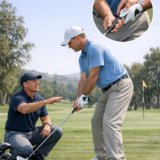
Bernhard Langer’s career presents a rare convergence of technical precision, psychological resilience, and strategic sophistication. As a two‑time Masters champion and multiple-time winner on both the PGA and senior circuits,Langer has maintained world‑class performance across decades,equipment changes,and evolving competitive fields.His golf swing, driving patterns, and putting methodology together form a coherent system rather than a collection of isolated skills, making his game an instructive model for players seeking both consistency and longevity.
This article examines Langer’s mechanics and competitive habits through a biomechanical and strategic lens, with particular focus on full-swing structure, driving accuracy, and putting reliability. First, it analyzes the fundamental components of his swing-posture, grip, tempo, plane control, and impact dynamics-to identify repeatable patterns that reduce variability under pressure. Second, it explores his driving strategy, including club selection, shot shape preference, and risk-reward calibration, to show how Langer consistently privileges position over raw distance while still generating adequate power. third, it investigates his putting framework, from setup geometry and stroke mechanics to green-reading protocols and pre‑putt routines, emphasizing how process standardization mitigates performance anxiety and technical breakdowns.
By integrating evidence from performance data, biomechanical principles, and course‑management theory, the discussion aims to distill Langer’s approach into practical, transferable concepts. The goal is not to promote imitation of idiosyncratic details, but to extract underlying principles-stability, clarity of intention, disciplined routine, and strategic restraint-that players at various skill levels can adapt to correct common faults in driving and putting.
Biomechanical Foundations of the Bernhard Langer Swing for Consistent Ball Striking
At the core of Bernhard Langer’s swing is a highly organized setup and pivot that promotes repeatable impact conditions. His address position demonstrates a neutral to slightly strong grip, with the lead hand rotated so that 2-3 knuckles are visible and the trail hand supporting the club from beneath, promoting a stable clubface through impact.The spine is tilted very slightly away from the target (approximately 5-10 degrees with the driver and less with irons), allowing the lead shoulder to work down and across in the backswing rather than simply around the body. For most players,this structure can be built using simple checkpoints: feet shoulder-width apart for irons,slightly wider for the driver; ball centered to slightly forward for mid irons and off the lead heel with the driver; weight distribution around 55% lead side for irons and closer to 50-50 for the driver. To internalize these foundations, rehearse in front of a mirror or a smartphone camera and use a short pre-shot checklist such as:
- Grip: Secure but not tense; check visible knuckles and alignment of the “V’s” formed by thumbs and forefingers pointing between trail shoulder and chin.
- Posture: Bend from the hips, not the waist, maintaining a straight but athletic spine and letting the arms hang naturally under the shoulders.
- Alignment: Clubface aimed at the target; feet,hips,and shoulders parallel to the target line or slightly closed for players who fight a slice.
These biomechanical foundations mirror Langer’s own discipline at address and give golfers of all levels a consistent platform for solid ball striking under pressure.
From this stable setup, Langer’s swing exemplifies a sequenced coil and synchronized arm-body motion, which is essential for both accuracy and distance control. His backswing is built on a strong lower-body base with approximately 80-90 degrees of shoulder turn against a more limited 40-45 degrees of hip turn, creating efficient X-factor stretch without forcing adaptability beyond his natural range. Recreational players can model this by feeling a firm trail leg that resists excessive sway while allowing the lead knee to move subtly toward the ball to accommodate rotation. A useful drill is the “trail-foot-back drill”, where you pull the trail foot slightly back and onto the toe, then make half swings with a mid-iron; this encourages proper rotation around a stable spine instead of lateral movement. To improve consistent impact, Langer’s move into the ball shows a clear lead-side re-centering and shaft lean: the lead hip shifts slightly toward the target while the chest remains over the ball, producing a downward strike with irons and a shallow, sweeping action with the driver. Players should monitor these dynamics with checkpoints such as:
- at the top: Lead arm across the chest, club roughly parallel to the target line, weight biased into the inside of the trail foot, and pressure under the trail heel and instep.
- At impact with irons: Hands ahead of the ball by roughly one grip length, lead wrist flat, trail wrist bent, and divot starting just after the ball.
- At impact with driver: Ball positioned off the lead heel, spine tilt maintained, lead hip slightly open, and clubhead traveling slightly upward (positive angle of attack) for higher launch and lower spin.
By rehearsing these positions with slow-motion swings and using alignment sticks or impact tape on the clubface,golfers can monitor measurable progress in centered contact and start-line consistency.
Langer’s biomechanical precision extends seamlessly into his short game motion and course-management strategy,where small technique details translate into lower scores. In pitching and chipping, he maintains a narrower stance and slightly more weight (about 60-70%) on the lead side, with the handle modestly ahead of the ball to ensure a downward strike and crisp contact even from tight lies or wet conditions. A practical request is the “one-stance,three-club” drill: adopt a consistent chipping setup,then hit the same landing spot with a 9-iron,pitching wedge,and sand wedge; this builds an intuitive understanding of how loft and bounce affect rollout,similar to how Langer adjusts for tournament greens of varying speed. For bunker play, focus on an open clubface (around 20-30 degrees relative to the target line), a slightly open stance, and a swing that mirrors your full-swing rhythm but with the intention of striking the sand 1-2 inches behind the ball. To connect these mechanics to real-course strategy, incorporate situational practice:
- Sidehill and wind-adjusted shots: On a ball-below-feet lie, flex more at the knees, grip down, and favor a fade pattern; into a strong headwind, shorten the backswing, maintain a three-quarter follow-through, and prioritize solid contact over maximum speed.
- Scoring focus: Set measurable goals such as hitting 8 of 10 chips inside a 6-foot circle or achieving at least 50% up-and-downs in a practice session.
- Mental and routine integration: As Langer does, pair every technical rehearsal with a consistent pre-shot routine-visualizing trajectory, confirming club selection, and committing fully to the target-to ensure that sound biomechanics translate into confident, decisive swings on the course.
By blending these biomechanical principles with structured practice and thoughtful course management, golfers at all levels can turn improved technique into tangible reductions in scoring average.
Kinematic Sequencing and Lower Body Stability in Langer’s Driving Technique
In Bernhard Langer’s driving technique, efficient kinematic sequencing begins with a stable and disciplined lower body that allows energy to flow from the ground up in a predictable order: feet and legs → hips and pelvis → torso and shoulders → arms and hands → clubhead.At address, Langer-like stability starts with a balanced stance: feet roughly shoulder-width to 1.25× shoulder-width apart, weight distributed 55-60% on the trail foot for a driver, and knees flexed so that the kneecaps sit approximately over the balls of the feet. The spine should tilt slightly away from the target (about 5-10°) to encourage an upward angle of attack while keeping the pelvis level. Golfers should feel the trail hip loaded rather than the upper body swaying off the ball. To self-check this in practice, hold your setup for three seconds and confirm that you could lift your lead foot briefly without losing balance; this verifies that your center of pressure is controlled and that your lower body is ready to support a consistent, repeatable swing pattern on the tee, even under tournament pressure or in windy conditions.
During the backswing and transition, Langer’s motion illustrates how lower body stability and rotation govern the rest of the chain. The trail hip turns rather than slides, keeping the trail knee flexed and the lead knee pointing roughly toward the ball at the top, preventing excessive lateral sway that so often leads to off-center contact and penalty strokes from the rough or hazards. as the club reaches the top, Langer initiates the downswing with a subtle re-centering of pressure into the lead foot, followed by a controlled rotation of the lead hip open to approximately 30-45° by impact. This correct sequence allows the upper body and arms to “follow” rather than dominate, promoting an in-to-out path that can produce a powerful but controllable draw, ideal for holding fairways on narrow doglegs. To train this lower-body-led sequencing,incorporate drills such as:
- Feet-together drill: Hit half-speed drivers with feet nearly together to feel upper body rotation without excessive lateral movement.
- Step-through drill: Start with feet close, make a backswing, then step toward the target with the lead foot before starting the downswing, exaggerating pressure shift and hip lead.
- Wall-hip drill: Stand with your lead hip a few inches from a wall; rehearse swings where the lead hip rotates but does not bump heavily into the wall, reinforcing rotation over slide.
These exercises, used progressively from short irons to the driver, help integrate Langer-style sequencing into all full swings, improving both distance and dispersion.
From a performance outlook, Langer couples this mechanical sequence with lower body stability under varying course conditions, using it as a cornerstone of course management and scoring. On tight driving holes with out-of-bounds or penalty areas, he favors a slightly narrower stance and softer lower-body speed to prioritize face control over maximum distance, while in downwind or wide-fairway situations, he can widen his stance and increase ground force for added carry. Golfers can emulate this adaptability while preserving sequencing by adopting specific checkpoints and practice routines:
- Setup checkpoints: Confirm ball position off the lead heel for the driver, lead shoulder slightly higher than trail, and weight bias no more than 60% trail side to avoid excessive tilt that causes high, spinny drives.
- Launch window drill: On the range,pick a visual “launch window” (e.g., top of a tree line). Aim to start 10 balls through that window while maintaining the same tempo and lower-body rhythm; count how many finish within a fairway-width target and track enhancement session to session.
- Pressure simulation: play a ”fairway-or-reload” game on the range: each drive must finish between two markers; a miss requires repeating the shot with a specific focus cue such as “quiet knees” or “hips first,” reinforcing stable sequencing when it matters.
By linking these measurable drills to on-course decisions-choosing a 3-wood or hybrid when stance stability is compromised by a sidehill lie, or adjusting foot flare to accommodate limited hip mobility-players at all skill levels can translate Langer’s principles into practical strategies that reduce penalty strokes, improve GIR percentages, and ultimately lower scores.
Grip,Posture and Clubface Control to Replicate Langer’s Repeatable setup
To emulate Bernhard Langer’s highly repeatable setup,begin with a grip that promotes both clubface stability and fine control of shot shape. Langer’s approach emphasizes a fundamentally neutral grip with subtle adjustments based on the intended ball flight. For most iron shots, position the lead hand so the grip runs diagonally from the base of the pinky to the middle of the index finger, allowing 2-2.5 knuckles to be visible at address,with the “V” between thumb and index pointing between your trail shoulder and chin. The trail hand should fit “on” rather than “under” the club, with the lifeline covering the lead thumb to avoid excessive flipping through impact. Golfers with less hand strength may favor a slightly stronger grip (3 knuckles showing) to help close the face, while advanced players can fine-tune by rotating both hands a few degrees weaker for a controlled fade. As Langer demonstrates in many of his lessons, the objective is not a textbook look but a functional pattern you can repeat under pressure, complying with the Rules of Golf by using only conforming grips and avoiding wrist-locking or anchoring devices that could alter natural hand action.
From the grip, transition into posture that supports a consistent swing plane and predictable low point control, key pillars of Langer’s long-term success. Stand with your feet roughly shoulder-width apart for mid-irons,slightly wider for the driver,and slightly narrower for wedges. Tilt from the hips, not the waist, maintaining a straight but not rigid spine angle of approximately 35-45 degrees from vertical, depending on your height and club length. Your knees should be flexed just enough to feel athletic-think of a soft,ready squat rather than a deep bend-keeping your weight balanced over the balls of your feet,not the heels or toes. Langer frequently enough stresses the importance of “quiet” lower body motion; that begins with stable posture. To check your setup, use these checkpoints:
- Arms hang naturally from your shoulders, with a fist-width gap between hands and thighs.
- Club sole just brushes the turf, avoiding excessive toe or heel elevation at address.
- weight 55-60% on lead side for wedges and short irons; closer to 50-50 for longer clubs to enable a full turn.
On the course, a stable posture allows Langer to adapt effortlessly to sloping lies by matching his spine angle to the slope while preserving these same fundamentals, ensuring the swing arc and clubface orientation remain predictable.
integrate clubface control with your grip and posture to build langer-like consistency from tee to green, especially under tournament pressure or in challenging weather. Before every shot, he uses a precise pre-shot alignment routine: first aim the clubface square to the target line (or fractionally open/closed for a planned fade or draw), then build his stance around that orientation rather than aiming his body first. To train this, lay down an alignment stick along your target line and another parallel to indicate your foot line; rehearse setting the face at 90° to the target stick, then stepping in so your feet, knees, hips, and shoulders are parallel to, not pointed at, the target. Incorporate short, deliberate drills such as:
- Gate drill: Place two tees just wider than the clubhead and strike half-swings while keeping the face square through the “gate,” focusing on a solid strike and starting line.
- 9-shot matrix: Practice hitting low, medium, and high shots with fade, straight, and draw patterns by making small grip and clubface adjustments, documenting carry distances and curvature for each window.
- Wind practice: On breezy days,rehearse holding the face slightly less rotated (for knock-downs) or slightly more released (for high,soft landings),all while preserving your baseline grip and posture.
By systematically linking grip pressure (aiming for a steady 4-5 out of 10), posture stability, and deliberate face orientation, golfers at every level can develop a repeatable setup that mirrors Langer’s hallmark traits: reliable contact, committed shot selection, and improved scoring through better distance and directional control.
Tempo, Rhythm and Transition: Applying Langer’s Timing Model to Fix Driving Inconsistencies
Bernhard Langer’s driving consistency begins with a repeatable tempo and rhythm, rather than raw speed. His model is built around a smooth 3:1 time ratio between the backswing and downswing: approximately three counts to the top, one count back to impact. To apply this, establish a stable setup with 55-60% of your weight on your trail foot, a slight knee flex, and a neutral spine tilt of about 30° from vertical.Keep grip pressure at a consistent “4-5 out of 10” to avoid tension spikes as the club changes direction. On the range, adopt a simple cadence in your head-“one-two-set…through” or “smooth to the top…accelerate“-and maintain that same rhythm irrespective of whether you are hitting a driver, fairway wood, or mid-iron. Langer’s lessons emphasize that the rhythm must be identical on the 1st tee under pressure and on the practice tee; only the club and target change.This stable timing base reduces common driving faults such as early casting, over-the-top moves, and loss of balance at high clubhead speed.
Transition-the brief moment between backswing and downswing-is where Langer’s timing model becomes most valuable for fixing driving inconsistencies. Instead of “hitting from the top,” Langer sequences the downswing from the ground up, allowing the lower body to initiate while the upper body and club briefly “wait.” To train this,focus on feeling the lead heel plant and lead hip rotate toward the target before the club starts down.A useful checkpoint is that the clubshaft at the top should remain stable for a fraction of a second while your belt buckle begins to turn; this preserves lag angle (around 90° between lead arm and shaft in mid-downswing) and promotes an in-to-out swing path.On the course, especially into a headwind or on a tight par-4, Langer-like discipline calls for a “soft transition swing” where you deliberately reduce shoulder aggression and imagine the clubhead arriving at the ball a half-second later than your instincts suggest. if you notice high right blocks or snap hooks, they are frequently enough signs that your transition has become rushed or upper-body-driven. In that case, use a simpler thought: “Finish in balance on the lead side for three full seconds”-by prioritizing a held, balanced finish, you automatically smooth out the transition and stabilize your swing path.
To ingrain this tempo,rhythm,and transition model across all skill levels,combine structured drills with specific on-course strategies. On the practice tee,integrate Langer-inspired routines such as:
- Metronome Drill: Set a metronome (or app) around 72-80 bpm. Begin your takeaway on one beep, reach the top on the third beep, and start the downswing on the fourth; maintain this tempo through a series of 10-15 drives, prioritizing strike quality (center-face contact) over distance.
- Pause-at-the-Top Drill: With a shortened backswing (left arm to about 10 o’clock), insert a deliberate half-second pause at the top before starting down. This exaggeration teaches you to separate lower-body initiation from hand-and-arm tension, particularly helpful for players who “yank” the driver from the top.
- Fairway-Width Target Drill: On the range,designate a “fairway” about 25-35 yards wide using two markers. Hit 10 balls with your normal tempo, recording how many finish within this corridor. Then repeat 10 shots using a consciously smoother, Langer-like rhythm and softer transition.Your measurable goal is to increase fairways hit by at least 20-30% while maintaining carry distance. This objective feedback links your timing adjustments directly to scoring outcomes and tee-shot strategy.
As course and weather conditions change-crosswinds, narrow landing zones, firm fairways-the Langer model reminds you to adjust club selection, tee height, and intended shot shape without ever sacrificing tempo. Whether you are a beginner seeking solid contact or a low handicapper shaping drives under tournament pressure, anchoring your swing to consistent timing and transition will translate into more fairways hit, better approach positions, and ultimately lower scores.
Green Reading and Putter Alignment Principles Derived from Langer’s Putting Routine
Bernhard Langer’s putting routine begins with a systematic green-reading process that treats each putt as a physics problem rather than a guess. Start by assessing the overall tilt of the green from a distance of 10-15 yards behind the ball-hole line, then walk around the line to view the putt from the low side, where the break is most visible. As you do this, note three primary factors: slope direction and severity (gentle: ~1-2°; pronounced: 3°+), green speed (faster greens break more), and grain and moisture (down-grain and dry = faster; into the grain and wet = slower). Langer-like discipline means you do this consistently,even for short putts,to build a repeatable “slope library” in your mind. For beginners, this may simply be identifying “left-to-right, right-to-left, or straight”; for low handicappers, it involves visualizing an exact start line and capture speed-the ball arriving at the cup with enough pace to finish 12-18 inches past the hole on a flat surface.
once the break and intended speed are chosen, Langer’s routine translates the read into precise putter alignment and setup fundamentals. First, align a line on the golf ball or logo to your chosen start line, not the hole itself; this is crucial on breaking putts. Then,address the ball with the putter face square to that line within ±1°,as even a 2° error on a 10-foot putt can cause a miss on the high or low side. Emulate Langer’s methodical posture: eyes positioned either directly over the ball or just inside the target line, shoulder alignment parallel to the start line, and a stable lower body to reduce extraneous movement.A neutral grip pressure (around 4-5 out of 10) allows the putter to swing freely while maintaining face stability. To ingrain this,use checkpoints such as:
- Setup drill: Place an alignment stick on your start line and square the leading edge of the putter to it,checking shoulders,forearms,and feet for parallel alignment.
- Gate drill: Create a gate with two tees just wider than your putter head and another gate 12 inches in front of the ball just wider than the ball; this trains starting the ball on line while keeping the stroke path and face angle consistent.
- Mirror drill: Use a putting mirror to verify eye position and face angle, reinforcing the same setup Langer repeats under pressure.
To fully apply these principles on the course, blend Langer’s technical precision with strategic and mental discipline. Before every putt,work through a consistent pre-shot routine: read from behind,confirm from the low side,choose the start line and speed,align the ball,then make one or two rehearsals that match the intended pace and break. On long putts (30-40 feet), prioritize distance control over perfect line: visualize a “landing zone” and use a slightly longer, smoother stroke while maintaining the same tempo you use on short putts-a common Langer trait. On short putts inside 6 feet,narrow your focus to face aim and solid strike; avoid decelerating,a frequent amateur error,by committing to a stroke length that sends the ball past the hole if missed. To measure progress, set goals such as:
- Beginners: Aim to eliminate 3-putts in a 9-hole round by consistently rolling long putts inside a 3-foot circle.
- Intermediate players: Track make percentage from 3-6 feet during practice (e.g., 50 out of 60 in a “Langer ladder” drill from 3, 4, 5, and 6 feet).
- Low handicappers: Use a stats app to monitor strokes gained putting and specifically improve performance on putts between 6-15 feet by refining green-reading and alignment routines.
By combining structured green reading, disciplined putter alignment, and measurable practice, you create a reliable putting system modeled on Langer’s routine that directly lowers scores and enhances overall course management.
Stroke Path, Face Angle and Speed Control in the Langer-Inspired Putting Method
In the Langer‑inspired approach, the putting stroke path is built on quiet geometry and repeatable body motion.Begin by setting the putter face square to the start line with the leading edge at 90° to your intended target line, then align your feet, knees, hips, and shoulders parallel to that line, forming “railroad tracks.” Langer’s method favors a slight arc stroke rather than a forced straight‑back‑straight‑through motion, allowing the putter to move naturally inside the line on the backswing and return to square at impact. To encourage this, maintain a stable spine angle and let the shoulders control the stroke, minimizing wrist hinge. Checkpoints include:
- Ball position: roughly 2-3 cm (about one ball width) forward of center to promote an upward strike.
- Grip pressure: constant and light to avoid unwanted clubface rotation.
- Stroke length symmetry: backswing and through‑swing of similar length on putts under 3 meters.
On the practice green, place two alignment sticks or clubs on the ground, just wider than your putter head, and rehearse strokes without touching them; this trains a consistent, on‑plane path that holds up under course pressure.
Face angle control, a Langer hallmark, determines start direction far more than stroke path, especially on short putts. At impact,you should aim for the putter face to be within ±1° of square for putts inside 2 meters,which is essential for holing out under tournament conditions. Langer’s disciplined routine emphasizes pre‑set alignment: he first sets the putter face to his intended start line, then matches his body to the putter, not the other way around. To build this skill, incorporate drills such as:
- Gate drill: place two tees just outside the toe and heel of the putter; if the face twists, you will clip a tee and receive immediate feedback.
- Chalk‑line drill: putt along a visible line from 1-2 meters, focusing on starting the ball exactly on the line before adding break and speed variables.
- Eyes‑closed impact drill: hit short putts while closing your eyes just before the stroke to heighten feel for a square strike and centered contact.
Advanced players can track performance by recording make‑percentages from 1-3 meters, aiming to sustain 80-90% from 1.5 meters in practice. On the course, commit fully to your read and start line, reflecting Langer’s mental discipline: once over the ball, your only task is to deliver the face square to that chosen line-no last‑second adjustments.
Speed control integrates stroke path and face angle into functional distance control, which Langer treats as a strategic weapon for scoring. He uses a consistent tempo and varies stroke length more than acceleration,especially on medium to long putts. For most golfers, a 2:1 ratio of backswing to forward stroke in time, with the putter accelerating smoothly through impact, leads to predictable roll. To train this, practice:
- Ladder drill: putt to tees or coins placed at 3, 6, 9, and 12 feet, trying to stop the ball within 30 cm short or long of each marker; this builds a concrete feel for carry distance.
- up‑ and downhill calibration: on sloping practice greens, hit 10 putts uphill and 10 downhill from the same spot, noting how much extra or less stroke length is required-this prepares you for changing green speeds, grain, and moisture.
- One‑ball “lag and tap‑in” game: on the course, challenge yourself to leave every first putt inside a 90‑cm circle; track how frequently enough you three‑putt and work to reduce that rate below 5% for improved scoring.
By consciously adjusting stroke length while preserving path and face control, you build a robust system that travels from one course to another, in wind or calm, on slow or fast greens. Over time,this Langer‑inspired integration of mechanics,mental focus,and realistic practice translates into fewer three‑putts,more confident par saves,and a measurable reduction in scoring average.
Integrating Langer’s Strategic Course Management with Technical Adjustments to Driving and Putting
Bernhard Langer’s approach to course management begins on the tee, where target selection dictates technical choices in the driver swing. Rather than always aiming for maximum distance, Langer routinely chooses the largest functional landing area that still offers a clear angle into the green. To apply this,start each hole by identifying the safest side of the fairway based on hazards,wind direction,and pin location,then adjust your setup accordingly. for a controlled fairway-finding shot, narrow your stance by approximately 2-3 cm compared with your full-power drive, reduce your shoulder turn slightly, and feel a “three‑quarter” finish to lower clubhead speed by about 5-10%. Common driver errors-such as overswinging, playing the ball to far forward (more than one ball inside the left heel), or aiming down the most dangerous line-can be corrected by using a pre‑shot checklist:
- Alignment: Clubface at the intermediate target, feet and shoulders parallel to the desired start line, not the fairway’s visual center.
- Ball position: Just inside the lead heel for a driver; slightly back (½ ball) if you are fighting a hook and want a more neutral strike.
- Commitment level: Choose a specific shot shape (gentle fade or draw) that you can repeat under pressure, then make a balanced, rhythmical swing to that shape.
By matching conservative strategic targets with slightly throttled‑back driver mechanics, golfers at every level can increase fairways hit and reduce penalty strokes, which is one of Langer’s primary scoring advantages.
From tee to green,Langer’s strategy revolves around playing to precise yardages and favorable angles,then making technical adjustments to ensure those tactical decisions are executed. On approach shots, he frequently plays to his preferred distances-frequently enough in the 80-110 yard range-rather than forcing a risky full shot over hazards. You can mirror this by learning your carry distances for three stock wedge swings: half, three‑quarter, and full (for example, 60 m, 75 m, and 90 m with one wedge). On the practice range, create a routine that blends course management and technique:
- Random‑yardage drill: Pick a target yardage (e.g., 95 yards into an imaginary back‑left pin guarded by water), choose the club and trajectory that leave the ball safely on the “fat” side, then rehearse a controlled swing with 70-80% effort.
- Wind and lie simulation: In a left‑to‑right wind, set your body slightly left of target and feel a more “body‑driven” swing to hold off the face; in rough lies, grip the club slightly firmer (about 6/10 instead of 4/10 pressure) and accept more club (e.g.,7‑iron instead of 8‑iron) to ensure solid contact.
- Trajectory ladder: Practice low, medium, and high shots by altering ball position within a 5-7 cm window and matching this with controlled changes in wrist hinge and finish height.
by integrating these drills, players learn to connect strategic decisions (laying up, playing away from flags in trouble areas) with repeatable swing mechanics, which leads to more greens in regulation and fewer “short‑sided” misses.
langer’s putting demonstrates how strategic green reading and precise technical adjustments can work in tandem to reduce three‑putts and improve scoring. He begins from the hole backwards, identifying the highest‑percentage leave for the next putt, then chooses a conservative target line that keeps the ball below the hole whenever possible. To replicate this, adopt a systematic routine that blends course strategy and stroke mechanics:
- Green‑reading sequence: Walk around the putt, feel the slope with your feet, and note the general fall line. Visualize the capture speed-aim for the ball to stop about 30-45 cm past the hole on flat putts and slightly less on fast, downhill putts.
- Setup checkpoints: Eyes either directly over the ball or just inside the target line, putter shaft leaning slightly (1-2°) toward the target for a true roll, and weight distributed approximately 55-60% on the lead foot to stabilize the stroke.
- Distance‑control drills: Use a “ladder drill” placing tees at 3, 6, 9, and 12 feet; putt three balls to each tee focusing only on roll-out distance, then introduce a simple target line that favors the “safe edge” of the hole based on the slope.
- Common error correction: If you miss consistently low (under‑reading break), practice starting the ball on a line outside your initial instinct by 3-5 cm at the hole; if your contact is inconsistent, narrow your stance and feel the shoulders rocking like a pendulum with minimal wrist motion.
By consciously aligning green‑reading choices with a compact, repeatable putting stroke-and by always leaving the next putt uphill whenever course conditions allow-golfers emulate Langer’s disciplined approach, turning technical consistency and smart strategy into tangible reductions in putts per round.
Q&A
**Title:** Master the bernhard Langer Golf Swing: Fix Driving and Putting
**Format:** Academic Q&A
**Tone:** Professional
—
### Q1. Who is Bernhard langer, and why is his golf swing a useful model for players seeking improvement?
**A1.** Bernhard Langer is a two-time Masters champion and one of the most enduringly successful professionals in modern golf. His career spans several decades across the European Tour, PGA Tour, and PGA Tour Champions, with victories accumulated well into his sixties.
From an academic and technical standpoint, Langer’s swing and overall game are valuable models for three reasons:
1. **Longevity under physical change:** He has adapted his technique repeatedly to account for aging, back issues, and changing equipment. This makes his method an excellent case study in sustainable swing mechanics.
2. **High repeatability under pressure:** langer is renowned for his consistency, especially in major championships and senior majors, illustrating the interaction of stable mechanics and robust mental processes.
3. **Integration of biomechanics and strategy:** His game combines efficient kinematics (body and club movement) with advanced course management-an ideal framework for players wanting to improve both mechanics and decision-making.
—
### Q2. What are the defining biomechanical characteristics of Bernhard Langer’s full swing?
**A2.** Langer’s full swing displays several recurring biomechanical features:
1. **neutral,structured setup**
– **Posture:** Moderate hip hinge with a relatively straight,but not rigid,spine.
– **balance:** Weight distributed roughly 55-60% on the lead side with irons, more centered with the driver.
– **Arm structure:** arms hang under the shoulders with minimal tension,promoting a unified “triangle” between shoulders and hands.
2. **compact and controlled backswing**
– **Width without overswing:** Langer avoids an excessively long backswing, emphasizing width (distance between lead shoulder and hands) rather than sheer length.
– **Coordinated shoulder-hip turn:** He achieves a considerable shoulder turn with relatively limited hip turn,creating X-factor (torso-pelvis separation) without excessive stress.- **Clubface control:** At the top, the clubface is typically square-to-slightly-closed relative to the left forearm-important in promoting a stable, repeatable ball flight.
3. **Ground-up downswing sequence**
– **Initiation from the lower body:** The pelvis begins to rotate and shift toward the target before the upper body and arms, establishing a classic kinetic chain from ground to clubhead.
– **Stable lead side:** The lead leg firms up through impact,creating a pivot point that allows energy transfer from the lower body to the club.
– **Club delivery:** langer tends to deliver the club from slightly inside the target line with a neutral-to-slightly-in-to-out path,well-suited for a controlled draw or straight shot.
4. **balanced, fully rotated finish**
– **Complete rotation:** chest and hips face the target, with most weight on the lead foot.
– **Postural stability:** Spine angle is relatively well maintained through impact, reducing lateral sway and promoting consistent contact.
These features make his swing an effective template for players seeking control and longevity rather than maximal distance at all costs.
—
### Q3. How can an amateur adapt Langer’s swing principles to improve driving accuracy and consistency?
**A3.** While most amateurs cannot (and need not) copy Langer’s motion exactly, they can integrate several key principles:
1. **Shorten and structure the backswing**
– **Issue addressed:** Overswinging leads to loss of control and timing.
– **langer-like solution:**
– Stop the backswing when the lead arm is roughly parallel to or slightly above parallel with the ground, rather than chasing a “parallel clubshaft.”
– Emphasize width (arms extended away from the chest) over length (club far behind you).
2. **Prioritize lower-body initiation in the downswing**
– **Issue addressed:** Casting, over-the-top moves, and slicing.
– **Langer-like solution:**
– At transition, feel the lead hip gently “bump” toward the target and rotate before the arms start down.
– This promotes an inside club path and more solid contact.3. **Stabilize the clubface and grip**
– **Issue addressed:** Erratic ball flight from a constantly changing face angle.
- **Langer-like solution:**
– Adopt a neutral-to-slightly-strong lead-hand grip to help square the face.
– Check that the clubface at the top of the backswing roughly mirrors the lead forearm’s orientation.
4. **Emphasize balance and finish position**
– **Issue addressed:** Inconsistent strike due to poor dynamic balance.- **Langer-like solution:**
- Practice holding the finish for three seconds, with nearly all weight on the lead foot and chest facing the target.
– Balance at the finish is a reliable proxy for balance during the swing.
Through these adaptations, amateurs can “borrow” Langer’s functional traits-compactness, sequence, and face control-to improve driving without radically reconstructing their natural motion.
—
### Q4. What makes Bernhard Langer’s approach to driving strategically effective, beyond mechanics?
**A4.** Langer’s driving is as much about **course management** as it is about pure mechanics. Key components include:
1. **Shot pattern management**
- Rather than seeking a perfect swing, Langer accepts a predictable **pattern** (e.g., a slight draw) and chooses lines that keep his typical miss playable.- Academically, this reflects a risk-reward optimization: he minimizes penalty probabilities rather than pursuing maximum distance on each shot.
2. **Club and target selection**
- He frequently chooses 3-wood or hybrid off the tee when fairway width, hazard placement, or wind direction reduce the expected value of hitting a driver.
– This evidences a probabilistic decision model: trading distance for higher fairway hit probability and better approach angles.
3. **Wind and contour usage**
– Langer shapes shots with or against the wind and uses fairway slopes to feed the ball into safer zones.
– This exemplifies an advanced use of **external conditions** as variables in an optimization problem, rather than fixed constraints.
For amateurs, adopting Langer’s framework means:
– Play to your **most predictable shot** rather than your best shot.
– Choose the club that gives the highest chance at a full, agreeable next shot, not the longest possible drive.
– Treat each tee shot as a strategic problem balancing distance, dispersion, and penalty risk.
—
### Q5. How does bernhard Langer’s putting technique address the yips and promote long-term consistency?
**A5.** Langer famously struggled with the yips yet returned to world-class putting by overhauling both technique and psychology.Key elements include:
1. **Anchoring-style and choice methods**
– Historically, Langer used long and broomstick putters with a form of anchoring (now restricted by rule changes).
– After regulatory changes, he adapted again, preserving the **feel of stability** by creating firm connection points between hands, arms, and torso while respecting current rules.
2. **High-stability setup**
– **Stance:** Slightly wider than shoulder width, with a low center of gravity.
– **Arm structure:** Arms often appear extended and firm, reducing independent hand motion and suppressing tremors associated with the yips.
– **Grip variations:** He has experimented with multiple grips, always prioritizing face stability over aesthetic orthodoxy.3. **Process-focused routine**
– Langer’s pre-putt routine is exceptionally consistent:
– Reading line and slope systematically.
– Fixing a precise target (e.g., a specific dimple or an apex point).
– Executing a small, repeatable number of practice strokes.
– This routines-based approach shifts attention from outcome (“Do not miss”) to process (“Execute this routine and stroke”), a well-established psychological strategy for managing anxiety.
4. **Pace control emphasis**
– He places strong emphasis on leaving putts in a tight speed window around the hole, which reduces three-putt frequency and builds confidence.
– From an analytical standpoint, optimizing speed reduces the effective “penalty” of small directional errors.
Thus, his putting evolution is a model of technical innovation under constraint and robust mental strategy under chronic performance pressure.
—
### Q6. What key principles from Langer’s putting can an amateur adopt to improve accuracy and reduce three-putts?
**A6.** Amateurs can distill Langer’s approach into several practical principles:
1. **Stabilize the putter face by reducing unneeded joint motion**
– Favor a setup where the **wrists remain quiet** and the motion originates from a rocking of the shoulders or upper torso.
– Consider grips (e.g., claw, cross-handed, or arm-lock variants) that reduce hand dominance and wrist break.2. **Establish a rigidly consistent routine**
– Fix the same sequence for every putt: reading, alignment, practice strokes, and execution.
– Time the routine to be similar for short and long putts, promoting uniform arousal and focus levels.
3. **Train speed control explicitly**
– Dedicate a portion of practice solely to distance control (e.g., ladder drills, putting to the edge of the green).
– Evaluate success by **proximity to the hole** rather than make-miss outcomes alone.
4. **Adopt a clear, simple read strategy**
– Use a preferred method (e.g., low-point reading, AimPoint-inspired feel, or simple visualizing of the apex) and apply it consistently.
- Avoid changing line-reading methods frequently, which destabilizes confidence.
These measures mirror Langer’s emphasis on mechanical stability, procedural consistency, and speed optimization.
—
### Q7. How does Langer’s mental approach integrate with his swing and putting mechanics?
**A7.** Langer’s game illustrates a tight coupling of **cognitive frameworks** with physical technique:
1. **Acceptance and adaptation**
– He publicly acknowledges mechanical and psychological limitations (e.g., aging body, prior yips) and designs techniques that work **with** these constraints.
– This aligns with principles of **constraints-led learning** in skill acquisition, where the athlete adjusts technique to fit personal, task, and environmental constraints.
2.**Process over outcome**
– For both full swing and putting, Langer focuses on executing a **process checklist**: pre-shot routine, alignment, commitment, and tempo.
– This reduces performance anxiety by relocating control from uncontrollable variables (score, outcome) to controllable ones (routine, mechanics).
3. **Iterative refinement**
– Over his career, Langer has made numerous small, data-informed adjustments (equipment, grip, stance), reflecting a **continuous improvement model** rather than wholesale reinvention.
For a developing golfer, the lesson is to construct a stable mental framework-routine, acceptance, controlled focus-that underpins mechanical execution, rather than treating mental and physical aspects as separate domains.
—
### Q8. How can a golfer systematically train Langer-inspired techniques for both driving and putting?
**A8.** A structured training approach can be organized into three phases:
1. **Technical calibration (range and putting green)**
– **Driving:**
- shorten backswing and reinforce lower-body initiation with slow-motion drills.
– Use impact tape or launch monitor data (if available) to monitor path, face angle, and strike location.
– **Putting:**
– Experiment with one or two grip and setup options that maximize face stability; avoid excessive experimentation.
– Use gates (tee pegs) to constrain path and face angle.
2. **Skill integration (variable practice)**
– **Driving:**
– Simulate different tee-shot scenarios (narrow fairway, crosswind, hazards) and practice club selection and start lines accordingly.
– **Putting:**
– Mix short putts (mechanical precision) with medium/long putts (speed control) in random order to enhance transfer to the course.
3. **Performance simulation (on-course or pressure drills)**
– **Driving:**
- Play “no second ball” rounds where every drive counts, emphasizing alignment and decision-making.
– **Putting:**
– Perform ladder challenges (e.g., make a set of 3-6 footers in succession) to simulate tournament pressure.
This phased framework respects Langer’s own pattern of deliberate practice: calibrate mechanics, integrate into variable contexts, and then test under pressure.
—
### Q9. what are the main takeaways from Bernhard Langer’s example for golfers seeking to fix both driving and putting?
**A9.** Key takeaways include:
1. **Compact, efficient mechanics beat aesthetic ideals.**
– Langer’s swing is built for control, repeatability, and physical sustainability-not for textbook appearance or maximal speed.
2. **Course management is integral to “good driving.”**
– Tee-shot success is not merely a mechanical issue; it is a strategic problem involving club choice, target selection, and risk management.
3. **Putting success can be engineered despite severe setbacks.**
– By stabilizing mechanics, standardizing routines, and embracing process focus, even extreme issues like the yips can be mitigated.
4. **Adaptation over time is non-negotiable.**
- As physical and environmental conditions change (age, rules, equipment), continuous, data-informed adaptation is necessary for sustained performance.
5. **Integration of body, mind, and strategy is crucial.**
– Langer’s career demonstrates that lasting improvement in driving and putting arises from aligned biomechanics, psychological routines, and tactical decision-making, not from isolated technical tips.
These principles provide a robust, academically grounded blueprint for players and coaches seeking to apply the “Bernhard Langer model” to practical game improvement.
bernhard Langer’s swing, driving, and putting methodologies exemplify the integration of biomechanical efficiency with strategic intent. His technically disciplined motion-characterized by stable posture,controlled tempo,and a repeatable impact position-demonstrates that longevity and consistency in performance are less a product of raw athleticism than of precise movement patterns refined over time.When translated into practice, these swing fundamentals provide a robust framework for reducing variability off the tee, improving strike quality, and sustaining accuracy under pressure.
Equally, Langer’s approach to putting underscores the primacy of process over outcome.His emphasis on meticulous green-reading routines,consistent setup geometry,and a stroke governed by rhythm rather than force represents an evidence-based model for enhancing holing rates and distance control. By prioritizing alignment, face stability, and a reliable pre-putt routine, he turns a traditionally volatile part of the game into a manageable, repeatable skill.
Langer’s course-management principles bind these technical elements into a coherent performance strategy. Club selection guided by probabilities rather than ego, conservative targeting when dispersion patterns demand it, and the intentional management of mental focus all reflect a systematic approach to scoring. For players seeking to “fix” their driving and putting, the implication is clear: sustainable improvement emerges not from isolated tips, but from a holistic model that unites mechanics, decision-making, and psychological discipline.
Adopting and adapting the Langer framework thus offers a structured pathway for golfers at all levels. Through deliberate practice informed by these principles-reinforced by objective feedback and reflective evaluation-players can work toward a more stable, efficient swing, more reliable putting performance, and more intelligent navigation of the golf course.