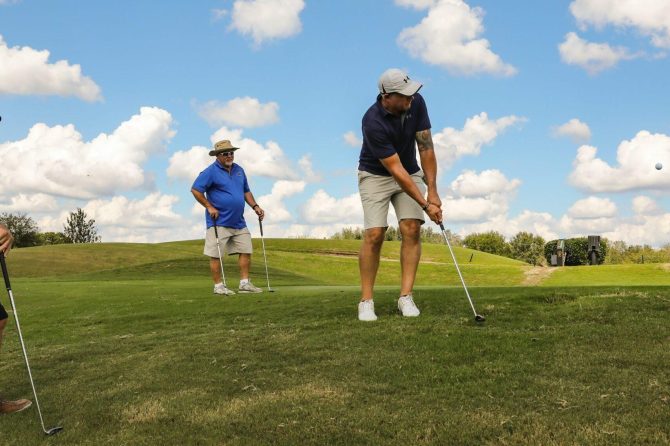
Introduction
the follow-through is more than an aesthetic finish to a golf stroke; it is the kinematic and kinetic resolution of movement patterns that determine launch conditions, clubface orientation, and ultimately shot outcome.Although traditional instruction often emphasizes backswing sequencing and impact mechanics, contemporary biomechanical and motor-control research indicates that the trajectory, timing, and termination of the follow-through carry measurable influences on power generation, directional control, and repeatability across full swings, drives, and putts. This article synthesizes that evidence and translates it into practicable, empirically grounded methods for coaches and players seeking quantifiable performance gains.
We begin by conceptualizing the follow-through as an integrative phase: in full swings and driving it reflects the efficiency of energy transfer through the kinetic chain (pelvis → thorax → upper limb → club) and the consistency of impact geometry; in putting it encodes low-speed control strategies for face angle and path stabilization. Drawing on contemporary biomechanics, motor-learning theory, and performance-analysis studies, we identify the principal mechanical and neuromuscular variables-segmental sequencing, angular velocities, release timing, wrist kinematics, and deceleration patterns-that link follow-through characteristics to outcomes such as ball speed, launch angle, spin, lateral dispersion, and putt-stroke repeatability.
The central aim of this review is applied: to integrate peer-reviewed findings with validated drills and objective metrics so practitioners can both train and measure follow-through improvements. To that end,the article (1) reviews the empirical literature on follow-through mechanics across stroke types,(2) presents evidence-based drills targeted at specific biomechanical deficits,and (3) recommends objective,field-feasible metrics and testing protocols (e.g., high-speed video markers, inertial sensors, ball-flight parameters) for monitoring progress. Case vignettes illustrate how metric-driven interventions produce measurable improvements in power, accuracy, and consistency.
By framing the follow-through as a trainable, measurable determinant of performance rather than a mere stylistic end-point, this article provides a bridge from laboratory insights to on-course practise. The synthesis offered here equips coaches, sport scientists, and advanced players with the conceptual tools and practical protocols necessary to transform swings, putts, and drives through deliberate, evidence-based follow-through training.
Biomechanical Foundations of an Effective Follow Through: Kinematic Sequencing Joint Angles and Ground reaction Forces
Effective follow-through begins with a clear understanding of kinematic sequencing: a proximal-to-distal transfer of energy where the pelvis initiates rotation,the thorax follows,then the upper arms,hands and finally the clubhead reach peak velocity. In technical terms, aim for a pelvic rotation of approximately 45-60° on the downswing with a shoulder turn near 90° from address in a full driver swing; these values scale down for short irons and wedges. Maintain a modest spine tilt of 5-10° through impact to preserve angle of attack and consistent strike, while knee flex and ankle stability create a firm platform for torque production. Transition-wise, ensure the pelvis reaches peak angular velocity first, followed by the torso roughly 20-40 ms later, then the arms and club – this temporal order creates a measurable increase in clubhead speed and repeatable impact dynamics. to build this sequence under instruction, use slow-motion video capture and compare joint-segment timing visually, aiming to reproduce the same order at progressively higher speeds.
Ground reaction forces (GRF) and weight transfer are the mechanical anchors of a reliable follow-through. during an advanced driver swing players typically generate peak vertical GRF in the downswing of about 1.2-2.0× body weight, with most competent players shifting approximately 60-80% of body weight onto the led foot at and just after impact. This lateral-to-medial pressure transfer stabilizes the lower body so the upper body can rotate freely through the ball. For practical submission, practice drills include a heel-to-toe pressure drill and the step-through drill to ingrain forward weight transfer; use a pressure mat or balance plate to target measurable improvements (e.g., increase lead-foot pressure by 10-15% over 4-6 weeks). Common faults such as lateral sway or hanging back are corrected by rehearsing a small lateral hip bump on the transition and by strengthening single-leg stability with balance-training exercises.
Follow-through geometry-the extension of the arms, the wrist release pattern, and the final shaft plane-directly influences shot shape, spin and dispersion. At impact expect the hands to be ahead of the ball with a modest shaft lean of 5-10° for irons and near-neutral for long clubs; an early release or “casting” reduces loft control and increases spin variance. In putting, maintain a pendulum action where the length of the follow-through equals the backstroke and face rotation is minimal (≤2-4°) to preserve line. Drills to enforce correct release and extension include:
- Impact-bag progression to feel forward shaft lean and delayed release
- Medicine-ball rotational throws to train explosive proximal-to-distal sequencing
- Putting mirror and face-angle tape work to limit face rotation
These drills are scalable for beginners through low handicappers by adjusting tempo, repetitions, and feedback tools such as launch monitors or high-speed video.
Training programs should be explicit, measurable and tiered by skill level. Beginners focus on setup fundamentals and tolerance ranges: stance width, ball position, and neutral grip with target metrics like a consistent divot location for irons and a repeatable impact sound. Intermediate players can pursue clubhead speed gains of 2-6 mph and tighter dispersion by practicing timed sequencing drills and monitoring changes on a launch monitor (e.g., reducing face-angle variability to ±2-3°). Low handicappers refine subtleties: optimize shaft flex and club length to match swing tempo, and pursue smaller adjustments such as reducing dynamic loft by 2-4° at impact. Practice routines should alternate skill acquisition (slow, focused reps) with transfer practice (on-course or simulated pressure), and include measurable goals and checkpoints:
- Daily 20-minute targeted follow-through session (video + 50 swings)
- Weekly pressure drill (e.g.,three 9-hole scrimmages emphasizing follow-through consistency)
- Monthly metrics review using launch monitor/pressure mat
Also remember equipment and rules: ensure clubs are USGA-conforming and,for putting,adhere to the anchoring ban by avoiding anchored strokes.
integrate mechanical mastery into on-course strategy and mental routines to convert improved mechanics into lower scores. For example, in high wind or wet conditions adopt a more abbreviated follow-through and a slightly more descending attack angle to keep ball flight penetrating; conversely, for maximum carry use a full extension and committed finish to encourage higher launch with controlled spin. Use situational play strategies such as aiming for wider parts of greens when dispersion increases during windy rounds, and trust the practiced finish as part of your pre-shot routine for consistency under pressure.Troubleshooting on the course can be simplified into a short checklist:
- Setup checkpoint: neutral spine angle, correct ball position
- Pre-shot tempo: breathe and visualize finish
- If shot is a pull/slice, check early release vs. face angle at impact
- In poor turf, shorten follow-through and play a more forward ball position
By combining objective biomechanical targets, targeted drills, equipment considerations and course-management adaptations, golfers at every level can refine their follow-through for measurable improvements in consistency, shot-making and scoring.

Synchronizing Pelvis Thorax and Upper Limb to Optimize Energy Transfer Timing and Consistency
Effective energy transfer in the golf swing begins with an understood and repeatable kinematic sequence: pelvis → thorax → upper limb → club. Biomechanically, a reliable pattern produces power and consistency; typical targets are pelvic rotation of approximately 35°-50° on the backswing and thoracic rotation of about 80°-100°, creating an X‑factor separation in the range of 20°-45° between hips and shoulders.For setup fundamentals that support this sequence, adopt a neutral spine tilt of ~25°-30°, knee flex of ~15°-20°, and ball position appropriate to the club (e.g., centre‑to‑slightly-forward for short irons, ball forward inside left heel for driver). Integrating insights from Mastering the Follow‑Through in Your Golf Swing, emphasize that a complete, balanced finish – with the belt buckle rotating toward the target and weight on the lead foot – is a reliable indicator that energy transfer was efficient through impact.
Moving from theory to technique, execute a controlled backswing that initiates with a slight pelvic rotation and weight shift to the trail foot, then allow the thorax to rotate as the hands move up the plane: this builds the necessary separation without lateral sway.At transition, keep the lower body initiating the downswing by rotating the pelvis toward the target; this creates the torque that the thorax and arms then release through impact. Key impact benchmarks to inspect are hands slightly ahead of the ball for irons (achieving ~5°-10° of forward shaft lean), and lead foot pressure of ~60%-70%.Common faults include early arm lift (casting), excessive lateral shift (sway), and upper‑body override; correct these by feeling the pelvis start the downswing and by maintaining spine angle so the thorax can rotate and not slide. For accuracy, remember the Rules of Golf: on course shots seek repeatable contact and legal club delivery (no grounding the club in penalty situations such as bunkers before stroke).
Practice routines should be structured to train sequence,tempo,and consistency with measurable goals. Begin with slow, deliberate reps (3 sets of 8-12) focusing on feeling the pelvis lead, then progress to dynamic drills.Useful drills include:
- Step‑through drill: make a short backswing, step the lead foot forward on the downswing to force lower‑body initiation (goal: pelvis lead on 8/10 reps).
- Medicine‑ball rotational throws: 3 sets × 10 throws to the target to develop explosive hip‑to‑thorax transfer (goal: maintain form without early arm action).
- Pause‑at‑top with chest lag: pause for one second at the top, then feel the hips begin the downswing before the arms (goal: consistent X‑factor feel over 20 swings).
- Impact bag or towel under arm: encourages compact release and prevents casting (goal: solid compression on 8/10 strikes).
For tempo, aim for a backswing:downswing timing ratio near 3:1 during practice and use a metronome app to reduce timing variance. Track progress with measurable metrics – clubhead speed, ball speed, carry distance, and dispersion – using a launch monitor or smartphone video at 120-240 fps.
Transition these mechanics into the short game and real‑course scenarios by adapting rotation and release to shot type. For chips and pitches, prioritize a stable lower body (minimal pelvic rotation) with thorax and arms controlling loft and face angle; this prevents the common error of “flipping” the wrists. Conversely, for bunker explosions or windy long shots, deliberately increase pelvic rotation and allow a fuller thoracic turn to generate speed while maintaining a balanced follow‑through – a principle emphasized in follow‑through mastery where extension and finish indicate correct energy transfer. Equipment considerations matter: choose wedges with appropriate bounce and grind for the sand or tight lies, and adjust shaft flex/weight to match your release cadence; a shaft that is too flexible can mask sequencing faults, while one that is too stiff may hamper timing. In play, use course strategy: into the wind, reduce swing length and preserve your sequence to keep the ball low; on narrow fairways, prioritize tempo and impact alignment over maximal rotation to reduce dispersion.
integrate mental and monitoring strategies to ensure long‑term improvement.Use concise pre‑shot routines that cue the sequence – for example,“coil,lead with hips,release” – and breathing to stabilize tempo. For measurable improvement set tiered goals: short‑term (4 weeks) – reduce miss dispersion by 20% and hit 70% of practice impact targets; medium‑term (3 months) – increase average clubhead speed by 3-6 mph or improve distance control to within ±5 yards for a given club. Employ multiple learning modalities: video feedback for visual learners, kinesthetic drills (medicine ball, impact bag) for bodily learners, and verbal cues for auditory learners. Lastly, regularly re‑assess equipment via fitting sessions and track on‑course results – scoring, GIR (greens in regulation), and scrambling percentages – so that technical work on pelvis, thorax, and upper limb synchronization produces tangible scoring benefits.
Release Path and Clubface Control for Driving: Trajectory Management Power Preservation and Shot Shaping
Establish a repeatable foundation by controlling setup variables that directly influence release and clubface orientation: place the ball 1 to 1.5 inches inside your lead heel for a right‑handed driver, tee so that the equator of the ball is roughly level with the top of the driver face (approximately 0.75-1.0 inch above the crown), and adopt a spine tilt away from the target of about 3-5°.These measurable setup checkpoints promote a slightly upward attack angle, wich low‑handicappers typically generate at about +2° to +4° and recreational players often struggle to achieve (many produce negative values). From this starting point, focus on a full shoulder turn (target 80-100° for most players), a wrist hinge near the top of the backswing (~80-90° of wrist set), and a controlled hip rotation to create a consistently reproducible release plane. In practice, use an alignment rod along the intended target line and a second rod placed parallel to the swing path (or a launch monitor) to confirm that your face‑to‑path relationship is producing the intended shot shape and trajectory.
Coordinate the release with clubface control through the follow‑through. The release is predominantly a timing pattern of forearm rotation (pronation/supination), wrist uncocking, and body rotation: allow the hands to lead slightly into impact while the forearms rotate so the clubface squares or rotates predictably.Emphasize a full extension through the ball resulting in a balanced finish with >60% of weight on the lead foot – this transfer reduces late manipulations that disturb face angle. When teaching, cue the connection between the impact position and the finish by using the “mastering the follow‑through” insight: ensure the right elbow (for R‑handed golfers) extends and the left arm remains connected to the torso for at least half a second after contact. A useful measurable goal is to produce a consistent smash factor of 1.45-1.50 (higher for better players) while maintaining dispersion within a clubhead‑face variation of ±3° at impact.
Shape trajectory intentionally by adjusting face‑to‑path relationships. For a controlled draw,promote an in‑to‑out path of roughly 2-6° relative to the target line while allowing the face to be 1-3° closed to that path (resulting in a face slightly open to the target line but closed to the path). For a controlled fade, produce an out‑to‑in path of 2-6° with the clubface 1-3° open to that path. When playing real‑course scenarios, use these relationships to manage wind (e.g., play a lower penetrating fade into a headwind by reducing loft exposure and increasing shoulder tilt toward the target) and to navigate hazards (e.g., aim for a fade when the fairway slopes right-to-left to use the slope). Always cross‑check your intended curvature with the rules of golf regarding alignment: you may use an intermediate target and alignment aid on the practice ground, but on course rely on sightlines and yardage to execute a single deliberate shot plan.
Preserve power while improving consistency through equipment and tempo. power preservation is a function of efficient energy transfer, correct shaft characteristics, and consistent release timing. Match shaft flex and torque to your swing speed (for example: 85-95 mph clubhead speed benefits from a regular‑stiff shaft; >95-105 mph typically requires a stiffer profile) and select a driver loft that produces an optimal launch/launch‑angle combination (target launch angle 12-15° and spin 2000-3000 rpm for many players). Prioritize a smooth tempo (ratio backswing to downswing ~ 3:1) and practice drills that promote a late, connected release rather than flipping the hands. Equipment considerations such as CG placement and face‑bulge influence forgiveness and curvature; test on a launch monitor and aim to maximize smash factor while keeping face rotation within your tolerances (±2-4° at impact) for reliable shot shaping.
Implement structured drills,measurable progressions,and course strategies to translate range work into lower scores. Use the following practice routine to develop release path and face control:
- Towel‑under‑arm drill: maintains connection and discourages casting during the downswing.
- Gate drill with alignment rods: establishes desired swing path (place rods to create a 2-4° in‑to‑out corridor for a draw or 2-4° out‑to‑in for a fade).
- Half‑swing impact bag drill: feel the forearm rotation and the clubface squaring at impact without the complexity of full swings.
- Finish mirror or video feedback: confirm a balanced finish with spine tilt and weight distribution consistent with your setup targets.
Set measurable goals (e.g., reduce side dispersion by 20% in eight weeks, increase average carry by 10 yards, or reach a consistent smash factor of 1.48+) and monitor progress with periodic launch monitor sessions. Address common faults: if the ball fades violently,check for an early release or an open face at impact; if hooks appear,examine over‑rotation of the forearms or an excessively in‑to‑out path. integrate mental strategies – plan each tee shot with a bail‑out target and a preferred shape, commit to one swing thought (tempo or finish), and practice under varying wind and turf conditions to build resilience and course management skills that lower scores.
Putting Follow Through Mechanics: Stroke Length Face Stability and Green Speed adaptation
Begin with a reliable setup that makes consistent follow-throughs possible. Establish a putter length and lie that allow your eyes to be approximately 6-12 inches above the ball and your forearms to hang naturally, typically 33-35 inches for most players; verify that the putter loft is in the 2°-4° range to promote forward roll. Adopt a neutral face at address with the shaft leaning slightly (0°-2° forward) so the putter returns to square through impact.As a reminder of the rules, avoid anchoring the putter to the body (see Rules of golf, Rule 10.1b); instead use a stable grip that permits a free shoulder-driven pendulum. Setup checkpoints to test before every putt: feet width (hip-to-heel), ball position (just forward of center for most blades; center for mallets), and a slight forward press to promote a descending motion into the ball. These fundamentals reduce compensatory wrist action that destabilizes the face during the follow-through.
Translate setup consistency into measurable stroke-length control.For distance control, use a proportional stroke-length model where backstroke and follow-through lengths are symmetrical within ±10%, producing a true pendulum and predictable ball speed. As practical targets, aim for a backswing of approximately 2-4 inches for 3‑ to 4‑foot putts, 6-12 inches for 8-15 footers, and 18-24 inches or more for lag putts beyond 20 feet. Maintain a smooth tempo-practice with a metronome set to a cadence that produces a consistent backswing:follow-through ratio (many players find a 1:1 stroke-duration symmetry most repeatable). Use a simple measurement routine on the practice green: mark the putter head positions at backswing and follow-through with tape or chalk and record ball distance to build a distance-to-stroke-length chart for that specific putter and green speed.
Control of the putter-face through impact is the single biggest determinant of accuracy; the follow-through is where errors reveal themselves. Aim to keep face rotation at impact within ±3° of square and face loft stable so the ball begins on the intended line with minimal initial skid. To improve face stability, employ the following drills and checks that emphasize a stable follow-through and consistent impact point:
- Gate/Impact Tape Drill: place two tees either side of the putter path and use impact tape to verify centered contact and minimal face rotation.
- Mirror Pendulum Drill: set a putting mirror to ensure the blade stays square and observe shoulder movement; keep wrists quiet.
- Metronome Distance Drill: use a metronome to synchronize stroke length to tempo; note backswing and follow-through equality.
- One‑Hand Follow‑Through Drill: hit short putts with only the lead hand to feel the resonant follow-through and shoulder turn.
Progress from each drill to on‑course implementation, checking that ball starts on target and roll-out matches expectations.
Adapt stroke length and follow-through to green speed and contour using a rule-of-thumb informed by Stimp readings and on-site testing. For example, on greens around Stimp 9-10 use your baseline stroke-length chart; on faster greens (Stimp 11-12) reduce measured stroke lengths by 15-25% to avoid over‑rolling, and on slow greens (Stimp 6-7) increase stroke length similarly. When facing uphill putts, preserve a slightly longer follow-through (backswing≈follow‑through) to maintain speed; for downhill putts, shorten both backswing and follow-through and emphasize a firmer impact to overcome slope-driven acceleration. In sidehill or breaking putts, prioritize face stability and allow the follow-through arc to match the putting arc-attempting to manipulate the face mid-stroke will produce errant starts. On windy days,hold to the same tempo and adjust only stroke length,not wrist manipulation,to keep the face square through impact.
implement a structured practice routine and measurable goals that translate practice gains into lower scores. A recommended weekly plan: 3 sessions of 20 minutes focused on control, each containing a warm-up (10 short putts inside 3 feet), a distance calibration set (5×5 at 6, 10, 20, 30 feet recording backswing/follow-through lengths and make rate), and a pressure finish (10 consecutive putts from a chosen distance for a make percentage goal). Track objective metrics such as face rotation at impact (<3°),centered impacts (>80% on impact tape),and reduction in 3‑putts per round (target: reduce by one per round as an initial measurable). Troubleshoot common faults-scooping (early wrist release) by feeling a forward press and longer follow-through, deceleration by practicing 3‑to‑5 foot putts with a metronome, and body sway by stabilizing core and maintaining shoulder turn-and combine technical drills with simple mental cues (e.g., “smooth back, hit through”) to create reliable on-course behavior.Through disciplined measurement and course-specific adaptation, improvements in follow-through mechanics yield more accurate starts, truer roll, and tangible scoring benefits.
Level Specific Training Protocols for Beginners Intermediates and Advanced Players with Progression Criteria
First,establish reliable setup fundamentals that form the foundation for level-specific progression.Emphasize a reproducible grip (neutral V’s pointing between the right ear and right shoulder for right-handed golfers), 50-60% weight on the front foot at address for irons, 2-4° spine tilt away from the target, and 15-20° knee flex.For equipment considerations, confirm shaft flex matches swing speed (e.g., driver swing speed 85-105 mph → regular/stiff shaft) and verify loft for distance control (measured carry vs. loft chart). For beginners, progression criteria should be objective: within 6-10 practice sessions achieve consistent center-face contact (ball marks near the sweet spot on at least 70% of strikes) and a repeatable alignment within ±3°. To train these fundamentals use focused checkpoints and simple drills:
- Alignment rod check: place two rods to train feet, hips, and shoulder alignment, aiming for parallel lines to the target.
- Ball-position ladder: practice with ball at progressively different positions (back-to-front) to learn center-face contact for each club.
- Static posture mirror drill: hold address for 10-15 seconds while checking spine angle and knee flex.
These setup checkpoints reduce compensations and prepare the golfer for consistent follow-through mechanics.
Next, build a sequential approach to swing mechanics that integrates Mastering the Follow-Through in Your Golf Swing insights: the follow-through is not an afterthought but a diagnostic of the entire motion. Teach a three-phase progression-(1) controlled takeaway to wrist hinge, (2) transition and downswing with sequencing (hips lead, then torso, then arms), and (3) full extension and balanced finish.Use measurable targets: aim for a clubshaft plane at the top within ±8° of the intended swing plane, a downswingspeed ratio of approximately 3:1 backswing to downswing tempo (count 1-2-3 where “3” is impact), and a finish with weight > 80% on the lead foot and the chest facing the target. Progressive drills include:
- Pause-at-top drill: pause 1-2 seconds at the top to rehearse correct sequencing into the downswing.
- Impact-bag or towel drill: promote forward shaft lean and a square clubface through impact.
- Follow-through alignment drill: aim the club shaft toward the target at 45° above horizontal to confirm extension and release.
Correct common faults: early extension is fixed by strengthening hip turn and maintaining flex; casting is corrected with a weighted-handle drill to promote retained lag. As players move from beginner to intermediate, require measurable stability in finish position-hold the balanced finish for 3 seconds on 8 out of 10 swings.
Progress short-game instruction from basics to advanced scoring techniques by isolating chipping, pitching, bunker play, and putting. For beginners teach a putting routine with 2-3 practice strokes, eyes over the ball, and a pendulum stroke aiming to roll the ball with minimal loft increase. Set quantifiable practice goals: make 60% of 6-8 ft putts and get 80% of chips within a 15‑foot radius from varying lies before advancing.Drill examples:
- Clock-face chipping drill: place balls around a hole at 3, 5, 8, and 12 yards to practice trajectory selection and rollout control.
- Bunker splash drill: practice hitting the sand 1-2 inches behind the ball with open clubface and feet dug 1-2 inches for stability.
- Lag putting corridor: create a 3-foot-wide corridor with alignment sticks and aim to stop balls inside a 10-foot circle from 30-60 feet.
Explain corrections for common errors: for hitting fat chips, move weight slightly forward and accelerate through the ball; for thin bunker shots, open the face more and enter sand deeper. These short-game proficiencies directly correlate to improved scrambling percentage and lower scores.
Then, extend training into course management and shot-shaping strategies tailored to skill level. For intermediates,emphasize percentage play-select clubs and targets that prioritize expected score reduction over hero shots.Teach shot-shaping via face-to-path control: to hit a controlled draw, aim the feet and hips slightly right of the target, set a slightly closed clubface relative to the swingpath at address, and ensure a complete follow-through toward the target to confirm the release. Account for wind and lie: in a 15-20 mph headwind lower trajectory by reducing loft and increasing shaft lean at address; in crosswind, play off a 1‑ball‑width stance to stabilize balance and open clubface as required. Progression criteria for course strategy include measurable targets such as GIR (greens in regulation) improvement by 10% in 8 weeks and reducing average putts per GIR by 0.2-0.5. Include practice scenarios on the course: play six holes under simulated tournament constraints (e.g., two-club max practice) to develop decision-making under pressure.
for advanced players integrate biomechanical refinement, data-driven practice, and mental resilience to convert technical gains into scoring. use video analysis and launch monitor feedback to set numeric targets-attack angle, dynamic loft, and clubface-to-path differential within ±2°-and calibrate trajectory and spin to course conditions (e.g., lower launch and higher spin for firm greens when attack angles are steep). structure practice cycles using deliberate practice principles: 30-45 minute focused blocks on a single skill, with 100-200 high-quality reps and clearly defined success criteria (e.g., 80% of shots within a 12-yard dispersion). Troubleshooting steps include:
- If dispersion widens: check grip pressure,release pattern,and finish balance.
- If fatigue affects swing: shorten practice sessions, emphasize quality over quantity, and include mobility work for thoracic rotation.
- If mental lapses occur: rehearse a 3‑step pre-shot routine and use visualization to rehearse the desired follow-through finish.
These advanced protocols close the loop between mechanical consistency, situational strategy, and measurable scoring goals-ultimately enabling low handicappers to shape shots on command, manage courses intelligently, and convert more scoring opportunities.
Evidence Based Drills and Progressions to Reinforce Motor Patterns Reduce Variability and Accelerate Transfer to the Course
Evidence from motor learning research indicates that reducing unwanted variability and promoting durable motor patterns requires structured, progressive practice that moves from isolated mechanics to context-rich, game-like situations. Begin with blocked, technical practice to establish the movement pattern, then progress to random, variable practice to accelerate transfer, because random practice increases retention and adaptability. For the follow-through specifically, use it as a kinematic outcome: a reproducible, balanced finish where the chest faces the target and the club shaft points down the target line within ±10 degrees is a practical measurement of correct sequencing. Start with short swings (50-70% effort) and hold the finish for 2-3 seconds to ingrain correct momentum and to provide clear sensory feedback. Practice checkpoints:
- tempo – use a 3:1 backswing-to-downswing count for full swings during early learning;
- Balance – maintain >60% weight on the lead foot at finish;
- Finish alignment – club shaft pointing within ±10° of target line.
These quantifiable targets let golfers of all levels measure progress and apply the “Mastering the Follow-Through in Your Golf Swing” insight that the finish reflects correct earlier sequencing.
To reinforce the impact position and reduce dispersion, decompose the swing into reproducible positions and build a progression that emphasizes impact-to-follow-through sequencing.Key technical metrics to monitor are spine tilt (~20-30° at address), shoulder turn (≈90° for full swing), and forward weight shift of 60-70% at impact. Begin with impact-focused drills such as the impact-bag drill, a towel-under-the-armpit drill to maintain connection, and a short-line drill with an alignment stick placed just outside the hands to train an on-plane path.Progressions:
- Blocked half-swings to ingrain square clubface at impact (goal: ±3° of face angle variance);
- Three-quarter swings with a 1-2-3 count to synchronize lower-body lead;
- Full swings under variable conditions (wind, uneven lie) to practice adaptive control.
Use a launch monitor or video to quantify face angle, attack angle, and club path; aim for consistent center-face impacts on the clubface at least 75-85% of practice strikes before moving to on-course scenarios.
Short game progressions emphasize contact quality and landing control and should integrate follow-through cues differently by shot type. For chips and bump-and-runs, the follow-through should be abbreviated with the hands leading through impact and the putter-like extension low to the ground to maintain a forward shaft lean of 3-5 degrees.For pitch shots and bunker exits, encourage a full accelerating follow-through to promote clean contact and consistent spin-target a 45-60 yard carry for a 9-iron pitch practice station with a specific landing spot. Practical drills:
- Clock drill around a hole for consistent chip distances (use 3 landing spots at 5, 10, 15 yards);
- Flap-bunker drill: practice hitting the sand behind the ball with full follow-through to judge bunker explosion;
- Three-landing-spot drill: select 3 distinct landing zones on the practice green and alternate shots to force distance control.
In windy or tight-course scenarios, select higher-lofted wedges with more bounce for soft lies, and adopt a fuller follow-through to ensure clearance and consistent spin-this ties technical execution to tactical equipment choices and course management.
Putting and short-range control require micro-variability reduction and precise tempo control; apply the follow-through concept as an indicator of acceleration through the ball rather than deceleration into the finish. Aim for a pendulum stroke with a small arc (2-4°) and putter loft at impact close to the putter’s static loft (typically 3-4°) to promote true roll. Practice routines:
- Gate drill to ensure a square putter face at impact (goal: ±1° of face angle variation);
- tempo metronome drill – establish a consistent backswing-to-forward ratio (e.g., 2:1 for putting);
- Distance control ladder – from 5-50 feet, aim to leave 90% of putts within 3 feet from 10-foot attempts over a 20-shot set.
Course strategy: on fast greens, trust a slightly firmer acceleration through the ball and finish higher; on slow or grainy greens, use a softer stroke and shorten the follow-through. These adjustments link technique to green-reading and speed control for improved scoring.
create a structured practice-to-play progression using measurable goals,systematic feedback reduction,and situational transfer drills to ensure learning generalizes to competition. Weekly plan example: two technical sessions (45-60 minutes) focusing on mechanics and finish positions, one situational on-course session (9 holes) practicing target selection and recovery, and one short-game/putting session with defined measurable outcomes (e.g., reduce lateral dispersion by 30-50% in 8 weeks). Coaching and feedback:
- Begin with frequent augmented feedback (video, immediate coach comments) and gradually reduce to summary KP/ KR to promote autonomy;
- Use external focus cues (e.g., “swing the clubhead to the target”) rather than internal cues for better performance under pressure;
- Apply dual-task and pressure drills (score-based practice, simulated up-and-down competitions) to enhance decision-making and transfer.
Common errors such as early extension, casting, and an open clubface at impact can be corrected with targeted corrective drills (spine-tilt wall drill, wrist-**** checkpoint, face-alignment mirror). Additionally, incorporate mental strategies-pre-shot routine, visualization of the desired follow-through, and simple breathing cues-to stabilize performance. Altogether, these evidence-based progressions, grounded in the mechanics of the follow-through and real-course exigencies, produce measurable improvements across skill levels from beginners to low handicappers.
Objective Metrics and Assessment Protocols Using Video Motion Analysis Wearables and Launch Monitors
Begin with a standardized assessment protocol that pairs high-speed video with wearable inertial sensors and a radar launch monitor to create an objective baseline for swing, putting, and driving. For video, record two angles – down-the-line and face-on – at a minimum of 240 fps for full-swing work and 120 fps for short-game/pitching; use synchronized timestamps to align sensor and ball-flight data. Wearables (IMUs) should be placed on the sternum, lead wrist, pelvis, and club shaft to capture torso rotation, wrist hinge, pelvic tilt, and clubhead lag; validate calibration by checking static posture and a known 90° shoulder turn. Launch monitor outputs to record include clubhead speed (mph),ball speed (mph),smash factor,launch angle (°),spin rate (rpm),attack angle (°),and face-to-path (°)
Next, translate raw data into actionable technique goals with clear, stage-appropriate benchmarks. For beginners, aim to stabilize setup fundamentals: neutral spine angle, 50-60% weight on lead foot at address, and a shoulder turn between 70-90° on a full swing; use wearable gyroscope readings to monitor consistency across reps. Intermediate players should target repeatable delivery metrics such as attack angle near +2° to +4° with the driver and -2° to -6° with mid-irons, while maintaining a smash factor ≥ 1.45 for driver. Low handicappers refine face control to face-to-path within ±1.5° and dynamic loft control within ±2°. To facilitate learning, follow these simple checkpoints during practice: these steps create repeatable, measurable practice sessions that build toward technical targets. Focus the third stage on the biomechanics of the swing and the critical role of the follow-through in transferring energy and directing the ball. Use video motion analysis to quantify finish position variables such as trunk rotation, arm extension, and weight distribution: a balanced finish with hips and shoulders facing the target and the lead foot pressure >70% often indicates proper weight shift and energy transfer. Incorporate drills that directly affect these metrics, such as: measure progress by tracking reductions in face-to-path deviation and improvements in smash factor; if the launch monitor shows excessive spin (>3000 rpm) with the driver, coach the student toward a more forward press or a shallower angle of attack to lower spin and increase carry. Equally vital are objective protocols for the short game and putting, which are measurable and highly transferable to scoring improvement. For putting, combine high-frame-rate video with stroke sensors to measure face rotation at impact, loft at impact, and stroke arc; target a tempo ratio of ~3:1 (backswing to downswing) for most players and a face rotation at impact within ±1° of square on make-quality strokes. For chipping and pitching, use launch monitor feedback to dial in landing zone and spin: shorter chips should be low-launch (10-20°) with controlled spin, whereas bump-and-runs will use minimal loft and increased roll. Practice routines should include: These drills produce objective targets – mean distance error, face-angle variance, and putt-making percentage – which are directly linked to lowering scores. integrate metrics into course strategy and mental rehearsal so that technical gains translate to better scoring under pressure. Use dispersion patterns from launch-monitor sessions to choose fairway targets, aiming points, and club selection-if 7-iron carry variance is ±8 yards, select conservative targets that leave the ball in play rather than attacking narrow pins in wind. Additionally, develop pre-shot routines that reference numeric thresholds (e.g., “accept shots under +2° face-to-path and smash factor ≥1.40“) to keep decisions data-informed and reproducible. emphasize recovery and adaptability: when conditions change (wind, firm turf), instruct players to adjust attack angle and ball position while monitoring resulting changes via brief on-course recordings. By marrying biomechanical analysis, launch-monitor numbers, and deliberate practice drills, golfers at every level can master the follow-through, improve swing consistency, refine putting and driving, and convert technical progress into lower scores and smarter course management. Follow-through mechanics are integral to both performance and injury prevention because they reflect the quality of sequencing and load distribution through the kinetic chain. From the lessons in Mastering the Follow-Through in Your Golf Swing, emphasize that a controlled finish is not a cosmetic detail but the end-point indicator of correct lower‑body initiation, hip rotation and shoulder transfer. To train safely, progress through a stepwise sequence: establish a stable setup and balanced address, initiate the downswing with a weight shift to the lead leg, allow the hips to rotate (not slide), and permit the arms to extend naturally through impact into the follow-through. In practice, this means intentionally rehearsing the exit positions so that the finish reflects the intended swing path – a reliable diagnostic for faulty sequencing and excessive joint loading. Specific positions and measurements help standardize injury-minimizing technique. target the torso rotating approximately 90° relative to the ball-target line at a full finish while the pelvis rotates roughly 45°, and strive for weight distribution of about 80-100% on the lead foot at the finish of a full swing. Maintain a modest forward shaft lean at impact – typically ~5-10° for mid-irons – to encourage crisp contact without over‑rigid wrists. Common pathological patterns that increase injury risk include early extension (loss of spine angle toward the ball), casting (early release of the wrist hinge), and excessive lateral head movement; correct these by preserving spine angle through impact, delaying release until after impact, and keeping the trail shoulder rotating rather than sliding. Use video at 60-120 fps to verify these angles and to quantify improvement over time. Practical drills, progressions and setup checkpoints reduce load while improving motor patterns. Begin with slow,deliberate swings and gradually increase speed as technique and comfort improve; include both on-course and dry‑range work. useful drills and checkpoints include: Set measurable practice targets such as maintaining a stable finish in 8 of 10 repetitions before increasing speed, and limit maximal‑effort full swings to 2-3 high‑intensity sessions per week with lower intensity technical sessions in between. Equipment selection,setup fundamentals and course management are simple levers to reduce cumulative load while maintaining scoring efficiency.When conditions or fatigue increase injury risk,choose a three‑quarter or controlled swing,select hybrids or fairway woods rather of long irons,and consider shafts with appropriate flex that allow the hands to remain ahead of the clubhead through impact. Setup checkpoints to monitor before every shot: correct ball position relative to the stance, neutral grip pressure (avoid >30% squeezing), and a spine angle that is maintained through the swing. On the course,adopt situational strategies – for example,hitting a controlled 3/4 iron to a tight green rather than over‑committing to a driver in blustery conditions – to preserve structural integrity and reduce recovery time between holes. integrate recovery and load management plans with technical work to ensure longevity and consistent scoring.Use a periodized approach: alternate high‑technique days with conditioning and mobility sessions, allow at least 48 hours between maximal effort swing sessions, and monitor perceived exertion (RPE) to scale practice intensity. Incorporate soft‑tissue work (foam rolling, thoracic mobility), eccentric strengthening for rotator cuff and hip external rotators, and breathing routines to manage nervous system load. For different ability levels, offer multiple approaches: beginners focus on low‑velocity repetition and proprioceptive drills, intermediate players adopt medicine‑ball power progressions, and low handicappers refine impact and recovery sequencing with load‑managed power sessions. Mentally, emphasize process‑based goals (e.g., “maintain spine angle on 8/10 swings”) rather than outcome‑based metrics to reduce compensatory over‑effort that can lead to injury, thereby linking technical mastery of the follow‑through to measurable improvements in accuracy and stroke reduction. Note on search results: the provided web search results are unrelated to the topic (they reference unrelated Chinese Zhihu pages). I proceeded to produce an academic,professional Q&A for the article “Master the follow-Through: Transform Swing,Putting & Driving.” Q1. What is meant by “follow-through” in golf and why is it importent? Q2. How do the follow-through requirements differ between full swing, driving, and putting? Q3. What are the principal biomechanical determinants of an effective follow-through? Q4. Which objective metrics should practitioners measure to quantify follow-through quality? Q5. What measurement technologies are recommended and what are their typical outputs? Q6. Which evidence-based drills improve follow-through for full swing and driving? Q7. Which drills are effective specifically for putting follow-through? Q8. How should a coach structure a follow-through training programme to produce measurable improvements? Q9. What are common technical errors in the follow-through and how are they corrected? Q11. What role does neuromuscular training and conditioning play in follow-through mechanics? Q12. How should technology feedback be integrated into coaching to avoid dependency and promote motor learning? Q13.Are there documented trade-offs between maximizing power and maintaining accuracy in follow-through mechanics? Q14. What assessment protocol do you recommend for a research or applied evaluation of follow-through interventions? Q15. What are the practical cues to give players to improve follow-through without overwhelming them technically? Q17. What are current gaps in the literature and practical avenues for future research? Q18. summary recommendations for coaches and applied practitioners If you want, I can convert this Q&A into a printable handout, create a 6-8 week periodized follow-through training plan with daily/weekly drills, or produce a short checklist for on-course diagnostics. Which would you prefer? Conclusion This review has synthesized biomechanical principles, empirically supported drills, and quantifiable performance metrics to elucidate the centrality of the follow-through in effective golf performance across full swing, putting, and driving. The follow-through was identified not as an aesthetic afterthought but as an integral phase that reflects and reinforces correct kinematic sequencing, energy transfer, and clubface control. When executed with appropriate torso rotation, arm extension, and rotational deceleration, the follow-through contributes measurably to power, directional control, and stroke consistency. Practically, clinicians and coaches are advised to integrate the drills and progressions presented here within a periodized practice plan, accompanied by objective measurement (e.g., clubhead and ball speed, launch conditions, dispersion statistics, putter face alignment and stroke metrics, and tempo ratios). Use of motion-capture, high-speed video, and launch-monitor data can both validate technique changes and quantify performance gains, permitting evidence-based refinement of intervention strategies. For researchers, remaining gaps include longitudinal intervention trials that isolate follow-through-specific training effects, and cross-population studies to determine how individual morphology and skill level modulate optimal follow-through kinematics. Interdisciplinary collaboration between biomechanics, motor learning, and coaching practitioners will be valuable to translate laboratory findings into robust, field-ready protocols. Ultimately, mastery of the follow-through requires systematic practice, objective feedback, and targeted coaching. By aligning biomechanical insight with evidence-based drills and measurable outcomes, players and coaches can transform swing, putting, and driving performance in a reliable and reproducible manner.
Injury Prevention Load Management and Recovery Strategies Related to Follow Through Mechanics
Q&A
A1. Follow-through denotes the kinematic and positional continuation of the club and player after the instant of ball impact. It is important because it is the visible result of pre-impact kinematics, neuromuscular sequencing, and impact mechanics. A repeatable, biomechanically-sound follow-through correlates with consistent impact location, desirable launch conditions (speed, launch angle, spin), and reduced compensatory movements that degrade accuracy and power.
A2. Differences reflect task constraints and desired outcomes:
– Full swing/driving: emphasize efficient energy transfer from lower body through trunk to the club (kinematic sequence), extension through the lead arm, and controlled release to optimize ball speed, launch, and spin. Follow-through should demonstrate full rotation and deceleration through the torso and arms.
– Putting: emphasizes minimal clubhead loft change, face stability, consistent acceleration through impact, and an appropriate arc; follow-through indicates correct path and stroke length but should be smaller and more controlled than a full swing. Over-rotation or early deceleration in the putt follow-through typically signals face rotation or deceleration at impact.
A3. Key determinants include:
– Kinematic sequence: proximal-to-distal activation (feet → hips → trunk → arms → club).
– Segmental separation (pelvis-to-thorax rotation) enabling stored elastic energy and controlled release.- Ground reaction forces (GRFs) and weight transfer to create a stable base and torque.
– Lead-arm extension and wrist hinge control to maintain lever length through impact.
– Controlled deceleration predominantly by trunk and upper back rather than early arm arrest.
– For putting: consistent stroke arc, face loft/rotation control, and steady center-of-mass control.
A4. Useful metrics include:
– Clubhead speed and ball speed (power output).
– Smash factor (ball speed / clubhead speed).- Launch angle and spin rate (carry and stopping behavior).
– Face angle and club path at impact (accuracy and curvature tendencies).
– Impact location on club/putter face (centroid offset, vertical/lateral).
– Temporal metrics: backswing/downswing tempo ratios and impact acceleration profiles.
– Kinematic sequence timing (relative angular velocities of pelvis, trunk, arms).
– GRFs and center-of-pressure displacement (stability and weight transfer).
– For putting: face rotation (degrees) around impact, dynamic loft at impact, and stroke-length consistency.
A5. Recommended technologies:
– Launch monitors (e.g., Doppler/photometric systems): clubhead/ball speed, launch angle, spin, smash factor, face/attack angle.
– 3D motion-capture systems and inertial measurement units (IMUs): segmental kinematics, kinematic sequence timing.
– High-speed video: visual analysis of club and hand positions, impact sequence, and shaft flex patterns.
– Force plates/pressure mats: GRFs, weight transfer, center-of-pressure.
– Putt analyzers (e.g., SAM PuttLab, stroke sensors): face rotation, loft, tempo, impact location.
These outputs allow objective baseline assessment and tracking of intervention effects.
A6. Effective drills:
– Towel-under-arm or glove-under-arm: promotes chest rotation with arms connected, reducing early release.
– impact-bag or slow-motion impact drill: emphasizes forward shaft lean and correct impact position, which naturally produces a proper follow-through.
– Pause-at-top & step drills: trains sequencing and lower-body initiation of downswing.
– Medicine-ball or cable rotational throws: develops explosive trunk rotation and follow-through power.
– Weighted-swing progressions: overload then return to standard club to improve release control (use with care to preserve movement quality).
For each drill, pair with objective metrics (e.g., clubhead speed, impact location) to confirm transfer.
A7. Putting drills:
– Pendulum gate drill (alignment sticks/tees): constrains path to encourage correct follow-through lines.
– Towel roll/pulse drill (towel under armpit): improves body/arm connection and reduces wrist action.
– Line-roll drill (roll along a chalked/marked line): trains face-to-path consistency and appropriate follow-through length.
– Accelerate-through target drill (vary distances with focus on maintaining acceleration through impact): builds consistent acceleration profiles and follow-through.
– Mirror or video feedback with face-angle markers: teaches minimal face rotation into and through impact.
A8. Program structure:
1) Baseline assessment using objective metrics (launch monitor, video, putt analyzer, force plate).
2) Identify primary deficit(s): power, impact location, face control, sequencing, or stability.
3) Prescribe specific drills targeting the deficit, with a progression from slow/isolated to full-speed/ball-in-play.
4) Use frequent objective feedback (immediate and summary) and set quantitative targets (e.g.,reduce lateral impact dispersion by X cm,increase mean smash factor by Y).
5) Reassess at regular intervals (e.g., 4-8 weeks) to monitor transfer and adjust program.
6) Include maintenance sessions to consolidate motor learning.
A9. Common errors and corrections:
– Early release (casting): result: loss of speed and high spin. Correction: impact-bag, towel drill, strengthening of lead-side connection; cue to “hold the angle” through impact.
– lack of rotation/standing up: result: weak shots, poor launch. Correction: step or pivot drills, medicine-ball throws, emphasis on weight shift and pelvic rotation.
– Overactive hands/wrist flip in putting: result: face rotation and miss-direction. Correction: gate drills, short backswing pendulum focus, tactile feedback (e.g., putter grip pressure).
– Excessive deceleration by arms: result: inconsistency. Correction: trunk-driven deceleration drills and sequencing practice.Q10. How do you quantify improvement and determine that training led to real performance gains?
A10. Use a combination of:
– Objective pre/post measures (statistical comparison): clubhead speed, ball speed, dispersion statistics (mean lateral/longitudinal deviation), consistency metrics (standard deviation of impact location), and putting metrics (putt percentage made from fixed distances, variance in start-line and speed).
– Within-subject repeated measures with sufficient trials to address variability (e.g., 20-30 swings/putts for stability in means).
– Practical performance outcomes: strokes gained metrics on-simulator or course-based scoring changes.
– Use confidence intervals or effect sizes rather than single-trial changes to demonstrate meaningful improvement.
A11. Neuromuscular conditioning is critical. Rotational power, core stability, hip mobility, and lower-body force production underpin the kinematic sequence and sustained follow-through. Exercises that train explosive rotational strength (medicine-ball rotational throws, cable chops) and eccentric control (Romanian deadlifts, single-leg work) support efficient deceleration and reduce compensatory arm-driven patterns. Motor control drills and variability training improve adaptability and consistency.
A12. Best practices:
– Use augmented feedback (video,launch data) early to establish correct mechanics,then gradually reduce frequency (faded feedback) to encourage internal feedback processing.
– Combine knowledge of performance (kinematic data) with knowledge of results (ball flight, putt outcome) to link movement to outcome.
– Use goal-directed constraints and task variability to promote robust learning and transfer to on-course play.
A13. Yes. Higher clubhead speeds can magnify small deviations in face angle and path, increasing dispersion.Therefore, optimal follow-through training balances maximal power production with control of face and path. The coach should prioritize consistency and the player’s ability to reproduce impact conditions at target speeds rather than only maximizing power without control.
A14. Recommended protocol:
– Sample size planning and reliability checks for chosen metrics.
– Pre-test: 30 swings/drives and 30 putts under standardized conditions; record launch monitor data, high-speed video, and force plate if available.
– Intervention: 4-8 week targeted training with documented drill exposure and progression.
– Post-test: identical to pre-test; include retention test after 2-4 weeks.
– Analysis: within-subject comparisons, effect sizes, variance measures, and practical outcome measures (e.g., strokes gained, make percentages).
– Report reliability metrics (ICC, SEM) for key measures.
A15. practical, simple cues:
– “Turn your chest to the target” (promotes rotation).
– “Hold the angle through impact” (reduces early release).
– “Finish balanced” (promotes full weight transfer and control).
– For putting: “Accelerate through and maintain the line” or “Keep the face square through the roll.”
Keep cues singular, outcome-focused, and linked to feel rather than complex mechanics.Q16. How do age, injury history, or physical limitations affect follow-through training?
A16. Constraints such as reduced mobility, prior surgery, or pain alter the feasible movement solutions. Training should respect tissue tolerances,emphasize mobility,progressive loading,and technique adaptations (e.g., reduced rotation with more arm-driven swing strategies only if necessary). objective monitoring of GRFs, kinematics, and pain/comfort scales is essential. Collaboration with medical or conditioning professionals is advised when limitations are present.
A17. Gaps include:
– Longitudinal randomized controlled trials comparing specific follow-through interventions with performance outcomes in diverse golfer populations.
– Quantification of transfer from isolated drills to on-course performance.
– Precision of minimal clinically important differences for launch and putting metrics relative to scoring outcomes.
– Integration studies combining wearable sensor longitudinal monitoring with training load and fatigue metrics.
A18.Key takeaways:
– Assess objectively before prescribing drills.
– Target the dominant deficit-sequencing, impact position, or face control-and match drills to that deficit.
– Progress from isolated, low-speed drills to full-speed ball-striking while monitoring transfer using launch monitors and kinematic measures.
– Use neuromuscular training to support the kinetic chain and deceleration demands of a good follow-through.
– Employ faded feedback schedules to promote self-reliant motor control and verify improvements with repeated objective testing.The Conclusion