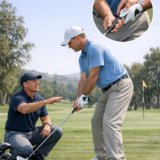
Mastering the follow-through of the golf swing is essential for converting efficient biomechanics into tangible on-course improvements – higher clubhead velocity, repeatable ball flight and fewer injury problems. The follow-through is more than the posture after impact; it reveals the quality of the kinetic chain that produced the strike and signals how well energy was transferred, segments were sequenced, and neuromuscular control was maintained. Small changes in torso rotation, wrist-release timing, or lower-limb force expression during the deceleration and extension phases directly affect shot dispersion, launch conditions, and the likelihood of compensatory compensations.
This article combines contemporary biomechanical findings and practical coaching methods to define the key drivers of an efficient follow-through: proximal‑to‑distal sequencing, management of ground reaction forces, accurate timing of wrist/arm release, and the ability to preserve posture under differing task demands. It reviews objective measurement tools – high‑speed video, IMUs, force platforms and launch monitors – and converts their output into progressive, evidence‑based drills designed to increase power, steadiness and precision. The goal is to give coaches and players actionable protocols that link theory to practice so follow‑through mechanics improve measurable performance on the course.
Foundations of a High‑Performance Follow‑through: Sequencing, Torque and Joint Roles
Efficient sequencing follows a proximal‑to‑distal pattern: the legs and hips begin the motion, the pelvis unthreads, the torso and shoulders continue, and the wrists finish the action. A practical target is about 45° of pelvic rotation and roughly 90° of shoulder turn (individual anatomy varies), creating an X‑factor separation (pelvis vs shoulders ~20-45°) at the top of the backswing that stores elastic energy for the downswing. Rather than obsessing over exact angles, coach the timing of segment transfers: start the downswing with a controlled lateral shift toward the lead foot and a slight forward tilt of the spine, let the hips clear in front of the shoulders, keep wrist lag until roughly the last 10-15 cm before contact, then allow the hands to accelerate through impact while the forearms and wrists add the closing angular velocity. Use tools such as launch monitors or frame‑by‑frame video to quantify progress: monitor peak pelvis rotational velocity, peak shoulder rotational velocity, clubhead speed and sequencing timestamps. Ideally peak pelvic speed precedes peak shoulder speed and then peak clubhead speed.To ingrain the pattern, use drills that emphasize proximal initiation and distal release:
- Medicine‑ball rotational throws: 8-12 reps × 3 sets to reinforce hip‑to‑torso power transfer and timing;
- Step‑through drill: half or three‑quarter swings finishing by stepping toward the target to feel pelvis clearance and weight shift;
- Pause at 3/4: hold briefly at three‑quarters of the backswing, then accelerate – repeat sets of 10-20 to build correct sequencing into muscle memory.
Torque production drives both distance and repeatability: it is the product of ground reaction forces,trunk counter‑rotation and a delayed wrist release. Start by refining ground mechanics – a slightly wider stance for stability (roughly shoulder width for mid/short irons, a touch wider for driver), about 5-8° of forward shaft lean for irons at address, and a firm lead‑leg brace at impact so rotational energy translates into clubhead speed. Use a 3:1 backswing‑to‑downswing tempo as a working rhythm (for exmaple,a 0.6 s backswing to a 0.2 s downswing) – speed without correct sequencing is counterproductive.Frequent faults that dissipate torque include early casting (loss of lag), sliding the hips laterally rather than rotating, and excessive head movement. Address these issues with progressive loading drills: impact‑bag contact to feel lead‑leg stability and correct shaft lean, one‑arm swings to develop forearm lag and release control, and resisted rotational swings with light bands to build torque without compensatory motions. Set measurable practice goals – such as, increase clubhead speed by 1-3 mph every four weeks while holding dispersion within a specified yard radius – and reduce peak lateral head displacement to under ~5 cm in the downswing as verified on video.
Convert biomechanical gains into course strategy and short‑game refinement by tailoring follow‑through mechanics to shot intent and conditions. For low‑trajectory shots or strong winds, shorten the follow‑through and limit wrist release to lower spin and launch; for controlled draws or fades, subtly alter the finish path and clubface rotation while keeping proximal‑to‑distal timing intact. In the short game, separate chip/bump‑and‑run finishes from full wedge swings: chips and bump‑and‑runs use forward shaft lean and a compact, abbreviated finish with minimal wrist action, whereas pitches require a fuller acceleration through the ball and a soft but decisive finish to manage loft and spin.Putting relies on a shoulder‑driven pendulum with minimal wrist hinge – match follow‑through length to intended distance and practice with a metronome or a 3:1 tempo ratio to sharpen control. Use these setup, equipment and routine checkpoints in practice and pre‑shot preparation:
- Setup checkpoints: ball position, shoulder alignment, shaft lean and balanced pressure distribution (about 60/40 lead/trail for many iron shots);
- equipment considerations: select shaft flex and clubhead loft that preserve your preferred attack angle and release pattern; adjust grip size if excessive wrist compensation is observed;
- practice routines: 30-50 focused reps per drill, three sessions per week alternating full‑swing sequencing and short‑game finish control, with video or launch‑monitor reviews every 2-4 weeks.
With progressive training of sequencing, torque expression and context‑specific finishes, golfers from beginners to low handicaps can expect measurable gains in consistency, shot‑shaping and scoring.
Clubface Management and Release Timing to Improve Accuracy and Ball Speed
Keeping the clubface under control through impact begins with a repeatable setup and a consistent release pattern. At address, adopt a neutral grip (V‑shapes pointing toward the right shoulder for right‑handers) and maintain moderate grip pressure (≈5-6/10) so forearms can rotate freely without tension. kinematically, clubface orientation at impact mainly sets the shot’s initial direction while the combination of face angle and club path creates curvature; aim to keep the face‑to‑path variance within ±2° for predictable shape. Promote a slight forward shaft lean of 5°-10° at impact with a relatively flat lead wrist to compress the ball – this improves ball speed and reduces exaggerated spin on off‑center strikes. Use the finish as a practical on‑course cue: a balanced end‑position with full shoulder turn and arm extension usually reflects a synchronized release and solid contact.
Turn technique into measurable enhancement using staged drills and equipment feedback. Start with inclusive drills that scale for all levels and progress in complexity:
- Impact bag drill: short swings into an impact bag to feel forward shaft lean and a square face at contact;
- Towel‑under‑arm drill: keeps torso and arms connected to promote a one‑piece takeaway and coordinated release;
- Two‑pocket release drill: three‑quarter swings aiming to feel the hands finish into the chest pockets – reinforces timely forearm pronation;
- Face‑tape or impact tape with launch monitor: objective strike‑location and face‑angle feedback; aim to center strikes within a one‑inch radius and hold face angle within ±2°.
For finer growth, use resistance‑band throws to train late acceleration and validate gains using a launch monitor: track smash‑factor, clubhead speed and spin axis. Equipment variables such as grip diameter, shaft torque and lie angle materially alter release behavior – consult a qualified clubfitter if face‑control problems persist despite sound technique. Suggested routine: three sessions weekly with ~20 minutes on these drills and monthly face‑angle reviews with video and launch data.
On the course, combine release mechanics with shot selection and situational adaptation. Into wind,de‑loft the club 2°-4° (ball slightly back in stance,reduced wrist hinge) and use a more compact finish to produce penetrating trajectories and less wind drift. To shape a controlled fade, present a slightly open face at impact while maintaining a modest in‑to‑out path adjustment (~1°-2°). Common errors include an early “flip” that kills lag and ball speed, or excessive hand action that rapidly closes the face and yields hooks; correct these by practicing slow‑motion swings focused on extension through the ball and rehearsing the finish until the belt‑buckle or sternum points at the target (a dependable visual cue). Troubleshooting swift checklist:
- If shots consistently slice right: check for open face at impact and inadequate forearm pronation – work two‑pocket release and impact bag drills.
- If shots are pulled or hooked: evaluate grip strength and premature hand rotation - ease grip tension and delay release to preserve clubhead speed.
- If distance is short: verify forward shaft lean and centralized impact; set a measurable target to improve smash factor by 0.03-0.05 with focused practice.
By connecting mechanical objectives with repeatable follow‑through positions and clear practice metrics, players at every level can systematically raise accuracy and ball speed while making smarter strategic choices on the course.
Tempo, Rhythm and Transition Cues for Reliable Contact Across Clubs
A repeatable tempo and steady rhythm start with a disciplined setup and measurable swing structure: use a 3:1 backswing‑to‑downswing tempo as a baseline, target a shoulder turn of ~90° (men) / ~80° (women), and roughly 45° of lead‑hip turn on a full swing. Transition timing is the product of correct sequencing – lower body initiates, followed by torso, arms and clubhead – and this timing produces consistent strikes when combined with controlled grip pressure (~4-5/10 on a 1-10 scale). at address, match ball position and shaft lean to the club: mid‑irons slightly forward of center with about 5-10° forward shaft lean at impact for compression; wedges more centered for a steeper attack. Equipment fit (shaft flex,lie angle) affects perceived tempo and impact location; get clubs checked if you see recurring heel‑ or toe‑biases. Rehearse these setup checkpoints before each swing:
- Grip pressure: 4-5/10 to permit a natural release;
- Weight distribution: ~60-70% on the lead foot at impact, ~90% at the finish;
- Address angles: shoulder/hip turn targets and wrist hinge (~90° at the top) to cultivate reliable lag.
Transition cues smooth the move from backswing to downswing and prepare for a controlled follow‑through: view the pause between backswing and downswing as a brief, deliberate shift rather than a violent snap. Use the cue “lead with the left hip” (right‑handers) to feel the shaft drop while preserving lag – the shaft should trail the hands through the first 30-40% of the downswing to produce strong compression.At impact,aim for a narrow,repeatable divot that begins just beyond the ball; a practical benchmark is a consistent divot starting within 1-2 inches past the ball on full iron shots. Common faults and their fixes: casting (early release) corrected by the impact‑bag drill; early extension (standing up) corrected by towel‑under‑armpit work to hold posture; thin or skinned shots from weak wrists corrected with one‑arm drills. Typical practice drills:
- Metronome drill tuned to a 3:1 ratio (backswing beats : downswing beat);
- Pause‑and‑release at the top for one count to train a smooth transition;
- Impact bag and one‑arm swings to build compression and eliminate casting.
Translate tempo training into course decision‑making and short‑game versatility: use a compact, quieter tempo for low punch shots into the wind, and a slightly longer, smoother tempo for fairway woods and driver to protect face angle and launch. Approach the greens with the same cadence principles for chips and pitches – a three‑quarter wedge pitch should finish with the hands extended toward the target and weight forward to ensure consistent spin and stopping power. Structure practice sessions with measurable blocks: a 30-45 minute tempo session (10 min warm‑up & wedges; 15 min metronome swings across 3-4 clubs; 10-15 min situational short game), and set goals like 80% of full swings producing the intended divot pattern and distance dispersion within ±5 yards for given clubs.In competition, use a simple pre‑shot rhythm (e.g.,inhale on setup,exhale on transition) to reduce tension and help execute the shot you selected.
Lower‑body Timing and Weight‑Transfer Methods to Maximize Power
Start from a biomechanically efficient base that prepares the lower body to drive the kinetic chain: adopt a stance roughly shoulder width + 10-20% of your height (wider for longer clubs, narrower for short‑game), keep 5°-10° knee flex, a 15°-25° hip hinge, and a spine tilt that allows the rear hip to clear on the backswing. From here, lower‑body sequencing should follow proximal‑to‑distal activation: initiate the transition with a controlled lateral bump of about 20%-30% onto the trail leg, then rotate the pelvis rapidly toward the target through the impact window while the torso, arms and club follow. Measurement targets include roughly 45° of pelvis rotation and up to 90° of shoulder rotation on a full power swing; maintain spine angle through impact to keep dynamic loft and strike location consistent. Typical breakdowns at this stage are swaying (excess lateral shift) and early extension (standing up) which reduce GRF and produce thin or blocky contacts. Correct these by shifting weight downward‑and‑forward into the lead heel at impact and preserving lower‑spine posture, reinforcing the link between weight transfer and efficient clubhead delivery.
Turn technique into measurable practice plans and account for equipment influences. Useful drills include:
- Step Drill: start with feet together, take the backswing, then step into your normal stance on the downswing to train lead‑leg loading and timing;
- hip‑Lead Impact Bag Drill: swing into an impact bag to sense pelvis rotation and weight transfer while retaining arm extension;
- Medicine‑ball rotational throws: 3 sets of 8 for explosive hip‑to‑torso transfer and rotation proprioception;
- Pressure‑mat feedback: use a pressure mat or wearable to target ~65%-80% lead‑foot pressure at impact; aim for incremental weekly gains (≈5%) when rebuilding a stalled transfer pattern.
Equipment choices matter: shaft flex,head mass and lie angle influence timing and feel – for example,a stiffer shaft may require earlier hip initiation to square the face,while an upright lie can promote faster lateral transfer on tight lies.Set concrete goals such as gaining 3-6 mph of clubhead speed in 8-12 weeks by improving GRF rather than overusing the upper body, and use launch‑monitor outputs (dynamic loft, attack angle, spin) to track sequencing changes.
Apply lower‑body sequencing to on‑course choices and finish commitment: in situations demanding distance or trajectory control (e.g., downwind par‑5s or narrow fairways) emphasize fuller hip rotation and earlier weight shift to maximize GRF and clubhead speed; for punch shots, tight lies or strong winds, intentionally keep more weight on the trail foot through impact and reduce pelvic rotation to lower launch and spin. Use pre‑shot checks – visualize the finish, confirm stance width and ball position (move the ball one ball forward for driver, mid‑stance for long irons) and pick a tempo that lets the hips lead without rushing the arms. Troubleshooting during practice or play:
- If shots are thin or weak: re‑establish lead‑foot pressure at impact and spine angle; try the impact‑bag drill;
- If shots are pushed or cut: look for early hip opening and slow rotation with a feet‑together takeaway;
- If distance varies: review slow‑motion video to ensure pelvis precedes torso and hands through impact.
Adopt a mental cue like “hips then hands” to reinforce sequencing under pressure – connecting a simple phrase to the physical pattern helps translate technical repetition into better scoring by increasing strike consistency and proximity to the hole.
Drill Progressions and Practice Protocols to Cement an Effective Follow‑Through
Start from a repeatable setup and a clear end‑state: the follow‑through is the outcome of proper address, sequencing and impact – not an isolated flourish. Set up reliable checkpoints before you swing – ball position appropriate to the club (center for short irons, forward of center for long irons/woods), shaft lean ~5-10° forward at impact for irons, and neutral grip pressure (~4/10 on a 1-10 scale). Train the unwinding sequence with a backswing shoulder turn near 90° and hip turn ~45°, then unwind hips first, followed by torso, arms and club so the hands lead through impact. Validate the finish by aiming for a balanced hold where the chest faces the target, the belt‑buckle points at the target and about 80-90% of weight sits on the lead foot – these visual and numeric references correlate with solid impact and an efficient release.
Use progressive, task‑oriented drills that scale from beginner to advanced:
- Finish‑Hold Drill: swing to impact and hold the finish for 5 seconds to train balance and rotation; aim to keep the clubhead within a 1‑ft radius of the intended finish point for three consecutive swings;
- Towel‑Under‑Arm Drill: tuck a towel under the trail armpit to maintain connection and prevent the club from flying off the body; 3 × 10 reps focusing on hip rotation;
- Impact Bag / Forward‑Lean Drill: strike a soft bag to feel a forward shaft lean that encourages crisp iron compression and repeatable divots;
- Left‑Hand‑Only Swings (right‑handers): reinforces wrist release and face control - progress from half to full swings while checking ball flight and dispersion.
Organize practice in blocks (e.g., 3 sets × 10 reps per drill), quantify improvement by tracking dispersion, trajectory and shot shape, and increase pressure by adding timed targets, scoring or simulated course scenarios.
Apply biomechanical gains to on‑course decisions and troubleshooting: shorten the follow‑through with an earlier wrist release for a lower flight into wind; use full extension and a high finish to maximize carry on long par‑4s. Equipment factors such as shaft flex and club length change timing and release – a stiffer shaft may require more aggressive hip rotation. Common issues and fixes:
- Early release / casting: use impact‑bag work and cue a delayed wrist unhinge; measurable target: extend the time from top to release by 10-20% as seen on slow‑motion video;
- Insufficient weight transfer: the step‑through drill finishing with the trail foot stepping forward and holding 3-5 seconds with weight mainly on the lead foot;
- Over‑rotation causing pulled shots: practice half‑swings and pre‑shot alignment checks to square the face at address.
weave mental cues such as “finish first” and visualization into your routine and replicate course conditions in practice (wind, tight lies, soft greens).By moving from setup basics to targeted drills and situational application, players at every standard can establish an efficient follow‑through that improves consistency, scoring and decision‑making.
Objective Metrics and Tech to Monitor Follow‑Through Quality
objective measurement systems – Doppler launch monitors (TrackMan/GCQuad), high‑frame‑rate video, IMU wearables and pressure‑mapping mats – deliver repeatable data linking the dynamic finish to impact quality and flight. For robust assessment, standardize conditions (same ball type, ball position, stance width and neutral grip) and record baseline metrics: clubhead speed, ball speed, attack angle, dynamic loft, face‑to‑path and time‑on‑foot distribution. Technically, aim for a finish that matches a correct release and rotation: clubface square at impact (±2°), slight forward shaft lean on irons (~5-10°), backswing shoulder turn ~80-100°, and weight shifted to the lead foot roughly 60-90% at finish.High‑speed video can confirm visual kinematic cues – chest and belt‑buckle rotation toward the target and a shaft that finishes near parallel to the target line - because those end‑points align with favorable launch‑monitor results and consistent ball flight.
Moving from measurement to improvement calls for tempo‑sensitive drills and equipment adjustments that are verifiable with objective feedback. Start with progressive exercises and use these checkpoints to isolate follow‑through mechanics:
- gate drill with alignment sticks to lock in correct club path and prevent early release;
- Impact‑bag or towel drill to feel forward shaft lean and compression;
- Pause‑at‑impact drill with slow‑motion video to ingrain precise wrist timing and release;
- Step‑through drill to promote full weight transfer and a balanced finish.
Check equipment parameters – shaft flex, lie and grip size – since thay materially influence release and finish. Common diagnoses: early extension (strengthen core and practice towel‑under‑arm), casting (one‑handed drills and impact‑bag reps), reverse pivot (reinforce lower‑body timing and spine angle). For measurable progression set weekly targets – e.g., cut standard deviation in face‑to‑path to ±2°, increase lead‑foot finish pressure by 10%, or hold a balanced finish for 2+ seconds – and verify gains with repeat launch‑monitor sessions and video side‑by‑side comparisons.
integrate follow‑through metrics into tactical play to convert technical gains into lower scores. For low punch shots or windy holes, shorten the swing and use an abbreviated finish to lower launch and spin; for maximum carry and soft landings, use a full high finish with complete rotation. Practice measured scenarios on the course:
- Windy par‑3: keep dynamic loft and follow‑through low to maintain a penetrating flight;
- Dogleg approach: adjust face‑to‑path slightly and visualize a finish line to shape the shot;
- Short‑game chips: practice controlled finishes with hands leading the clubhead to stabilize trajectory and spin.
Combine technical measurements with mental process cues (e.g., “rotate to target” or “hold the finish”) and track improvement with performance metrics such as proximity to hole, GIR and strokes‑gained. Repeated measurement, targeted drills and on‑course application let players – from beginners building weight transfer to low handicaps refining face‑to‑path – produce repeatable follow‑throughs that improve shot‑making and scoring.
Mobility, Stability and Injury prevention to Maintain Long‑Term Follow‑Through Efficiency
Durable mobility and stable control are prerequisites for sustaining an efficient follow‑through without chronic pain.Typical golf mobility requirements include thoracic rotation ~45-60° for a full shoulder turn, hip internal/external rotation ~20-30° for pelvic unwind, and ankle dorsiflexion ~10-15° to keep balance through the finish. Begin with dynamic routines and progressive loading to protect the lumbar spine - exercises such as thoracic windmills, 90/90 hip transitions and single‑leg Romanian deadlifts with light resistance. unrestricted thoracic mobility helps avoid compensatory lumbar extension and the early‑extension fault linked to low‑back discomfort. Integrate preparatory movements into warm‑ups and off‑range sessions using these drills:
- Thoracic rotation drill: kneeling windmill, 3 × 8 reps per side focusing on 45-60° rotation;
- Hip mobility drill: 90/90 holds, 3 × 30 seconds per side to increase hip internal/external rotation;
- Single‑leg stability: 3 × 30-60 second balance holds progressing to single‑leg RDLs with 5-10% bodyweight load.
Layer mobility with technique that protects tissues and supports consistent finishes. Start with a neutral spine (~30-40° from vertical), a slightly flexed lead knee and grip pressure ~4-6/10. Keep shaft lean of 5-10° forward on iron contact and aim to finish with about 70-80% of weight on the lead foot. Use controlled technical drills that allow full‑speed sequencing while enabling error correction: slow‑motion swings to the finish, step‑through patterns and impact‑bag repetitions. common faults and remediation:
- Early extension: correct with wall‑posture drills and chair‑supported backswing reps to keep spine angle through impact;
- Casting/early release: correct via towel‑under‑armpit and half‑swing work to sustain lag until downswing initiation;
- Collapsed lead knee / reverse pivot: correct with slow step‑throughs and mirror checks to preserve posture into the finish.
Embed injury‑prevention habits into practice and on‑course choices to maintain follow‑through quality over time.Structure training with measurable objectives – e.g., aim for 80% of 50 practice swings finishing with chest toward the target and the club wrapped across the shoulder, then validate via video. Adopt a periodized routine: two mobility/stability sessions per week, three technical practice sessions (range and short game) and one on‑course management round focusing on decision‑making under fatigue.Equipment matters: lighter shafts can reduce repetitive load for older players, and correct grip sizing plus good shoe traction limit compensatory motions on slick turf. In play, favor a controlled 3/4 finish for wind or tight lies while preserving impact fundamentals, and use a consistent pre‑shot breathing pattern to lower muscular tension. Provide regressions (mirror work, slow swings) and progressions (weighted bat swings, tempo training) so all players can measure improvement and lower injury risk over time.
Q&A
Note: the web search results provided were unrelated to the topic and were not used in preparing these Q&A items. the following Q&A draws on established biomechanical and coaching principles relevant to the golf swing follow‑through.Q1: What is the follow‑through and why is it important to power, consistency, and precision?
A1: The follow‑through is the segment of the swing after ball contact that includes club deceleration and continued body rotation. Biomechanically it reflects the integrity of the kinetic chain and sequence that created the strike. A stable, balanced follow‑through signals efficient energy transfer (optimizing clubhead and ball speed), repeatable impact geometry (face angle, path, attack angle) and appropriate deceleration strategies – each underpinning power, consistency and precision.
Q2: What are the principal biomechanical elements that determine an effective follow‑through?
A2: Key elements are: (1) correct kinematic sequencing – pelvis leads, followed by thorax, arms and club; (2) sufficient rotational range and speed in pelvis and thorax to sustain angular momentum through impact; (3) controlled eccentric action of forearm and shoulder muscles to decelerate without premature release; (4) balanced ground reaction forces and stable lower‑limb support; and (5) maintained spine angle and head stability through impact to protect impact geometry.
Q3: How does kinematic sequencing during the downswing affect the follow‑through?
A3: Proper proximal‑to‑distal sequencing produces a whip‑like transfer of angular velocity and maximizes clubhead speed at impact. If sequence carries through impact, the follow‑through will be smooth and extended.Faulty sequencing - early arm dominance or “casting” – causes premature release, reduced ball speed and wider dispersion.
Q4: which measurable metrics indicate an optimized follow‑through?
A4: Objective indicators are stable clubhead and ball speed, tight shot dispersion, repeatable launch angle and spin for a given club, and consistent impact location on the face. Motion analysis can quantify pelvis‑thorax separation, peak angular velocities and their timing. Useful subjective proxies include the ability to hold a balanced finish and the absence of compensatory movement after impact.
Q5: How does follow‑through differ by club (driver versus irons versus wedges)?
A5: The finish varies by club and intent: drivers often finish more extended and higher with a larger arc and emphasis on sustained rotation for speed; irons favor consistent impact geometry and usually a more compact finish to manage attack angle; wedges often use abbreviated finishes to control height and spin. The sequencing and deceleration principles, however, remain constant.
Q6: What are the most common technical faults in follow‑through and their corrective strategies?
A6: Common faults:
– Early release/casting: fix with drills that delay wrist unhinge (towel‑under‑arm, pause‑at‑top).
– Over‑rotation or reverse pivot: address with lower‑body stability and weight‑transfer drills (step‑through, single‑leg balance).
- Collapse of posture/head lift: use spine‑angle retention and impact‑hold drills.
– Short, choppy finish: use tempo and rhythm drills (slow‑motion, metronome) to encourage full extension.
All corrections should include objective feedback (video, coach, launch monitor) and progressive loading.
Q7: What drills and exercises reliably improve follow‑through mechanics?
A7: Effective drills:
– Towel drill (under lead armpit) to keep the body connected and delay release.
– Step/stride‑through to train weight transfer and rotation.- Pause‑at‑impact or slow‑motion swings to reinforce correct sequencing.
– Wall or finish drills to develop a balanced, open‑chest finish.Supportive strength and mobility work: hip rotations (rotational lunges), thoracic mobility (open‑book), glute strength (hip thrusts) and single‑leg stability (single‑leg RDL) to create a reliable platform.
Q8: how should a coach or player assess progress in follow‑through growth?
A8: Use a multimodal approach: (1) kinematic video (face and down‑the‑line) for sequencing and finish; (2) launch‑monitor metrics for clubhead/ball speed, launch and spin; (3) balance/finish‑hold tests; and (4) functional screening (hip/T‑spine range, single‑leg stability).Establish baselines and track change over time with standardized warm‑ups and club selections.
Q9: What role does physical conditioning play in achieving an effective follow‑through?
A9: Physical conditioning is essential. Hip and thoracic mobility enable required rotation, lower‑body strength and explosive power (glutes, quads) generate GRF and initiate the downswing, core stability controls torso rotation and deceleration, and eccentric strength in forearms/shoulders protects structures during deceleration. A periodized program reduces compensatory patterns and supports repeatable finishes.
Q10: are there injury risks associated with improper follow‑through, and how can they be mitigated?
A10: Yes. Poor deceleration strategies and improper sequencing can increase eccentric loading on shoulders, elbows and the lumbar spine, raising the risk of tendinopathy and strain. Mitigate risk with progressive loading, correct technique that disperses forces through the kinetic chain, eccentric conditioning for upper limbs, mobility work and adequate recovery. Early assessment for persistent pain is recommended.
Q11: How should training be organized (practice structure) to optimize follow‑through outcomes?
A11: structure practice in phases: (1) technique acquisition – low‑speed, focused drills with video feedback; (2) integration – medium‑speed swings with partial load and targeted metrics (launch monitor); (3) transfer – full‑speed practice in varied conditions and on‑course simulation. Prioritize short,high‑quality sessions and include conditioning 2-3 times weekly.
Q12: What objective tools are most useful for refining follow‑through?
A12: Valuable tools include high‑speed video for slow‑motion analysis, launch monitors (TrackMan/GCQuad) for impact data, wearable IMUs for sequencing and timing, pressure plates/force platforms for GRF analysis and 3D motion capture in advanced settings. Pair objective numbers with expert coaching to translate data into technique changes.
Q13: How can a player transfer improved follow‑through from practice to competitive play?
A13: Simulate competition during practice (time pressure, varied lies), use a consistent pre‑shot routine that cues sequencing, and employ outcome‑focused cues (e.g., “finish balanced and rotated”) rather than internal mechanics during play. Short technical tune‑ups between rounds help preserve motor patterns under stress.
Q14: What are realistic indicators of mastery for follow‑through mechanics?
A14: Indicators of mastery include consistent shot dispersion within target tolerances,repeatable impact metrics (ball speed,launch,spin),sustained balanced finishes across conditions,and absence of compensatory movements under fatigue.
Q15: What are common misconceptions about the follow‑through?
A15: Common myths: (1) that the follow‑through creates power – power is generated before and at impact; the follow‑through reveals transfer quality; (2) that one universal finish fits everyone – finishes vary by anatomy and shot objective though sequencing principles hold; (3) prioritizing visual aesthetics over repeatable impact mechanics.
Practical summary (actionable takeaways)
– Prioritize proximal‑to‑distal sequencing and lower‑body initiation to create an effective follow‑through.
– Employ specific drills (towel, pause‑at‑impact, step‑through) alongside video and launch‑monitor feedback.- Build hip and thoracic mobility, lower‑body power and eccentric control to support force production and safe deceleration.
– Measure progress with objective metrics and functional screens, then transfer improvements to on‑course scenarios via simulation.
If you would like, I can convert these Q&A items into a formatted FAQ section for publication, provide drill progressions with week‑by‑week programming, or generate sample video analysis cues for each common fault.
Note: the provided web search results were unrelated (they reference Logitech MX Master mice) and did not contribute to the text below.
Outro – Master the Golf Swing Follow‑Through: Unlock power, Consistency & Precision
The follow‑through is not an ornamental finish but a central element of the golf swing that both indicates and reinforces the kinetic, temporal and spatial features that determine power, consistency and precision. Mastering it requires an integrated approach blending clear technical aims (sequencing,extension and balance),biomechanical insight and structured motor‑learning practice. When practiced deliberately, the follow‑through provides immediate diagnostic feedback – enabling correction of faults, stabilization of impact mechanics and refinement of directional control.
Coaches and practitioners should use evidence‑based workflows: quantify performance with objective metrics (clubhead speed, attack angle, dispersion), apply video and sensor analysis to monitor kinematic change, and prescribe level‑appropriate drills that progressively overload targeted movement patterns. Emphasize variability, contextualized practice and measurable milestones to speed transfer from isolated repetitions to resilient on‑course performance.
Improving the follow‑through is iterative and measurable. By integrating biomechanical assessment, structured progressions and consistent feedback, players can systematically unlock extra power while increasing repeatability and accuracy. Ongoing measurement, targeted practice and deliberate refinement produce durable performance and lower scores over time.

Unlock Explosive Power and Laser Precision: Transform Your Game with the Perfect Golf Swing Follow-Through
Why the Golf Swing Follow-Through Matters for Power, Consistency & Precision
The follow-through is not an afterthought – it’s the final expression of everything your body and club did during the backswing and downswing. A consistent, balanced follow-through reflects proper sequencing, efficient energy transfer, and controlled clubface rotation. When you optimize the golf swing follow-through, you get:
- More clubhead speed and driving distance
- Improved directional control and shot shape consistency
- Better impact compression and tighter dispersion
- Repeatable tempo and fewer mishits under pressure
Key Biomechanical Principles of a Powerful Follow-Through
1. Correct Kinetic Sequencing
Power comes from sequencing – ground forces → hips → torso → arms → hands → clubhead. The follow-through should show that sequence continued beyond impact: hips cleared toward the target, shoulders rotated, and hands finishing high. If your finish looks forced or out-of-sequence,you likely lost speed before impact.
2. Balanced Weight Transfer
Efficient weight transfer to the lead side at impact creates a stable base for acceleration through the ball. The follow-through should leave most weight on the lead foot, with the trail foot up on the toe or moving forward. Poor weight transfer creates fat shots, thin strikes, or hooks/slices depending on clubface control.
3.Extension and Release
Good extension through the ball (arms reaching toward the target after impact) ensures late release and solid compression. The hands and club should extend out in front of your torso at impact, then release naturally as the body rotates. Early release (casting) kills power and consistency.
4. Tempo, Rhythm & Deceleration control
A smooth tempo lets you build lag and release at the right moment.The follow-through shouldn’t show abrupt deceleration or a collapsing posture – those are signs you slowed down before the ball. Maintain acceleration through and past impact for maximum ball speed.
5. Clubface Orientation & Path Reflection
the finish position reveals path and face position tendencies. A closed clubface at the finish frequently enough correlates with hooks; an open finish correlates with slices. Aim to finish with the clubhead balanced and pointing in the direction of the target or along your intended shot shape arc.
Diagnose Your Follow-Through: Simple Checks
- Are you balanced and holding your finish for 2-3 seconds?
- Is most of your weight on the lead foot after the swing?
- Is your chest facing the target (or slightly left for a neutral finish)?
- Does your trail foot point toward the target with the heel up?
- Does the clubhead finish high, with full rotation of shoulders and hips?
High-Impact Drills to Build a Powerful, Precise Follow-Through
Practice drills that teach sequencing, balance, release, and tempo. Repeat with intention – quality reps matter more than quantity.
Drill 1 - Pause-at-Impact
Take half-swings and pause at impact for 2 seconds. Feel extension and weight on the lead foot. Resume into the follow-through. This teaches impact position and encourages a proper finish.
Drill 2 - Towel Under Arm
Place a small towel under your lead armpit and keep it there through the swing. This builds connection between body and arms, resulting in more controlled release and a compact, efficient finish.
Drill 3 – Step-Through Drill
Start with a short backswing, then step the trail foot forward toward the target as you rotate through impact. This exaggerates weight transfer and encourages a forward, athletic finish.
Drill 4 - Medicine Ball Rotational Throw
Use a light medicine ball for rotational throws to the target. This builds explosive hip-to-shoulder sequencing and core power that carry directly into a stronger follow-through.
Drill 5 - Mirror or Video Check
Record your swing at 120-240 fps or use a mirror. Compare your finish to a model: hips cleared, chest rotated, lead leg stable, club finishing high. Small visual corrections speed up learning.
| Drill | Primary Benefit | Reps/Frequency |
|---|---|---|
| Towel Under Arm | Connection + release control | 10 reps × 3 sets, 3×/week |
| Pause-at-Impact | Impact feel + extension | 15 reps × 2 sets, 2×/week |
| Step-Through | Weight transfer + balance | 12 reps × 3 sets, 2-3×/week |
| Medicine Ball Throws | Rotational power | 8 throws × 4 sets, 3×/week |
Fitness & Mobility: The Hidden Drivers of Follow-Through Quality
To sustain a powerful and precise follow-through, improve mobility and strength in these areas:
- Thoracic rotation – enables full shoulder turn and a clean finish
- Hip mobility and glute strength – drive weight transfer and rotation
- Core stability – link lower and upper body for efficient sequencing
- Ankle and foot mobility – provide a stable base for balance at the finish
Simple exercises: thoracic twists, hip CARs (controlled articular rotations), single-leg Romanian deadlifts, and resisted band rotations. Train movement quality 2-3×/week for better on-course carryover.
Common Follow-Through Faults & Targeted Fixes
Fault: Early release (Casting)
Symptoms: Loss of power, thin shots, inconsistent distance. Fix: Work on maintaining lag with slow builds and the pause-at-impact drill. Strengthen wrist flexors and practice half-swings focusing on retained angle.
Fault: Falling Back or Reverse Pivot
Symptoms: Big thin or topped shots, poor balance. Fix: Step-through drill and balance holds on lead leg. Check ball position and weight shift pattern.
Fault: Over-Rotation / Sway
Symptoms: Loss of contact consistency and direction. Fix: Stabilize lower body with single-leg balance drills and emphasize hip rotation instead of lateral sway.
Fault: Open or Closed Finish Indicating Face problems
Symptoms: Slices or hooks. Fix: Use alignment sticks to trace your swing path and work on face control drills with half-shots and slow-motion swings. Small grip and release adjustments can correct face orientation.
How to Build a 6-Week Follow-Through Practice Plan (Sample)
Follow this structured plan to create durable habit change. Combine range work, fitness, and video feedback.
- weeks 1-2: Fundamentals – daily short practice (15-20 min) focusing on the towel and pause-at-impact drills, plus thoracic mobility routine.
- Weeks 3-4: Integration - introduce step-through and medicine ball throws; practice 30-45 min sessions 3×/week, include on-course simulation shots.
- Weeks 5-6: Speed & Precision – add full-swing reps with video feedback, focus on tempo and holding the finish for 2-3 seconds under fatigue; track carry distance and dispersion.
Case Study: From Slicing Drives to Confident Fairway Hits
Golfer profile: Amateur mid-handicap player struggling with a consistent slice and poor distance. Baseline: 225-yard average driver, 28% fairways hit.
Intervention: 6-week plan emphasizing weight transfer (step-through drill), face control (alignment-stick path practice), and explosive rotation (medicine ball). Weekly video analysis used to track progress.
Outcome after 6 weeks:
- Average driver distance increased to 238 yards (+13 yards)
- Fairways hit increased to 45%
- Shot dispersion tightened, and the follow-through routinely showed full body rotation and weight on the lead leg
Key takeaway: Fixes that focus on sequencing and balance in the follow-through produce measurable gains in both power and accuracy.
How Tour Pros Think About the Finish
Pros emphasize a repeatable finish – not a cosmetic pose. The finish must be the natural resolution of a correctly sequenced swing. Watch high-level players: the look of their follow-through tells you whether they hit a quality shot. Use that as a visual goal during practice.
Quick Checklist to Use on the Practice Range
- Warm up mobility for 5-10 minutes (thoracic rotation, banded swings)
- Start with slow half-swings and the pause-at-impact drill
- Progress to step-through and full swings, recording every 10th swing
- Finish each practice session with 10 quality controlled swings, holding the finish
- Track distance, face strike (aim for center), and dispersion
FAQ: Follow-Through Questions Golfers Ask most
Q: Should my hands be high in the follow-through?
A: Yes – a high finish indicates full release and rotation. Hands that don’t climb frequently enough mean the swing stopped early or the release was blocked.
Q: How long should I hold the finish?
A: Hold it for 2-3 seconds. If you can’t hold the finish, it’s a sign your balance or sequencing needs work.
Q: Will changing my follow-through change my ball flight?
A: Often yes – follow-through reflects path and face control. Small changes can significantly impact shot shape and dispersion.
Tools & training Aids That Reinforce a Better follow-Through
- Impact bag – safe way to feel impact position and extension
- Alignment sticks - train path and stance, reinforce desired finish line
- Mirror or phone mount - immediate visual feedback
- Light medicine ball - builds rotational power
Final Practice Pointers (Short & Actionable)
- Quality over quantity: 150 intentional swings beat 300 mindless ones.
- Video onc per session – small adjustments compound.
- Mix feel drills (pause-at-impact) with speed work (medicine ball throws).
- Be patient: follow-through improvements usually become evident within 4-8 weeks with disciplined practice.