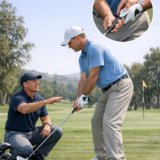
This article offers a structured, evidence-oriented reinterpretation of the Greg Norman approach for improving full-swing mechanics, maximizing tee-shot performance, and sharpening putting. Drawing on Norman’s public instruction-emphasizing an inside-to-out swing arc for a controlled draw, the ”right pocket back” cue for generating power, grip/tension adjustments for putting, and the psychological routines he promotes-this analysis integrates biomechanical reasoning, motor-learning principles, and practical practice design. The method focuses on sequencing (kinematics), launch-condition management, consistent green-reading and stroke mechanics, and drill prescriptions that convert technical change into measurable on-course gains. The objective is to present Norman’s heuristics in an evidence-aligned framework coaches, clinicians, and dedicated players can deploy to increase strike consistency, boost reliable driving performance, and improve putting under pressure.
Understanding Greg Norman’s System: Biomechanics Behind a Reliable Swing
start with a setup that reduces variables and makes repetition easier to achieve.Adopt an athletic posture with a modest forward spine tilt (roughly 10-15°), about 15-20° knee flex, and a neutral pelvis so the shoulders can rotate without restriction. For full shots, position the ball progressively: driver just inside the left heel, mid‑irons near center, and wedges slightly back of center to encourage a descending strike. Norman’s “triangle” concept-arms and shoulders forming a stable relationship with the chest-helps preserve connection through the swing. Target a large shoulder turn (men ~~90°, women ~~80°) with the hips rotating ~40-50°. Equipment should match tempo: shaft flex and club length must support your kinematic sequence (hips → torso → arms → club). Simple training aids-an alignment stick across the shoulders, a towel under the armpits to keep connection, and mirror work-are effective for embedding posture, spine angle, and ball position.
Once the posture is solid,refine sequencing and impact mechanics to turn torque into predictable ball flight. Use ground reaction by initiating the downswing with a measured lateral weight shift toward the front heel and an assertive hip turn; aim for approximately a 60/40 weight split at impact (front/rear) for manny iron strikes. Maintain a modest forward shaft lean (about 5-10°) at impact on irons to achieve compression, and keep the lead knee braced to create a stable rotation axis. Frequent faults-early arm lift, casting, and excessive lateral slide-are best addressed with targeted drills: impact-bag work to feel compression and shaft lean, step drills to sync the lower body, and pump drills to engrain sequence timing. Apply these same compression ideas to the short game: use a slight forward hand press for chips and pitches, pick wedge bounce to match turf conditions (open with bounce in soft sand, square for tight lies), and practise distance control with a clock-style routine for wedges to develop reliable feel.
Embed mechanical improvements into course-oriented decision-making and measurable practice patterns. Open each session with a concise warm-up (10 minutes mobility and tempo work), move into focused ball-striking (30 minutes; use a launch monitor if available to track launch and spin), and finish with 30-40 minutes of short-game and putting under pressure. Set time-bound performance goals-e.g.,shrink 7‑iron dispersion to within 20 yards or raise fairways hit by 10 percentage points in six weeks-and monitor fairways,GIR,and up‑and‑down rates. On the course, follow Norman’s pragmatic advice: start with the clubface first, add an extra club into a headwind roughly for every 15-20 mph of wind, and favor conservative layups when hazards or pins increase downside risk. Offer varied learning pathways (visual imagery, kinesthetic drills, and video feedback) and always end practice with simulated course scenarios-wind, firm lies, and scoring pressure-to accelerate transfer from the range to the course.

Targeted Swing Drills & tempo Training to Build Reliable Mechanics and Power
Repeatability starts with a disciplined setup and an explicitly managed tempo rather than an imprecise “feel.” Use a neutral grip and balanced stance width-about shoulder-width for irons and roughly 1.5× shoulder-width for driver-with a subtle spine tilt away from the target for longer clubs. For measurable benchmarks, aim for a shoulder turn near 90° for mid/higher handicaps and 100-120° for lower handicaps, and train a backswing:downswing time ratio around 3:1 (for example, a ~0.9-1.2 s backswing and ~0.3-0.4 s downswing on a full swing). Use an alignment stick on the intended shaft plane and practice slow‑motion swings until the club consistently tracks that line through transition. To combat common errors (over-the-top, casting, early extension), use simple corrective tools: a towel under the trail armpit during one‑handed half-swings to feel connection, and pause‑at‑top repetitions to refine the transition.
Power and consistency are driven by an efficient kinematic sequence and clean energy transfer from the ground up. Begin the downswing with a controlled lateral transfer to the lead leg and an opening of the hips while keeping the torso stable to preserve shaft lag through impact-this promotes increased ball speed without excessive dispersion. useful drills include impact‑bag strikes to feel a compact forward impact, step‑through reps to rehearse the weight shift, and tape‑strike practice to increase center‑face contact.Equipment matters: ensure driver and irons are fit for shaft flex, loft, and lie so a mismatched shaft doesn’t hide sequencing faults. Short- and long-term targets might include lifting centered strikes to ≥70-80% in a session, tightening 7‑iron dispersion to 10-15 yards for intermediate players (5-7 yards for low handicappers), and pursuing measured clubhead speed gains (for example, +3-6 mph) validated with a launch monitor.
Integrate tempo drills into purposeful practice and on‑course planning. Tempo is a tactical tool Norman often highlights-use controlled, flighted swings and purposeful rhythm to shape shots and manage wind and elevation.construct sessions that alternate technical blocks (3-4 sets of 8-12 focused reps with alignment-plane and metronome drills) and situational play (e.g., play five “holes” on the range where you choose clubs and manage hazards).Use this checklist when troubleshooting under pressure:
- Setup checkpoints: ball position, alignment, grip pressure (light-moderate), stance width
- Tempo cues: metronome at 60-75 bpm for half swings or the 3:1 count for full swings
- Impact checks: divot pattern for irons, ball‑first contact, and center‑face strikes
Also incorporate mental strategies-pre‑shot routines, visualizing shot shape, and boundary-based targets (“play to the fat side of the green”)-and adapt drills to learning styles: alignment and targets for visual learners, impact-bag and towel drills for kinesthetic players, and tempo-centered work for older or mobility-limited golfers. Linking prescriptive drills to tempo training and course scenarios helps golfers of all levels turn mechanics into consistent scoring.
Optimizing Driver Performance: Launch conditions and Equipment Matching
Begin by measuring launch conditions objectively with a launch monitor and synchronized video to establish a baseline: collect clubhead speed, ball speed, smash factor, launch angle, spin rate, and attack angle. To contextualize ranges: many club players sit roughly in the 85-105 mph clubhead speed band, while professional tour averages (TrackMan/aggregate data) are typically above 110 mph-a reminder to scale targets to the athlete.For intermediate golfers around 95-105 mph,a usable driver profile often includes launch in the 11-14° window,spin near 1800-2500 rpm,and a smash factor approaching 1.45-1.50. Diagnose mechanical contributors by first hitting balanced moderate swings to isolate face position, then vary tee height and ball position to observe attack-angle changes, and capture face-on/down‑the‑line video to separate path from face effects.
Use launch data to match equipment and setup to your desired ball flight.Match driver loft to swing speed and launch objective-players under 95 mph commonly need lofts in the 10.5-12° range, while those above 105 mph often perform better with 8-10° and low‑spin face technologies. shaft attributes (flex, torque, kick point, weight) shape launch and feel: a mid‑kick shaft can increase launch for shallow releases; a low‑kick stiff shaft can tame spin and late releases. Club length and lie also influence control (driver rule limits at 48 inches), and slightly shortening length by 0.5-1.0 in can aid control for higher‑handicap players. Practical fitting checks:
- Setup checkpoints: ball just inside the left heel (right-handed), slight spine tilt away from target, and a front/back weight bias ~60/40 at address for a positive attack angle.
- Fitting drills: alternate tee heights (1-3 in) and use impact tape to confirm center-face contact.
- Troubleshooting: if spin is excessive, reduce loft or move the ball back slightly; if a slice persists, close the face at setup and rehearse an in‑to‑out path with alignment-stick work.
These pragmatic adjustments mirror Norman’s course-first ideology: fit gear to the conditions you play and the flight you trust.
Translate launch‑optimized technique and properly fitted equipment into on-course tactics. In windy or firm-linksy conditions,lower launch and spin by teeing the ball a little lower,choking down half a grip,or selecting a lower‑lofted option to produce a more penetrating ball flight; when attacking receptive,elevated greens,opt for slightly higher launch and controlled spin to stop the ball. Drills to cement learning across levels include:
- Beginner: three‑tee progression-5 shots from each tee height (1″, 2″, 3″) and record carry/launch to learn attack-angle feel.
- Intermediate: impact-bag and low-point drill-place a small towel 6″ in front of the ball to encourage a forward low point (+2° to +6°).
- Advanced: simulated-wind practice-vary ball position,wrist set,and shaft lean to produce carry adjustments of ±10-15 yards while keeping dispersion under ~20 yards.
Rehearse pre‑shot routines that include a target reference and a preferred flight cue (e.g., “low and running” vs. “hold and stop”) and set phased objectives-such as adding +5-10 yards of carry while cutting spin over eight weeks-so quantified launch data,equipment choices,and Norman‑style situational strategy deliver repeatable tee shots that lower scores.
Putting Precision: green-Reading, Stroke Stability, and mastering Speed
Build a repeatable green‑reading method that combines multiple viewpoints, grass‑grain awareness, and conservative strategy. Inspect each line from a minimum of three angles-behind the ball,behind the hole,and from the low side-to minimize perceptual bias and reveal subtle contours. Following Norman’s pragmatic advice, when in doubt prefer leaving an uphill tap‑in rather than gambling on a marginally aggressive line; this approach increases par conversion under pressure. Use your rights under the rules to mark and lift on the putting surface to confirm alignment, and operationalize reads with these checkpoints:
- Check grain and sunlight: mown direction and light/shadow patterns affect roll.
- Think in feet not degrees: visualize where the ball must finish-small slopes can move the ball several inches at 10-15 ft.
- Prioritize speed: choose a line that preserves a realistic two‑putt buffer when the break is uncertain.
This system converts subjective impressions into teachable decisions that help novices and fine-tune the judgment of low‑handicap players.
Stroke stability is rooted in consistent setup and a pendulum-like motion: stand feet near shoulder width or slightly narrower,distribute weight evenly (or a touch toward the lead foot on uphill putts),and position the ball slightly forward of center (~0.25-0.5 in) for flat or slight‑upputts to encourage forward roll.keep the putter shaft leaning slightly toward the target so the face returns square within ±2° at impact and minimize lateral body sway (~2 cm). Drills to develop these mechanics include:
- Gate drill: tees just wider than the putter head to enforce a straight back‑and‑through path.
- Mirror/alignment stick: confirm eye position and shoulder alignment parallel to the target line.
- Tempo metronome (60-80 BPM): equalize the rhythm of backswing and follow‑through to reduce wrist collapse.
Set measurable targets such as improving 6‑ft make percentage by 10% over eight weeks or halving three‑putts per round, and correct recurring issues-early wrist release, excessive head movement, or open/closed face-using short, focused sessions (10-15 minutes) before returning to integrated practice.
Speed control is the strongest single lever for lowering scores; practice it under realistic conditions. On the practice green, use distance drills-the ladder drill (3, 6, 9, 12 ft, stopping within 12-18 inches), the 3‑3‑3 drill (three putts from three distances focusing solely on pace), and the backstop drill (put toward a raised edge to practice finishing beyond the hole)-to tune feel for different Stimp speeds. In play, shorten stroke length about 10-15% on greens that are significantly faster than your practice surface; for severe downhill or into‑wind putts, prioritize leaving an uphill comeback over forcing a marginal make. Equipment choices matter: choose a putter head and shaft length that suit your arc (blade vs mallet) and maintain a clean face for consistent forward roll. Blend Norman’s mental staples-pre‑shot routine, committed stroke, and contingency plans (play the safer half when the read is marginal)-to turn putting competence into consistent scoring.
Tiered Practice plans with Metrics and Clear Progression Criteria
Design a progressive swing protocol with measurable checkpoints that scale by skill level and use launch-monitor or range data for feedback. For beginners prioritize setup basics: stance around shoulder width for irons and 1.25-1.5× shoulder width for the driver,15-20° knee flex,and ~10-15° neutral spine tilt. Intermediate players should target consistent impact positions-4-6° forward shaft lean on irons and a driver attack angle from level to +2-4°-to create desirable launch/spin windows. Use objective drills:
- Impact-bag test: 8/10 solid compressions indicates reliable impact mechanics.
- Alignment-stick gate: advance when 75% of shots pass the gate consistently.
- Launch-monitor targets: aim to increase ball speed or cut side spin by 10-20% as progression criteria.
For intermediate and advanced players, advance sequencing and shape control: shoulder turn 90-110°, pelvic rotation 45-60°, and a tempo ratio near 3:1. Practice purposeful curvature (controlled draws to favor safety or a landing corridor) and track dispersion with target bands (e.g., aim for 70% of tee shots within a chosen 20‑yard corridor) before adding riskier shot shapes and course‑management variables.
Level‑specific short‑game practice should feature measurable outcomes that map directly to scoring. For chipping and pitching choose landing zones 2-6 yards onto the green depending on firmness, and match loft/bounce to surface speed. Suggested drills:
- Clock‑face chip: 10 balls per “hour”; goal 60% inside a 6‑ft circle for beginners, rising to 75% for advanced players.
- Sand‑save progression: aim to lift sand‑save percentage from ~25% toward 50%+.
- Putting ladder (3-6-10 ft): set conversion targets-beginners 50-60% at 3 ft,intermediates 70-80%,low handicaps 90%+.
Correct common errors: thin chips-adjust ball position and move more weight forward; scuffed bunker shots-open the face and accelerate through sand with entry a couple inches behind the ball. Practice bump‑and‑runs for firm/windy days and higher flops for receptive greens. Progress when measurable goals are met-e.g., up‑and‑down percentage increases by 10 percentage points or three‑putts fall below 10% of holes played.
Systematize course-management practice so decisions under pressure become habitual and testable. Set lay‑up yardages for par‑5 strategies (e.g., practice laying up to 100-120 yards from hazards until approach proximity is within 25 ft on ~70% of attempts). Use situational drills reflecting norman’s strategic thinking-be aggressive only when expected value favors birdie; or else play conservatively-and quantify results across GIR, proximity‑to‑hole, and scoring by hole type. Check that shaft flex and lie produce an acceptable dispersion ellipse (many amateurs accept ~20-30 yd driver dispersion) and choose ball compression appropriate to swing speed. Add mental routines (pre‑shot sequence, 4:4 breathing) and pressure simulations (match play, penalties) and progress when players maintain target metrics under stress-e.g.,70% of shots inside a chosen target band during a simulated round. By tying swing mechanics, short‑game proficiency, and bright strategy into a measurable progression, players at any level can convert practice time into on‑course improvement.
Course Management to Amplify Driving and Putting Strengths
convert driving ability into predictable hole-by-hole results via a consistent pre‑shot routine prioritizing alignment, intended ball flight, and risk assessment. For driver setup keep the ball just inside the lead heel and tee the ball so roughly half sits above the crown-these simple checks support a target launch near 10-14° for many amateur players when paired with appropriate loft and shaft choices. On the course, follow Norman’s principle of attacking only when it reduces expected strokes-e.g., go for a reachable par‑5 only when your position leaves an approach inside ~220-240 yd-or else play to a safe landing area that leaves a comfortable approach.
To practice shot shaping and repeatability, use:
- Alignment-rod routine: two rods for foot-line and target-line; perform 10 reps of controlled draws and fades with a 7‑iron then driver.
- Launch-consistency drill: 30 drives with launch‑monitor feedback targeting ±5 yd lateral dispersion and ±5% carry variance.
- Tempo and balance: 3:1 backswing:downswing count and hold a balanced finish for two seconds.
Common errors-aiming directly at the flag rather than a landing zone, upper‑body over‑rotation, and inconsistent tee height-are corrected by reducing the target to an 8-12 yd landing corridor and rehearsing the pre‑shot routine three times before each stroke.
Leverage putting strength by combining reliable reads with repeatable stroke mechanics; this often turns potential bogeys into pars. Gauge green speed (many club greens sit in the 8-11 ft Stimp range) and match stroke length so that a typical 6-8 ft uphill putt uses the same backstroke geometry session to session. Norman stresses speed over line: prioritize leaving the ball in a two‑putt range rather than risking an aggressive line that leaves a long return. Drills and checks:
- Clock drill (3 and 6 ft positions) to reinforce face alignment and center contact;
- Lag ladder (10, 20, 30, 40 ft) to calibrate landing and pace;
- Metronome stroke drill (60-80 bpm) to equalize backswing and follow‑through timing.
Fix faults such as excessive wrist action or premature visual lift by rehearsing a fixed eye line and a shaft angle that keeps the center of gravity behind the ball. Use your right to repair ball marks and mark/lift to stay attuned to green speed in competition.
Integrate driving and putting into a coherent hole strategy that turns strengths into controlled aggression. For each hole identify a primary target that aligns with your preferred ball flight, approach distance, and the green’s main slope, then follow a simple decision flow: 1) compute carry and run for preferred lofts, 2) estimate wind effect (adjust ±10% for crosswind/head/tail components as a practical rule), 3) pick a line that leaves the ball below the hole when possible. Practice simulations-e.g., play to yardage percentages (hit a 7‑iron to set distances 75% of the time) and impose constraints (“no driver,” “two‑putt maximum”)-to build decision-making under pressure. Fit wedges for correct bounce to suit the turf and confirm putter lie/length via fitting so your stroke returns the face square. Set measurable ambitions-raise fairways hit by 10%,cut three‑putts by 50%,and narrow approach dispersion to ±7 yd-and use integrated drills and course rehearsal to achieve durable score reduction.
Assessment Tools & Feedback loops for Sustainable Progress and Scoring Gains
Objective assessment combines reliable hardware with systematic baseline testing.Use a TrackMan/GCQuad‑class launch monitor, hands‑free video (OnForm, V1 Pro), and on‑course stat tracking (GOLFTEC/shot‑mapping) to establish a starting profile. Record 20 full swings per club and capture KPIs: clubhead speed,ball speed,smash factor,launch angle,spin rate,attack angle,and lateral dispersion. For many mid‑to‑high handicap male players, a driver smash factor target around 1.45-1.50 and launch near 10-14° is a useful reference; compute means and standard deviations to quantify consistency.Film swings in three views (face‑on, down‑the‑line, impact) to evaluate setup fundamentals-shoulder tilt, spine angle, and shaft/spine relationships at the top. use baseline numbers as objective reference points before making technique or equipment changes so every intervention is measurable.
Turn measurement into a closed feedback loop with short, medium, and long targets combined with focused practice blocks. A weekly cycle can be:
- analysis session reviewing KPIs and video vs baseline,
- focused skills practice (range/short game),
- on‑course simulation or real rounds for validation using launch monitor or app data.
prescribe drills tied to metrics:
- Impact bag: 3 sets × 15 reps to train center‑face contact and compression (expect measurable ball‑speed/smash gains).
- 30-40 yd short‑game ladder: 50 reps across distances, target within 10-15 ft on ~60% of shots.
- Gate putting: aim for face‑angle control within ±1-2° at impact to halve three‑putts in ~8 weeks.
Include Norman’s course insights by practicing controlled 10-15 yd lateral dispersion (draw and fade) and trajectory control to exploit risk/reward lines; validate shapes in slow‑motion video and confirm transfer with on‑course shot‑mapping.
For lasting gains, adopt an iterative measurement → intervention → re‑test cadence every 4-6 weeks, balancing technical work with course management and the mental game. Targetable outcomes might include reducing dispersion by 20%, increasing GIR by 8-12% over eight weeks, or lowering putts per green to ≤1.7. Troubleshoot faults with objective markers-early extension shows as spine‑angle loss on down‑the‑line video and a widening horizontal dispersion; correct with weighted‑impact reps (3 × 20) and reassess. Keep equipment choices data‑driven: perform gapping sessions to guarantee loft/shaft flex create even yardage steps and appropriate launch/spin windows, and ensure compliance with USGA/R&A rules if competing. Pair technical logs with pressure simulation and reflection so measured technical gains translate to lower scores. Combining objective metrics, targeted practice lists, and scenario‑based strategy-tools used by touring pros-allows players to make measurable, repeatable improvements over time.
Frequently Asked Questions
Below is a condensed Q&A designed to accompany a piece titled “Master the greg Norman Method: Perfect Swing, Driving & Putting Skills.” The answers synthesize themes from Norman’s public instruction-inside‑to‑out path cues, the “right pocket back” power cue, body‑pivot distance control, and putting grip/positivity routines-cited in short‑form media [1-4].
Q1. What underpins the “Greg Norman Method” for swing, driving, and putting?
A1. It blends biomechanical fundamentals (kinematic sequencing), reproducible motor patterns, and practical course strategy with psychological routines. Key public themes-inside‑to‑out path for controlled draws, active pivot for distance regulation, power cues like ”right pocket back,” and consistent putting routines-are combined so drills and repetitions translate to reliable competitive performance [1-4].
Q2. What biomechanical principles underpin the full swing in this approach?
A2. The core principles are:
– Efficient kinematic sequence (pelvis → torso → arms → hands).
– Stored elastic energy through torso coil and controlled wrist angles.
– A slightly inside‑out path to encourage draw tendencies and reduce slices.
– Effective use of ground reaction forces to convert rotation into clubhead speed.
These are taught via specific cues and drills visible in Norman’s materials [1-3].
Q3. How does the “right pocket back” cue increase driving power?
A3. The cue promotes a posterior‑lateral displacement of the lead pelvis during downswing, enabling earlier lower‑body initiation and creating space for the torso and arms to accelerate the club-improving clubhead speed while maintaining an on‑plane path [2].
Q4. How is the body pivot used to control distance and consistency?
A4. A controlled rotational pivot regulates swing amplitude and release timing; modifying pivot speed or range lets players change distance without fundamentally altering grip or wrist action. Norman’s drills emphasise feeling pivot versus hand‑driven swings for consistent yardage control [3].
Q5. What grip and mental routines does Norman recommend for putting?
A5. He advocates light grip tension, consistent hand orientation, and a pendulum‑style stroke paired with a concise pre‑shot routine: alignment checks, a visualized line, a single settling breath, and a committed stroke-techniques intended to stabilise arousal and focus [4].
Q6.what common faults does the method address and how?
A6. Frequent problems include casting, early extension, out‑to‑in paths (slice), and inconsistent pivot. Corrections use delayed‑release drills, posture and impact‑bag work, inside‑to‑out path drills with alignment sticks, and tempo/pivot restrictions to rebuild rotational initiation [1-3].
Q7. Which drills improve an inside‑to‑out path?
A7.Effective drills are:
- Alignment‑stick gate to encourage an inside‑out corridor.
– Impact‑bag/tee drills to feel compression from slightly inside.
– slow‑motion half swings emphasizing hip initiation.These build the plane and groove the feeling of an inside‑out motion [1].
Q8. How should coaches measure progress objectively?
A8. Combine launch‑monitor KPIs (clubhead/ball speed,launch,spin,smash factor,dispersion),putting metrics (stroke path,face angle,make rates at standard distances),video biomechanics,and consistency statistics (standard deviations). Establish baselines and retest every 4-6 weeks.
Q9. What practice structure best supports skill acquisition?
A9. Blend block practice (technical consolidation) with variable/contextual work for transfer:
– Warm‑up (10-15 min),technique blocks (3-5 drills × 8-12 reps),speed/tempo sessions,and 30-60 min short‑game/putting modules with deliberate variability and pressure conditions.
Q10. How should drills progress across skill levels?
A10. Progression:
– Beginners: focus on setup, short swings, high‑frequency simple putting reps.
– Intermediate: add kinematic sequencing, medium swings, accuracy targets, and face/path putting work.
– Advanced: high‑speed, precision work with launch‑monitor feedback and pressure simulations.Ensure mastery at each stage before adding complexity.
Q11. What role does course management play?
A11. Central role-play to strengths, minimize risk in poor conditions, and use decision drills (pre‑shot planning, club scenarios) and statistical review to align strategy with swing tendencies.
Q12.Are these techniques adaptable for different body types and physical limits?
A12. Yes. Essential principles scale-reduce range or modify tempo for mobility limits, emphasize stability for stronger builds, and refer to fitness/rehab specialists when needed. The method relies on adaptable cues rather than a single posture template.
Q13. What putting drills align with Norman’s approach?
A13. Examples: gate drill to constrain path, ladder drill to build pace control, pressure‑simulation sets where a miss restarts the series, and face‑angle checks via mirror or camera. Pair these with visualization and routine repetition [4].
Q14. How should players use video and sensor feedback?
A14. Use slow‑motion video to refine plane and timing and launch‑monitor data to quantify impact. Limit each session to one key variable, apply drills, measure change, and avoid cluttering the learner with excessive cues.
Q15. How does the method address mental factors?
A15. it prescribes pre‑shot routines, attentional strategies, positivity cues, and pressure rehearsals to build resilient, committed execution under stress [4].
Q16. What common coaching mistakes should be avoided?
A16. Avoid overloading verbal cues, promoting arm‑only power without lower‑body initiation, rigidly applying one model to all players, and neglecting objective measurement of progress.
Q17. Any injury‑prevention considerations?
A17. Yes. Include thorough warm‑ups, mobility screening (thoracic rotation, hip mobility), progressive loading, and emphasize pelvis‑initiated rotation to protect the lumbar spine. Refer to medical professionals for persistent pain.
Q18.Which Norman cues can players use immediately?
A18.Immediate tools: “right pocket back” feel for hip rotation and power [2], alignment‑gate inside‑to‑out drills to reduce slices [1], pivot‑to‑distance exercises to control carry [3], and consistent pre‑putt routines emphasizing light grip pressure and commitment [4].
Q19. How to structure a 6-8 week microcycle?
A19. Example:
– Weeks 1-2: assessment (video, launch monitor, putting stats) and fundamentals.
– Weeks 3-4: kinematic sequencing, inside‑out patterning, and putting basics; add variable practice.
– Weeks 5-6: integrate game scenarios, pressure putting, and speed work with monitoring.
– Weeks 7-8: consolidation, competition simulations, final reassessment vs baseline.
Q20. Where to find Gregory Norman’s instructional material referenced here?
A20. The themes are drawn from Norman’s publicly available short‑form clips on social platforms-Instagram, TikTok, and YouTube-showing inside‑to‑out path cues, “right pocket back” power techniques, pivot‑to‑distance drills, and putting/grip positivity [1-4]. Coaches should view these visual examples and combine them with measurement for evidence‑based request.
Concluding remark
The Greg Norman approach in public instruction fuses feel‑based cues with biomechanical logic. Effective implementation uses an iterative process: measure baseline performance, apply targeted drills, re‑test objectively, and individualize progressions for the player’s physical profile and competitive aims. A periodized plan that blends quantitative assessment (video and launch data),progressive physical conditioning,and deliberate perceptual‑motor practice under pressure will maximize transfer to lower scores. Collaboration with a qualified coach or sport scientist is recommended to interpret metrics, tailor technique, and reduce injury risk. With disciplined, data‑driven practice and repeated reassessment, players and coaches can achieve sustainable gains in swing mechanics, driving reliability, and putting performance.
References (from provided search results)
[1] Instagram reel: inside‑to‑out hitting cue. URL as provided.
[2] TikTok: “Right Pocket Back” technique for power. URL as provided.
[3] TikTok: body pivot for distance control. URL as provided.[4] YouTube/mobile: positivity and grip techniques for putting. URL as provided.

Unlock Your best Golf: Greg Norman’s Proven secrets for a Flawless Swing, Powerful Drives & Precision Putting
Greg Norman’s Golf Philosophy – Aggression + Fundamentals
Greg Norman’s success on tour combined fearless strategy with sound fundamentals. To unlock your best golf, blend aggressive course management with repeatable swing mechanics, fitness, and precise putting. This article translates Norman-inspired concepts into practical, evidence-based drills and routines you can use to increase driving distance, improve driving accuracy, and sink more putts.
biomechanics Behind the Flawless Swing
Great swings begin with posture, rotation, timing, and efficient energy transfer. Use these biomechanical principles to build a repeatable, powerful swing like Norman’s:
setup & Grip – The Foundation
- Athletic posture: Slight knee flex, hinge at the hips, spine tilt that allows shoulder turn without losing balance.
- Neutral grip: Moderate grip pressure (3-5/10) to promote wrist hinge and release.
- Ball position: Driver off the left heel (right-handed golfers),mid-irons progressively more central to encourage consistent center-face contact.
Backswing – Create Width & Coil
- Wide arc: Norman often used a big, sweeping backswing to store rotational energy. Create width by extending the lead arm and turning the shoulders fully over a stable lower body.
- Lower-body stability: Slight pressure shift to the inside of the trail foot while keeping the lead knee flexed – this stores energy for the downswing.
Transition & Downswing – Sequence the Power
- Start from the ground up: Initiate downswing with the hips rotating toward the target; the upper body follows. Proper kinetic sequencing maximizes clubhead speed.
- Maintain lag: Preserve wrist hinge until the last possible moment to create levered power at impact.
Impact & Follow-through - Consistency Wins
- solid impact position: Hips slightly open, hands ahead of the ball, weight shifted toward the front foot.
- Balanced finish: Hold a stable finish position to ensure repeatable mechanics and correct tempo.
Secrets to Powerful Drives – Accuracy + Distance
Norman’s driving combined length with intelligent aggression. To drive like him, work on these areas:
Key Driving Components
- Clubhead speed: Train explosive hips and core rotation with medicine ball throws and rotational band work.
- Center contact: Hit the sweet spot consistently by maintaining spine angle through impact.
- Launch & spin: Optimize launch angle and spin rate with proper tee height, shaft flex, and loft selection.
Practical driving Drills
- Step-drill: Start with feet together at address; step toward the target with the lead foot on the downswing to promote hip lead and weight shift.
- Two-Tee drill: Place a tee behind and one ahead of the ball – focus on hitting the back tee marker to ensure upward strike and correct launch.
- Speed ladder + weighted club swings: Use tempo ladders and light, fast swings to train speed while avoiding tension.
Precision Putting – Control, Read, Commit
Putting separates good rounds from great ones. Norman’s short game strength came from methodical green-reading and ruthless speed control.
Putting Fundamentals
- Setup and eye alignment: Eyes just over the ball, shoulders square, and a pendulum stroke from the shoulders.
- Stroke center: Keep the putter head moving on a consistent arc or straight-back-straight-through path based on your putter type and stroke preference.
- Speed over line: Prioritize speed control; getting putts close from distance reduces pressure on short putts.
Putting Drills to Build Consistency
- Gate drill: Use two tees slightly wider than the putter head and make 20 strokes without touching tees to improve path accuracy.
- distance ladder: Putt to 6, 10, 15, and 20 feet, aiming to leave three feet or closer on each.Track percentage made vs. left-close.
- Clock drill: Putt from 12, 10, 8, 6 feet around the hole to build confidence from all angles.
Course Management & Mental Game - Play Smart Like Norman
Greg Norman’s strategic play emphasized attacking when the odds favored him and defending when they didn’t. Apply these mental and tactical habits:
- Target selection: Pick safe entry points into greens rather than always going for the flag; reduce variance in approach shots.
- Risk-reward math: Calculate the degree of difficulty vs. reward – when upside is limited,play for par and preserve birdie opportunities later.
- Pre-shot routine: Norman used a focused routine to eliminate doubt. Use a consistent mental checklist: visualize, pick an aim point, commit, execute.
Progressive drills & Practice Plan (8-Week Template)
Use this compact weekly template to build swing mechanics, driving, and putting. Repeat cycles and increase intensity or complexity gradually.
| Week | Focus | Key drill |
|---|---|---|
| 1-2 | Setup & Balance | Mirror posture + short-game groove (30 min) |
| 3-4 | Rotation & Tempo | Step-drill + tempo metronome (45 min) |
| 5-6 | Power & Speed | Medicine ball throws + speed swings (60 min) |
| 7-8 | Putting & Course Play | Distance ladder + 9-hole simulation (60-90 min) |
Benefits & practical Tips
- Faster distance gains: Proper sequencing and explosive hip rotation add yards without extra swing changes.
- better accuracy: Stable setup and impact positions reduce dispersion and improve driving accuracy.
- Lower scores: Consistent putting routines and course management reduce three-putts and unnecessary risks.
- Injury prevention: Progressive warm-ups and mobility work (hips, thoracic spine) protect your body while increasing performance.
Case Studies & First-hand Experience
Below are stylized examples of how players applied Norman-inspired methods to improve:
- Weekend Warrior to Hitmaker: A mid-handicap player added 15 yards to the driver in 10 weeks by improving hip rotation and using the two-tee drill to optimize launch.
- Scoring Machine: after six weeks of focused putting practice (clock + distance ladder),a bogey-prone player cut three-putts in half and dropped two strokes per round.
Equipment & Fitness Considerations
Equipment and fitness amplify technique. Address both to maximize results:
- Shaft fitting: Ensure flex and length match your swing speed; a poor shaft negates technique improvements.
- Loft and clubhead: Adjust driver loft for launch/spin balance and consider a slightly stronger loft if you gain speed through training.
- Strength & mobility: Prioritize rotational core strength, glute activation, and thoracic mobility. Simple gym routines 2-3×/week accelerate gains.
Common Mistakes & How to Fix Them
- Over-swinging: Fix – shorten backswing and focus on tempo drills to regain control.
- early extension: Fix – practice with a chair or wall behind you to feel the hip hinge and maintain spine angle.
- Pulling putts: Fix – check eye alignment over the ball and perform gate drills to square the path.
quick Checklist: Norman-Inspired Pre-Round Routine
- Dynamic warm-up (5-7 minutes): leg swings, band rotations, hip openers.
- Putting warm-up: 10 short putts + 10 mid-range lag putts.
- Range routine: 10 wedges (targeting), 10 mid-irons, 10 drives with focus on rhythm not power.
- Mental reset: visualize first tee shot and one triumphant shot on each par 3/4/5.
SEO Keyword Integration & best Practices
To maximize visibility for “Greg norman”, “golf swing”, “perfect swing”, “powerful drives”, and “precision putting”, keep these SEO tips in mind:
- Use target keywords naturally in headings and the first 100 words when possible.
- include long-tail phrases like “Greg Norman golf swing tips”, “how to drive like Greg Norman”, and “putting routine for consistency”.
- Add descriptive alt-text to images (e.g., “golfer at driving range practicing swing mechanics”).
- Structure content with H1-H3 headings and use bullet points and tables (as above) for readability.
- Link to authoritative sources when possible (swing science, coaching certifications, biomechanical studies).
Next Steps: Implement the Plan
Pick one mechanical focus and one putting focus per week. Track progress with simple metrics: driver carry distance, fairways hit, greens in regulation, and three-putt rate. Small, consistent changes yield Norman-level gains over time – balance aggression and fundamentals, and practice with purpose.