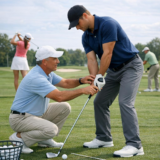
Optimal golf performance rests equally on nervous-system control and perceptual sensitivity as it does on mechanical technique. Practicing swings and putts in slow motion – intentionally repeating strokes and full swings at a reduced tempo – is a focused method for refining teh sensorimotor processes that produce consistent contact and ball flight. By separating velocity from the spatial and timing demands of the movement, slow practice helps golfers stabilize preferred movement patterns, sharpen proprioceptive awareness, and run concentrated mental rehearsals that support transfer back to normal, competitive speed.
Viewed through motor‑learning principles,slow practice magnifies timing relationships and joint sequencing,making subtle imperfections easier to perceive and correct. Lower-speed repetitions increase the clarity of kinesthetic signals, aiding the internal tuning of limb paths and clubface alignment.At the same time, the purposeful cognitive element of slow drills gives players space to rehearse intention-driven cues and attentional strategies-components that often disappear when swinging at full speed but are crucial for reliable performance under stress.From a neurophysiological standpoint, accurately executed, slowed movements foster cortical reorganization and synaptic strengthening of efficient motor programs. When these neural changes are paired with gradual tempo increases and task variability, they lead to more persistent retention and more robust performance across different playing contexts. In short, slow‑motion practice provides a controlled learning environment bridging technical correction and competitive request: it allows mechanical adjustments, sensory tuning, and attentional training to be combined before speed and situational pressure are reintroduced.
This article distills theoretical rationale, observational findings, and applied routines for implementing slow‑motion work on both the green and the tee. It explains how structured slow drills, feedback strategies, and clear progression rules can be combined to reinforce motor patterns, improve proprioception, and enhance cognitive rehearsal-ultimately increasing consistency and aiding carryover to on‑course play.
Neuroscientific foundations of Slow Motion Swing Practice: Mechanisms of Motor Learning and Recommended practice Schedules
Bringing contemporary motor‑learning science into day‑to‑day coaching explains why slow‑motion swing work is especially potent: it strengthens proprioceptive mapping, lowers fast‑movement neuromuscular variability, and supports the creation of stable motor plans via repeated, low‑error rehearsal. From the brain’s outlook, segmented slow practice encourages chunking-dividing the swing into manageable parts-improves sensorimotor prediction through richer afferent feedback, and accelerates memory consolidation when combined with adequate sleep and spaced practice. Practically, a useful target is 5-8 slow repetitions per segment (takeaway, transition, top, downswing, impact), with each phase approximately 2-4 seconds long; this tempo helps build accurate internal models while avoiding needless muscular tension.Useful setup benchmarks to watch are:
- Address: shaft slightly forward to neutral, weight about 55/45 (lead/trail) for irons; spine tilt roughly 10-15°.
- Top of backswing: shoulder rotation about 80-100° for full turns (men ≈90°, women often a little less), hip rotation around 40-50°, lead wrist flat or neutral.
- Impact: shaft lean of about 3-7° forward for irons, weight distribution near 60/40 lead, and a square clubface to the target line.
These objective reference points help beginners and better players calibrate proprioception and shape neural adaptations.
Refinement of technique proceeds by deliberately correcting common faults in slow motion and then gradually restoring regular speed. Start with purely slow repetitions, then use progressive tempo increases so the sensation learned at low speed carries into full‑velocity swings. Useful drills include:
- Segmented swing drill: isolate takeaway→mid→top→downswing→impact, holding each segment for 2-3 seconds to lock in sequencing.
- Pause‑at‑top drill: hold 1.5-2 seconds at the top to feel a solid wrist hinge (~90° between lead forearm and shaft), then begin the downswing with a hip turn.
- Impact‑bag/strike‑plane rod: slow, controlled strikes to emphasize center‑face contact and staying on plane; check one full‑speed strike per 10 slow reps to measure transfer.
- Slow putting stroke with metronome: 60-80 bpm to lock in timing and help manage yips under stress.
Typical errors (casting/early release, lateral sliding, reverse pivot) are easier to correct when you impose proprioceptive constraints (e.g., towel under the trailing armpit to prevent casting, alignment rod at the toes to discourage lateral shift). Equipment and feel matter: keep grip pressure around 4-5/10 (secure enough to control the club but loose enough to allow hinging) and confirm shaft flex and lie suit the player-mismatched gear will undermine precision gained from slow practice. Set short‑term, measurable targets (for example, achieve center‑face strikes on 70% of practice shots within four weeks; tighten 150‑yard iron dispersion to ±8-10 yards) and reassess progress weekly using video or impact sensors.
Organize practice around evidence‑based spacing, variability, and gradual reduction of external feedback to maximize retention and on‑course transfer. For novices, a routine might be daily 10-15 minute slow‑motion sessions focused on one segment plus two longer weekly range sessions (45-60 minutes) to introduce variable distances.Intermediate players may use 3×/week 20-30 minute slow blocks plus a simulated 9‑hole session to test carryover. Low‑handicap golfers should consider 2 targeted slow sessions/week (20-30 minutes) addressing feel refinements and include on‑course rehearsals of pre‑shot routines under tempo constraints. Scheduling best practices include:
- Begin each session with 5-8 slow reps per segment, increase to 10-12 as consistency rises, and end with randomized full‑speed shots to foster generalization.
- Fade external feedback over time (coach cues → video review → self‑assessment) to cultivate internal error detection and implicit learning.
- Use mental slow‑motion rehearsal before critical shots on course-visualizing the slowed sequence calms arousal, preserves tempo, and improves focus in wind or other challenging conditions.
applied consistently, these neuroscientific ideas, clear setup checkpoints, and staged practice plans enable golfers at all levels to turn the proprioceptive and attentional benefits of slow practice into measurable gains in contact quality, dispersion control, and smarter scoring choices on the course.
Biomechanical Implications of Slow Motion for Driving Kinematics: Optimal tempo Ratios and positional Targets to Stabilize Launch Conditions
Efficient driving mechanics depend on biomechanical coordination: timed rotation of pelvis, torso and shoulders, preserved wrist lag, and a reproducible tempo that maximizes energy transfer to the clubhead. A practical coaching guideline is a tempo ratio near 3:1 backswing‑to‑downswing (three counts on the takeaway, one count from transition to impact); training this rythm with a metronome or vocal counting reduces timing variability and stabilizes launch conditions.Positional targets during slow drills include a shoulder turn of 80-100° for men (or 60-80° for many women), hip rotation ~20-30°, and a wrist hinge approaching 90° at the top without collapsing the lead wrist. Holding key positions deliberately helps the nervous system encode proprioceptive reference points and reduces performance anxiety when speed returns. Sample drills:
- 3:1 metronome drill: backswing = 3 beats, downswing = 1 beat; perform 10 cycles before striking balls.
- Checkpoint holds: pause at 25%, 50% and 75% of the swing for 1-2 seconds to ingrain joint angles and spine tilt.
- Slow‑to‑fast ladder: 5 slow swings (3:1), 3 medium (2:1), then 2 full‑speed swings-track dispersion changes.
After tempo and large‑scale sequencing are stable, zero in on impact‑related setup to stabilize launch: ball position, shaft lean, and weight during impact.For driver, place the ball just inside the lead heel and tee so roughly 50% of the ball sits above the clubface equator-this encourages a slightly upward attack and consistent launch. At impact aim to have the hands ahead of the ball by about 1-2 inches with a gentle shaft lean of 5-10° toward the target to lower spin and compress the ball even with an upward strike; maintain roughly 60:40 lead‑side weight at impact to support rotational balance.Equipment must match swing speed: many amateur male drivers swinging ~90-105 mph benefit from 9-12° loft and an appropriate flex to hit the target launch (~10-14°) and spin window (1500-3000 rpm). During practice, check:
- Ball/tee position: ball just inside left heel; tee height aligned to the equator.
- Spine angle: preserve address tilt through the swing to avoid early extension.
- Impact feel: use impact tape or video-hands slightly ahead, square face and neutral path.
Blend slow‑motion kinematic work with course tactics and troubleshooting so practice gains reduce scores. In wind or narrow fairways,adopt a compact,smoother rhythm (keep the 3:1 sensation but shorten the arc) to reduce spin and improve accuracy; when distance is needed on open holes,maintain tempo while lengthening the arc. Trackable targets include reducing carry variance to within ±10 yards across 10 drives and producing consistent launch angle within ±2°. Typical faults and fixes for all skill levels:
- Casting (early release): practice delayed‑release drills slowly, holding the wrist set through the transition.
- Over‑rotation/slide: use hip‑turn drills and a towel under the trail‑side glute to encourage rotation rather than lateral shift.
- Flipping at impact: rehearse impact‑position holds with short swings, emphasizing forward shaft lean and lead‑side pressure.
Combining tempo rules, clear positional goals, matched equipment, and the cognitive advantages of slow rehearsal (better proprioception, less anxiety, stronger neural patterns) allows players from beginners to low handicaps to stabilize launch, increase repeatability, and make smarter shot choices that lower scores.
Slow Motion Progressions for Putting precision: Stroke Path Control, Face Angle Consistency, and Prescribed Drill Sets
Start with a consistent setup that biases a repeatable face angle and stroke path. Use a shoulder‑width stance and place the ball about one shaft diameter forward of center to promote true forward roll; since most modern putters have ~3°-4° loft, neutral placement reduces early skidding. Keep eyes over or slightly inside the ball line, level shoulders, and a relaxed grip with minimal wrist hinge (≤5° at the top for a pendulum feel).Swift setup checks:
- Putter face square to the intended line using a mirror or alignment stick.
- Grip pressure vrey light (about 1-3/10) to avoid added torque.
- Stroke length scaled to distance (e.g.,~6″ backswing for a 3‑ft putt,~18″ for a 30‑ft lag).
These basics create the mechanical baseline so slow,mindful repetitions can encode the correct kinesthetic pattern prior to reintroducing speed.
Use progressive slow drills to isolate path and face rotation, and track improvements with measurable goals. Start with a gate drill (two tees creating a 1-2 inch corridor) to enforce a square‑to‑square stroke, then move to a laser/tee impact drill that measures face rotation-aim for <2° of face turn at impact. Practice sets:
- Slow pendulum reps: 30 slow strokes focused on shoulder drive; log center‑contact frequency and true roll.
- Towel roll: place a towel 10-12 inches ahead to feel forward roll and eliminate skid during practice swings.
- Metronome pacing: 60-80 bpm for synchronized backswing and through (1:1); experiment with 1:1.5 for longer lag putts.
Measure results with simple metrics: percent of putts within ±1° of face angle, consecutive 3‑ft makes (target 30/30), and lag proximity (e.g., leave within 3 ft on 70% of 20-30 ft attempts). Over time, slow practice sharpens proprioception and reduces tension, which often transfers to steadier performance in wind or on difficult green surfaces.
Incorporate slow putting into a practice→play progression that factors equipment,green conditions,and competition rules. Move from slow to game speed with distance ladders (3 → 6 → 10 → 20 ft) and use pressure sets (make 5 in a row to advance). Keep a practice log noting objective measures (face deviation, proximity, make percentage). Equipment notes: a heavier mallet can resist unwanted rotation, and grip selection (reverse‑overlap vs. claw) should minimize wrist motion per player needs. On course:
- Pre‑putt routine: two slow rehearsals for line and pace, then execute at normal speed to capitalize on the calm state built in slow practice.
- Green‑reading: favor pace over line on steep downhills; for cross‑slope putts, visualize a slow stroke that keeps the face square through the low point.
- Rules and etiquette: replace the ball on its original spot after marking (Rules of Golf); use alignment aids only in practice.
If issues persist, isolate variables: work face‑only with a mirror or path‑only with a gate, and change only one equipment or grip element at a time. A deliberate, progressive plan combining slow‑motion technical drills, measurable objectives, and realistic on‑course application helps players from novices to low handicaps reduce three‑putts, increase stroke repeatability, and make better scoring choices under pressure.
objective measurement and Feedback Protocols: Implementing High Speed video, Launch Monitor Metrics, and Quantitative Stroke analysis
Pairing high‑speed video with launch‑monitor outputs creates a rigorous baseline for improving full‑swing mechanics and shot shape. Establish a testing routine: film at 240-1,000 fps to capture transition, wrist hinge, and impact frames; log launch metrics-clubhead speed (mph), ball speed (mph), launch angle (°), spin rate (rpm), attack angle (°), and face‑to‑path (°). Such as, validate iron contact with an attack angle of −3° to −7° and a smash factor near 1.30 on a 7‑iron; for driver, target a slightly positive attack angle (+2° to +4°) and smash factor > 1.45. A stepwise test sequence works well: (1) three swings at 50% speed, (2) three at 75% to assess sequencing, and (3) three at full speed to measure carry and dispersion-compare video kinematics to launch numbers to determine whether a face‑to‑path issue or an inconsistent attack angle is the main miss driver. Drills informed by these data include timed hip‑rotation mirror work and a three‑ball dispersion test aiming for ~15 yards lateral scatter at 150 yards for consistent iron play. Address errors like early release or a closed face via incremental progressions and slow‑motion sequencing before ramping up speed.
Quantitative stroke analysis also elevates short‑game and putting coaching by turning feel into actionable numbers. For pitching and wedges, combine high‑speed contact footage with launch data-look at spin loft and landing angle to anticipate stopping behavior (e.g.,a 56° wedge that produces ~6,000-9,000 rpm on a full shot will typically hold a receptive green,while chips need lower spin loft and a shallower attack angle (−1° to +2°)). For putting, measure face rotation and path with a putting analyzer-target a face angle within ±2° at impact and a backswing:downswing tempo between 2:1 and 3:1 depending on stroke style. Complement metrics with slow‑motion‑based drills such as:
- Pendulum gate drill (putt through a 1″ gate for face control),
- Landing‑zone wedge drill (towels at 20, 30, 40 yards to teach carry/stop),
- 3‑ball control series (rotate full, 3/4, 1/2 swings to tune distance gaps within ±5 yards).
This evidence‑based approach helps beginners lock in contact and distance control and allows lower handicappers to refine spin and landing characteristics for scoring shots around greens.
close the loop by converting objective measures into course strategy and shot selection. Use launch‑monitor dispersion metrics and average carry values to assemble a personal yardage book with confidence intervals-record mean carry and one‑sigma dispersion for each club, then adjust club choices conservatively when wind, hazards, or elevation are factors (e.g., add 5-10% yards into a headwind). On the range, recreate course scenarios: set a narrow fairway target with a tree 20 yards right and practice a 3‑wood draw while matching face‑to‑path targets from video to launch‑monitor readings. Troubleshooting tips:
- If you detect excessive spin and low launch: check loft at impact and try moving the ball slightly back or reducing intentional loft manipulation;
- If large lateral dispersion appears: inspect for early hip slide or inconsistent face control-use slow sequencing drills to fix timing;
- If range numbers don’t match on‑course results: perform a pre‑shot slow‑motion rehearsal to reinforce motor patterns and calm adrenaline that shortens the swing.
By pairing objective data with mental slow‑motion rehearsal, golfers at any level can build reproducible mechanics, make smarter in‑round decisions, and produce measurable scoring benefits such as fewer three‑putts and higher GIR percentages.
Integrating Cognitive Strategies with Slow motion Training: Mindfulness Techniques, External focus Cues, and Pre Shot Routine Guidelines
Combining slow‑motion technical work with cognitive training magnifies motor learning by structuring attention, perception, and working memory.Start each rep with a concise setup checklist: shoulder‑width stance, ball position half a club back for irons, forward for drivers, and grip pressure about 4/10-firm enough for control but relaxed enough to allow release. Rehearse the motion in a deliberately slow tempo-about 2-3 seconds for the takeaway, 2-3 seconds through transition, and a measured 2-3 second follow‑through-while maintaining spine angle and aiming for ~90° shoulder turn and ~45° hip turn on full shots. During reps, apply mindfulness by focusing on one internal kinesthetic cue (e.g., “soft left wrist” or “core rotation”) for novices; advanced players can alternate with an external focus (visualizing ball flight or pin‑target) to promote automatic control. Try drills such as:
- Mirror slow‑motion drill: 10 reps focusing on symmetrical shoulder turn.
- Pause‑at‑top drill: hold the top 2-3 seconds to sense lag and shaft angle.
- Metronome tempo drill: set 50-60 bpm for consistent backswing‑to‑downswing timing.
Common problems-excess tension, early arm unhinge, rushed transition-are remedied by lowering grip pressure, using an impact‑bag to teach delayed release, and returning to metronome‑paced slow reps until sequencing is reliable.
Translate cognitive strategies into an efficient pre‑shot routine that supports consistent execution without slowing play. Follow a brief sequence: visual assessment of lie and target, club selection with yardage/wind adjustments, one slow‑motion rehearsal swing (two for learners) emphasizing the intended low point and shot shape, then a calm breath and commitment-all within 20-30 seconds to respect pace of play. Use practical measurement cues: for a 150‑yard shot into a firm green, allow ~1-2 club lengths less carry for firm conditions and take an extra club for an uphill or soft lie. Use an external cue (a small target such as a sprinkler head or a blade of grass) to anchor intent-research supports that external focus improves automaticity by reducing conscious interference. Pre‑shot checkpoints:
- Grip & pressure
- Alignment (face to target, body parallel)
- Weight distribution (irons ~55/45 lead/trail; driver varies ~40/60 depending on shot)
If competition thoughts become intrusive, condense the routine to two external cues (target and flight) and a single calming breath to preserve performance.
Apply slow‑motion cognitive training to short game and decision making to convert practice gains into lower scores. For putting and chipping, slow strokes refine face control and low‑point consistency-use a gate with 1-2 mm tolerance and make daily sets of 50 slow reps to groove the arc. For pitching and bunker play, rehearse three slow‑motion swings per distance (e.g., 30, 50, 70 yards) then hit one full‑speed shot; weekly targets could include shaving 1-2 ft off wedge proximity or boosting up‑and‑down rates by 10 percentage points. Equipment and conditions matter: open wedge loft 8-12° for high lobs on soft sand, match bounce to turf (higher bounce for fluffy sand), and prefer a firmer shaft to resist over‑rotation in wind. Tailor learning modes: visual learners record slow‑motion video, kinesthetic learners emphasize pause‑and‑feel drills, audio learners use metronomes or verbal cues. Always tie mental rehearsal to tactical plays-practice punch wedges from trees or low draws off the tee in slow motion, then simulate scoreboard pressure to facilitate transfer. When trying to shape shots, return to external targets and a single swing thought like “finish to the target” to stay fluid and improve scoring consistency.
Designing level Specific Training Plans: periodization, Rep Ranges, Progression Criteria, and transfer Tests for amateurs and Competitors
Begin with measurable baselines and a periodized plan: assess handicap, fairways hit (%), GIR (%), average proximity by club, and short‑game stats (putts/round, sand saves). Build training phases: Foundation (4-8 weeks) to correct movement quality and setup, Acquisition (6-10 weeks) for repetition and motor shaping, Integration (4-6 weeks) to apply skills on course, and Peaking/Taper (1-2 weeks) before crucial events. Prescribe repetitions deliberately rather than aimless swings: beginners ~30-60 purposeful swings/session across 2-3 sessions weekly (~150/week); intermediates ~80-150 swings/session across 3-5 sessions (~400-800/week); competitors ~150-250 swings/session including pressure work (~800-1,200+/week).Validate transfer with tests such as a 9‑hole on‑course benchmark relative to handicap, a 20‑shot clubface control test to a 20‑yard target with ≤5 yards lateral spread for sub‑10 handicaps, and a short‑game transfer (e.g.,up‑and‑down ≥50% from 30 yards).Progress when objective improvements occur (e.g., GIR up 8-12 percentage points or three‑putts reduced to ≤1 per round).
Match drills and instruction to measurable mechanics and equipment checks.Start each session with setup points: neutral grip, feet shoulder‑width, spine tilt ~5-7° toward the target, knee flex ~10-15°, and longer‑club address weight ~60:40 lead:trail.Use slow‑motion to refine sequencing: perform 10 deliberate half‑speed swings focusing on smooth weight shift and a near‑90° forearm‑to‑shaft hinge, then hit a normal shot to consolidate rhythm-this improves tempo control and neural encoding while reducing tension. Short‑game prescriptions:
- Pitching: 40-60 reps from 30-70 yards using 3-5 targets to develop distance control.
- Chipping: 50 shots emphasizing landing zones (aim to land within a 5‑yard circle) using various clubs to learn rollout.
- Putting: 30-50 makes from 3-10 ft and a 2‑minute clock drill for lag putting from 30-50 ft to cut three‑putts.
Address faults directly: for a slice, check face alignment at address (within ±2°) and practice a closed‑to‑open path drill; for fat chips, reduce backswing, lower hands relative to the ball, and rehearse a descending contact. Verify wedges’ loft and bounce suit local turf and ensure shaft flex matches swing speed-mismatched gear disrupts transfer from practice to course.
Prioritize on‑course transfer and tournament readiness through staged simulations. Use strategic practice rounds where players must meet prescribed goals (e.g., GIR > 60%) and apply pressure exercises like money‑balls or beat‑the‑pro formats. Add weather and turf variability to practice (low punch shots into wind; open‑face bunker shots on firm sand) to build robust motor patterns.For pre‑competition clearance, require passing transfer checks: e.g., two simulated 18‑hole events within +2 strokes of target handicap over four weeks and short‑game pass rates (up‑and‑down ≥50%, one‑putt from 6-10 ft ≥70%). Offer adaptations for learning styles: visual learners receive video comparisons, kinesthetic learners focus on pause‑and‑feel drilling, and players with mobility limits use modified planes and rotation emphasis. Throughout, the mental benefits of slow practice-lowered arousal, clearer movement maps, and steadier pre‑shot routines-are reinforced with a two‑step slow rehearsal before select shots and a compact trigger (e.g.,”one‑two”) to turn practice improvements into on‑course scoring gains and smarter management.
Translating Practice Gains to Course Performance: simulation Drills,Pressure Exposure,and Tactical Decision Making for Improved Scoring
Convert range repetitions into realistic simulation drills that mimic on‑course demands across full swing,short game and putting. Reaffirm setup fundamentals first: spine angle ~30-35° at address for full shots, neutral grip pressure (4-5/10), and appropriate ball position according to club. Layer in measurable swing targets-clubface within ±2° at impact, iron attack angles between −2° to +2°, and documented launch metrics via a launch monitor-into every simulation. Use realistic drills such as a constrained fairway drill with a target corridor at 220-260 yd, mid‑iron approach drills aiming to land within 30 ft of the pin, and pressure putting sequences from 6, 12 and 20 ft. Include slow‑motion rehearsals before each high‑speed attempt (three slow reps focusing on tempo and sequencing, then the full‑speed shot) to heighten kinesthetic awareness and support error detection. Fix common issues (early extension, overactive wrists, inconsistent ball position) with precise checkpoints: keep wrist hinge vertical through takeaway, confirm sufficient hip rotation, and use alignment rods to standardize ball position.
Expose golfers to graded pressure while preserving technical fidelity so practice gains survive stress. Start with low pressure (timed tasks), move to moderate (score games), and finish with high pressure (bets, match play). Every session should reinforce a short pre‑shot routine and a breathing cue (inhale 3 s, exhale and play) so the routine becomes automatic under stress. Pressure‑based practices:
- Putting: “elimination”-a miss sends you back to start; aim for 70-80% conversion from 6-12 ft over 20 tries.
- Short game: “Up‑and‑Down” ladder from 30/40/50 yd where success is hole‑outs or one‑putt pars; target ≥65% up‑and‑downs within eight weeks.
- Driving: simulate hazards and wind with narrow corridors and penal tee targets; aim to reduce L/R dispersion by 10-15% per launch‑monitor ellipse data.
Match practice clubs to on‑course clubs (same lofts, shafts, grips) to maximize transfer. Add stressors-artificial crowd noise, time limits, scoring consequences-to habituate competitive responses. Tailor intensity: beginners take simpler targets and more reps; low handicappers layer complexity and statistical tracking. Short pre‑shot slow rehearsals before pressure attempts help prevent choking by stabilizing tempo and focus, keeping technical cues reachable under stress.
Merge technical betterment with tactical decision making so better mechanics convert into lower scores. On course, use a decision checklist: assess lie & stance → check wind & pin → set dispersion margin → select club & desired shape. For example, on a 160‑yd approach to a tucked pin in crosswind, choose a landing zone at the center of the green and a club that leaves an uphill, agreeable putt rather than risking a tight pin. Practice strategic drills: play nine holes where each hole requires choosing aggressive (birdie) or conservative (par) tactics and track results-aim to cut penalty strokes by 0.3-0.5 strokes/round in two months.include rules literacy-free relief for abnormal conditions (Rule 16) and unplayable lie options (Rule 17)-so choices both follow the rules and limit scoring damage.Tactical checkpoints:
- Know your lateral dispersion at typical carries and keep the target margin > 1.5× that dispersion.
- Favor bail‑out clubs when firmness or wind raises risk.
- Use a slow‑motion pre‑shot swing on the tee or before pivotal approaches to lock in sequence and lower tension.
When biomechanical accuracy, pressure habituation, and sound strategy are combined, golfers from beginners to low handicaps can translate practice gains into measurable scoring improvement and steadier performance on course.
Q&A
Note: the supplied web search results did not contain material relevant to “Master the Mind: Slow-Motion Swing to Perfect Putting & Driving.” Below is an evidence‑oriented academic-style Q&A created to support that article theme, drawing on established principles from biomechanics, motor learning, and sports science.
1) What is the theoretical rationale for using slow‑motion swings to improve putting and driving?
answer: Slowing movements highlights kinematic and kinetic components of the skill, reduces sensory noise, and raises conscious awareness of sequencing. From a motor‑learning viewpoint, slow practice promotes error detection, deliberate refinement, and reshaping of coordination before speed is reintroduced. Biomechanically,decelerated practice creates opportunities to observe and correct joint angles,timing,and clubface orientation at critical moments (address,midpoint,impact). when combined with progressive speed return and variable practice, slow work supports lasting learning and transfer to full‑speed performance.
2) How does slow‑motion practice affect the neural control of the stroke?
Answer: Practicing slowly enhances explicit processing and sensory integration (proprioceptive and visual), helping the brain build a more accurate internal model of the stroke. Repeated high‑quality slow reps strengthen feedforward commands and refine afferent error signaling, aiding consolidation of the motor sequence. That said, too much reliance on explicit slow practice can hinder automaticity-so a plan that shifts back to implicit, faster conditions is important for peak performance under pressure.
3) Which biomechanical variables should clinicians and coaches monitor during slow‑motion putting work?
Answer: monitor putter face angle at impact, putter path, stroke arc (radius/curvature), plane consistency, wrist flexion/extension and radial/ulnar deviation, torso/head stability, and tempo (backswing/forwardswing durations). Tracking variability (standard deviation) across reps is as informative as mean values-lower within‑subject variability on these measures signals more reliable putting control.
4) Which biomechanical variables are most relevant for slow‑motion driving practice?
Answer: For driving, prioritize pelvis‑thorax sequencing, club path and face angle at impact, wrist hinge/release timing, ground reaction force timing and magnitude, and trunk rotation velocity. Consistent proximal‑to‑distal sequencing and stable lower‑body behavior during slow reps establish the timing needed for efficient full‑speed energy transfer.
5) How should a practice progression be structured (putting and driving) when using slow motion?
Answer: Adopt a three‑phase progression:
– Phase A (Acquisition, weeks 1-2): 30-50% of full speed; focus on technique, deliberate sets (10-20 reps), objective measurement, and low contextual variability.
– Phase B (Integration, weeks 2-5): 60-80% speed; add variable targets, pressure simulations, and tempo constraints; begin partial‑speed and transitional drills.
– Phase C (Transfer & Automatization, weeks 4-8+): full speed under variable and stressful contexts with blocked/random practice and situational simulations (wind, uneven lies, different green speeds).
Adjust progression individually based on objective consistency and error reduction rather than fixed timelines.6) What drills concretely implement slow‑motion principles for putting?
Answer: Examples:
– Segmented Pendulum Drill: split stroke into three parts (backswing midpoint, transition, impact) and perform each slowly, focusing on face angle/path.
– Metronome Tempo Drill: use a metronome for timed slow pendulum (e.g., 600-800 ms backswing and similar downswing), then shorten intervals progressively.
– Mirror + Laser Alignment: slow strokes while checking the putter face with a laser or mirror to maintain square face and a consistent arc.
– distance Ladder: at slow speed, execute putts of increasing length while measuring rollout consistency to train force scaling.
7) What drills implement slow‑motion principles for driving?
Answer: Examples:
– Slow‑to‑Fast Progression: several slow swings with full setup and pause drills, then accelerate to full speed within the same set.
– Kinematic Sequence Drill: use video or simple aids to monitor pelvis‑thorax timing during slow swings; emphasize lower‑body initiation followed by trunk and arms.
– Impact Position Freeze: hold a slowed impact position to practice wrist and face orientation.
– Ground Reaction Familiarization: slow swings on a force mat to sense weight transfer timing before returning to normal speed.
8) How should coaches measure and quantify improvement?
Answer: Combine outcome and process metrics:
– Putting outcome: average distance to hole,make percentage,distance control error,roll consistency (SD).
– Putting process: face angle at impact (°), path (mm), tempo (ms), stroke arc parameters.
– driving outcome: ball speed, launch angle, side spin, carry, dispersion.
– Driving process: clubhead speed, face angle at impact, attack angle, pelvis‑thorax timing markers, ground reaction force profiles.
Use repeated measures and report both mean changes and variability reductions as indicators of skill acquisition.
9) What are common technical errors when practicing slow and how to correct them?
Answer: typical issues include excessive stiffness, timing changes that don’t transfer to full speed, fixation on a single mechanical cue to the detriment of global coordination, and loss of sensory context. remedies: relaxation drills, maintain global rhythm (metronome), alternate implicit (target‑based) cues with technical ones, and progressively reintroduce speed and variability.
10) How does attentional focus influence transfer from slow practice to competitive execution?
Answer: Motor control research favors external attentional focus (e.g., attention to putter path or a target) for better automaticity compared to internal focus (e.g., wrist angle). During acquisition with slow practice, brief internal tuning combined with an overarching external focus promotes accurate shaping of movement while preserving transfer to competitive conditions.
11) What role does variability of practice play in a slow‑motion training plan?
Answer: systematic variability (changing distance, slope, club, environment) increases adaptability and retention. during integration, controlled variability-while keeping the coordination pattern intact-supports robust transfer to unpredictable play. Differential learning-introducing small perturbations intentionally-can also strengthen the generalized motor program.
12) How long should a typical slow‑motion training session be, and how frequently enough?
Answer: Sessions of ~20-45 minutes focused on slow technique are effective when combined with other practice. A frequency of 3-5 sessions per week suits most golfers. Emphasize quality and deliberate focus-200-400 high‑quality, task‑relevant reps per week spread across sessions produces measurable gains.
13) Are there objective thresholds or benchmarks to know when to increase speed again?
Answer: Use benchmarks such as:
– Reduced within‑session variability of key process measures (e.g., SD of face angle within tolerance).
– Reliable outcome performance at target intensities (e.g., ≥80% of short putts made at reduced speed or drive dispersion within desired range).
– Consistent reproduction of the prescribed kinematic sequence on slow trials (e.g.,pelvis rotation peak preceding trunk peak by a stable interval).
When these are met across sessions, begin a gradual return to higher speed and contextual complexity.14) How can slow‑motion practice be integrated with mental skills training?
Answer: Combine slow technical sets with goal setting, focused attention exercises, quiet‑eye training, controlled breathing, and routines linking slow reps to pre‑shot rituals. Use mental imagery of full‑speed actions during rest intervals to strengthen feedforward models.
15) What research gaps and limitations should practitioners be aware of?
Answer: Current limitations include individual differences in optimal parameters, risks of overreliance on explicit slow practice that may delay automatization, and a shortage of large randomized trials comparing slow‑motion protocols specifically in golf. Practitioners should monitor objectively, individualize progressions, and blend slow work with variable, high‑speed, and pressure simulations.
16) Practical recommendations for clinicians and coaches summarised?
Answer: (a) Use slow motion to identify and shape key kinematic traits; (b) measure process and outcome metrics and track variability reduction; (c) progress systemically from slow to full speed with integrated variability; (d) emphasize external focus cues and mental routines; (e) tailor benchmarks for speed progression; (f) mix slow technical practice with full‑speed, pressure‑rich rehearsals to secure transfer.
If you would like,I can convert this Q&A into a formatted handout,produce a 6‑week progressive practice plan with daily drills and measurable targets,or provide a short bibliography of foundational motor learning and biomechanics texts to support further reading.
the slow‑motion swing is a conceptually sound, practically accessible strategy for honing the cognitive and motor foundations of superior putting and driving. By decelerating movement to amplify proprioception, sequencing, and error awareness, practitioners can strengthen task‑specific motor programs and promote reliable transfer to full speed. When embedded in a structured,evidence‑informed program that uses objective metrics (tempo ratios,clubface alignment,launch parameters),progressive overload,and contextual variability,slow‑motion practice supports measurable improvements in consistency and course management.
For coaches and researchers, the call is twofold: implement slow‑motion protocols with explicit progression rules and quantitative feedback, and study their efficacy with rigorous, longitudinal designs. Future investigations should probe dose‑response effects, individual learning differences, and neurophysiological markers of consolidation to refine prescriptions. Practically,players should follow a staged program that alternates slow rehearsal with periodic full‑speed integration and situational simulation to ensure durable transfer under competitive pressures. By aligning cognitive strategy, motor control principles, and objective assessment, slow‑motion practice offers a principled route toward steadier putting and driving-and ultimately, better scoring.

Unlock Your Golf Potential: How Slow-Motion Swings Sharpen Your Mind and Perfect Your Game
why slow-motion swings matter for your golf swing and mental game
Slow-motion swings are more than a training gimmick – they are a neuromuscular and biomechanical bridge between conscious learning and automatic performance. Practicing a slow-motion golf swing helps you isolate sequencing, feel proper kinematic motion, and build a consistent tempo and rhythm. When used alongside full-speed practice and course management, slow-motion drills improve ball striking, driving accuracy, and the mental focus required for pressure shots.
Key benefits of slow-motion practice
- improves muscle memory: Repeating movement patterns slowly increases neural repetition and engrains proper mechanics.
- Enhances body awareness: Detect early swing faults (hip slide, early extension, overactive hands) before they occur at speed.
- Refines sequencing: Slow tempo emphasizes correct kinematic sequence - lower body, torso, arms, hands.
- Builds mental control: Slow swings act like a moving meditation, reducing tension and sharpening concentration for the mental game.
- Improves tempo and rhythm: Practiced tempo in slow motion transfers to a smoother, repeatable full-speed swing.
biomechanics: what to feel during a slow-motion golf swing
Turning biomechanics into feel cues makes slow-motion work practical. Below are the primary physical checkpoints to emphasize on every slow swing:
- Address & alignment: Feel balanced weight distribution (about 55/45 front/back) and relaxed grip pressure.
- Takeaway: Initiate with chest rotation and a one-piece takeaway – avoid early wrist set.
- Top of the backswing: Feel coil in the torso with hips turning less than shoulders; keep club on plane.
- transition & downswing: Start with lower-body rotation and a shallow, wide arc; let hands follow.
- Impact: Sense forward shaft lean for irons, steady head position and compression of the ball.
- Finish: Balanced, complete finish with weight on lead foot and relaxed recovery.
Practical slow-motion drills that transform your swing mechanics
Below are drills that combine tempo, alignment, and feel. Practice each drill slowly for 5-10 minutes, then take measured full-speed shots to test transfer.
1.The 3-Second Takeaway Drill
purpose: Refine the one-piece takeaway and shoulder rotation.
- Slowly move the club back in 3 seconds while counting aloud.
- Stop at waist height and check that your chest has started to turn.
- repeat 10-15 times, progressing to a 6-second roundtrip (back and through).
2. Hip-Led Transition Drill
Purpose: Train downswing sequencing starting from the lower body.
- From the top, rehearse a slow downswing where the hips initiate the move.
- Hold posture and feel the club follow. Pause just before impact to check sequencing.
- Repeat 10 times focusing on the sensation of the hips turning first.
3. Slow-Motion Impact Holds
Purpose: improve impact awareness and compression.
- Perform a slow swing and stop for 2-3 seconds at impact position.
- Check lead wrist, shaft lean, and ball position relative to the clubface.
- Reset and repeat; do 8-12 reps per session.
4. Tempo Ladder (4:3:2:1)
Purpose: Build progressive speed control and rhythm.
- 4-count takeaway,3-count backswing,2-count downswing,1-count follow-through.
- Works well with a metronome or beats – keeps tempo consistent under pressure.
How slow-motion swings sharpen your mind
Slow-motion practice is a form of motor imagery and mindfulness combined. Benefits for the mental game include:
- Reduced performance anxiety: Slower practice lowers heart rate and breathing, making your pre-shot routine calmer.
- Improved focus: Concentrating on micro-feelings (hip rotation,wrist lag) trains the brain to ignore distractions on the course.
- Faster learning curve: Conscious,slow repetition helps convert explicit instruction to implicit skill – the hallmark of clutch play.
Transfer to full-speed shots: progressive practice framework
To ensure slow-motion practice improves on-course performance, follow a transfer model:
- Start with slow, deliberate swings to ingrain the pattern (5-10 minutes).
- Move to half-speed swings, keeping the same feel and tempo (10-15 minutes).
- Take measured full-speed shots focusing on one primary feel cue (e.g., hip lead) (10-20 minutes).
- Finish with pressure reps: simulated par/pressure shots to rehearse focus under simulated stress.
8-Week Slow-Motion Practice Plan (sample)
Follow this progressive plan to build consistent mechanics and mental resilience. Practice 3-5 days per week depending on your schedule.
| week | Focus | Weekly Routine |
|---|---|---|
| 1-2 | Takeaway & plane | Slow swings, 3-Second Takeaway, video check (15-30 min) |
| 3-4 | sequencing & transition | Hip-Led drills, Tempo Ladder, half-speed shots |
| 5-6 | Impact & compression | Impact Holds, impact tape, short iron practice |
| 7-8 | Integration & pressure | Full-speed transfer, on-course simulation, routine under pressure |
Measuring progress: what to track
Use simple metrics to quantify enhancement and maintain motivation:
- Shot dispersion: Observe grouping patterns on range or launch monitor.
- Ball flight consistency: Height, spin and direction changes less frequently.
- Tempo score: use a metronome and track your ability to match counts under fatigue.
- Mental calm score: Rate perceived calmness before shots (1-10) – should improve with slow-motion practice.
Case study: amateur to consistent mid-handicap
Player A (mid-30s, 18 handicap) struggled with slicing and inconsistent iron contact. They added a dedicated slow-motion routine (3×/week, 20 minutes) focusing on takeaway, hip-led transition, and impact holds. After 6 weeks:
- Ball dispersion decreased by ~30% on irons.
- Average greens in regulation increased from 9 to 11 per round.
- Player reported lower tension and fewer pre-shot jitters during competition.
(Anecdotal results consistent with motor-learning research: slow deliberate practice improves coordination and focus.)
Video analysis & technology: amplify the learning loop
Slow-motion swings are ideal for pairing with video and launch monitor feedback. Use slow-motion capture (60-240 fps on smartphones) to:
- Compare your swing positions frame-by-frame against target models.
- Check sequencing visually – hips before shoulders in the downswing.
- Measure transfer to ball speed and launch metrics on a launch monitor after each drill session.
Putting and short game: slow-motion principles applied
slow-motion training isn’t just for full swings. Apply the same ideas to putting and chipping:
- Putting: Slow backstroke and follow-through with a pause at impact refines face angle and tempo.
- Chipping: Use slow-motion to feel weight shift and shaft lean at impact for crisp contact.
Common mistakes & how to avoid them
- Over-doing slow reps: Spending 100% of practice at slow speed limits transfer. Use the progressive model (slow → half → full).
- Too many cues at once: Focus on one primary feel per session (e.g., hip lead, not hip + hands + posture).
- No feedback loop: Record swings or use a coach/launch monitor to validate that the new feel produces better ball striking.
First-hand practice checklist
Before you start your slow-motion session,use this rapid checklist:
- Warm up lightly (dynamic mobility for hips,shoulders).
- Set a clear objective: “Today I’ll fix takeaway” or “Today I’ll feel hip-led transition.”
- Use a metronome or count aloud to control tempo.
- Record 5 swings per sequence (slow → half → full) and review one key frame.
SEO-friendly keyword suggestions for content creators
If you’re writing supporting content around slow-motion swings, include variations naturally in headings and copy:
- slow-motion swing
- golf swing drills
- tempo and rhythm in golf
- mental game golf
- ball striking improvement
- driving accuracy and consistency
- short game slow-motion drills
further reading & resources
- Use high-frame-rate phone video for swing analysis (60-240 fps).
- Consider working with a coach to translate slow-motion sensations to your full swing.
- pair slow-motion work with strength & mobility training to make the new patterns durable.