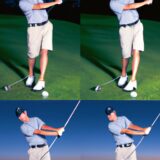
The Vardon grip occupies a central place in the technical canon of golf, serving as both a ancient artifact and a practical template for achieving consistent clubface control, efficient energy transfer, and dependable shotmaking. Originating with Harry Vardon in the late 19th century, the grip’s enduring relevance stems from its capacity to balance hand synergy with forearm rotation, thereby enabling repeatable swing mechanics across a variety of clubs and playing conditions. This article examines the vardon grip not as a mere hand placement but as an integrated component of swing architecture that influences kinematic sequencing, launch conditions, and driver-specific dynamics.
Drawing on historical accounts, contemporary biomechanics, and applied coaching methodologies, the analysis systematically deconstructs the grip’s mechanical principles and their implications for driving performance. Through quantitative examination of swing kinematics, qualitative assessment of pressure and contact patterns, and evidence-based practice drills, the work offers a pathway from conceptual understanding to on-course application. The aim is to provide practitioners and instructors with a rigorous framework for cultivating reproducible power, refined directional control, and informed course-management strategies grounded in the mechanics of the Vardon grip.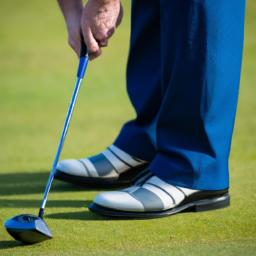
Historical Foundations and Biomechanical rationale of the Vardon Grip
harry Vardon’s popularization of the overlapping grip in the late 19th and early 20th centuries stemmed from a practical desire to unify the hands and stabilize the club through impact; historically,this grip became a foundation for modern instruction because it balances control and wrist freedom. To apply this in contemporary setup, place the little finger of the trailing hand over the index finger of the lead hand (for right-handed players the right little finger overlaps the left index), with the pads of both hands covering the grip but the lifeline of the lead hand visible. At address aim for a neutral V-formation created by the thumb/forefinger of each hand that points roughly toward the trail shoulder (approximately 30°-45° from the shaft), and maintain grip pressure of about 4-5 out of 10 to allow hinging without loss of control. For beginners who struggle with size or strength, the interlocking grip is an acceptable option that preserves the same biomechanical objectives; importantly, the Rules of Golf do not restrict hand placement, so choice of overlap, interlock or ten-finger should be made on the basis of comfort and function. For practical on-course application, Vardon’s lesson insights recommend using the overlapping grip to stabilize the club on tight fairways where a controlled draw is preferred-set up slightly closed to the target line and let the unified hands promote an inside-out path while maintaining a neutral face.
Biomechanically, the Vardon grip encourages coordinated forearm rotation (pronation and supination) and reduces compensatory wrist breakdown that causes slices or hooks; this occurs as the overlapping contact forms a single functional unit between the hands. At address, aim for a slight lead-wrist bow of approximately 5°-10° and a shaft lean of about 10°-20° forward for standard irons to promote consistent low-point control and square impact. During the takeaway and backswing, emphasize a one-piece takeaway with the shoulders and core initiating motion while the hands maintain the relative position-this preserves wrist set and allows a natural release through impact where forearm rotation returns the clubface to square. Use these progressive drills to train the sequence and measure improvement:
- Impact-bag drill: 10 slow half-swings focusing on achieving center-face contact and a square face at impact (record percentage of center hits).
- Alignment-stick drill: one stick along the target line, one along the lead forearm at address to verify shaft-forearm relationship; perform 50 reps with mirror feedback.
- Towel-under-arm drill: 30 reps to promote connectedness between the lead arm and chest, reducing autonomous hand manipulation.
These drills offer measurable goals (such as, reach 8/10 repeatable center strikes on the impact-bag within four weeks) and are scalable for low handicappers who can increase swing speed and shot-shaping constraints (e.g., deliberate stronger trail-hand engagement to produce a controlled fade or draw).
Translating the Vardon grip to short-game finesse and course-management decisions requires subtle adjustments and equipment awareness: for chips and pitches use a slightly weaker grip (rotate both hands fractionally toward the target) and hands ahead of the ball at setup by 1-2 inches to ensure descending blow and crisp contact; for bunker or lob shots allow more wrist hinge and soften grip pressure to 3/10 to improve feel. Equipment considerations matter-choose a grip diameter that permits the overlapping contact without undue tension (typically mid-size grips for average hands, thinner for small hands) and confirm shaft flex provides enough feedback for release timing during practice. Common mistakes include gripping too tightly,excessive independent wrist action,and improper hand alignment; correct these with the following troubleshooting checkpoints:
- Check that the V’s point to the trail shoulder; if they point at the chin or too far outside,adjust rotation of the hands.
- Monitor grip pressure with short practice sessions-if shots thin or fat, reduce pressure incrementally.
- For students who over-rotate the hands, practice slow-motion swings and impact-bag repetitions to re-establish forearm-driven release.
integrate a consistent pre-shot routine that pairs the technical set-up with a mental cue (for example, “smooth tempo, unified hands”) to reinforce confidence under pressure; using Harry Vardon’s emphasis on repetition and feel, set a practice plan of 10 minutes daily of grip and impact drills plus 30 targeted shots per session to produce measurable improvement in contact quality, trajectory control, and ultimately scoring on course.
Anatomical Hand Positioning and Interdigital Alignment for Optimal Club Control
Begin with the anatomical fundamentals of the grip: for consistent club control the club must be held in the fingers rather than the palms,with interdigital contact that unifies both hands into a single functional unit. Historically, Harry Vardon’s instruction favored the overlap (Vardon) grip, where the little finger of the trailing hand rests over the index finger of the lead hand; this arrangement remains an effective default because it promotes synchronized forearm rotation and a stable clubface through impact. At address, establish a neutral lead wrist (flat, not cupped or bowed) and place the lead thumb slightly to the right of center on the grip for right-handed players (mirror for left-handers); maintain light-to-moderate grip pressure (about 4-6/10) on a subjective scale to allow precise release. To implement these concepts practically, practice the following setup checkpoints daily so that anatomical alignment becomes automatic:
- Feel the grip in the finger pads, not the palm; check in a mirror.
- Verify interdigital contact: little finger of the trailing hand should contact the index finger/web of the lead hand for overlap or interlock accordingly.
- confirm thumb placement and a neutral lead wrist at address.
These measures reduce excessive wrist breakdown, promote a repeatable swing plane, and lay the groundwork for accurate shot-shaping and predictable dispersion.
Building on a correct grip, interdigital alignment directly affects swing mechanics, clubface control, and shot outcome. Specifically, a unified hand connection facilitates consistent forearm rotation (pronation through impact for a neutral to draw-biased flight or moderated pronation for fade control), and helps the hands release so the clubface is within ±3° of square at impact-a practical accuracy target for measurable improvement. To refine this, use progressive practice drills that isolate hand action and tempo:
- gate drill with two clubs to ensure the hands and clubhead track square during the takeaway and follow-through.
- Impact-bag repetitions to feel the forward shaft lean and correct release sequence.
- Half-swing to full-swing transitions emphasizing fingertip hold and synchronized wrist hinge (aim for a comfortable top-of-backswing wrist set that allows smooth unhinging through the ball).
Common faults include a too-strong grip (excessive closed face and pull hooks), a too-weak grip (open face and pushes or slices), and gripping in the palms (loss of feel and late release). Correct these by returning to the setup checkpoints above, practicing 50-100 deliberately slow swings per session focusing on the fingertip connection, and measuring progress via dispersion patterns and face-angle readings from a launch monitor.
translate hand-positioning proficiency into short-game control and on-course strategy: interdigital alignment and grip pressure should vary slightly by shot type to optimize trajectory and spin. For example, in putting adopt a more fingertip-based hold with minimal wrist hinge to stabilize face angle, while for chips and bunker exits allow a touch more wrist flexion to control loft. Equipment considerations are also important; oversized or undersized grips will change interdigital spacing and may require slight adjustments in thumb placement or grip pressure, and the USGA/ R&A anchoring rule (ban on anchoring the club to the body) requires players to use hand and arm mechanics rather than fixed supports. To convert practice into scoring gains, pursue measurable goals-such as cutting three-putts by 30% in six weeks or reducing shot dispersion by 10 yards-and apply these drills in variable conditions (windy tee shots, firm greens, tight lies) to simulate tournament stress. Practice routines and troubleshooting for different learning styles include:
- Clockface chip drill (short, medium, long) for touch and interdigital feel.
- Alignment-rod putting routine to check face control and pre-shot setup.
- mental checklist: grip check → interdigital contact → breath → committed stroke to build a consistent pre-shot routine.
By integrating anatomical hand positioning with Vardon-inspired unity of the hands, deliberate practice drills, and situational course management, golfers at every level-from beginners learning fundamentals to low handicappers refining shot shape-will achieve more reliable club control and lower scores.
Grip Pressure Modulation and Its Impact on Kinematic Sequence and Shot Consistency
Grip pressure is a primary determinant of how energy flows through the body-to-club kinematic sequence: pelvis → torso → upper arms → forearms → club. When pressure is too high the chain stiffens and the sequence becomes desynchronized,producing an early release,loss of lag and lateral dispersion; when too light the club can twist in the hands and the face control diminishes. For practical calibration, use a subjective scale and a few measurable checkpoints: aim for a grip pressure of approximately 4-6 on a 1-10 scale (light-to-medium), maintain a lead wrist **** near 85°-100° at the top of the backswing, and achieve a slight shaft lean of ~5°-10° forward at impact for irons to ensure compression. Transition sequencing should be initiated by the hips (a posterior-to-anterior weight shift and ~45° of hip rotation for an average male golfer on a full swing), followed by torso unwinding and controlled arm release; deliberate grip modulation-softer in the trail hand through the takeaway and slightly firmer through mid-downswing-facilitates the correct proximal-to-distal timing and consistent clubface control.Importantly, the Rules of Golf permit any conventional grip provided no artificial device is used, so players may adopt an overlapping (Vardon), interlocking or two-handed neutral grip according to comfort while preserving the same pressure principles.
To translate theory into repeatable skill, practice drills should progress from static to dynamic and include sensory feedback and objective measurement where possible. Begin with setup fundamentals: neutral grip alignment (Vardon overlap acceptable), shaft angle to the ground ~45° at address for woods and ~60° for short irons, feet shoulder-width for full swings, and a balanced posture with knees flexed ~15°-20°. Then apply these drills:
- towel-squeeze drill: place a quarter-inch rolled towel across the palms, hold with 4-6/10 pressure and make 10 half swings to ingrain relaxed hands.
- Impact-bag or short-axe drill: Take 5 sets of 10 reps to feel proper forward shaft lean and a late release-focus on maintaining the grip pressure band rather than squeezing harder at impact.
- 3-1-1 kinematic tempo drill: Count “1-2-3” on the takeaway, “1” at transition (hip initiation), “1” through impact-use video to confirm hips start before hands.
For measurable improvement set targets such as: reduce lateral dispersion by 20% on a range session, hold the top wrist angle within the stated band in 8 of 10 recorded swings, or maintain the target grip-pressure band ±1 unit during a 30-shot practice block. For learners who use technology, pressure-sensing grips can quantify force in newtons; or else use the 1-10 scale and immediate visual/video feedback to refine consistency.Harry Vardon’s teaching emphasized a relaxed hand and fluent tempo-adapt that historical insight by learning to modulate rather than maximize pressure so shot shaping (fade/draw) remains available without compromising the kinematic sequence.
integrate grip-pressure modulation into short-game situations and course strategy, taking equipment and environmental factors into account.For chipping and putting, reduce pressure to ~2-4/10 to increase feel and reduce wrist breakdown; for bunker explosions or heavy turf in wet conditions slightly increase pressure by +1 to maintain control but avoid the “death grip” that inhibits release. Consider equipment: oversized grips can reduce wrist action while undersized grips may promote flicking-select grip diameter that allows you to hold the club securely at the target pressure without excessive tension. Common mistakes and corrective steps include:
- If you experiance an early release or weak flight, loosen trail-hand pressure during the takeaway and emphasize hip initiation in transition.
- If shots snake or the face opens at impact, check grip rotation and tighten the lead-hand grip by one unit while keeping the trail hand relaxed.
- If you feel overwhelmed on windy holes, adopt a mental cue-deep breath, set pressure at the rehearsed number-and increase grip by only one notch to maintain control without stiffening the kinematic chain.
Linking these adjustments to scoring: consistent grip-pressure control reduces dispersion, increases green hit percentage and saves one to several strokes per round as short-game control improves.For different learning styles,offer tactile cues (towel,impact bag),visual feedback (smartphone video),and verbal rhythms (tempo counts). Combine these technical actions with pre-shot routines and breathing to stabilize the mental state so pressure modulation becomes automatic under tournament stress, echoing Vardon’s principle that a calm grip is foundational to reliable shotmaking.
Integration of Wrist Hinge and Forearm Rotation with the Vardon Grip for Enhanced Driving Power
begin with a reproducible setup that makes the Vardon (overlapping) grip the platform for wrist hinge rather than a source of tension. Place the trail hand so the index finger overlaps the space between the lead middle and ring fingers, and set grip pressure at a moderate 4-6/10 (firm enough to retain control, light enough to allow forearm rotation). From this neutral Vardon grip, create the initial wrist set by initiating a compact takeaway with the clubface staying square to the swing arc; the goal is to reach a backswing position where the shaft and lead forearm form approximately a 90° angle (measured visually or with a mirror/drill stick). For practical checkpoints, use this unnumbered checklist to confirm setup and hinge mechanics:
- Grip placement: overlap present, palms facing one another, V’s to trailing shoulder.
- Grip pressure: 4-6/10 and consistent through the swing.
- Initial wrist set: take the club back with forearms rotating naturally until the shaft is roughly parallel to the ground and the wrist **** approaches 90° at the top.
These fundamentals reflect Harry Vardon’s emphasis on a relaxed grip and free wrists-apply them progressively, starting with half-swings and moving to full drivers when comfort and repeatability are achieved.
Next,integrate forearm rotation with the stored energy from wrist hinge to produce controlled power and a consistent impact position. During transition, maintain the wrist-**** (lag) so that the angle between the shaft and lead forearm reduces only late into the downswing; this preserves stored elastic energy and increases clubhead speed without sacrificing face control. Aim for a lead wrist that is flat at impact (0-5° of dorsiflexion) with the hands slightly ahead of the ball (~1-2 inches of shaft lean) to promote a compressed,penetrating ball flight from the driver tee. To train the sequence,practice these drills:
- Pause-at-top drill: stop for one second at the top to feel the 90° hinge,then initiate downswing with lower-body rotation.
- Impact-bag or padded gate drill: promotes hands-forward impact and late release.
- Split-hand drill: places the lead hand lower on the grip to accentuate forearm rotation and clubface awareness.
Common faults include early casting (releasing the wrist-****), excessive supination of the trail forearm that closes the face, and gripping too tightly; correct these by returning to the Vardon grip pressure benchmark and rehearsing slow-motion swings while monitoring wrist angles with video feedback.
translate the technique into on-course strategy and a measurable practice plan that benefits beginners through low-handicap players. Equipment choices-shaft flex, driver loft, and grip size-affect the feel of wrist hinge and rotation; for example, a slightly higher loft or softer shaft can mask a late release for higher-handicap players, while low-handicap players may prefer a stiffer shaft to better exploit lag and forearm rotation. Structure a weekly routine with measurable goals: 3 × 10 slow-motion repetitions of the pause-at-top drill, 3 × 20 full-speed hits focusing on hands-ahead impact, and periodic launch-monitor checks to track clubhead speed and launch angle. Incorporate situational practice-crosswind driving, wet-tee box stability, and tight fairway targets-and apply an on-course decision rule inspired by Vardon’s emphasis on rhythm: when accuracy is paramount, reduce swing length by 10-20% and maintain the same wrist set/rotation sequence to preserve tempo. For troubleshooting on the course, consider this short list:
- If shots go left: check for excessive trail-forearm supination and an overly strong hand position; weaken the trail hand slightly and rehearse neutral Vardon alignment.
- If shots go right or slice: verify you are retaining wrist hinge into the downswing and not opening the face prematurely; use an impact-bag to feel squaring through release.
- If loss of distance occurs: measure whether the wrist-**** is being released early; restore lag with the pause-at-top and split-hand drills.
By linking measurable setup targets, repeatable drills, and course-aware strategy-while honoring harry Vardon’s principles of relaxed grip and rhythmic swing-players across all skill levels can improve driving power, face control, and scoring consistency.
kinematic Transfer from Address to Impact with Weight Shift and Sequencing Recommendations
Begin with a repeatable setup that facilitates an efficient kinematic transfer: position the ball, grip, and posture so the body can create a sequential, energy‑efficient motion from address to impact. At address adopt a balanced stance with approximately 50/50 weight distribution, a neutral spine tilt of ~15 degreesone to two club‑head widths forward of center for long irons/drivers and center to slightly back for wedges. Use the Harry Vardon overlapped grip as a practical starting point for most players because it promotes hand connection and a stable release; vardon’s historic lesson emphasis on a smooth turn and rhythm remains valid: encourage a shoulder turn near ~90° for full swings and a hip rotation of ~20-45° depending on club length. Setup checkpoints to rehearse before each swing:
- Grip pressure light‑to‑moderate (2-4/10) to allow forearm rotation;
- Ball position steadfast by club (forward for driver, centered for mid‑irons);
- Shaft lean at impact for irons ~5-10° forward to compress the ball, minimal forward lean for driver.
Transitioning from backswing to impact requires a deliberate kinematic sequence: the lower body (pelvis) initiates,the torso follows,the arms deliver,and the hands and club complete the release. Practically, this means the trail heel should lift slightly at transition as the momentum shifts so that by impact ~60-70% of the pressure is on the lead foot, the lead hip is braced and slightly open (~20-30°), and the club has achieved the correct shaft lean for the chosen shot. To develop this sequence use targeted drills that create sensory feedback:
- Step drill: make a backswing with feet together, step toward the target on transition to exaggerate weight shift;
- Pump drill: rehearse the downswing path by making three small pumps from the top feeling pelvis lead before a full release;
- Impact bag drill: swing into a bag to feel the lead hip bracing and forward shaft lean at the instant of impact;
- Waist‑high pause: stop at waist height on the downswing to check sequencing and delay the arms until the torso has begun rotating.
Common faults and corrections: if you cast or release early, emphasize hip rotation and maintain wrist hinge until the hips begin to clear; if you early‑extend, focus on keeping the lead knee flexed and the spine angle intact through impact.
translate kinematic control into course management and scoring opportunities by applying sequencing principles to different shot types and conditions. For example, on firm fairways or when playing into wind, create a slightly steeper angle of attack with more forward shaft lean and a firmer lead‑side brace to ensure consistent compression; conversely, in wet or soft conditions reduce forward shaft lean and allow a fuller body rotation to avoid digging. Use Harry Vardon’s lesson idea of rhythm and visualization: pick a specific impact picture (clubface square, forward shaft lean, weight on lead foot) and rehearse it with 10-15 focused reps in practice, then apply it on three successive holes under play pressure. Practice routines and measurable goals: aim to hold impact position for 0.2-0.3 seconds on impact‑bag drills, reduce lateral dispersion by tracking shot dispersion over 30 balls, and increase green‑in‑regulation percentage by practicing these sequence drills twice weekly for six weeks. For short game adjustments, maintain the same sequencing principle but shorten the arc and increase lead‑side bias; remember the Rules when in bunkers or hazards (e.g., do not ground the club in a hazard), and select equipment-shaft flex, lie angle, and sole grind-that supports your desired contact pattern. couple technical practice with a consistent pre‑shot routine and a single process‑oriented thought to promote reliable kinematic transfer under pressure, which leads directly to lower scores and better on‑course decision making.
Targeted Practice Drills to Internalize the Vardon Grip and Promote Reproducible Ball Flight
Begin with the classical mechanics of the Vardon (overlap) grip and a concise, measurable setup routine so the grip becomes the reproducible foundation of every swing. Adopt the overlap by placing the right little finger on top of the left index finger with approximately one phalanx of overlap (adjust slightly for hand size), and set grip pressure at a consistent 2-4 on a 1-10 scale to preserve wrist hinge and clubhead feel. At address, ensure the clubface is square to the target (0°), the ball position is center-to-slightly-forward for mid-irons and forward off the left heel for the driver, and the shaft tilt aligns the shoulder plane with a slight spine angle so the lead shoulder is 5-7° lower than the trail shoulder. Practical drills to internalize these checkpoints include:
- glove-off grip check: feel the pad contact and ensure the overlap is consistent on 20 consecutive grips;
- mirror or video address verification to maintain clubface and spine angles;
- towel-under-arms drill to promote connected rotation without excessive arm action.
These drills are scalable-beginners focus on grip placement and light pressure, while low handicappers refine micro-adjustments (grip rotation and fingertip pressure) to influence face control and shot shape.
Progress by linking the Vardon grip to impact mechanics and predictable ball flight through specific swing-tempo and face-to-path exercises. Emphasize a neutral wrist set on the takeaway, a controlled hinge to roughly 90° wrist angle at the top for full shots, and a low-point slightly forward of the ball at impact to achieve a compressive strike; measurable targets include 8 of 10 center-struck shots on impact tape and lateral dispersion within 15 yards on a practice target. To train face-to-path control and shot-shaping-draw, fade, or straight-use these drills:
- alignment-stick path drill: place a stick along your intended swing plane and practice delivering the face square to the target while varying path;
- impact-bag or tee-punch drill: focus on compressing the ball with forward shaft lean and a square face at impact;
- single-plane half-swings with emphasis on maintaining the Vardon overlap and feeling the right hand working on top of the left to control face rotation.
If the typical miss is a slice, correct by strengthening the left-hand rotation by 10-20° at address (a slightly stronger Vardon grip) and drilling a closed-face impact feeling; if the miss is a hook, weaken the right-hand dominance and practice neutralizing the trail wrist through slow-motion strikes.
translate range consistency into on-course strategy and short-game integration, guided by Harry Vardon’s emphasis on feel and shot selection. Use on-course simulation drills-playing three holes on the practice range with specific targets,wind conditions,and club restrictions-to force application of grip-led shot making under pressure; set quantifiable goals such as reducing approach error to ±10 yards and saving par from inside 40 yards at a predetermined rate.Consider equipment and rules: ensure grip size and shaft flex allow you to maintain the overlap without compensatory tension,and remain Rule-compliant (for example,do not use anchoring techniques prohibited by the equipment rules). integrate short-game routines that flow from the same hand relationship: use the Vardon grip on controlled pitch-and-roll shots and half-sand shots to preserve face control and consistent spin. For mental preparation, employ Vardon-style visualization-see the desired trajectory and landing area before setup-and practice performance under constraint (time limits, simulated match play) to build reproducibility.Common course corrections include changing ball position for tighter lies, adjusting stance width by 1-2 inches for low-trajectory punch shots, and selecting partial swings when recovery demands higher accuracy; each adjustment should be tested in practice until it meets the measurable criteria established above.
Diagnostic Indicators and Corrective Strategies for Common Vardon Grip Faults on the Course
Begin with a systematic diagnosis of grip-related faults by observing pre-shot setup, address position, and ball flight. Common indicators include an open clubface at impact (early release or weak grip) producing a slice or pull-fade, a closed clubface at impact (strong grip) producing a hook or pull-draw, and inconsistent contact (heel or toe strikes) from improper hand placement. At address, a properly executed Vardon overlap will show approximately 2-3 knuckles visible on the lead (left for right‑handed) hand and the trailing (right) pinkie resting between the lead hand’s index and middle fingers; deviation from this often signals rotation faults. Additionally,quantify grip pressure as a diagnostic: aim for ~3-4 on a 10-point tension scale-too tight increases wrist rigidity and reduces release control,while too loose causes slippage and inconsistent toe/heel contact. Use immediate tests on the range such as slow-motion swings under a mirror, the toe-up/shaft-parallel drill at half-swing, and launch-monitor metrics (sidespin, face-to-path differential) to confirm whether the visible symptoms correspond to a grip problem rather than swing plane or equipment issues.
For corrective intervention, progress from static to dynamic adjustments with explicit, measurable drills that respect Harry Vardon’s emphasis on a unified hand action and light grip pressure. First, re-establish setup fundamentals: align the Vardon overlap, ensure the lead wrist is neutral at address (≈0°), and target a slight lead-wrist bow at impact (≈5°-10°) to promote a square face through contact.Then implement procedural drills to ingrain motor patterns-use the following practice checkpoints and exercises to create repeatability:
- Mirror grip check: Confirm 2-3 knuckles visible and pinkie placement; practice 5× per ball prior to full swings.
- Towel-under-armpit drill: Keeps the arms connected and discourages independent hand manipulation; perform sets of 10 half-swings.
- one-handed impact swings: Execute 10 slow strikes with the lead hand only, then 10 with the trail hand, to feel correct release timing.
- impact-bag/clubface gate: train square face at impact; use alignment sticks to create a gate and make 30 controlled hits focusing on center-face contact.
Measure progress by objective targets: 80% center-face strikes in a 50-shot range block,a reduction in sidespin by a measurable percentage on the launch monitor,or a visible decrease in dispersion (aiming for 15-30 yards narrower spread). Equipment considerations should be integrated: confirm grip size is appropriate (avoid grips so thick that fingers cannot overlap comfortably; consult a fitter if grip circumference needs adjustment by a half-size) and replace worn grips to maintain consistent tactile feedback. For beginners, break tasks into short 10-15 minute micro-sessions focusing solely on grip; low-handicappers should combine these drills with targeted on-course simulations to refine shot-shaping intentions.
translate grip corrections into course strategy and mental routines so technical gains reduce scores. In play, use a concise pre-shot checklist-grip alignment, pressure, wrist set-that can be executed in under 10 seconds to avoid overthinking and preserve tempo. For example, when a tight fairway requires a controlled draw, purposefully adopt a neutral-to-stronger Vardon position with a slightly firmer (~4-5/10) grip for added release, whereas a into‑wind par‑3 or a tight dogleg left might call for a neutral grip with intention to hold the face open for a controlled fade. Incorporate situational drills into practice: simulate windy conditions by hitting knockdown shots with partial releases, rehearse recovery shots from sidehill lies while maintaining the overlap, and perform pressure-putting sequences after range sessions to link technical changes with scoring scenarios. From a psychological viewpoint, echoing Vardon’s teaching to “feel rather than force,” cultivate a committed pre-shot routine, use breath and a cue word to control grip tension, and set incremental performance goals (for instance, reduce three-putts by 20% in six weeks after grip stabilization). For players with physical limitations, offer alternative grips (interlock or modified Vardon) and parallel kinesthetic drills so all learning styles and abilities can achieve measurable improvement in contact, trajectory control, and course management.
Q&A
Note: the provided web search results did not include material relevant to the Vardon grip or golf biomechanics. Below is an academically styled, professional Q&A constructed from established principles in golf instruction, biomechanics, and coaching practice.1) What is the Vardon grip and what distinguishes it from other golf grips?
Answer: The Vardon grip-also called the overlapping grip-places the little finger of the trailing (right) hand between the index and middle fingers of the lead (left) hand for right-handed players. distinguishing characteristics include greater hand connection between the hands, a tendency toward shared forearm rotation, and a reduced independent action of the trailing hand relative to grips such as the interlocking or ten-finger variants. Historically popularized by Harry Vardon, it is widely used because it balances control and power and fosters a more unified clubface control through the swing.
2) What are the primary biomechanical advantages of the Vardon grip?
Answer: Biomechanically, the Vardon grip promotes coordinated forearm pronation/supination and reduces excessive ulnar deviation of the trail wrist at impact.It can facilitate a consistent clubface orientation through impact by coupling lead and trail forearms, which reduces independent release of the trailing hand and mitigates face rotation extremes.The grip also supports effective transfer of rotational torque from the torso to the club, aiding reproducible power when combined with proper sequencing.
3) how dose the Vardon grip influence clubface control and shot bias?
Answer: Because it couples the hands, the Vardon grip tends to produce a moderate draw bias for many players by limiting excessive face-opening motions and encouraging a slightly in-to-out release path for the clubhead. However, face control remains dependent on relative hand placement, grip pressure, forearm rotation, and swing path. Small changes in hand rotation or grip strength can change bias; thus coaching must address these variables, not only grip form.4) How should a golfer set up their hands and thumbs with the Vardon grip for optimal driving?
Answer: Optimal Vardon setup includes:
– Lead hand: grip across the fingers with the life line of the hand supporting the club; thumb slightly to the right of center (for right-handed players).
– Trail hand: little finger tucked between the index and middle finger of the lead hand; trail thumb resting slightly left of center on the grip.
– Grip pressure: firm but not tense-generally light in the fingers with moderate support in the palms to allow wrist hinge and forearm rotation.
- Neutral rotation: both palms should face somewhat toward the target, avoiding strong supination or pronation that would close or open the face pre-impact.
5) What kinematic sequence is recommended when using the Vardon grip to maximize reproducible power?
Answer: The recommended kinematic sequence remains pelvis initiation → torso rotation → lead arm retention → sequential release of club (proximal-to-distal). The Vardon grip enhances proximal-to-distal coordination by linking the hands to the forearms and torso rotation. Key elements include a rapid but controlled hip turn initiating the downswing, maintaining lag in the wrists, and allowing forearm rotation to square the face through impact, producing consistent power.
6) how does grip pressure affect swing mechanics with the Vardon grip?
Answer: Excessive grip pressure restricts wrist hinge and forearm rotation, leading to a shorter swing arc and reduced clubhead speed. Too light a grip can cause loss of control and inconsistent face angles. Optimal grip pressure with the Vardon grip is light-to-moderate (commonly described as 4-6/10), sufficient to maintain hand connection and prevent slippage while allowing necessary wrist and forearm mobility.
7) What common faults occur when adopting the Vardon grip and how can they be corrected?
Answer: Common faults and corrections:
– Fault: Overly strong trail hand leading to a closed face. Correction: rotate both hands slightly toward neutral, flatten trail thumb, and practice neutral wrist orientation at address.
– Fault: loss of lag because hands dominate release. Correction: impact-bag or pause-at-top drills to feel delayed release and preserve wrist hinge.
– Fault: Grip pressure too tight. Correction: practice swinging with a metronome and soft-focus drills (towel under arms) to learn relaxed tension.
- Fault: Inconsistent little-finger placement. Correction: static setup repetitions and mirror work to ingrain consistent overlapping position.
8) Are there measurable performance changes (e.g., clubhead speed, dispersion) when switching to the Vardon grip?
answer: Empirical outcomes vary by individual. Many players report increased control of face angle and reduced dispersion with modest changes in clubhead speed. In some cases, tighter coupling of hands can slightly increase transfer efficiency and thus clubhead speed, but benefits are most consistent in dispersion (improved accuracy) rather than dramatic increases in distance. Objective evaluation on a launch monitor is recommended when transitioning.
9) Which drills reliably transfer Vardon-grip mechanics to driver performance?
Answer: Effective drills:
- Towel-under-arms drill (connects torso rotation and arm station).
- Pause-at-top drill (builds tempo and lag).
- Split-grip tee drill (hands split ~6-8 inches to emphasize rotation over flicking).
- Gate drill with headcover near lead wrist (encourages stable lead wrist position).
– Impact-bag drill (teaches compression and squaring of the face).
Practice sets: 3-5 drills per session, 8-12 reps each, with progressive feedback.
10) How should a practice program be structured when changing or refining to Vardon grip mechanics?
Answer: Phase 1 (2-4 weeks): static setup and essential drills,low-intensity reps focusing on feel and consistency (200-400 repetitions/week). Phase 2 (4-8 weeks): dynamic swing integration, moderate-intensity range work with a mix of short to full swings and drills (100-300 swings/week), incorporate launch monitor feedback. Phase 3 (ongoing): on-course integration and scenario practice, applying the grip under situational pressure. Maintain periodic video and launch-monitor assessments.
11) What metrics should coaches and players use to assess improvement?
Answer: Objective metrics: clubhead speed, ball speed, smash factor, carry distance, total distance, carry dispersion (group size), left-right and forward-back standard deviations, launch angle, spin rate, and face angle at impact. Temporal metrics: backswing/downswing time ratio, time at transition, and tempo consistency. Subjective metrics: perceived control, comfort, and confidence in reproduction.
12) How does Vardon grip use differ between irons and the driver?
answer: With irons, the Vardon grip supports control and precision through a compact swing and more vertical shaft plane. For the driver, the grip must be paired with a wider stance, more lateral weight transfer, and a shallower swing plane; the hands often adopt a slightly more neutral rotation at address to encourage a square face at impact.Drivers also demand more emphasis on maintaining lag and optimizing launch conditions (angle and spin), so drills should target low- to mid-impact spin and a stable release pattern.
13) How can a player maintain an optimal launch and spin profile while using the Vardon grip with the driver?
Answer: Optimize tee height and ball position (forward inside lead heel), preserve lag to maximize smash factor, ensure a slightly upward angle of attack for higher launch/low spin, and select appropriate loft/shaft characteristics. The Vardon grip helps control face orientation, which supports consistent spin. Use a launch monitor to tune attack angle, loft, and spin to target carry and roll characteristics for the course.
14) What role does swing path play when using the Vardon grip, and how should it be trained?
Answer: Swing path determines direction and shape; the Vardon grip does not prescribe path but facilitates a coordinated release for a slight in-to-out path favorable to a controlled draw. Train path via alignment sticks, impact tape, and drills that encourage correct sequencing (e.g., towel under arm to prevent early-arm casting). Video analysis of clubhead path in the downswing is useful for detecting deviations.
15) Can the Vardon grip help prevent or exacerbate injuries?
Answer: When used with appropriate grip pressure and sound mechanics, the Vardon grip can reduce compensatory wrist and elbow actions and thus may lower injury risk. However, forcing a grip leading to extreme wrist angles or tense muscles can increase stress on the ulnar/radial nerves, wrist extensors, or tension in the forearms. Injury prevention depends primarily on balanced technique, adequate mobility/flexibility, and progressive training loads.
16) How should coaches individualize the vardon grip for different hand sizes and anatomies?
Answer: Coaches should adjust hand placement, grip size (overgrip/tape), and overlap depth to the player’s hand size and finger length. Players with short fingers may prefer less overlapping or an ergonomic adjustment (slightly larger grip) to avoid ulnar drift or cramped placement. Empirical testing-feedback from swing feel, control, and launch-monitor data-should drive customization.
17) How does one transition from the interlocking or ten-finger grip to the Vardon grip safely and effectively?
Answer: Transition steps:
– Begin with static repetitions to establish the overlap and thumb placement.
– Implement short-swing drills (3/4 swings) focusing on feel and low-intensity repetitions.
– Gradually increase to full-swing on the range while reducing practice intensity to prevent overuse.
– Monitor performance on a launch monitor and record dispersion metrics; if performance degrades significantly, pause and consult a coach for adjustments.
– Expect a 4-8 week adaptation phase to regain confidence and consistency.
18) What are recommended technologies and measurement tools to support learning the Vardon grip?
Answer: Recommended tools include high-speed video for wrist/hand position, launch monitors (trackman/flight scope/GCQuad) for ball/club metrics, pressure-mat systems for weight transfer, and wearable IMUs for sequencing and tempo. Combine objective data with qualitative coach observation for best results.
19) How does adopting the Vardon grip affect course management and shot selection?
Answer: Players who gain more predictable face control with the Vardon grip can plan more aggressive lines with higher probability of hitting target corridors.Improved dispersion supports strategic decisions such as aiming at tighter fairways or selecting more aggressive tee placements. Course management should remain conservative during the transition phase until consistency metrics demonstrate reliable improvement.
20) What future research directions are relevant for the Vardon grip and driving biomechanics?
Answer: Promising avenues include: quantifying grip-mediated changes in forearm pronation/supination kinetics during the downswing via wearable sensors; longitudinal studies correlating grip type with injury incidence; controlled trials comparing shot-dispersion and launch metrics across grips for different subpopulations (hand size, strength, playing level); and optimization algorithms for individualized grip geometry linked to launch-monitor outcomes.
If you would like, I can:
– convert these Q&As into a printable academic handout.- Create a 6-8 week practice plan with drill progressions and measurable targets.
– Provide sample video capture guidelines and a template for launch-monitor tracking.
the Vardon grip represents a biomechanically sound foundation for optimizing both swing mechanics and driving performance. Empirical and kinematic analyses indicate that proper hand placement, pressure distribution, and wrist alignment inherent to the Vardon configuration can enhance clubface control, reduce shot dispersion, and support more efficient energy transfer during the downswing. Mastery of the grip thus functions not as an isolated adjustment but as a gateway to greater consistency across short and long shots.
Practically, adopting the Vardon grip should be pursued through structured, evidence-based practice: systematic drills emphasizing grip feel and pressure, video- or sensor-aided feedback to monitor wrist and forearm rotation, and incremental integration into full-swing and driving routines. Objective metrics-such as clubface angle at impact, shot dispersion patterns, and ball-speed consistency-provide the most reliable indicators of progress and should guide iterative refinements.
For players and coaches alike, the advice is to pair grip work with individualized assessment and coaching to account for anthropometry, swing archetype, and course-strategy goals.With disciplined application and measurement, the Vardon grip can be an effective component of a thorough training program aimed at improving swing mechanics and driving outcomes.