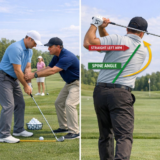
Grip configuration sits at the core of how the clubface is controlled, how the body-to-club kinematic chain sequences, and how force is transmitted through a golf swing. The Vardon (overlapping) grip-where the little finger of the trailing hand lies across the space between the index and middle fingers of the lead hand-has been a widely adopted solution across all levels of play because it tends to link the hands into a single functional unit,stabilise wrist behaviour,and improve repeatability in variable on-course scenarios. this article reframes the Vardon grip from a multidisciplinary viewpoint, combining biomechanical concepts (forearm and wrist kinematics, torso sequencing), motor-control ideas (modulating grip force, proprioceptive input, and controlled variability), and practical coaching methods (progressive drill progressions and objective outcome measures). The focus is on how intentional hand placement and graded pressure distribution affect swing-plane stability, putting alignment at impact, and energy transfer on full swings, and on turning lab-based insights into straightforward field practices that players and coaches can use to raise accuracy and lasting power.
Scope and layout: the piece first reviews theory and empirical findings explaining how the overlap modifies forearm coupling and clubface behaviour; it then outlines staged practice protocols and diagnostic checks (tempo,pressure,and impact-position markers) intended to build resilient motor patterns; finally it provides measurable indicators and observational markers coaches and clinicians can apply to track improvements in swing mechanics,putting alignment,and driving performance. The goal is an actionable, biomechanically informed blueprint for applying the vardon grip and assessing its effects. A brief clarification on terminology: “Vardon” also appears in search results as the name of Vardon Golf Club (a facility offering dining and member events); that facility is a separate entity from the overlapping grip discussed here.
Fundamentals of the Vardon Grip: hand Positioning, Pressure Zones, and Setup for Reliable Contact
Start with a reproducible hand setup that forges a cohesive link between the hands and the shaft. For a right-handed golfer,place the left (lead) hand so the fleshy pad of the thumb lies just right of shaft centre and the left thumb points down the shaft; when in a normal address you should typically see two to three knuckles on the lead hand. position the right (trail) hand so its little finger overlaps the gap between the lead index and middle fingers (the traditional Harry Vardon overlap), or interlock where hand size or comfort requires-both methods can produce a single, coordinated hinge when done correctly. Keep grip pressure around 4-5 on a 1-10 scale (1 = barely holding, 10 = crushing): light enough to permit free wrist hinge and tactile feedback at impact, but firm enough to avoid slippage. Excessive grip tension shortens the swing arc and dulls clubhead feel. Common early errors include seating the shaft too deep in the palm (which stifles release) or holding only with the fingertips (which reduces control). Fix these by ensuring the club rests mainly in the fingers of both hands and that the lead thumb forms a clear V pointing toward the right shoulder (for right-handers).Use this rapid checklist for setup verification:
- Pad placement: club seated in fingers,not buried in palm
- Knuckle visibility: 2-3 knuckles visible on the lead hand
- Connection: little-finger overlap or interlock confirmed
- Pressure: maintain ~4-5/10
These basics underpin consistent contact and can be modified for different hand shapes or mobility limits.
Transform this hand placement into dependable clubface control by attending to alignment and impact posture. At address, align the shaft with the lead forearm and keep the lead wrist flat to slightly bowed (0-5°) to encourage a square face at impact. With irons the hands should be marginally ahead of the ball at setup and by impact-roughly ½-1 inch-to promote compression and divot control. The overlap tends to produce a synchronized release in which the trail hand supports, rather than overdrives, the lead hand. When shaping shots-say, calling for a controlled draw into a downwind par‑4-strengthen the grip by rotating both hands about 10-15° clockwise (right‑hander) to close the face slightly; conversely, weaken the grip to favour a fade.In the short game preserve the same hand relationship but reduce pressure and limit wrist hinge: for pitches and bump‑and‑runs keep the overlap, stick near 3-4/10 pressure, and minimize wrist action for repeatable strikes. Practice tools that link grip work to impact outcomes include:
- Impact tape or impact‑bag exercises to verify centre‑face contact and hands‑forward impact
- Alignment‑rod setup-one rod along the shaft, another parallel to the target line-to confirm wrist and shaft alignment
- Grip‑release half‑swings to practice coordinated hand timing and monitor face finish
These exercises make the connection between grip mechanics and real course scenarios-crosswinds, narrow approaches, and recovery around the green-more explicit.
Build a progressive practice plan and an equipment checklist that address environmental variability and individual constraints while reinforcing the mental habits championed by Harry Vardon: calm, measured tempo and a consistent routine. start each session with a 10-15 minute static warm‑up (grip checks, address rehearsals, 20 slow half‑swings), then move to dynamic work (for example, 30 range shots from 100-150 yards focusing on hands‑ahead compression, followed by 30 short‑game repetitions). Set clear, measurable targets such as achieving 80% centred strikes on an impact mat within a 15‑minute block or cutting shot dispersion by 20% over four weeks using a dispersion grid on the driving range. Equipment matters: match grip diameter to hand size (too thin can invite active release and hooks; too thick can inhibit release and cause slices) and replace worn grips once tackiness drops below about 60-70%. troubleshooting pointers:
- Persistent pulls: check for an over‑strong lead wrist-flatten or slightly weaken lead‑hand rotation by 5-10°.
- Shots drifting right: ensure the trail hand isn’t dominating the takeaway; rehearse a one‑piece takeaway.
- Wet conditions: use a towel between shots and increase grip force only modestly to about 5-6/10 to avoid slippage without introducing tension.
Combine this technical work with a short pre‑shot routine-one grip‑pressure check and a single calming breath-and you create the sensory and mental cues that improve repeatability and scoring under pressure. Remember: under the Rules of Golf anchoring the club to the body is not permitted, so teach putting grips that keep hands connected but never anchored.
The Biomechanical Basis of the vardon Grip and Its Influence on Clubface Orientation and Swing Plane
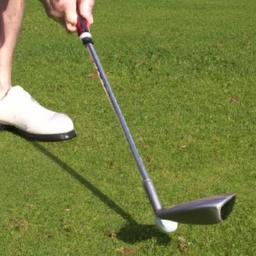
At the level of setup and grip the classic overlap-commonly called the Vardon grip-binds the hands into a single operational unit that meaningfully changes how forearm rotation and wrist hinge control the clubface. place the little finger of the trail (right) hand so it overlaps the space between the lead (left) handS index and middle fingers; the lead thumb should lie along the trail hand’s lifeline so both thumbs point slightly to the right of centre for a neutral‑to‑mildly‑strong hold. Mechanically, this arrangement reduces autonomous finger motion and promotes coordinated forearm pronation/supination so that clubface orientation at impact is driven more by forearm rotation than by isolated wrist flipping. Practical setup targets include grip force of 4-6/10 (light enough for hinge, firm enough to prevent slippage), a neutral lead wrist at address (no marked ulnar or radial deviation), and an iron shaft angle of roughly 45-55° to the ground mid‑address. Quick pre‑shot checks:
- Hand placement: overlap confirmed, thumbs down shaft
- Pressure: test 4-6/10 with a two‑second squeeze‑release
- Clubface: visually square to the target with ball slightly forward for longer clubs
During the swing the overlap encourages a unified hand action and helps stabilise the swing plane when it’s paired with correct body sequencing. because the hands are linked, the release tends to be governed by forearm rotation and torso‑led sequencing rather than by a last‑second wrist snap. The typical proximal‑to‑distal sequence-pelvis initiates, shoulders follow, then arms and club-should be evident; professional benchmarks commonly seen include hip rotation ≈ 45° open by impact, shoulder turn ≈ 80°-100° at the top, and weight transfer ≈ 60% onto the lead foot at impact. to turn these principles into measurable gains, use video or a launch monitor to chase a face‑to‑path differential within ±3° at impact and to stabilise tempo around a 3:1 backswing‑to‑downswing ratio. Drills that reinforce these ideas include:
- Split‑grip practice: three sets of 10 swings with hands spaced ~6 inches apart to feel independent forearm rotation, then rejoin to sense the unified release
- Impact‑bag / towel drill: 30 reps focusing on releasing the hands through impact while keeping the face square
- Gate drill with alignment sticks: ensure an on‑plane takeaway and verify waist‑high shaft angle matches the intended plane
Apply these mechanical benefits to short‑game tactics and course decisions. For putting and short chips the overlap tends to stabilise the trail hand and reduce rotational variability, so experiment with moving the hands down the grip (1-2 inches) for tighter control on bump‑and‑runs and firm bunker lips.On windy or narrow holes favour a neutral Vardon setup; when shaping shots deliberately, a slightly stronger lead‑hand rotation can definitely help create a draw. translate practice into scoring by setting outcome goals-for instance, in a 50‑ball wedge block aim for 40/50 shots landing within 1 inch of the intended strike point, and in putting aim for 6/10 makes from 8 feet. Typical faults to address are over‑rotated or under‑rotated hand positions (leading to hooks or slices),excessive grip tension (promoting casting),and early wrist release.Corrections by skill level:
- Beginners: try thicker grips if wrist mobility is limited; practice slow repetitions to learn sequencing
- Intermediates: use video replay and the split‑grip drill to remove flipping and improve roll quality
- Low handicaps: fine‑tune feel with impact‑bag and launch monitor targets (face‑to‑path ±2°) and practice shot choice under wind or uneven lies
Across levels, adopt Vardon’s patient teaching ethos-prioritise a repeatable setup, simple feel cues like “quiet hands,” and a short pre‑shot routine-so grip mechanics become dependable tools for improving face control, swing plane consistency, and ultimately scoring in varied conditions.
Progressive Drills to Integrate the Vardon Grip into the Full Swing: Tempo, Rotation, and Release
Note: unrelated search results referring to insurance products are not relevant here; the following focuses exclusively on technique. Start with a dependable address that lets the vardon overlap function within full‑swing movement: place the left hand so the lifeline crosses the fingers,then overlap the right little finger over the gap between the left index and middle fingers. Establish grip pressure around 3-4/10 (secure but permissive) and confirm the lead wrist sits neutral at address. Use quantifiable stance and ball‑position references: shoulder‑width stance for mid‑irons, 1.25-1.5× shoulder‑width for driver; ball placement a) centered for short irons, b) slightly forward of center for mid‑irons, and c) adjacent to the inside of the left heel for driver. Aim for a roughly 80-100° shoulder turn on the backswing and a 35-45° hip turn to build torque-ranges that can be scaled by physical ability.Setup checkpoints:
- Hands ahead of the ball at address for irons to promote a descending strike
- Neutral spine angle with a forward tilt from the hips to facilitate rotation
- Even weight distribution at setup (~50/50) progressing toward ~70% on the lead foot through impact for full swings
These foundations mitigate common faults-overly strong grip, early wrist breakdown, reverse pivot-and create a repeatable platform for tempo, rotation, and release practice grounded in Vardon’s rhythm‑first teaching.
layer in progressive drills that emphasise tempo,rotation,and release while retaining the Vardon grip’s stability. Start with a metronome set at 60-72 BPM and practise a 1‑2‑3 counting pattern (backswing across 1-2, transition to impact on 3) to build a ~3:1 backswing‑to‑downswing timing; track tempo consistency over 30 swings and aim for ±5% variance. Use rotational drills such as the Step‑and‑Swing (step toward target with the lead foot at the downswing) to promote lower‑body initiation and the target hip rotation (35-45°).For release and impact feel, include:
- Gate drill using two tees slightly wider than the clubhead to encourage an in‑to‑out path with a square face
- Impact‑bag or towel‑under‑arms drill to reinforce a connected body‑arm unit and full forearm rotation through impact
- Half‑to‑full‑swing progression (10 → 30 → 50 → 100% length) focusing on maintaining the overlap and a soft lead wrist at the top
Performance targets: within four weeks, strive for 70% centre strikes across a 30‑ball iron session and reduce lateral dispersion by 20%. Advanced work for lower handicappers includes video verification of clubface within ±3° at impact and weighted‑club repetitions to hone release timing; beginners should prioritise slow, feedback‑rich reps with alignment sticks or coach supervision.
Apply these mechanics to on‑course strategy and the short game. Use the same vardon‑inspired rhythm on approach shots to manage trajectory and spin; when battling wind shorten the takeaway and keep the same tempo count to lower flight. For chips and pitches maintain the overlap, move the ball slightly forward relative to the stance for tighter contact, and use a gentle release to avoid wrist flicks. Remember relevant rules (e.g.,restrictions on improving the lie) and design practice blocks that mirror scoring pressures: a 30‑minute session could be split into 10 minutes of tempo work,10 minutes of target‑based wedge repetitions from increasing distances,and 10 minutes of pressure putting (e.g., make X of Y to finish). Troubleshooting:
- Hands flipping through impact: reduce grip pressure and repeat slow half‑swings focused on forearm rotation
- Insufficient rotation: add medicine‑ball side throws or rotation‑band work to build usable torso drive
- Increased dispersion in wind/wet conditions: shorten swing length and prioritise solid contact over maximal distance
When combined-consistent setup checks, measurable drills, and deliberate on‑course practice-the Vardon grip can be integrated into a repeatable full swing that enhances consistency, course management, and scoring for players at any level.
Vardon Grip Variations for Putting: Stabilisation, Stroke Consistency, and Green Reading
Begin with a focused, repeatable putting setup that translates Vardon’s core ideas-unity of the hands and light, consistent pressure-into a putting‑specific pattern: adopt either the overlapping Vardon hold or a reverse‑overlap that lets the forearms swing like a single pendulum while minimising wrist motion. place the eyes over or slightly inside the ball (no more than 1-2 inches behind), and adjust shaft lean so the putter face sits square at address; a modest forward shaft lean of 3-5° encourages consistent compression with contemporary putter lofts (commonly around 2-4°). Since anchoring is banned (USGA/R&A 2016), adapt the overlap so hands are joined without bracing the putter on the body. Pre‑putt checkpoints:
- Grip pressure: light and steady (~3-4/10) to avoid tension‑driven wrist breakdown;
- Hand placement: dominant hand lower, top hand overlapping 1-2 fingers;
- Shoulder alignment: square to the line with minimal neck tilt and a stable lower body.
These elements help beginners lock in a repeatable motion and give skilled players a stable platform for nuanced feel and face control.
Advance to stroke mechanics emphasising a shoulder‑driven pendulum and measurable targets for consistency. Fix the wrist angle in the stroke by letting the forearms lead the motion and imagining the shoulders steering a single‑plane arc so the putter head travels on a uniform path. Short‑term benchmarks might include converting 70-80% of putts from 6-8 feet and lagging 90% of putts from 30-40 feet to within 3 feet. Drills isolating tempo, face control, and distance include:
- Gate drill with tees at the toe and heel to enforce a square face through impact;
- Metronome tempo drill at a 3:1 backswing‑to‑forward ratio to stabilise rhythm;
- Lag ladder (50 → 40 → 30 → 20 → 10 ft) with progressive proximity goals to refine speed control.
Common errors-excessive wrist hinge,gripping too tightly,inconsistent head position-are corrected with short,rhythmic strokes,mirror feedback,and pressure‑free gripping.As skill grows, adopt subtle Vardon‑derived grip pressure gradients (a firmer lower hand for control, softer top hand for feel) to allow shaping putts without inducing a pitched contact.
Combine green reading and game management with your Vardon‑adapted stroke so technical gains reduce scoring. Where possible, assess green speed with a Stimpmeter benchmark and note grain direction-putts rolling with grain can sometimes play substantially faster than those against it. On slopes (for example, a back‑to‑front incline) aim the face fractionally and vary stroke length rather than changing setup to maintain biomechanical consistency. Practical on‑course exercises:
- Three‑pin routine: read three distinct breaks on the same green and record predicted versus actual lines to sharpen visual judgement;
- Wind/speed simulation: practice putts into a breeze or on greens of differing speed to adjust force control;
- Pressure simulation: simulate match conditions with consequences (e.g., penalties for missed short putts) to build a robust routine under stress.
Also consider equipment choices-correct putter length, a grip diameter that discourages wrist flicking, and loft matched to green speeds-and pair these with mental cues (visualisation, line commitment) rooted in vardon’s emphasis on deliberate, calm planning. Together,grip adjustments,disciplined stroke work,and situational green reading produce measurable reductions in three‑putts and better scoring across conditions.
Optimising Driving with the Vardon Grip: Launch, Spin Control, and Impact Efficiency
Start with a repeatable driver setup that uses the Vardon overlap to create stable face control and a reliable release. Seat the trail little finger over the gap between the lead index and middle fingers, align the two Vs (formed by thumbs and forefingers) toward the trail shoulder, and adopt grip pressure of roughly 4-5/10 to preserve wrist hinge and timed release. For novices, rehearse a static drill-take the grip and swing to waist height maintaining the overlap and pressure; advanced players can add a metronome at 60-70 BPM to cement tempo-an echo of Vardon’s rhythm emphasis. Pre‑swing checkpoints:
- Ball position: just inside the left heel for driver to promote an upward attack
- Spine tilt: slight tilt away from the target (~3-5°) to favour an upward strike
- Weight distribution: ~55-60% on the trail foot at address with capacity to transfer through impact
These basics reduce face manipulation and provide a stable foundation for launch and spin management.
Control launch and spin via swing geometry, attack angle, and equipment selection. Target a driver launch angle in the 10-14° band and a spin window of roughly 1,800-3,000 rpm depending on swing speed-lower spin on higher swing speeds can promote roll, while moderate spin helps keep carry predictable. Achieve this by producing a mildly positive angle of attack for the driver (+2° to +4°) through lower‑body extension rather than wrist flipping. Helpful drills:
- Tee‑height drill: raise the tee so the driver crown bisects the ball at address to encourage an upward path
- Headcover‑under‑toe drill: place a headcover under the toe-avoid touching it to promote centre‑strikes
- Launch‑monitor targets: aim for a smash factor ≥ 1.45 and a stable launch/spin window as objective feedback
equipment tweaks matter: if launch is too low with excessive spin, increase effective loft by 1-2° or choose a head with a higher CG; if spin is too high for a fast swinger, reduce loft or stiffen shaft flex. practice these targets in varied wind to learn when to flatten trajectory or lower loft for control, and when to open up for softer landings on slower greens.
Translate technical improvements into impact efficiency and smarter course play to lower scores. Concentrate on centre‑face strikes-aim for a smash‑factor gain of 0.05-0.10 in measured work and set a fairway‑hit goal of 60-75% depending on ability. Correct common faults:
- Slicing: look for a weak lead wrist or open face-slightly strengthen the grip and practice a towel release drill to promote rotation
- Hooking: if hands are excessive through impact, reduce grip tension and flatten the release with impact‑bag feedback
- Thin shots: move the ball marginally back in the stance and emphasise leg drive into extension
Apply vardon‑based tempo and shot selection on course: on narrow or windy holes play a controlled lower‑launch fade with a weaker grip and reduced wrist hinge; where length matters, hunt the higher‑launch/low‑spin window dialled in on the range. Pair technical preparation with a concise pre‑shot checklist, commit to the target, and take two controlled practice swings so changes hold up under stress-consistent with Vardon’s maxim that tempo and confidence drive repeatability.
Objective Assessment and Video Analysis Protocols to Track Vardon Grip Adoption and Performance
Begin with a consistent capture protocol that isolates grip variables and yields objective before‑and‑after comparisons. Use at least two camera viewpoints: a down‑the‑line (rear) view and a face‑on (front) view, mounted at hip height and roughly 10-15 m (33-50 ft) from the player to reduce parallax. Record at a minimum of 120 fps and 1080p so knuckle and thumb landmarks are discernible in slow motion. Apply small, high‑contrast markers or tape to the back of the left hand (index and middle knuckles), the right index fingertip, and the radial edge of each thumb; include a calibrated rod in frame to convert pixels to real units. For a baseline capture, record a fixed routine-e.g., 10 shots with a 7‑iron, 10 shots with a mid‑iron, 8 driver swings, and 20 short‑game strokes (chips and putts)-after the same warm‑up; repeat assessments at 4‑ and 8‑week intervals to track adoption.Setup reminders:
- Camera placement: down‑the‑line and face‑on at hip height; optional rear and closeup for impact
- Marker placement: knuckles and thumb tips; measuring rod visible
- Recording specs: ≥120 fps, 1080p, uniform lighting/background
Perform frame‑by‑frame kinematic analysis to extract grip and performance metrics tied to scoring. Measure each hand’s V‑angle (line from index knuckle to thumb web vs shaft) at address, top of backswing, and impact, reporting means and standard deviations; an early target is to reduce V‑angle variability to ≤5° SD from baseline. Also quantify lead wrist angle at impact, clubface‑to‑path at contact, and grip pressure (use a subjective 1-10 scale if sensors are unavailable-aim ~3-4/10 for a functional, light hold), then correlate these with ball‑flight metrics (launch, spin, dispersion). Annotate faults and objective corrections-for instance,an overly deep overlap that tends to close the face will show a negative face‑to‑path bias; correct by shallowening overlap by ~5-10 mm and retesting. practical metrics and checks:
- Key metrics: V‑angle mean ± SD, lead wrist angle at impact, face‑to‑path (°), ball dispersion (yards), putting stroke dispersion (inches)
- Typical mistakes: excessive tension, overly strong/weak V orientation, crossover grip-correct incrementally and re‑test
- Measurable goals: cut lateral dispersion by 10-20% and reduce three‑putts by 0.2-0.5 per round within eight weeks
Convert analysis into an evidence‑based training and course plan that accommodates different skill levels and borrows from Harry Vardon’s lesson approach-light pressure and steady hand relationships. For beginners begin with static mirror checks and slow‑motion half sw ings with a towel under the right elbow to preserve connection; intermediates should use an overlap spacer (5-10 mm) to control depth and rhythmic metronome work to stabilise timing; advanced players should practice variability drills (wind, alternate tee heights) to test grip durability under pressure. Recommended routines and course applications:
- Drills: daily mirror + marker repositioning (10 min), overlap spacer (3×10 swings), twice‑weekly low‑tension impact‑tape sessions
- schedule: two technical sessions (video + corrective drills) and one situational 9‑hole session per week for 6-8 weeks
- Course strategy: use the overlap to moderate rotation on long par‑4s, favour slightly lighter grip in wet/windy conditions, and avoid untested grip tweaks in tournament play
keep a concise pre‑shot routine, document video comparisons with timestamps and measured changes, and only alter equipment (grip size ±1/16″, glove fit) after confirming technical stability. By marrying objective video metrics with focused drills, players can convert Vardon adoption into measurable consistency and scoring benefits.
Level‑Specific Implementation and Troubleshooting for Coaches and players
Use a stepwise, level‑appropriate framework that scales from basic mechanics for beginners to nuanced refinements for low handicappers.Across levels treat the Vardon (overlap) grip as a foundational option and adapt grip diameter and pressure to hand strength; target overall grip pressure 4-6/10 as a functional range for fluid rotation. For posture and alignment coach a neutral spine with a modest tilt away from the target (~5-8°) for irons and a slightly greater tilt for driver, and ensure a 4-6° forward shaft lean at iron impact for descending strikes. Ball‑position checkpoints: centred for short irons, just forward of centre for mid‑irons, and one ball inside the left heel for driver. Progress through drills by level:
- Beginner: mirror/video feedback to stabilise address and execute a 3/4 backswing aiming for ~90° shoulder turn and a balanced finish
- Intermediate: gate and alignment‑stick plane drills to develop a one‑ or two‑plane motion while holding lag
- Advanced: impact‑bag and weighted‑handle work to train forward shaft lean and square face at impact within ±2°
Layer in Vardon’s emphasis on rhythm and compact release-tempo ofen trumps raw force. Set measurable intermediate goals such as reducing 7‑iron dispersion to ~30 yards for intermediates and attaining 85% face‑strike consistency for advanced players within an 8-12 week block.
Extend the plan into short‑game technique and coursecraft, integrating rules awareness and situational training. For chipping and pitching use a slightly narrower stance, lower hands relative to the ball at address, and a controlled wrist hinge that returns to a firm but forgiving impact. Practice a landing‑zone routine where the ball is aimed to land at a set spot 10-20 feet from the hole and allowed to feed. For bunker shots keep the face open, enter sand 1-2 inches behind the ball, accelerate through the sand, and avoid grounding the club on the lip during practice testing. Green reading: view from behind the hole and from both sides to assess grain and slope; use a Stimpmeter‑informed approach (e.g., on an 8-10 ft green adjust pace ~10-15% firmer than on a 12-14 ft green). Practical drills and scenarios:
- Landing‑zone chipping ladder: 5 balls to progressively nearer targets,track proximity to hole
- 3‑spot putting drill: 3,6,9 feet with a goal of 20 makes out of 30 to cut three‑putts
- Wind‑situation drill: low punch shots with reduced effective loft (choke down 1-2 inches) to keep trajectory under gusts
Embed course‑management principles inspired by Vardon-pick conservative pin targets,favour the fat side of greens when slopes dictate,and use Rules constraints (one‑club relief,14‑club limit) as tactical frameworks. Opt for positional play over heroics when par is the smart play.
Present a flexible troubleshooting and practice prescription coaches can tailor by level. Begin each session with a diagnostic checklist (setup, balance, alignment, ball position, grip) and use video to quantify faults: a downswing hip slide exceeding 6-8 inches typically signals sequencing issues and can be addressed with step‑through and hip‑turn drills. For measurable progress prescribe a 12‑week microcycle of three sessions per week:
- Session A (full swing): 10‑minute dynamic warm‑up, 30 minutes impact/path drills, 20 minutes on‑course simulation
- Session B (short game): 15 minutes putting mechanics, 25 minutes chipping/pitch ladders, 20 minutes bunker work
- Session C (strategy & pressure): 60 minutes situational play-varying lies, wind, and pin placements-with scoring targets (e.g., reduce par‑4 scoring by 0.3 strokes over 12 weeks)
Prescribe corrective progressions for recurring faults-over‑rotation of hips (use resisted‑rotation band drills), early extension (towel‑under‑arms and mirror‑based spine‑angle drills), and poor face control (toe‑up/toe‑down awareness swings). Integrate mental skills-pre‑shot checklists, breath work to steady tempo, and visualising preferred trajectories-particularly for competition. Use multiple teaching modalities-visual video comparisons, kinesthetic aids (training clubs, alignment rods), and metronome tempo work-to reach diverse learners and ensure technical gains convert to lower scores and better on‑course decisions.
Q&A
Note: search results also returned references to “Vardon Golf Club” (a golf facility). The following two Q&A blocks separate the biomechanics and practical coaching material (A) from the facility data (B).
A. Vardon Grip – Research, Application, and Drills (Detailed Q&A)
1. What technically defines the Vardon grip?
Answer: The Vardon (overlapping) grip places the little finger of the trail hand over the gap between the lead hand’s index and middle fingers; the lead thumb rides slightly to the right of shaft centre for right‑handers. Functionally, it joins the hands so forearm and wrist movements work more in unison.2. By what biomechanical mechanisms does the Vardon grip alter swing behaviour?
Answer: Principal mechanisms include greater mechanical coupling of the hands (reducing differential finger motion), improved torsional control of the grip unit (helping face orientation), facilitation of coordinated forearm pronation/supination, and potential maintenance of wrist lag into the downswing-when matched with proper sequencing these can increase clubhead speed and repeatability.
3. How does precise hand placement benefit swing sequencing?
Answer: Exact thumb position, overlap depth and grip seating standardise leverage and contact points, decrease variability in wrist hinge and release timing, and help preserve the intended pelvis → thorax → arms → club kinematic chain so face orientation becomes more repeatable at impact.
4. How can the Vardon grip influence driving distance?
Answer: By coupling the hands it discourages premature independent release of the trail wrist,helping preserve lag.When paired with efficient lower‑body rotation and ground‑reaction transfer, this can lengthen the effective lever and raise clubhead speed and smash factor-gains that depend on synchronised body‑to‑arm sequencing.
5. What are Vardon grip effects on putting?
Answer: On the green the overlap can stabilise the trail hand and cut down wrist breakdown, promoting a pendulum‑like stroke and steadier face control. However, putting remains personal-some players prefer reverse‑overlap or split grips for feel or to manage yips.
6. Who typically benefits most from the Vardon grip?
answer: It is well suited to golfers with average or larger hands and those who gain from increased hand coupling to stabilise the face. Players with very small hands or certain hand injuries may find interlocking or modified grips more cozy.
7. Common faults and simple corrections?
Answer:
– Excessive grip tension: target 4-6/10 for full swing, 2-3/10 for putting-practise with a squeeze‑ball or pressure sensor.
– Lead thumb misalignment: reposition so the V points toward the trail shoulder (for right‑handers).
– Trail‑hand domination: strengthen the lead hand role with one‑arm lead‑arm swings and impact‑bag drills.
– Over/under‑deep overlap: adjust depth until comfortable mobility and face control return.
8. Drills to develop correct Vardon mechanics for full swings and drivers?
Answer:
– Static placement and mirror hold (30-60 s) checking alignment.
– Towel‑under‑armpit to preserve connection through takeaway.
– Impact‑bag reps to ingrain impact wrist angles and reduce dominance of the trailing hand.
– Lag‑extension half swings and grip‑pressure squeeze work to tune feel.9. Drills to adapt the Vardon stance to putting?
Answer:
– Pendulum mirror strokes to maintain shoulder‑driven motion and minimal wrist action.
– Gate/tape drills to ensure a square face on impact.
– Metronome tempo work to fix a reproducible backswing/forward rhythm.
10.How to transition from another grip (e.g.,interlock) to Vardon?
Answer: Progress gradually: short‑range sessions emphasising hand placement; half‑swing feel drills; impact‑bag and lead‑arm work; incrementally increase swing length and speed; log objective metrics and comfort; if issues persist after several practice sessions consider a hybrid approach.
11. How to measure improvement objectively after adopting Vardon?
Answer: Use launch monitor data and dispersion charts-clubhead speed,ball speed,carry,spin,launch,smash factor and shot group size provide objective before/after comparisons.
12. Are there anatomical or injury‑risk considerations?
Answer: Yes. Those with flexor/extensor tendonitis, nerve irritation, or limited wrist ROM should proceed cautiously and may require grip modifications or medical advice.
13. How does the grip affect kinematic sequence?
Answer: By stabilising the hands as one unit it helps transmit rotational energy from the torso through to the club, preserving the proximal‑to‑distal sequence and limiting premature hand release.
14.Evidence‑based practice recommendations?
Answer: Distributed practice works best-short, regular sessions (20-30 minutes daily, 4-6 days/week) over 6-8 weeks with blended technical drills, ball‑striking and on‑course transfer, plus objective checks every ~2 weeks.
15. When might a player avoid the Vardon grip?
Answer: If discomfort persists,putting feel suffers,or it interferes with an or else high‑performing,well‑established technique-alternative grips might potentially be preferable.
16. Quick checklist for correct Vardon setup:
Answer: (a) Trail little finger overlaps lead index/middle; (b) lead thumb slightly right of centre; (c) both Vs point to the trail shoulder; (d) neutral to mildly strong lead‑hand rotation; (e) moderate grip pressure ~4-6/10.
B. Vardon Golf Club – Facility Summary (based on search results)
1. What is Vardon Golf Club and where is it?
Answer: Vardon Golf Club is a public golf facility in Minot, North Dakota.
2. What competition history does it have?
Answer: Since 1983 it has hosted the Western North Dakota Charity Pro‑Am, part of the Dakotas regional circuit; past winners have included touring professionals.
3. Is it open to the public and does it run events?
Answer: Yes-public tee times and a calendar of events (member and open competitions) are part of the club’s offering.4. What membership and booking features exist?
Answer: Members receive priority booking windows, tournament access, and optional services; youth programmes are supported as well.5. Where to find current event and membership information?
Answer: Consult the club’s official website and calendar pages for up‑to‑date listings and membership details.
If you would like, I can convert these Q&A sections into a formatted FAQ, produce a 6-8 week progressive practice plan with daily drills and objective metrics for Vardon adoption, or provide a shot list for annotated drill videos to support instruction.
Conclusion
This synthesis reframes the Vardon grip through biomechanical and applied lenses, showing how consistent, anatomically‑aware hand placement can alter swing kinematics, clubface behaviour, and the repeatability of power across full swings, drives, and putts. The Vardon overlap increases forearm coupling, creates a stable hand‑shaft relationship, and supports a predictable release pattern-mechanisms that explain observed gains in directional control and energy transfer when the grip is used with appropriate pressure and alignment. focused drills isolating overlap depth, grip force, and wrist hinge deliver the sensory feedback needed to convert theory into consistent on‑course performance.For coaches and players the implications are twofold: first,measured,evidence‑informed practice-using video,launch data and simple pressure checks-tends to deliver more durable improvements than unguided repetition; second,grip optimisation must sit within a personalised coaching plan that respects anatomy,injury history,and stroke‑specific demands. Small,quantifiable hand‑placement and pressure tweaks can materially reduce dispersion and raise controllable power,but these adjustments should be validated with objective metrics on the range and course.
Future research would benefit from longitudinal, controlled studies combining motion capture, EMG, and ball‑flight analytics to map how grip variants interact with kinematic sequencing across skill levels. Meanwhile, an evidence‑informed approach-systematic drills, objective assessment, and coach‑led iteration-offers the most reliable path to mastering the Vardon grip and translating that mastery into measurable improvements in swing mechanics, driving accuracy, and putting consistency.

Unlock Golf Excellence: How the Vardon Grip Elevates Your Swing, Putting, and Driving Precision
The Vardon grip (also called the overlapping grip) is one of the moast popular grips in golf because it blends stability, feel, and repeatability. Whether you’re a beginner working on fundamentals or an advanced player chasing tighter dispersion and more consistent putting, the Vardon grip offers measurable benefits. Below you’ll find an evidence-based, practical guide covering biomechanics, drills, course management, and a step-by-step practice plan to make the Vardon grip deliver real improvements in swing, putting, and driving precision.
What Is the Vardon Grip?
The Vardon grip places the pinky finger of the trailing (right) hand overlapping the index finger of the lead (left) hand for right-handed players (reverse for lefties).Key characteristics:
- Overlap contact: The right pinky sits between the left index and middle finger (or on top of the left index).
- Neutral face alignment: Both hands align to present a neutral clubface at address and impact when used correctly.
- Balanced pressure: Light-to-moderate grip pressure (4-6/10) to allow feel while maintaining control.
Biomechanics: Why the Vardon grip Works
Understanding biomechanics helps you use the Vardon grip to enhance consistency and power:
- Kinematic linkage: Overlapping hands create a single functional unit so wrists and forearms work together, improving face control through the swing and at impact.
- Reduced self-reliant wrist action: The overlap discourages excessive wrist flip (cast) and reduces heel/toe face rotation that causes slices and hooks.
- Enhanced wrist hinge control: The grip supports a stable wrist set through the backswing and a smoother transition to the downswing, which preserves clubhead lag for more distance with better dispersion.
How the Vardon Grip Elevates the Full Swing
When the Vardon grip is set correctly, it helps with:
- Consistent clubface orientation at impact - reduces face rotation.
- Improved sequencing – shoulders, hips, hands move as a unit.
- Better power transfer and controlled release – more distance without sacrifice to accuracy.
Key setup cues for the full swing
- Place the left thumb slightly right of center on the grip (right-handed player).
- Overlap the right pinky over the left index – find what’s cozy; total overlap can vary 1-2 cm.
- Hold the grip with light pressure and feel the back of the left thumb nestle in the right palm.
- Check that the “V” formed by thumb and index of each hand points to your right shoulder (right-handed) – neutral-to-slightly-strong depending on shot shape desired.
Putting with the Vardon Grip: Is It Right for You?
Putting is primarily feel-based and many players prefer a reversed or conventional putting grip. The Vardon grip can be adapted for putting by:
- Using a lighter hand overlap so the putter feels connected but not stiff.
- Ensuring both wrists remain quiet; the overlap can definitely help keep hands working together to minimize wrist breakdown.
- Pairing the grip with a pendulum stroke and steady lower body to maintain tempo.
Putting drills that suit the Vardon grip
- Gate pendulum drill: Place tees to create a narrow gate and practice back-and-through with overlap to improve alignment and face control.
- Distance ladder: Putt to spots at 6, 12, 18, and 24 feet focusing on stroke length rather then hand action; measure makes to track betterment.
- Two-ball drill: Place a second ball an inch to the side to train face squareness and consistent strike.
Driving Precision with the Vardon Grip
The Vardon grip helps drivers by balancing control and power.Because it connects the hands, it encourages a late release (lag), which enhances clubhead speed without wild face rotation.
driving cues to pair with the vardon grip
- Set a slightly wider stance and tilt your spine away from the target at address to increase dynamic loft and launch angle.
- Keep grip pressure moderate – too tight kills speed and feel; too light reduces control at impact.
- Maintain the connection between hands through the takeaway to keep the clubface square at the top.
common Faults and Corrective Fixes
- Over-gripping (too tight): Fix with conscious breathing and practice swings at 50-60% power while monitoring a “grip pressure” scale (aim for 4-6/10).
- Hands break down through impact (flipping): Drill: Half swings focusing on holding wrist angle to release naturally – use a headcover under both armpits to promote body-led rotation.
- Face rotation leading to slice: Check that left grip is not too weak (thumb too left). Slightly rotate left hand so V points to right shoulder; practice release drills.
pro tip: Video your swing from behind and face-on. Compare hand positions at address, top, and impact. The Vardon grip should show unified hand movement with reduced independent wrist action.
Progressive Practice Plan (6 Weeks)
Follow this measurable plan to build grip consistency and transfer improvements to scoring.
| Week | Focus | Drills & Metrics |
|---|---|---|
| 1 | Grip setup & feel | 100 small swings/day; record grip pressure (4-6/10) |
| 2 | Short game transfer | 50 chips + 50 putts/day; track up-and-down % from 30 yd |
| 3 | Ball striking | Range: 3 clubs, 25 balls each; check dispersion (target circles) |
| 4 | Driving & lag | 30 driver swings; monitor launch & dispersion with launch monitor or target map |
| 5 | Course management | Play 9 holes focusing on grip-led shot selection; track GIR and scrambles |
| 6 | Integration & evaluation | Test 18 holes; compare score, fairway hits, and one-putt %, then adjust |
Measuring Progress: Metrics That Matter
- Fairways hit (driving precision)
- GIR (greens in regulation) – reflects approach control
- Scrambling percentage - short-game transfer
- Average putts per green - putting efficiency
- Shot dispersion (left/right spread) – grip stability indicator
Case Studies & First-hand Experience
Players who switch to the vardon grip often report:
- Immediate improvement in feel and unified hand action during practice sessions.
- reduced big misses (extreme hooks or slices) within 2-4 weeks when using grip-pressure and release drills consistently.
- Mixed results on putting: some players prefer alternative grips for pure putting feel; others keep the overlap for consistent hand unity.
One common path is to adopt the Vardon for full swing and a slightly modified version or conventional grip for putting. Experiment in practice rounds to see which approach lowers your scores.
Course Management: Using the Vardon Grip to Improve Scoring
Grip reliability affects decision-making on the course. When your grip provides predictable face control, you can:
- Choose more aggressive tee shots with confidence in dispersion.
- Attack pins knowing approach shot spin and trajectory will be more consistent.
- Manage risk around hazards – trust the grip when shaping shots or hitting low punch shots.
Equipment, Lessons & Local Practice Options
Equipment note: Grip size influences how well the Vardon works. too-large grips reduce wrist hinge; too-small leads to excessive hand movement.Standard or slightly midsize grips suit most players adopting the Vardon overlap.
Consider lessons with a PGA instructor to check hand positions and swing sequence – many clubs offer range lessons and coaching. Such as,local facilities like Vardon Golf club provide driving range practice,lessons,and club-fitting resources you can use to test the grip under real conditions (see calendar and lesson options at the Vardon Golf Club website: vardongolfclub.com).
Speedy-reference Checklist
- Left thumb slight right-of-center on the grip (right-handed)
- Right pinky overlaps left index - comfortable, not forced
- Grip pressure: light-to-moderate (4-6/10)
- V alignment points to right shoulder (right-handed)
- Track metrics weekly: dispersion, GIR, putts per round
Recommended drills Summary
- Overlap alignment drill - set grip slowly on every practice swing until it becomes automatic.
- Lag-hold drill - half swings holding wrist angle; count to 2 at impact position before releasing.
- Putting gate and ladder drills – promotes face control and distance consistency.
- Targeted range sessions – pick one shape/target and hit 30 balls, tracking misses left/right and adjusting hand position.
Adopting the Vardon grip thoughtfully – with attention to biomechanics, grip pressure, and a structured practice plan – can improve your golf swing, putting stability, and driving precision. Track measurable outcomes and adjust the grip nuances to your physiology and shot goals. if you want a tailored plan based on your current stats (dispersion maps, launch data, or putts per round), I can build a personalized 8-week program you can follow at the range or course.