Introduction
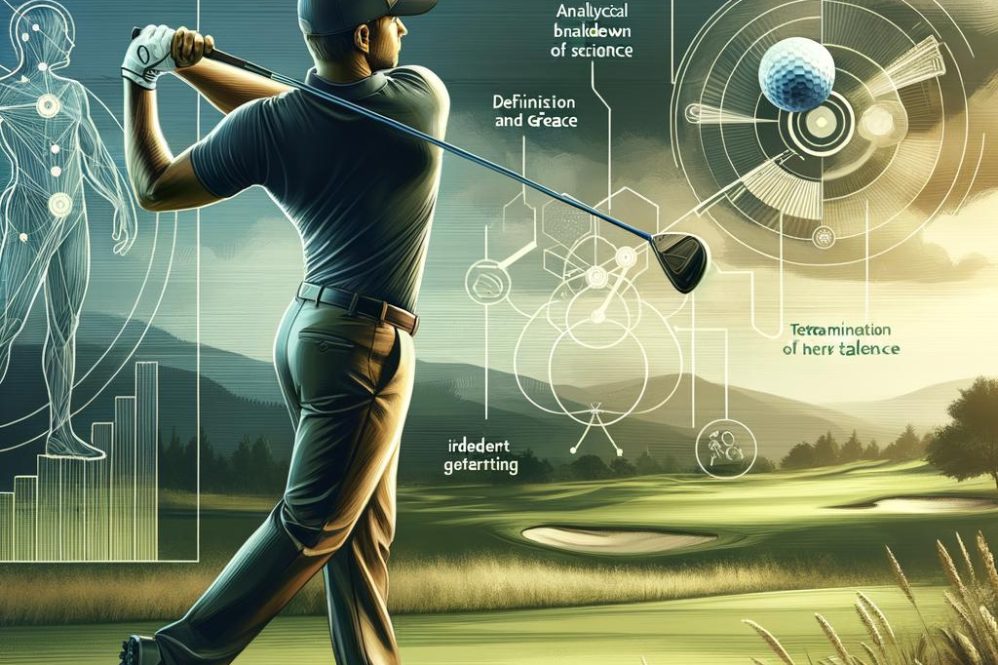
Grasping what separates the truly remarkable athlete from the merely skilled requires more than measuring movement patterns, physiological markers, or strategic choices; it also demands attention to the athlete’s lived, first‑person experience that shapes perception, timing, and embodied control. Phenomenology-the disciplined description of how things appear to consciousness from the inside-offers a conceptual and methodological frame appropriate for this inquiry (see Merriam‑Webster; Simply Psychology). Applied to golf, a discipline where minute shifts in attention, proprioceptive sense, timing, and intention change outcomes dramatically, a phenomenological stance highlights how the state of “being in the shot” both shapes and is shaped by measurable performance indicators.
This piece, “The Phenomenology of Golf Legends: Performance Analysis,” weaves together first‑person experiential methods, biomechanical measurement, cognitive sport psychology, and modern analytics to present a unified perspective on elite mastery. Rather than ranking subjective testimony and objective metrics in a hierarchy, this work treats them as mutually informative: phenomenological accounts of absorption, perceptual attunement, and situational framing are examined alongside precision motion capture, force‑plate outputs, and ball‑tracking data. the mixed‑methods program seeks to map experiential patterns-such as action temporality, focal breadth, and embodied certainty-onto concrete mechanical and strategic signatures commonly found among golf legends.
The inquiry addresses three core questions: (1) How do top players describe their moment‑by‑moment experience when stakes are high? (2) How do those first‑person narratives align with biomechanical and outcome metrics? (3) What practical guidance for coaching,product design,and analytics emerges from bridging subjective and objective viewpoints? By articulating the lived qualities of elite performance and relating them to measurable determinants,the article aims both to advance theoretical work in sport phenomenology and to offer applied tools for talent progress,real‑time coaching,and performance support systems.
Below we summarize relevant scholarship on phenomenological methods in sport, describe a multimodal methodology, present integrated analyses that relate experience to measurement, and discuss ramifications for theory, practice, and future study. The goal is to move beyond reductive descriptions of elite golf and toward a richer explanatory model in which mind, body, and surroundings jointly produce outstanding play.
The Phenomenological Framework for Golf Legends: Operationalizing Subjective Experience in Performance Research
This framework positions the golf legend simultaneously as the source of lived experience and as empirical material: their embodied,temporally structured subjective life becomes the primary object of study. Drawing on classical phenomenology-with special attention to intentionality and the description of phenomena “as they manifest”-researchers are advised to bracket explanatory assumptions (the epoché) and solicit richly detailed first‑person narratives that disclose patterns of attention, bodily awareness, and meaning that underpin elite performance. Doing so redirects analysis from purely statistical summaries toward the textured interplay of perception, affect, and motor intention that differentiates extraordinary moments from routine play.
Turning phenomenology into usable methods requires triangulation so subjective material can be elicited, recorded, and compared systematically. Recommended qualitative and mixed procedures include:
- phenomenological interviews – open, bracketed protocols that invite temporal and somatic description;
- video‑elicitation – players comment on synchronized footage to anchor recollection to observable events;
- micro‑phenomenology – moment‑level probes that unpack experience during pivotal shots;
- ecological momentary assessment – short, in‑situ prompts delivered across a round to capture shifting states.
These methods yield textured accounts that can be compared across individuals, situations, and turning points in competition.
Analytic work proceeds through disciplined reduction and iterative coding: investigators carry out eidetic reduction to surface invariant structures, then use thematic and structural description to chart constitutive motifs (for example, temporal compression, perceptual narrowing, or kinesthetic certainty). coding frameworks shoudl emerge from the phenomenological transcripts themselves (an emic orientation) and be verified via intersubjective validation-peer review of transcripts, participant member checks, and inter‑coder agreement statistics. The aim is a replicable taxonomy of lived‑performance constructs that informs explanatory models while preserving subjective richness rather than flattening it into crude variables.
Bridging subjective report with behavioral and physiological data renders the framework actionable. The table below gives an illustrative mapping between phenomenological constructs and measurable indicators commonly employed in performance studies.
| Phenomenological Construct | Measurable Indicators |
|---|---|
| Flow / Absorption | Lower HRV variability during execution; tight shot dispersion patterns; validated self‑report flow scales |
| Pre‑shot Ritual Integrity | Stable gaze fixation durations; reduced timing entropy; repeatable kinematic sequences |
| Temporal Compression | Shorter reaction‑time windows; altered time estimates in EMA probes |
Practical implications fall into three broad areas: (1) coaching – foreground player narratives and foster descriptive self‑awareness rather than only prescribing mechanical cues; (2) past reconstruction – use archival footage and contemporary testimony to rebuild the lived performance of past greats; and (3) ethics – protect consent, respect narrative ownership, and avoid reductive translation of intimate experiences into metrics. In sum, the phenomenological stance complements established performance science by preserving the irreducible features of experience while enabling rigorous, replicable investigation.
Biomechanical Signatures of Elite Swing Mechanics: Key Metrics, measurement Protocols, and Training Prescriptions
The efficient movement patterns typical of golf legends are characterized by a concise set of repeatable biomechanical markers that closely predict output: elevated **clubhead speed** produced through efficient **proximal‑to‑distal sequencing**, substantial and well‑timed **pelvis‑thorax separation** (the X‑factor), and robust, directionally appropriate **ground reaction forces (GRFs)**. High‑level players consistently exhibit staggered peaks in angular velocity across hips, trunk, and shoulders, preserving energy transfer to the club. Secondary hallmarks-such as a consistent **attack angle**, reliable **center‑of‑pressure trajectory**, and low trial‑to‑trial timing variability-separate tournament‑level steadiness from occasional bursts of power.Together these indicators form a concise diagnostic fingerprint for mechanical effectiveness across conditions.
To ensure comparability across sessions and subjects, measurement requires standardized lab and field protocols. Core recommendations include:
- Optical motion capture sampled at ≈200-500 Hz for marker kinematics;
- Force plates or instrumented turf sampled at ≈1,000 Hz for grfs and timing;
- Wearable IMUs for ecological on‑course monitoring when optical capture is impractical;
- Comprehensive marker sets capturing pelvis, thorax, arms, and clubhead to compute rotations and X‑factor;
- Protocol standardization: consistent club and ball specifications, warm‑up routine, and 8-12 maximal efforts with rest to limit fatigue effects.
Following these practices reduces measurement noise and increases translational utility.
Signal processing and metric derivation must be transparent and reproducible: use an appropriate low‑pass Butterworth filter (commonly 6-12 Hz for marker positions; higher cutoffs for IMU angular velocity), consistently define event thresholds for backswing apex and impact, and compute joint kinetics via inverse dynamics using body segment parameter estimates normalized to mass. Key derived metrics include peak segmental angular velocities,inter‑segment timing (milliseconds between hip and shoulder peaks),downswing GRF impulse,and trunk rotational power. Report reliability metrics (ICC, SEM); elite discriminators typically show large effects (Cohen’s d > 0.8) and within‑subject SEMs small enough to detect performance‑relevant changes (roughly 2-4% for clubhead speed and 5-8% for separation angles).
Training interventions should address the causal relationships revealed by measurement. Prioritize integrated programs that combine motor‑control work with targeted physical conditioning. Examples of effective practices include:
- Sequencing drills: split‑step rotations, paused‑at‑top reps to reinforce distal timing;
- Power transfer: medicine‑ball rotational throws and resisted swing patterns emphasizing hip‑to‑shoulder dissociation;
- Force development: lateral and rotational plyometrics plus eccentric hip training to boost GRF production and absorption;
- Mobility‑stiffness balance: thoracic rotation mobility and hip control to safely enlarge the X‑factor.
| Metric | Elite Target | Prescriptive Focus |
|---|---|---|
| Clubhead speed | ~4-10% above peer averages | Power development and eccentric lower‑body strength |
| X‑factor (deg) | ~45°-55° at top (individualized) | Thoracic mobility and hip decoupling |
| GRF impulse | High peak with consistent medial‑lateral pattern | Explosive, ground‑driven conditioning |
These interventions must be periodized and tailored to baseline capacity and injury history.
For everyday coaching use,fold quantitative signatures into pragmatic workflows: set measurable short‑term benchmarks (for example, reduce sequencing lag by X ms), use wearable feedback for on‑course reinforcement, and perform regular retesting to monitor adaptation and fatigue. Merge objective data with coach observation, video review, and “feel” cues to support motor learning transfer. Maintain athlete‑centered principles-gradual loading, progressive overload, and purposeful movement variability-while employing the biomechanical profiles here as reference points for technical and physical development.
cognitive and Affective Dynamics Under Competitive Pressure: Assessment Techniques and Interventions for Resilience
Performance in tournaments is best understood through an integrated cognitive-affective lens: cognitive systems govern attention allocation, working memory, perceptual accuracy, and decision speed, while affective dynamics cover emotional valence, arousal, and motivation. Contemporary theory from cognitive science and sport psychology converges on the idea that these processes interact dynamically-brief shifts in arousal or appraisal can reorganize executive control and perceptual sensitivity, thereby perturbing motor execution and choice behavior.
Valid assessment requires multimodal,ecologically sound instruments that triangulate self‑report,behavior,and physiology. Core measurement modalities are:
- Psychometrics: validated state and trait instruments for anxiety, confidence, and coping;
- Process tracing: think‑aloud protocols, gaze tracking, and decision‑latency measures to map information sampling;
- Physiological monitoring: HRV, electrodermal activity, and salivary cortisol as indices of autonomic and endocrine response;
- Ecological performance metrics: shot dispersion, error typology, and time‑pressure differentials from tournament analytics.
Resilience‑building interventions should be theory‑based, individualized, and embedded in skill learning. effective methods include **cognitive restructuring** to shift threat appraisals,**attentional control training** (e.g., quiet‑eye practice and pre‑shot cues), graduated pressure exposure (simulated stakes and distractions), and **biofeedback** to develop autonomic regulation. Behavioral supports-consistent routine practice, scenario rehearsal, and adaptive coping scripts-help turn cognitive gains into reliable performance affordances.
Implementing these tools within a coaching cycle requires clear mappings between instruments and targets; the compact table below helps applied teams align tools to constructs and outputs.
| Tool | Target | Primary Output |
|---|---|---|
| Gaze tracking | Attentional allocation | Fixation duration & target lock |
| HRV monitoring | Autonomic resilience | Recovery index |
| State questionnaires | Anxiety / confidence | Momentary profile |
| Tournament analytics | Performance consistency | Pressure variance |
Both researchers and practitioners should adopt an iterative, data‑informed cycle: establish individualized baselines, deliver targeted interventions, and quantify resilience as the extent to which core performance measures hold under controlled stressors. Favor **mixed‑methods evaluation** (qualitative cognitive probes plus quantitative physiological and performance metrics) and longitudinal tracking to distinguish durable change from fleeting improvements; this approach yields stronger inferences about the cognitive-affective mechanisms that underpin lasting excellence among golf legends.
Tactical Decision Making and Course Management: Data Driven Strategies for Optimizing Risk Reward Tradeoffs
Shot selection and course management are best framed as problems of expected value and variance: each choice should be judged by its expected strokes and the dispersion associated with outcomes. Aggressive options can raise the meen likelihood of a lower score (for example, a birdie opportunity) while increasing outcome variance and tournament volatility. Turning this trade‑off into practical policy means converting biomechanical consistency and environmental uncertainty into probabilistic shot‑value distributions. Modern analytics use these distributions to recommend strategies that maximize long‑term scoring efficiency rather than single‑shot appeal.
Reliable decision models require detailed inputs from telemetry, ball‑and‑club tracking, and historical rounds. Important predictors include club‑specific dispersion characteristics, lie effects, wind and elevation, and hole design. Typical inputs in analytic frameworks include:
- Shot dispersion maps – directional and distance standard deviations per club;
- Strokes gained conditioned on approach angle and green location;
- Environmental modifiers – wind, surface firmness, and elevation;
- Player state variables – fatigue, confidence, and recent form.
Decision‑making systems typically combine rule‑based thresholds with probabilistic simulation: for instance, select the club whose expected value less a risk penalty bests alternatives. coaches commonly apply calibrated heuristics: shorten targets when dispersion surpasses a threshold; opt for conservative bailouts when asymmetric catastrophe risk (water, out‑of‑bounds) exists; and attack short par‑5s only when the expected strokes gain justifies the added variance. These heuristics are operationalized using tools such as Monte carlo simulation and utility‑weighted scoring to produce repeatable guidance under uncertainty.
| Strategy | Expected Strokes | Variance | Birdie Probability | catastrophe Risk |
|---|---|---|---|---|
| Aggressive Line | 4.18 | 0.95 | 0.28 | 0.12 |
| Conservative Bailout | 4.32 | 0.42 | 0.12 | 0.03 |
Adopting these models in practice is iterative: log outcomes, revise priors via Bayesian updating, and shift thresholds as skills and conditions evolve. Sound course management blends quantitative prescriptions with qualitative judgement-use analytics to pinpoint holes where variance control yields the greatest reduction in round‑to‑round volatility, then rehearse those scenarios at the range. Ultimately, a data‑driven posture turns anecdotal intuition into measurable policy, helping players select shots that minimize cumulative strokes while managing acceptable risk.
integrating Wearable analytics and High Speed Motion Capture: Recommended data Pipelines and Validity Considerations
Combining body‑worn sensors and high‑speed motion capture offers rich multimodal datasets but also amplifies integration challenges: mismatched coordinate systems, clock drift, and divergent sampling rates require a formal alignment plan. Emphasize system‑level synchronization, rigorous calibration, and explicit coordinate transformations so outputs from IMUs, magnetometers, and optical systems are comparable. Without these controls, apparent differences across players or sessions may reflect sensor incompatibility rather than true biomechanical variation.
To turn raw streams into reliable performance metrics, implement a reproducible pipeline with modular stages:
- Acquisition: capture raw IMU data and camera frames with hardware timestamps;
- Time alignment & resampling: correct drift and create a unified timeline;
- Sensor fusion: combine accel/gyro/magnetometer signals using complementary or Kalman methods;
- Filtering & denoising: apply zero‑phase filters and remove artifacts;
- Kinematic reconstruction: derive segment orientations, joint angles, and club paths;
- Feature extraction & event detection: identify backswing, top, and impact and compute velocities/angles;
- Validation & benchmarking: compare against gold‑standard optical capture;
- Storage & metadata: keep raw and derived files with provenance for reproducibility.
This modular design supports both research‑grade analyses and practical coaching deployments.
Validity must be addressed explicitly. Assess **criterion validity** by benchmarking wearable outputs against marker‑based optical capture and high‑fidelity video at key events (such as impact). Evaluate **ecological validity** in on‑course or range contexts where clothing and environmental factors add noise. the table below summarizes common sampling targets and primary metrics used in swing research:
| Sensor | recommended sample rate | Primary metric |
|---|---|---|
| High-speed video / optical | 500-2,000 fps | clubhead trajectory, impact frame |
| IMU (gyroscope/accel) | 500-1,000 Hz | segment angular velocity, acceleration |
| Pressure/force sensors | 200-1,000 Hz | weight shift, ground reaction timing |
Data quality choices influence both internal reliability and external submission.Mitigate IMU drift and magnetic interference with periodic re‑calibration and fusion strategies; reduce soft‑tissue artifacts and marker occlusion through standard sensor placements and redundant measures. Use transparent filtering (for example, a zero‑lag Butterworth for kinematics and Kalman/complementary filters for orientation) and report cutoff frequencies and filter parameters in publications. Preserve reproducibility by archiving raw streams, calibration records, transform code, and detailed metadata so later analyses can evaluate generalizability across players, clubs, and contexts.
Longitudinal Talent Development and Periodization Models: Practical Recommendations for Monitoring and Promoting Peak Trajectories
Long‑term tracking of elite golfers shows that peak progressions are seldom linear; they reflect the interplay of maturation, skill learning, and competition demands. Adopting a longitudinal lens-one that recognizes short‑term fluctuation alongside long‑range trends-enables better detection of performance plateaus and inflection points.This perspective values repeated measurement,temporal sequencing,and modeling intra‑individual change rather than relying on cross‑sectional snapshots.
Effective monitoring uses a multimodal battery balancing accuracy and feasibility. Core indicators include:
- Technical metrics – swing kinematics, face angle, and ball‑flight data (sampled weekly to monthly depending on phase);
- Physical markers – strength, power, mobility, and maturation status (monthly to quarterly);
- Performance outcomes – tournament scores, strokes‑gained, and shot dispersion (continuously during competition);
- Training load – session RPE, duration, and objective workload (daily logs aggregated weekly);
- Psycho‑social metrics – sleep, stress, motivation, and decision quality under pressure (regular screens).
Integrate these domains in a central database to support longitudinal profiling and early detection of trends.
Periodization should blend block and tactical approaches while staying tailored to the individual: use an annual macrocycle for big objectives, mesocycles of 4-8 weeks for targeted capacity development, and microcycles that balance recovery and skill consolidation. Plan tapering 7-14 days before key objectives and include focused skill‑intensity phases for technical automation. For youth cohorts, apply bio‑banding to account for maturation‑related responsiveness and adopt conservative load progressions during rapid growth to minimize injury risk.
| Development Stage | Primary focus | Periodization Emphasis |
|---|---|---|
| Early (U12-U15) | Motor literacy & enjoyment | Varied play, low‑load skill exposure |
| Intermediate (U16-U21) | Skill consolidation & physical base | Block training, introduce targeted strength |
| Elite (>21) | Performance optimization | Precision peaking, load fine‑tuning |
To operationalize longitudinal systems,set clear decision rules and analytic methods. Use rolling averages,control charts,and mixed‑effects growth models to separate signal from noise; predefine intervention triggers (such as,sustained decline beyond two standard deviations or reduced responsiveness over two mesocycles). Maintain a multidisciplinary support team (coaches, biomechanists, S&C staff, sport psychologists), prioritize data governance and athlete consent, and periodically recalibrate models. In practice, systematic monitoring combined with contextual coach judgement produces the most reliable path to sustainable peak performance.
Translational Coaching Practices: Evidence Based Communication Models and Drill Designs to Enhance Skill Transfer
Viewing coaching through a translational lens reframes instruction as the pathway that moves lab insights onto the course. Rather than “bench‑to‑bedside,” think “range‑to‑green”: biomechanical findings and motor‑learning principles guide interventions that are then tested and refined in realistic settings. This prioritizes ecological validity and reproducibility so precise technical cues survive the complexity of competition instead of remaining isolated in the practice bay. Translation here denotes purposeful adaptation-keeping mechanistic fidelity while optimizing for real‑world performance.
Communication should be evidence‑based, brief, and learner‑focused. effective models include Teach‑Back to confirm understanding, External Focus cues to promote automaticity, and concise analogies to lighten cognitive load. Complementary approaches such as motivational interviewing and task chunking align intention with execution and sustain repetition. Combine verbal instruction with well‑timed augmented feedback (video, KP/KR) aimed at consolidation rather than dependency.
Drill design should reflect translational principles: task specificity, controlled variability to build adaptability, and progressive complexity to scaffold retention and transfer. The table below pairs communication models with representative drill types that support transfer:
| Model | Representative Drill |
|---|---|
| External Focus | Target‑directed impact drills |
| Contextual Interference | Mixed‑target sequence practice |
| Teach‑Back | Player explains set‑up then executes |
Translate intention into measurable outcomes by: baseline diagnostics, formulating a motor‑control hypothesis for observed errors, implementing focused drills with tailored cues, and measuring immediate performance plus delayed retention. Useful metrics include accuracy, dispersion, movement variability, and decision latency; qualitative signals such as athlete verbalizations reveal representational change.Short, frequent assessment cycles preserve translational rigor and accelerate optimization.
Evaluation should emphasize transfer and ecological validity over ephemeral practice gains: use retention tests (24-72 hours),transfer probes (novel contexts),and competition‑like stressors to verify that learning generalizes beyond the coaching environment. By documenting interventions, cues, and outcomes systematically, coaches build a practice‑relevant evidence base that mirrors translational science aim of moving reliable knowledge into widespread course application. In short, evidence synthesis-not isolated anecdotes-should guide sustained performance enhancement.
Ethical, Cultural, and Accessibility Considerations in Elite Golf Research: Guidelines for Inclusive and Responsible Application
Core ethical commitments must ground any study of elite golf: fully informed consent that specifies sensor types and potential secondary uses; anonymization practices that go beyond basic de‑identification to reduce re‑identification risk from high‑resolution biomechanical traces; and ongoing risk-benefit evaluation that places athlete welfare above analytic ambition. Researchers should document consent and data flows in auditable forms approved by institutional review, and-where available-seek sport‑specific oversight.
Genuine cultural sensitivity involves more than translation: it requires engaging local knowledge, honoring conventions around coaching and mentorship, and actively addressing power asymmetries among researchers, coaches, and athletes. Practical steps include:
- Community co‑design of protocols and dissemination plans;
- Multilingual materials and culturally adapted consent procedures;
- Training for teams in cultural competence and implicit bias;
- Equitable authorship and credit for local collaborators and practitioners.
Accessibility must be considered from the outset: site selection, measurement tools, and intervention protocols should follow global design principles to accommodate physical disabilities, sensory impairments, and neurodiversity. Examples include adaptive equipment, choice assessment channels (tactile or audio feedback instead of visual dashboards), and cognitive‑load adjustments during testing. broad inclusion not only fulfills ethical obligations but strengthens scientific validity by revealing performance profiles absent in narrow elite cohorts.
Responsible governance of data and algorithms is essential. The table below outlines common risks and evidence‑based mitigations:
| Risk | Mitigation |
|---|---|
| Sampling bias (elite‑only datasets) | Stratified recruitment; pooled analyses across cohorts |
| Algorithmic bias in motion models | Transparent training sets; fairness‑aware validation |
| Unconsented secondary use | Clear data use agreements; opt‑in consent for future analyses |
Operational ethics for translation emphasize reciprocity, clarity, and stewardship: share aggregate, non‑sensitive findings with participant communities, adopt data management plans that specify retention and deletion schedules, and include multidisciplinary advisory groups (ethicists, athlete representatives, accessibility experts) in governance. A practical checklist teams can adopt includes:
- Pre‑registration of study aims and analysis plans;
- Public summary of participant rights and intended uses;
- Accessible dissemination (multiple formats and languages);
- Benefit‑sharing such as coaching materials or capacity building for partner sites.
Q&A
Below is a concise, professionally oriented Question & answer set to accompany “The Phenomenology of Golf Legends: Performance Analysis.” It clarifies how phenomenological theory and methods apply to elite golf and how first‑person data can be integrated with biomechanical, psychological, tactical, and technological measures.1) What do we mean by “phenomenology” in the context of sports performance research?
Answer: Phenomenology is a philosophical and methodological orientation that aims to describe how things present themselves in conscious experience from the first‑person viewpoint (see Merriam‑Webster; Simply Psychology). In sport, it focuses on athletes’ lived experience-how they sense, interpret, and intend actions-rather than relying solely on third‑person measurements. The emphasis is on describing experiences “as they appear” and identifying their essential structures.
2) why apply phenomenology to the study of golf legends?
Answer: Golf depends heavily on perception, fine timing, and meaning‑laden routines: tiny shifts in attention or embodied feeling can separate elite outcomes from the ordinary. Phenomenological inquiry uncovers experiential structures-modes of attention, temporal felt quality, embodied technique, and tactical sense-that enrich biomechanical and statistical explanations and help explain why particular patterns succeed under pressure.
3) What are the central phenomenological concepts relevant to this inquiry?
Answer: Key concepts include intentionality (experience is directed toward something), lifeworld (the everyday lived context), epoché/bracketing (suspending preconceptions to describe experience), embodiment (the body as subject), and essence (the invariant features of a phenomenon). These help researchers attend to how a golfer’s perception, bodily awareness, and meaning‑making shape performance (see Stanford Encyclopedia; Merriam‑Webster).
4) What research questions can phenomenology address for golf legends?
Answer: For example: How do top golfers experience execution moments in tournament play? What temporal structure governs a champion’s pre‑shot routine? How do elite players describe the felt connection among club, ball, and target? How do embodied sensations and strategic judgment co‑create on‑course decisions?
5) Which qualitative methods capture the phenomenology of elite golfers?
Answer: Methods include in‑depth semi‑structured interviews with evocative prompts, video‑stimulated recall, think‑aloud protocols where practical, phenomenological interview techniques that foreground description over explanation, and analysis methods such as giorgi’s descriptive approach, Colaizzi’s method, or IPA adapted for elite athletes.
6) How can phenomenological descriptions be integrated with biomechanical and performance data?
Answer: Integration relies on methodological triangulation and temporal alignment: synchronize interview excerpts and VSR commentary with kinematic streams, ball‑flight outputs, and physiological markers to link first‑person reports to discrete events.Mixed‑methods designs (convergent or explanatory sequential) let subjective data guide biomechanical hypotheses and vice versa.
7) What technologies enable combined phenomenological and objective measurement?
Answer: Technologies include high‑speed motion capture, IMUs, club‑ and ball‑tracking systems, eye‑tracking for gaze patterns, wearable physiological sensors (HRV, electrodermal activity), portable neuroimaging, and synchronized HD video. VSR serves as a bridge between technical streams and athletes’ experiential descriptions.
8) How should researchers select participants called “golf legends”?
Answer: Selection requires transparent, defensible criteria-career achievements (major wins, sustained ranking), peer recognition, and demonstrated influence. Combine quantitative thresholds with purposive sampling to capture different forms of legendary status (historic figures,contemporary champions,psychologically distinctive players),and be explicit about ethical and access limitations.
9) What analytic practices preserve first‑person integrity while producing transferable insights?
Answer: Employ rigorous phenomenological reduction, iterative coding to detect invariant structures, and cross‑case synthesis to highlight shared essences and meaningful variation. Present rich illustrative quotations tied to specific contexts and discuss transferability rather than statistical generalization.
10) How dose phenomenology add value beyond standard performance analytics?
Answer: Phenomenology surfaces subjective mechanisms-attention shifts, agency, embodied confidence, anticipatory timing-that mediate how technique converts into performance. These insights clarify why some biomechanical patterns work in situ and suggest interventions (mental skills, embodiment practices) that analytics alone may not prescribe.
11) What ethical and epistemological challenges arise?
Answer: Challenges include memory bias and retrospective rationalization, social desirability bias in elite subjects, and the risk of imposing researchers’ meanings. Ethically, secure informed consent, protect legacy and sensitive data, and be transparent about limitations when linking first‑person claims to third‑person measures.
12) How should researchers address reliability and validity in phenomenological sport studies?
Answer: Reliability comes from detailed documentation of interviews and analyses, team coding discussions, and audit trails.Validity is supported by member checking, thick description, triangulation with objective metrics, and reflexivity about researcher positionality. Emphasize credibility and trustworthiness.
13) What theoretical contributions might emerge?
Answer: Outcomes may include refined models of expertise that integrate embodied intentionality with sensorimotor dynamics, reconceptualizations of flow in terms of lived temporality, and theoretical bridges between ecological dynamics and cognitive phenomenology that account for affordance perception and felt readiness.14) What practical recommendations follow for coaches, sport psychologists, and technologists?
Answer: Practical steps include cultivating the experiential components observed in legends (attentional anchors, embodied rehearsal, paced routines), using synchronized VSR for rapid refinement, incorporating first‑person reports into performance dashboards, and developing interfaces that capture experiential logging without burdening athletes.
15) What are limitations and future directions?
Answer: Limitations include potential bias toward reflective athletes, the difficulty of capturing immediate experience under pressure, and scaling phenomenology to large quantitative datasets. Future research should pursue longitudinal phenomenological tracking, cross‑cultural comparisons, standardized multimodal protocols, and computational approaches linking subjective states to kinematic signatures.
16) how should findings involving storied players be communicated to avoid flattening narratives?
Answer: Report with nuance,framing first‑person accounts as interpretive and context‑dependent. Balance vivid description with methodological transparency, avoid overgeneralizing from single cases, protect privacy and legacy, and give participants opportunities to respond to published interpretations.
17) how does this approach contribute academically?
Answer: It demonstrates how phenomenology can be operationalized in sport science, enriching quantitative models with experiential data. The approach advances theories of skill, embodiment, and decision making and encourages integrative paradigms combining lived experience with biomechanical and technological measurement.
If helpful, I can:
– Prepare a methodological appendix that operationalizes a mixed‑methods phenomenological protocol for elite golf research (interview guide, synchronization procedures, analytic workflow); or
– draft a sample interview transcript with phenomenological prompts tailored to high‑performance golfers.
To Wrap It Up
this inquiry reframes elite golf performance through a phenomenological lens-centering the first‑person structures (intentionality, temporality, embodiment) that underlie the observable feats of the game’s greats. By aligning phenomenological description with biomechanical measurement, cognitive‑affective profiling, and strategic analytics, the analysis shows that subjective modes of attention, embodied routines, and meaning‑driven decision processes are not mere byproducts but constitutive elements of exceptional play. This integrative stance moves beyond compartmentalized accounts of technique, psychology, or stats and instead emphasizes the lived unity of perception, action, and purpose that characterizes expert performance.
Methodologically, the study underscores the value of mixed‑modal designs that combine robust first‑person elicitation (phenomenological interviews and epochal descriptions) with high‑resolution objective streams (motion capture, physiological markers, shot analytics). This pluralistic approach better maps how intentional states-concentration, situational framing, anticipatory imagery-correspond to kinematic patterns, shot choices, and result variability. At the same time, phenomenology sensitizes practitioners to subtle qualitative features (habitual timing, felt confidence, flow) that often escape conventional metrics yet matter for coaching, mental skills work, and performance technology design.
Limitations should be recognized. Phenomenological interpretations are context‑sensitive; generalizability requires diverse sampling across cultures,career phases,and competitive contexts. Integrating subjective narratives with sensor streams also raises technical and inferential challenges-synchronization, mapping, and the danger of reductively converting lived accounts into surrogate quantitative proxies. Future work should pursue longitudinal mixed‑methods projects, refine first‑person elicitation protocols for high‑pressure moments, and develop analytic tools that preserve phenomenological texture while enabling systematic comparison.
Ultimately, attending to the lived experience of golf legends enriches both theory and practice: it advances an understanding of expertise as embodied, situated, and purposive and opens pathways for interventions that align technical coaching and analytics with the athlete’s own experiential world. By maintaining a dialogic stance between phenomenological insight and empirical rigor, research can better account for both the artistry and the mechanics of elite golf-producing models of performance that are scientifically robust and faithfully attuned to the players whose mastery they aim to explain.
golf Greatness Decoded: Psychological, Biomechanical, and Strategic Insights
Pick a tone – title options you can choose or refine
- Inside the Swing: What Makes Golf Legends Great
- The Art and Science of Golf Legends: A Performance Playbook
- Beyond Technique: The Lived Secrets of Golf Legends
- Legendary Swings: Unpacking the Biomechanics and Mindset of Golf Greats
- From Feel to Finish: How Golf Legends achieve Mastery
- The Anatomy of a Champion Swing: lessons from Golf Legends
- Soul of the Swing: Exploring How Golf Legends Perform Under Pressure
- Golf Greatness Decoded: Psychological, Biomechanical, and Strategic Insights
- Secrets of the Fairway: Inside the Minds and mechanics of Golf Legends
- Mastering the Game: Phenomenology and Performance of Golf Icons
If you want a shorter, punchier headline or a more academic tone, tell me which title you prefer and what audience tone (casual, coach, academic, or marketing) you’d like – I can tailor it.
Biomechanics: The Engine Behind Legendary Swings
Understanding swing biomechanics is essential for developing repeatable power and accuracy. Golf legends optimize a few consistent mechanical markers rather than chasing flashy moves. Key biomechanical components include:
- Kinematic sequence – correct order of body segment acceleration (hips → torso → arms → club) maximizes clubhead speed while reducing injury risk.
- Ground reaction force – efficient transfer of force into the ground and back produces power. Better players use their lower body as the foundation.
- Rotational range – a full, stable shoulder turn with controlled hip rotation creates torque without unwanted sway.
- Clubface control at impact – minimizing face rotation at the moment of impact controls spin and direction.
- Center of mass stability – balance and posture through the swing allow consistent strike location on the clubface.
Practical biomechanics cues
- Feel a smooth hip coil on the takeaway rather than pulling with the hands.
- Work on initiating the downswing with the lower body and letting the arms follow.
- Drill: slow-motion swings focusing on maintaining a steady head and spine angle for 10-15 reps per session.
The Mental Game: Decision-Making and Pressure Performance
Mental skills separate good play from great play more frequently enough than marginal technical gains. The mental game for elite players centers on attention control, routines, and adaptive decision-making.
Core psychological skills
- Pre-shot routine – short, consistent routine that anchors attention and reduces variance across swings.
- Visualization – rehearsing shot shape, landing zone, and finishing position to prime motor patterns.
- Arousal regulation – tools such as diaphragmatic breathing, progressive relaxation, or cue words to hit the optimal performance zone.
- Risk assessment – calculating the expected value of aggressive vs. conservative play by weighing lie, hazards, wind, and confidence in the shot.
- Resilience – short memory for mistakes and focus on process metrics (setup, tempo) rather than outcome metrics (score) during practice.
Mental drills to practice under pressure
- Simulated pressure holes: play practice rounds where specific holes have penalties for missing a target to encourage clutch thinking.
- Routine consistency drill: commit to the same pre-shot steps on every practice swing for 20 holes.
- Visualization before practice: 3-5 minutes of imagery focusing on execution before hitting the range.
Course Management & Strategic Tee shot Placement
Course strategy turns technical ability into lower scores. Smart players manage risk,control their miss,and pick targets that maximize scoring probability.
Key strategic principles
- Know your reliable misses – aim so your natural miss yields acceptable outcomes (e.g., miss right into rough vs.left into hazard).
- Positioning over distance – prefer fairway placement that leaves preferred approach angles and green access.
- Factor wind,slope,and pin location into club selection rather than simply hitting “the longest club.”
- Think two shots ahead – choose targets that make the next shot simpler (shorter,better lie,comfortable angle).
Tee shot placement checklist
- Identify a primary target on the fairway, a conservative secondary, and a safe bailout zone.
- Use club choice and alignment to control trajectory for wind and landing angle.
- On riskier holes set a predetermined risk threshold (e.g., only go for the green over water when confidence > 75%).
Shot Shaping & Trajectory Control
shot shaping and spin control give elite players tactical advantage: release pressure, navigate hazards, and attack pins. Mastery of draw, fade, high and low trajectory shots expands scoring options.
How to shape shots
- Grip and clubface: face alignment relative to swing path dictates initial direction; path influences curvature.
- Swing path adjustments: slightly inside-out for a draw, outside-in for a fade – small changes, practiced repetitively.
- Loft and speed for trajectory: reduce loft with stronger grips and lower hands for lower shots; open the face or slow swing speed for higher shots.
- Spin control: strike the ball higher or lower on the face to influence backspin; use partial swings to reduce spin on windy days.
Drills for shot shaping
- Alignment rope drill: place a rope on the ground to visually train swing path for draws and fades.
- Gate drill for clubface control: small gates near impact help refine clubface square-up timing.
- Trajectory ladder: practice five heights/trajectories from the same club to build feel and club selection knowledge.
Green Reading and Putting: Small Margins, Big Gains
Elite putting blends technical stroke mechanics with extraordinary green reading. Reading speed and line,managing pace,and entry angle are critical.
Putting fundamentals
- Speed first: controlling distance on long putts reduces three-putts more than perfect line reading.
- Entry angle matters: aim for an entry that catches the cup’s slope and reduces banked misses.
- Green grain and sun angle: read grain direction and note how sunlight or shadows can influence roll.
Putting drills
- Lag-putt funnel: place tees in the hole’s circumference to force consistent distance control from varying ranges.
- Two-minute pressure drill: make as many 3-6 foot putts as possible in two minutes to build clutch feel.
- broken putt routine: practice reading and executing putts with multiple subtle breaks to build adaptability.
Practical Weekly Practice Playbook (sample)
Consistency in practice is what translates physics and psychology into on-course performance. Below is a compact weekly template to build mechanical skill, mental resilience, and course strategy.
| Day | Focus | Duration |
|---|---|---|
| Mon | Biomechanics + short game drills | 60-90 min |
| wed | Shot shaping + simulated course management | 60 min |
| Fri | Putting routine + pressure drills | 45-60 min |
| Sat | On-course play – focus on decision-making | 18 holes |
Micro-session tips
- Keep sessions under 90 minutes to avoid fatigue and loss of focus.
- End each practice with a pressure-focused routine: two competitive games or consequence drills.
- Log subjective measures: confidence, perceived tempo, and distractions to track mental progress.
Benefits and Practical Tips for Immediate Betterment
- Small technical changes with guided practice beat wide-scope overhaul; focus on one mechanical cue for 2-4 weeks.
- Combining mental drills with physical practice accelerates transfer to the course.
- Use data – launch monitor or simple dispersion charts – to quantify progress and inform practice priorities.
- Recovery and mobility matter: short mobility routines (10-15 min daily) preserve range of motion and reduce injury risk.
Case studies & First-Hand Observations
Across levels, the players who make the largest, most sustained gains tend to:
- Adopt a pre-shot routine that is short, repeatable, and flexible under pressure.
- Prioritize course management: avoiding one big mistake tends to beat occasional spectacular shots.
- Practice deliberately: focused targets, measurable outcomes, and consistent feedback loops produce faster improvement than random hitting.
First-hand practice observation
In coaching settings, a switch to a single, measurable swing cue (e.g., “start the downswing with the left hip”) combined with a 6-week structured practice plan frequently enough yields a measurable decrease in dispersion and higher fairway/green hit percentages.
SEO Keywords Used Naturally
Throughout this article we’ve integrated searchable, relevant terms for golfers and coaches: golf legends, swing biomechanics, mental game, shot shaping, course management, green reading, tee shot placement, putting drills, practice playbook, and performance strategies.
Next steps – Tailor the Title and Tone
Tell me which title from the list you prefer and which tone you want (conversational, coaching, academic, or promotional). I’ll refine the headline, meta copy, and opening H1/H2 structure to match the chosen voice and a target audience (beginners, serious amateurs, or coaches).
Want downloadable practice cards, a printable putting checklist, or a 6-week guided plan? Say which and I’ll draft it to match your preferred headline and tone.