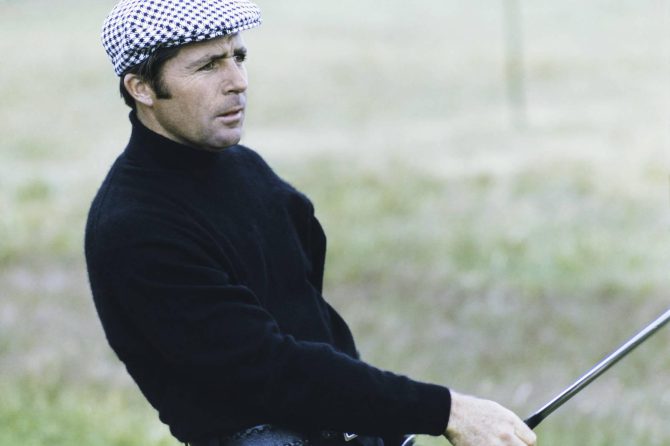
Transforming golf fitness from a generic exercise routine into a targeted performance system is essential for mastering the modern game’s technical demands. Contemporary evidence from sports science and biomechanics demonstrates that swing efficiency, putting stability, and driving power are all constrained-or unlocked-by specific physical capacities, including mobility, segmental control, strength, and neuromuscular coordination. Consequently, golfers seeking sustainable gains in consistency and scoring must approach fitness not as an adjunct to practice, but as an integrated, data-driven component of training.
This article examines how structured golf fitness can be systematically aligned with swing mechanics, putting precision, and driving distance. Drawing on biomechanical analysis and evidence-based conditioning principles, it outlines how to identify physical limitations that impair clubhead control, face stability, tempo, and energy transfer through the kinetic chain. The discussion emphasizes level-specific protocols, from foundational corrective work to high-threshold power development, each calibrated to measurable performance metrics such as clubhead speed, dispersion patterns, stroke-gain profiles, and fatigue resistance.
In addition, the article situates golf fitness within a broader performance ecosystem that includes skill acquisition, practice design, and course-strategy planning. By linking physical preparation to on-course demands-uneven lies, variable wind, pressure putting, and late-round fatigue-it proposes a framework in which strength, mobility, and motor control directly support tactical decision-making and execution. The goal is to provide a rigorous, replicable model through which players and coaches can transform golf fitness into a strategic tool for mastering swing, putting, and driving, with demonstrable impact on competitive outcomes.
Biomechanics of the Golf Swing Integrating Strength Mobility and Motor Control
The modern golf swing is best understood as an integrated system of strength, mobility, and motor control working together to deliver a square clubface at impact. At address, aim for a neutral posture: slight knee flex (about 15-20°), hip hinge from the pelvis (not the lower back), and a straight but not rigid spine. this “athletic address” allows the lead shoulder to turn around the spine rather than up and down, which improves both full swings and wedge control. Players with limited thoracic (mid‑back) mobility often compensate with excessive arm lift,causing a steep angle of attack and inconsistent contact. To counter this, use simple screening: cross your arms over your chest and rotate right and left; if you cannot rotate at least 45° without the hips moving, prioritize mobility work before chasing more power. On-course, this means choosing a controlled ¾ swing with a club that comfortably covers the distance rather than forcing a full turn you do not physically own-an especially important decision under pressure, in wind, or when trying to keep the ball in play on tight driving holes.
Onc an efficient setup is established, strength and motor control determine how consistently you can reproduce a powerful and stable kinematic sequence-from ground reaction forces to clubhead delivery. Functional lower-body strength in the glutes and quads enables you to post up on the lead leg and stabilize impact, critical for both driver distance and wedge distance control. A simple standard is to progress toward a controlled single-leg squat to ~45° of knee flexion without loss of balance; this correlates with better weight transfer and improved low-point control. To build golf-specific control, integrate the following drills into practice sessions on the range and putting green:
- Step-through swing drill: With a mid-iron, make swings where the trail foot steps toward the target after impact, teaching dynamic weight shift and rhythm useful for long irons and fairway woods off the deck.
- Feet-together drill: Hit half swings with your feet touching; this trains core stability and clubface control, directly benefiting wedge play and knockdown shots in the wind.
- Slow-motion impact rehearsal: Pause at lead-arm‑parallel in the downswing, check that hands are ahead of the clubhead and weight is at least 70% on the lead side, then continue through. This builds precise motor patterns for crisp ball‑first contact in both full shots and chips.
Through repeated, deliberate practice, these drills bridge the gap between gym strength and on-course scoring, ensuring that added power does not undermine accuracy or short game precision.
integrating mobility and motor control into course management decisions creates a direct pathway to lower scores. Golfers should match shot selection to their physical capabilities: a player with excellent hip mobility and rotational speed may favor a slight power fade off the tee, while a player with limited rotation but strong grip strength might rely on a controlled draw using a slightly more upright lie angle. on approach shots and around the greens, use your physical tendencies as strategy: if ankle or hip mobility makes deep knee flex uncomfortable, avoid extremely open stances for bunker shots and instead use a slightly squarer stance with added loft from the sand wedge to maintain balance. To turn this into measurable betterment, track:
- fairways hit and miss pattern relative to your intended shot shape, then adjust ball position and tee height (e.g., ball one ball forward and tee at half a ball above driver crown to encourage higher-launch, lower-spin drives in wet conditions).
- Proximity to the hole from 50-100 yards using partial wedges at defined swing lengths (e.g., lead arm to 9 o’clock for ~60 yards, to 10:30 for ~80 yards) to link motor control to predictable distances.
- Up-and-down percentage from different lies, modifying stance width, shaft lean, and grip pressure to suit your mobility and strength profile.
By aligning swing mechanics, short game technique, and strategic shot choice with your individual physical profile, you convert biomechanical efficiency into tangible scoring gains, from beginners seeking solid contact to low handicappers refining shot shaping under tournament pressure.

Evidence Based Conditioning Protocols for Consistent Putting Performance
Developing consistent putting performance begins with evidence-based setup and stroke mechanics that can be measured and replicated under pressure. From a biomechanical standpoint, an efficient putting posture places the spine in approximately 25-35° of forward bend, with slight knee flex so the arms can hang naturally beneath the shoulders. For most golfers, the ball should be positioned 1-2 ball widths forward of center, with eye line either directly over the ball or slightly inside the target line, which you can verify by dropping a ball from the bridge of your nose and seeing where it lands relative to the address ball. To stabilize the clubface and reduce excessive wrist hinge, adopt a neutral grip where the lead wrist remains flat and the putter shaft leans very slightly toward the target (no more than 2-3°). Use the following checkpoints to build a repeatable address position and smooth, pendulum-like stroke:
- Posture checkpoint: Weight evenly distributed across the balls of both feet; avoid rocking back on the heels, which promotes an inconsistent arc.
- Alignment checkpoint: Putter face square to the start line; feet, knees, hips, and shoulders parallel to the target line to reduce unwanted face rotation.
- Stroke checkpoint: Maintain a shoulder-driven motion with minimal hand action; the putter should travel on a slight inside-square-inside path, with the backswing length roughly proportional to the desired distance.
To condition your body and nervous system for reliable distance and direction control, integrate structured putting drills with golf-specific fitness and mobility work.For distance control, an evidence-based protocol is the “ladder distance drill”: place tees at 3, 6, 9, and 12 feet on a relatively flat section of the practice green. Putt three balls to each distance, progressing only when you leave all three putts within a 30 cm (12-inch) circle past the hole. Track your success rate weekly to create measurable improvement targets (for example, increasing from 50% to 80% completion over four weeks). complement this with simple conditioning exercises that support a stable putting motion, such as isometric core holds (planks for 30-45 seconds) and thoracic spine rotations to maintain upper-body mobility. These exercises reduce unwanted swaying and help you keep the putter moving on plane, especially under fatigued or high-pressure conditions late in the round.
translate your technical and physical training into on-course consistency through deliberate green-reading, pre-shot routines, and mental conditioning. Begin every putt with a systematic routine: read the putt from behind the ball and from the low side, assess grain direction and green speed (adjusting expectations on wet, windy, or downhill conditions), and commit to a precise start line rather than vaguely “aiming at the hole.” Use a two-tee gate drill on the course or practice green-set the tees just wider than your putter head, 8-12 inches in front of the ball-to provide immediate feedback on face control and path. When you miss, diagnose the error using simple evidence-based cues: did the ball start outside the gate (face/path issue), or did it start on line but finish short or long (speed issue)? Over time, track putts per round, one-putt percentage inside 6 feet, and three-putt avoidance from 30+ feet. Linking these metrics to your drills and conditioning work allows both beginners and low handicappers to prioritize the most impactful changes, tighten dispersion around the hole, and convert more birdie and par opportunities, directly lowering scoring averages.
Developing Power and Accuracy in Driving through Targeted Golf Fitness
maximizing distance off the tee without sacrificing control begins with a body that can create and sequence rotational speed efficiently. A golf-specific fitness program should emphasize mobility in the thoracic spine and hips, stability in the core, and functional strength in the glutes and legs. For many players, a simple benchmark is the ability to hold a neutral-spine posture in golf stance (hip hinge of approximately 25-30 degrees from vertical, knees flexed 15-20 degrees) for 30-45 seconds without back discomfort. To support a technically sound driver swing, integrate fitness drills that mirror swing planes, such as rotational medicine ball throws and resisted band rotations, performed at controlled tempo before moving to maximal effort. On the range,immediately apply this training by rehearsing three to five slow-motion driver swings after each fitness block,focusing on maintaining balance through impact and finishing with 90% of weight on the lead side and the belt buckle facing the target,reinforcing the link between physical capability and swing mechanics.
Once a functional physical base is in place, golfers can refine power production and accuracy through targeted technical checkpoints built on that fitness. Begin with a consistent driver setup: ball positioned off the lead heel, stance width slightly wider than shoulder-width, spine tilted away from the target by approximately 5-10 degrees to promote an upward angle of attack, and grip pressure maintained at a moderate level (around 4-5 on a 10-point scale). To translate strength into clubhead speed while keeping the ball in play, incorporate the following practice and troubleshooting elements:
- Setup checkpoints: Use an alignment rod on the ground to ensure feet, hips, and shoulders are square to the target line for a stock shot.For a controlled fade or draw, adjust the clubface 2-3 degrees relative to your stance line, rather than making large grip changes.
- Power-building drills: Perform “step-through” driver swings,where you step toward the target with your trail foot after impact to encourage full weight transfer and dynamic balance,and “overspeed” swings with a lighter training club,recording average swing speed over 10 swings to track improvement.
- Common mistake correction: if drives balloon high and lose distance, check for excessive tee height (more than half the ball above the crown) and a weak grip; lower the tee by 3-5 mm and rotate both hands slightly to a stronger position to stabilize the clubface.
By regularly measuring carry distance,launch direction,and dispersion pattern (for example,keeping 70% of drives within a 25-30-yard-wide corridor on the range),players can objectively evaluate how fitness-driven changes in speed and stability affect real-world performance.
The strategic request of increased driving power is crucial for lowering scores, and golf fitness supports smarter course management by expanding your reliable distance window. On long par 4s and reachable par 5s, improved strength and stability allow low-handicap players to choose more aggressive lines, such as carrying fairway bunkers at 220-240 yards, while mid- and high-handicap golfers can confidently lay up short of hazards without overswinging.To bridge the gap from the gym and range to the course, use scenario-based practice that simulates typical tee-shot decisions:
- course-conditioned routines: Practice in light wind by adjusting your driver setup to narrow your stance 2-3 cm and reduce backswing length to “nine o’clock” to prioritize balance over full speed. in wet conditions,train a slightly steeper angle of attack with more weight favoring the lead side at address (55-60%) to improve strike consistency.
- Pre-shot mental and physical cueing: Before demanding tee shots, rehearse a brief activation sequence-such as two bodyweight squats and one controlled torso rotation-to remind the body of proper sequencing, then visualize your ball flight window and commit to a tempo goal (e.g., 3:1 backswing-to-downswing ratio) rather than swinging at 100% effort.
- Integration with short game and scoring: Track a simple metric over nine or 18 holes: percentage of holes where your drive leaves a full, comfortable yardage into the green (e.g., 120-160 yards for most amateurs). as this percentage rises through improved fitness and driving accuracy, you will face more standard approach shots, leading to closer proximity to the hole, simpler chip or pitch recoveries when you miss, and ultimately lower scores.
in this way, targeted golf fitness becomes not only a source of greater driving distance but also a foundation for repeatable technique and smart strategy that benefits every aspect of the game, from tee shots to short game execution and overall scoring consistency.
Individualized Periodization Strategies for Tournament Ready Golf Performance
Designing an individualized periodization plan begins with a structured calendar that aligns your technical work, golf fitness, and competitive schedule. Instead of practicing “everything, all the time,” segment your year into pre‑season, tournament peak, and transition phases based on your key events.In the pre‑season, emphasize technical refinement of swing mechanics and short game. For most players, this means using slow‑motion reps to engrain a neutral clubface (within ±2° of square at impact) and a consistent swing path (inside‑to‑square within 2-4°). During this phase, integrate golf‑specific strength and mobility work 2-3 times per week to stabilize posture and improve rotational speed, focusing on hip mobility, thoracic spine rotation, and core stability. As tournaments approach, reduce heavy technical and strength loads, shifting toward performance simulation-playing from varied lies, altering trajectories, and rehearsing full pre‑shot routines on the range. In the transition phase after tournaments, temporarily lower volume, evaluate stats (fairways hit, greens in regulation, up‑and‑down %, putts per round), and adjust your next cycle. This structured approach allows beginners to focus first on contact and basic ball flight, while low handicappers narrow in on shot dispersion, distance control, and scoring patterns.
Within each cycle, practice content should be periodized across full swing, short game, and putting, with measurable targets and appropriate difficulty. For full swing, build sessions around specific goals, such as center‑face contact on 8/10 shots or achieving a consistent carry distance window (e.g., 7‑iron within ±5 yards). Incorporate checkpoints like:
- Setup fundamentals: ball position slightly forward of center with irons, 2-3 inches inside lead heel with driver; spine tilt 5-10° away from target with driver for higher launch; grip pressure at about “4 out of 10” to reduce tension.
- Common errors to correct: early extension (hips moving toward the ball), casting the club, and loss of posture. Use drills such as placing an alignment stick just outside the trail hip to discourage standing up through impact.
- progressive drills: ”9-3 drill” (swinging from 9 o’clock to 3 o’clock positions) to train shaft lean and compress irons; “low‑tee driver drill” to improve angle of attack and centered contact.
For short game periodization, allocate at least 40-50% of weekly practice to wedges, chipping, bunker play, and putting.Beginners may focus on a basic, neutral‑bounce 56° wedge and a single stock chip technique, while advanced players layer in specialty shots-low‑spin pitches, bunker blasts from varying sand depths, and distance wedges with controlled backswing lengths (e.g., “clock system” at 8, 9, and 10 o’clock). As you move closer to tournament weeks, shift from block practice (repeating one shot) to random practice (different targets, lies, and clubs each shot) to better mimic on‑course demands.
tournament‑ready periodization must integrate course management, equipment choices, and mental routines to translate swing improvements into lower scores. Early in the season,schedule “strategy rounds,” where scoring is secondary to learning optimal lines,lay‑up zones,and typical wind patterns on your home and target tournament courses. Use GPS or a rangefinder to chart carry distances to hazards and typical roll‑out on firm vs. soft fairways. From this data, build individualized tee‑shot and approach strategies, such as favoring a 3‑wood or hybrid when the fairway narrows below 25 yards, or aiming to the fat side of greens when the pin is tucked behind bunkers. Before key events,run full play simulations: play 18 holes from the tournament tees with strict rules-no second balls,full pre‑shot routine,and post‑round stat analysis. Integrate mental checkpoints like:
- Breathe and commit: one slow exhale before starting the takeaway.
- Decision discipline: once a club and target are chosen,no changes over the ball.
- Weather adjustments: on windy days, practice lower‑trajectory “knockdown” shots (ball back 1-2 ball widths, weight 60-70% on lead side, abbreviated follow‑through) and factor in 10-15% extra club in cold conditions.
By cyclically refining technique, sharpening scoring skills, and stress‑testing your strategy under realistic conditions, you create an individualized, repeatable pathway to tournament‑ready performance that is adaptable to different skill levels, body types, and learning styles.
Assessing Functional movement Patterns to Prevent Injury and Enhance Longevity
Effective golf instruction begins with a systematic evaluation of how the body moves through the swing, short game, and putting stroke. Rather than forcing a “textbook” motion, the coach should first assess functional movement patterns in key areas: hip internal and external rotation, thoracic spine rotation, scapular stability, and single-leg balance. for example, a player who cannot achieve at least 45-60° of comfortable pelvic rotation relative to the upper body is more likely to compensate with excessive lateral sway, placing stress on the lower back and knees and disrupting consistent ball striking. On the practice tee, this limitation often appears as early extension, loss of posture, or “over-the-top” moves that produce slices and weak fades. By identifying these physical constraints,the instructor can select a grip,stance width,and posture that fit the golfer’s current mobility,while designing a progression of exercises that gradually move the player toward more efficient mechanics without increasing injury risk.
From this evaluation, specific corrective drills link directly to swing mechanics, short game techniques, and course management. A player with limited lead hip rotation, for example, often struggles to rotate fully through impact, leading to fat chips on tight lies or decelerating wedge shots under pressure. to address this, integrate targeted movement work alongside technical practice, such as:
- Hip Turn Drill with Club Across Shoulders: Assume golf posture with feet shoulder-width apart; rotate the pelvis while keeping the trail foot planted and the lead knee flexed. Aim for 30-40° of pelvic rotation back and through, feeling weight transfer into the inside of the trail foot in the backswing and into the lead heel in the follow-through.
- Single-Leg Balance and Pivot: Stand on the lead leg for 20-30 seconds, then add gentle torso rotation to simulate the through-swing. This improves stability at impact, essential for controlling loft and spin around the greens and holding your posture on uneven lies or in windy conditions.
- Thoracic Spine Rotation with Alignment Stick: In golf posture, hold an alignment stick across the chest and rotate until the stick approaches a 90° shoulder turn relative to the target line, without swaying. This trains the separation between upper and lower body needed for shot shaping and distance control with longer irons and the driver.
As these movement patterns improve, golfers can measure progress through more stable divot patterns, tighter dispersion on approach shots, and reduced post-round discomfort, all of which support scoring consistency and long-term durability.
functional movement assessment informs equipment choices, practice structure, and on-course strategy that protect the body over many seasons. Players with reduced wrist mobility or a history of elbow pain may benefit from softer shaft profiles, slightly more lofted drivers, and higher-bounce wedges that reduce turf shock on firm fairways and in bunkers. During practice, alternate high-load sessions (full-swing work with driver and long irons) with lower-load, high-skill blocks focused on putting, green-reading, and finesse wedges to avoid overuse injuries.As an example, a 90-minute range session might include: 20 minutes of mobility and activation work, 30 minutes of full-swing practice with built-in rest and slow-motion reps, and 40 minutes of short game on different lies and slopes that mirror real-course scenarios.On the course, understanding your movement profile helps guide conservative vs.aggressive decisions-such as laying up on a par 5 if repeated high-speed swings aggravate the lower back, or choosing a controlled three-quarter hybrid instead of a fully maxed-out long iron in cold, damp conditions. By aligning physical capacity, technical execution, and strategic choices, golfers at every level-from beginners learning sound fundamentals to low handicappers optimizing performance-can lower scores while minimizing injury risk and enhancing playing longevity.
Integrating On Course Strategy with Physical Training for Sustainable Scoring Gains
To create sustainable scoring gains, players must align their on-course decisions with their physical capabilities. Rather than choosing targets and clubs based on idealized yardages, base your course strategy on your measured carry distances under realistic conditions and your current mobility and strength levels. For example, a golfer who can comfortably make a balanced, repeatable 80% swing with a 7‑iron that carries 140 yards should build game plans around that reliable number, not a maxed-out 155-yard swing that only works 1 in 5 times. A simple pre-round routine might include:
- Dynamic warm‑up (5-8 minutes): hip hinges, leg swings, thoracic rotations to promote a full shoulder turn without swaying off the ball.
- Tempo calibration: 10-15 wedge shots at 60-70% effort focusing on maintaining posture and consistent contact.
- Strategy alignment: choose conservative targets that leave your most comfortable approach yardage (e.g., 90-110 yards) rather than always hitting driver.
By matching your strategic choices to your physically stable patterns, you reduce double-bogey errors and promote consistent ball striking throughout the round.
Integrating physical training with shot selection and short game planning begins with understanding how your body moves through the swing. A player with limited hip internal rotation, for instance, often struggles to complete a full backswing pivot and compensates with excessive hand action, increasing face-to-path variability. Instead of forcing a full turn on the course, this golfer should adopt a slightly shorter backswing and use a neutral, stable lower body combined with a controlled rotation of the torso. Complement this with targeted off-course exercises such as:
- Hip mobility drills (90/90 transitions, banded rotations) to allow 40-45° of pelvis rotation without losing posture.
- Rotational core training (medicine ball throws, cable chops) to support a synchronized turn and reduce “over-the-top” moves.
- Wrist and forearm strength work (light dumbbell pronation/supination) to stabilize the clubface through impact, especially on chips and pitches.
On the course, apply these gains through specific tactics: choose lower‑risk chip shots with a narrow stance and slight shaft lean (about 5-10°) when under pressure, and use your most reliable wedge loft around the green, rather than constantly changing clubs. This alignment of body capability, technique, and shot choice directly lowers scores by minimizing fat and thin shots in the scoring zone.
sustainable improvement requires that practice structure mirrors on-course demands, integrating golf fitness into performance drills. After a brief mobility routine (e.g., 5 cat‑camel reps, 10 bodyweight squats, 10 band pull‑aparts), move into decision-based practice rather than block repetition. For example, a “play the hole” range session might involve:
- Tee shot simulation: 1 driver or 3‑wood with a defined fairway width, focusing on your stock shot shape and 80-90% effort for balance.
- Approach shot: 1 iron or hybrid to an imaginary green, incorporating wind direction and lie conditions as you would on the course.
- Short game and putting circuit: alternate lies (tight, rough, downhill) and practice 5-10 up‑and‑downs aiming for a 50% up‑and‑down rate for mid‑handicaps and 65%+ for low handicaps. Integrate a pre‑shot routine that includes a deep breath and a simple swing thought such as “smooth turn” or “steady head.”
Track objective metrics like fairways hit,greens in regulation,and three‑putts per round,then tailor your physical work accordingly: more lower‑body strength and balance training if you struggle in wind,additional shoulder and thoracic mobility if you tend to lose posture on long irons. By consistently linking physical preparation, technical skills, mental routines, and strategic decisions, golfers at every level can achieve lasting scoring improvements rather than temporary gains.
Q&A
**Q1. What is meant by “golf fitness” in the context of swing, putting, and driving performance?**
In this context, “golf fitness” refers not merely to general conditioning but to the integration of strength, mobility, stability, motor control, and energy-system development that are specific to the demands of the golf swing, putting stroke, and driving mechanics.It encompasses:
– **Segmental mobility** (thoracic spine,hips,shoulders,wrists)
– **Functional strength and power** (especially rotational and lower‑body)
– **Postural and core stability** (to support an efficient kinematic sequence)
– **Fine motor control** (especially for putting and short game)
– **Fatigue resistance** (to maintain technique over 18 holes)
The goal is to produce movements that are biomechanically efficient,repeatable,and robust under competitive pressure.
—
**Q2. How do biomechanical principles inform an effective golf fitness program?**
A biomechanically informed program is built around the kinematic sequence and force production patterns observed in proficient golfers:
1. **Kinematic sequence**
Efficient swings transfer energy from the ground up: lower body → pelvis → thorax → lead arm → club. golf fitness thus emphasizes:
– Lower‑body strength and rate of force development
– Trunk rotational power and deceleration control
– Shoulder and wrist mobility to allow late but controlled release
2. **Ground reaction forces (GRFs)**
High‑level drivers of the ball use vertical and horizontal GRFs to generate clubhead speed. Training must thus include:
– Squatting, hinging, and lateral power work (e.g., jumps, lateral bounds)
– Drills that teach pressure shift and lead‑side bracing
3. **Spinal and joint loading**
Because the golf swing is high‑velocity and asymmetrical,it places considerable load on the lumbar spine,hips,and lead knee. Fitness work includes:
– Anti‑rotation and anti‑flexion core training
– Hip strength and mobility to reduce compensatory lumbar motion
– Progressive loading to build tolerance without overuse
4. **Segmental timing and coordination**
Many “swing faults” are expressions of inadequate physical capacity. Such as, early extension or loss of posture frequently correlate with poor hip mobility or insufficient gluteal strength. Corrective exercise therefore operates in parallel with technical coaching.
—
**Q3. In what ways does golf fitness influence course strategy and scoring?**
Physical capacity constrains or expands viable strategic options:
– **distance and dispersion**
Increased clubhead speed, combined with improved balance and control, allows players to select more aggressive tee strategies (e.g., shorter approaches) without disproportionate accuracy loss.
– **Lie management and shot difficulty**
Better mobility and lower‑body stability make it easier to execute shots from uneven lies, rough, and bunkers, thereby reducing the penalty of missed fairways and greens.
– **Decision‑making under fatigue**
enhanced cardiovascular and muscular endurance maintain swing mechanics late in the round, reducing score‑inflating errors associated with fatigue (e.g., blocks, pulls, distance control errors).- **Risk-reward calibration**
Player‑specific fitness profiles inform data‑driven strategy. As an example, a golfer with high driver speed but limited wedge proximity performance might optimize scoring by choosing targeting patterns that maximize full‑swing approaches rather than conservative lay‑ups.
—
**Q4. How should fitness protocols be differentiated across skill levels?**
**Beginner / High‑handicap (e.g., 20+):**
Primary goals: basic mobility, posture, and motor control.- Emphasis:
– Essential movement patterns (squat, hinge, push, pull, carry)
– Thoracic and hip mobility drills
– Light, technique‑focused strength training
– Volume: moderate, 2-3 sessions/week
– Outcome metrics: pain‑free range of motion, ability to maintain posture, reduction in “fatigue swings” late in the round.
**Intermediate / Mid‑handicap (≈ 10-19):**
Primary goals: build rotational strength and power; reduce swing variability.
– Emphasis:
– Loaded strength work (glutes, quads, hamstrings, lats)
– rotational medicine‑ball throws (various planes)
– Core anti‑rotation and anti‑extension exercises
– Volume: 3 sessions/week with planned progression
– Outcome metrics: clubhead speed, fairway hit percentage, approach dispersion, standard deviation of carry distance per club.
**Advanced / Low‑handicap and elite (≤ 9):**
primary goals: maximal performance and durability with fine‑grained monitoring.
– Emphasis:
– High‑velocity power training (Olympic‑style lifts where appropriate, jumps, sprints)
– Asymmetry management and injury‑prevention routines
– In‑season micro‑dosing to maintain power without fatigue
– Volume: 3-4 sessions/week off‑season; 1-2 in‑season
– Outcome metrics: ball speed, strokes‑gained benchmarks (off‑the‑tee, approach), tournament‑round fatigue indices (late‑round dispersion, speed drop‑off).
—
**Q5. What fitness qualities are most critical for an efficient full swing?**
key qualities include:
– **Lower‑body strength and stability:** supports balance, pressure shift, and lead‑side bracing through impact.
– **Hip and thoracic mobility:** allows sufficient rotation without lumbar compensation.
– **Core stiffness and segmental control:** facilitates proximal stability and distal mobility, enabling efficient energy transfer.
– **Rotational power:** translates strength into clubhead speed within the brief time window of the swing.
– **Neuromuscular coordination:** links physical capacity to correct sequencing and rhythm.
—
**Q6. How does putting performance relate to physical conditioning?**
Putting is often misclassified as purely technical or psychological.Physical determinants include:
– **Postural stability:** The ability to maintain a consistent spine angle and head position reduces variability in face angle and path.
– **Fine motor control and grip endurance:** subtle tremor or fatigue in the upper limbs can alter face orientation at impact.
– **Thoracic and cervical mobility:** Sufficient mobility enables the player to adopt a repeatable posture and to “see” the line more accurately.
– **Respiratory control:** Breathing patterns influence heart‑rate variability and steadiness during the stroke.
Consequently, a putting‑specific fitness component typically addresses scapular stability, low‑load isometric endurance of postural muscles, and breathing control drills.
—
**Q7. What are the key physical factors underlying driving distance and accuracy?**
Driving is primarily influenced by:
– **Maximal and explosive strength:** Especially in the lower body and trunk, contributing to higher GRFs and faster rotation.
– **Rate of force development (RFD):** The speed at which force is produced; critical given the brief duration of the downswing.
– **mobility-stability balance:** Sufficient mobility (hips, thoracic spine, shoulders) combined with stability (lumbar spine, knees) to avoid compensations that reduce accuracy.
– **Elastic energy utilization:** The ability to store and release elastic energy via stretch-shortening cycles in the musculotendinous units during the transition from backswing to downswing.
– **Symmetry and load tolerance:** Minimizing detrimental asymmetries that predispose to injury and inconsistency.
—
**Q8. How can measurable, level‑specific protocols be structured for swing improvement?**
A structured protocol typically includes:
1. **assessment**
- Range of motion tests (hip internal/external rotation, thoracic rotation)
– Strength and power tests (e.g., 3-5RM squat or deadlift, vertical jump, med‑ball throw velocity)
– Swing metrics (clubhead speed, path, face angle, low point, ground‑contact pattern)
2. **Programming**
- **Mobility block:** targeted work on identified deficits (e.g., hip IR drills for players who early extend).
– **Strength block:** multi‑joint lifts (squat, hinge, lunge, pull, press) 2-4 sets of 4-8 reps.
- **Power block:** rotational throws, jumps, and light implement swings (e.g., overspeed training).
3. **Progression and monitoring**
- Week‑to‑week progression in load, speed, or volume
– Monthly reassessment of swing metrics and physical tests
– Adjustments based on rate of change and symptom profile.
All of the above are scaled by level: beginners emphasize quality of movement and lower loads; advanced players utilize heavier loading, velocity tracking, and more specific power profiling.
—
**Q9. How should targeted drills be integrated with technical instruction on swing,putting,and driving?**
Integration is most effective when drills address the physical prerequisites of specific technical goals:
– **Swing example:**
– Technical aim: increase lead‑hip clearance and avoid early extension.
– Physical drills: hip internal rotation mobility, split‑squat variations, lateral band walks, anti‑extension core work.- Skill drills: step‑through swings, “pump” drills focusing on transition, alignment‑rod feedback for posture.
– **Putting example:**
– Technical aim: stabilize head and minimize face rotation.
– Physical drills: low‑load cervical and upper‑back endurance work, scapular stabilization.
– Skill drills: gate drills for face control, eyes‑closed distance‑control drills contingent on stable posture.
– **Driving example:**
- Technical aim: optimize launch conditions with a more upward angle of attack.
– Physical drills: anterior‑chain flexibility, posterior‑chain strength, vertical and horizontal power exercises.
- Skill drills: tee‑height and ball‑position experiments, launch monitor feedback on AoA and spin.
Sessions alternate or combine gym‑based work with range practice so that newly acquired capacities are immediately applied to the motor pattern.
—
**Q10. What objective metrics can be used to evaluate the effectiveness of a golf fitness intervention?**
Key performance indicators span physical, technical, and scoring domains:
– **Physical metrics:**
– Strength: 1-5RM in key lifts normalized to body mass
– Power: vertical jump height, med‑ball throw distance/speed
- Mobility: degrees of hip and thoracic rotation; hamstring flexibility
– Asymmetry indices: side‑to‑side differences in strength or jump performance
– **Technical metrics (via launch monitor or motion capture):**
– Clubhead and ball speed
– Angle of attack, swing path, and face‑to‑path relationship
– Carry distance and dispersion patterns
– Stroke metrics for putting (face angle variability, path consistency, impact spot)
– **Performance outcomes:**
– Handicap index and scoring average
- Strokes gained (off‑the‑tee, approach, putting, where data are available)
– Fairways and greens in regulation; three‑putt rate
– Late‑round performance stability (front‑nine vs. back‑nine differential)
The article advocates for the systematic collection of these metrics at baseline and at regular intervals (e.g., every 6-8 weeks) to quantify the influence of the fitness program.
—
**Q11. How can injury risk be mitigated while pursuing performance gains?**
Risk management is addressed through:
– **Progressive overload:** Gradual increases in intensity and volume, avoiding abrupt spikes.- **Movement‑quality emphasis:** Ensuring technically sound lifting and drill execution before loading aggressively.- **Balanced programming:** Inclusion of unilateral work, posterior‑chain emphasis, and rotational work in both directions to counter golf’s inherent asymmetry.
– **Recovery strategies:** Structured rest days, sleep hygiene, and appropriate nutritional support.
– **Feedback loops:** Regular screening for pain, unusual fatigue, or performance decrements, with prompt program adjustment.
—
**Q12. What practical guidelines can players follow to begin transforming their golf fitness?**
1. **obtain a baseline assessment** with a qualified golf‑fitness or sports‑science professional.
2. **Identify 2-3 priority deficits** (e.g., hip mobility, rotational power, postural endurance) rather than attempting to address every component simultaneously.
3. **Commit to 2-3 structured sessions per week** that integrate mobility, strength, and power elements.
4. **Link every physical block to a corresponding technical focus** in practice sessions.
5. **Track objective data** (speed, dispersion, scoring) at regular intervals to verify transfer.6. **Adjust seasonally:** emphasize capacity‑building in the off‑season and maintenance with high specificity in‑season.
By aligning biomechanics, course strategy, and targeted drills within a measurable, level‑specific framework, golfers can systematically enhance swing, putting, and driving performance and convert physical improvements into tangible scoring gains.
transforming golf fitness is not an adjunct to skill development but a central determinant of swing efficiency,putting stability,and driving performance. By integrating biomechanically informed conditioning with targeted mobility, strength, and neuromuscular control training, players can establish a physical foundation that supports more repeatable mechanics and reduced injury risk.When golf-specific fitness is aligned with swing, putting, and driving objectives, it facilitates better kinematic sequencing, enhanced clubhead speed, improved face control, and superior distance management. Moreover, the incorporation of evidence-based screening and longitudinal performance metrics enables practitioners to individualize programs, monitor adaptations, and refine interventions with precision.
Ultimately, the systematic application of golf fitness principles-grounded in empirical research and guided by objective assessment-allows players at every level to translate physical capability into technical consistency and competitive scoring advantages.