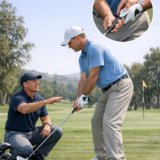
Mastering Arnold Palmers signature Swing and Adapting it to Your Game
To capture the essence of Arnold Palmer’s signature swing, begin with a fundamentally sound address position that blends balance, athleticism, and freedom of motion. Set your feet about shoulder-width apart, allowing a slight flex in the knees with your weight centered over the balls of your feet rather than the heels. This athletic posture provides a stable base for a fluid takeaway in which the clubhead stays close to the ground during the first part of the motion, encouraging an inside-to-square swing path. As you move into the backswing, work toward a shoulder rotation of roughly 90 degrees while keeping your head relatively steady-one of Palmer’s trademarks for maximizing coil without lateral sway. Using a mirror, smartphone, or launch monitor feedback is invaluable for checking your turn and spotting issues such as lifting the club too abruptly or coming over the top.
While many advanced players can complete that full 90-degree turn, those with less flexibility may benefit from initially working within a more modest range of motion. Aim first for a consistent, repeatable shoulder turn in the 17 to 20-degree range if you are a newer golfer or struggle with mobility, gradually increasing your rotation as strength and flexibility improve. Maintaining this separation between a coiling upper body and a stable lower body helps create torque that translates into reliable power at impact. A critical setup element that supports this coil is maintaining a stable base with slight knee flex and weight favoring the balls of the feet-with roughly 55% of your weight on the lead foot at address. This balance permits fluid rotation and helps prevent sway during the transition from backswing to downswing.
To ingrain this motion, add structured drills like a controlled “pause at the top,” which reinforces rhythm and sequencing. Focus on letting the downswing begin from the ground up, with the hips initiating the move toward the target before the shoulders and arms follow. this kinetic chain, common in modern biomechanics research, increases clubhead speed while maintaining stability through impact. Over time, these habits build a repeatable motion that echoes Palmer’s dynamic style while remaining tailored to your body type and flexibility. Beginners can reinforce these positions by rehearsing slow-motion swings in front of a mirror or on video, while more experienced golfers may incorporate weighted clubs or resistance bands to enhance strength, sequencing, and proprioception. To further develop Palmer-like power, emphasize preserving a strong lag angle-the angle between the lead arm and the club shaft-during the downswing. Drills such as the classic “pump drill,” pausing midway down to feel that angle, help you store and release energy efficiently through impact.
After refining your full swing,bring Arnold Palmer’s renowned touch around the greens into your practice to see a direct impact on scoring. Palmer relied on relaxed hands and sharp distance awareness for chips, pitches, and bunker play, ofen choosing different wedges to control trajectory, spin, and rollout depending on the lie. On standard bunker shots, try keeping the clubface relatively square with only a modest increase in loft, focusing on entering the sand just behind the ball for a predictable splash that lands softly and releases a short distance. From tight fairway lies, slightly open the face and use a compact wrist hinge with smooth acceleration to prevent digging into the turf.
for more reliable contact,incorporate dedicated chipping drills that quiet excessive lower-body movement and emphasize a firm lead wrist (left wrist for right-handers) guiding the club through impact.Practice from uphill, downhill, and sidehill lies, as well as from varying distances, to simulate real-course conditions. Research on scoring averages on professional tours consistently shows that players who get up-and-down more often dramatically reduce their stroke totals, underlining how a Palmer-inspired short game can separate you from others at your handicap level.
Arnold Palmer also believed that technical skill needed to be complemented by smart, thoughtful course management. His strategic mindset encouraged players to weigh wind, elevation changes, and hazard locations before ever pulling a club. Rather than swinging for maximum distance on every hole, adopt a strategy based on tee shots that favor the widest and safest landing areas, leaving the most cozy angles into greens. On holes with narrow fairways or significant trouble,selecting a hybrid or long iron instead of a driver can dramatically improve your chances of hitting the short grass.
Use visualization alongside a consistent pre-shot routine to manage nerves, especially on demanding tee shots or approaches over hazards. Picture the shape, start line, and landing area of the shot before you swing, and commit fully to that image. By combining Palmer’s tactical wisdom with your own strengths-whether that’s accuracy, distance, or wedge play-you can craft a personal game plan that systematically lowers scores across a variety of courses and conditions. Applying this mindset in tougher conditions-such as windy days or uneven lies-means prioritizing tempo and rhythm over raw power. When, for example, you face a mid-iron from a downhill lie, focus on maintaining your usual cadence and trusting it to keep the clubface square rather than trying to “hit” the ball harder.
Transform Your Putting Game by Embracing Palmers Proven Techniques
Building a reliable and repeatable putting stroke starts with the basics of posture and alignment,which Arnold Palmer regarded as the cornerstone of clutch performance on the greens. Position the ball just forward of the center of your stance-about one to two inches inside your lead heel for right-handed golfers-to encourage a slight upward strike that promotes a clean roll. Use a neutral grip with light pressure so the hands stay responsive rather than tense, allowing the putter to swing like a pendulum from the shoulders.
Palmer’s method emphasizes a steady head position with your eyes either directly over the ball or just inside the target line. This improves your ability to see the line correctly and return the putterface square at impact. Make it a habit to check that the face is aligned square to your intended starting line at address,as even minor misalignment can send the ball off course on short putts. Periodic video review or the use of alignment aids on modern training tools can help you verify and maintain this setup consistency. Practicing this setup with chalk lines, string guides, or tee gates on the practice green further sharpens your ability to keep the putter face square and your stroke on the intended path under pressure.
Developing superior touch and distance control, two of the most importent skills for lowering scores, requires intentional practice using tempo-based drills and structured green-reading routines. Palmer’s classic “gate drill” remains powerful today: place two tees slightly wider than the putter head and work on stroking the putter between them without striking the tees.This hones centered contact and face control. To sharpen pace control, practice rolling putts that finish within a one-foot radius of a target from increasingly longer distances-10, 20, 30 feet-tracking how often you leave the ball in that scoring zone. For short putts, strive for a smooth 2:1 tempo-a backstroke roughly twice as long as the forward stroke-to promote gentle acceleration through impact and avoid decelerating or “jabbed” strokes.
Modern greens are frequently enough measured with a Stimpmeter, so be aware of the typical speed at your home course and adjust your stroke length accordingly. Palmer encouraged golfers to read breaks by picturing how water would flow over the green’s surface, then choosing an aim point slightly above the low side-often about one ball width or more uphill from your initial read, depending on slope. also factor in grain direction and wind, especially on exposed greens, as both can subtly influence ball speed and break. For golfers who like a more structured approach, you can also experiment with the plumb-line concept-imagining a straight line between ball and hole to help gauge how much and which way the putt will break-and supplement your reads with modern slope meters or digital apps as your skill advances.
To ensure these improvements show up when it matters most, integrate putting skills into your overall course strategy. In pressure situations-whether a three-foot putt to save par or a long lag on a tiered green-Palmer highlighted the importance of mental discipline and vivid pre-putt visualization. Establish a routine that includes reading the putt, taking one or two purposeful practice strokes from beside the ball, and then setting up and rolling the putt without hesitation. Treat every putt in practice as if it were for a tournament-winning score to build mental resilience.
Strategically, aim to leave your first putt in a position where the next one is uphill whenever possible, since uphill putts are easier to stroke firmly and on line. Consider your equipment as well: many golfers benefit from a mallet-style putter with higher moment of inertia, which stabilizes the face on off-center strokes and pairs well with Palmer’s focus on forgiveness and consistency. By adopting these proven principles,you can expect gains not only in putting statistics-such as fewer three-putts per round-but also in overall confidence each time you stand over the ball.
Drive Further and Straighter with Course-Smart Strategies Inspired by Arnold Palmer
To hit longer and straighter drives, begin with a setup that optimizes both power and control, aligning closely with the fundamentals Arnold Palmer championed. Use a stance that is slightly wider than your shoulders-around 1.5 times shoulder width-to create a stable platform for generating speed. Position the ball just inside your lead heel to promote an ascending strike, which enhances carry distance and launch angle.At address, maintain a shaft tilt of about 5 degrees behind the ball, encouraging a sweep through impact rather than a steep, descending blow that causes thin or heavy contacts.
During the takeaway, keep the clubhead low to the ground for the first few inches while moving the club, arms, and torso together as one unit. This promotes proper width in the backswing and helps set the club on plane. Aim for a full shoulder turn-about 90 degrees for many players-while maintaining a centered upper body, building the kind of stored energy that translates into explosive yet controlled drives. Launch monitor data from modern fittings consistently shows that players with a balanced,coiled backswing and solid impact position gain both ball speed and fairway-hit percentage. If you’re newer to the game or working on flexibility, start by establishing a repeatable, moderate shoulder turn that you can maintain without losing balance, then gradually build toward more rotation as strength and mobility improve.
Palmer’s approach to driving also involved adapting to the course and weather rather than forcing the same shot every time. When confronting crosswinds, headwinds, or sidehill lies, adjust your setup and expectations.In a left-to-right wind, for example, you might align your body slightly right of the target and visualize a gentle draw that rides the breeze back toward the fairway. On the practice range,routinely work on “controlled fade” and “soft draw” drills so you’re comfortable altering shot shapes on command. Incorporate alignment rods during practice to keep your feet, hips, and shoulders parallel to the target line and use swing-plane trainers to groove an inside-to-square takeaway that mirrors Palmer’s own reliable driving motion.
Equipment plays a role too. For many golfers, a driver loft between 9 and 11 degrees offers an effective mix of distance and forgiveness, but the ideal shaft flex should correspond to your swing speed-stiffer shafts for higher speeds, more flexible options for moderate or slower swings. A properly fitted driver can significantly tighten dispersion and raise average distance,which aligns perfectly with Palmer’s philosophy of understanding how your tools complement your technique. Palmer himself often favored lofts in roughly the 10-12 degree range to optimize launch and spin under typical course conditions, a useful benchmark when you’re experimenting with modern adjustable heads.
To convert these mechanics and strategies into tangible performance gains, commit to a structured practice plan that merges technical drills with mental conditioning. Use alignment sticks on the range to establish a square stance and verify that your hips and shoulders are aimed parallel to the target line. Track your shot patterns by choosing defined landing areas and noting how many drives finish within them, then set measurable goals, such as reducing your average dispersion by 10 yards over several weeks. Consider also logging your driving dispersion patterns over time and aim to narrow your left-right spread by 10-15% across a month of focused practice.
At the same time, cultivate the mental toughness Palmer was known for. Simulate on-course pressure by creating consequences in practice-for example, requiring yourself to hit three straight drives into a chosen fairway corridor before ending a session. Visualize tournament scenarios and key holes at courses you frequently play, rehearsing your ideal shot shape and trajectory. By uniting refined swing mechanics, thoughtful course management, and a resilient mindset, your driver becomes a dependable scoring weapon that reflects the spirit of Arnold Palmer’s game while being uniquely your own.

Arnold Palmer’s Game-Changing Secrets: Transform Your Swing, Putting & Driving

The Arnold Palmer Philosophy: Play bold, Swing Simple
Arnold Palmer wasn’t just The King because he won majors. He changed how golfers attacked the course.
His game was built on simple mechanics, fearless intent, and repeatable routines. When you blend his classic
ideas with modern club fitting, shaft selection, and putter alignment, you get a powerful formula to improve your
swing, putting, and driving-without overcomplicating your golf swing.
Below are Palmer-inspired principles paired with practical, equipment-aware tips you can start using in your very next
golf practice session.
Set Up like Palmer: Fundamentals That Never Go Out of Style
1. Athletic Posture for a Powerful Golf Swing
Palmer’s golf stance looked aggressive yet balanced. He set himself up like an athlete-ready to move. That same posture
is the foundation of consistent ball striking, driving distance, and iron accuracy.
- Width: Feet just wider than shoulder-width with the driver; slightly narrower with irons.
- Knees: Soft, not locked; feel like you’re about to jump.
- Spine tilt: Slight tilt away from the target with the driver to promote an upward strike.
- Grip pressure: Firm enough to control the club, light enough to keep wrists mobile (about 4-5 on a 10 scale).
Combine this posture with proper club length and lie angle. If a club is too long or too upright, good posture
becomes almost impossible. A professional club fitting can quickly reveal whether your setup problems are caused by
technique, equipment, or both.
2. Ball Position & Alignment: Palmer’s Reliable Starting Point
Palmer consistently aligned his body and clubface to hit his preferred shot. Most amateurs misalign, then compensate with
a flawed swing path. Fix alignment and many swing issues disappear.
| Club | Ball Position | Spine tilt | Primary Goal |
|---|---|---|---|
| Driver | Inside lead heel | Noticeably away from target | Hit up on ball |
| Mid Irons | Center-left of stance | Neutral | Ball-first contact |
| Wedges | Just forward of center | Neutral to slightly forward | control trajectory |
| Putter | Under lead eye | Level | Square roll |
Use alignment sticks or clubs on the ground in practice. Aim your clubface first, then build your body
around it, just as Palmer did when shaping shots under pressure.
Palmer-Inspired Swing Secrets: Turn, coil, Release
3. Big Shoulder Turn, Quiet Head
Palmer generated power with a full shoulder turn, not crazy hand speed. Modern biomechanics back this up:
distance comes from torso rotation, ground force, and sequencing.
- Rotate your lead shoulder under your chin on the backswing.
- Keep your head relatively stable-let your body turn around your spine.
- Allow your hips to turn; forcing them to stay locked kills power and stresses your lower back.
If you struggle to complete the turn, your shaft flex and weight might be too stiff or heavy. A lighter
or more flexible shaft can make it easier to load the club and achieve that classic coiled position.
4.The Palmer “Cover the Ball” Move Through Impact
one of Palmer’s trademarks was the feeling of covering the ball with his chest through impact. This move:
- Prevents early flipping of the hands.
- Improves compression with irons.
- Stabilizes the clubface for straighter shots.
A simple swing thought: “Chest and hands arrive together at the ball.”
Focus on rotating your chest toward the target instead of yanking with your arms.
Using a mid-weight shaft with appropriate torque helps here. If the shaft is too soft, it can over-release;
too stiff, and you’ll fight to square the face. A fitter can match your tempo and release pattern to the right shaft profile.
5. Equipment Check: are Your Clubs Fighting Your Swing?
| Common Miss | Likely Swing Issue | Possible Equipment Fix |
|---|---|---|
| High right (slice) | Open face, out-to-in path | More loft, softer flex, upright lie |
| Low left (hook) | Closed face, inside-out path | Stiffer shaft, flatter lie |
| Fat shots | Early release, weight back | Correct shaft weight, shorter length |
| Thin shots | Standing up at impact | Lie angle check, proper grip size |
Palmer always used equipment that allowed him to hit his signature aggressive draw. you should fit your
clubs to your natural shot shape, not fight them.
Driving Like Arnold Palmer: Controlled Aggression Off the Tee
6. Tee Height, Launch Angle & Modern Driver Fitting
Palmer attacked par 4s and par 5s with confidence. Today’s adjustable drivers, when combined with his principles,
can turn your driver into a fairway-finding weapon.
- Tee it high: Half the ball should be above the crown of the driver for most players.
- Ball forward: Inside the lead heel to encourage an upward angle of attack.
- spine tilt: Feel your trail shoulder slightly lower at address.
During a driver fitting,experiment with:
- Loft: More loft often means more carry and forgiveness (many amateurs need 10.5-12° or more).
- Face angle: A slightly closed face can reduce a slice and promote a draw.
- Shaft length: A shorter shaft trades a few yards for a lot more fairways-Palmer valued control.
7. Palmer’s Fairway-finding Routine
To drive it like Palmer, develop a simple, repeatable tee box routine:
- Pick a small target (tree branch, edge of bunker) rather than just “the fairway.”
- Visualize the shape of the shot you want-a slight draw or fade.
- Commit to the shape; don’t change your mind during the swing.
- Swing at 80-90% effort for maximum control; Palmer rarely looked like he was swinging full out, even when he was.
This mental commitment, plus equipment tuned to your shot shape, leads to more fairways, more greens in regulation,
and lower scores.
Putting the Palmer Way: Roll It With Confidence
8. Classic Putting Setup Meets Modern Putter Technology
Palmer’s putting stroke looked simple: square setup, slight forward press, and a smooth, accelerating motion. Today, we
can add putter fitting and alignment technology to that timeless stroke.
- Eyes over the ball: Or just inside the target line to see the line clearly.
- Grip: Light, with the putter resting in the palms for better face control.
- Ball position: Under the lead eye with a slight forward shaft lean.
A proper putter fitting will match:
- Head style: Blade for arc strokes, mallet for straight-back-straight-through.
- Length: Allows relaxed arms and natural posture (often 33-35 inches).
- Loft and lie: Ensure the ball rolls, not hops, off the face.
9. Palmer’s Short-Putt Secret: Firm, Inside the Hole
Palmer was known to hit short putts with authority. Rather than die the ball at the hole, he preferred a firm
roll that held its line.
Try this on 4-6 footers:
- Pick a very small spot at the back of the cup.
- Make a shorter, more decisive stroke.
- Accept that you might lip out occasionally-but you’ll miss fewer low-side putts.
Use an alignment aid on your ball with a putter that has clear top-line or flange lines so your eyes and hands
are working together.
10.Distance Control: “Feel the Greens” Like The King
Palmer trusted feel,and distance control is 80% feel. To develop it:
- lag practice: Spend 10-15 minutes each session hitting 30-50 foot putts.
- Change targets often: Don’t just roll from the same spot to the same hole.
- Count tempo: Use a “1-2” rhythm (backstroke on 1, through stroke on 2).
If you struggle with long putts, consider a slightly heavier putter head or a counterbalanced grip. Both can
smooth out your stroke and improve distance control on slower greens.
Short-Game & Scoring Secrets Inspired by Arnold Palmer
11.Aggressive Targets, smart Misses
Palmer attacked pins, but he also understood where to miss. You can be bold without being reckless.
- Aim for the fat side of the green when hazards are close.
- Choose the club that takes the big miss out of play, even if it’s less distance.
- Play to your scoring zones: leave full wedges rather than awkward half-shots when possible.
Using gap wedges and specialty wedges with the right loft and bounce helps you attack pins when the opportunity
is there. A wedge fitting can fine-tune spin and turf interaction to match your swing and course conditions.
12. Simple Chipping system: One Motion,Multiple Clubs
Palmer kept his short game simple and repeatable. Build one basic chipping motion and change the club to affect
trajectory and rollout.
- Use a narrow stance and lean the shaft slightly forward.
- Weight 60-70% on the lead side.
- Minimal wrist hinge; rock the shoulders.
| Club | Typical Carry | Typical Roll | best Use |
|---|---|---|---|
| PW | 50% | 50% | Medium carry, medium roll |
| 9-Iron | 30% | 70% | More rollout, plenty of green |
| Sand Wedge | 70% | 30% | Short-sided, need height |
Stick with one technique and let the golf club loft do the work. this builds confidence and consistency around
the greens.
Benefits & Practical Tips: Bringing Palmer’s Secrets Into Your Game
13. Key Benefits you Can Expect
- More consistent swing mechanics from better posture, ball position, and equipment fit.
- Improved driving accuracy and distance through optimized driver loft, shaft, and tee setup.
- Better putting stats thanks to a stable stroke, dialed-in putter specs, and a confident routine.
- Lower scores via smarter course management and a simplified short game.
14. 9 Palmer-Style Practice Habits
- Warm up with short wedges and putts before touching the driver.
- Use alignment sticks in every range session.
- Hit at least 20 drivers focusing on fairway targets, not distance.
- Practice 3-ball putting drills from 6,15,and 30 feet.
- Spend half your practice time on the short game-Palmer always respected the scoring shots.
- Track fairways hit,greens in regulation,and putts per round.
- Book a club fitting session onc a year or whenever your swing changes substantially.
- Play at least one “Palmer round” where you commit fully to every shot, no steering.
- Keep a simple swing thought for the day-never more than one technical cue on the course.
Case Study: How Palmer-Style Changes Can Reshape a Golfer’s Game
Consider a 14-handicap player struggling with a weak slice,poor distance,and streaky putting. By applying
Palmer-inspired principles and modern equipment optimization, performance can shift dramatically:
- Swing setup: Adjusted posture and ball position, focusing on a full shoulder turn.
- Driver fitting: Increased loft from 9.5° to 11.5°, switched to a slightly softer shaft, shortened the shaft by 0.5″.
- Putter fitting: Moved from a heavy blade to a face-balanced mallet with clear alignment lines.
- Routine: implemented a consistent tee-box and putting routine modeled after Palmer’s decisiveness.
Result over eight weeks of structured practice:
| Stat | Before | After |
|---|---|---|
| Fairways hit | 6 / 14 | 10 / 14 |
| Average Driver Carry | 215 yards | 235 yards |
| Putts per Round | 35 | 30 |
| Handicap Index | 14.2 | 10.1 |
None of these improvements required a complete swing overhaul-rather, they came from embracing palmer’s simple,
aggressive mindset combined with fitted golf clubs, optimized shafts, and precise putter alignment.
First-Hand Style Experience: Playing an “Arnold Palmer Round”
To feel what Palmer’s game was about, dedicate your next round to his principles:
- On the tee: Pick a bold, clear target. Commit to a draw or fade. Swing freely at 85% power.
- Into the green: Aim for the smart side, but never swing scared-commit fully.
- On the green: Read it, trust it, then roll it with confidence. No second thoughts over the ball.
- Between shots: Walk with purpose. Let the last shot go, good or bad-Palmer’s body language was always forward-looking.
Pair this mental approach with properly fitted gear and the mechanical fundamentals in this guide, and you’ll
experience exactly why Arnold Palmer’s game-changing secrets still transform swings, putting, and driving today.