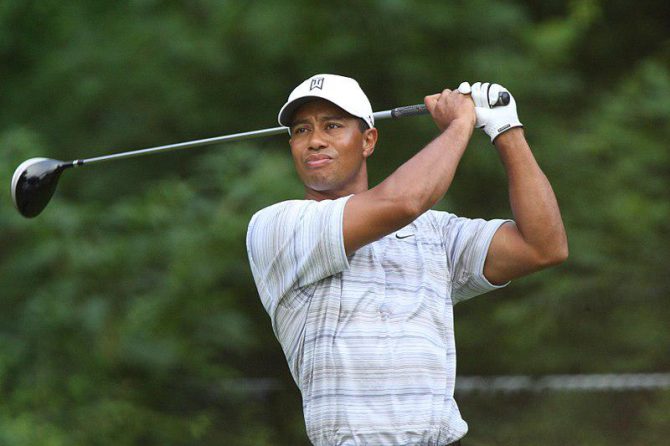
Unlocking Ben Crenshaws Putting Technique for Consistent Greens Reading
Developing a putting stroke modeled after Ben Crenshaw begins with dialing in your setup,alignment,and ability to read the green. Crenshaw’s style prioritizes a perfectly square putter face at address, which you can promote by positioning your eyes directly above-or just slightly inside-the ball. This eye line encourages a natural, straight-back-and-through motion that keeps the putter traveling on a dependable arc. Aim to hold the club with light grip pressure, roughly a 2 or 3 on a 10-point scale, so the wrists stay soft and free of tension. That relaxed hold helps eliminate involuntary twisting of the face and reduces mishits off the heel or toe.
From there, build a smooth, pendulum-like stroke powered mainly by your shoulders. Keep wrist action subtle and controlled so the putter head swings freely without sudden flicks that send the ball offline. A go‑to practice tool is the classic gate drill: set two tees just wider than the putter head and roll putts through the “gate.” This improves your path, center-face contact, and overall start line control. Once you’ve removed these mechanical flaws, you’ll be better equipped to analyze slope and speed accurately rather of guessing whether a miss came from your stroke or your read.
After the fundamentals are secure, the next step is learning to interpret the subtleties of the green-where Crenshaw truly shines.His method blends careful observation with feel, taking time to read grain, minor ridges, and overall tilt. As you stand over a putt, build a mental picture of how much the putt will break and how firmly you need to roll it, taking into account firmness, speed, and total distance. Walk around the putt,especially behind the hole,to confirm whether the break is more severe than it frist appeared. this 360‑degree view helps reduce misreads, which is vital when strokes gained putting can swing several shots per round for modern amateurs and tour players alike.
On longer putts or on tricky tiers, prioritize pace control over chasing the exact perfect line. Leaving yourself a stress‑free second putt inside three feet is almost always preferable to racing a downhill putt past the cup. Incorporating Crenshaw’s thoughtful green-reading process with strategic decision-making lets you choose wisely when to play conservatively and when to take on a more aggressive line,based on pin location,round situation,and overall course conditions.
To fully leverage Crenshaw’s beliefs,pair your reading skills with structured practice and smart equipment choices. Make distance control drills part of every session-ladder drills, for example, where you putt to targets at progressively longer distances, focusing on finishing within an ideal three-foot circle around the hole. Over time, this substantially improves lag putting, a key factor in lowering three-putt rates.
Be aware of how your putter’s design influences performance.Elements like the face insert, head weight, and loft-commonly 3-4 degrees for many players-affect launch, initial skid, and when the ball begins to roll end-over-end. Matching your putter specs to the typical green speeds you play can provide more predictable feedback. Practicing on a range of surfaces and in varying weather helps you learn to adjust, just as Crenshaw adapted seamlessly to fast championship venues or slower, softer greens.
link technical skill with psychological stability. A consistent pre-shot routine-from your first look at the putt to your final stroke-reduces anxiety and creates a reliable rhythm under pressure. When you blend a repeatable motion, precise green reading, and calm decision-making, your putter becomes a dependable scoring asset rather than a liability.
how to Perfect Your Swing with Ben crenshaws Biomechanical Approach
Applying Ben Crenshaw’s biomechanical concepts to your full swing starts with rock-solid setup fundamentals. His posture reflects balance and athletic readiness: feet roughly shoulder-width apart, knees gently flexed, and weight distributed evenly across the feet. Align your body parallel to the target line, then hinge from the hips to create a neutral spine angle of about 45 degrees. This posture sets the stage for an efficient, slightly inside takeaway that keeps the club on plane from the very start. For many players, a slightly open stance with the feet still shoulder-width apart and the knees softly flexed around 20 degrees can further promote balance and an effortless weight transfer throughout the swing.
To reinforce this motion, use alignment and path drills such as the gate drill. Place two tees or clubs just outside either side of the ball so the club must pass cleanly between them during the takeaway. This imprints a straighter start and reduces over-the-top moves that cause pulls and slices. Proper alignment not only supports consistent ball striking but also facilitates natural weight shift and rotational power as you transition into the downswing.
Once address position is repeatable, focus on tempo-one of Crenshaw’s most recognizable traits. His swing is smooth and unhurried, with no violent lunge from the top. Strive for a 1:2 backswing-to-downswing ratio,meaning the club travels back at a measured pace and then accelerates through impact in about half that time. This ratio allows the clubhead to build speed without sacrificing control or timing. Counting “1-2” during the backswing and downswing or using a metronome can help you internalize this seamless transition at the top.
Drills such as swinging to a metronome set at 60-70 beats per minute can definitely help ingrain this cadence. Match your takeaway to one beat and your downswing to the next two, or experiment until you find a rhythm that feels natural. Maintain connection between your arms and torso by keeping the lead arm extended yet relaxed through impact. This cohesion minimizes compensating moves that lead to hooks, slices, and inconsistent contact, tightening your shot dispersion and boosting fairways and greens hit.
Crenshaw’s motion also emphasizes the synchronization of lower body rotation with a controlled arm swing to produce both power and precision. Aim for a balanced hip turn of roughly 45 degrees on the backswing paired with a shoulder coil near 90 degrees to store elastic energy while keeping the swing on plane. As you initiate the downswing, lead with the hips-shifting weight from the trail to the lead foot-while allowing the arms to follow naturally, avoiding casting or an early release. A highly effective way to feel this sequence is the “step-through” drill, where you pause at the top and then step forward with your lead foot during the downswing to promote proper weight shift and lower‑body‑to‑upper‑body separation.
Crenshaw’s philosophy also extends into course management and the scoring zone. Rather than attacking every flag, he favored smart shot selection, choosing targets that left uphill putts and manageable misses. You can adopt the same mindset by aiming for wider landing zones and accepting the occasional 20‑ to 30‑foot birdie putt if it means staying out of trouble.
In the short game, refine feel by practicing distance control drills for chips and pitches using various wedges. Experiment with different lofts to learn how high each shot launches and how far it releases on firm versus soft turf.Pay particular attention to putts inside 10 feet, where modern performance data show the majority of strokes are either gained or lost. By uniting biomechanically sound motion with wise shot strategies,golfers across all skill levels can fashion a trustworthy,repeatable swing inspired by Crenshaw’s timeless technique.
Driving Like a Pro Harnessing Crenshaws Alignment and Mental game Strategies
To drive the ball with confidence and accuracy, it helps to incorporate Ben Crenshaw’s alignment technique, which builds consistency from the ground up.Start by laying a club or alignment stick on the ground parallel to your intended target line. Use it to confirm that your feet,knees,hips,and shoulders are all square,avoiding the subtle open or closed stances that frequently lead to slices or hooks. For more advanced players, pay special attention to the clubface at address-ensuring it points directly at the target rather than slightly left or right. Repeating this process during practice sessions, including from sidehill or uneven lies and in wind, forms a habit of reliable alignment that translates into straighter, more predictable drives.
Beyond the physical setup, Crenshaw’s mental approach is a powerful asset off the tee. He favored a intentional pre-shot visualization routine, picturing the ball’s flight, curvature, and landing area before taking his stance. This practice helps lock your focus on execution instead of outcome, lowering tension and encouraging a smoother swing. Incorporate drills like the “two-ball drill”, in which you hit pairs of drives-one concentrating purely on rhythm, the next combining that rhythm with a clearly imagined shot shape. This method sharpens your ability to reproduce your ideal drive when the pressure rises.
For golfers who battle first-tee jitters or tight swings during competitive rounds, adding a few deep, controlled breaths to the routine can regulate heart rate and calm the mind. Over time, this combination of visualization and breathing conditions you to respond with clarity and confidence, even on narrow fairways or into strong winds.
Technically, Crenshaw’s driving philosophy favors controlled swing mechanics over sheer aggression. He promotes a measured takeaway on a slight inside path, preserving lag into impact for natural clubhead speed. The objective with the driver is a shallow, upward strike, ideally around 5 to 7 degrees upward, to launch the ball higher with reduced spin-key factors modern launch monitor data highlight for maximizing carry and rollout.
Use launch monitor feedback when possible to track metrics such as ball speed, launch angle, and spin rate. aim to gain around 5-10 MPH in ball speed over time while consistently contacting the ball near the driver’s sweet spot. Drills like pump swings-rehearsing partial downswings that pause just before impact-and impact bag training help you feel proper sequence, shaft lean, and body rotation. As these sensations become second nature,you’ll generate powerful,repeatable drives that not only find the fairway but also set up better scoring chances on every hole.

Ben Crenshaw’s Golf Blueprint: Proven Secrets to Transform Your Swing, Putting & Driving

The Core Philosophy Behind ben Crenshaw’s Golf Blueprint
Ben Crenshaw is widely regarded as one of the greatest putters in golf history and a master at strategic course management. While every golfer’s move is unique, several core principles consistently show up in Crenshaw’s approach to the game:
- Simplicity over mechanics overload – a repeatable motion beats a technically “perfect” one.
- Tempo and rhythm first – the golf swing and putting stroke flow like a pendulum.
- Shotmaking, not just ball‑striking – shaping shots to fit the hole and the wind.
- Touch and feel – especially on the greens and around the green.
- Mental clarity – seeing the shot clearly and committing fully.
This blueprint translates into practical, measurable steps any golfer can use to improve swing consistency, putting performance, and driving accuracy.
Ben crenshaw-Inspired Full Swing Fundamentals
1. Setup: Build a Classic, Repeatable Address Position
Crenshaw’s swing started with a fundamentally sound setup. Without a solid address, even the best swing thoughts fall apart.
- Posture: stand tall, then hinge from the hips so your arms hang naturally. Avoid rounding your back.
- Grip: Use a neutral grip-logo on the glove roughly at 2 o’clock, trail hand matching. Grips that are too strong or weak make squaring the clubface difficult.
- Ball position:
- Short irons: center or slightly forward of center.
- Mid/long irons: one ball inside the lead heel.
- Driver: off the lead heel, spine slightly tilted away from the target.
- Alignment: Feet, knees, hips, and shoulders parallel to the target line-think “railroad tracks.”
| Club Type | Ball Position | Weight at Setup |
|---|---|---|
| Short Irons | Middle | 55% Lead Foot |
| Mid/Long Irons | Slightly Forward | 50/50 |
| Driver | Inside lead Heel | 55% Trail Foot |
2. Tempo: The “Smooth & Unhurried” Crenshaw Rhythm
Crenshaw’s golf swing was admired for its smooth, unforced tempo.That rhythm allowed him to control ball flight under pressure. Many amateurs try to hit too hard from the top, causing slices, hooks, and thin shots.
Tempo drill:
- Count “one” to the top of your backswing.
- Count “two‑three” from transition to impact.
- Record your swing on your phone to ensure the downswing is slightly longer than the backswing, not a rushed jab at the ball.
3. Swing Plane & body Turn: Let the Arms Match the Body
Crenshaw’s motion was built on a full body turn and a relatively neutral swing plane.Rather than lifting the club with the hands, he turned his chest and let the arms ride along.
- Backswing: Turn your lead shoulder under your chin while keeping your trail knee flexed and stable.
- Top position: Club roughly parallel to the target line, hands not drastically across the line or laid off.
- Downswing: Start from the ground up-pressure into the lead foot, hips unwinding, chest turning through.
alignment stick drill: Place an alignment stick in the ground at about 60° behind you. Rehearse backswings so the club moves roughly parallel to that stick. This helps you feel a neutral swing path that encourages straighter golf shots.
Ben Crenshaw’s putting Blueprint: Touch, Feel & Green Reading
1. Classic Putting Setup
Crenshaw’s putting stroke was famous for its soft hands, great posture, and pendulum rhythm. You don’t have to copy every detail, but you can adopt the key concepts:
- Eye line: Eyes either directly over the ball or slightly inside the target line.
- Grip pressure: Light-around 3 out of 10.Tension kills feel.
- ball position: Just forward of center with a slight shaft lean to encourage a gentle upward strike.
- Shoulder‑driven stroke: Minimal wrist hinge; let the shoulders rock.
| Putting Element | Crenshaw‑Style Cue |
|---|---|
| Grip Pressure | “Hold a bird without squeezing it.” |
| Stroke Shape | Pendulum back and through |
| Focus Point | Front edge of the cup |
2. Distance Control: The Ladder drill
Elite putters rarely three‑putt because their speed control is excellent. That was a hallmark of Crenshaw’s putting.
- Place tees at 10, 20, 30 and 40 feet on a practice green.
- Hit three putts to each tee, focusing on rolling the ball just past the hole.
- Track how many putts finish within a putter‑length of the cup.
Perform this drill two to three times a week. Record your percentage and aim to improve by 10-20% over a month. this is a simple, measurable way to lower your putting average.
3. Green Reading: See the Whole Picture
Crenshaw was legendary for reading greens. He studied subtle slopes, overall terrain, and grain direction.
- Walk the putt: View it from behind the ball and behind the hole.
- look at the big slope: Where would rainwater flow off the green? That’s frequently enough the dominant break.
- Trust a single picture: Commit to one line and one pace; indecision leads to tentative strokes.
Driving the Ball with Control and Confidence
1. Setup Tweaks for Better Driving
While Crenshaw wasn’t the longest driver on tour, he was an clever one. He focused on staying in play and setting up good approach shots. You can borrow that philosophy.
- Wider stance: Slightly wider than shoulder‑width for stability.
- Forward ball position: Helps you hit up on the golf ball for higher launch and lower spin.
- Spine tilt: Tilt your upper body a touch away from the target to encourage an upward strike.
- Tee height: Half the ball above the crown of the driver for most golfers.
2. Focus on Fairways, Not Just Distance
Many amateurs lose strokes from wild tee shots. Crenshaw’s golf strategy prioritized position over power. On tight holes he often used 3‑wood or long iron to find the fairway.
Decision rule you can copy:
- Ask: “What is the widest part of this fairway I can realistically hit?”
- Select the club that gives you the largest effective landing zone, not the longest yardage.
| Hole Type | Typical Crenshaw‑Style Play |
|---|---|
| Short Par 4 | 3‑wood or hybrid, full wedge in |
| Medium Par 4 | Driver to widest side, mid‑iron approach |
| narrow Par 4 | Long iron or hybrid, except longer second |
3. Simple Driving Drill: Fairway Finder Routine
- On the range, pick a “fairway” about 25 yards wide using two targets.
- Hit 10 drives focusing only on rhythm and balance-finish facing the target with your weight on the lead foot.
- Count how many balls finish inside your imaginary fairway.
- Repeat twice more; strive to beat your previous best each session.
This combines golf swing training with on‑course scoring focus. You’re not just hitting balls-you’re practicing driving accuracy like a tour pro.
Strategic Course Management: How Crenshaw Saved Strokes
1. Play to your Comfort Zones
Crenshaw excelled at leaving himself yardages he liked. Rather than chasing the absolute closest approach, he managed the course to fit his strengths.
- Identify your favorite approach distance (e.g., 90-110 yards).
- On par 5s, choose layup clubs that leave that distance instead of going as far as possible.
- Avoid sucker pins; aim for the fat side of the green and putt to the corner.
2. Accept Smart Bogeys
Part of Crenshaw’s success in major championships came from avoiding double bogeys. If you’re out of position off the tee:
- Chip out sideways rather of attempting a miracle shot.
- Get the ball back into the fairway,then target the middle of the green.
- Trust your short game and putting to save par or at worst, a simple bogey.
Practical Drills to Build a Crenshaw‑Style golf Game
Daily 20‑Minute Practice Blueprint
Use this short plan to keep your swing, putting, and driving aligned with Crenshaw’s principles.
- 5 minutes – Tempo swings: Without a ball,make slow,full swings,counting “one‑two‑three” for rhythm.
- 5 minutes – Impact drill: hit half‑swings with a mid‑iron, focusing on solid contact and a balanced finish.
- 5 minutes – Ladder putting: Run through a swift version at 15 and 30 feet.
- 5 minutes – Fairway finder drives: On the range, simulate two to three “pressure” drives by setting a target fairway.
Weekly Tracking Table
| Skill | Metric | Weekly Goal |
|---|---|---|
| Putting | % inside 3 ft on ladder drill | +10% vs last week |
| Driving | Fairways hit in practice | 7/10 or better |
| Iron Play | Solid contact out of 10 balls | 8/10 or better |
Case Study: Mid‑Handicap Golfer Using the Blueprint
consider a 16‑handicap golfer struggling with inconsistent driving and frequent three‑putts. Applying a crenshaw‑style golf blueprint for eight weeks,here’s a realistic change:
- Weeks 1-2: Focus on grip,setup,and smoother tempo. Score impact: fewer thin and fat iron shots.
- Weeks 3-4: Incorporate ladder putting drill three times per week. Score impact: three‑putts drop from 4-5 per round to 2-3.
- Weeks 5-6: Implement fairway‑finder routine and smarter club selection off the tee. Score impact: fewer penalty strokes and punch‑outs.
- Weeks 7-8: Add course management goals-aiming at safer targets, leaving preferred yardages. Scores stabilize in the mid‑80s rather of low‑90s.
The golfer’s handicap realistically moves from 16 toward 12-13, driven not by a complete swing overhaul, but by better tempo, smarter driving, improved putting, and strategic mindset.
Mental Game & On‑Course Routine
1. pre‑Shot Routine with Clear Commitment
Crenshaw was deliberate and calm over the ball.You can copy a simple three‑step routine:
- Visualize: See the exact ball flight and landing spot.
- Rehearse: Make one slow, focused practice swing or stroke.
- Commit: Step in, align, one last look, and pull the trigger without hesitation.
2. Emotional control
Good rounds come from staying composed. Set process goals rather than only score goals:
- “I’ll stick to my pre‑shot routine on every shot.”
- “I’ll choose conservative targets when under pressure.”
- “I’ll accept that one bad swing doesn’t ruin the round.”
Adapting Ben Crenshaw’s Blueprint for Different Skill Levels
For Beginners
- Prioritize grip, posture, and alignment over complex swing thoughts.
- Use a soft, pendulum putting stroke and work on 3‑ to 6‑foot putts daily.
- Choose accuracy off the tee-hybrids or fairway woods until you’re confident with the driver.
For Mid‑Handicappers
- Develop one reliable shot shape (slight fade or draw) and play it on every tee shot.
- Track lag putting stats and aim to eliminate three‑putts.
- Improve course management by playing to your preferred distances.
For Low‑handicappers
- Refine green reading and grain recognition for faster greens.
- Dial in wedge distances and partial shots to attack safe pins.
- Use detailed yardage books and pre‑round strategy sessions like a tour pro.
applying these Crenshaw‑inspired principles-smooth tempo,classic fundamentals,touch on the greens,intelligent driving,and strategic thinking-gives you a practical golf blueprint to transform your swing,putting,and driving in a way that holds up under pressure.