Tap Into Brooks Koepka’s Driving Power for More Distance and Control
Recreating Brooks Koepka’s explosive distance off the tee begins with dialing in the basics of his motion-especially his address position and swing sequence. Start by establishing a solid, athletic stance with your feet roughly shoulder-width apart, distributing pressure evenly across both feet so your body can rotate without restriction. Koepka consistently emphasizes a slight knee flex and a forward spine tilt, creating a stable base that supports a powerful hip turn and efficient energy transfer from the ground up. Position the ball just inside the lead heel to encourage an upward angle of attack, promoting higher launch and lower spin-key factors in achieving optimal carry distance. Koepka’s setup frequently enough features a slightly open clubface with a neutral, non-manipulative grip, helping him return the face square at impact and optimize launch in the 12-15 degree range, where most modern drivers produce peak carry distance. Maintaining firm but relaxed grip pressure allows for natural wrist hinge and a free uncoiling through impact, minimizing forearm tension that can slow clubhead speed. Key setup points also include keeping a slight forward shaft lean at address and maintaining an early wrist hinge to around 60 degrees in the backswing, which stores elastic energy to be released at impact.
In practice, use alignment sticks to ensure your shoulders, hips, and feet are correctly aligned to the target line, promoting consistent ball striking. Incorporate rehearsal moves like a “slow-motion takeaway” to reinforce a one-piece start back and a seamless change of direction, making sure the lower body leads the downswing, then the torso, then the arms and club. Practise tempo with a 3:1 backswing-to-downswing ratio-for example, counting to three on the way back and one on the way through-to match Koepka’s smooth transition and encourage proper energy buildup without sacrificing control. You can also blend in the “pause at the top” drill-briefly pausing at the peak of your backswing-to build better awareness of your position and sequence before you shift into the downswing. This efficient kinetic chain boosts clubhead speed while keeping the club on plane, giving players of any handicap a blueprint for Koepka-style power that doesn’t sacrifice accuracy.
Once your swing fundamentals support higher speed, the next phase is learning to apply that power intelligently on the course. Rather than chasing maximum yardage on every hole, Koepka routinely favors ideal landing zones that open up the next shot-particularly on tighter layouts with heavy rough or narrow corridors. Such as, when faced with hazards or uneven lies, he often opts for a more controlled swing that prioritizes accuracy and trajectory management over sheer power, sometimes choosing a higher-lofted fairway wood or hybrid instead of driver to navigate tricky situations. On gusty days, he may choose a lower-trajectory shot with a 7-iron or 8-iron into par 4s or 5s rather than floating a higher ball that can balloon off line. You can practice this same mindset by mapping your home course: note the safest and most beneficial distances to common trouble areas,then fit your driver strategy around those yardages. On the range, rehearse tee shots with different shot shapes and launch windows-towering draws, lower bullet fades-so you’re equipped for varying wind patterns and hole designs.In a crosswind,such as,slightly adjusting the clubface 3-5 degrees closed or open and moving the ball a fraction forward or back in your stance can stabilize your starting line and curve. Over time, these tactical tweaks will build a versatile, tournament-style driving game that trims strokes off your scorecard.
to fully unlock Koepka-level driving, your mental approach must complement your mechanics. He is known for remaining composed and decisive even in major-championship pressure, and you can train similar composure in practice. Use pre-shot visualization to picture the exact ball flight and landing area before every swing, then pair that with steady breathing-inhale on the waggle, exhale as you pull the trigger. During range sessions, establish clear performance benchmarks such as maintaining a repeatable swing speed between 105-115 mph or hitting at least 70% of your drives into a designated “fairway” corridor. Track these numbers over several weeks using a launch monitor or smartphone app to build confidence through objective feedback. Newer golfers can prioritize rhythm first with metronome-based tempo drills-for instance, counting to three on the backswing and one on the downswing-while more advanced players refine sequencing by reviewing slow-motion video or using resistance bands and weighted clubs to feel a powerful, well-timed release. Blending mental resilience with technical training allows you to maximize your driving potential likewise Koepka does when it matters most.
Understand the Biomechanics Behind Koepka’s Remarkably Reliable Swing
Koepka’s repeatable ball striking is rooted in a fundamentally sound address position that sets up his biomechanics for success. A crucial component is maintaining neutral, consistent grip pressure-firm enough for control yet relaxed enough to allow the wrists to hinge naturally. Many coaches quantify this at roughly 4-5 pounds of pressure, a level that minimizes tension in the forearms and shoulders while still stabilizing the clubface. His stance is balanced, with feet about shoulder-width apart and a gentle flex in the knees, which lowers his center of gravity and promotes stability throughout the motion. Recreational players can emulate this by routinely checking stance width, posture, and ball position with alignment sticks on the practice tee, placing the ball slightly forward of center for irons and more centered to slightly forward for fairway woods and driver. this stable platform encourages a predictable swing path and reduces dispersion, a key factor in scoring on today’s increasingly demanding course setups.
As the swing progresses, Koepka’s motion showcases how efficient rotation and sequencing translate into speed without losing control.On the backswing,he typically turns his hips about 45 degrees while allowing the lead shoulder to move under the chin,building a powerful coil between the upper and lower body. The downswing begins with pressure shifting from the trail foot into the lead side, letting the lower body lead the motion so the arms and club can follow on a shallow, inside path. Golfers can train this transition with drills like the “step-through” drill, which exaggerates weight shift and encourages dynamic balance through impact. Common faults-such as early extension, where the hips rise and move toward the ball, or spinning the shoulders too quickly-can lead to loss of power and inconsistent contact. To correct these, players can use the “wall drill,” standing close to a wall behind the hips to train proper rotation without thrusting forward, and pair it with slow, exaggerated practice swings and impact bag sessions, concentrating on preserving lag until the hands approach the trail thigh. To further ingrain Koepka-like timing, layer in “counted swing” drills with a 3:1 tempo and occasional slow-motion rehearsals that emphasize a smooth transition from backswing to downswing rather than a rushed change of direction. this focus on proper sequencing translates into higher ball speed, more penetrating trajectories, and tighter shot patterns during real rounds.
A final cornerstone of Koepka’s biomechanical success is the integration of mental clarity with automatic,well-grooved movement-especially under tournament pressure. His ability to deliver the same swing on firm, windy links courses as on softer, tree-lined layouts is a product of ingrained muscle memory and adaptable tempo. To build similar adaptability, players should practice with varying rhythms: for example, a deliberate, roughly three-second backswing and smooth transition for control shots, and a slightly quicker tempo when they need extra distance off the tee. Embedding a consistent pre-shot routine-visualizing the shot, committing to a target, and using a simple breathing pattern-helps link mental calmness with physical execution. Following Koepka’s model, golfers should first master bedrock fundamentals like grip, posture, and alignment before layering on more advanced motion changes. This approach ensures that, whether the wind picks up or nerves increase, the underlying mechanics remain stable and dependable.
Refine Your Putting Like Koepka With Smart Setup Adjustments and Sharper Green Reading
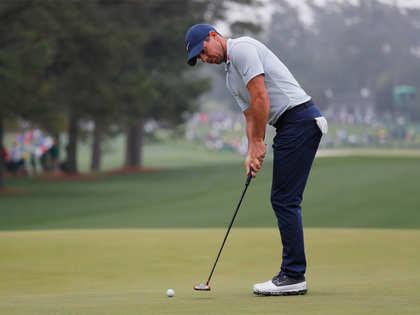
Developing a tour-caliber putting stroke starts with precise setup details. koepka’s approach favors a steady,slightly athletic stance that encourages a repeatable pendulum motion.Distribute your weight so it’s approximately 60-40 toward the lead foot, giving you a stable base that minimizes unwanted body movement during the stroke. Position the ball just forward of center to promote a gentle upward strike and immediate forward roll, which reduces initial skid and improves distance control. Ensure your eyes sit directly over or just inside the target line so you can see the true line rather than a distorted version caused by poor posture. Experiment with a softer, more relaxed grip pressure that still maintains control; excessive tension often leads to jerky strokes and inconsistent contact. With these setup fundamentals in place, you create the framework for improved pace management and straighter putts across a variety of green speeds.
After your posture and alignment are dialed in, the next major performance leap comes from accurate and confident green reading. Koepka advocates a deliberate survey of the putting surface: begin your read from behind the ball and then from behind the hole, noting overall tilt, smaller contours, and any changes in grass grain or moisture that may influence speed and break. use your feet to “feel” the slope as you walk around the putt, paying attention to whether your weight shifts more to your toes, heels, or one side. Visually trace the anticipated path, imagining how gravity will curve the ball along the last few feet.On slower, uphill putts, plan for a firmer stroke to ensure the ball reaches the cup; on fast, downhill attempts, shorten your stroke and soften your acceleration.To hone this skill,run structured drills like the “clock drill,” arranging balls around the hole at several distances to practice reading and executing putts breaking from different directions and at different speeds. This combination of tactile feedback, visualization, and consistent process mirrors Koepka’s methodical approach under pressure.
Turning these techniques into lower scores requires practice sessions that closely resemble what you face during actual rounds. Koepka-style training often centers on purpose-built drills that sharpen feel for speed and adaptability across multiple green conditions.One effective routine is to place tees or coins at staggered intervals-say every three feet-on a breaking putt and attempt to stop the ball precisely at each marker. This forces you to vary stroke length and tempo deliberately, strengthening your ability to adjust on fast or slow greens.You can also create competitive challenges for yourself, such as needing to make a series of tough breaking putts in a row or within a set time limit, to simulate tournament pressure and build mental toughness. To further reinforce Koepka’s mental framework, integrate a simple pre-putt routine that includes one or two deep breaths and a brief visualization of the ball’s roll, then commit fully to the chosen line and speed. Be aware of frequent mistakes like decelerating the putter head through impact, changing your routine mid-round, or peeking early to see the result; address these issues through video review or feedback from a qualified coach. By merging a reliable setup, advanced green-reading skills, and structured practice, golfers from beginners to low handicappers can significantly improve their putting statistics, echoing the poise and precision Koepka displays on the PGA Tour.
Steal Brooks Koepka’s Swing Secrets to Crush your Drives and sink more Putts
Why Brooks koepka’s Golf Swing Works Under Major Championship Pressure
Brooks Koepka’s golf swing isn’t just powerful-it’s repeatable under the biggest pressure in the game. His driving and putting combine modern biomechanics, efficient ground force, and a no‑nonsense mental approach.You may not have tour‑level speed yet, but you can copy the core mechanics that make his swing so reliable.
The keys we’ll break down:
- Stable but athletic setup that encourages a powerful, shallow golf swing
- Simple, repeatable backswing with great width and rotation
- Explosive but controlled downswing that uses the ground (not just the arms)
- Compact putting stroke with impeccable face control and green‑reading discipline
- Practical drills, training aids, and course management strategies you can use today
Koepka‑Style Setup: Build a Strong Foundation Before You Swing
Your golf setup dictates the quality of your swing before the club even moves. Koepka’s address position is a model of balance and athletic posture, especially with the driver.
Driver Setup Keys to Copy
- Stance width: Feet slightly wider than shoulder-width for stability and rotational power.
- Ball position: Inside the lead heel to promote an upward angle of attack and high‑launch, low‑spin drives.
- Spine tilt: Slight tilt away from the target; trail shoulder lower than lead shoulder.
- Neutral grip: Lead hand logo facing roughly the target, trail hand supporting underneath-promotes a square clubface.
- Athletic posture: Soft knees, hip hinge from the waist, straight but not rigid back, arms hanging naturally.
Quick Setup Checklist (Copy & Save)
| element | Koepka‑Inspired Cue |
|---|---|
| Feet | Wider than shoulders,weight centered |
| Ball | Inside lead heel (driver),just forward of center (irons) |
| Spine | Tilted slightly away from target |
| Grip | Neutral,relaxed,no tension in forearms |
| Posture | Chest up,arms hanging,knees unlocked |
Backswing Secrets: Wide,Simple,and Loaded with Torque
Koepka’s backswing looks simple,but every piece is in the right place. The club moves on plane, the body coils around a stable lower half, and he never overswings.
Key Backswing Moves
- Wide takeaway: Clubhead stays outside the hands early; hands,arms,and chest move together.
- Stable lower body: Hips rotate but don’t sway excessively off the ball.
- Full shoulder turn: Lead shoulder gets under the chin; trail shoulder behind the neck.
- Clubface control: Lead wrist relatively flat at the top; face matches lead forearm angle.
Drill: Alignment Stick “On‑Plane” Backswing
- Stick an alignment rod in the ground behind you, matching your shaft angle at address.
- Rehearse backswings where the clubhead traces just above the rod.
- Focus on turning your chest, not lifting with the arms.
This keeps your golf swing on plane and prevents an over‑the‑top move that costs distance and accuracy.
Downswing Power: Use the Ground Like Brooks Koepka
Koepka’s driving power doesn’t come from muscling the ball-it comes from sequence and ground reaction forces. His lower body initiates, then energy flows up through the torso, arms, and club in a classic kinematic chain.
Essential Downswing Sequence
- pressure shift: At the top, pressure moves into the lead foot before the club changes direction.
- Hip rotation: hips open toward the target, creating separation from the upper body.
- Lag retention: Wrists maintain angle while body unwinds; hands stay in front of the clubhead.
- Release through impact: Club whips through, arms fully extended after the strike.
Drill: Step‑Through Speed Drill
This drill encourages you to use the ground and shift pressure dynamically like a tour player.
- Take your normal driver stance but bring your lead foot next to your trail foot.
- start your backswing; as you transition, step your lead foot into its normal position.
- Swing through and let your trail foot naturally release toward the target.
Focus on rhythm, balance, and finishing in a strong, tall position-hallmarks of Koepka’s golf swing.
Blueprint for Koepka‑Like Driving Numbers
Brooks typically ranks near the top of the PGA Tour in strokes gained: off the tee,combining high ball speed with accuracy. Use this simple table as a performance benchmark relative to your current skill level.
| Player Level | Target Clubhead Speed (Driver) | Fairways Hit goal | typical Carry Distance |
|---|---|---|---|
| High Handicap | 85-95 mph | 40-50% | 190-220 yards |
| Mid handicap | 95-105 mph | 50-60% | 220-250 yards |
| Low handicap | 105-115+ mph | 55-65% | 250-280+ yards |
Use a launch monitor or golf simulator session to measure your current numbers, then train with intent to improve one metric at a time: speed, launch conditions, or dispersion.
Koepka‑Inspired Driving Drills for Consistency and Distance
1. Tee Height Control Drill
Koepka launches the ball high with low spin by striking slightly on the upper half of the driver face.
- Tee the ball so half of it sits above the top edge of the driver face.
- focus on sweeping the ball off the tee with a shallow, upward strike.
- Use impact tape or foot spray to ensure you’re striking slightly above center.
2. Fairway Finder “three‑Quarter” Driver
On tight holes in major championships, koepka often throttles back to prioritize hitting fairways.
- Grip down one inch on the driver.
- Make a smooth, 80% effort swing.
- Track dispersion vs. full‑speed swings on the range.
Add this shot to your course strategy arsenal for trouble holes or windy conditions.
3. Alignment Rail Drill
Koepka’s golf drives start on their intended line as his aim and path are precise.
- Lay two alignment sticks: one parallel to your target line for feet, one just outside the ball for club path.
- Check that face, feet, hips, and shoulders all match the target line before each swing.
- Train until square setup feels automatic.
Stealing Koepka’s putting Secrets: Stroke,Setup & Strategy
Koepka’s putting stroke is compact and repeatable,built on a solid setup and a quiet lower body.Under pressure,he trusts his routine more than the mechanics.
Putting Setup Fundamentals
- Eye position: Eyes either directly over the ball or slightly inside the line.
- Grip: Neutral, with both thumbs running straight down the shaft for face control.
- Weight distribution: Slightly favor the lead side to prevent scooping.
- Ball position: Just forward of center to promote an upward strike.
- Shoulder alignment: parallel to target line; hips and feet square.
Stroke Style
The Koepka‑like putting stroke is:
- Shoulder‑driven: Minimal wrist hinge; rock the shoulders.
- Compact: No long, loose backswing-control is prioritized.
- Square face: Clubface stays square longer through impact.
Drill: Gate Drill for Start Line Mastery
- Place two tees just wider than your putter head, creating a “gate.”
- Set up a 5‑foot straight putt; place another gate halfway to the hole, barely wider than the ball.
- Roll 20 putts through both gates without touching a tee.
This builds face control and start‑line consistency-critical for sinking more short putts like Koepka.
Green‑Reading and Speed Control Like a Major Champion
Pre‑Putt Routine Blueprint
brooks doesn’t overcomplicate green reading.He commits fully to a simple, repeatable routine.
- Read from low side: Stand on the low side of the hole to gauge the true slope.
- Walk the line: Feel subtle breaks with your feet while walking to your ball.
- Visualize: See the ball rolling along your chosen line with the right pace.
- One last look: Set the putter face, take one look at the target, and go.
Distance Control Ladder Drill
- On a practice green, place tees at 10, 20, 30, and 40 feet.
- Hit three balls to each tee, trying to finish within a 3‑foot circle.
- don’t change your stroke length wildly; adjust pace with smooth acceleration.
This builds the speed control that keeps koepka’s long putts around the hole for easy tap‑ins.
Case Study: Turning a wild Driver into a Koepka‑Style Weapon
Consider a competitive 8‑handicap player struggling with penalty‑ball drives and three‑putt bogeys. After integrating Koepka‑inspired techniques for six weeks, his stats improved noticeably.
| Metric | Before | After |
|---|---|---|
| Fairways Hit | 42% | 61% |
| Average Drive | 232 yards | 248 yards |
| Three‑putts / Round | 3.2 | 1.1 |
| Handicap Index | 8.4 | 5.9 |
his focus wasn’t on rebuilding his swing from scratch-it was on:
- Copying Koepka’s driver setup and fairway‑finder shot
- using the gate drill and ladder drill every practice session
- Adopting a simple, consistent pre‑shot and pre‑putt routine
Practical Tips for Bringing Koepka’s Game to Your Course
On the Driving Range
- Split your session: 50% technique, 30% performance games, 20% speed training.
- use an alignment stick in every session to maintain Koepka‑like setup discipline.
- Finish with 10 “play‑like” drives: full routine,specific fairway target,one ball only.
On the Putting Green
- Warm up with 20 putts inside 5 feet using the gate drill.
- Spend at least 10 minutes on speed control ladders before heading to the first tee.
- Practice pressure: make 10 in a row from 4 feet; if you miss, restart the count.
On the Course
- Play to zones, not flags: Koepka rarely short‑sides himself. Aim for fat parts of greens on tough pins.
- Choose a “tournament” line: Ask, “What line would I choose on Sunday?” Often that means more fairway, less heroism.
- Commit fully: Once you pick a target and shot shape, swing without fear.
Equipment & Fitness: Supporting a Koepka‑Style Swing
Driver Fitting Essentials
- loft and shaft: Optimize for launch angle and spin; many players gain distance from more loft, not less.
- Head design: Choose a forgiving, low‑spin model that matches your desired shot shape.
- Grip size: Fit to your hand size to prevent excess tension and face manipulation.
Simple Strength & Mobility Focus Areas
- hip rotation mobility for a deeper,more powerful turn.
- Core stability for balance and consistent impact.
- Glute and leg strength to generate ground force.
Two or three 20‑minute sessions per week of basic strength and mobility work can noticeably increase your clubhead speed and stability, making it easier to swing more like a tour pro.
Putting It All Together: Your Koepka‑Inspired Practice Plan
| Time | Focus | Key drill |
|---|---|---|
| 10 min | Driver setup & alignment | alignment rail drill |
| 15 min | Backswing & downswing | On‑plane backswing + step‑through drill |
| 10 min | Fairway finder shot | Three‑quarter driver practice |
| 15 min | Short putts | Gate drill (3-6 feet) |
| 10 min | Lag putting | Ladder drill (20-40 feet) |
Use this 60‑minute plan twice a week, track your fairways hit and putts per round, and you’ll start to see the tangible impact of applying Brooks Koepka’s swing and putting secrets to your own golf game.