
Putting performance has an outsized effect on scoring at every level of golf; even modest reductions in stroke-to-stroke variation produce clear improvements on the scorecard.Despite technological advances in clubs and smarter course tactics, short-game inconsistency remains a dominant impediment to lower scores, reflecting the interplay of movement control, perceptual judgment, and practice strategy. This article frames putting within a biomechanical and motor-control perspective to explain how stroke geometry and timing produce dependable distance control and directional precision.
The discussion centers on two linked dimensions: the structural mechanics of the stroke (kinematics of shoulders,wrists,hips,and the putter head) and the temporal patterning (tempo and rhythm that shape backswing/throughswing symmetry and dwell time). Treating consistency as an empirical outcome-measured by variables such as putter-face angle at impact, variability in launch direction, and dispersion of finishing positions-connects lab-based motion analysis with on-course performance indicators. The piece also addresses practice design: staged, feedback-rich programs that encourage motor adaptation and transfer, incorporating practice variability, cues that emphasize the effect on the ball (external focus), and objective progress monitoring.Combining biomechanical summaries, case-based illustrations, and practical training plans, the article offers evidence-based, scalable interventions for players and coaches.Guidance is organized to support beginners up to elite competitors, prioritizing diagnostic metrics and reproducible practice routines that create lasting improvements in stroke mechanics and tempo control.
Theoretical Framework and Objectives for Consistent Putting
Creating a dependable putting method starts with a biomechanical baseline that links stance, stroke behavior, and equipment choices to predictable roll. Begin with a balanced address: place the ball about 1-2 ball diameters forward of center for most blade and mallet designs to encourage forward-rolling contact,set your eyes over or just inside the ball,and adopt a stable,athletic spine angle to allow the shoulders to drive a pendular motion. the stroke should minimize wrist involvement and rely mainly on controlled shoulder rotation while the hands serve as a passive connector; target keeping putter-face rotation within ±2° at impact to preserve direction.Putter specs matter: competitive players commonly use 2°-4° loft to help early forward roll, and a correctly fitted lie prevents toe or heel digging and promotes consistent contact. To move theory into practice, measure tempo with a simple 2:1 backswing-to-forward-stroke timing and use a metronome or counting to build regularity. Typical mechanical faults-excess wrist hinge, lifting the head during the stroke, or inconsistent ball placement-are identified and fixed with focused mirror work, high-frame-rate slow-motion video (120+ fps), and short-range drills highlighting face control.
After the mechanical template is established, set strategic goals around pace, line, and on-course decision-making. Incorporate green-reading routines by walking the fall line to assess slope, observing grain direction (which affects roll on firmer surfaces), and estimating break relative to green grade; for instance, slopes above 3° often demand noticeably greater lateral compensation. For speed management, use lag drills on the practice green with clear targets-aim for a two-putt conversion rate of around 90% from 30-40 feet and an inside-3-foot make rate near 80%+-benchmarks that correlate directly with lower scores. Apply scenario drills to train course management: on a downhill 20-foot putt on a fast green, prioritize a firmer stroke to avoid short-hopping and aim slightly uphill of your line to compensate for increased initial skid. Useful practice exercises include:
- Gate Drill - set two tees just outside your putter path to enforce a square face through impact.
- String / Target Ladder – place progressively farther targets to calibrate roll; target leaving putts inside 3 feet on 8 of 10 attempts from 20-40 ft.
- Clock Drill – take 12 putts around the cup from varying angles at 3, 6, and 10 feet to improve pressure performance and alignment consistency.
Translate mechanics and tactics into a structured development and troubleshooting plan suitable for beginners through low handicaps while observing Rules of Golf (including the anchoring prohibition). Begin with baseline measures: record make percentages from 3, 6, and 12 feet and tally three-putts across three practice rounds. Follow a weekly progression: Weeks 1-2 concentrate on setup and short-putt accuracy (target 8/10 from 6 ft), Weeks 3-6 emphasize lag control (aim to leave 60% of 30-40 ft attempts inside 6 ft), and Week 7+ layer in pressure drills and on-course request. Troubleshooting recommendations include:
- If the stroke flips or scoops: reinforce a shoulder-driven pendulum using a putting arc or a slightly weighted head so the hands feel passive.
- If distance control is erratic: employ the string drill to quantify stroke length-to-distance relationships and adopt a pre-shot tempo count.
- If reads on breaking greens are poor: walk the line, use a small visual anchor (like a tuft of grass or seam) to refine the aim point across varying Stimp conditions.
Also integrate mental elements-a concise pre-putt routine,steady breathing,and positive imagery-to support execution under pressure. By uniting measurable mechanical checkpoints, targeted drills, equipment inspections, and situational strategy, golfers can systematically reduce putts per round and convert technical gains into lower scores.
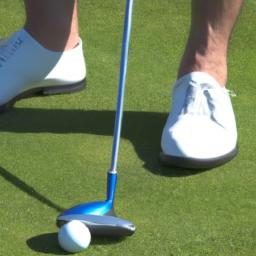
Kinematic and Kinetic Determinants of an Effective Putting Stroke
Reliable putting starts with consistent movement patterns: a reproducible address and a pendulum-like stroke yield accurate alignment and predictable roll. Adopt a neutral shaft lean of about 7-10° forward and place the ball roughly 1 inch forward of stance center to favor a descending arc-to-square impact and prompt forward roll; position the eyes slightly inside the ball-to-target line so the shaft appears vertical relative to the ball. Keep grip pressure light-around 3-5 on a 10-point scale-and use a compact shoulder-driven arc with minimal wrist hinge (≤10°) so the face stays square through impact within ±1-2°. Beginners should emphasize a straight-back straight-through motion (minimal arc),while intermediate and better players can refine a slight arc that matches their natural shoulder rotation. To turn these kinematic principles into practice, follow setup checkpoints and drills designed to build motor patterns and improve alignment and face control:
- Setup checkpoints: feet roughly shoulder-width minus 1″, knees soft (~10-15° flex), shoulders tilted so the lead shoulder is about 10-15° lower, and eyes over or just inside the ball.
- Alignment drill: use a mirror or alignment rod to confirm eye and shoulder position; verify face squareness at address and impact using impact tape or foot-placement markers.
- pendulum drill: set a metronome at 60-80 bpm and practice a 2:1 backswing-to-follow-through rhythm (two beats back, one beat forward) to cement consistent timing.
Once kinematic steadiness is in place, address kinetic factors-how forces are generated, transmitted, and absorbed-because energy control determines distance and roll.Keep the center of mass stable through the stroke by maintaining a weight distribution near 50/50 to 60/40 (lead/rear) as pleasant, engage ground reaction forces via slightly flexed knees, and prioritize shoulder rotation over wrist flicking. Reduce dynamic wrist torque: excessive wrist break or late hand acceleration causes skids and face rotation. Use drills that isolate force application:
- Single-arm pendulum: hit 20 putts with the dominant arm only to feel shoulder-driven force without wrist flick; aim for ~80% center-face strikes verified with impact tape.
- Clock distance-control drill: place balls at 3, 6, 9, and 12 feet and use consistent backswing lengths (e.g., backswing for 3 ft ≈ 6-8 in; for 6 ft ≈ 10-14 in) to calibrate force output.
- Force-tempo drill: practice with a metronome emphasizing smooth acceleration through impact rather than a hard hit-measure success by the percentage of putts finishing inside a 12″ circle.
Equipment interacts with kinetics as well: target a putter loft near 2-3° at impact (factory loft plus any adjustments) for early rollout, confirm lie angle matches your natural path, and select a shaft length that allows relaxed shoulders and neutral wrists. Remedy common kinetic faults-tight grip, head lifting, or over-acceleration-using progressive drills (towel under the armpits, single-count low-to-high strokes) and set concrete improvement goals such as lowering three-putt frequency by 30-50% within a month of structured practice.
Blend kinematic and kinetic competence with course strategy and a mental routine so practice gains convert to lower scores.Read greens by combining visual slope cues with Stimpmeter-informed speed awareness (on faster greens use a smaller arc with crisper acceleration for the same distance). When uncertain, favor a line and speed that leaves an uphill comeback putt rather than going for a make that risks a long return. Transfer these situational formats from the practice green to the course with routines such as:
- Pre-shot routine: pick an intermediate target (a small blade of grass or a seam) 1-2 feet beyond the hole, rehearse two pendulum strokes focused on finish, breathe, and commit-repetition in practice builds automaticity under pressure.
- Pressure and simulation drills: circle drills (make eight consecutive 4-6 footers), gamified pressure sessions (point systems for streaks), and slope-simulation practice across different green speeds.
- Situational strategy: on downhill putts shorten backswing and maintain smooth acceleration; on sidehill lies narrow your stance and allow for a greater arc; in firm or windy conditions use a slightly firmer strike and marginally lower loft to limit excess rollout.
Monitor progress with measurable aims-raise make percentage from 6-8 feet by 10-15% in eight weeks, reduce three-putts per round to ≤1-2 for mid-handicappers-and refine technique with video analysis and focused practice. sequencing setup mechanics, force control, and on-course choices enables players of all levels to apply Putting Method principles to achieve a repeatable stroke, consistent distance control, and improved scoring outcomes.
Tempo Regulation and Its Role in Distance Control
Tempo provides the time structure that links movement mechanics to distance control; therefore, establishing a reproducible timing pattern for each stroke is a top instructional priority. For full swings, this frequently enough means using a backswing-to-downswing ratio near 3:1-for example, a purposeful backswing lasting about 0.6-0.8 seconds followed by a more rapid downswing of roughly 0.18-0.25 seconds-which stabilizes clubhead speed and impact location. Start with fundamentals: neutral spine angle, deliberate weight distribution (e.g., ~55% forward at impact for many iron shots), and ball position matched to the club. Equipment (shaft flex and head mass) affects timing, so trial clubs that allow a smooth release rather than abrupt deceleration. Use a metronome or counting practice and establish measurable targets such as producing repeatable carry distances within ±8-10 yards at 100 yards for standardized swing lengths. Address common tempo faults-gripping too tightly, early release, or over-rotating hips-by dialing grip pressure to around 4-5/10 and rehearsing slow-motion swings until timing is automatic.
On the putting surface, translate tempo concepts by emphasizing a pendulum action and tight face control. Putting commonly favors a 1:1 backswing-to-follow-through ratio, where distance is governed mainly by stroke length and rhythm rather than aggressive acceleration. Set up with eyes slightly inside the ball-line if needed, keep the shaft vertical during the forward stroke, and use a putter loft near 3°-4° to encourage frist-roll contact. A stepwise practice plan: (1) establish consistent grip pressure and a shoulder-rock motion; (2) use a metronome set to 60-70 bpm for mid-length putts to synchronize length and pace; (3) validate progress by logging make rates and distance-to-hole after sessions with targets such as leaving >70% of 10-15 ft putts within 3 ft over 100 reps. Effective drills include:
- Clock drill – three-foot putts from 12 positions to hone alignment and tempo;
- Ladder drill – maintain the same tempo while moving out to 3, 6, 9, and 12 ft to train length control;
- Metronome roll-outs – vary beat rates to match tempo to green speed and Stimp readings.
These exercises correct common errors like decelerating through impact or collapsing the wrists by enforcing a shoulder-lead pendulum and repeatable stroke length.
Tempo management is decisive for short-game distance control and strategy: with reliable timing you can pick landing zones, control trajectory and spin, and execute risk-reward decisions confidently.For chipping and pitching, quantify swing lengths and carry expectations: for example, in progressive repetition work, a quarter-swing with a 60° wedge might travel roughly 10-20 yards, a half swing 30-40 yards, and a three-quarter swing 45-60 yards when the same tempo is used. On firm or fast days shorten landing zones and slightly abbreviate tempo to decrease rollout; on soft or wet days use a fuller tempo and more loft to increase carry and check. Reinforce these skills with checkpoints and drills:
- Setup cues: ball slightly back for lower-trajectory chips, more forward for higher pitches;
- Tempo drills: hit to measured landing zones at 30, 50, and 70 yards with target deviation goals of ±5-8 yards;
- Troubleshooting: for fat shots shallow the attack angle and hold tempo; for thin shots ensure weight is forward at impact and avoid early extension.
Pair tempo cues with mental strategies-breathing, visualizing the landing spot, and committing to a tempo prompt-to reduce doubt on the course. Practiced across putting, full swings, and the short game, tempo work helps players from beginner to low handicap produce more consistent distance control, lower dispersion, and steadier scoring under different course and weather conditions.
Grip,Posture,and Alignment: Practical Biomechanical Recommendations
Start with a reproducible hand position: for general play adopt a neutral grip-thumbs down the center of the grip with the Vs formed by thumb and forefinger pointing toward the right shoulder (for right-handed players). Beginners often benefit from an overlap or interlock grip for added stability; low-handicap players may use slight personal variations for shot-shaping. Maintain grip pressure around 4-6/10 on full swings and 2-4/10 for putting, measured on a 0-10 subjective scale, to permit natural wrist action and consistent release. Since grip affects face control, train the hands to return the face square with simple feedback drills-a tee or headcover tucked under the toe of an iron at impact, or mirror checks for palm alignment at address. Common faults include an overly dominant right-hand takeover (leading to hooks) or excessive palming (reducing wrist hinge); correct these with left-hand-only swings and two-ball choke-up drills to reinforce connection and timing. Applying Putting Method ideas, carry the same light, rhythm-based grip pressure into your putting stroke so the putter is delivered square through the arc’s low point.
Following the hands, posture establishes the kinetic chain that produces reliable contact and repeatability. Adopt a neutral spine with a hip hinge of roughly 20-30° and knee flex around 15-25°; avoid lumbar rounding by keeping the spine long with a modest anterior tilt. Stance width varies by club: driver 110-130% of shoulder width, irons about 100% (shoulder width), and wedges slightly narrower at 80-90% for greater control. Expect a modest forward shaft lean (~5-10°) for mid/short irons and near-neutral shaft alignment for the driver; for putting, favor a shallow spine angle with eyes over or just inside the ball and minimal wrist collapse. Use these drills to ingrain posture:
- Mirror posture check: hold an alignment stick across the shoulders to verify hip hinge and spine angle.
- Wall hip-hinge drill: get close to a wall to practice hinging at the hips without excessive knee bend.
- Impact-bag or towel-under-the-hands drill to feel forward shaft lean and compression through contact.
These exercises correct faults such as “sitting” back into the heels (which reduces rotation) or standing too tall (promoting casting),both of which compromise contact quality,spin control,and distance consistency.
Alignment connects grip and posture to on-course execution; small setup errors magnify with distance, so strive to keep alignment deviation within ±2° via repeatable routines. Use alignment sticks and a visual string line during practice, and emphasize a consistent low-point location in the Putting Method: rehearse a metronome-based tempo (e.g., 1:2 back-to-through) and use a putting gate drill to force square contact at the arc center. In practical play, adjust setup according to conditions-narrow your stance and move the ball slightly back to keep trajectory down into headwinds; on tight fairways or blind pins align conservatively (for example to the middle of the green) and plan the approach. Suggested practice and troubleshooting items include:
- Daily 10-15 minute grip-pressure and putting-tempo routine (metronome + gate drill).
- Clock-face shoulder-turn drill to synchronize posture and rotation with swing arc.
- Short-game alignment lane: two clubs parallel to simulate ideal path and practice varied lofted shots (open stance for flops; slightly closed for punch shots).
Also ensure equipment fits-correct lie angle, proper shaft length, and suitable putter loft (typically 2-4°)-so your setup geometry aligns with posture.Couple mechanical adjustments with a short pre-shot routine, visualization, and controlled breathing to convert technical upgrades into lower scores and steadier course management.
Drills and Practice Protocols for Progressive Skill Transfer
Start every practice session by confirming reproducible setup and swing mechanics that will transfer to on-course play. Use a pre-session checklist:
- stance and posture – feet shoulder-width for mid-irons, narrower for wedges; spine tilt roughly 5-8° forward with 15-20° knee flex to allow rotation.
- Weight distribution – on short- and mid-irons address with about 55/45 forward bias (driver slightly more rearward), and hands 1-2 inches ahead of the ball for crisp iron contact.
- Alignment – use an alignment stick or club to make sure shoulders, hips, and feet are parallel to the intended target line.
Progress from static checks to dynamic exercises: impact-bag work to feel forward shaft lean and prevent casting, towel-under-arms drills to synchronize torso and arm motion, and half-to-full-swing progressions emphasizing approximately a 90° shoulder turn and about 45° hip rotation. Set measurable goals-use launch monitors or impact tape to hit center-face strikes ≥80% and keep swing-path variance within ±4° across 50 swings. Fix common faults (early extension, casting, overactive hands) using immediate video feedback; novices should use slower tempos and incremental ball positions, while low-handicappers refine micro-adjustments like shaft lean and loft control to manage trajectory and spin precisely.
Short-game and putting sessions must be explicit, measurable, and grounded in Putting Method principles-pendulum-style stroke, square face control, and steady tempo. Example putting drills:
- Gate drill for face alignment (thread the putter head through a narrow gate to ensure square impact).
- Clock drill for accuracy (putts from 3, 6, and 9 o’clock positions around a hole with target makes: 10/10 at 3 ft, 8/10 at 6 ft, 6/10 at 10 ft).
- Distance ladder for speed control (putt to targets at 6, 12, 18, and 24 ft holding each inside a 3-foot circle).
Apply tempo and geometry: practice a pendulum stroke with a backswing-to-follow-through ratio close to 2:1 for distance control, set a face-angle tolerance of ±1-2° at impact, and use a metronome (60-72 bpm) to keep rhythm. For chips and pitches, use a narrow stance with 60-70% weight forward, hands ahead at address, and a landing-spot drill (pick a point 10-20 yards short of the hole and land 10 successful shots from variable lies). Tailor progressions to skill level: beginners perform high-frequency, controlled reps (e.g., 100 putts in a 30-minute block aimed at short-range make percentages), while advanced players undertake pressure sets (make x of y) and trajectory-shaping work (open-face flop vs.bump-and-run) to control roll and spin across different Stimpmeter speeds (reduce backswing by ~2-4 inches on fast greens).
Structure transfer-to-course practice with scenario-based protocols and mental routines to ensure skills hold up under pressure. A sample session layout: 10 minutes dynamic warm-up and putting,20 minutes short game,30 minutes long-game technical work,then a 9- or 18-hole application round enforcing practice goals (e.g., hit ≥60% fairways, keep three-putts ≤1 per nine). Use course-management drills such as “target golf” where each hole has a risk-reward plan-choose clubs based on wind, elevation, and slope and lay up when statistical expectancy favors it. Practice recovery shots from trouble with the Rules of Golf in mind (play the ball as it lies or take relief under the correct rules). To adapt to conditions, rehearse low punch shots for wind and alter attack angle or loft to modify spin on wet turf. Embed a concise pre-shot routine (6-8 seconds), visualization, and breathing into every repetition to build pressure resilience; set measurable outcomes such as reducing average putts per round by one stroke in eight weeks or increasing GIR by 10%, and use objective tracking tools (shot-tracking apps, launch monitors, Stimpmeter readings) to confirm skill transfer from practice to competition.
Measurement, Feedback, and Quantitative Assessment Techniques
Begin by creating a repeatable baseline using objective tools: high-frame-rate video (≥240 fps) for stroke and swing analysis, a launch monitor or radar for full- and mid-iron metrics (ball speed, launch angle, spin), and putter-face sensors or stroke-analysis apps for putting-specific data. For putting, follow Putting Method principles-a pendular motion with minimal wrist hinge-and quantify outcomes by measuring putter face angle at impact (target ±1°), launch angle (2-4° typical), and stroke path (within ±2° of the target line). Capture baseline course stats such as make rates from 3, 6, and 10 ft (benchmarks: 3 ft: beginners ~60%, intermediate ~80%, low handicap ~95%), greens in regulation (GIR), approach proximity (feet), and strokes gained.Use consistent capture protocols-same camera angles, same launch monitor placement-and collect at least 20 putts or 30 swings per session to compute meaningful averages and standard deviations.
With baseline data in hand, build feedback loops that translate numbers into technique adjustments and strategy. If a player’s iron dispersion exceeds ±7 yards at 150 yards, run stepwise mechanical checks-stance width (~shoulder width ≈ 18-22 in), ball position (1-2 in inside for mid-irons), spine angle (~20-30°), and weight distribution (~50/50 at address, with more forward bias at impact)-then prescribe targeted drills:
- Technical drill: mirror plus 45° camera view to verify spine and shoulder tilt.
- Distance control drill: ladder targets (10-20-30 yards) with the same club to train repeatable swing lengths.
- Putting drill: clock drill (make 8 of 10 from each radius) to improve stroke consistency and pendulum anchoring.
Consider equipment adjustments in parallel-loft/lie checks, shaft flex matched to tempo, putter loft and length tuned to measured launch/impact tendencies-and set short-term, measurable targets (for example, halve 3‑putt rate in six weeks or improve GIR by 8-10% in two months). use immediate feedback tools (impact tape, face sensors, launch data) during practice so players can connect feel to objective outcomes and correct faults such as early release, excessive wrist motion, or open/closed face at contact.
Turn practice metrics into course decisions by blending quantitative assessment with situational strategy and mental routines. For putting, incorporate a pre-putt routine that includes one measured practice stroke, a visualized roll line, and a tempo cue (metronome set to a backswing:forward ratio between 2:1 and 3:1 depending on length). On the tee and fairway, let measured proximity and dispersion guide club choice: if your 7-iron carry dispersion at 140-160 yards is ±8 yards, take more aggressive lines when hazards fall outside that envelope; otherwise, lay up.Tailor practice approaches for different learners:
- Visual learners: side-by-side slow-motion video with alignment overlays to observe face angle and path.
- Kinesthetic learners: weighted clubs and stroke-feel drills to internalize a pendulum motion without wrist breakdown.
- Auditory learners: metronome tempo drills and coach callouts to cue timing.
add mental training-pre-shot breathing, short-term targets (e.g., hit 15 of 20 mid-range putts inside 3 ft), and positive self-talk-so technical gains translate into lower scores and better course strategy under pressure.
Integrating Individual Differences and Skill-Level Adaptations into Training Plans
Effective coaching starts with a structured assessment of each golfer’s physical capacities, learning preferences, and current performance snapshot so instruction is personalized rather than generic. A baseline battery should include: a posture and mobility screen (spine tilt, hip rotation, shoulder turn), a swing-efficiency check (clubhead speed, attack angle, ball flight), and short-game metrics (putts per round, proximity from 5-30 yards, and up-and-down percentage). From those data prescribe setup basics-stance width roughly shoulder-width for mid-irons and 10-20% narrower for wedges; ball position ~1.5-2.0″ inside the left heel for driver progressing toward center for shorter clubs; spine tilt ~10-15° with 15-20° knee flex for balanced athletic posture. For putting, follow Putting Method guidance: eyes over or just inside the ball, hands ahead by ~1-2″ to encourage forward shaft lean, and a low-arm pendulum action to stabilize tempo. adapt instruction to learning style: visual learners get video overlays, kinesthetic learners use weighted implements or slow progressions, and analytic learners receive numerical targets (clubhead speed, impact loft) to track improvement.
After assessment, implement a tiered practice plan that scales from novices to low-handicappers with specific, measurable objectives. Novices: prioritize reproducible setup and consistent contact (e.g., 50 short-swing impact repetitions with ¾ swings focusing on compression, plus a putting gate drill). Intermediates: add trajectory and spin control-practice shaping by varying face-to-path by about ±3-6° while preserving low point and clubhead speed; use a 30-ball set alternating draw/neutral/fade to build repeatability. Advanced players: concentrate on touch and precision-pitch-and-run sessions to land within a 6-8 ft window, and tempo-counted pendulum work (1-2-back, 1-through). Measurable putting goals might be 80% of eight 3‑ft putts, 60% of eight 6‑ft putts, and lagging 70% of 30‑ft putts to within 3 ft. Suggested checklist:
- Setup checkpoints: alignment, shoulder-parallel feet, consistent ball position, and correct grip pressure (~3-5/10).
- Drills: gate drill for face control, clock drill for short putts, ladder drill for distance wedges (5, 10, 15, 20 yd), and tournament-simulation pressure rounds.
- Troubleshooting: for pushes/slices check face orientation at address/impact; for duffed chips work on weight transfer and holding spine angle through contact.
This tiered progression ensures each practice session targets measurable gains tied directly to course performance and scoring.
Integrate technical improvements into course strategy and mental routines so mechanical gains convert to lower scores. Use scenario-based practice that mirrors on-course decisions: such as, rehearse a controlled 3‑wood draw when a tee shot is blocked by trees; when wind is meaningful, practice 60% efforts that lower trajectory by about 10-20% and verify carry on the course versus the range.Apply putting-specific course tactics-visualize the pace (how far past the hole the ball should travel if slightly missed), read grain from hole position and slope, and use a consistent pre-putt routine (one deep breath and two practice strokes to set tempo). for tournament prep add stakes (penalties for missed targets) to simulate pressure. Track KPIs such as GIR, proximity to hole on approaches, putts per round, and scrambling, then set progressive targets (e.g., cut three-putts by 30% in eight weeks or improve approach proximity from 50-100 yards by 2-3 feet). By combining tailored mechanics, proper equipment fit (shaft length, lie, loft, and putter fitting), deliberate drills, and situational strategy, players can turn technical work into consistent, lower scores across varying weather and course conditions.
Q&A
prefatory note
– The web search results provided with the original material do not reference the golf topic; they relate to an unrelated home-equity product named “Unlock.” Below is (A) a concise, academically oriented Q&A to accompany the article “Unlock consistent Putting: Master Stroke Mechanics for All Skill Levels,” focused on biomechanics, tempo, and practice methods, followed by (B) a short, separate summary of the limited facts from the supplied web results about the company/product named “Unlock.”
A.Q&A for “unlock Consistent Putting: Master Stroke Mechanics for All Skill Levels”
Q1. What is the article’s main aim?
A1. To integrate biomechanical concepts,tempo control strategies,and empirically supported practice protocols into a usable framework that players and coaches can apply to improve putting consistency and measurable performance outcomes.
Q2.Who will benefit most from this material?
A2. Golf coaches, sport scientists, committed amateurs, and graduate-level students in motor learning or biomechanics seeking practical, evidence-informed guidance on putting consistency.
Q3. Which biomechanical principles are central?
A3. Key principles are: (1) reduce distal variability by using larger proximal segments (shoulders/torso) as primary movers; (2) establish a repeatable kinematic axis; (3) stabilize putter-face orientation via consistent setup and path; and (4) optimize putter loft and impact conditions to encourage early roll and limit skidding.
Q4. How are stroke mechanics characterized?
A4. As a pendular system where shoulder rotation (and torso) maintain a stable arc, wrists act mainly as connectors, and the putter-face is controlled by a repeatable plane with minimal torque at impact; variability is quantified by deviations in face angle, path, and impact location.
Q5. Which stroke types are compared and how to choose?
A5. Two archetypes: straight-back straight-through (minimal face rotation) and slight-arc strokes (inside-to-square-to-inside path with matching face rotation). choice depends on natural shoulder motion, putter design, and the player’s ability to reproduce the face-path relationship with low variability-empirical assessment should guide selection.Q6. What role does tempo play?
A6. Tempo-the timing ratio and duration of backswing to follow-through-stabilizes system dynamics, reduces preparatory variability, and constrains degrees of freedom that cause contact errors. The article recommends prescribing a reproducible cadence and focusing on rhythm rather than absolute speed.
Q7. Are numerical tempo targets provided?
A7. Individualized tempo targets are favored over worldwide numbers. Practitioners commonly use backswing:follow-through ratios around 1:1 to 2:1 for putting and longer-swing ratios for full shots; the crucial metric is low intra- and inter-session tempo variability.
Q8.How should coaches quantify “consistency”?
A8. By tracking objective metrics: standard deviation of putter-face angle at impact, mean absolute error in launch direction, average proximity-to-hole at set distances, and make percentages for standard tests. repeated baseline measures determine meaningful change.Q9. What practice structure is recommended?
A9. Use deliberate practice with immediate augmented feedback initially,start with blocked practice to establish motor patterns then progress to variable/random practice for transfer,keep sessions short and frequent (10-20 minutes daily),apply progressive overload in distance/difficulty,and incorporate retention and transfer tests under pressure.
Q10.How to balance technique coaching and performance aims?
A10. Follow a performance-first approach: define measurable performance targets (e.g., 3-ft make rate), make technique changes only when they reliably reduce measured error, and continuously test to ensure biomechanical adjustments produce performance gains.
Q11. recommended beginner drills?
A11. Gate drill for alignment (3-6 ft), shoulder-rock drill with hands behind the back to isolate shoulder motion, and repeated 3-ft makes to establish tempo and confidence; volume targets: 150-300 putts per week focusing on short-range accuracy.
Q12. Intermediate drills?
A12. Ladder drill for distance control (3, 6, 9, 12 ft) tracking proximity, metronome tempo drills to steady cadence, random-length putting for transfer, and impact-point monitoring (impact tape).Q13. Advanced practice for elite players?
A13.Use putting systems and launch monitors for face-angle and launch data, interleaved variability training, simulated pressure routines, metric-driven pre-shot routines, and periodic psychomotor tests to assess tempo under stress.
Q14. How to integrate technology and feedback?
A14. Introduce tech (high-speed video, face sensors, launch monitors) judiciously: use simple tactile/visual feedback first, then apply technology to quantify constraints and validate changes, not as a crutch.
Q15. How to measure improvement over time?
A15. Create a baseline battery (standardized putt sets, mean proximity, face-angle variability), reassess every 2-4 weeks, and use control-chart logic to discriminate true improvement from random variation.
Q16. How are individual anatomical and motor differences addressed?
A16. By individualized assessment-record kinematics, shoulder rotation patterns, grip comfort, tempo preferences-and iteratively choose stroke archetype and tempo that minimize variability for that player.
Q17. Limitations identified?
A17.Limited long-term randomized data linking specific biomechanical interventions to sustained on-course improvement, variable measurement methods across studies, and incomplete knowledge of cognitive-motor interactions (e.g., how green-reading and pressure affect mechanics).
Q18. Future research directions?
A18. Longitudinal interventions measuring face-angle/path variability and on-course outcomes, studies on the neuromotor basis of tempo control, optimized feedback schedules for retention, and ecologically valid tests of biofeedback tools.
Q19. A practical short-term plan?
A19. A 6-week program: Week 0 baseline testing; Weeks 1-2 technical stabilization (10-15 min/day, blocked short-range practice with video); Weeks 3-4 distance-control (ladder drills, metronome, introduce randomization); Weeks 5-6 transfer/pressure (on-course practice and competition-like drills), reassess at weeks 3 and 6 with targets such as a 20-30% reduction in mean proximity from 10 ft or a 10-15% rise in make rate from 6 ft.
Q20. How should progress be communicated?
A20.Use objective metrics with pre/post means and standard deviations, graphical trends, and clear benchmarks (e.g., “Mean proximity from 10 ft improved from 2.4 ft to 1.6 ft, increasing estimated make probability by X%”), paired with concrete next-step actions.
B. Short Q&A summarizing the supplied web search results about “Unlock” (home-equity product)
Q1. Are the search results related to this golf article?
A1. No-the supplied web links refer to a home-equity company/product called “unlock” and do not discuss the golf content.
Q2.What do the search results indicate about Unlock?
A2. They suggest Unlock offers home-equity agreements (a lump-sum in exchange for a share of future home thankfulness), that agreements can last up to 10 years, and that costs depend on home appreciation; customer stories and FAQs are available on the Unlock site.
Q3. Where to read more about Unlock?
A3. consult the Unlock website pages referenced in the search results (FAQ, cost, and customer story pages) for full details and terms.
Conclusion
This synthesis combines biomechanical principles, tempo discipline, and structured practice into a practical framework for improving putting consistency. When training interventions are individualized and evaluated with repeatable metrics-face-angle variability,launch direction dispersion,and proximity measures-players can lower variability,improve distance control,and achieve more reliable scoring. Coaches should adopt an assessment-driven, incremental approach: quantify baseline errors, prescribe targeted mechanics and tempo work, and monitor change with objective metrics.Despite limitations in long-term controlled trials and measurement heterogeneity, the practical methods described here offer immediate pathways to performance gains and a research agenda for future validation.

Transform Your Putting Game: Proven Stroke Techniques for Unmatched Consistency
Essential Fundamentals: Grip, Stance, and alignment
A rock-solid putting stroke begins with a repeatable setup. Mastering grip, stance, and alignment eliminates random variables and creates reliable ball contact and face control.
Grip: Comfort and Control
- Choose a putting grip that promotes face stability – conventional, reverse overlap, or a belly/long putter grip depending on comfort.
- Keep hands soft, with light pressure (around 3-4 out of 10). Too tight a grip creates wrist tension and inconsistent releases.
- Ensure both palms work together so the putter face opens and closes minimally during the stroke.
Stance and Posture
- Feet shoulder-width or slightly narrower for balance.
- Knees slightly flexed and hips hinged so eyes sit just over or slightly inside the line of the ball.
- Weight distributed evenly, a little to the lead foot for stability on uphill or downhill putts.
Alignment: The smallest changes Matter
- Align your putter face to the intended target first, then set your body parallel to that line.
- Use the ball-to-target visual line, or a chalk/aiming line on the putter, to ensure consistent alignment.
- Practice with alignment aids: training gates, chalk lines, or a mirror to verify shoulders and eyes are set correctly.
Stroke Mechanics: Build a Pendulum That Works
think of the ideal putting stroke as a controlled pendulum – the shoulders and chest control the motion while the wrists remain quiet.
backstroke and Transition
- Start the putt with a smooth,controlled backstroke-length determines distance,not force.
- Keep the transition at the top fluid: avoid a stop-and-go or a jerk that creates inconsistent tempo.
- Let gravity and rotation of the shoulders dictate the motion; resist manipulating with the wrists.
Impact and Follow-Through
- Aim for a square face through impact. The follow-through should mirror the backstroke in length and rhythm.
- Maintain a steady head position and minimal body movement during impact to improve strike consistency.
- Observe the ball’s forward roll – too much skid or hop signals poor forward roll from strike or face angle issues.
Face Control and Path
Consistent putts rely on minimal face rotation. Work on path control (straight vs. slight arc) that matches your natural stroke and putter type.
Speed and Distance Control: The Score Saver
Great lag putting saves pars; great short putting lowers scores. Balance both with specific techniques and drills.
Key Principles
- Tempo over force: a steady tempo translates to predictable distance control.
- Backstroke length = intended distance; longer backstroke for longer putts, not harder hit.
- strike the ball slightly on the upswing (depending on putter loft) to promote immediate forward roll.
Practical Distance-Control Drills
- gate-and-lag drill: place tees at 10, 20, 30 feet; focus on leaving the ball within a 3-foot circle.
- Clock drill: circle a hole with balls at 3, 6, and 9 feet; make consecutive putts to build confidence and feel.
- Metronome tempo drill: use a metronome set to a comfortable beat to synchronize backstroke and follow-through.
Green Reading & Aiming: See What The ball Sees
reading greens is a learned skill combining visual clues, feel, and verification. Use aim techniques that match your stroke type for better alignment.
Steps to Read a Break
- Walk around the putt to inspect subtle slopes and grass grain direction.
- Stand behind the ball to gauge the general line from multiple distances.
- Use an intermediate aim point (a blade of grass, leaf, or mark on the green) to pick the spot where the ball should start.
Aiming Methods
- Spot-and-stick: pick a start line close to the ball and align the putter face to it.
- Toe-to-target alignment: line up the toe of the putter to a specific point to ensure face angle accuracy.
- Use a pre-putt routine that includes a final look at the line and a practice stroke focusing on the aim point.
Mental Game & Routine: Confidence Under Pressure
Consistency frequently enough comes from a compact, repeatable routine and a calm mindset on the greens.
Build a Reliable Putting Routine
- Routine example: read the green → choose speed → pick aim point → set up → two practice strokes → putt.
- Shorten the routine for competitive pressure to prevent overthinking.
- Use breathing and visualization: picture the line and visualize the ball dropping before you stroke.
Managing Pressure and the Yips
- Practice under simulated pressure: add a small match, a buddy wager, or scoring pressure in practice.
- If you experience the yips, change your mechanics temporarily (e.g., switch to a pendulum arm stroke or a belly/long putter) while undertaking focused practice and possibly professional help.
Practice Drills & week-by-Week Plan
consistency grows from smart, structured practice.Below is a compact table you can print or paste in your practice notebook.
| Drill | Focus | Time |
|---|---|---|
| Gate Drill | Square face & path | 10 min |
| Clock Drill | Short putt confidence | 15 min |
| Lag Drill (10-30 ft) | Distance control | 20 min |
| mirror Setup | Alignment & eye position | 10 min |
4-week Practice plan (Sample)
- Week 1 – Setup & alignment: 3 sessions focusing on mirror work and gates.
- Week 2 – Stroke mechanics: add tempo metronome and shoulder-driven strokes.
- Week 3 – Speed control: lag drills, 30-minute distance sessions.
- Week 4 – Pressure and routine: simulate on-course scenarios and match play.
Equipment, Putter Selection & Fitting
The right putter complements your stroke. Consider loft, length, head shape, and weighting.
Key Fit Factors
- Putter length: should allow comfortable eye position over the ball and neutral wrist setup.
- Loft: influences forward roll-most putters have 3°-4°; fitter can recommend based on stroke arc and angle of attack.
- Head shape & toe hang: face-balanced vs. toe-hang for straight vs. arcing strokes.
- Grip size: larger grips can calm wrist movement and help with yips for some golfers.
Common Putting Mistakes and Quick Fixes
- too tight a grip – loosen hands to restore fluidity.
- Head movement during stroke – anchor eyes by focusing on a small mark on the back of the ball.
- Over-reading the break – trust a shorter aim point and focus on speed; speed will often make up for small alignment errors.
- Inconsistent tempo – use a metronome or count to establish a repeatable rhythm.
Case Study: From 36 Putts to 29 - A Practical Example
A mid-handicap player reduced three-putts and improved overall putting by applying these steps:
- Week 1: Mirror drills corrected a severe eye-position error; alignment improved instantly.
- Week 2: Tempo metronome sessions helped smooth their backstroke and reduce jerky transitions.
- Week 3: Focused lag putting reduced long putt variances, saving two strokes per round.
- Week 4: Short-putt clock drill built confidence inside 6 feet – converting more one-putts.
Result: Average putts dropped from 36 to 29 over four rounds, largely driven by improved setup and distance control.
Benefits & Practical tips
Benefits of a Transformed Putting Game:
- Lower scores through fewer three-putts and more one-putts.
- Increased confidence and reduced anxiety on the green.
- Better use of practice time with targeted drills.
Practical Tips to Implement Today
- Record your stroke with your phone from behind - review for alignment, shoulder motion, and wrist movement.
- Use two practice balls: one focusing on aim, the next on speed. Separating tasks accelerates learning.
- Keep a putting log: note drills,outcomes,and on-course performance to track improvement.
- Visit a certified putter fitter after you’ve stabilized your stroke to find the best match for your mechanics.
Further Reading & Resources
- Look for local putting coaches or certified clubfitters to get personalized advice.
- Try online tools like metronome apps, putting mirrors, and alignment sticks for home practice.
- Explore trusted golf instruction sites and video breakdowns to visualize drills and mechanics.