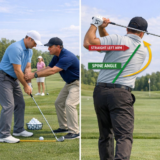
Unlock Elite Golf Performance: Master Swing, Perfect Putting & Driving frames elite-level golf as an interdisciplinary challenge requiring precise biomechanics, targeted motor learning, and strategic on-course decision making. Persistent variability in swing kinematics, inconsistent putting stroke mechanics, and suboptimal driving trajectories remain primary contributors to scoring inefficiency among advanced amateurs and competitive players. This article synthesizes current empirical insights and applied methodologies to address those performance gaps,emphasizing measurable outcomes and repeatable interventions.
The approach integrates biomechanical analysis with evidence-based drills, objective measurement technologies (e.g., motion capture, launch monitors, pressure-mapping), and practical course-management strategies. Emphasis is placed on identifying key performance indicators-clubhead kinematics, launch conditions, stroke tempo, and green-reading consistency-and translating them into progressive practice protocols. Interventions are selected and framed according to motor learning principles (task specificity, variability, feedback scheduling) and validated coaching practices to maximize transfer from practice to competition.
Readers can expect a structured pathway from diagnostic assessment through individualized technical modification to on-course submission.The article offers clinicians, coaches, and serious players a framework for refining swing mechanics, enhancing driving distance and accuracy, and improving putting consistency-ultimately supporting lower scores through reproducible, science-informed practice and strategy.
Biomechanical Foundations of an Efficient Golf Swing: objective analysis, key kinematic markers, and corrective drills for consistent ball striking
An efficient, repeatable golf swing is founded on a precise kinematic sequence and measurable setup anchors.At address, establish a neutral spine tilt of approximately 10-15°, knee flex of 15-20°, and a 50:50 weight distribution to enable ground-force generation; for a driver, widen stance to roughly shoulder-width + 1-2 inches and position the ball opposite the lead heel. During the backswing, objective markers are a shoulder turn of ~80-100° with a concomitant hip turn of ~40-50°, producing an X‑factor (shoulder minus hip turn) of 30-40° in many effective long hitters - this X‑factor stores elastic energy that, when released in sequence, produces clubhead speed. The ideal kinematic sequence proceeds hips → torso → arms → club, and at impact you should observe forward shaft lean of ~5-10° for irons, a slightly positive attack angle for driver (~+2 to +4°) and weight shifted to ~60-70% on the lead foot. Common path/face errors – such as casting (early release),early extension,or reverse pivot – break the sequence; correction begins with objective observation (video,launch monitor) and numeric targets for angles and weight shift rather than feel-based,ambiguous cues.
To convert biomechanical objectives into repeatable technique, use focused corrective drills and structured practice blocks that are measurable and progressive. Begin sessions with a mobility and activation warm-up (thoracic rotations, glute bridges, banded resisted hip turns) and than progress through technical drills:
- Impact Bag Drill – train forward shaft lean and an early, compact impact position; goal: consistent forward lean within 5-10° on 8/10 impacts.
- Towel‑Under‑Arm Drill – improve connection between torso and arms to prevent casting; perform 3 sets of 10 swings to a target.
- Feet‑Together / One‑Leg Balance Drill – develop balance and tempo; aim for 5 swings per leg without stepping.
- Gate/Alignment Rod Drill – promote inside-out path and square face; set rods to allow only the desired clubhead path for 20 repetitions.
- Medicine‑Ball Rotational Throws – build rotational power and correct sequencing for 3-4 sets of 10 explosive repetitions.
For practice structure, adopt a 30-45 minute block three times weekly: 10 minutes mobility, 15-20 minutes focused drills with measurable targets (e.g., center-face contact >80%), and 10-15 minutes shot simulation to transfer mechanics into on-course contexts. Equipment adjustments – correct shaft flex, lie angle, and grip size - should be validated with trackman/launch monitor data to ensure that mechanical changes translate into improved smash factor, launch, and dispersion.
integrate biomechanical consistency into short‑game choices,course strategy,and the mental routine so technique improves scoring. Low‑point control drills (tee just ahead of the ball for irons; aim to take a consistent divot beginning just after the ball) directly improve approach proximity and recovery shot outcomes; practice the “circle drill” around the hole with wedges to create measurable proximity goals (e.g., 12 balls, 8 inside 20 ft).On course, translate swing constraints to strategy: when wind is high, reduce swing length and lower launch by moving ball slightly back and de‑lofting for trajectory control; when greens are firm, prefer bump‑and‑run or full‑flight wedges with controlled forward shaft lean. Common situational corrections and troubleshooting include:
- If ball flights are consistently right (push/slice): check grip strength, clubface at address, and ensure an inside‑out path via the gate drill.
- If shots are fat/hoofed: rehearse low‑point drills, shallow the attack angle for irons, and increase lead‑foot pressure at transition.
- If distance is inconsistent: measure clubhead speed and work on tempo and sequencing with medicine‑ball throws and the step‑through drill.
Complement these technical routines with a concise pre‑shot routine, breathing cues, and visualization to reduce tension and promote repeatability under pressure; these mental habits unify biomechanics, equipment, and course management into tangible scoring improvement for beginners through low handicappers.

Integrating Evidence Based Putting Mechanics: stroke models, tempo metrics, green reading techniques, and targeted short game drills
Begin by establishing a reproducible stroke model grounded in biomechanical simplicity: the pendulum-style stroke with minimal wrist hinge, a stable lower body, and a square putter face through impact. Set up with the eyes directly over or slightly inside the ball line, shoulders parallel to the intended line, and the ball positioned 0-1 inch forward of center for mid-length putts to promote a shallow arc. For tempo, use an evidence-informed timing target: practice a consistent backswing-to-forward-stroke time ratio in the range of 2:1 to 3:1, using a metronome or tempo app at 60-80 beats per minute to quantify rhythm; for example, a 3:1 ratio at 60 bpm yields a smooth, accelerated forward stroke that reduces deceleration at impact. To check mechanics, incorporate these setup checkpoints and troubleshooting steps:
- Grip pressure: maintain a light tension (about 3-4 on a 10-point scale) to avoid wrist action.
- Putter loft: confirm the putter’s static loft is approximately 3-4 degrees so the ball rolls instantly after impact.
- Face control: use a mirror or marker to ensure the face returns square; if the ball pulls or pushes, correct alignment or face rotation before changing stroke length.
This structured approach supports both novices learning repeatability and low-handicappers refining subtle timing and face control.
Progress from mechanics to perceptual skills by integrating systematic green reading and speed control into on-course strategy. Begin by visually assessing slope, grain, wind, and elevation changes from multiple stances and the hole – use the heel-toe of your trail foot to preview edge contours and pick an initial line, then refine using an objective method such as AimPoint or a percentage-based break estimate; aim to translate visual slope into a degree of break or a target point on the green. For distance control,practice a two-tier routine: first,execute lag putts to a target area to leave the ball inside 3 feet from 20-40 feet in at least 80% of repetitions; second,use speed-first putts to manage downhill runs where center-line speed prevents three-putts. In real-course scenarios, adapt your read by factoring in moisture and grain - such as, on dewy mornings increase intended aim by an additional 0.5-1.0 degrees of break for slow surfaces - and employ conservative lines when the match situation penalizes short misses. These practices link perceptual decisions directly to measurable outcomes: fewer three-putts, improved lag statistics, and better scoring from inside 20 yards.
translate putting and green strategies into a short-game practice architecture that develops transferable skills under pressure. Design sessions with alternating technical and constraint-led drills to address both stroke mechanics and situational execution; include:
- Pendulum gate drill: set tees slightly wider than your putter head and stroke 30 putts through the gate to reinforce a square, pendulum path.
- Tempo ladder: using a metronome, perform 5 putts at increasing distances (6, 12, 18, 24, 30 ft) maintaining the same tempo ratio to train pace scaling.
- Lag-to-target drill: place concentric rings around a target at 3 ft and 6 ft; from 30-50 ft, aim to stop the ball inside the 3-ft ring 70-80% of the time.
- Short-game integration: execute 20 chips and pitch shots varying loft and bounce-use low-bounce wedges for tight lies and high-bounce for soft turf-then immediately follow with a 6-10 ft putt to simulate green-to-green conversion under fatigue.
Moreover, set measurable weekly goals (e.g., reduce three-putts by 25% in four weeks, make 8/10 from 6 ft) and adjust equipment variables-such as grip size for stabilizing the stroke or adding head weight in windy conditions-to individual needs. incorporate routine mental cues (pre-shot breathing, a 3-second pre-stroke routine) to maintain focus under pressure; by combining objective tempo metrics, repeatable setup checks, and situational drills, golfers at all levels can systematically reduce strokes and improve scoring performance.
Optimizing Driving Performance Through Kinetic Chain Assessment: launch conditions, power transfer diagnostics, and progressive speed and accuracy protocols
Begin with a systematic assessment of the kinetic chain using both observational and objective measures to establish baseline launch conditions. Use a launch monitor (e.g., TrackMan, Flightscope) to record clubhead speed, ball speed, smash factor, attack angle, launch angle, and spin rate; for example, a player with a clubhead speed of 95-105 mph will typically target a launch angle of 12°-14° with spin 2,000-3,000 rpm, whereas a 105-115 mph player often benefits from a 10°-12° launch and lower spin (≈1,800-2,200 rpm). Complement these data with video (60-240 fps) and force-platform or pressure-mat readings when available to quantify ground-reaction forces and weight transfer (expect a shift from approximately 55-65% pressure on the trail foot at the top to 70-80%+ on the lead foot through impact in efficient drivers). During this diagnosis, look for common mechanical faults-such as early extension, casting (loss of wrist lag), or a late hip rotation-that degrade power transfer; correct them by isolating the offending link in the chain and re-establishing proper sequencing through simple drills and feedback.For beginners, focus first on consistent setup (ball position: inside left heel for right-handed players, stance width: shoulder width + 0-2 in) and a neutral spine tilt; for low handicappers, prioritize fine-tuning attack angle and loft/face relationships to control spin and shape.
Once baseline metrics are recorded, perform targeted power-transfer diagnostics and technical interventions that restore the proximal-to-distal sequence required for high-speed, repeatable drives. Emphasize a sequenced rotation from the ground up: initiate with aggressive lead-leg push and hip rotation, followed by torso unwinding, and finaly controlled arm release and clubhead acceleration-this produces maximal ball speed while maintaining face control.key setup and kinematic checkpoints include maintaining approximately 90° wrist hinge at the top (or a measurable lag angle appropriate to your swing), keeping the lead shoulder lower than the trail shoulder through transition to encourage a positive attack angle, and retaining a stable lead-side posture through impact. Use the following drills to retrain sequencing and power transfer:
- Medicine-ball rotational throws (10-15 reps, 3 sets) to train explosive torso/hip separation.
- Impact-bag strikes (20-30 short reps) to groove forward shaft lean and square impact.
- Step-and-drive drill to rehearse ground-force initiation-step toward target into a driver swing, emphasizing hip clearance.
- Progressive weighted swings (light→normal→overspeed training with a weighted club or launch-monitored overspeed device) in controlled sets to safely increase clubhead speed by target increments (aim for a 3-6 mph increase over 6-8 weeks for trained golfers).
Provide video or launch monitor feedback after each set so the student can correlate felt changes with measured outcomes (e.g., increased ball speed and improved smash factor), and correct common mistakes such as over-rotating the upper body (producing a closed face) by cueing a delayed arm release and a focus on hip lead.
Translate technical gains into a progressive speed-and-accuracy protocol that integrates range practice, pressure testing, and on-course strategy to maximize scoring impact. Structure training in three progressive phases: technical stabilization (2-4 weeks)-slow tempo, impact-focused drills; power progress (4-6 weeks)-tempo ladder (50%, 75%, 90%, 100% intensity), overspeed sets, and target-based dispersion work; and transfer-to-course (2-4 weeks)-competitive practice rounds and simulated pressure shots. Measurable goals should include specific numbers (e.g., raise average clubhead speed by +4 mph, reduce 95% carry-dispersion to within ±15 yards across 30 drives) and session targets (e.g.,40 quality swings per session with ≥80% landing in a designated 30-yard fairway corridor).Incorporate situational drills and course-management principles: practice low-launch tee shots into the wind, high-launch bombs downwind, and controlled 3-wood/2-iron tee strategies for tight holes to minimize penalty risk under the Rules of Golf (selecting a club is a legal choice, so adapt to course conditions without improving the lie). integrate mental-skills work-consistent pre-shot routine,breathing cues,and visualization of preferred shot shape-to consolidate motor patterns under pressure.Offer multiple learning modalities (visual video feedback, kinesthetic drills, and quantified metric goals) so beginners through low handicappers can progress along the same framework while tailoring intensity and drill complexity to physical ability and time available for practice.
Level Specific Training Progressions and Measurable Metrics: diagnostic testing, individualized drill prescriptions, and performance targets for amateur to elite players
Begin by establishing a repeatable baseline through structured diagnostic testing that quantifies both mechanical consistency and scoring-related outcomes. On the range,perform a controlled dispersion test: hit 10 shots with a 7‑iron to a fixed target,recording lateral dispersion (goal: ±10 yards for improving players; ±5 yards for low handicappers) and distance variance (goal: ≤5 yards). Complement this with launch‑monitor metrics when available - clubhead speed, ball speed, launch angle, attack angle and spin rate – to set equipment and swing objectives (e.g., driver attack angle target +1° to +4° for players seeking higher launch; iron attack angle target -4° to -2° for crisp compression). For short game and putting, run standardized tests: a 30/50/70‑yard up‑and‑down test (10 attempts each; target up‑and‑down percentage 40%+ for amateurs, 60%+ for advanced players), and a putting accuracy test such as the clock drill from 3, 6 and 10 feet (goal: make 8/10 from 6 ft). In addition, track course metrics over a minimum of 10 rounds: GIR, scrambling, average putts per round and fairways hit to translate practice data into scoring potential. To ensure valid on‑course diagnostics, observe Rules considerations (e.g., relief from penalty areas under Rule 17 and unplayable lies under Rule 19) so practice scenarios accurately reflect tournament options.
Next, prescribe individualized, level‑specific drill progressions that directly address diagnostic findings and reinforce durable motor patterns. Begin with setup fundamentals: neutral grip, ball position relative to stance (e.g., ball centered for mid‑irons, 1 ball forward in stance for driver), spine tilt and weight distribution (address weight 60/40 neutral toward lead foot at impact for irons). For swing mechanics, progress from slow, constraint‑led patterns to full‑speed integration:
- Impact bag drill for compressing the ball and promoting forward shaft lean (short sets of 20 reps focusing on a 2°-4° forward shaft lean at impact).
- Gate drill with alignment sticks to correct over‑the‑top or casting motions (3 × 10 swings per session, increasing speed as accuracy improves).
- Half‑to‑full tempo progression (start at 60% speed for 30 reps, 80% for 20, then full speed), emphasizing a shoulder turn of roughly 80°-100° and pelvic rotation near 45° to improve X‑factor and sequencing).
For the short game, include targeted wedge routines (e.g., 50‑yard flighted‑shot ladder: 5, 30, 50, 70 yards, repeat twice) and a chipping landing‑zone drill to sharpen trajectory control – use a towel as a landing target and vary spin by altering loft and ball position. For putting,combine a speed control drill (ladder drill from 20-40 feet using a string or alignment rod as a backstop) with the clock drill for stroke path and face control. Equipment considerations should be integrated: verify correct shaft flex and loft to match swing speed and desired launch (clubfitting targets such as optimal launch angle for each club and smash factor goals help refine practice focus). Importantly, correct common errors-early extension (fix with a wall drill to maintain hip hinge), casting (use impact bag/gate), and excessively tight grip pressure (maintain a relaxed 4-5/10 pressure)-and adapt drills for golfers with differing physical ability using partial swings or posture supports as needed.
translate technical gains into measurable performance targets and practical course strategy using progressive benchmarks and scenario practice. Establish short‑term (6-8 weeks) and long‑term (6-12 months) metrics: such as, a mid‑handicap player might aim to lower average putts per round from 32 to 29, raise GIR from 35% to 45%+, and increase scrambling to 40%+; an elite amateur goal would be GIR 60%+, putts per round 28, and average driving accuracy within 20 yards of fairway targets. Use on‑course scenario drills to ingrain strategic decisions: practice laying up to specific carry distances (e.g., carry a tee shot 230 yards to clear a waste area) and simulated pressure holes where the player must choose between aggressive green‑reaching or conservative placement under stroke‑play constraints. Integrate the mental game by rehearsing pre‑shot routines, triggering a breathing or visualization cue before high‑pressure shots, and setting process‑based goals (e.g., commit to a target and swing thought rather than outcome).To ensure transfer, schedule structured practice weeks (3-4 focused sessions plus 1-2 on‑course rehearsals), track progress with the original diagnostics, and iterate prescriptions until the metrics converge with scoring objectives; this cyclical approach connects individual technique work to reliable course management and measurable scoring improvement.
Translating Practice into Performance: structured practice plans, feedback modalities, and transfer drills to enhance course reliability
Begin practice with a structured, periodized plan that separates technical work from transfer and situational training: start each session with a 10-15 minute dynamic warm-up (mobility and short swings) followed by a focused technical block (20-30 minutes) and conclude with high‑pressure, variable practice (20-30 minutes) that simulates on‑course decisions.For example, in the technical block work on a measurable target such as creating a consistent iron strike by maintaining a forward shaft lean of about 5° at impact and a slightly descending attack angle of approximately −2° to −4° for mid‑irons; use slow‑motion video (240 fps or higher where possible) to check that the clubface is square to the path within ±2° at impact. Transitioning from technique to transfer, progressively shorten feedback intervals: begin with augmented feedback (video review, launch monitor numbers for carry distance and spin) and move toward reduced feedback (self‑assessment and target outcomes) so the golfer learns to rely on outcome details rather than constant external cues. This progressive reduction of feedback helps all levels – beginners benefit from clear visual cues while low handicappers refine feel and consistency – and establishes transferable motor patterns required for performance under pressure.
- Practice drill – impact compression drill: place a tee half an inch in front of the ball and practice making contact that compresses the ball; goal = consistent divot starting just after the ball for irons.
- tempo drill: use a metronome set to a 3:1 backswing:downswing ratio (e.g., 90 BPM backswing, 30 BPM downswing feel) aiming for consistent rhythm.
- Putting distance control: use 3-5 putts from 10,20,and 30 feet and measure proximity; target = average proximity 10 ft from 30 ft within 6 weeks.
Next,emphasize transfer drills that replicate course pressures and variability so technical gains become reliable on the course. Incorporate random practice – alternating clubs, lies, and targets – rather than prolonged blocked repetitions, because variability enhances retention and adaptability. As an example, create a “9‑shot simulation” where each shot has a predefined lie (tight fairway, light rough, uphill tight lie), wind condition (crosswind, headwind), and target: the player must choose club, aimpoint, and margin for error; evaluate success by proximity to target (within 10-20 yards for long shots, within 5-10 feet for approaches). In addition,use specific short‑game transfer drills such as the “up‑and‑down ladder” that requires recovering from 10,20,and 30 yards with the goal of reaching the green in regulation or getting up‑and‑down at least 70% of the time over multiple sets. These situational drills teach club selection,trajectory control (e.g., reduce loft by 2-4° for lower trajectory bump‑and‑runs), and strategic thinking (lay up when the wind increases to >15 mph or when hazards reduce bailout options), thereby converting practice reps into repeatable on‑course performance.
- On‑course scenario drill: play nine holes limiting oneself to two practice balls per hole and insisting on the pre‑shot routine; measure GIR and up‑and‑down percentage at the end of the round.
- Chipping ladder: from 10, 20, 30 yards, hit 5 shots to a target circle; goal = at least 3/5 inside the circle at each distance.
- Wind adjustment rule of thumb: add or subtract one club per 10-15 mph of headwind/tailwind and increase/decrease target offset for side wind by a proportional angle.
implement robust feedback and measurement systems to quantify improvement and maintain accountability.Track objective performance indicators such as greens in regulation (GIR), up‑and‑down %, fairways hit, proximity to hole on approach shots (average feet), and strokes‑gained metrics if available; set incremental goals (such as, increase up‑and‑down by 10 percentage points in 8 weeks or reduce average proximity from 25 ft to 18 ft on approach shots).Use multimodal feedback: combine immediate intrinsic feedback (ball flight, feel), augmented feedback (video, launch monitor numbers-carry distance, spin rate, launch angle), and delayed reflective feedback (post‑round notes and stat analysis). For common technical mistakes, provide corrective routines: for casting (early release) use the “lag rope” drill to feel wrist hinge and maintain angle; for early extension use wall‑oriented drills to maintain hip flexion and spine tilt; and for poor putting face control use the “gate drill” to ensure square impact. Additionally, account for equipment and environmental factors - confirm correct shaft flex and loft for swing speed (e.g., a 90-95 mph driver swing speed typically fits an R‑to‑S flex and loft in the 10-12° range for higher launch), select golf ball compression appropriate for spin preferences, and adjust strategy for firm links turf or soft rain‑affected greens (expect 10-20% more approach spin on soft greens). By consistently applying these measurement frameworks, feedback modalities, and corrective drills, golfers of every level can translate practice into reliable, lower‑score performance on the course.
Strategy and Course Management for Scoring Efficiency: shot selection frameworks, risk reward analysis, and situational practice recommendations
Begin by adopting a reproducible decision-making framework that converts course information into a clear shot choice: first assess lie, wind, hazards and carry distances, then identify a target zone that minimizes penalty strokes while maximizing your scoring chance. For example, on a 420‑yard par‑4 with a water carry of 260 yards, a conservative framework for most mid‑handicappers is “play to a 230-240 yd landing zone” off the tee to leave a mid‑iron approach rather than attempting the corner (this reduces the probability of a penalty drop under Rule 17). transition through decision steps: (1) measure true carry to hazards and the green (use rangefinder), (2) select the club that gives you the required carry plus a margin for error (typically +10-15 yards in wind or when firmness is unknown), and (3) choose an aim point biased to the safe side of the hole (protect the short side when greens slope away). Equipment and setup matter: for long approaches prefer a fairway metal or hybrid if your long‑iron strike inconsistency produces a large dispersion; for wedges, confirm loft and shaft to predict spin-sand wedges (≈54°-58°) and lob wedges (≈58°-64°) require more precise setup with slightly forward ball position and shaft lean of 2-4° to control spin and descent angle. common mistake: committing to a hero line without quantifying downside - correct this by practicing the measurement-to-club mapping on the range until yardages become repeatable under pressure.
When weighing risk versus reward on approaches and short game opportunities, use expected strokes and personal conversion rates rather than ego. As a notable example, if your GIR (greens in regulation) conversion from a 150‑yard approach is 30% but your scrambling from around the green is 60%, a strategically sound play is to aim for a safe area that yields a 12-15‑foot putt rather than force a low‑percentage carry over a hazard.In practice, follow this step‑by‑step: determine your make percentage for putts inside 6 ft and 15 ft, establish wedge landing accuracy for common distances (e.g.,be able to land a 60‑yard wedge within ±5 yards 8 of 10 times),then choose the shot that gives you the highest expected value. Drills to build these metrics include:
- wedge Target Ladder: from 30-80 yards, hit 10 shots to each target and record proximity; aim for ≥8/10 within ±5 yards for each distance.
- Fairway Bias Drill: from the tee, play 9 holes focusing only on fairway percentage and average proximity to hole on approaches; set a goal to increase fairway hits by 10% over a month.
- Pressure Putting Ladder: make consecutive putts from 6, 12 and 18 feet under simulated pressure to improve short‑game conversion rates.
These routines create objective data to inform in‑round decisions: if going for a green increases your expected score due to a low conversion rate, choose the safer play. Also practice situational shot shapes (fade, draw) with specific swing thought adjustments-change feet alignment by 2-3 degrees or alter clubface/stance to create predictable curvature-so you can execute the chosen strategy rather than rely on luck.
integrate situational practice and mental routines so course management becomes instinctive under variable conditions. Create practice sessions that simulate wind, tight lies and different green speeds: for wind, practice adding or subtracting one club per 10-15 mph of headwind/tailwind and record dispersion; for tight lies, practice half‑swing controlled shots with a more forward shaft lean and a cleaner divot pattern to avoid fat shots. Setup checkpoints to use before every shot include:
- Alignment: shoulders, hips and feet parallel to the target line;
- ball position: according to club (driver forward of lead heel; short irons centered);
- Weight distribution: ~60/40 front foot at impact for wedges and short irons.
Common faults and corrections: deceleration on short game (fix with an acceleration drill – hit 20 chips to a narrow target while increasing follow‑through length), incorrect club selection in wind (simulate conditions on range and keep a written yardage/wind chart in your bag), and rushed reads on greens (establish a pre‑putt routine that includes a two‑step look from below the hole). Set measurable short‑term goals (e.g., reduce three‑putts by 30% in six weeks; land 70% of wedges inside 20 feet) and review outcomes post‑round to refine your framework; this coupling of technical practice, equipment tuning and mental rehearsal converts course strategy into consistent lower scores.
Monitoring Adaptation and Periodizing Golf Training: data driven load management, recovery strategies, and season long performance planning
Effective training begins with objective monitoring: combine on-course data, launch‑monitor metrics, and subjective load measures to manage adaptation and prevent overtraining. Begin by establishing baseline metrics-clubhead speed, carry distance, smash factor, and average dispersion (fairway/green proximity)-using a launch monitor for several representative practice sessions and 3-5 rounds. Then apply simple physiological and perceived‑effort measures such as daily readiness,a 1-10 Rate of Perceived Exertion (RPE) after swing sessions,and heart‑rate variability (HRV) trends to triangulate recovery status. For practical prescription, use progressive load rules: increase total swing volume by no more than 10% per week and maintain intensity distribution roughly 60% technique/low‑intensity, 30% situational/moderate‑intensity, and 10% maximal‑power (e.g.,full‑effort drivers or speed training). Recommended weekly swing ranges: beginners 150-300 swings, intermediate players 300-600, and advanced players 600-1,000, with high‑intensity swings capped at 100-200 per week depending on physical conditioning. integrate simple movement screens (thoracic rotation, single‑leg stability, hip internal/external rotation) and record scores to identify technique losses that signal excessive fatigue or technical regressions.
Recovery strategies should be explicit,measurable,and specific to golf’s demands so that technical improvements stick and injury risk is minimized. First, prioritize sleep and nutrition: aim for 7-9 hours nightly and consume 20-30 g of protein within 60 minutes after intense training to support neuromuscular adaptation. Second, employ active and soft‑tissue recovery-low‑intensity aerobic movement, foam rolling, and targeted mobility-to restore ranges used in the swing: target ~40-60° thoracic rotation and ~30-40° hip rotation as functional benchmarks. Third, differentiate technical recovery from conditioning: follow heavy driver or speed sessions with at least 48 hours of lower‑intensity technique work, using drills such as the half‑speed pivot drill (focus on transition and hip rotation) and the impact bag (feel for centered contact) to preserve mechanics without overloading tissues. Use the following practical recovery checklist to implement immediately:
- Pre‑shot/Session: dynamic warm‑up (band rotations, glute activation, 6-8 reps each).
- Post‑Session: protein + low‑GI carbohydrate within 60 minutes; 10-15 minutes of mobility/soft tissue work.
- Daily: mindfulness or breathing routine (box breathing 4‑4‑4‑4) to accelerate CNS recovery and sharpen focus for short game practice.
These approaches suit all levels: beginners benefit from conservative swing volumes and longer recovery windows, while low‑handicappers use targeted recovery to sustain high‑intensity speed and precision work.
To translate adaptation and recovery into season‑long performance improvements, structure training with macro‑, meso‑, and microcycles that align technical, physical, and tactical goals. A sample allocation across a 12‑week block would be 30% long game (power and direction), 40% short game (chipping, bunker, pitch, and trajectory control), 20% putting (distance control and stroke repeatability), and 10% course management/mental rehearsal. Plan blocks as follows: an off‑season 8-12 week strength/power phase (3 strength sessions + 2 technical sessions per week) to raise clubhead speed by a realistic 2-4 mph over 8-12 weeks; a pre‑competition 4-6 week skill emphasis mesocycle that reduces strength volume and increases high‑quality situational practice (tournament simulation, pressure putting); and a 7-10 day taper before key events where volume drops ~40-60% while intensity and technical specificity remain high. Practical drills and checkpoints include:
- Range sequence drill: 50% of session on 7‑iron half‑swings (tempo control), 30% on approach variations (trajectory and spin), 20% on simulated tee shots under constraints (wind, fairway bunkers).
- Short‑game ladder: chips from 5, 10, 20, and 30 yards; goal to hole or leave within a 6‑ft circle on 70-80% of reps over 40 attempts.
- Tournament simulation: play 9 holes with pre‑shot routine and scorecard under time pressure to practice course management-identify conservative target landing areas (e.g., aim to a 30‑yard corridor favoring left side to avoid right‑side water on a 420‑yd par‑4).
address common mistakes-excessive driver reps leading to swing breakdown, neglecting wedge distance control, or failing to adjust loft/shaft flex for changing conditions-by using objective data (carry distances, dispersion) to inform equipment changes and setup fundamentals (ball position, spine tilt, grip pressure). align measured training loads, explicit recovery protocols, and structured periodization to create measurable progressions in techical proficiency, short‑game scoring, and course strategy across the season.
Q&A
Note on provided search results
The web search results supplied with your request do not relate to golf performance; they address device/carrier unlocking and home-equity products. The Q&A below is thus produced independently and draws on accepted principles in biomechanics, motor learning, coaching methodology, and applied sports science rather than from the supplied results.
Q&A: Unlock Elite Golf performance - Master Swing, Perfect Putting & Driving
Style: Academic. Tone: Professional.
Q1. What are the primary biomechanical determinants of an effective golf swing?
A1. An effective golf swing depends on coordinated kinetic sequencing (proximal-to-distal activation from pelvis → torso → arms → club), maintenance of a stable but dynamic base (appropriate ground reaction force generation and transfer), optimal kinematic sequence (peak angular velocities occurring in sequence), and preservation of segmental angles that produce an efficient swing plane and clubhead path. Consistent impact position (clubface square, desired loft and attack angle) is the mechanical endpoint of this sequencing.
Q2. Which objective metrics should coaches and players monitor to evaluate swing quality?
A2. Key metrics include clubhead speed, ball speed, smash factor, launch angle, spin rate, attack angle, face angle at impact, club path, and dispersion (carry/total distance and lateral deviation). On-course and performance metrics such as strokes gained (off-the-tee, approach, putting), fairways hit, greens in regulation, and putts per round should be integrated for ecological validity.
Q3. How does motor learning theory inform practice design for swing improvement?
A3. Motor learning principles recommend structured variability, distributed practice, task-specific constraints, and progressive challenge. Use blocked practice for early technical acquisition, then interleave and randomize practice for transfer and retention. provide augmented feedback (video, launch monitor data) but reduce frequency over time to foster intrinsic error detection. Implement deliberate practice with clear objectives, measurable targets, and immediate, informative feedback.
Q4. Which evidence-based drills enhance sequencing and power generation in the swing?
A4. Effective drills include:
– Medicine-ball rotational throws (emphasize proximal-to-distal sequencing and power transfer).
– Step-through or stride-restrict drills (control lower-body timing).
– Impact-bag or slow-motion impact drill (train correct impact posture and shaft lean).
– One-arm swings and half-swings (improve clubface awareness and path).
Use objective targets (e.g., clubhead speed increases, impact position metrics) and progress from low-velocity technical work to full-speed integration.
Q5. What mobility and strength characteristics correlate with improved driving distance and consistency?
A5. Relevant characteristics include thoracic spine rotation, hip internal/external rotation and separation (X-factor), ankle and knee stability for force transfer, and trunk rotational power. Strength and power measures (rotational medicine-ball throws, loaded rotational lifts, Olympic lift derivatives) and rate-of-force development training can improve clubhead speed when integrated with technical work.
Q6.How should putting practice be structured to produce reliable on-course improvements?
A6. Structure putting practice around three domains: short-range stroke mechanics (3-6 feet), mid-range technique and alignment (7-25 feet), and distance control/lag putting (25+ feet). Use blocked practice for stroke consistency, then apply variable-distance drills for speed control.Emphasize green-reading simulation (wind, slope) and pressure practice (scoring games). Incorporate quantifiable targets (make percentages, left/right misses, average putt distance to hole).
Q7.Which drills specifically improve putting stroke consistency and green reading?
A7. Effective drills:
– Gate drill: ensures minimal face rotation and consistent arc.
– String/aiming line drill: trains start-line accuracy.
– Clock drill: promotes short-range make percentage and routine.
– Ladder drill for distance control: place balls at increasing distances and aim for landing zones.
– two- or three-putt challenge under time/score constraints to simulate on-course pressure.
Q8. How can players improve driving accuracy without sacrificing distance?
A8. Emphasize controllable launch conditions: optimize launch angle and spin for carry/backspin tradeoffs; improve face control and club path to reduce sidespin; refine ball position and tee height to promote consistent attack angle. Use targeted practice to tighten dispersion (e.g., fairway target practice with varying targe t widths) and consider strategic club selection (3-wood/hybrid) when precision overrides maximal distance.
Q9. What role do equipment and ball fitting play in unlocking elite performance?
A9. Proper club and ball fitting align equipment to an individual’s swing dynamics and performance goals. Driver loft, shaft flex/torque/length, and head characteristics affect launch and dispersion. Ball choice influences spin rates and feel for short game. Objective fitting using launch monitors (TrackMan, GCQuad) and fitting protocols leads to measurable improvements in distance, dispersion, and scoring outcomes.
Q10. How can a player integrate course management strategies to translate technical gains into lower scores?
A10. Effective course management requires pre-shot planning, club selection aligned with current performance metrics, conservative risk assessment around penal hazards, and targeted approach-shot positioning relative to hole locations. use analytics (strokes-gained data by shot category) to prioritize improvement areas, then make in-round decisions that leverage strengths and mitigate weaknesses.
Q11. What are common technical faults that reduce driving distance and how are they remedied?
A11. Common faults: early extension (loss of coil), lateral sway/slide (inefficient ground-force application), casting or early release (loss of lever), and an open or closed face at impact.Remedies include mobility and sequencing drills,impact-position training (impact bag),one-arm drills for lag retention,and ground-force drills to re-establish lower-body stability and rotation.
Q12. How much practice is required to achieve measurable improvement in swing mechanics and putting?
A12. Improvement timelines vary by baseline level and practice quality. With deliberate,structured practice 3-5 times per week (45-90 minutes per session),measurable changes in mechanics and performance (e.g., 1-3 mph clubhead speed, improved dispersion, better short-game make percentages) can appear within 6-12 weeks. Transfer to on-course scoring often takes longer and requires integration of decision-making and pressure management.
Q13. How should a coach measure and document progress objectively?
A13.Use a combination of laboratory/tech metrics (clubhead/ball speed, launch, spin, face/path) from launch monitors; on-course statistics (strokes gained categories, FIR, GIR, putts per round); and standardized performance tests (swing repeatability drills, timed putting sequences). Maintain longitudinal records with pre- and post-assessments and use statistical or graphical trend analysis to evaluate progress and program effectiveness.
Q14.What psychological and cognitive factors influence putting and driving under pressure?
A14. Factors include pre-shot routine stability, attentional focus (external focus often better for performance), arousal control, confidence, and perceived task difficulty. Practice under simulated pressure (competitive drills, time constraints, monetary or social stakes) and interventions such as pre-shot imagery and breathing regulation improve transfer to competitive scenarios.
Q15. What injury risks are associated with trying to increase swing speed, and how can they be mitigated?
A15. Risks: lumbar spine overload (due to poor sequencing or excessive lateral bending),shoulder impingement,and wrist/elbow stress. Mitigation: progressive overload principles, ensuring mobility and stability (particularly thoracic and hip), technique refinement to reduce compensatory motion, and inclusion of recovery modalities (soft tissue work, targeted mobility, appropriate rest).
Q16. How does technology (launch monitors, biomechanical analysis, wearables) best inform training without causing overreliance?
A16. Technology provides precise, objective feedback for setting targets, diagnosing mechanical issues, and measuring outcomes. Best practice: use tech to inform hypotheses about technique, then validate with outcome-based drills and on-course performance. Avoid overfitting to numbers-maintain a holistic view incorporating feel, context, and variability.
Q17. how should advanced players periodize training across a season?
A17. Periodize into macrocycles (off-season technical/power development, pre-season integration and simulation, competition season maintenance and refinement). Emphasize base strength and power in the off-season, transition to sport-specific speed and technical consistency before competition, and prioritize recovery and tactical work during peak competition phases. Adjust load and intensity based on performance data and fatigue markers.
Q18. What are recommended benchmarks for elite-level driving and putting performance?
A18. Typical elite benchmarks (approximate and gender/age-dependent):
– Clubhead speed (male professional): ~110-125+ mph; ball speed and carry distances consistent with tour averages (carry ~270-300+ yards depending on conditions).
- Smash factor: ~1.45-1.50 for well-struck drives.
– Putting: professional putts per round ~28-29; high short-range make percentages and positive strokes-gained putting values.
Benchmarks should be individualized and contextualized for course conditions and player characteristics.
Q19. How can coaches tailor interventions to individual learning preferences and physical constraints?
A19. Conduct a extensive assessment (movement screen,strength/power tests,swing analysis,psychological profile). Match intervention modality to the player: visual learners benefit from video comparison; kinesthetic learners from feel-based drills; analytical learners from objective metrics. Account for physical constraints by adapting technique, selecting appropriate drills, and modifying conditioning targets.
Q20. What is a practical weekly practice template for an intermediate player seeking notable gains?
A20. Sample 6-8 hour weekly template:
– 2 technical range sessions (1.0-1.5 hr each): mornings with launch monitor feedback; warm-up → targeted drill blocks (45-60 min) → speed/tempo integration.
– 1 short-game session (1.0-1.5 hr): chipping, bunker, and 30-90 ft pitch work with scoring games.
– 2 putting sessions (30-45 min each): short-range make work and distance control drills; one session under pressure simulation.- 1 strength/power session (45-60 min): mobility warm-up, rotational power, lower-body strength, and RFD work.
- 1 recovery or on-course simulation session (60-90 min): play to strategic objectives and implement course management.
Adjust intensity and volume based on fatigue and competition schedule.
Final recommendations
– Integrate biomechanical understanding,evidence-based drills,and on-course strategy.
– Use objective measurement to set targets and track progress but emphasize thoughtful interpretation.
– prioritize systematic,progressive practice and periodization,with attention to injury prevention and psychological training.
For implementation, collaborate with a qualified coach, a certified strength and conditioning professional, and, where available, a biomechanics specialist for objective assessment and individualized programming.
Note: the provided web search results did not contain material related to golf performance. Below is the requested academic, professional outro for the article.
advancing from proficient to elite golf performance requires an integrated, evidence-based approach that synthesizes biomechanical insight, targeted motor learning drills, and refined course-management strategies. The biomechanical principles that underpin an efficient swing and repeatable putting stroke provide a foundation for technique, while empirically validated drills and structured practice regimens translate those principles into reliable on-course behavior. Concurrently, precise driving mechanics and informed shot selection reduce variance and create scoring opportunities, underscoring the interplay between physical execution and tactical decision-making.
For practitioners and researchers alike, the translational implications are clear: individualized assessment, objective measurement, and progressive overload in practice produce the greatest performance gains. Employing quantitative feedback (e.g., kinematic analysis, ball-flight metrics) alongside qualitative coaching promotes durable skill acquisition, and the iterative refinement of technique should be balanced with situational training that replicates competitive pressures and course constraints.
Ultimately, mastery in swing mechanics, putting consistency, and driving accuracy is achieved through sustained, deliberate practice that is informed by biomechanical evidence and guided by strategic thinking. Continued collaboration between coaches, scientists, and players-paired with rigorous outcome tracking-will accelerate the transfer of research into higher on-course performance and lower scores.