
Peak performance in golf arises when efficient biomechanics, precise neuromuscular control, and smart on‑course choices work together. Fluctuations in swing form, driving distance and putting reliability frequently signal limitations not only in technique but also in physical capacity, sequential coordination of body segments (the kinematic chain), and decision execution under changing conditions. Contemporary evidence links measurable physical traits-rotational range, core stability, lower‑limb force output and refined motor control-to gains in clubhead speed, launch profile and stroke repeatability. converting these research findings into useful coaching requires structured, quantifiable protocols that connect lab measurements to on‑course performance.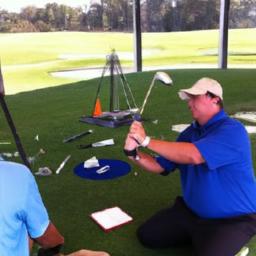
Comprehensive Functional Assessment for Swing Mobility Strength Balance and Movement Fault Identification with Prescriptive Corrective Exercises
start with a reproducible assessment battery that isolates the principal contributors to an effective golf swing: thoracic rotation, hip internal/external rotation, ankle dorsiflexion, single‑leg balance, and anti‑rotation core control. administer tests in a consistent order and capture objective scores.As a notable example, measure thoracic rotation in a standing half‑kneeling posture with a club across the shoulders and record range with a goniometer; aim for a practical benchmark of ≈45-60° agreeable rotation to each side. assess hip rotation supine with hips/knees flexed-look for ~30-40° internal/external rotation without lumbar substitution. Evaluate single‑leg steadiness with eyes open for 30 s, tracking medio‑lateral sway with a simple tape marker (acceptable sway ≤4 cm). Capture sequencing errors with slow‑motion video of 8-12 half‑swings to identify issues such as early extension, casting, reverse pivot or excessive lateral slide; tag each fault to a likely physical restriction (e.g., restricted thoracic rotation → limited shoulder turn). Include an equipment check: observe posture over the ball with both driver and a mid‑iron to ensure shaft length and lie angle aren’t inducing compensatory spine or hand positions.
When deficits are identified, prescribe focused corrective work and progressive on‑club drills that map to each fault. Use a two‑stage strategy: first restore mobility and stability, then rebuild sport‑specific movement under load.For mobility and stability, provide concrete prescriptions with sets and reps: thoracic foam‑roll + seated windmills (3 × 8/side), hip CARs (2 × 6/side), ankle dorsiflexion wall stretch with a 5 cm heel lift (3 × 30 s/side), and Pallof presses for anti‑rotation control (3 × 12/side at moderate resistance). For strength and sequencing, progress from glute bridges to single‑leg Romanian deadlifts (3 × 8), resisted band rotations to encourage hip‑shoulder separation (3 × 10/side), and medicine‑ball scoop throws to rehearse distal release timing (4 × 6). Transfer these physical gains into the swing with targeted drills: a mirror‑guided “pause at waist” half‑swing to reinforce wrist hinge and impact compression, impact‑bag reps to stabilize the lower body at roughly 20° dynamic knee flex, and tempo work using a metronome set to 3:1 backswing:downswing to refine timing. Use the following checklist of practice elements and session cues to structure training:
- Mobility drills: thoracic rotations,hip CARs,ankle wall stretches.
- Stability drills: single‑leg reach, Pallof press, bird‑dog progressions.
- On‑club drills: paused half‑swings, impact‑bag contact, alignment rods for path feedback.
- Progressions: shadow swings → slow‑motion swings → half‑swings with ball → full swings with tempo control.
Embed physical adaptations into short‑game technique and course planning so improvements produce fewer strokes. Set measurable targets such as: increase driver shoulder turn by 15° in 8 weeks, reduce lateral sway by ≥2 cm, or hold single‑leg balance for 45 s. On the range, alternate focused technical blocks (30 minutes on sequencing/path) with scenario work (20 minutes shaping shots into a simulated wind, uphill/downhill lies and narrow fairway corridors). On course, convert mechanical gains into tactical choices: facing a left‑to‑right wind, play a controlled fade with one club more loft and a 60/40 weight distribution favoring the lead foot at address to protect trajectory and landing angle; on firm greens prefer lower‑flight approaches with measured spin, landing short of the hole to use rollout. Address the psychological element by prescribing a concise pre‑shot routine that includes a quick posture and breathing check and a single swing cue (e.g., “hold lag” or “rotate through”) that aligns with the corrective work. Offer multi‑sensory progressions-visual, kinesthetic and verbal-so players at all levels can access the coaching plan, and recommend a weekly commitment (for example, 3 × 45‑minute technical sessions plus one on‑course situational round) with benchmarks to track progression.
Biomechanical Kinematic Sequence Analysis to Reduce Energy leaks Stabilize Clubface Path and Enhance Swing Consistency
Efficient energy transfer in the swing follows a proximal‑to‑distal order: ground → hips → torso → arms → hands/club. in coaching language, this means the downswing should be driven by a deliberate lower‑body shift and pelvic rotation (target roughly 45° hip rotation relative to address), then a controlled thoracic rotation (aim for 85-100° shoulder turn for men, ~75-90° for women at the top). Preserving spine tilt (typically 20-30° forward lean) keeps the swing radius constant and prevents vertical energy leaks. Faults such as early extension or excessive lateral slide dissipate stored elastic energy and tend to open the face at impact. For predictable ball flight, strive for a face‑to‑path variance within ±2° at impact-a practical target associated with tighter dispersion and improved scoring. Monitor the retention of wrist lag through the downswing (a late release in the final 10-15% of downswing) to protect clubhead speed while maintaining face control; this typically shows on launch monitors as a favorable ball‑speed to clubhead‑speed ratio.
To make these biomechanical concepts repeatable, adopt a structured setup and drill sequence addressing mobility, stability and timing.Start with setup basics: feet shoulder‑width for irons (wider for driver), progressive ball position (center for short irons moving forward toward the inside of the left heel for driver), and a neutral grip with the face square to the intended line. Then employ drills that isolate sequencing and face control such as:
- Step drill: a half backswing followed by stepping the lead foot toward target to initiate the downswing, reinforcing lower‑body initiation and reducing casting.
- Pause‑at‑top: hold 1-2 s at the top to feel retained wrist angle; perform 3 sets of 10 with a 60 bpm metronome to build tempo consistency.
- Impact‑bag/face‑target: short, focused strikes to feel a square face at contact and practice small (1-3°) face adjustments to intentionally shape shots.
Complement technical drills with golf‑specific fitness work-rotational medicine‑ball throws (3 × 8), single‑leg RDLs for stability (3 × 8/leg) and thoracic mobility drills (30 s/side)-to increase X‑factor separation and reduce energy leaks. Equipment selection matters: confirm shaft flex and lie are matched to swing speed and deliver a square path at impact. use an alignment stick and launch monitor in practice to quantify face‑angle variability and set measurable goals-such as, reduce face‑angle standard deviation to ±2° over 30 swings.
Apply these technical gains to course management to convert mechanics into lower scores. Under crosswinds or on firm fairways, adjust attack angle intentionally (e.g., +1-3° with driver to increase carry, or −1-3° with mid/short irons for lower, penetrating trajectories) while preserving the same kinematic sequence to avoid compensatory errors. Structure practice to include weekly shot‑shaping sessions (one range session focused on 1-3° face‑to‑path adjustments), one gym session for rotational power, and one short‑game session emphasizing centered contact and face control around the greens. Typical corrections: early release → towel‑under‑armpit swings; reverse pivot → mirror checks and lead‑body initiation drills; open face at impact → slow‑motion video plus impact‑bag feedback. Remember that equipment changes should comply with R&A/USGA rules and that training aids are practice tools; reinforce a consistent pre‑shot routine and visualization practices to preserve the improved sequence under pressure. A realistic measurable objective is to reduce shot dispersion by 10-20% over a focused 6-8 week training block.
Targeted Strength Power and Mobility Interventions Emphasizing Hip Core and Thoracic Conditioning to Increase Driving Distance and Control
Increasing driving distance and control depends on coordinated interaction between the hips, core and thoracic spine. Hip rotation generates the primary torque, the core times and transfers that torque to the upper body, and the thoracic spine permits shoulder rotation and the desired club path without excessive arm compensation. Aim for a measurable X‑factor (shoulder‑pelvis separation) of ~20-40° for most players, with shoulder turn near 80-100° and pelvic turn 30-45° as useful references; a reduced separation often signals thoracic or hip mobility limits. Maintain a stable forward spine tilt (~10-15°) and neutral lumbar posture to prevent early extension; this helps preserve attack angle, optimize launch window (driver launch target 10-14°) and control spin (efficient driver spin commonly falls in the ~1800-3000 rpm range). Track these variables with simple tools-an inclinometer for thoracic rotation,video for shoulder/pelvis angles and a launch monitor for launch/spin-to create objective training targets.
to convert these biomechanical aims into consistent ball flight, layer mobility and motor‑control drills with progressive strength and power work. begin with thoracic foam‑roller extensions and seated band rotations (daily 3-5 min), then add single‑leg RDLs and glute bridges (3 × 8-12 twice weekly) to strengthen the posterior chain. Incorporate anti‑rotation core exercises (Pallof presses, dead‑bug variations; 3 × 8-12) and explosive rotational work (medicine‑ball throws or cable woodchops; 3 × 6-10/side). On the driving range, pair gym sessions with drills reinforcing sequencing and lag: the step‑through drill to encourage lead‑hip rotation, towel‑under‑armpit reps to maintain connection and weighted‑club repetitions to refine timing. A practical weekly plan: 2-3 gym sessions focused on strength/mobility plus 2 on‑range technical sessions, pursuing short‑term goals such as a 3-8 mph clubhead‑speed increase or a +5-10 yd carry enhancement within 8-12 weeks. Watch for common errors-early hip slide,reduced thoracic rotation,premature release-and correct them with cues (e.g., “rotate the chest over the lead thigh,” “relax the trail elbow”) and the drills above.
Translate physical progress into equipment and strategic choices to reduce scores. As swing speed and launch profiles change, retest driver loft and shaft flex so the equipment matches the new window-many players who gain speed benefit from slightly higher launch or lower‑spin shafts to maximize carry on firm courses. Use situational tactics: when accuracy is essential, swing at ~75-85% with a deliberate launch angle and a controlled face setting; when conditions or risk‑reward justify it, exploit full‑power swings supported by improved hip/core sequencing.Integrate pressure drills-hitting to narrow fairway targets or alternate‑shot scoring games-to blend mental control with physical gains. Measure course outcomes (fairways hit, average driving distance, proximity to hole) across 9-18 hole blocks and set incremental targets (e.g., a 5-10% rise in fairways hit or a consistent +5 yd average carry) so fitness and technique deliver tangible scoring benefits for players at all levels.
precision Putting Mechanics and Sensory Feedback training to Improve Stroke Repeatability Distance Control and Green Reading
A repeatable putting stroke starts with a reliable setup and a putter fit that complements the player’s posture. Use a stance roughly shoulder‑width (≈12-16 in / 30-40 cm), with the ball positioned slightly forward of center (≈1/4-1/2 ball) to promote a neutral to very slight upward attack; modern greens reward a clean roll, so target an attack angle near 0° (±1°) instead of a steep downward hit. Fit the putter so forearms hang vertically and the eyes are directly over or slightly inside the ball‑to‑target line; an incorrect lie or excessive shaft length leads to compensations that increase face rotation at impact. Before practice, verify these fundamentals:
- Eye position: over or 1-2 in (2.5-5 cm) inside the ball‑line.
- Grip pressure: keep light to moderate pressure (~3-4/10) to maintain wrist neutrality.
- Putter loft: ~2-4° at address to create top‑spin; avoid de‑lofting through impact.
These setup rules align stroke mechanics (low face rotation, centered contact) with equipment and support feel‑based training from beginners to low handicappers.
With a consistent setup in place, focus on sensory feedback and tempo to improve distance control and repeatability. Employ drills that isolate feel, rhythm and impact location while tracking outcomes: the “3‑6‑9 ladder” (three balls to 3, 6 and 9 ft, ten cycles, record make‑rate and average leave) and the “20‑ft lag/leave” (20 shots from 20 ft aiming to leave 10 inside a 3‑ft circle; log percentage) are effective measures. Use a metronome to train a 3:1 backswing:forward pendulum cadence and practice with an alignment rod across the forearms to limit wrist breakdown. To sharpen kinesthetic awareness, include eyes‑closed short‑putt reps and mirror work to verify eye and shoulder alignment.A suggested session:
- Warm‑up 5 min with short putts (3-6 ft) emphasizing centered contact and steady tempo.
- 20-30 min distance ladder & lag drills with recorded leaves/make‑rates for progression tracking.
- 10 min mirror/alignment checks and mobility (thoracic rotations,wrist flexor stretches) to support stroke stability.
Progress targets: aim to raise a 6‑ft make‑rate to 60-70% for intermediate players and 80%+ for low handicappers within 8-12 weeks, or halve three‑putt frequency over the same timeframe.
Combine green‑reading, tactical planning and conditioning so mechanical gains convert to lower scores. Read greens by combining visual slope inspection with feel-check low points from multiple angles and verify with a short alignment putt. Under the modern Rules you may leave the flagstick in; practice both with and without the pin to understand differences in pace and break. From a course‑management standpoint, aim approach shots to locations that create manageable putts-prefer inside‑to‑outside green zones and 15-25 ft areas where yoru practiced lag distances are reliable. Maintain core stability (planks 2-3 sets of 30-60 s) and thoracic mobility (5-10 min daily) so the pendulum stroke remains consistent when tired. Common putting faults and corrections:
- Over‑gripping/wrist flick: lower pressure to ~3-4/10; use a towel under the arms to preserve shoulder connection.
- Off‑center impact: apply impact tape or a felt strip and aim for the geometric center; adjust ball position slightly if needed.
- Poor reads in wind/firm conditions: add ~10-20% more pace and favor uphill/low‑side reads.
By combining technical refinement, systemized sensory drills and situational green practice, golfers at every level can produce measurable gains in stroke repeatability, distance control and green‑reading that reduce scores.
application of Motor Learning Principles to Tempo Rhythm and Under pressure practice for Stabilized Timing and Accelerated Skill Retention
Modern motor‑learning emphasizes specificity, variability and calibrated feedback scheduling to stabilize tempo and rhythm. Apply these principles to swing timing with structured, measurable practice. Establish a tempo target such as backswing:downswing = 3:1 (e.g., 1.2 s backswing, 0.4 s downswing on a full driver as an initial benchmark) and adapt ratios club‑by‑club. Solidify setup fundamentals-spine tilt ≈ 20°, knee flex ≈ 15°, and an address weight ~50/50 with an intended shift to ~60% lead side at impact for full shots. Progress practice from blocked, low‑variability repetitions to mixed and random practice (contextual interference) so timing becomes robust rather than fragile. Useful methods include metronome apps set to the 3:1 ratio, slow segmented swings (pause at the top then accelerate), and a “tempo ladder” (half → 3/4 → full swing) to calibrate proprioception and internal timing. A key coaching strategy is faded, bandwidth feedback: provide frequent prescriptive feedback early, then shift to summary or only out‑of‑band feedback to promote long‑term retention.
To maintain tempo under pressure, integrate stressors and dual‑task elements into training. Define pressure metrics (e.g.,keep tempo variability within ±0.1 s on the metronome and face‑to‑target deviation under ±3° during pressured reps). Resilience drills include:
- Simulated tournament rotations: random 6‑hole sequences with small penalties (e.g., a putt for penalty) to raise stakes.
- Breath countdown: a 10‑7‑4 breathing routine before address to lower arousal and preserve rhythm.
- Dual‑task reps: call out numbers or perform simple cognitive tasks during practice to discourage conscious overcontrol and promote automaticity.
For sensitive short‑game timing, practice landing‑zone ladders marking intervals (e.g., 5‑yd steps) and aim for landings within ±5 yd across 10 consecutive reps. Support timing with dynamic hip and thoracic mobility work (cable chops, 45° seated torso rotations) so rotation, not arm action, drives tempo. Validate equipment choices (shaft flex, grip size, bounce) in practice; if tempo deteriorates, trial a slightly stiffer shaft or different grip thickness to see if timing stabilizes.
Integrate tempo training into course play and long‑term retention through planned variability, clear metrics and troubleshooting. Transition from range drills to course‑like constraints: play nine holes with only three clubs to force creativity and tempo discipline, and set measurable targets such as reducing dispersion at 150 yds to a 10‑yd radius or improving strokes‑gained around‑the‑green by a set value in one month. Common mechanical errors and fixes include: early casting (impact‑bag and retain a 30-45° wrist **** through transition), deceleration (finish‑hold drills with a 3‑s follow‑through), and lateral slide (toe‑up/toe‑down hip‑turn drills to emphasize rotation). Troubleshooting checklist:
- confirm setup: stance width, ball position and spine angle.
- Test tempo with a metronome for 20 reps and capture time‑stamped video for feedback.
- Use variable practice days (windy/wet/uphill/downhill) to ensure skill transfer to course conditions.
when combined with spaced repetition, sleep‑consolidated practice and deliberate variability, these methods help golfers-from novices stabilizing a backswing rhythm to low handicappers refining shot‑shaping under tournament pressure-accelerate retention and translate stabilized timing into lower scores and greater confidence.
Objective Performance Metrics Load Management and Periodized Programming to Monitor Progress Reduce Injury Risk and Optimize Training Adaptation
Begin by creating a reproducible baseline of objective metrics that link technique to outcomes. Run controlled tests on a launch monitor and putting surface to record clubhead speed (mph), ball speed (mph), launch angle (°), spin rate (rpm), average carry distance (yd), and lateral dispersion (yd). supplement these with course stats such as driving accuracy (%), GIR (%) and strokes‑gained components from rounds. For physical profiling measure thoracic rotation (°), hip internal/external rotation (°), single‑leg balance time (s) and trunk flexion/extension to identify constraints that influence swing kinematics (typical address spine angle ~25-35°; shoulder turn targets 85-110° depending on level). Use these data to form SMART goals (e.g., increase driver carry by 10-15 yd in 12 weeks, reduce left‑miss dispersion by 50%, or add 5 mph clubhead speed) and to sequence interventions. To ensure repeatability, log environmental conditions, ball model and club specs (loft, shaft flex) since they affect launch readings.
Next, implement a periodized plan that manipulates volume and intensity across macro‑, meso‑ and microcycles to promote adaptation while limiting overuse injury. A practical model: a preparatory phase (6-8 weeks) emphasizing general strength, mobility and movement patterning; a build phase (6-10 weeks) focused on power, speed‑specific strength and variability in technical practice; and a peak/taper phase (1-3 weeks) reducing volume while preserving intensity for competition. Manage load by combining objective counts with perceived effort: cap high‑intensity full‑speed swings at 200-350 quality reps/week (scaled by level), limit heavy power throws to 2 sessions/week, and schedule at least 1 full recovery day/week. For swing and short‑game refinement use drills such as:
- Gate drill (alignment stick between feet to maintain inside takeaway and path).
- Impact bag (feel forward shaft lean and compressed iron strike; target ~5-10° shaft lean at impact).
- Towel under arms (promotes connection and minimizes casting).
- Clock putting drill (distance control from 3-10 ft increments).
Progressively overload these elements by adding complexity (uneven lies, simulated wind, fatigue) and retest baseline metrics every 4-6 weeks to recalibrate intensity and content.
Integrate measured gains into tactical decisions and injury prevention so technical improvements lead to score reductions. Translate increased speed and reduced dispersion into conservative or aggressive choices based on hole design and weather: e.g., if a headwind reduces driver carry by 10-20%, select a 3‑wood or long iron to keep the ball in play and avoid penalty risk. Use short‑game targets-convert 70-80% of up‑and‑downs from 30 yd-to quantify scrambling improvement. From a fitness view, include rotational stability (single‑leg RDLs, anti‑rotation presses), thoracic mobility (foam‑roller extensions) and hip hinge work (glute bridges) to reduce faults like early extension and reverse pivot; maintain brief maintenance sessions of 20-30 min, 2-3×/week during competition blocks. Quick troubleshooting under fatigue:
- Re‑check setup fundamentals: ball position, spine angle and balanced weight.
- Simplify tempo: use a 3:1 backswing‑to‑downswing rhythm for recovery reps.
- Use pre‑shot routines and focused breathing to lower tension and decision errors.
By combining objective data, structured load progression and situational strategy, golfers at all levels can reduce injury risk, speed technical transfer and generate measurable scoring improvements.
Simulated Course strategy and Transfer Drills to Convert Practice Improvements into Lower Scores and Consistent On Course decision Making
begin practice sessions with range simulations that force decisions rather than mindless repetition. Create yardage zones (e.g., 50, 100, 150, 200 yards) and place targets that mimic common hole features (narrow fairway, dogleg, greens guarded by hazards). Run sequence drills that represent a hole: tee to fairway target, approach to green target (accounting for carry versus roll) and a short‑game finish. To add consequence, apply a simple scoring rule (e.g., max two‑putt allowed; one penalty stroke for failure) and record outcomes-track metrics such as reducing average strokes relative to par by 0.5 strokes per 9 holes over four weeks.Add on‑course constraints-wind, tight landing corridors and penalty avoidance-to make choices reflect real play and Rules scenarios (e.g., plan for a stroke‑and‑distance recovery if a shot is lost). Use drills like:
- simulated 9‑hole loop: nine tee‑approach‑green sequences with score limits and bail‑out options.
- Random‑club challenge: draw clubs from a hat to force creativity and wedge control.
- Pressure putt ladder: start at 6 ft and only move up after consecutive two‑putts; reset on misses.
Then convert technical improvements to consistent on‑course actions by emphasizing setup, swing mechanics and short‑game percentages. At address confirm alignment-feet, hips and shoulders parallel to the target-and adjust ball position by club (short irons: center to slightly back; driver: 2-3 ball widths inside left heel). Maintain a slight spine tilt (~5° to the right for right‑handed players) on fuller shots to promote an upward driver attack and a modest forward shaft lean on short irons for crisp contact. Determine club distances by hitting 20 repeatable shots and recording means and standard deviations-aim for a within‑club carry variance ≤±5%. For the short game practice landing‑spot drills (pick a 5‑ft square and aim to hit it 10 times), targeting a 70-80% success rate within four weeks. Correct common faults-overactive hands in chipping, coming over the top, inconsistent setup height-by isolating them in reduced‑swing drills (50-60% effort), using video feedback and complementary fitness work (medicine‑ball rotational throws, single‑leg RDLs) to enhance sequencing and balance.
Consolidate decision‑making with a situational checklist integrating course management, equipment choice and mental routines so practice improvements translate to lower scores. Before each hole or simulated shot perform a pre‑shot routine under 30 s: assess lie and slope, estimate carry vs roll, select club using established carry numbers with wind correction (e.g., add 10-15% for strong headwind, subtract 5-10% for tailwind), and identify a bail‑out target when hazards or OOB are present. Apply a simple decision tree: if the fairway is narrower than your typical miss margin, play 1-2 clubs longer to land short and run up; if the green is firm or severely sloped, prioritize a safe landing zone over chasing the flag. Pre‑stroke checkpoints include grip pressure (~4-6/10),alignment confirmation and breathing to manage tension. Skill‑level adaptations: beginners prioritize conservative play and reliable clubs, intermediates practice controlled shaping (fade/draw via 1-3° face‑to‑path adjustments), and low handicappers focus on risk‑reward and match‑play scenarios. Measure transfer by tracking GIR, scrambling% and three‑putt frequency; set progressive goals (e.g., reduce three‑putts by 25% and increase scrambling by 10% in 8-12 weeks) and schedule on‑course lessons to cement simulated practice under real conditions.
Q&A
Note on search results: the supplied web links relate to companies/services named ”Unlock” (home‑equity/fintech and phone‑unlock services) and are unrelated to golf fitness.Below is a concise academic‑style Q&A for the article “Unlock Peak Golf Fitness: Transform Swing, Driving & Putting Consistency.”
Brief summaries of provided search results (not related to golf fitness)
- unlock (home equity / fintech): a service offering home‑equity release/financing options allowing access to funds without monthly payments.
- Unlock (login page): access portal for an Unlock application.
- DirectUnlocks: commercial IMEI phone‑unlocking provider.
Q&A – Unlock Peak Golf Fitness: Transform Swing,Driving & Putting Consistency
Q1: What is the main aim of the article?
A1: To integrate biomechanics,course strategy,motor‑learning and targeted conditioning into an evidence‑based,level‑specific program that measurably improves swing repeatability,driving distance/accuracy and putting consistency with clear transfer to on‑course scoring.
Q2: Which theoretical bases support the methods?
A2: Three complementary frameworks: (1) biomechanical optimization (kinematics/kinetics), (2) motor learning (variable practice, feedback scheduling, stages of skill acquisition) and (3) periodized strength & conditioning adapted to golf‑specific demands.
Q3: How is “consistency” defined?
A3: Through objective metrics: within‑session variability of clubhead path and face angle (°), coefficient of variation of clubhead speed (%), shot dispersion, launch/spin variability, and for putting-tempo ratios, face‑angle variance at impact and decision consistency in green reading.
Q4: Which biomechanical variables best predict driving improvements?
A4: Peak clubhead speed,an effective proximal‑to‑distal kinematic sequence,pelvic rotation and separation,lead‑arm/wrist mechanics at impact (face control) and centeredness of contact (smash factor).
Q5: What baseline tests are recommended?
A5: A multimodal battery: anthropometrics, functional movement screens, golf‑specific mobility tests, power/strength tests (rotational medicine‑ball throw, single‑leg RDL, CMJ), clubhead/ball‑flight data from launch monitors, and putting stroke metrics (sensors or high‑speed video). 3D capture is optional for elite athletes.
Q6: How are interventions tailored to player level?
A6: Three tiers-Novice (motor control, mobility, low‑load drills; 2-3 sessions/week), Intermediate (targeted strength/power, variable practice, on‑course work; 3-4 sessions/week), Advanced (high‑velocity training, biomechanical fine‑tuning, peaking, pressure simulation; 4-6 sessions/week).
Q7: what periodization is proposed?
A7: Preparatory (4-8 weeks: mobility, stability, base strength), Build (6-10 weeks: power, speed‑specific strength, varied technical practice), peak/Taper (1-3 weeks: reduced volume, maintained intensity for competition).
Q8: Which drills improve swing kinematics and repeatability?
A8: Tempo‑gated half‑swings, resisted pelvic rotation drills, one‑arm slow swings for face control, impact‑tape centered‑contact drills and variable‑target range sessions to encourage adaptable shotmaking.
Q9: how to add driving power without losing accuracy?
A9: Pair technical drills with physical work-medicine‑ball rotational throws, contrast training (resisted rotations then high‑velocity empty‑club swings), tee/stance variability drills and accuracy ladders that progressively narrow target windows.
Q10: How should putting consistency be trained?
A10: Apply motor‑learning: start with blocked practice,then progress to variable/contextual practice.Use distance ladder drills,metronome‑based tempo training,alignment aids and pressure simulations to transfer skills to competition.
Q11: How to measure progress?
A11: Predefine metrics and retest periodically: clubhead speed, smash factor, lateral dispersion, strokes‑gained categories, putting make rates and functional tests. Evaluate both absolute gains and reductions in variability.
Q12: What improvements are realistic and on what timeline?
A12: Reasonable benchmarks: ~3-8% clubhead speed increase over 8-12 weeks with targeted S&C; shot dispersion reductions of ~10-25% over 8-12 weeks with technical coaching; putting gains vary but measurable conversion improvements (5-15%) are feasible depending on baseline.
Q13: How to structure motor learning for transfer?
A13: Use varied contexts,goal‑oriented challenges,intermittent/Reduced frequency augmented feedback,and representative practice that simulates perceptual/decision demands of real play.
Q14: What role does recovery play?
A14: Critical-fatigue impairs technique and learning. Use periodized rest, sleep hygiene, nutrition, soft‑tissue care and autoregulation (RPE/velocity) while monitoring load via logs or wearables.
Q15: How should coaches use biomechanics in real time?
A15: Use biomechanical data diagnostically-translate findings into simple, coachable cues and targeted drills; prioritize a few high‑impact variables and track longitudinal change.
Q16: Safety and contraindications?
A16: Screen for spinal/joint pathology before high‑velocity rotational training, modify or exclude aggravating exercises, progress loads conservatively and supervise complex lifts.
Q17: Recommended technology by level?
A17: entry-basic radar launch monitors, mobile video, tempo wearables; Intermediate-advanced launch monitors and putting sensors; Advanced-3D motion capture, force plates and EMG for in‑depth diagnostics. Choose tech that produces actionable data.
Q18: How to marry course strategy and physical training?
A18: tailor shot selection to a player’s tested dispersion envelope and endurance; practice course management under fatigue to train decision‑making that reduces scoring risk.
Q19: Sample weekly microcycles?
A19: Novice-3 sessions (2 technical, 1 strength); Intermediate-4 sessions (2 skill, 2 S&C + one short simulation); Advanced-5-6 sessions (3 skill/pressure, 2 S&C, 1 recovery/activation).
Q20: How to document outcomes for coaching or research?
A20: Pre‑define outcomes, use standardized testing, keep session logs, report means/SDs and effect sizes, and document adherence and adverse events in case series or trials.
Q21: Evidence gaps and future research?
A21: Limits include heterogeneous study designs, small samples and few long‑term transfer trials. Future work should test combined biomechanical + conditioning interventions in randomized or longitudinal designs and examine injury‑risk mitigation and ecological transfer to on‑course performance.
Q22: How to implement with academic rigor?
A22: Use validated tools, pre‑register objectives, collect longitudinal data, apply plan‑do‑study‑act cycles, and secure informed consent for data collection where appropriate.
Q23: Low‑cost strategies?
A23: Prioritize basic functional assessments (goniometer, medicine ball, smartphone video), outcome‑focused drills and inexpensive tech (slow‑motion apps, budget launch apps) to provide usable feedback in resource‑limited settings.
Q24: Final practical recommendations?
A24: Begin with diagnostic assessment, set measurable goals, apply tiered periodized training combining biomechanics and motor learning, measure progress with standardized metrics, iterate based on data and prioritize recovery and safety.
Integrating biomechanics, targeted drills and strategic play offers the most reliable route to sustained improvements in swing mechanics, driving distance and putting consistency. Practitioners should emphasize baseline assessment, SMART goal setting and iterative monitoring (kinematic, kinetic and performance metrics) to distinguish lasting adaptations from short‑term changes. conservative progression and periodic re‑evaluation protect long‑term joint health as training load and movement demands evolve. Continued research should validate level‑specific protocols and confirm transfer to competitive scoring across diverse populations. Ultimately, disciplined application of scientific principles alongside practical drills and course strategy delivers the greatest chance of durable performance gains.

Master Your Golf Game: Boost Power,Precision & consistency with Proven Fitness Strategies
Why golf-specific fitness transforms swing,putting & driving
Improving your golf performance is about more than practice on the range. Modern golf demands a combination of mobility, rotational power, stability and repeatable motor patterns. Targeted fitness training enhances clubhead speed for driving, improves control for approach shots and steadies the body for consistent putting. When fitness and technique are integrated using biomechanical principles, players reduce injury risk, increase distance, and lower scores thru better precision and consistency.
Core components of a golf-specific fitness program
- Mobility & versatility - Thoracic rotation, hip internal/external rotation and ankle mobility directly affect swing width and sequencing.
- Strength & power – Lower-body and core power drive clubhead speed; upper-body strength supports control and repeatable impact positions.
- Stability & balance – Single-leg balance, anti-rotation strength and bracing create reliable contact and consistent ball flight.
- Endurance & work capacity – Fatigue increases swing variability; cardio and muscular endurance preserve mechanics late in the round.
- Motor control & tempo – practiced tempo, rhythm, and pre-shot routines create consistent timing between body and club.
Testing & measurable metrics to track progress
Use objective tests to measure baseline and improvements. Track these weekly or bi-weekly:
- Clubhead speed (mph) – radar/launch monitor
- Smash factor and ball speed – launch monitor
- Rotational power – seated or standing med-ball rotational throw distance (m)
- Single-leg balance time with eyes open/closed (seconds)
- Thoracic rotation degrees (use inclinometer or functional test)
- 10-minute putting consistency test (make % from 3-10 ft)
biomechanics-driven training for swing, driving & putting
Swing (iron play) – objective: precision & repeatable impact
- Focus: sequencing (lower-body → hips → torso → arms), centeredness of mass, and consistent spine angle.
- Key exercises:
- half-kneeling cable chops – builds anti-rotation and sequencing
- Single-leg Romanian deadlift – improves balance through swing weight transfer
- Thoracic rotation with band – increases upper-chest mobility for a wider turn
- on-course drill: alignment-stick impact position check – repeat 10 shots per club to ingrain centered contact.
Driving - objective: increase power and optimized launch
- Focus: hip and core explosive rotation, ground force submission, and swing width.
- Key exercises:
- Rotational medicine-ball throws (standing & kneeling) – builds rotational power specific to driving
- Trap-bar or barbell deadlift – increases hip extension strength for higher ball speed
- Broad jumps & single-leg bounding – ground-reaction training to transfer force into the ball
- Metrics to watch: clubhead speed, ball speed, and smash factor. Aim for incremental 2-5% improvements in 8-12 weeks.
Putting – objective: steadiness, tempo & short-game precision
- Focus: fine motor control, postural stability, and consistent eye/chin relationship.
- Key exercises:
- Mini-band shoulder stability & scapular control – improves pendulum stroke consistency
- Single-leg balance with eyes closed while performing light putting strokes – trains stability under sensory challenge
- Tempo metronome drill (2:1 back-to-through ratio) – re-trains stroke timing
- Putting metrics: make percentage from 3′, 6′, 10′ and strokes gained (if tracking rounds).
Level-specific 8-week training table (Beginner → Advanced)
| Level | Frequency | Focus | Typical Session (30-50 min) |
|---|---|---|---|
| Beginner | 2×/week | Mobility, basic strength, balance | Band thoracic turns, bodyweight squats, single-leg balance, putting tempo drill |
| Intermediate | 3×/week | Strength, rotational power, stability | Deadlifts, med-ball rotational throws, cable chops, putting routine |
| Advanced | 4×/week | Power, maximal strength, sport-specific speed | Olympic lift variations, plyometrics, resisted swings, high-rep putting circuits |
Sample weekly microcycle (balanced approach)
Example for an intermediate player – swap days to fit schedule, but keep one full rest day.
- Day 1 – Strength & Mobility: Lower-body strength (squats, deadlifts), hip mobility, thoracic rotations
- Day 2 – On-course practice: 60-90 minutes focused on iron accuracy and short-game drills
- Day 3 - Power & Speed: Med-ball throws, plyometrics, swing-speed work (overspeed drills)
- Day 4 – Active recovery & putting: Light mobility, putting routine, short warm-up
- Day 5 – Stability & conditioning: Single-leg work, core anti-rotation circuits, 20-30 min steady-state cardio
- Day 6 – Simulated round or range session: 9-18 holes or structured range session with a fitness-informed warm-up
- Day 7 – Rest: Mobility, foam rolling and sleep optimization
Practical drills to build power, precision & consistency
- Hip-First Swing Drill: Place golf ball uphill of a short tee.On slow swings, focus on initiating downswing with the hips. Repeat 20 reps to build sequencing cues.
- Med-Ball Rotational Throws: 3 sets of 6-8 explosive reps each side. Rest 90s. Improves horizontal force and clubhead speed.
- Gate Putting Drill: Set two tees slightly wider than the putter head and stroke 20 balls through the gate, focusing on a square face at impact.
- Tempo Metronome Drill: Use a phone metronome set to 60-80 bpm; practice back-to-through timing to train consistent tempo.
- Single-Leg Swing reps: Perform half swings on one leg to train balance through impact (use a glove or towel for support if needed).
Injury prevention & recovery-keep your body reliable on course
Common golf injuries involve the low back, wrist, elbow and shoulders. Prevent them with:
- Daily thoracic mobility and hip flexor stretches to maintain rotation and posture.
- Glute activation before practice (banded walks,glute bridges) to offload the lumbar spine.
- Gradual workload increases (no >10% weekly jump in high-intensity practice).
- Sleep,hydration and anti-inflammatory nutrition (lean protein,omega-3s,vegetables) to aid tissue repair.
Case study: 8-week improvement example
Amateur male golfer, age 38, 12 handicap. Baseline metrics: clubhead speed 94 mph, single-leg balance 18s, thoracic rotation 35°. Intervention: 3 sessions/week (strength + power + mobility) + 2 range sessions which integrated fitness cues.After 8 weeks:
- Clubhead speed increased to 99 mph (+5.3%), driving distance up ~12 yards (optimized launch).
- Single-leg balance improved to 28s; fewer fat shots under pressure.
- Thoracic rotation increased to 48°, allowing a fuller backswing and better impact window.
- Subjective reports: greater confidence on par-5s,more consistent putting routine under fatigue.
Equipment & tech that support fitness-driven improvement
- Launch monitor (TrackMan,GCQuad,Rapsodo) – measures clubhead speed,ball speed,launch angle.
- Medball (2-8 kg), resistance bands, kettlebell – versatile for rotational power & strength.
- Balance pad or BOSU – progress single-leg control safely.
- Metronome app – trains tempo for both full swing and putting.
First-hand tips from coaches and fitness pros
- Integrate fitness cues during on-course practice – it’s not enough to train in the gym; transfer matters.
- Measure often but change programs slowly – small,consistent gains are sustainable.
- Prioritize movement quality before load. Good rotation with poor posture creates compensations that harm accuracy.
- Make the warm-up routine consistent: dynamic mobility, 10-15 slow swings, 5-10 swings at 80% and then full swings.
SEO-focused on-page tips for publishing this content (WordPress)
- Use the meta title and meta description above (keep title < 60 characters, description 120-160 characters).
- include target keywords naturally: “golf fitness”, “swing”, “putting”, “driving”, “clubhead speed”, “rotational power”.
- Add internal links to related posts (e.g., “golf mobility routine”, “driver fitting guide”) and an external link to a reputable study or resource.
- Use alt attributes on images describing the action (e.g., “golfer rotational medicine ball throw for driving power”).
- Structure content with H2/H3 headings and include bullet lists and tables for readability.
Speedy-check action plan
- Week 1: baseline tests (clubhead speed, balance, rotation); begin mobility + 2 strength sessions.
- Weeks 2-4: add med-ball power and tempo putting drills; track clubhead speed weekly.
- Weeks 5-8: progressive overload (increase weight or speed),integrate simulated rounds to test under fatigue.
- Re-test at 8 weeks and adjust plan based on the metrics and feel.
Consistent, measured fitness work tailored to golf biomechanics is one of the fastest ways to increase driving distance, tighten iron dispersion and produce steadier putting under pressure. Use the metrics,drills and program templates above to create a repeatable pathway to improved power,precision and consistency.