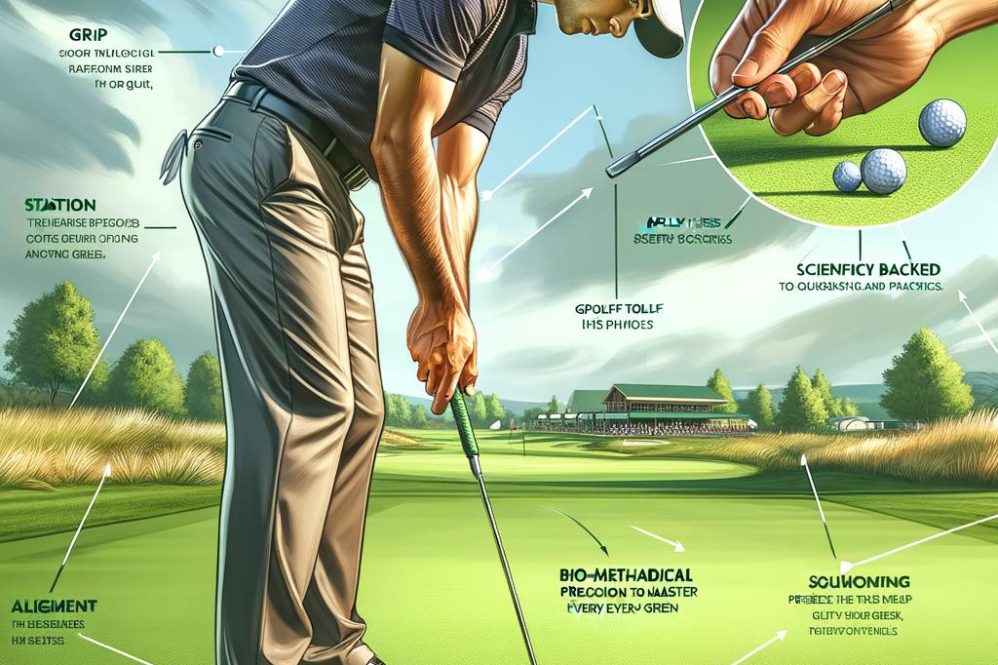
Putting profoundly shapes a golfer’s score; small inconsistencies in aim, rhythm, or stroke repeatability often produce outsized score penalties. Although it looks simple, putting is a demanding perceptual‑motor skill that depends on precise face orientation, early initiation of forward roll, and accurate speed control while coping with changing turf, weather, and pressure. Advances in biomechanics, motor‑learning research, and practice design now allow coaches and players to build a reproducible, pressure‑resilient putting stroke using evidence‑based methods that transfer from practice greens to competitive rounds.
This piece distills results from motion analyses, learning experiments, and field coaching into pragmatic guidance on grips, setup, alignment, and stroke dynamics.the focus is on reducing variability-limiting unnecessary wrist activity, stabilizing the torso and shoulders, and producing a consistent path and face angle at impact-while also improving perceptual skills used in reading lines and judging pace. We outline objective measures (tempo ratios, face‑angle repeatability, and launch characteristics), suggest individualized modifications for anatomy and skill level, and provide drills and practice plans to speed learning and retention. Each section links scientific principles to concrete coaching cues,progressive exercises,and feedback schedules designed to preserve performance under pressure. the goal is a unified, actionable framework enabling golfers to develop a reliable, adaptable putting method for a wide range of greens and conditions.

Core Biomechanics for a Repeatable Stroke: Posture, Sightline, and Wrist Control
Start with a mechanically stable address that supports the same stroke each time: feet roughly shoulder‑width, a light knee flex of about 10-15°, and a hip hinge producing a comfortable spine tilt in the 20-30° range. Let the arms hang so the putter shaft sits beneath the forearms; this posture links shoulders and forearms to the target line and promotes a square face at impact. Choose a putter length and lie that allow a neutral wrist at setup-no forced cupping or extreme bow-so the forearm angle is vertical or slightly inclined at address. Key setup checkpoints and simple corrections:
- Ball position: a touch forward of center for a forward‑press or under the lead eye for a shoulder‑pendulum stroke;
- Weight distribution: even 50/50 or marginally toward the lead foot for downhill stability;
- Shoulder line: parallel to the intended path to encourage a straight‑back, straight‑through motion.
These basics reduce compensatory hand movements, shrink face‑angle variability at impact, and provide concrete practice targets.
Refine visual alignment and wrist stiffness to manage face orientation and early roll. Position your eyes directly over or slightly inside the target line so the putter face visually reads square and the aim is unambiguous-this minimizes head tilt and establishes a consistent sightline for reading greens. For the hands, prioritize a shoulder‑driven pendulum with minimal wrist break (a practical target is less than ~10° of change through impact), keeping the wrists relaxed but effectively locked at contact to avoid flipping or holding the face. Useful progressive drills include:
- Mirror/address‑rod check – verify eyes over the ball and shaft alignment;
- Gate drill with two tees – force a clean path and discourage excessive wrist motion;
- short‑hold drill – pause for 1-2 seconds after impact to sense clubface stability and follow‑through balance.
When moving from practice to play, adapt arc length for green speed: use a shorter arc and firm wrists on slow, damp greens to reduce skid; on firm, quick greens slightly lengthen the arc while still minimizing wrist flick to keep distance control consistent.
Translate biomechanical steadiness into scoring improvements by setting measurable targets and situational routines. Examples of reasonable benchmarks: make 70-90% of 3‑footers (skill dependent), convert 50-70% of 6‑foot attempts, and work toward leaving 80% of putts from 20+ feet inside 6 feet. Structure sessions that combine technical drills with game‑like scenarios:
- Blocked set – 50 putts from 3 ft, 50 from 6 ft, 50 from 10 ft focusing on identical setup;
- Random set – mix distances and breaks to develop adaptability;
- Practice course - play a nine‑hole sequence on the practice green, call the break and test multiple speed solutions for different slopes.
If you miss predominantly left, inspect face angle and wrist motion; if pace is inconsistent, measure arc length and tempo with a metronome or counting routine (e.g.,”one‑two” back‑to‑through). Combine a short pre‑putt routine with a breathing cue-align, exhale, commit to speed, stroke-and you’ll improve repeatability and reduce three‑putts in real rounds.
Accurate Distance Control: Tempo Patterns and Accelerative Release with Practical Drills
Build a reliable stroke by fixing setup and rhythm, then reinforcing an accelerative release into impact. Position the ball slightly forward (about 1-2 shaft widths,depending on putter) to encourage a forward low‑point and early contact. maintain neutral wrist posture so the stroke behaves like a shoulder pendulum. For tempo, aim for a backswing:downswing time ratio in the 3:1 to 2:1 range (for instance, a 0.60 s backswing to a 0.20-0.30 s downswing), and use a metronome to lock it in; pros often prefer 2:1 for short, assertive putts and 3:1 for intentional lag attempts. Crucially,train progressive acceleration: the final 10-15% of the stroke should show increased clubhead speed to induce forward roll,minimize skid,and stabilize distance control. Sequence practice by first nailing the setup, then tempo, and finally an accelerative finish so the ball starts true and checks predictably with green pace.
Turn those principles into drills and measurable goals.Recommended exercises:
- Ladder drill (3-6-9-12-15 ft): five putts at each distance using the same tempo; track makes and pace control (target: ≥80% within a 2‑ft circle at 12 ft after four weeks).
- Metronome‑acceleration drill: set a metronome to 60-80 bpm,perform strokes with a chosen 3:1 or 2:1 rhythm,and add an explicit “accelerate” on the final beat to ingrain forward acceleration.
- Ball‑speed feedback drill: use a radar or smart mat to measure ball speed; strive for a repeatable variance around ±5% at each distance.
Also use gates or headcovers to prevent wrist collapse and an alignment mirror to check face angle at address (aim for 0°-2° tolerance). Beginners should emphasize short strokes and single‑speed repetition; better players add pressure games and simulate a range of Stimp speeds (roughly Stimp 8-12) to refine tempo micro‑adjustments.
Apply tempo and release ideas in play: on uphill putts lengthen the backswing slightly while keeping tempo constant to add energy; on downhill putts shorten stroke and increase acceleration to avoid leaving putts short. Troubleshooting checkpoints:
- deceleration before impact - use the metronome acceleration drill and feel a forward press from the shoulders;
- wrist flip/hinge - correct with gate work and a quiet lower body;
- variable start speeds – separate line read and speed choice in your routine and rehearse tempo three times before committing.
Set short‑term,measurable objectives-e.g., cut your three‑putt rate by 50% in six weeks or hit 70% of four‑footers-and log progress in a practice journal or app. Pair tempo practice with mental rehearsal (visualize the ball’s roll and commit to speed) and adapt to conditions (wind, grain, Stimp) so tempo leads directly to lower scores and greater on‑course confidence.
Advanced Green‑Reading: Integrating Slope, Grain, and Speed into Smart Decisions
Create a consistent procedure for evaluating the three key inputs to a putt: slope, grain, and speed. read the putt from several perspectives-behind the ball, behind the hole, and a few paces to the side-to find high points and the primary fall line. Use visual categories for slope: subtle (≤3°), moderate (3-7°), severe (>7°). Translate those categories into expected lateral break and pace needs: moderate slopes produce noticeable inches of break at 10-15 ft, while severe slopes demand firmer pace to avoid large misses. Check grain by observing grass direction, surface sheen, and mowing patterns-grain running downhill amplifies break and speed, while grain into the face dampens movement.Faster Stimp numbers reduce lateral deflection and usually require firmer strokes. Remember the Rules of Golf when marking or lifting (always mark first; do not test or alter the surface).
Convert your read into an execution plan that combines posture, stroke selection, and gear. For setup, use a repeatable routine-shoulder‑width stance, eyes slightly inside the ball line, ball slightly forward for a flatter arc, and a forward press to engage shoulders-producing a pendulum action with minimal wrist interference. Match putter loft and ball choice to speed: on slow, grainy greens favor 2°-4° loft and softer balls to help release; on fast shaved greens use firmer balls and flatter‑soled heads to reduce skid. Practice drills that build both feel and judgment:
- Three‑distance lag drill: 12, 25, and 40 ft putts aiming to leave inside a 3‑ft circle; repeat 10 balls each to train pace.
- Fall‑line gate drill: gate set just wider than the head for 6-12 ft putts on varying breaks to groove face control.
- Grain‑sensitivity drill: practice identical putts morning vs. afternoon to feel with/against grain and log the differences.
Common errors-over‑aiming past the hole, decelerating, or changing setup between reads-are fixed by rehearsing a short pre‑putt routine, maintaining tempo, and sticking to one alignment reference (putter sole, ball mark, or shaft aid).
Embed green‑reading into course management with clear decision rules. For moderate‑slope putts inside 8-10 ft, prioritize line and commit to the speed that leaves the ball at the back of the cup; for long lags (>20 ft) prioritize pace to leave an uphill tap. Account for weather and course state-wet turf can increase break and slow roll; heavy grain or dew can add roughly 10-20% more lateral movement-and adjust aim and pace. Example SMART target: within six weeks convert 60% of 6-10 ft putts and leave 80% of 20-40 ft putts inside a 3‑ft circle. Support different learning needs: visual learners sketch fall lines or use a mirror, kinesthetic players rehearse short reps with eyes closed to feel motion, and players with mobility limits may use longer putters or alternate stroke styles while keeping the same read‑to‑execute routine. Finish every read with a concise checklist-high/low, grain, pace, intermediate target-so technical gains translate into better decisions and lower scores.
Visual and Sensory Strategies for Reliable Aim: Alignment, Peripheral Vision, and Mirrors
establish a consistent address routine that converts your visual intent into accurate aim. Set the face square to a chosen intermediate cue (tee, coin, alignment stick); because small angular errors magnify quickly (1° misalignment can create roughly 6-8 inches of lateral error at 30-40 ft), precise face aim is essential. Checklist at setup: feet shoulder‑width, eyes directly over or within 1 inch inside the ball, shoulders parallel to the line, and 0-4° forward shaft lean depending on your stroke. Use a putting mirror to confirm the leading edge is square, ball position is correct, and your eyes form a near‑vertical line over the ball. Select a short intermediate aiming spot 1-3 ft ahead to lock your focus and prevent head movement during the stroke.
After alignment, layer in peripheral‑vision practice and mirror feedback to link feel to sight. Alternate between central focus on the hole and drills that force reliance on peripheral cues to observe arc and head stability. As a notable example, fix your central gaze on the hole while using a mirror to check a straight path (for face‑stable strokes) or a small arc (~1-3°) for arcing strokes. Drills to develop sensory integration:
- Mirror gate drill: two tees just wider than the head; use the mirror to ensure the putter passes cleanly while maintaining eye position;
- Peripheral target drill: concentrate on the hole while tracking a coach’s finger in peripheral vision to hold rhythm and head stillness;
- Dynamic loft check: confirm roughly 3° of loft at impact in the mirror to minimize skid and favor immediate forward roll.
These exercises build sensory redundancy-vision plus proprioception-so you can aim reliably in wind and variable light without overthinking mechanics.
Apply these cues on the course with measurable warm‑up goals: e.g., 20 putts from 6 ft (goal 16/20), 20 from 12 ft (goal 12/20 within a 12‑inch circle), and finish with 30-50 ft lag reps aiming to leave 70% under 3 ft. Use the mirror‑verified setup in warmups and a short two‑second pre‑shot routine: one visual anchor, one breath to steady tempo, one practice stroke. Avoid common mistakes-aiming at the cup instead of the true break, letting eyes wander, or anchoring the club (anchoring is banned under the Rules of Golf)-and correct them by re‑establishing an intermediate target, rechecking eye position, and practicing peripheral drills to keep a stable head and steady tempo. Equipment matters: pick a putter head and alignment aids that visually match your intended aim, and remember grip size and face inserts alter feel and release. Combining precise alignment, mirror checks, peripheral training, and consistent warmups will produce measurable gains in direction and fewer three‑putts.
Pressure Resilience and Routine Design: Cognitive Tools and Simulated Stress Drills
resilience under pressure grows from a repeatable pre‑shot routine plus breathing and imagery techniques that lower arousal and preserve fine motor control. Adopt an 8-12 second pre‑shot sequence: assess line and lie (2-3 seconds), take a deliberate breath with a simple 4‑4 box (4 seconds in, 4 seconds out), execute a smooth practice motion, then step into address. This stabilizes heart rate and rhythm-aim for a consistent backswing:downswing tempo (about 3:1 in full swings) while keeping a short,rhythmic stroke for putting.For putting, read the highest points and visualise the start line and landing zone within a 1-2 meter window behind the ball; use a narrow gate (1-2 cm tolerance) to train face squaring. To recreate pressure, introduce micro‑consequences (miss a short putt and perform a short plank or lose points) and add competitive elements-scorecards, head‑to‑head sets, and timed challenges-to encourage calm execution under stress.
Link routines to mechanical checks so cognitive methods reliably produce the desired movement. Define measurable setup targets (stance equal to shoulder width; spine tilt 5-10° for full shots; ball position centered for short irons and forward for driver). For the short game, use a narrow stance and 60-80% forward weight at impact to ensure crisp contact. Use these practice checkpoints:
- Putting clock drill: balls at 3, 6, 9 and 12 ft; aim for 60-70% make rate on 6‑fters (advanced 75-80% within eight weeks).
- 5‑ball pressure: make five straight from 8-12 ft; any miss resets the sequence; repeat until successful twice.
- Up‑and‑down circuit: from three different lies to a 3‑ft target; aim to raise conversion by 10% over six weeks.
Account for equipment that affects feel under pressure-putter length (commonly 33-35 in), loft (~3-4°), grip size, and shaft flex-and choose specs that reduce compensatory movement. Typical faults to correct include early deceleration on the putt (use a one‑second apex pause drill) and over‑rotation in swings (use alignment rods for a one‑piece takeaway).
Blend simulated pressure drills with course management practice to turn training into lower scores. Run scenario rounds where the goal is task completion rather than lowest gross score-examples: hit a 50% fairway target on par‑4s, avoid hazards from inside 150 yards, or lay up to a 150-170 yard preferred zone in wind-and record performance against standards. Vary environmental inputs (wind, Stimp speed) to stretch decision‑making: on a faster Stimp favor firmer landings for chips; in wet or into wind choose higher‑spin shots and conservative club selection. Sample exercises:
- Par‑save simulation: play nine holes aiming to two‑putt each green and make at least four up‑and‑downs; track three‑putt frequency and reduce it by one per nine over a month.
- Pressure tee challenge: on a par‑4 choose a club that keeps you short of a hazard; log successful conservative plays vs. risky carries and evaluate strokes saved or lost.
- Cold‑start practice: begin a round after minimal warmup to practice managing adrenaline and executing routine under imperfect readiness.
These drills teach players to marry mental control with technical consistency: simpler, repeatable routines for novices and nuanced tempo and tempo‑to‑speed management for better players, yielding lower variance in stroke execution and fewer three‑putts.
Equipment and Surface Interaction: Choosing a Putter and Shaping Early Roll
Putter selection and understanding dynamic loft are central to predictable roll. Match head shape and weighting to your stroke: use toe‑hang for arced strokes and face‑balanced heads for straight strokes, and verify the head’s moment of inertia (MOI) gives you the forgiveness needed on off‑center strikes.typical assembly loft sits in the 2°-4° range with shaft lengths of 33-35 inches for most players; these numbers support an early forward roll. During fitting or self‑testing measure dynamic loft at impact (impact tape or launch monitor) and aim for forward‑roll initiation within roughly 12-18 inches (30-45 cm) on standard practice greens-this minimizes skid and promotes true roll. Quick setup checks:
- Alignment: eyes just inside the ball, shoulders square;
- Ball position: slightly forward for low‑to‑mid launch;
- Grip pressure: light and steady to preserve tempo;
- Face angle: neutral at address and able to return square at impact.
These elements determine how the face meets the ball and how the ball interacts with links‑style fast surfaces or soft parkland greens.
Refine loft, face control, and stroke to reduce skid and stabilize early roll. Move toward contact with a small forward press (hands ahead ~0.5-1.0 in / 1-2.5 cm) and a pendulum action that limits wrist collapse and vertical movement; lifting the hands or striking upward creates unwanted backspin and extra skid. Drills to influence launch and roll:
- Gate drill to promote a square face and repeatable path;
- Impact tape plus a three‑spot drill (3, 6, 9 ft) to observe forward‑roll initiation and tune loft/strike;
- Distance ladder (5, 10, 20 ft) to match stroke length to pace and record percentage inside a 12‑inch circle.
Target benchmarks such as 80% of eight‑foot putts finishing within six inches and cutting three‑putts by ~30% after four weeks of focused practice. Adjust for conditions: on fast dry greens except less skid and a softer pace; on slow or wet greens use more authority. Linking equipment choices (face texture, insert materials) to on‑course tactics helps you manage pace and scoring.
Turn equipment tuning into a progressive practice plan: beginners focus on consistent contact and a repeatable routine (visualize the line, pick a landing spot one to two ball diameters past the hole, rehearse a simple pendulum stroke). Advanced players experiment with loft manipulation, controlled face rotation, and mass distribution (weighted heads, mallets) to suit particular greens. Suggested progression:
- Short term (daily 20-30 minutes): alignment/gate and distance ladder for motor memory;
- Mid term (weekly goals): decrease skid distance below ~0.5 m and refine tempo with a metronome at 60-72 BPM;
- On‑course: simulated pressure drills (begin with lag putts, finish with a three‑putt avoidance target) to translate practice into score.
Address errors-too much loft at impact (flatten wrists, increase forward press), inconsistent face angle (alignment aids and mirror checks), tempo breakdown under stress (regular pre‑shot routine, breath control)-and set measurable goals (such as, reduce average three‑putts to ~0.3 per round in eight weeks). With deliberate equipment selection,loft control,and practice aligned to green characteristics,players can create repeatable roll,smarter reads,and lower scores.
Progressive Practice and Objective Assessment: Periodization, Tracking, and benchmarks
Use a periodized plan to sequence technical work, conditioning, and scenario practice across macro‑, meso‑, and micro‑cycles for measurable gains. One model is a 12‑week macrocycle divided into three 4‑week mesocycles: (1) technical reprogramming (high volume, low intensity), (2) consolidation (moderate volume/intensity), and (3) performance peaking (low volume, high intensity with course rehearsals). Weekly microcycles might include two technical range sessions (40-60 minutes), two short‑game/putting sessions (30-45 minutes), one strength/mobility slot (30 minutes), and one on‑course simulation (9-18 holes). Progress logically: isolate faults, re‑integrate corrected mechanics, then rehearse under pressure. Useful drills for the reprogramming phase:
- Mirror half‑swing for tempo: metronome at 60-65 bpm targeting ~3:1 ratio;
- Impact bag: train forward shaft lean and compression;
- Clock chipping: consistent launch and spin for 10-40 yard shots with target dispersion logging.
Daily objectives (e.g., 200 quality strikes with a club, 50 pitch/chips, or 30 putts inside 8 ft) keep practice focused and measurable.
Implement data tracking and objective tests so practice converts to on‑course improvement. Choose metrics tied to scoring: Strokes Gained breakdowns, Greens in Regulation (GIR), fairways hit, average putts per round, and dispersion for key clubs. Use technology when helpful-launch monitors for ball speed/launch/spin, high‑speed cameras or putting analyzers for face‑to‑path and tempo-and maintain a simple log or spreadsheet for session and round stats. Benchmarks might include raising GIR by +1-2 holes per round over 12 weeks,lowering putts per round by 0.5-1.0, and tightening dispersion to ±7-10 yards with scoring irons. Weekly objective tests (20‑shot 7‑iron dispersion, 30 putts from 6-12 ft with make rates, 50‑shot wedge accuracy to 50 yards) and trend charts inform the next training focus.
convert technical gains into course strategy through scenario rehearsal and corrective cues.Start with numeric setup norms-grip pressure 4-5/10, weight 60:40 back‑to‑front for full swings or 55:45 for short game, spine tilt 5-10°-and apply them in real conditions. For a 140‑yard uphill into wind, choose a club that adds +2-3° launch or move up one club; practice that exact shot in similar wind and lie. For putting, learn to quantify Stimp and adapt stroke length-on a Stimp‑10 green rehearse a 20‑ft putt with a 2:1 tempo ratio for greater feel. Use a checklist on the range:
- Setup: shoulder alignment,ball position,neutral grip,relaxed forearms;
- Short‑game fix: avoid deceleration-accelerate through to a fixed finish and use a towel 6-8 inches behind the ball to ensure contact;
- Putting drills: gate for face control,lag to a 3‑ft circle,and circle drills to build pressure performance.
Couple mental rehearsal and pre‑shot rules with quantitative decision thresholds (e.g., play to a 30‑yard bailout when recovery probability exceeds 60%) to sharpen tactical play and reduce scoring variance across skill levels.
Q&A
Below is a focused Q&A tailored to the article “Unlock Perfect putting: Evidence‑Based Steps to master Every Green.” The main section covers evidence‑based putting topics (grip, stance, alignment, stroke mechanics, motor‑control principles, drills, measurement, practice design).A short, separate Q&A briefly notes an unrelated fintech named “Unlock” that appeared in external search results.main Q&A – Evidence‑Based Putting
1. Q: What scientific rationale underpins the recommendations in this guide?
A: The guidance integrates biomechanics and motor‑learning evidence to reduce unnecessary movement degrees of freedom, encourage repeatable kinematics, and optimize perceptual‑motor strategies.Core principles are: (a) favor proximal control (shoulders/torso) over distal joints (wrists/elbows), (b) use external focus cues and practice schedules that progress from blocked to variable formats to support retention and transfer, and (c) guide practice with objective outcome metrics (make% and lag residuals) to drive deliberate improvements.
2. Q: which grip characteristics produce a more stable putting motion?
A: Grips that stabilize the head and limit wrist rotation are supported-conventional, cross‑hand, and reverse‑overlap grips all work when they maintain low to moderate grip pressure (roughly 2-4/10 subjective), neutral wrist alignment, and symmetrical hand placement. The intent is a forearm‑shoulder coupling that lets the shoulders drive and the wrists remain passive at impact.
3. Q: How should stance and setup be optimized from a biomechanical viewpoint?
A: Use a stable base with hip‑width stance (or slightly narrower), mild knee flex, and balanced weight over the midfoot. Eyes should be at or slightly over the ball for accurate line perception. Ball position generally sits center to slightly forward depending on putter loft and green speed; a slightly forward ball can promote a slight ascending contact that limits skid. Align spine and shoulders to match the intended arc and minimize unnecessary torso rotation.
4. Q: Which stroke mechanics give consistent launch and face control?
A: A shoulder‑driven pendulum with minimal wrist activity yields repeatable face angle and path: synchronized shoulder rotation on backswing and downswing, quiet wrists through impact, a square face at contact, consistent arc and loft control, and a stable lower body. Maintaining tempo regularity-steady backswing‑to‑downswing ratios and cycle times-correlates strongly with reliability.5. Q: What motor‑control strategies should coaches apply when teaching putting?
A: Evidence‑based concepts include:
– External focus (attending to ball path or target) improves learning vs. internal focus.
– Implicit learning (analogies, minimal explicit mechanics) helps performance under pressure.
– Variable practice and contextual interference (mixing distances and breaks) enhance transfer versus only blocked practice.
– Faded augmented feedback-high frequency early, then reduced-builds self‑regulation.- Deliberate practice with clear goals,immediate objective feedback,and progressive challenge produces measurable gains.
6. Q: Which drills align well with the science and how should they be done?
A: Effective drills include:
– Gate/face control: tees slightly wider than the head to force a square face and centered impact.- Pendulum tempo: metronome or count to stabilize rhythm; 30 strokes at one tempo for consolidation.
– Distance ladder (lag): progressive targets and residual measurement to train pace.
– Circle drill: multiple short putts around the hole to build short‑range confidence and pressure tolerance.
– Alignment rod drills: check shoulder, shaft, and path alignment.
– Competitive pressure sets: “winner stays” or points systems to simulate stakes.
7. Q: How should practice be structured for dose,progression,and variability?
A: Short,frequent sessions (15-30 minutes,3-5×/week) often outperform infrequent marathons. Begin with blocked practice to establish mechanics,then transition quickly to variable/random practice for retention and adaptability. Divide time among short make‑oriented reps (3-6 ft), mid‑range lag work (10-30 ft), and longer feel drills. Use measurable goals (make% at set distances, lag residuals) and track trends.
8. Q: What objective measures best guide improvement?
A: Track make percentage by distance, three‑putt rate and putts per round, lag accuracy (mean residuals), and Strokes Gained: Putting if available. Log results, set small targets (e.g., +5% on 6‑ft makes over six weeks), and focus practice on prioritized deficits.
9. Q: how can players and coaches manage putting under competitive stress?
A: Favor implicit cues and simple analogies, use consistent pre‑shot routines to anchor attention, practice with reduced augmented feedback, and simulate pressure with consequences. Mental skills-breathing, imagery, quiet‑eye techniques-support automatic execution.
10. Q: What practical approaches help with the “yips”?
A: The yips are complex, with neurological and psychological contributors. Practical steps include changing technique (grip,stance,putter length),switching to implicit learning strategies,gradual exposure to pressure,consulting a sports psychologist,and in certain specific cases seeking medical assessment.Tools like EMG biofeedback and constraint‑based retraining can assist motor pattern changes.
11.Q: How crucial is putter fitting?
A: Properly fitting length, lie, loft, grip size, and head design enable a repeatable setup and reduce compensations.Matching putter type to stroke (face‑balanced vs. toe‑hang) and confirming impact metrics (face‑to‑path,dynamic loft) improves consistency beyond subjective feel alone.
12. Q: How do environmental factors change technique and practice?
A: Faster greens and steeper slopes increase sensitivity to face angle and launch conditions; players must alter speed and aim. Practice across a variety of speeds and slopes to calibrate perception and adaptability-avoid training only on uniform surfaces.
13.Q: What timelines are realistic for improvement?
A: Short‑range make rates can improve in weeks with structured practice; deeper skills-lag control, tempo stability, and pressure resilience-typically take months. Outcomes depend on baseline ability, practice quality, and transfer to the course.
14. Q: What next steps should a player or coach take after reading this article?
A: Perform an objective baseline (make% by distance, lag residuals), identify the primary deficit (short putts, pace, or pressure), choose targeted drills and a practice schedule, monitor metrics weekly, and change technique or equipment only when supported by measurable improvement.Consider a focused 6-12 week plan combining technical sessions, pressure simulations, and on‑course rehearsal.
Separate Q&A – “Unlock” (Fintech) – brief note as external search results referenced it
1. Q: What is Unlock (fintech) mentioned in the search results?
A: External search results pointed to a fintech firm called Unlock that provides home‑equity access products that let homeowners receive cash in exchange for a share of future home value. This is unrelated to the putting content above.
2. Q: Why is this included?
A: The term “Unlock” occurs in both contexts. If you intended content about the fintech company instead of the golf topic, indicate that and a focused summary of those pages can be produced.
Conclusion
This synthesis translates contemporary evidence on perceptual, motor, cognitive, and contextual drivers of putting into actionable coaching and practice prescriptions. the research favors an integrated approach: consistent pre‑shot routines, stable tempo and stroke mechanics, representative variable practice, and a feedback plan that encourages self‑monitoring. Improvements in green perception, attentional control, and movement variability reduction combine to produce more reliable putting across diverse conditions.
For coaches and players, the practical advice is straightforward: prioritize deliberate, representative practice that mirrors on‑course demands; employ drills balancing accuracy and adaptability; structure feedback to foster autonomy (external focus cues and outcome metrics); and individualize interventions rather than applying one global method. Simple, evidence‑aligned tools-tempo meters, progressive distance ladders, constrained variability drills-can yield measurable benefits when embedded in systematic monitoring.
limitations of current evidence advise caution: much research is short‑term or lab‑based and may not fully capture long‑term learning trajectories or individual differences. Future work should expand longitudinal, ecologically valid studies on personalized training prescriptions, the interplay of cognition and motor execution under pressure, and the role of emerging tools (motion capture, AR coaching) for tailored skill development.
In short, mastering putting is an iterative, evidence‑guided process: combine objective assessment with targeted, representative practice; track progress with reliable metrics; and adapt techniques to the player and green constraints. Applying these principles consistently will produce the measurable performance gains needed to master every green.
note: External web search results returned a fintech service named “Unlock,” which is unrelated to this golf article.

Sink More putts: Science-Backed Secrets to Master Every Green
Why Putting Science Matters
Putting is the single highest-repeat skill in golf – an area where small improvements translate into big score gains. Science and motor-learning research show that consistent technique, attentional focus, and deliberate practice reduce stroke variability and improve green-to-hole outcomes.Below are evidence-informed principles and practical drills to help you sink more putts,from short tap-ins to pressure lag putts.
Key Putting Principles (Backed by Research)
Pendulum Stroke & Stable Shoulders
Efficient putting mechanics use a low-wrist, shoulder-driven pendulum. Minimizing wrist breakdown and hand manipulation reduces lateral and vertical variability of the putter head through impact, improving accuracy and distance control.
External Focus of Attention
Motor learning studies consistently find that directing attention to the effects of movement (e.g.,”roll the ball to the hole”) rather than body mechanics (e.g., “move your shoulders”) leads to more accurate and robust performance – especially under pressure. Use target-focused cues during your pre-shot routine to promote automatic control.
Quiet Eye and Visual Fixation
Research on the “quiet eye” shows expert putters hold a stable gaze on a target area (like the hole’s front edge or a spot on the green) for longer just before and during the stroke. A steady gaze helps coordinate timing and supports consistent contact and line.
Tempo & Rhythm Over Force
Pace control is the biggest determinant of three-putts. A repeatable tempo – frequently enough measured as a 2:1 backswing-to-forward-swing ratio – tends to produce consistent roll and distance control. Practice tempo with a metronome or counting rhythm.
Variability of Practice and Transfer
Motor learning research emphasizes variable practice over rote repetition. Rotating distance, line, and green speed in practice sessions creates a more adaptable stroke, better transfer to on-course situations, and improved decision-making under changing conditions.
High-Impact Putting Tips (Actionable & practical)
- Start with the speed: If you can’t get the speed right, you can’t rely on the break. Practice lag putts at 20-60 feet focusing on getting the ball within a 3-foot circle.
- Use alignment aids: Mark the ball or use the putter’s sightline to pick an intermediate aiming point - this improves perceived line and reduces aiming errors.
- Check eye position: Aim to have your eyes directly over or just inside the ball at address; that helps reveal the true line.
- Trust the read and commit: Hesitation induces tension. Make a confident read, pick the line, and commit to the stroke.
- Pre-shot routine: Build a concise routine (look, pick spot, breathe, stroke). Consistency stabilizes performance under pressure.
Putting Grip & Setup: What Science-Recommends
A grip and setup that reduces wrist action and promotes a pendulum is ideal. Common, research-supported grip principles:
- Neutral wrist alignment at address and through impact.
- light grip pressure – firm enough to control the putter, light enough to allow smooth movement (try a 2-3 out of 10).
- Shoulders relaxed, arms hanging naturally; minimal forearm tension.
- Feet roughly shoulder-width for stability; a slightly open stance is fine if it helps your aim.
Green Reading: Science & Simple Heuristics
Reading putts blends physics and perception. Use these science-aligned strategies:
Focus on speed first,break second
Speed dictates how much the ball responds to slope. If you roll putts too hard, they break less; too soft, they break more. On fast greens expect less break; on slow greens expect more. When in doubt, favor a bit more pace on longer lag putts.
Use the slope at multiple scales
Look at the overall green slope (macro), the area around the hole (meso), and the ball-to-hole path (micro). The combined effect predicts ultimate line.
Eye-level and practice calibration
Walk around the putt, view from behind and low-to-the-ground to detect subtle breaks. Regularly calibrate by rolling test putts from known distances and noting how much the ball moves on specific slopes.
Putting Drills That Deliver Results
Below are field-tested drills aligned with motor learning principles: variable practice, external focus, and tempo consistency.
| Drill | Purpose | How to Do it |
|---|---|---|
| Gate Drill | Improve stroke path & center contact | Place tees a little wider than the putter head; stroke through without touching tees. |
| 3-2-1 Distance Ladder | Tempo & distance control | Putts from 3, 6, 9 feet; use same tempo; repeat until 9/10 success. |
| Lag Circle | Reduce 3-putts | From 30-60 ft, aim to leave ball inside a 3-ft circle around hole. |
| Quiet Eye Focus | Improve pre-shot gaze & confidence | Fixate a spot on the green 2-3 sec before stroke; hold gaze through impact. |
Putting Routine: A Bulletproof Sequence
- Visualize the line and terminal speed (where the ball should finish).
- Pick a precise aim point on the green (intermediate aim point beats guessing).
- Set up with eyes over the ball, light grip, relaxed shoulders.
- Take one practice stroke with the same tempo you plan to use.
- hold your breath briefly, fix your gaze, and execute an external-focused cue (“roll it to the flag”).
Advanced Topics: Technology & Biomechanics
Putting Aids and Launch Monitors
Modern launch monitors and putting analyzers give feedback on putter face angle, path, impact location, and launch/roll characteristics. Used sparingly, objective feedback speeds improvement. Prioritize one or two metrics (e.g., impact location and pace) rather than overfitting to data.
Biomechanical Adjustments
Small changes such as slightly forward shaft lean at address or a more square putter face at impact can reduce skidding and help the ball roll sooner. The goal is to minimize vertical oscillation and keep the putter head on a consistent arc or straight-back-straight-through path depending on your stroke type.
Mental Game & Performance Under Pressure
pressure magnifies technical flaws. Research in sports psychology points to several high-return strategies:
- Use an external focus: Think about the ball’s path, not body mechanics.
- Routine automation: A tightly rehearsed pre-shot routine reduces situational anxiety.
- Chunking and imagery: Break the putt into small elements (line, speed, stroke) and visualize success quickly before the putt.
- Self-talk: Use positive, process-oriented phrases (“smooth rhythm”) instead of outcome-obsessed thoughts (“must make”).
Practice Plan: 4-week Putting Program
Follow this progressive plan to reduce stroke variability and improve green performance.
- Weeks 1-2: fundamentals: 15-20 minutes daily on gate drill, putter-face impact, and 3-2-1 ladder for tempo.
- Weeks 3-4: Add variability: alternate speeds and angles, include lag circle work (30-60 ft). Add pressure reps (betting-style or points).
- maintenance: Twice-weekly 20-30 minute sessions focusing on short putts (2-6 ft) and 10 minutes of lag control.
Case Studies & Practical Examples
Club-Level Player: Cutting 3-Putts in Half
A mid-handicap player replaced repetitive 6-foot reps with a mixed-distance practice including lag putts and tempo drills. Within four weeks they reduced 3-putts by 50% during rounds by prioritizing pace control and committing to a two-count tempo.
Weekend Warrior: Building Confidence on short putts
By rehearsing a concise pre-shot routine and practicing quiet-eye fixation, a recreational player improved their make percentage from 60% to 78% inside six feet, demonstrating how gaze stability and routine consistency translates to better short-putt performance.
Common Putting Mistakes & Fixes
- Too much wrist action: Fix with gate drill and a light grip.
- Poor pace on lag putts: Solve with lag circle drill and tempo metronome practice.
- Overthinking mechanics: Shift to external focus cues and shorter, rehearsed routines.
- Inconsistent aim: Use an intermediate target and practice alignment from multiple angles.
Quick Reference: 7 Science-Backed Rules to Remember
- Prioritize speed control – it reduces three-putts fastest.
- adopt an external focus during the stroke.
- Keep wrists quiet; move the shoulders like a pendulum.
- Use a consistent tempo (try a 2:1 backswing-to-forward ratio).
- Practice variably – change distances and slopes.
- Use a short, repeatable pre-shot routine to manage pressure.
- Calibrate your reads with test rolls and walk the break from multiple angles.
Resources & Next Steps
To continue improving: keep a putting journal (record make percentages, green speed, and drills used), use video or launch monitor data once every few weeks, and incorporate pressure practice. Small, consistent refinements produce big results: commit to smart practice, and you’ll sink more putts.
Note: This article synthesizes widely accepted findings from motor learning, biomechanics, and sports psychology to provide practical, science-backed putting advice.