
Optimizing golf performance requires blending biomechanical insight, intentional motor‑learning practice, and equipment that synchronizes with an individual’s movement patterns. This evidence‑centered overview presents eight essential golf implements and training devices selected for their capacity to improve movement economy, sharpen swing mechanics, and boost putting consistency. Selection prioritized peer‑reviewed evidence, biomechanical rationale, real‑world reproducibility, and demonstrable carryover to on‑course performance. For every item we summarize supporting research, propose practical usage protocols, and supply concise coaching cues to accelerate learning while lowering injury risk. The goal is to equip coaches,sport scientists,and dedicated players with pragmatic,performance‑focused recommendations that drive reliable,measurable gains.
Biomechanical Foundations Guiding Equipment Choices for Reliable Swing Mechanics
The link between human movement science and equipment selection is rooted in biomechanics: kinematic patterns (how segments move) and kinetic variables (forces and torques) shape how the clubhead meets the ball. Begin with a standardized assessment: measure driver swing speed with a launch monitor (beginners typically ~70-90 mph; intermediate players ~90-105 mph; strong/low‑handicap players often >105 mph) and record static anthropometrics such as height, wrist‑to‑floor, and natural posture. Use that data to match shaft flex, length, and clubhead attributes to the player’s movement profile-as an example, a driver shaft of roughly 43-46 inches and loft between 8°-12° is a common starting range to achieve controlled spin and predictable launch across typical swing speeds. Adjust iron lie angles in 1° increments so soles track the player’s sole arc, and factor in spine tilt (address ~10°-15° away from the target), shoulder rotation (approaching 90° in proficient turners), and hip rotation (~40°-50°) when selecting shaft torque, kick point, and grip size; these attributes influence sequencing, face angle at impact, and shot dispersion. Ensure all gear choices respect competition rules (e.g., maximum club length 48 inches and conforming groove rules per USGA/R&A) so performance solutions remain legal.
After a baseline fit, convert equipment choices into concrete short‑ and long‑game adaptations. For players still developing contact consistency, favor hybrids or cavity‑back long irons to promote cleaner strikes and higher trajectories; such as, a 5‑hybrid frequently enough replaces a 5‑iron for golfers who present an attack angle shallower than -2°, reducing the need for a steep descent angle.Structure practice with measurable benchmarks: perform a gap‑test on a launch monitor to define carry for each club with a target spacing of 8-12 yards between clubs-record five swings per club, discard outliers, and use meen carry to finalize wedge and loft decisions (common wedge progressions include 46°, 50°, 54°, and 58°). To link equipment to feel and repeatability, use these drills and checkpoints:
- Swing speed and rhythm: employ a metronome to build a 3:1 backswing‑to‑downswing ratio for consistent sequencing and timing.
- Impact‑position drill: hit half‑shots with a tee under the back of the ball to encourage forward shaft lean useful for iron and wedge strikes.
- Short‑game distance control: from 30, 50, and 70 yards, play 12 balls with a single club (e.g., sand wedge at 30, gap wedge at 50) and log carry and rollout until you reach about ±5 yards consistency.
Common fitting‑related faults include overly upright or flat lie causing directional misses, and excessive shaft flex producing low‑spin, “ballooning” trajectories-solve these by iteratively adjusting lie, grip size, or shaft flex and retesting dispersion patterns until thay tighten.
Integrate equipment‑driven biomechanics into course tactics and the mental routine to lower scores. Choose clubs based on the situational biomechanics: in an oncoming wind add loft (play up one club) and,if needed,lower spin by selecting a more penetrating option; from tight lies select a less‑lofted club with a slightly firmer ball position to avoid thin strikes. For shots around the green, pair technique to club selection-use a 56° sand wedge with moderate bounce for bunker exits and a 54-58° lob wedge with an open face and greater wrist hinge for high flop shots-then rehearse these variations on windy days and across turf types to learn rollout differences.Make practice context driven and measurable:
- Course‑simulation: play three practice holes focusing exclusively on lay‑up yardages and club choice; record scores and strokes‑gained for approaches.
- Pressure routine: set a target (for example, limit three‑putts to fewer than one per nine holes) and use a consistent pre‑shot sequence including visualization and breath control.
- troubleshooting checklist:
- Repeated hooks: inspect lie angle and grip pressure; fix inside‑out path tendencies with an alignment‑stick gate drill.
- High, weak shots: try a stiffer shaft or slightly less loft to reduce launch and spin, then re‑measure carry distance.
By aligning club specs with quantifiable biomechanical markers and practicing scenario‑specific drills, golfers at every level-from novices using the Top 8 essentials (driver, fairway wood/hybrid, irons, wedges, putter, balls, glove, shoes) to low handicappers-can build reproducible mechanics, smarter club selection, and defensible on‑course strategies that improve scoring.

Club Fitting & Shaft Choices: Evidence‑Led Advice for Launch and Dispersion control
Controlling launch and dispersion requires understanding both biomechanical and material factors: shaft flex, torque, kick point, mass (grams), and head loft interact with swing speed, attack angle, and face‑to‑path relationships to set launch angle, spin rate, and lateral spread. Typical target windows for a well‑matched driver are a launch angle ~10-14° with an attack angle +2° to +4° to maximize carry, and spin roughly 1800-3000 rpm depending on conditions; spin above ~3500 rpm commonly generates excessive height and greater crosswind sensitivity. Map shaft stiffness to swing speed bands (e.g., <80 mph: Regular/Soft Regular; 80-95 mph: Stiff; >95 mph: X‑Stiff) and consider shaft mass-modern driver shafts frequently enough fall in the 45-65 g range for tempo optimization, while heavier iron shafts (90-120 g) can reduce dispersion for stronger players. Practical advice: bring your Top 8 kit (driver, short‑iron set or hybrids, wedges, putter, rangefinder, your regular balls, glove, and stable shoes) to a launch‑monitor fitting and run a standardized shot series at three intensities to observe how loft, shaft, and ball compression affect outcomes.
Turn fitting insights into technique and tactical choices to shrink miss variance: prioritize face control and club path because roughly 70-80% of lateral error stems from face‑to‑path relationships. Target a reproducible impact window-face within ±2° and path within ±3°-to meaningfully reduce dispersion. Supportive setup habits include appropriate ball position (driver off left heel for a fade‑amiable, higher launch; more centered for a lower, penetrating flight), correct spine tilt, and sensible weight distribution (start around 60/40 to 50/50 depending on the shot).Useful practice tools: an alignment‑rod gate to train a square face at impact, impact‑bag work to feel centered strikes, and a half‑swing tempo drill with a metronome set to the 3:1 ratio. In play, adapt equipment by conditions-for a crosswind into a dogleg left choose a lower‑lofted, heavier‑shaft option or a 3‑wood/hybrid with reduced spin to keep the ball below the wind; when greens are firm, favor slightly higher launch and spin to hold targets.
Adopt a two‑stage, evidence‑based fitting and validation process: (1) a data‑driven fitting using a calibrated launch monitor to identify the optimal loft/shaft/ball combination for your swing, and (2) an on‑course verification round to confirm dispersion control under live variables. Set measurable objectives such as lowering your 95% dispersion width by 15-25 yards or achieving carry repeatability within ±5 yards across 20 shots. Tailor practice to learning preferences: visual learners use video and numbers; kinesthetic learners use weighted implements and impact‑bag reps; auditory learners rely on tempo counting and coach cues. Troubleshooting tips:
- Heel/toe misses: check lie angle and grip pressure; inspect shaft tip stiffness and consider a flatter lie.
- Ballooning in wind: reduce loft ~2°-4° or switch to a lower‑spin ball; practice controlled three‑quarter swings.
- Face consistently open/closed: refine takeaway and release timing with alignment‑gate and slow‑motion impact drills.
Combine a consistent pre‑shot routine, sound course management, and post‑shot reflection to convert technical gains into lower scores across different conditions.
Swing‑Path & Tempo Training Aids: Comparing Effectiveness and How to Use Them
Choose training aids by first defining measurable biomechanical targets: keep club path within ±2° of the intended line at impact and maintain a backswing‑to‑downswing tempo close to 3:1 for consistent timing. Practically, this favors devices that give objective feedback-a simple alignment stick or path board to visualize track, a radar or camera‑based launch monitor to quantify path and face angle, and a metronome or tempo trainer to normalize rhythm. Instructionally, categorize aids by their primary effect: alignment sticks and impact bags are primarily kinesthetic/visual (setup and path awareness), weighted clubs and tempo tools are proprioceptive (feel and sequencing), and launch monitors are data‑driven (numeric feedback for defined goals). Balance portability and cost against the data you need: beginners gain most from low‑cost essentials (alignment stick, basic club set, balls, tees, putting mirror), while advanced players frequently enough invest in launch monitors, premium weighted trainers, and a rangefinder to integrate metrics with course decisions.
Phase implementation: stabilize setup, progress through directed drills, then validate on course. Begin at address with these setup checkpoints-feet shoulder‑width, spine tilt ~5-7° away from target for long clubs, and about 2-4° shaft lean at impact for irons-using a ground alignment stick to confirm aim. Add tempo work with a metronome tuned so the backswing occupies three beats and the downswing one (e.g., 60 bpm as a practical example) and pair this with a weighted trainer to build rhythm. Progressions include:
- Gate drill: two tees or short sticks set just outside the clubhead to train a square‑to‑path impact zone;
- Impact‑bag hits: square the face and deliver a slightly descending blow for irons, tracking consistency of impact location;
- Tempo ladder: 10 swings at specified metronome settings followed by 5 full shots measuring dispersion with a launch monitor or targeted aim points.
For novices, stick to clear, repeatable cues (stick on the ground for aim, glove feel for grip pressure, a metronome app for tempo). Advanced players should chase incremental numeric targets (e.g., reduce path error by 1° per week or tighten face‑angle variance to ±3°) and base practice loads on launch‑monitor data.
Transfer practice gains into course play and the short game by integrating devices into decision routines. use a rangefinder (one of the Top 8 essentials) to confirm carry yardages and, in stronger crosswinds, enlarge your target corridor by 10-20 yards and pick a club that produces a neutral, lower‑curving flight to reduce curvature from lingering path errors. Mirror full‑swing mechanics in the short game: practice half‑swings with wedges using the same tempo ratio, and employ a putting mirror to stabilize eye position and putter face alignment when pressure increases. Troubleshooting:
- shots drifting left (R‑handers): look for an over‑the‑top move; use an inside‑path gate drill to retrain plane.
- Tempo collapses under pressure: return to a breathing pre‑shot and a three‑swing metronome warm‑up on the first tee.
- thin contact: verify shaft lean and ball position (move the ball slightly back for lower‑lofted shots) and rehearse with impact‑bag sequences.
Link mental focus to physical execution with process goals (for example, “maintain 3:1 tempo and target alignment on each tee shot”) rather than outcome targets-this approach reliably improves accuracy and scoring. pair suitable aids, staged drills, equipment‑aware tactics, and mental routines to turn swing‑path and tempo practice into lower scores in diverse conditions.
Putting Tech & Short‑Game Tools: Stroke Mechanics, Green Reading, and Consistency Strategies
Consistent putting starts with correctly matched equipment and an evidence‑based setup. Fit a putter with the right specifications: putter loft 3°-4°, length between 33″-35″ (adjust shorter for compact players, longer for taller players or those with long arms), and a grip that reduces unwanted wrist motion (midsize to oversized if wrist action is a problem). At address keep a spine tilt of 5°-10° forward, position your eyes roughly 1-2″ inside the ball from an overhead view, and apply a slight forward press so the shaft leans toward the target to promote forward shaft lean and clean roll. drive the stroke from the shoulders with low hand action: aim for a backswing‑to‑forward stroke tempo near 2:1 (for example ~0.6 s back, 0.3 s through) and minimal wrist hinge (1°-3° is acceptable). For beginners, include basic gear-blade or mallet putter, alignment rod, practice mat, and a consistent ball-so setup checkpoints can be rehearsed anywhere. Setup reminders:
- Feet shoulder‑width, weight ~60% on the front foot for short chips and ~50/50 for putts;
- Hands slightly ahead of the ball for chips and putts;
- Putter face square to the intended line with eyes over or just inside the ball.
These checks reduce common issues (wristy strokes, inconsistent eye placement, and variable loft at impact) and establish a repeatable base for all skill levels.
Green reading and speed control are inseparable-both require technical knowledge and regular on‑course practice. Identify the main forces acting on a putt: slope (percent grade), grain, wind, and surface firmness. As a practical rule, a 2% slope will noticeably alter a putt across 10-15 feet, and firmer surfaces typically increase roll by approximately 10%-20% versus soft greens. Use an AimPoint‑style or plumb‑bob method to triangulate the low point by checking the line from multiple angles (behind, off both shoulders, and close to the hole) and always confirm from the low side when possible-perception of subtle slopes at distance can be unreliable. Prioritize speed‑first drills that quantify distance control:
- Clock Drill: place balls at 3, 6, 9, and 12 feet around the hole and aim to make 12 of 16 to build short‑range confidence.
- Ladder Drill: putt from 3, 6, 9, 12, and 18 feet, record make rates, and target benchmarks (e.g., 90% @ 3 ft, 60% @ 6 ft, 30% @ 10 ft) over ~6 weeks.
- Speed Ladder: from 40 ft, stop putts inside a 6-8 ft circle to refine lag rhythm.
Practice across differing surfaces-mats, local practice greens, and municipal courses-to experience grain and speed variations, and use a rangefinder from the Top 8 list to verify approach distances and landing zones inside 60 yards.
Short‑game consistency combines technique, deliberate practice, and tactical choices. Organize club selection by wedge lofts-pitching 44°-48°, gap 50°-54°, sand 54°-58°, lob 58°-64°-and build a personal gap chart (full, ¾, ½ swing distances) to improve pressured club choices.Chipping setup: ball slightly back, weight 60%-70% on the lead foot, hands ahead of the ball 1-2″, and use a chest‑anchored rocking action to reduce wrist breakdown. Bunker technique: pick a 2-3 foot spot in the sand in front of the ball and accelerate through to catch sand 1-2 inches behind the ball for consistent exits. Suggested short‑game session (30-45 minutes, three times weekly):
- 10 min: full wedge gap chart (30 balls) to log distances;
- 15 min: landing‑zone pitches into a 10-15 yard circle with progressive distance;
- 10 min: bunker protocol (30 reps focusing on a fixed entry point);
- 10 min: 50-100 ft of chipping and bump‑and‑run combos to simulate course lies.
When conditions raise three‑putt risk, favor the center or safer half of the green and use a rigid pre‑shot routine (visualize the line, pick an exact target, breathe, and execute). Set measurable targets-reduce three‑putts to ≤1 per round within eight weeks or increase up‑and‑down rate by 10%-and provide learning‑style options (visual alignment rods, kinesthetic gate drills, auditory metronome cues) so all golfers can convert technical improvements into lower scores and dependable on‑course execution.
Objective measurement: Launch Monitors & Stroke Analysis for Data‑Driven Refinement
Start by building an objective baseline with a calibrated launch monitor plus synchronized stroke‑analysis video to quantify shot components: clubhead speed, ball speed, smash factor, launch angle, spin rate, attack angle, carry/total distance, and lateral dispersion. Practically,test three representative clubs (driver,7‑iron,and a wedge such as a 46° pitching wedge or 56° sand wedge) under consistent setup: driver ball position one ball forward of center,mid‑iron centered,wedges slightly back; stance roughly shoulder‑width for irons and wider for driver; and neutral to slight forward shaft lean at impact for irons.Use properly fitted equipment from the essential kit to ensure measured variance comes from technique rather than poor gear. collect 15-20 shots per club to generate statistically meaningful averages and then set concrete advancement targets-for example, raise average driver smash factor by 0.03, reduce 7‑iron lateral dispersion to 15 yards, or tighten wedge proximity to 15 feet from 50-70 yards. Practice checkpoints include:
- Track 15‑shot clusters per club and compute mean and standard deviation for carry and total distance.
- Apply impact tape and launch‑monitor ball‑speed data to confirm center‑face contact.
- Compare ball speed to clubhead speed to verify target smash factor (driver ~1.45 is a useful benchmark for efficient transfer).
Pair high‑speed video with launch‑monitor outputs to refine wedges and putting, where small changes return large scoring benefits. For wedge work prioritize dynamic loft and angle of attack-aim for an attack angle between -2° and -6° on iron approaches and near 0° or slightly positive for bump‑and‑run shots. For putting, measure face angle at impact and stroke arc-many missed putts result more from face‑angle errors than tempo issues. Actionable correction drills:
- Gate drill: alignment sticks to square the putter face; record face angle and target ±1° repeatability.
- impact tape + partial‑swing wedge drill: stabilize center strikes and dynamic loft across 20-80 yard ranges.
- Tempo‑count drill: 2:1 backswing‑to‑downswing with a metronome to lock stroke timing and face control.
Set level‑appropriate short‑term goals: beginners aim to halve three‑putts in ~6 weeks, intermediates seek wedge proximity within 20 feet from 100 yards, and low handicappers chase average proximity under 10 feet from sub‑100 targets. Use slow‑motion to link a 1-2° face change to lateral deviation at various distances for advanced refinement.
Apply measured data to on‑course decisions and shot shaping so practice gains translate directly to score. Combine launch monitor carry numbers with a handheld rangefinder and yardage book to create a confidence zone for each club-as a notable example, if your 7‑iron carries 150 yards ±10 yards, plan approaches to finish short of hazards (play to ~140 yards when risk is present). Account for environment-wind,temperature and firmness alter spin and rollout-so verify with a couple of confirmation swings and rangefinder checks before aggressive club choices.For shaping, use measured attack angles and lofts (typical references: 7‑iron ~34-36°; pitching wedge ~46°; gap/56°/60°) and practice fades/draws on the range with alignment targets and launch‑monitor feedback to observe spin axis in real time.Troubleshooting and in‑round rules:
- When dispersion widens, simplify: pick a higher‑lofted club with predictable carry and less rollout, and return to tempo drills.
- in wind or wet conditions,rely on carry numbers; add one club into headwind and subtract one into a firm tailwind after checking with test shots.
- On risk holes, play percentage golf-leave yourself a manageable recovery (within ~80 yards) rather than attacking pins outside your reliable carry.
Close the loop-measure, practice targeted drills, and apply data‑driven club choice-to establish a reproducible path to scoring gains for beginners through low handicappers using modern tools combined with sound course management.
Conditioning & Mobility Tools to Support Swing Kinematics and Reduce Injury risk
Physical planning and mobility underpin consistent swing patterns and long‑term resilience. Aim for objective joint ranges that support efficient sequencing: thoracic rotation ≥70-90°, pelvic rotation ~30-45° to create X‑factor separation, and sufficient ankle dorsiflexion (~10-15°) on the trail leg to stabilize the downswing. Start with portable items common to beginner kits-foam roller, lacrosse ball, resistance bands, and a light medicine ball-and run baseline tests (seated thoracic rotation, single‑leg balance timed to 30 s, and unloaded hip external rotation ROM). For safe progressive loading novices might begin with 5-8 lb med‑ball rotational throws, progressing to 8-12 lb as control improves; athletic players may use 10-16 lb implements for power work.Improved thoracic rotation reduces compensatory lateral bend on uneven lies, lowering low‑back strain and improving strike quality from tight lies.
Link mobility improvements directly to on‑range drills and training aids that reinforce correct sequencing: use alignment sticks, a weighted swing trainer, and an impact bag to rehearse the desired pelvis‑then‑thorax‑then‑arms sequencing while maintaining spine angle within ±5° of address through impact. Useful progressions:
- Half‑swing pause drill: hold at transition for 2 s to feel coil and initiate the downswing with the hips;
- Impact bag drill: compress the bag with a square face to train forward shaft lean and low‑point control;
- Hemisphere or single‑leg balance swings: 3 sets of 10 to enhance stability and weight transfer;
- Putting gate: 1 m gate, 50 putts to refine path and face control for distance consistency.
For rhythm and speed work, a metronome in the 56-64 bpm range suits beginners and intermediates; a structured weighted‑club protocol (three weeks, three sessions per week) combined with correct sequencing can often add 3-5 mph to clubhead speed for many players. Always match shaft flex and loft to swing speed and conditions and confirm conforming specs if competing under USGA/R&A rules.
Emphasize injury prevention via a short, reproducible warm‑up and recovery plan that supports smarter practice and on‑course performance. A pre‑round routine under 8-10 minutes could include:
- 2 min light cardio (brisk walk or mini‑skips);
- 3 min dynamic mobility (banded hip swings, 90/90 thoracic rotations, ankle mobilizations);
- 3-5 min swing‑specific reps (10 half‑swings with a weighted trainer, 10 wedges focusing on low‑point control).
For recovery, prescribe 5-7 minutes of foam rolling (lats, glutes, hip flexors) and post‑session static stretching. Set measurable short‑term targets-increase thoracic rotation by 10-15° in 8 weeks, hold single‑leg balance for 30 s, and halve three‑putt frequency in 6 weeks through combined mobility and focused putting practice.Offer progressions for different abilities (seated band rotations and isometrics for older golfers; med‑ball plyometrics for athletes) and integrate technique to strategy-when wind or tight fairways penalize high launch, play a 3‑wood or low‑trajectory iron and rely on improved low‑point control. Pair physical readiness with a short breathing/visualization routine to preserve motor patterns under pressure and translate physical gains into better course management and lower scores.
Integrated Practice Routines: Using Gear, Monitoring Progress, and Adaptive Coaching
Start by embedding equipment and setup into a consistent pre‑shot routine that supports stable mechanics across clubs. The Top 8 Essential Gear (driver, matched iron set, hybrid/utility iron, pitching and sand wedges, putter, golf ball chosen for spin/performance, glove, and suitable shoes) establishes the technical baseline. A driver around 45-46 inches with 9°-12° loft and a flex matched to swing speed promotes reproducible tee shots; hybrids commonly replace long irons for a controllable trajectory. At address enforce these setup fundamentals: ball slightly forward for long irons/driver and centered/back for short irons and wedges; stance shoulder‑width for mid‑irons and wider for driver; spine tilt ~5°-8° away from the target for the driver; and a target‑forward shaft lean of 10°-20° for crisp iron contact. Translate these into repeatable movements with paired drills:
- alignment‑stick line drill: parallel sticks to instill correct feet/shoulder alignment and ball position;
- Towel‑under‑armpit drill: 3×10 swings to preserve connected upper‑body rotation for mid‑iron strikes;
- Half‑to‑full progression: 20 swings at 50% effort,20 at 75%,and 20 at 100% to calibrate tempo (aim for a backswing:downswing ratio of ~3:1).
These checkpoints let beginners build durable fundamentals while enabling experienced players to refine launch characteristics and dispersion for scoring advantage.
Then emphasize short‑game technique and green reading-most scoring gains occur inside 100 yards and on putts under ~20 feet. Choose wedge bounce and loft to suit turf: a higher‑bounce sand wedge (~10°) for softer lies and bunkers, and a lower‑bounce pitching wedge (~4°-6°) for tight turf. Focus contact and attack angle: a bump‑and‑run uses a forward ball position and a shallow attack angle of 0°-2°, while a lob/pitch requires a slightly steeper attack to spin and hold firm greens. In bunkers avoid grounding the club on practice strokes; instead, hit sand 1-2 inches behind the ball and accelerate through. Short‑game drills:
- Putting ladder: 5 putts from each increment (3, 6, 9, 12 ft) aiming for target make rates (e.g., 80% inside 6 ft over ten rounds);
- 50‑yard pitch ladder: 10 balls at descending distances to hone trajectory and landing accuracy;
- bunker contact: 30 reps focusing on sand contact 1-2 inches behind the ball with consistent follow‑through.
When reading greens, start from below the ball, note grain and moisture, and when unsure take a conservative break choice to improve conversion rates.
implement structured progress tracking and adaptive coaching that links practice metrics to on‑course choices and shot shaping. Monitor objective data-carry, dispersion, launch, spin-from a launch monitor alongside on‑course stats like GIR, up‑and‑down percentage, and putts per round to set measurable goals (e.g., increase GIR by 10% in 8 weeks or cut three‑putts by 50%). Tailor coaching based on data: if driver launch is too low with excess spin, adjust loft or shaft flex; if left misses persist, inspect grip, face control, and path to produce a neutral‑to‑in‑to‑out correction. Teach percentage golf: choose clubs that secure necessary carry with margin for error (for example, take one extra club in wind and widen the aiming window), and prefer hybrids or long irons for trajectory control rather than forcing low shapes. Adaptive drills:
- On‑course simulations: play three holes under “tournament” conditions and log score, GIR, and penalty strokes to evaluate mental and tactical resilience;
- Targeted shaping: 30 draws and fades with one club using alignment sticks and intermediate aims to train face/path awareness;
- Tempo & pressure drills: time‑limited or competitive games to simulate stress and test technical changes under pressure.
Complement technical work with mental skills-pre‑shot routines, breathing, visualization-and offer mixed coaching modes (video analysis, feel‑based cues, and quantified feedback) so players of diverse abilities and learning preferences can achieve measurable scoring and management improvements.
Q&A
Note on search results: the returned snippets referenced unrelated “Essential” software and not golf content. Below is an self-reliant,evidence‑informed Q&A created to accompany the article “unlock Success: Top 8 Essential Golf Gear to Perfect Swing and Putting.”
Q1: What are the “Top 8 essential” golf implements and training aids featured?
A1: The eight essentials are (1) properly fitted driver and iron set (custom club fitting), (2) a putter matched to stroke type and loft, (3) a launch monitor or portable ball‑flight analyzer, (4) alignment sticks (and a mirror or mirror app), (5) a quality practice putting mat/green, (6) a weighted or swing‑plane trainer (weighted club, resistance‑band trainer, hinge‑tool), (7) a precision distance device (laser rangefinder or GPS), and (8) stroke/tempo technology (metronome, putting analyzer, or impact sensors). Together these address biomechanics, kinematics, and perceptual components of stroke and putting performance.
Q2: Why prioritize a fitted club set from a biomechanical standpoint?
A2: Custom fitting tailors club length, lie, shaft flex/torque, head loft, and mass distribution to a player’s body and swing mechanics. Correctly matched clubs reduce compensatory motion, improve centeredness of impact, optimize launch and spin, and consequently tighten dispersion and distance control. Biomechanically, fit equipment supports repeatable segmental coordination and lowers injurious loading that can impair technique.
Q3: How does putter selection affect putting biomechanics and precision?
A3: Putter characteristics (head shape, toe‑hang vs. face‑balanced, shaft length, grip size) should align with the golfer’s stroke arc versus straight path. A good match diminishes torsion at contact, stabilizes face angle, and promotes predictable head path and roll. grip diameter and mass distribution influence wrist motion; selecting appropriate options reduces unwanted wrist action and improves consistency.
Q4: What is the role of a launch monitor and which metrics matter most?
A4: Launch monitors provide objective metrics-ball speed, launch angle, spin rate, smash factor, spin axis, carry, and clubhead speed. For equipment tuning and swing work, the most actionable metrics are clubhead speed (power), smash factor (energy transfer), launch angle and spin rate (trajectory control), and spin axis (curve). Some monitors also return putting‑relevant metrics (face angle, roll quality). Repeated measurement allows evidence‑based adjustments and verification of interventions.
Q5: How do alignment sticks and visual tools improve swing mechanics?
A5: Alignment aids give external references for aim,setup,spine tilt,and swing plane,improving perceptual accuracy and reducing systematic setup errors. When used with mirror or video feedback, they enable self‑correction of posture, shoulder rotation, and swing path, supporting motor learning through consistent external cues.
Q6: What practice protocols work best with weighted swing trainers or hinge‑tools?
A6: Effective protocols emphasize short, focused, high‑quality repetitions (10-20 deliberate reps per drill, 2-3 sets, 3-4×/week), progressive resistance only after technique is stable, and immediate feedback (video or coach) to avoid reinforcing errors. Use segmental and rhythmic drills isolating key transitions (hip lead,wrist hinge,tempo) to promote neural encoding. Avoid excessive volume or load that fosters fatigue and degraded mechanics.
Q7: How should putting mats and stroke analyzers be integrated into practice?
A7: Simulate on‑course conditions with short, focused sessions (15-25 minutes). Rotate distances and lines-20 one‑footers,20 three‑footers,20 five‑footers,and progressive lag sets from 20-40 ft. Use stroke analyzers to identify impact faults (early face rotation, path deviations) and apply targeted fixes (gate drills, arc drills, tempo metronome). Track make percentage and impact metrics across sessions to document learning.
Q8: How should players prioritize these items on a limited budget or schedule?
A8: Prioritize return on investment: (1) professional club fitting (high impact), (2) putter and basic putting practice (high scoring leverage), (3) alignment sticks and mirror (low cost, high benefit), (4) laser rangefinder (better course management), (5) occasional access to a portable launch monitor or analyzer, (6) weighted trainers and tempo devices. Higher‑cost tech can be used periodically if budget is tight.
Q9: What objective metrics are most useful for tracking improvement?
A9: Full‑swing metrics: clubhead speed, ball speed, carry distance, dispersion (left/right and total), launch angle, and spin rate. Putting metrics: putts per round,putts gained (if available),make percentage at key distances (1-5 ft,5-10 ft,>15 ft),plus face angle/path at impact. also record practice inputs (time, drill types) to correlate effort with outcomes. Use standardized repeated measures for longitudinal tracking.Q10: Are there age or injury considerations when choosing or using these tools?
A10: Yes.Older or rehabilitating golfers often benefit from lighter shafts, higher‑launch/lower‑spin profiles, larger sweet‑spot putters and grips to reduce wrist stress, and lower resistance in training devices. Avoid high‑volume heavy weighted swings that impose large torques on shoulders, elbows, or the lower back. Progress intensity under professional supervision when injury history exists.
Q11: How should technology be combined with coaching to maximize learning?
A11: Technology should augment qualified coaching, not replace it. Use objective data from monitors and analyzers to quantify issues a coach identifies and to test interventions empirically. A cyclic workflow-measure, coach intervention, monitored practice, reassess-yields reliable improvement.
Q12: What drills pair with each essential item?
A12: Speedy actionable drills:
– Fitted clubs: post‑fit 50‑ball feel session focusing on consistent contact while logging launch numbers.
– Putter: gate drill with tees to square the face; 6‑minute metronome tempo (2:1).
– Launch monitor: 20‑shot baseline to capture mean and SD of carry/dispersion; implement one change and retest.
– Alignment sticks: address‑to‑target line and down‑the‑plane stick; 3×10 reps for path awareness.
– Putting mat: ladder drill from incremental distances, practice 2× weekly.
– Weighted trainer: 3×10 single‑plane controlled swings emphasizing sequence (hips → torso → arms → club).
– Rangefinder: simulated course club selection and confirm carry for 6-8 clubs.
– stroke/tempo tech: daily 5‑minute tempo session with metronome/app.
Q13: What timelines are realistic for measurable gains?
A13: Short term (2-6 weeks): reduced variability (dispersion, face variance) and modest consistency gains.Medium term (8-12 weeks): meaningful improvements in clubhead speed, distance control, and short‑range putting percentages. Long term (3-6+ months): sustained on‑course scoring improvements and better strokes‑gained outcomes with disciplined, data‑driven practice and coaching. Timelines vary by baseline ability, practice fidelity, and biological adaptation.
Q14: When should a golfer seek professional or medical help?
A14: Consult a coach when persistent faults resist self‑correction, when introducing new equipment, or when objective data conflict with perceived changes. Seek medical assessment for acute/persistent pain, loss of range, or neurovascular symptoms (numbness, tingling, mechanical clicking) to prevent worsening injury.
Q15: How to phase the eight essentials into a seasonized plan?
A15: Phase 1 (Assessment, 1-2 weeks): baseline launch‑monitor and putting metrics; club fitting if due. Phase 2 (Technique & drill focus, 4-8 weeks): alignment work, weighted trainer, putting mat, tempo practice; track metrics.Phase 3 (integration & simulation, 4-8 weeks): on‑course simulations, rangefinder use, pressure practice, retest with launch monitor. Phase 4 (Maintenance): weekly targeted short sessions to keep gains, reassess every 6-12 weeks.
concluding note: These recommendations fuse biomechanical principles, motor‑learning strategies, and objective measurement. Their benefit depends on correct individual selection, deliberate practice structure, and integration with skilled coaching. When applied judiciously-with iterative assessment and progressive planning-the top 8 essentials and accompanying drills can deliver meaningful improvements in movement efficiency, perceptual‑motor control, and scoring. Practitioners should prioritize personalized fitting,periodic re‑evaluation,and data‑backed progression rather than one‑size‑fits‑all solutions,and continue to monitor outcomes as future research refines best practices.
Note: provided web search results referenced pages about Macau University of Science & technology, which are unrelated to this golf-topic article. The article below is an original, SEO-optimized resource on golf training tools.
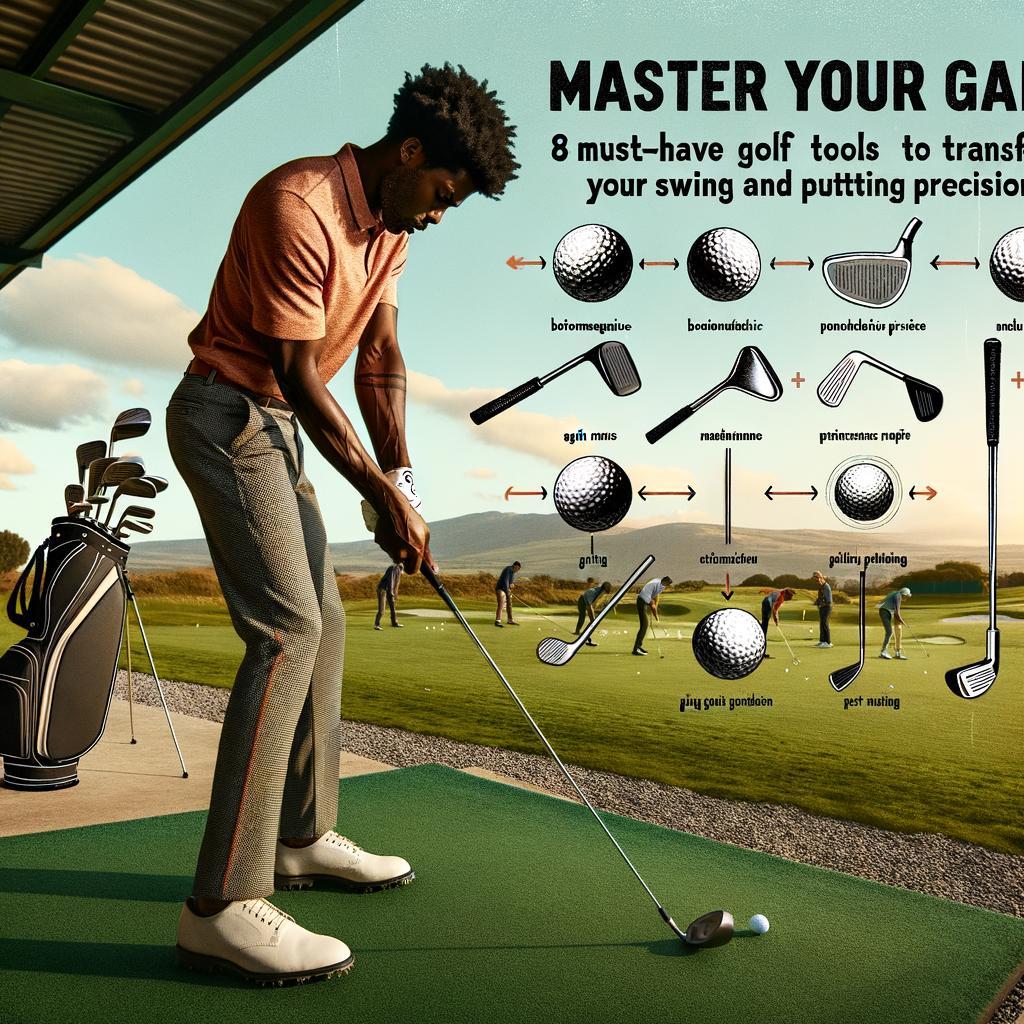
Master Your Game: 8 Must-Have Golf Tools to Transform Your Swing and Putting Precision
Why the right golf tools accelerate swing, putting and driving improvement
High-quality golf tools give immediate, objective feedback to accelerate learning. Instead of relying on feel alone, modern training aids measure clubhead speed, launch angle, face angle, tempo, stroke path and roll characteristics. When you combine biomechanical feedback with level-specific drills you can systematically correct swing faults, sharpen putting precision and add consistent driving distance.
How to use this guide
- Read each tool section for purpose, measurable metrics and drills.
- Apply beginner/intermediate/advanced drill variations where indicated.
- Use the short table to compare tools quickly.
8 Must-Have Golf Tools (with drills,metrics & practical tips)
1. Launch Monitor (portable or indoor)
What it measures: ball speed, clubhead speed, smash factor, launch angle, spin rate, carry distance and shot dispersion. Popular options include radar-based and camera-based units.
- Why it matters: objective data for driving distance and launch optimization – critical for maximizing driving performance and optimizing club selection.
- Beginner drill: 10-ball baseline – record average carry and clubhead speed with a 7-iron; focus on consistent contact.
- Intermediate drill: launch window work – test tee height and ball position to find the ideal launch angle and spin for driver.
- Advanced drill: dispersion & spin tuning – use launch numbers to dial in spin rate and optimize carry for different course conditions.
2. wearable Swing Analyzer (sensor + app)
What it measures: tempo, face angle changes, swing plane, backswing length, transition timing and tempo ratios.
- Why it matters: small changes in tempo and angle can create major swing improvements. Wearables provide instant audio/visual feedback you can replicate on the range.
- Drill: 3-2-1 tempo drill – use the analyzer to match target tempo (backswing:impact:follow-through) and record repeatability.
- Metrics to track: tempo consistency, face rotation at impact, swing path deviation.
3. Putting Stroke Analyzer / Putter Sensor
What it measures: face angle at impact, stroke path, tempo, loft at impact and strike location. Examples include systems that clip on the putter or use an external camera.
- Why it matters: putting is more about repeatability and roll quality than power. Measuring face angle and strike quality produces predictable putt speed and line.
- Drills: gate drill with face-angle feedback; distance-control ladder (3, 6, 9 feet) using feedback to match speed metrics.
- Practical tip: combine with a putting mat to practice green speeds using consistent, measured feedback.
4. Putting Mirror + Alignment Tools
What it does: visual alignment for eye position, shoulder alignment, putter face centering and stroke path rehearsal.
- Why it matters: small alignment errors cause poor reads and mis-hits. The mirror gives immediate visual correction.
- Drills: eye-over-ball check (use mirror to set eye line), single-stroke alignment drill (hit 10 putts with repeatable eye/shoulder alignment).
- Metric: percentage of centered strikes measured with strike tape or putter face sensor.
5. Weighted Swing trainers & Tempo Tools (e.g., Orange Whip, SuperSpeed)
What they do: improve strength, tempo and swing sequencing.Weighted trainers help groove a smoother transition and consistent release.
- Why it matters: for driving distance you need optimized sequencing and clubhead speed – weighted trainers create muscle memory without swing faults.
- Drills: tempo ladder (slow->fast->match target swing speed); overspeed training sets for increased clubhead speed.
- Metric: clubhead speed increases measured with a launch monitor after a 6-8 week program.
6. Alignment Sticks & Training Tees
What they do: simple, low-cost tools to train aim, swing path, stance width and ball position.
- Why it matters: alignment sticks are versatile – set up a gate for putting, a path for irons, or a spine tilt marker for drivers.
- Drills: path gate for fade/draw control; two-stick putting gate to eliminate face-face error.
- Beginner tip: always start practice with alignment sticks to ingrain correct target lines.
7.Impact Tape / Face Spray & Strike Tape
what it does: reveals strike location on the clubface so you can improve contact consistency.
- Why it matters: center strikes maximize energy transfer (smash factor) for both irons and drivers and reduce side spin that causes misses.
- Drills: 20-ball target – aim for the center of the face; adjust setup until 80% of strikes are within 1.5″ of center.
- Metrics: percentage of center strikes vs heel/toe strikes and resulting carry variance.
8. Chipping/Pitching Net & Portable Practice Green
What it does: reproducible short-game practice (trajectory, spin, landing spot and first-roll) that translates directly to scoring.
- Why it matters: up-and-down percentage is the most direct way to lower scores. Nets and mats allow focused reps and measurable landing targets.
- Drills: landing zone practice (aim for a 3-ft by 3-ft target), flop-shot control, bunker-simulated chipping using mats and variable lies.
- Advanced integration: record short-game performance and convert to expected strokes-gained numbers for course strategy.
Compact comparison table (WordPress-styled)
| Tool | Primary benefit | Key Metric |
|---|---|---|
| Launch Monitor | Optimize driving distance & carry | Carry, spin, launch |
| Swing Analyzer | Timing & plane correction | tempo, face angle |
| Putting Sensor | Consistent roll & accuracy | Face angle, strike point |
| Weighted Trainer | Speed & sequencing | Clubhead speed |
Level-specific training plan (beginner → advanced)
Beginner (0-20 handicap / new players)
- Focus tools: Alignment sticks, putting mirror, impact tape.
- Goals: consistent aim, centered contact, basic putting alignment.
- Routine: 15 minutes putting drills, 15 minutes alignment + half bucket on full swing focusing on contact.
Intermediate (20-10 handicap)
- Focus tools: Launch monitor, wearable swing analyzer, weighted trainer.
- Goals: improve carry consistency,start optimizing launch conditions for driver,refine tempo.
- routine: two range sessions per week with one focused on numbers (launch monitor) and one on technique (swing analyzer).
Advanced (10-scratch)
- Focus tools: High-end launch monitor, putting sensor, short-game net with varied lies.
- Goals: tighten dispersion, dial in spin/launch for control, convert short-game saves into lower scores.
- Routine: metric-based practice with repeatable measurement and on-course simulation for strategy practice.
Course-strategy integration: use data to make smarter decisions
Numbers from your launch monitor and swing analyzer should affect club selection and strategy. example uses:
- Driving: if your optimal driver launch produces a 240-260 yd carry rather of 280 yd,plan for longer irons or hybrids in certain holes.
- Approach shots: spin rate data helps decide which club to use when you need a softer landing versus roll-out.
- Putting: knowing precise putt speeds from your putting sensor helps predict uphill/downhill read adjustments and speed control on the course.
Practical tips for consistent progress
- Log everything: keep a simple spreadsheet with carry, clubhead speed, tempo and strike percentage to spot trends.
- Train with purpose: use a practice plan (metrics → drills → measurable goals) rather than random hitting.
- Mix tech with feel: use objective feedback to confirm feel-based changes, not to replace them.
- Recovery and balance: weighted tools and overspeed training should be phased - increase load gradually and track results.
Short case study (data-driven improvement)
Player A (mid-handicap): baseline measured 92 mph clubhead speed, 240 yd driver carry, center-strike 55% of shots.After a 10-week program using SuperSpeed-style overspeed sessions, impact-tape focus and targeted launch monitor sessions, the player improved to 97 mph, 260 yd carry and 78% center strikes. on-course scoring improved by 3 strokes per round. Key takeaway: combined objective measurement + targeted drills created measurable change.
First-hand experience and coach recommendations
Coaches often recommend starting with alignment tools and impact feedback before investing in high-end tech. A practical sequence is:
- Fix alignment and strike (alignment sticks + impact tape).
- Adopt a wearable analyzer for tempo and plane consistency.
- Confirm improvements with a launch monitor to tune driver launch and spin.
- Add putting sensors and a portable green once full-swing metrics are stable to shave strokes around the hole.
Buying considerations & budget tiers
- Entry-level: alignment sticks, impact tape, putting mirror – low cost, high impact on fundamentals.
- Mid-range: portable launch monitor and wearable swing sensor – best ROI for amateurs wanting measurable progress.
- Pro-level: high-end launch monitors, indoor simulators, SAM/SwingLab-style putting systems – for players who need high-precision metrics and training environment.
SEO checklist for practice content
- Target keywords included naturally: swing, putting, driving, launch monitor, clubhead speed, putting accuracy.
- use structured headings (H1-H3) and short paragraphs for readability.
- Include actionable drills and metrics so readers spend more time on the page – this boosts SEO engagement signals.
Want product recommendations or a 6-week data-driven practice plan tailored to your handicap and schedule? Tell me your current metrics (clubhead speed, average carry, putting stats) and I’ll create a customized plan.