unlock the Secrets of the Perfect Chip Shot with Simple Swing Adjustments
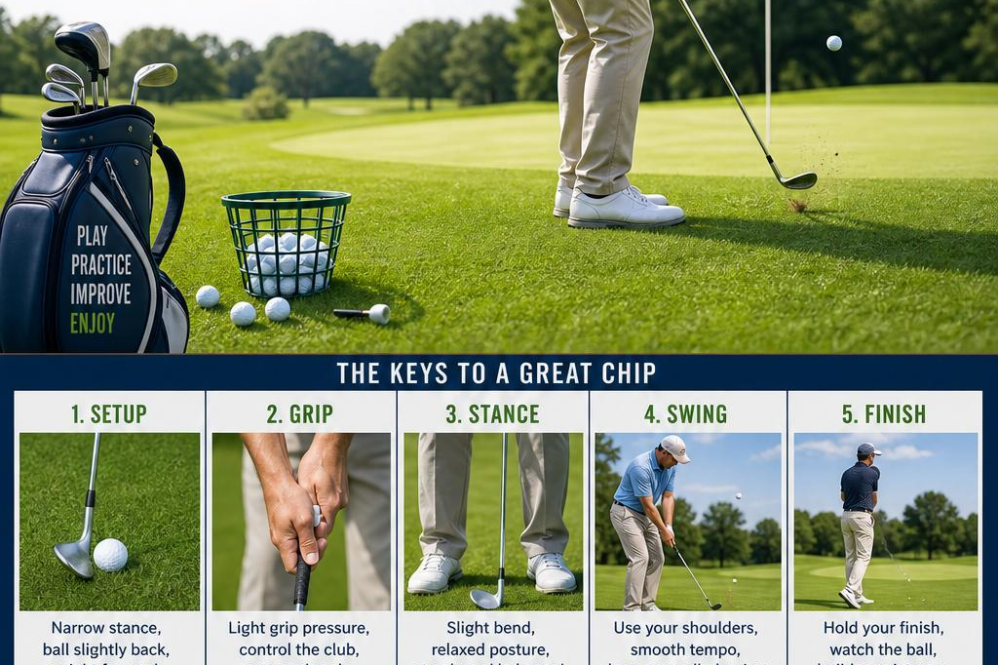
Start by refining your swing mechanics with a focus on compact, controlled motion that emphasizes precision over power. When executing a chip shot, maintain a slightly open clubface to promote a clean contact and reduce spin, typically revolving around a 45 to 55-degree loft angle depending on your wedge choice. Position the ball just back of center in your stance, with your weight favoring the lead foot at about 60-70%, to produce a descending blow that crisply strikes the turf before the ball. This setup encourages a consistent low-trajectory flight with predictable roll, crucial for landing softly on tight greens or when approaching from short rough.Develop a pendulum-like stroke by minimizing wrist hinge; this stabilizes the clubhead path, prevents scooping, and ensures solid compression. Practice drills such as placing a tee just behind the ball to enforce a clean strike or swinging with a towel under your lead armpit enhance muscle memory and power control, helping beginner and advanced players alike to achieve dependable contact.
Understanding the nuances of swing path and clubhead trajectory unlocks tailored adjustments that adapt to a variety of on-course situations. As a notable example, when faced with a narrow landing zone or a green sloping away, modify your swing by slightly narrowing your stance and hinging your wrists a bit more to add loft and reduce rollout, allowing the ball to stop sooner. Conversely, for longer chips over flat terrain demanding more rollout, lengthen your backswing within a controlled range and keep your hands ahead of the ball at impact, creating an ascending strike that reduces spin and maximizes ground roll. Incorporate routine practice with alignment sticks or visual markers to ingrain correct swing paths and improve directional control. paying attention to subtle feel adjustments-such as tempo changes or altering the length of follow-through-can provide additional refinement for low handicappers seeking to lower scores through consistent proximity to the hole.
Course management and green-reading skills complement technical swing improvements by allowing you to strategically plan chip shots according to terrain and conditions. Analyze slope gradients and grain direction to predict ball behavior post-landing; on a firm, fast green, target slightly above the hole and use a softer touch to allow for controlled rollout. When the turf is wet or the ball lies in heavier rough, select a higher-lofted wedge with more bounce-such as a 56-degree sand wedge with 10-12 degrees of bounce-to prevent digging and facilitate smoother turf interaction. Mental focus plays a vital role; develop a pre-shot routine that includes visualizing the shot trajectory and landing spot, mentally rehearsing the stroke to enhance confidence and reduce tension. For practice, simulate real course conditions by placing balls on uneven lies and experimenting with varying clubfaces, swing lengths, and stances. This multi-faceted approach will help golfers of all levels transform simple swing adjustments into effective, reliable chip shots that consistently improve scoring opportunities around the green.
Choose the Right Club and Stance to Transform Your Short Game
Selecting the appropriate club and adopting the correct stance are foundational to transforming your short game, particularly when it comes to chipping around the greens. Start by understanding the lie and distance to the hole, as thes factors dictate your club choice-typically ranging from wedges like a pitching wedge for longer chips to a sand wedge or lob wedge for higher, softer shots. It’s essential to evaluate the turf firmness and slope to decide whether you need a lower trajectory or more spin. When addressing the ball, position it slightly back in your stance (around one ball width behind center) to ensure a descending strike. Keep your weight favoring the front foot at about 60-70% to promote crisp contact and avoid “fat” shots. Proper alignment involves opening your stance slightly to allow a natural inside-to-out swing path that encourages control and precision.
With the club selected and stance set, focus on refining your swing mechanics to improve consistency and distance control. A compact, controlled backswing of roughly 30 to 45 degrees of shoulder turn reduces excessive wrist breakdown, leading to cleaner contact. During the downswing, maintain a steady head position and keep your hands ahead of the ball through impact to prevent scooping. Adjust your follow-through length based on the shot’s required carry and rollout, using a longer follow-through for longer chips and a shorter one for delicate, touch shots. It’s helpful to integrate targeted drills such as the “clock drill”, which encourages rhythm by swinging your club back and forth at different ‘times’ on a clock face, or the “landing spot drill,” focusing on landing the ball consistently on a specific zone near the green. These exercises build muscle memory and improve distance control across a variety of lies and course conditions.
course management and situational awareness should shape your club and stance decisions to maximize scoring opportunities. When playing from tight lies or firm fairways,a more closed clubface combined with a narrower stance can produce lower ball flight and run-out,ideal for reaching pin positions tucked behind hazards. Conversely, when greens are soft or you face uphill lies, opening the clubface and widening your stance helps generate loft and spin for more spin and softer landings. Pay close attention to wind direction and speed, adjusting your setup to compensate for gusts that may push your shot offline. Encouraging a thoughtful pre-shot routine, including visualization of the shot shape and trajectory, helps align mental focus with technical execution. Through practice and strategic club and stance choices, you’ll find your short game becomes both more reliable and versatile-translating directly into lower scores and greater confidence around the greens.
How Mastering Golf Chipping Can Boost Your putting and driving Confidence
Building a reliable chipping skill boosts confidence in your putting by sharpening your touch around the greens. When you master precise chipping technique-incorporating a compact swing, proper weight distribution (about 60% on the lead foot at setup), and a firm yet relaxed grip-you start developing a refined feel for distance control and trajectory.This sensitivity translates directly to putting as you become more attuned to pace and the subtle breaks of the green. to cultivate this, focus on drills like the “clock drill”, where you chip balls to multiple target distances varying in 3- to 5-yard increments, gradually refining your feel for length. Practicing with a variety of lofted clubs also builds versatility and confidence, enabling you to better visualize and execute putts under pressure on diverse pin locations and green speeds.
Moreover,mastering golf chipping directly impacts driving confidence by reinforcing superior swing mechanics and course management strategies. Both chipping and drives rely on solid fundamentals such as maintaining a steady head position and controlling the club’s swing path-skills that carry over when you tee off. Additionally,understanding how to adapt your chipping setup,like adjusting stance width or aligning your body to slope,fosters an adaptable mindset that’s invaluable when facing varying fairway lies and wind conditions on long shots. To practically apply this, incorporate routine setup checks-aim for a slightly open clubface with a narrow stance when chipping-to ingrain consistency. Over time, this nuanced control lets you dial in your drives, confidently navigating hazards and strategically planning your shots around course challenges.
integrating green-reading insights with your chipping mastery enhances overall course strategy, boosting mental game resilience that benefits all shots-from delicate chips to powerful drives. By analyzing slope angle and undulation before every chip,you train your brain to anticipate ball roll,factoring in crucial elements like grain direction and moisture levels. This proactive approach reduces uncertainty, improving decision-making and lowering score variability. To embed this habit, practice reading putts and chips by charting slopes during practice rounds, then execute shots accordingly. With repeated application, you’ll develop an intuitive understanding of green behavior that informs both chip shots and putts, creating a seamless flow in your short game. This mental edge equips you to confidently attack pins and control your drives with purposeful intent,resulting in meaningful score improvements across your rounds.